“Loss is nothing else but change, and change is Nature's delight.”
Marcus Aurelius · Meditations, Book IX
 quolira
.com
quolira
quolira.com
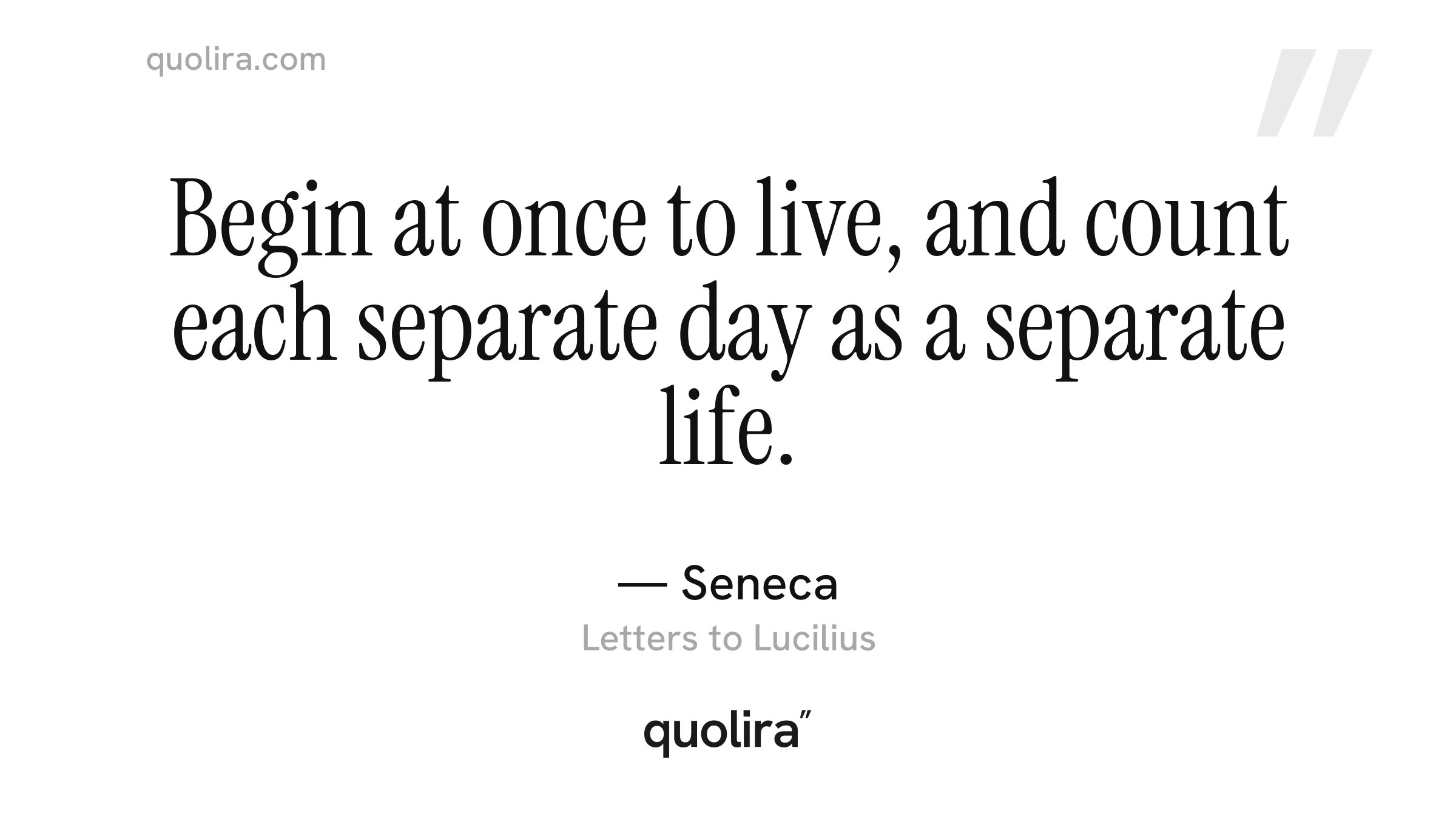
Seneca is urging a particular relationship with time: treat today not as a link in a chain leading somewhere else but as a complete unit of living in itself. If each day is approached as a whole life, then the tendency to postpone real engagement, to wait for some future condition to start living fully, loses its grip. The instruction to "begin at once" signals urgency. There is no qualifying moment coming; the starting point is now, and it always will be now.
The Letters to Lucilius are a collection of personal letters Seneca wrote in the last years of his life to a younger friend and public official named Lucilius. Across more than a hundred letters, Seneca works through Stoic ideas in a conversational and often intimate tone, making this one of the most readable documents of ancient philosophy. The theme of time and its proper use runs throughout the collection. Seneca was acutely aware of mortality and the human tendency to squander time on distraction and empty ambition rather than genuine living.
Lucius Annaeus Seneca was a Roman statesman, playwright, and philosopher who lived in the first century. He held significant political power at the court of the emperor Nero, an experience that gave his philosophical writing on wealth, power, and the good life a complicated personal dimension. He was a leading figure of the Stoic tradition, though he drew from other schools as well. His prose style is energetic and direct, and his letters in particular have attracted readers across many centuries for their warmth and psychological honesty.
“Loss is nothing else but change, and change is Nature's delight.”
Marcus Aurelius · Meditations, Book IX
“Never let the future disturb you. You will meet it, if you have to, with the same weapons of reason which today arm you against the present.”
Marcus Aurelius · Meditations, Book VII
“How long are you going to wait before you demand the best for yourself?”
Epictetus · Discourses, Book I
“No man is free who is not master of himself.”
Epictetus · Fragments
“First say to yourself what you would be; and then do what you have to do.”
Epictetus · Discourses, Book III
“Seek not the good in external things; seek it in yourselves.”
Epictetus · Discourses
“Men are disturbed not by the things which happen, but by the opinions about the things.”
Epictetus · Enchiridion, Chapter 5
“Make the best use of what is in your power, and take the rest as it happens.”
Epictetus · Enchiridion
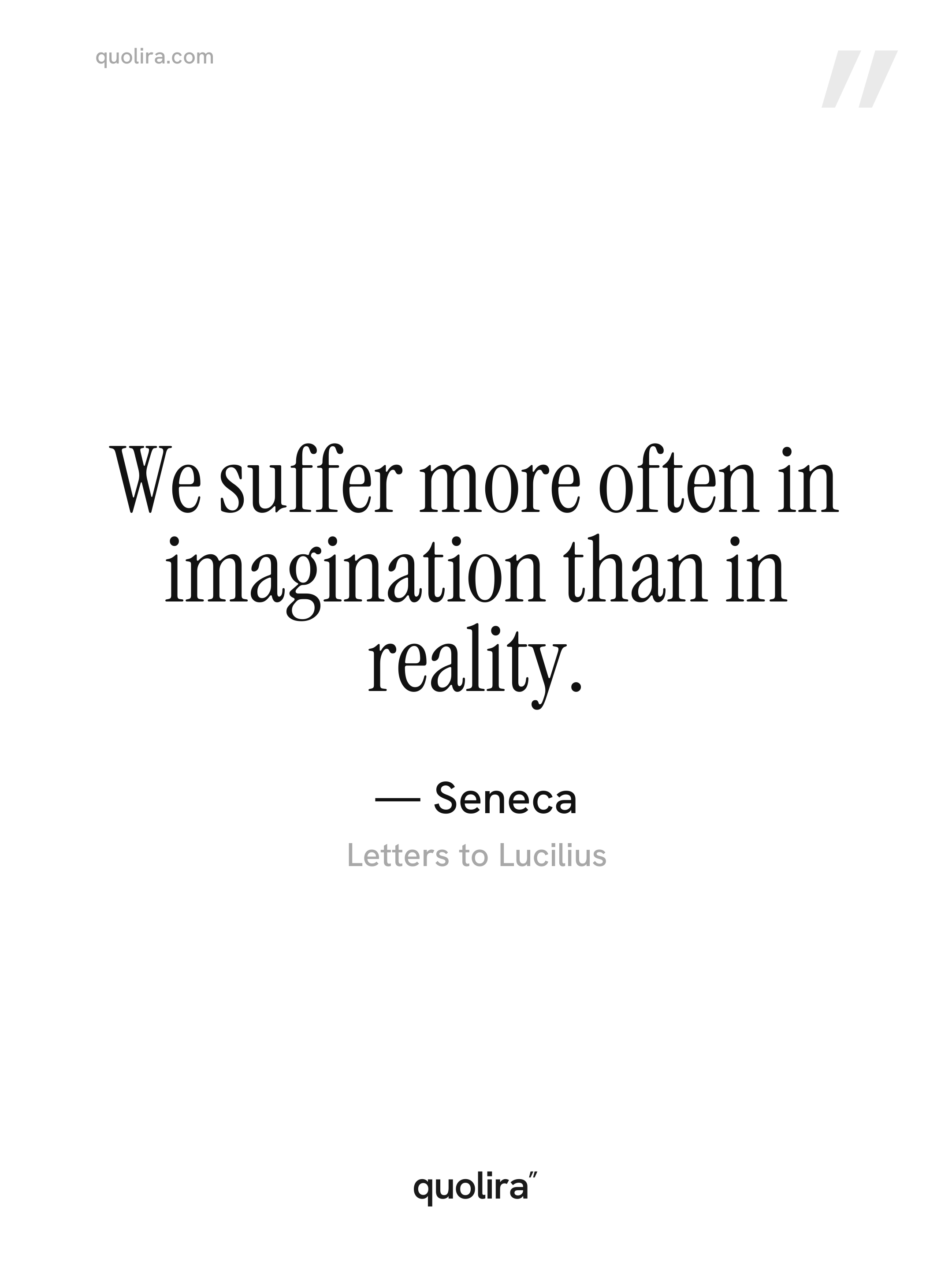
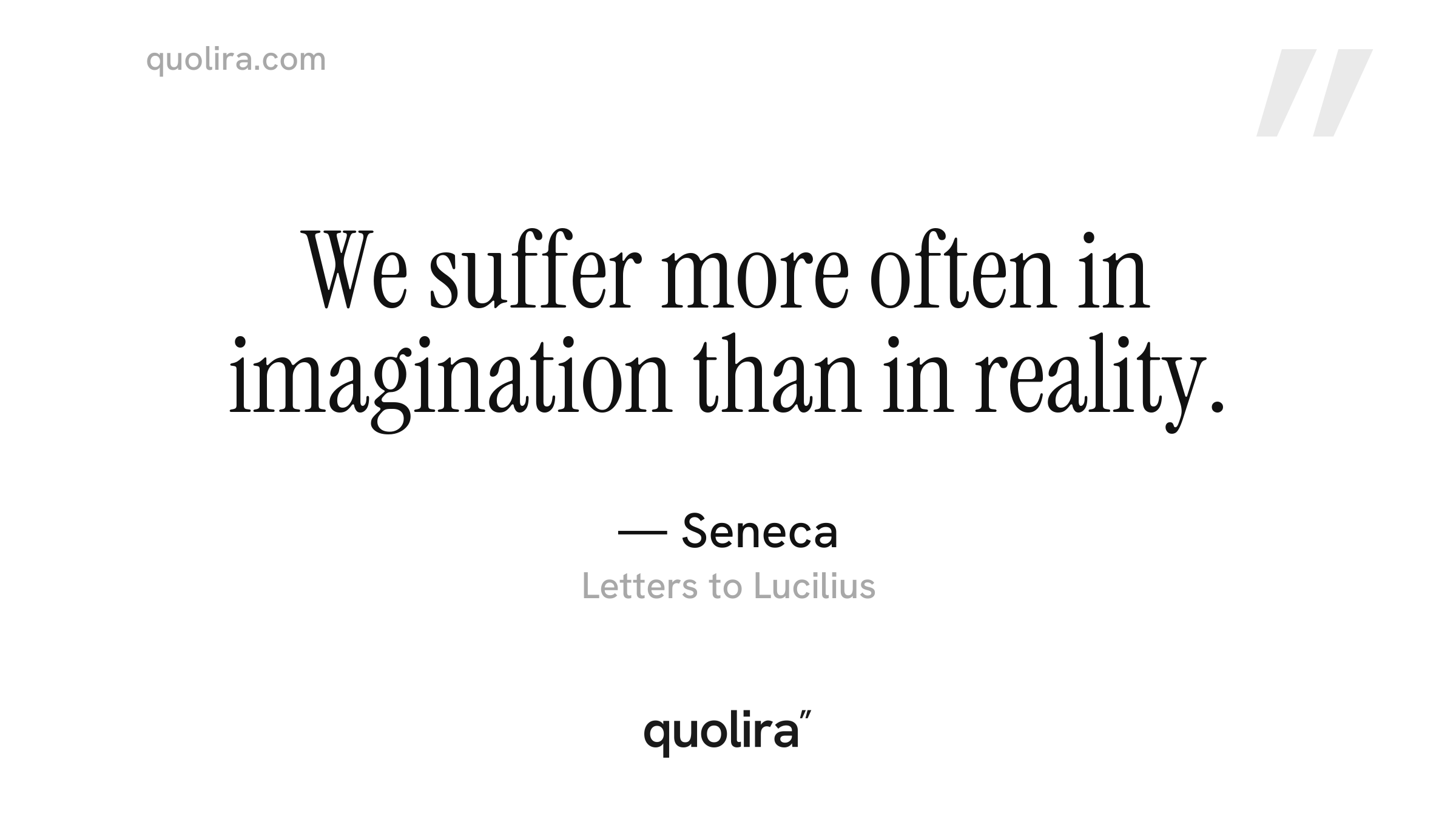
“We suffer more often in imagination than in reality.”
Seneca · Letters to Lucilius
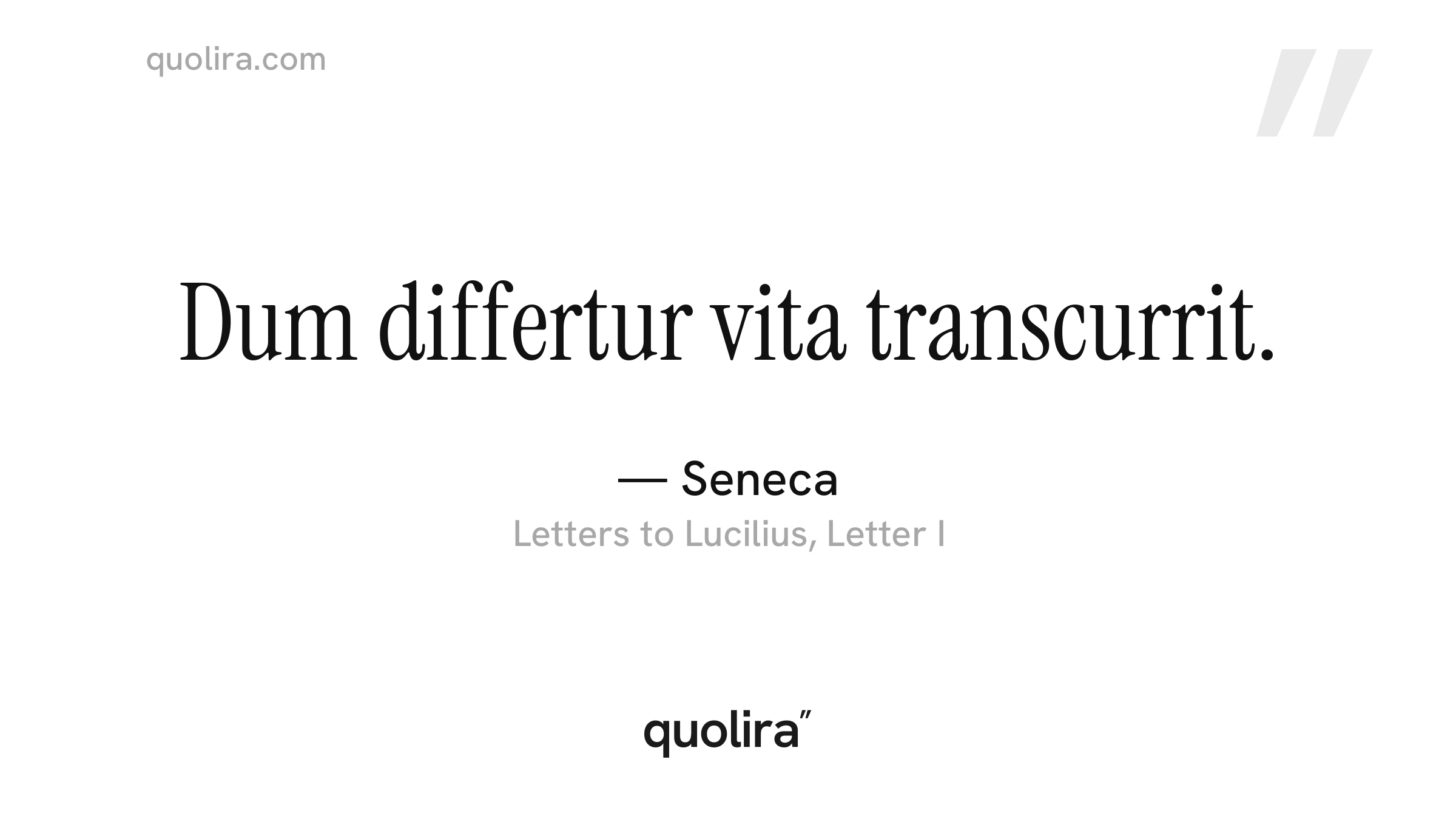
“Dum differtur vita transcurrit.”
Seneca · Letters to Lucilius, Letter I
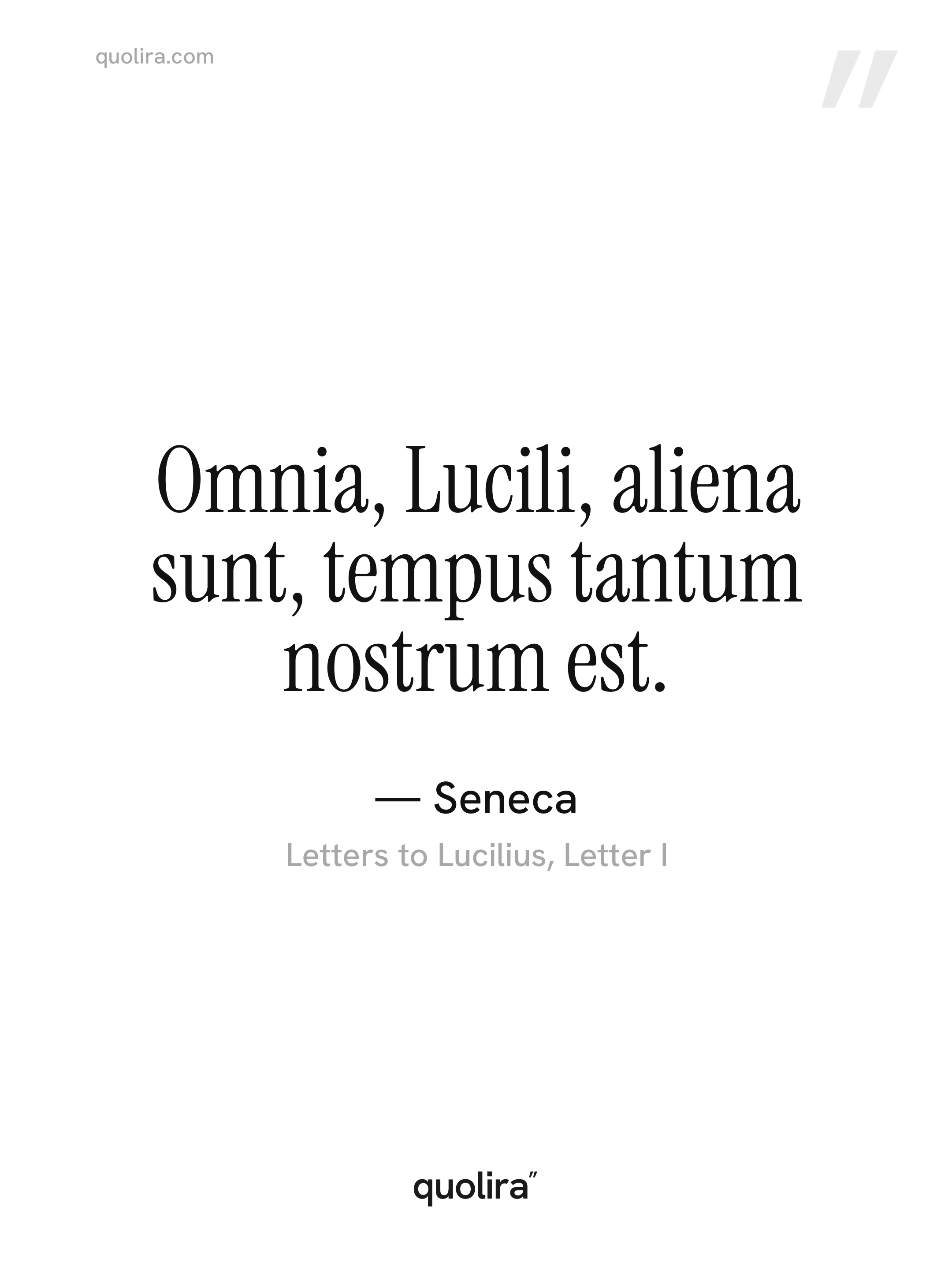
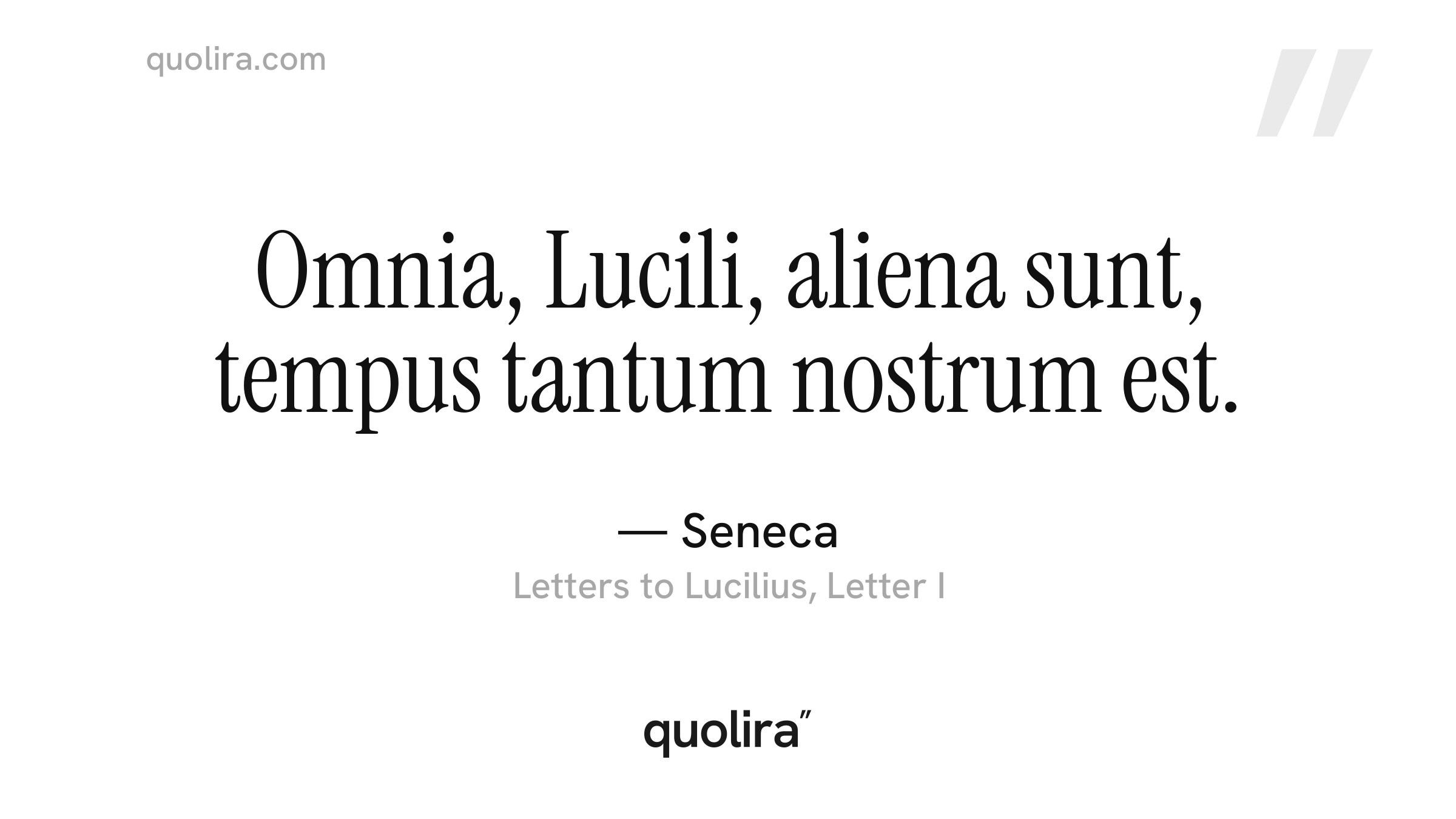
“Omnia, Lucili, aliena sunt, tempus tantum nostrum est.”
Seneca · Letters to Lucilius, Letter I
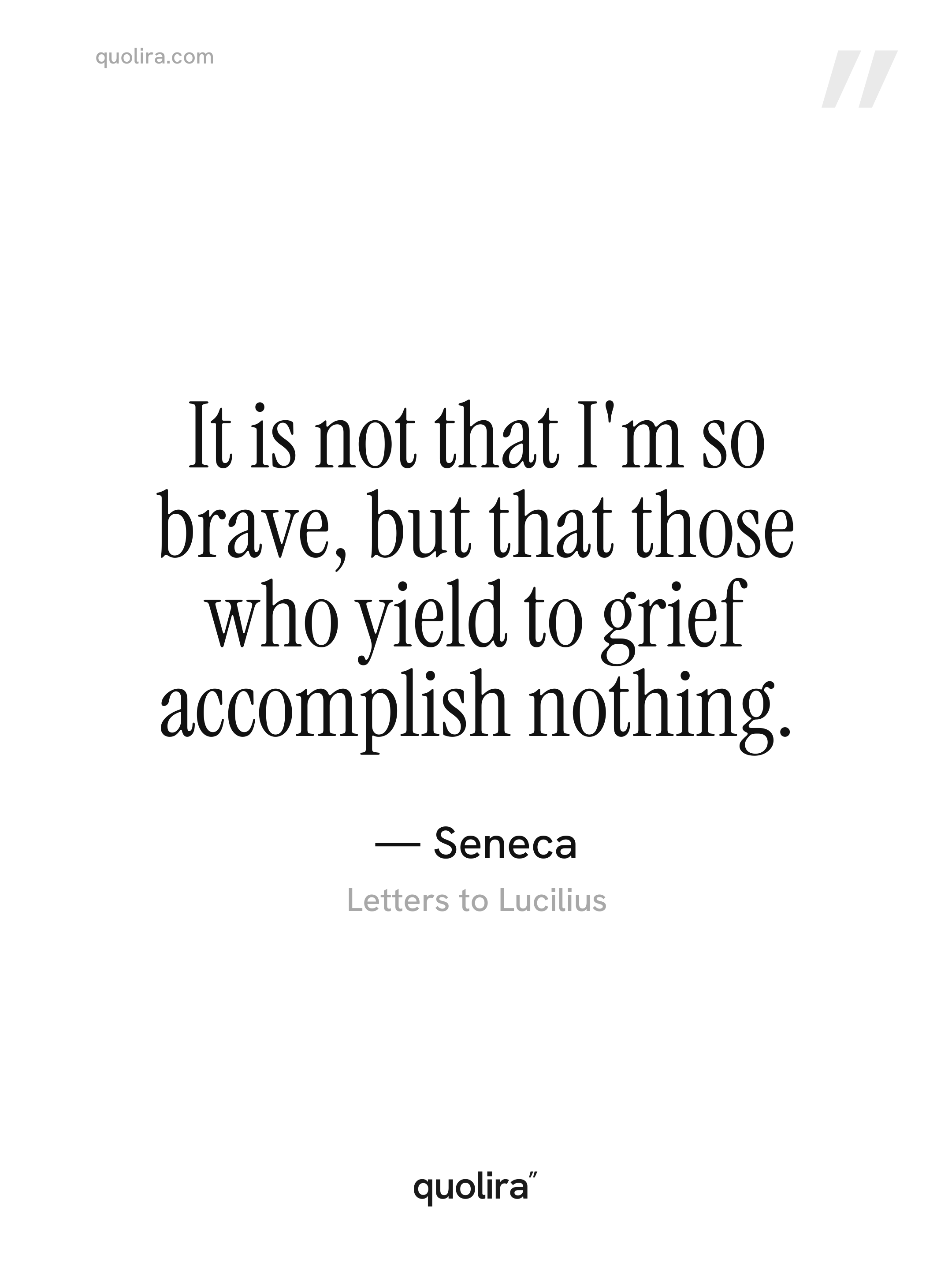
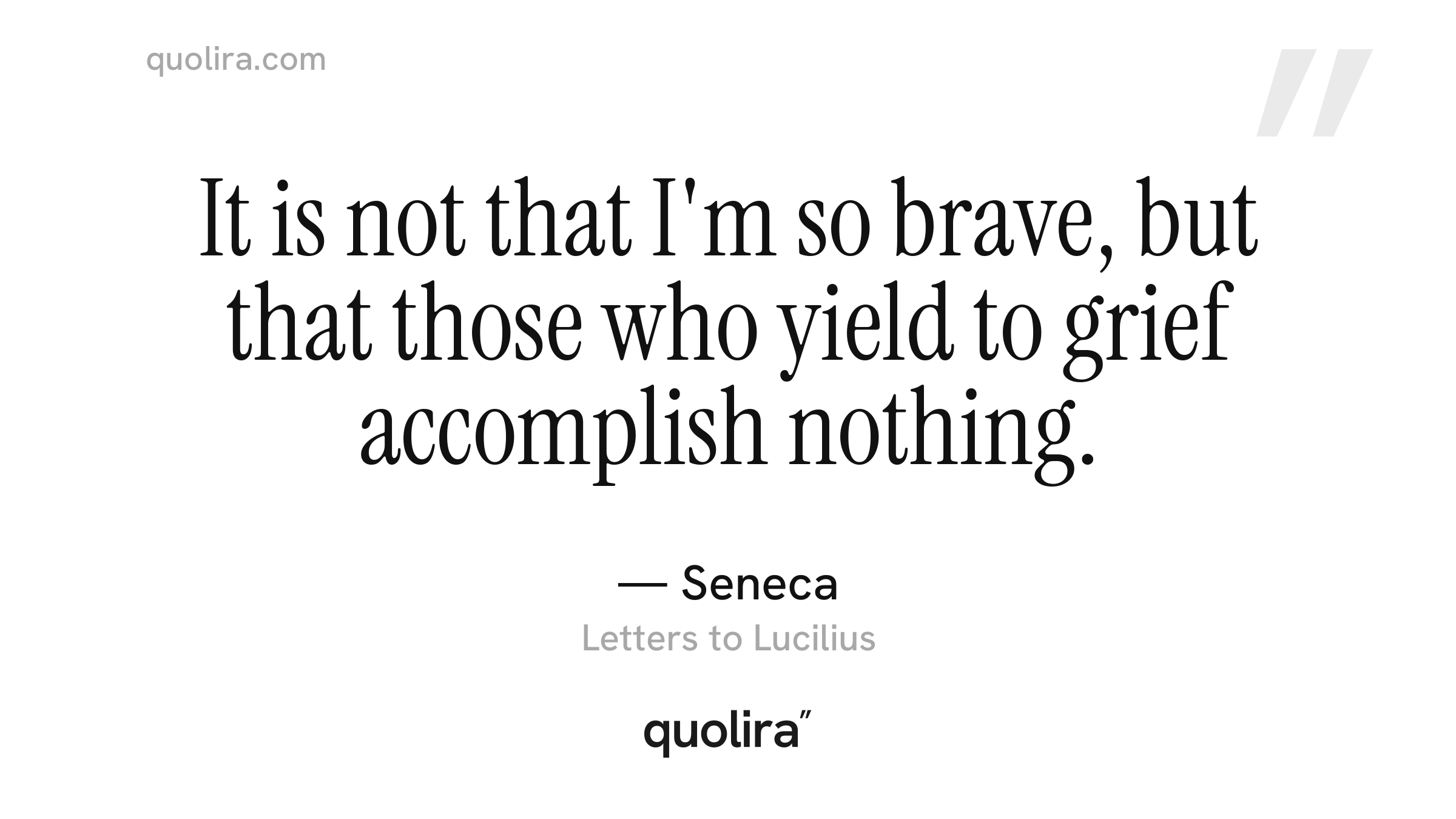
“It is not that I'm so brave, but that those who yield to grief accomplish nothing.”
Seneca · Letters to Lucilius