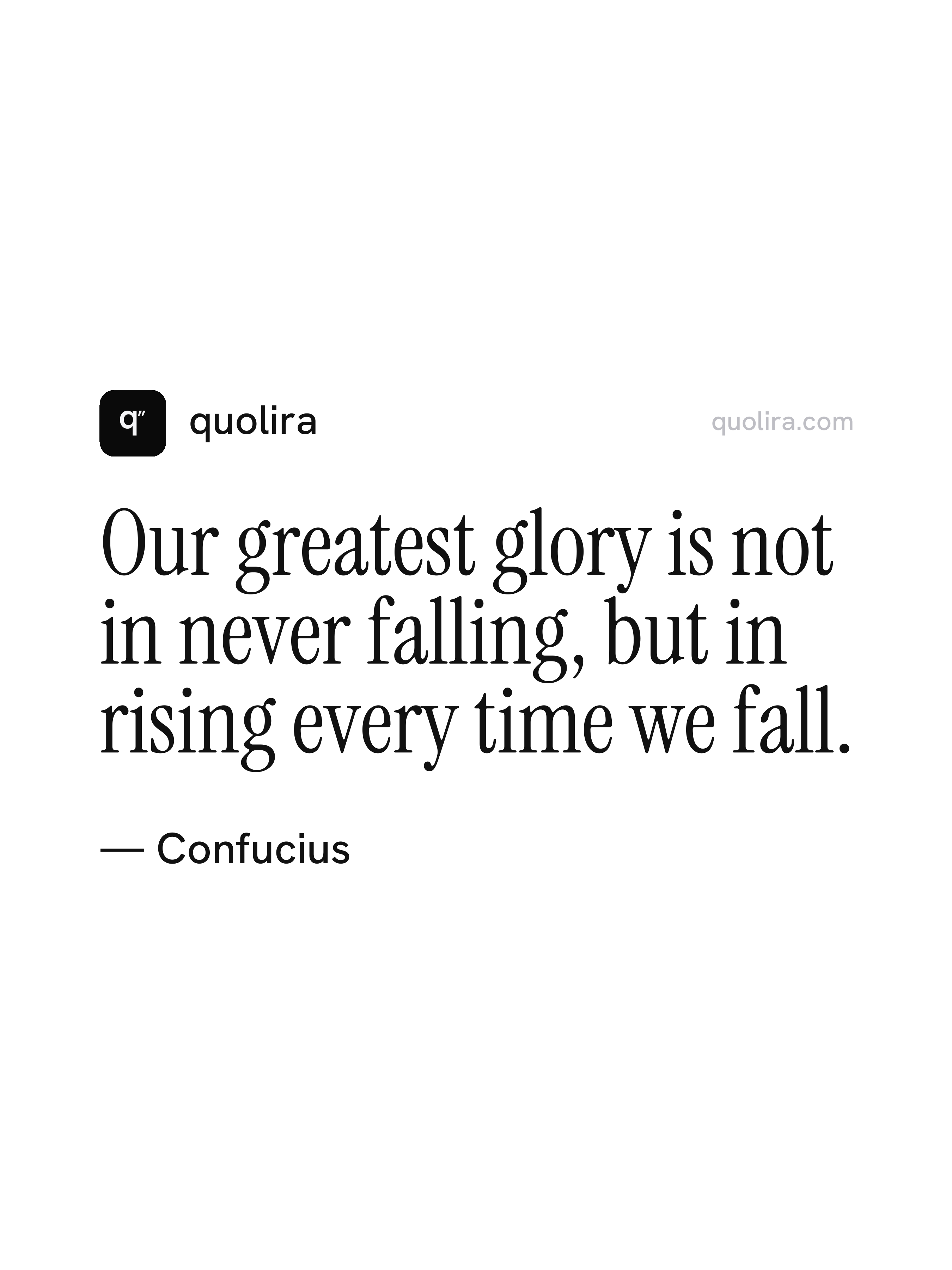
“Our greatest glory is not in never falling, but in rising every time we fall.”
Confucius · Widely attributed to Confucius
 quolira
.com
quolira
quolira.com
The contrast Confucius draws here is between two fundamentally different inner conditions. The person of genuine character has done the work of aligning their values and their conduct, and so they carry a settled quality with them regardless of outward circumstances. The lesser person, by contrast, is always measuring their worth against what they lack or what others think of them, and that dependency keeps them in a state of low-level anxiety. Inner peace, Confucius suggests, is the reward not of good fortune but of good character.
This saying appears in Book VII of the Analects, a section that contains many of Confucius's observations on the qualities that distinguish a cultivated person from one who is driven purely by self-interest or ego. The term often translated as "superior man" or "gentleman" refers to the Confucian ideal of the junzi, a person who has achieved a high degree of moral development. That ideal was not meant to be reserved for aristocrats by birth but was defined by virtue, effort, and continuous self-examination.
Confucius lived in China during the Spring and Autumn period, traditionally dated from around 551 to 479 BCE. He worked as a teacher and, at various points, as a government official, though he spent significant periods traveling and seeking rulers who might put his ideas about ethical governance into practice. His conversations and sayings were gathered by his students into the Analects, a text that became central to Chinese education and culture for millennia and remains widely read today.
“Our greatest glory is not in never falling, but in rising every time we fall.”
Confucius · Widely attributed to Confucius
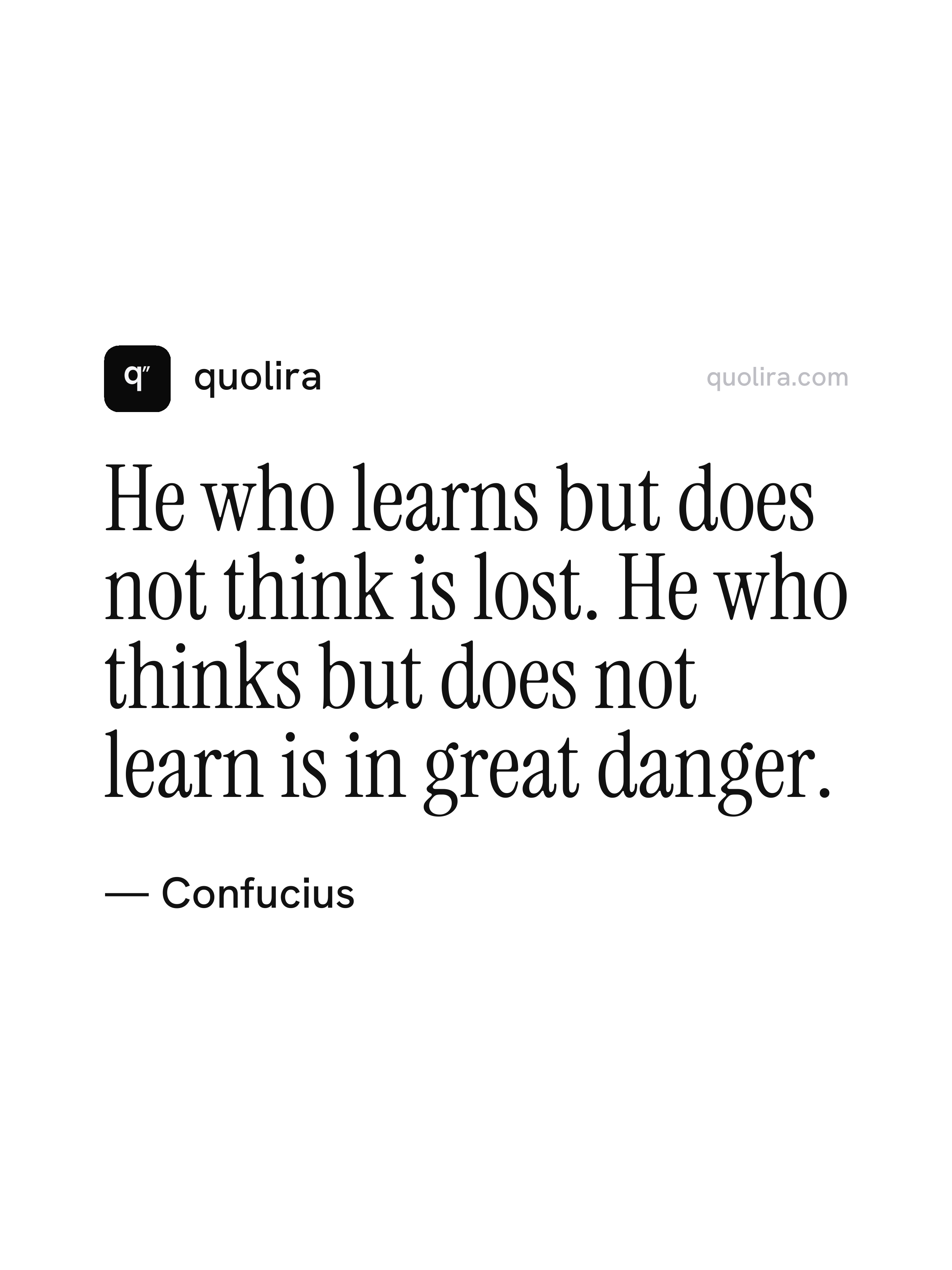
“He who learns but does not think is lost. He who thinks but does not learn is in great danger.”
Confucius · The Analects, Book II
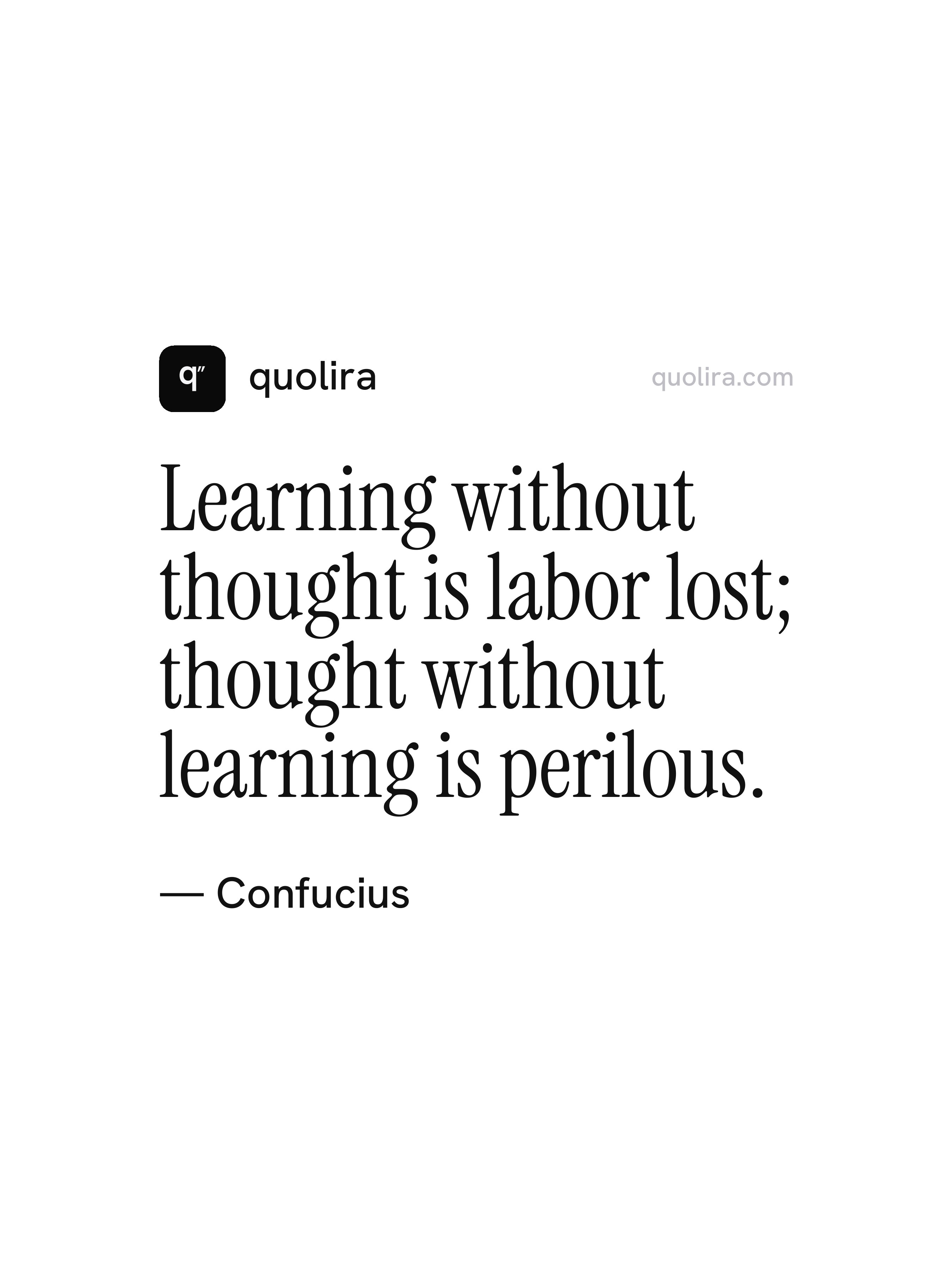
“Learning without thought is labor lost; thought without learning is perilous.”
Confucius · The Analects, Book II, c. 5th century BCE
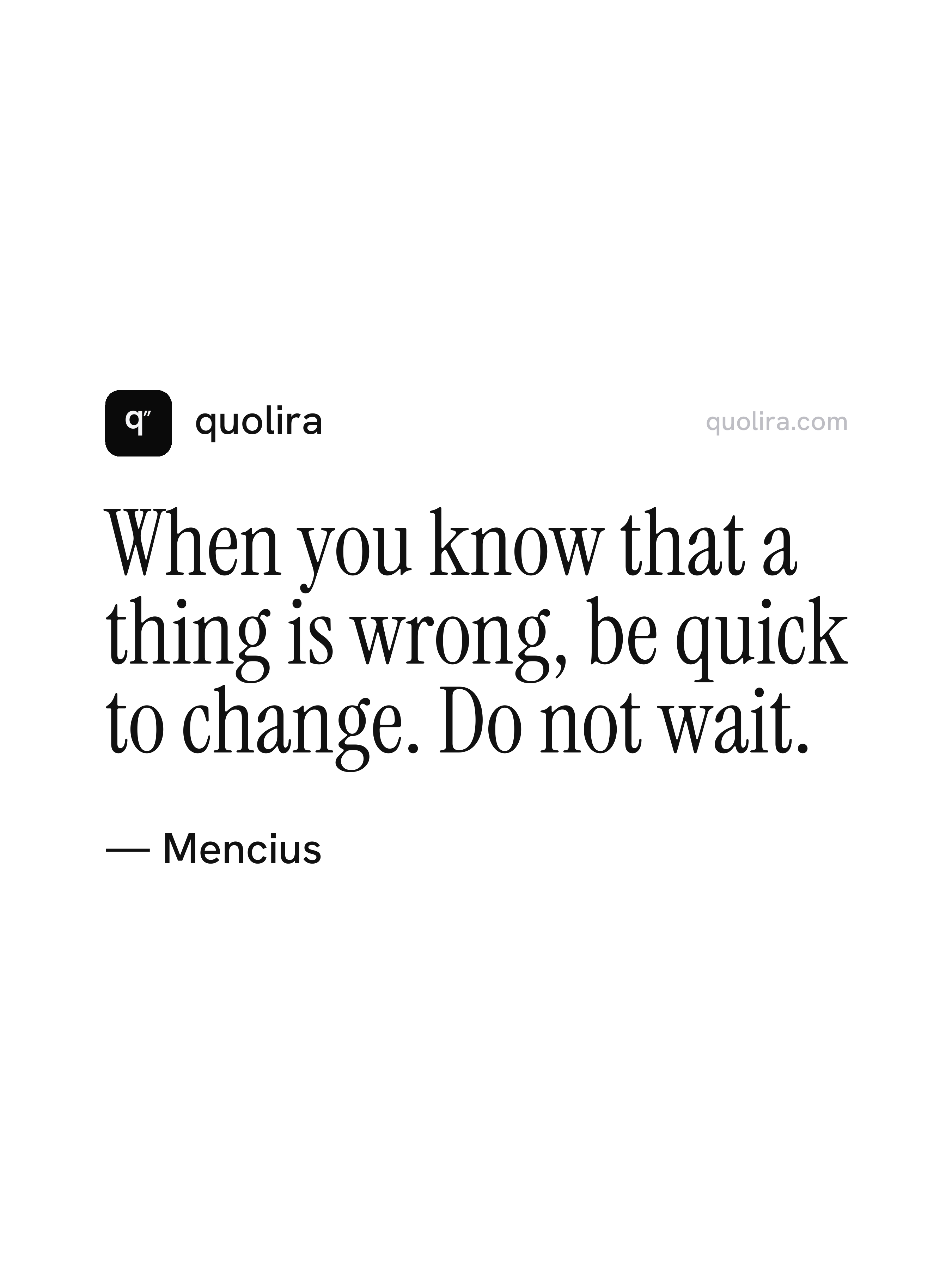
“When you know that a thing is wrong, be quick to change. Do not wait.”
Mencius · Mencius, Book II A
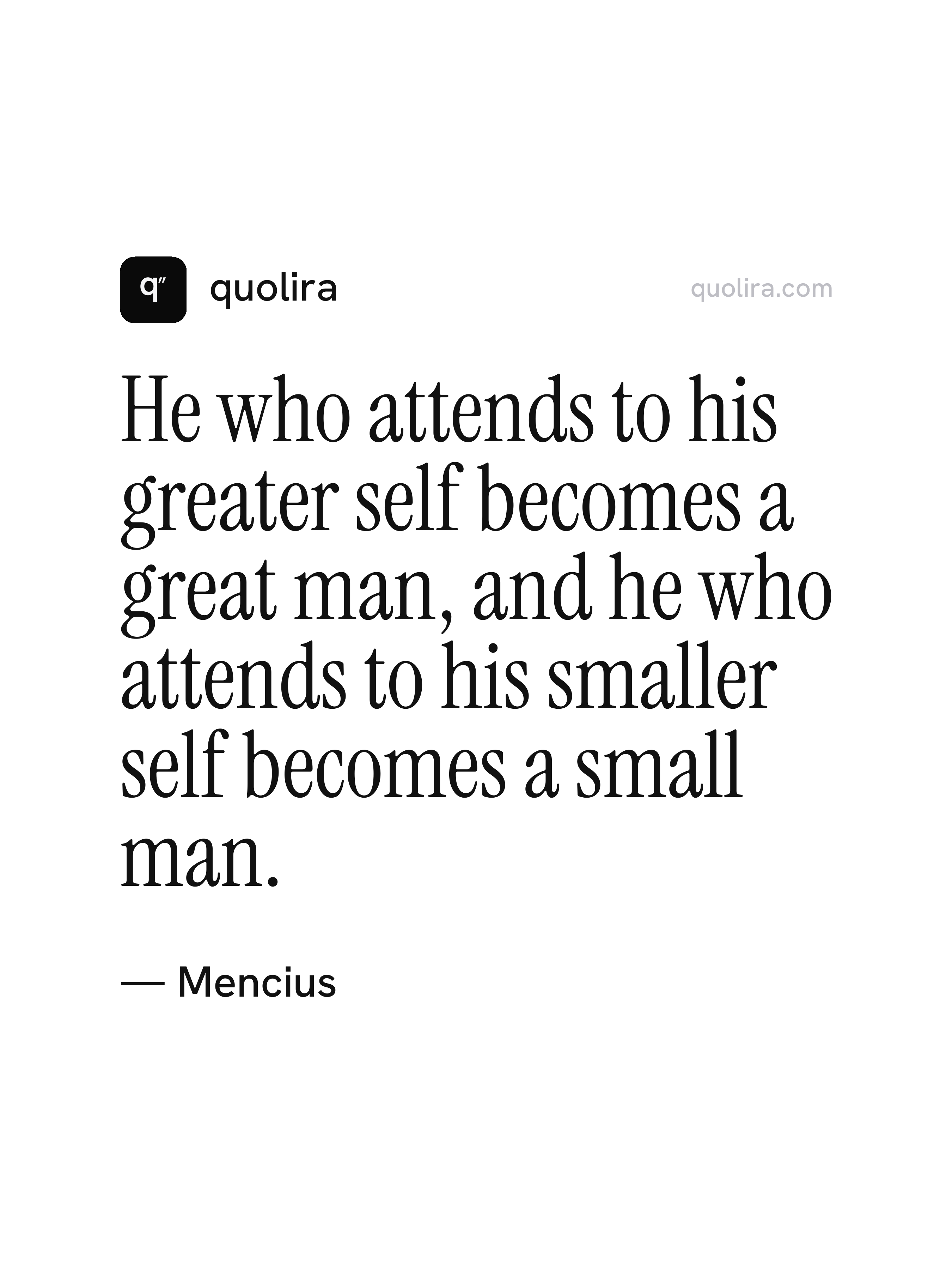
“He who attends to his greater self becomes a great man, and he who attends to his smaller self becomes a small man.”
Mencius · Mencius, Book VI A
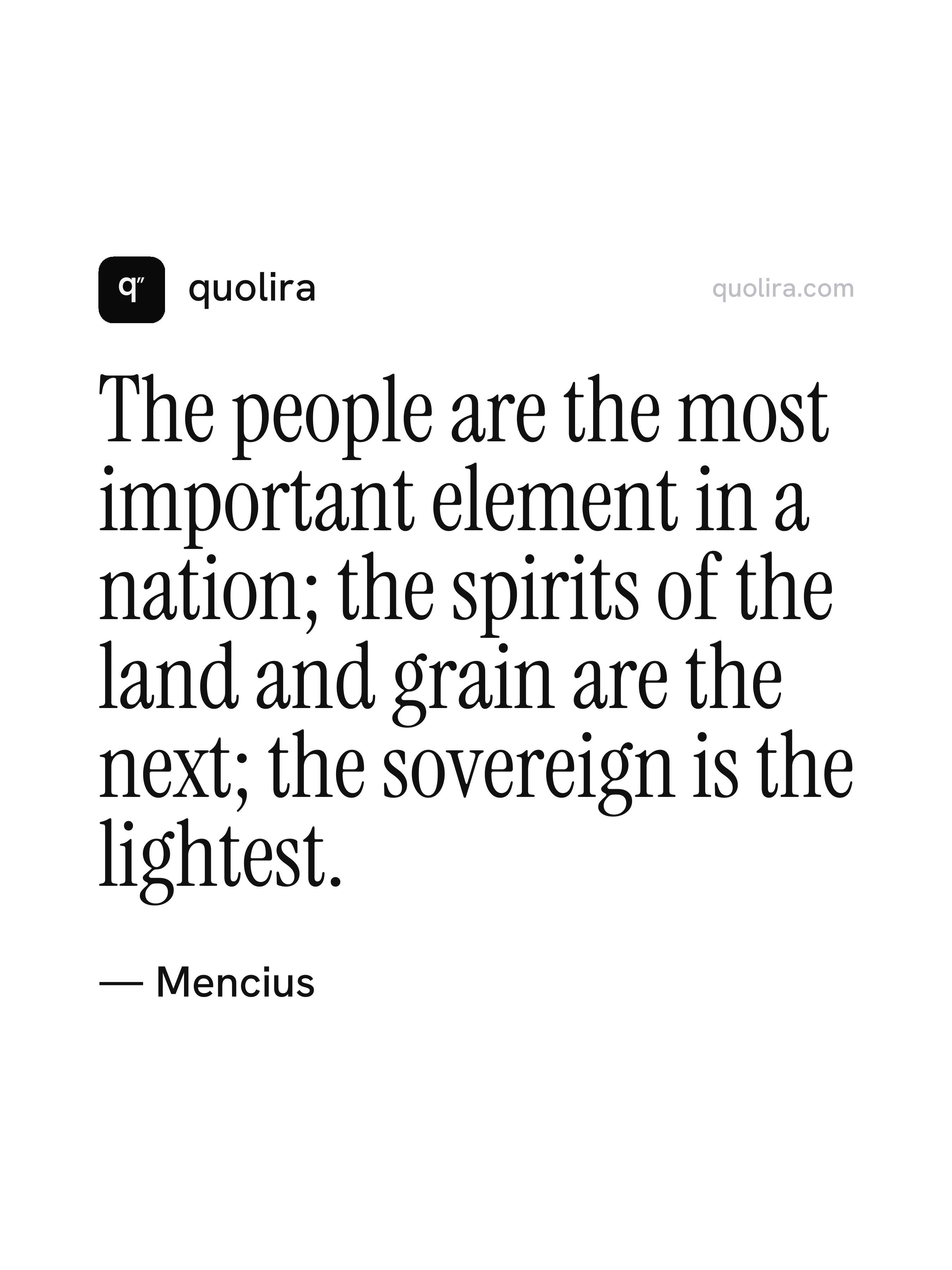
“The people are the most important element in a nation; the spirits of the land and grain are the next; the sovereign is the lightest.”
Mencius · Mencius, Book VII B
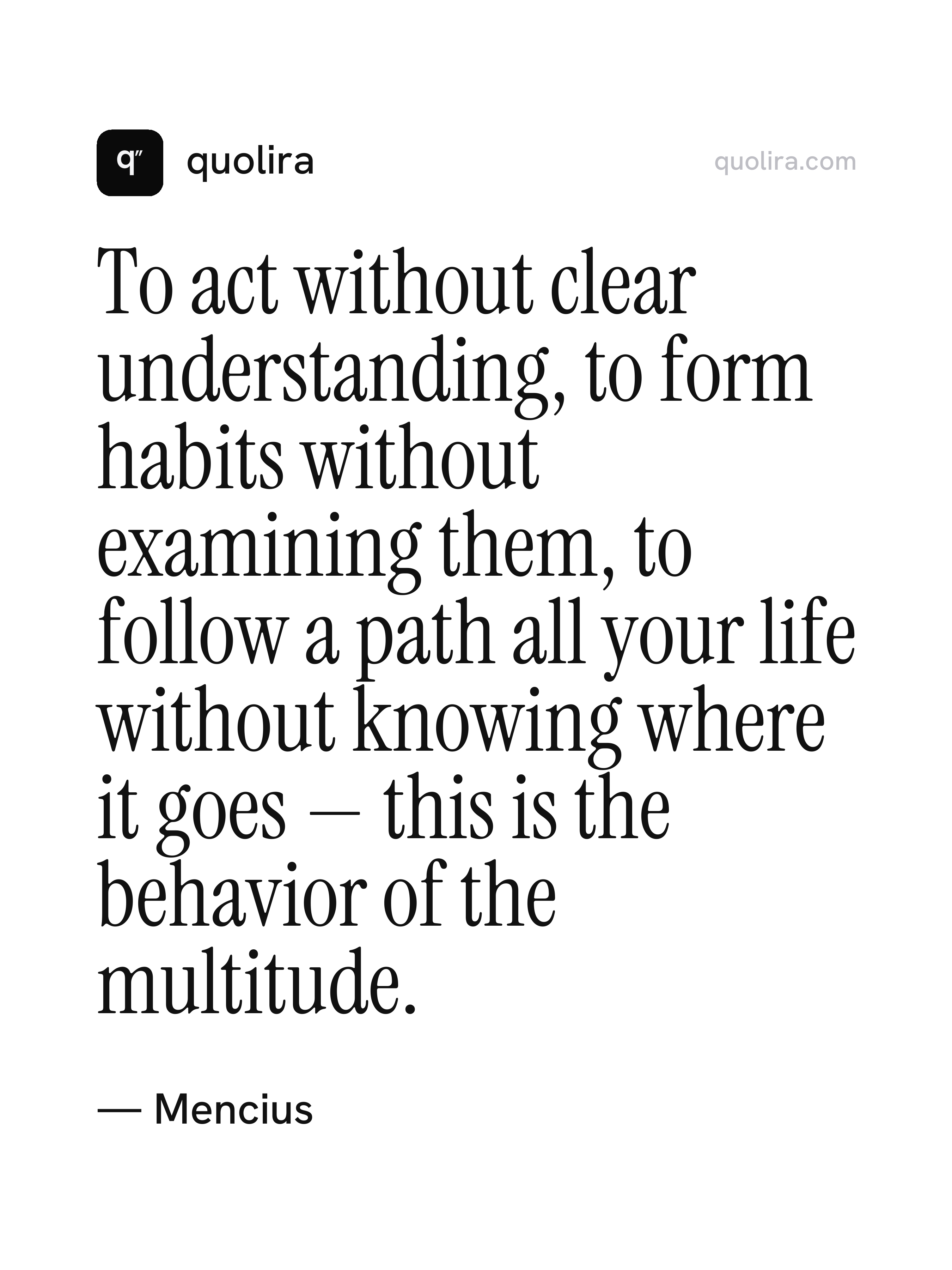
“To act without clear understanding, to form habits without examining them, to follow a path all your life without knowing where it goes — this is the behavior of the multitude.”
Mencius · Mencius, Book VII A
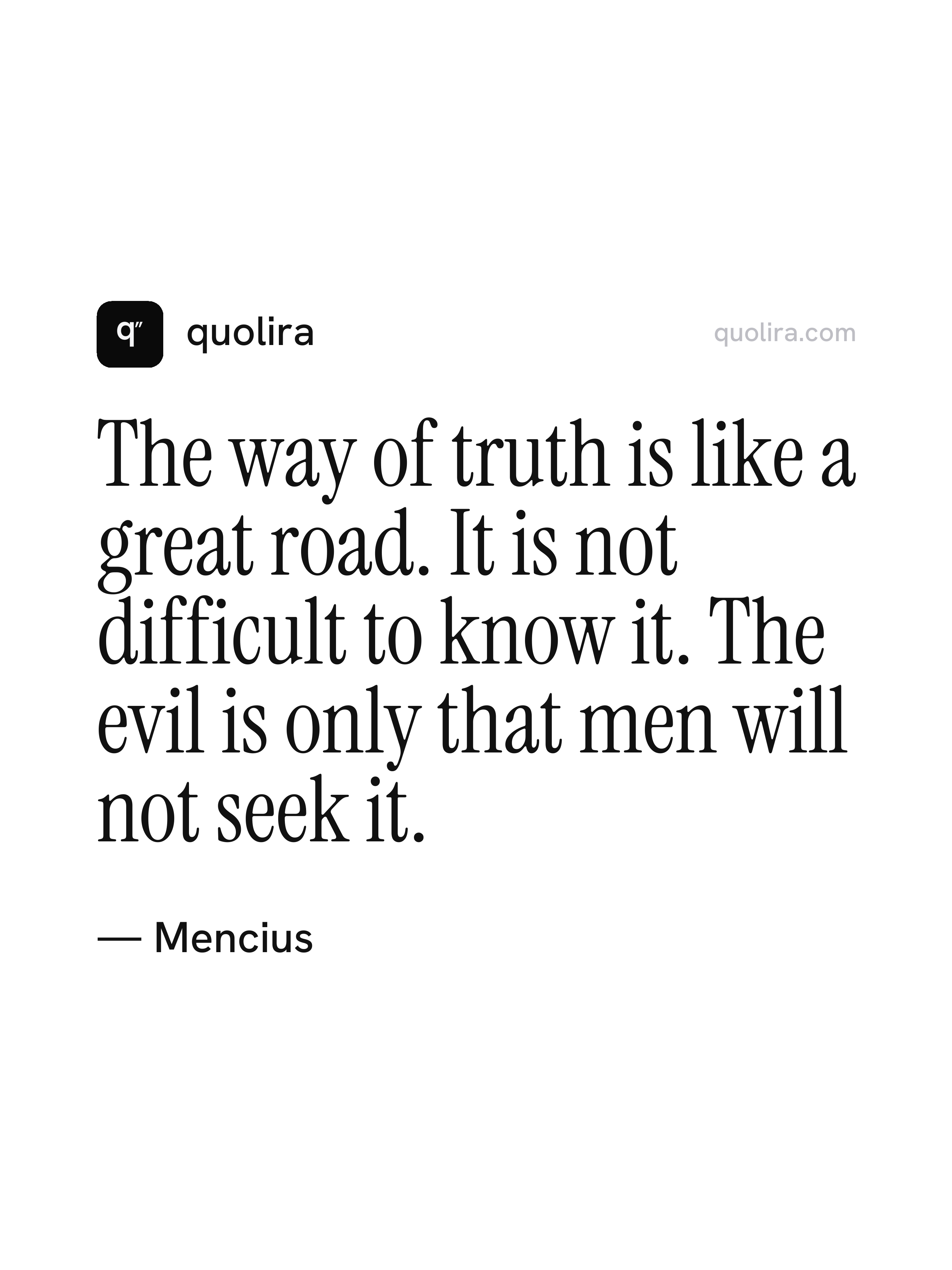
“The way of truth is like a great road. It is not difficult to know it. The evil is only that men will not seek it.”
Mencius · Mencius, Book VI B
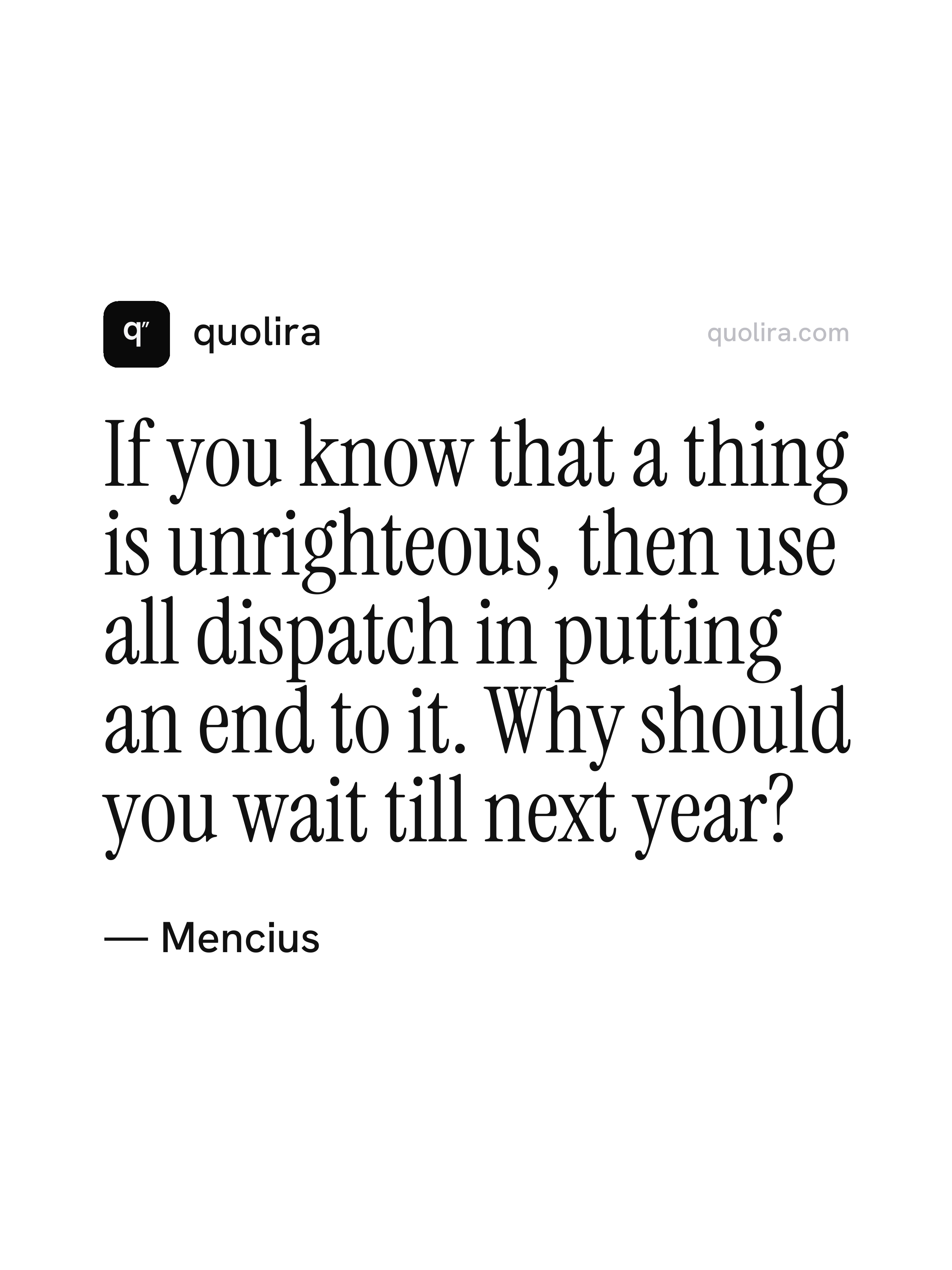
“If you know that a thing is unrighteous, then use all dispatch in putting an end to it. Why should you wait till next year?”
Mencius · Mencius, Book III B
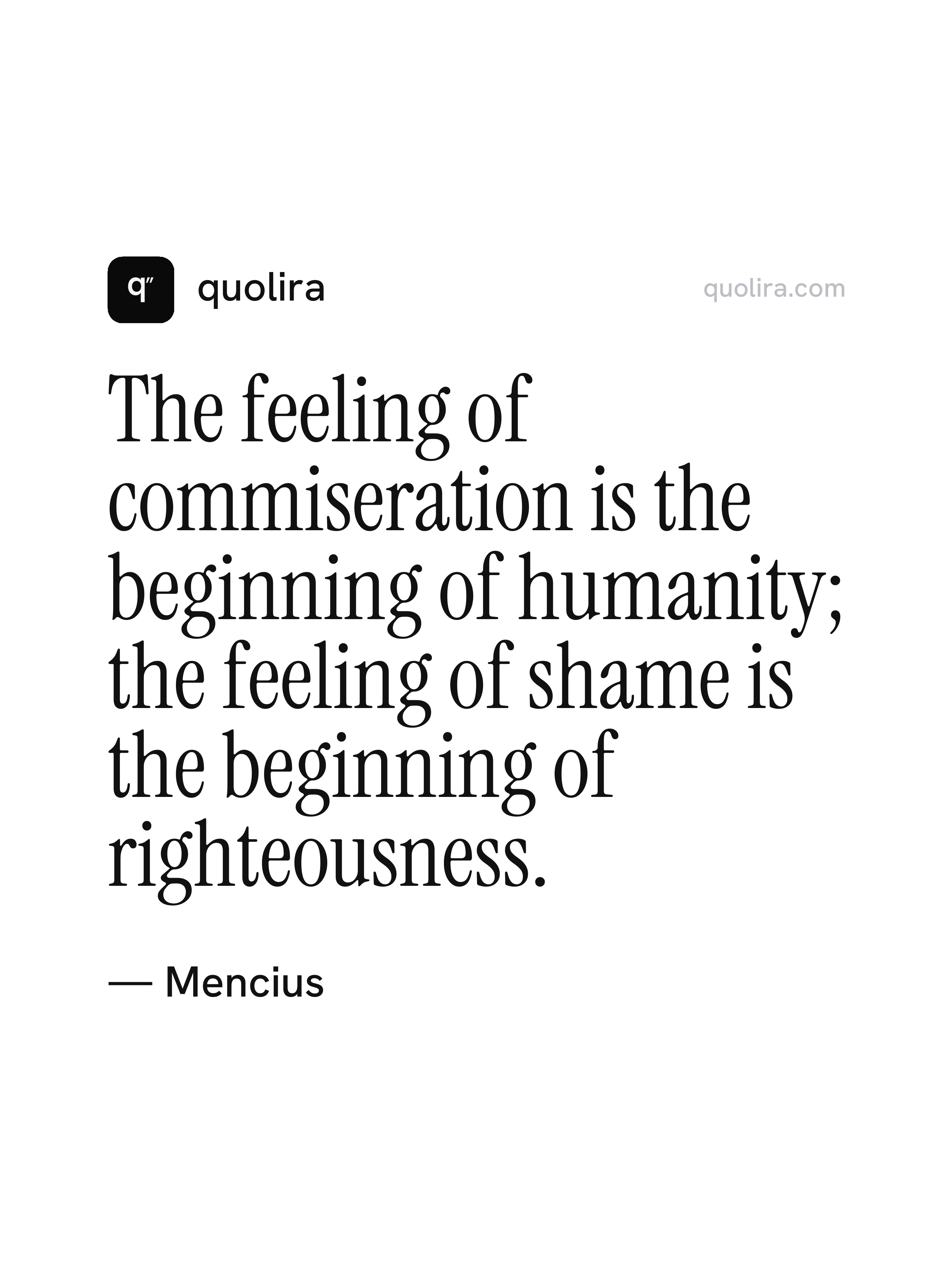
“The feeling of commiseration is the beginning of humanity; the feeling of shame is the beginning of righteousness.”
Mencius · Mencius, Book II A
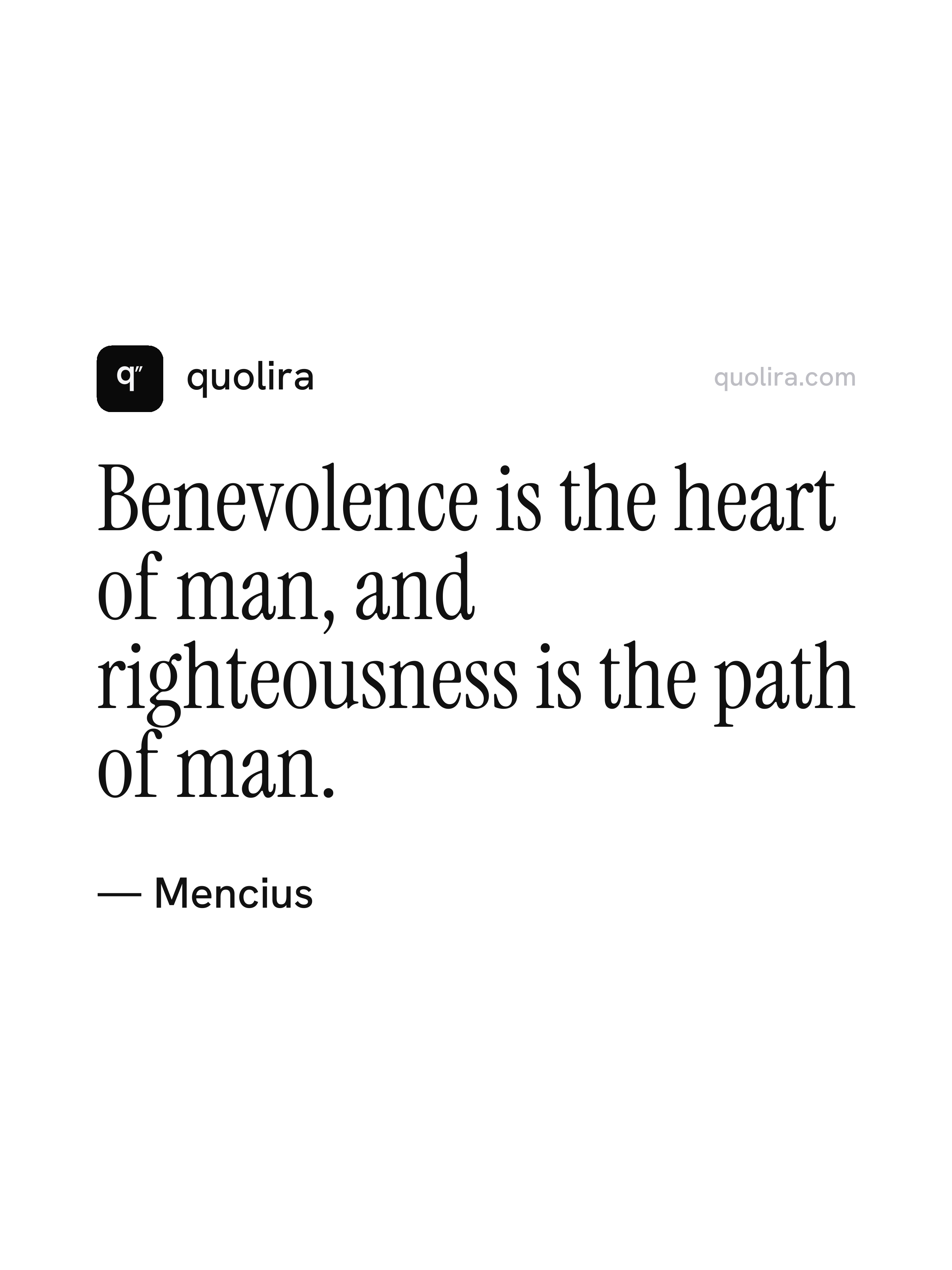
“Benevolence is the heart of man, and righteousness is the path of man.”
Mencius · Mencius, Book VI A
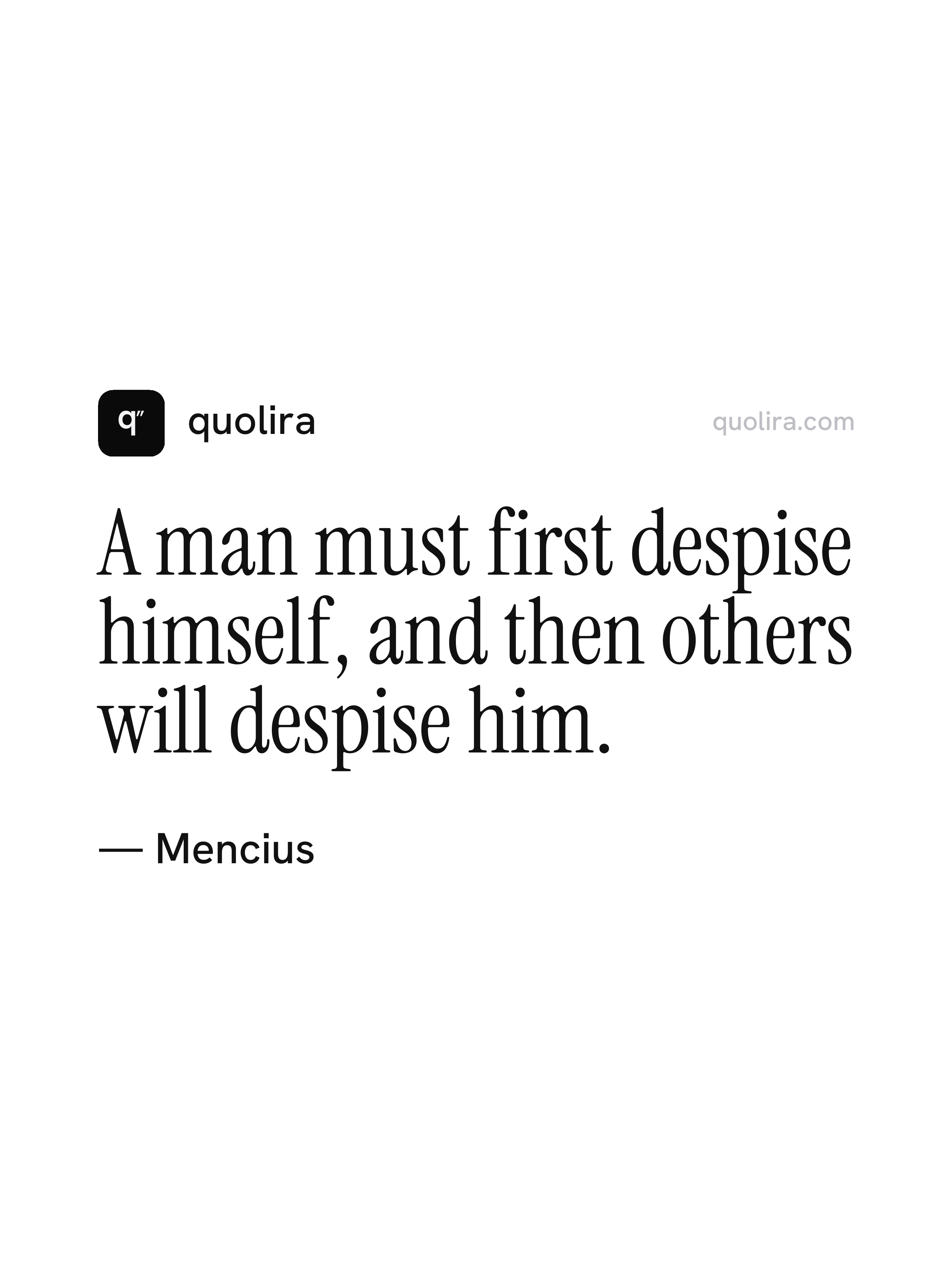
“A man must first despise himself, and then others will despise him.”
Mencius · Mencius, Book IV A