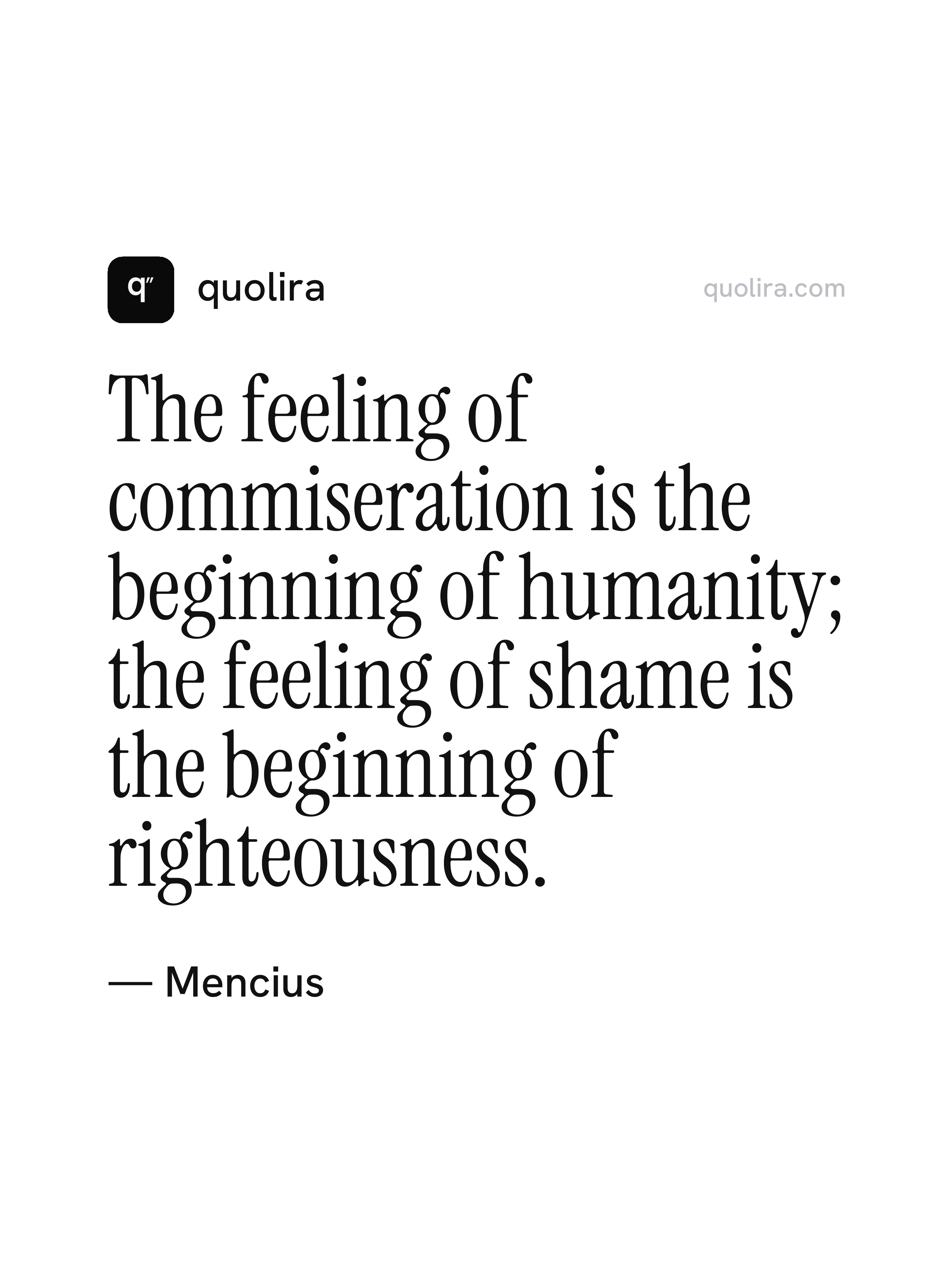
“The feeling of commiseration is the beginning of humanity; the feeling of shame is the beginning of righteousness.”
Mencius · Mencius, Book II A
 quolira
.com
quolira
quolira.com
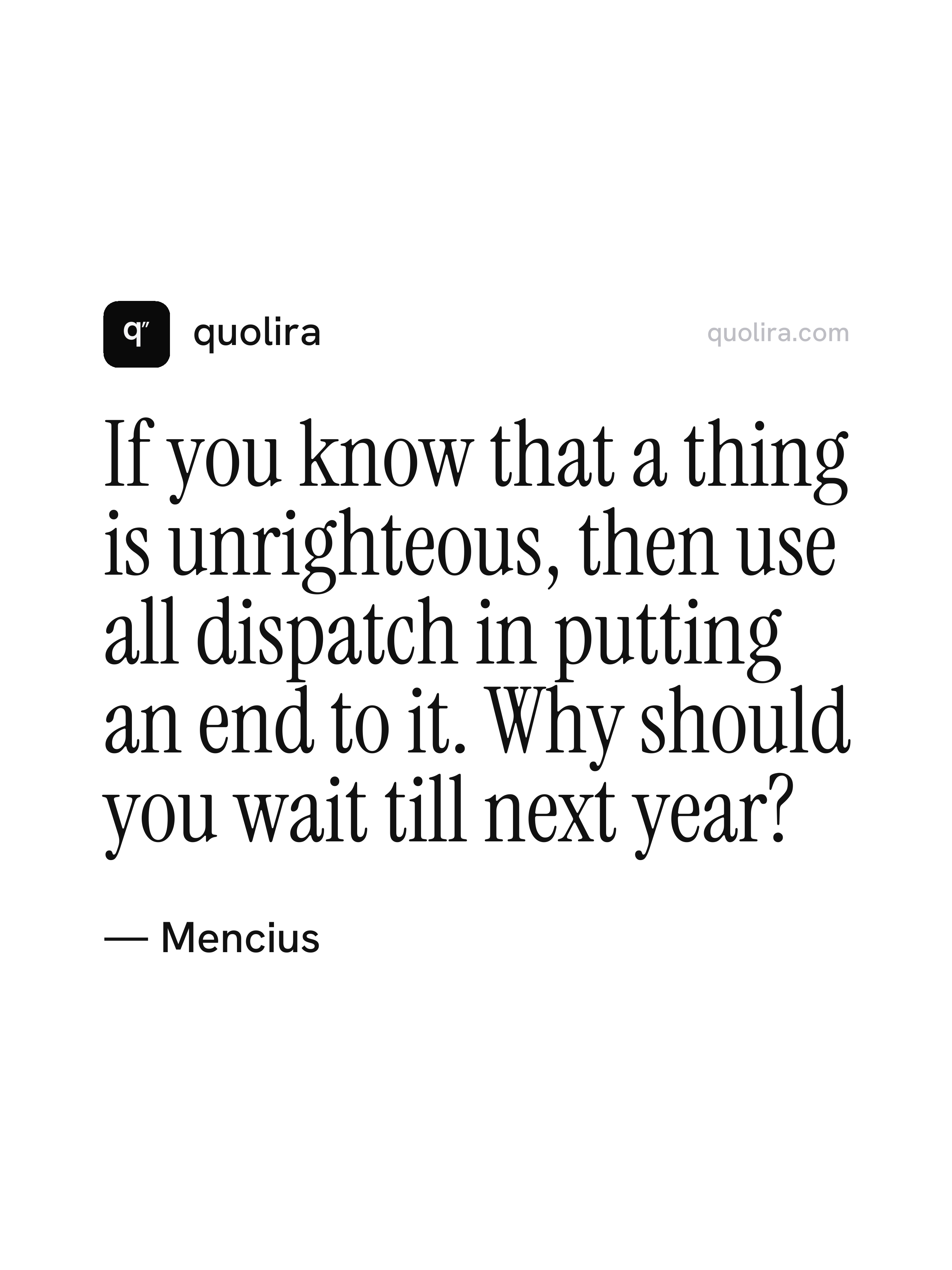
The question at the heart of this line is sharp and a little impatient: if you already know something is wrong, what possible reason could justify waiting to stop it? The rhetorical force of asking why you should wait until next year is designed to expose how hollow most excuses for delay really are. Knowing that something is unjust and continuing with it anyway is not a minor failing in Mencius's view; it is a contradiction that undermines the whole purpose of moral understanding.
Mencius was deeply engaged with questions of practical ethics, not just abstract principle. He frequently challenged rulers and individuals to act on what they already knew to be true, rather than hiding behind convenience or the excuse of timing. This quote reflects his broader conviction that moral knowledge is only meaningful when it is connected to action. The gap between recognizing what is wrong and actually correcting it was, for him, not a neutral waiting period but an ongoing moral failure.
Mencius, known in Chinese as Mengzi, lived during the fourth and third centuries BCE and is regarded as the most important Confucian thinker after Confucius himself. He traveled among the states of his era, advising rulers and debating other philosophers. His collected conversations and arguments were compiled into a text that bears his name and became one of the foundational works of Chinese classical thought.
“The feeling of commiseration is the beginning of humanity; the feeling of shame is the beginning of righteousness.”
Mencius · Mencius, Book II A
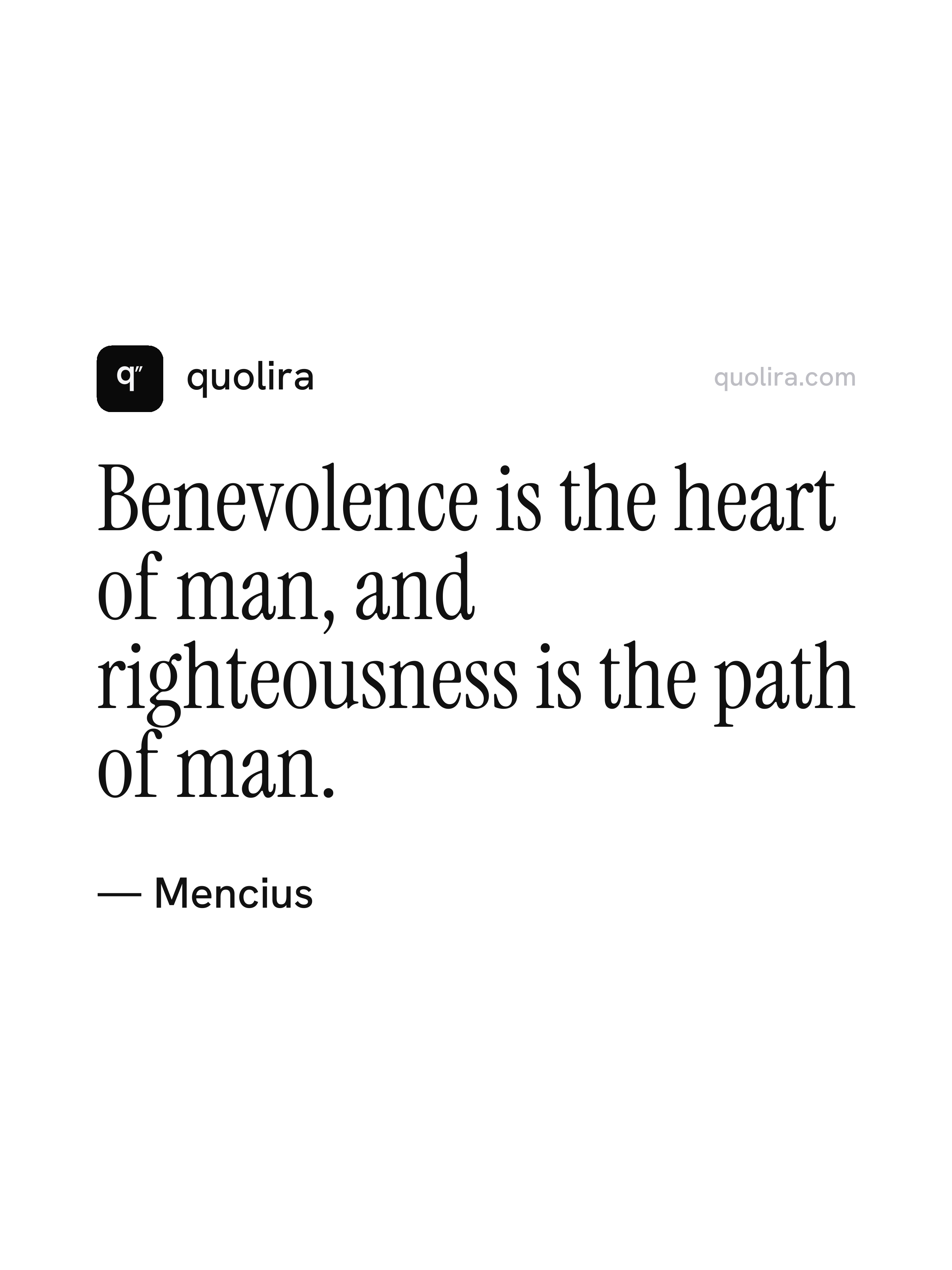
“Benevolence is the heart of man, and righteousness is the path of man.”
Mencius · Mencius, Book VI A
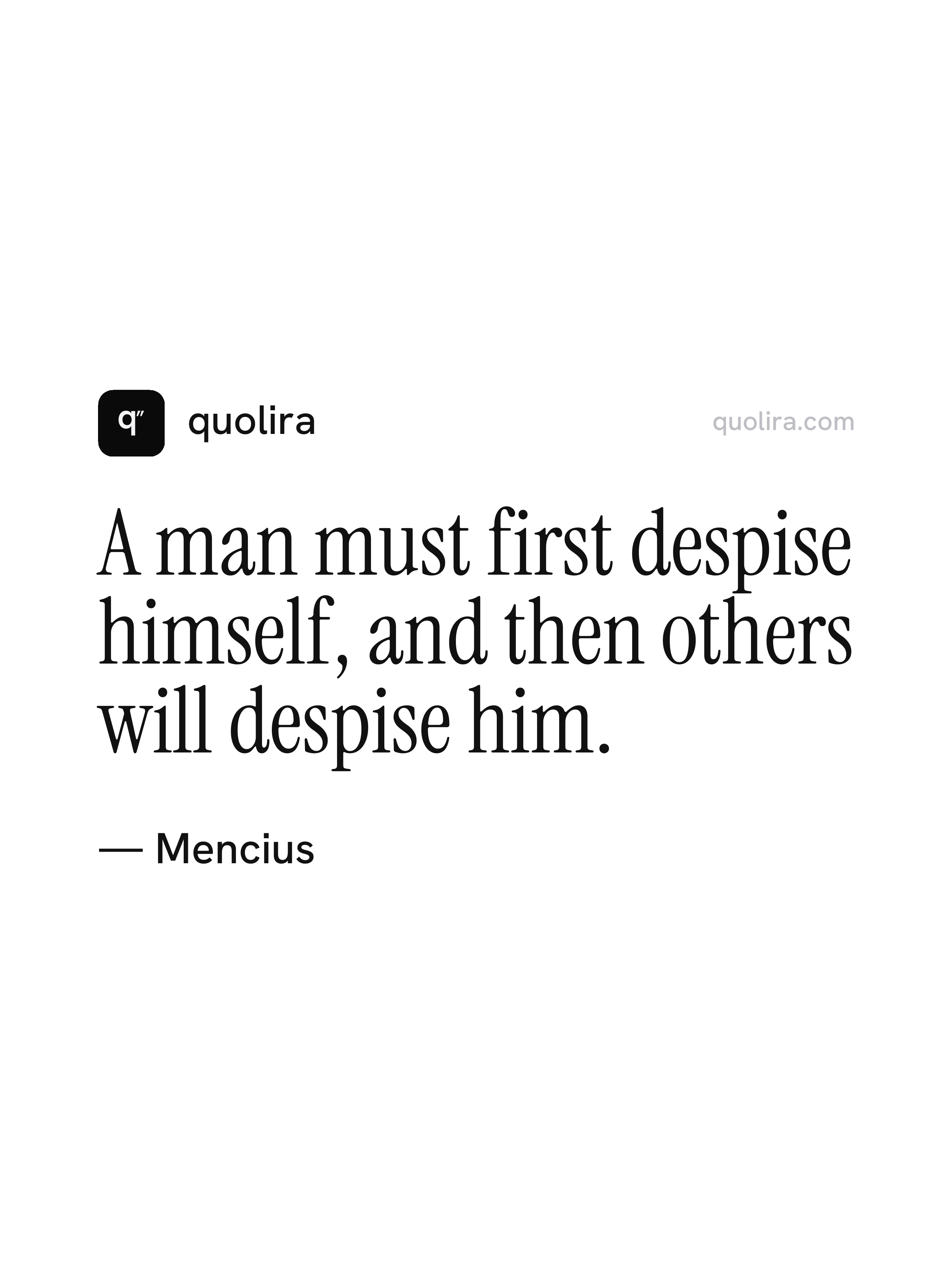
“A man must first despise himself, and then others will despise him.”
Mencius · Mencius, Book IV A
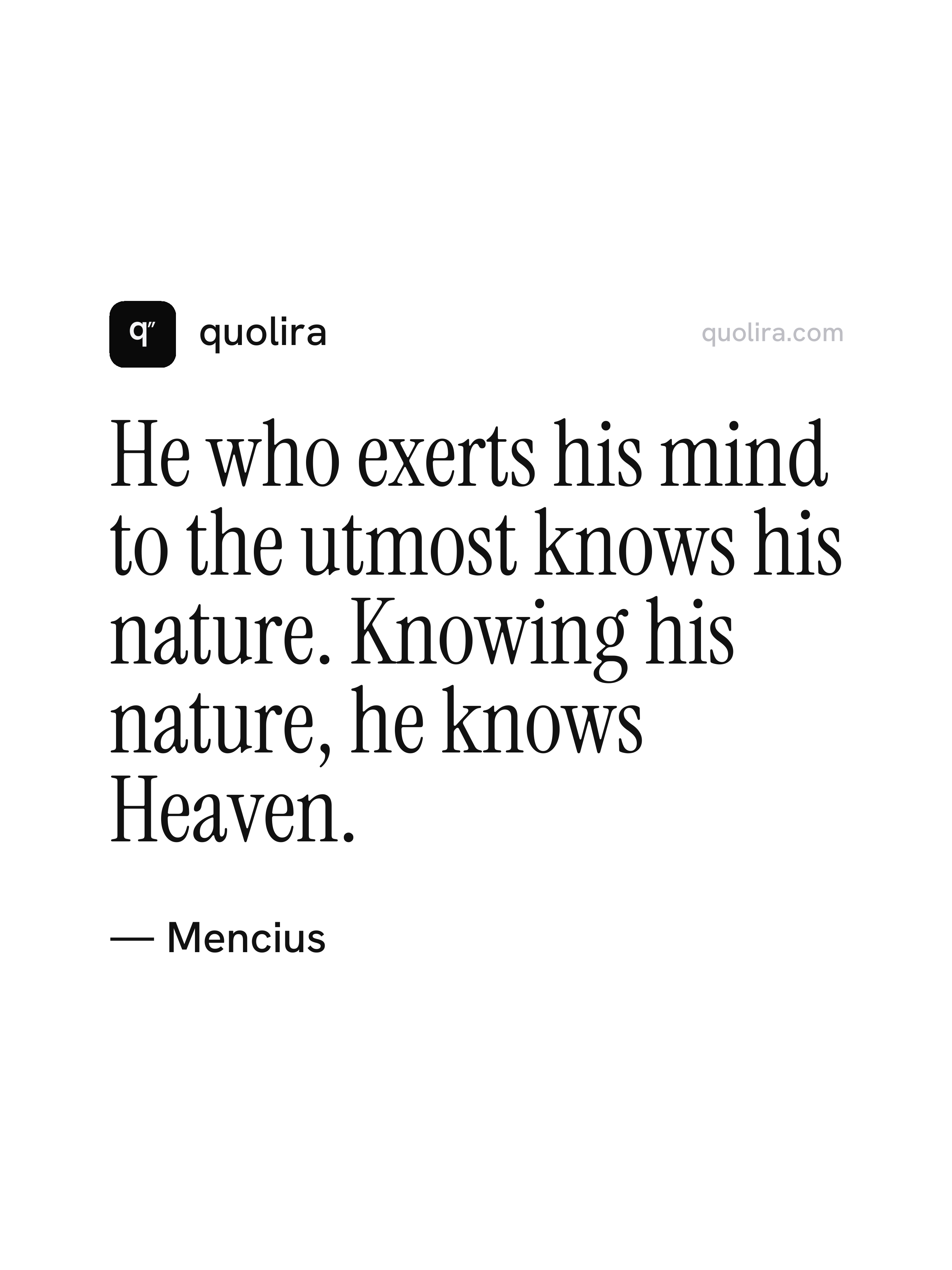
“He who exerts his mind to the utmost knows his nature. Knowing his nature, he knows Heaven.”
Mencius · Mencius, Book VII A
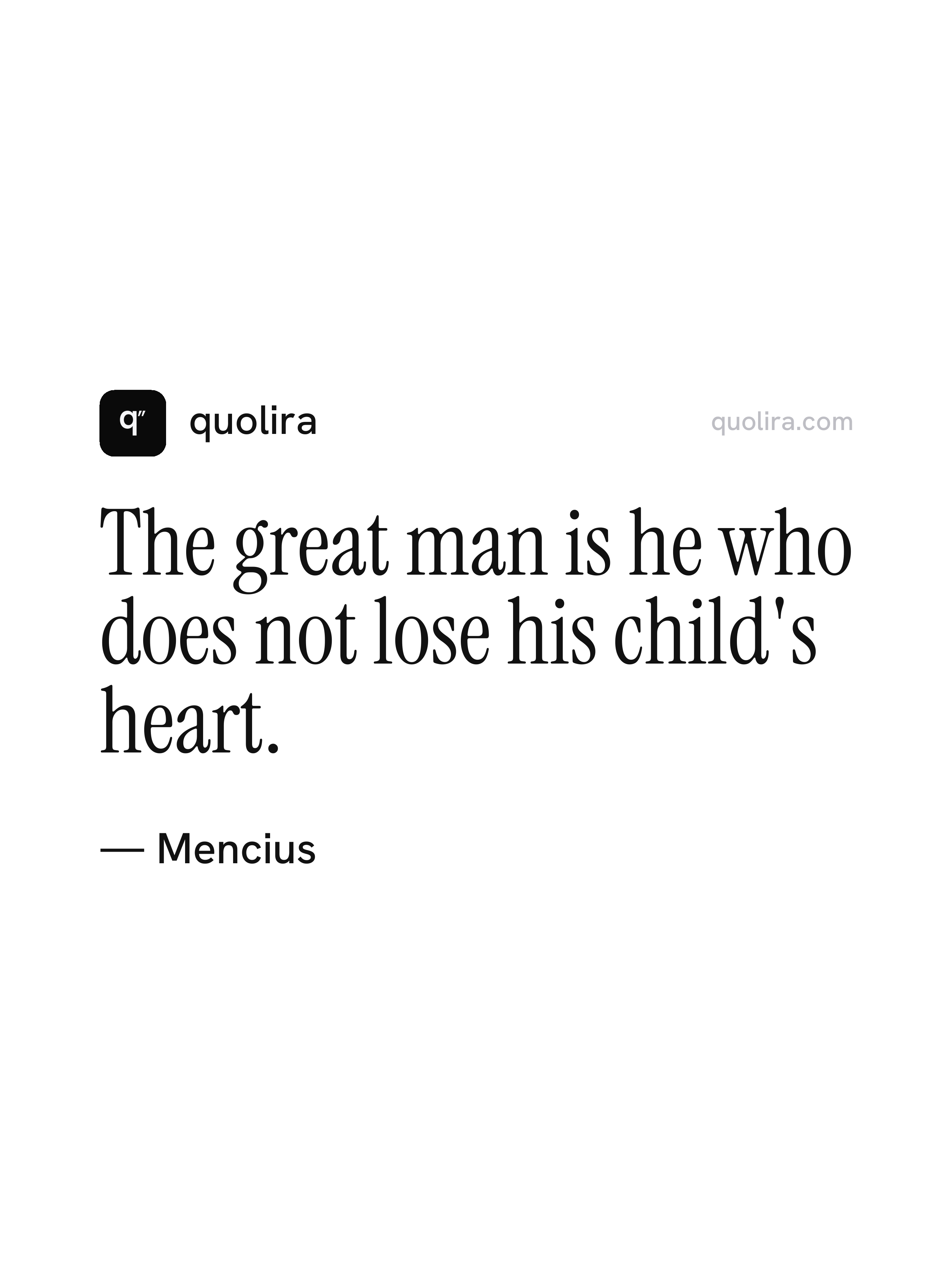
“The great man is he who does not lose his child's heart.”
Mencius · Mencius, Book IV B, c. 4th century BCE
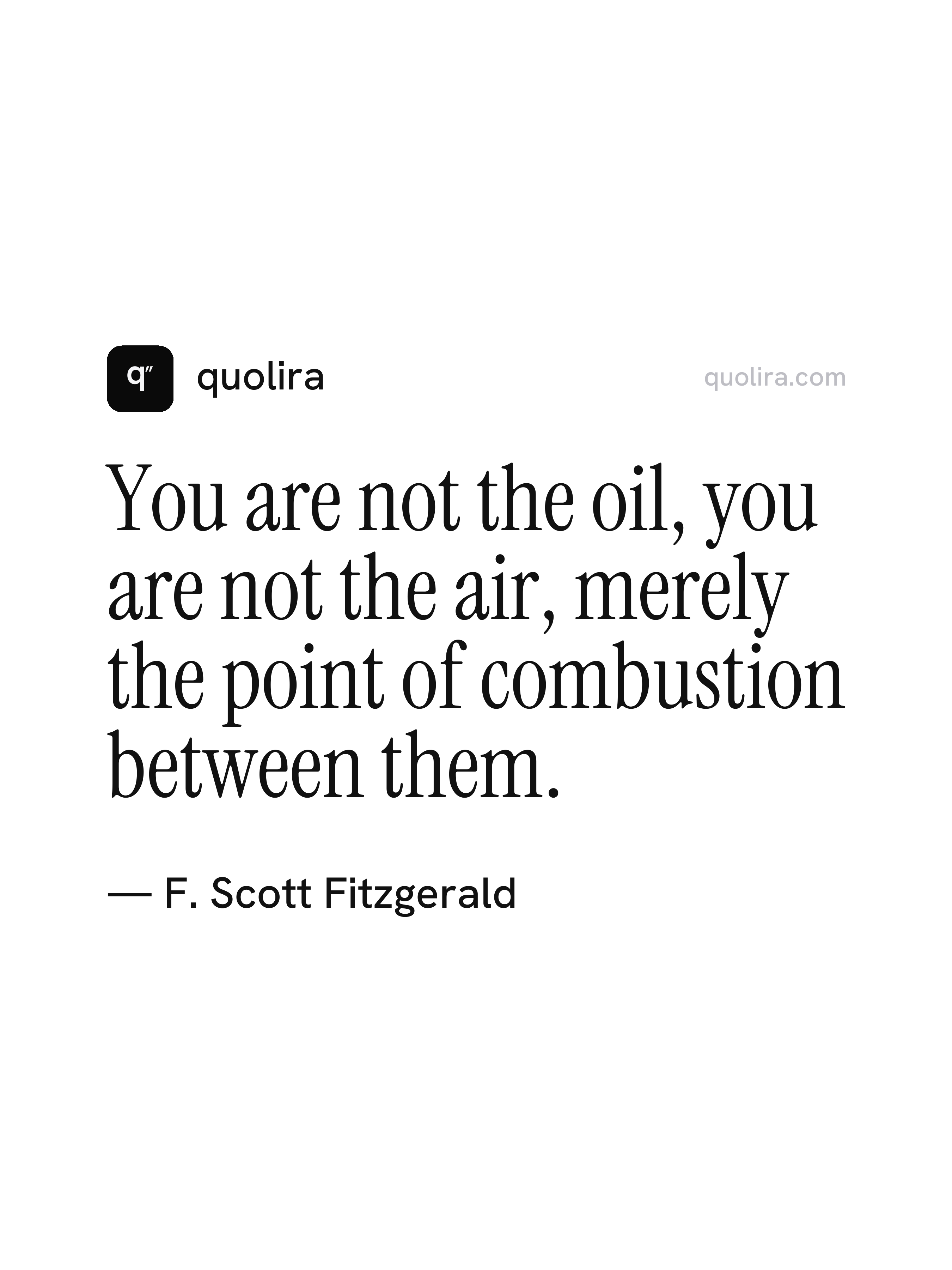
“You are not the oil, you are not the air, merely the point of combustion between them.”
F. Scott Fitzgerald · The Crack-Up, 1936
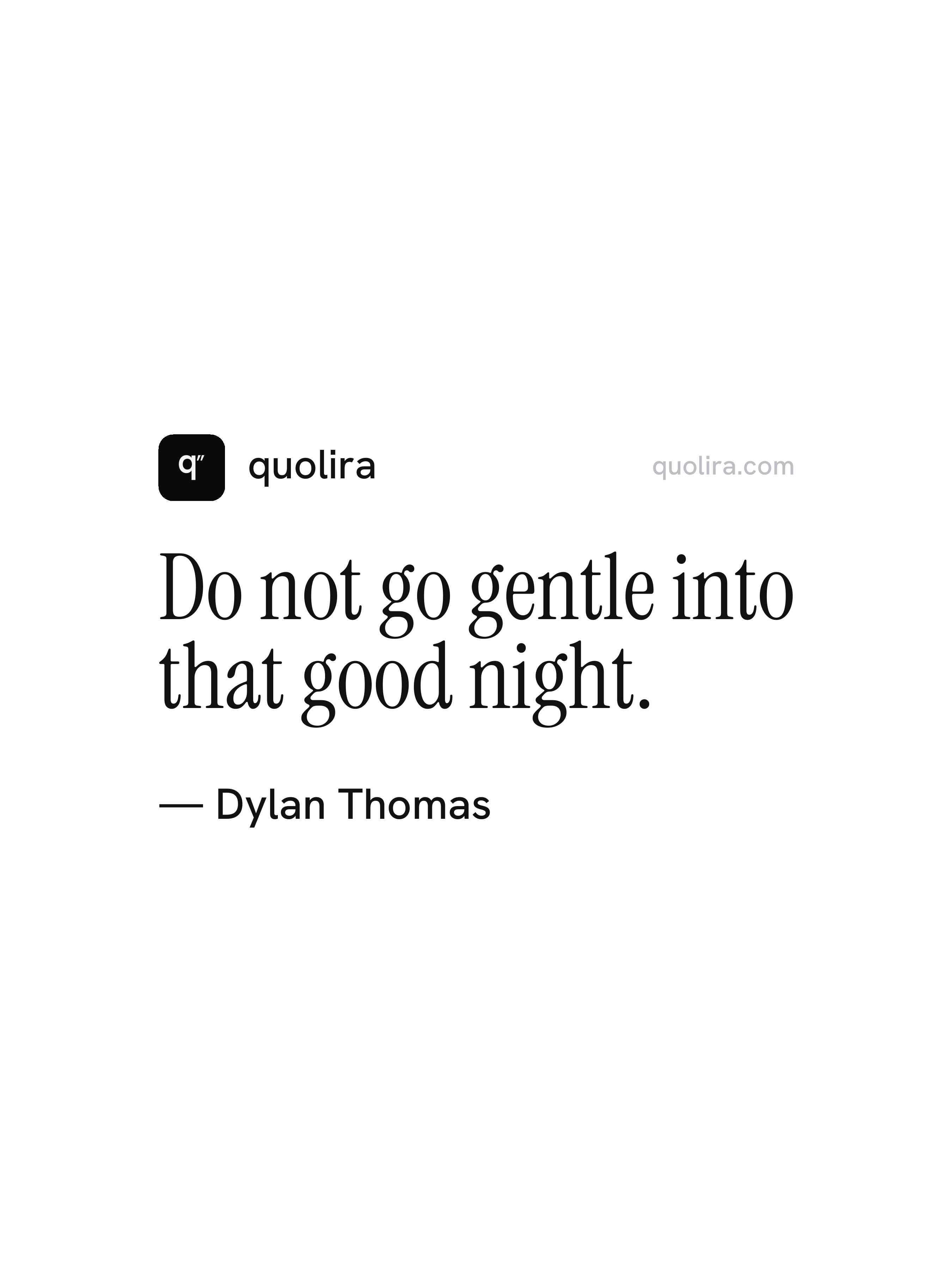
“Do not go gentle into that good night.”
Dylan Thomas · Do Not Go Gentle into That Good Night, 1951
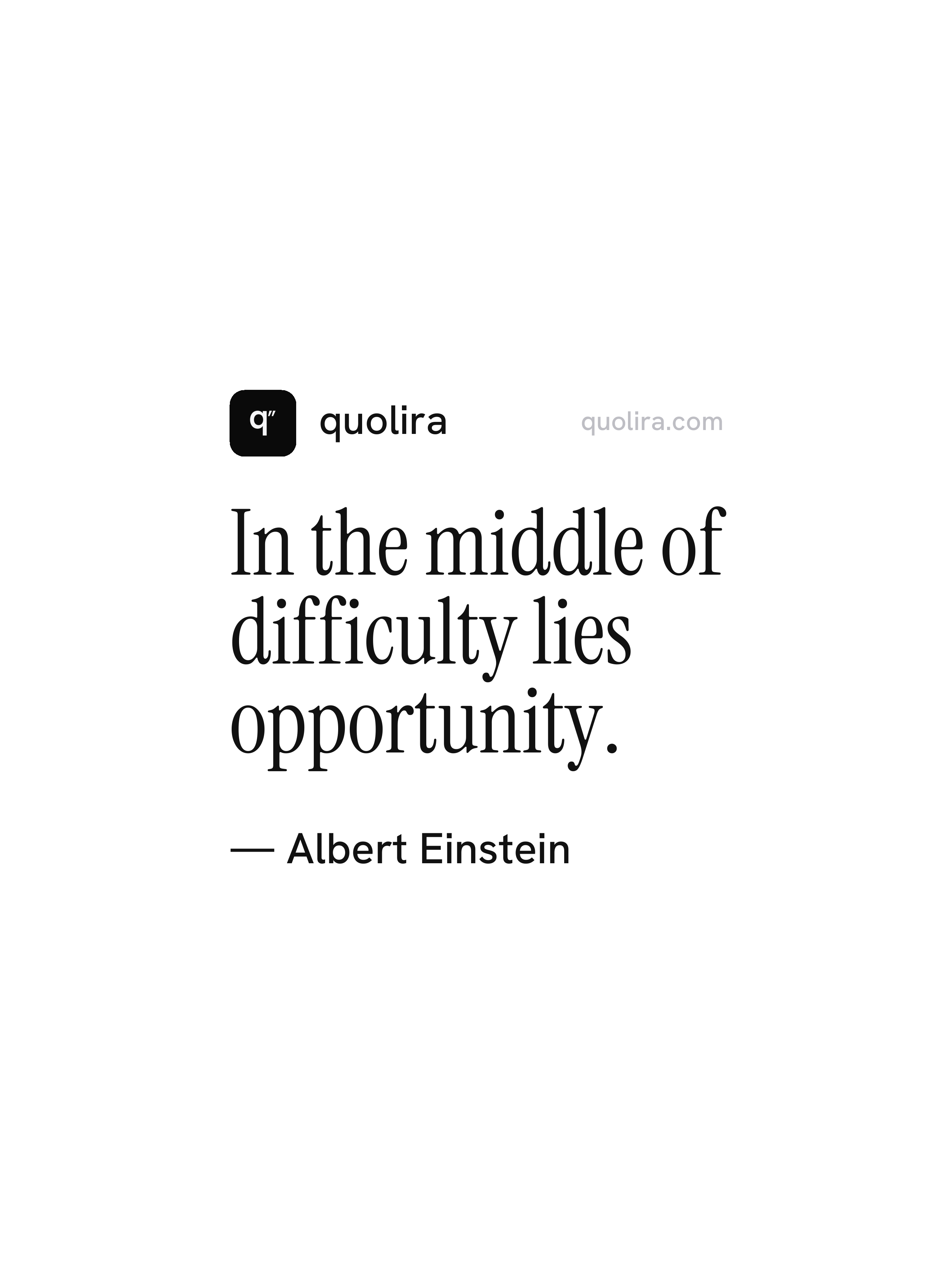
“In the middle of difficulty lies opportunity.”
Albert Einstein · attributed, widely documented
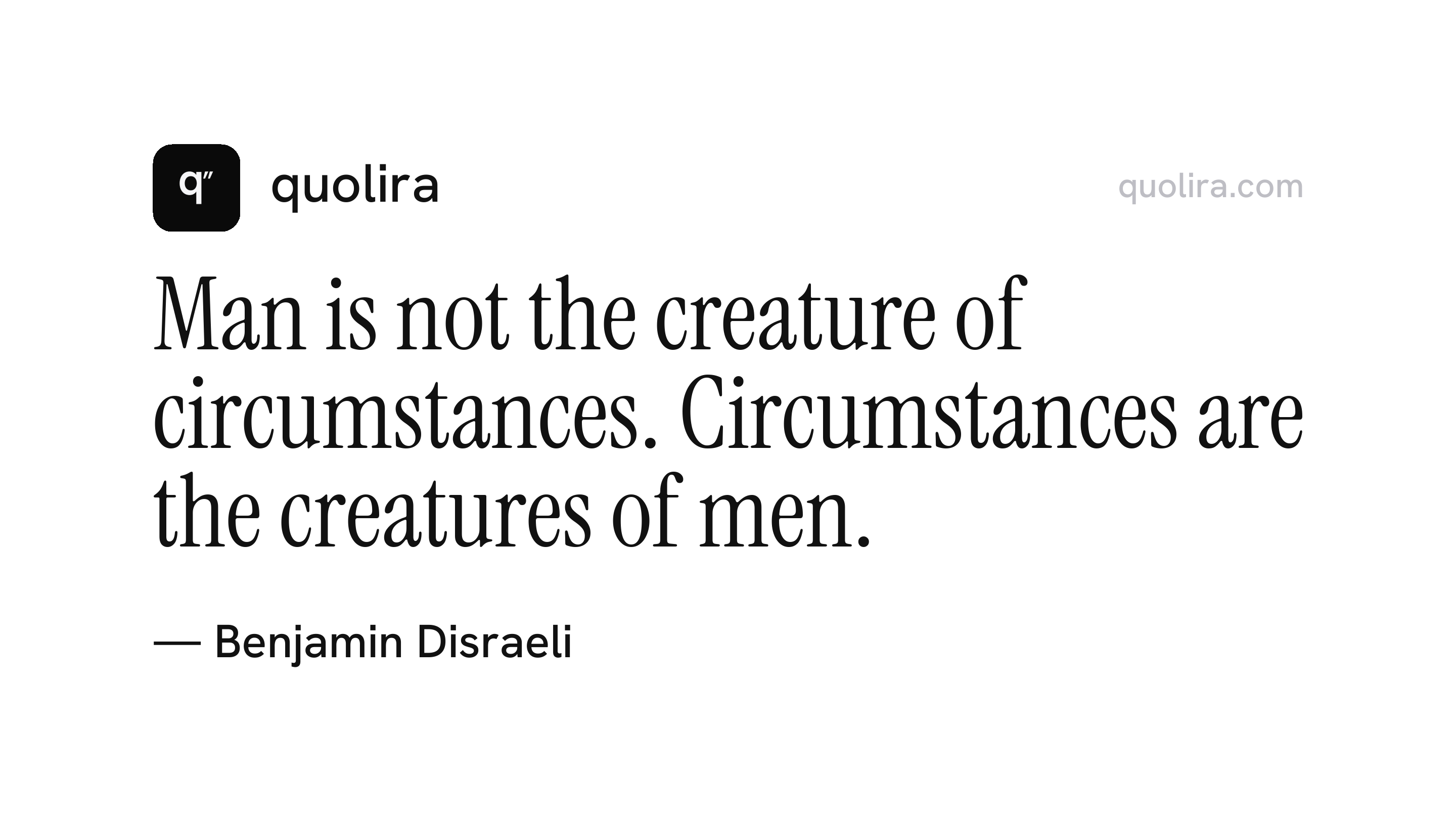
“Man is not the creature of circumstances. Circumstances are the creatures of men.”
Benjamin Disraeli · Vivian Grey, 1826
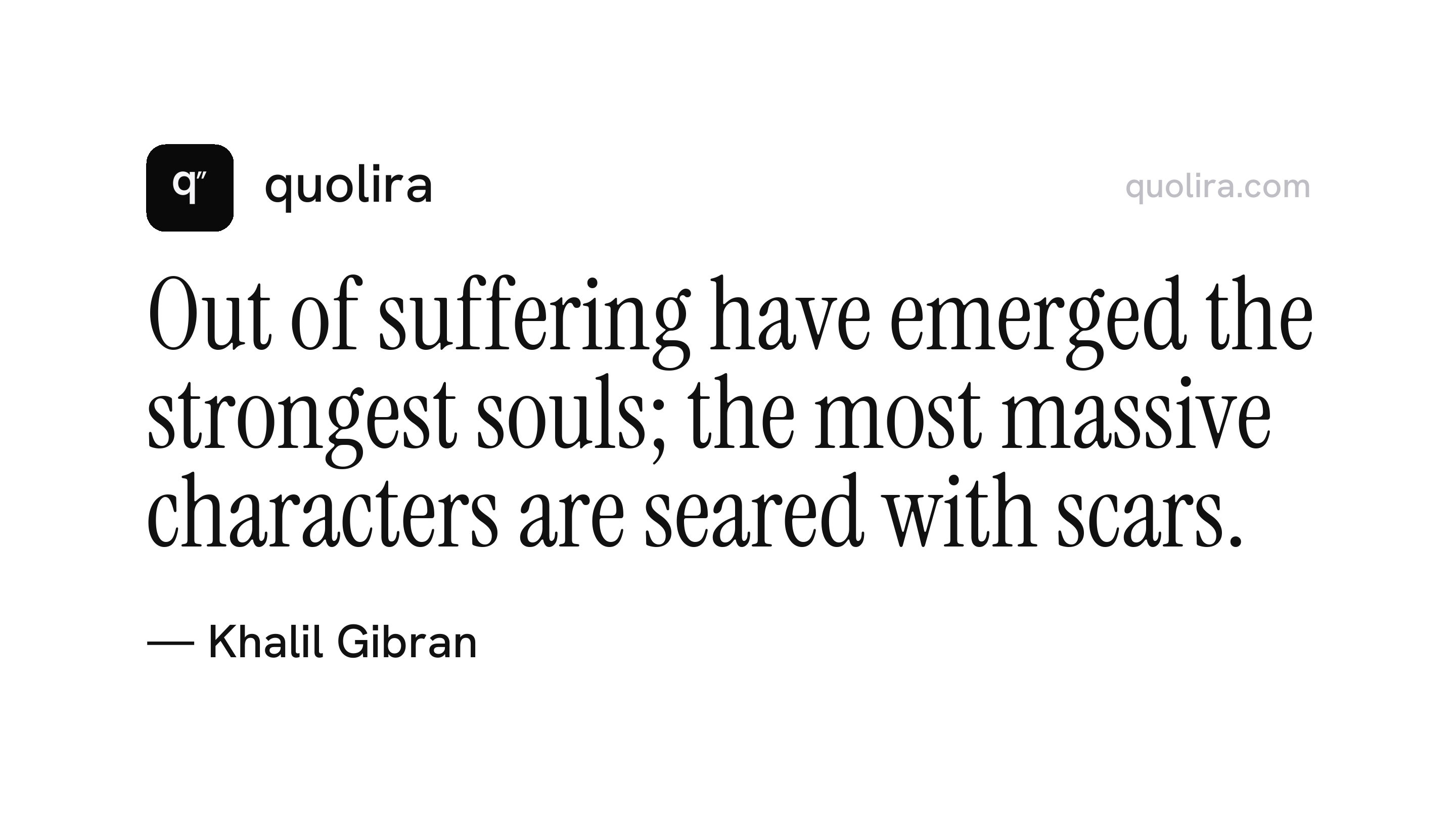
“Out of suffering have emerged the strongest souls; the most massive characters are seared with scars.”
Khalil Gibran · The Prophet, 1923
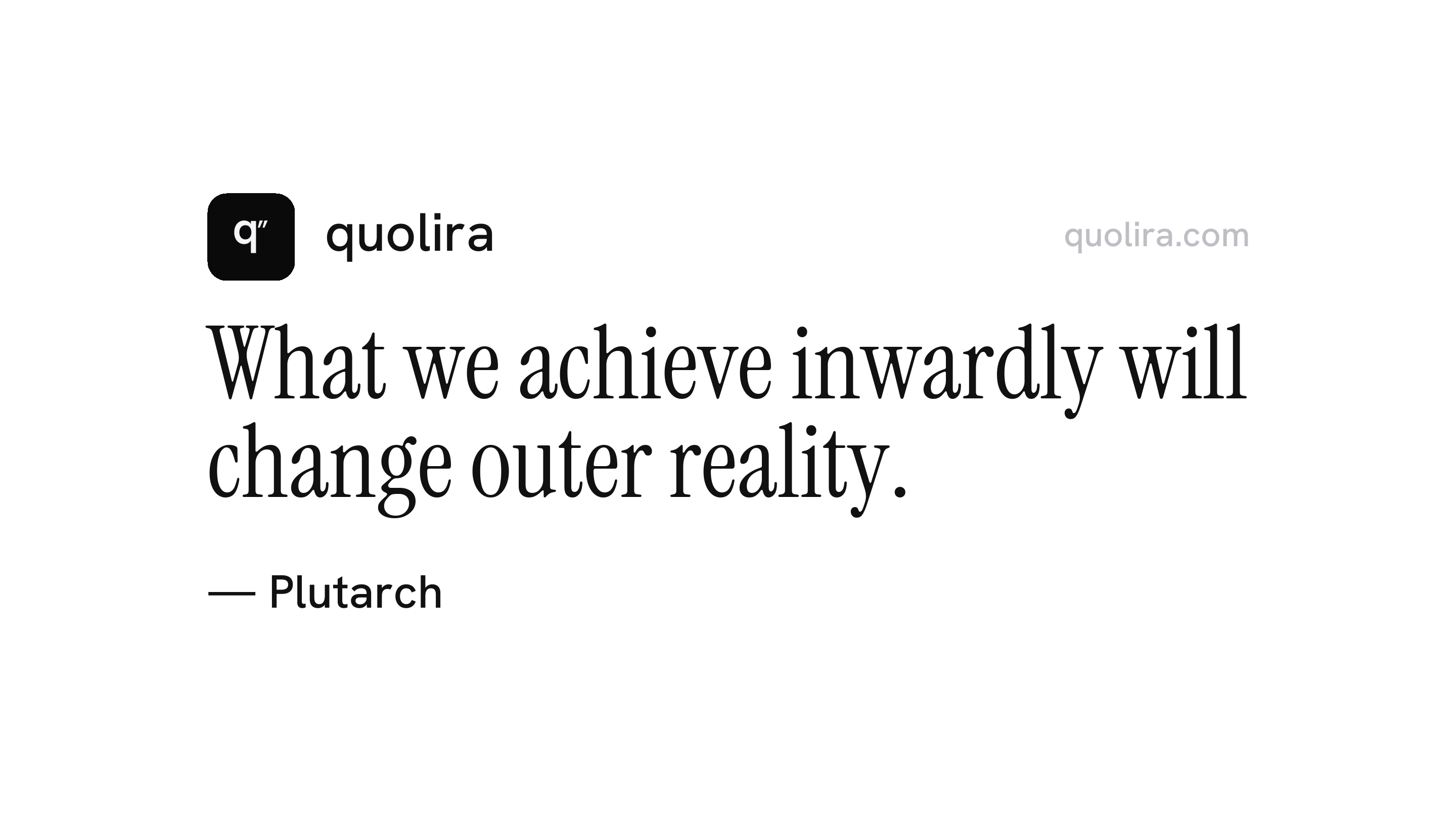
“What we achieve inwardly will change outer reality.”
Plutarch · Moralia, c. 100 AD
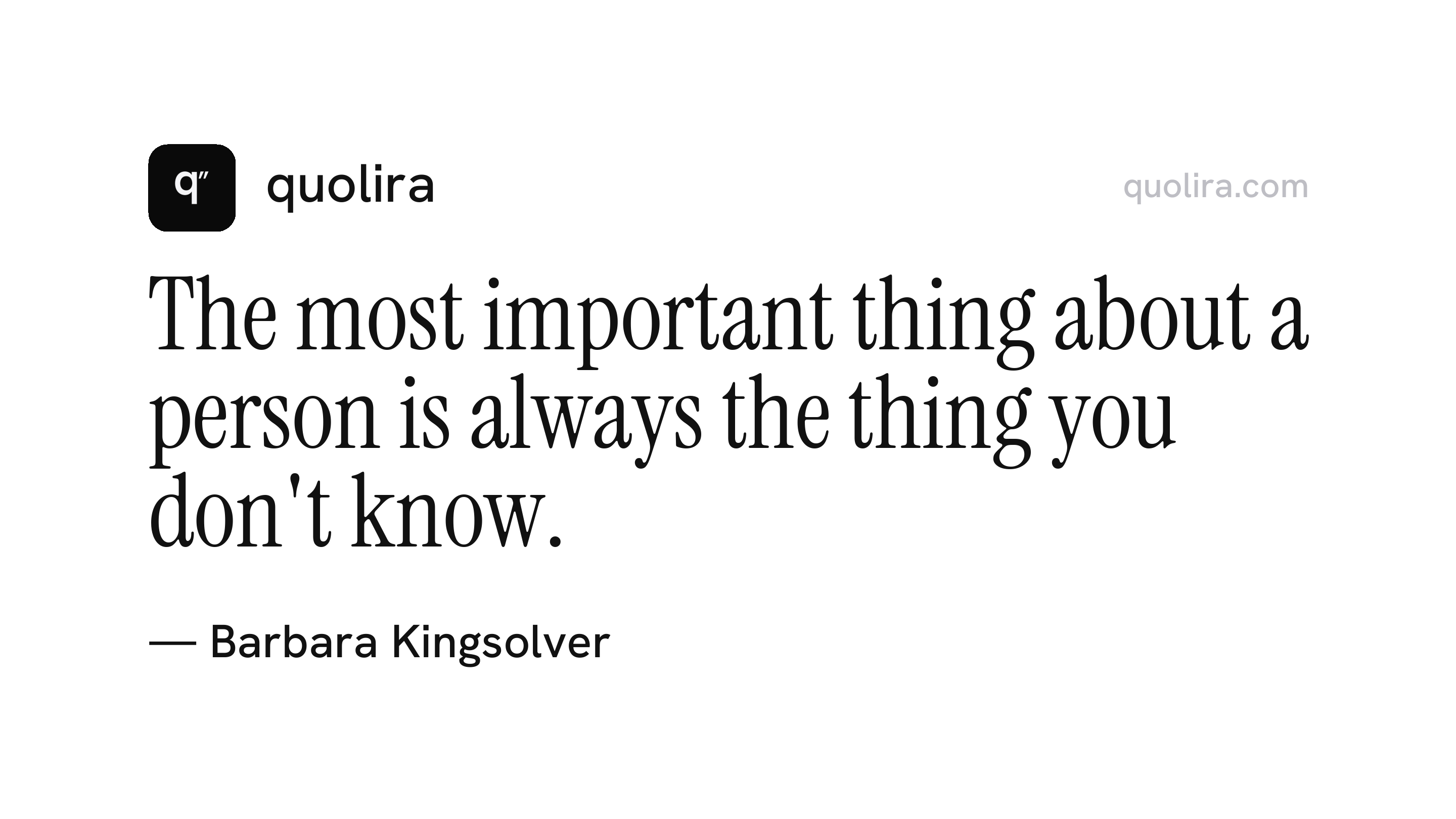
“The most important thing about a person is always the thing you don't know.”
Barbara Kingsolver · The Lacuna, 2009