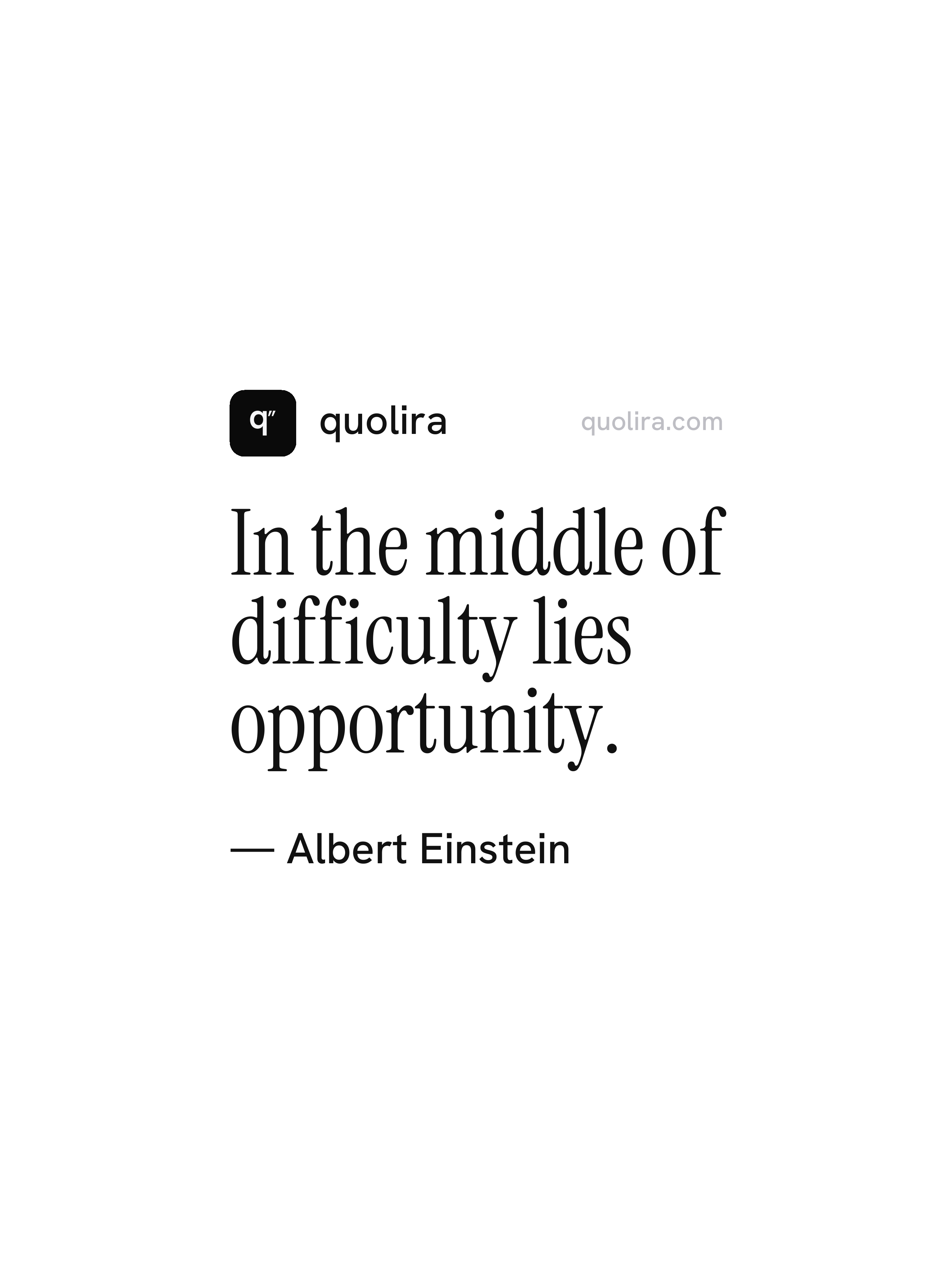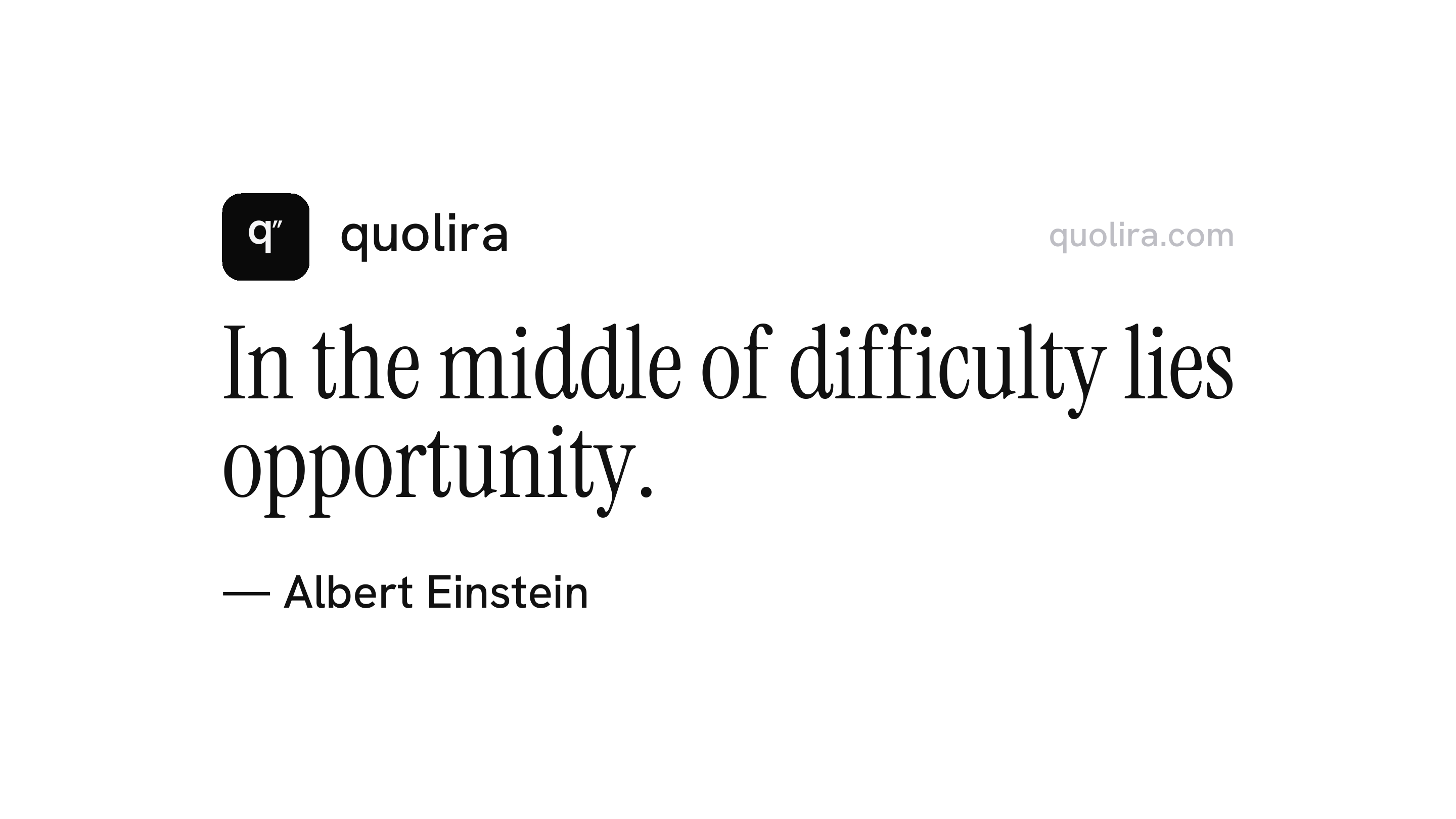
“In the middle of difficulty lies opportunity.”
Albert Einstein · attributed, widely documented
 quolira
.com
quolira
quolira.com
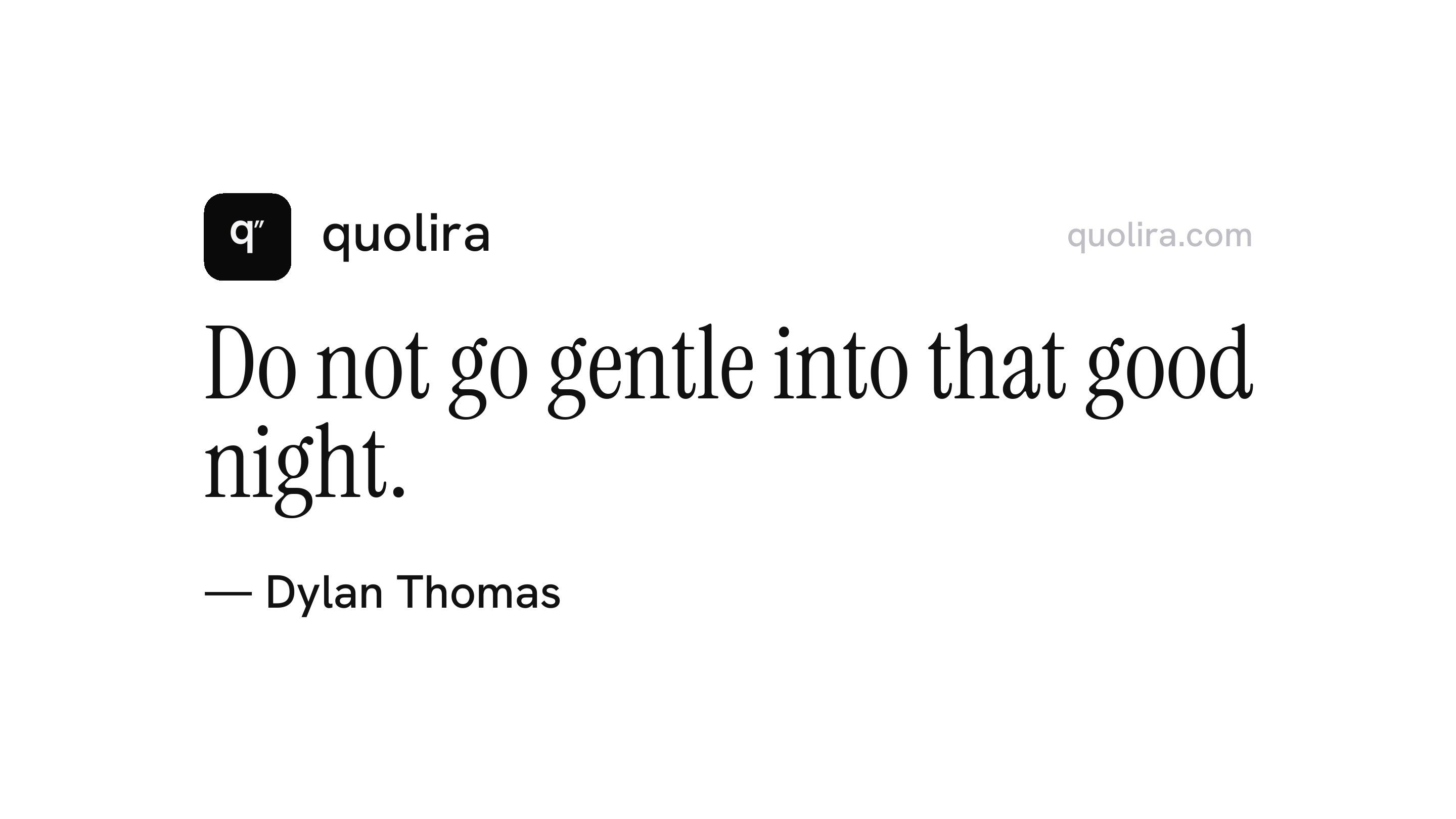
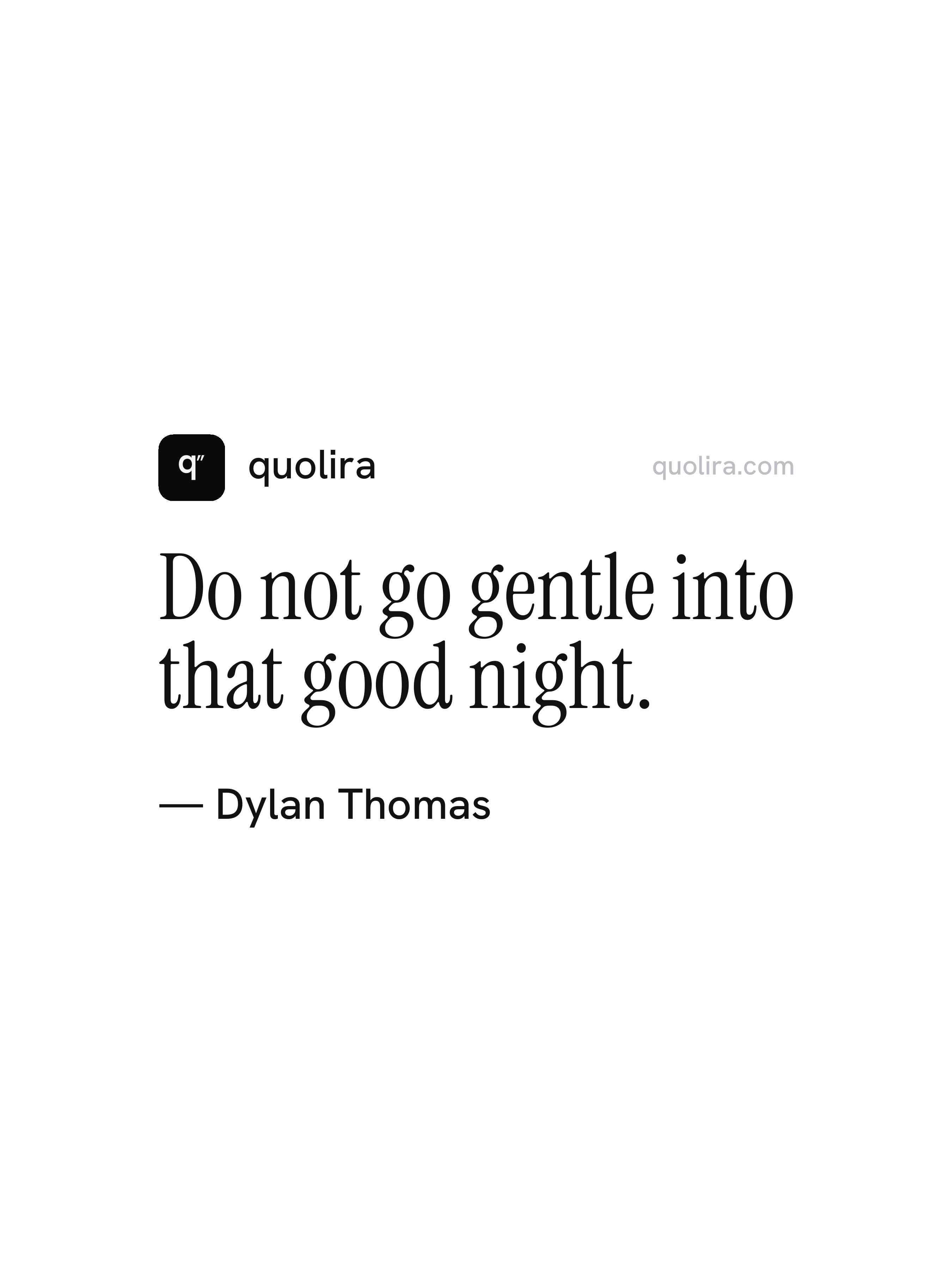
Thomas is urging defiance in the face of death. The phrase "that good night" is a metaphor for dying, and the word "gentle" is the key: he is insisting that death should not be accepted passively or quietly. The poem calls for resistance, for rage against the fading of life and consciousness. It is not a denial of death's inevitability but a demand that it be met with all the energy and will a person has left. The emotional force of the poem comes from that tension between the inevitable and the refusal to yield to it.
Dylan Thomas wrote this villanelle in the early 1950s, and it is widely understood to have been addressed to his dying father. The poem uses the strict formal structure of the villanelle, with its repeating lines and tight rhyme scheme, to contain what is in fact a deeply emotional and almost desperate argument. The contrast between the controlled, elegant form and the raw, urgent content is part of what gives the poem its power. It was published in 1951 and has since become one of the most recognized poems in the English language.
Dylan Thomas was a Welsh poet and writer born in Swansea in 1914. He began publishing poetry as a teenager and quickly developed a distinctive voice marked by rich sound, dense imagery, and emotional intensity. He was also known for his radio broadcasts, short stories, and the play for voices Under Milk Wood. Thomas gained a wide following on both sides of the Atlantic, partly through his dramatic public readings. He died in New York in 1953 at the age of thirty-nine, leaving behind a relatively small but deeply influential body of work.
“In the middle of difficulty lies opportunity.”
Albert Einstein · attributed, widely documented
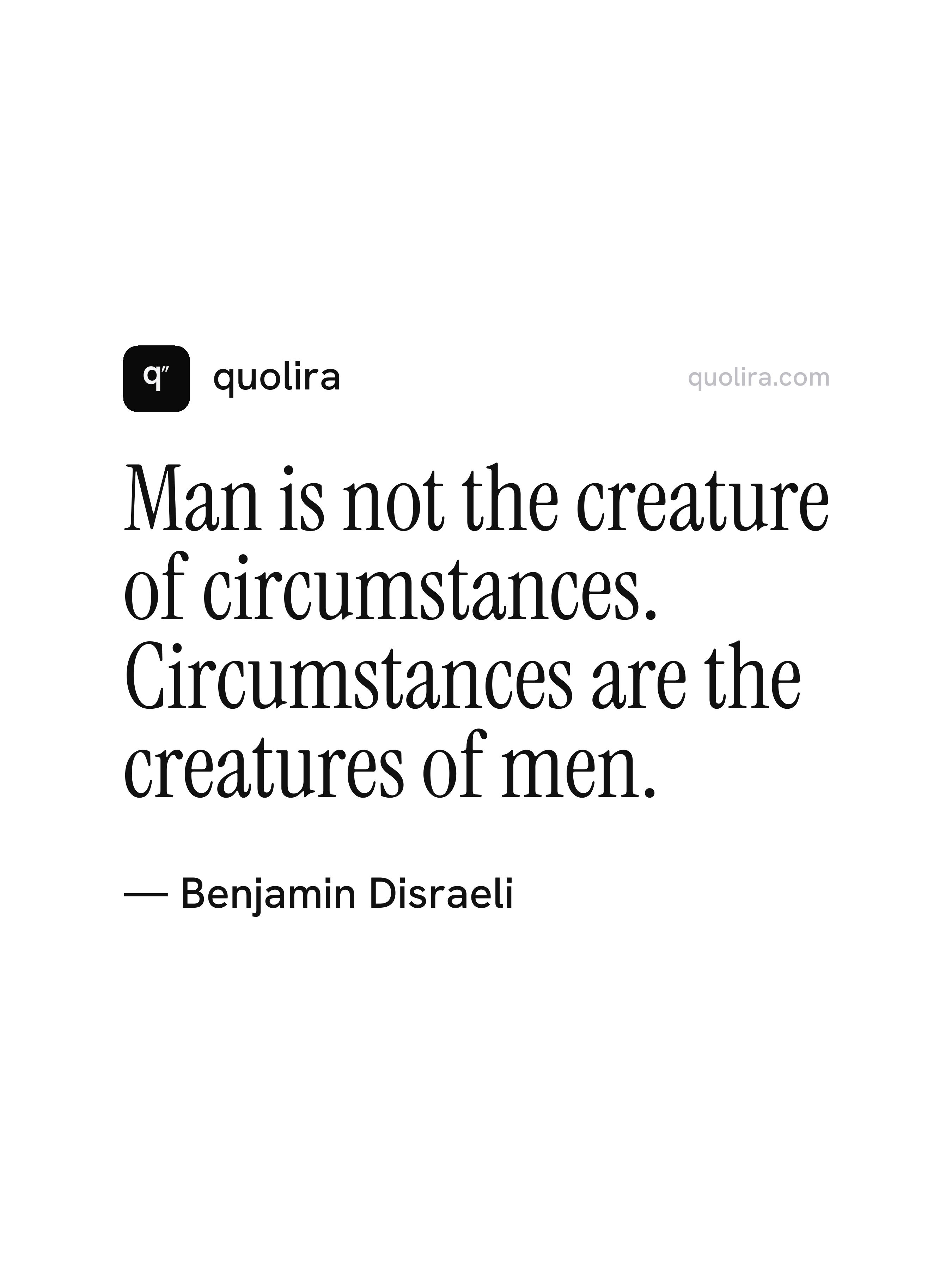
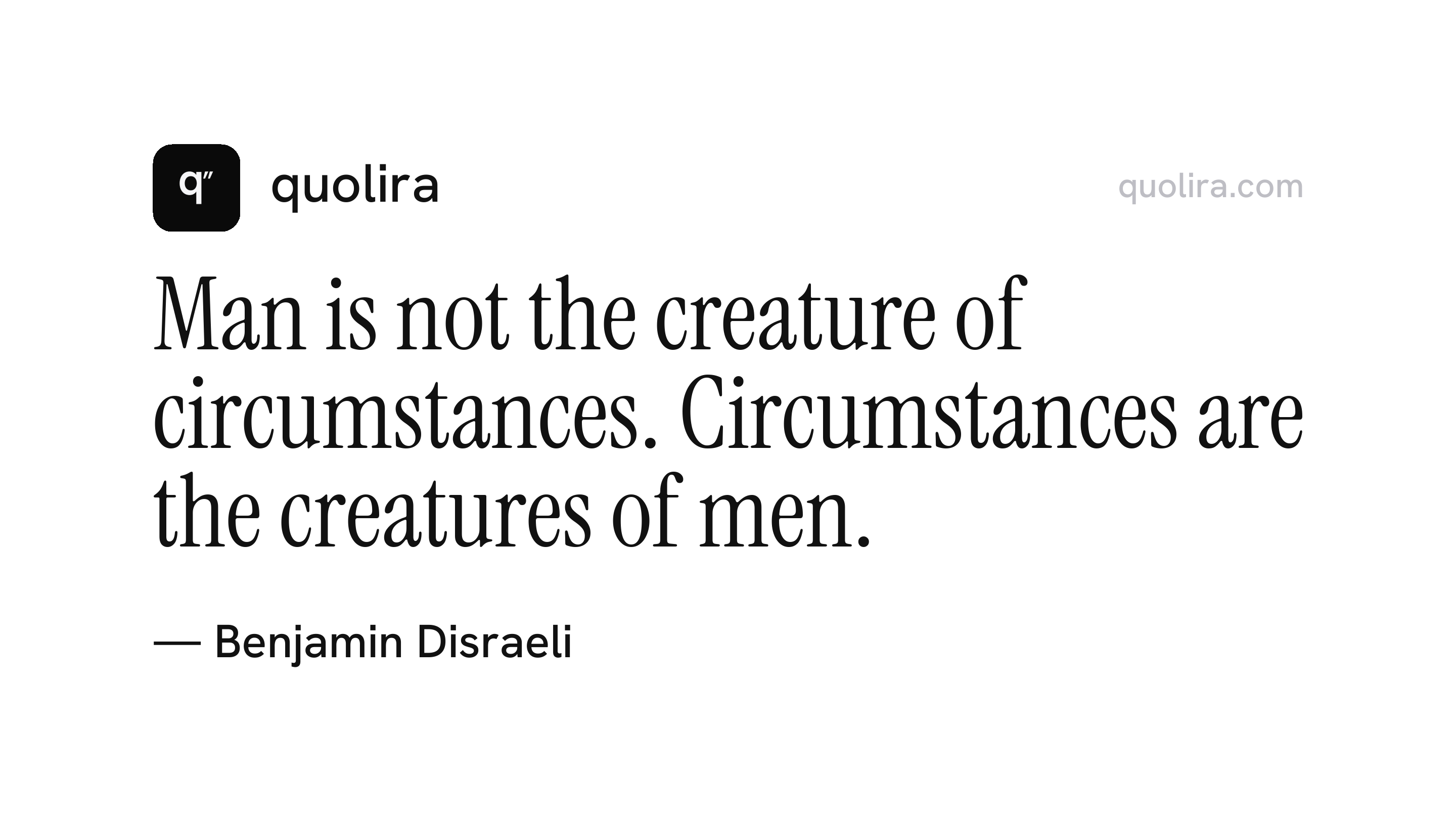
“Man is not the creature of circumstances. Circumstances are the creatures of men.”
Benjamin Disraeli · Vivian Grey, 1826
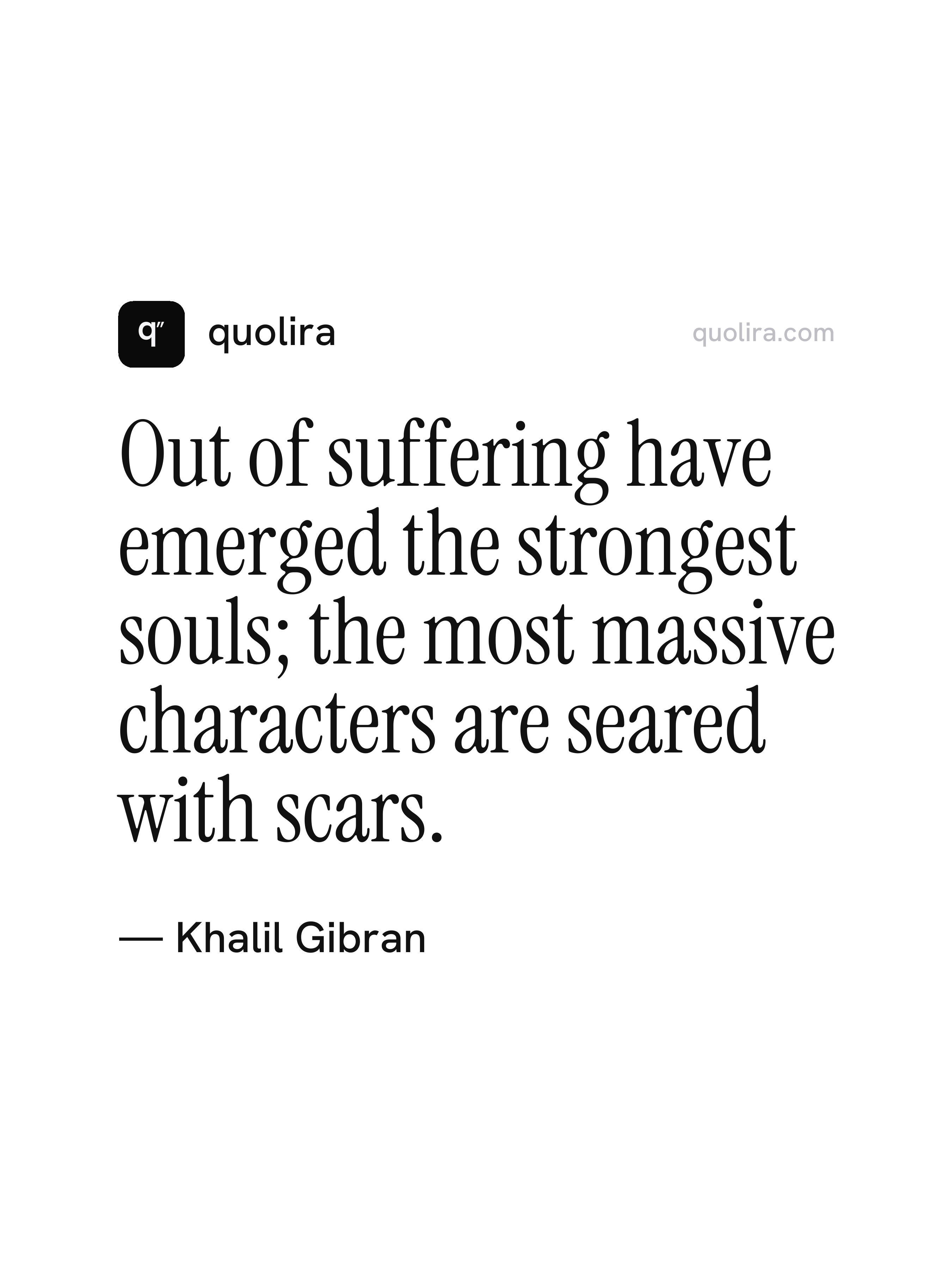
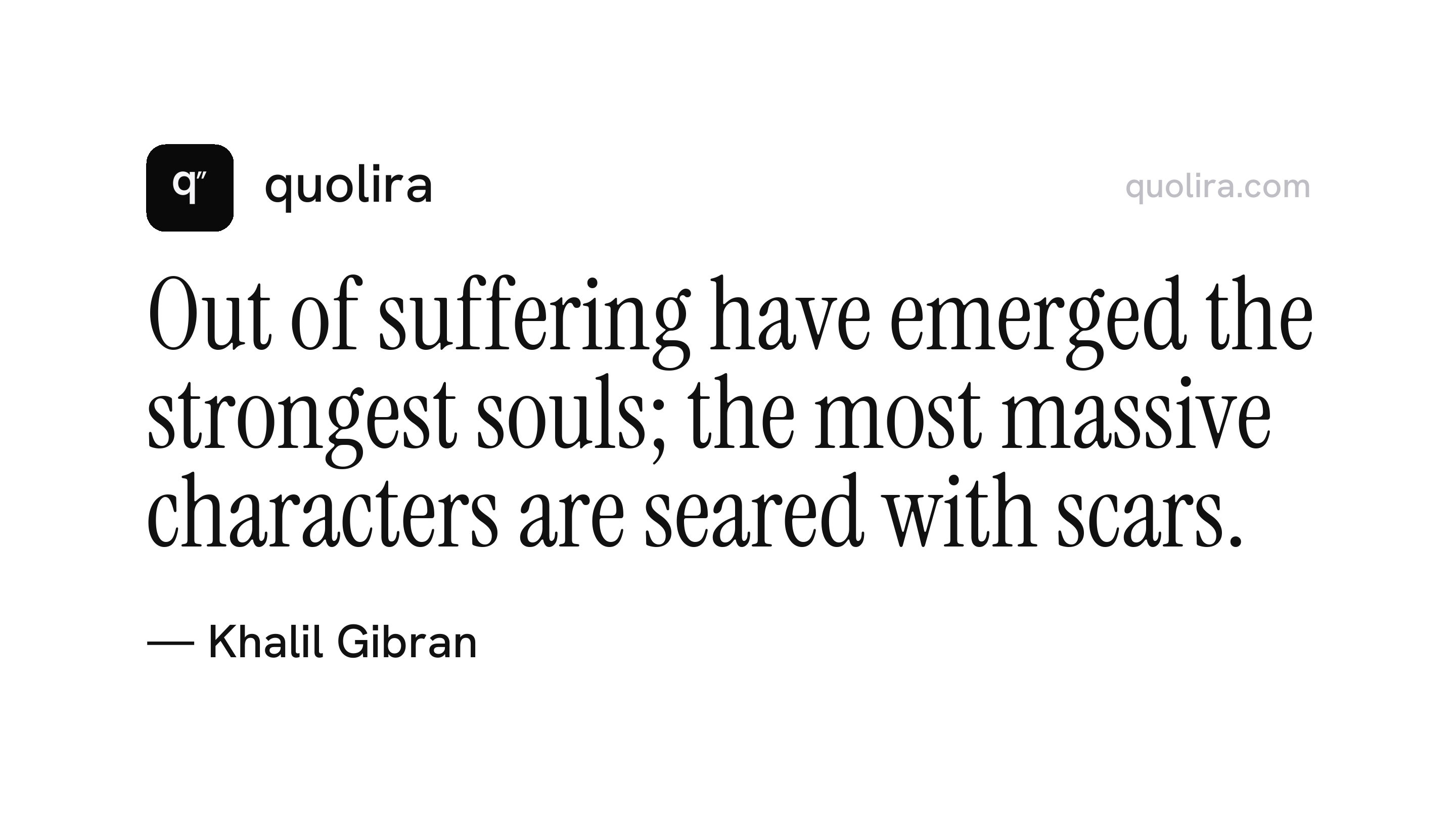
“Out of suffering have emerged the strongest souls; the most massive characters are seared with scars.”
Khalil Gibran · The Prophet, 1923
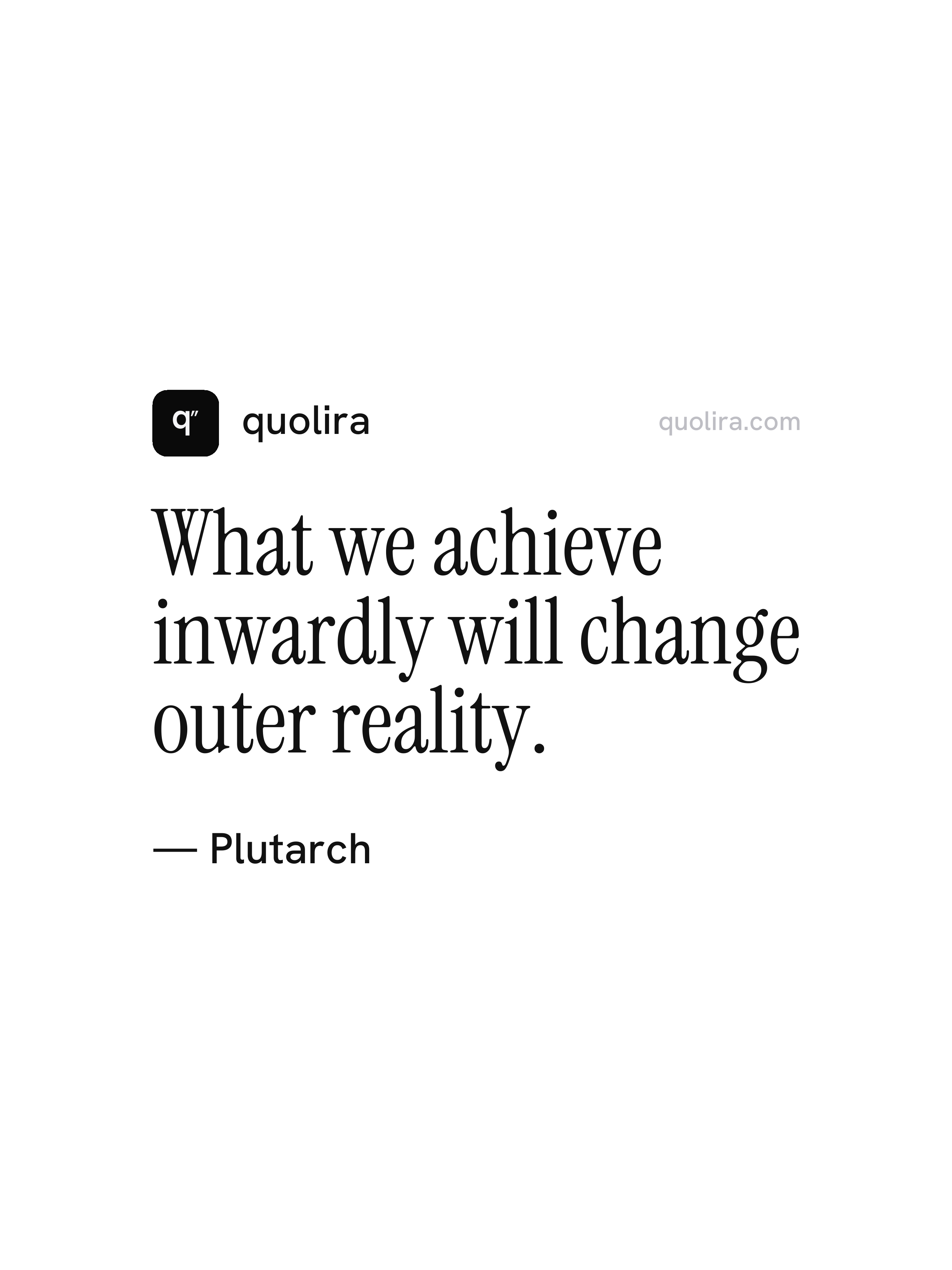
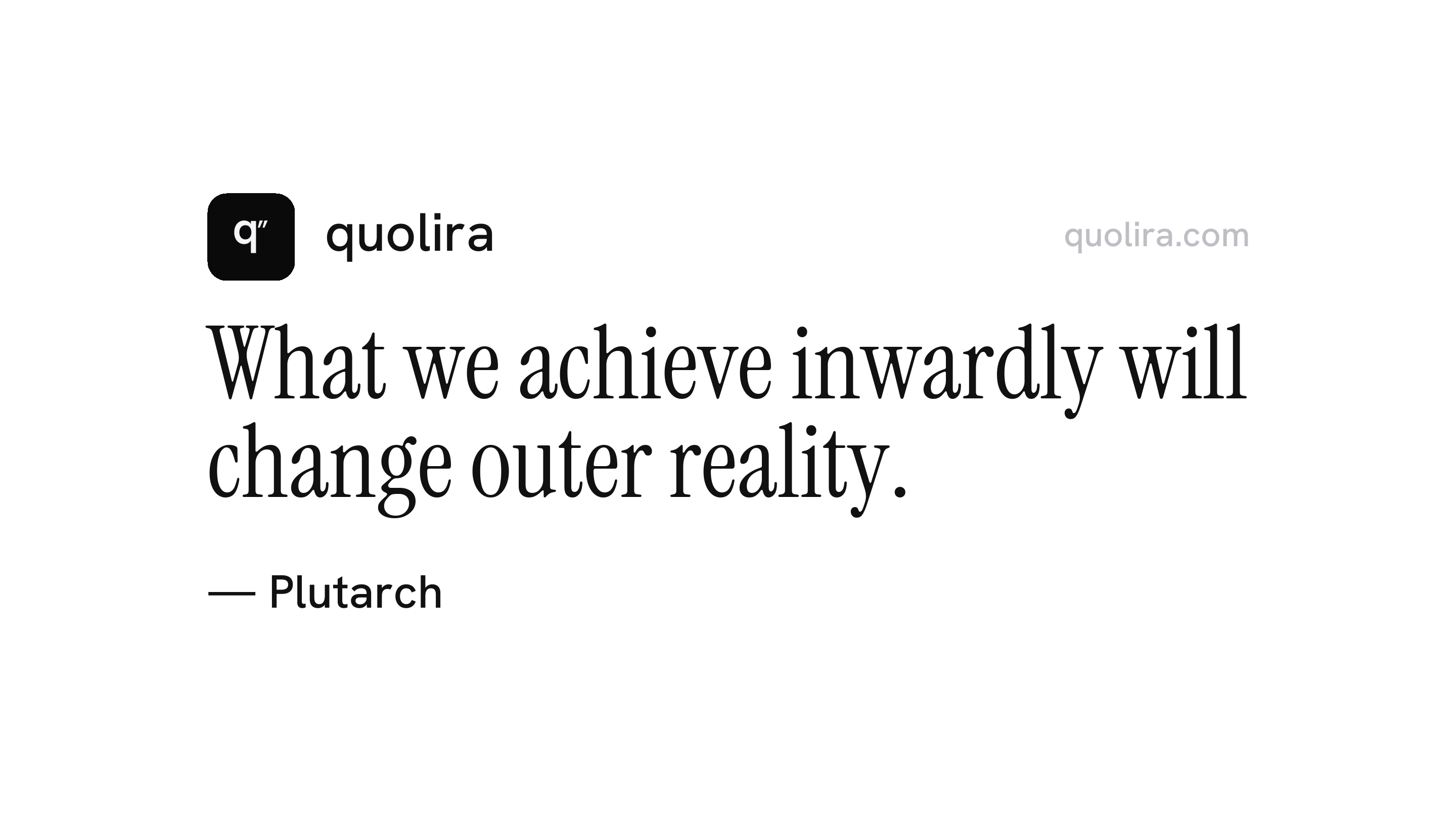
“What we achieve inwardly will change outer reality.”
Plutarch · Moralia, c. 100 AD
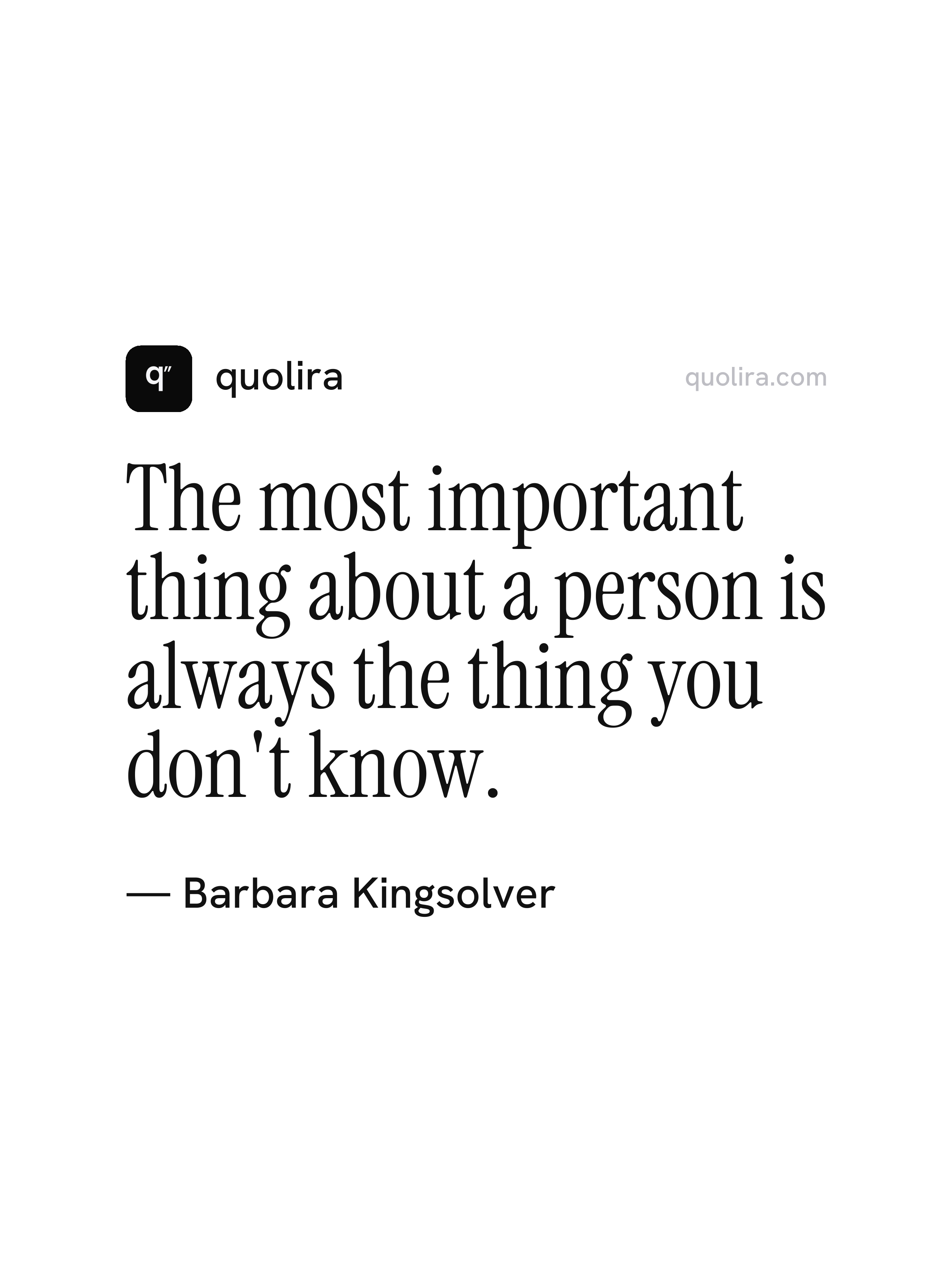
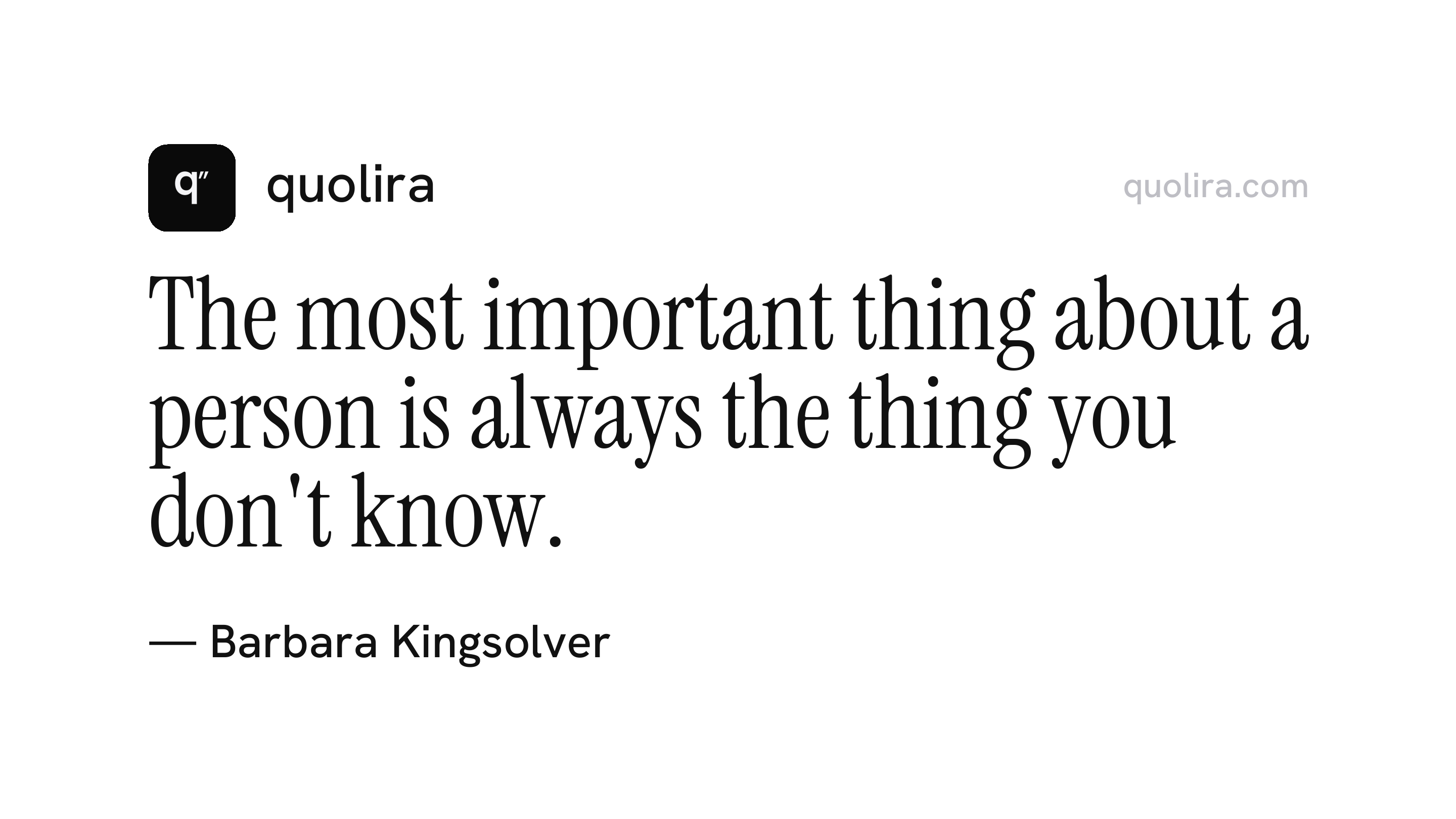
“The most important thing about a person is always the thing you don't know.”
Barbara Kingsolver · The Lacuna, 2009
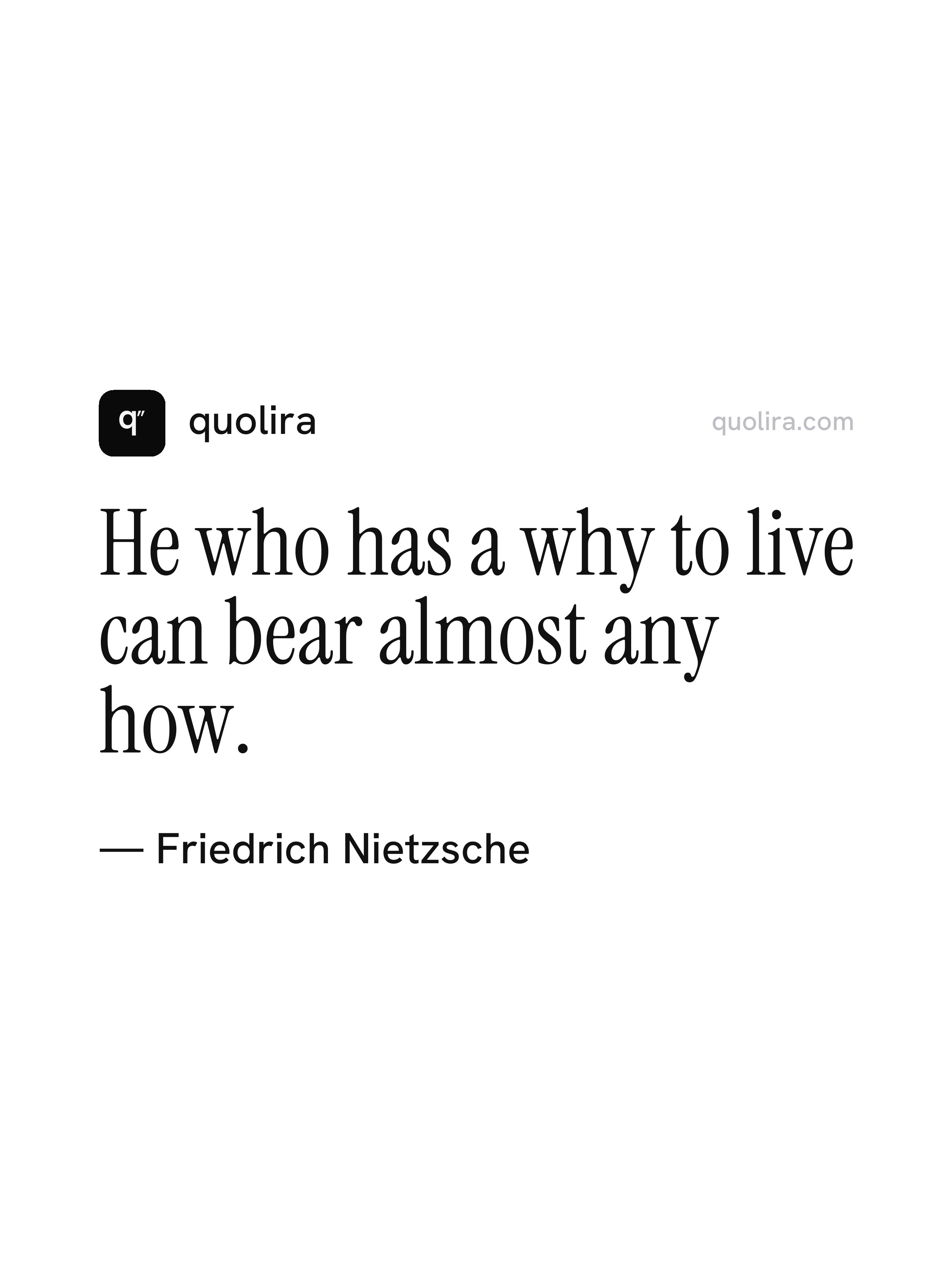
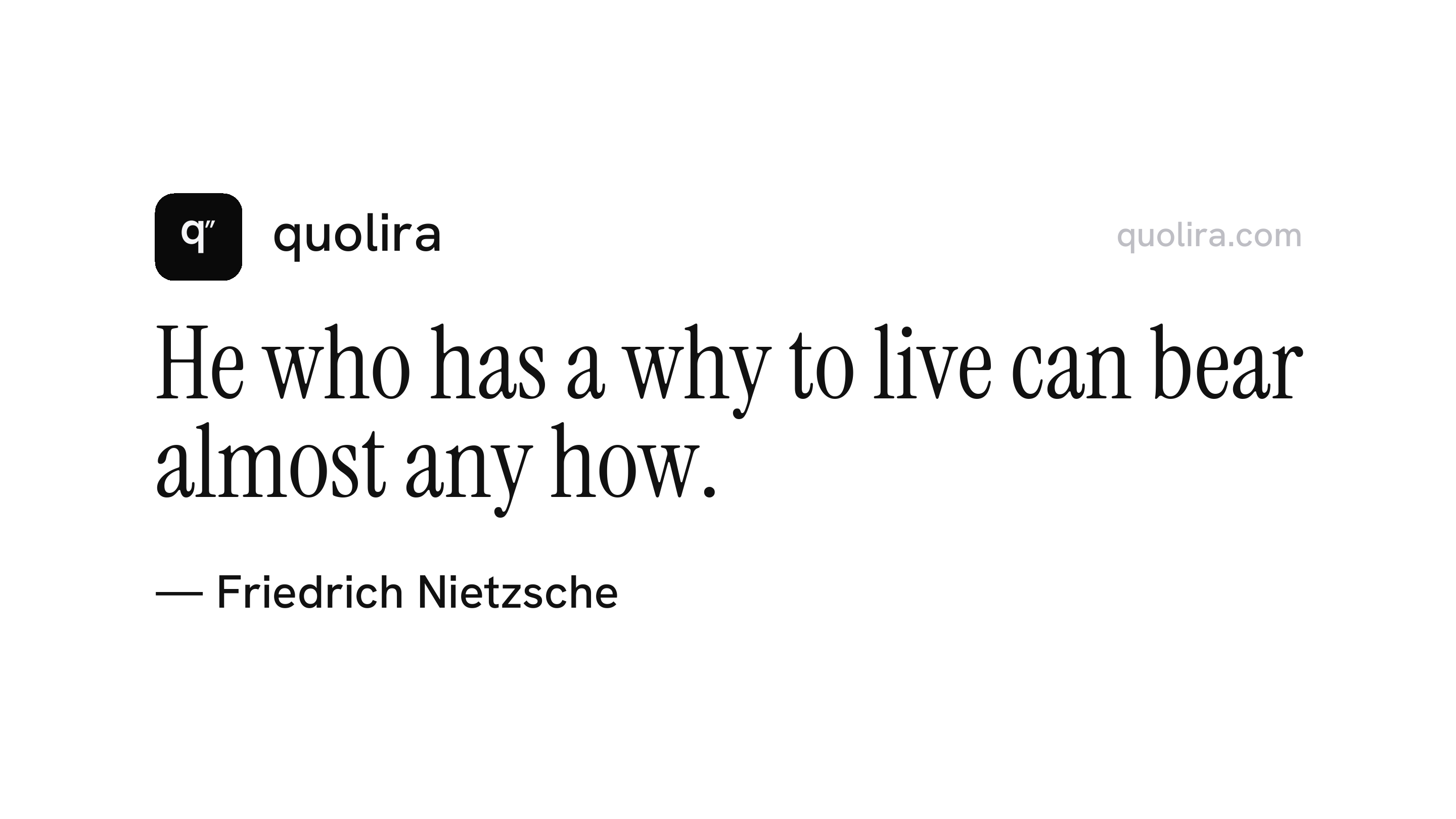
“He who has a why to live can bear almost any how.”
Friedrich Nietzsche · Twilight of the Idols, 1889
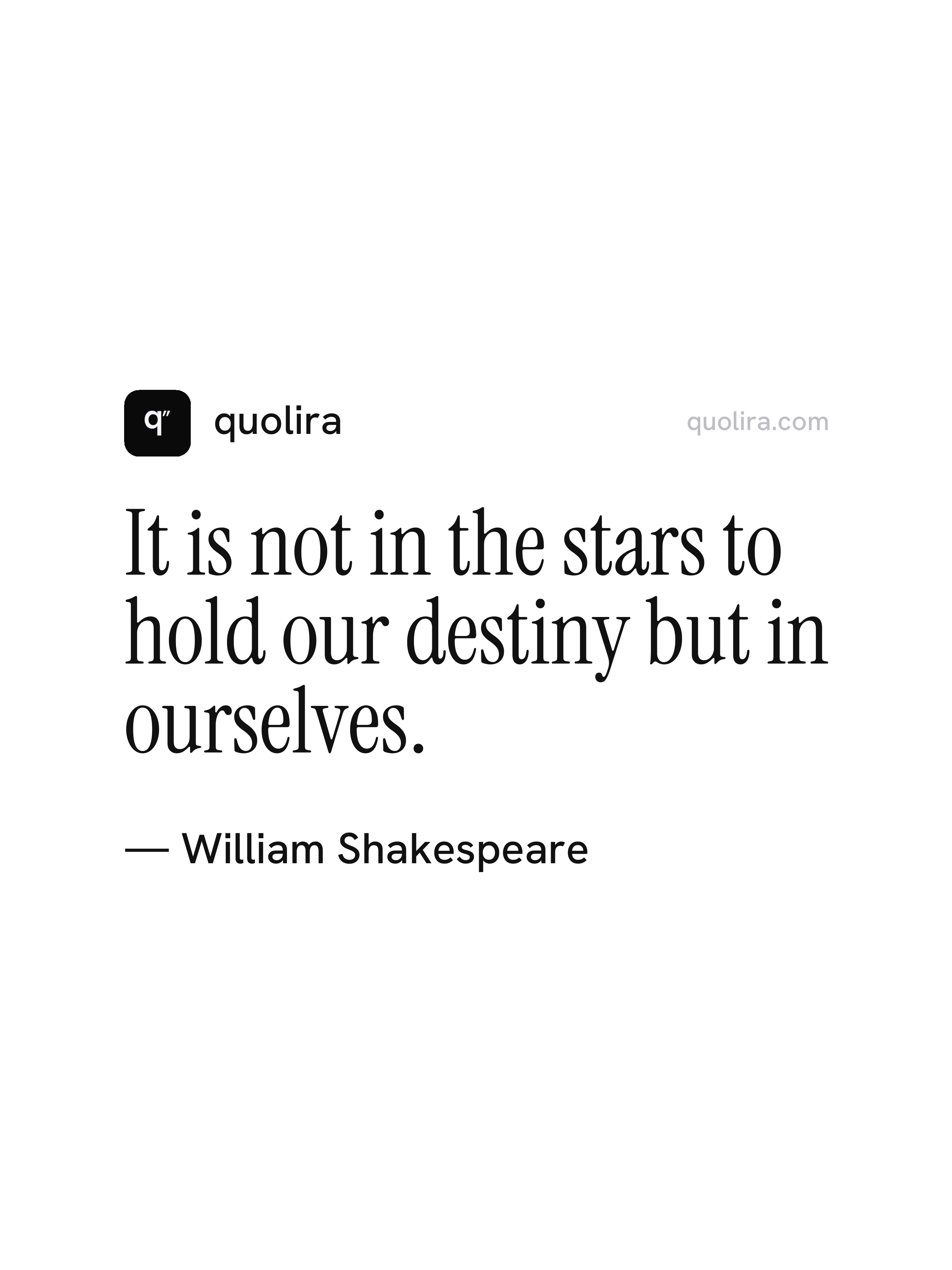
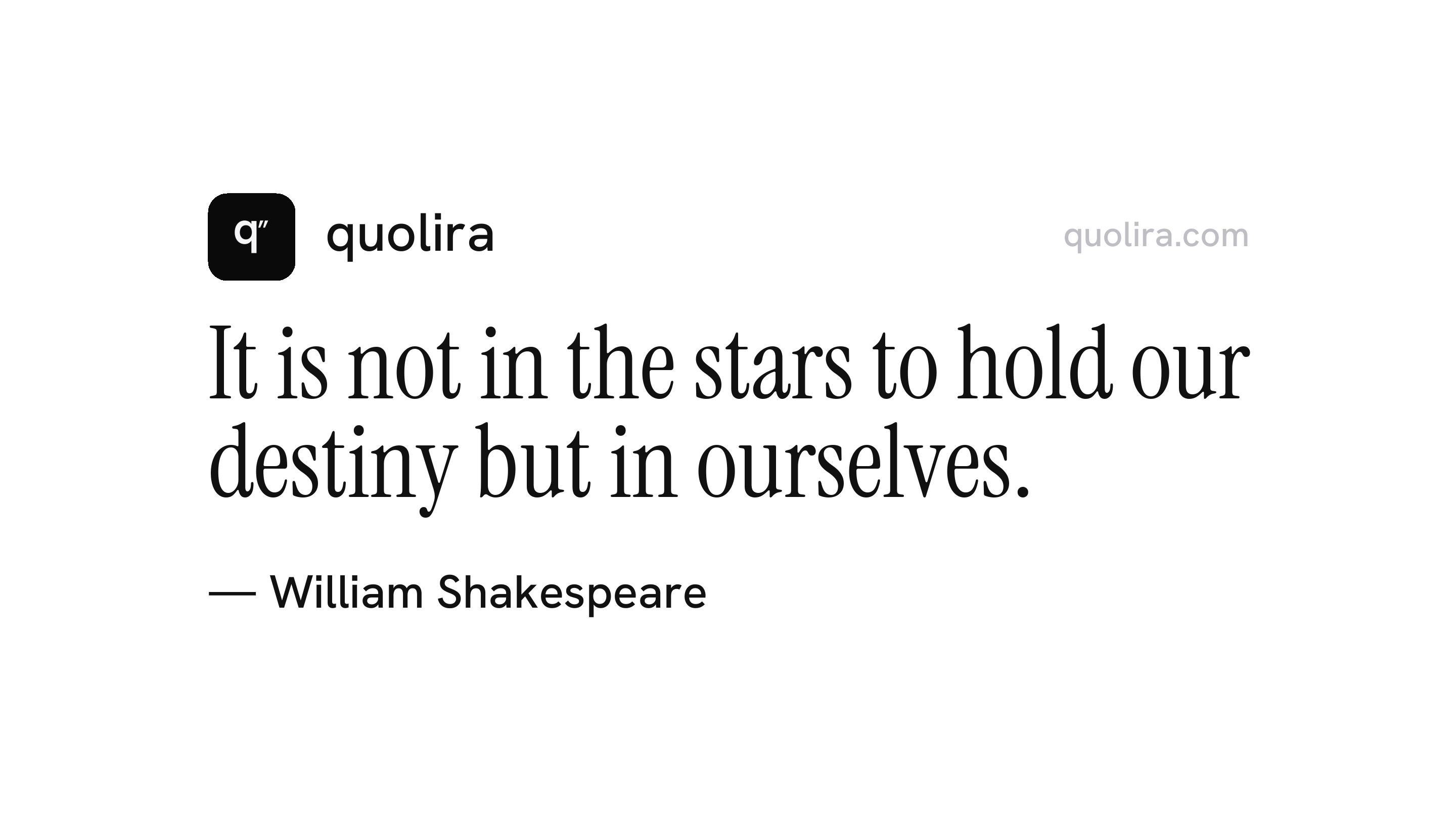
“It is not in the stars to hold our destiny but in ourselves.”
William Shakespeare · Julius Caesar, c. 1599
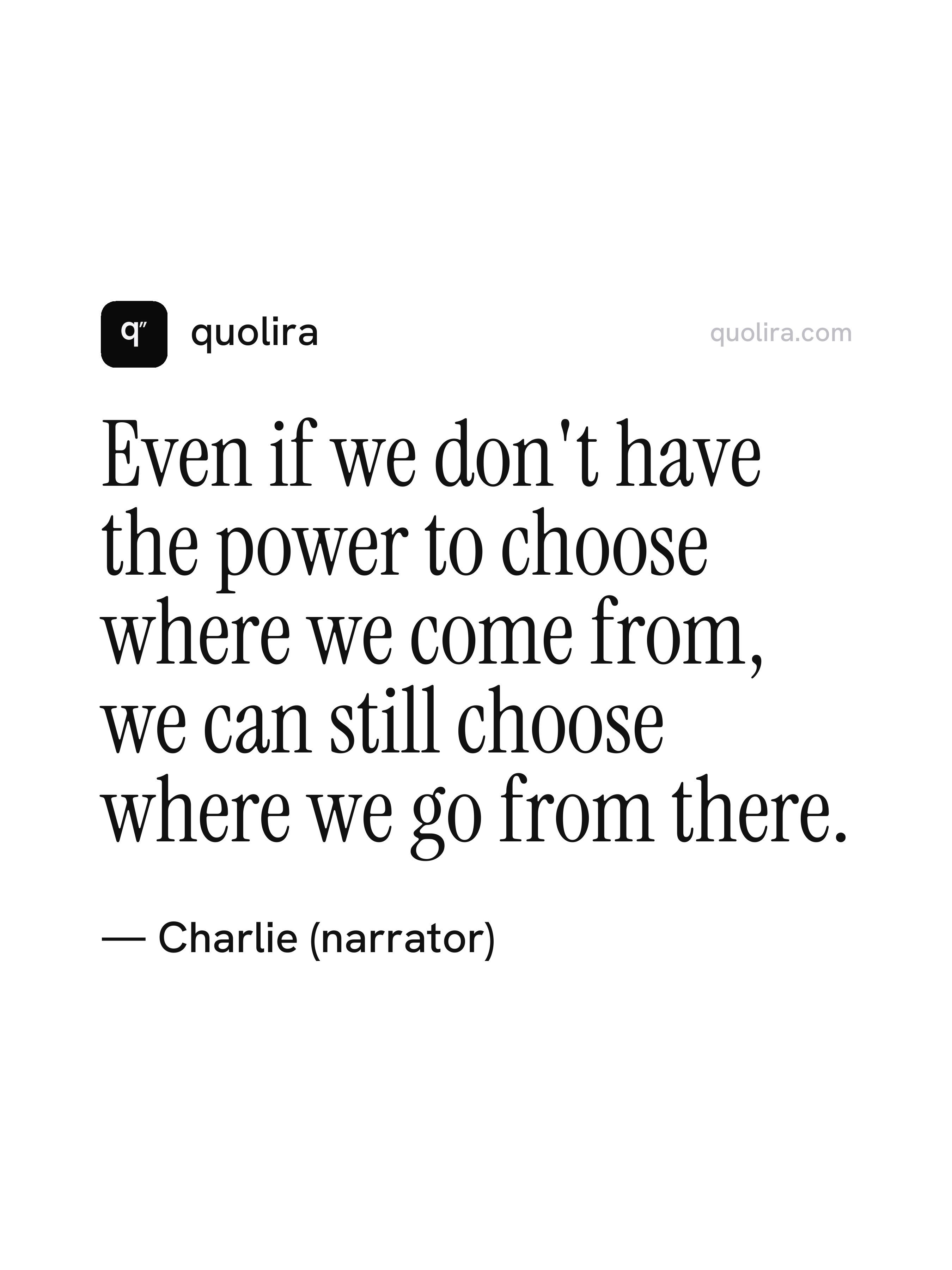
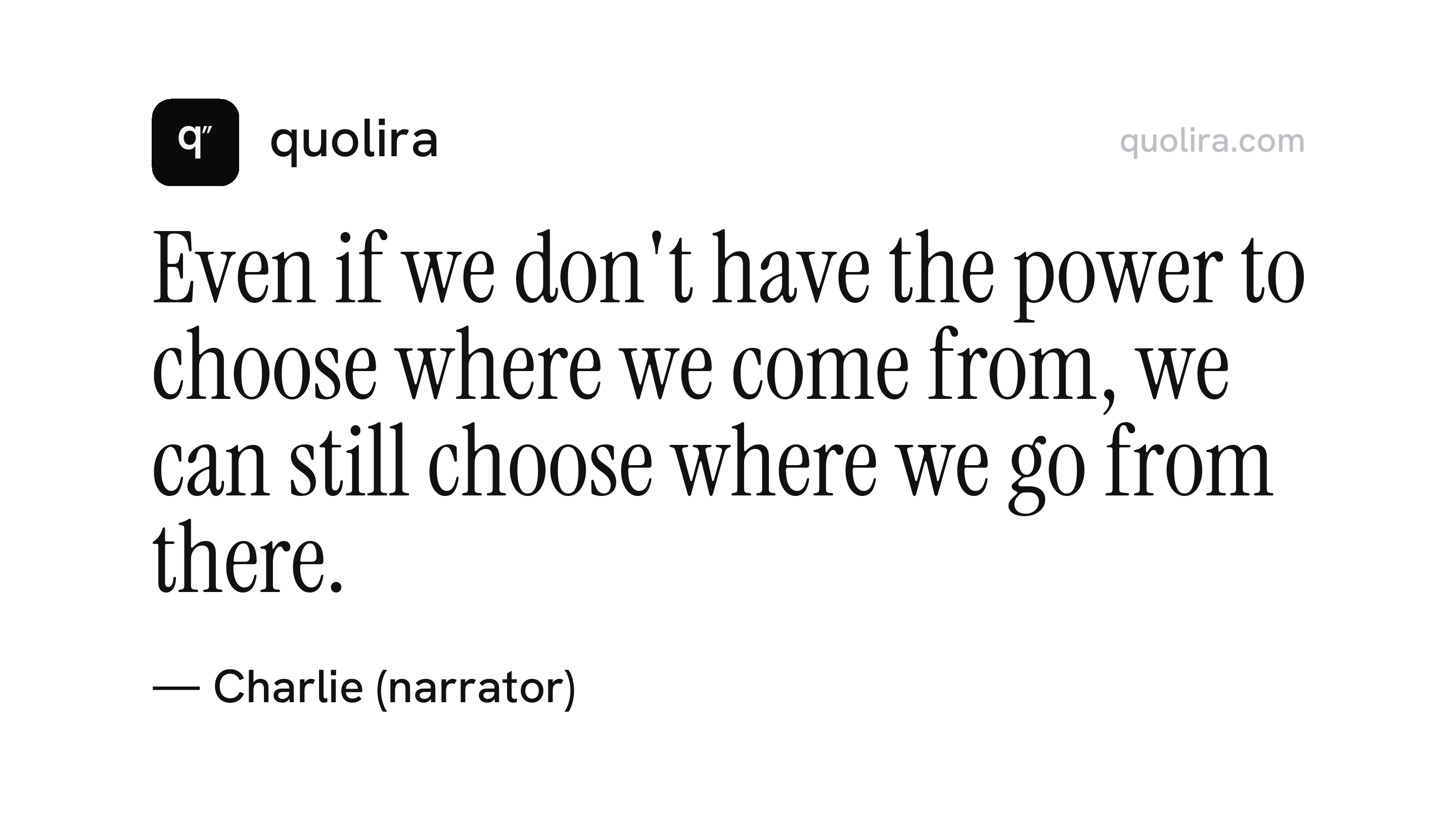
“Even if we don't have the power to choose where we come from, we can still choose where we go from there.”
Charlie (narrator) · The Perks of Being a Wallflower, Stephen Chbosky, 1999
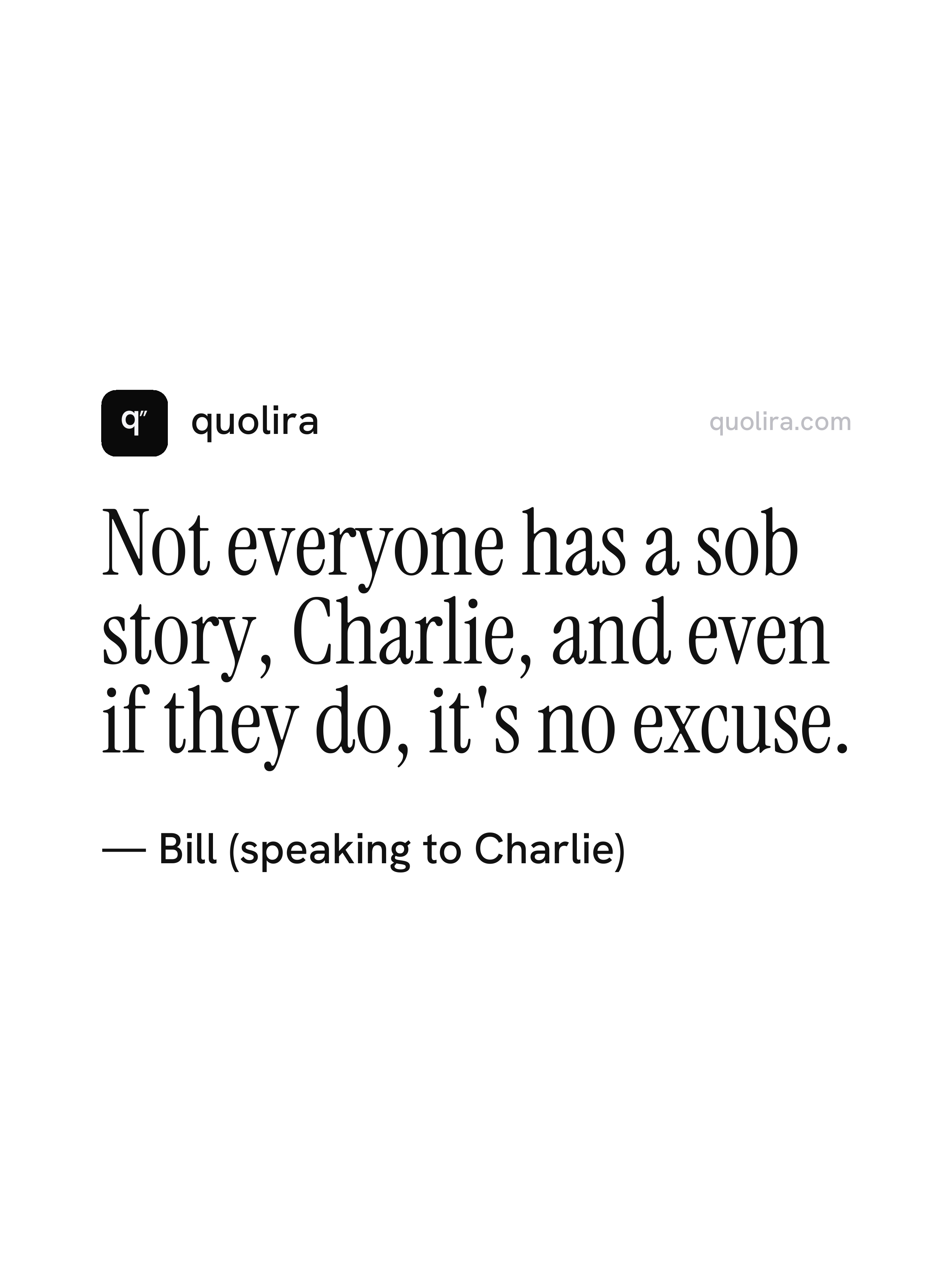
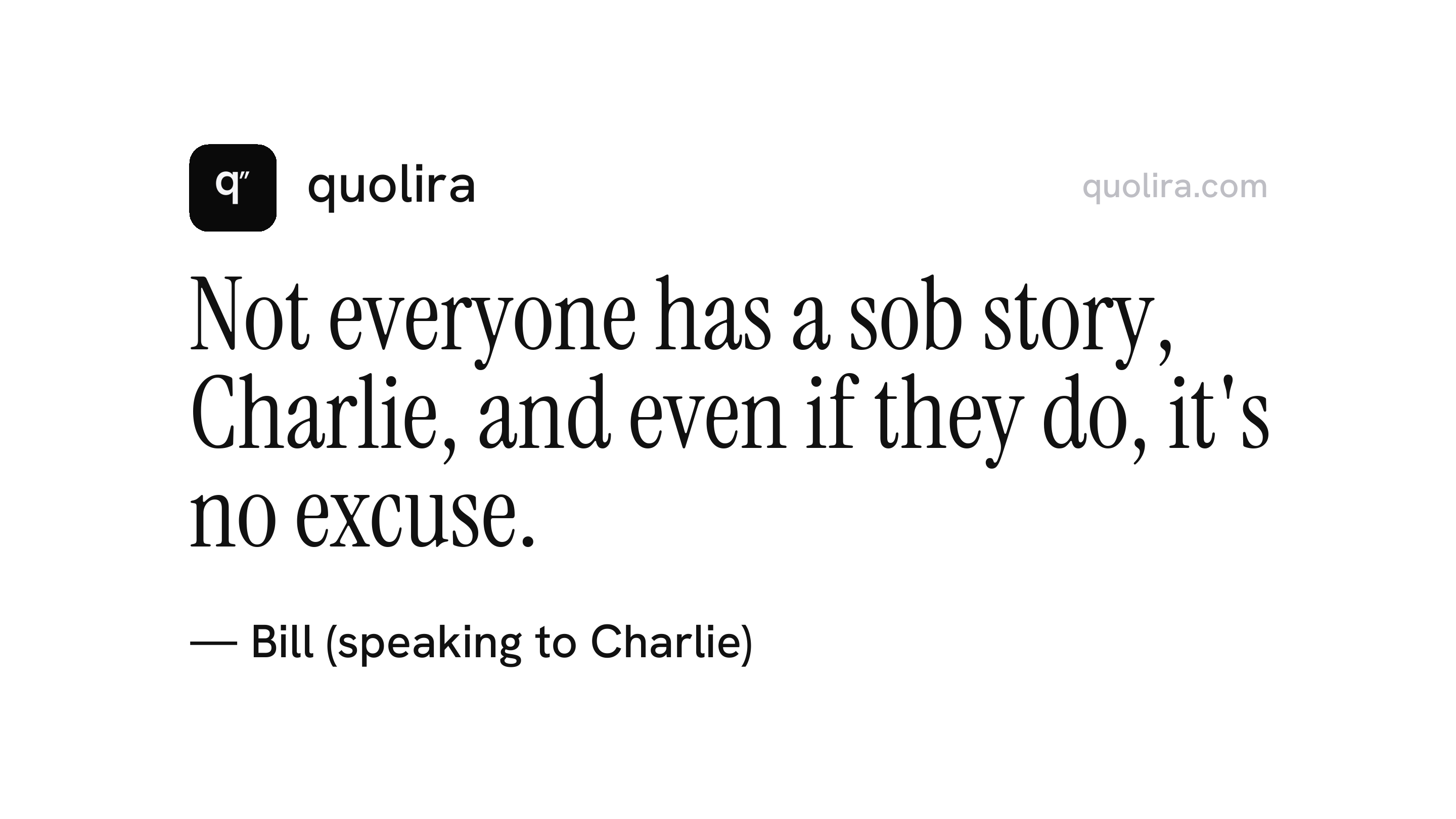
“Not everyone has a sob story, Charlie, and even if they do, it's no excuse.”
Bill (speaking to Charlie) · The Perks of Being a Wallflower, Stephen Chbosky, 1999
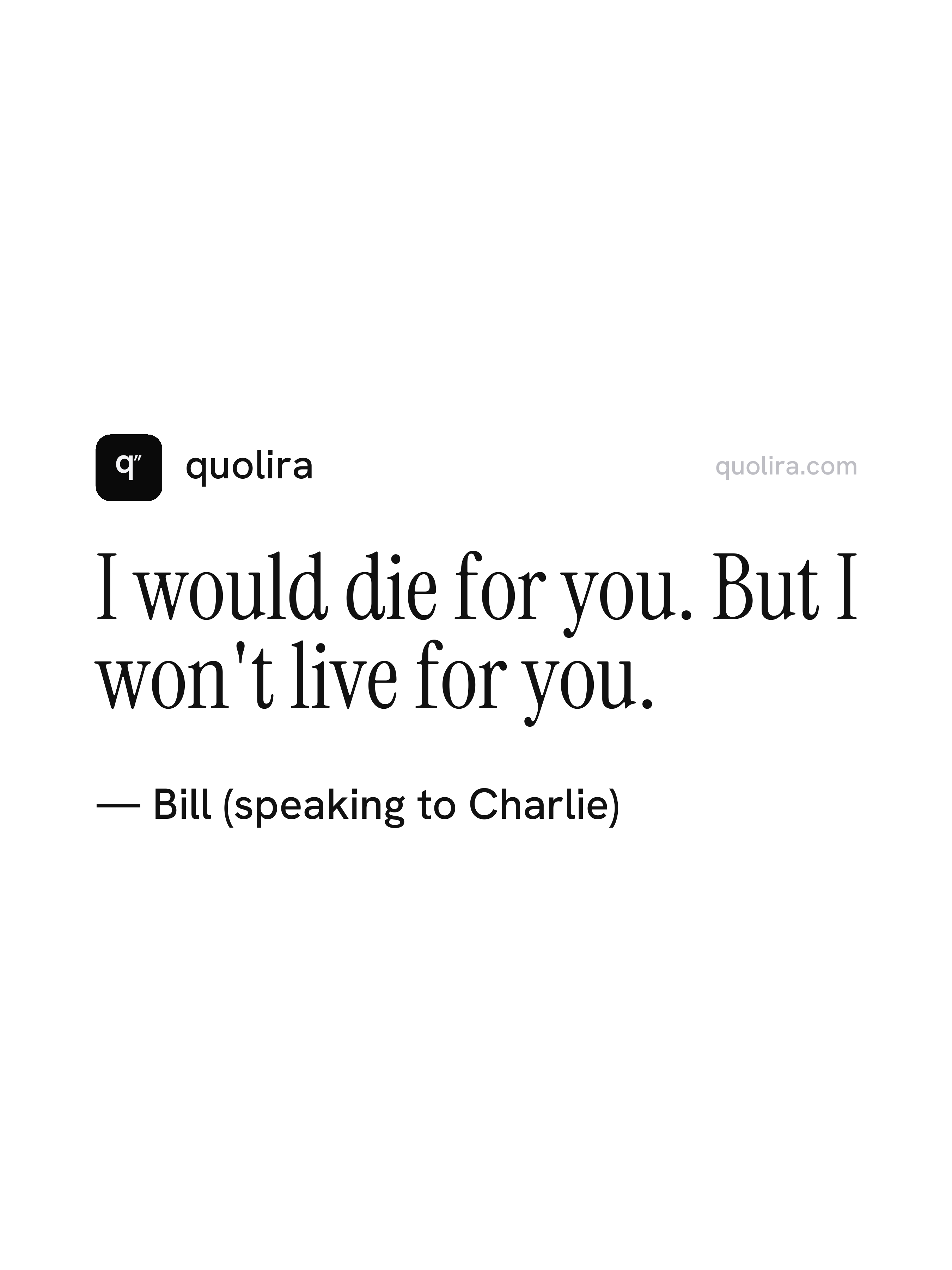
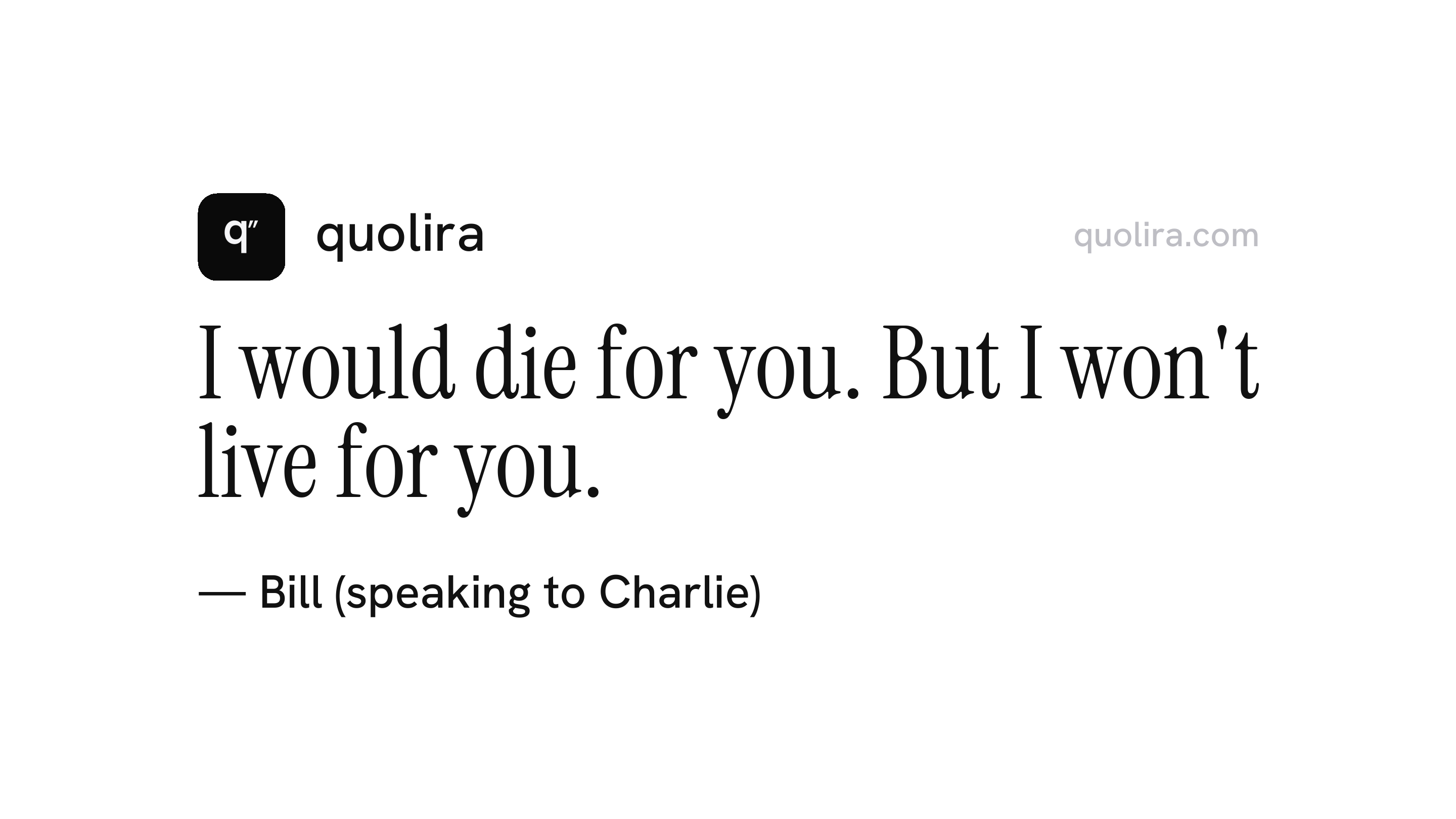
“I would die for you. But I won't live for you.”
Bill (speaking to Charlie) · The Perks of Being a Wallflower, Stephen Chbosky, 1999
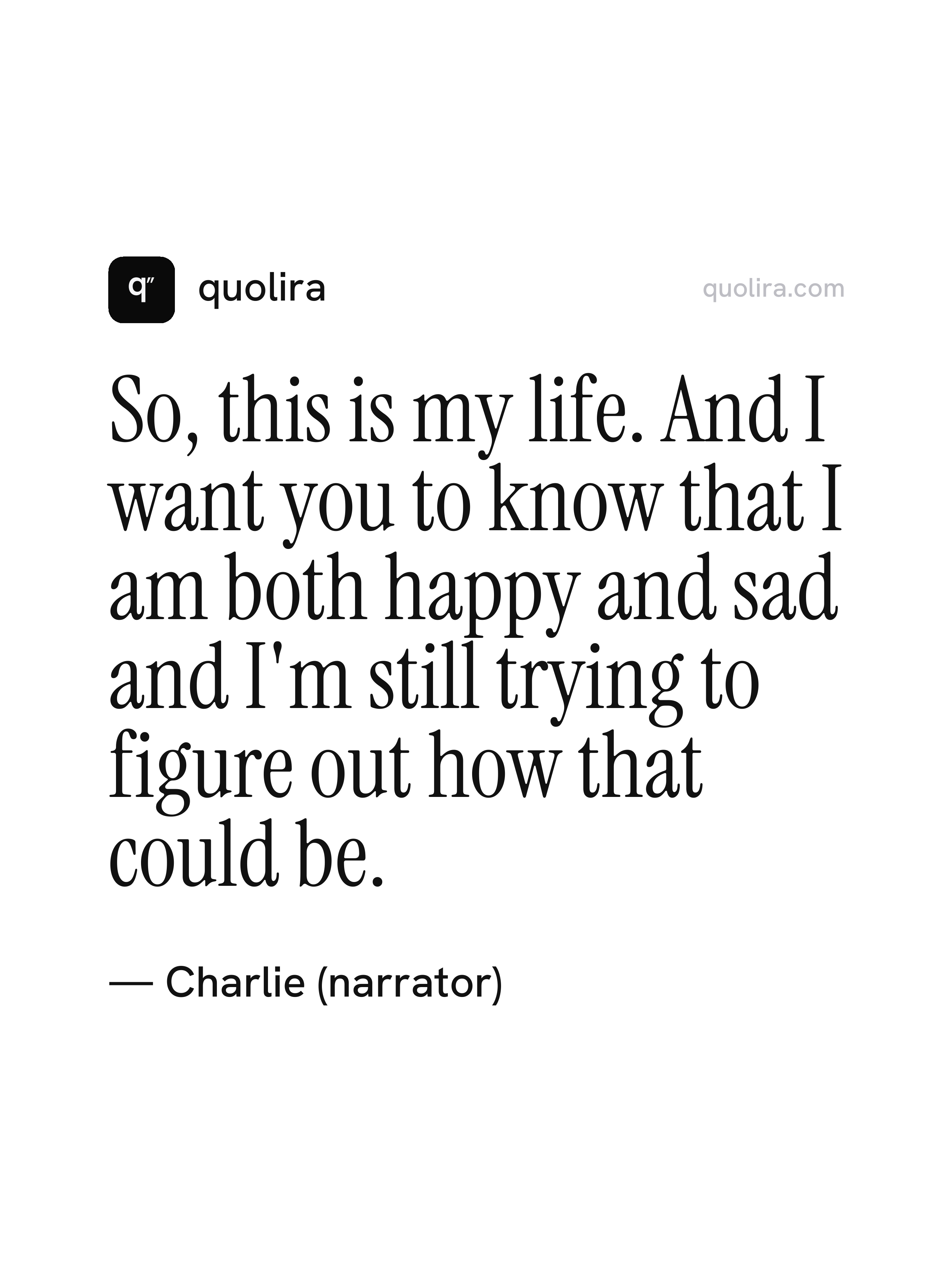
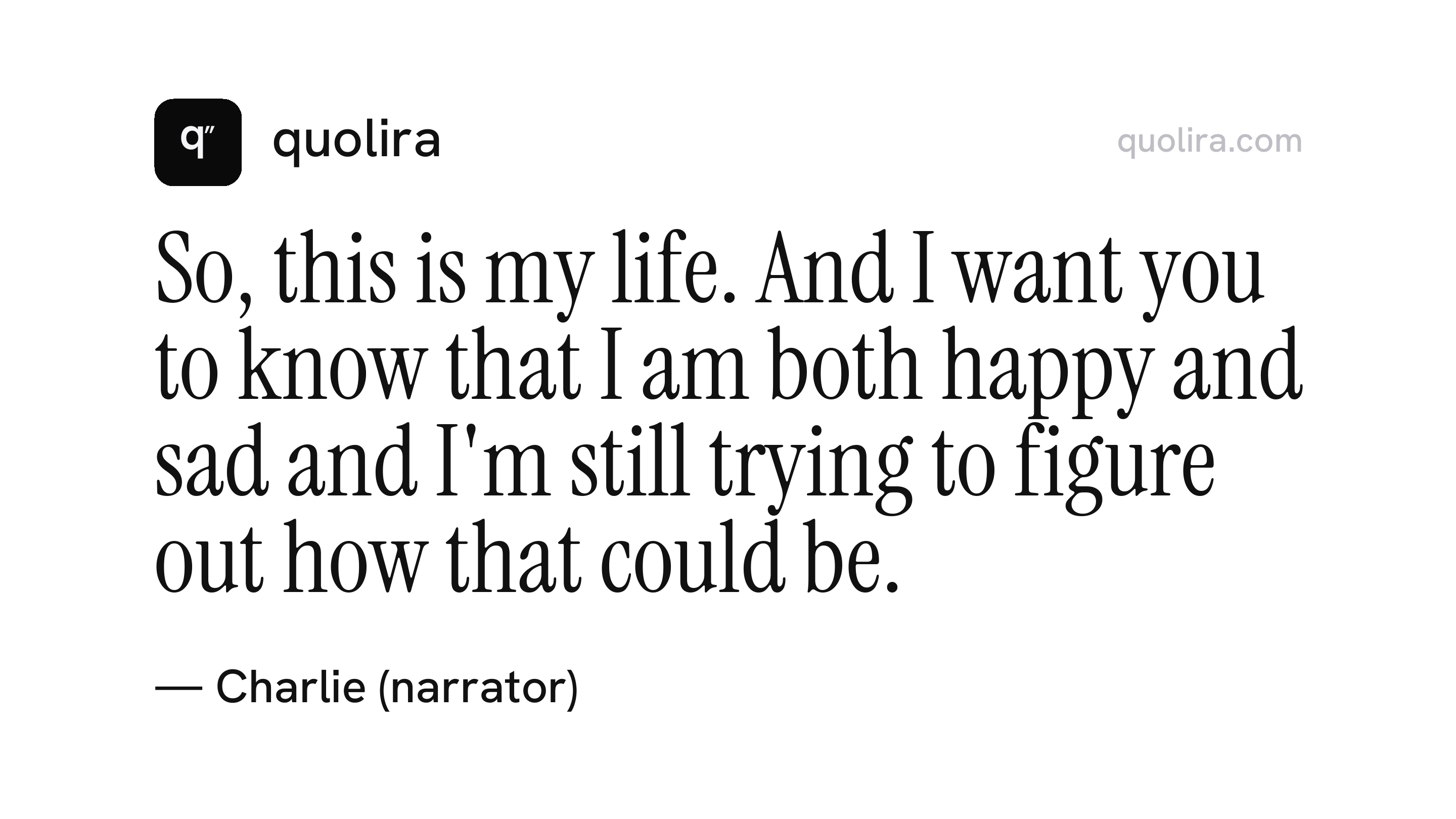
“So, this is my life. And I want you to know that I am both happy and sad and I'm still trying to figure out how that could be.”
Charlie (narrator) · The Perks of Being a Wallflower, Stephen Chbosky, 1999
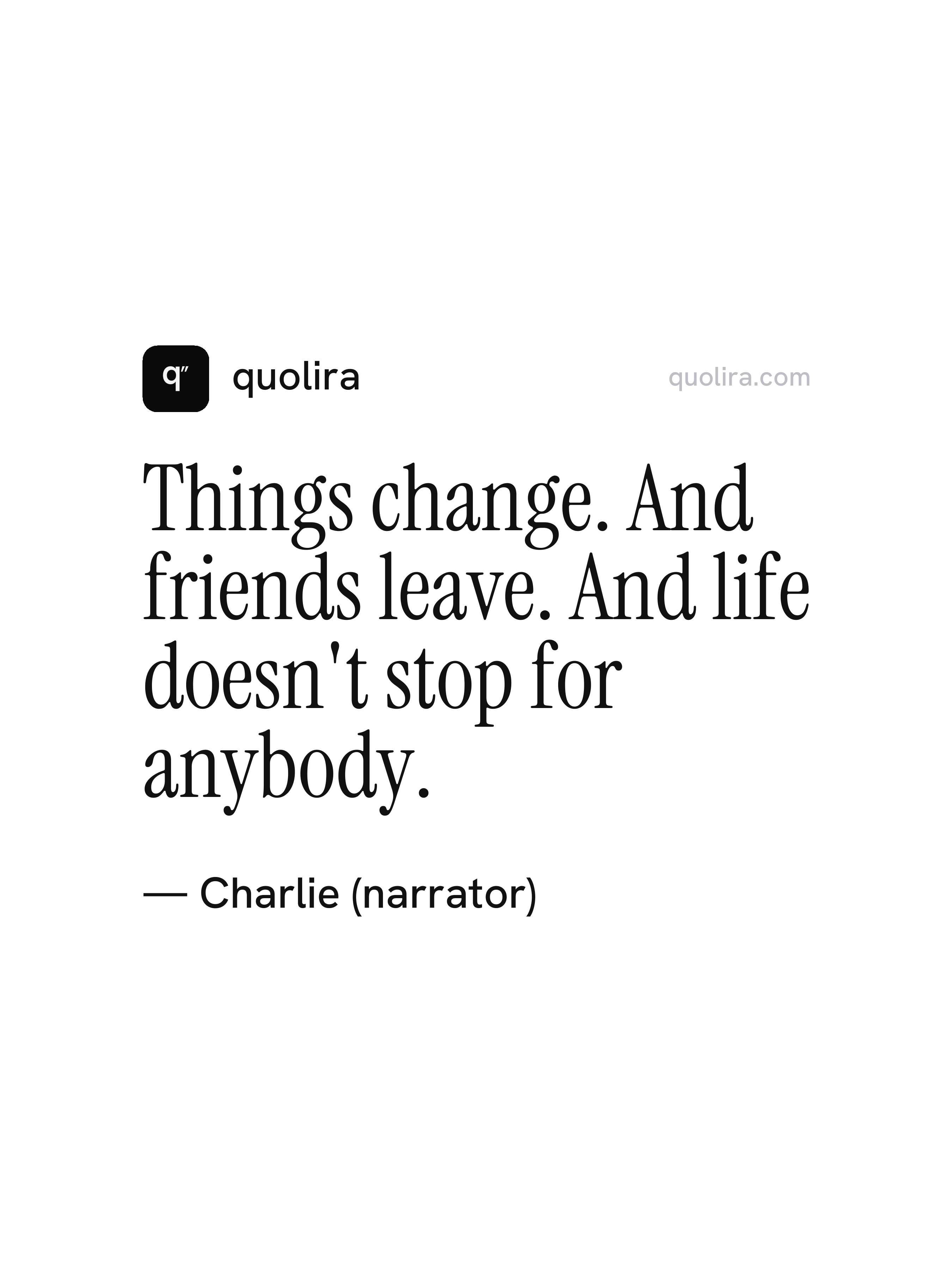
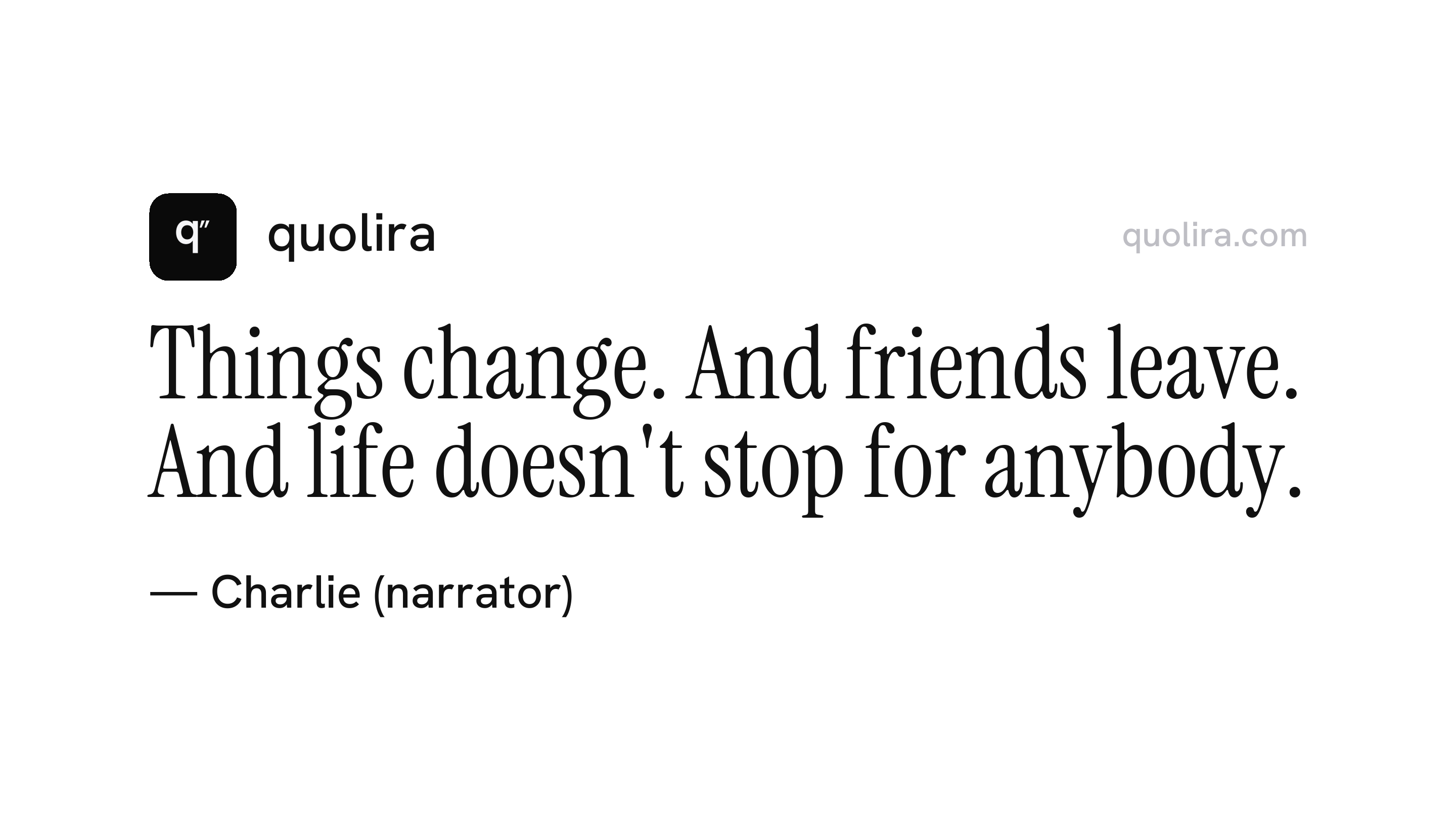
“Things change. And friends leave. And life doesn't stop for anybody.”
Charlie (narrator) · The Perks of Being a Wallflower, Stephen Chbosky, 1999