“It is not in the stars to hold our destiny but in ourselves.”
William Shakespeare · Julius Caesar, c. 1599
 quolira
.com
quolira
quolira.com
This line proposes that purpose is the deepest source of human endurance. When a person has a clear reason to live, a goal, a love, a mission, a belief, they can endure conditions that might otherwise be unbearable. The "how" here refers to the hardships, the suffering, the sheer difficulty of existence. The claim is not that purpose removes pain, but that it makes pain survivable. It is one of the more compact and powerful arguments for the importance of meaning in human life.
Friedrich Nietzsche wrote Twilight of the Idols in 1888, and it was published in 1889, one of his final works before his mental collapse. The book is a brisk, aphoristic critique of various philosophical and cultural traditions, written with characteristic sharpness and confidence. This particular line captures a theme that runs throughout Nietzsche's thinking, his insistence on the value of affirmation, struggle, and the creation of meaning as responses to suffering rather than escapes from it.
Friedrich Nietzsche was a nineteenth-century German philosopher whose work challenged many of the dominant assumptions of Western morality, religion, and philosophy. He wrote in a distinctive aphoristic style that made his ideas both memorable and widely quoted. His influence has spread far beyond academic philosophy, reaching literature, psychology, and popular culture. His concept that individuals must create their own values and meanings in a world without fixed answers remains one of his most enduring contributions to modern thought.
“It is not in the stars to hold our destiny but in ourselves.”
William Shakespeare · Julius Caesar, c. 1599
“Even if we don't have the power to choose where we come from, we can still choose where we go from there.”
Charlie (narrator) · The Perks of Being a Wallflower, Stephen Chbosky, 1999
“Not everyone has a sob story, Charlie, and even if they do, it's no excuse.”
Bill (speaking to Charlie) · The Perks of Being a Wallflower, Stephen Chbosky, 1999
“I would die for you. But I won't live for you.”
Bill (speaking to Charlie) · The Perks of Being a Wallflower, Stephen Chbosky, 1999
“So, this is my life. And I want you to know that I am both happy and sad and I'm still trying to figure out how that could be.”
Charlie (narrator) · The Perks of Being a Wallflower, Stephen Chbosky, 1999
“Things change. And friends leave. And life doesn't stop for anybody.”
Charlie (narrator) · The Perks of Being a Wallflower, Stephen Chbosky, 1999
“And in that moment, I swear we were infinite.”
Charlie (narrator) · The Perks of Being a Wallflower, Stephen Chbosky, 1999
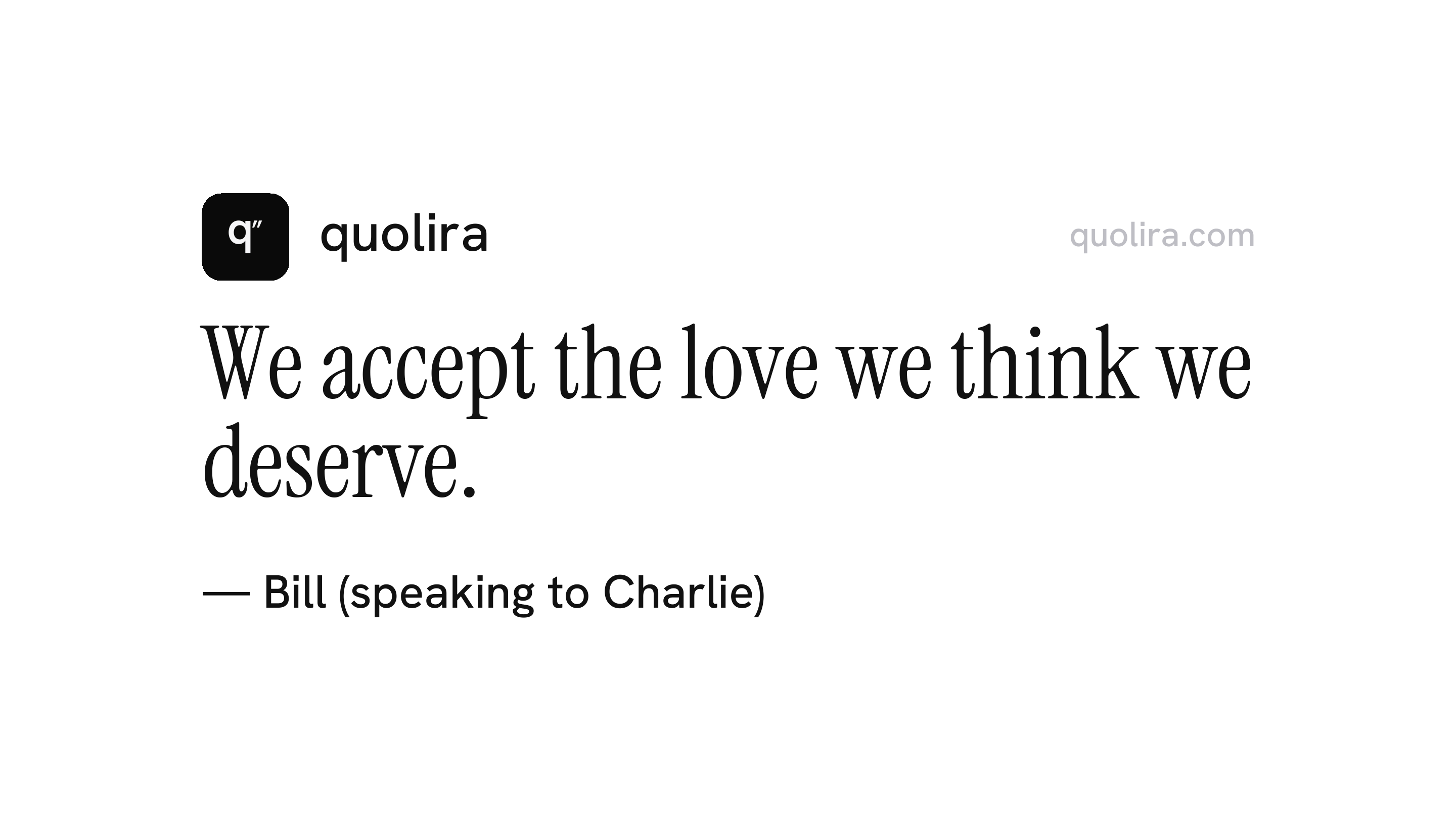
“We accept the love we think we deserve.”
Bill (speaking to Charlie) · The Perks of Being a Wallflower, Stephen Chbosky, 1999
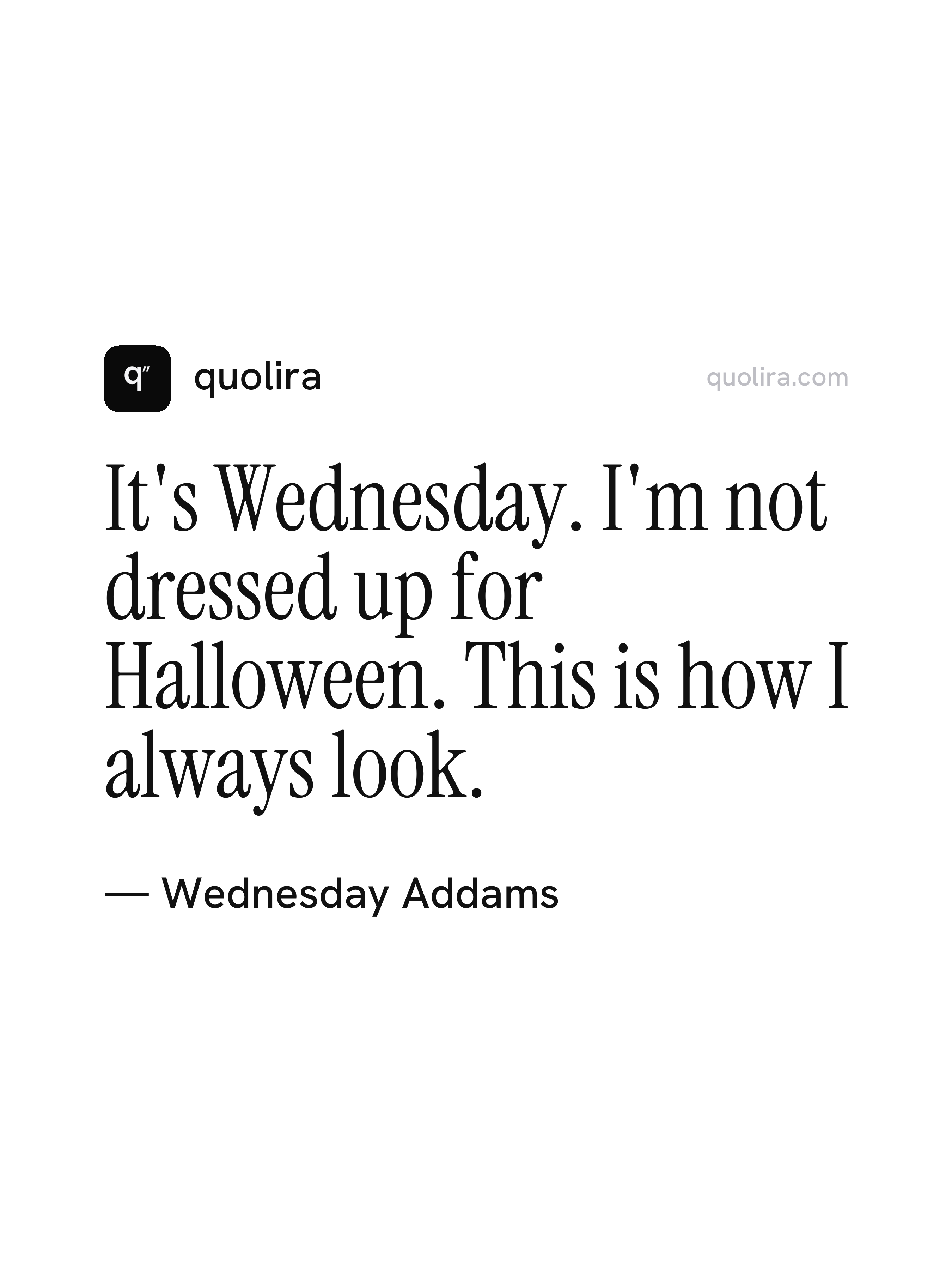
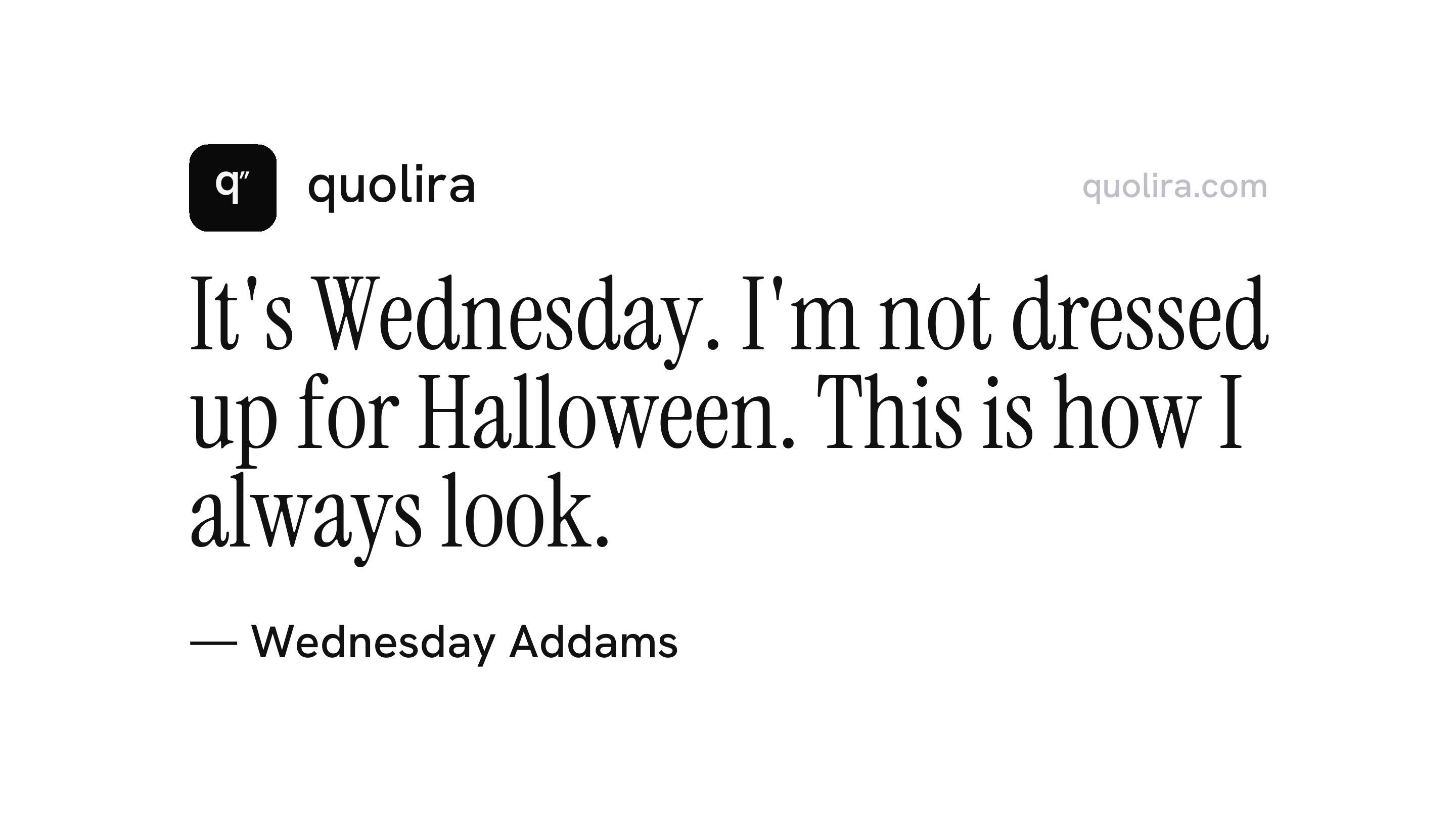
“It's Wednesday. I'm not dressed up for Halloween. This is how I always look.”
Wednesday Addams · The Addams Family (various adaptations)
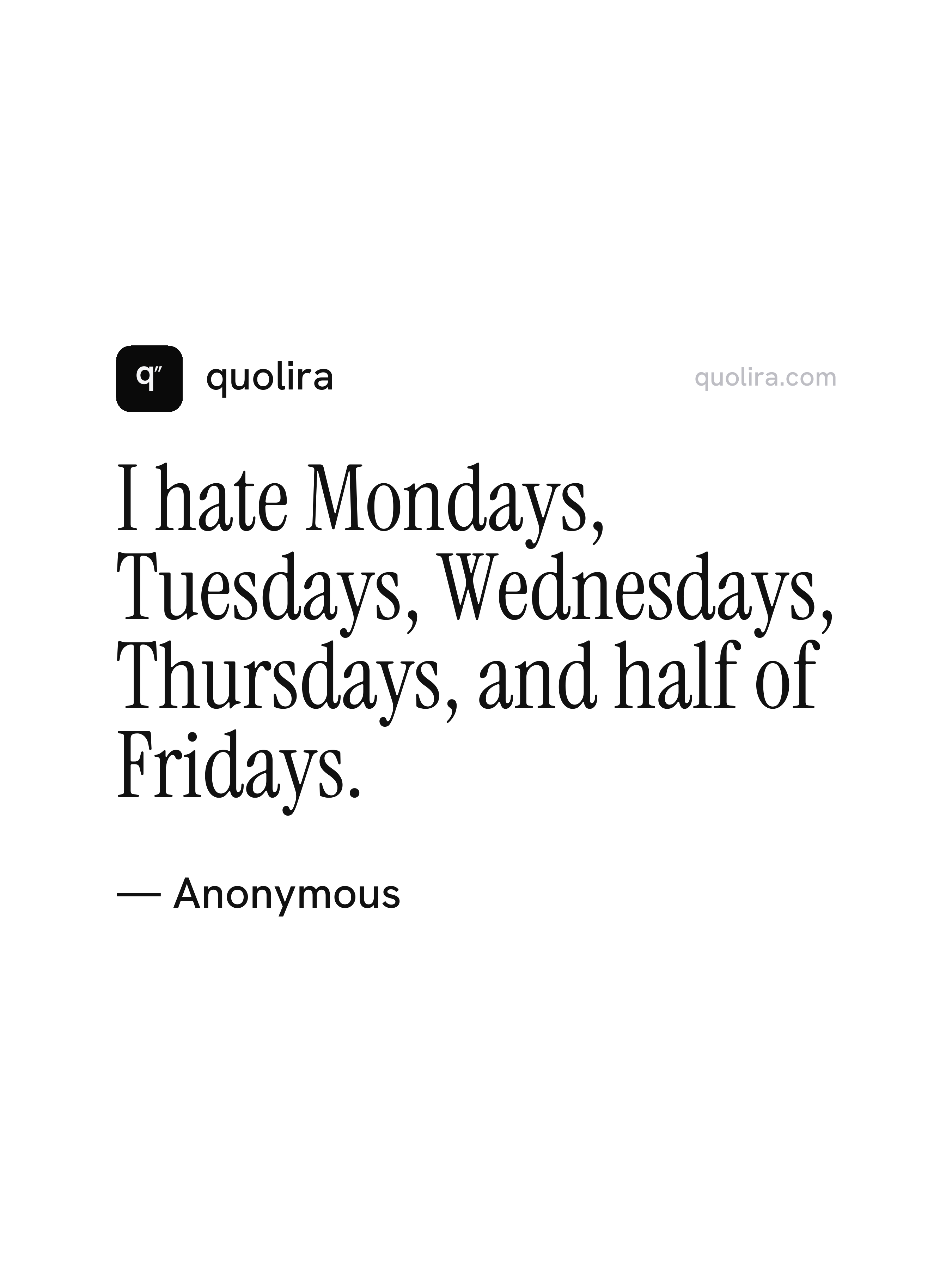
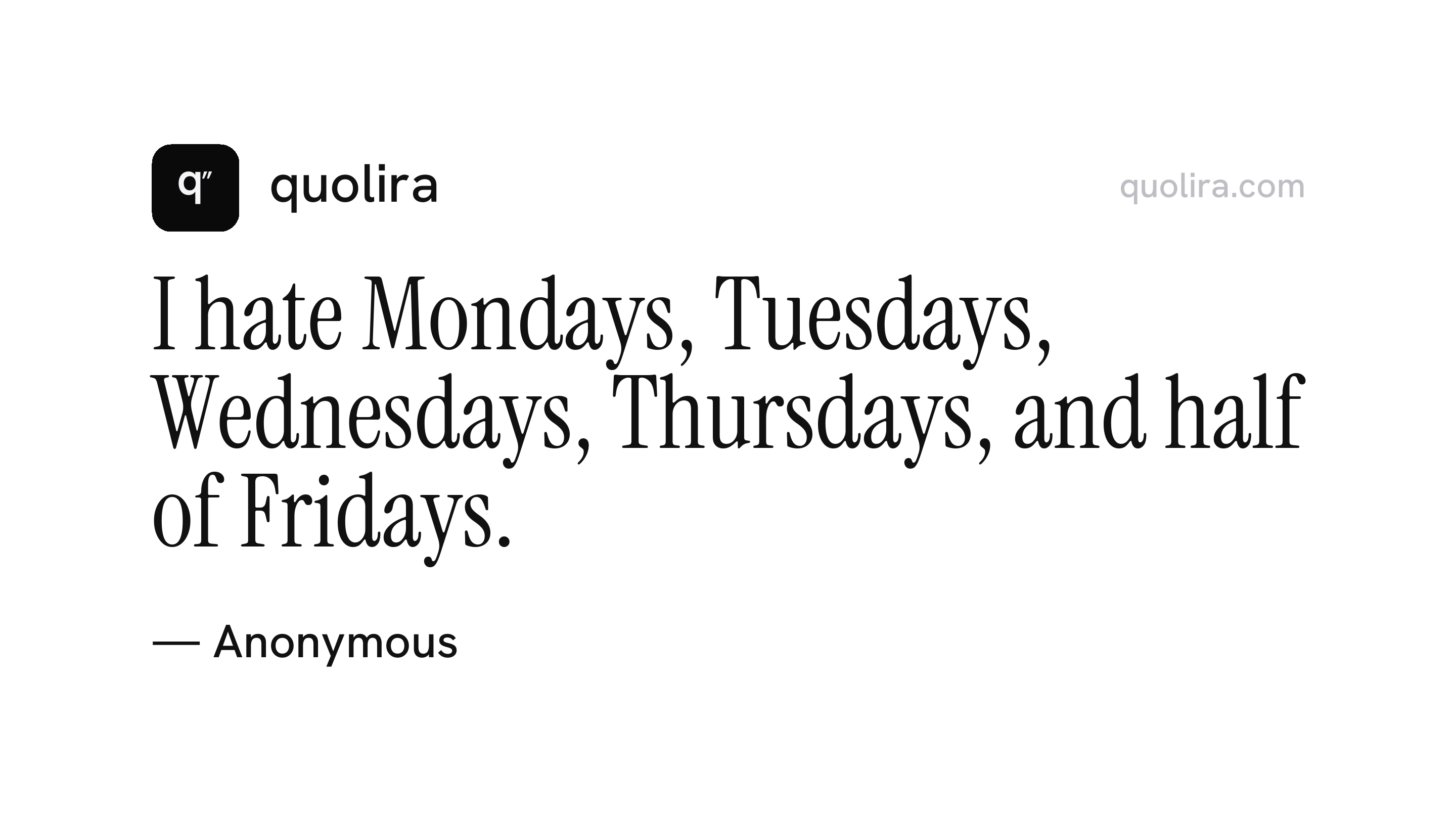
“I hate Mondays, Tuesdays, Wednesdays, Thursdays, and half of Fridays.”
Anonymous
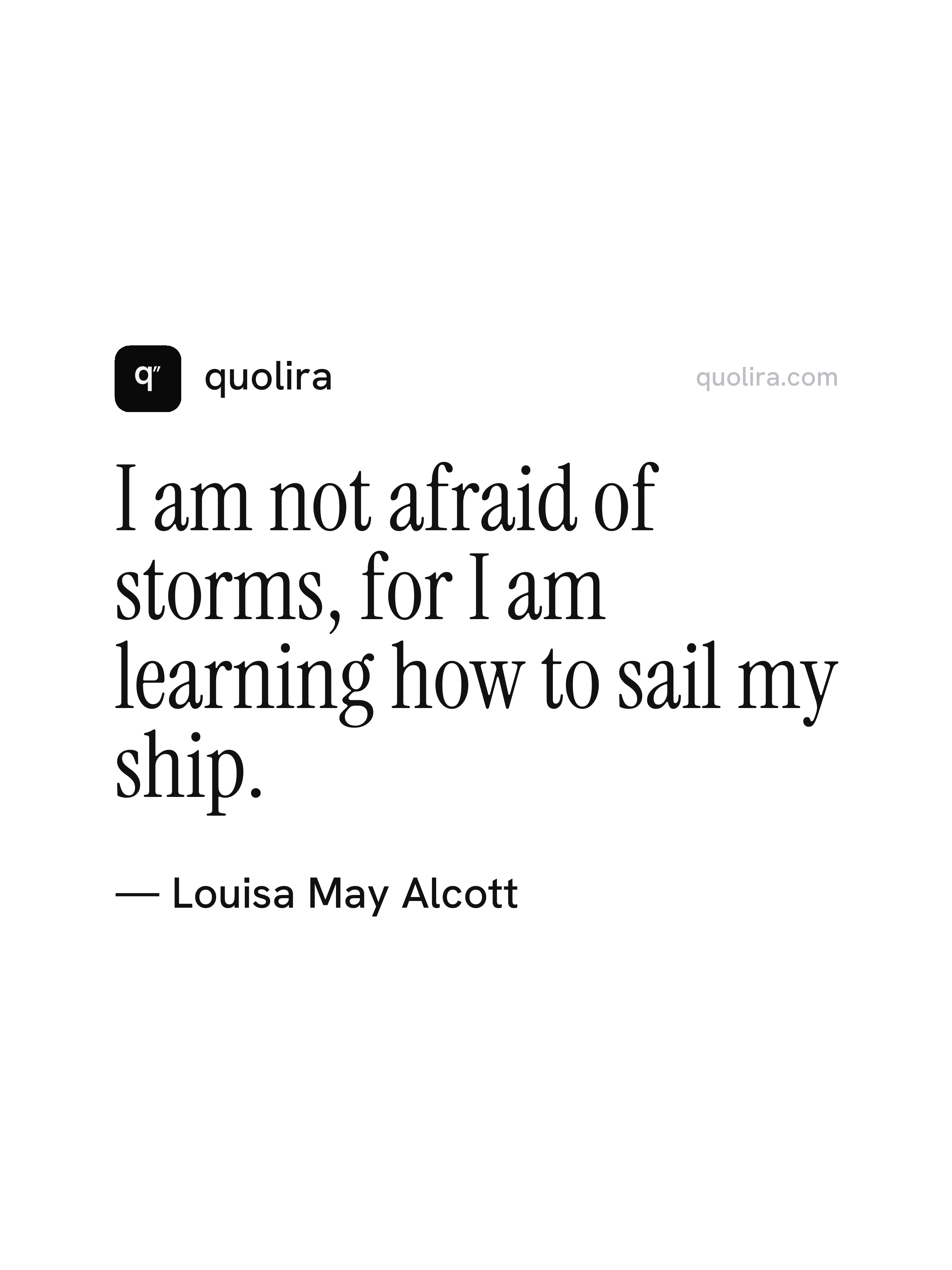
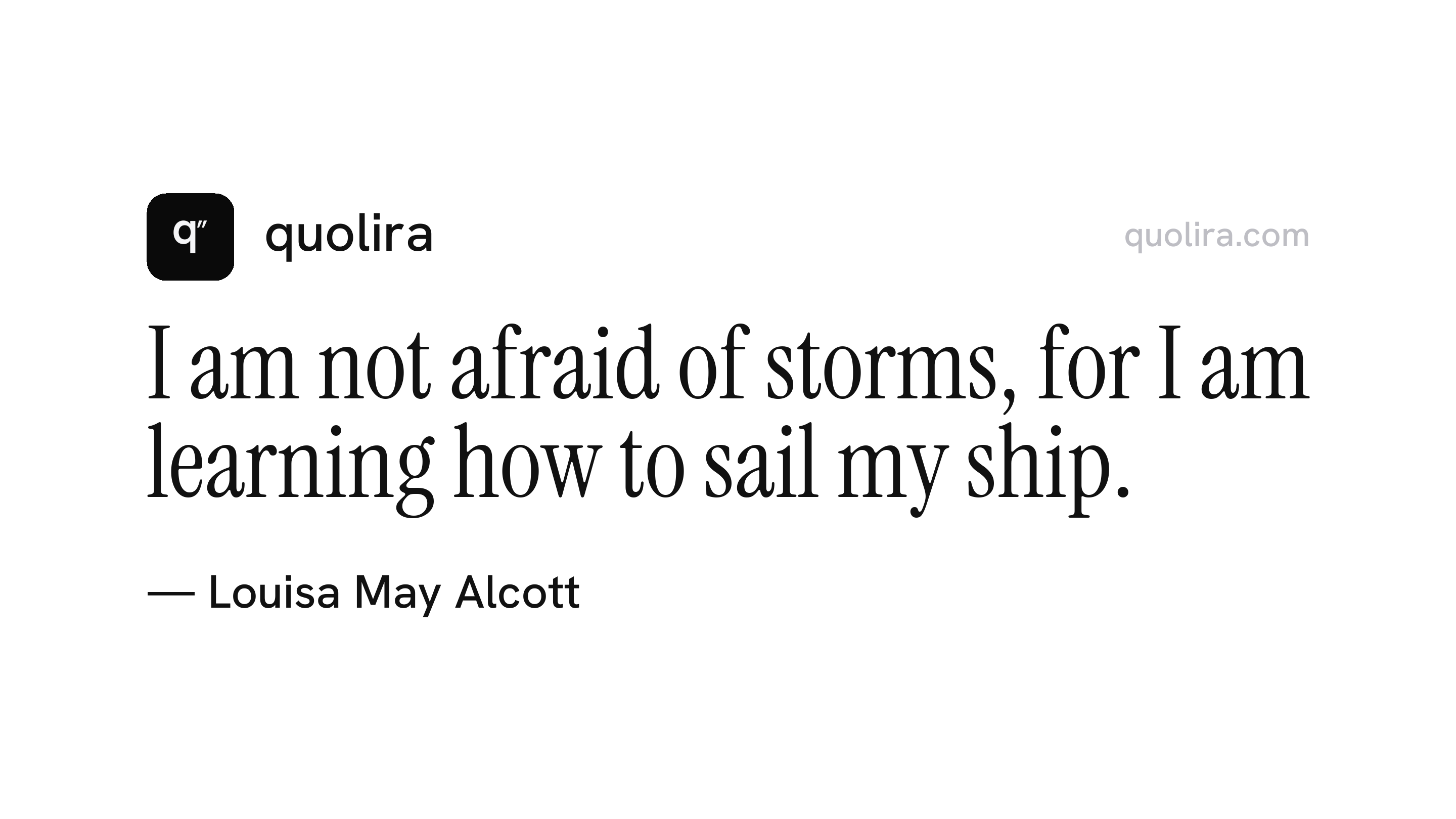
“I am not afraid of storms, for I am learning how to sail my ship.”
Louisa May Alcott · Little Women, 1868
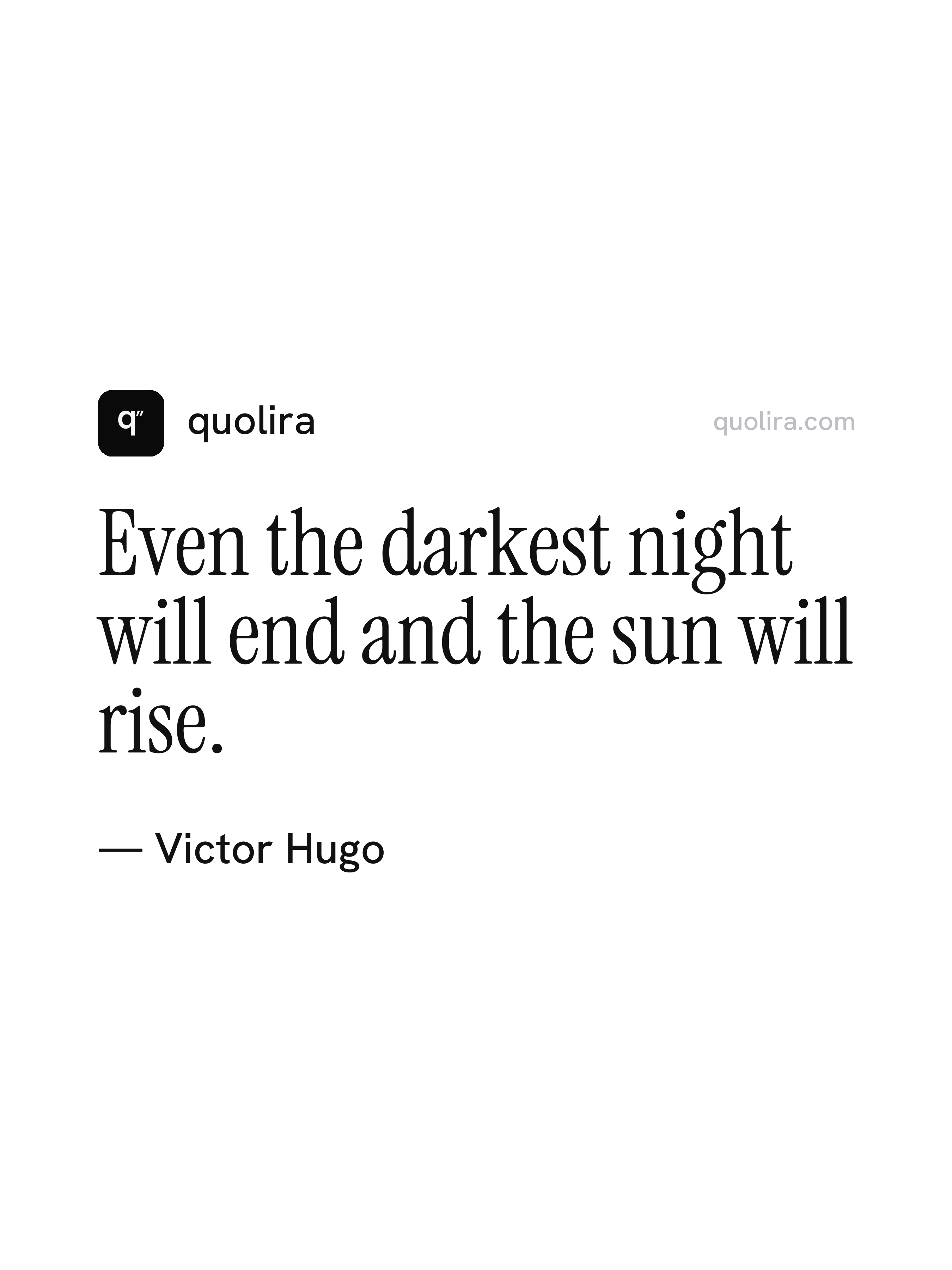
“Even the darkest night will end and the sun will rise.”
Victor Hugo · Les Misérables, 1862