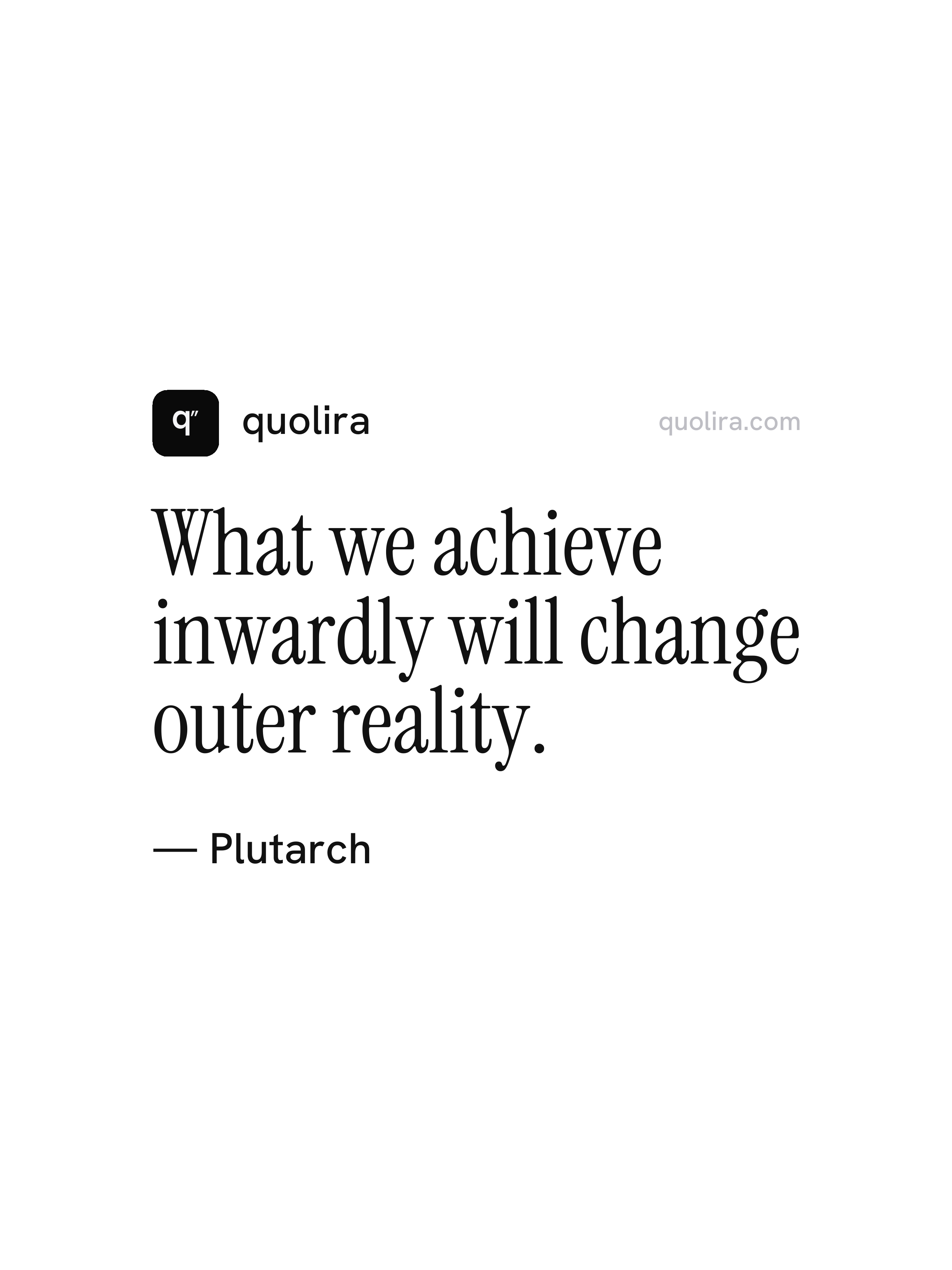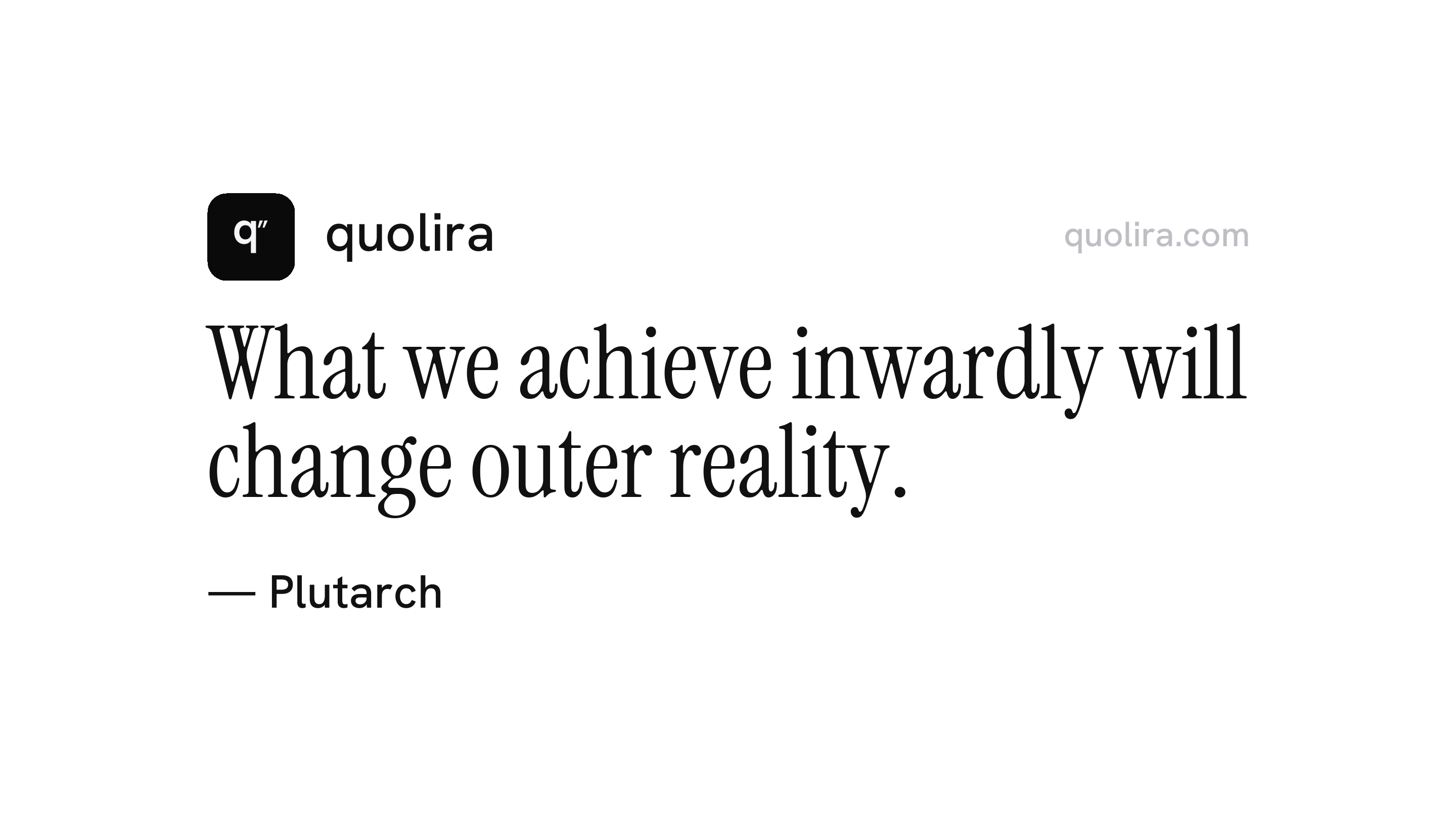
“What we achieve inwardly will change outer reality.”
Plutarch · Moralia, c. 100 AD
 quolira
.com
quolira
quolira.com
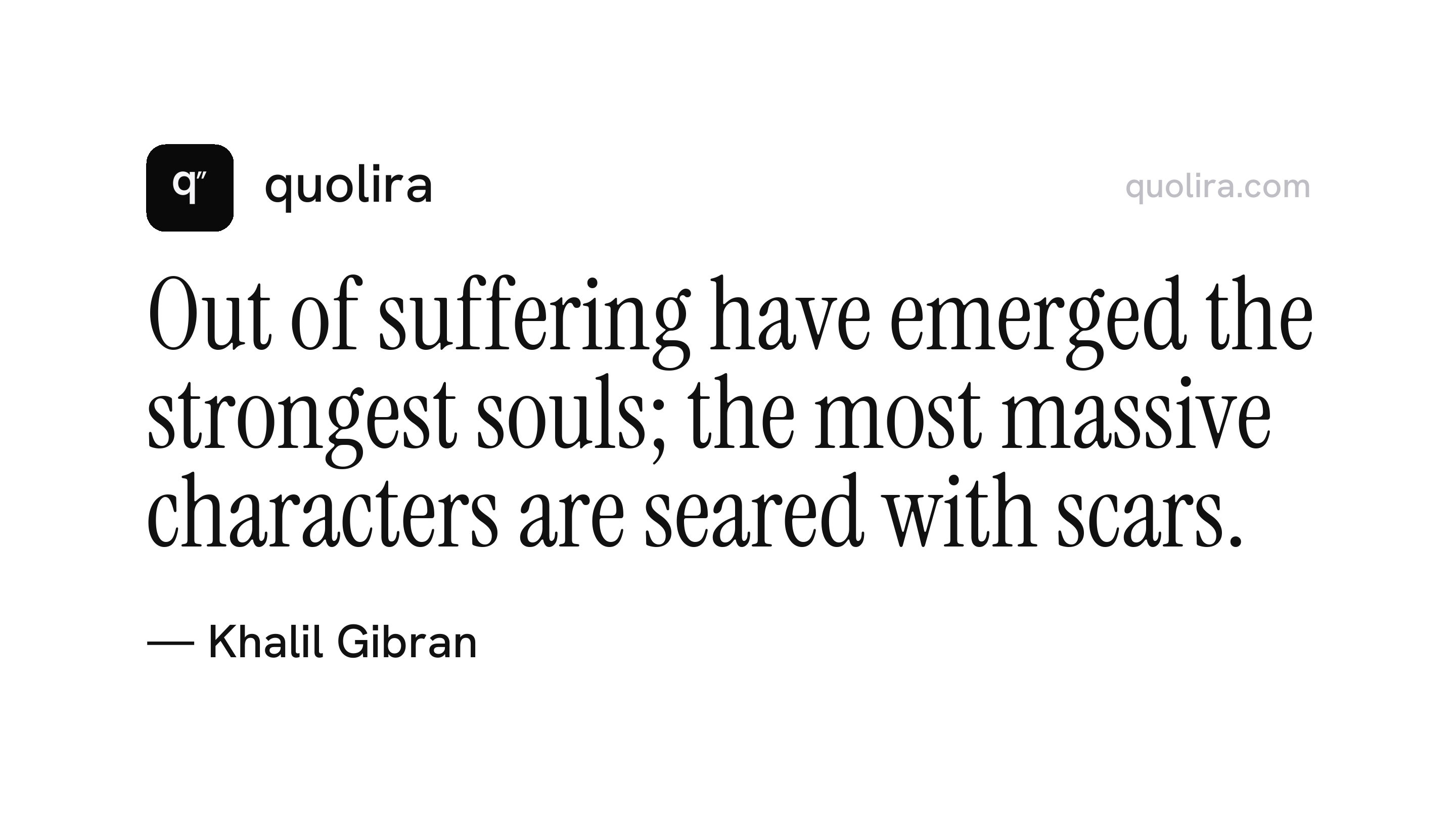
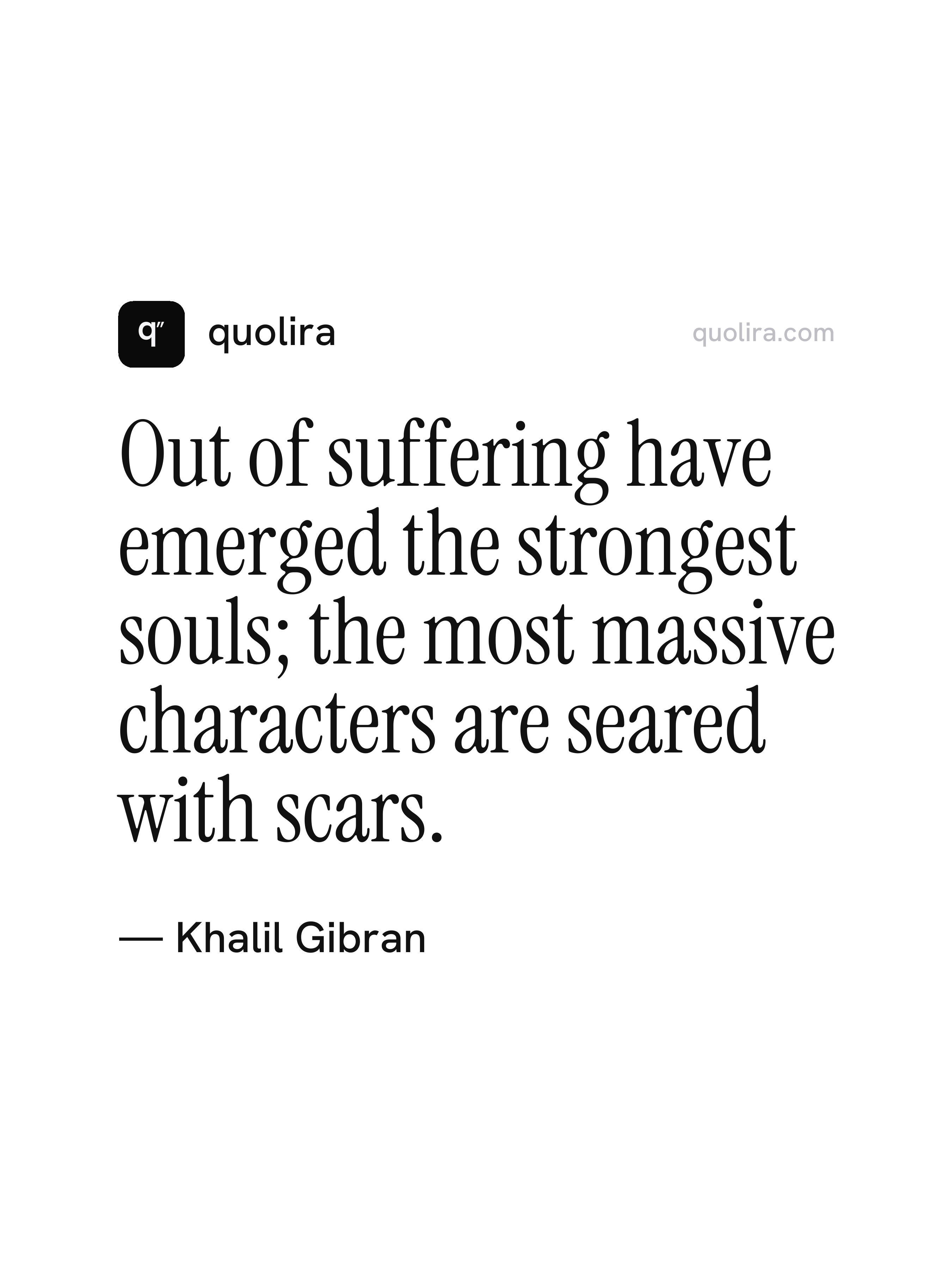
Gibran is making an observation about the relationship between hardship and depth of character. The image of scars on a massive character is deliberate: he is not romanticizing suffering for its own sake, but noting that the people who demonstrate the greatest emotional and moral strength are often those who have endured the most. Suffering, when met with courage rather than bitterness, can forge a resilience and empathy that a comfortable life rarely produces. The quote asks us to see difficulty not only as loss but also as a kind of forging.
This line comes from Gibran's prose poetry and philosophical writings, which blend Eastern and Western spiritual traditions into a lyrical, meditative style. The Prophet, his most celebrated work, takes the form of a wise figure addressing a community before departing, sharing insights on love, work, grief, and freedom. Gibran's own life was marked by displacement, poverty, and loss, and those experiences gave his writing an emotional authority that readers across many cultures have found deeply personal and true.
Khalil Gibran was a Lebanese-American poet, writer, and visual artist born in 1883 in what is now Lebanon. He emigrated to the United States as a child and eventually settled in Boston and later New York, where he wrote in both Arabic and English. The Prophet, published in 1923, became one of the best-selling books of the twentieth century. Gibran drew on Sufi mysticism, Christianity, and Romanticism, and his work remains widely read for its combination of spiritual warmth and lyrical beauty.
“What we achieve inwardly will change outer reality.”
Plutarch · Moralia, c. 100 AD
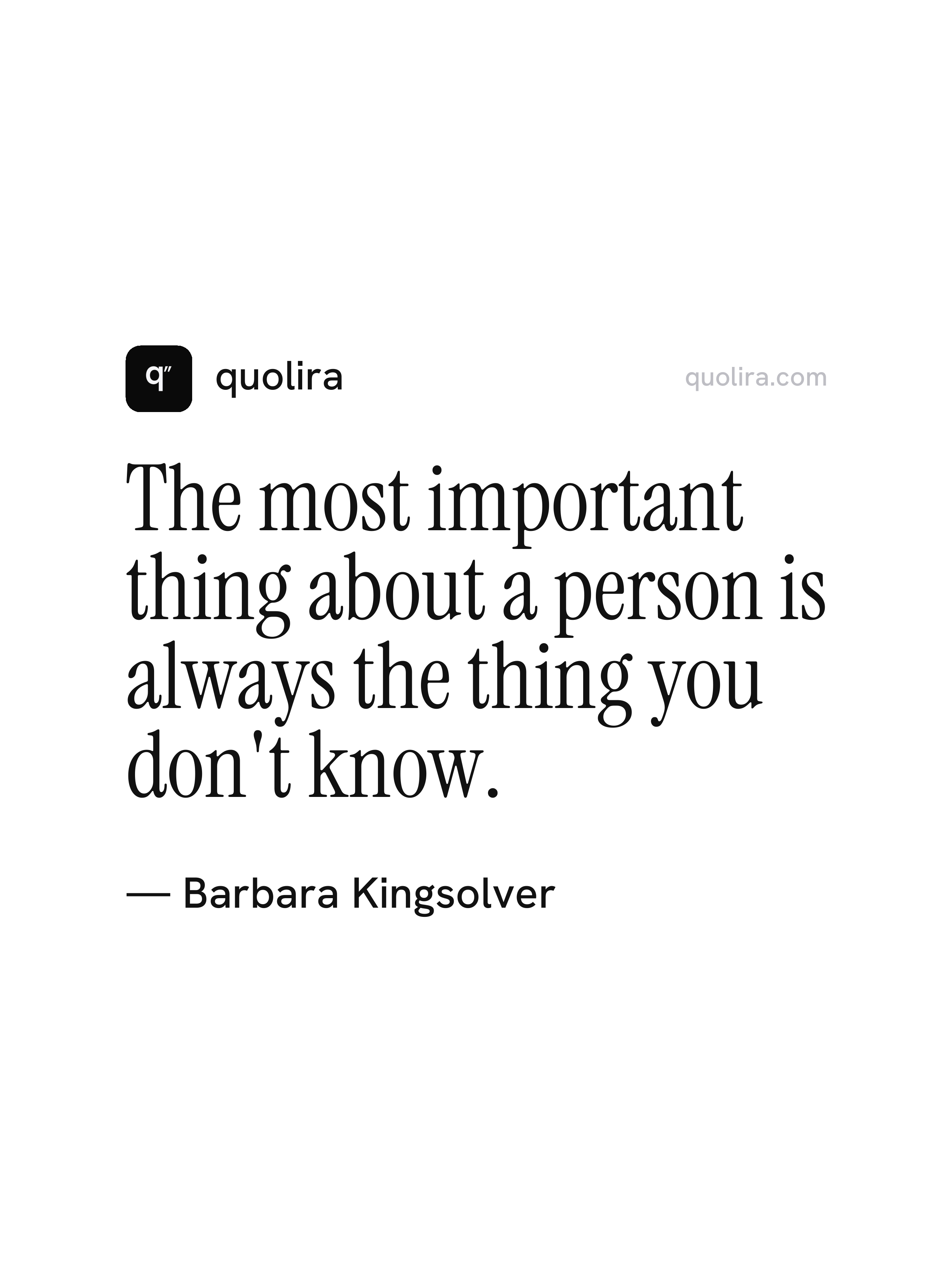
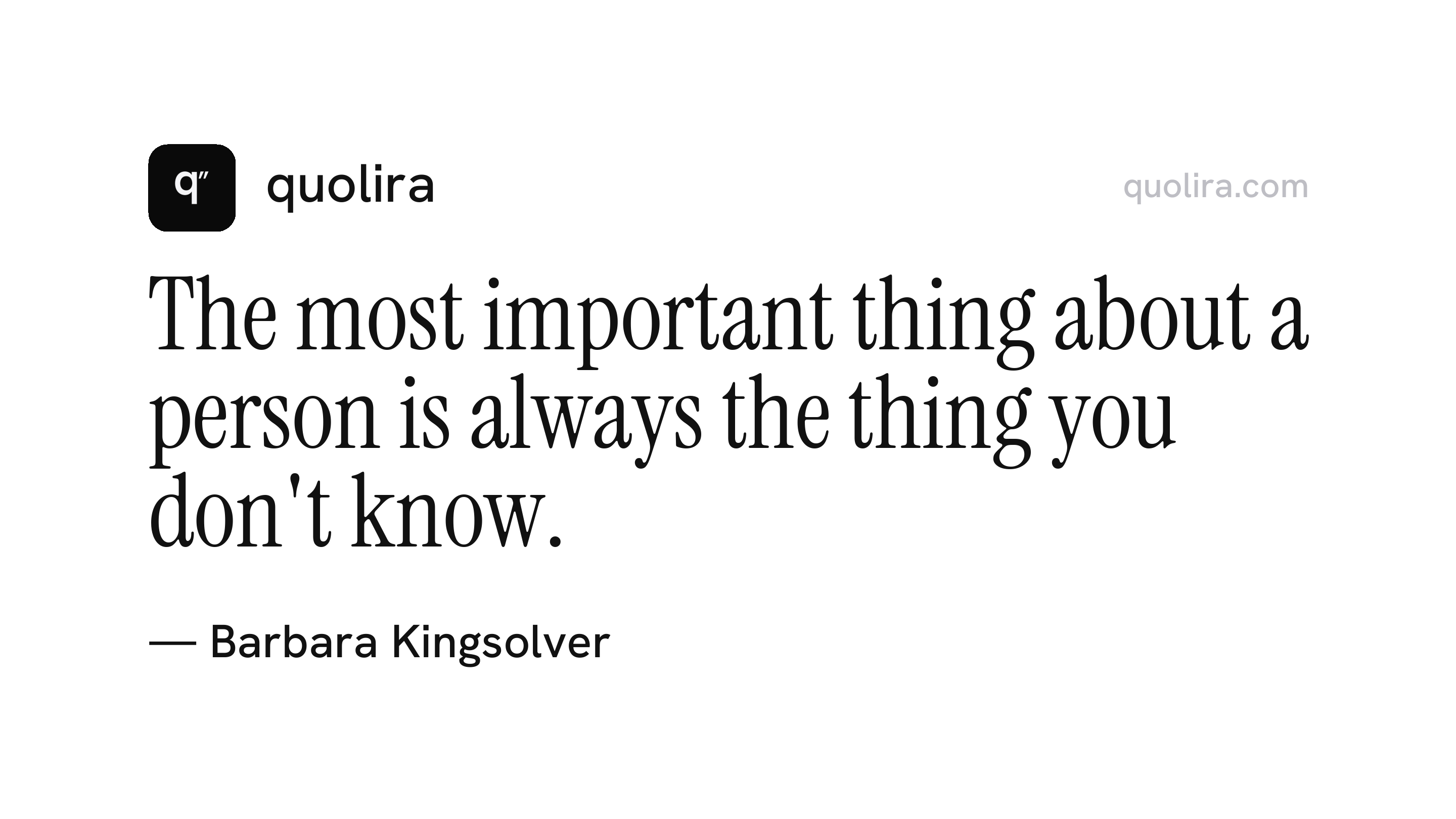
“The most important thing about a person is always the thing you don't know.”
Barbara Kingsolver · The Lacuna, 2009
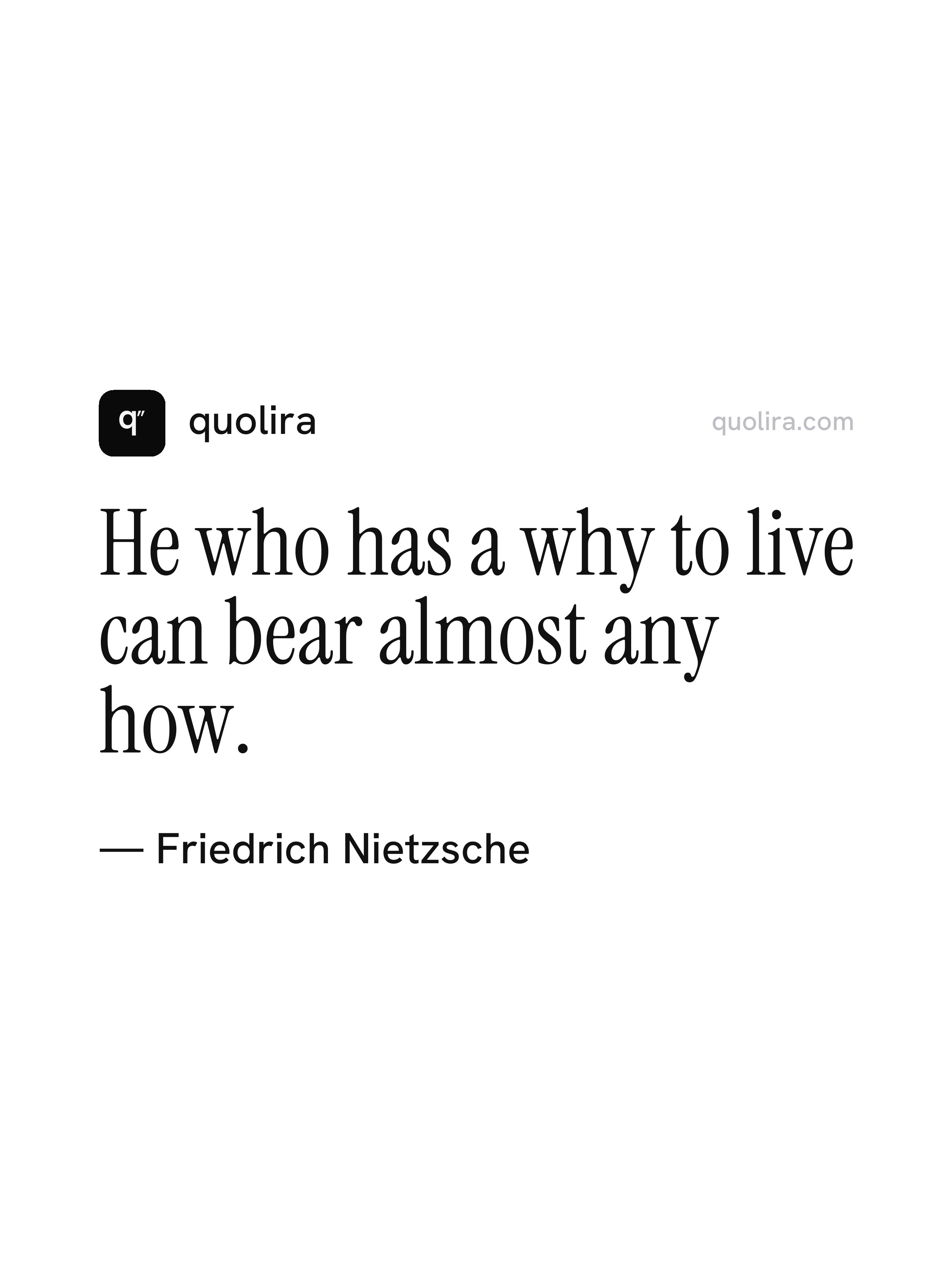
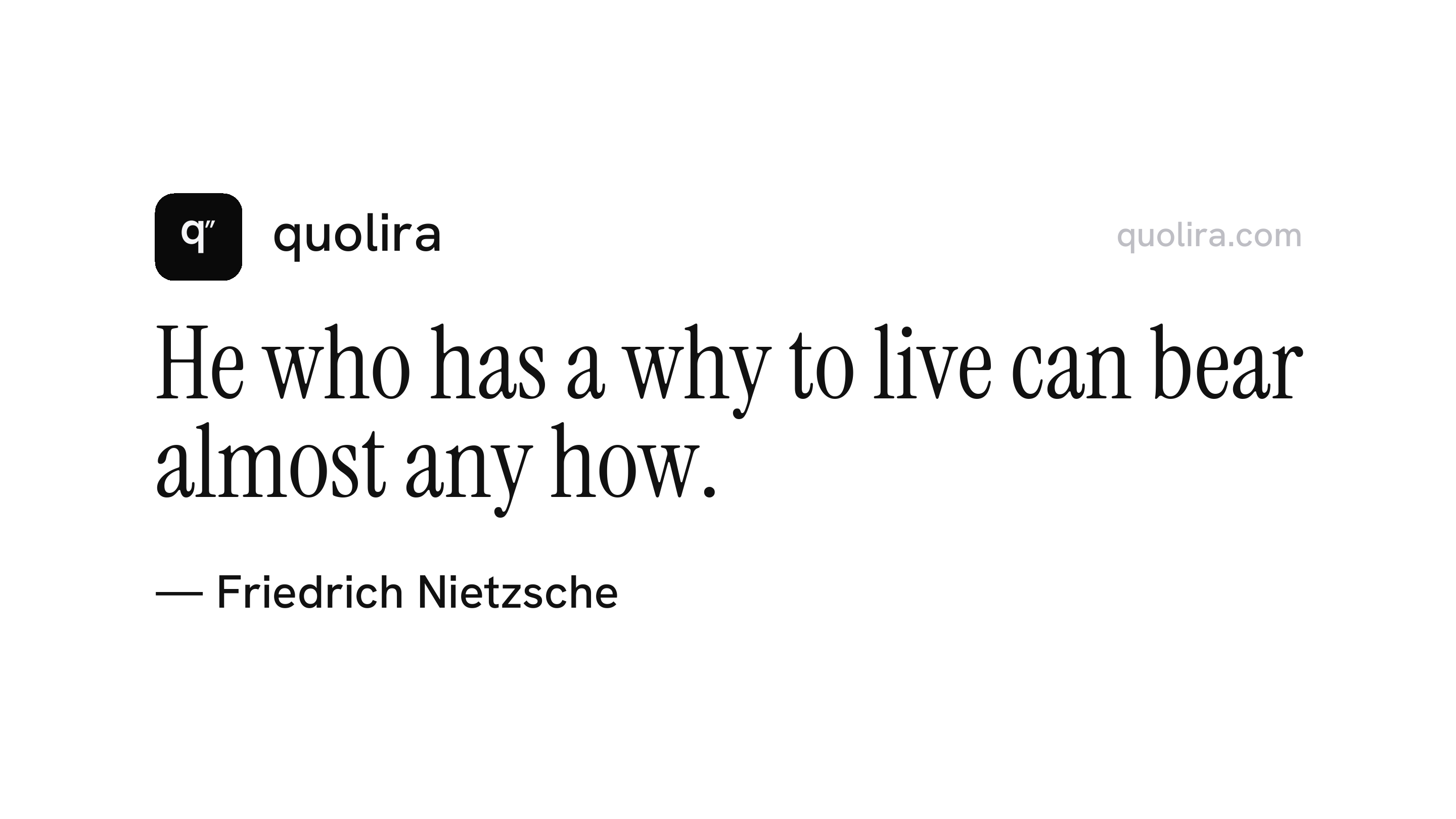
“He who has a why to live can bear almost any how.”
Friedrich Nietzsche · Twilight of the Idols, 1889
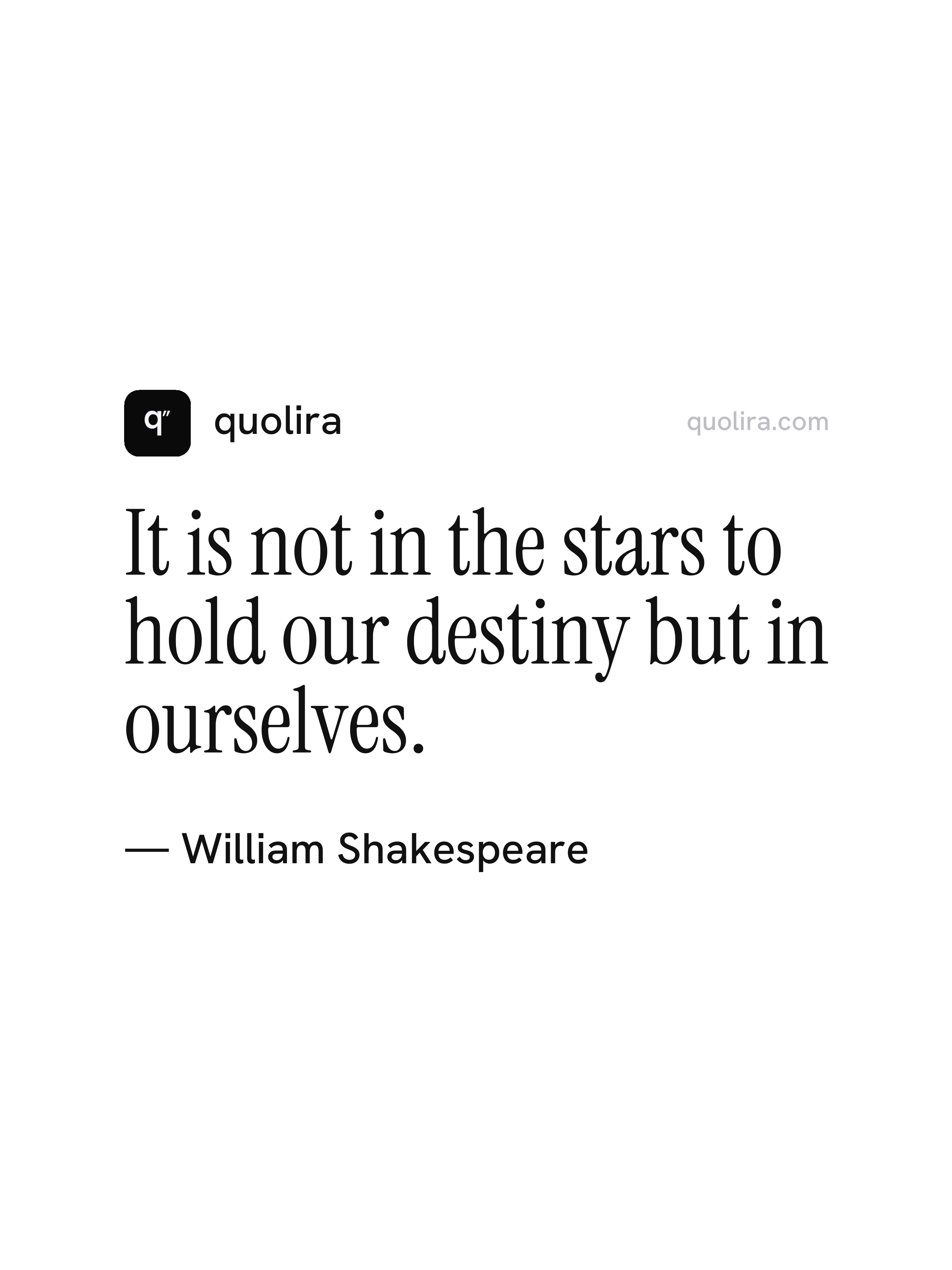
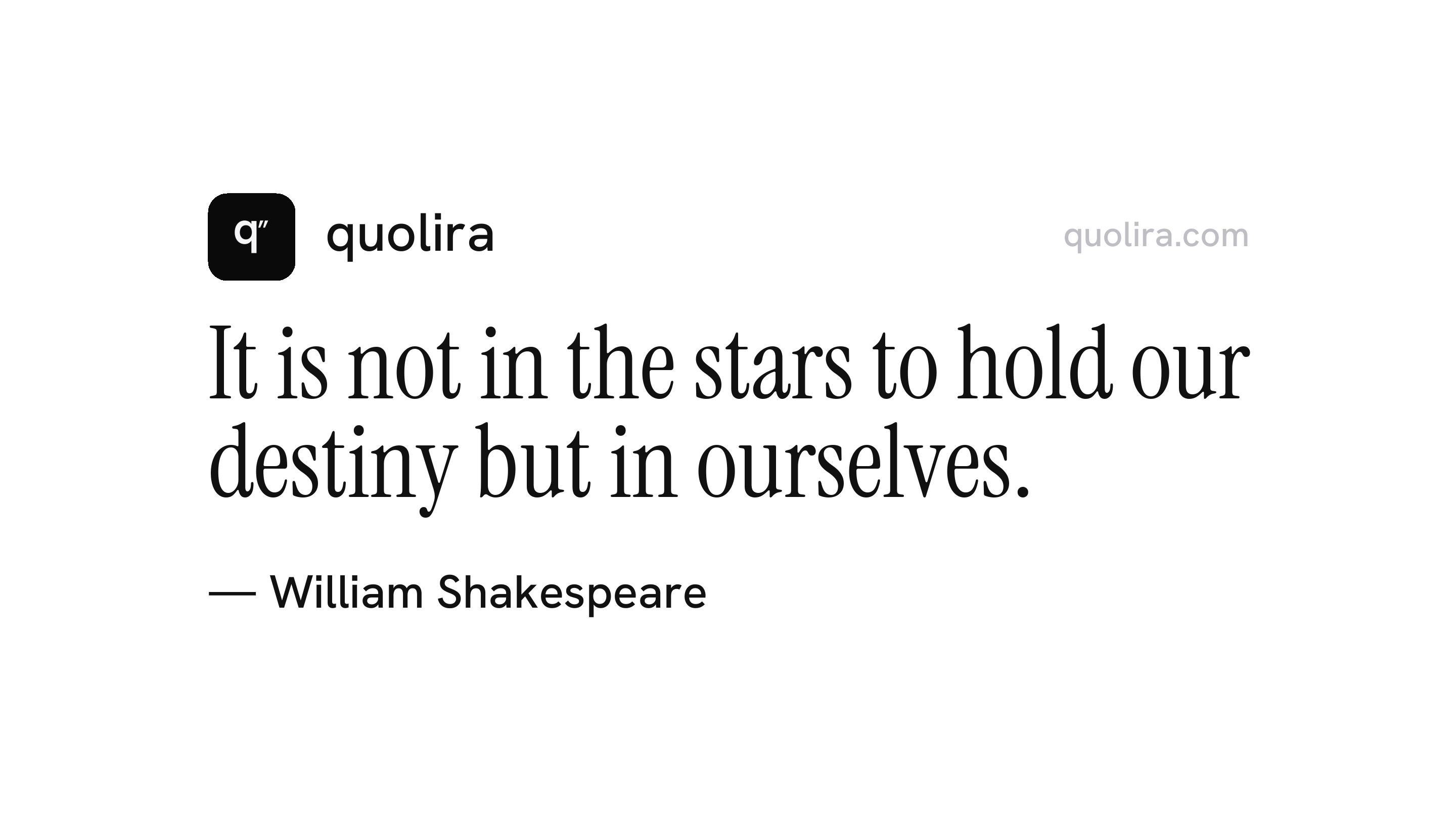
“It is not in the stars to hold our destiny but in ourselves.”
William Shakespeare · Julius Caesar, c. 1599
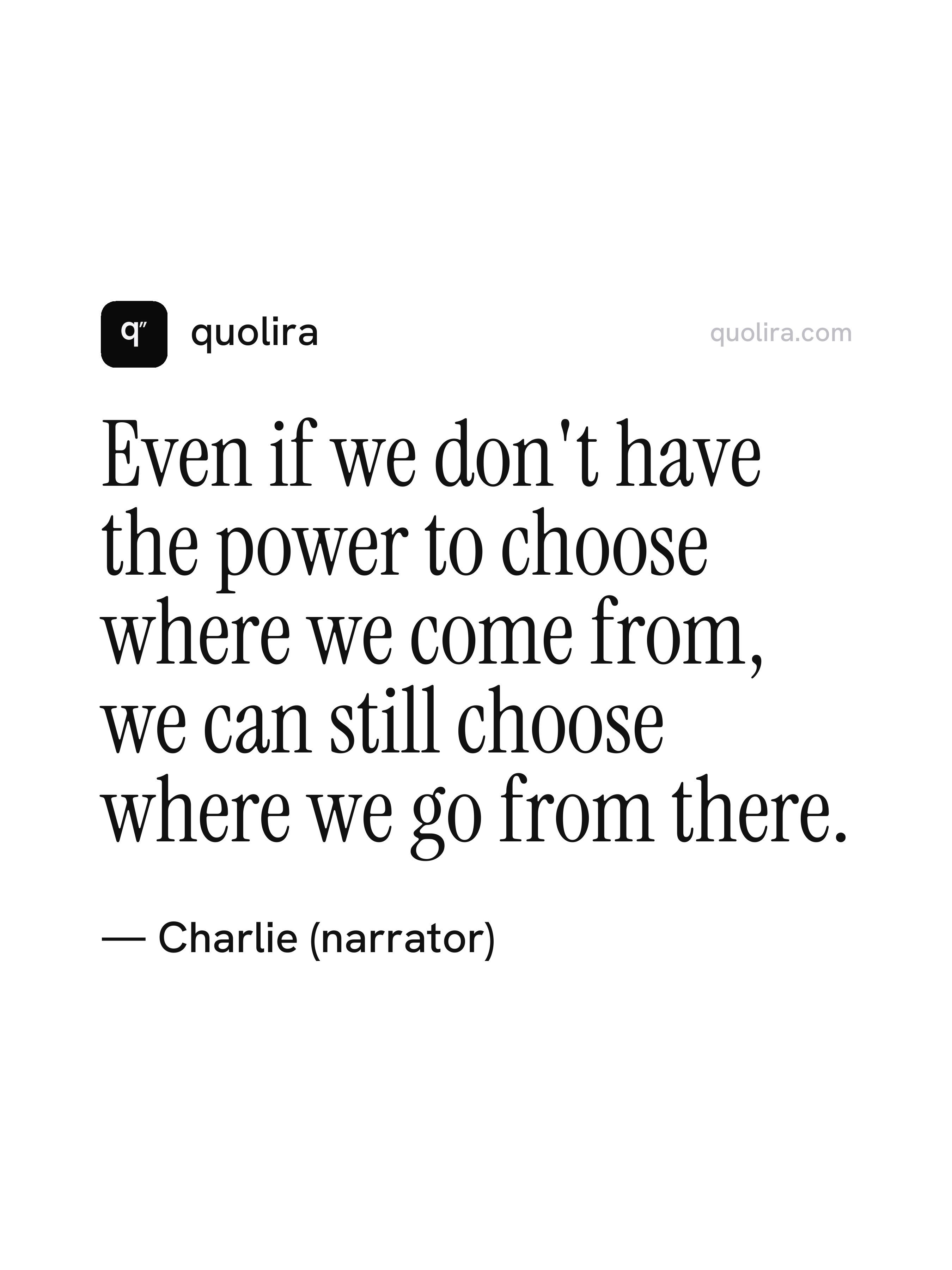
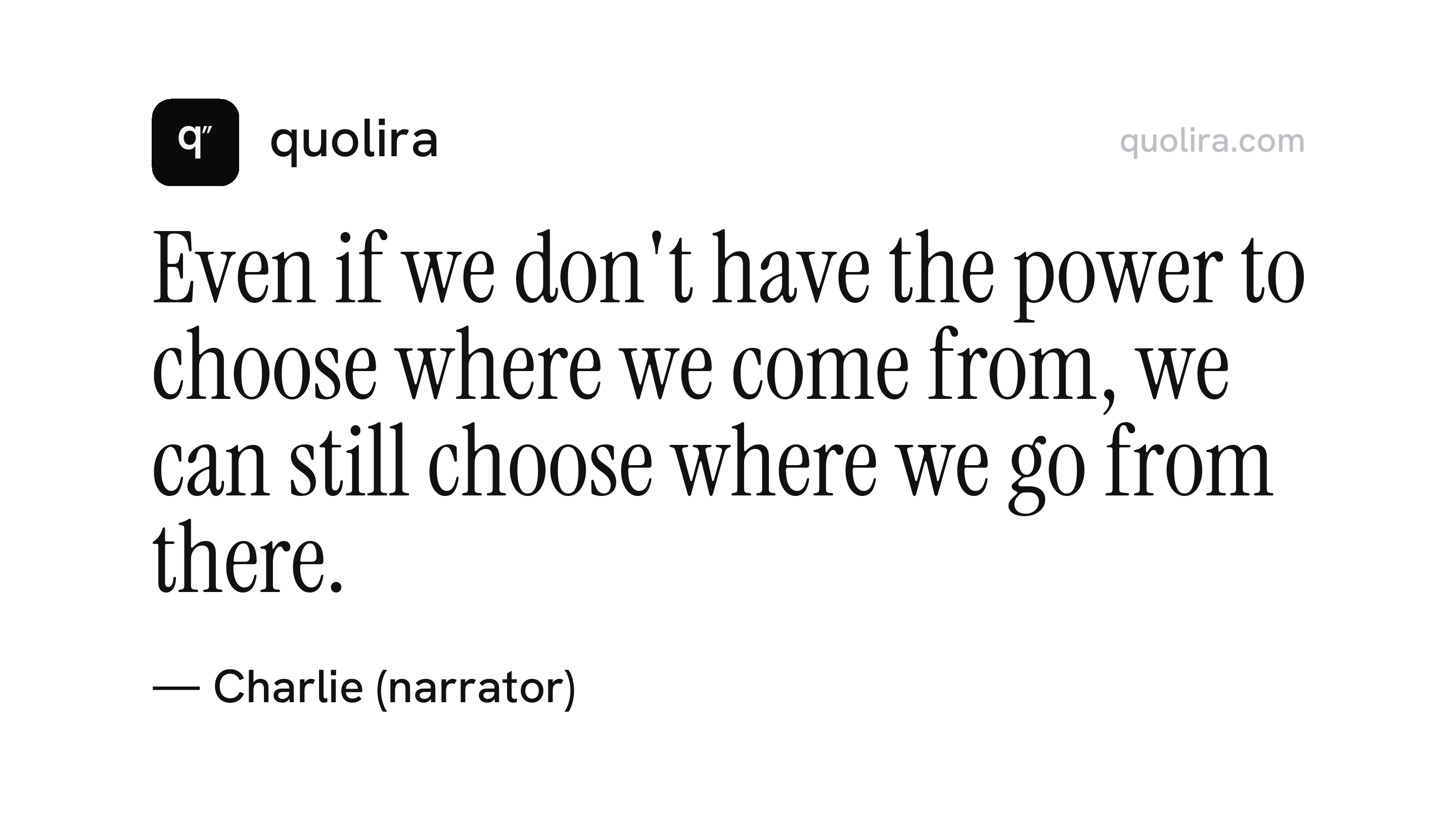
“Even if we don't have the power to choose where we come from, we can still choose where we go from there.”
Charlie (narrator) · The Perks of Being a Wallflower, Stephen Chbosky, 1999
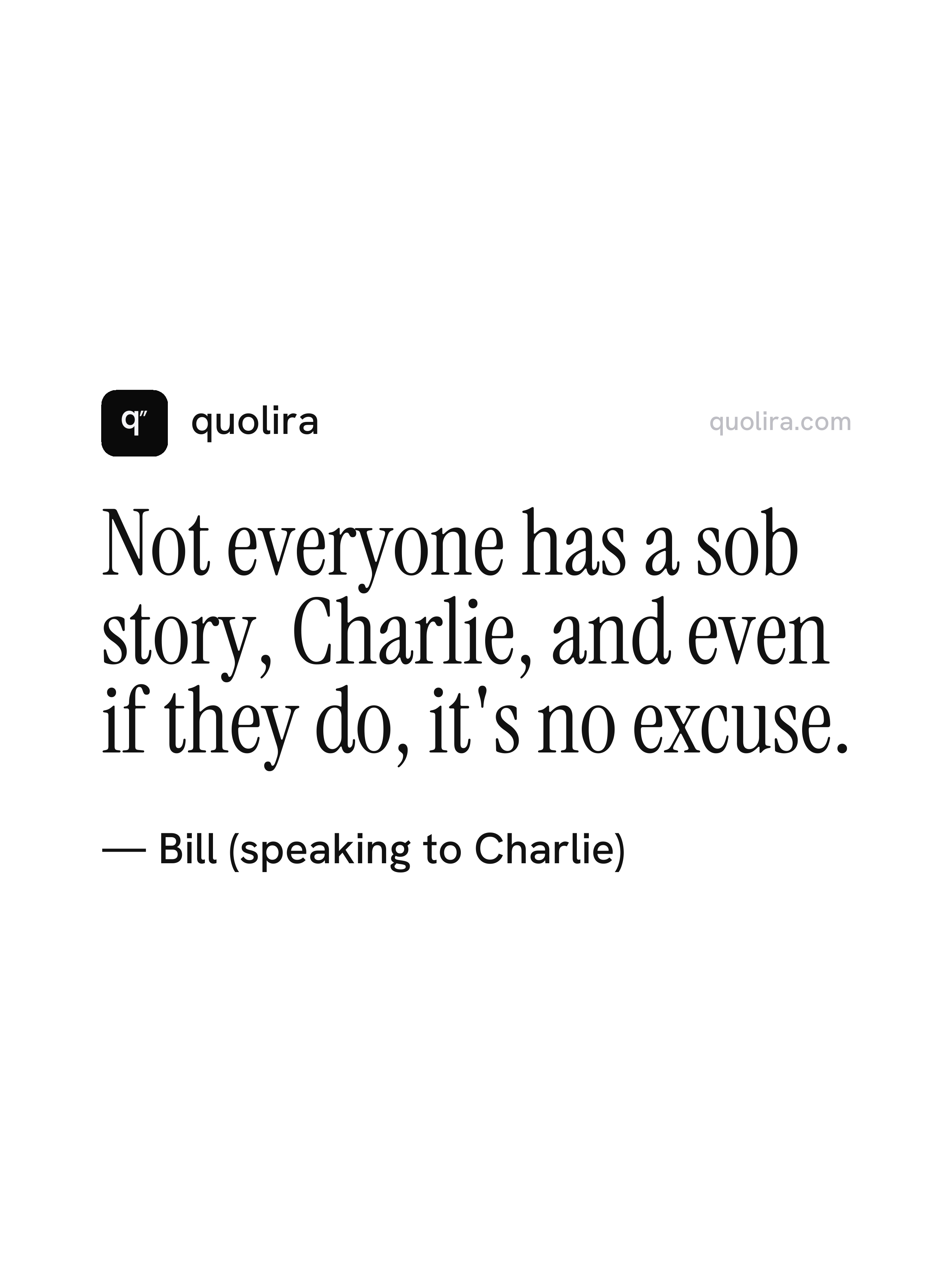
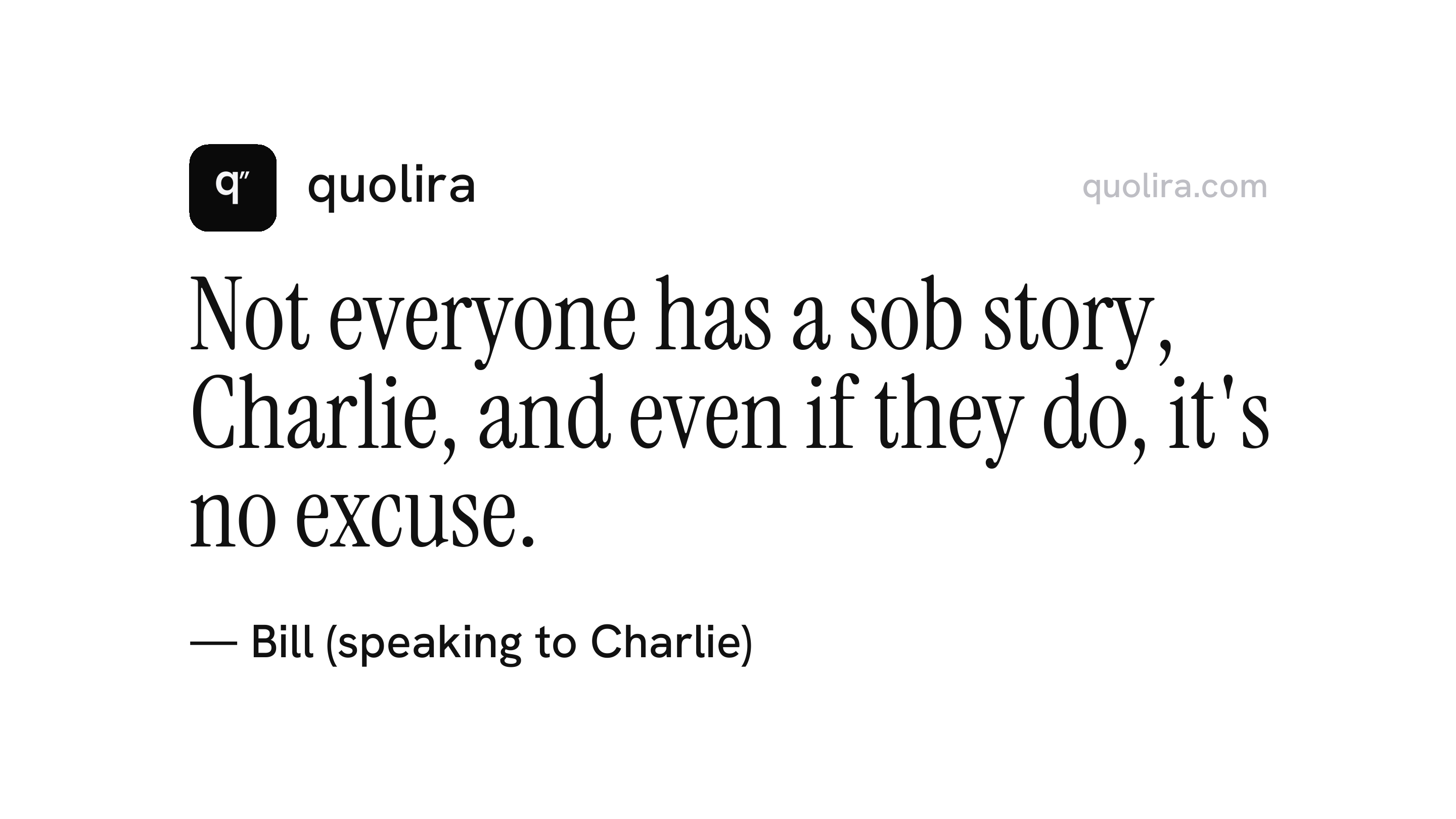
“Not everyone has a sob story, Charlie, and even if they do, it's no excuse.”
Bill (speaking to Charlie) · The Perks of Being a Wallflower, Stephen Chbosky, 1999
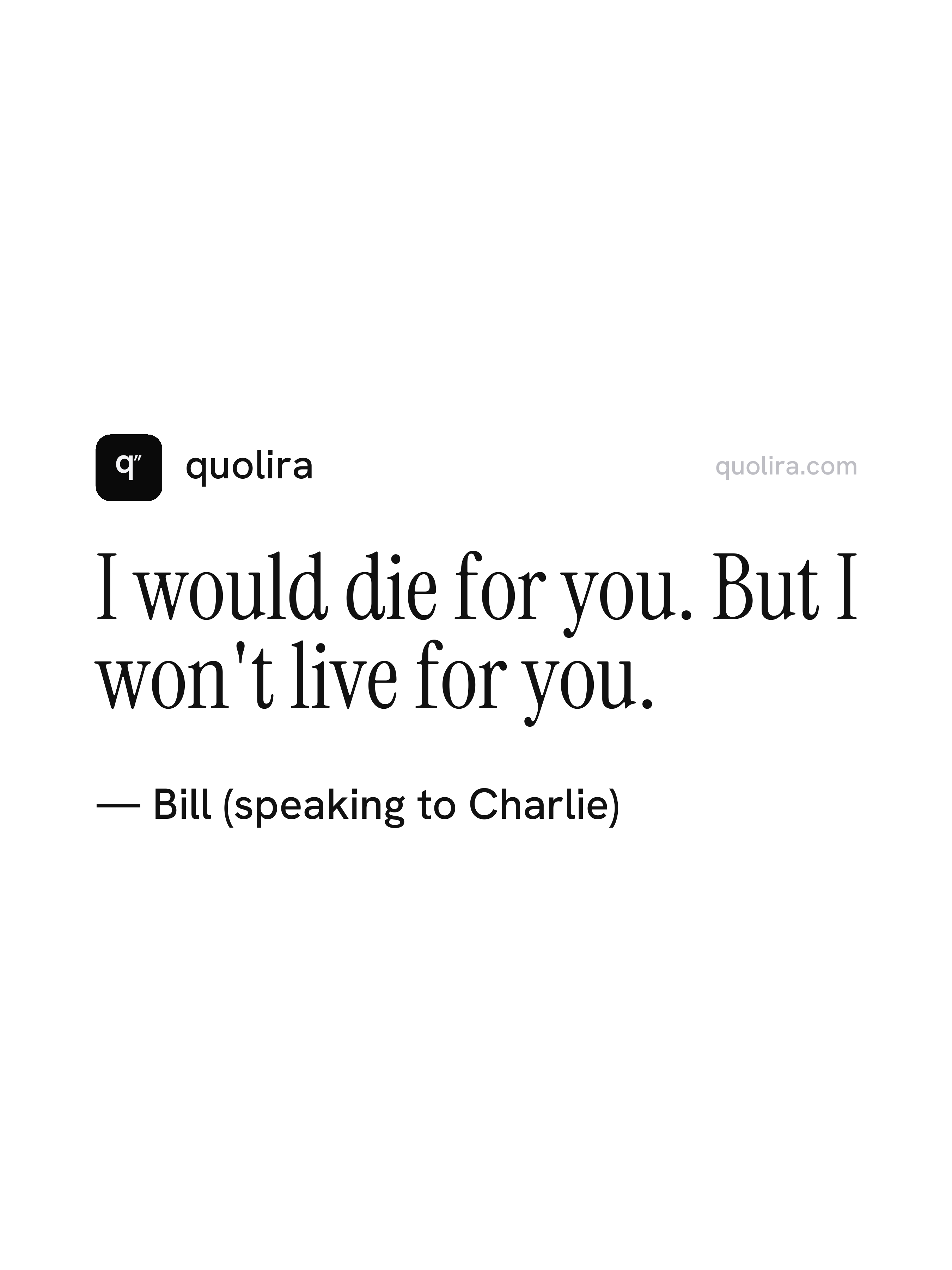
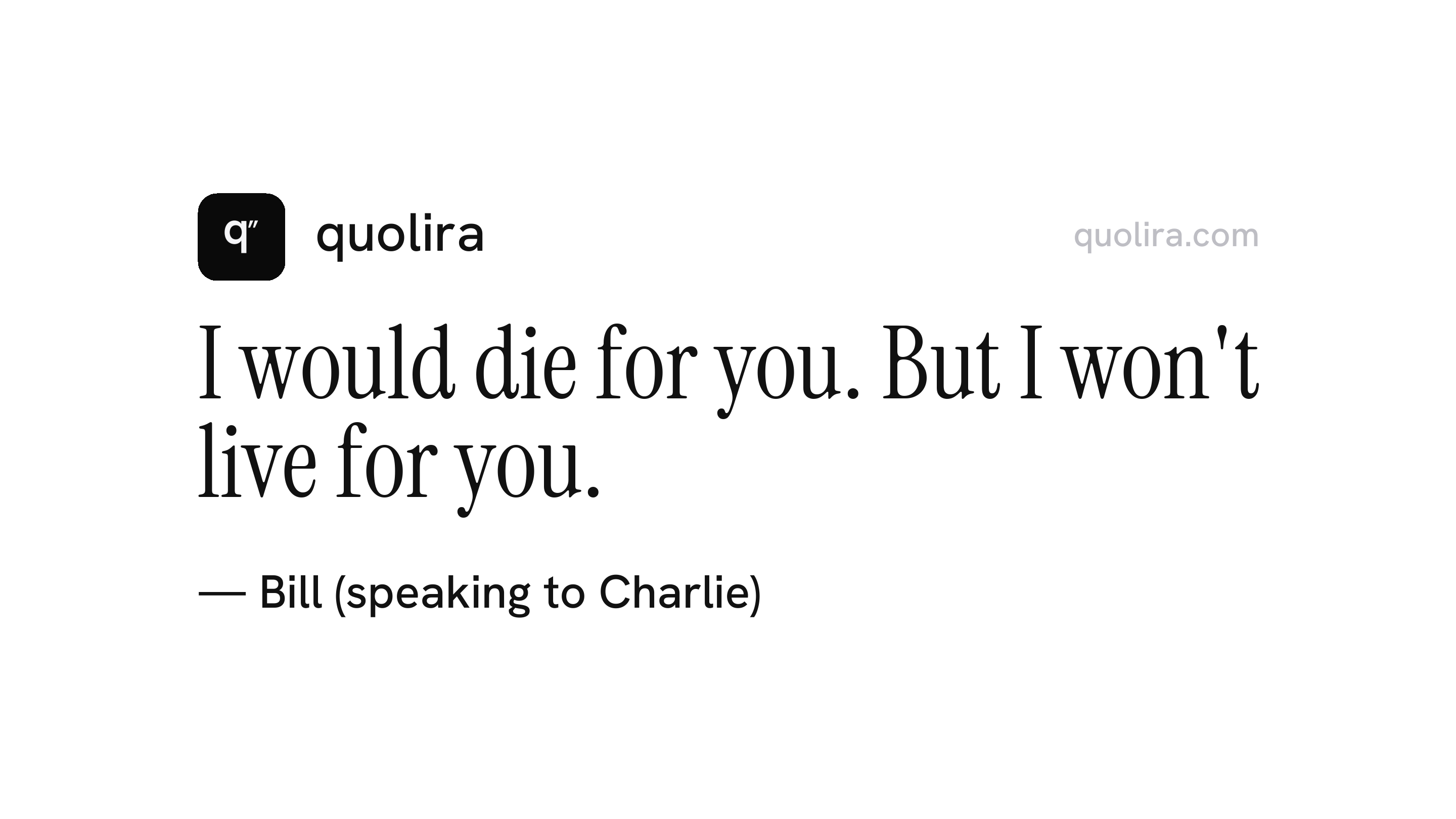
“I would die for you. But I won't live for you.”
Bill (speaking to Charlie) · The Perks of Being a Wallflower, Stephen Chbosky, 1999
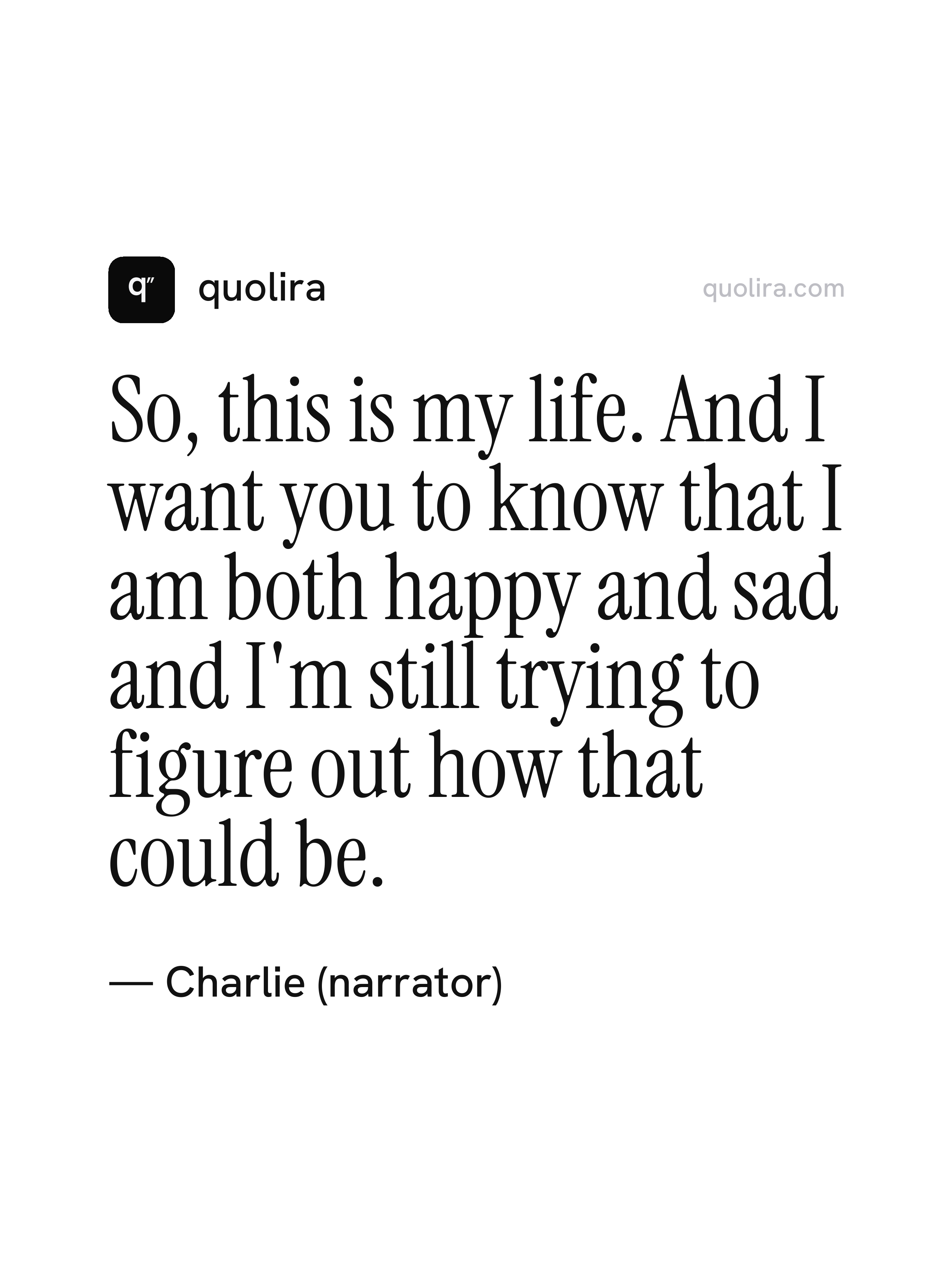
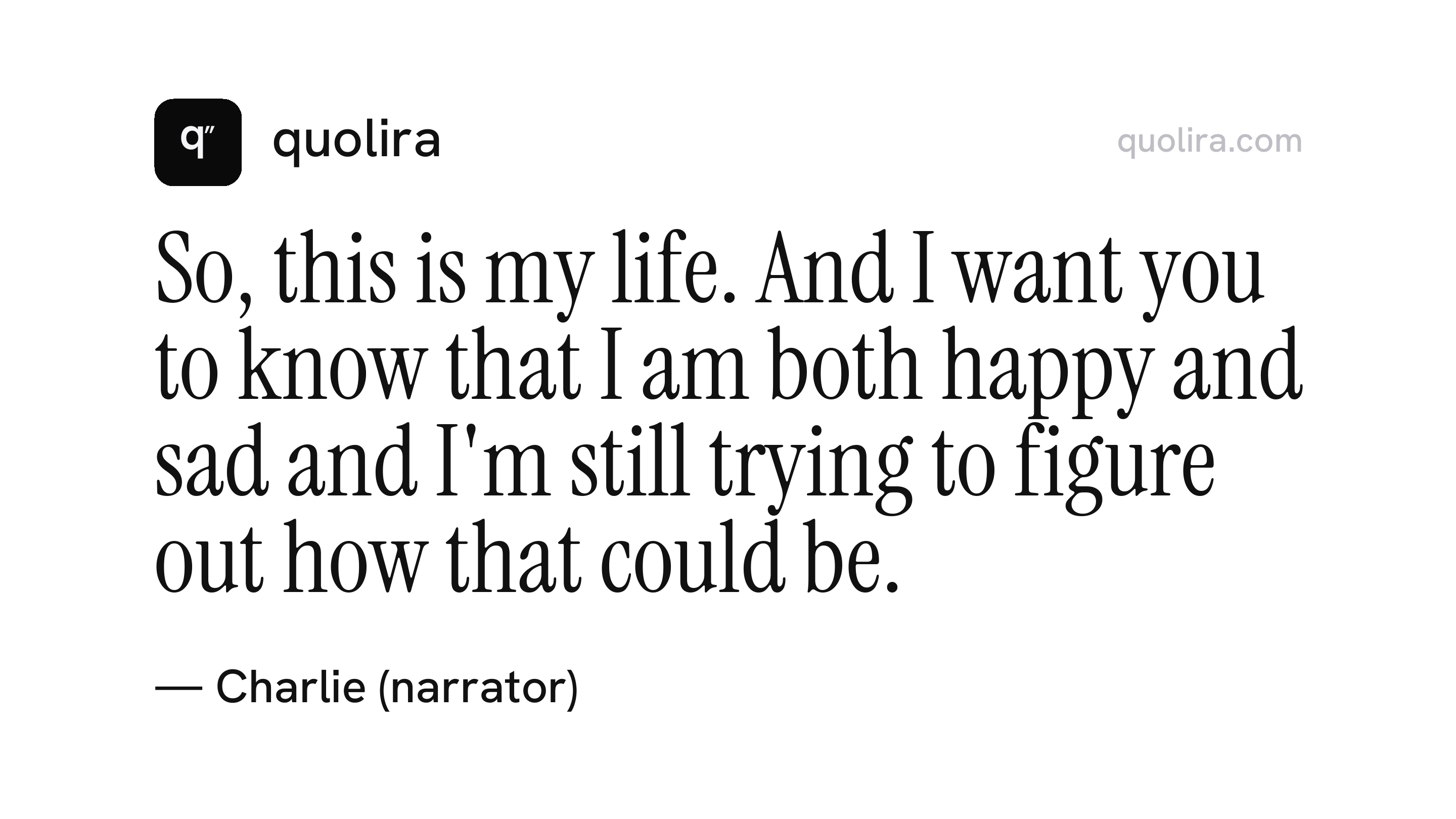
“So, this is my life. And I want you to know that I am both happy and sad and I'm still trying to figure out how that could be.”
Charlie (narrator) · The Perks of Being a Wallflower, Stephen Chbosky, 1999
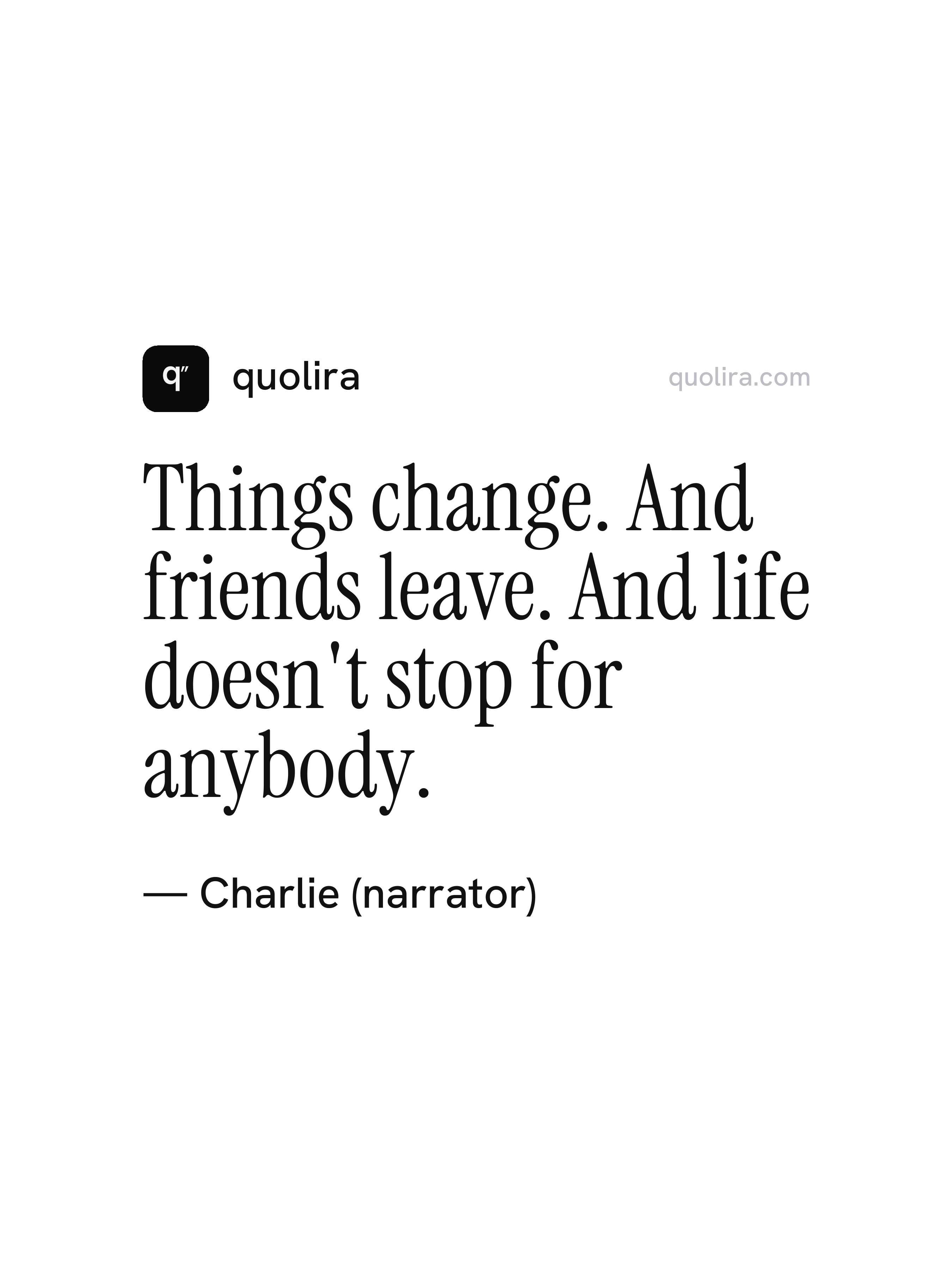
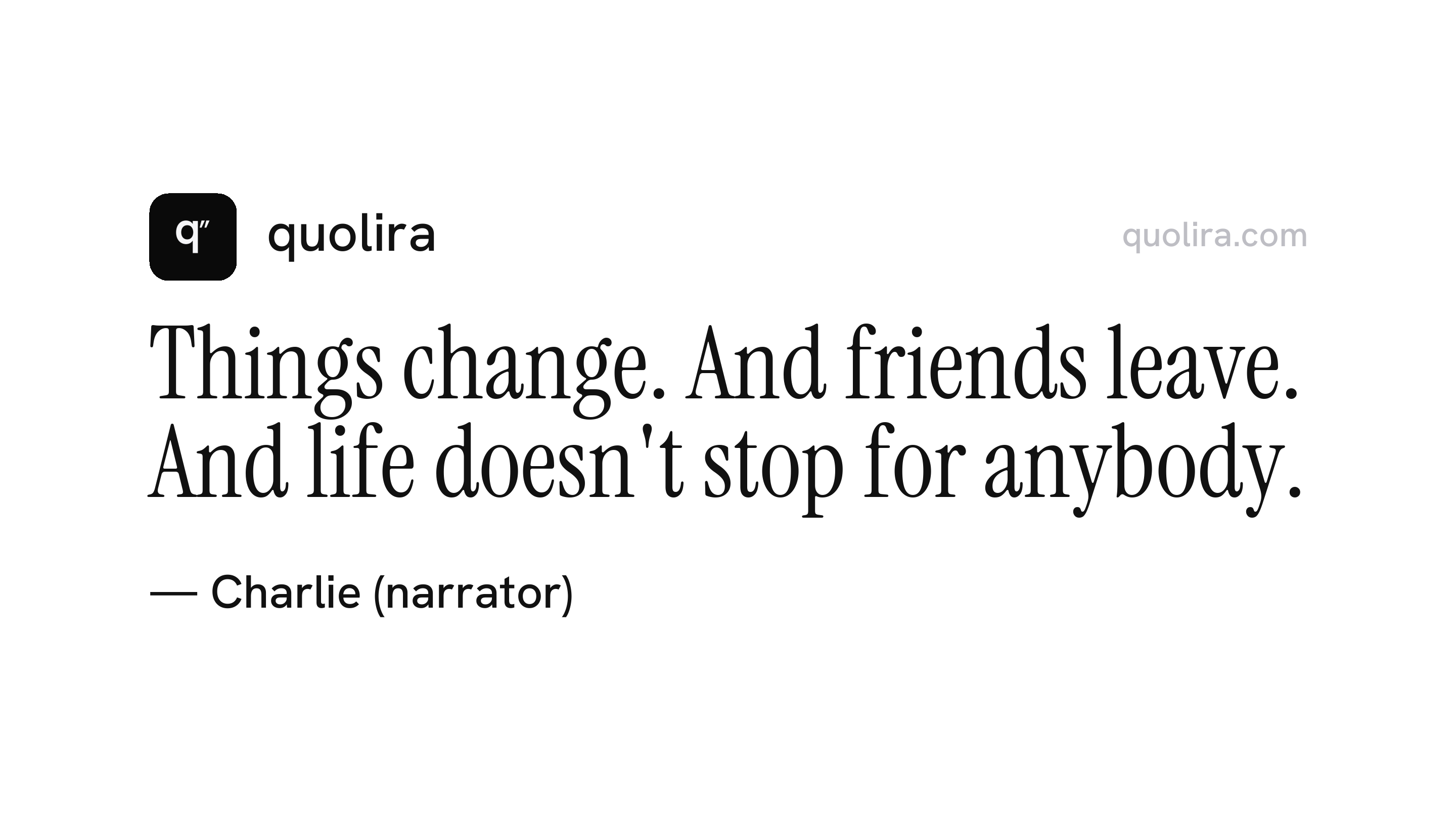
“Things change. And friends leave. And life doesn't stop for anybody.”
Charlie (narrator) · The Perks of Being a Wallflower, Stephen Chbosky, 1999
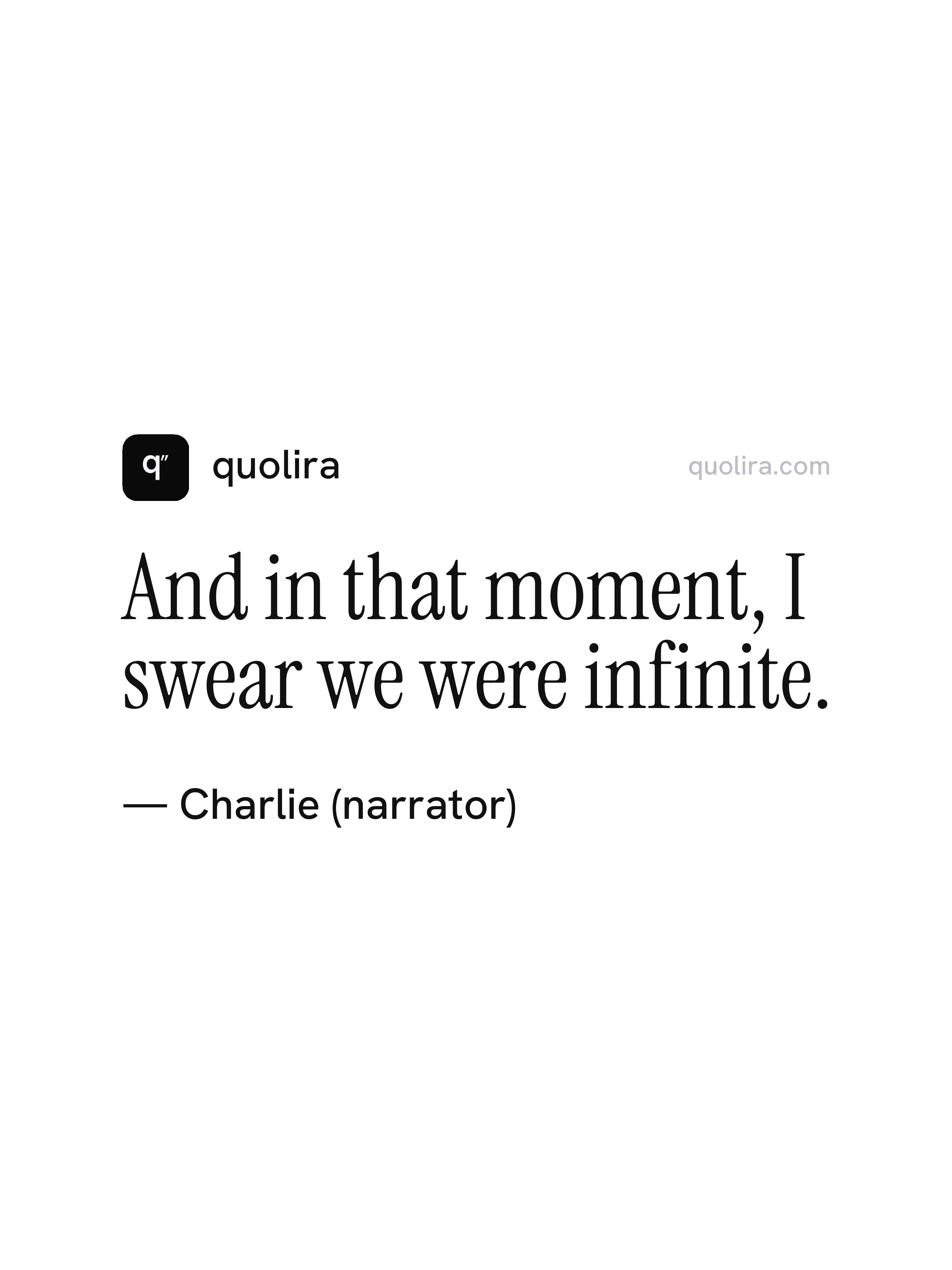
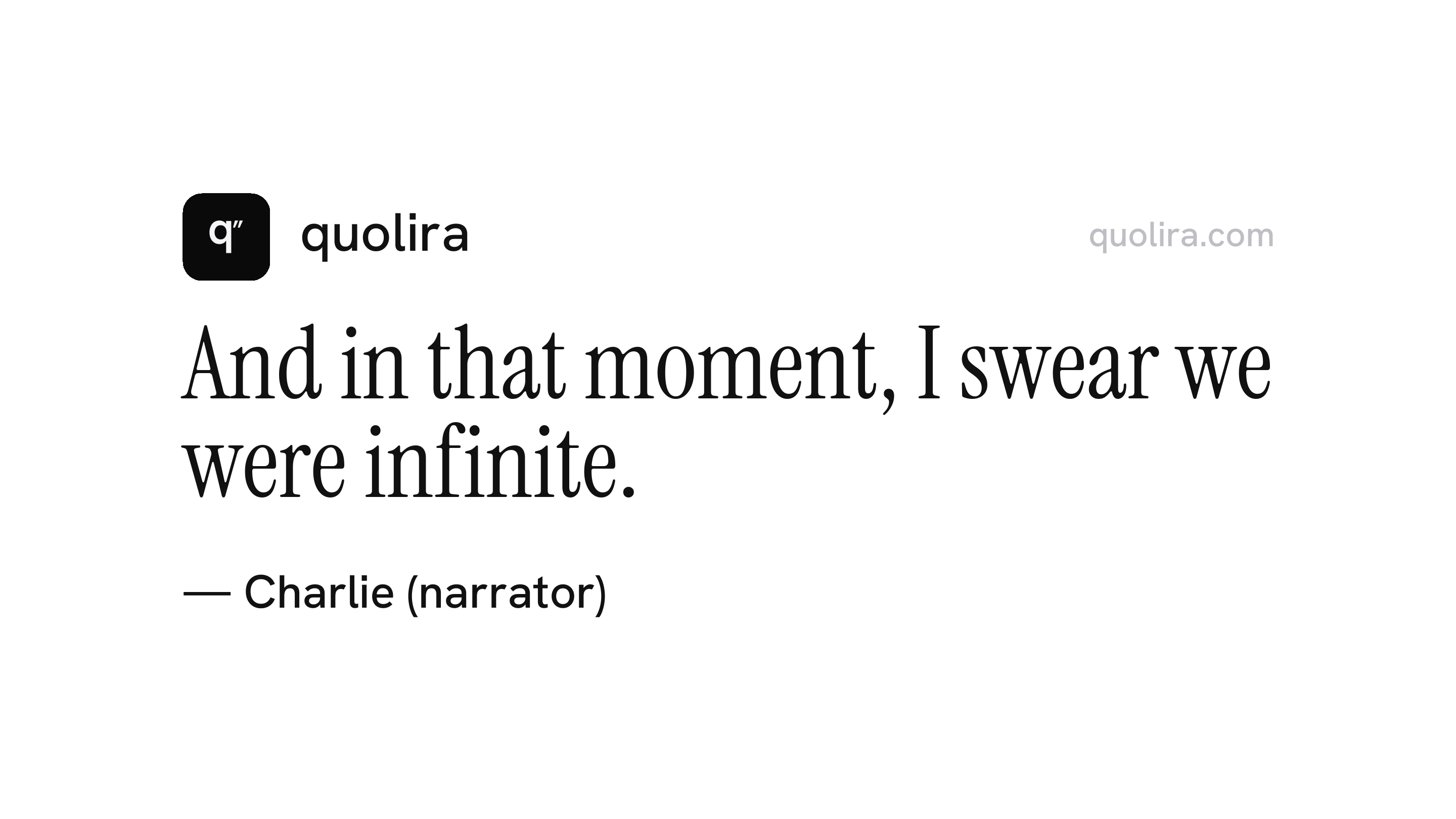
“And in that moment, I swear we were infinite.”
Charlie (narrator) · The Perks of Being a Wallflower, Stephen Chbosky, 1999
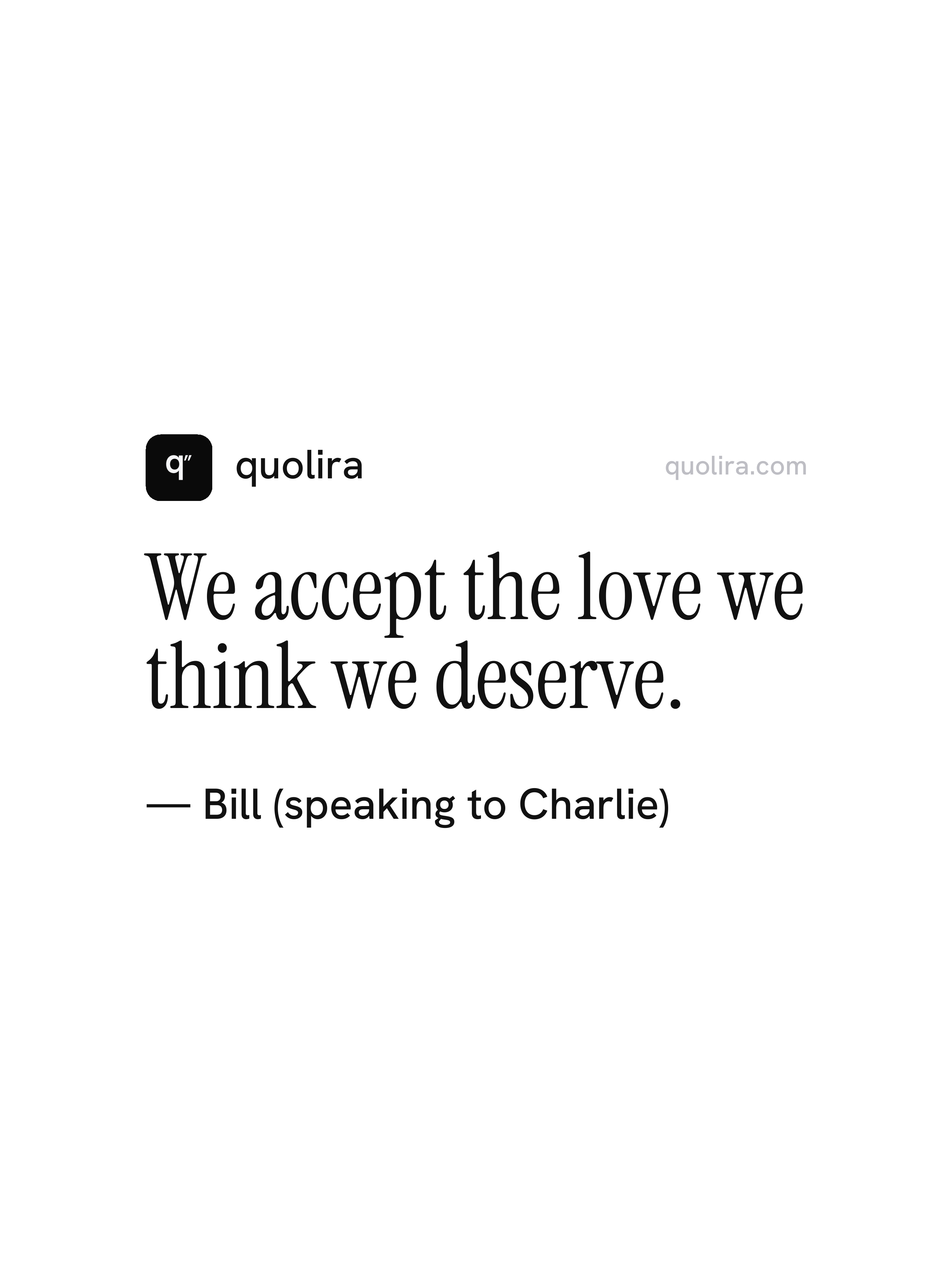
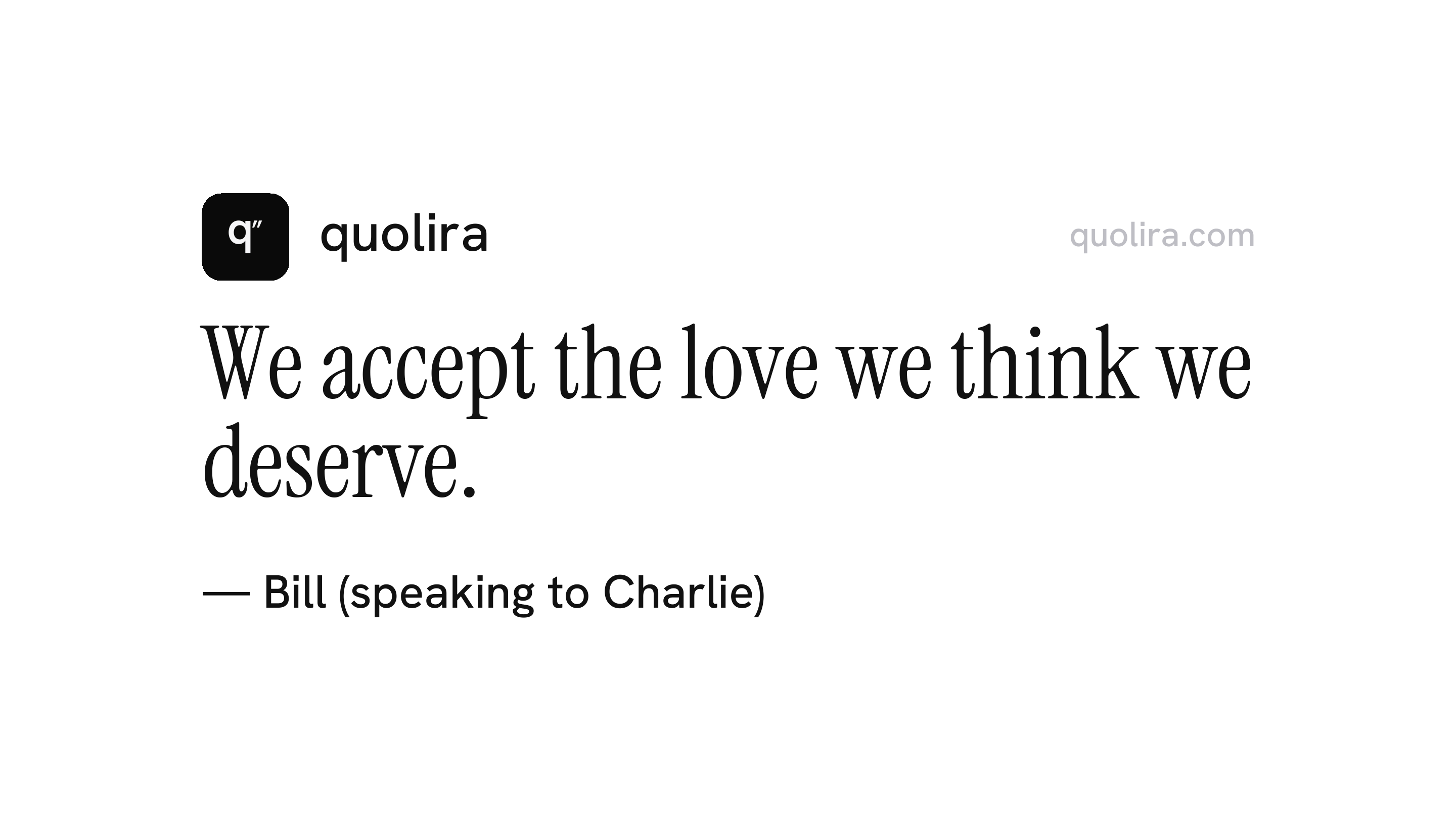
“We accept the love we think we deserve.”
Bill (speaking to Charlie) · The Perks of Being a Wallflower, Stephen Chbosky, 1999
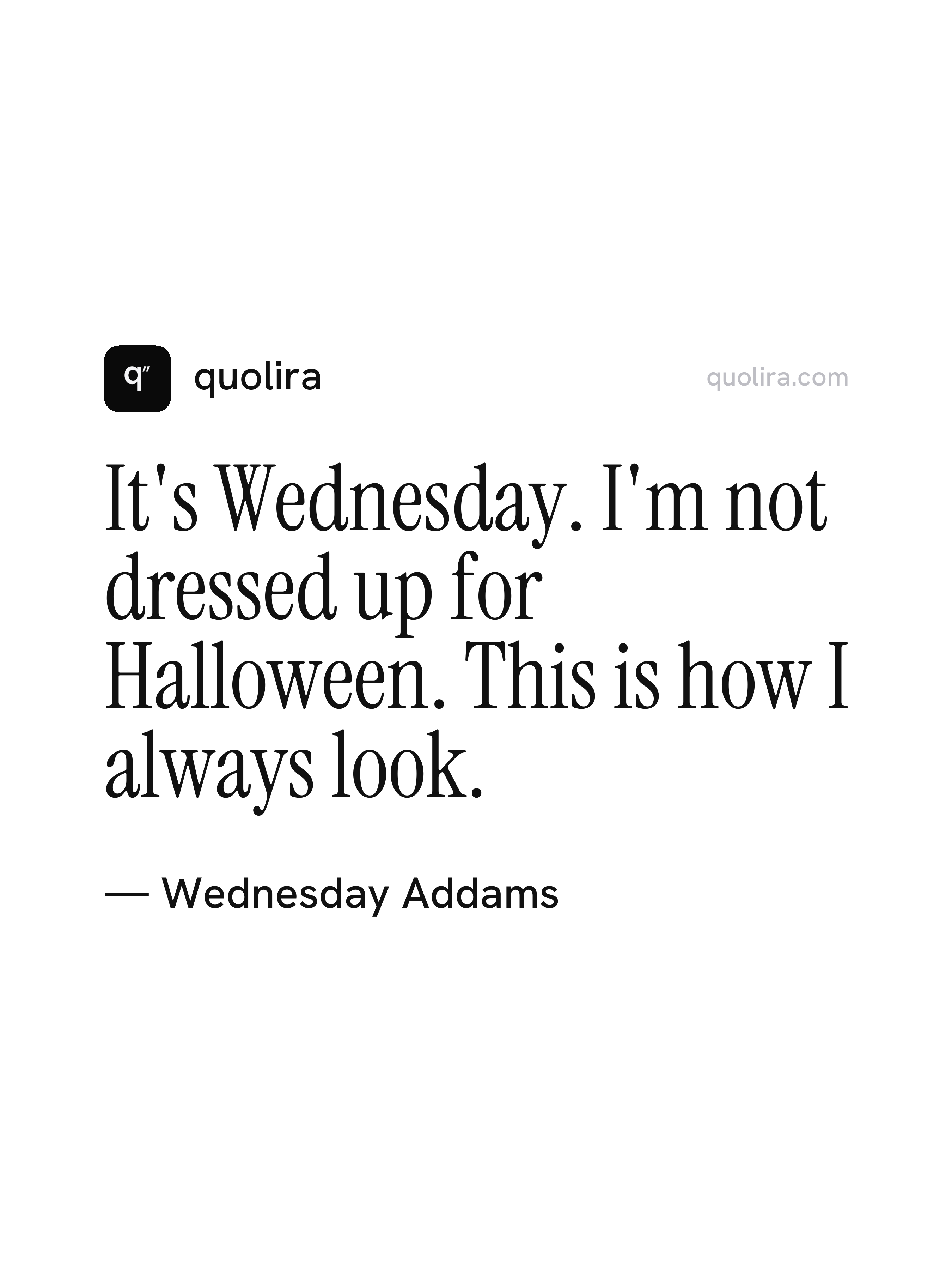
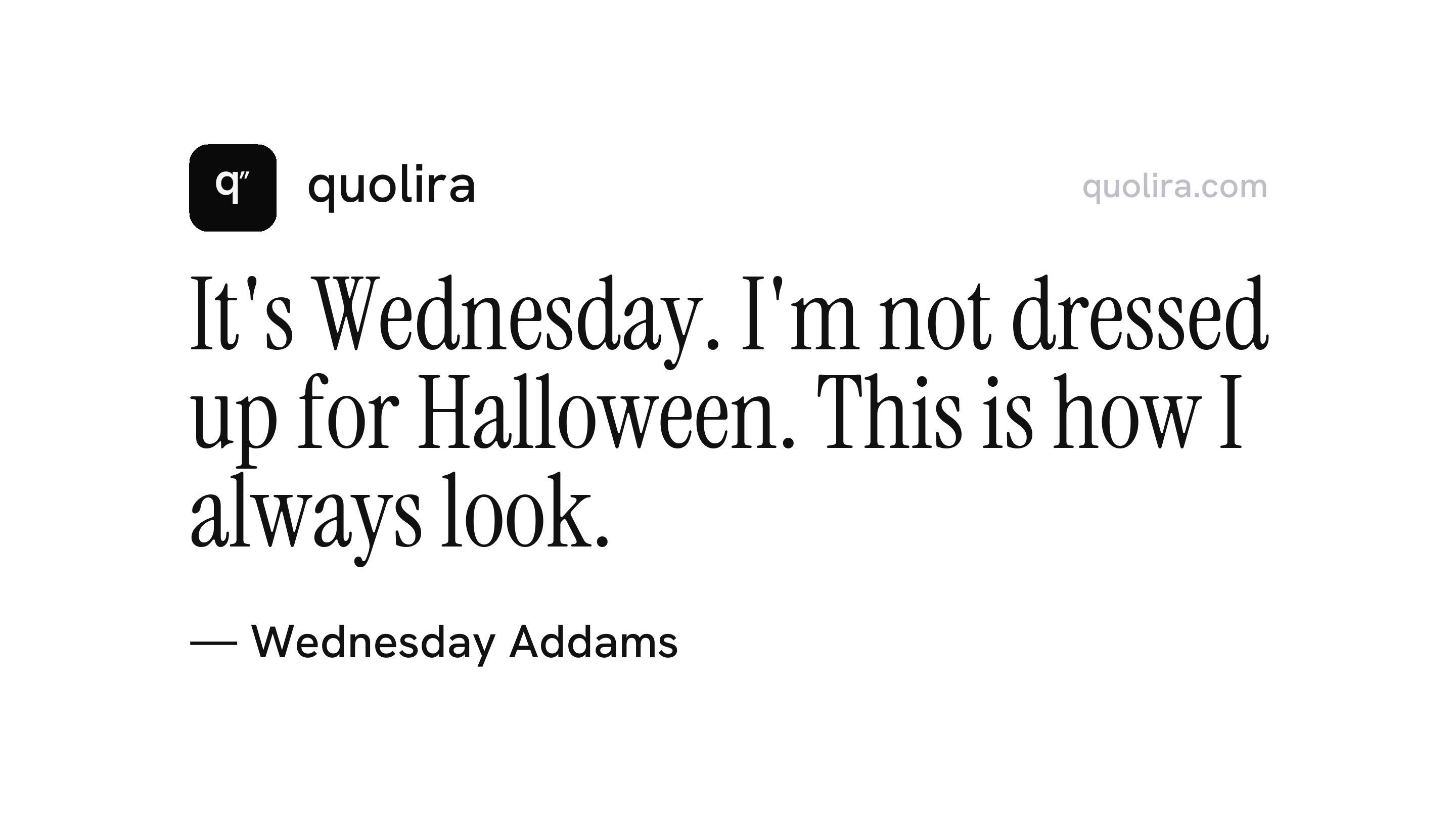
“It's Wednesday. I'm not dressed up for Halloween. This is how I always look.”
Wednesday Addams · The Addams Family (various adaptations)