“He who attends to his greater self becomes a great man, and he who attends to his smaller self becomes a small man.”
Mencius · Mencius, Book VI A
 quolira
.com
quolira
quolira.com
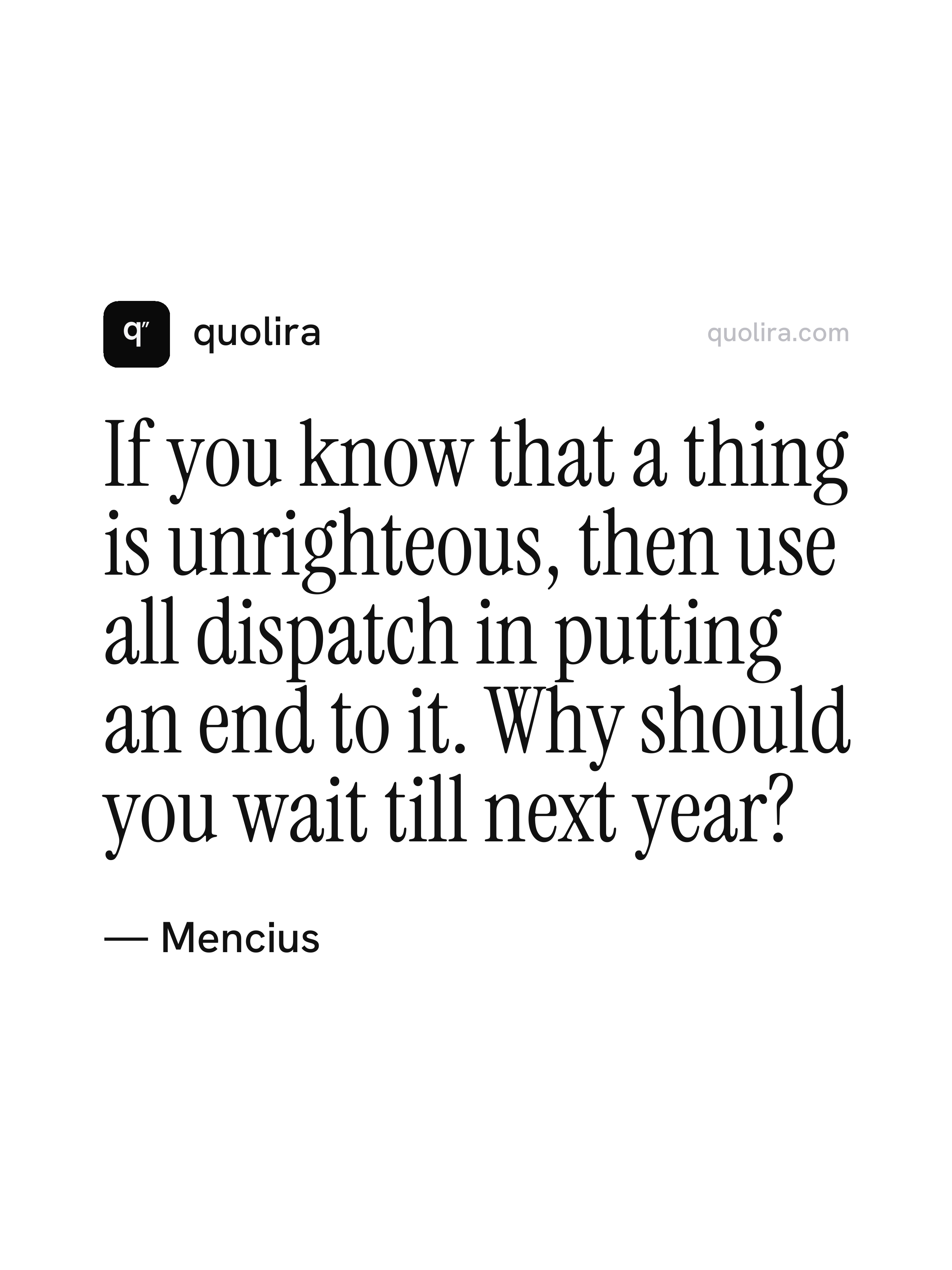
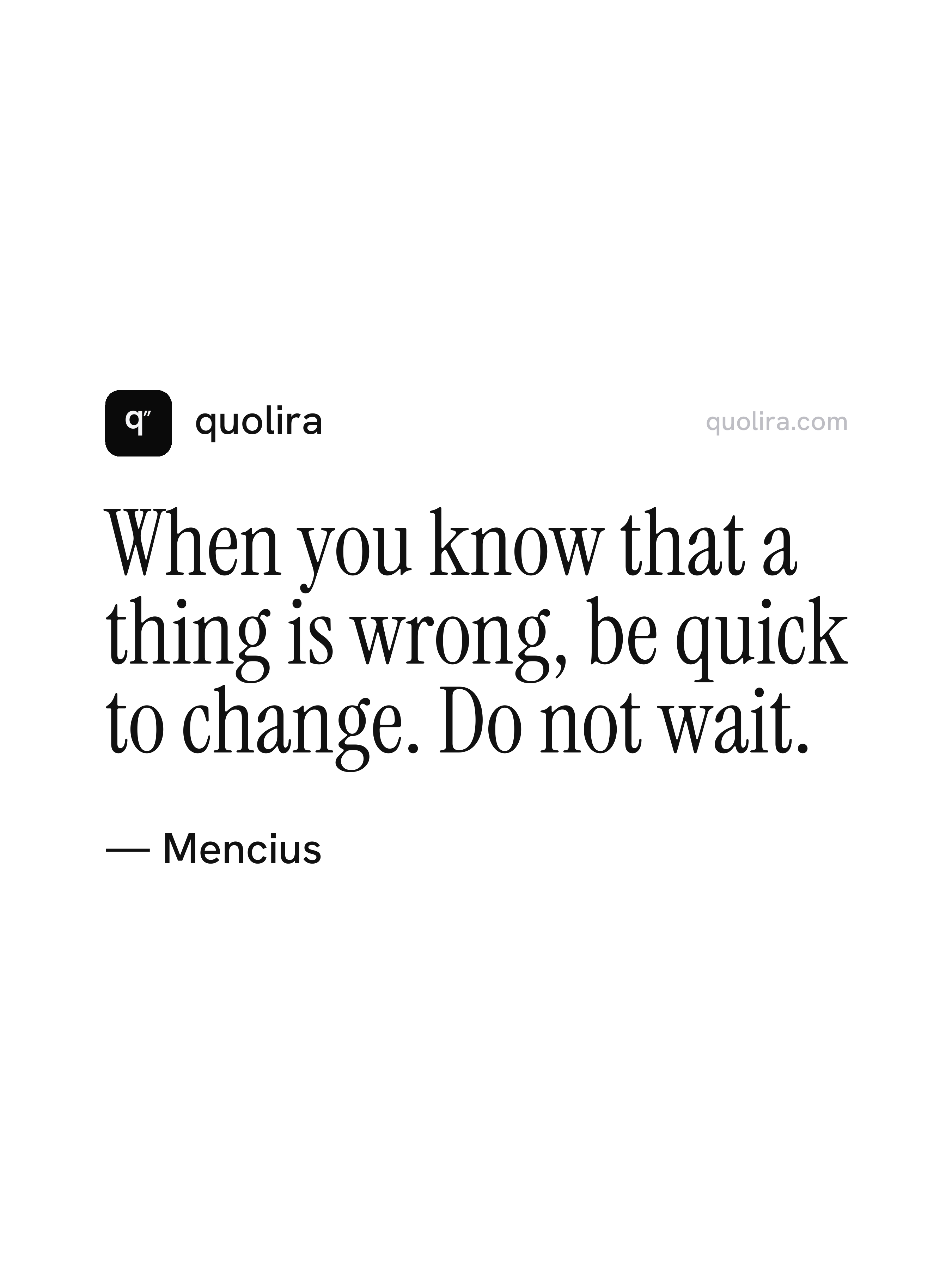
This is a call to moral urgency. Mencius is saying that recognizing something is wrong places an immediate obligation on a person to correct it. Delay is itself a kind of choice, and waiting tends to allow bad habits, rationalizations, and consequences to accumulate. The point is not simply to eventually change but to change without hesitation the moment clarity arrives.
This passage comes from the second book of the Mencius, which contains a number of reflections on virtue, courage, and the duties of both rulers and individuals. Mencius was deeply concerned with the gap that so often opens between knowing what is right and actually doing it. In his view, that gap is not a sign of complexity but of weakness of will, and the remedy is decisiveness. The teaching reflects a broader Confucian emphasis on the alignment of knowledge and action as a mark of genuine moral character.
Mencius, known in Chinese as Mengzi, was one of the principal figures in the development of Confucian philosophy during the fourth and third centuries BCE. He argued passionately that people are naturally equipped to recognize and pursue goodness, and that moral growth requires not just reflection but action. He addressed kings, ministers, and ordinary people throughout his career, consistently emphasizing that virtue is lived rather than merely understood. His collected teachings remain a foundational text in Chinese philosophical and literary culture.
“He who attends to his greater self becomes a great man, and he who attends to his smaller self becomes a small man.”
Mencius · Mencius, Book VI A
“The people are the most important element in a nation; the spirits of the land and grain are the next; the sovereign is the lightest.”
Mencius · Mencius, Book VII B
“To act without clear understanding, to form habits without examining them, to follow a path all your life without knowing where it goes — this is the behavior of the multitude.”
Mencius · Mencius, Book VII A
“The way of truth is like a great road. It is not difficult to know it. The evil is only that men will not seek it.”
Mencius · Mencius, Book VI B
“If you know that a thing is unrighteous, then use all dispatch in putting an end to it. Why should you wait till next year?”
Mencius · Mencius, Book III B
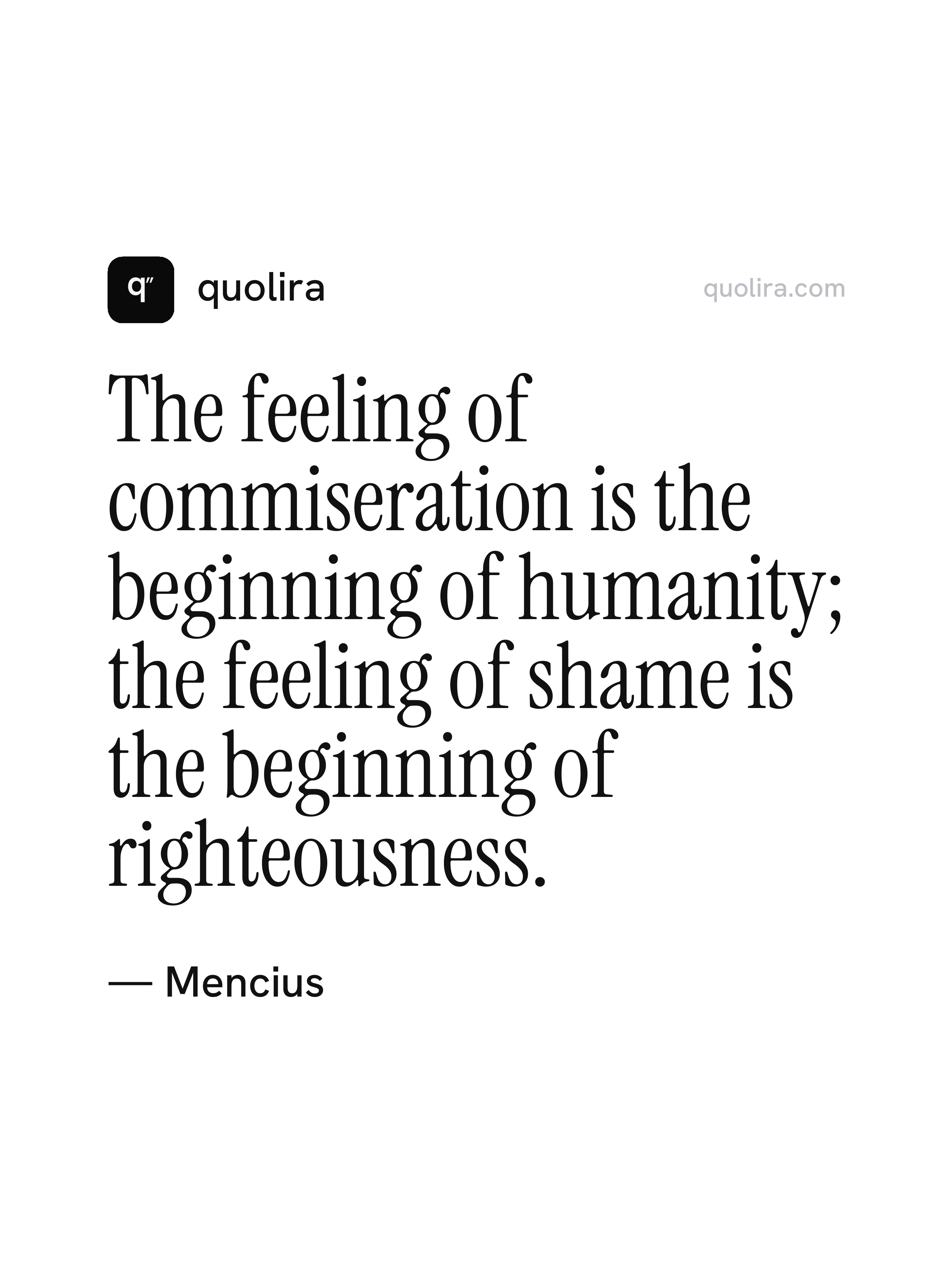
“The feeling of commiseration is the beginning of humanity; the feeling of shame is the beginning of righteousness.”
Mencius · Mencius, Book II A
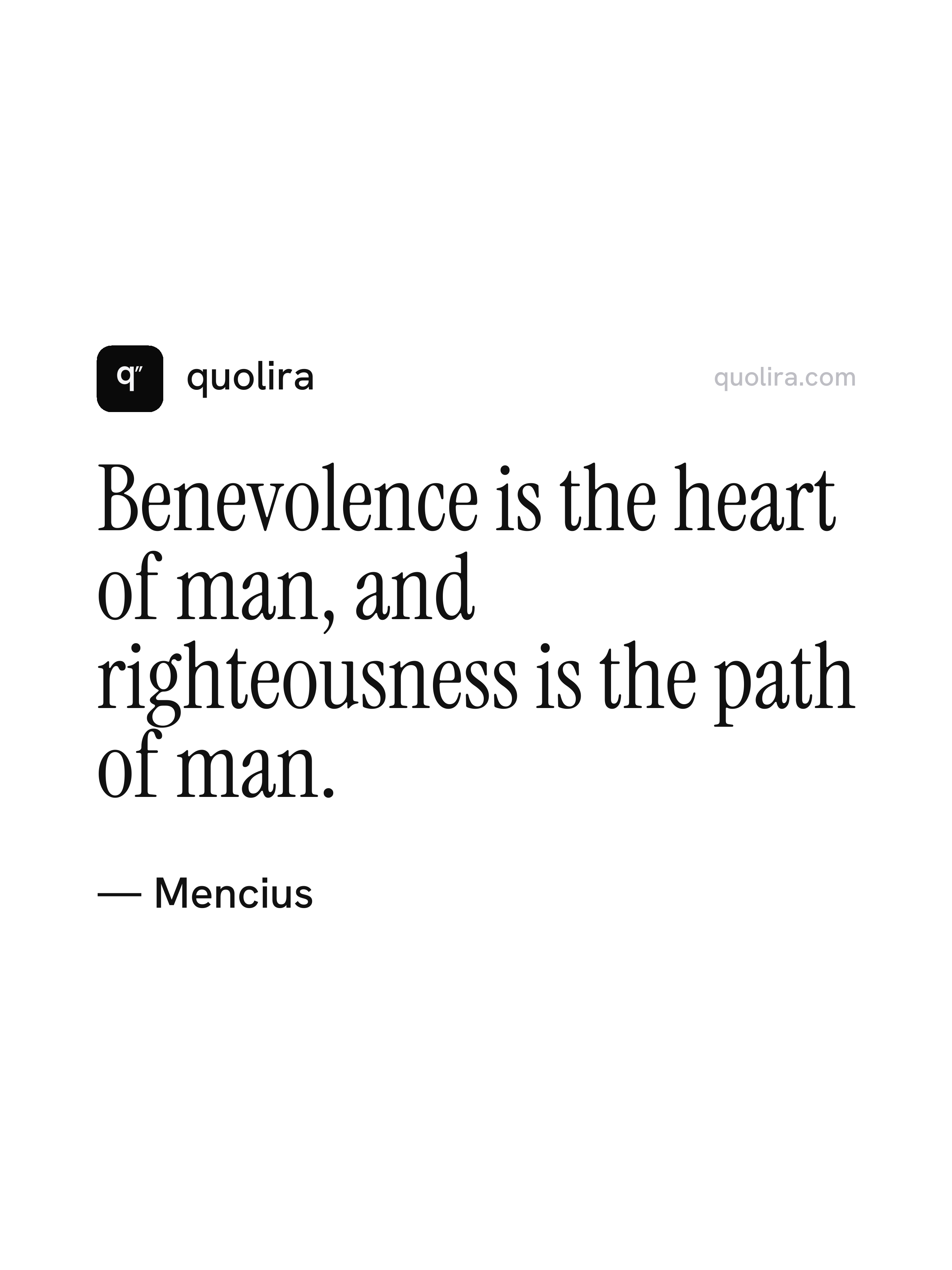
“Benevolence is the heart of man, and righteousness is the path of man.”
Mencius · Mencius, Book VI A
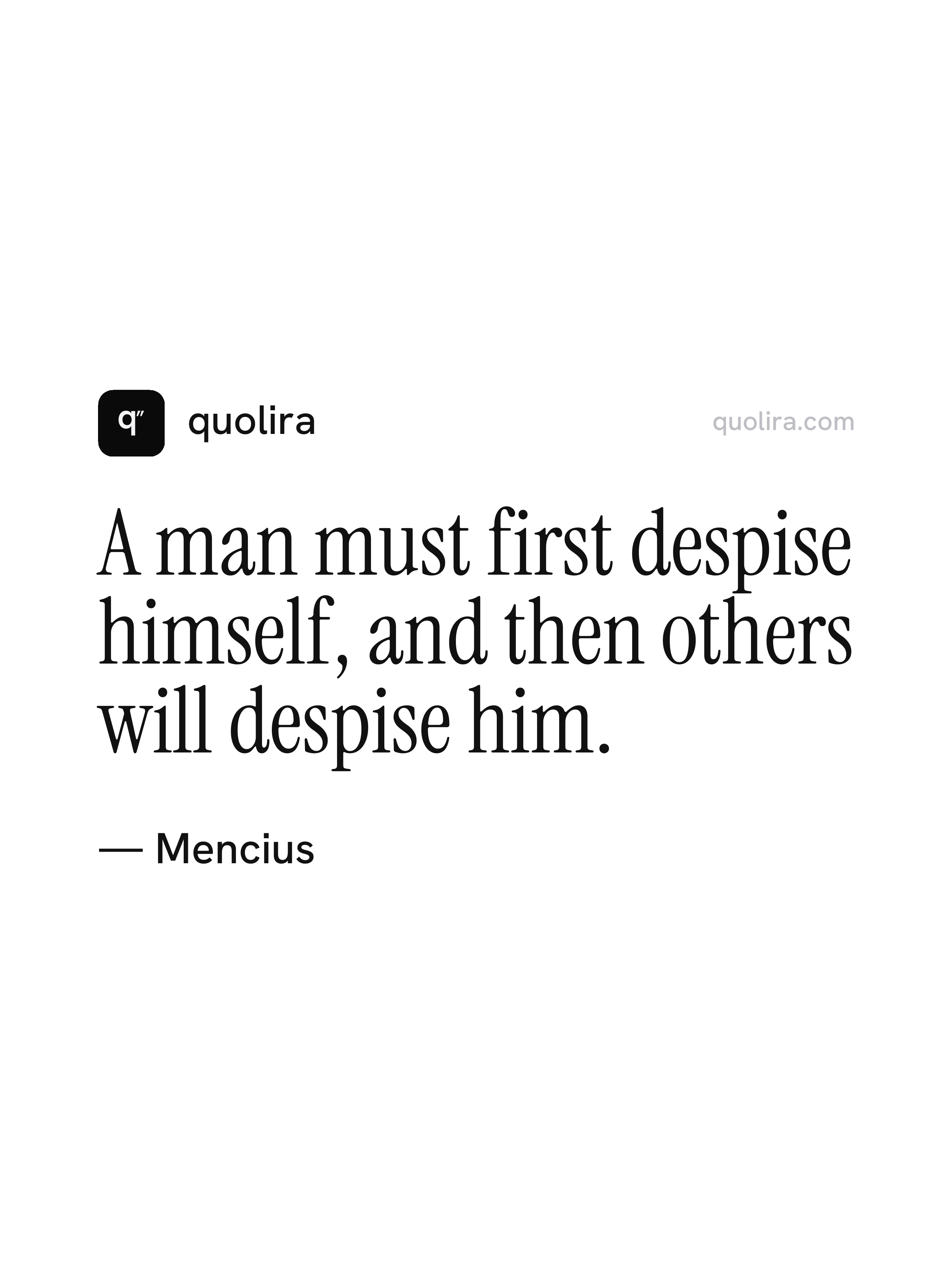
“A man must first despise himself, and then others will despise him.”
Mencius · Mencius, Book IV A
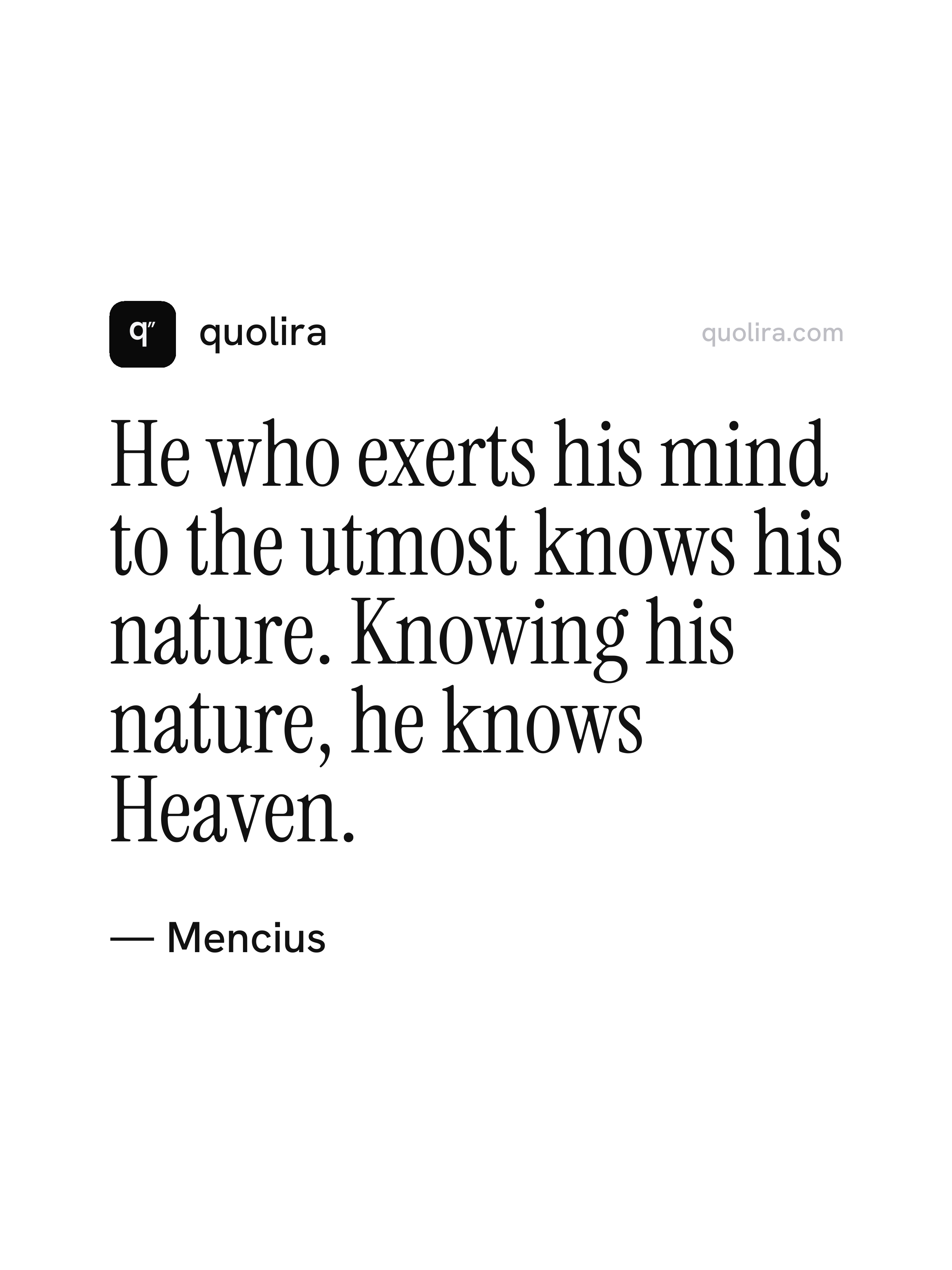
“He who exerts his mind to the utmost knows his nature. Knowing his nature, he knows Heaven.”
Mencius · Mencius, Book VII A
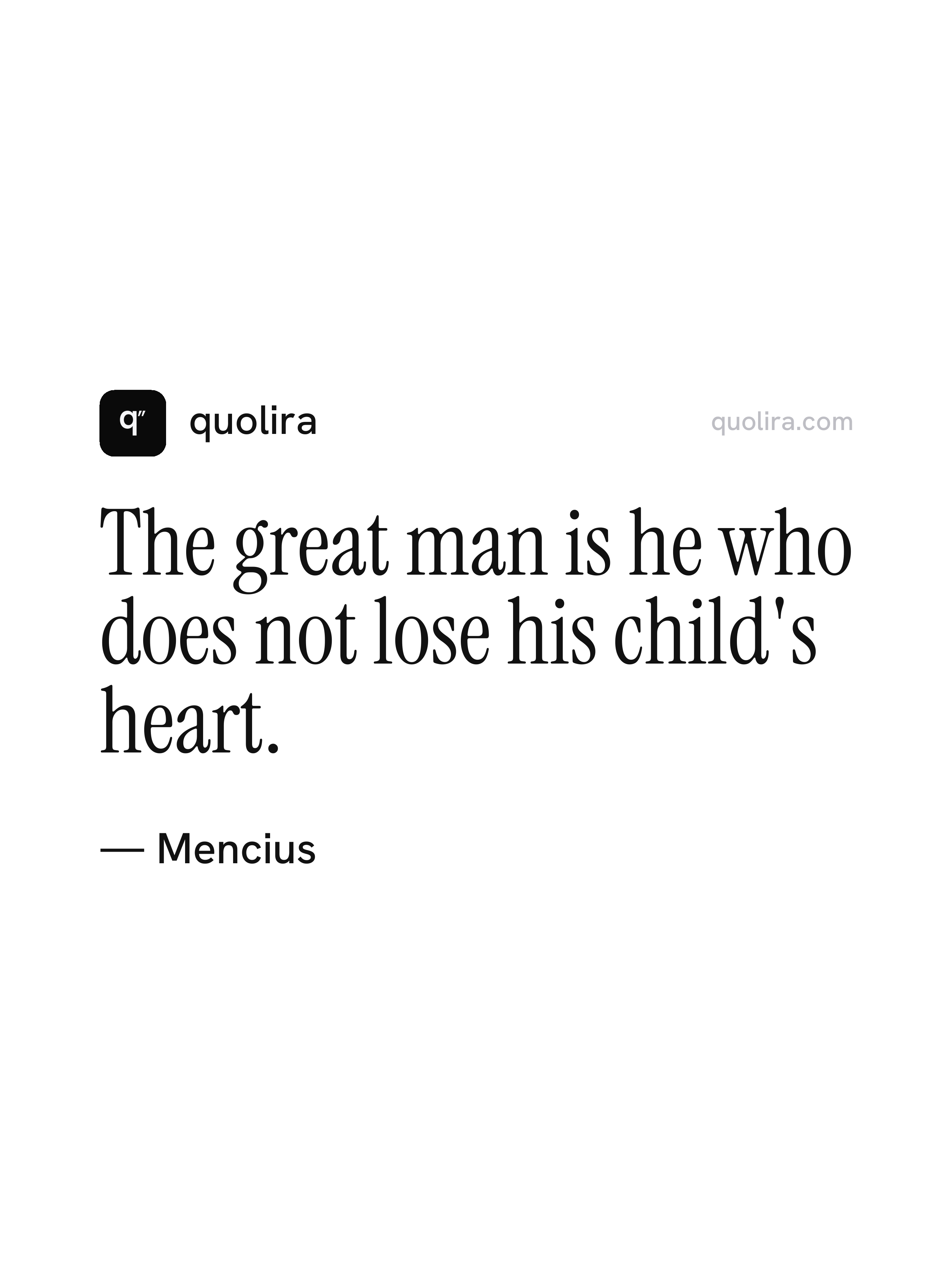
“The great man is he who does not lose his child's heart.”
Mencius · Mencius, Book IV B, c. 4th century BCE
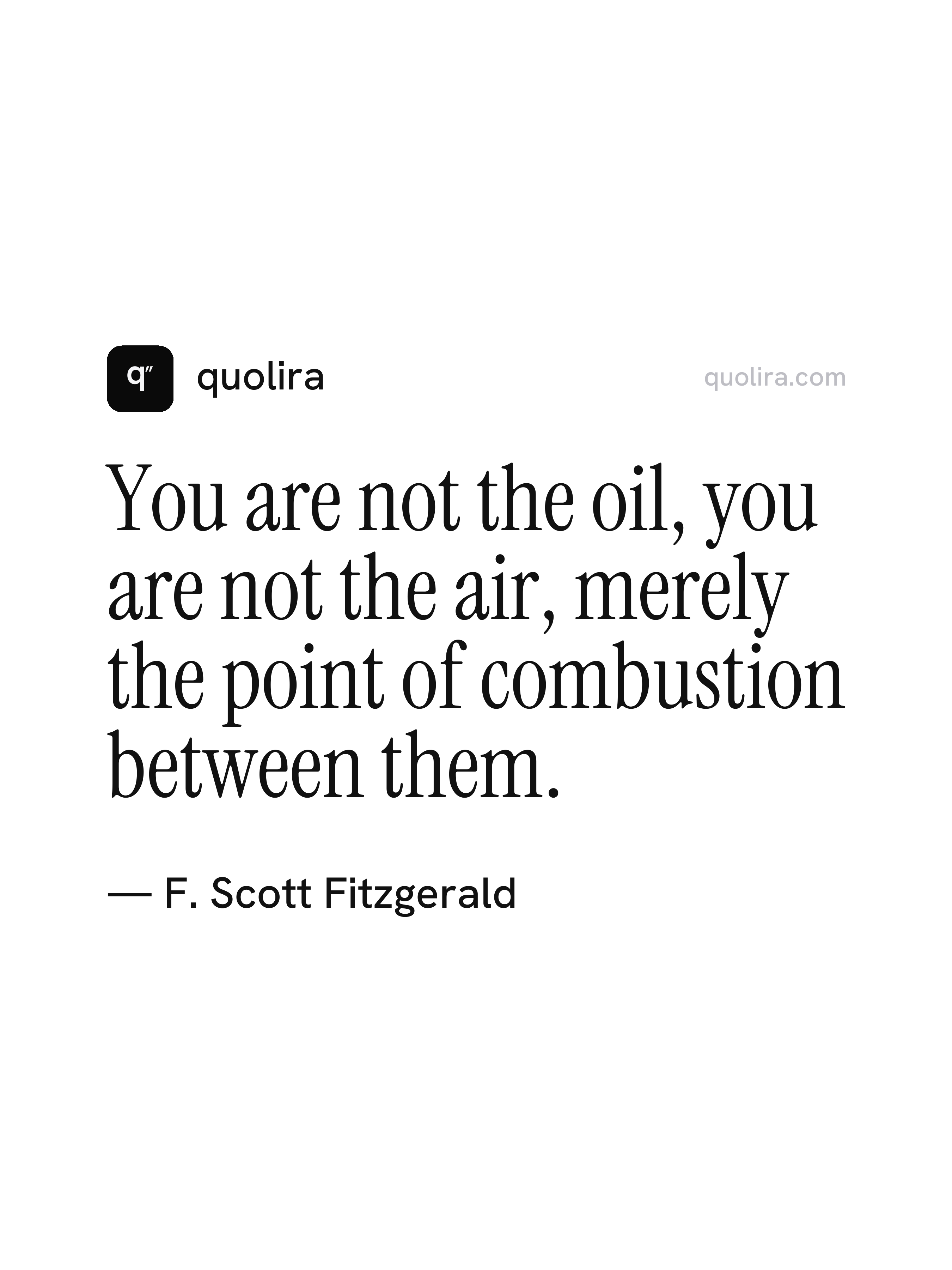
“You are not the oil, you are not the air, merely the point of combustion between them.”
F. Scott Fitzgerald · The Crack-Up, 1936
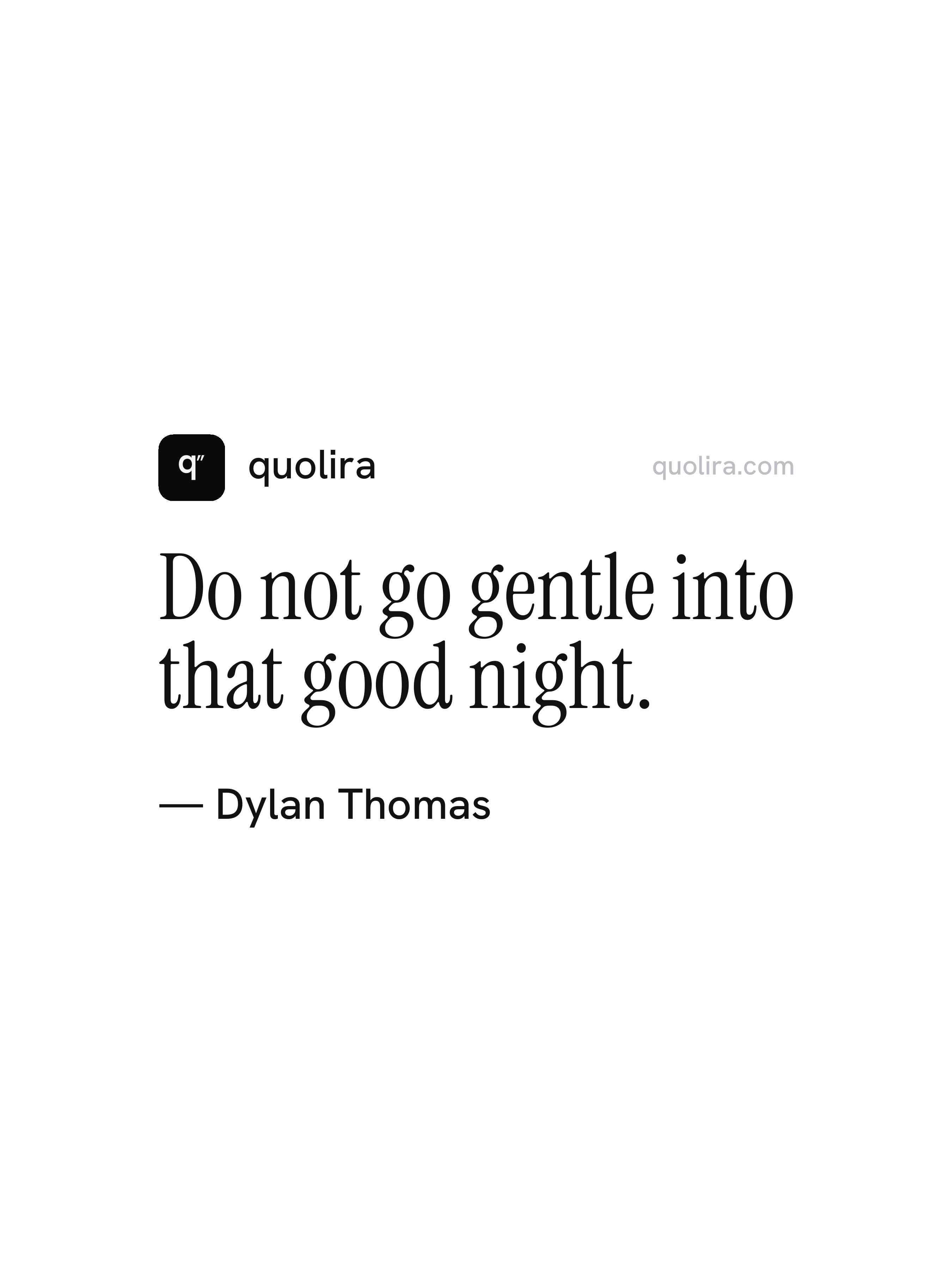
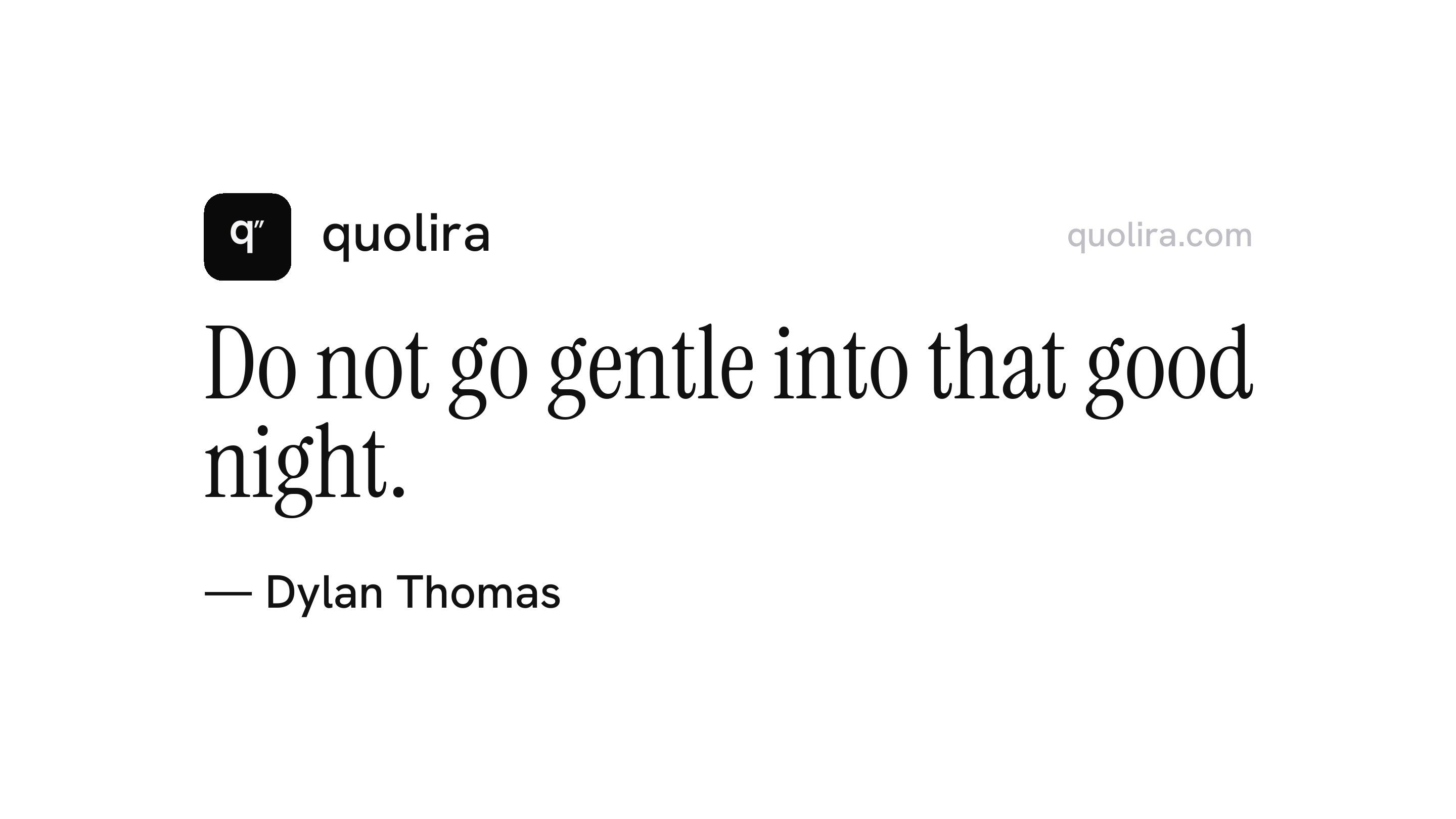
“Do not go gentle into that good night.”
Dylan Thomas · Do Not Go Gentle into That Good Night, 1951