“He who learns but does not think is lost. He who thinks but does not learn is in great danger.”
Confucius · The Analects, Book II
 quolira
.com
quolira
quolira.com
This line shifts the measure of greatness away from a perfect record and places it in the act of recovery. The point is not that falling is desirable, but that falling is inevitable, and what defines a person is their willingness to get back up each time it happens. Glory, in this view, is not a fixed destination reached by the lucky few who avoid hardship. It is something earned repeatedly, through persistence and the refusal to treat any single setback as a final verdict.
This sentiment is widely attributed to Confucius and fits naturally within Confucian ethics, which place enormous value on self-cultivation and continuous moral effort. The idea that virtue is practiced rather than possessed, and that striving matters more than a flawless outcome, runs throughout the Analects. It is worth noting that while this saying circulates broadly under Confucius's name, the precise original source is difficult to verify, and some versions may have been shaped or translated loosely over many centuries of retelling.
Confucius was a philosopher, teacher, and sometime official who lived in China during the late sixth and early fifth centuries BCE. His teachings focused on personal virtue, social harmony, and the responsibilities that come with holding any role in society, whether as a ruler, a parent, or a student. The tradition he inspired, Confucianism, became one of the most enduring and influential systems of thought in East Asian history and continues to inform ethical and cultural life across the world today.
“He who learns but does not think is lost. He who thinks but does not learn is in great danger.”
Confucius · The Analects, Book II
“Learning without thought is labor lost; thought without learning is perilous.”
Confucius · The Analects, Book II, c. 5th century BCE
“When you know that a thing is wrong, be quick to change. Do not wait.”
Mencius · Mencius, Book II A
“He who attends to his greater self becomes a great man, and he who attends to his smaller self becomes a small man.”
Mencius · Mencius, Book VI A
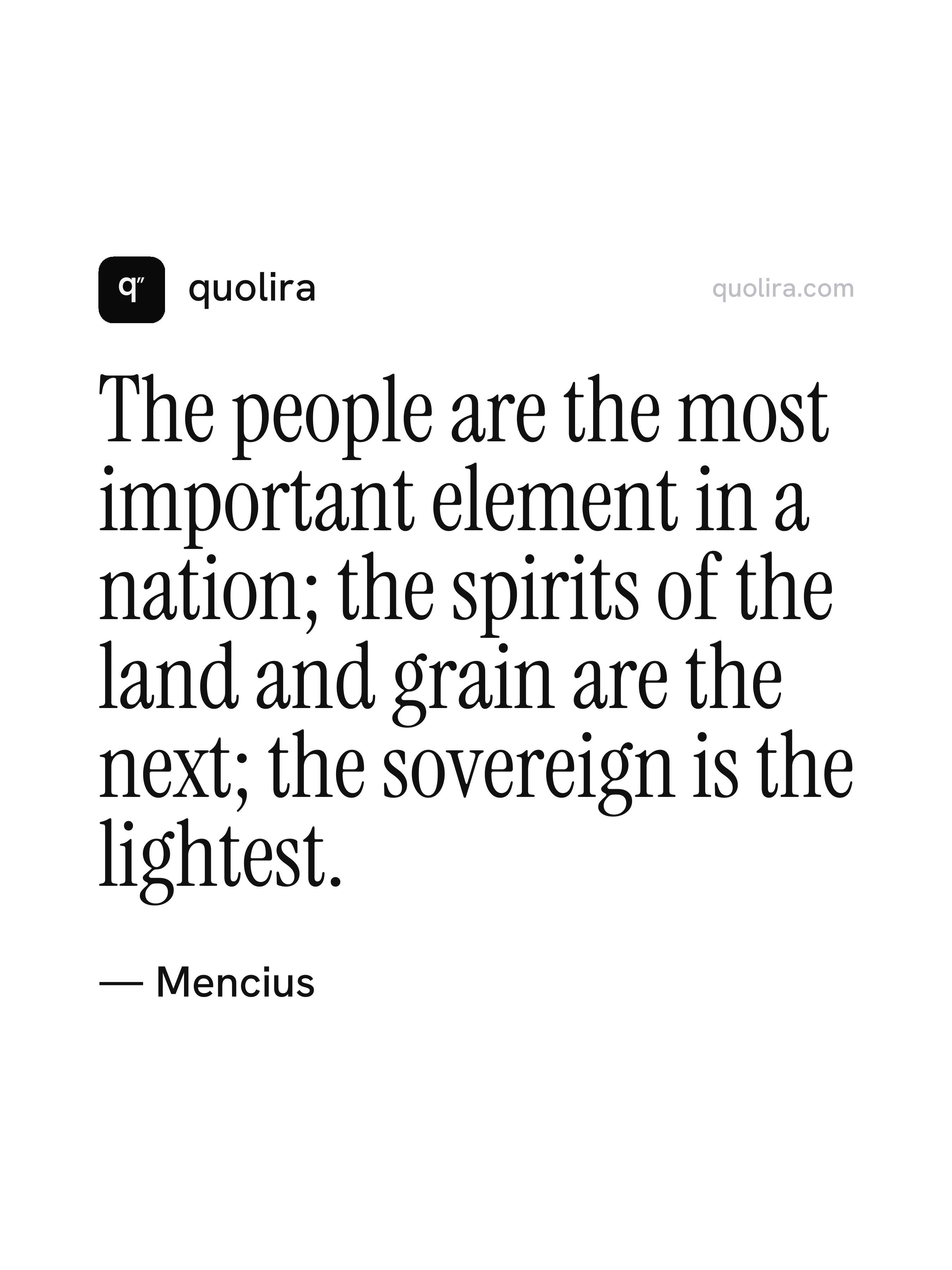
“The people are the most important element in a nation; the spirits of the land and grain are the next; the sovereign is the lightest.”
Mencius · Mencius, Book VII B
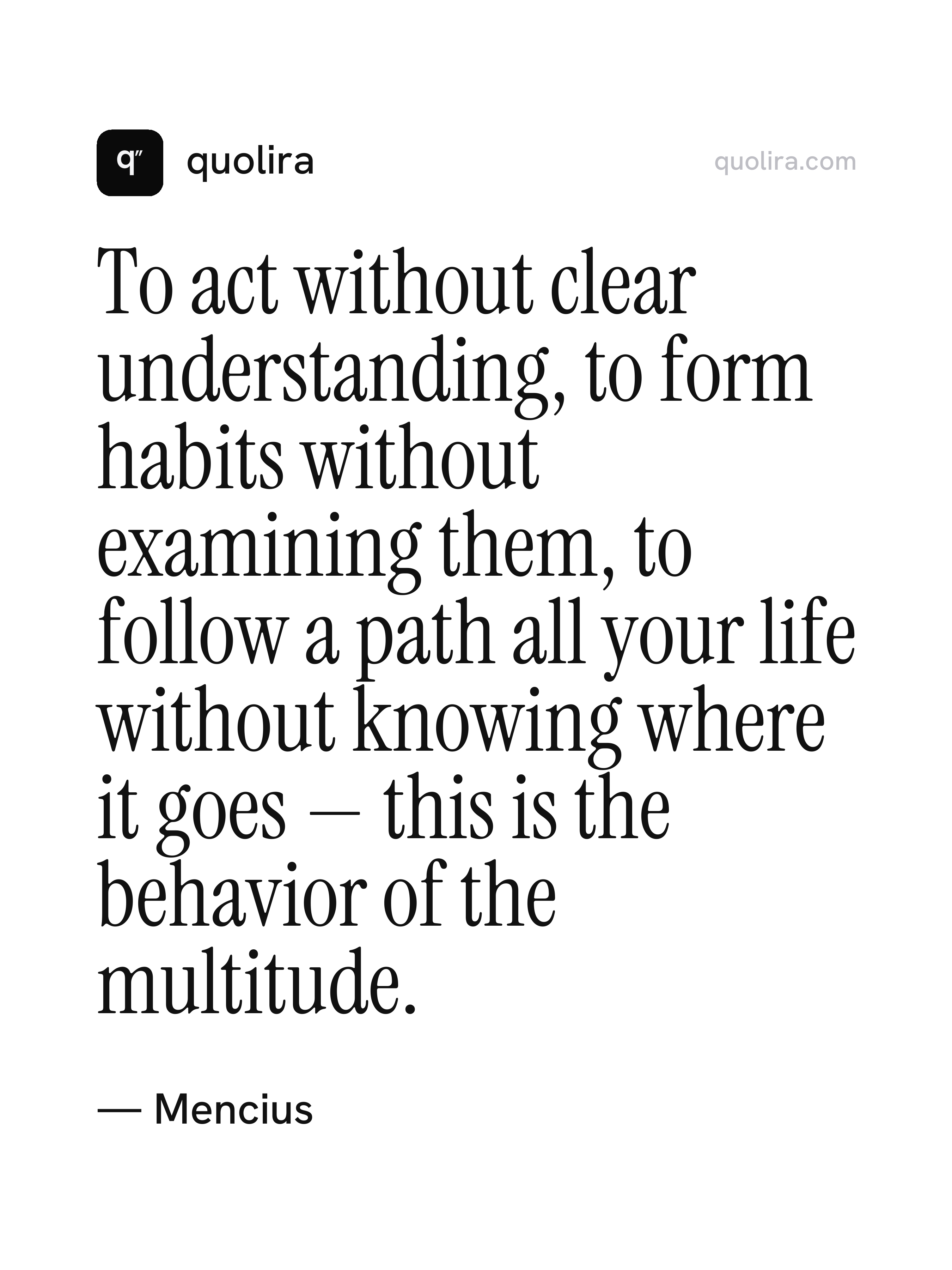
“To act without clear understanding, to form habits without examining them, to follow a path all your life without knowing where it goes — this is the behavior of the multitude.”
Mencius · Mencius, Book VII A
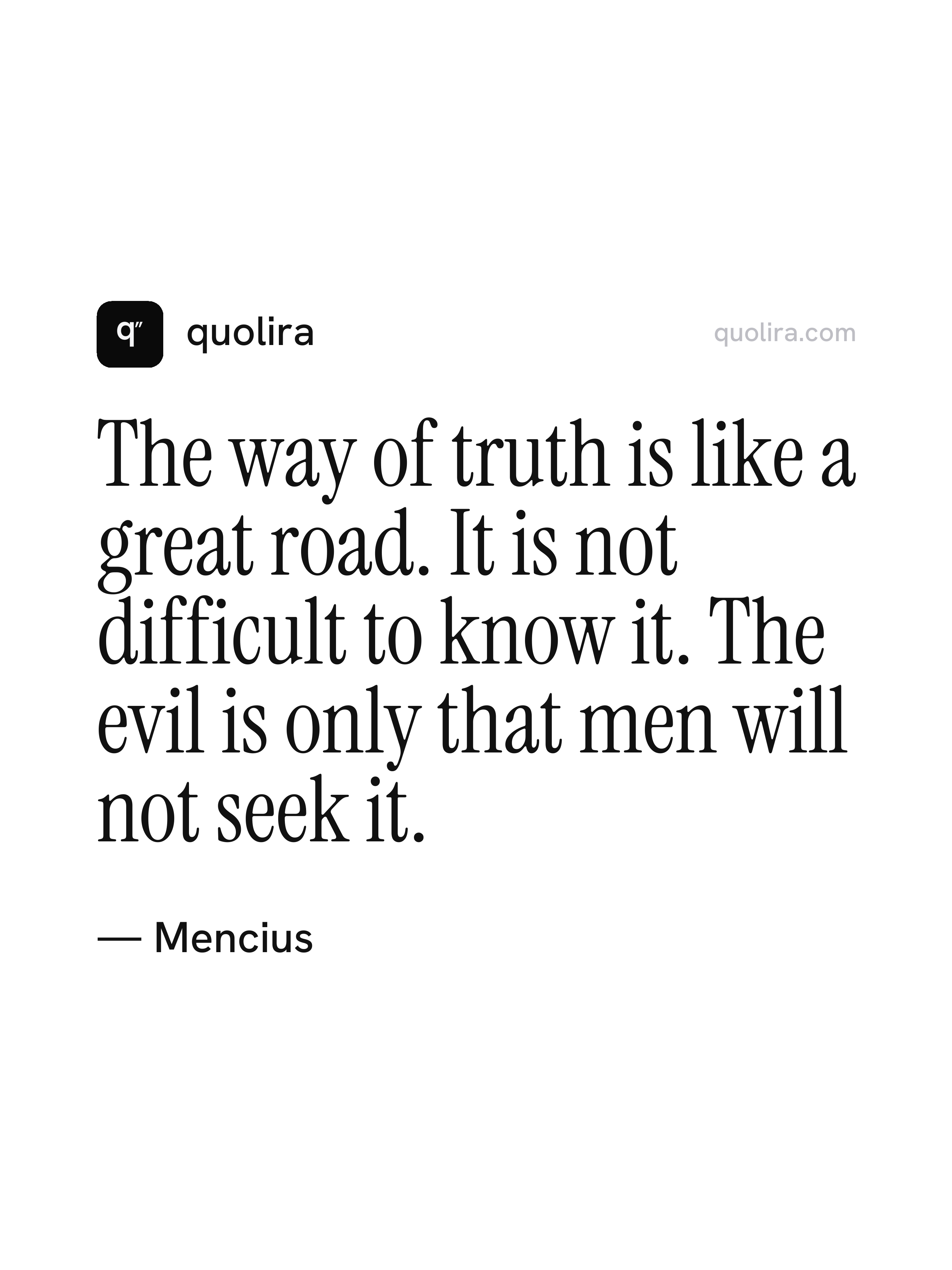
“The way of truth is like a great road. It is not difficult to know it. The evil is only that men will not seek it.”
Mencius · Mencius, Book VI B
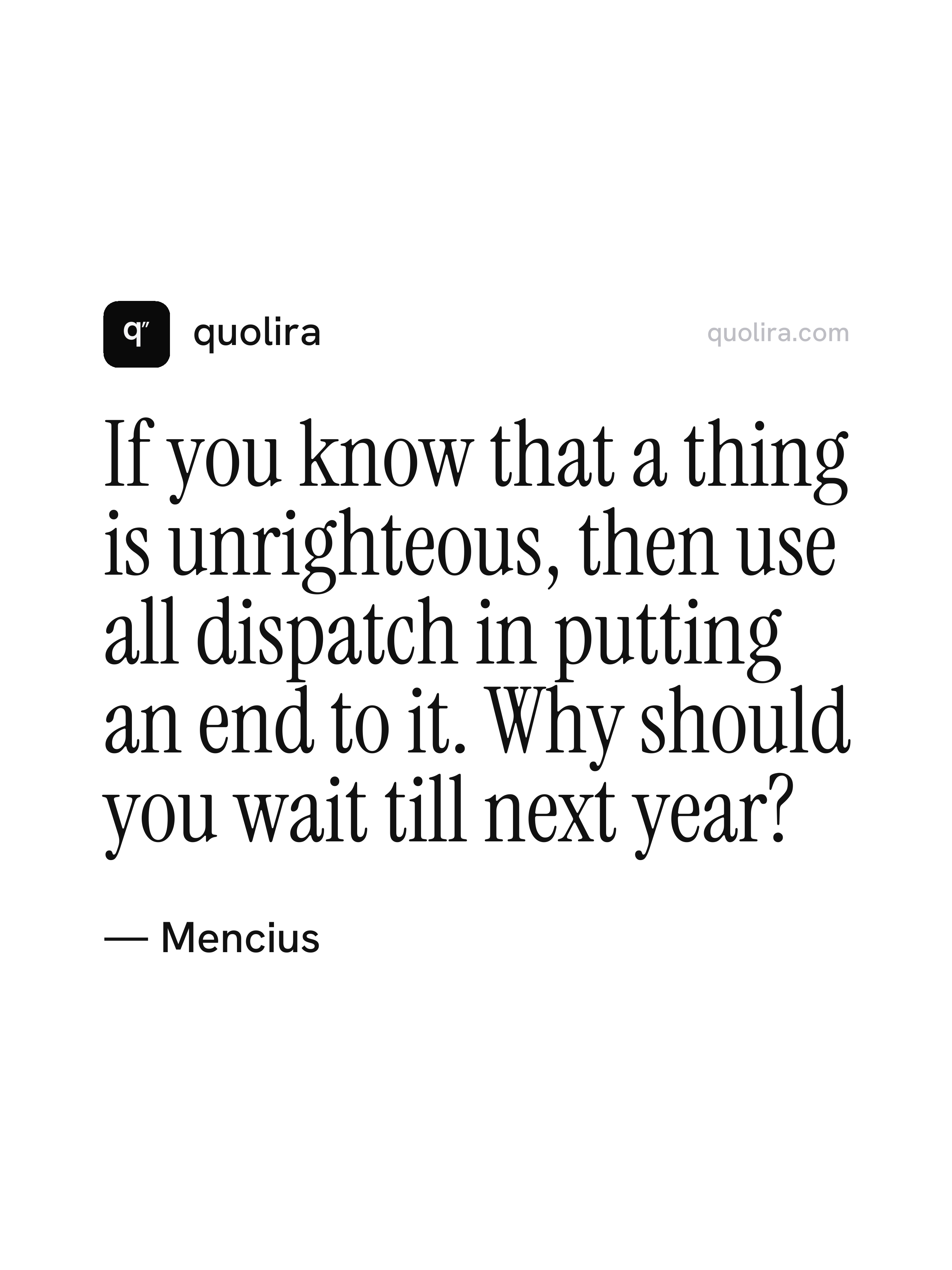
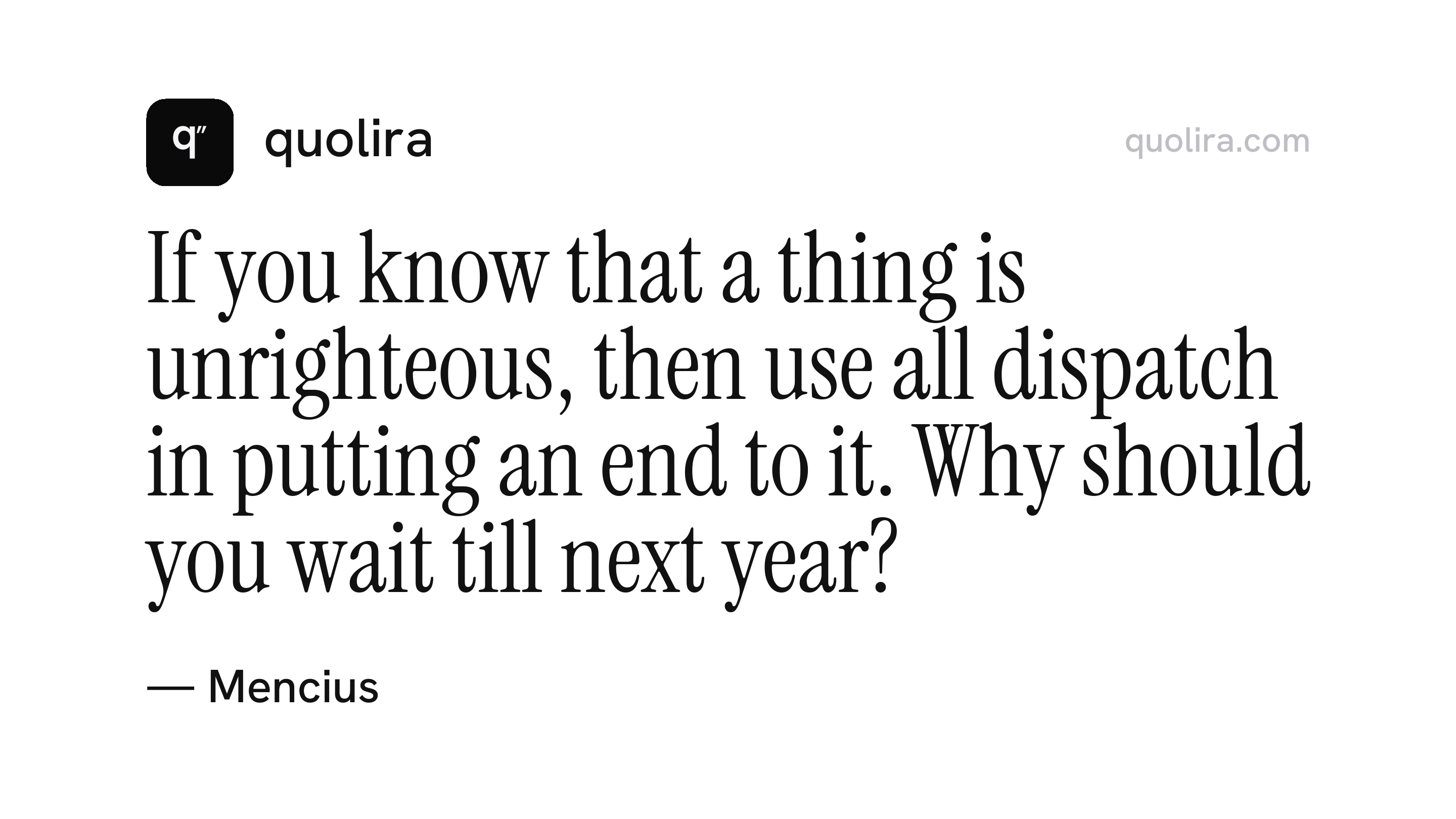
“If you know that a thing is unrighteous, then use all dispatch in putting an end to it. Why should you wait till next year?”
Mencius · Mencius, Book III B
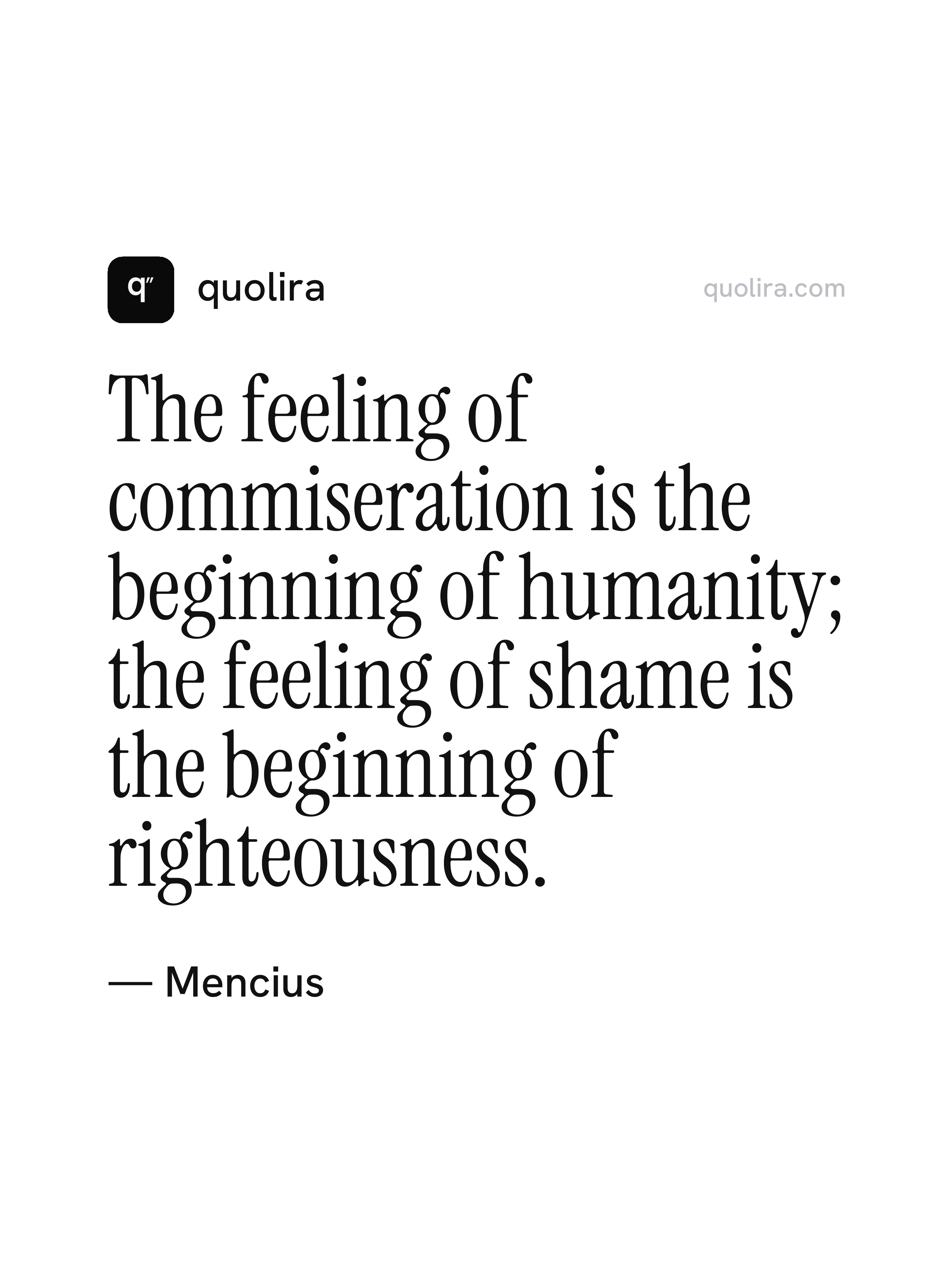
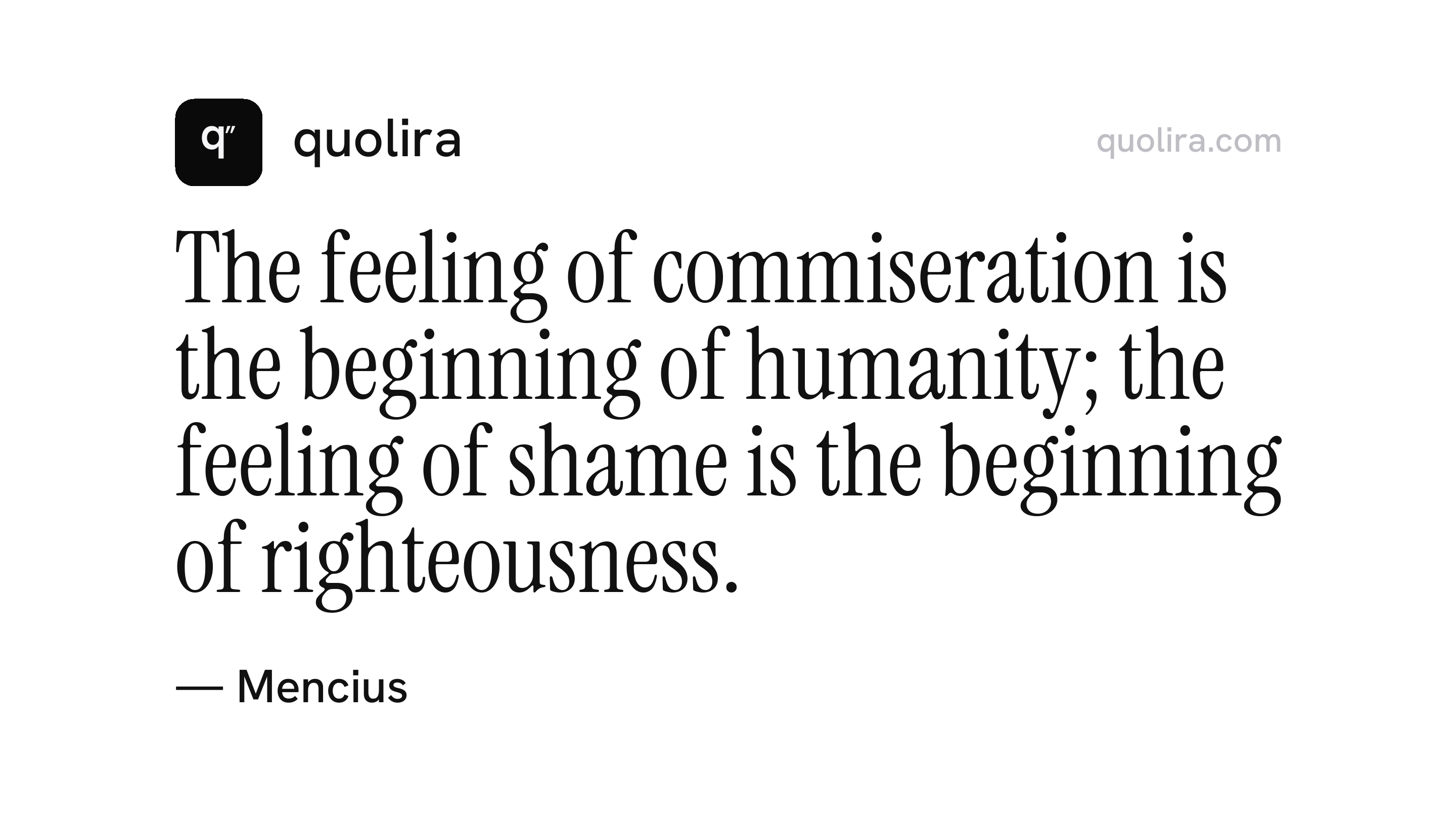
“The feeling of commiseration is the beginning of humanity; the feeling of shame is the beginning of righteousness.”
Mencius · Mencius, Book II A
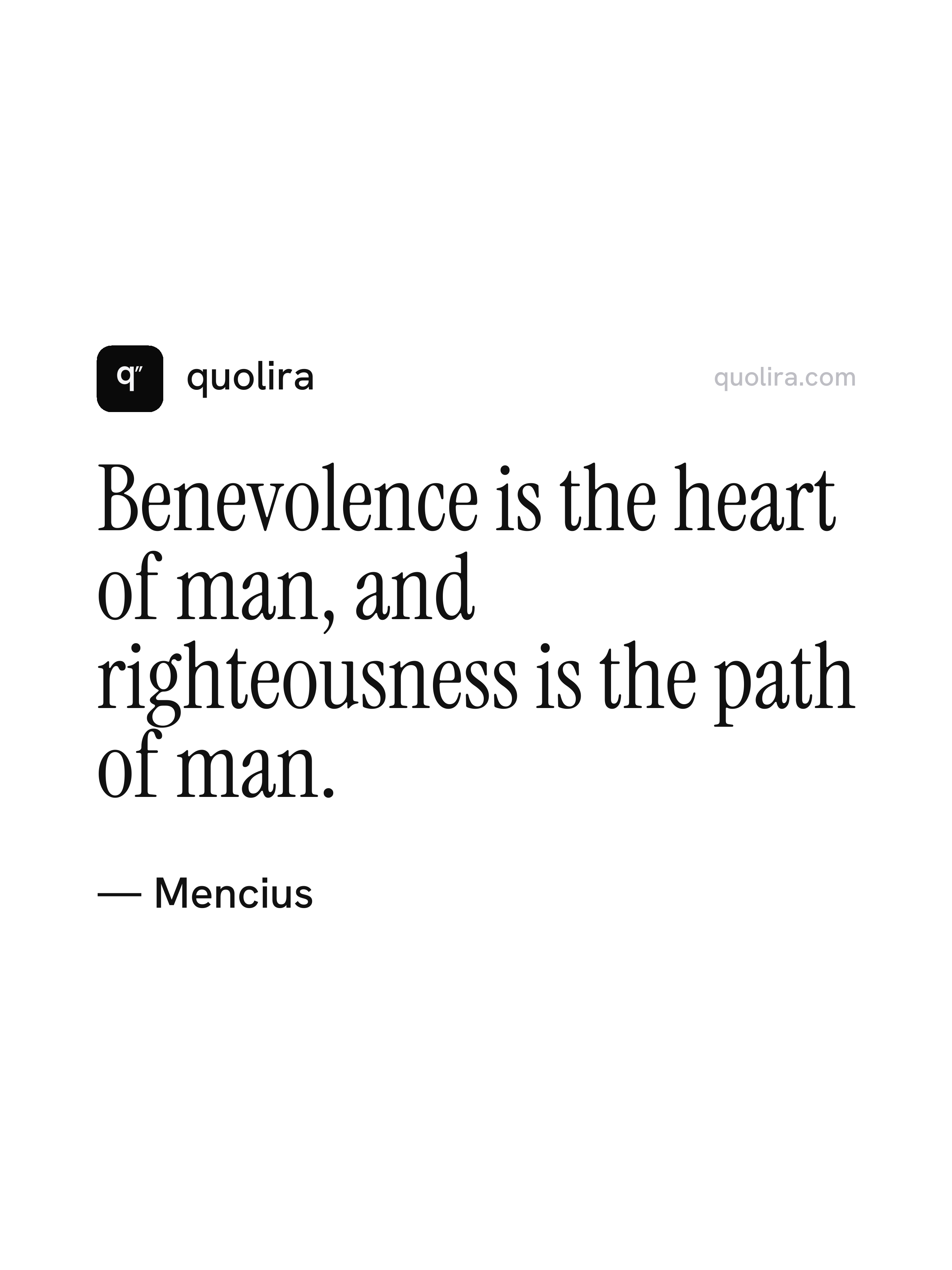
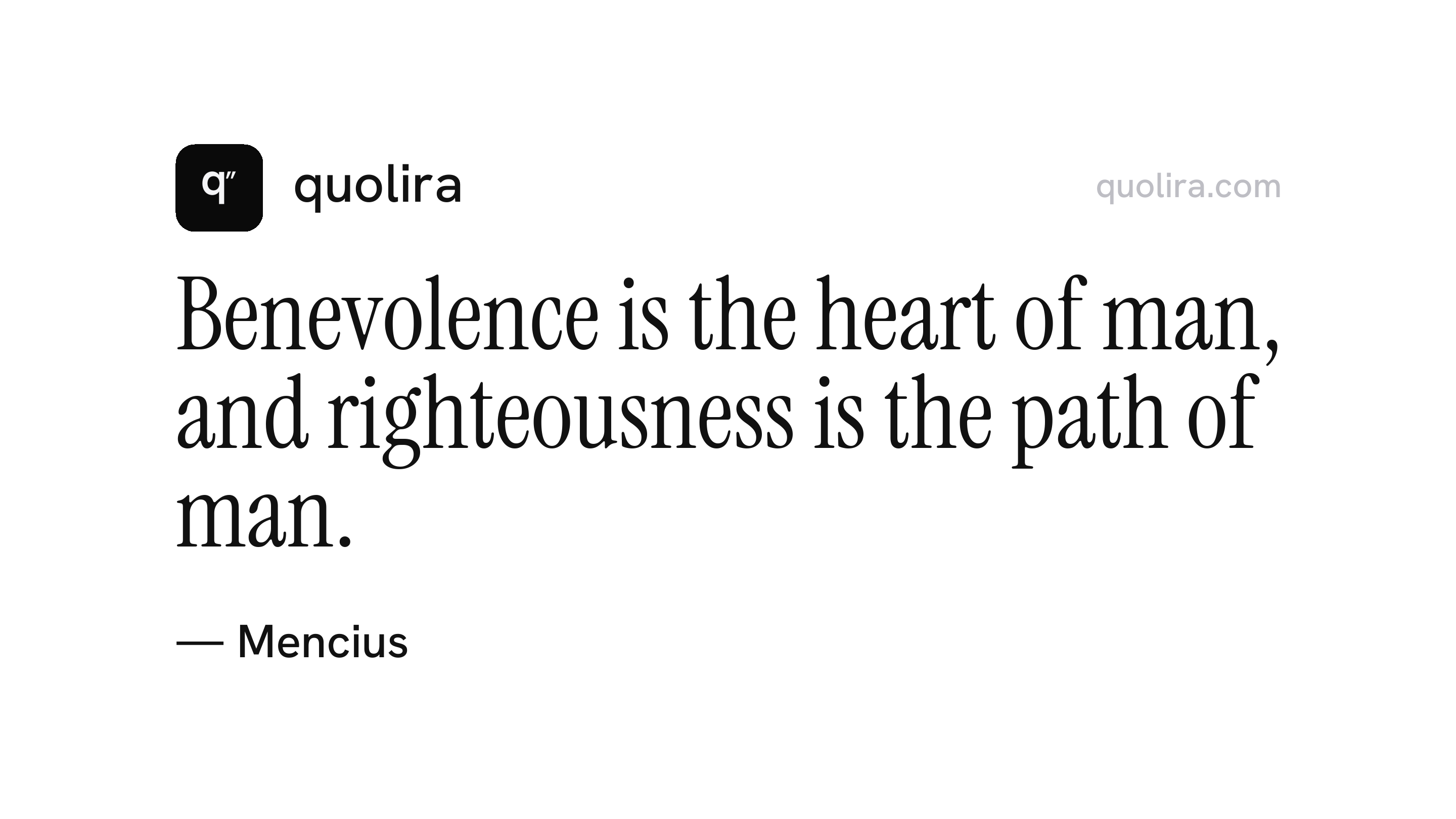
“Benevolence is the heart of man, and righteousness is the path of man.”
Mencius · Mencius, Book VI A
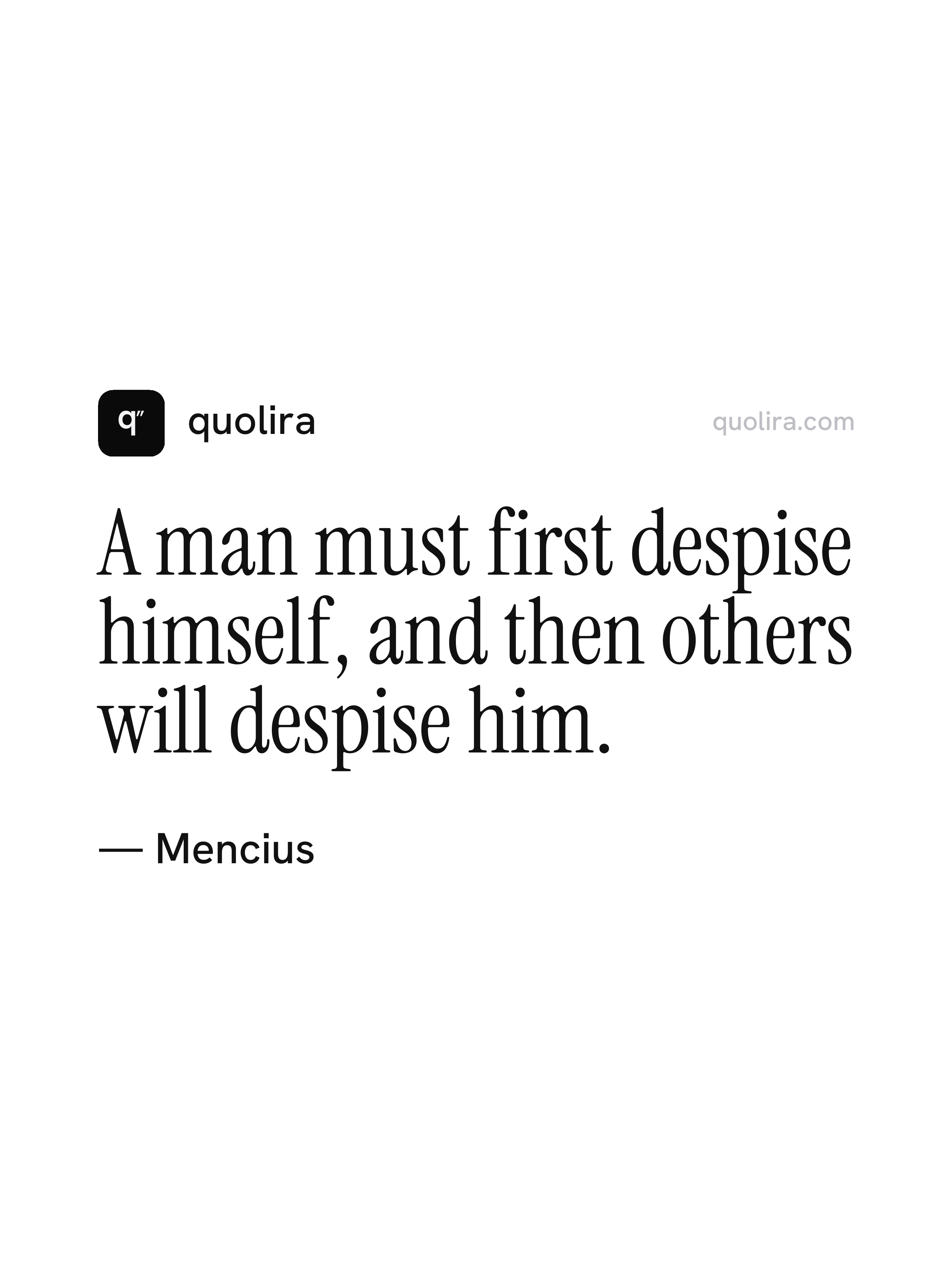
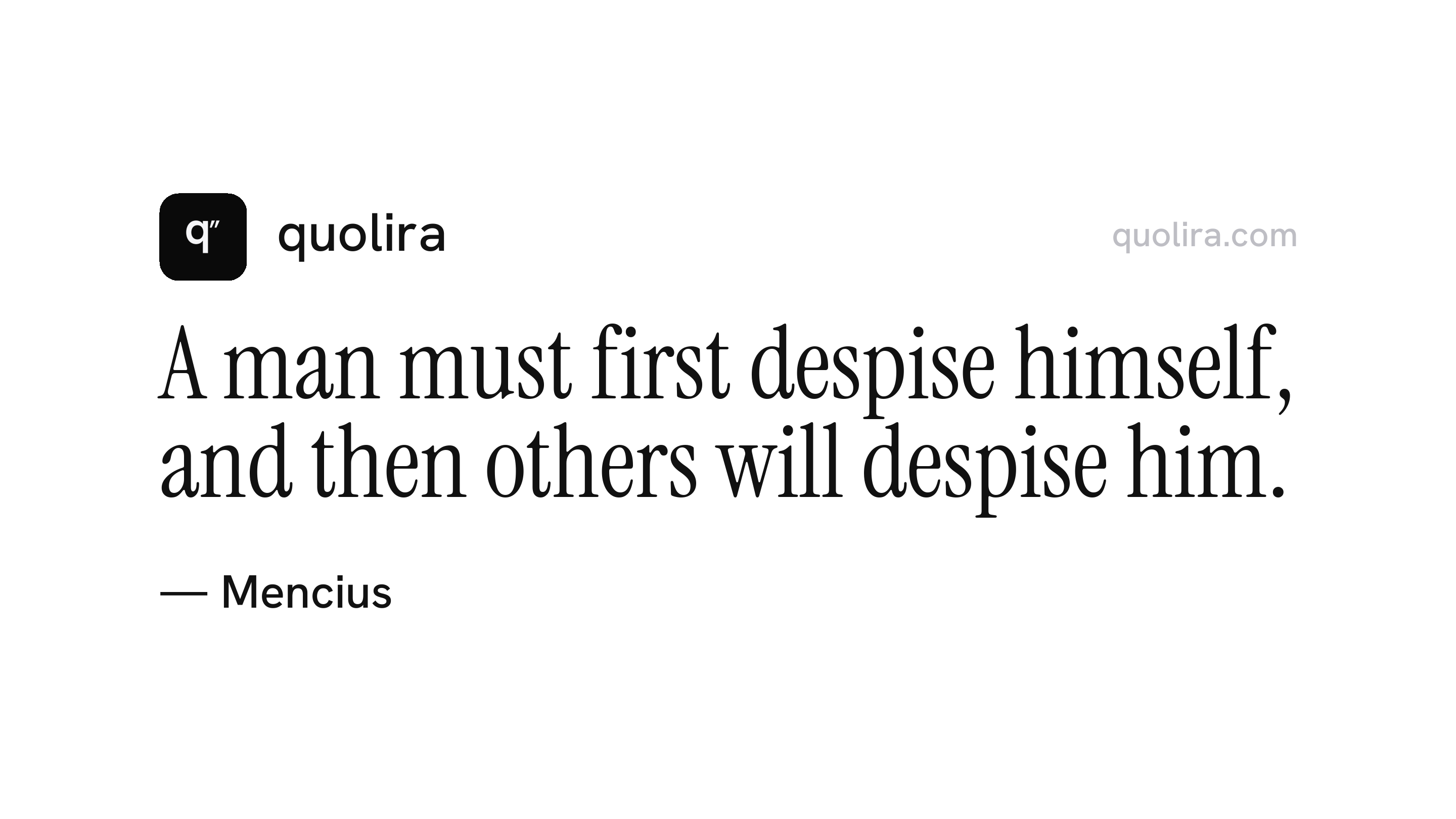
“A man must first despise himself, and then others will despise him.”
Mencius · Mencius, Book IV A
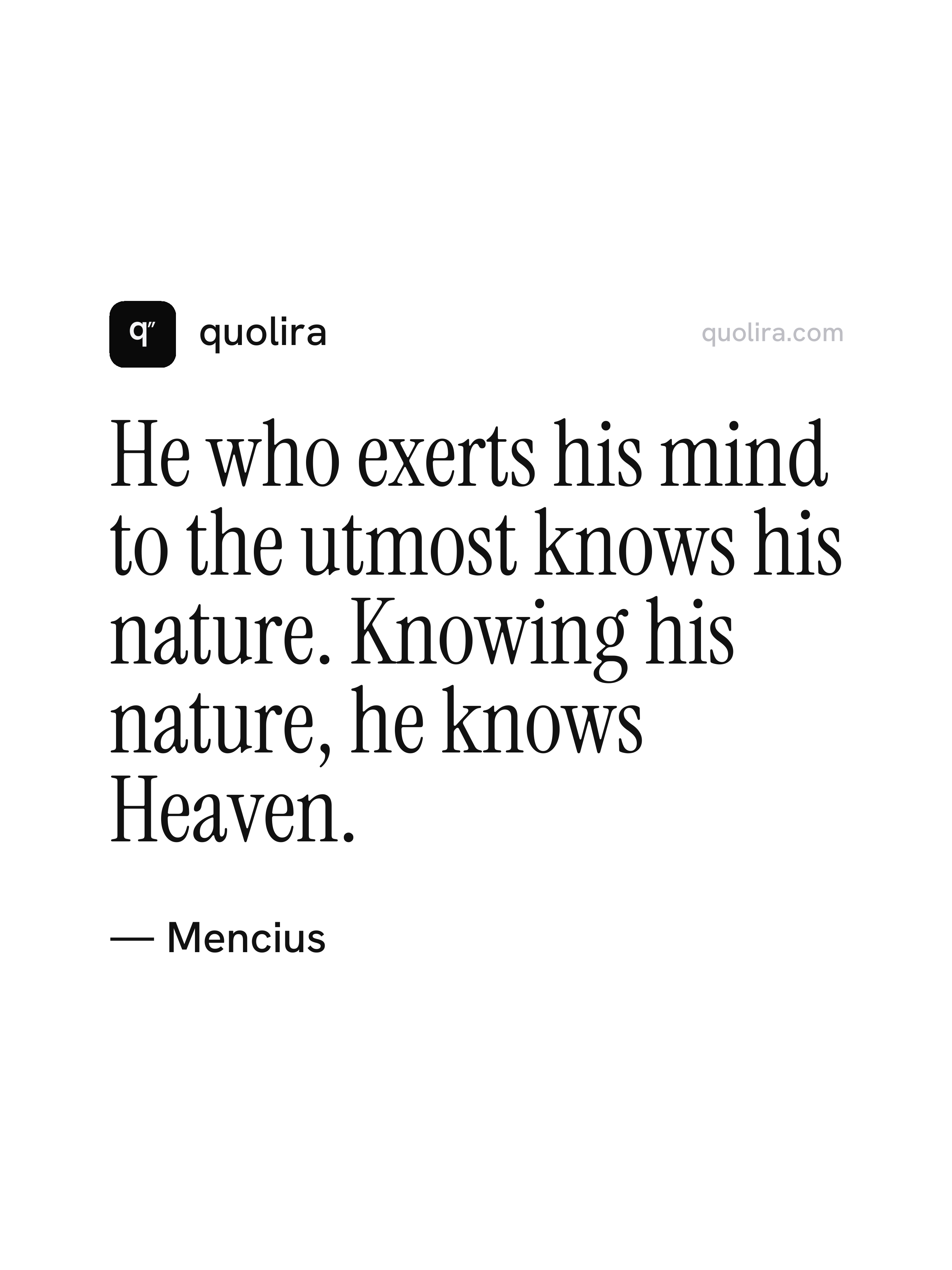
“He who exerts his mind to the utmost knows his nature. Knowing his nature, he knows Heaven.”
Mencius · Mencius, Book VII A