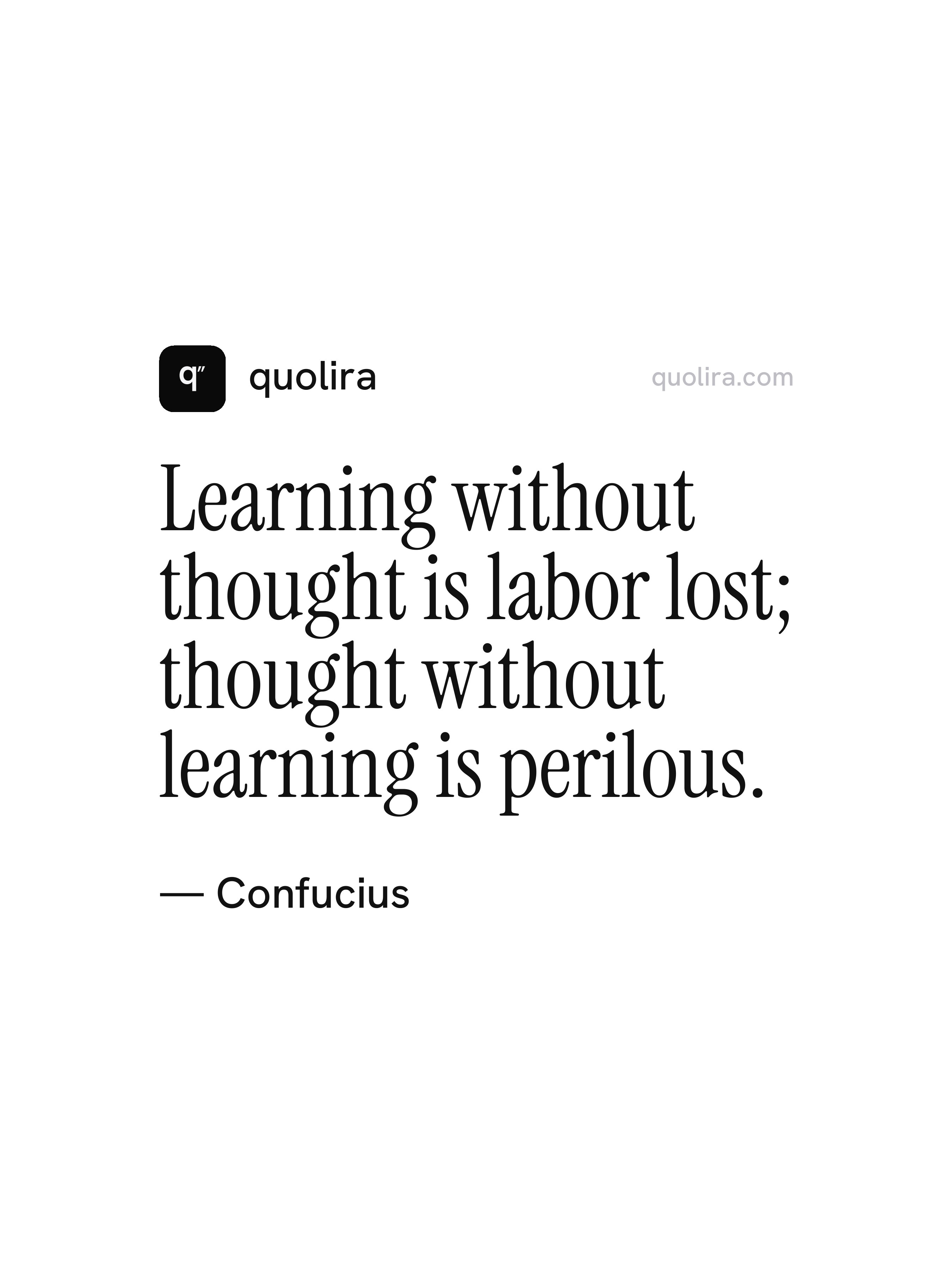
“Learning without thought is labor lost; thought without learning is perilous.”
Confucius · The Analects, Book II, c. 5th century BCE
 quolira
.com
quolira
quolira.com
Confucius is pointing to a fundamental tension in how people grow intellectually and morally. Absorbing information without pausing to reflect on it leaves a person directionless, unable to connect what they have learned to any deeper understanding. Going to the opposite extreme, spending all one's time in abstract thought while ignoring the accumulated wisdom of others, is even more hazardous, because it cuts the thinker off from the corrective influence of tested knowledge and lived experience.
This saying comes from the Analects, a collection of conversations and reflections attributed to Confucius and compiled by his students after his death. Book II of the Analects is particularly concerned with the qualities that define genuine learning and good character. The pairing structure Confucius uses here, two balanced clauses set against each other, is characteristic of his teaching style throughout the text, and it was a technique well suited to an oral culture where memorable contrasts helped ideas travel across generations.
Confucius was a Chinese philosopher and teacher who lived during the Spring and Autumn period, roughly from 551 to 479 BCE. He devoted much of his life to questions of ethics, good governance, and the cultivation of personal virtue. Though he held various official positions, his lasting influence came through his teaching. The ideas he developed formed the foundation of Confucianism, a tradition that has shaped Chinese thought, culture, and political philosophy for more than two thousand years.
“Learning without thought is labor lost; thought without learning is perilous.”
Confucius · The Analects, Book II, c. 5th century BCE
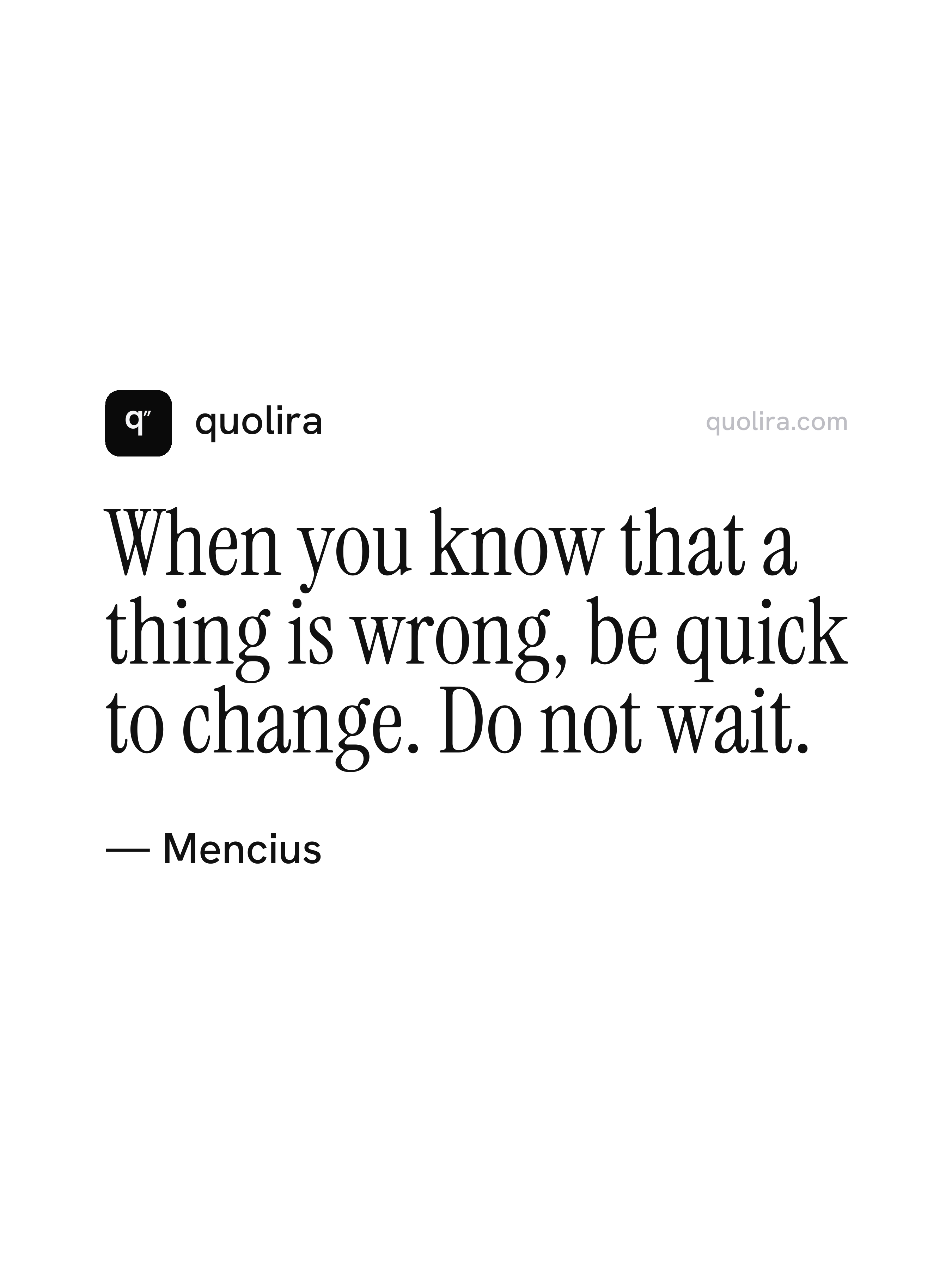
“When you know that a thing is wrong, be quick to change. Do not wait.”
Mencius · Mencius, Book II A
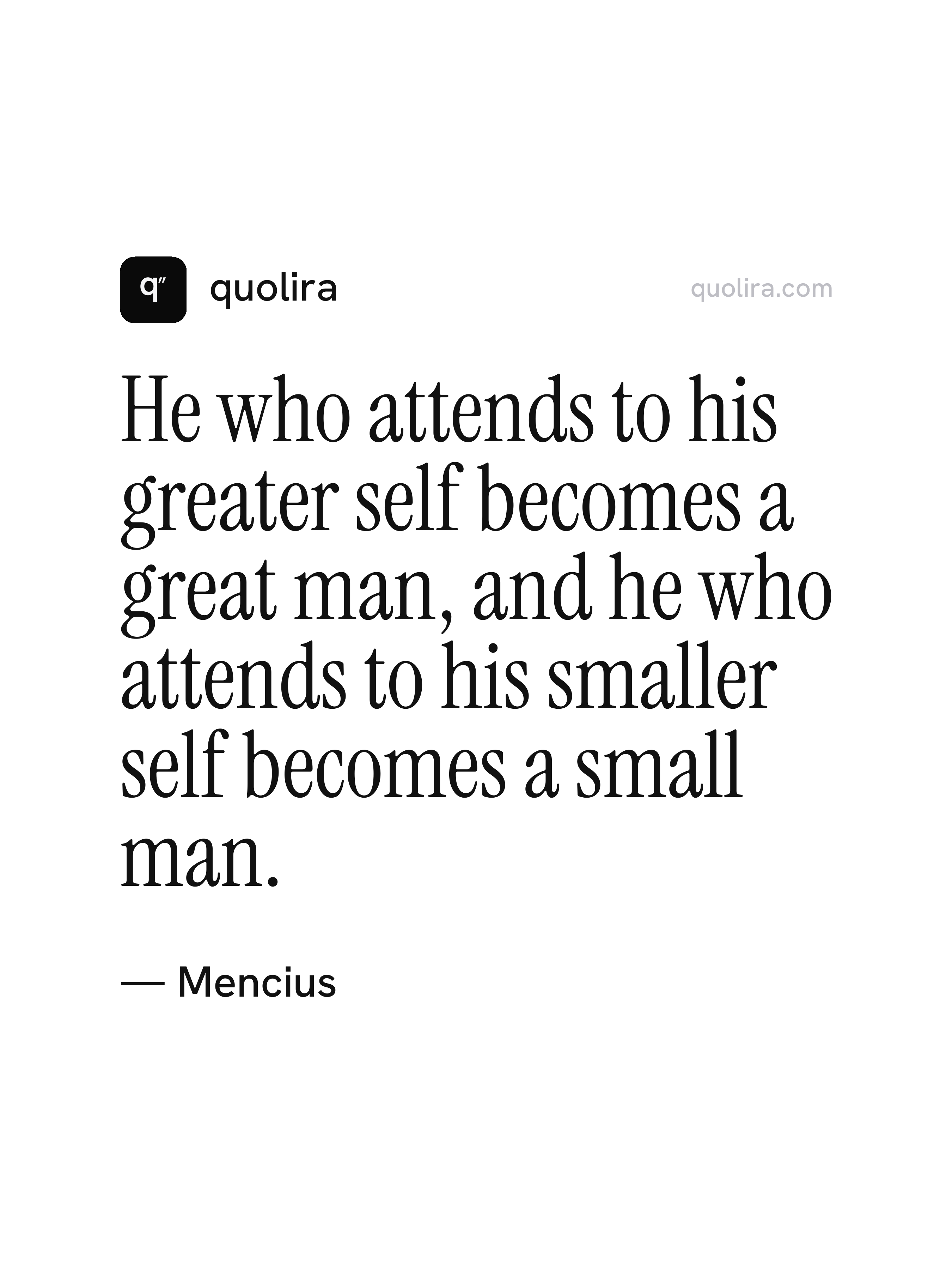
“He who attends to his greater self becomes a great man, and he who attends to his smaller self becomes a small man.”
Mencius · Mencius, Book VI A
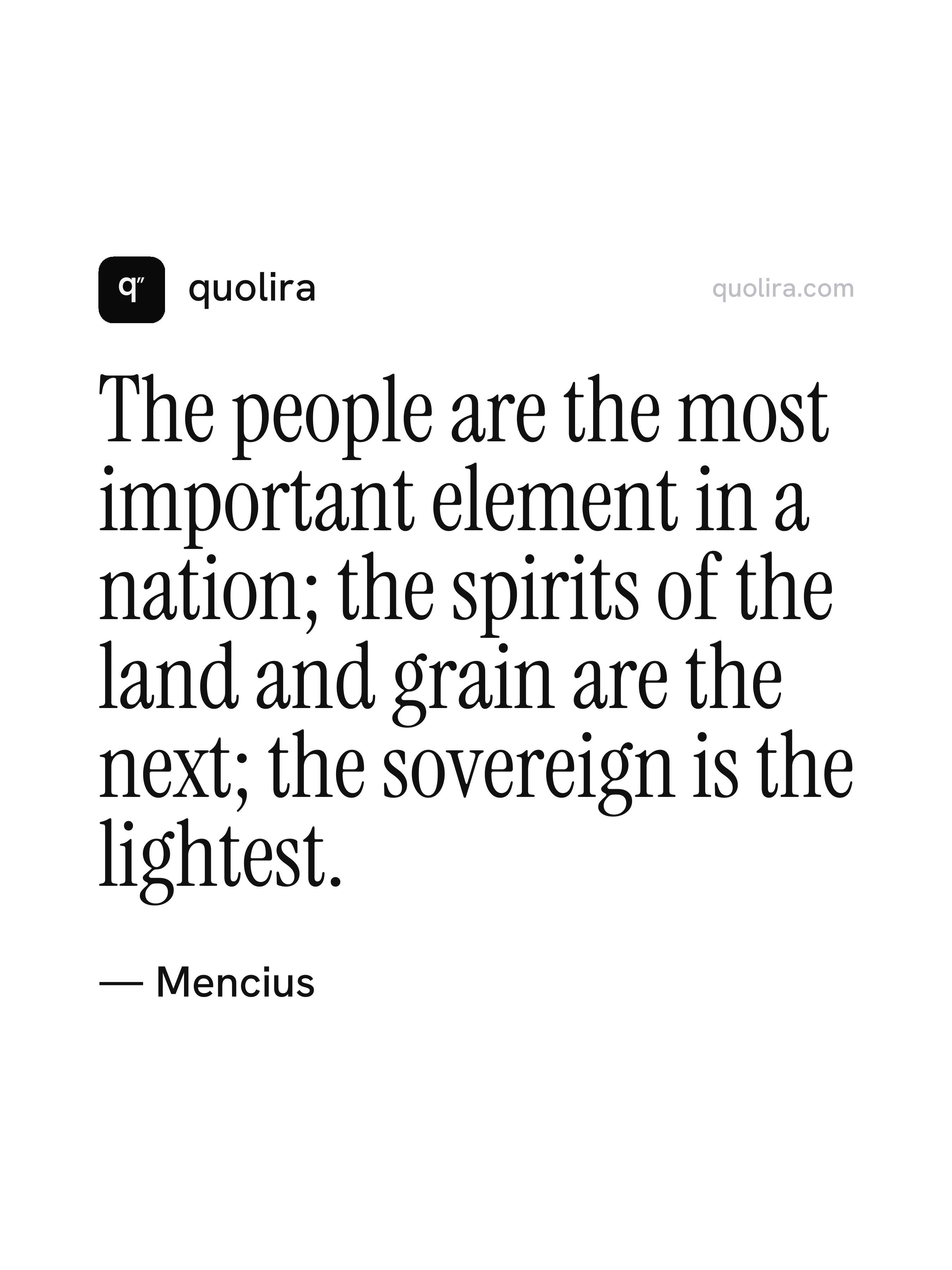
“The people are the most important element in a nation; the spirits of the land and grain are the next; the sovereign is the lightest.”
Mencius · Mencius, Book VII B
“To act without clear understanding, to form habits without examining them, to follow a path all your life without knowing where it goes — this is the behavior of the multitude.”
Mencius · Mencius, Book VII A
“The way of truth is like a great road. It is not difficult to know it. The evil is only that men will not seek it.”
Mencius · Mencius, Book VI B
“If you know that a thing is unrighteous, then use all dispatch in putting an end to it. Why should you wait till next year?”
Mencius · Mencius, Book III B
“The feeling of commiseration is the beginning of humanity; the feeling of shame is the beginning of righteousness.”
Mencius · Mencius, Book II A
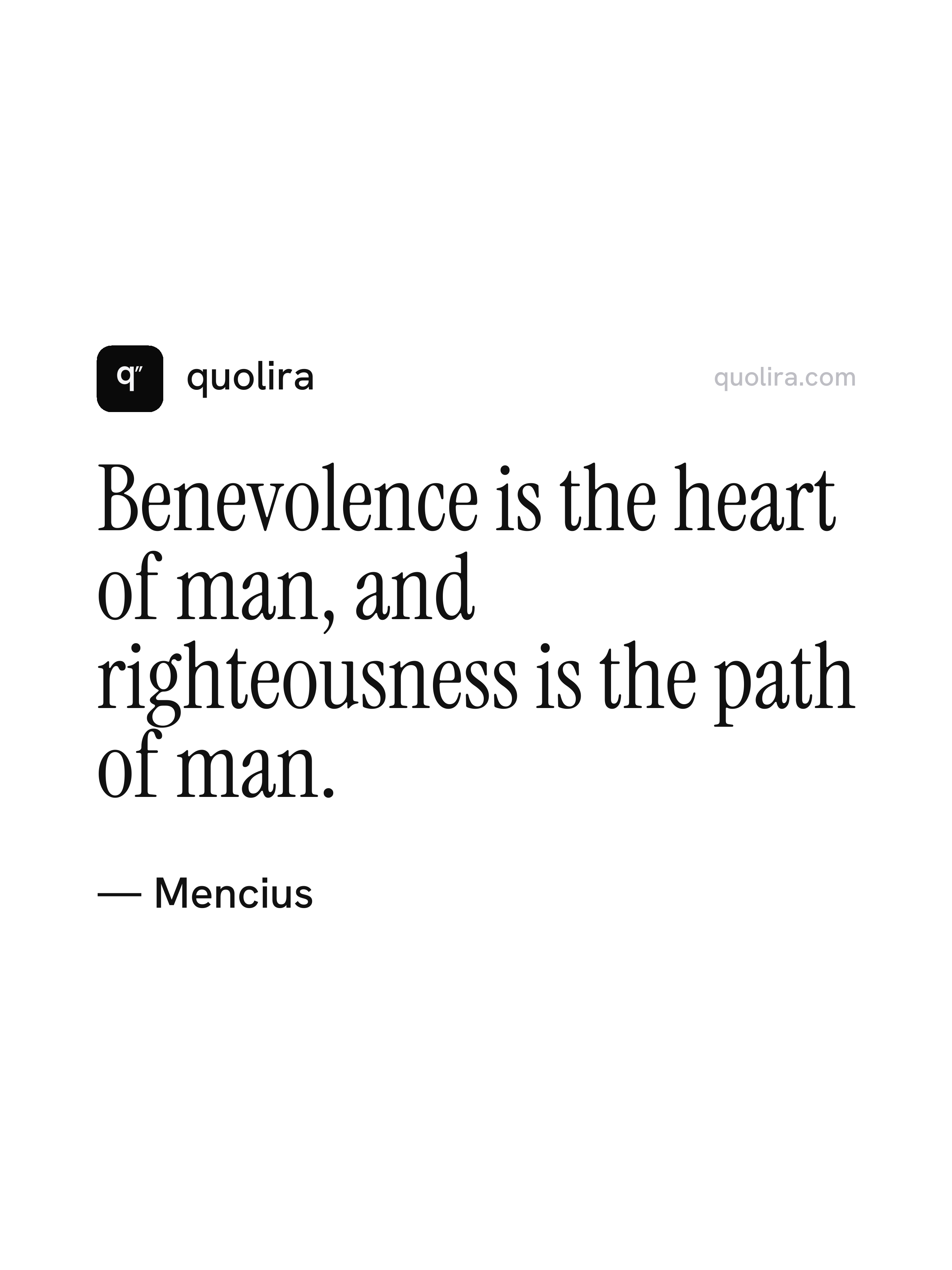
“Benevolence is the heart of man, and righteousness is the path of man.”
Mencius · Mencius, Book VI A
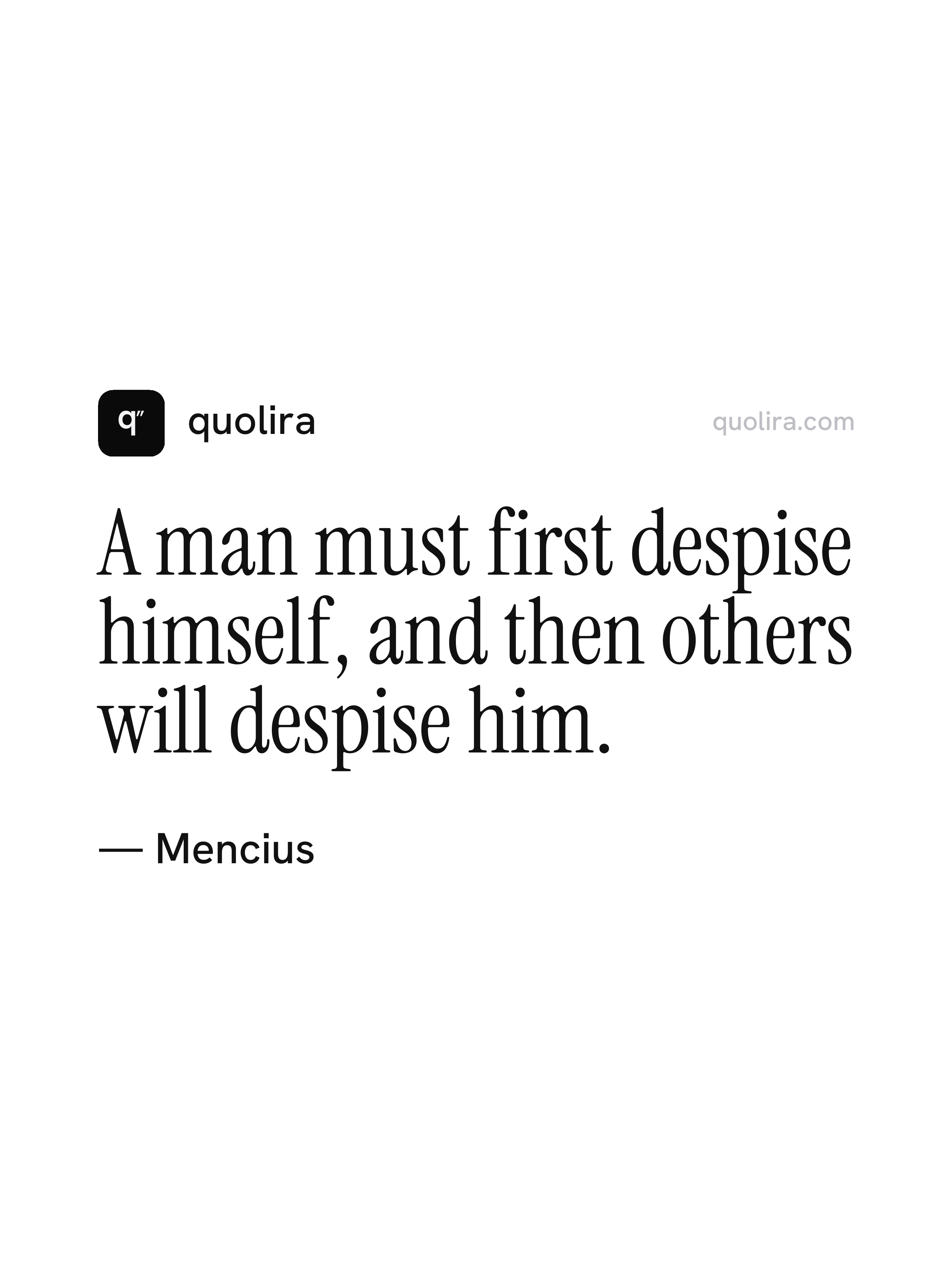
“A man must first despise himself, and then others will despise him.”
Mencius · Mencius, Book IV A
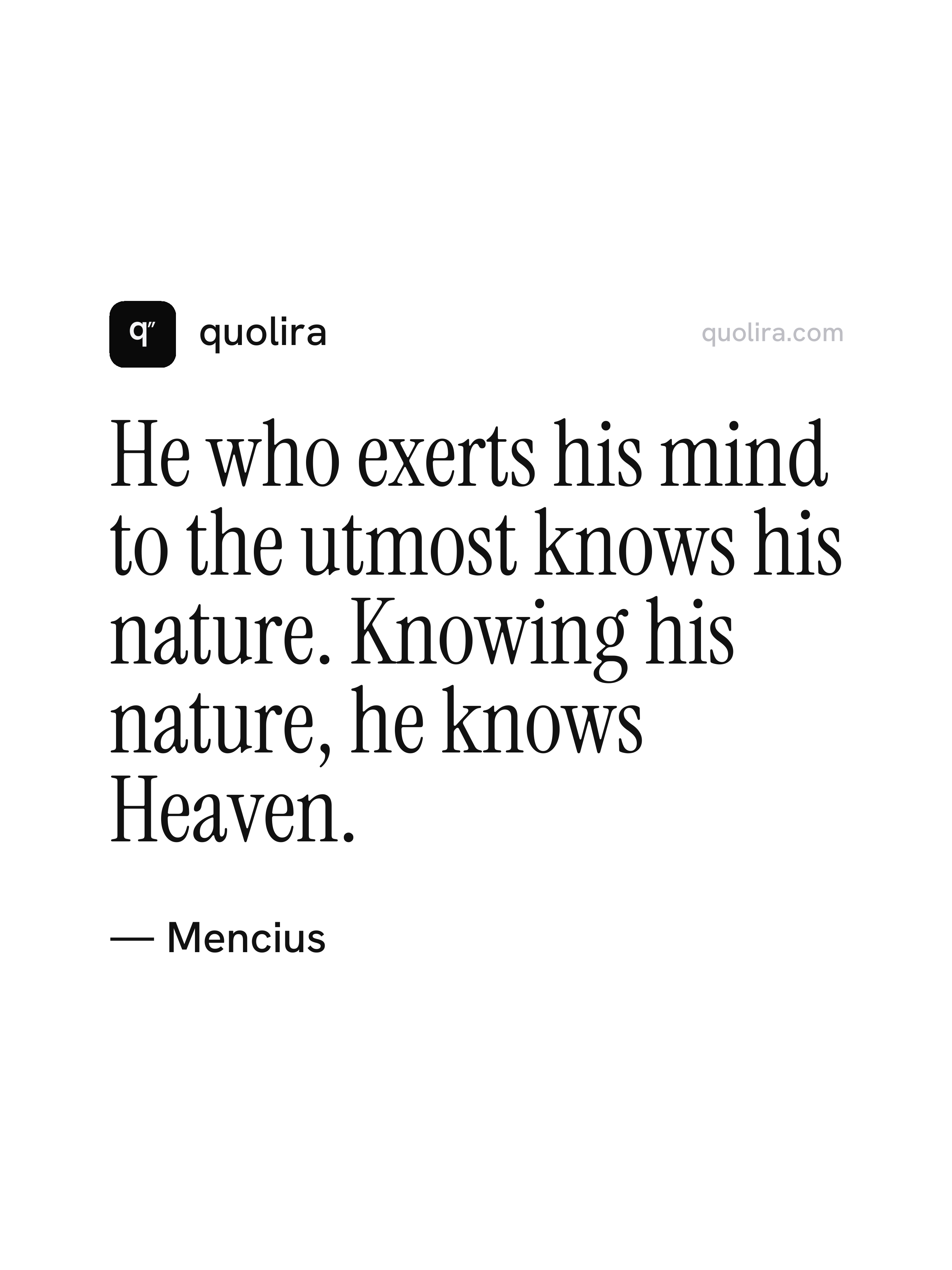
“He who exerts his mind to the utmost knows his nature. Knowing his nature, he knows Heaven.”
Mencius · Mencius, Book VII A
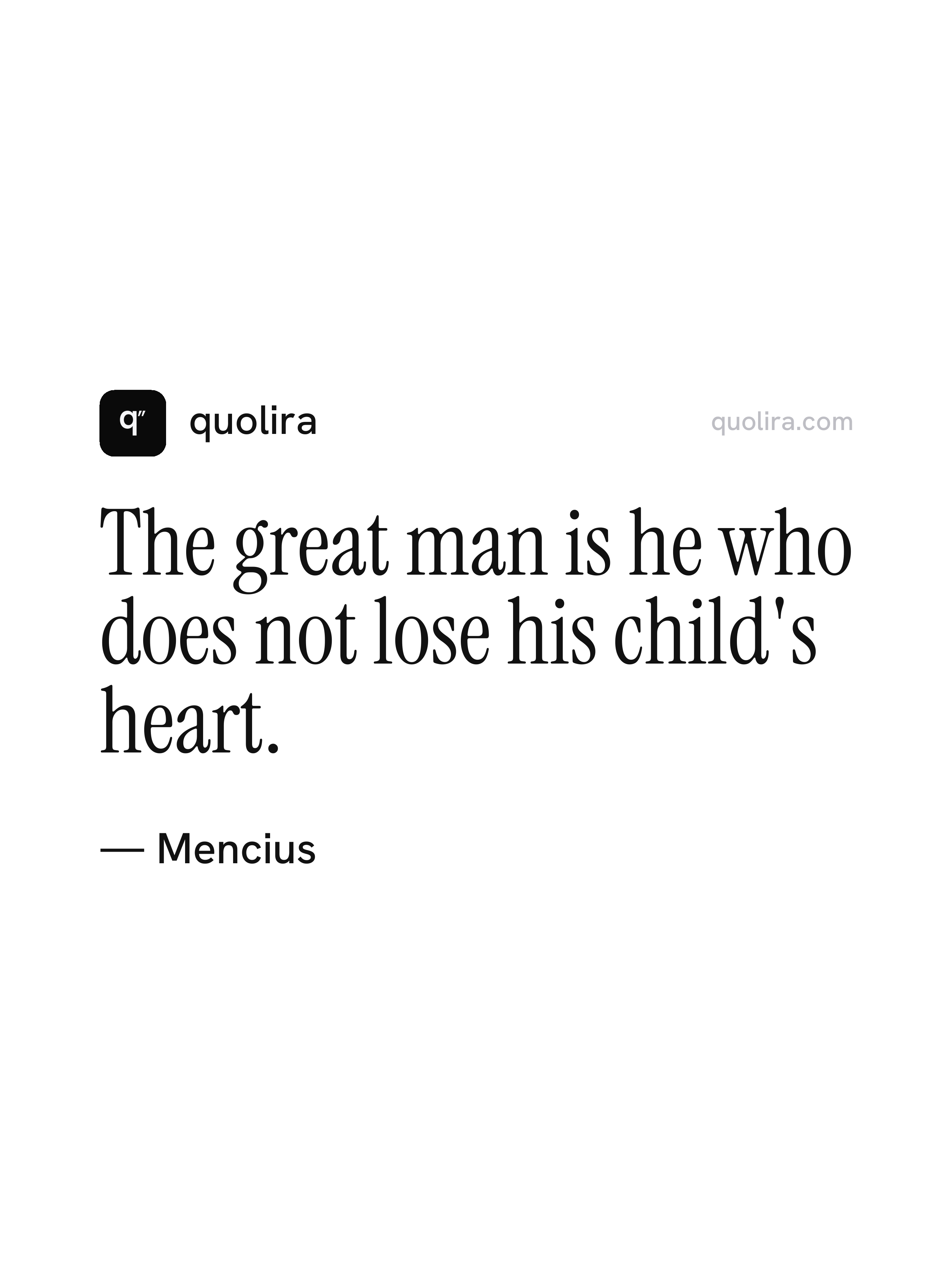
“The great man is he who does not lose his child's heart.”
Mencius · Mencius, Book IV B, c. 4th century BCE