“I would like to die on a day when I am feeling nothing. Like water.”
Ryuichi Sakamoto · Interview, 2017
 quolira
.com
quolira
quolira.com
This aphorism argues that technology is not simply a tool that sits passively waiting to be used for good or ill. Instead, it actively shapes the world around it, producing consequences that depend heavily on context, culture, and the social systems into which it is introduced. The line resists two common temptations: the optimist's belief that new technology is inherently progressive, and the pessimist's belief that it is inherently destructive.
Melvin Kranzberg introduced this statement as the first of six "laws" in his 1986 presidential address to the Society for the History of Technology. The laws were not scientific principles but rather observations distilled from a career spent studying how technology and society shape each other over time. Kranzberg was concerned that both enthusiasts and critics of technology were missing the complexity of the relationship, and this first law was his direct challenge to oversimplified thinking. It has since become one of the most frequently cited ideas in technology studies and philosophy of technology.
Melvin Kranzberg was an American historian who devoted his career to the study of technology in its social and cultural dimensions. He was a founding figure in the field of the history of technology and played a central role in establishing the Society for the History of Technology, as well as its journal. His work pushed back against treating technological change as an isolated, self-driving force, insisting instead that it must always be understood in relation to the human communities it touches.
“I would like to die on a day when I am feeling nothing. Like water.”
Ryuichi Sakamoto · Interview, 2017
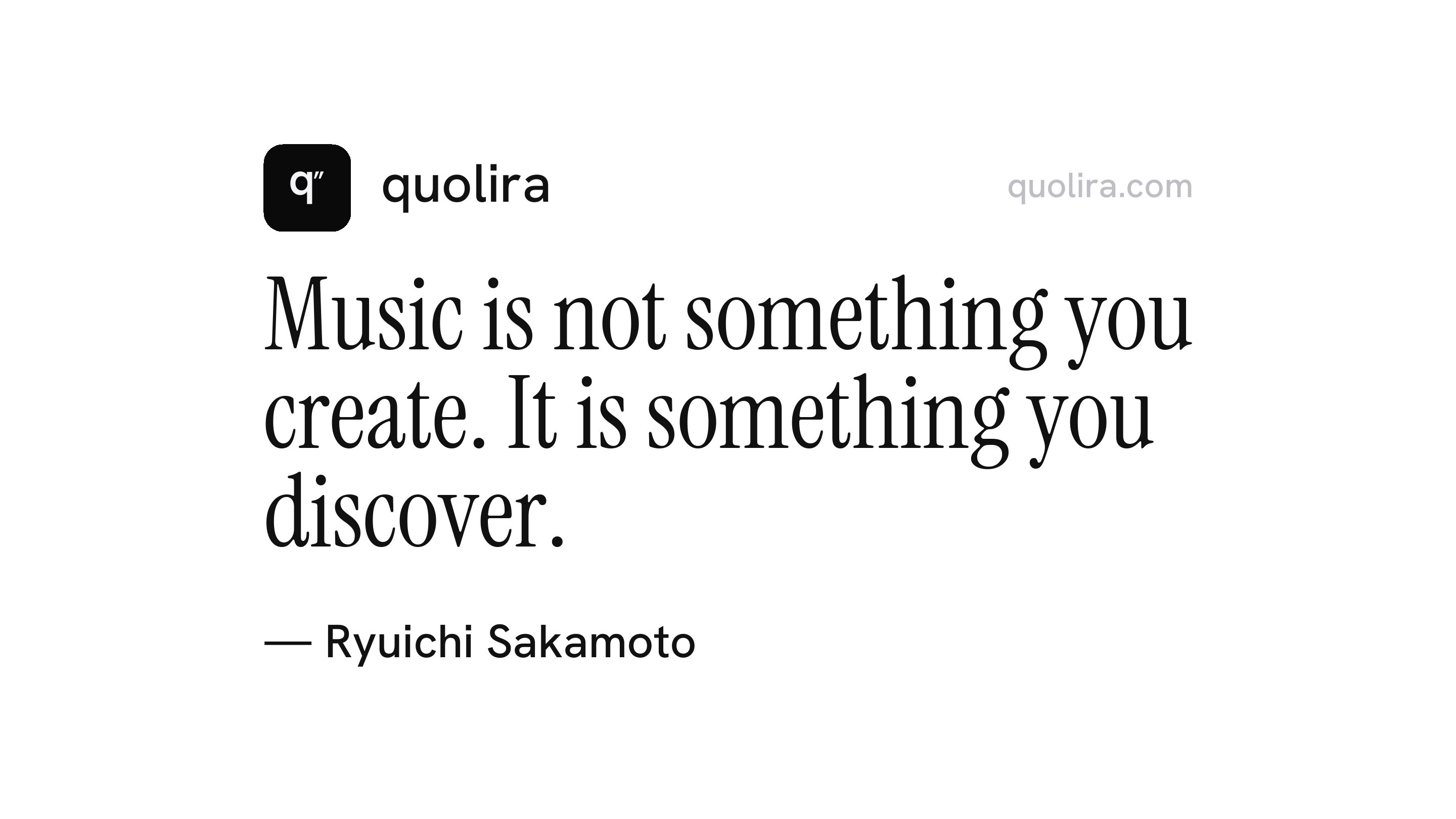
“Music is not something you create. It is something you discover.”
Ryuichi Sakamoto
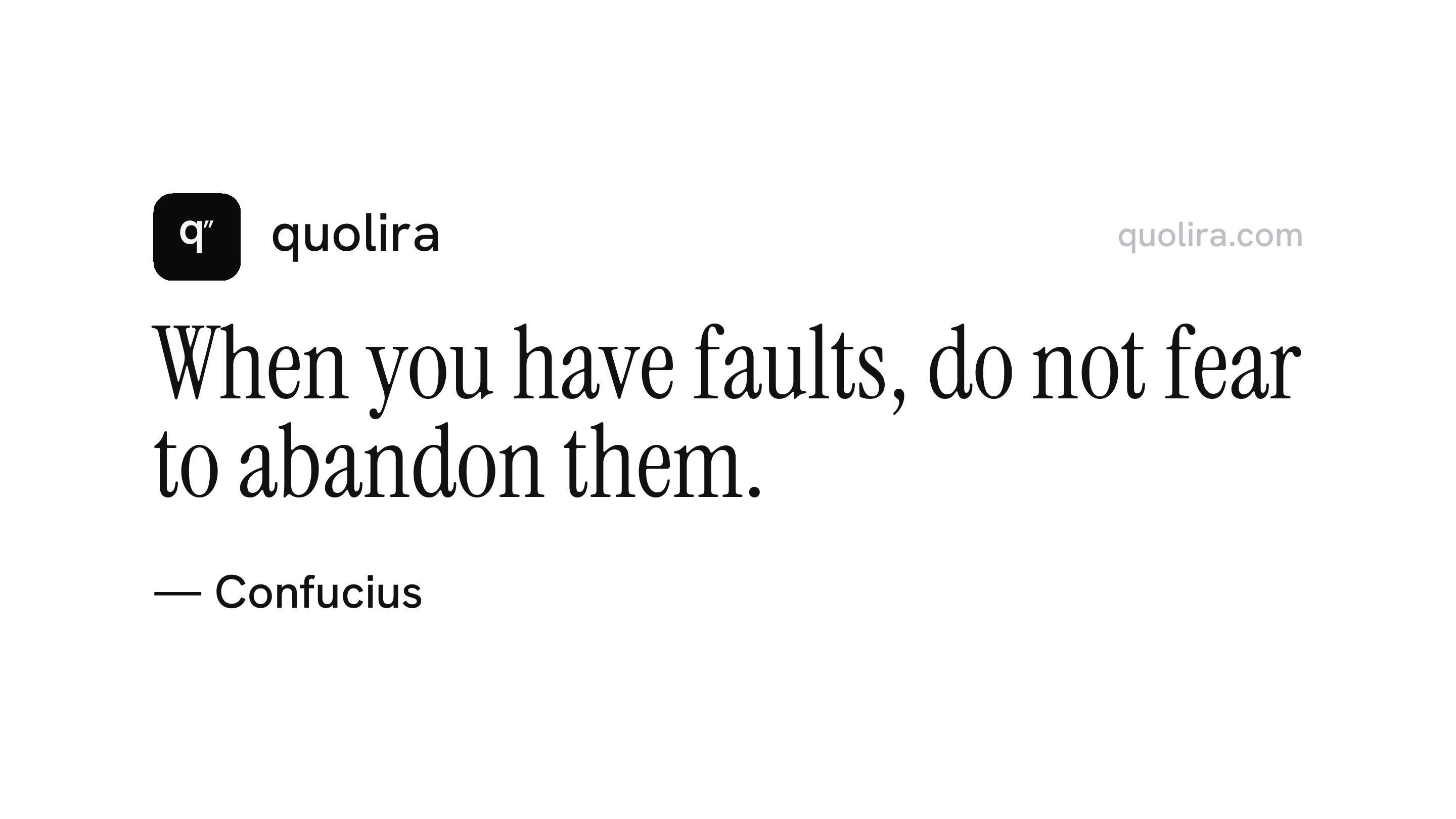
“When you have faults, do not fear to abandon them.”
Confucius · The Analects, Book I
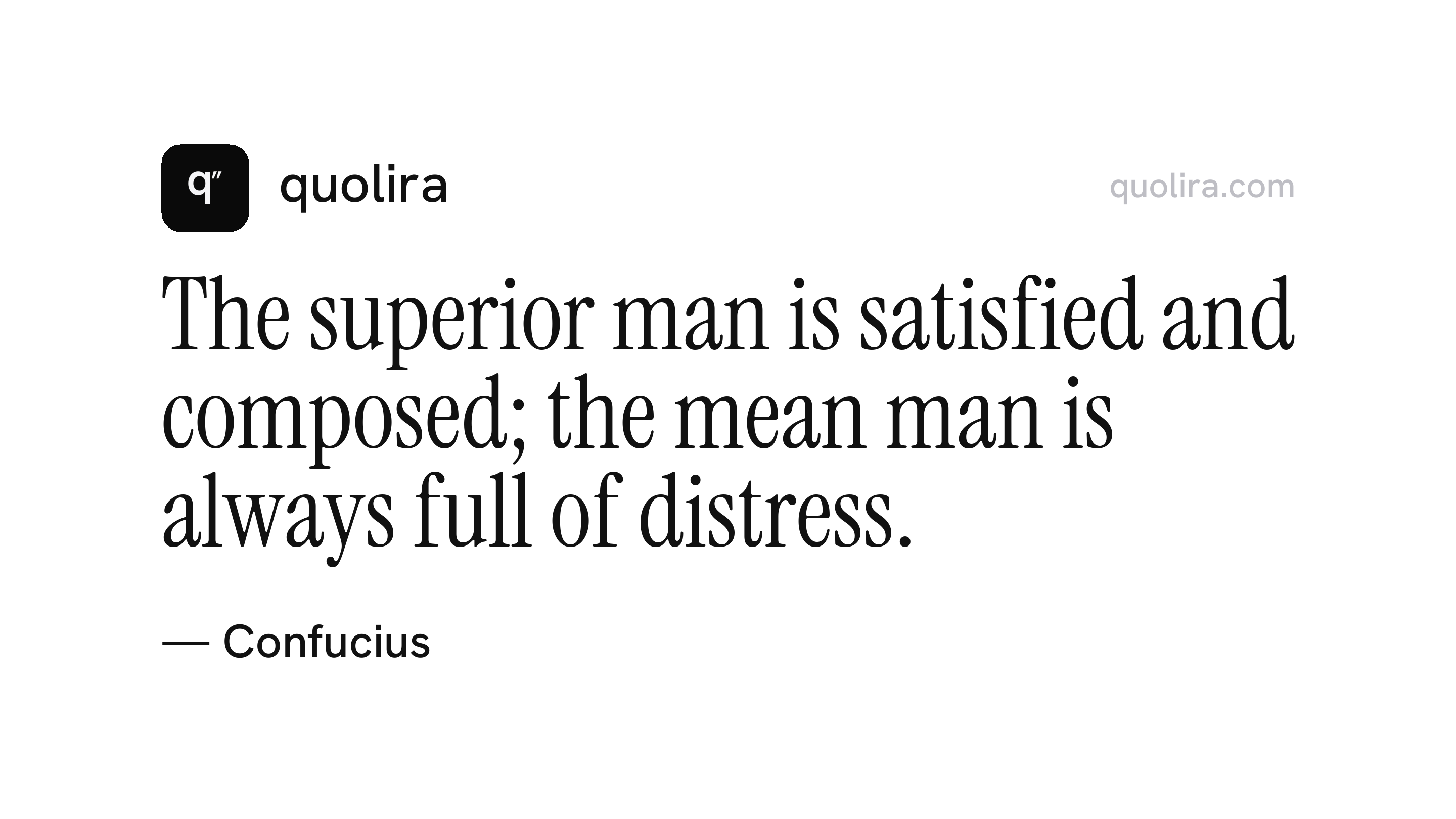
“The superior man is satisfied and composed; the mean man is always full of distress.”
Confucius · The Analects, Book VII
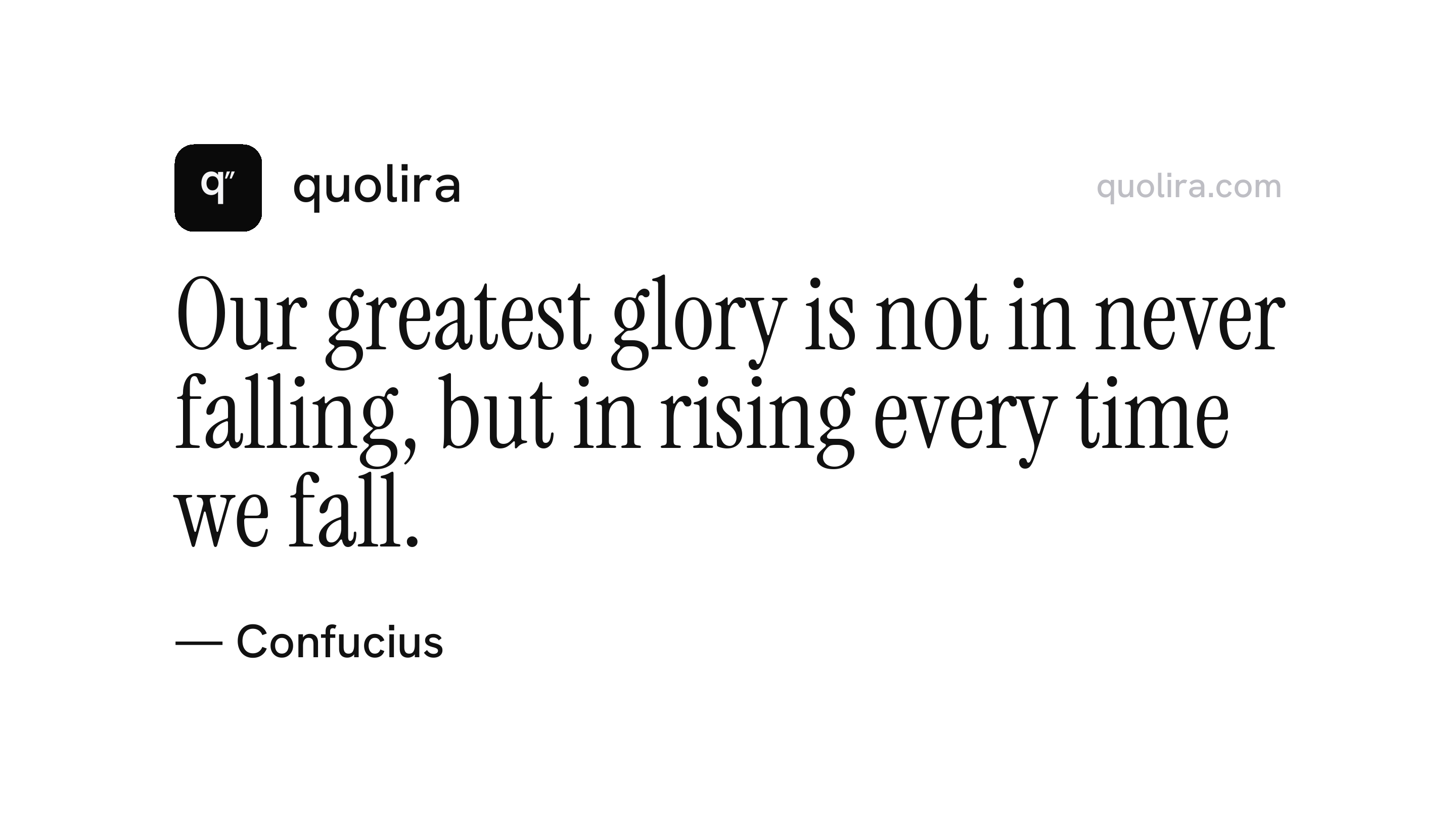
“Our greatest glory is not in never falling, but in rising every time we fall.”
Confucius · Widely attributed to Confucius
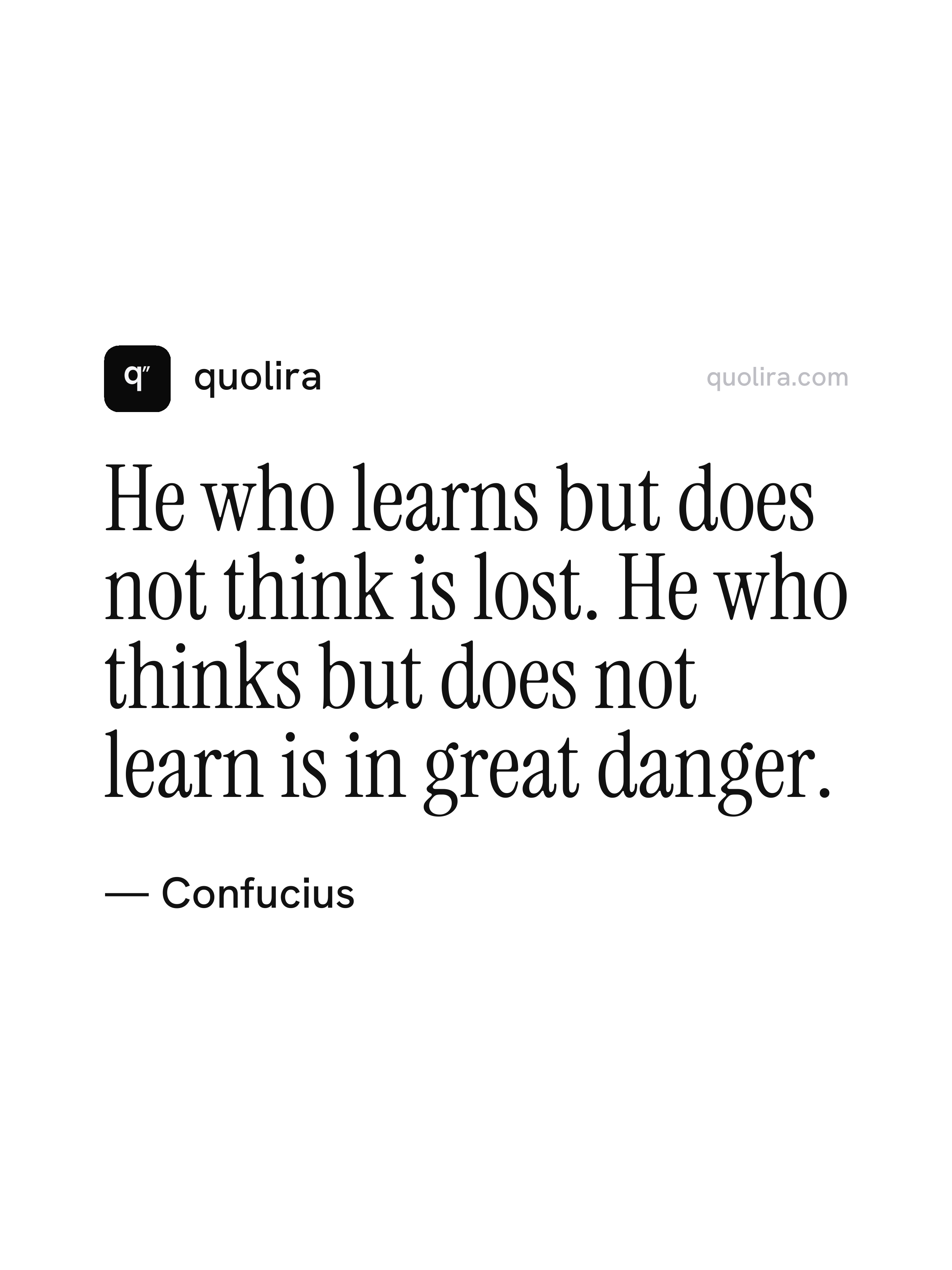
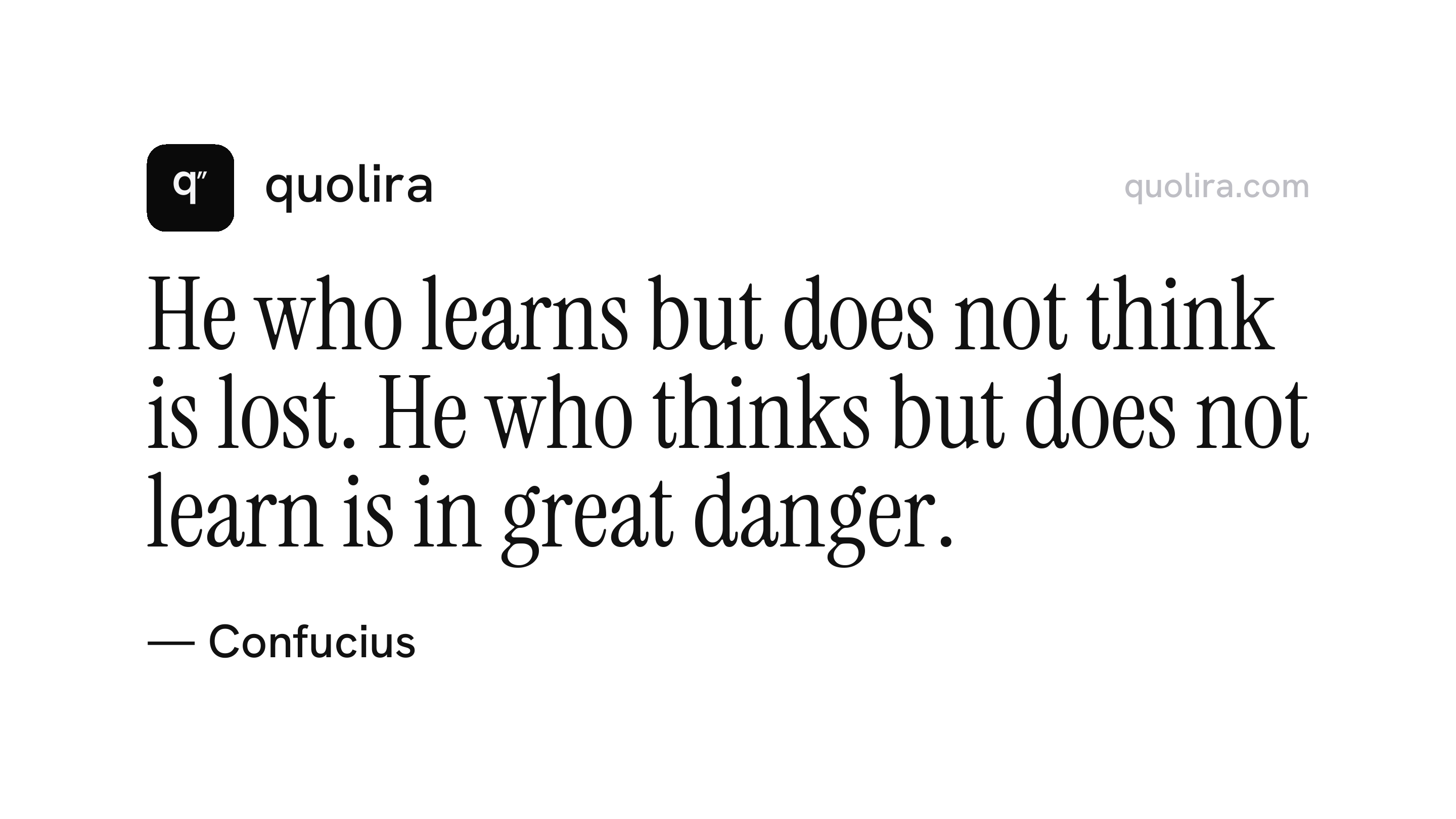
“He who learns but does not think is lost. He who thinks but does not learn is in great danger.”
Confucius · The Analects, Book II
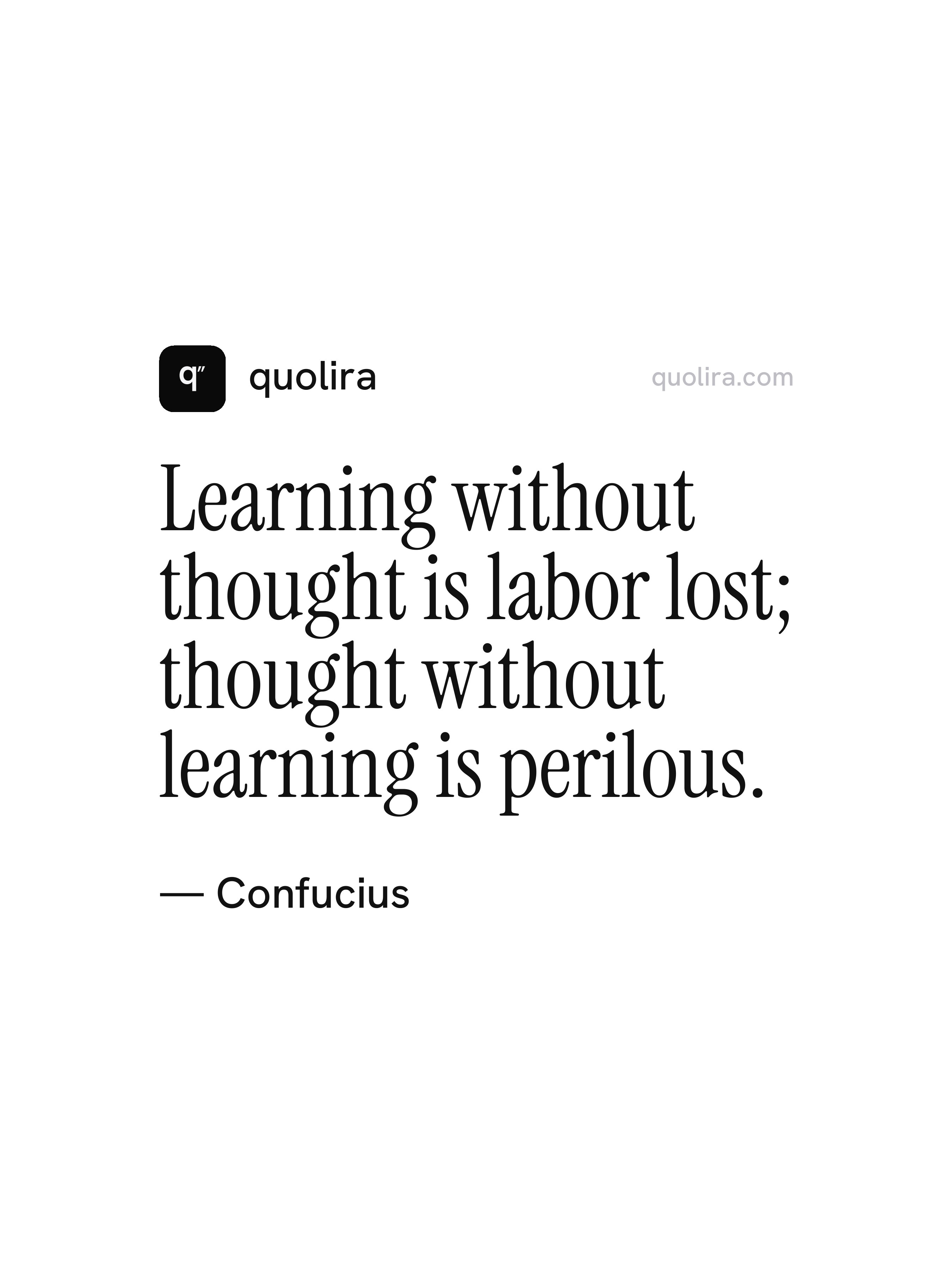
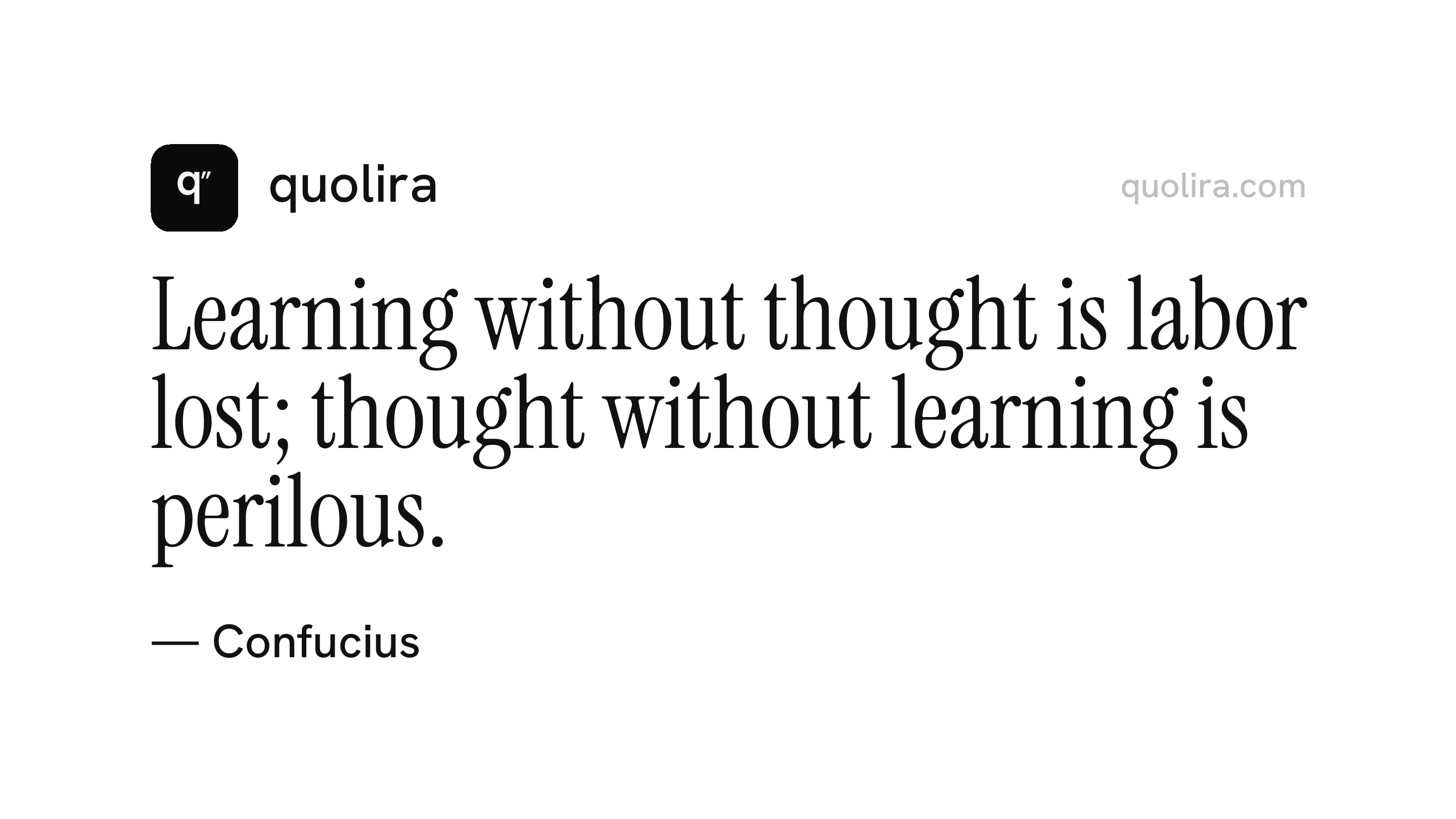
“Learning without thought is labor lost; thought without learning is perilous.”
Confucius · The Analects, Book II, c. 5th century BCE
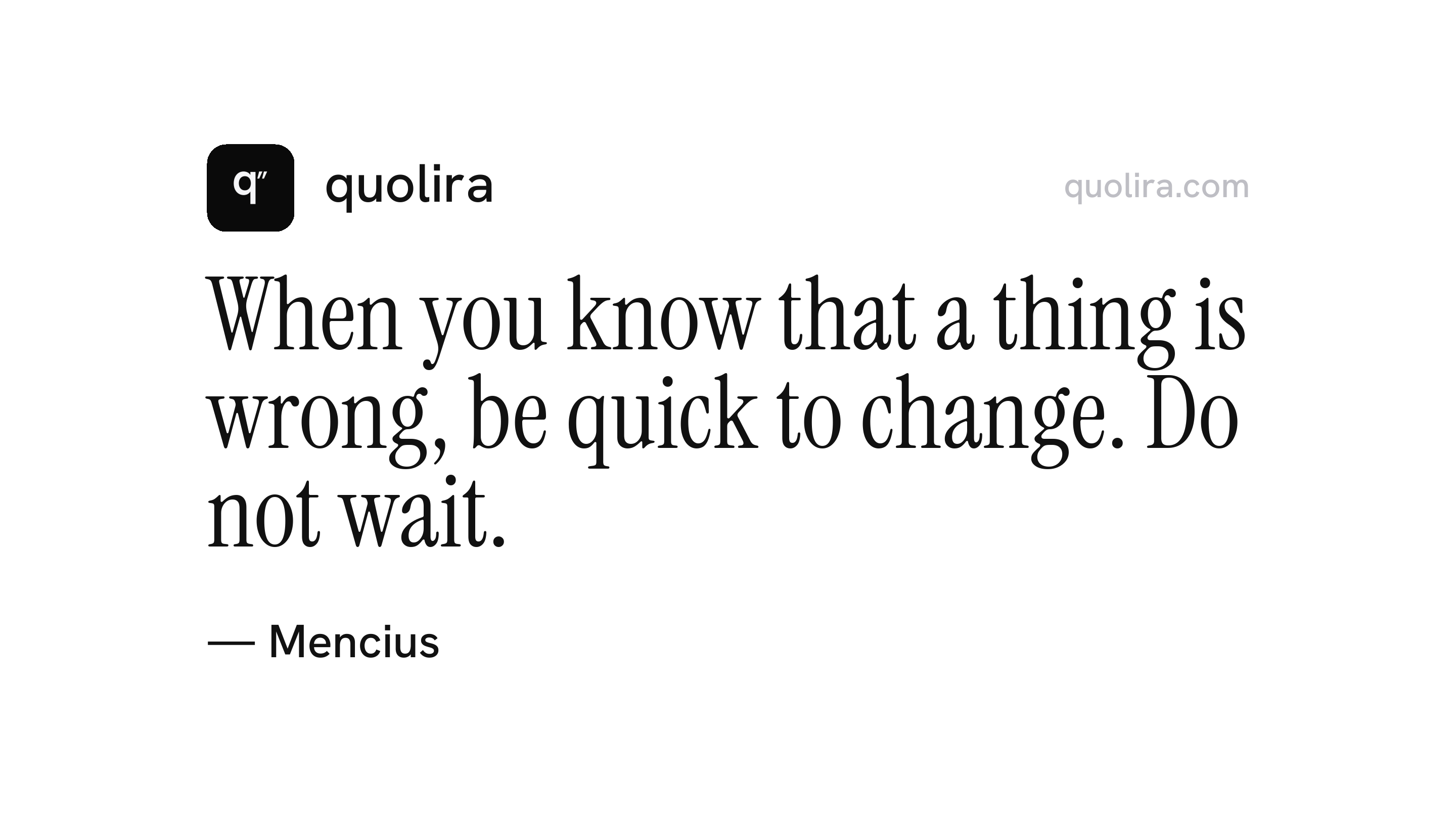
“When you know that a thing is wrong, be quick to change. Do not wait.”
Mencius · Mencius, Book II A
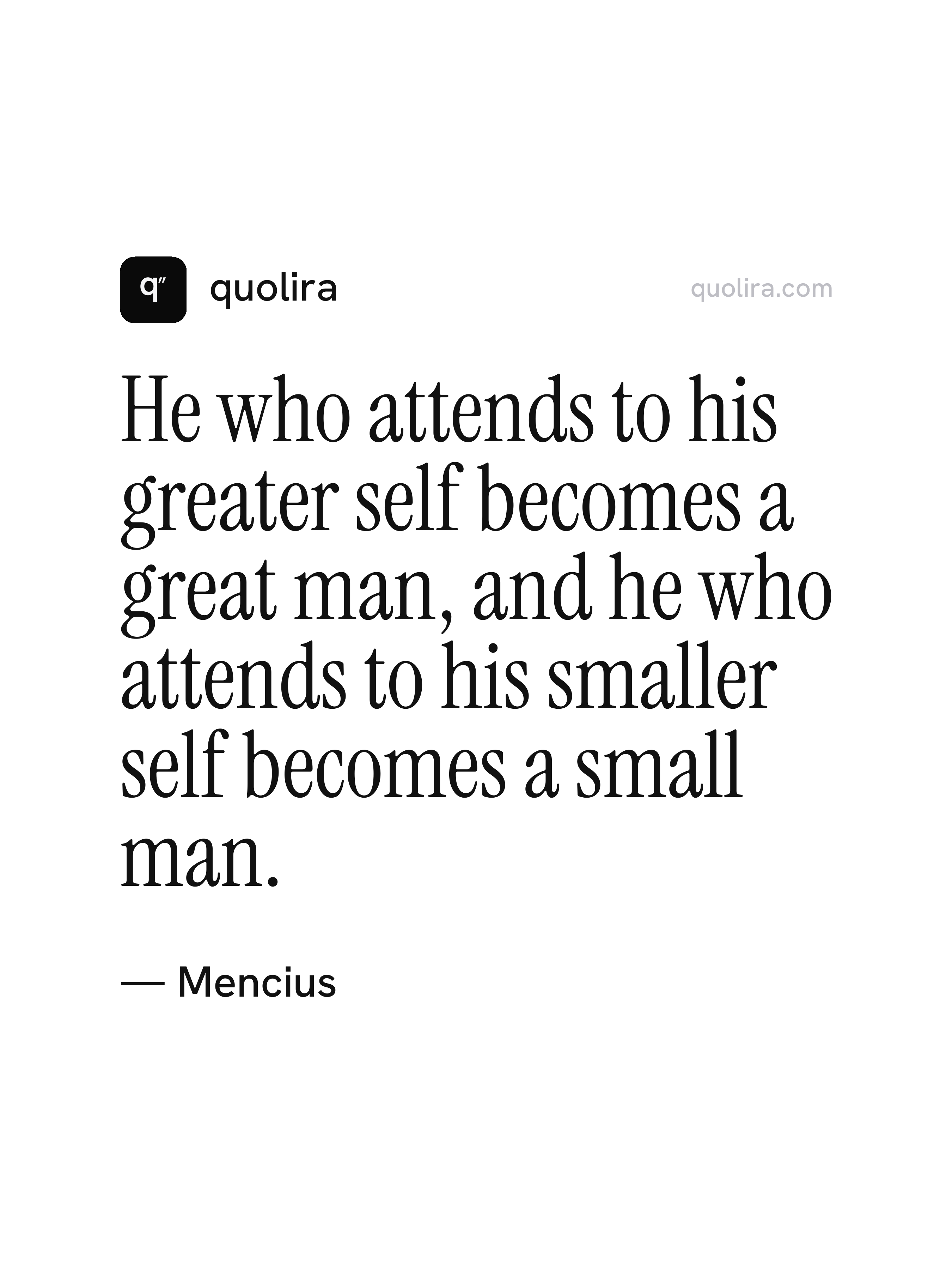
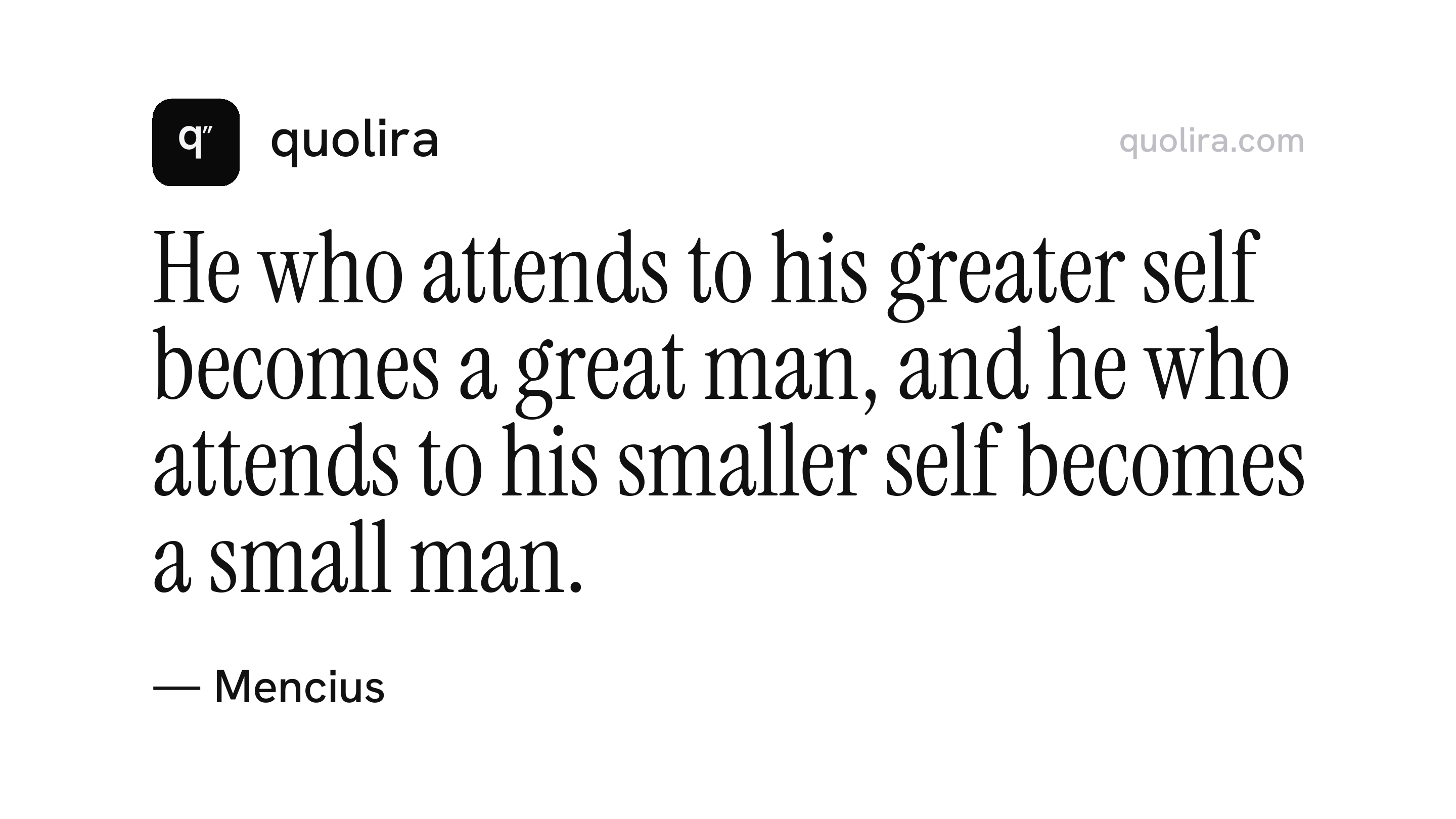
“He who attends to his greater self becomes a great man, and he who attends to his smaller self becomes a small man.”
Mencius · Mencius, Book VI A
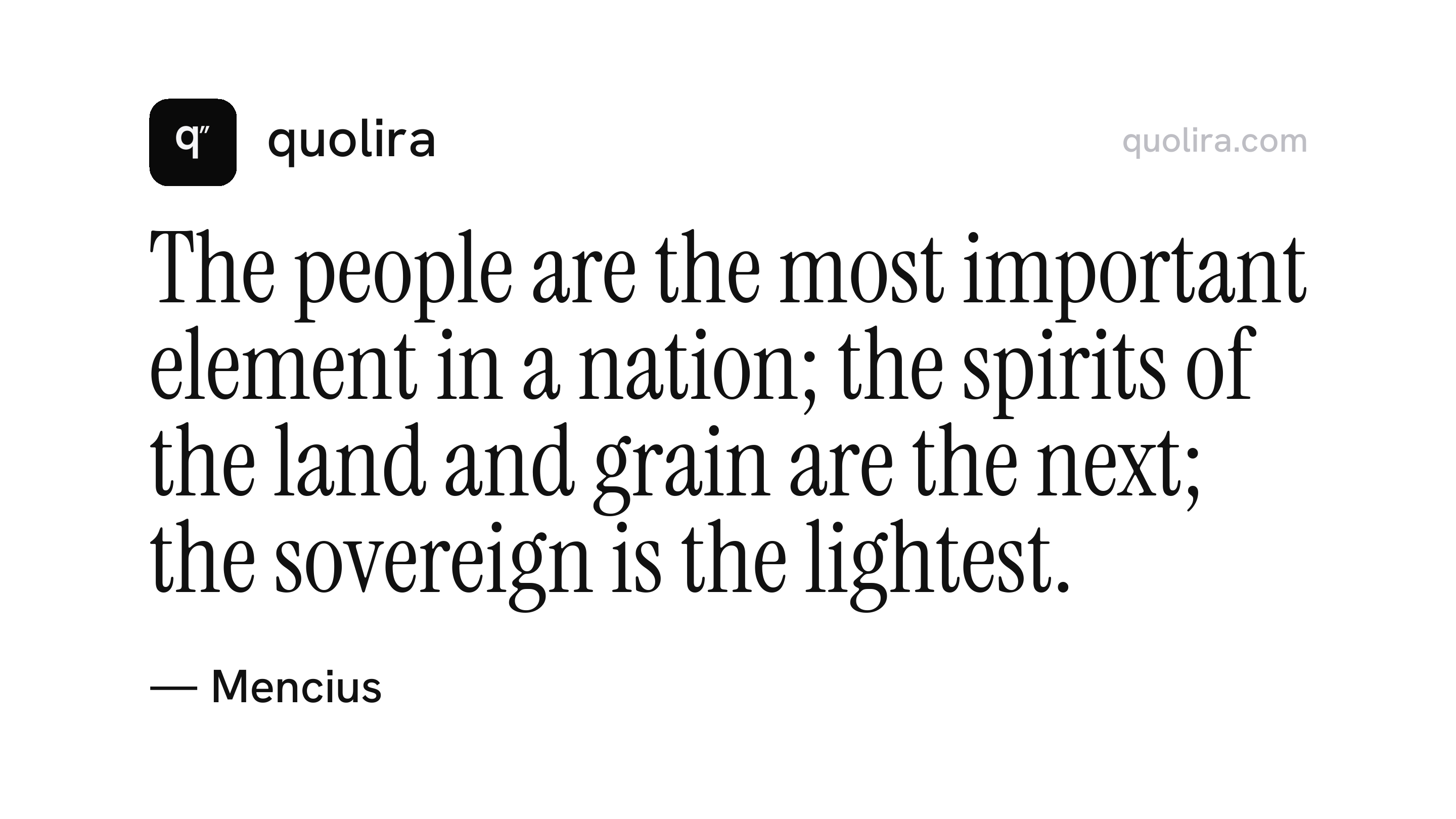
“The people are the most important element in a nation; the spirits of the land and grain are the next; the sovereign is the lightest.”
Mencius · Mencius, Book VII B
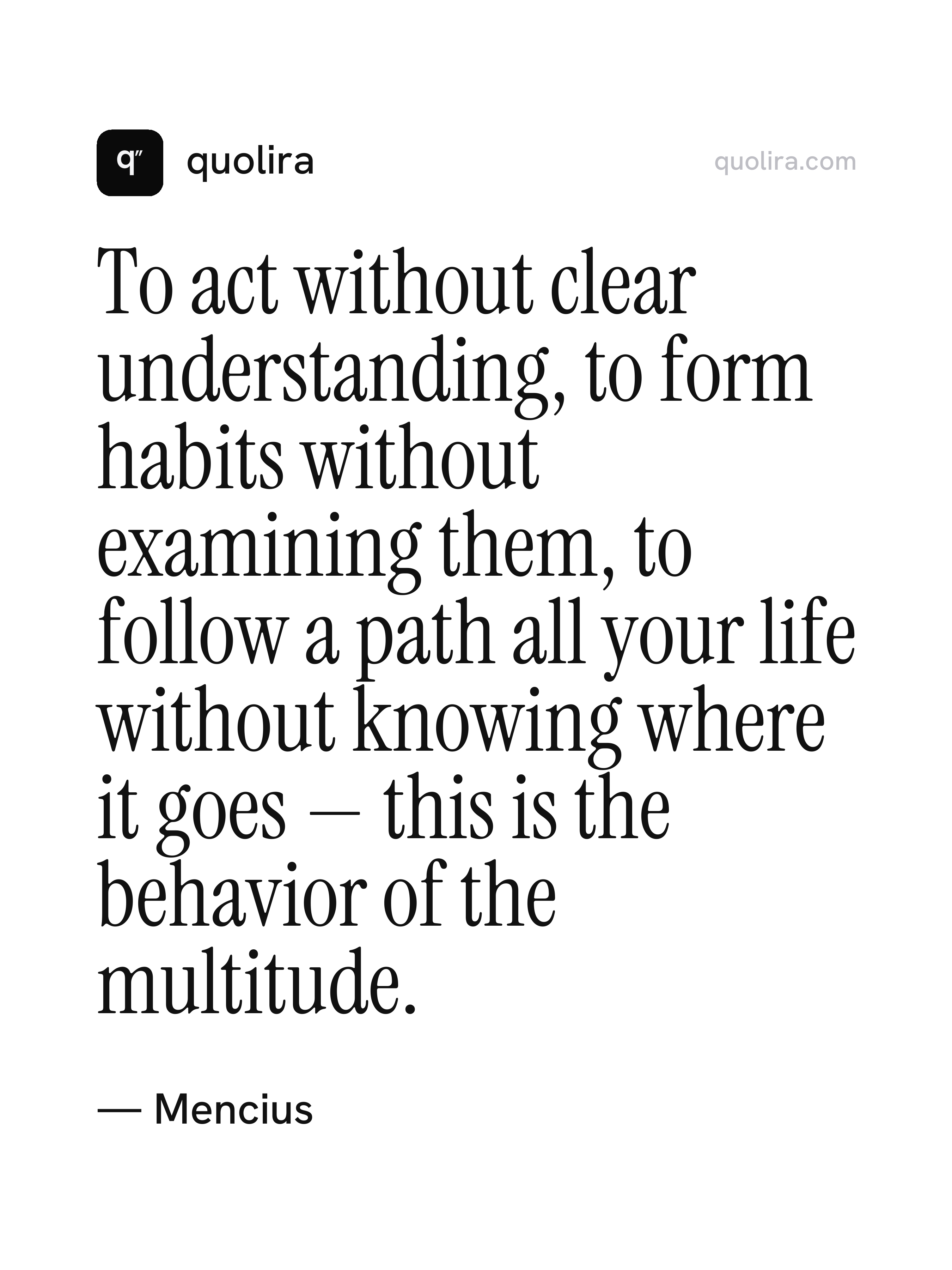
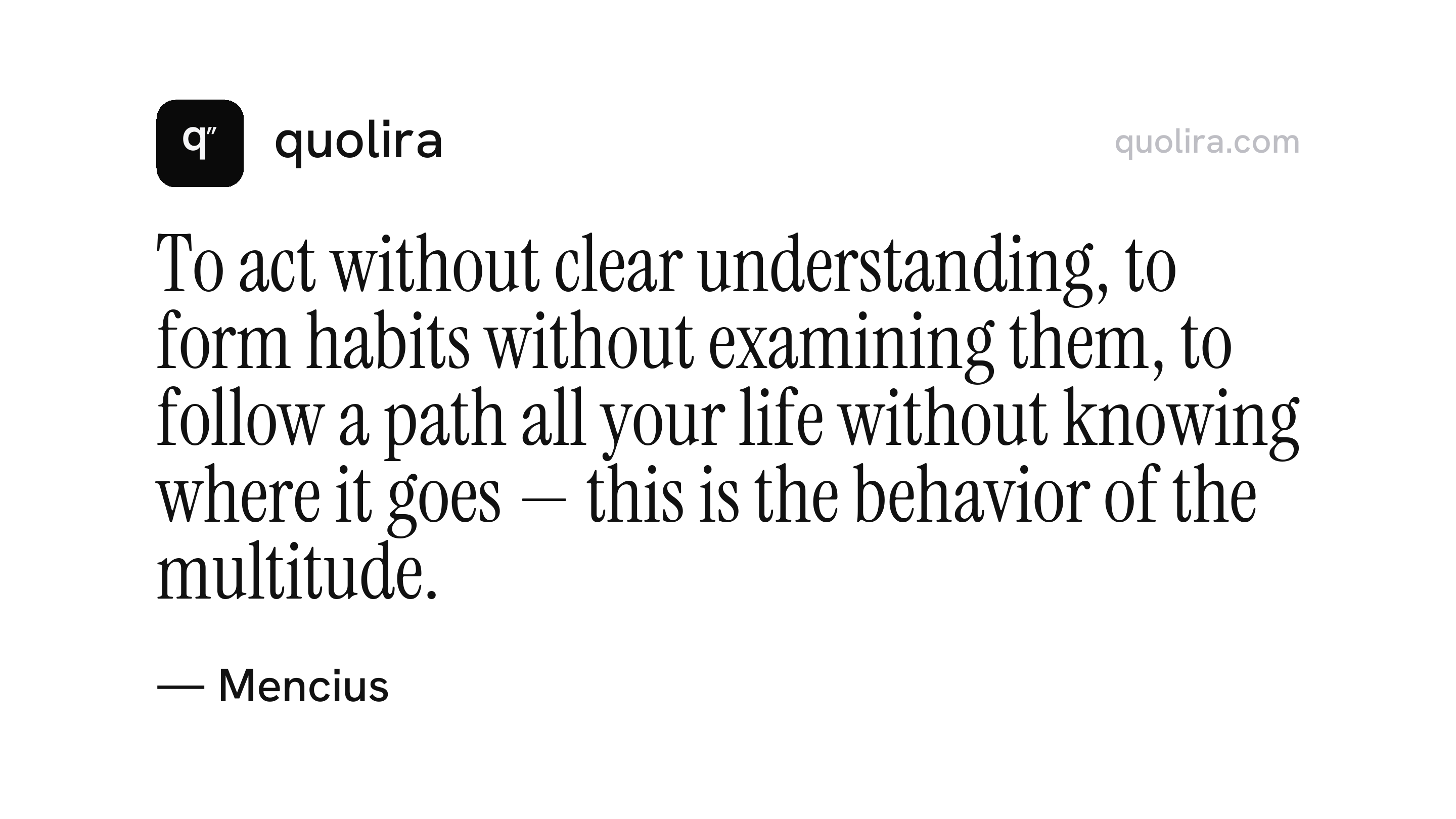
“To act without clear understanding, to form habits without examining them, to follow a path all your life without knowing where it goes — this is the behavior of the multitude.”
Mencius · Mencius, Book VII A
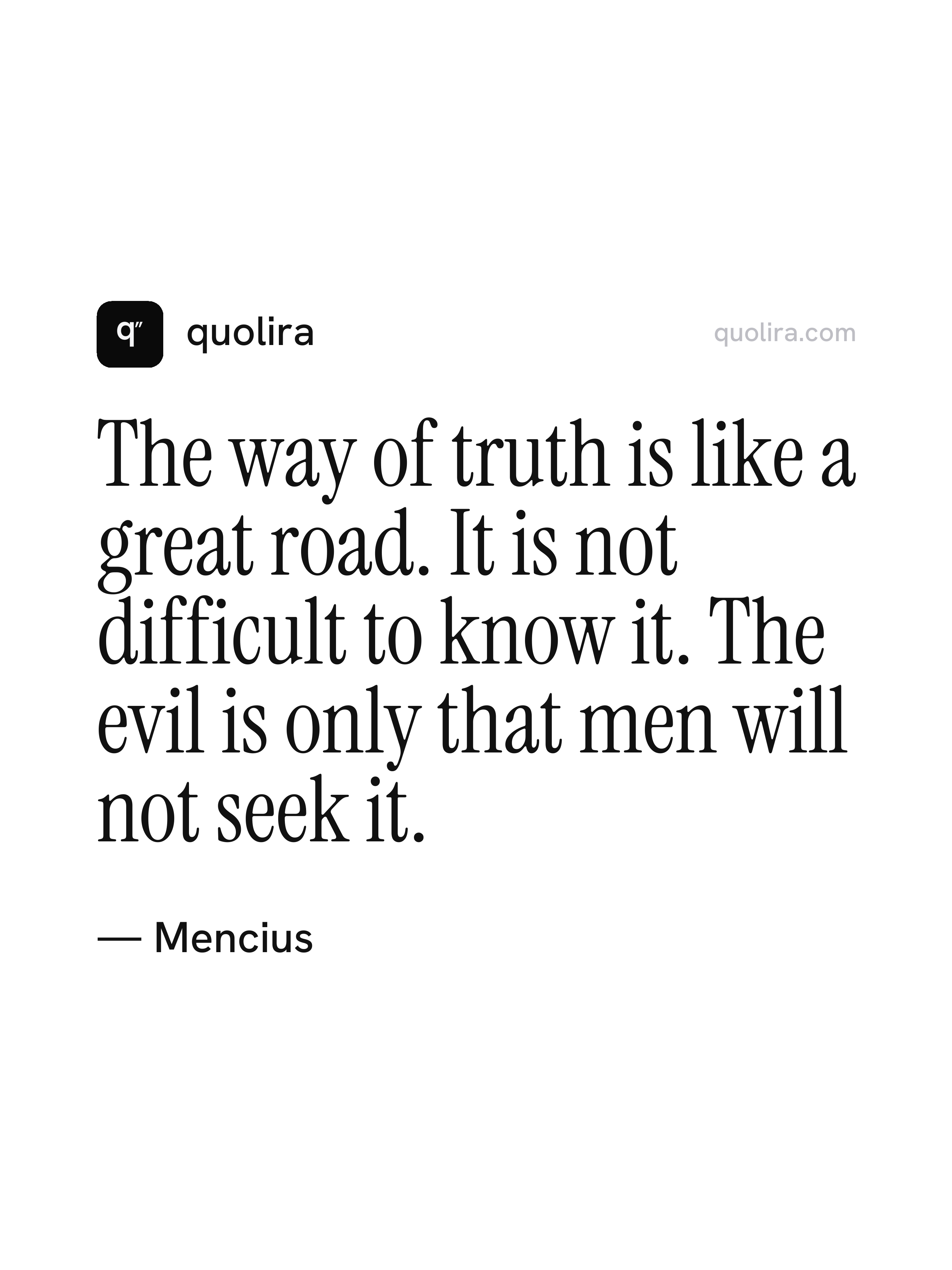
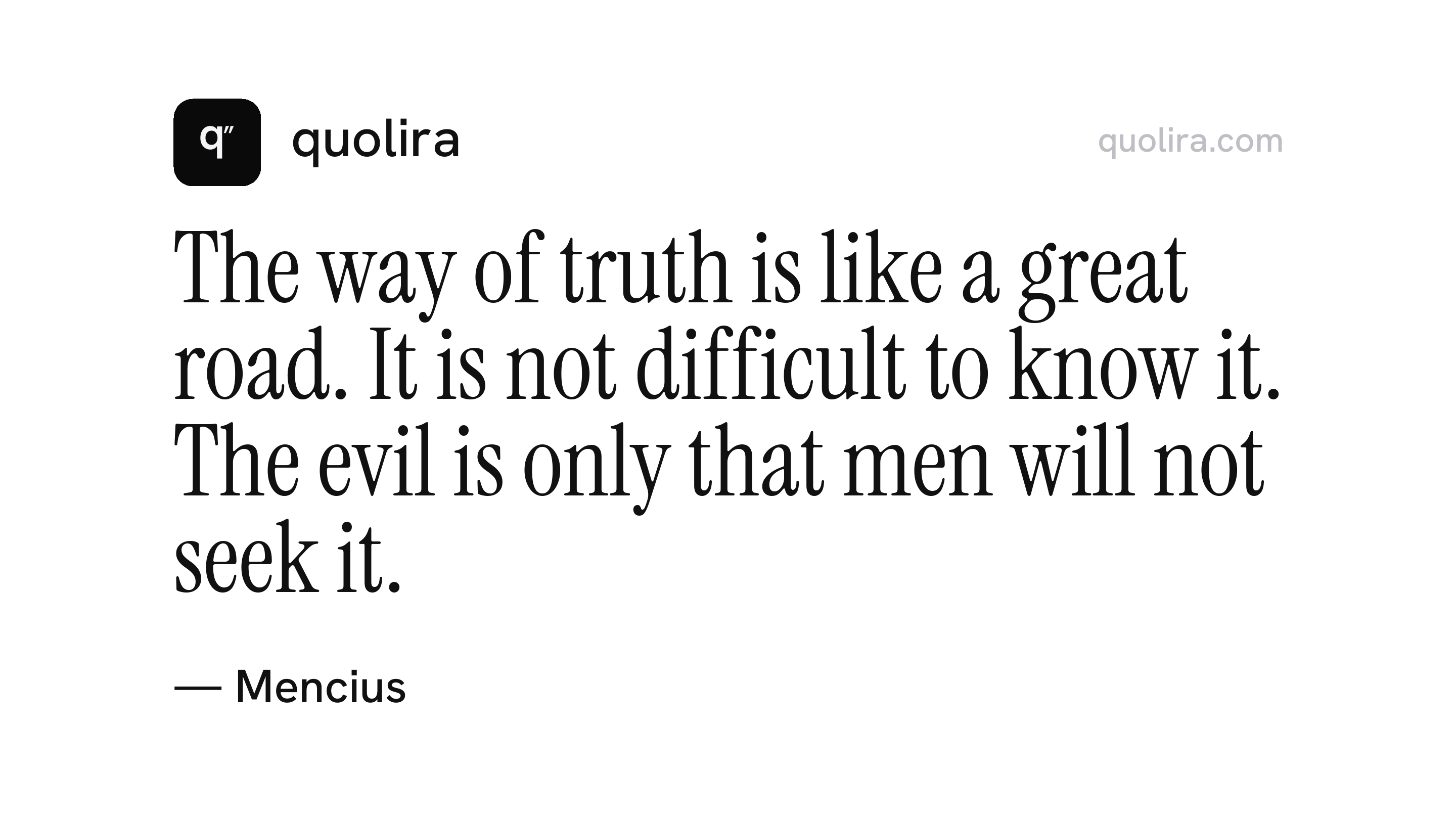
“The way of truth is like a great road. It is not difficult to know it. The evil is only that men will not seek it.”
Mencius · Mencius, Book VI B