“Music is not something you create. It is something you discover.”
Ryuichi Sakamoto
 quolira
.com
quolira
quolira.com
Sakamoto is not expressing despair here so much as a desire for a particular kind of stillness at the end of life. Water is clear, without agenda, and takes the shape of whatever holds it. To feel like water is to be free of tension, resistance, and accumulated emotion. He seems to be saying that the ideal moment of departure would be one of pure transparency, where nothing clings and nothing is left unresolved. It is a remarkably calm image of mortality, more meditative than morbid.
This remark comes from an interview Sakamoto gave in 2017. By that point he had lived through a serious illness and spoken publicly about his relationship with mortality on more than one occasion. The image of water had significance for him in a broader sense, as stillness, flow, and the qualities of natural sound were recurring concerns in his later musical work. The comment feels consistent with a sensibility shaped by years of attending to the quieter registers of experience, the kind of listening that defines much of his later output.
Ryuichi Sakamoto was a Japanese musician and composer who worked across an extraordinary range of styles and contexts throughout his career, from electronic pop in the late 1970s with the Yellow Magic Orchestra to deeply spare solo piano work and film scoring. He was widely respected for his curiosity, his commitment to experimentation, and his willingness to move across boundaries between popular and classical music. He died in March 2023. His final albums were understood by many listeners as a conscious meditation on impermanence and the act of leaving something behind.
“Music is not something you create. It is something you discover.”
Ryuichi Sakamoto
“When you have faults, do not fear to abandon them.”
Confucius · The Analects, Book I
“The superior man is satisfied and composed; the mean man is always full of distress.”
Confucius · The Analects, Book VII
“Our greatest glory is not in never falling, but in rising every time we fall.”
Confucius · Widely attributed to Confucius
“He who learns but does not think is lost. He who thinks but does not learn is in great danger.”
Confucius · The Analects, Book II
“Learning without thought is labor lost; thought without learning is perilous.”
Confucius · The Analects, Book II, c. 5th century BCE
“When you know that a thing is wrong, be quick to change. Do not wait.”
Mencius · Mencius, Book II A
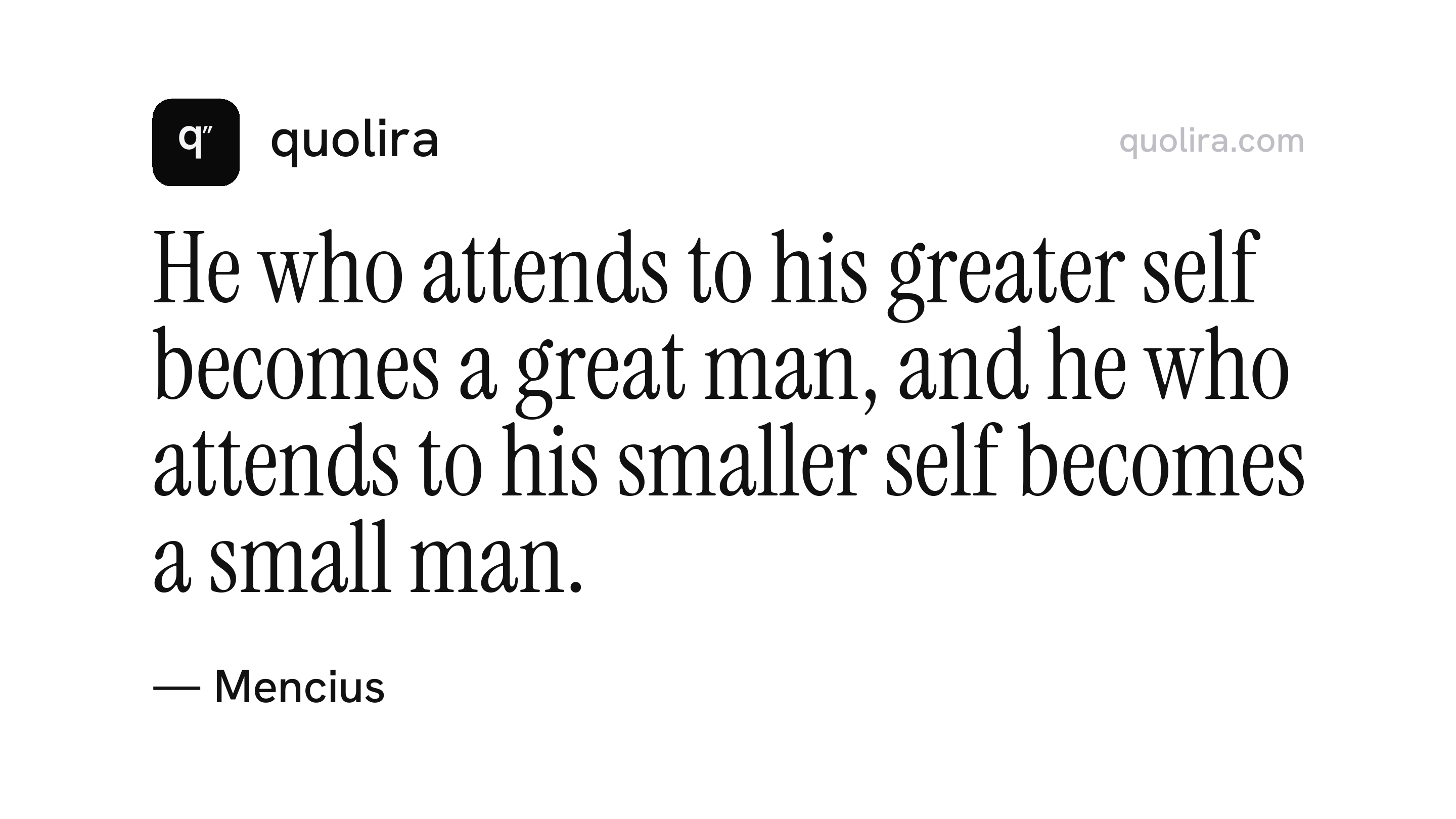
“He who attends to his greater self becomes a great man, and he who attends to his smaller self becomes a small man.”
Mencius · Mencius, Book VI A
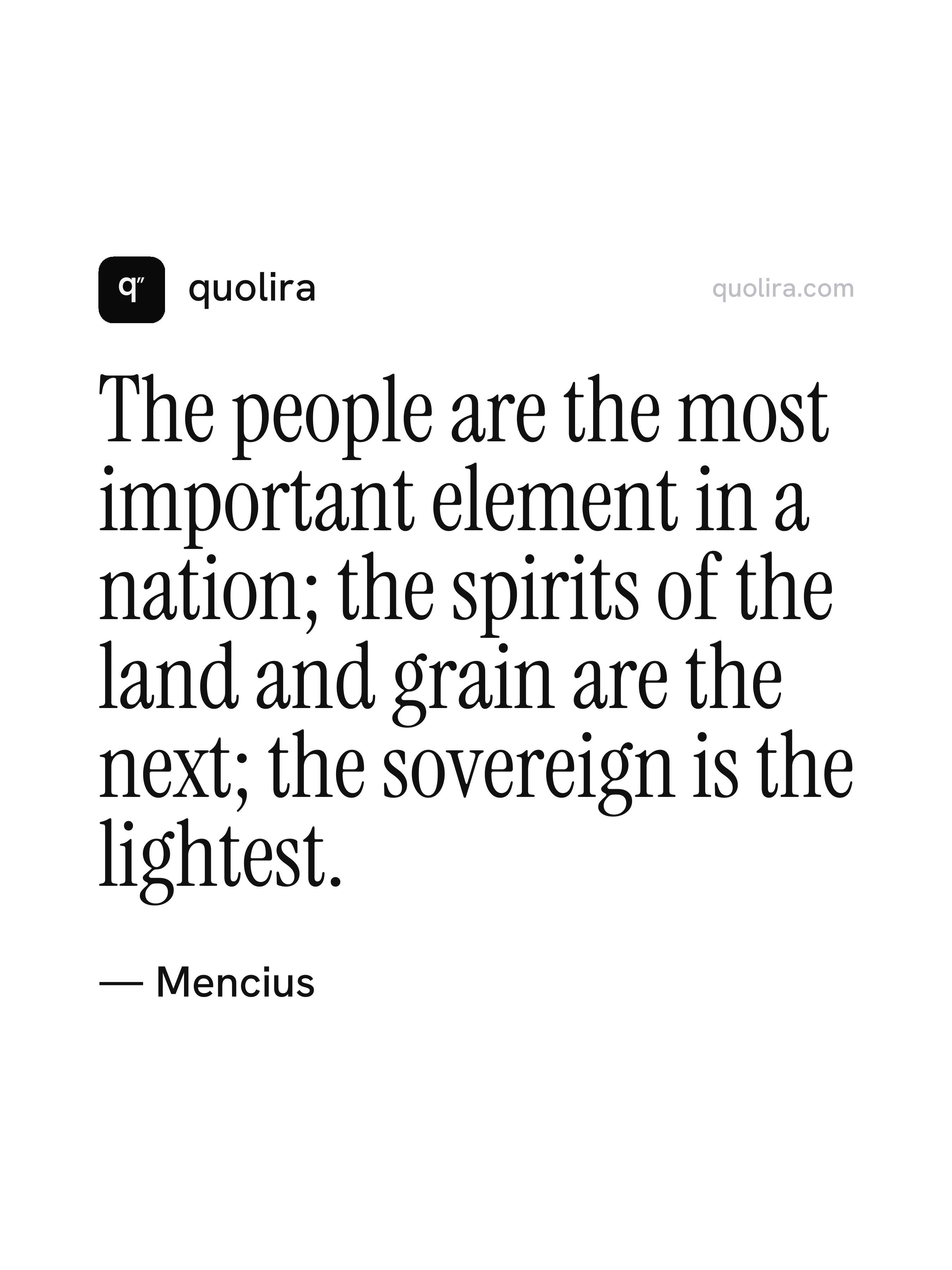
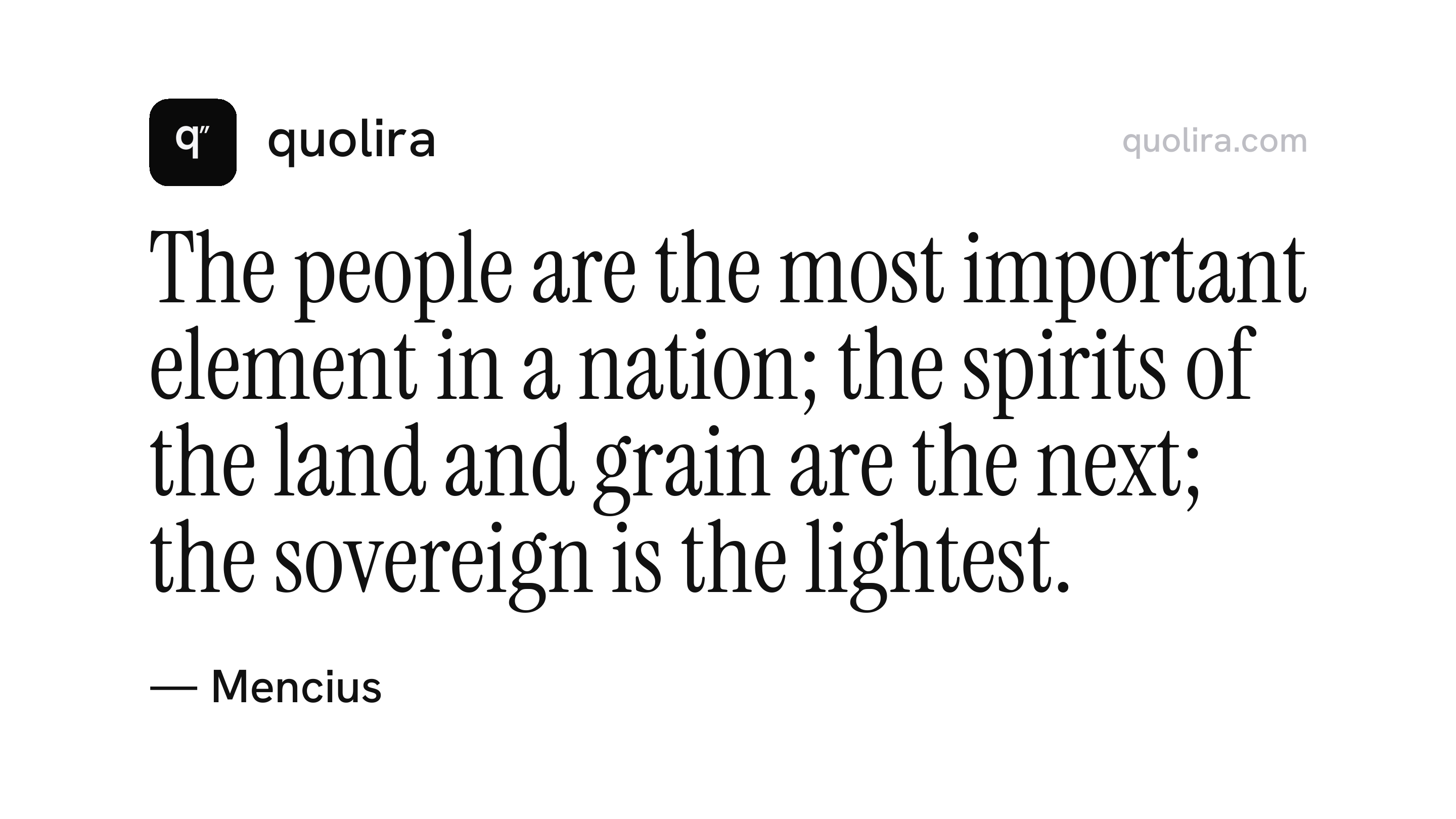
“The people are the most important element in a nation; the spirits of the land and grain are the next; the sovereign is the lightest.”
Mencius · Mencius, Book VII B
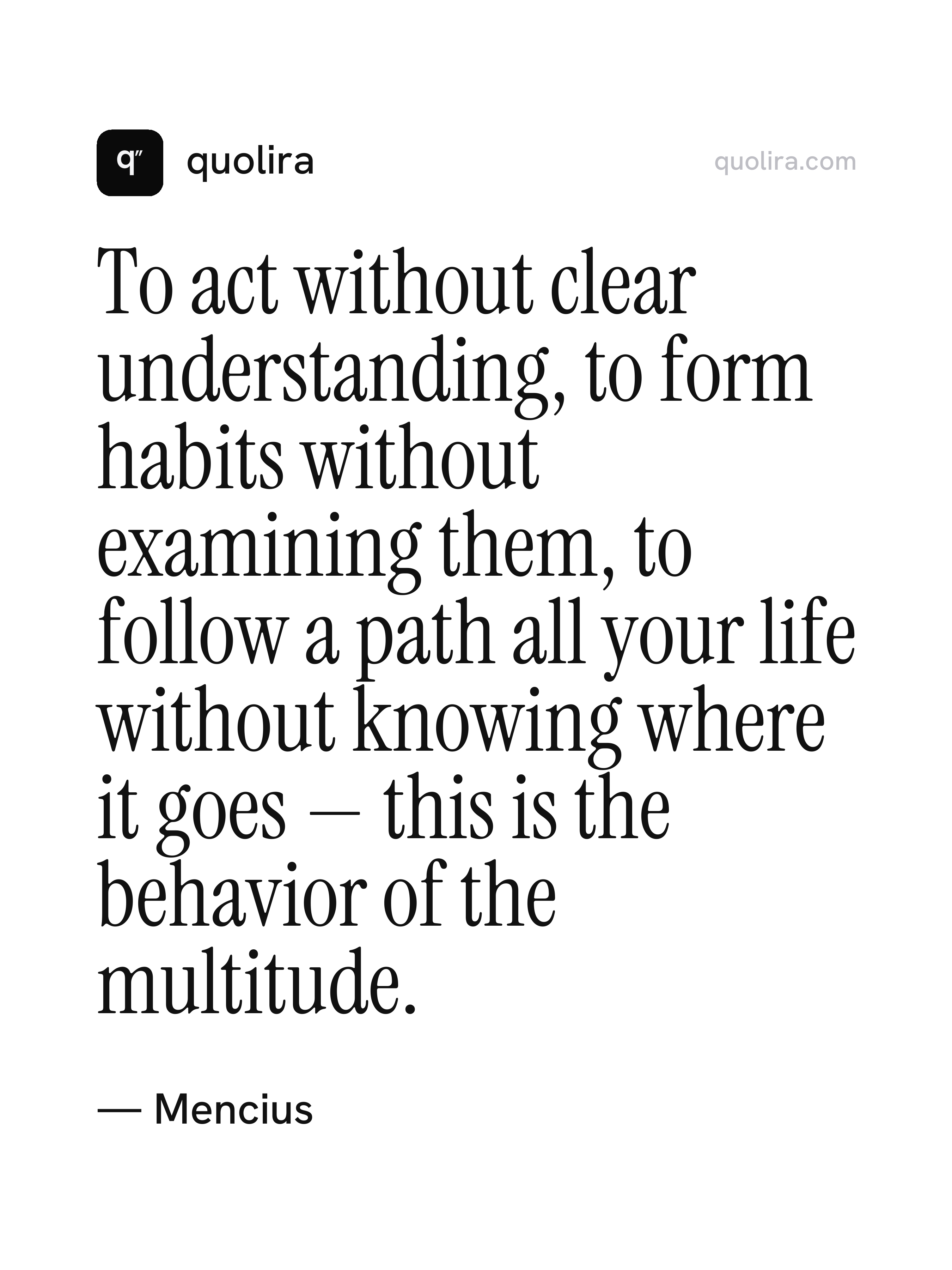
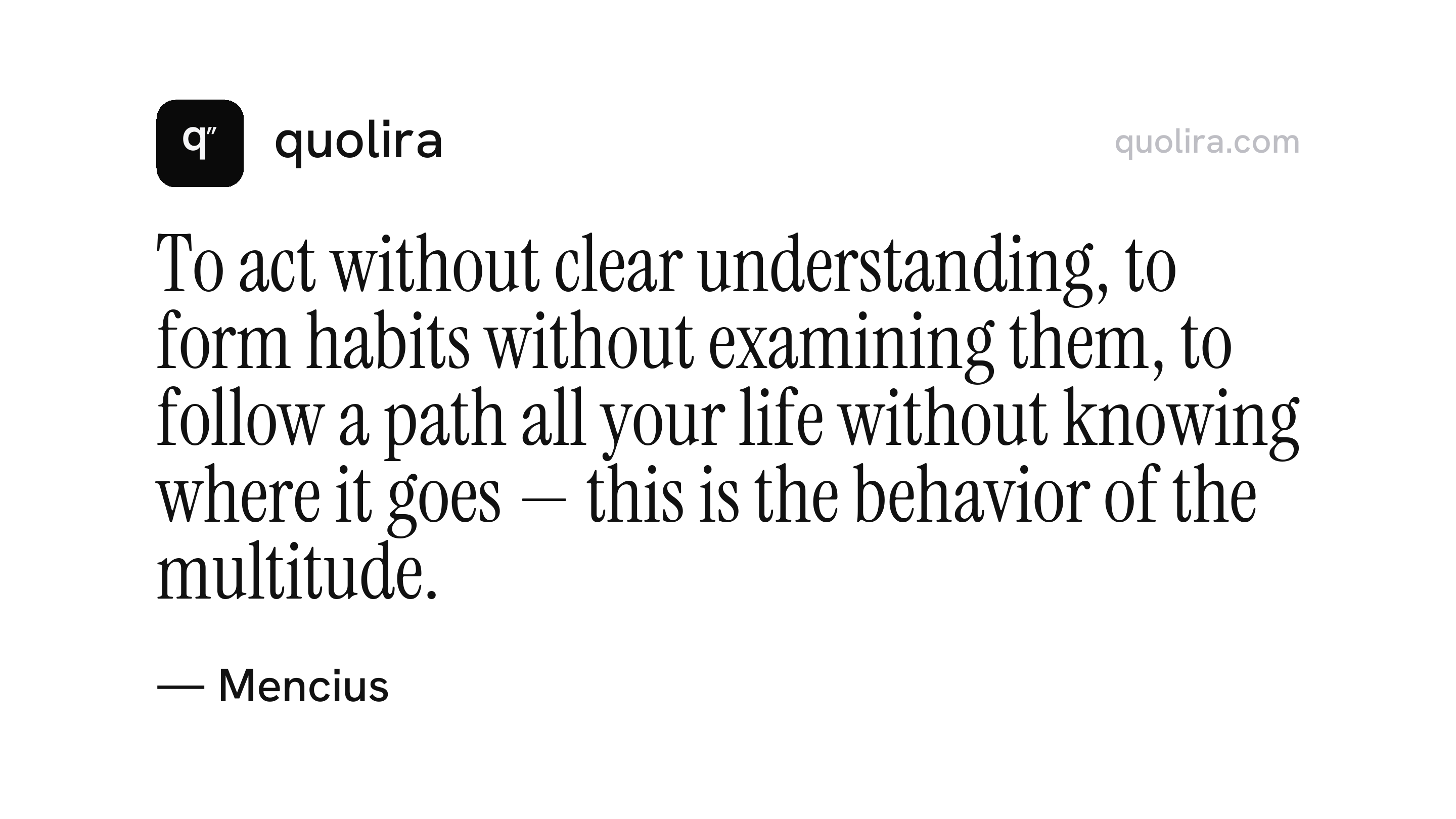
“To act without clear understanding, to form habits without examining them, to follow a path all your life without knowing where it goes — this is the behavior of the multitude.”
Mencius · Mencius, Book VII A
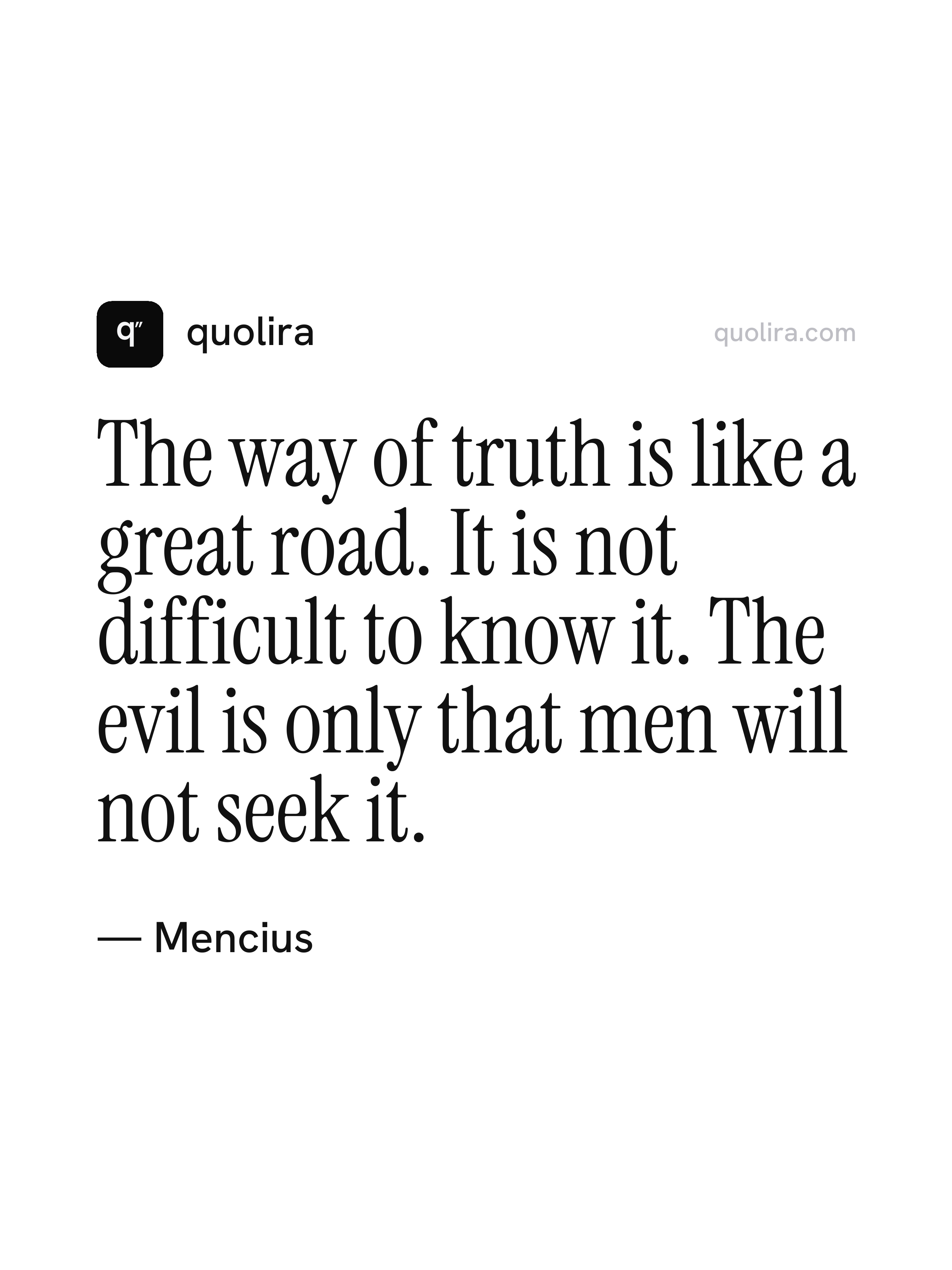
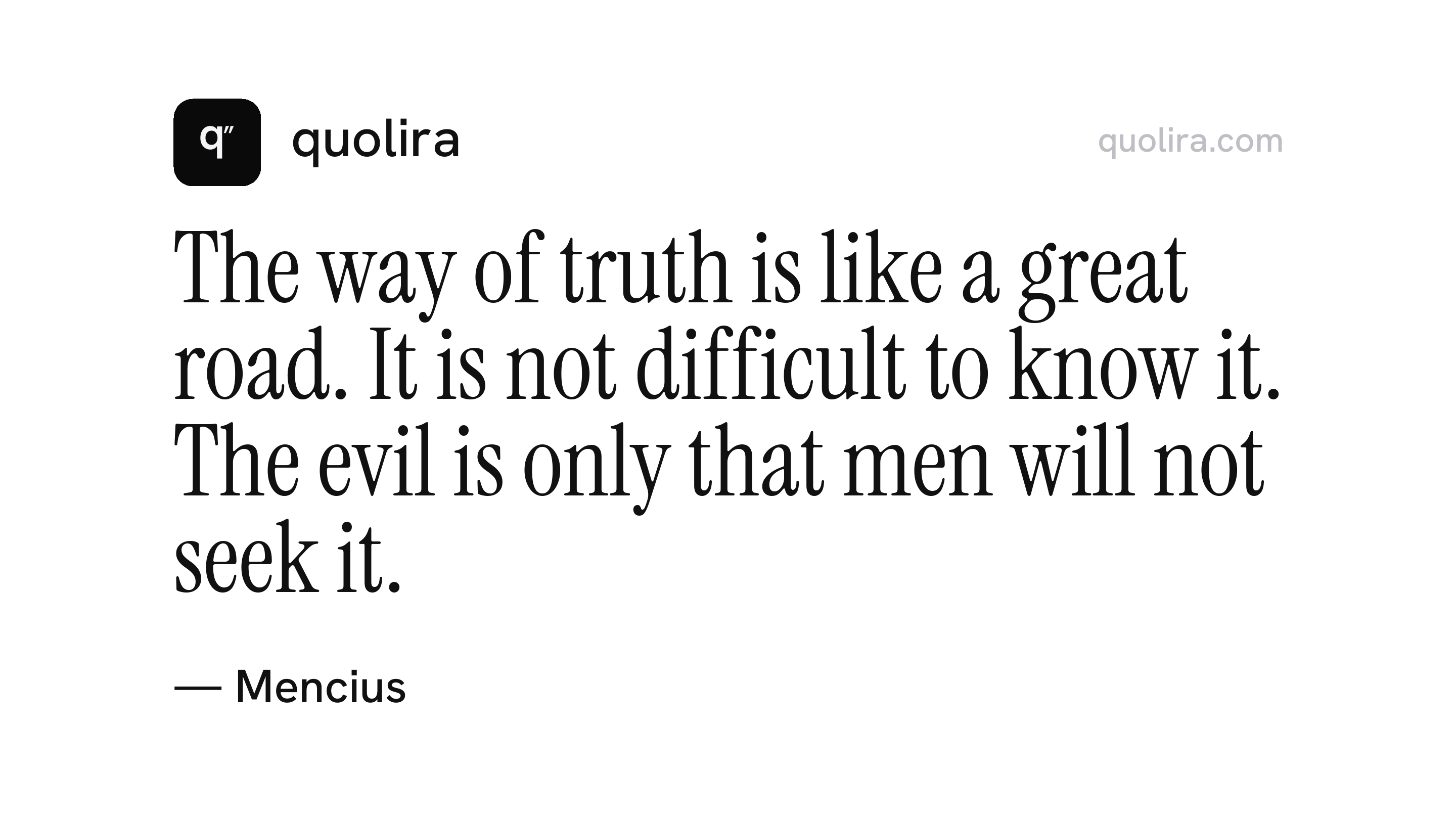
“The way of truth is like a great road. It is not difficult to know it. The evil is only that men will not seek it.”
Mencius · Mencius, Book VI B
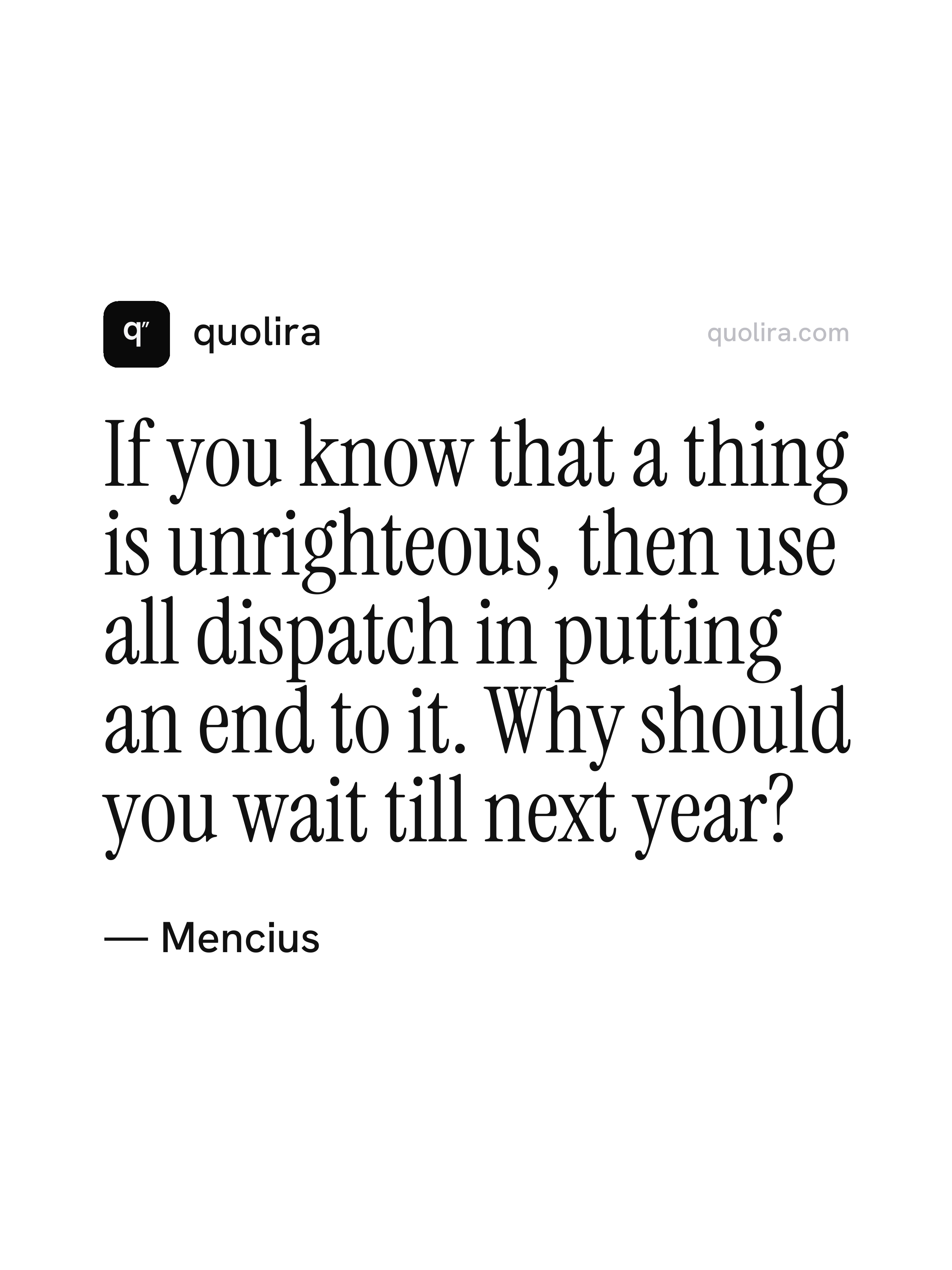
“If you know that a thing is unrighteous, then use all dispatch in putting an end to it. Why should you wait till next year?”
Mencius · Mencius, Book III B