“When you have faults, do not fear to abandon them.”
Confucius · The Analects, Book I
 quolira
.com
quolira
quolira.com
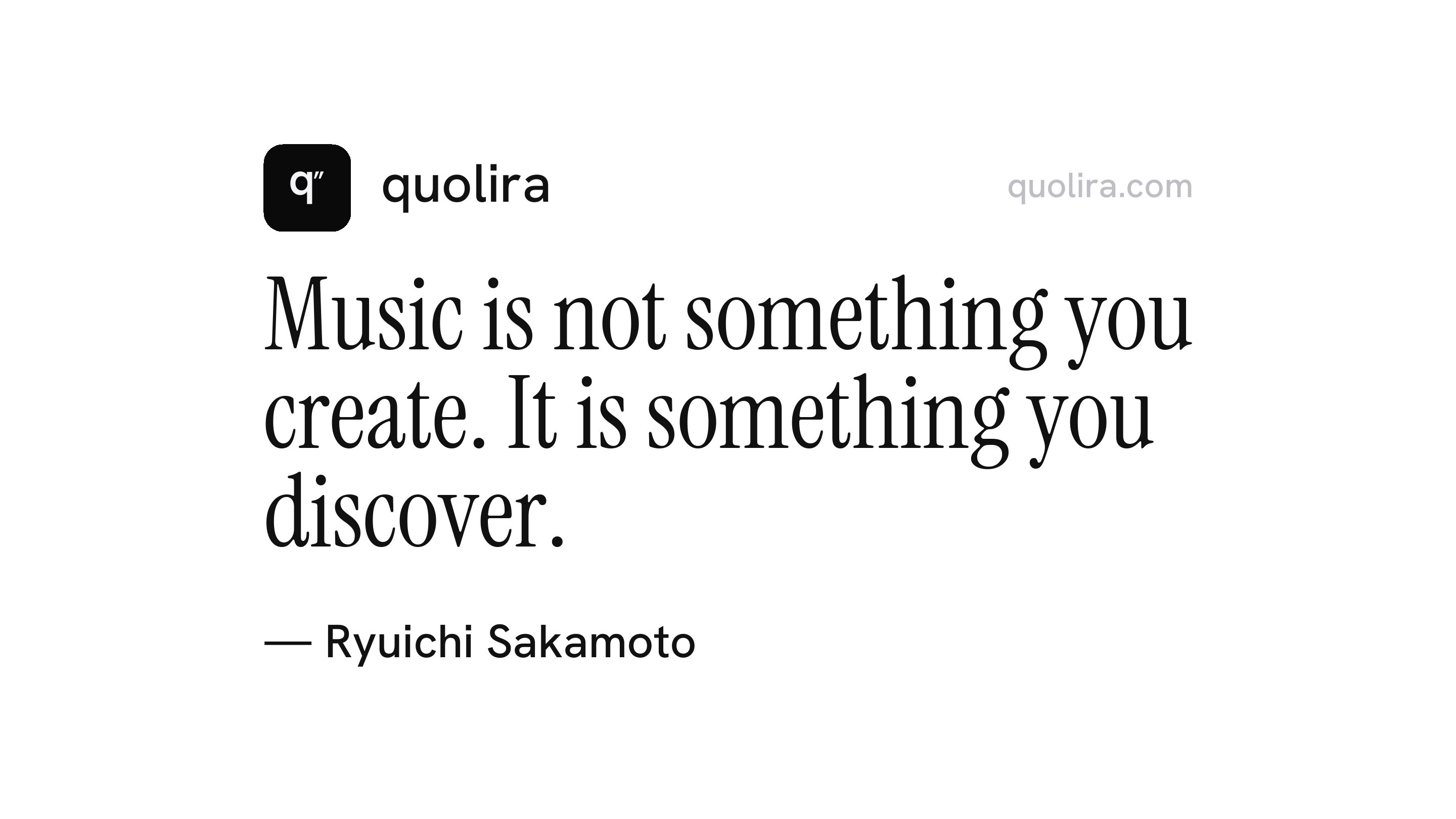
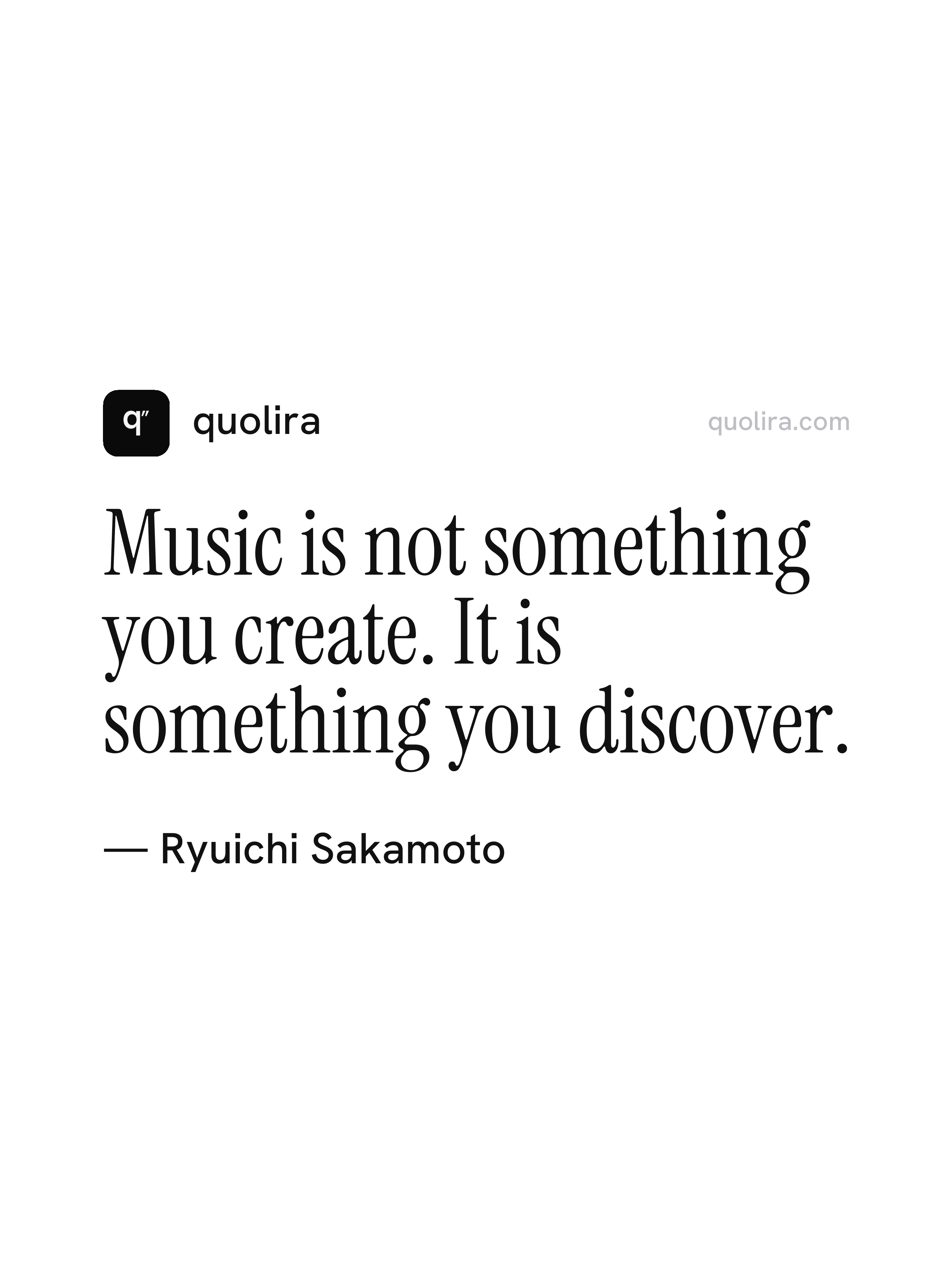
Sakamoto is drawing a distinction between creative will and receptive attention. Framing music as something discovered rather than made suggests that the composer's real task is not to impose ideas onto sound but to listen carefully enough to find what is already present, waiting to be heard. This is a humble and almost spiritual view of artistic work, one that places the composer in service to something larger than personal expression. It implies that the best music has a kind of inevitability to it, as though it could not have been otherwise.
This idea connects to a long tradition of artists and thinkers who describe their best work as something that arrived rather than something they engineered. There is something reassuring in the suggestion that creation is not purely a matter of will or talent, but also of openness and patience. For anyone who has struggled to force a piece of work and then found it came easily once they stopped pushing, the sentiment rings immediately true. It reframes the anxiety of the blank page as a question of readiness rather than ability.
This line works well as a prompt for reflection before beginning any creative project, a reminder to approach the work with curiosity rather than pressure. It fits naturally into conversations about the nature of creativity, artistic process, or the relationship between effort and surrender. Share it when someone is stuck or overthinking, as an invitation to listen and observe rather than to manufacture. It is equally at home in a journal, a studio, or the opening of a talk about art or music.
“When you have faults, do not fear to abandon them.”
Confucius · The Analects, Book I
“The superior man is satisfied and composed; the mean man is always full of distress.”
Confucius · The Analects, Book VII
“Our greatest glory is not in never falling, but in rising every time we fall.”
Confucius · Widely attributed to Confucius
“He who learns but does not think is lost. He who thinks but does not learn is in great danger.”
Confucius · The Analects, Book II
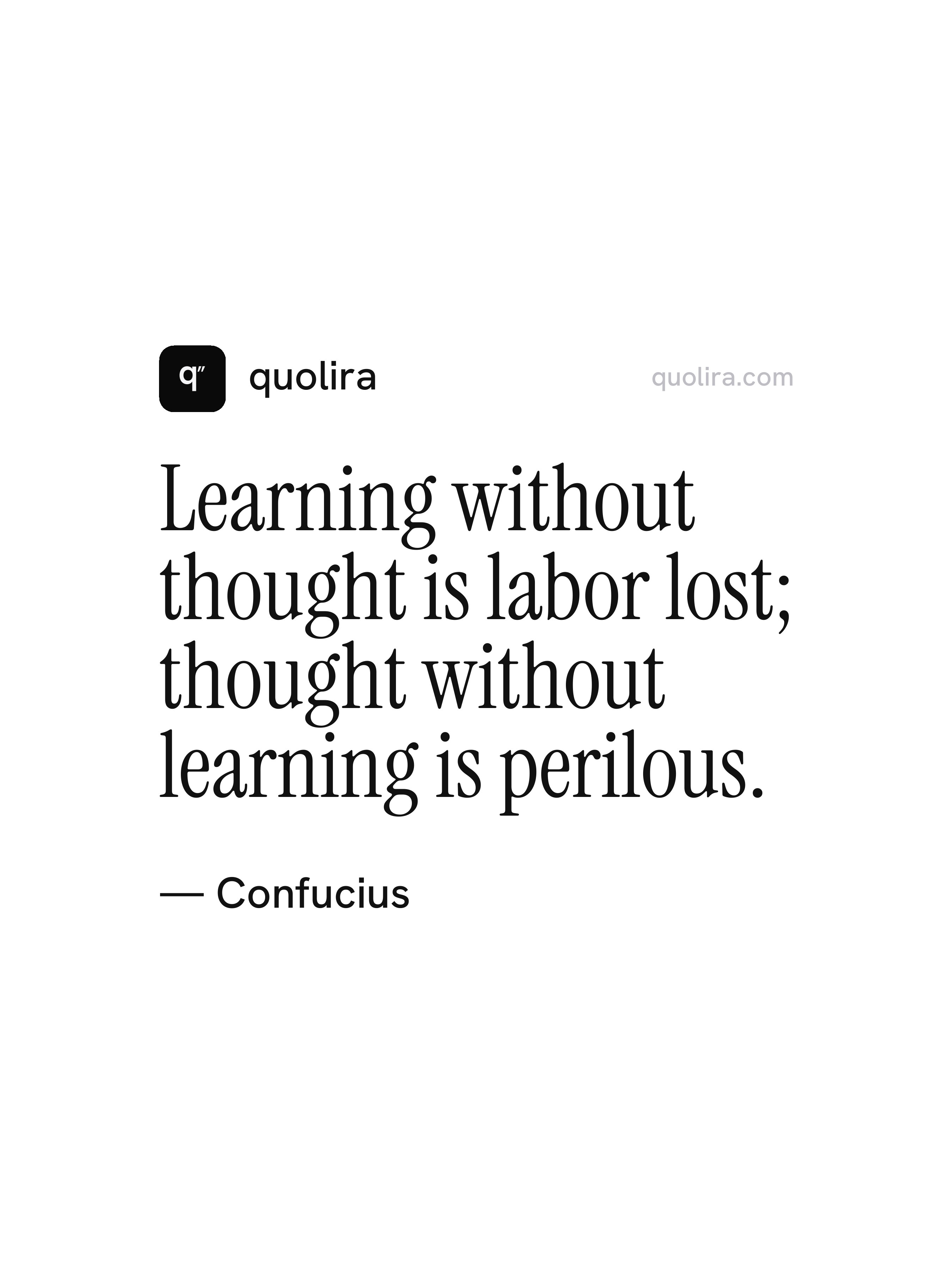
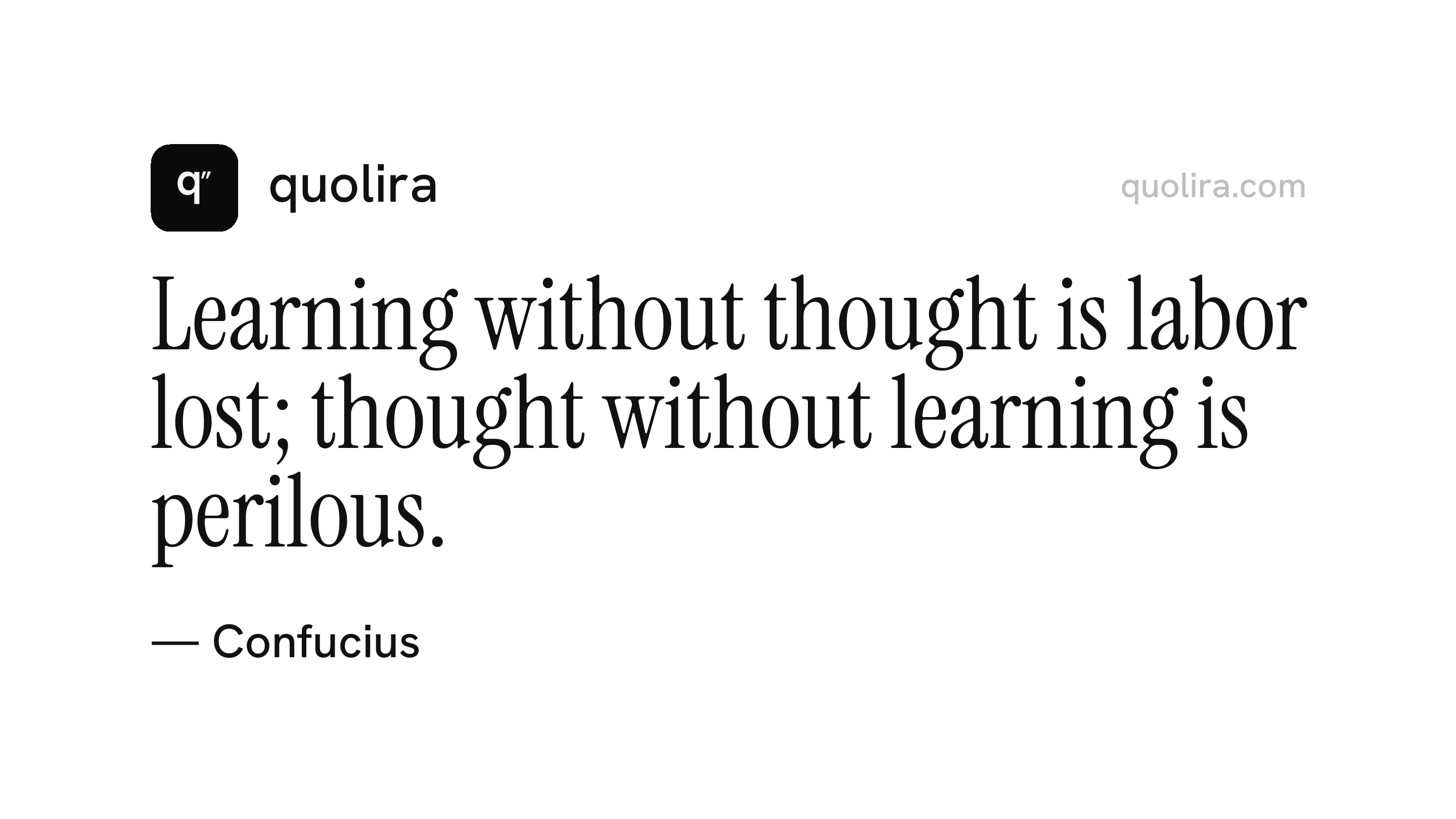
“Learning without thought is labor lost; thought without learning is perilous.”
Confucius · The Analects, Book II, c. 5th century BCE
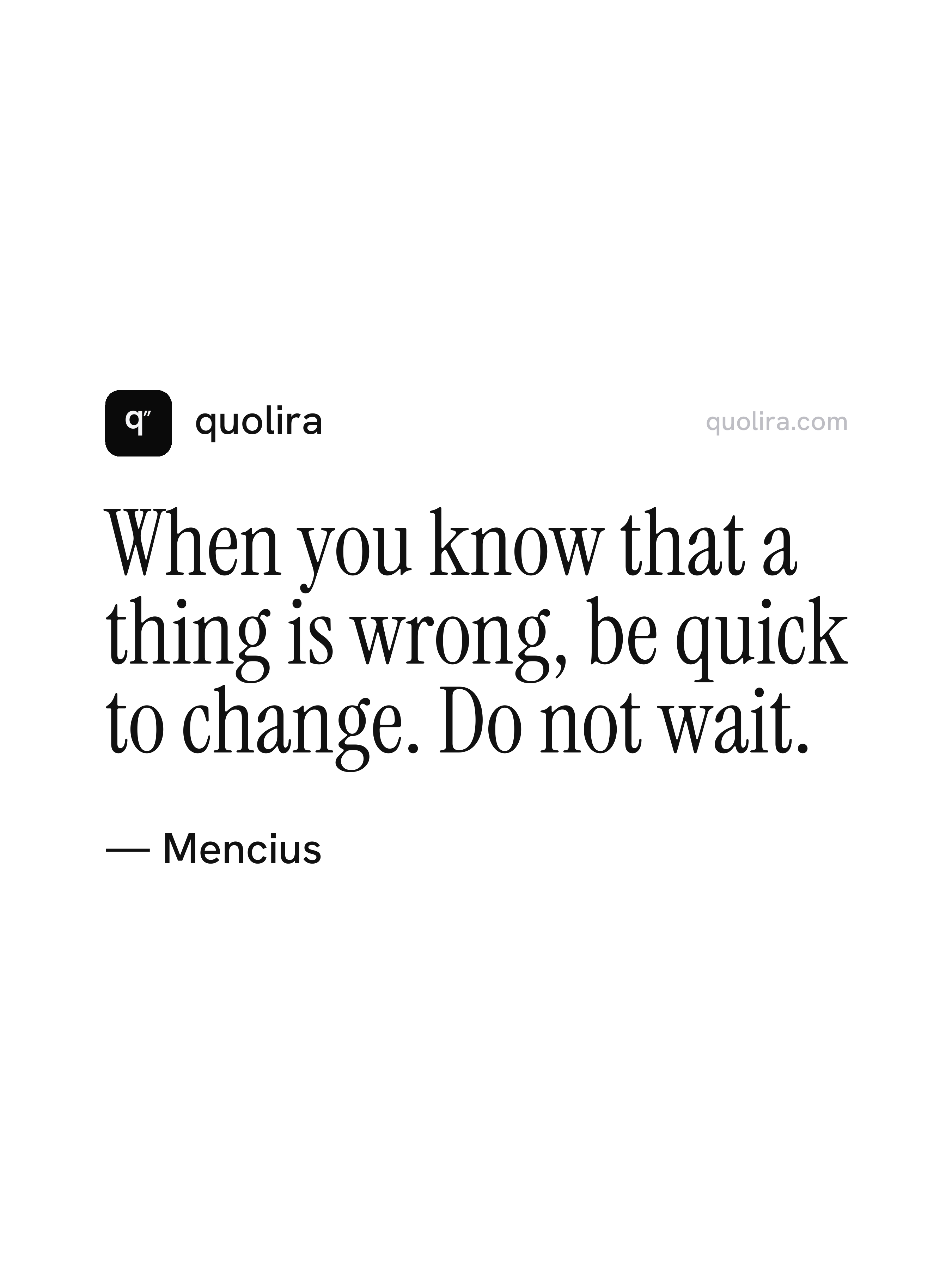
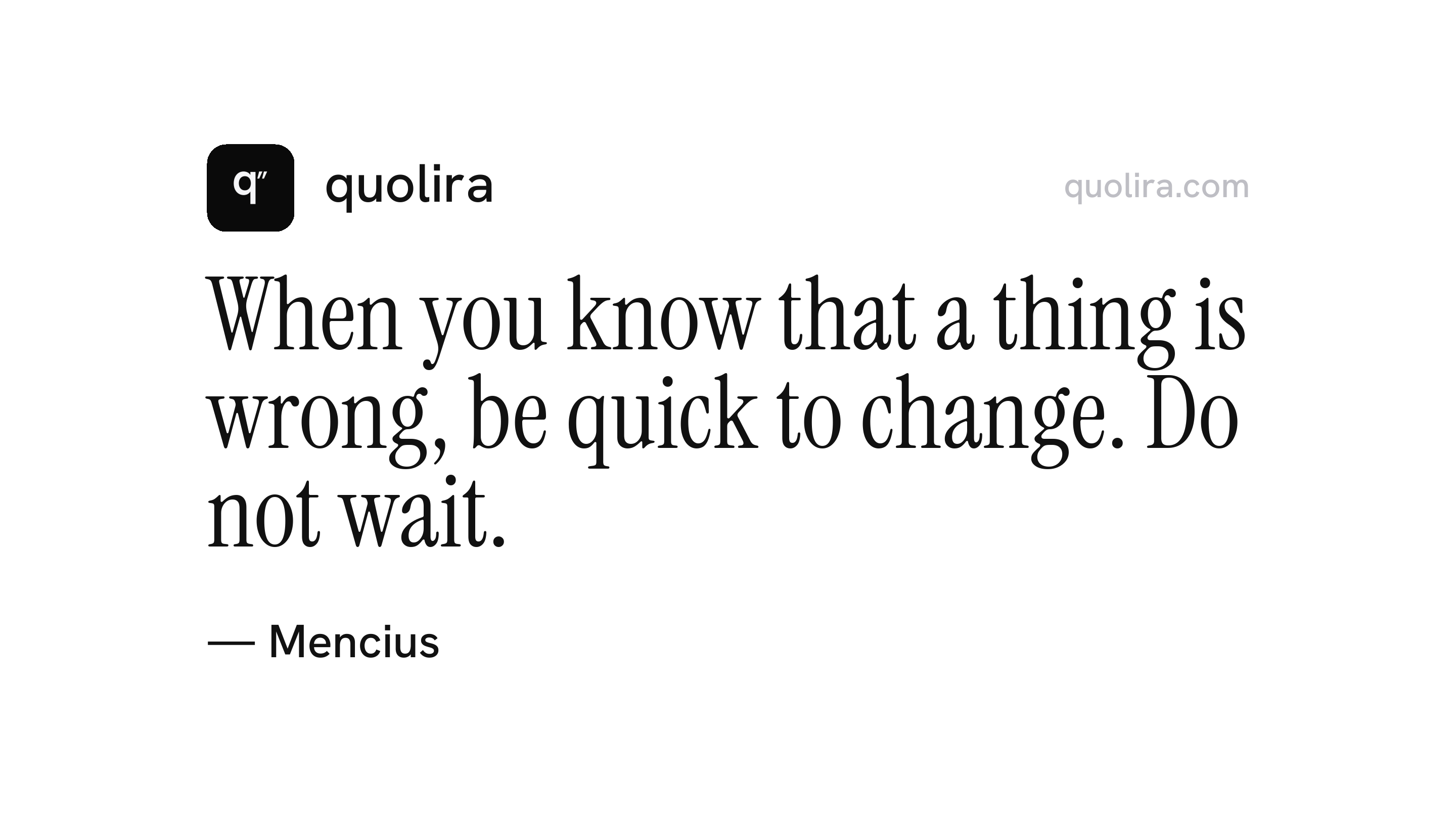
“When you know that a thing is wrong, be quick to change. Do not wait.”
Mencius · Mencius, Book II A
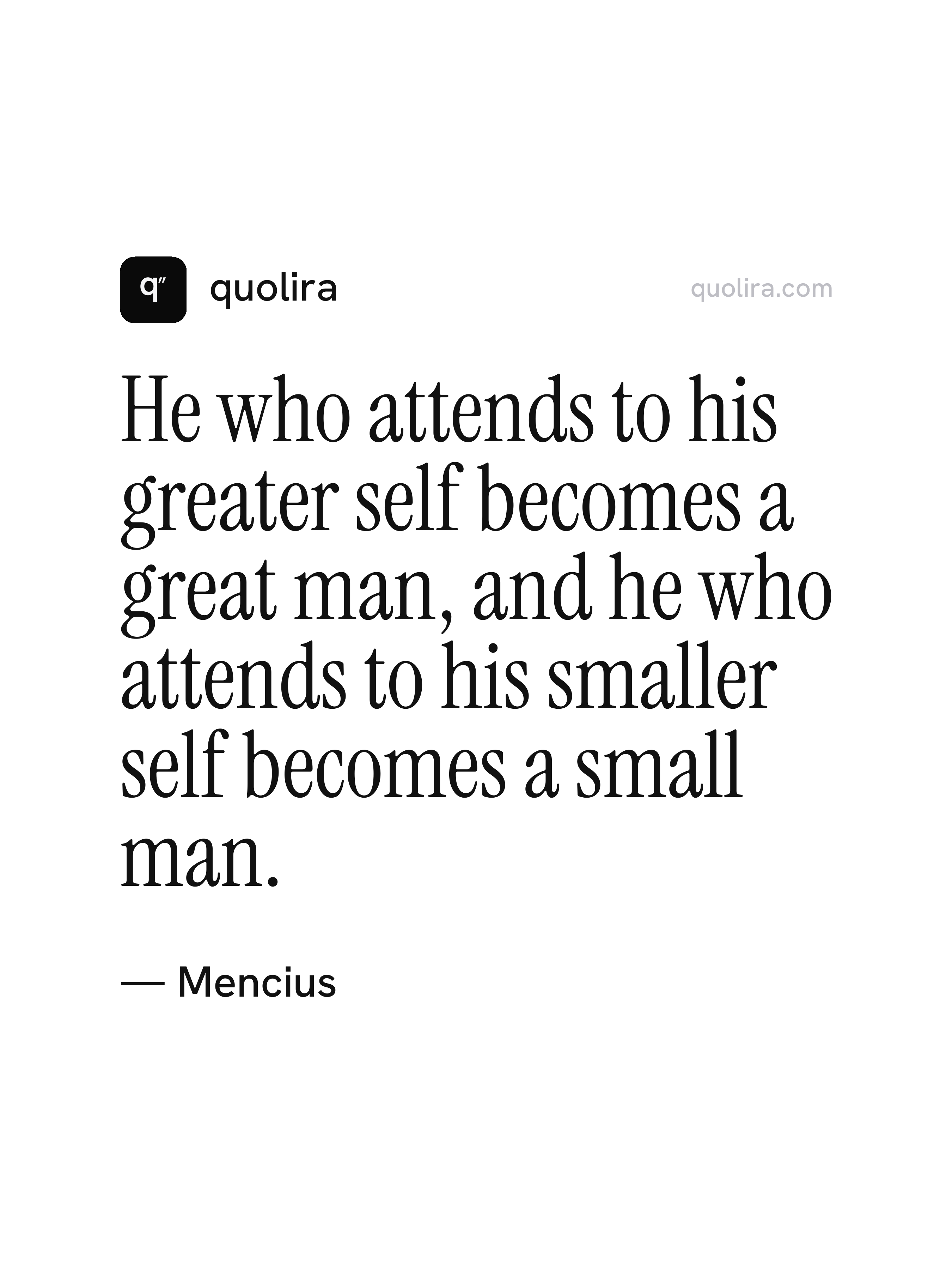
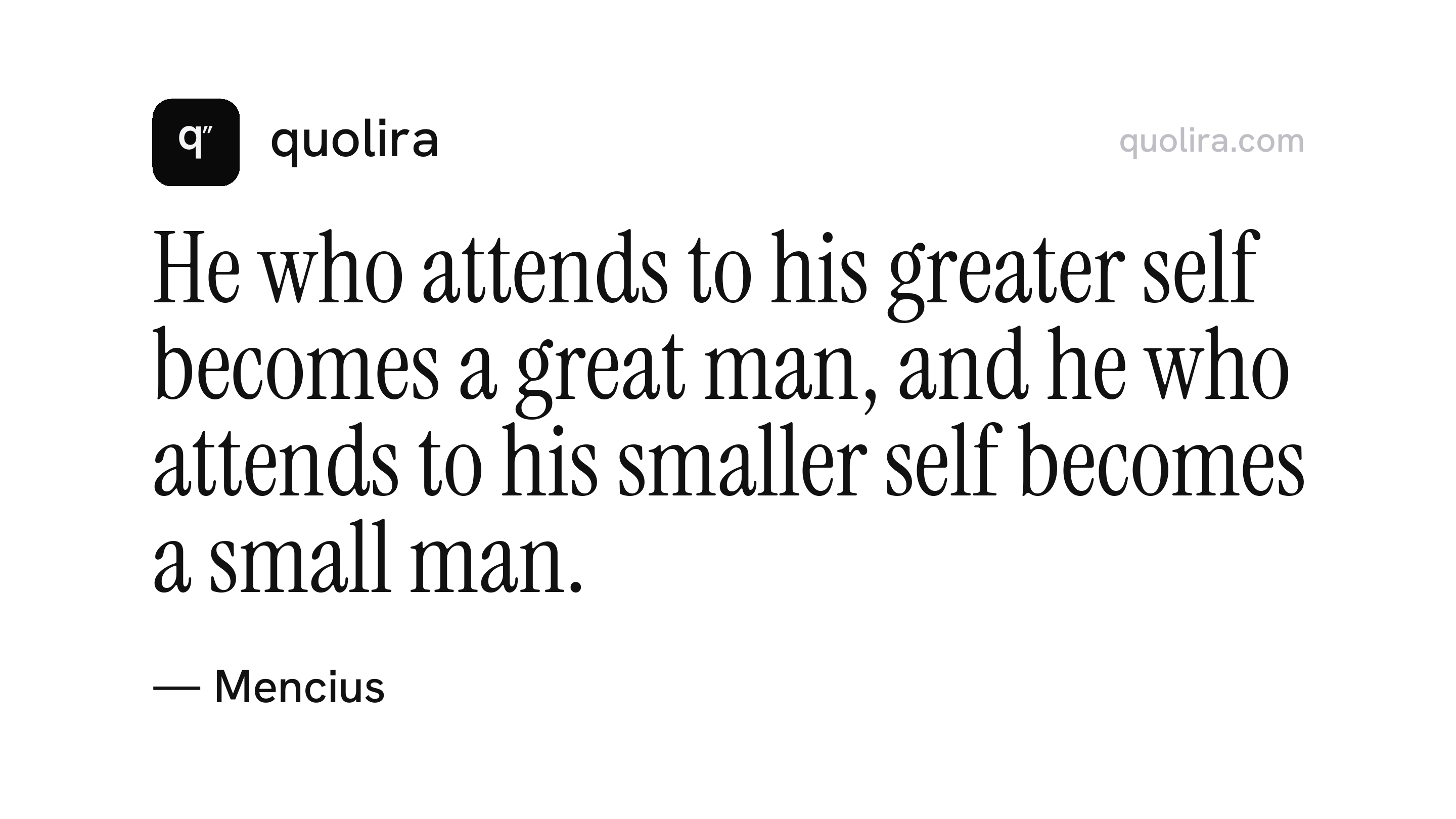
“He who attends to his greater self becomes a great man, and he who attends to his smaller self becomes a small man.”
Mencius · Mencius, Book VI A
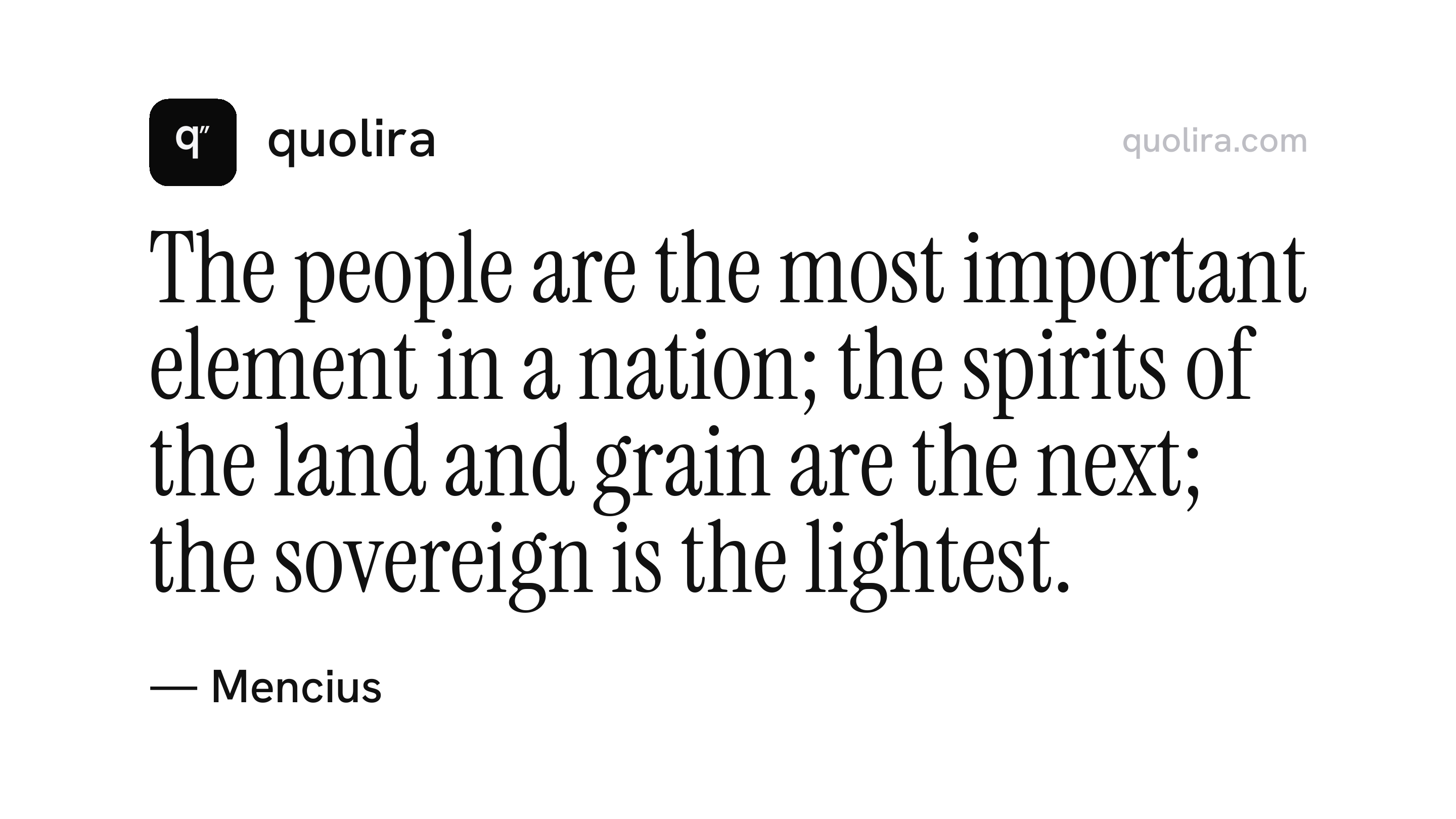
“The people are the most important element in a nation; the spirits of the land and grain are the next; the sovereign is the lightest.”
Mencius · Mencius, Book VII B
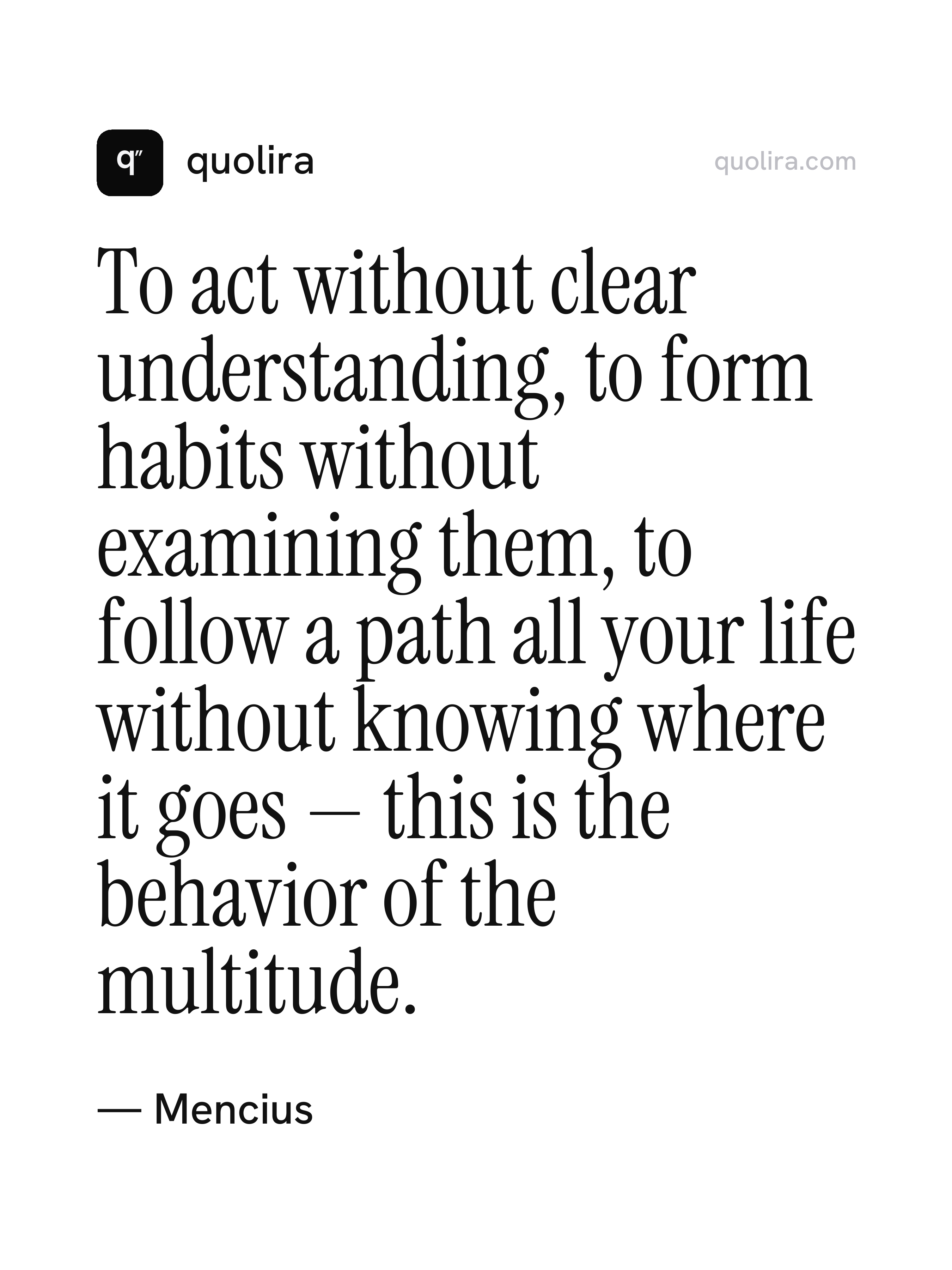
“To act without clear understanding, to form habits without examining them, to follow a path all your life without knowing where it goes — this is the behavior of the multitude.”
Mencius · Mencius, Book VII A
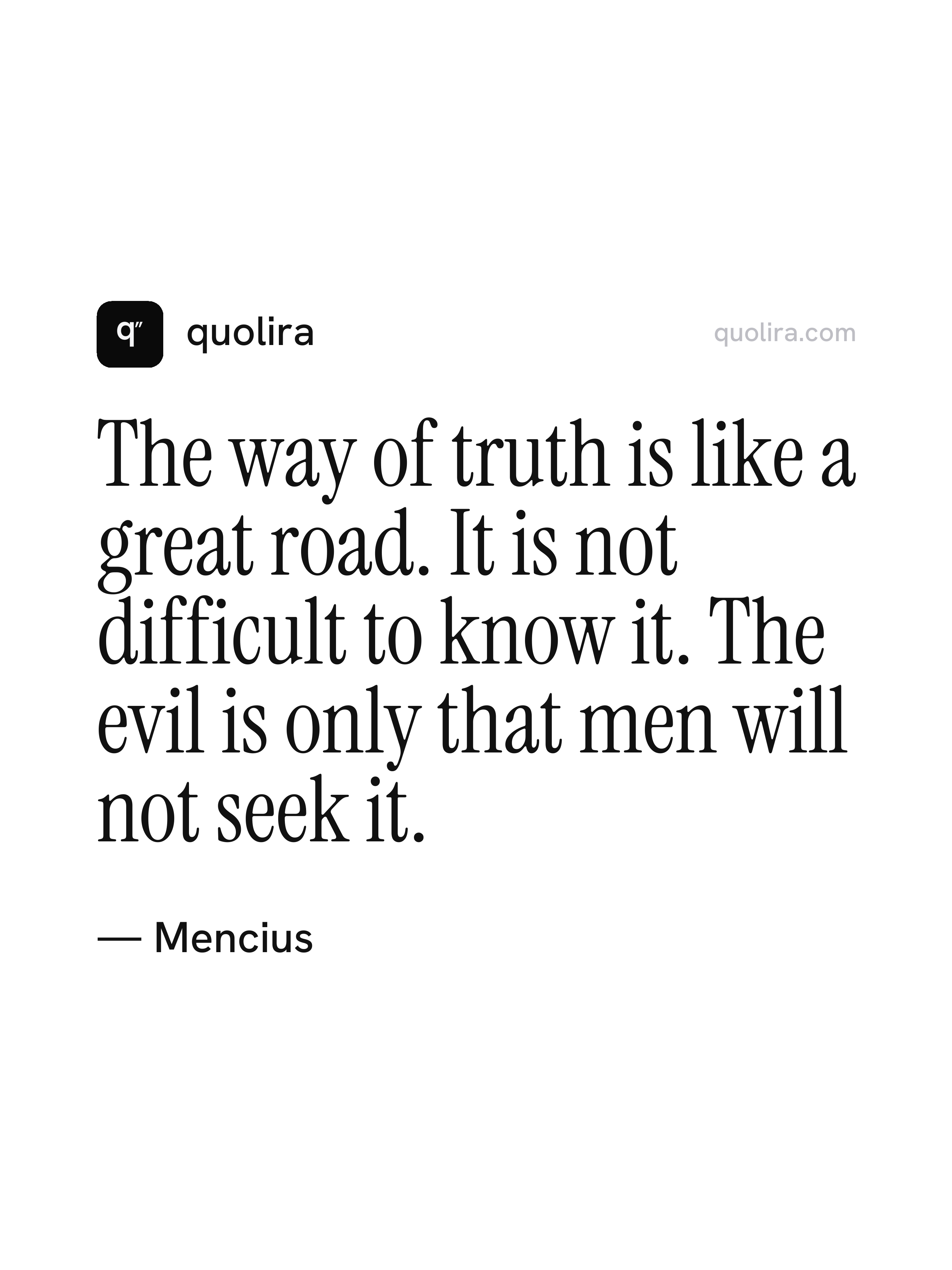
“The way of truth is like a great road. It is not difficult to know it. The evil is only that men will not seek it.”
Mencius · Mencius, Book VI B
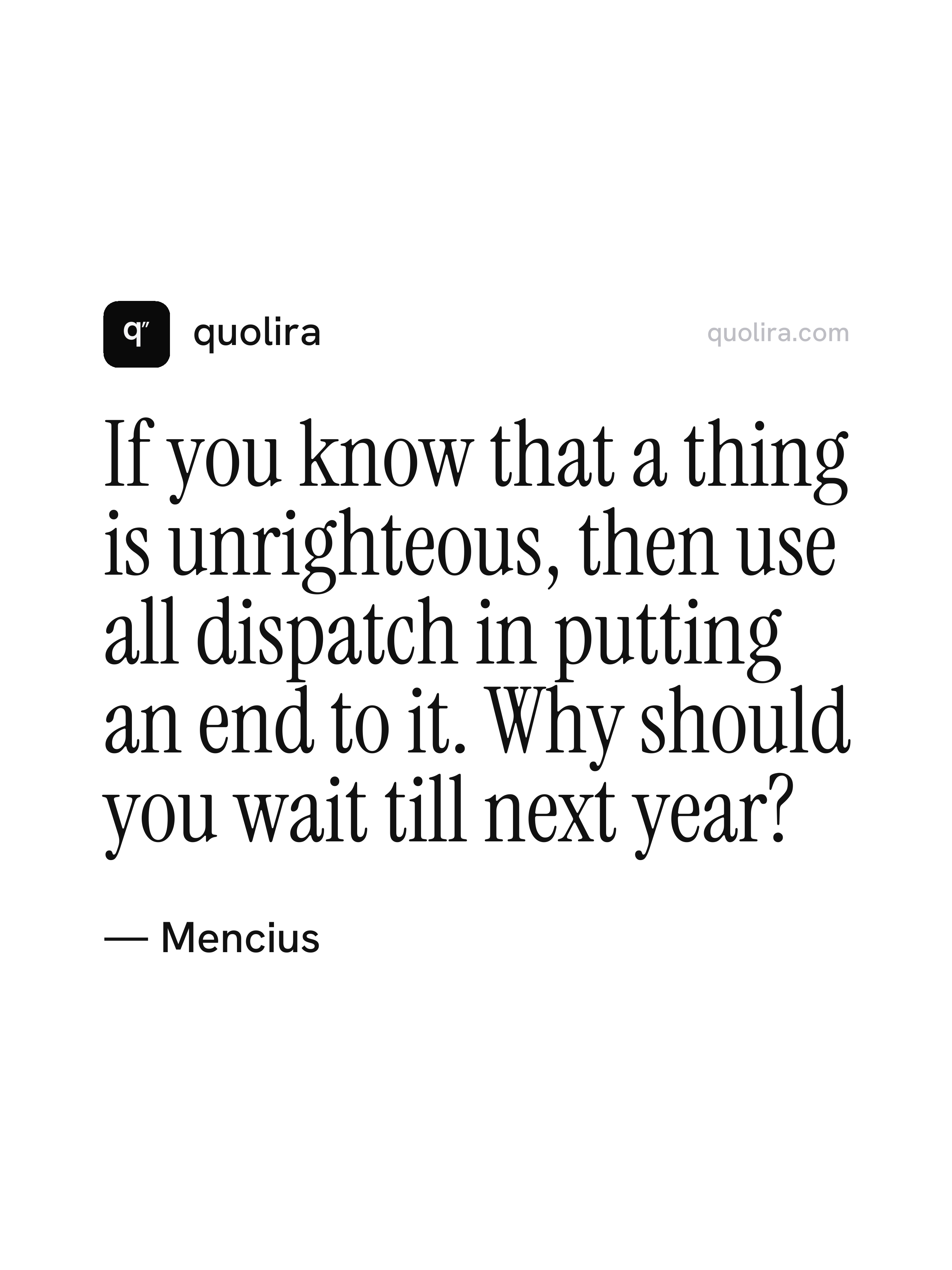
“If you know that a thing is unrighteous, then use all dispatch in putting an end to it. Why should you wait till next year?”
Mencius · Mencius, Book III B
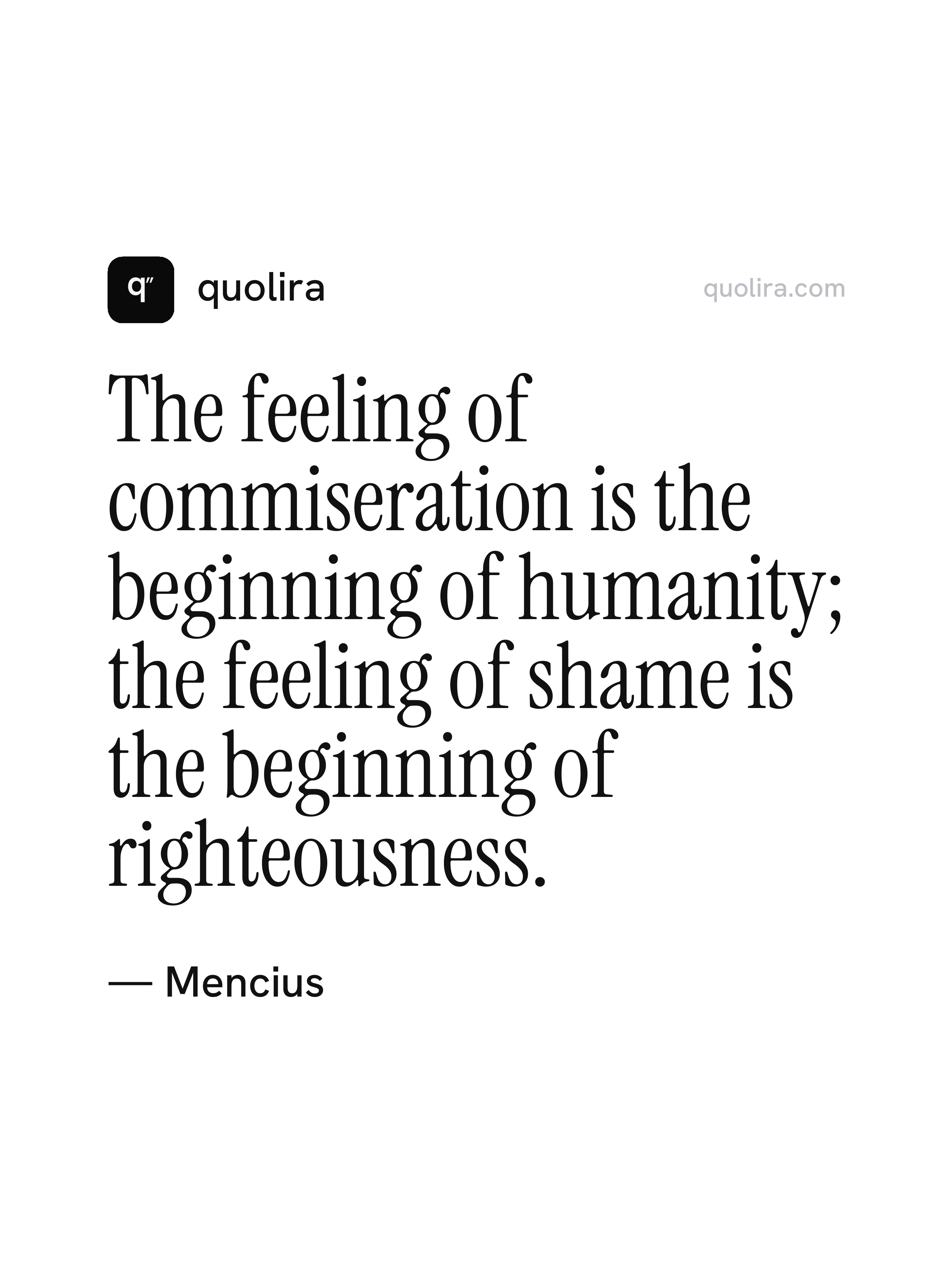
“The feeling of commiseration is the beginning of humanity; the feeling of shame is the beginning of righteousness.”
Mencius · Mencius, Book II A