“Once upon a time there was a boy who loved a girl, and her laughter was a question he wanted to spend his whole life answering.”
Nicole Krauss · The History of Love, 2005
 quolira
.com
quolira
quolira.com
This line draws a quiet but striking contrast between passionate longing and complete indifference. Dickinson suggests that the heart operates in extremes: it either fixes on something with total intensity or feels nothing at all toward it. There is no lukewarm middle ground. The phrasing has the feel of an observation discovered through experience rather than reasoned out, which gives it an honest, almost reluctant quality, as though the speaker is confessing something about the irrational nature of desire.
Dickinson wrote this line in a personal letter rather than in a poem, which makes it feel unusually direct and unguarded. Her letters were often as carefully crafted as her verse, and this sentence has a compact, epigrammatic quality that her readers have long admired. The line has taken on a life far beyond its original context, widely quoted as a succinct description of how desire works, appearing in essays, films, and everyday conversation. Its power lies partly in how little it explains and how much it implies.
Emily Dickinson was a nineteenth-century American poet now regarded as one of the most original voices in the English language. She lived most of her life in relative seclusion in Amherst, Massachusetts, and the vast majority of her nearly eighteen hundred poems were published only after her death. Her writing is known for its unconventional punctuation, slant rhyme, and compressed emotional intensity. She wrote extensively about love, death, nature, and the inner life, often with a sharp and unexpected clarity.
“Once upon a time there was a boy who loved a girl, and her laughter was a question he wanted to spend his whole life answering.”
Nicole Krauss · The History of Love, 2005
“I would rather share one lifetime with you than face all the ages of this world alone.”
J.R.R. Tolkien · The Lord of the Rings: The Fellowship of the Ring, 2001 film adaptation
“Whatever our souls are made of, his and mine are the same.”
Emily Bronte · Wuthering Heights, 1847
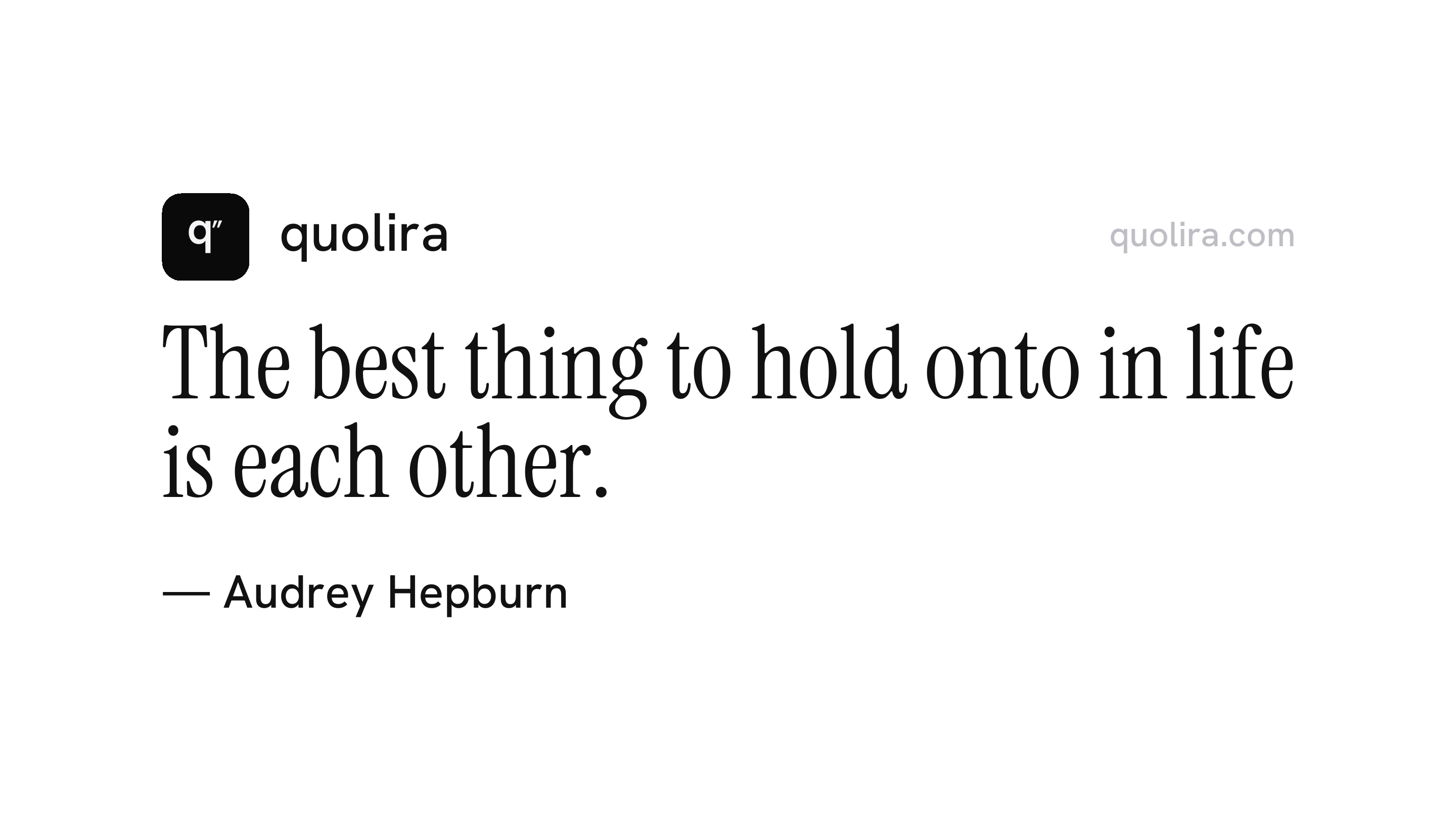
“The best thing to hold onto in life is each other.”
Audrey Hepburn
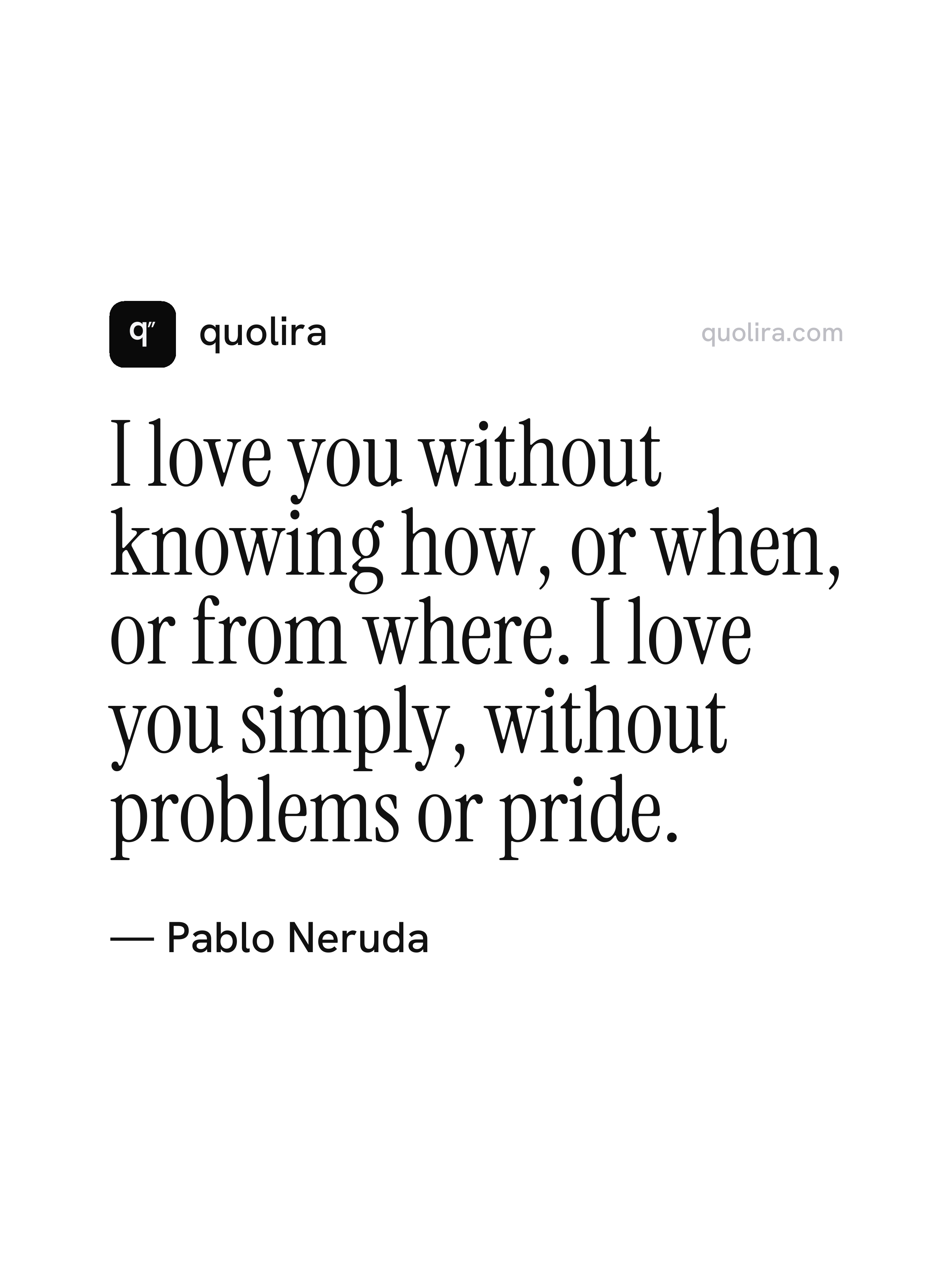
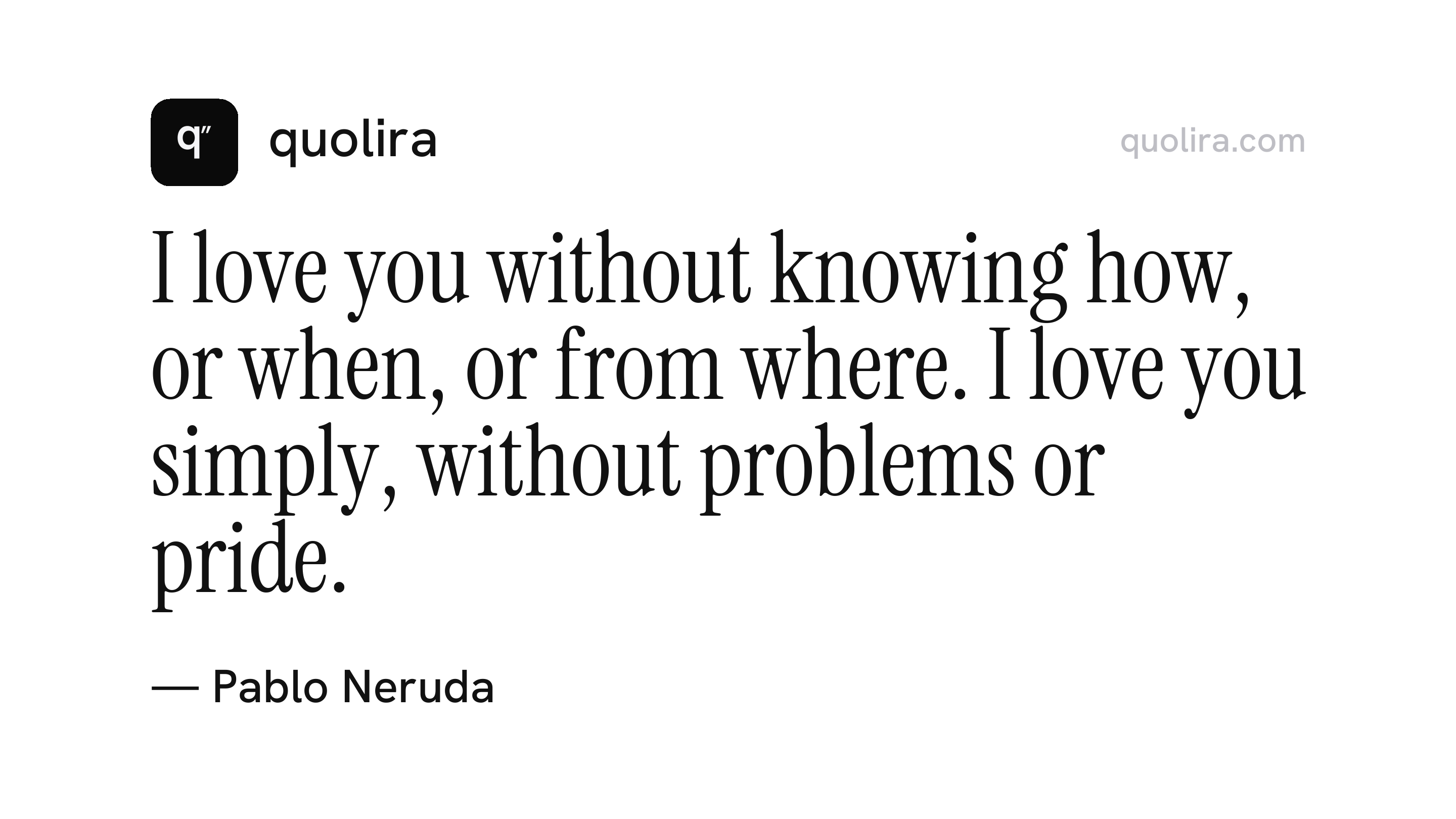
“I love you without knowing how, or when, or from where. I love you simply, without problems or pride.”
Pablo Neruda · Sonnet XVII, 100 Love Sonnets, 1960
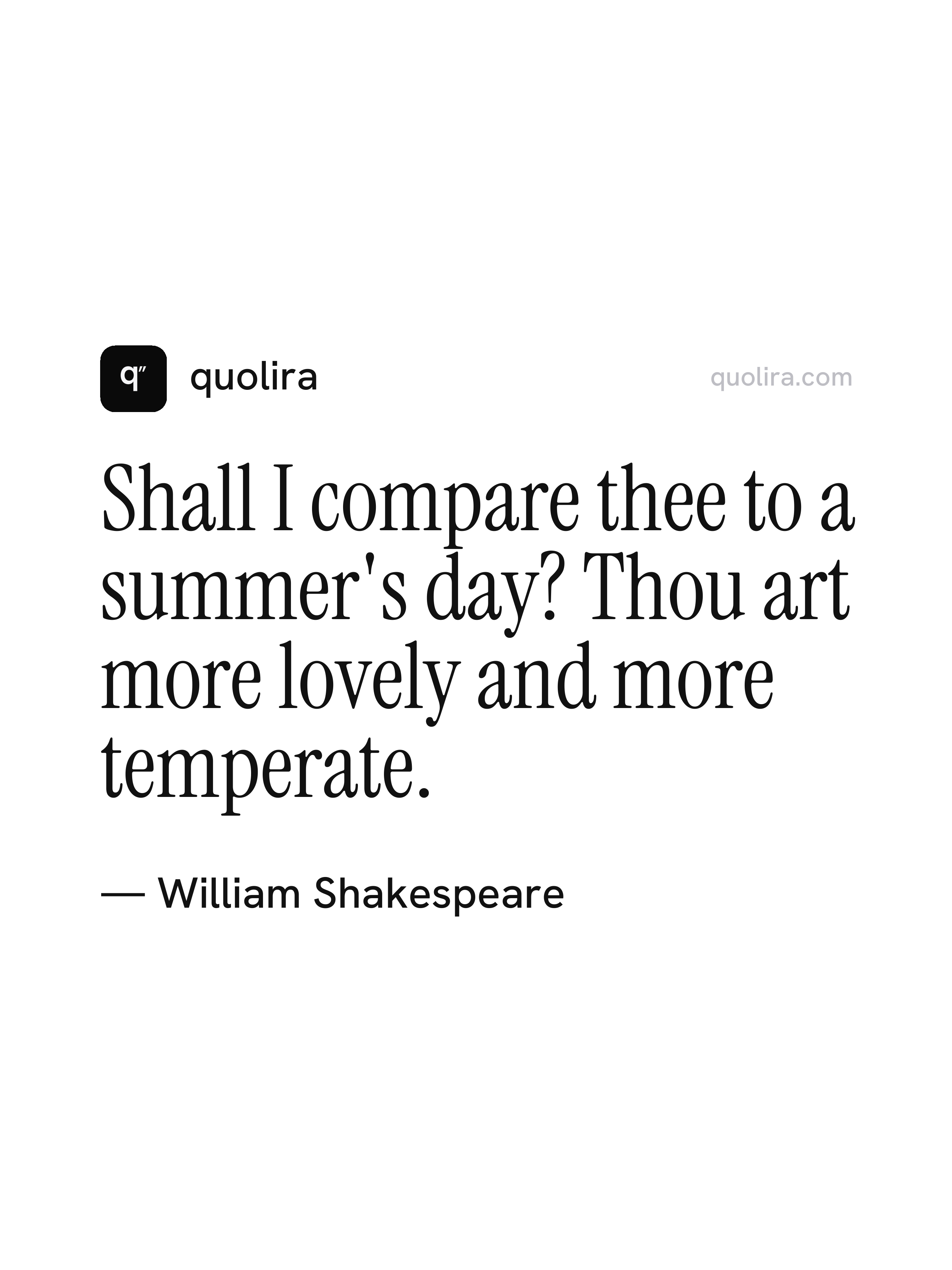
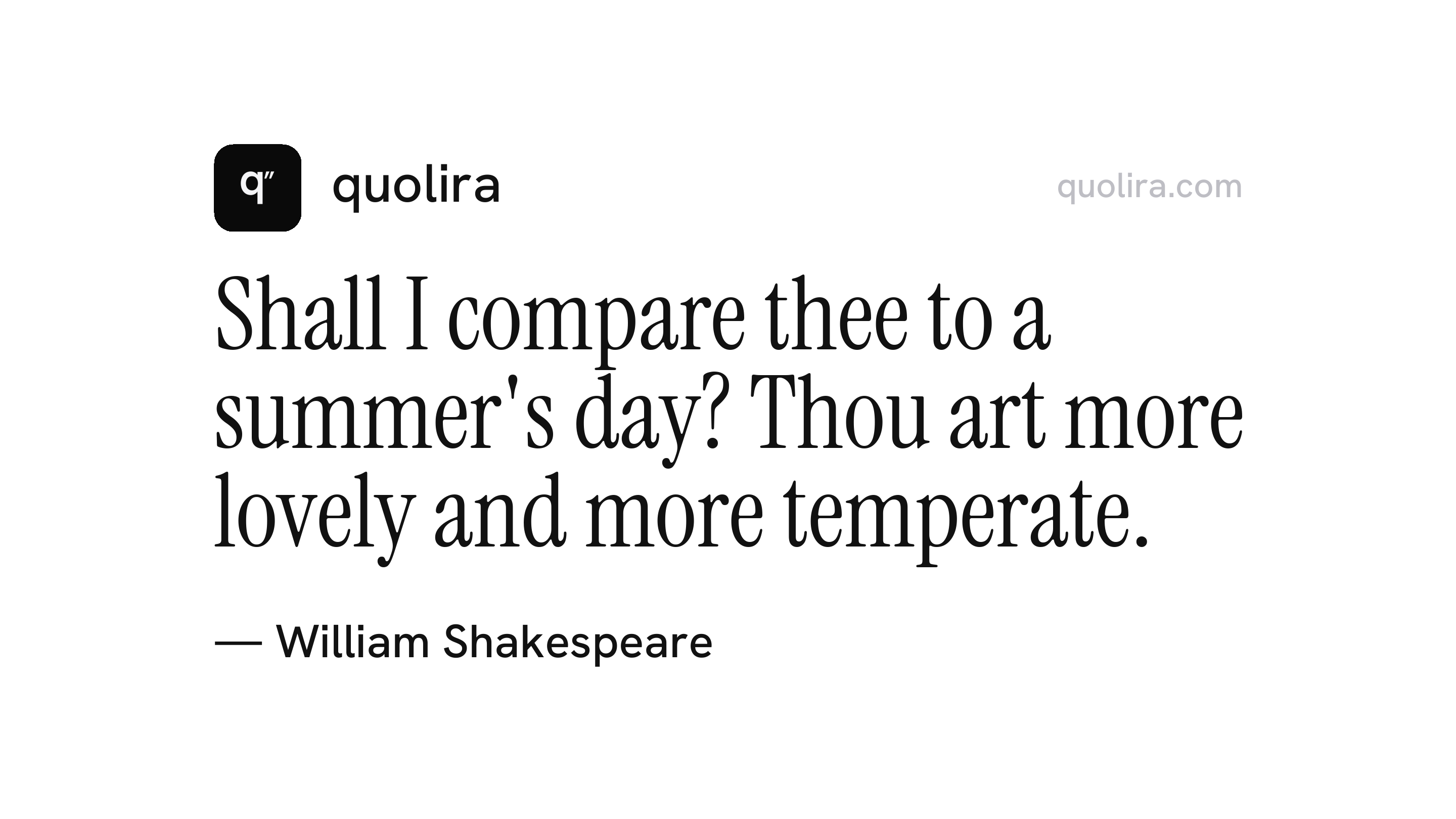
“Shall I compare thee to a summer's day? Thou art more lovely and more temperate.”
William Shakespeare · Sonnet 18, c. 1609
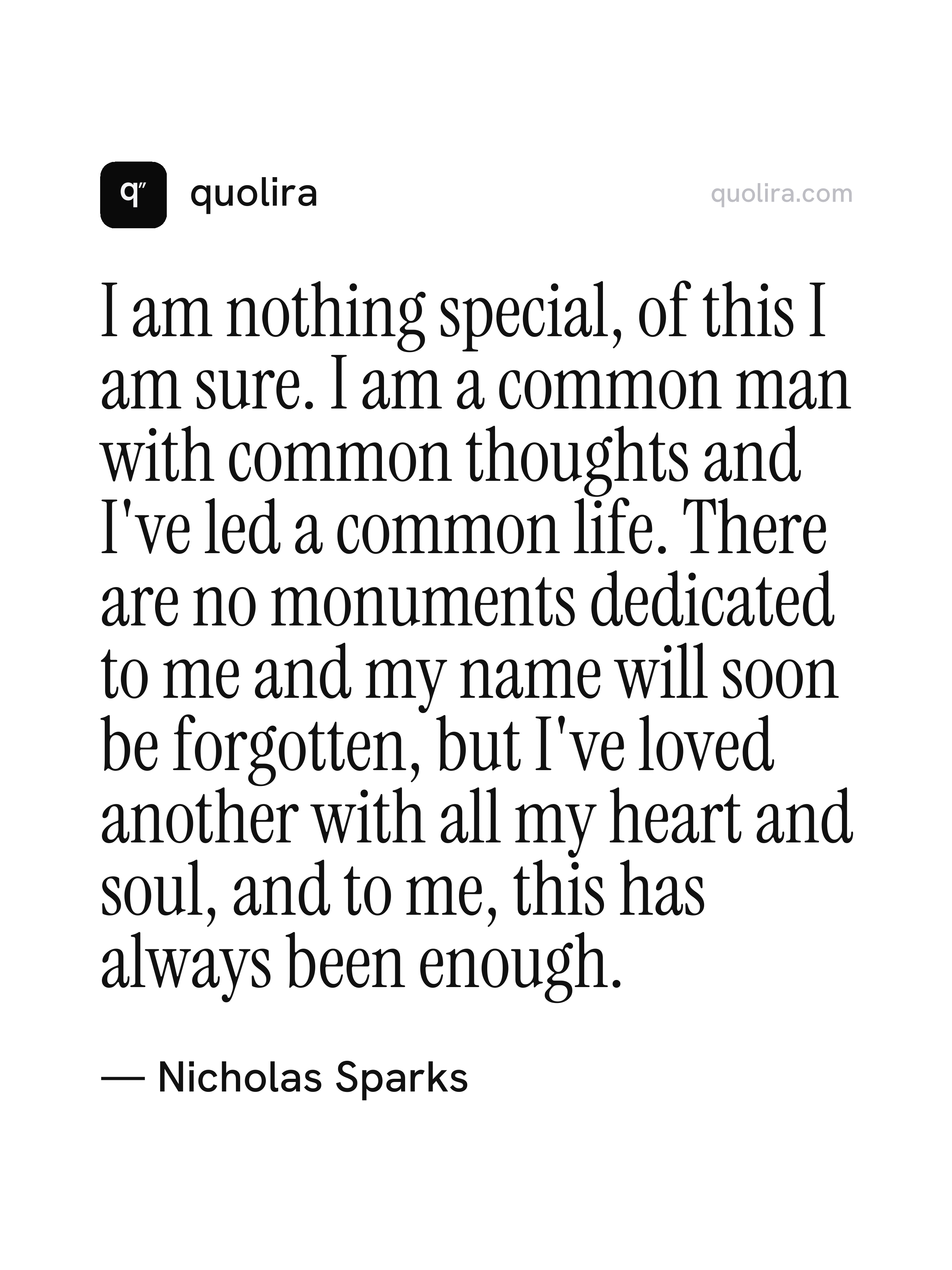
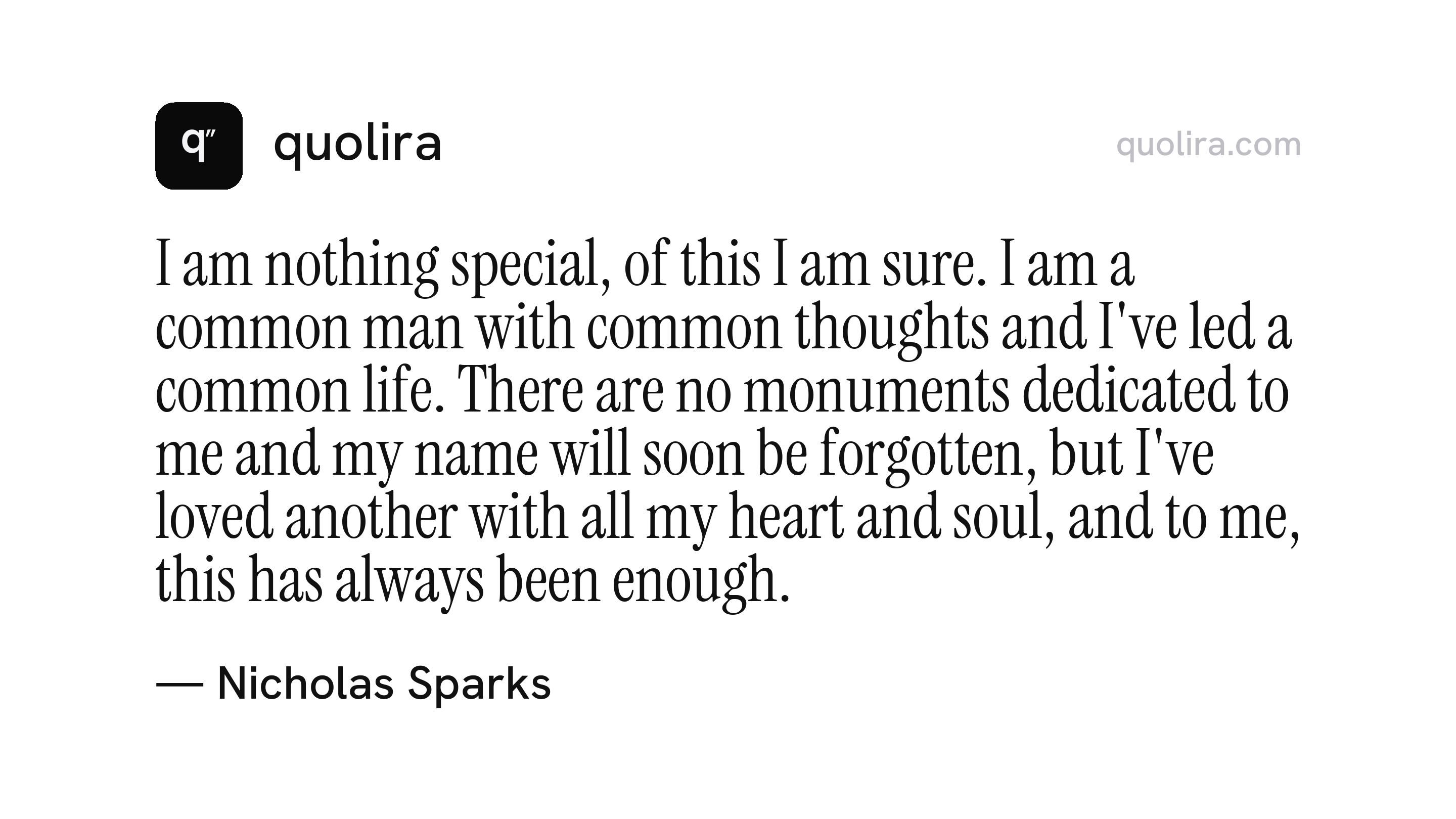
“I am nothing special, of this I am sure. I am a common man with common thoughts and I've led a common life. There are no monuments dedicated to me and my name will soon be forgotten, but I've loved another with all my heart and soul, and to me, this has always been enough.”
Nicholas Sparks · The Notebook, 1996
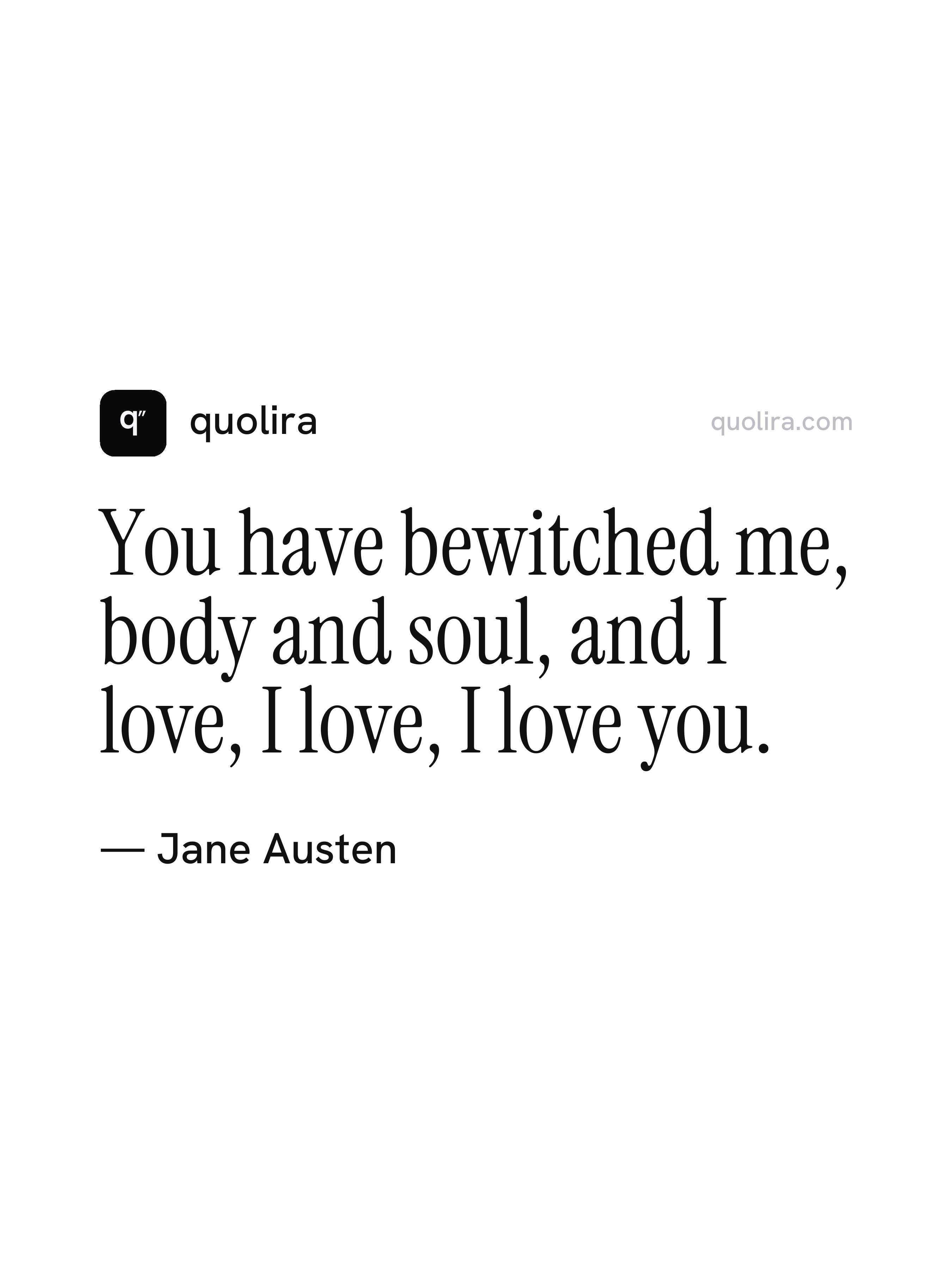
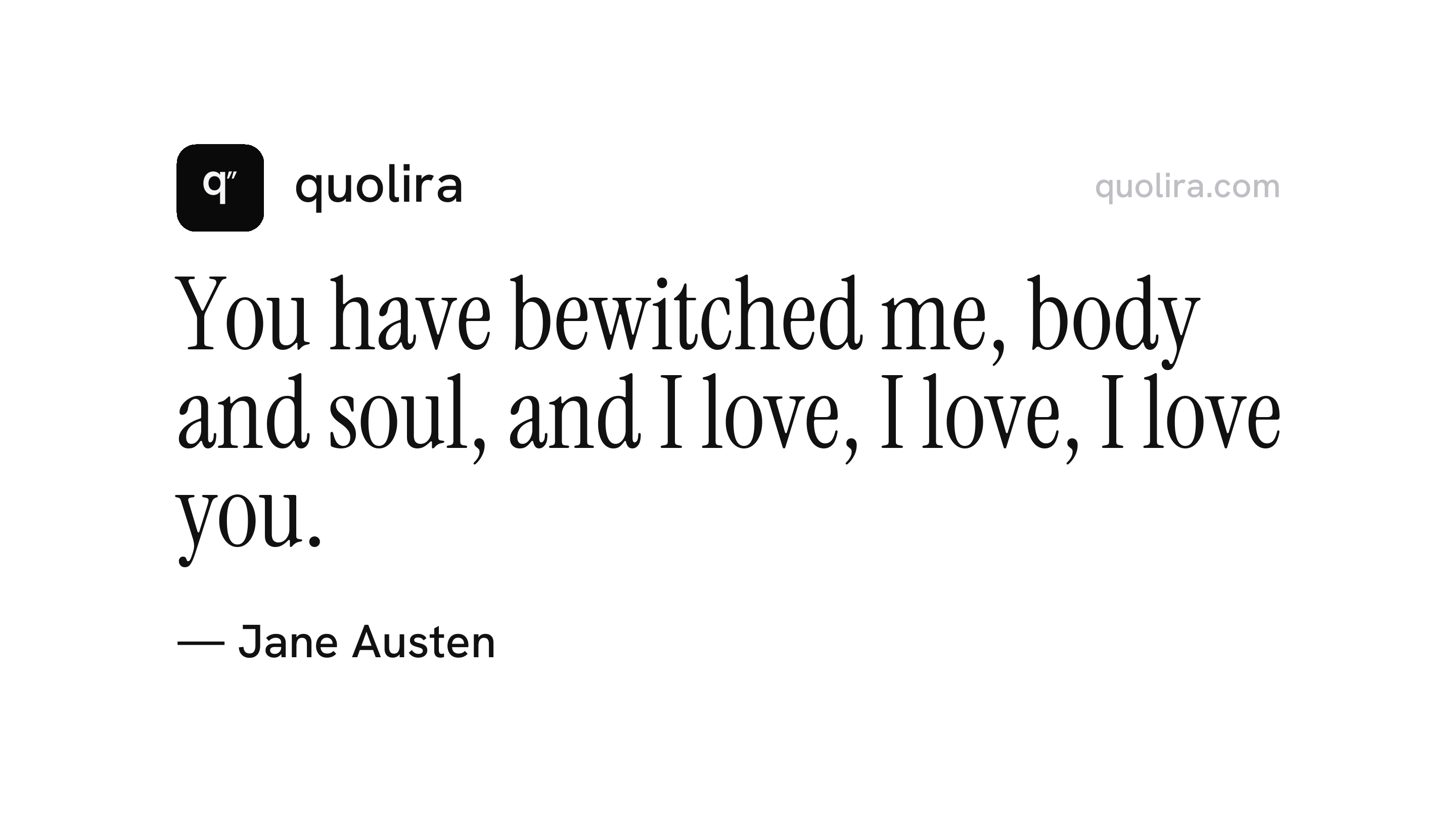
“You have bewitched me, body and soul, and I love, I love, I love you.”
Jane Austen · Pride and Prejudice, 1813
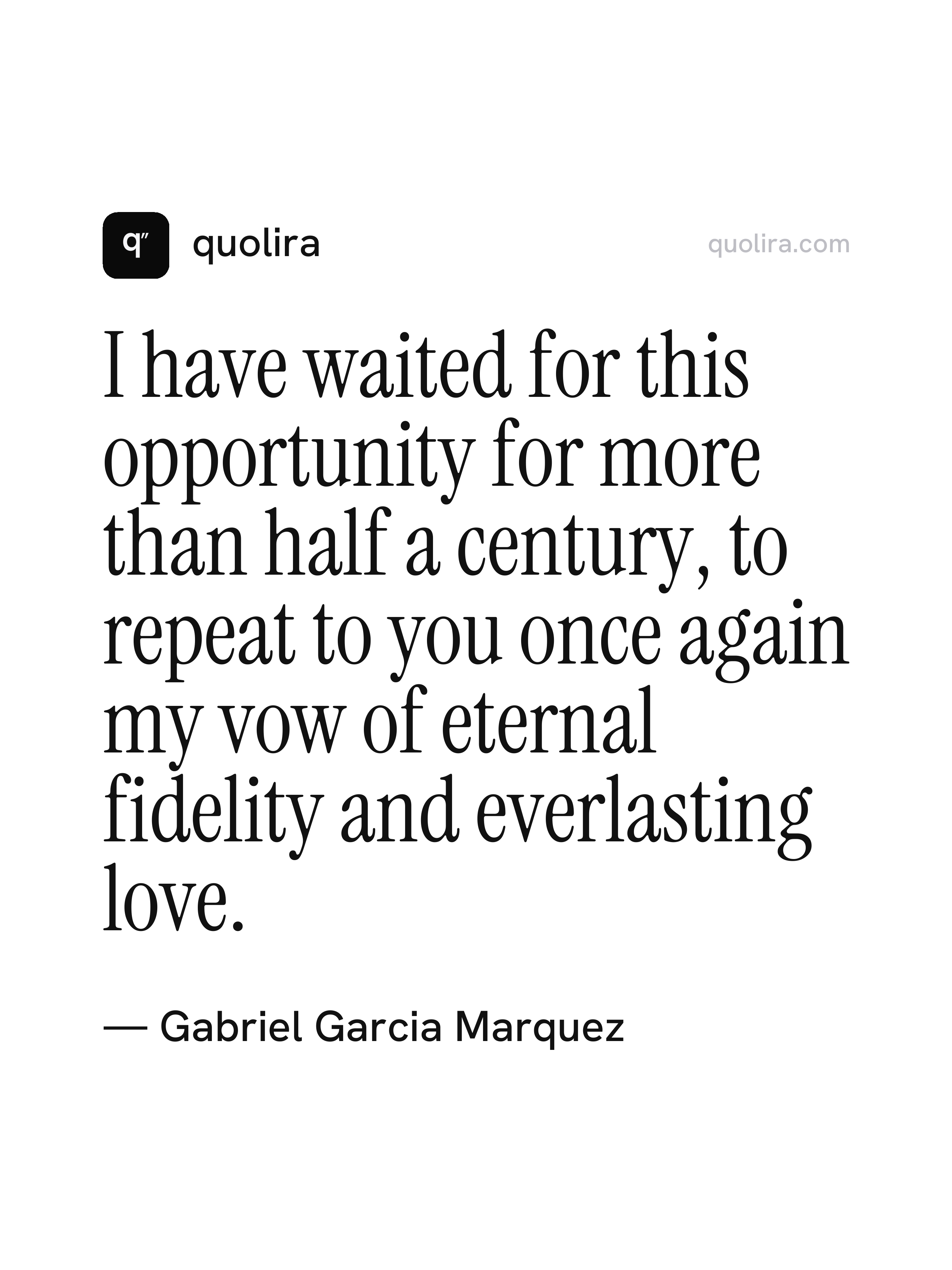
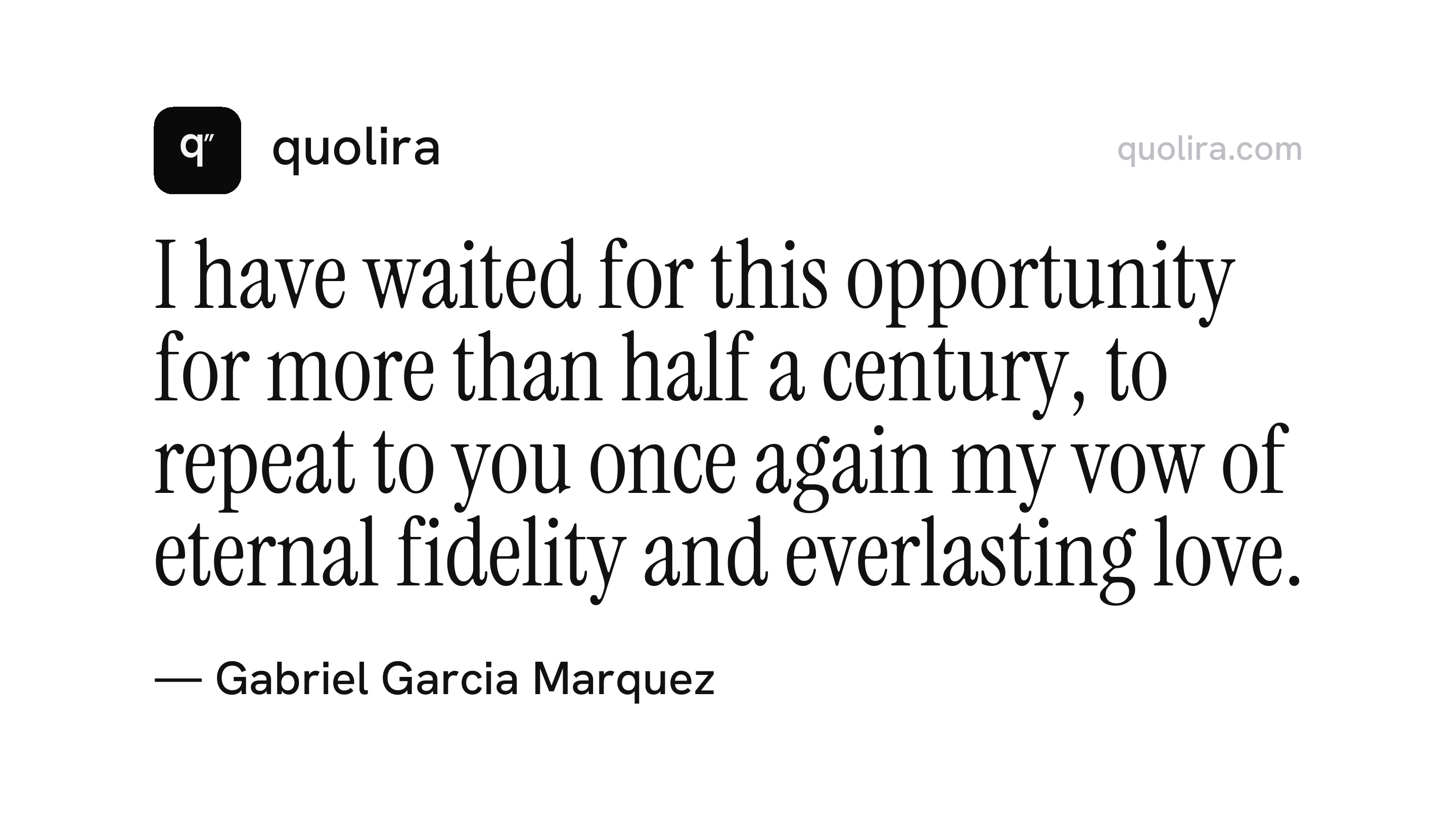
“I have waited for this opportunity for more than half a century, to repeat to you once again my vow of eternal fidelity and everlasting love.”
Gabriel Garcia Marquez · Love in the Time of Cholera, 1985
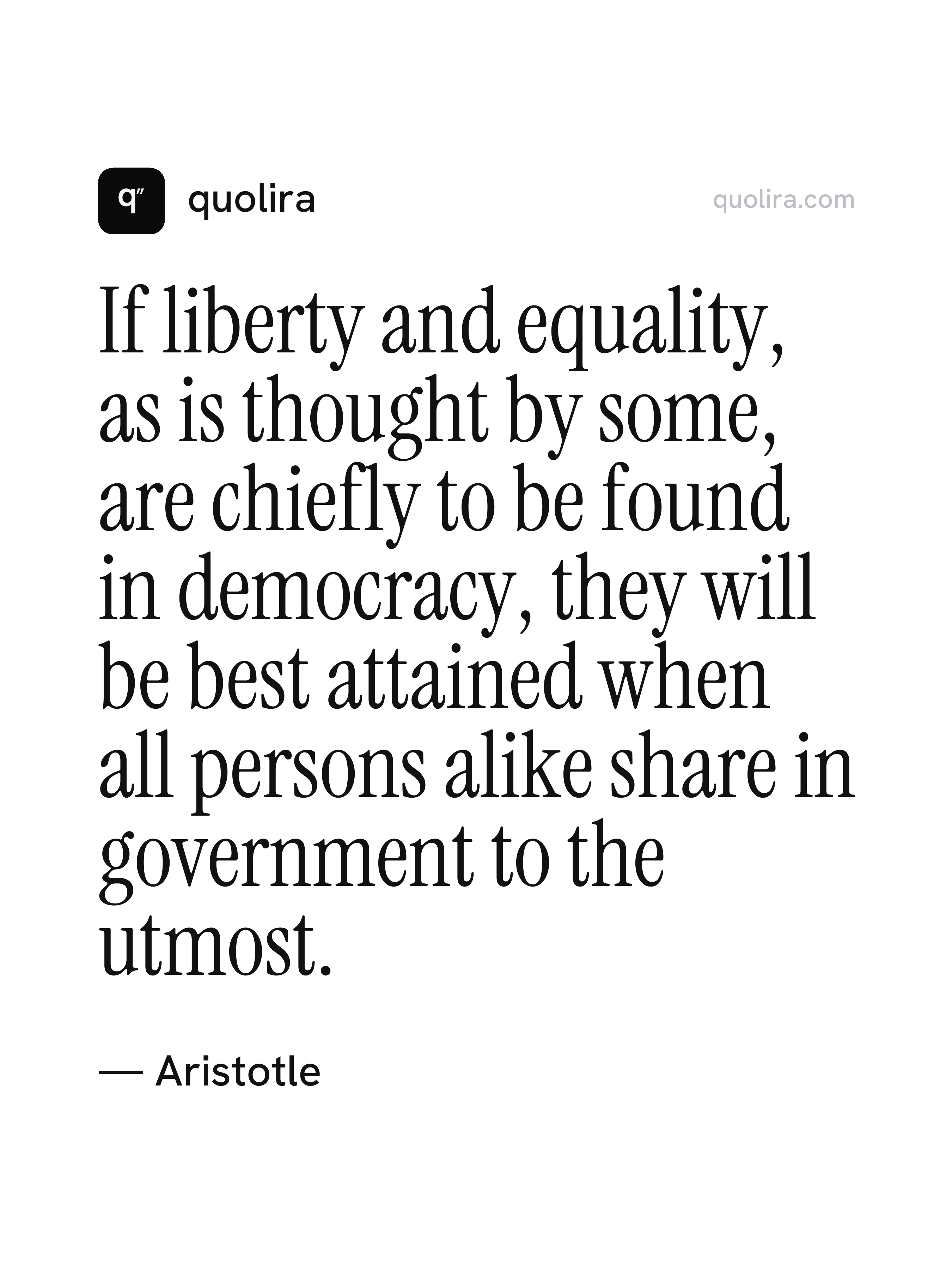
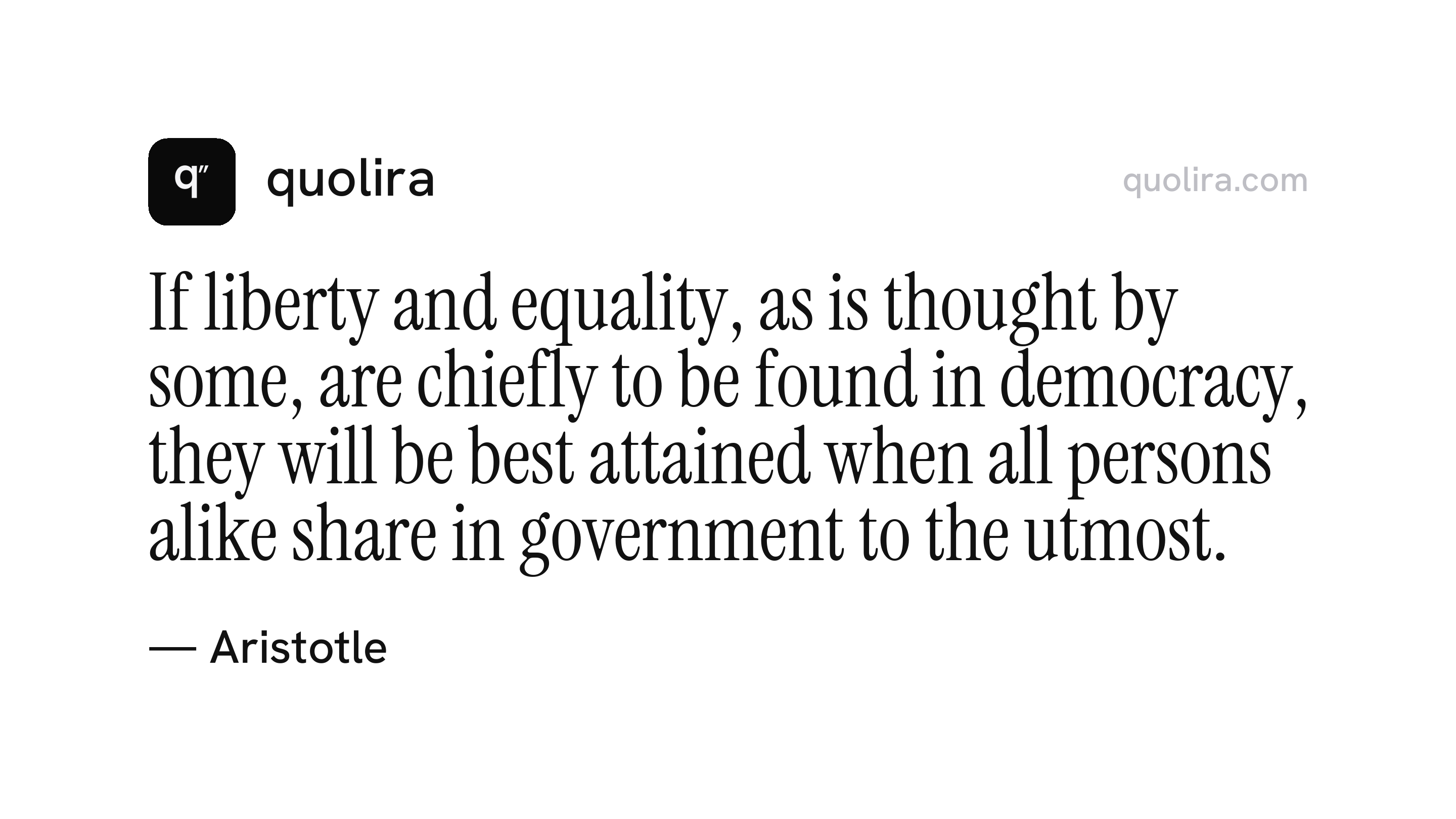
“If liberty and equality, as is thought by some, are chiefly to be found in democracy, they will be best attained when all persons alike share in government to the utmost.”
Aristotle · Politics, Book VI, c. 350 BC
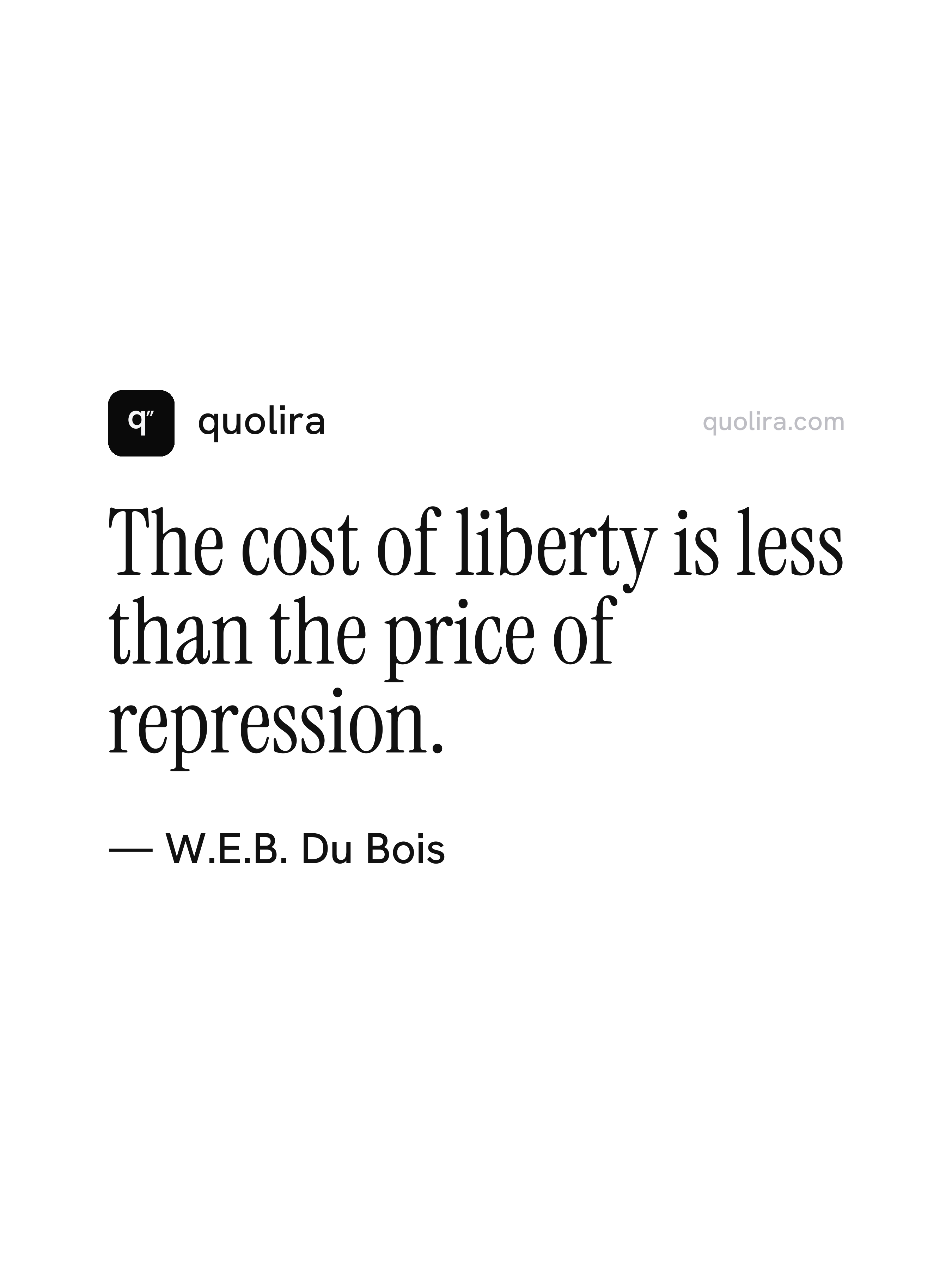
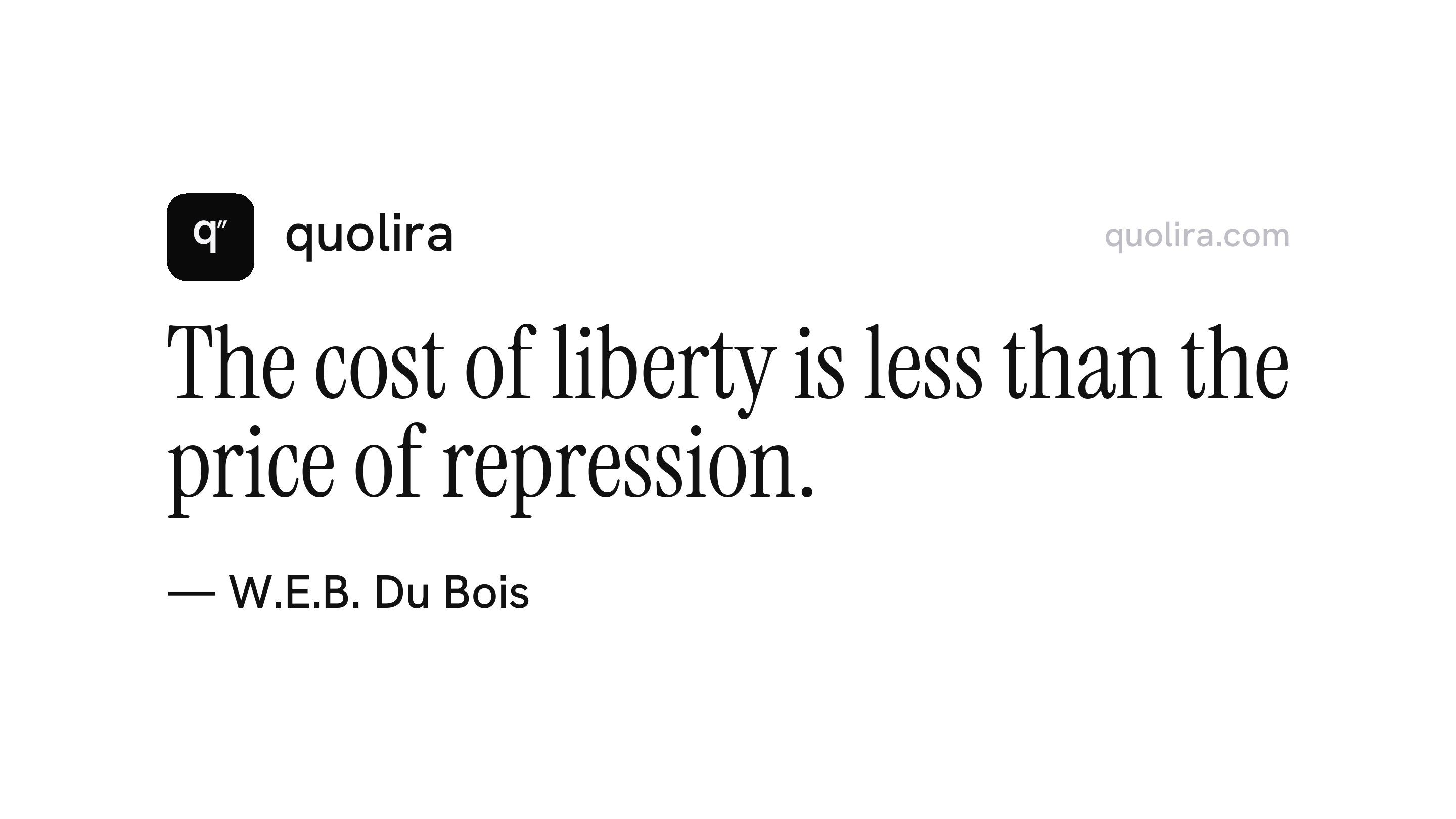
“The cost of liberty is less than the price of repression.”
W.E.B. Du Bois · John Brown, 1909
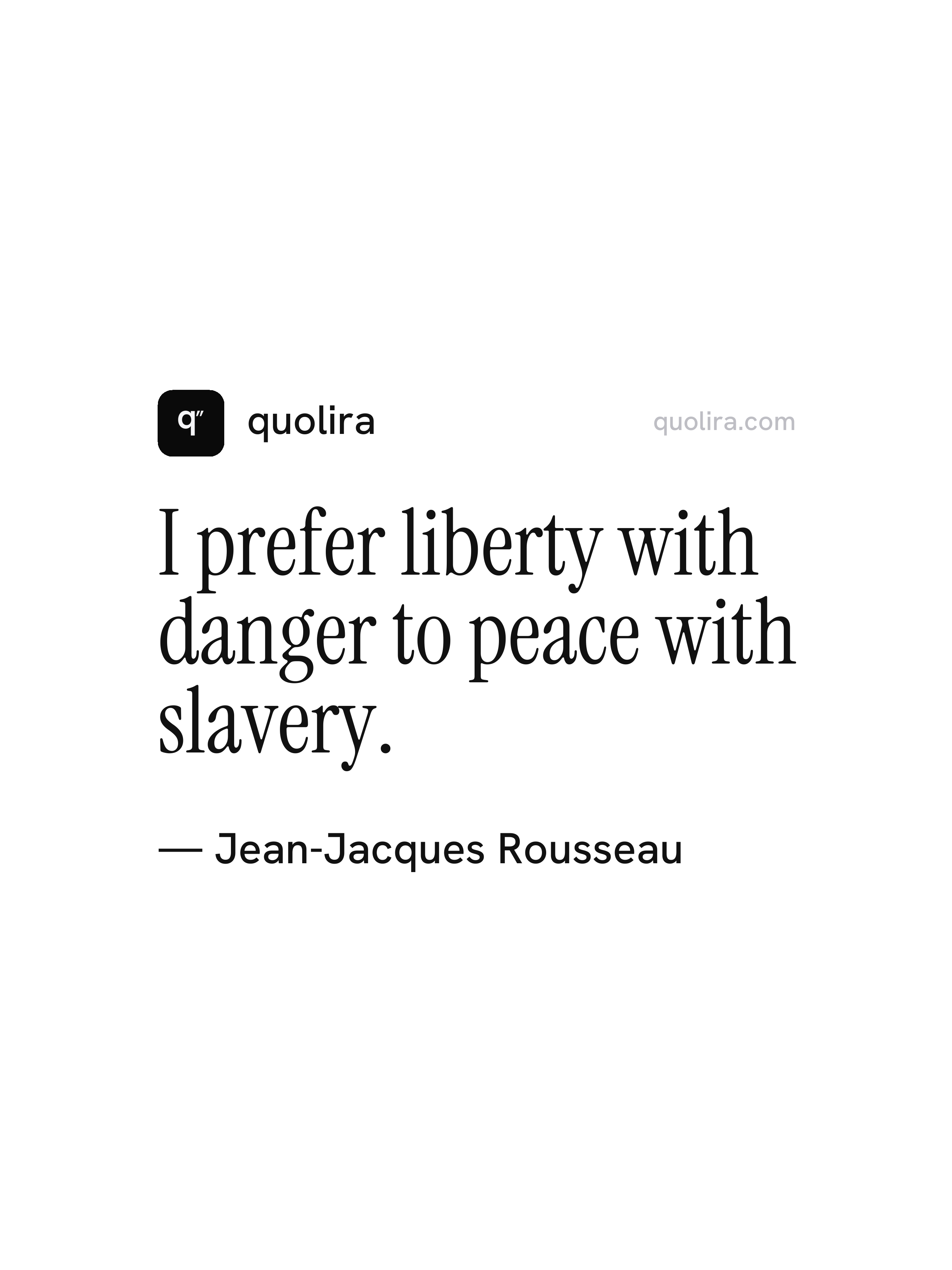
“I prefer liberty with danger to peace with slavery.”
Jean-Jacques Rousseau · The Social Contract, 1762