“I have waited for this opportunity for more than half a century, to repeat to you once again my vow of eternal fidelity and everlasting love.”
Gabriel Garcia Marquez · Love in the Time of Cholera, 1985
 quolira
.com
quolira
quolira.com
This declaration is remarkable for its completeness. The speaker is not offering a careful, measured affection but a total surrender, one that encompasses the physical, the emotional, and the spiritual. The triple repetition of the word love gives the sentence a breathless, almost uncontrollable quality, as though the feeling is too large to be stated only once.
This line is spoken by Mr. Darcy to Elizabeth Bennet in Pride and Prejudice, published in 1813. It comes during a moment of intense emotional honesty between two characters who have spent much of the novel misreading and misjudging each other. Darcy's confession is significant not just as a romantic declaration but as a sign of genuine transformation: a proud man fully humbled by his own feelings. The novel as a whole is concerned with the relationship between social expectation and personal feeling, and this line sits at the heart of that tension.
Jane Austen was an English novelist whose works are among the most enduringly popular in the history of British literature. Writing in the late eighteenth and early nineteenth centuries, she focused on domestic life, courtship, and the social pressures facing women of her era. Her novels combine sharp social observation with genuine warmth and romantic feeling. Austen published her major works anonymously during her lifetime and received only modest recognition at the time, but her reputation grew enormously in the decades after her death, and she is now considered one of the central figures in the English literary tradition.
“I have waited for this opportunity for more than half a century, to repeat to you once again my vow of eternal fidelity and everlasting love.”
Gabriel Garcia Marquez · Love in the Time of Cholera, 1985
“If liberty and equality, as is thought by some, are chiefly to be found in democracy, they will be best attained when all persons alike share in government to the utmost.”
Aristotle · Politics, Book VI, c. 350 BC
“The cost of liberty is less than the price of repression.”
W.E.B. Du Bois · John Brown, 1909
“I prefer liberty with danger to peace with slavery.”
Jean-Jacques Rousseau · The Social Contract, 1762
“Liberty means responsibility. That is why most men dread it.”
George Bernard Shaw · Maxims for Revolutionists, 1903
“My God! How little do my countrymen know what precious blessings they are in possession of, and which no other people on earth enjoy!”
Thomas Jefferson · Letter to James Monroe, June 17, 1785
“For what avail the plough or sail, or land or life, if freedom fail?”
Ralph Waldo Emerson · "Boston," poem, 1830s
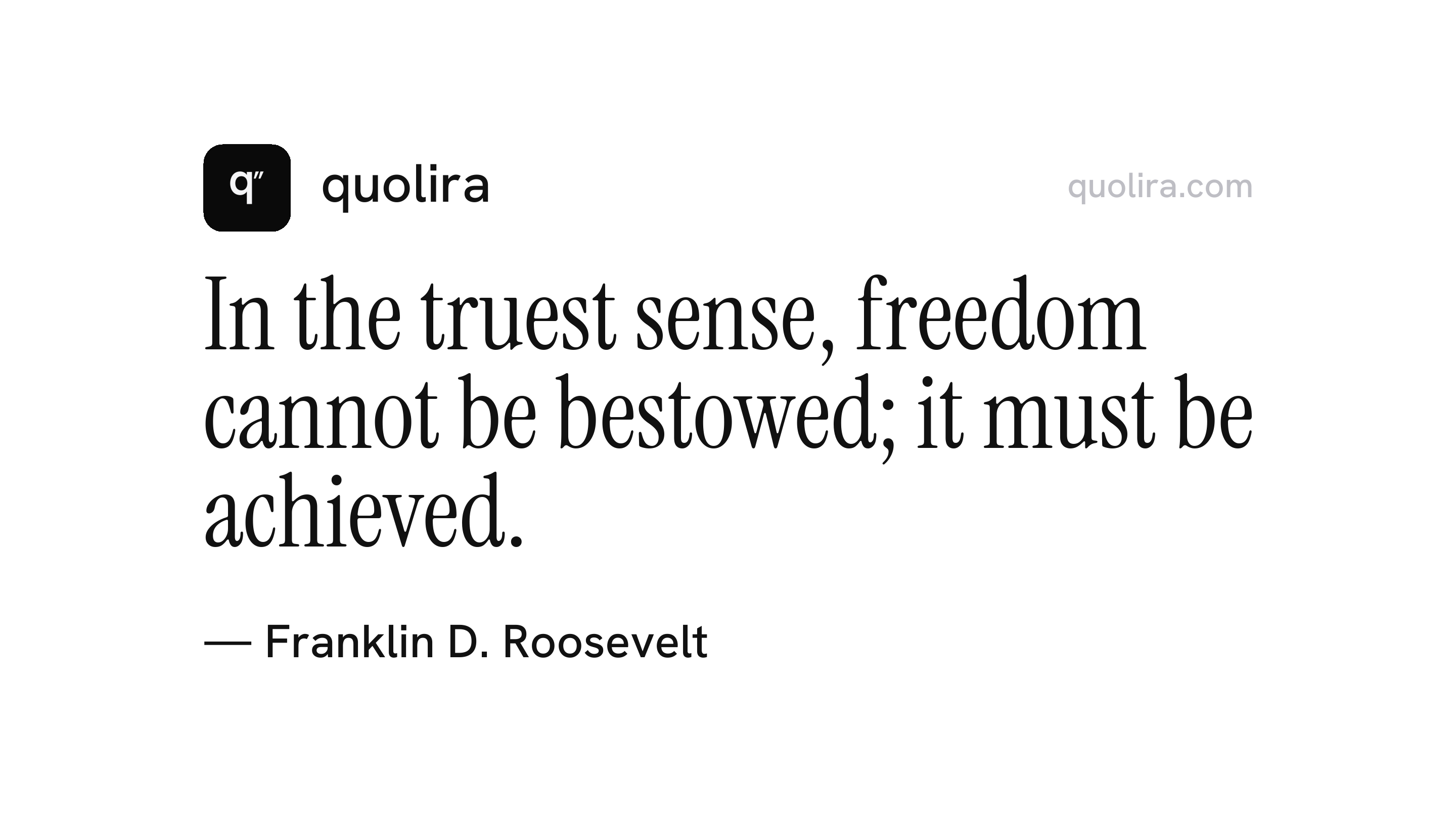
“In the truest sense, freedom cannot be bestowed; it must be achieved.”
Franklin D. Roosevelt · Speech on the Seventy-Fourth Anniversary of the Emancipation Proclamation, September 22, 1936
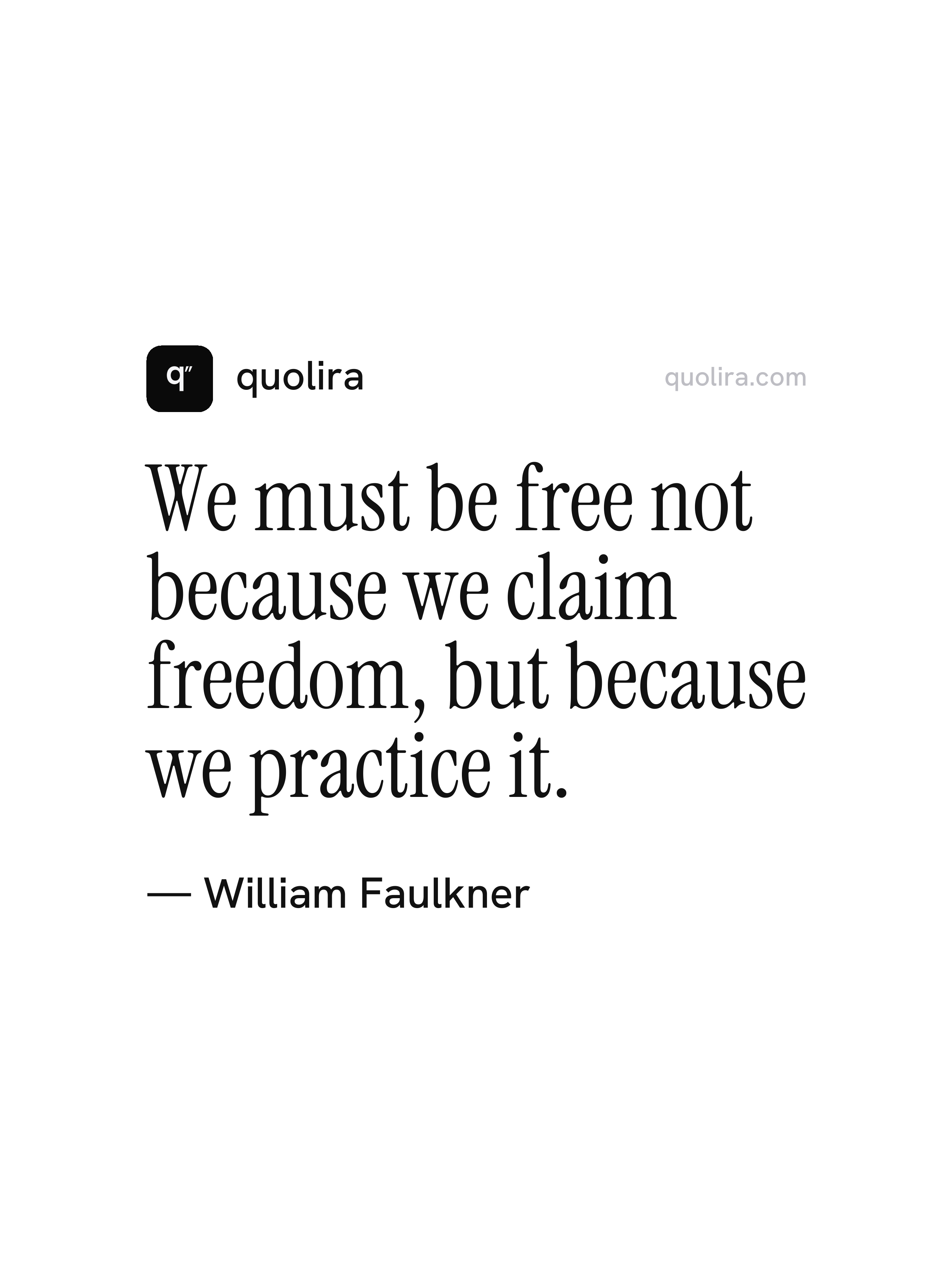
“We must be free not because we claim freedom, but because we practice it.”
William Faulkner · Essay "On Fear: Deep South in Labor," Harper's Magazine, June 1956
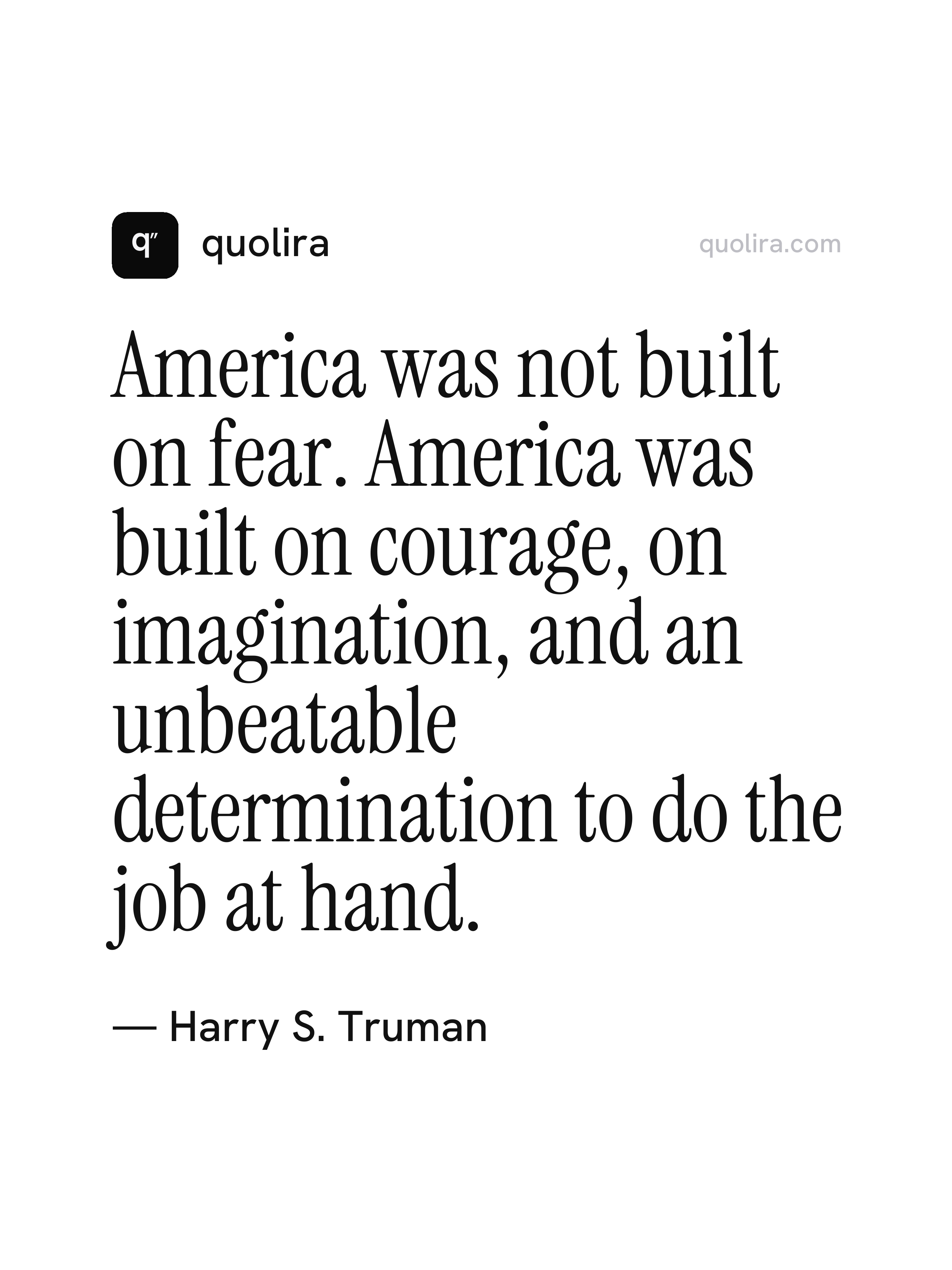
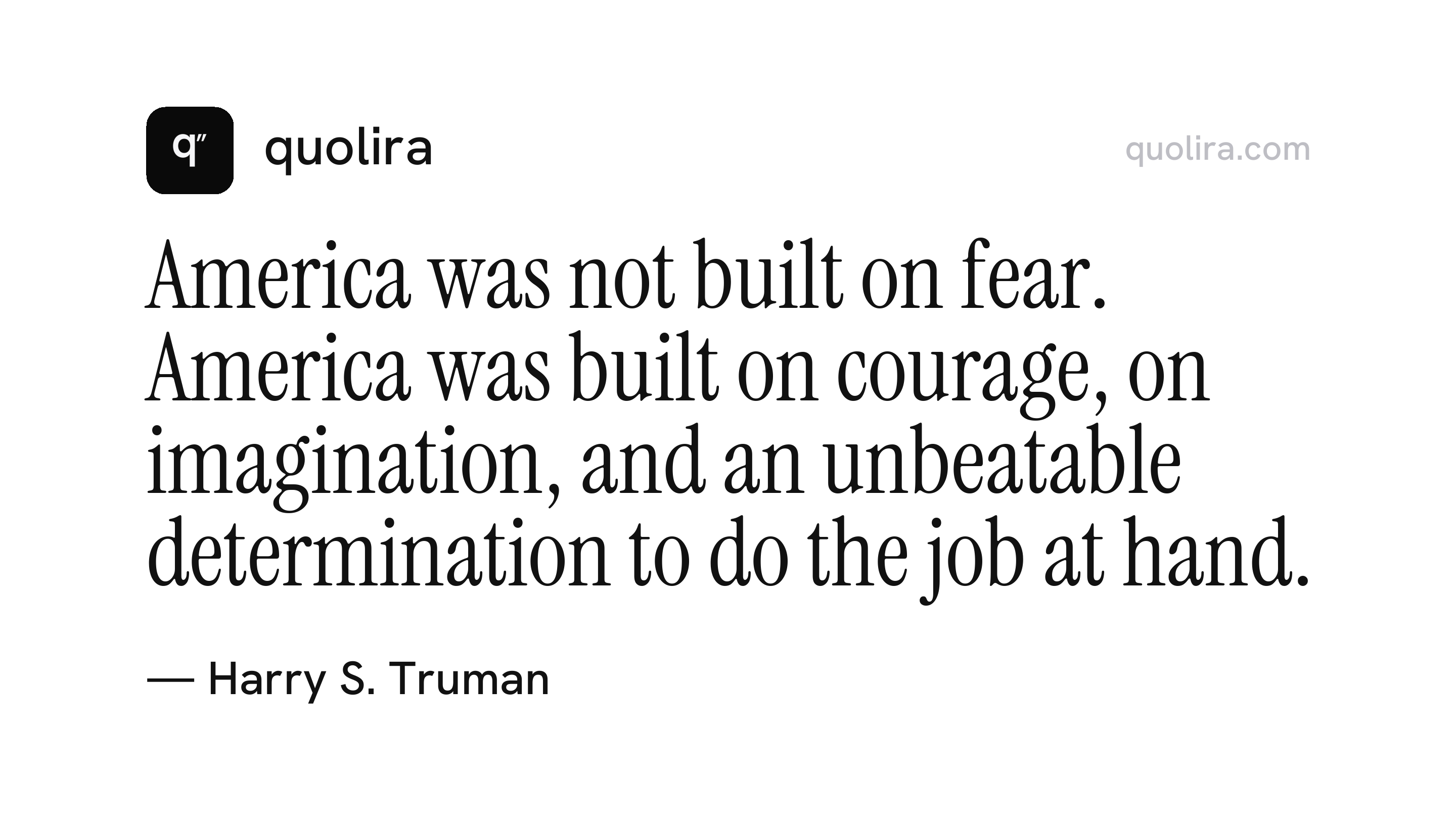
“America was not built on fear. America was built on courage, on imagination, and an unbeatable determination to do the job at hand.”
Harry S. Truman · Special Message to the Congress on the State of the Union, January 8, 1947
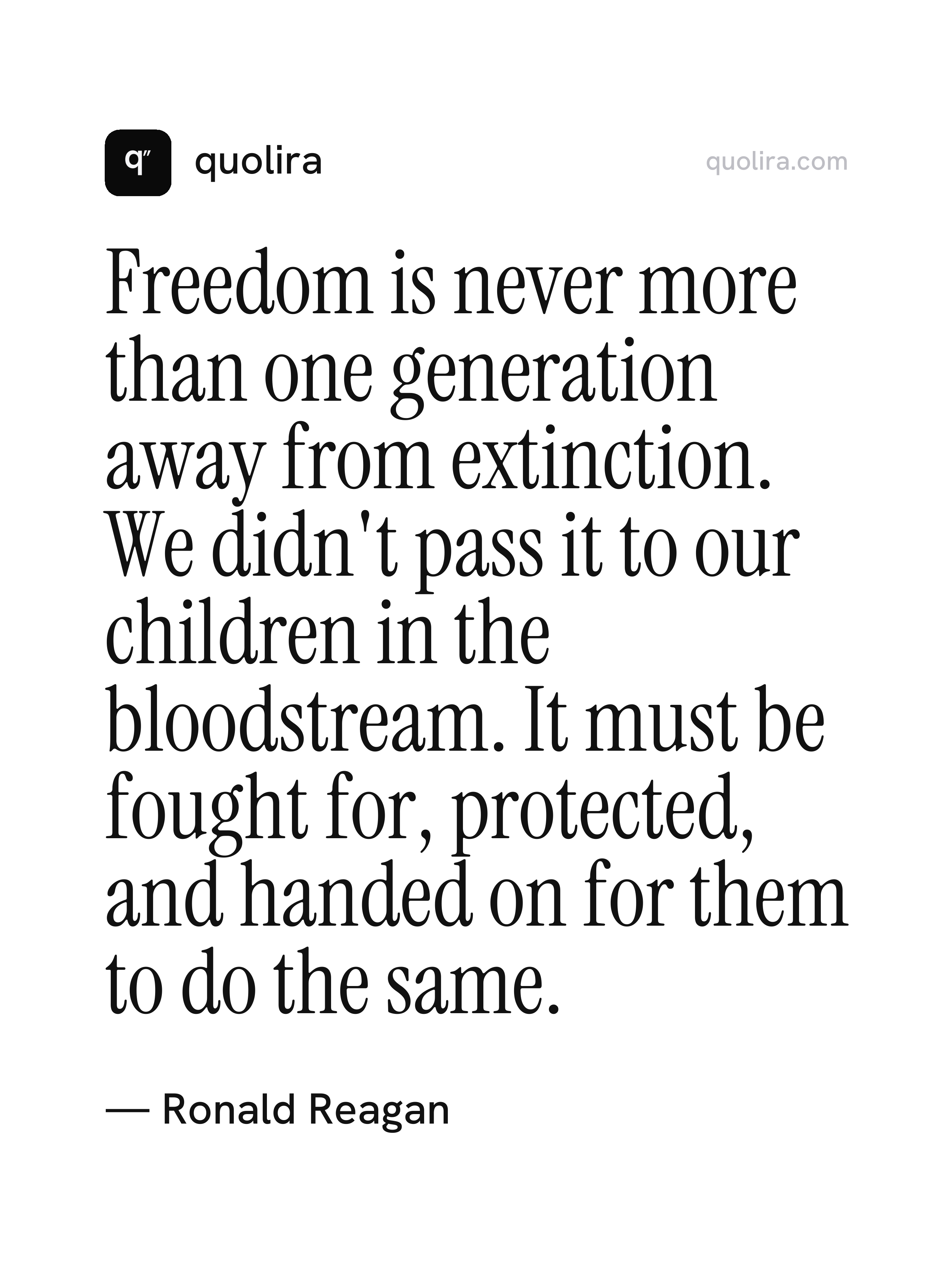
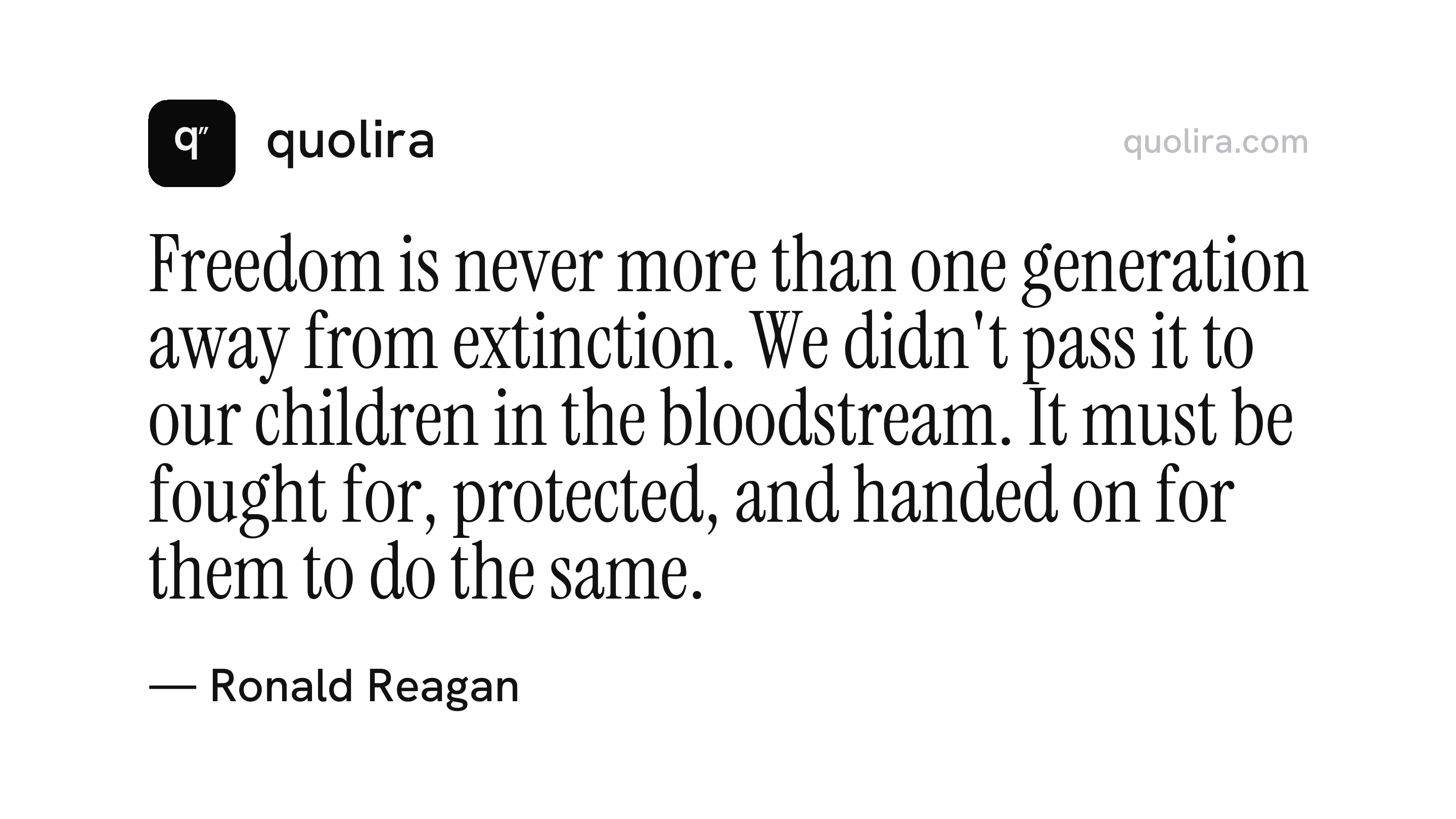
“Freedom is never more than one generation away from extinction. We didn't pass it to our children in the bloodstream. It must be fought for, protected, and handed on for them to do the same.”
Ronald Reagan · Address to the Annual Meeting of the Phoenix Chamber of Commerce, March 30, 1961
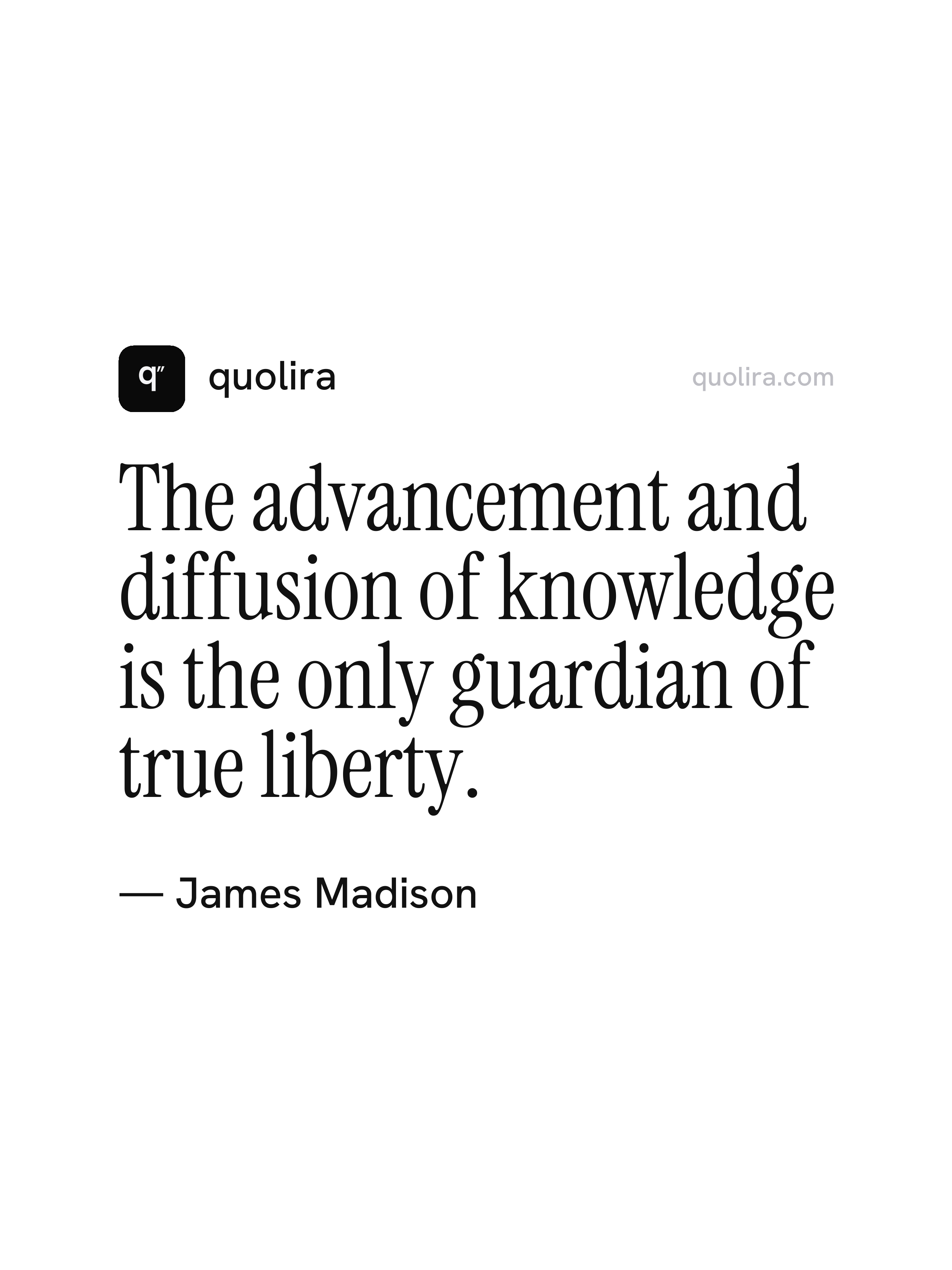
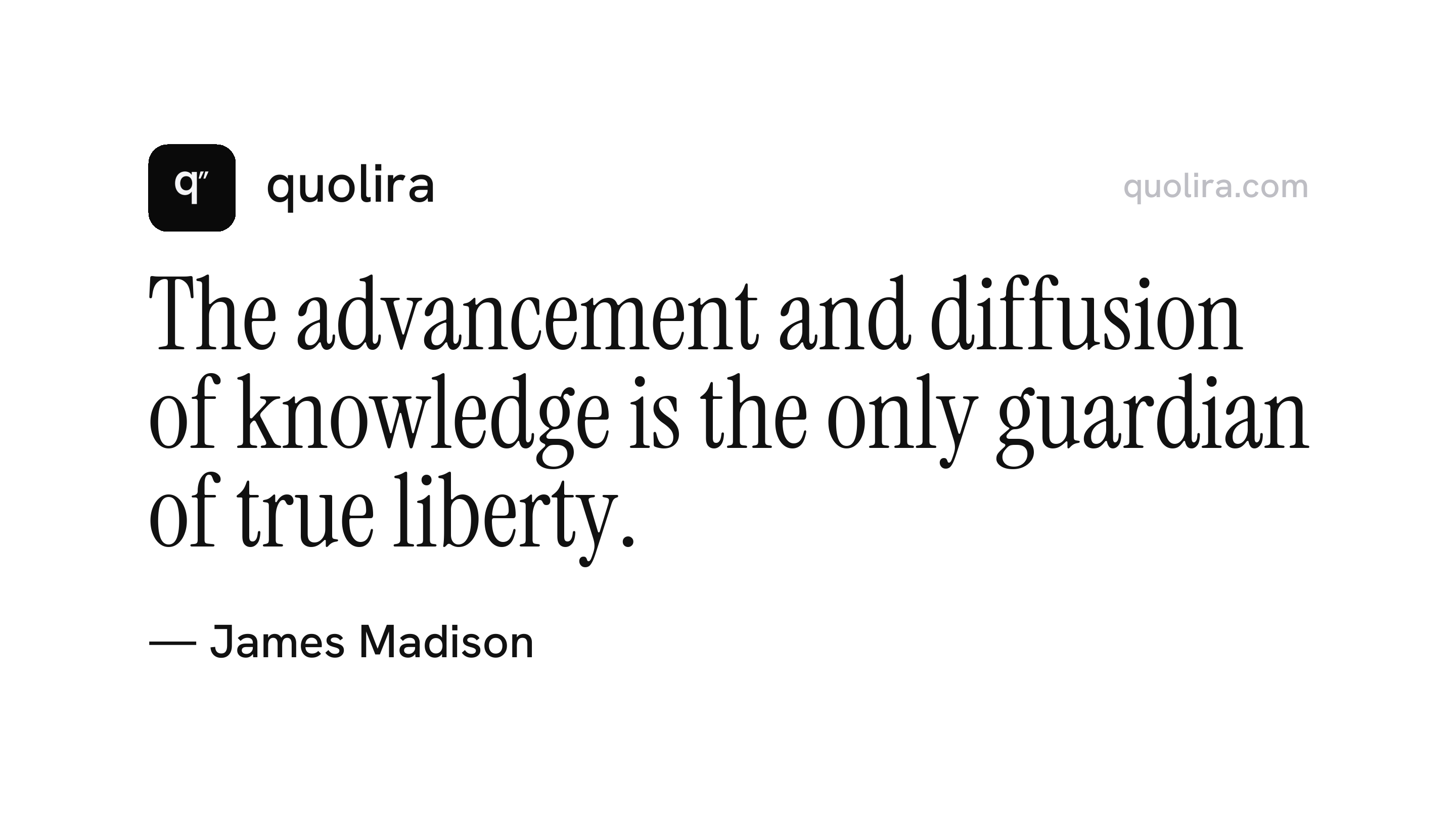
“The advancement and diffusion of knowledge is the only guardian of true liberty.”
James Madison · Letter to George Thompson, June 30, 1825