“If liberty and equality, as is thought by some, are chiefly to be found in democracy, they will be best attained when all persons alike share in government to the utmost.”
Aristotle · Politics, Book VI, c. 350 BC
 quolira
.com
quolira
quolira.com
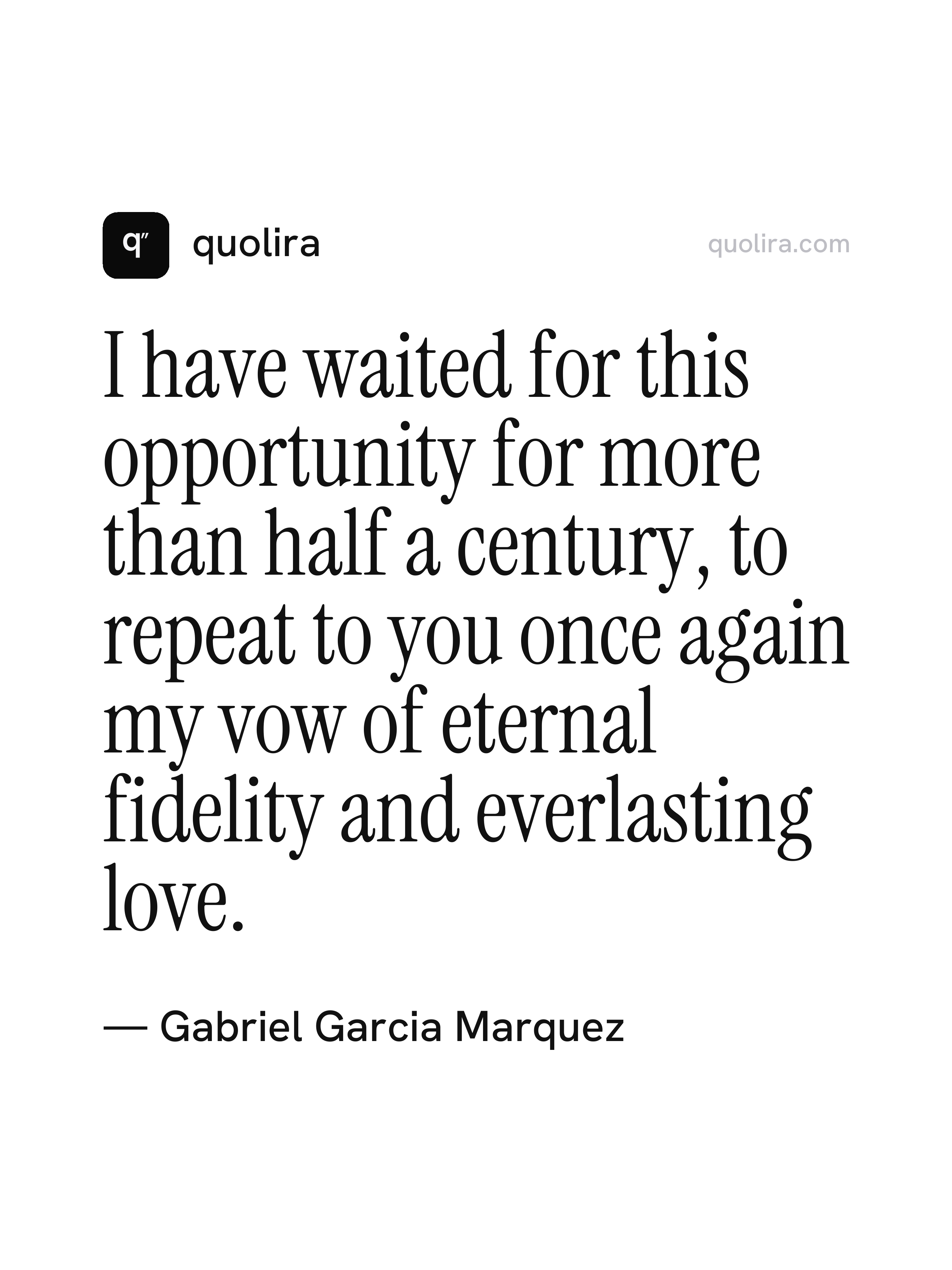
These words capture the particular intensity of a love that has endured across an entire lifetime. The speaker is not announcing a new feeling but reaffirming one that has persisted for more than fifty years, outlasting time, separation, and circumstance. There is something both dignified and overwhelming in the image: a person who has quietly carried this devotion and finally finds the moment to voice it again.
This line comes from Gabriel Garcia Marquez's novel Love in the Time of Cholera, published in Spanish in 1985. The story follows a man who waits over fifty years for the woman he loves, after she chooses to marry someone else. The novel is partly an exploration of obsession, fidelity, and what it means to love someone across the full span of a life. Garcia Marquez uses the backdrop of disease and aging to ask whether love can truly be separated from time, memory, and mortality.
Gabriel Garcia Marquez was a Colombian novelist and journalist widely regarded as one of the greatest Spanish-language writers of the twentieth century. He is closely associated with the literary style known as magical realism, in which fantastical elements appear naturally within otherwise realistic settings. His novel One Hundred Years of Solitude brought him international recognition, and he was awarded the Nobel Prize in Literature in 1982. His work is celebrated for its emotional depth, its imaginative richness, and its profound engagement with love, history, and the passage of time.
“If liberty and equality, as is thought by some, are chiefly to be found in democracy, they will be best attained when all persons alike share in government to the utmost.”
Aristotle · Politics, Book VI, c. 350 BC
“The cost of liberty is less than the price of repression.”
W.E.B. Du Bois · John Brown, 1909
“I prefer liberty with danger to peace with slavery.”
Jean-Jacques Rousseau · The Social Contract, 1762
“Liberty means responsibility. That is why most men dread it.”
George Bernard Shaw · Maxims for Revolutionists, 1903
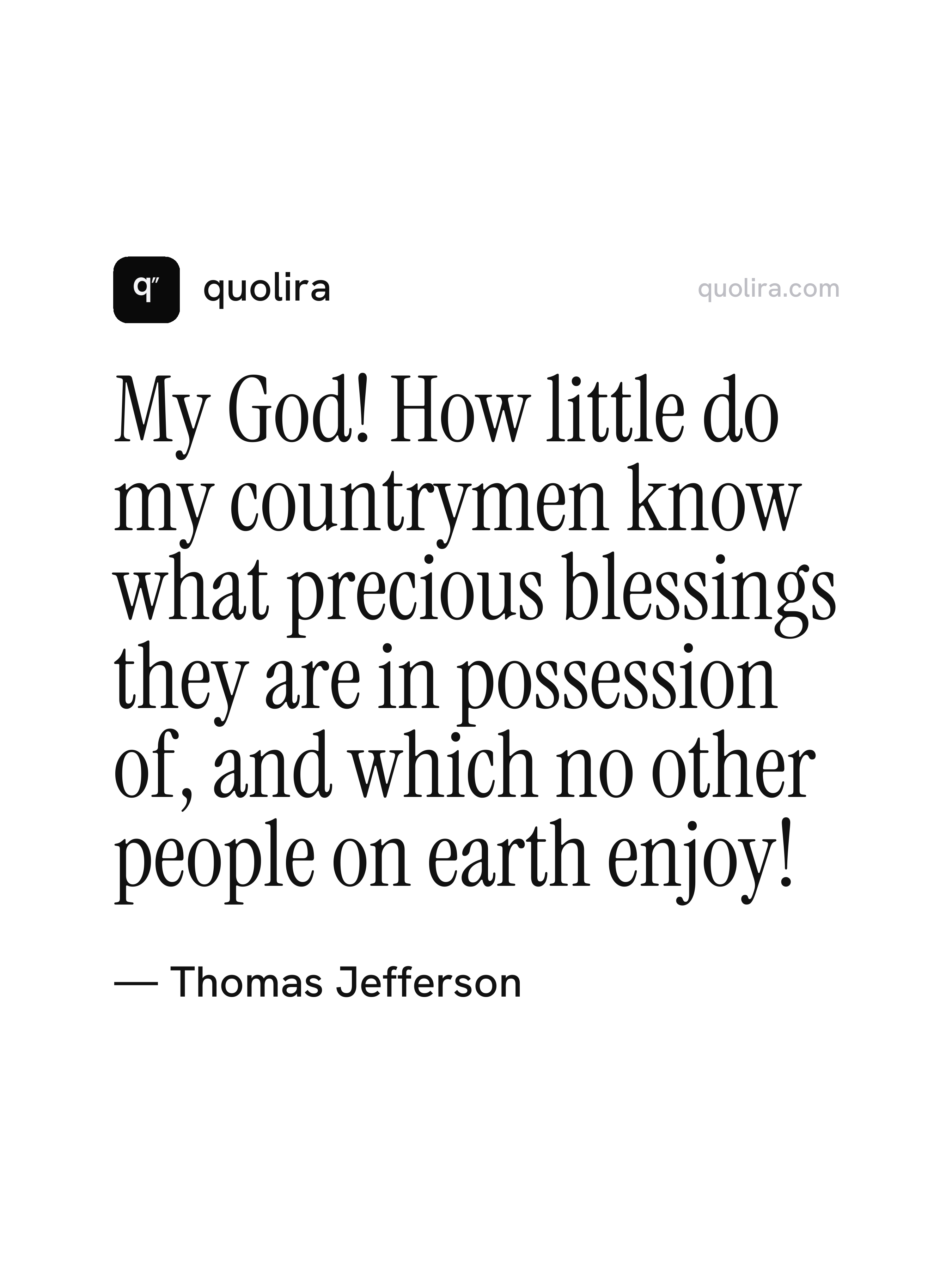
“My God! How little do my countrymen know what precious blessings they are in possession of, and which no other people on earth enjoy!”
Thomas Jefferson · Letter to James Monroe, June 17, 1785
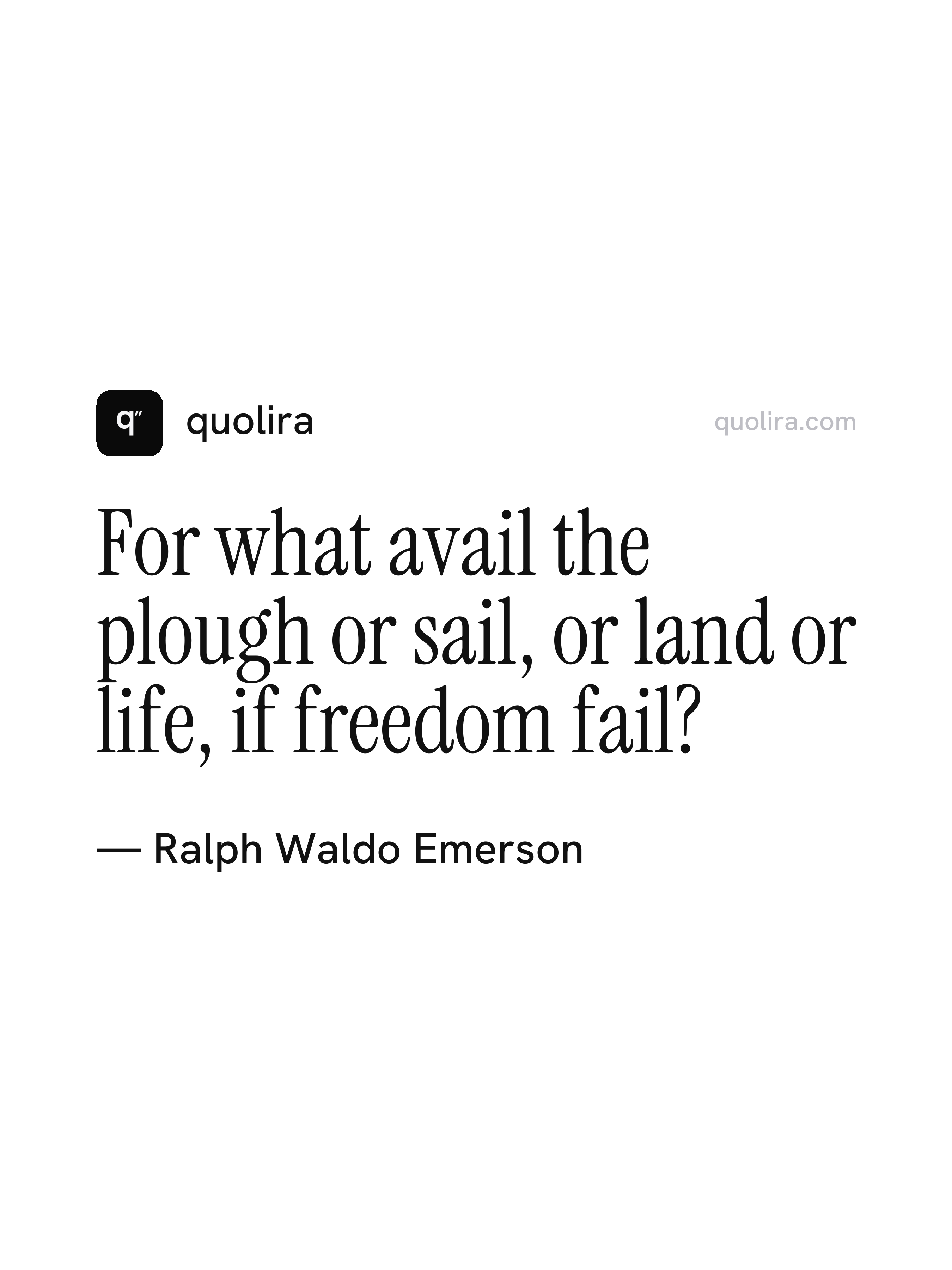
“For what avail the plough or sail, or land or life, if freedom fail?”
Ralph Waldo Emerson · "Boston," poem, 1830s
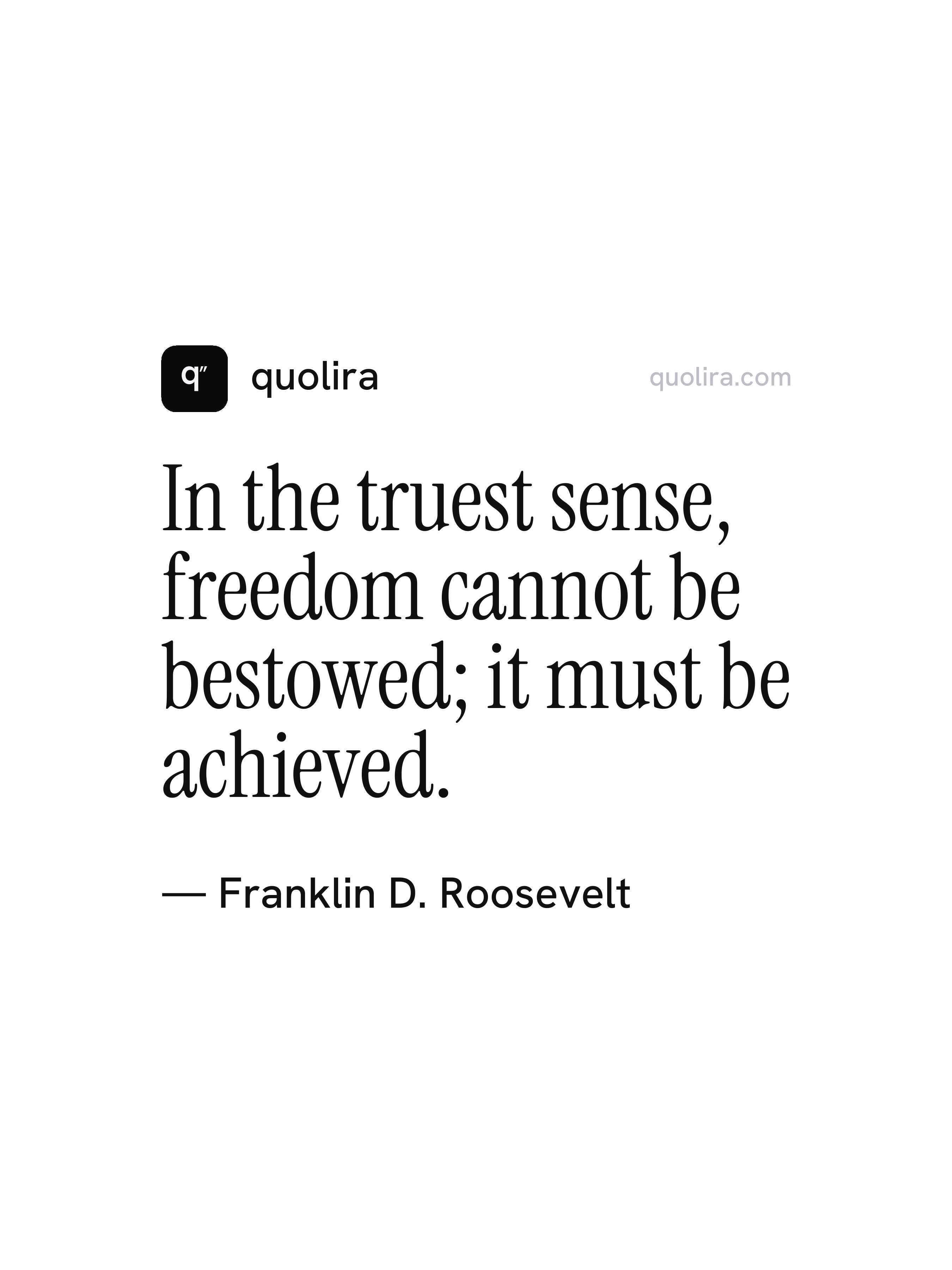
“In the truest sense, freedom cannot be bestowed; it must be achieved.”
Franklin D. Roosevelt · Speech on the Seventy-Fourth Anniversary of the Emancipation Proclamation, September 22, 1936
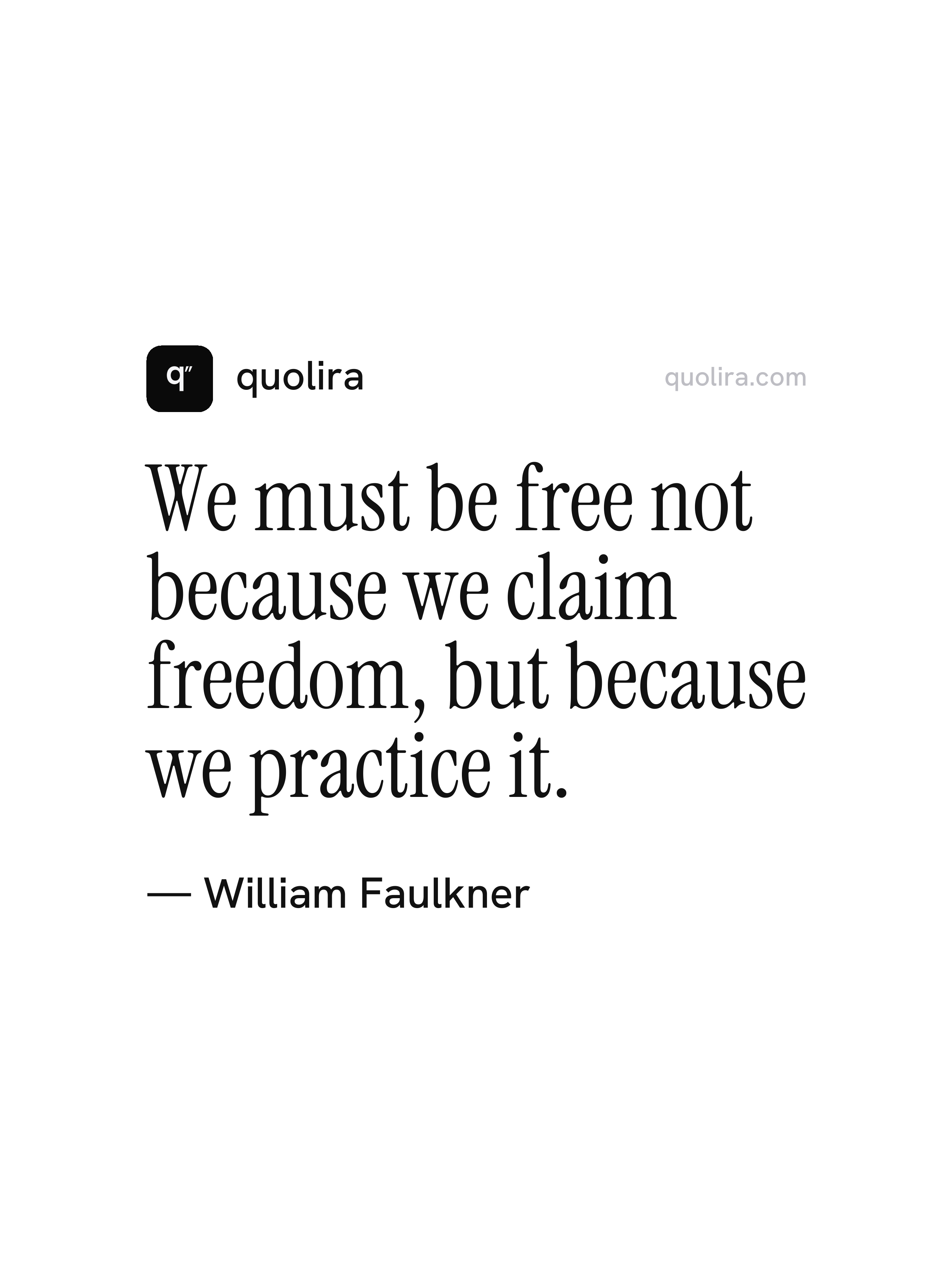
“We must be free not because we claim freedom, but because we practice it.”
William Faulkner · Essay "On Fear: Deep South in Labor," Harper's Magazine, June 1956
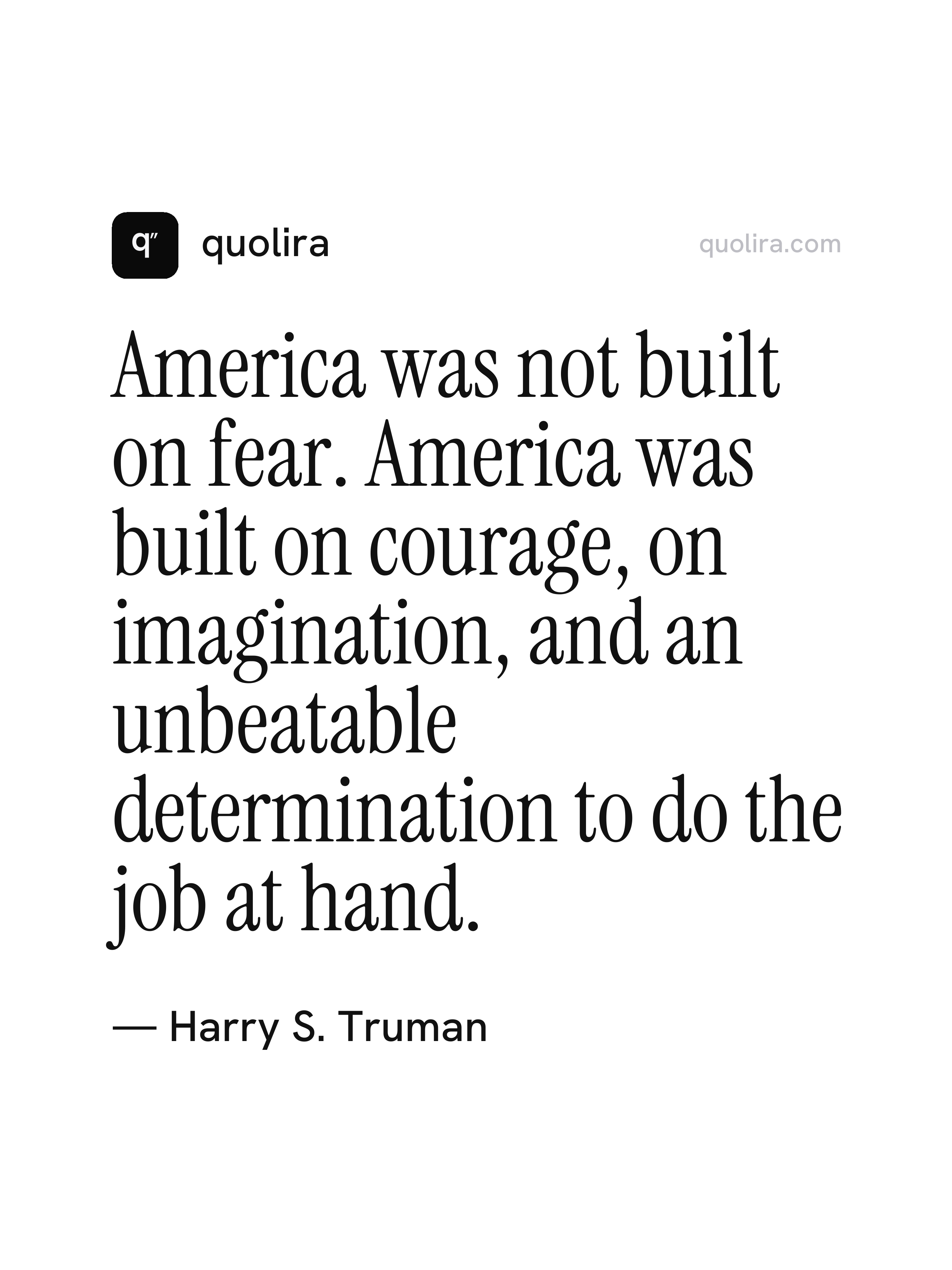
“America was not built on fear. America was built on courage, on imagination, and an unbeatable determination to do the job at hand.”
Harry S. Truman · Special Message to the Congress on the State of the Union, January 8, 1947
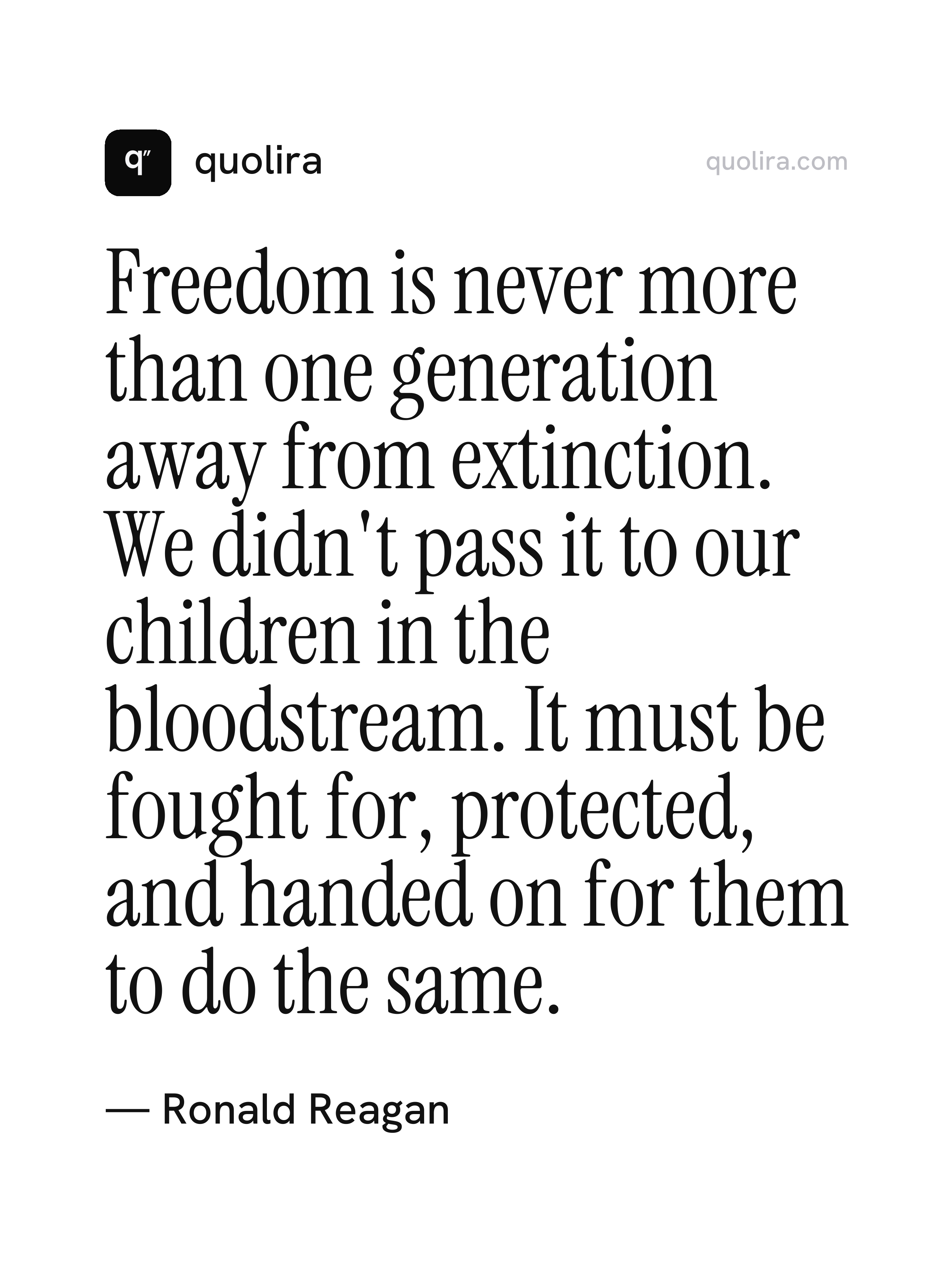
“Freedom is never more than one generation away from extinction. We didn't pass it to our children in the bloodstream. It must be fought for, protected, and handed on for them to do the same.”
Ronald Reagan · Address to the Annual Meeting of the Phoenix Chamber of Commerce, March 30, 1961
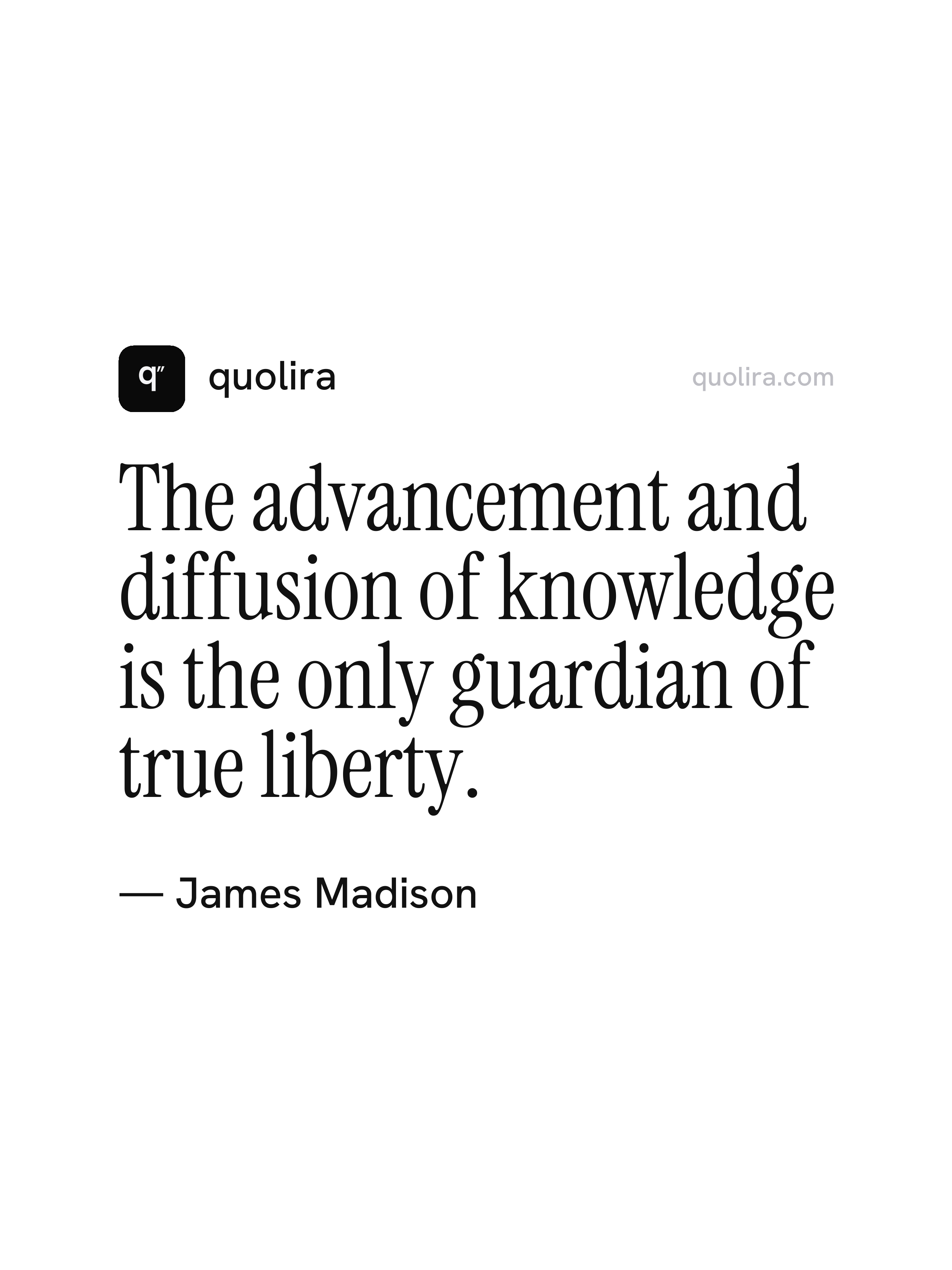
“The advancement and diffusion of knowledge is the only guardian of true liberty.”
James Madison · Letter to George Thompson, June 30, 1825
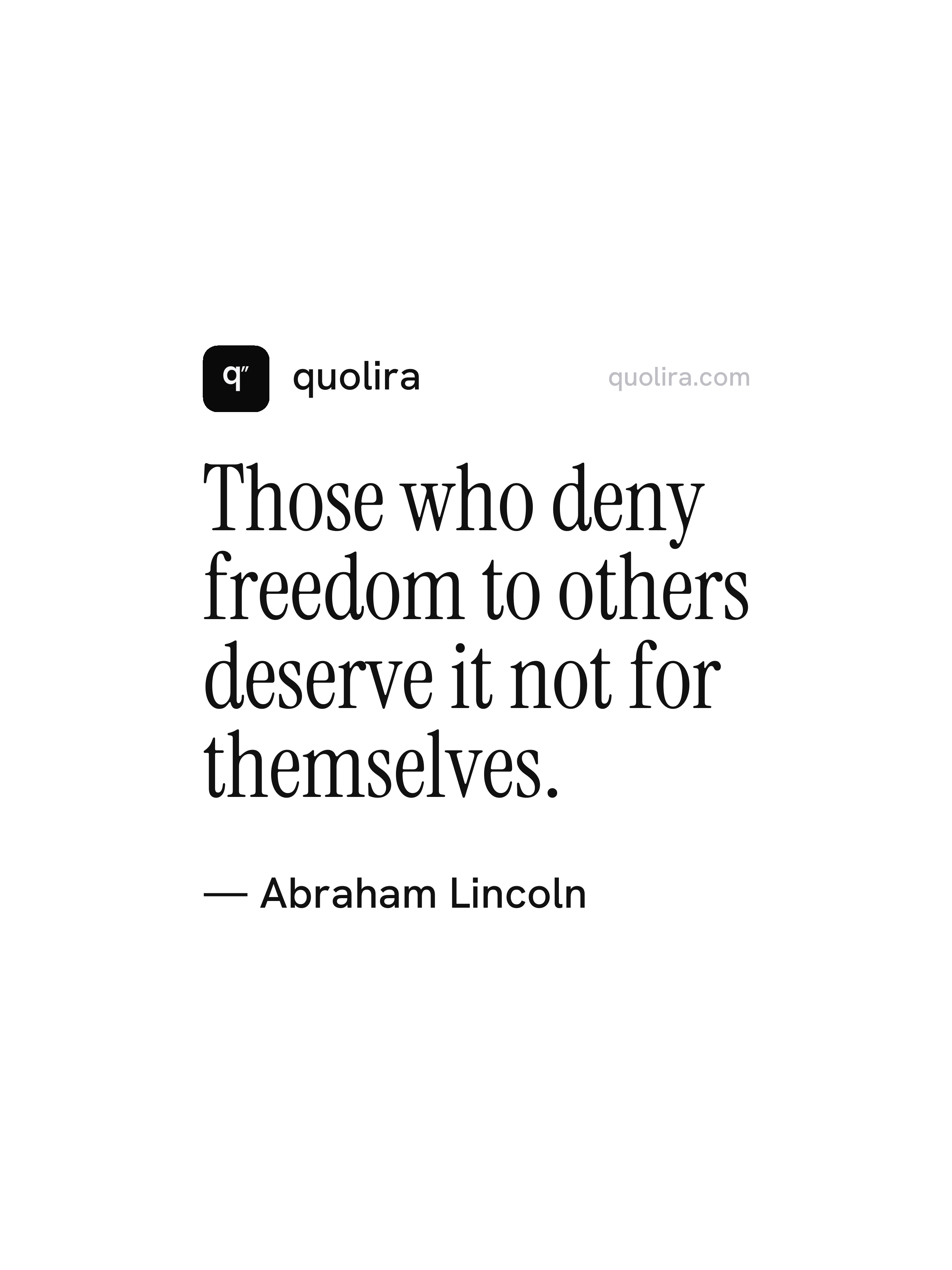
“Those who deny freedom to others deserve it not for themselves.”
Abraham Lincoln · Letter to Henry L. Pierce, April 6, 1859