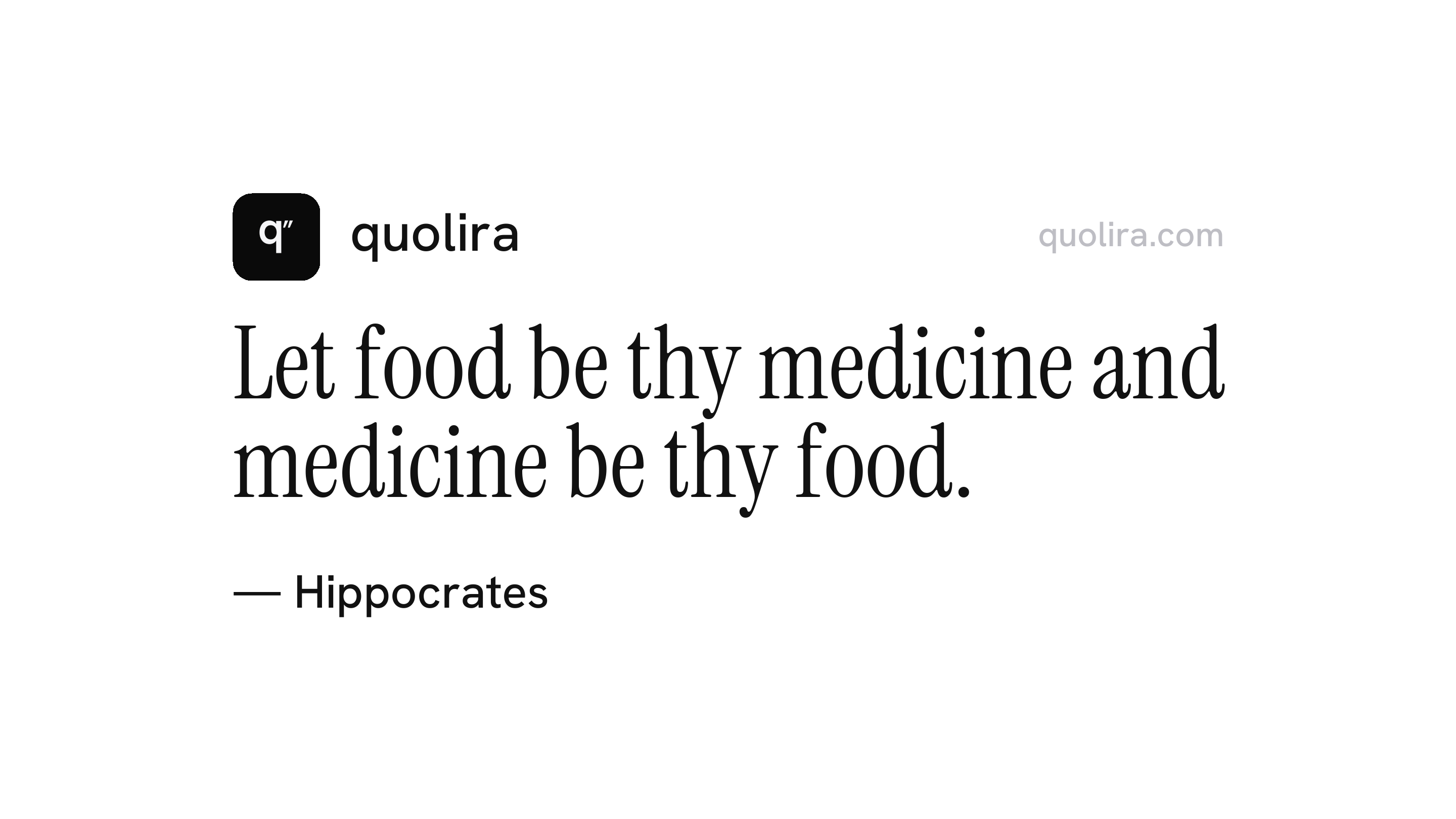
“Let food be thy medicine and medicine be thy food.”
Hippocrates · attributed
 quolira
.com
quolira
quolira.com
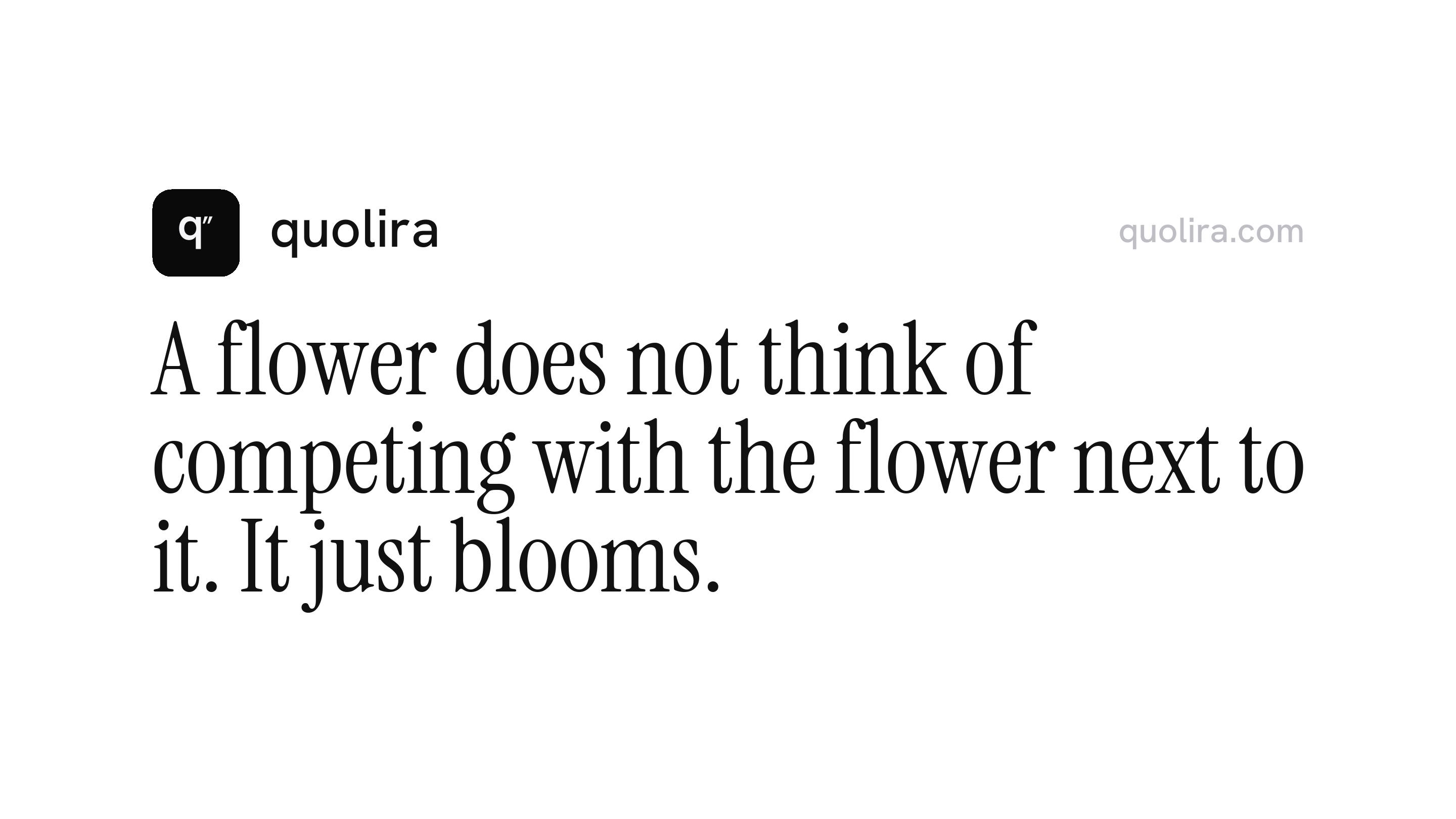
This line makes a simple but powerful observation: a flower puts all of its energy into becoming fully itself, without any awareness of or interest in what the flower beside it is doing. There is no rivalry in a garden, only growth. The line uses that image to suggest that human beings might live more fully if they focused on their own unfolding rather than measuring themselves against the people around them. Competing and blooming are presented as opposites, with blooming clearly being the richer and more natural choice.
Comparison is one of the most common sources of dissatisfaction in everyday life, made sharper in recent decades by the ease with which we can see how others are living. This line cuts through that noise by going back to something elemental. Flowers are universally understood as symbols of beauty and growth, and because they are plainly indifferent to competition, the image makes the alternative to rivalry feel obvious and attainable rather than idealistic. The brevity of the line also helps: it delivers its entire point in two sentences, leaving nothing to argue with.
Keep this line close during moments when you catch yourself measuring your progress, your appearance, or your achievements against someone else's. It works well as a note on a mirror, a journal opener, or a caption for a photo that marks a personal milestone. You can also share it with someone who is struggling with self-worth in a competitive environment, because it offers reassurance without minimizing the real difficulty of the feeling.
“Let food be thy medicine and medicine be thy food.”
Hippocrates · attributed
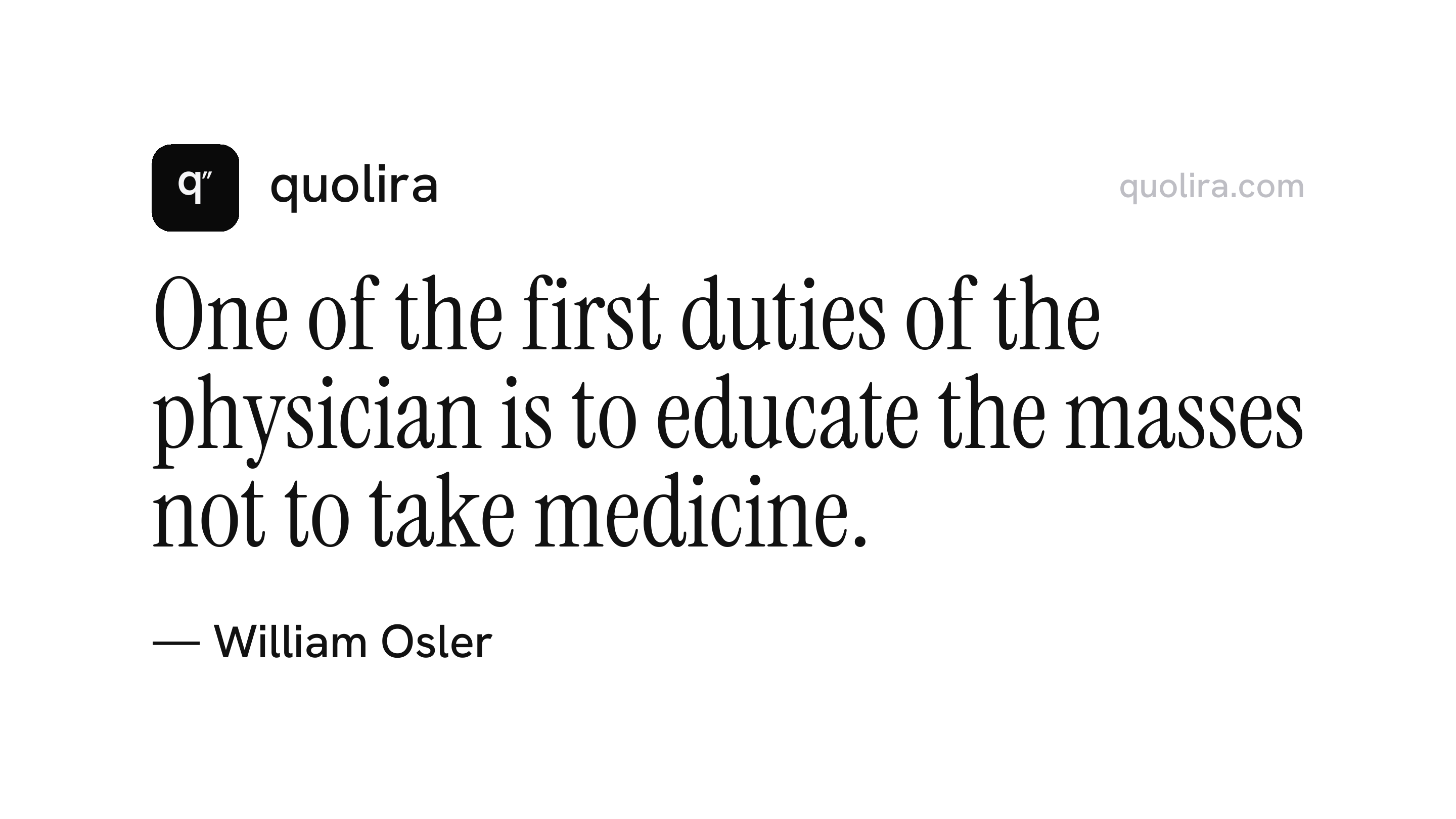
“One of the first duties of the physician is to educate the masses not to take medicine.”
William Osler · attributed
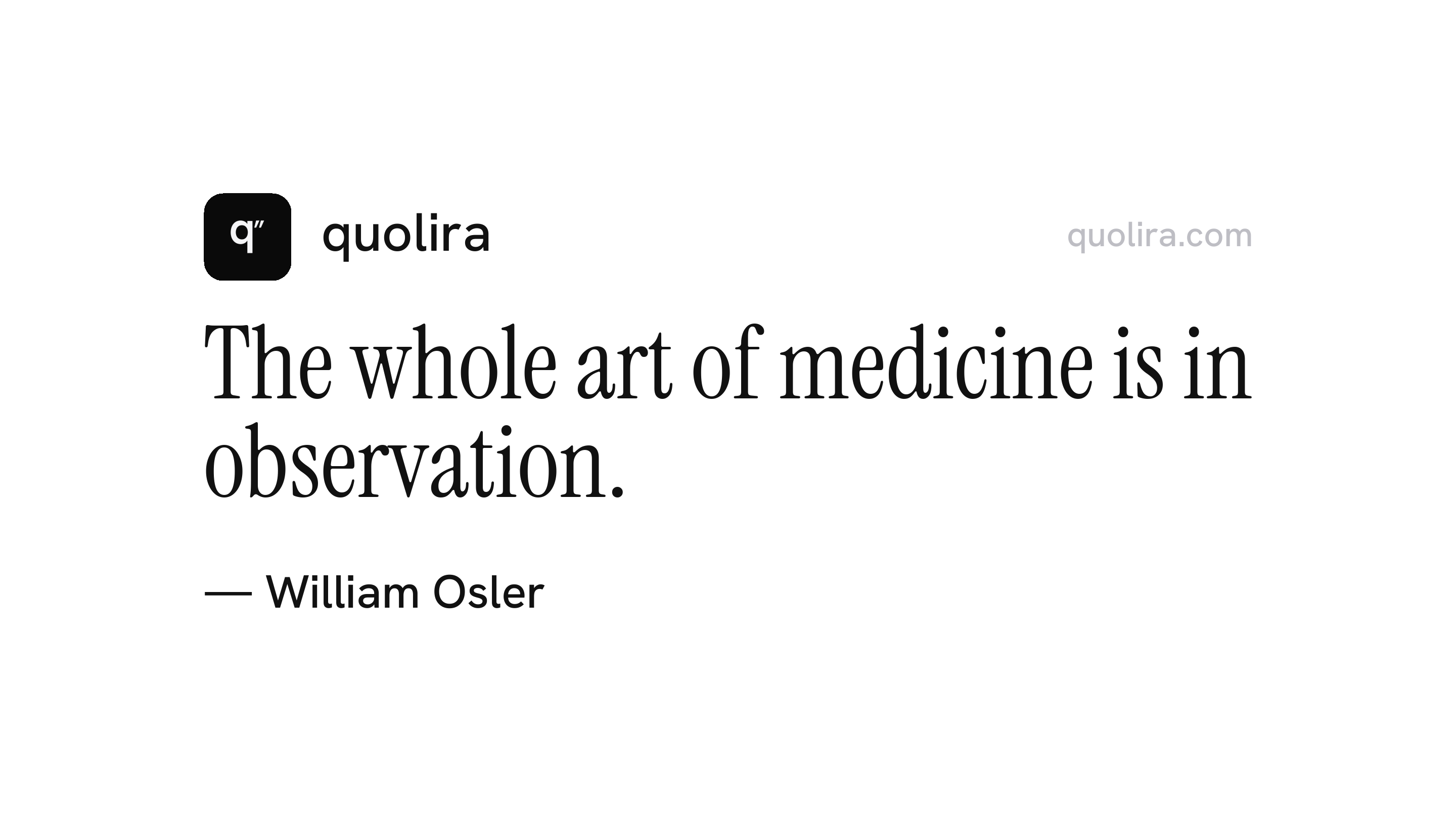
“The whole art of medicine is in observation.”
William Osler · attributed
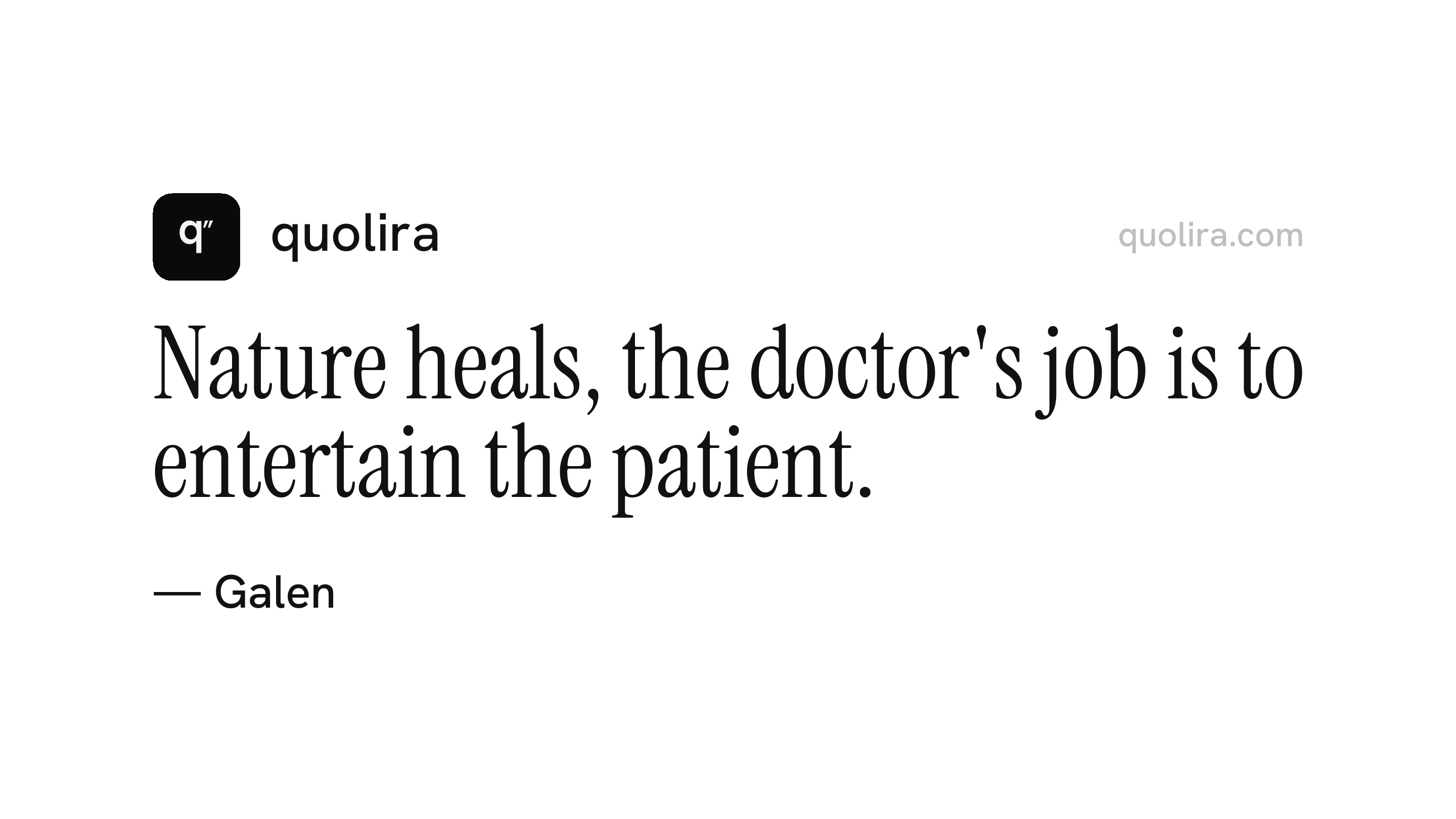
“Nature heals, the doctor's job is to entertain the patient.”
Galen · attributed
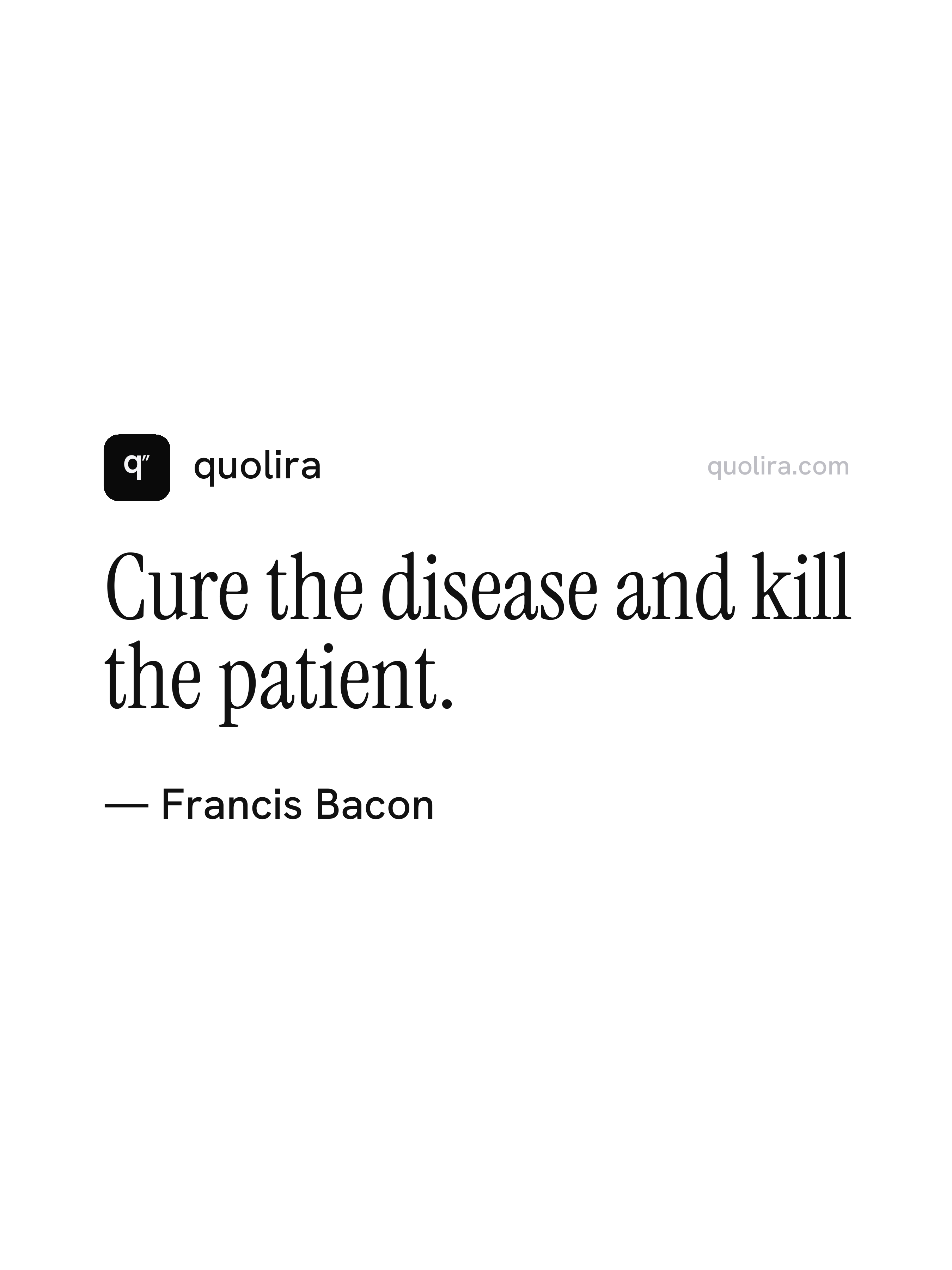
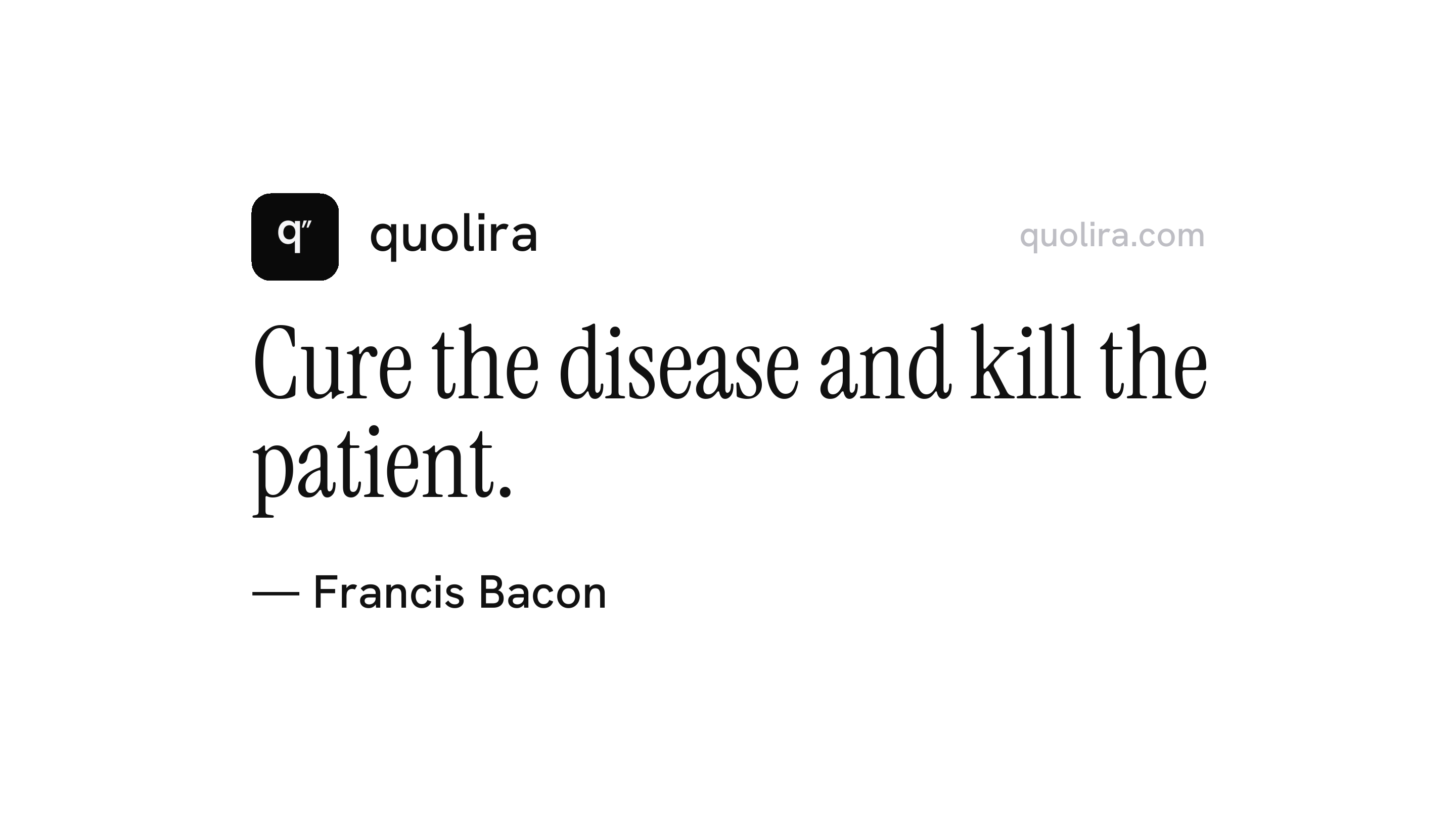
“Cure the disease and kill the patient.”
Francis Bacon · Of Friendship
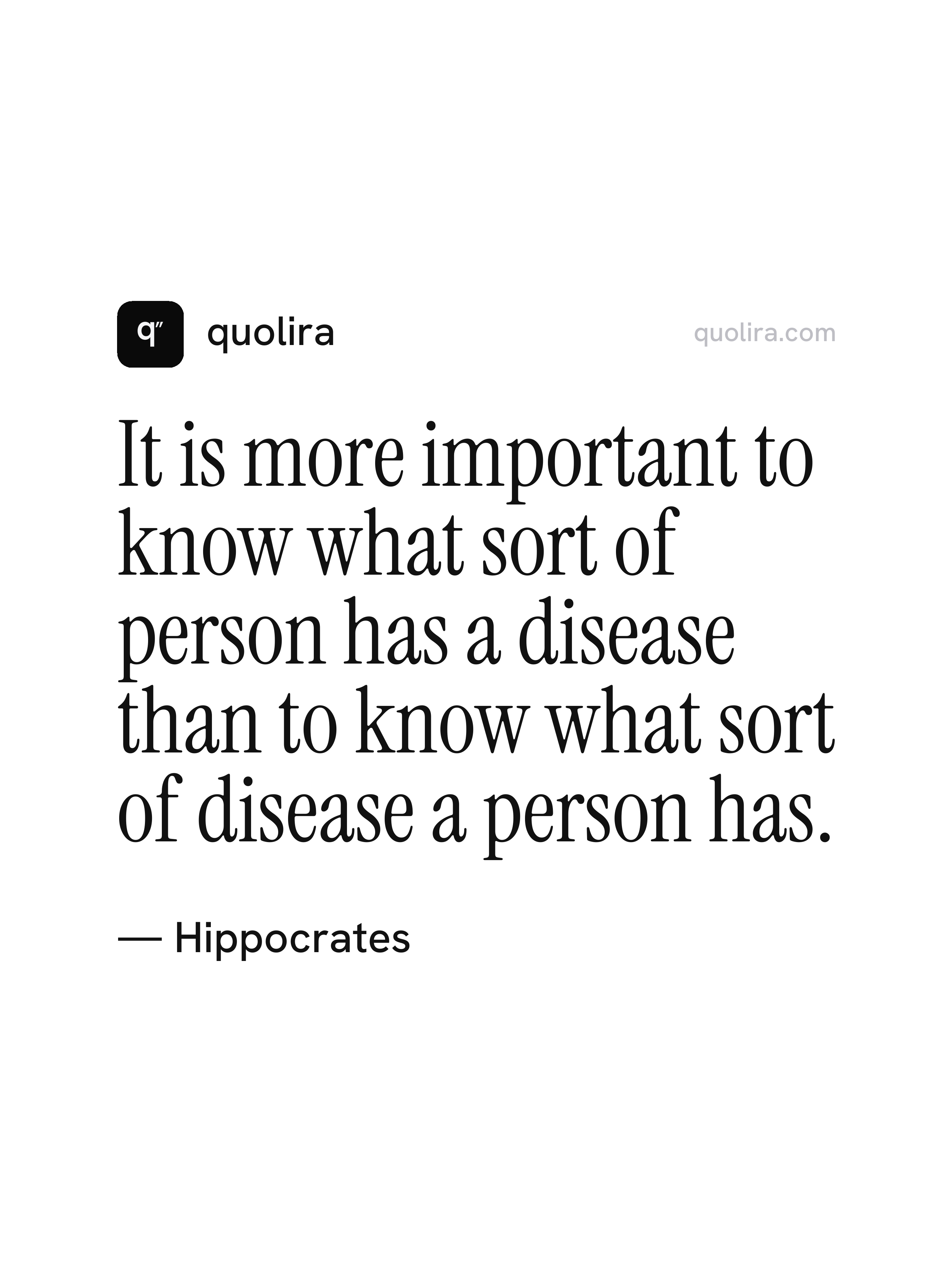
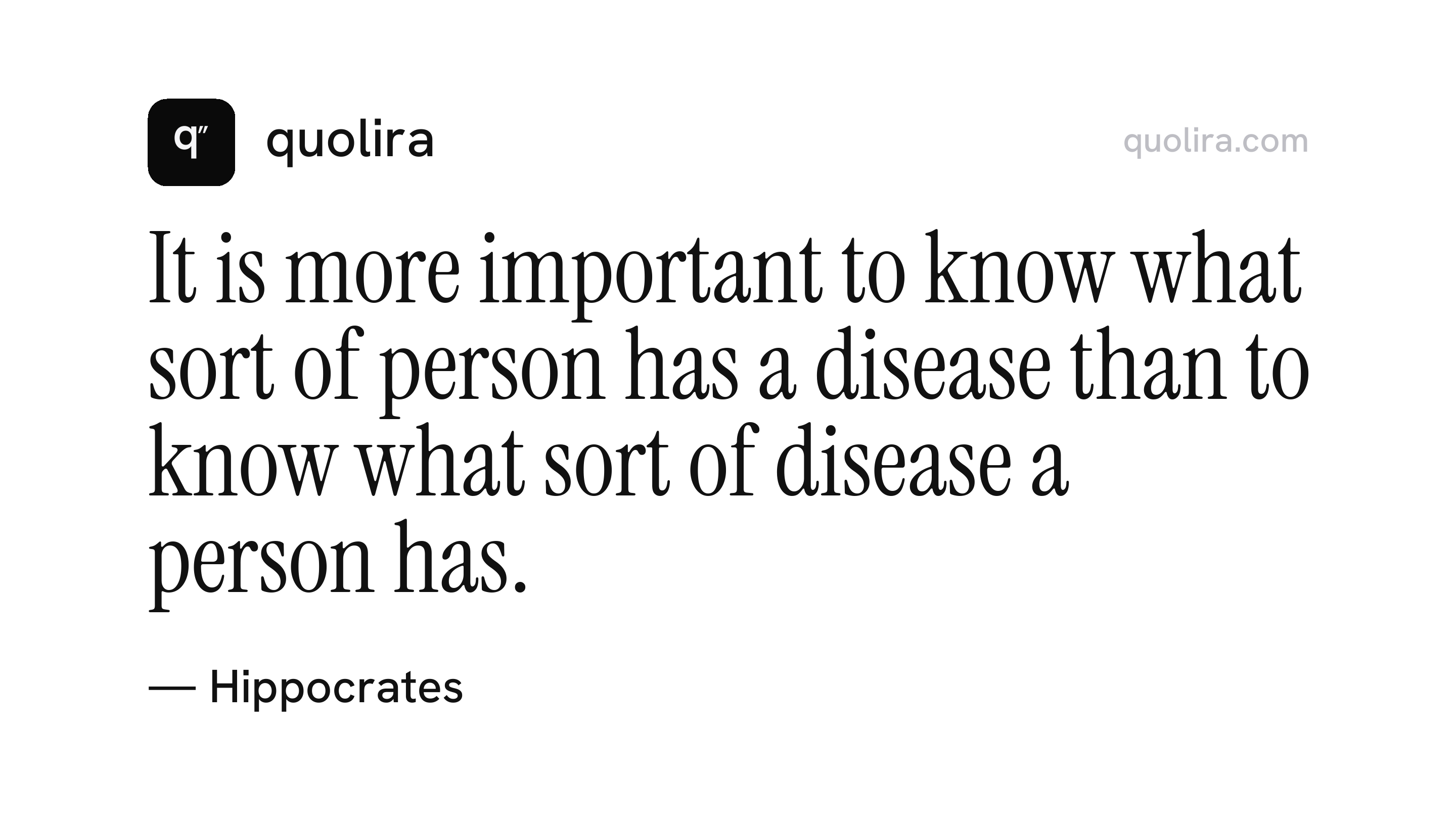
“It is more important to know what sort of person has a disease than to know what sort of disease a person has.”
Hippocrates · attributed
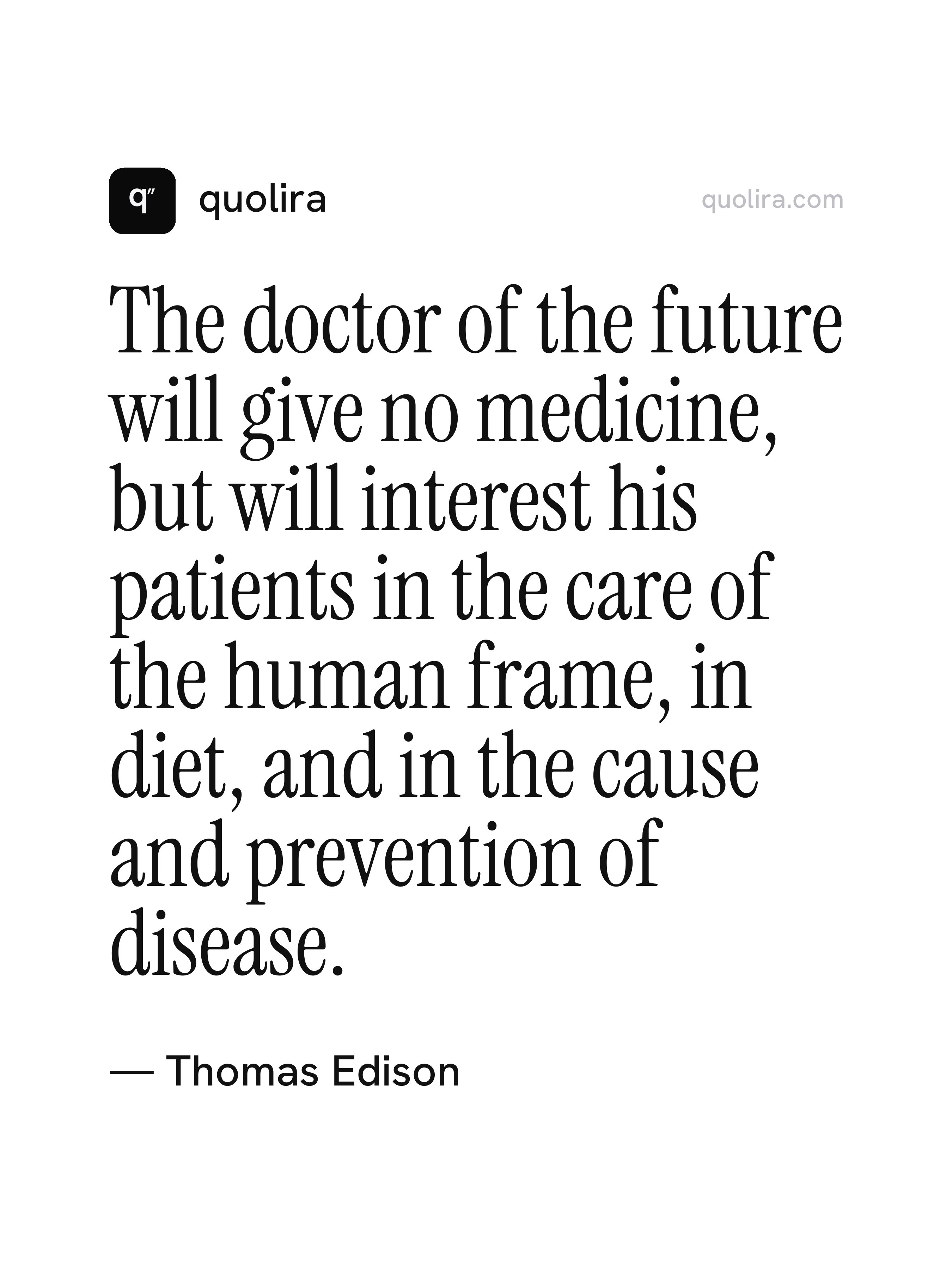
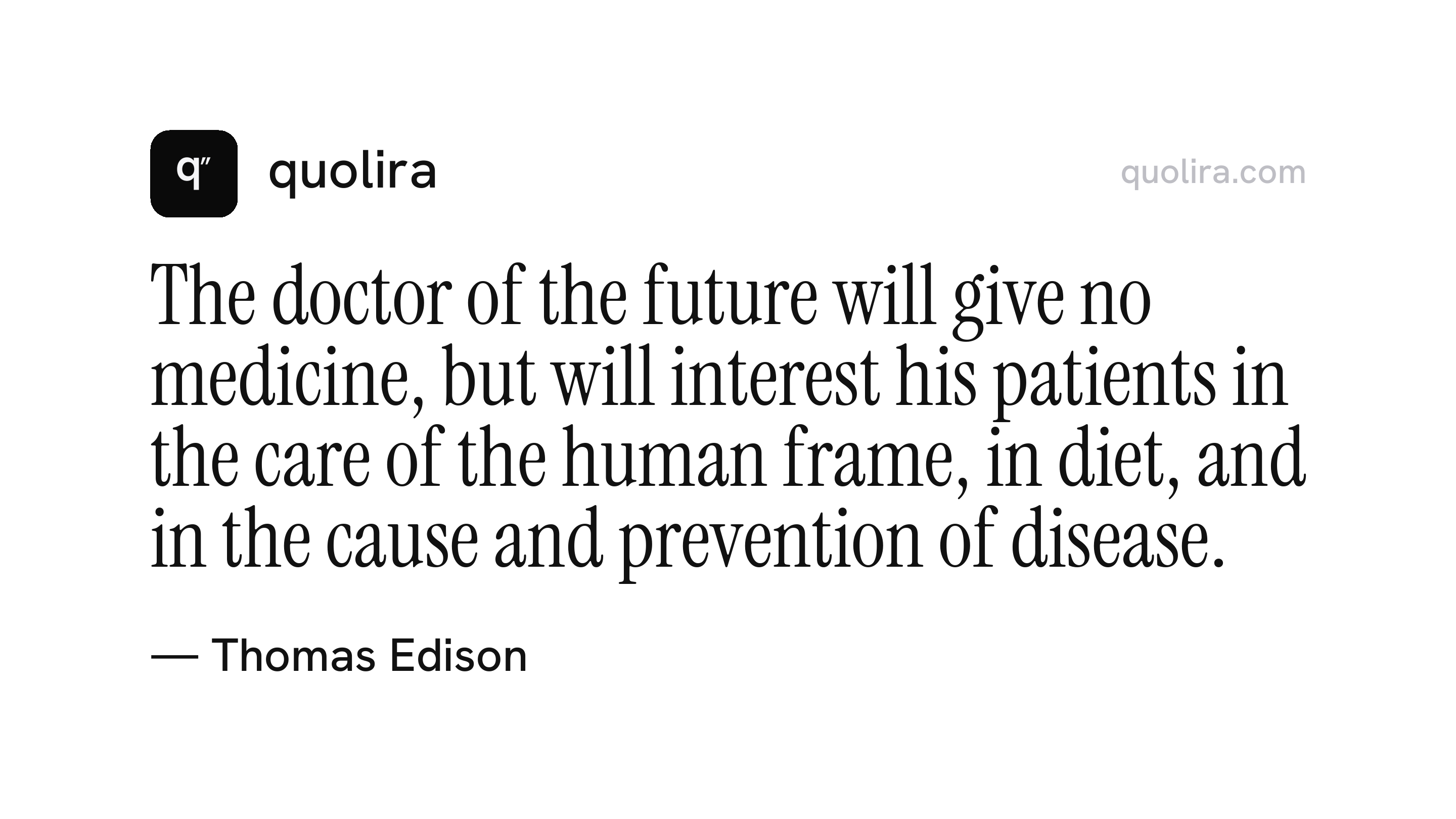
“The doctor of the future will give no medicine, but will interest his patients in the care of the human frame, in diet, and in the cause and prevention of disease.”
Thomas Edison · attributed
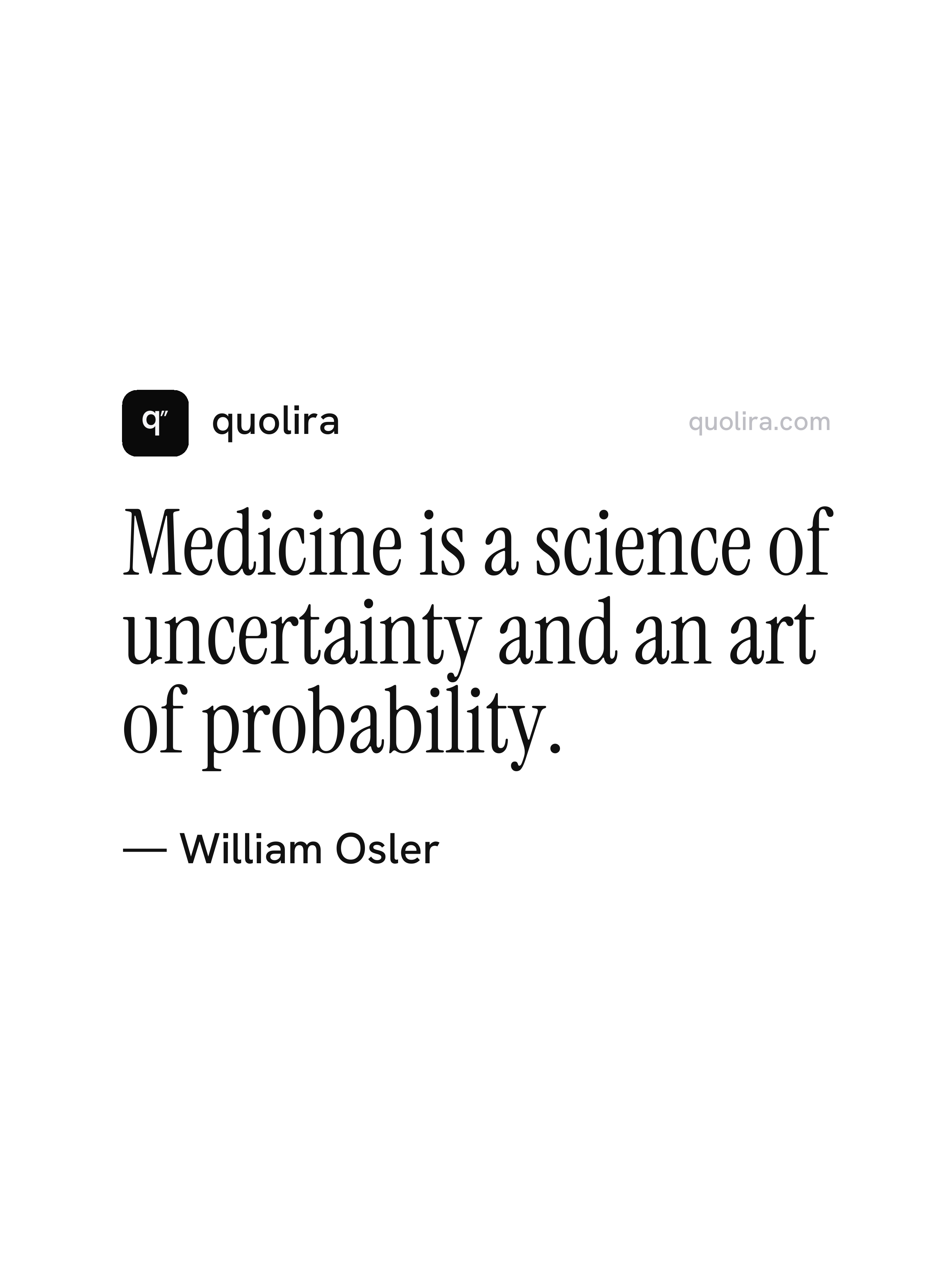
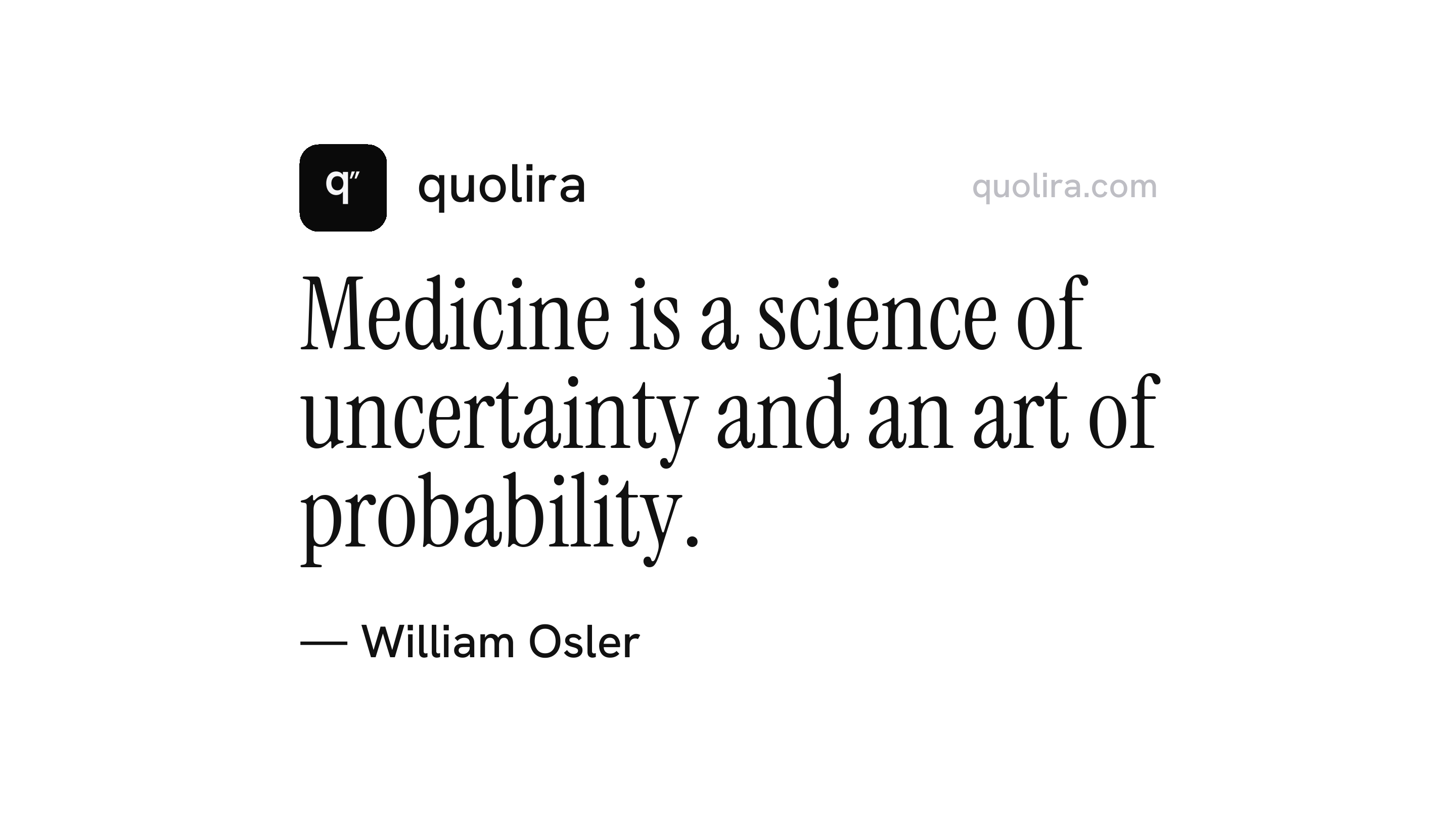
“Medicine is a science of uncertainty and an art of probability.”
William Osler · attributed
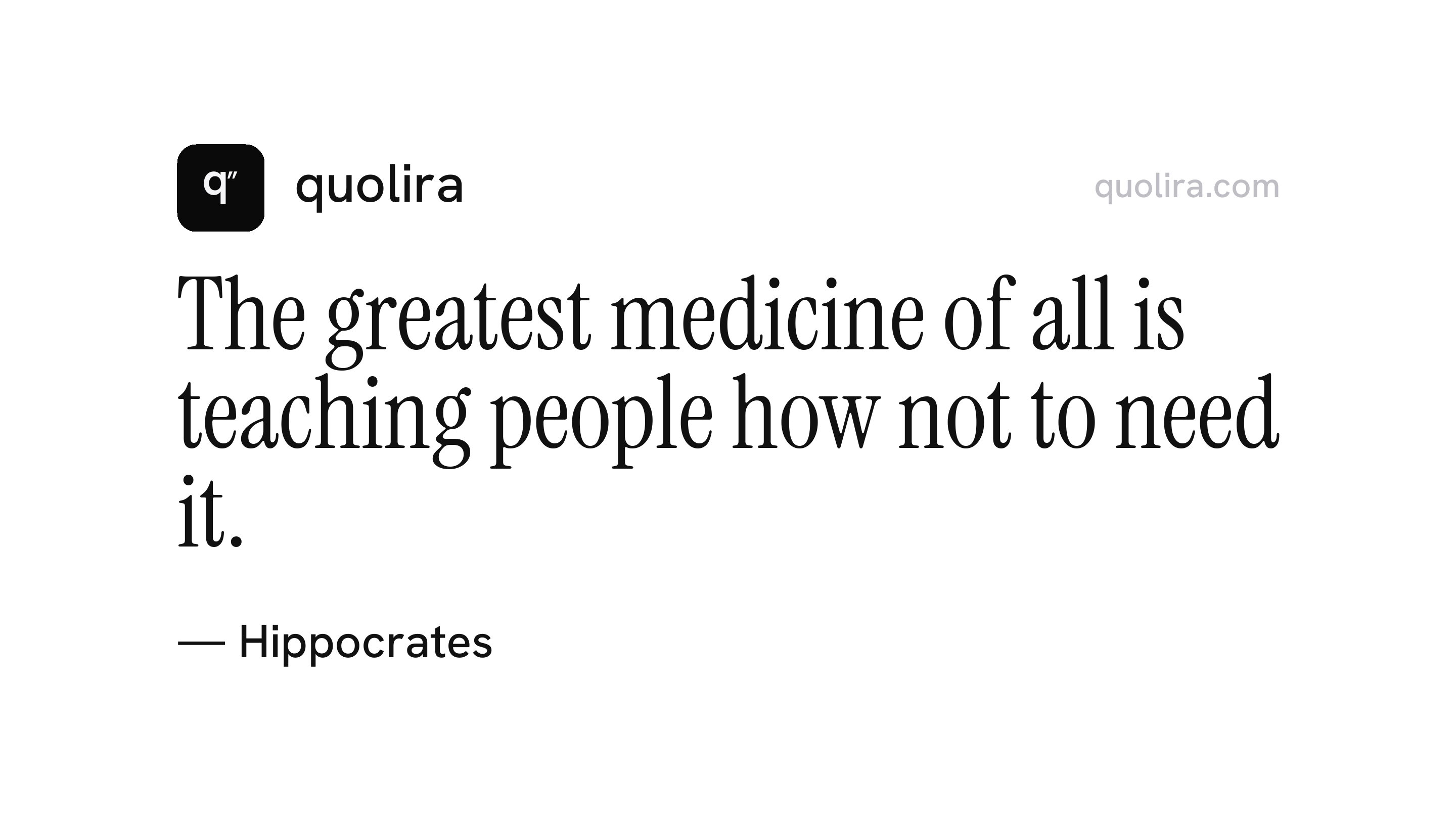
“The greatest medicine of all is teaching people how not to need it.”
Hippocrates · attributed
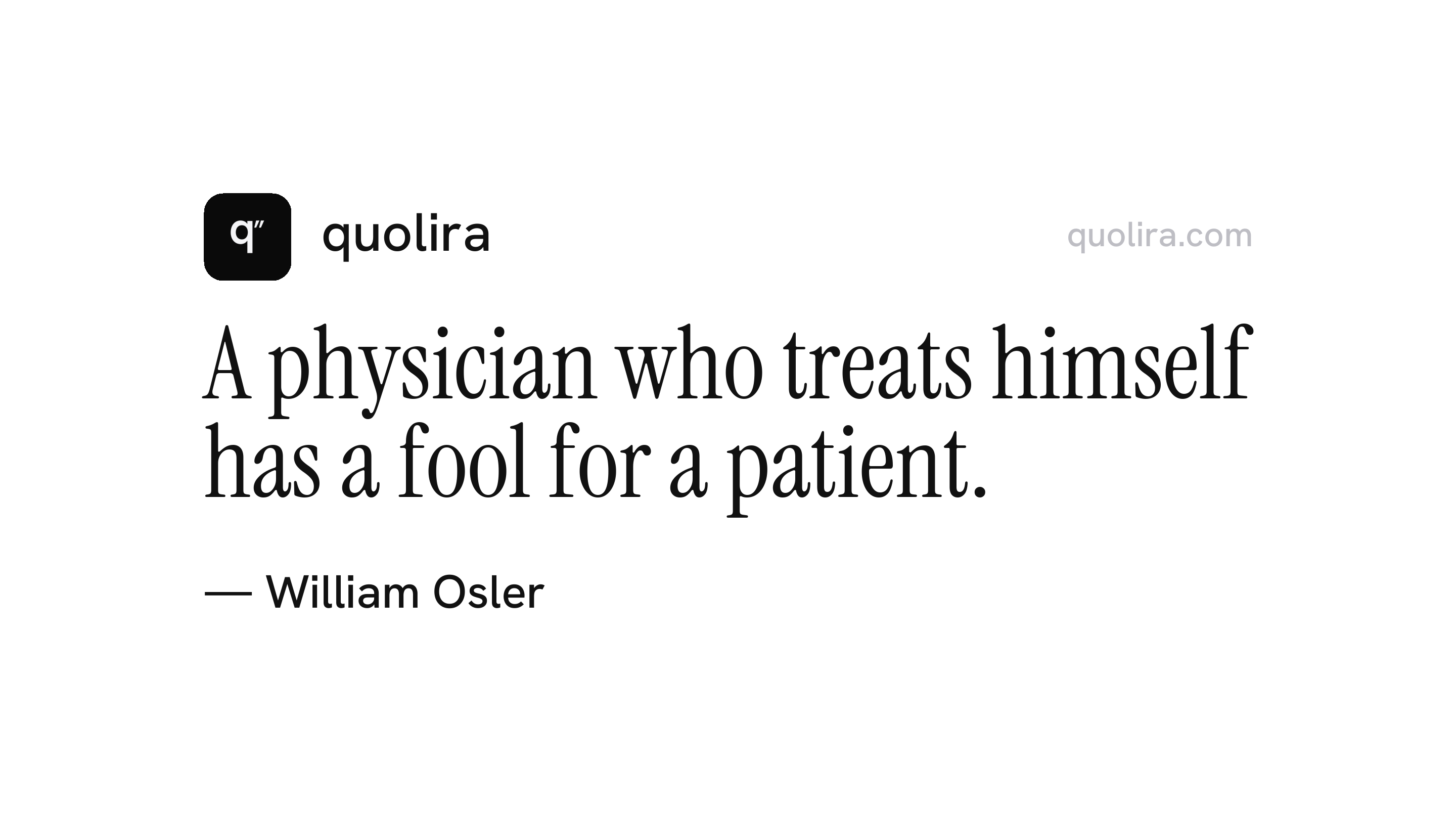
“A physician who treats himself has a fool for a patient.”
William Osler · attributed
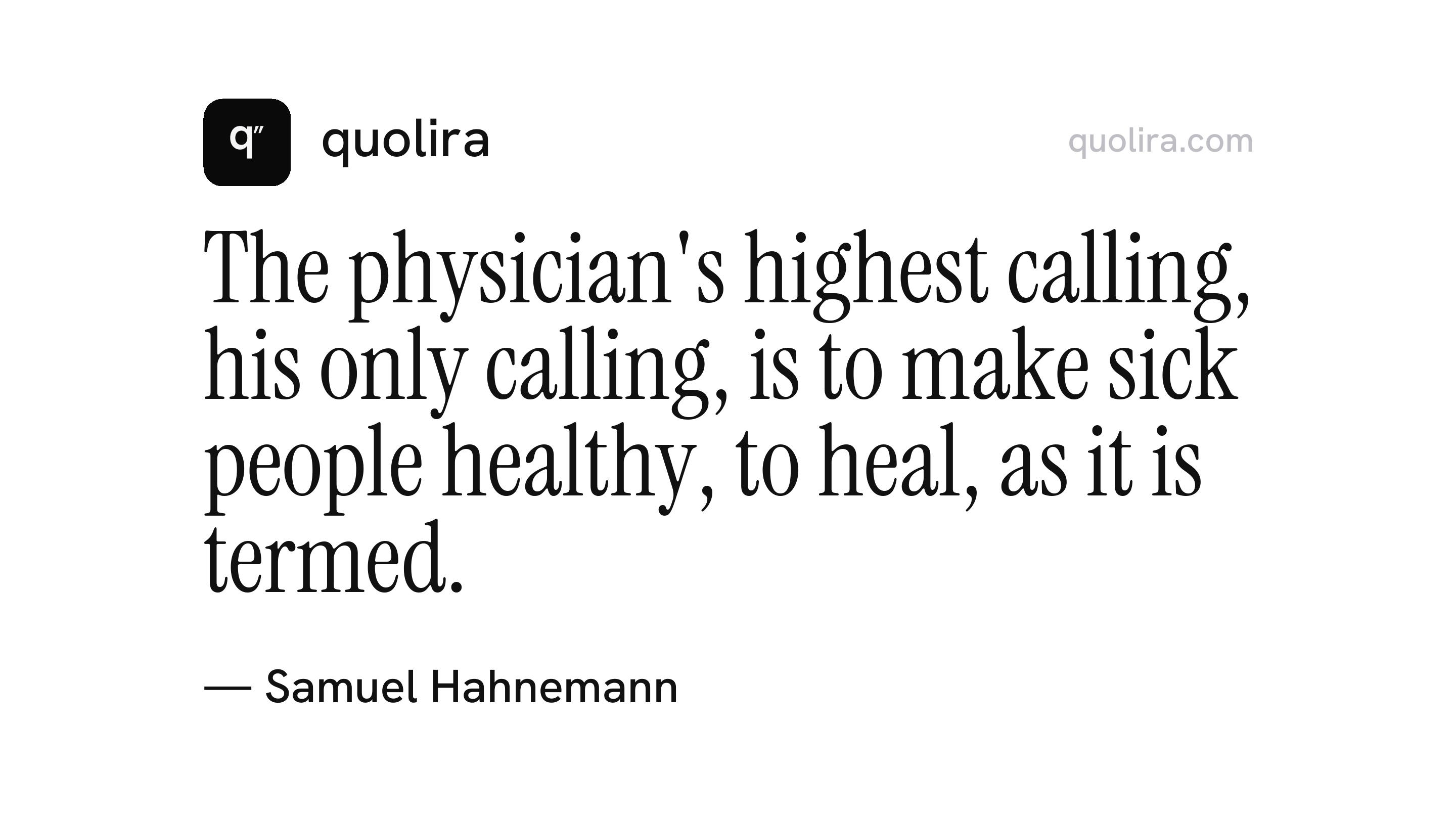
“The physician's highest calling, his only calling, is to make sick people healthy, to heal, as it is termed.”
Samuel Hahnemann · Organon of Medicine
“The art of medicine consists of amusing the patient while nature cures the disease.”
Voltaire · attributed