“Cure the disease and kill the patient.”
Francis Bacon · Of Friendship
 quolira
.com
quolira
quolira.com
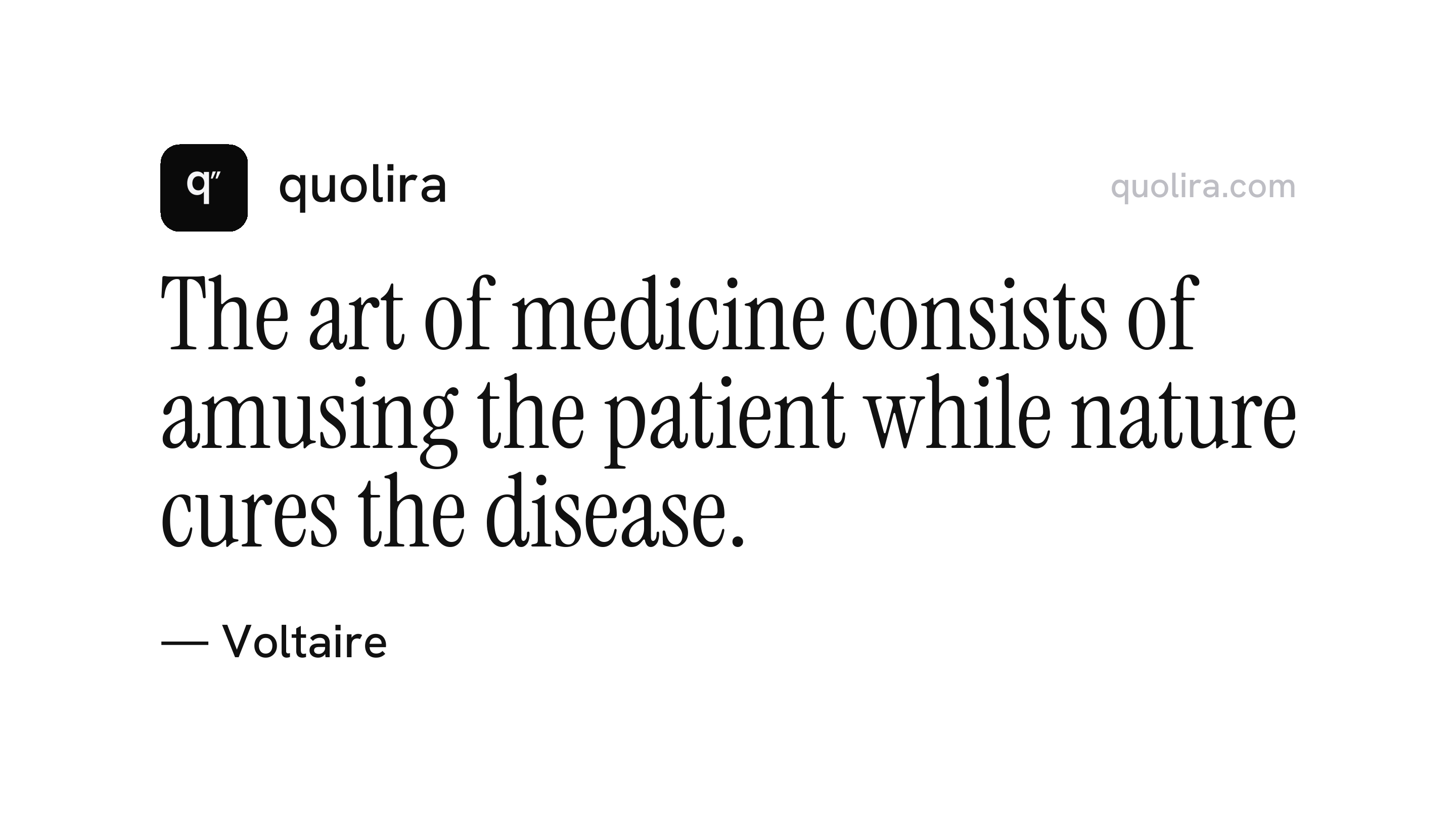
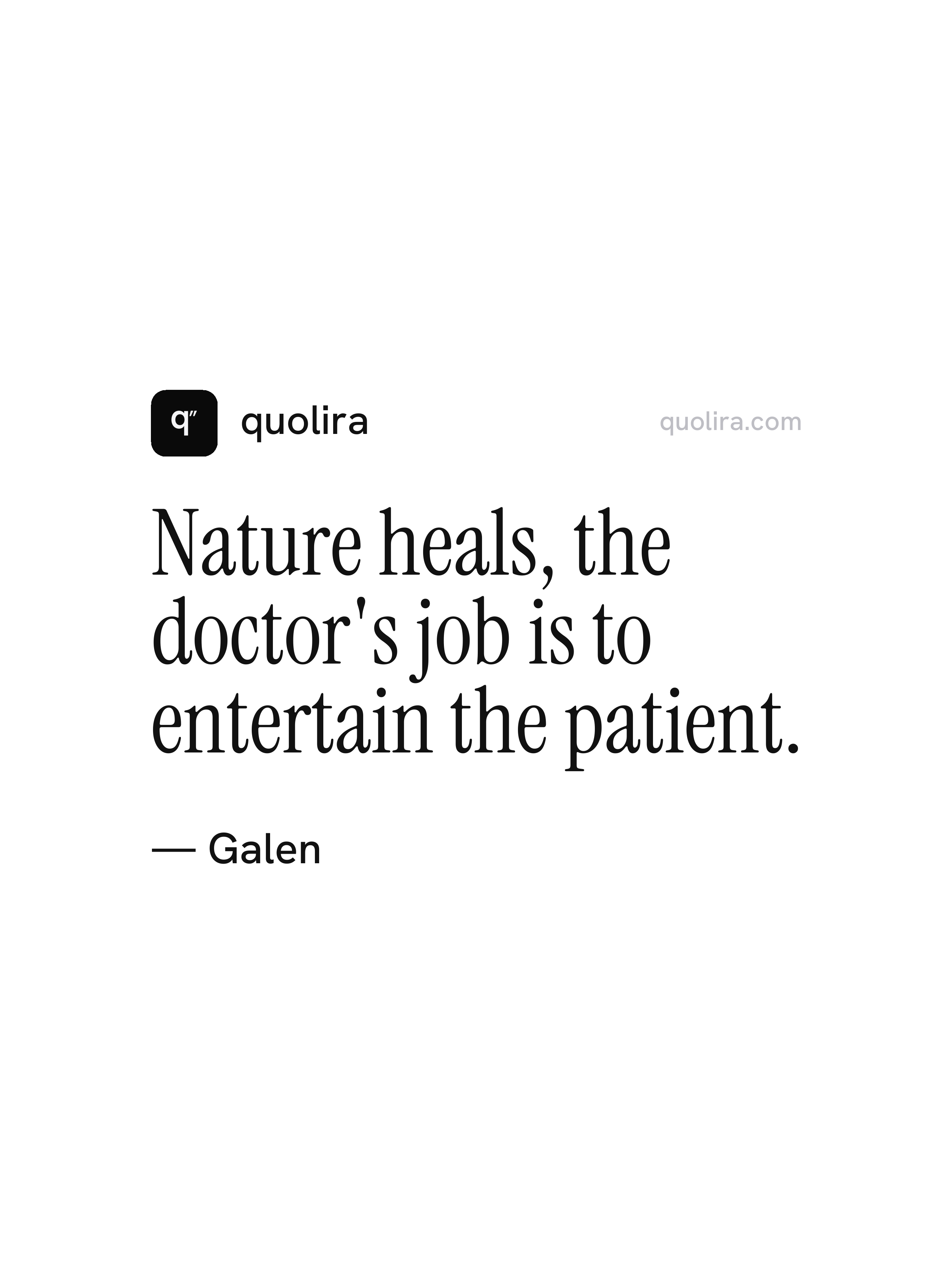
The line draws a wry but serious distinction between two forces at work whenever a sick person recovers. The body, given the right conditions, has its own restorative capacity. The physician's practical task, under this view, is less about intervening directly and more about keeping the patient calm, hopeful, and cooperative long enough for that natural process to do its work. It is a humbling description of medicine, and an honest one.
This saying is commonly linked to Galen, the prolific Greek physician who worked in the Roman world and whose writings dominated European and Islamic medicine for well over a thousand years. Whether the words are his precisely is uncertain, as attribution across such a long span of transmission is rarely reliable. The idea itself, however, fits within a broader ancient conviction that the physician should work with nature rather than against it, a principle that appears across many traditions of early medicine and that Galen did discuss extensively in his surviving works.
Galen was a physician and writer of the second century CE who practiced in Rome and became associated with the imperial court. He was extraordinarily productive, and a large portion of his texts survived, making him one of the best-documented medical thinkers of antiquity. His theories about the body, drawn from anatomy, philosophy, and clinical observation, became authoritative in ways that were both enormously influential and, in later centuries, a framework that reformers like Vesalius had to work hard to revise. His legacy is complicated, impressive, and central to the history of medicine.
“Cure the disease and kill the patient.”
Francis Bacon · Of Friendship
“It is more important to know what sort of person has a disease than to know what sort of disease a person has.”
Hippocrates · attributed
“The doctor of the future will give no medicine, but will interest his patients in the care of the human frame, in diet, and in the cause and prevention of disease.”
Thomas Edison · attributed
“Medicine is a science of uncertainty and an art of probability.”
William Osler · attributed
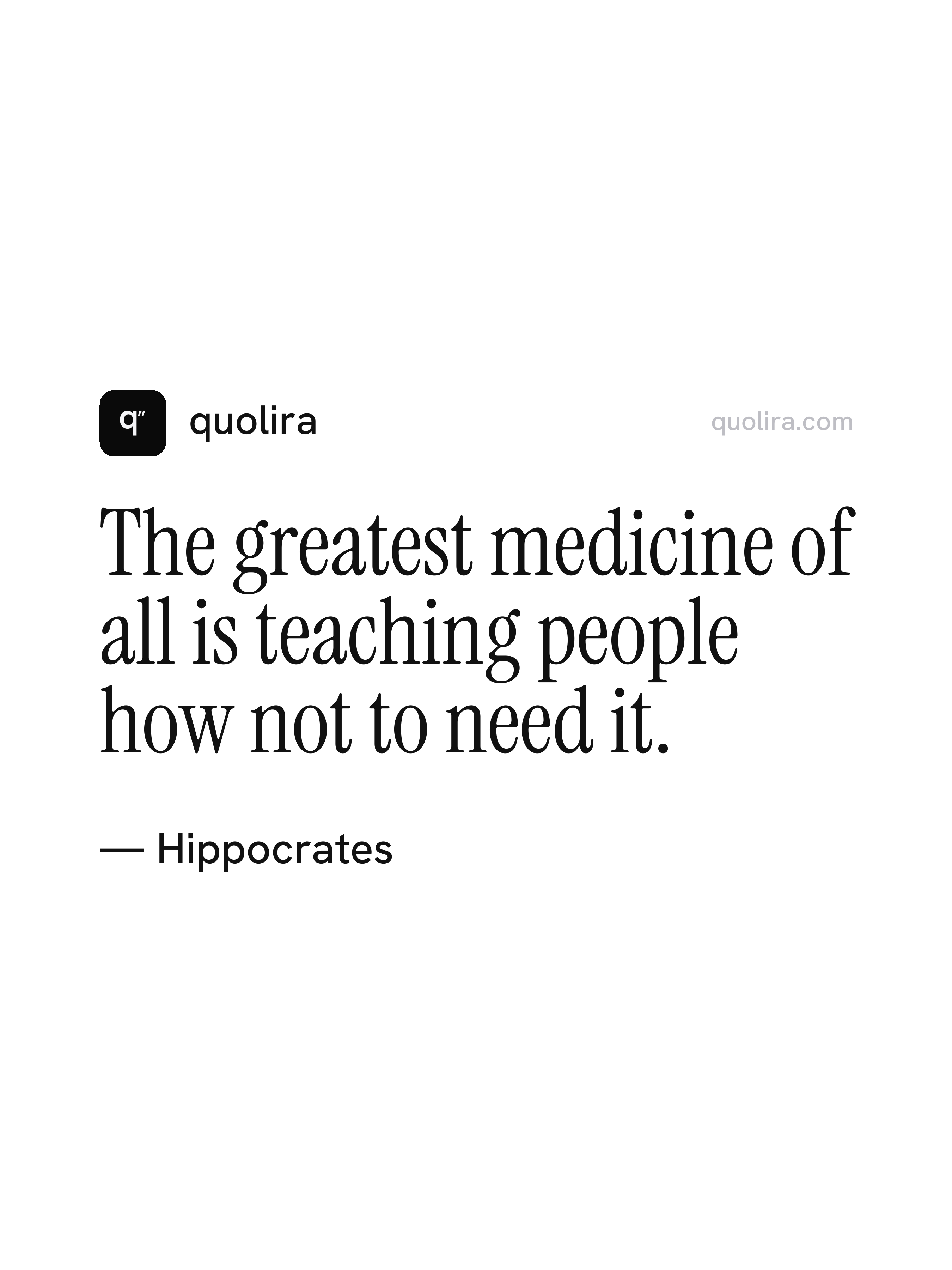
“The greatest medicine of all is teaching people how not to need it.”
Hippocrates · attributed
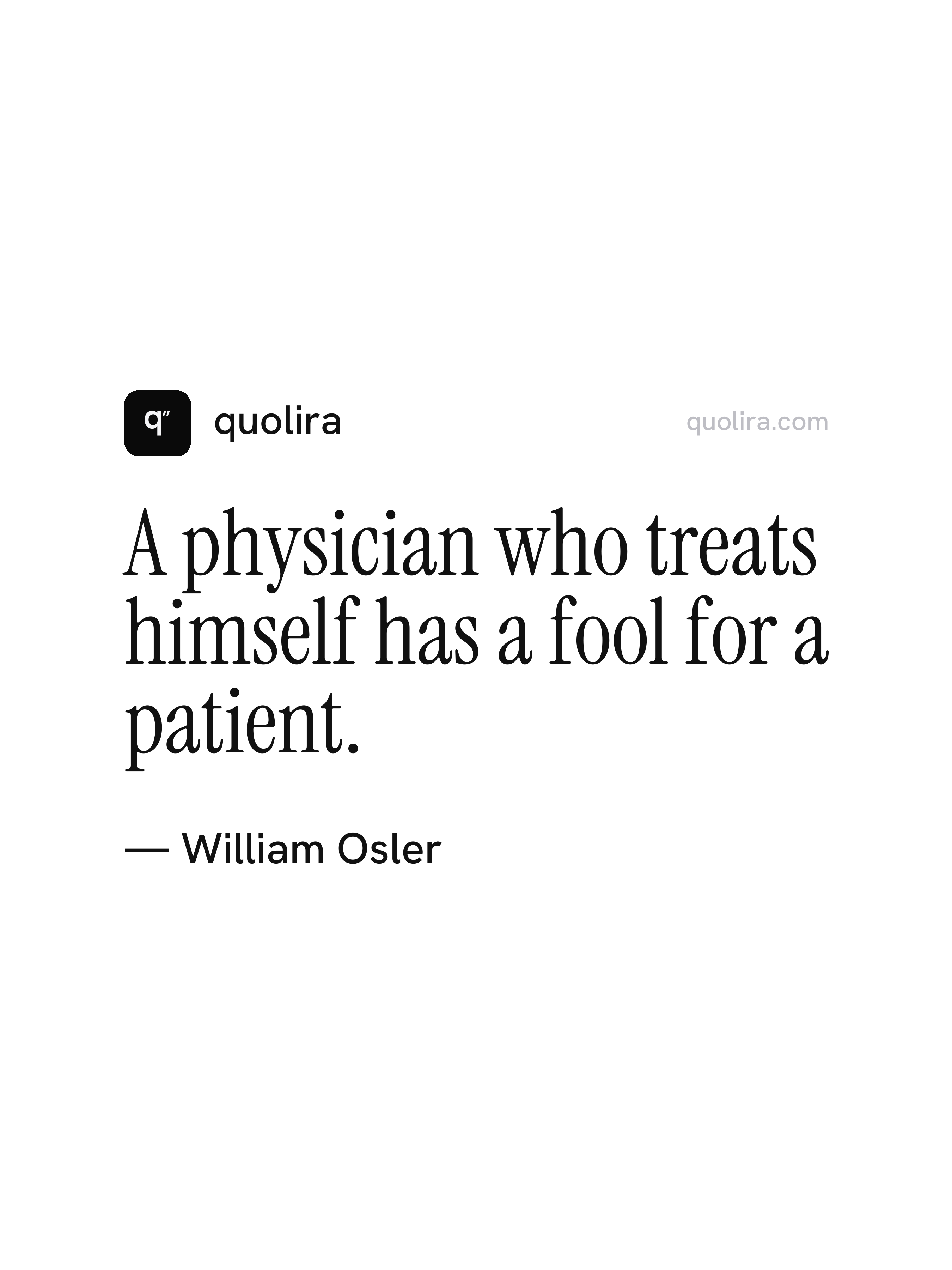
“A physician who treats himself has a fool for a patient.”
William Osler · attributed
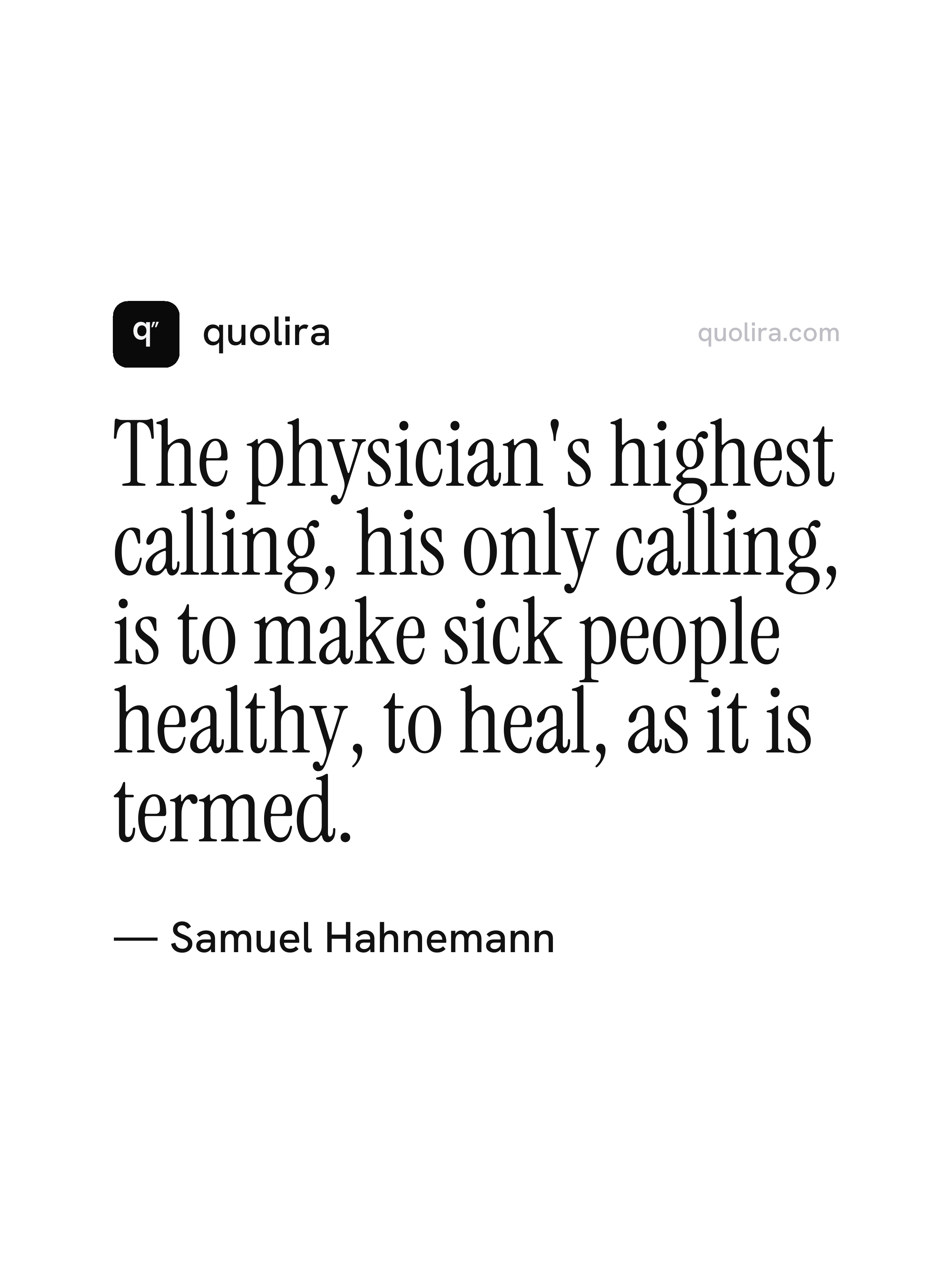
“The physician's highest calling, his only calling, is to make sick people healthy, to heal, as it is termed.”
Samuel Hahnemann · Organon of Medicine
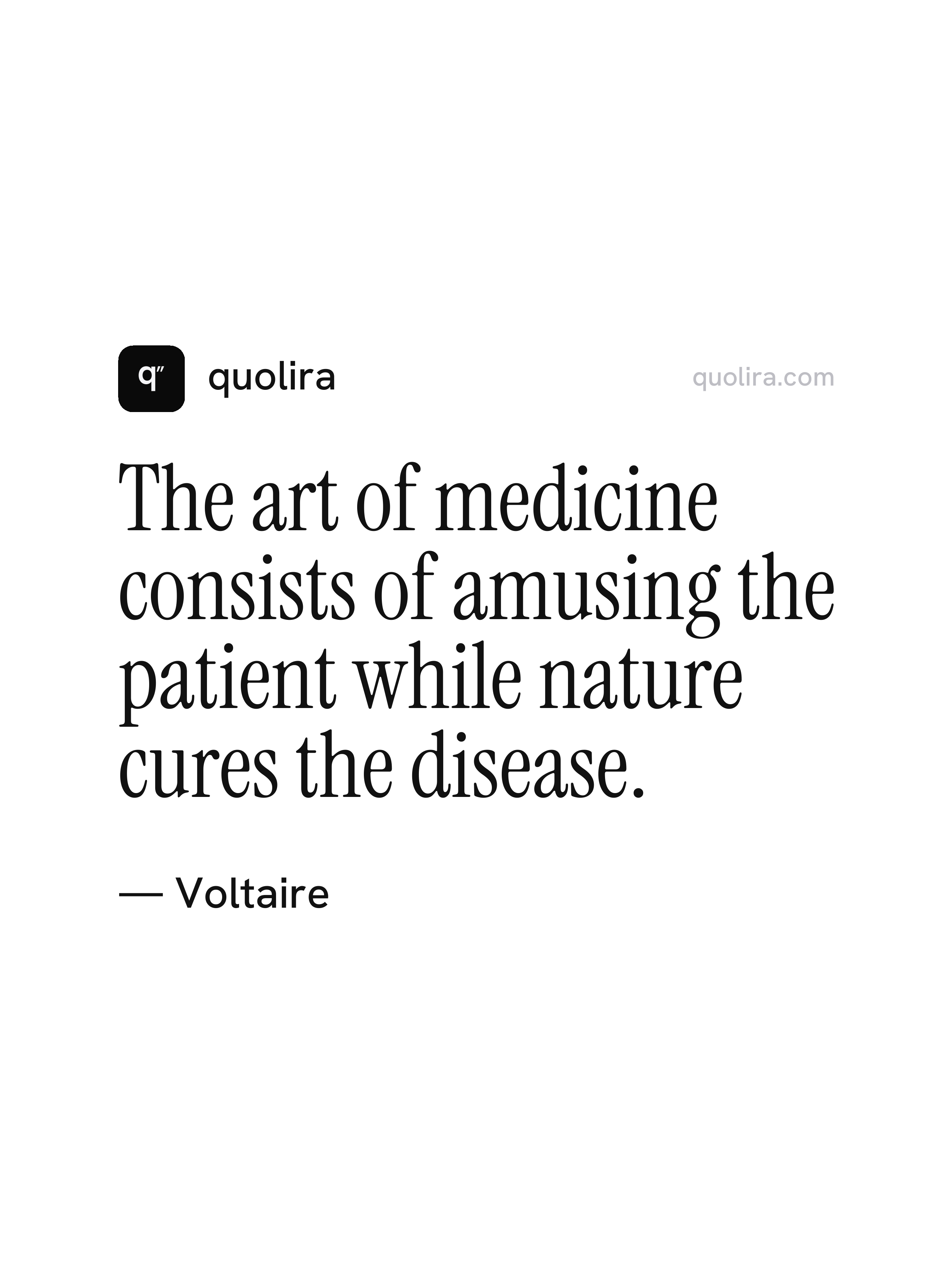
“The art of medicine consists of amusing the patient while nature cures the disease.”
Voltaire · attributed
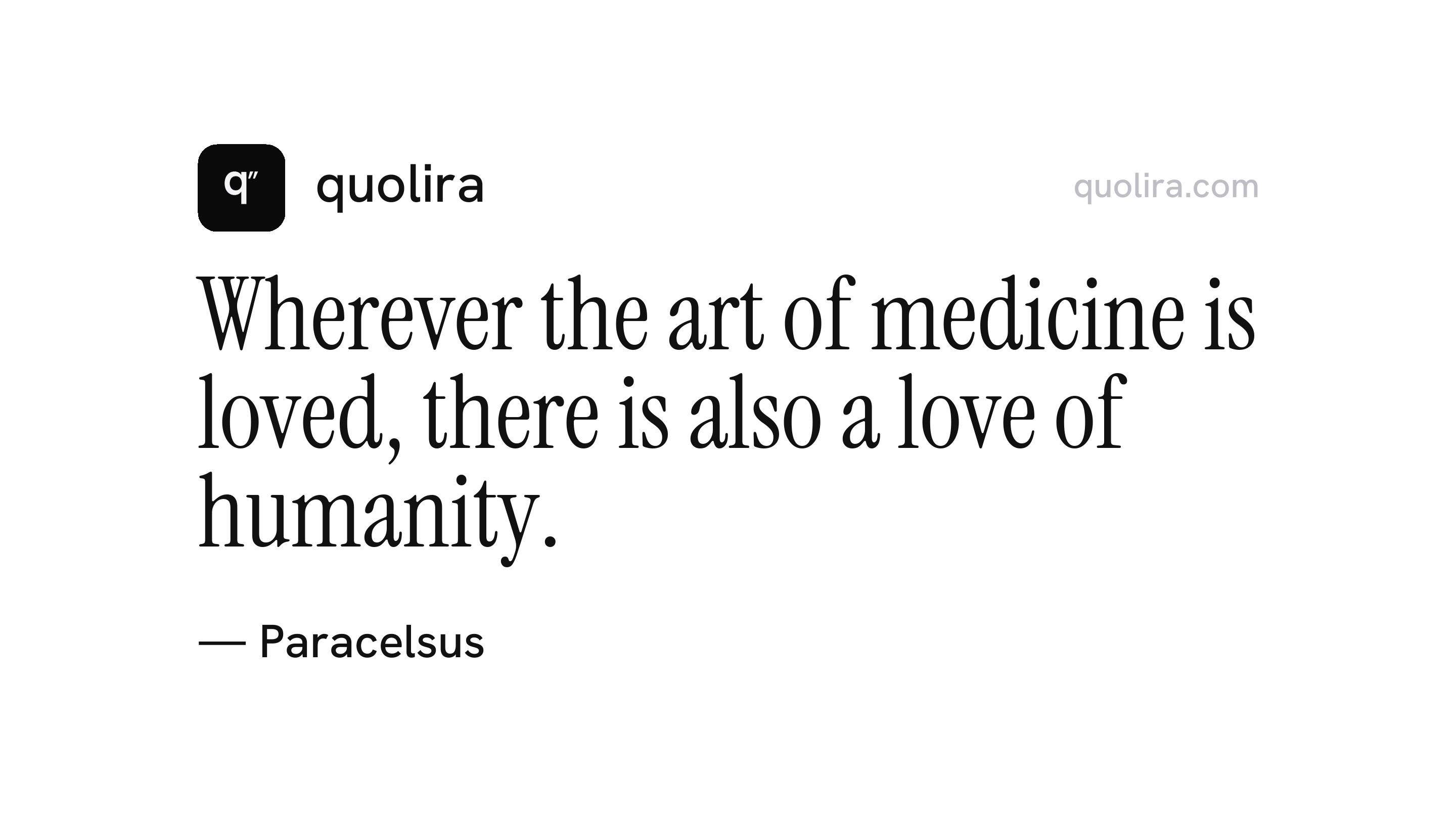
“Wherever the art of medicine is loved, there is also a love of humanity.”
Paracelsus · attributed
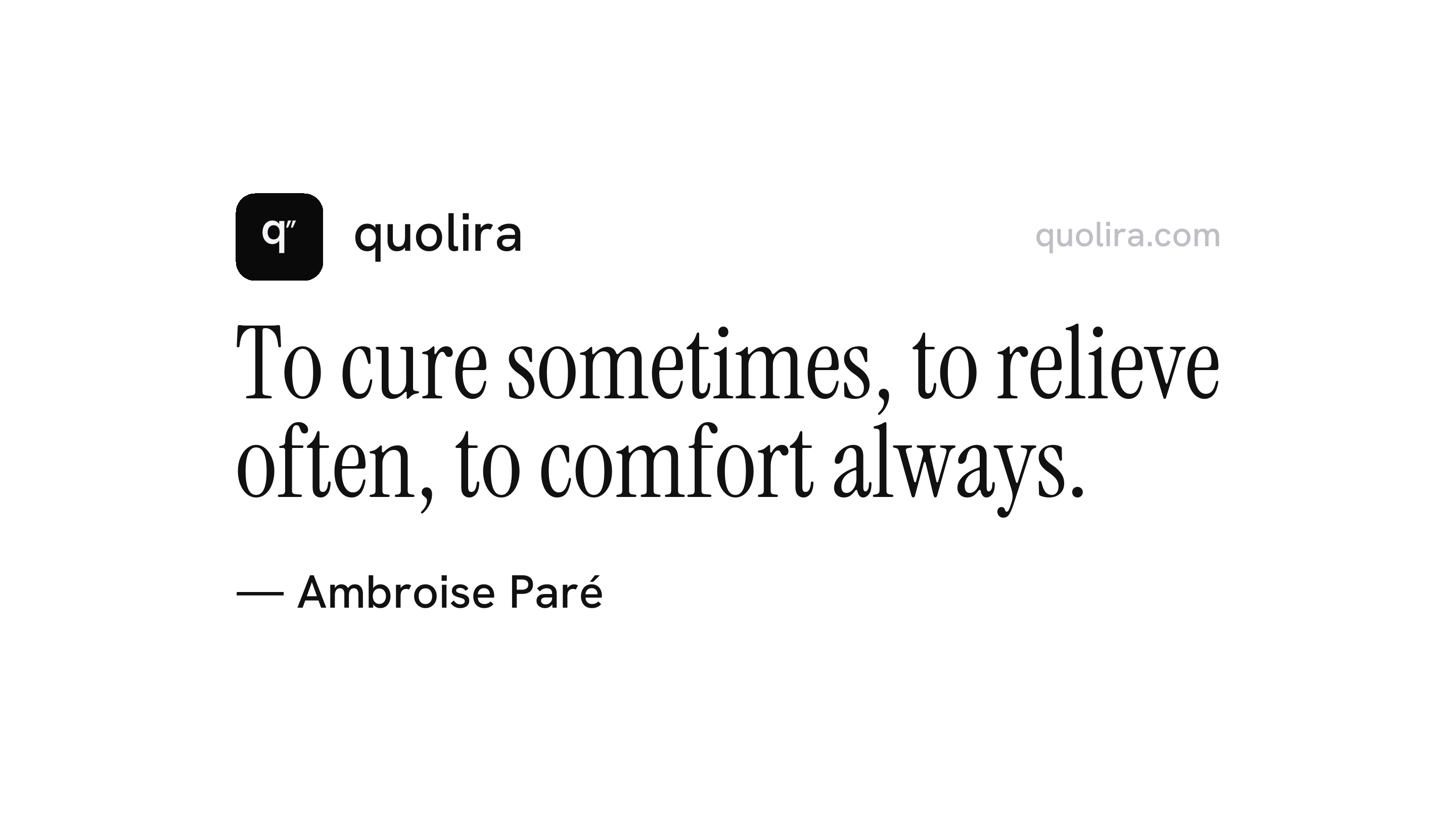
“To cure sometimes, to relieve often, to comfort always.”
Ambroise Paré · attributed
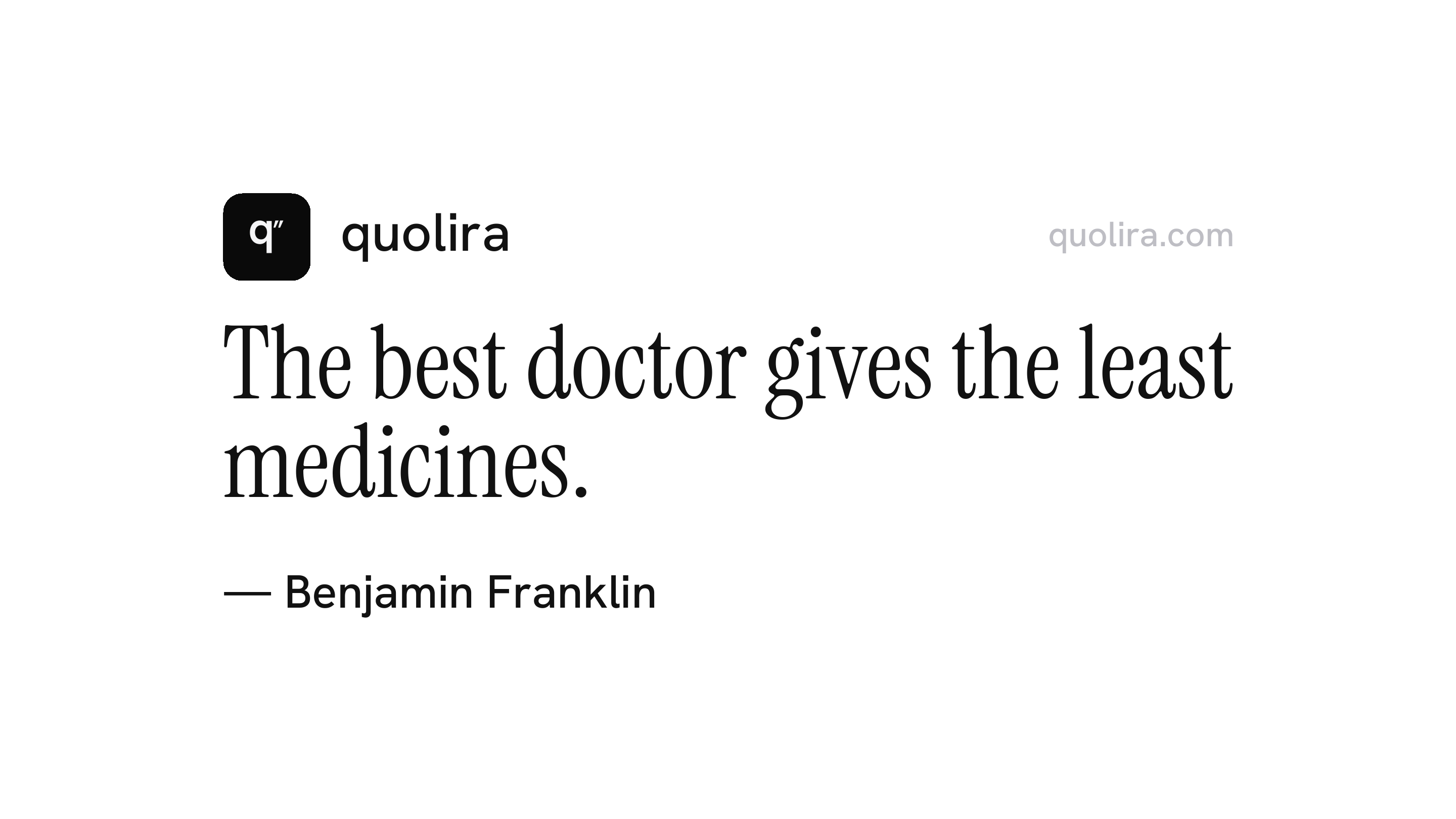
“The best doctor gives the least medicines.”
Benjamin Franklin · Poor Richard's Almanack
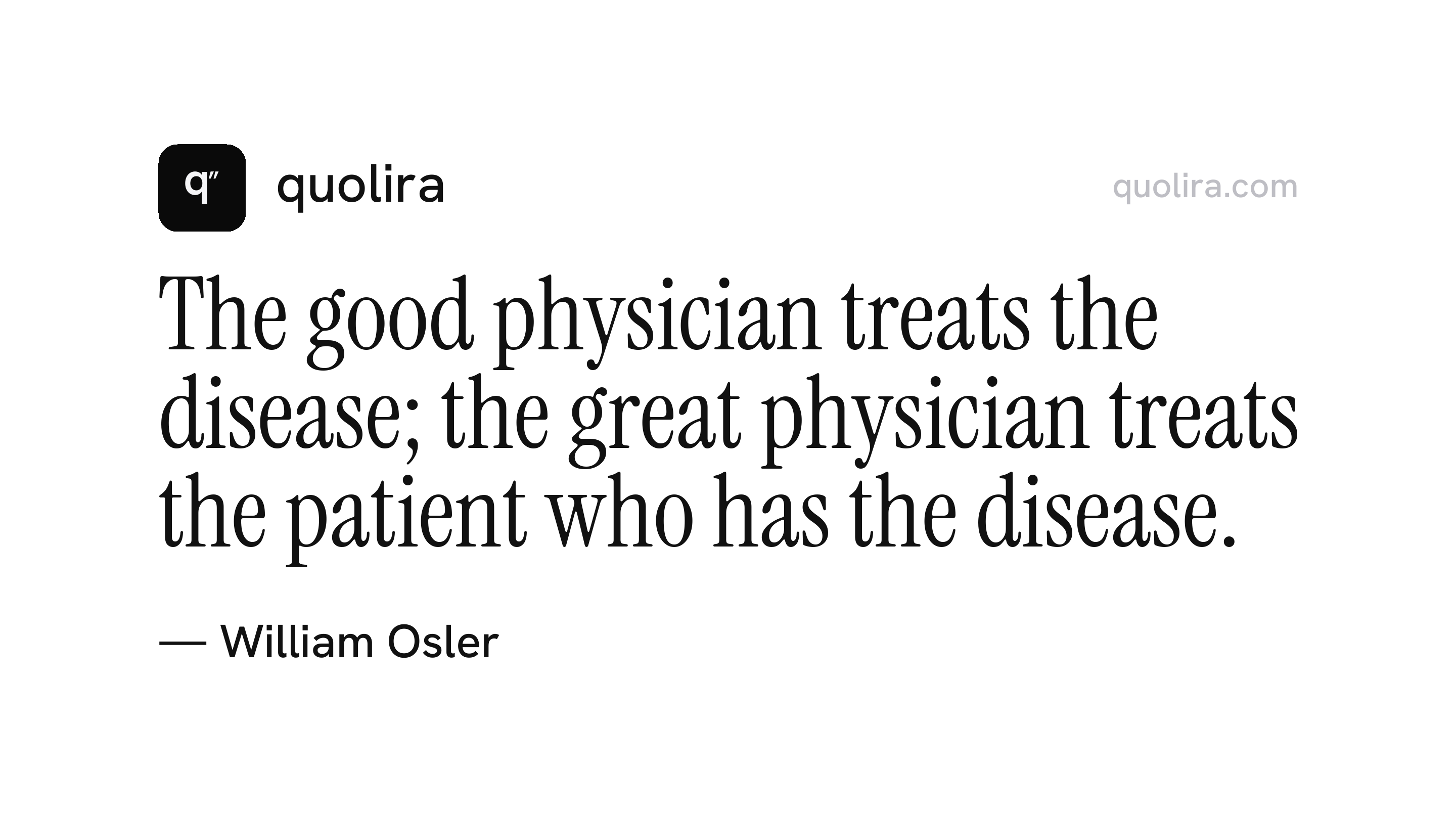
“The good physician treats the disease; the great physician treats the patient who has the disease.”
William Osler · attributed