“To cure sometimes, to relieve often, to comfort always.”
Ambroise Paré · attributed
 quolira
.com
quolira
quolira.com
This statement draws a direct line between the practice of medicine and a genuine care for people. It suggests that loving the craft of healing is inseparable from loving humanity itself, because medicine practiced without compassion is incomplete. The idea is that true medical skill is not cold or technical but grows from the same root as human warmth and concern for others.
This line is attributed to Paracelsus, though the attribution is noted as uncertain. The sentiment aligns with ideas that were central to Renaissance medical thought, which often sought to reconnect healing with broader questions of human nature and the relationship between physician and patient. During that era, medicine was in a period of significant change, with thinkers questioning inherited classical authorities and proposing more observational and experience-based approaches to understanding health and illness.
Paracelsus was a Swiss-German physician and alchemist who lived in the early sixteenth century. He was a provocative and controversial figure who rejected many of the dominant medical theories of his time and argued for a more direct engagement with nature and observation. He made contributions to the understanding of several diseases and was influential in connecting chemistry to medicine. His personality was famously combative, but his core conviction that a physician must approach patients with genuine care and curiosity has ensured that his ideas remain a touchstone in the history of medicine.
“To cure sometimes, to relieve often, to comfort always.”
Ambroise Paré · attributed
“The best doctor gives the least medicines.”
Benjamin Franklin · Poor Richard's Almanack
“The good physician treats the disease; the great physician treats the patient who has the disease.”
William Osler · attributed
“Wherever the art of medicine is loved, there is also a love of humanity.”
Hippocrates · attributed
“Green was the silence, wet was the light, the month of June trembled like a butterfly.”
Pablo Neruda
“Deep summer is when laziness finds respectability.”
Sam Keen
“What a wonderful day to be alive, when it's roses, roses all the way.”
L. M. Montgomery
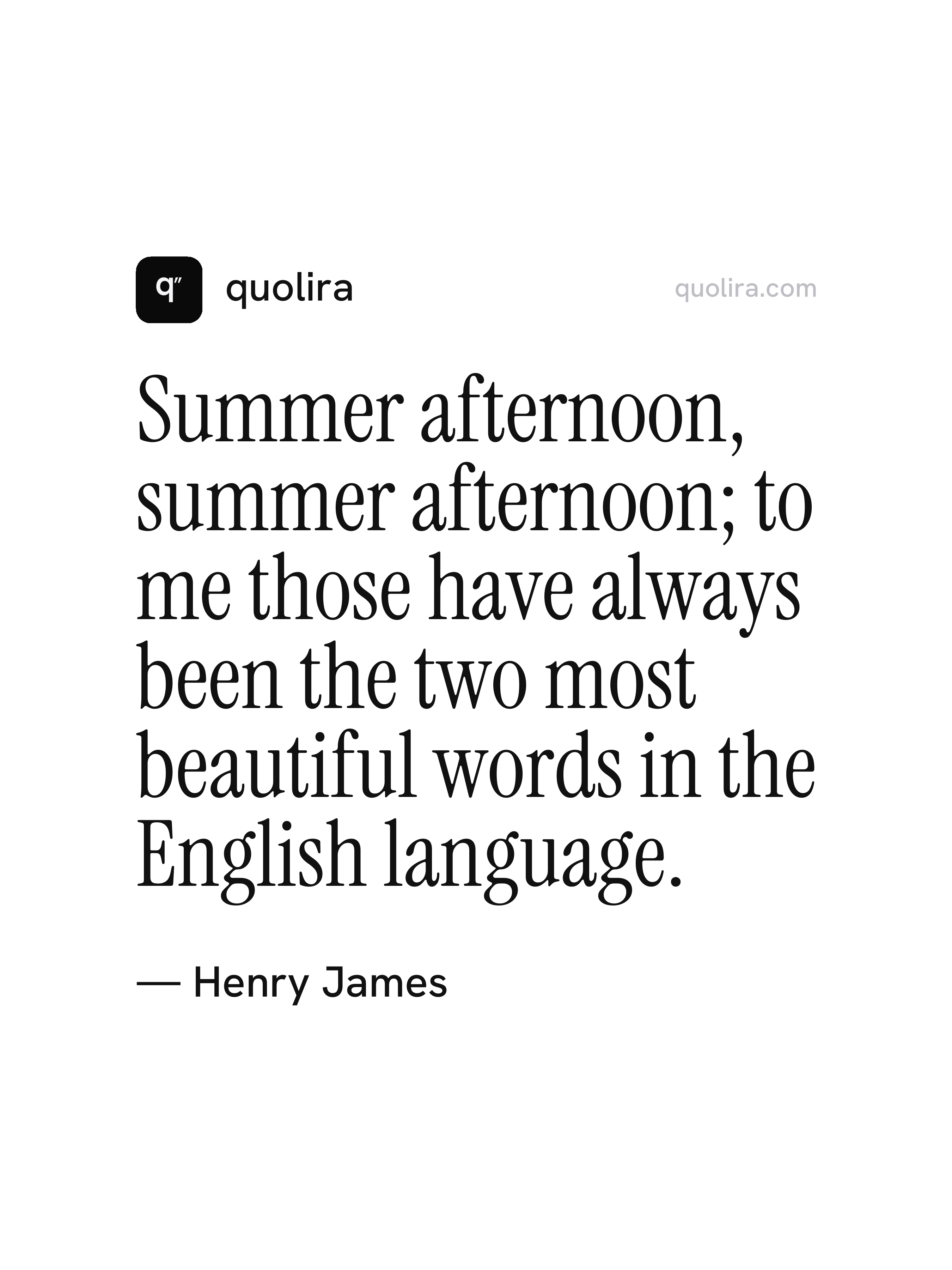
“Summer afternoon, summer afternoon; to me those have always been the two most beautiful words in the English language.”
Henry James
“June is the gateway to summer.”
Jean Hersey · The Shape of a Year, 1967
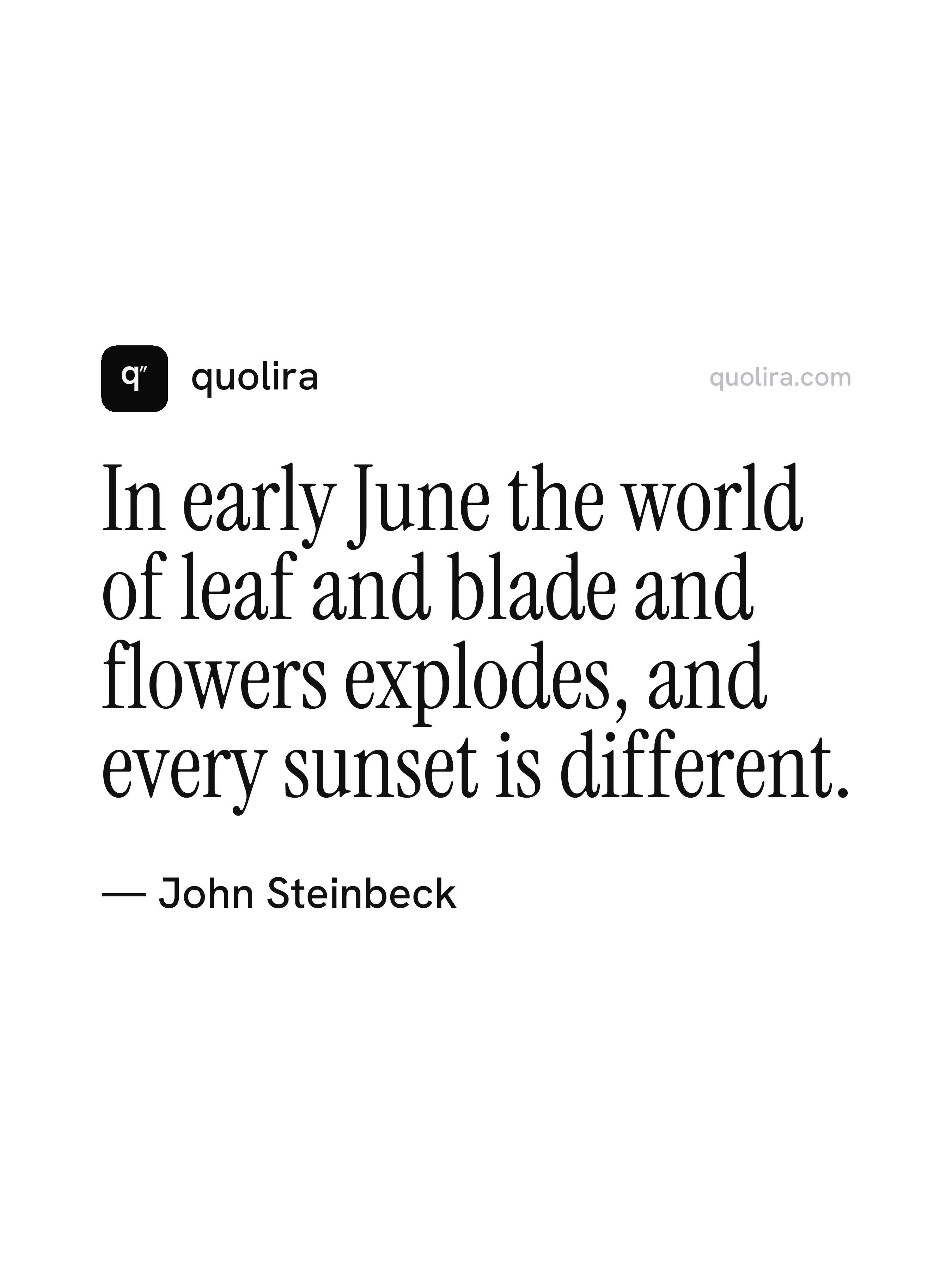
“In early June the world of leaf and blade and flowers explodes, and every sunset is different.”
John Steinbeck · Travels with Charley, 1962
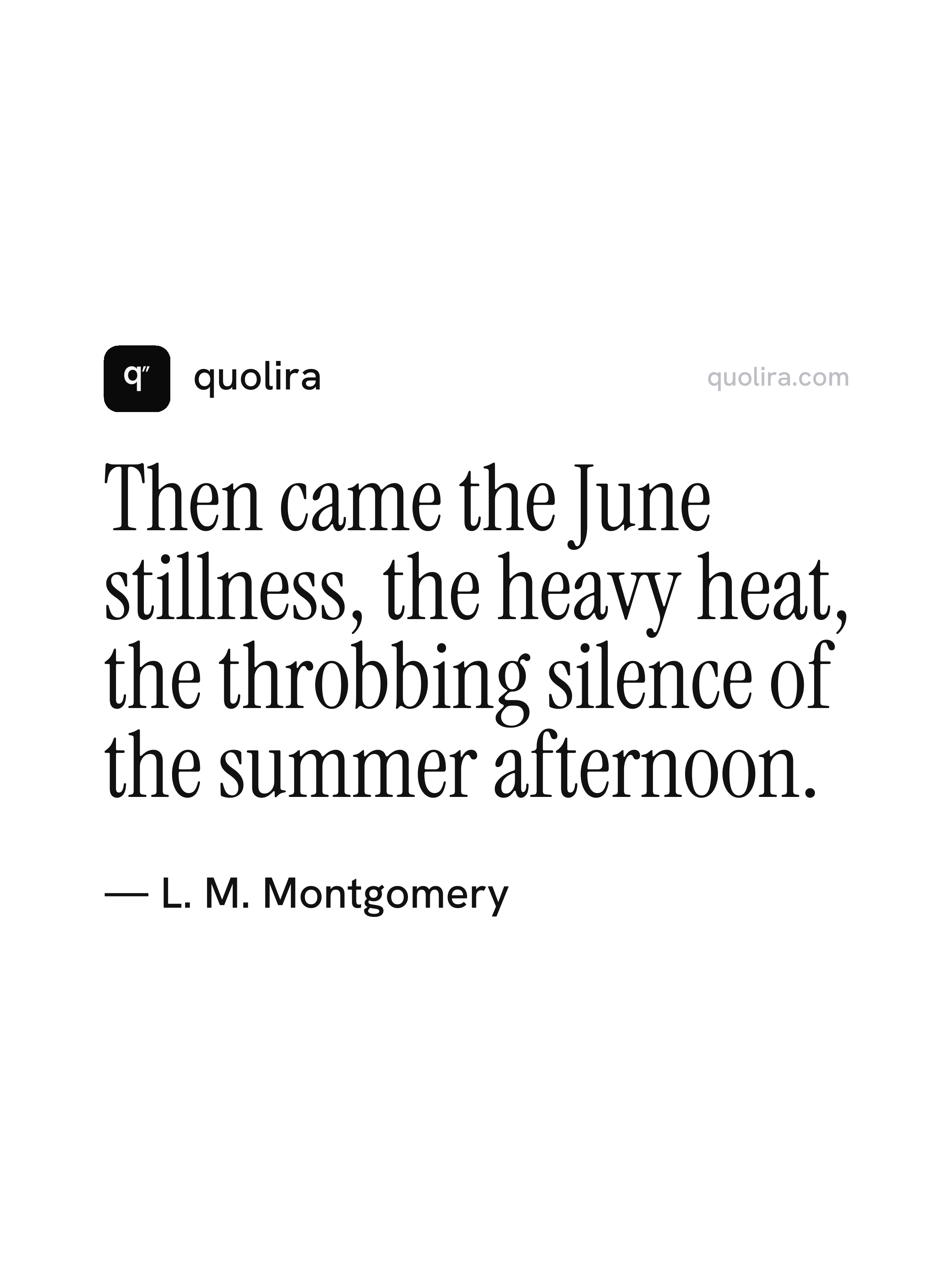
“Then came the June stillness, the heavy heat, the throbbing silence of the summer afternoon.”
L. M. Montgomery
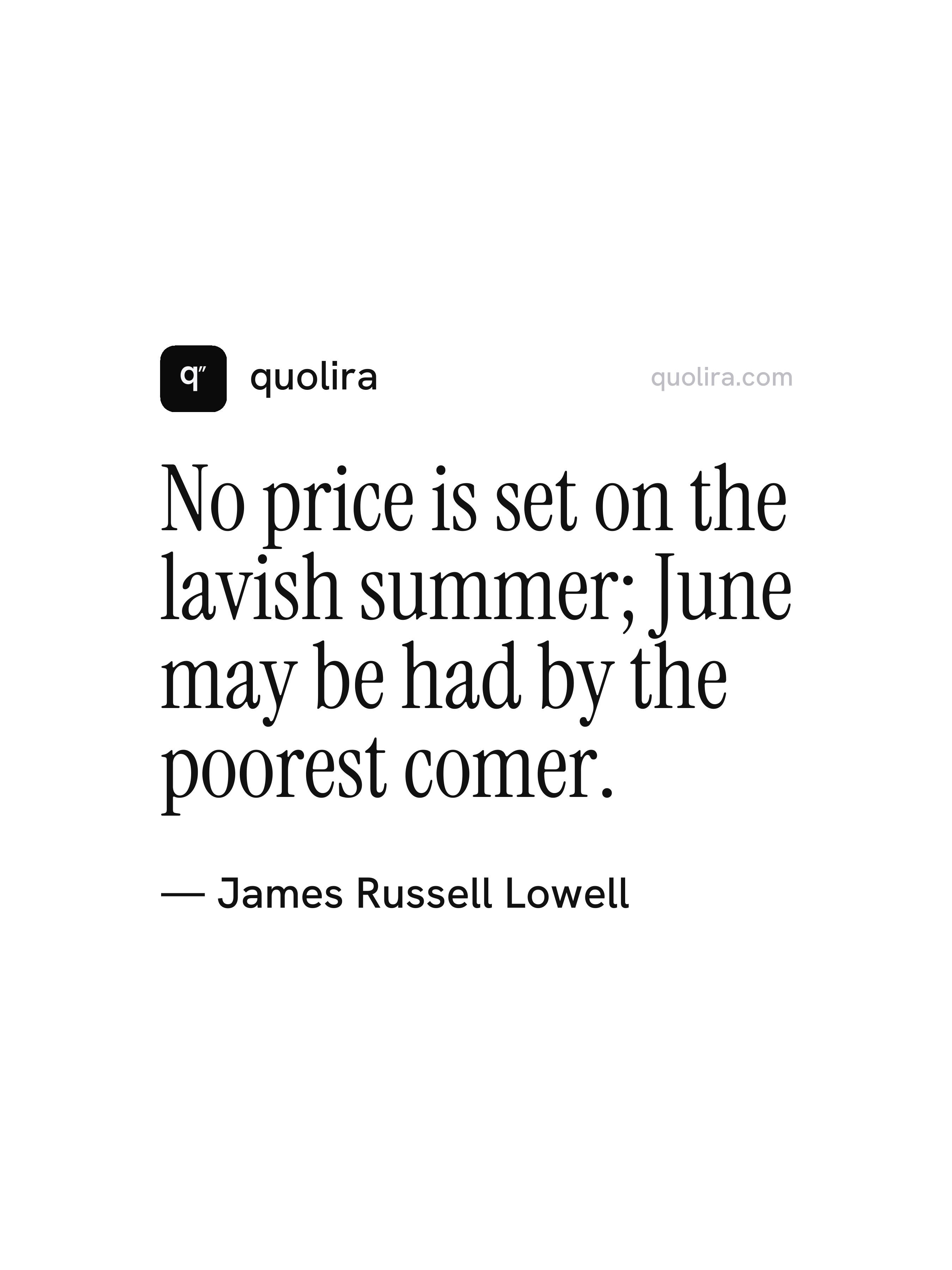
“No price is set on the lavish summer; June may be had by the poorest comer.”
James Russell Lowell · The Vision of Sir Launfal, 1848