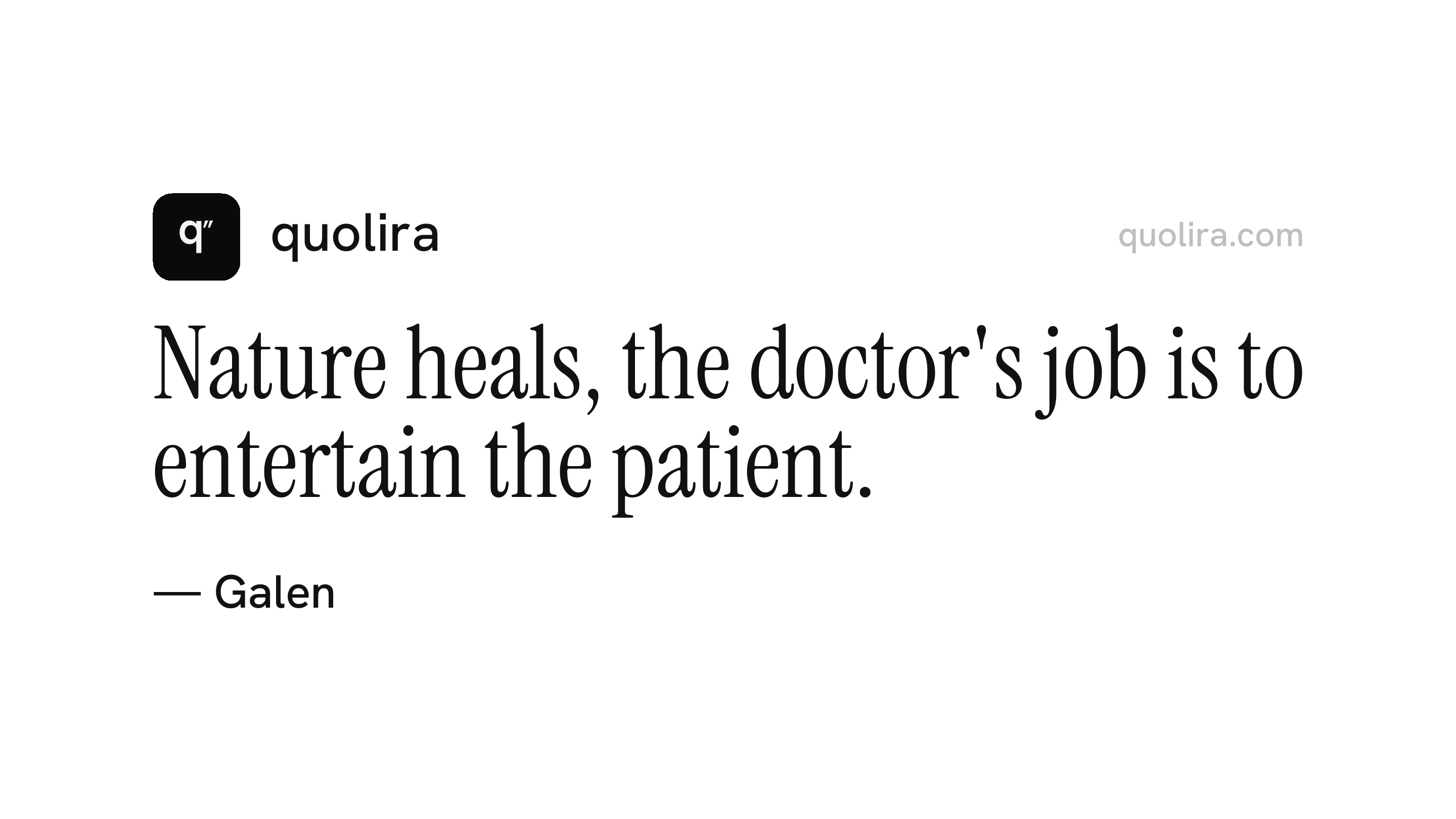
“Nature heals, the doctor's job is to entertain the patient.”
Galen · attributed
 quolira
.com
quolira
quolira.com
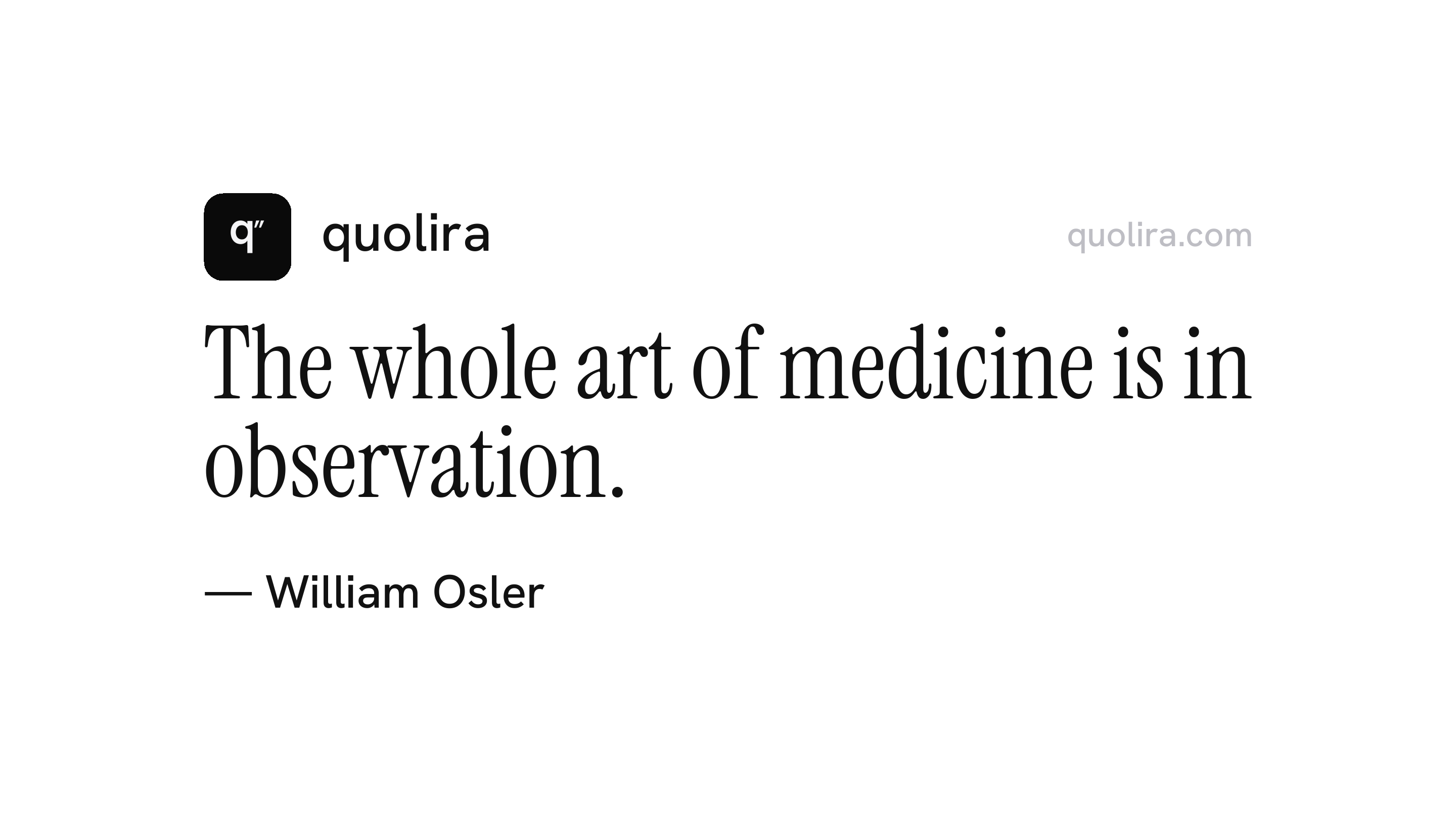
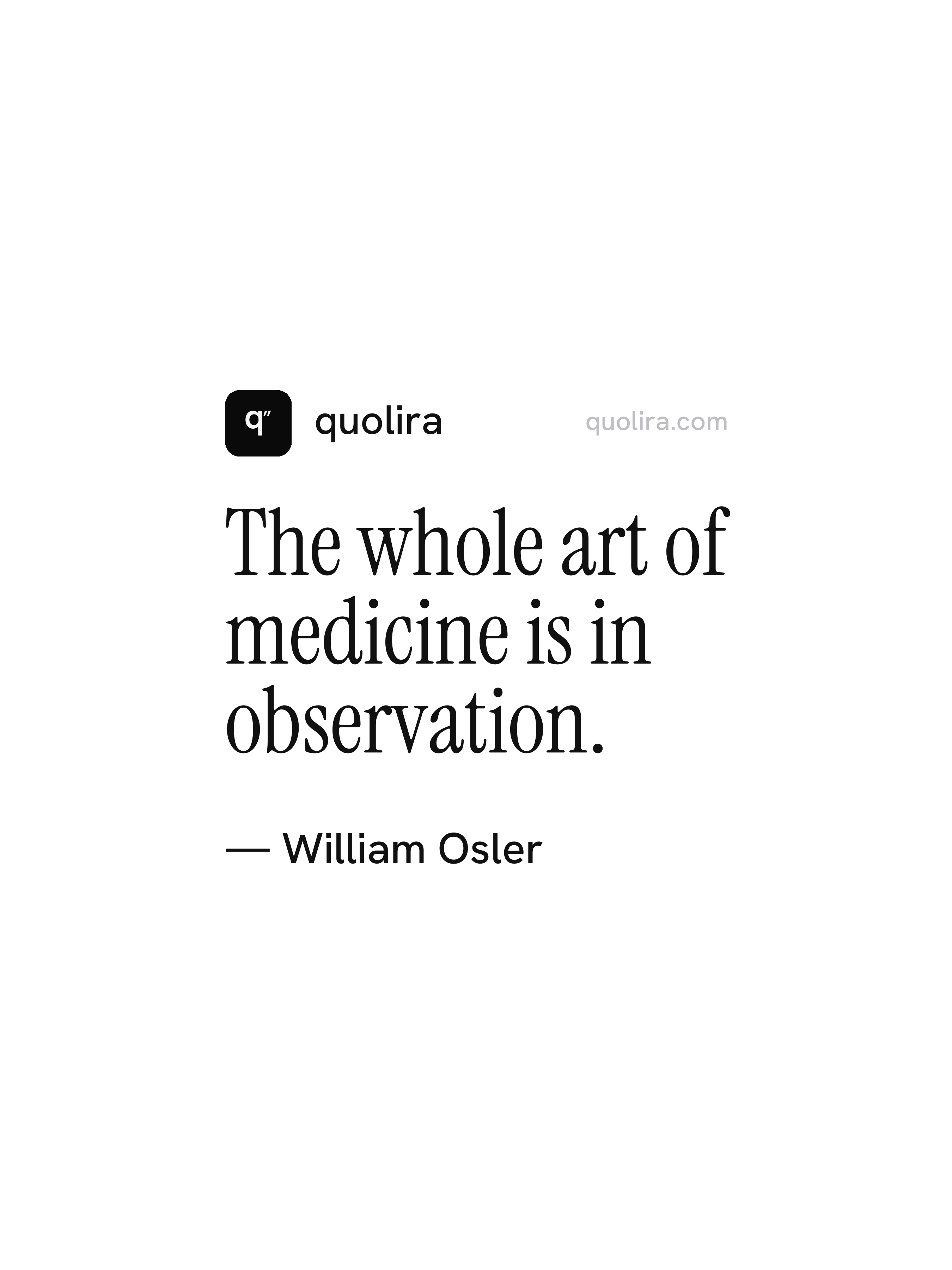
This statement places careful, patient watching at the very heart of what medicine requires. Before a diagnosis can be made, before treatment can be chosen, the physician must first see clearly, noticing what is actually present rather than what theory predicts. The claim is both practical and philosophical: skill begins with attention, and attention is an art that must be cultivated.
William Osler returned to the theme of observation throughout his career, and the idea connects directly to the reforms he championed in medical education. He believed that students who spent their time only reading about disease would be poorly equipped to recognize it when they finally stood beside a patient. This emphasis on looking and listening before concluding placed him in a tradition of clinical medicine that valued empirical experience over inherited doctrine. The remark is short enough to sound like a slogan, but it carries a serious methodological argument behind it.
William Osler was a Canadian physician whose career spanned major institutions in North America and Britain during the late nineteenth and early twentieth centuries. He is widely credited with reshaping how doctors are trained, most notably by making bedside teaching a central feature of the medical school curriculum. His influence extended beyond technique to culture: through his speeches, essays, and example, he encouraged physicians to approach their work with curiosity, humility, and a genuine interest in the person in front of them, not only the condition they presented with.
“Nature heals, the doctor's job is to entertain the patient.”
Galen · attributed
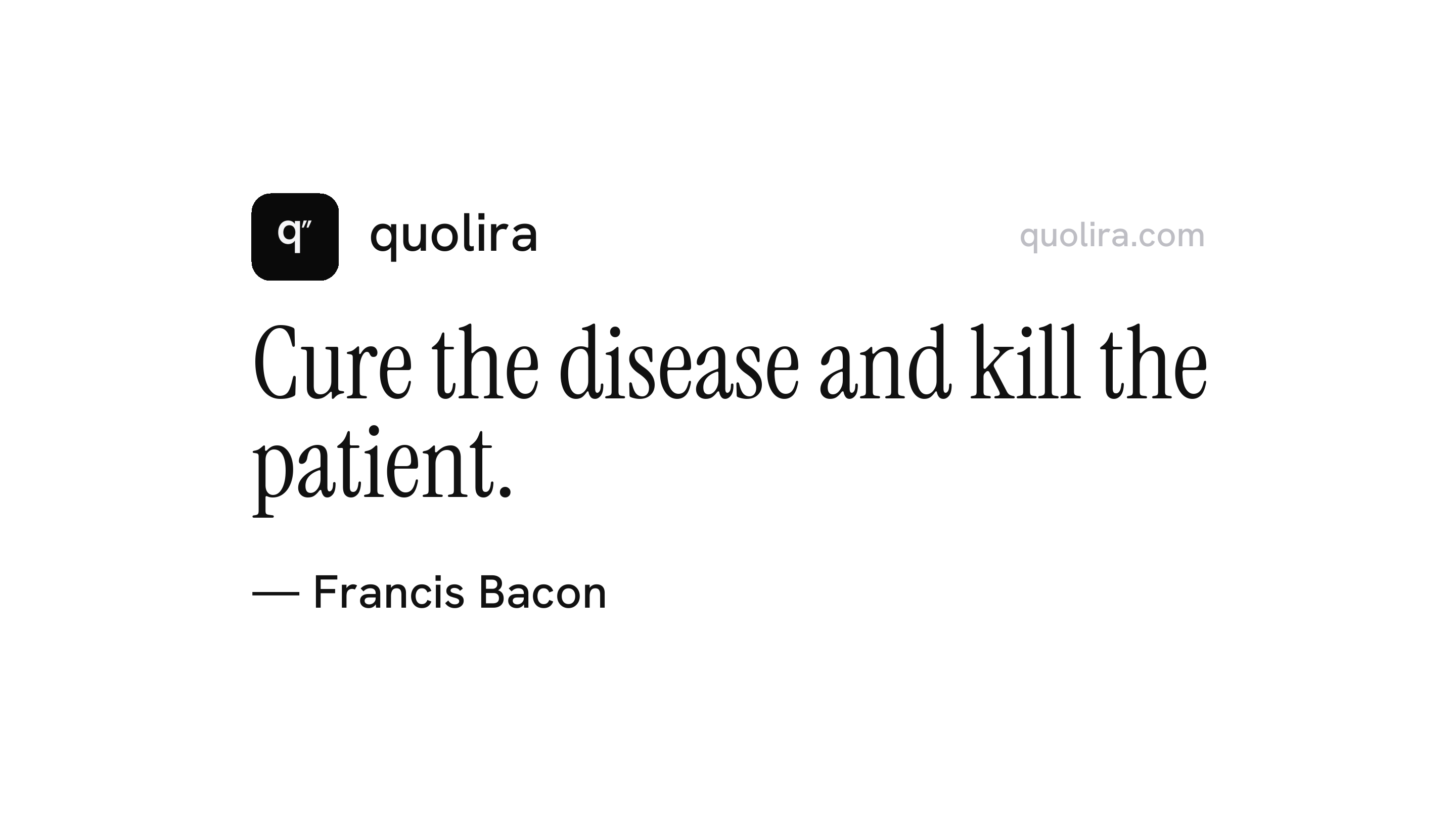
“Cure the disease and kill the patient.”
Francis Bacon · Of Friendship
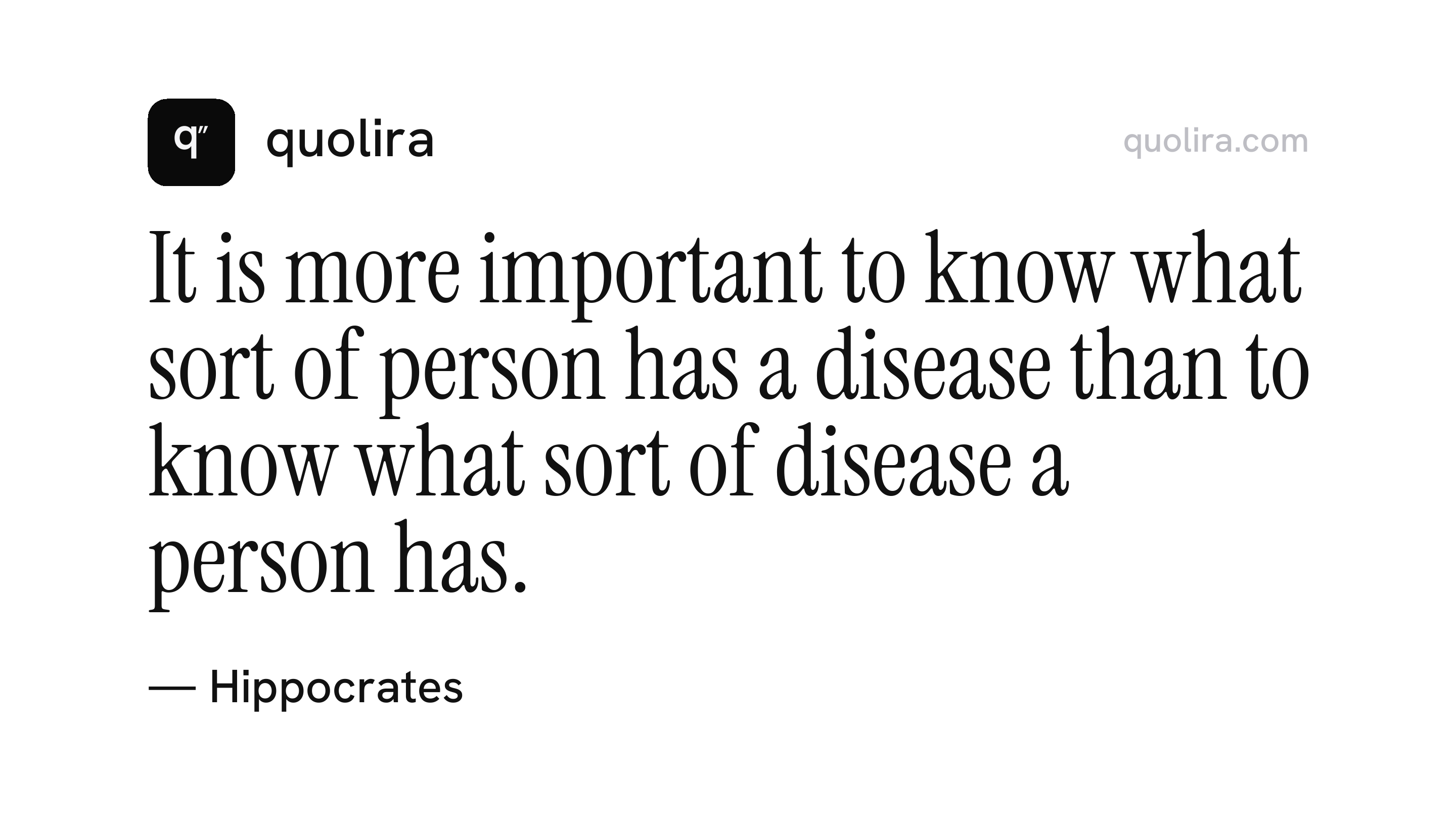
“It is more important to know what sort of person has a disease than to know what sort of disease a person has.”
Hippocrates · attributed
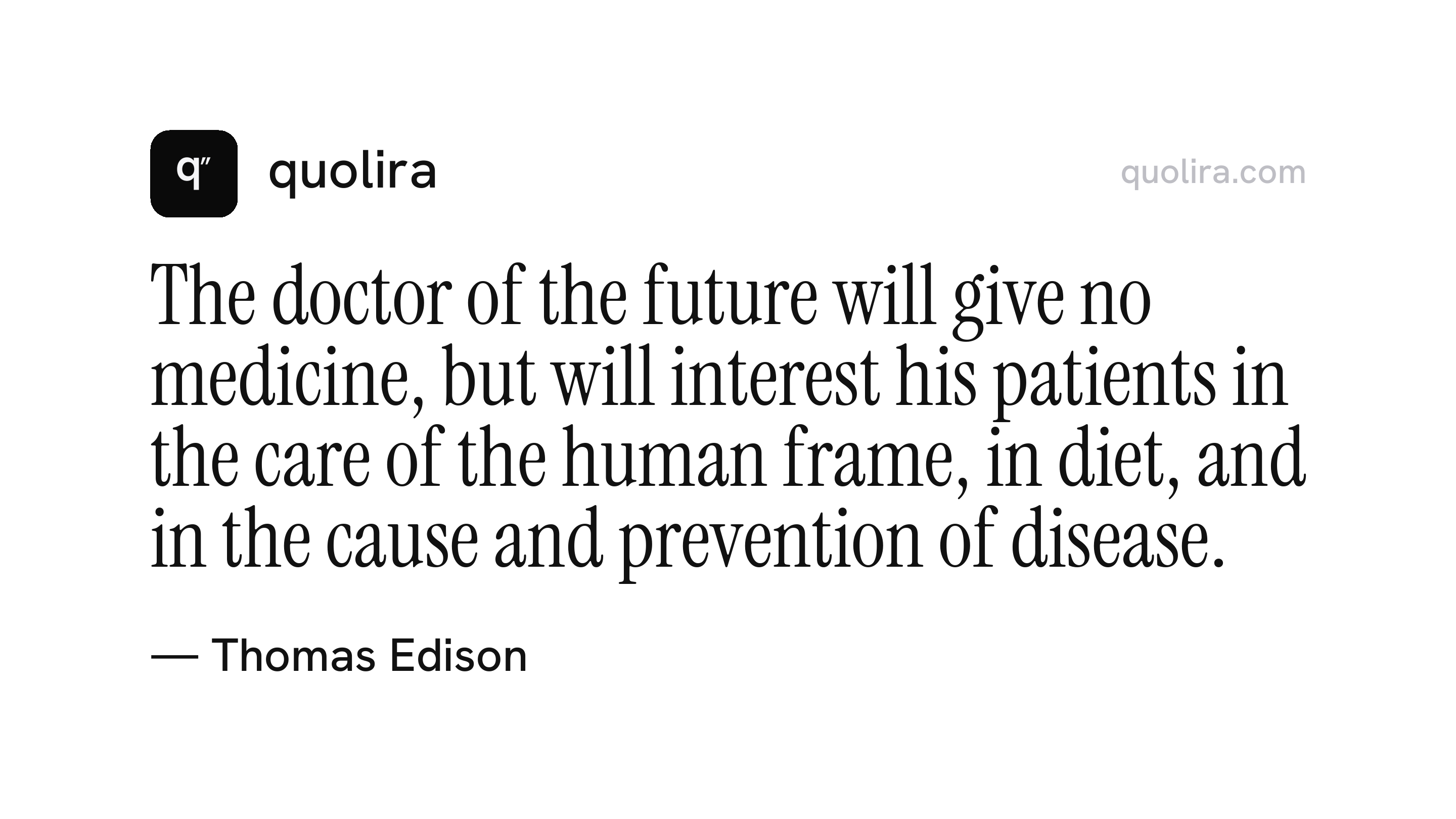
“The doctor of the future will give no medicine, but will interest his patients in the care of the human frame, in diet, and in the cause and prevention of disease.”
Thomas Edison · attributed
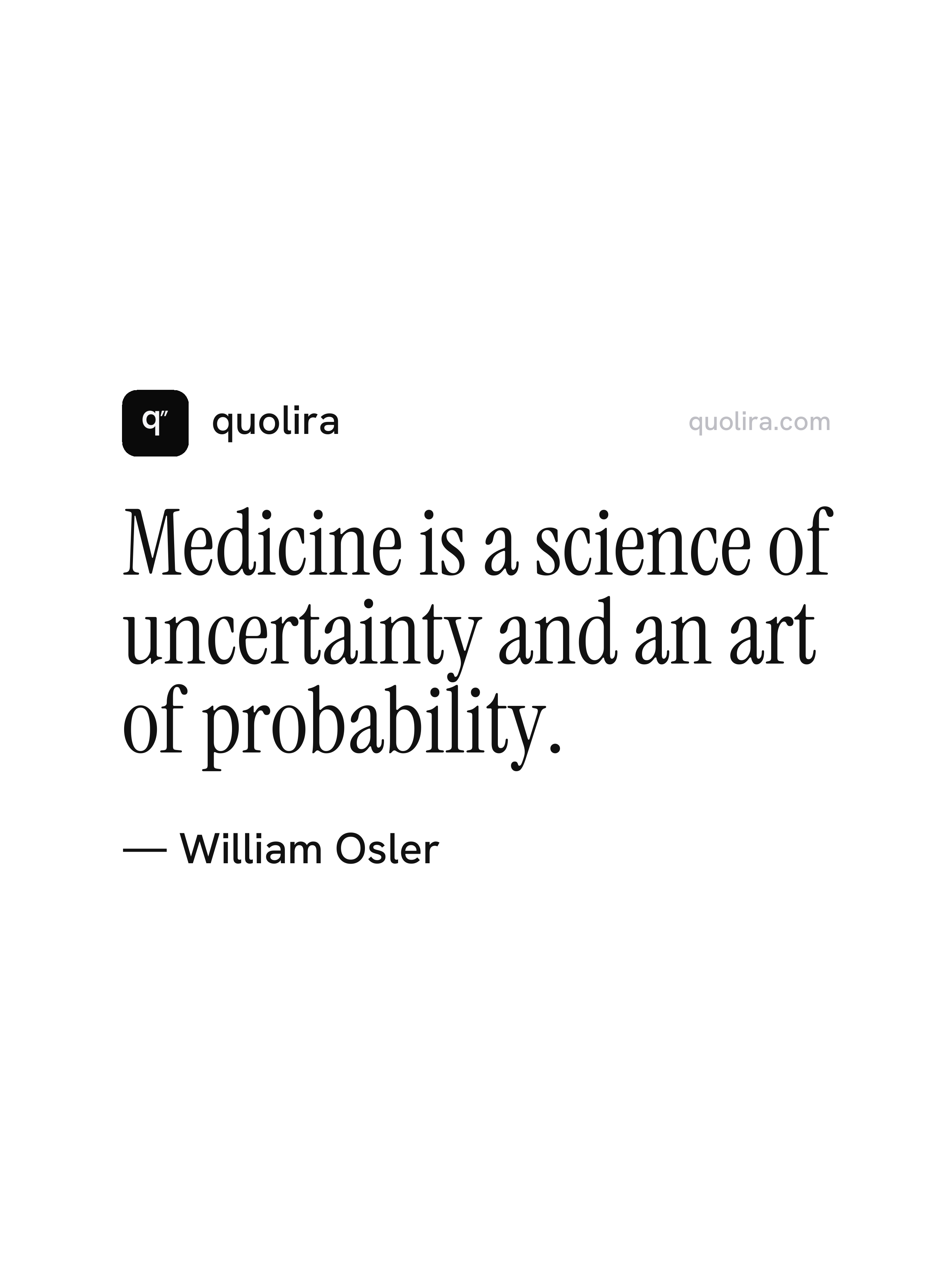
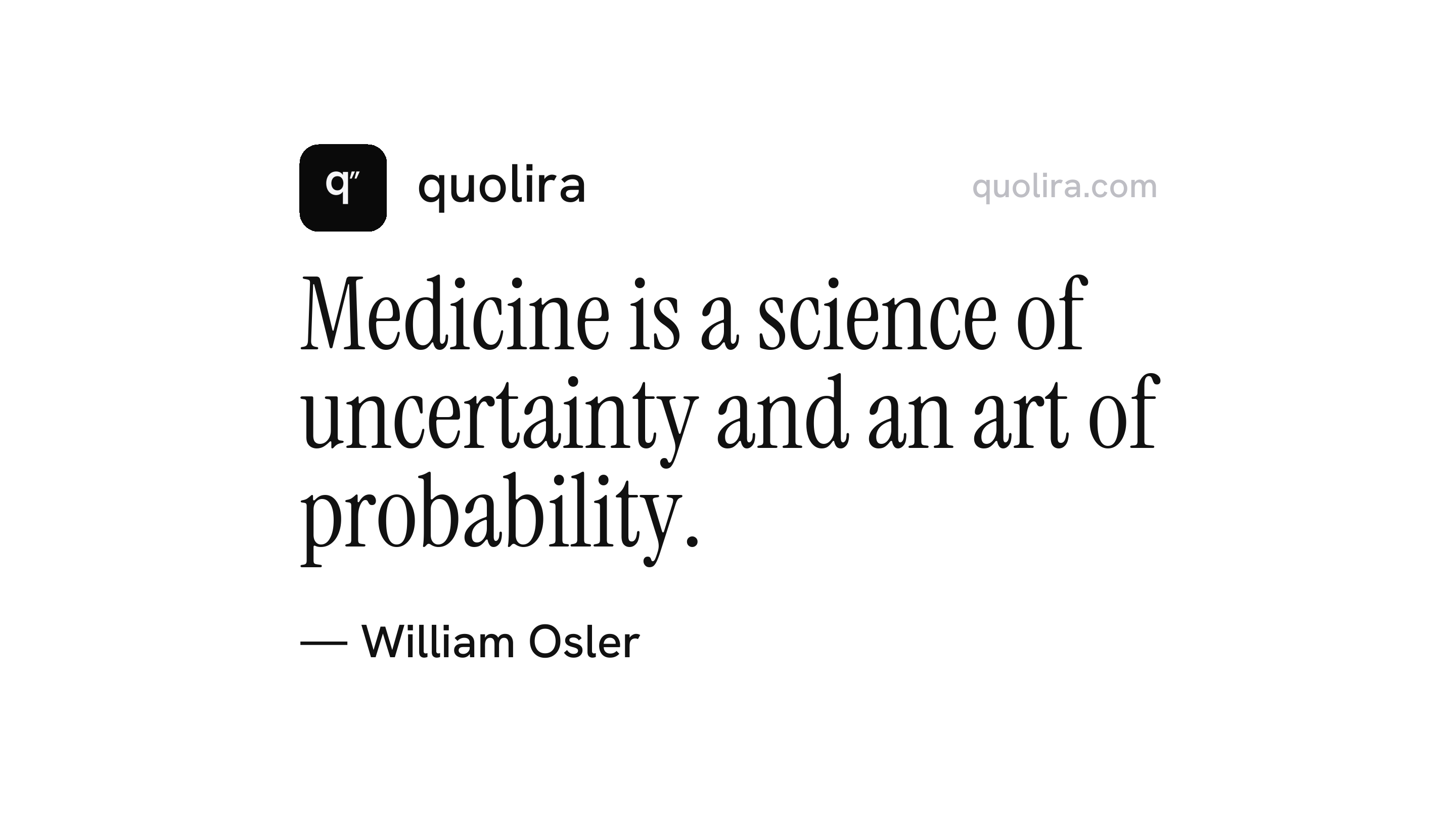
“Medicine is a science of uncertainty and an art of probability.”
William Osler · attributed
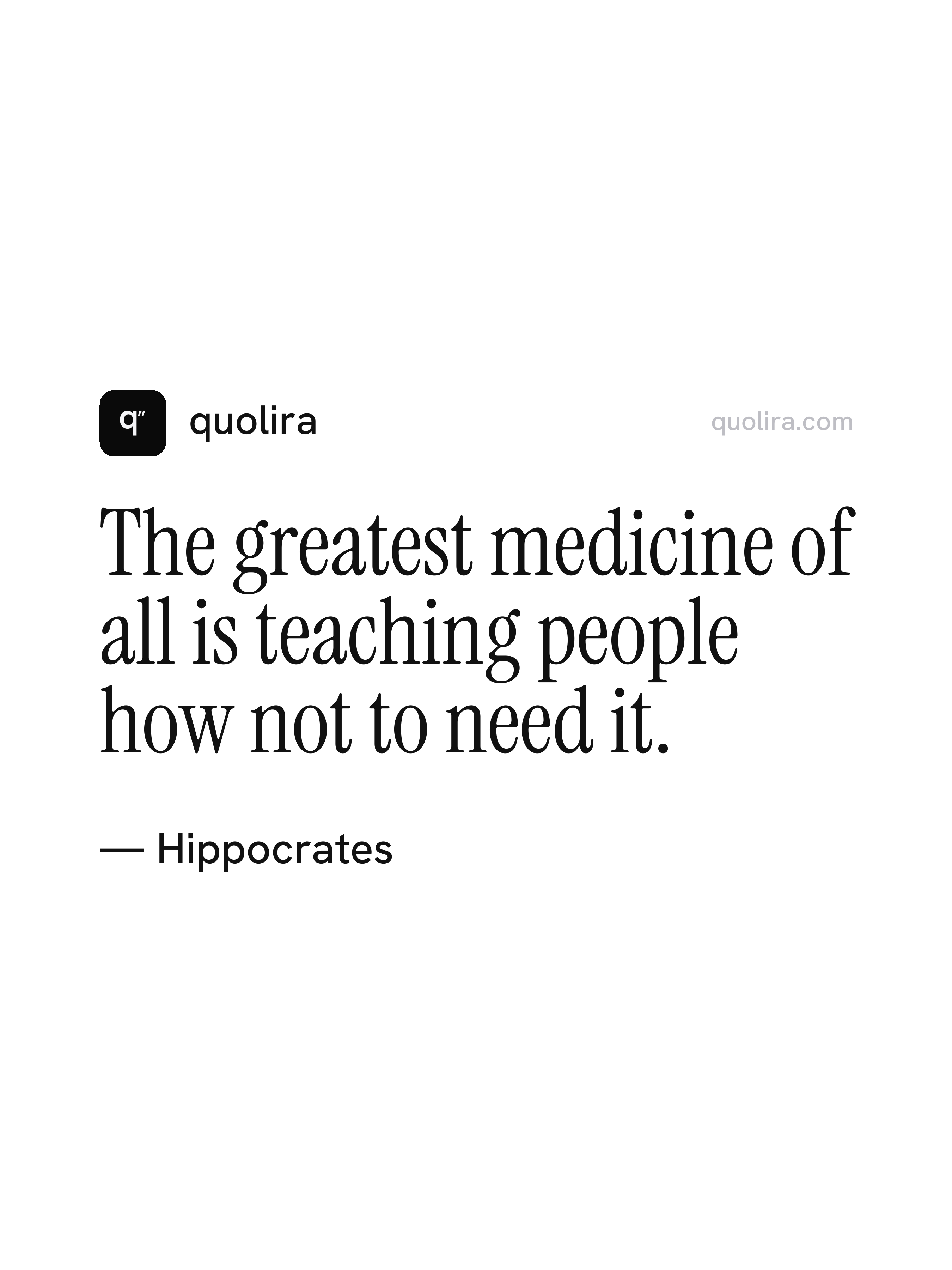
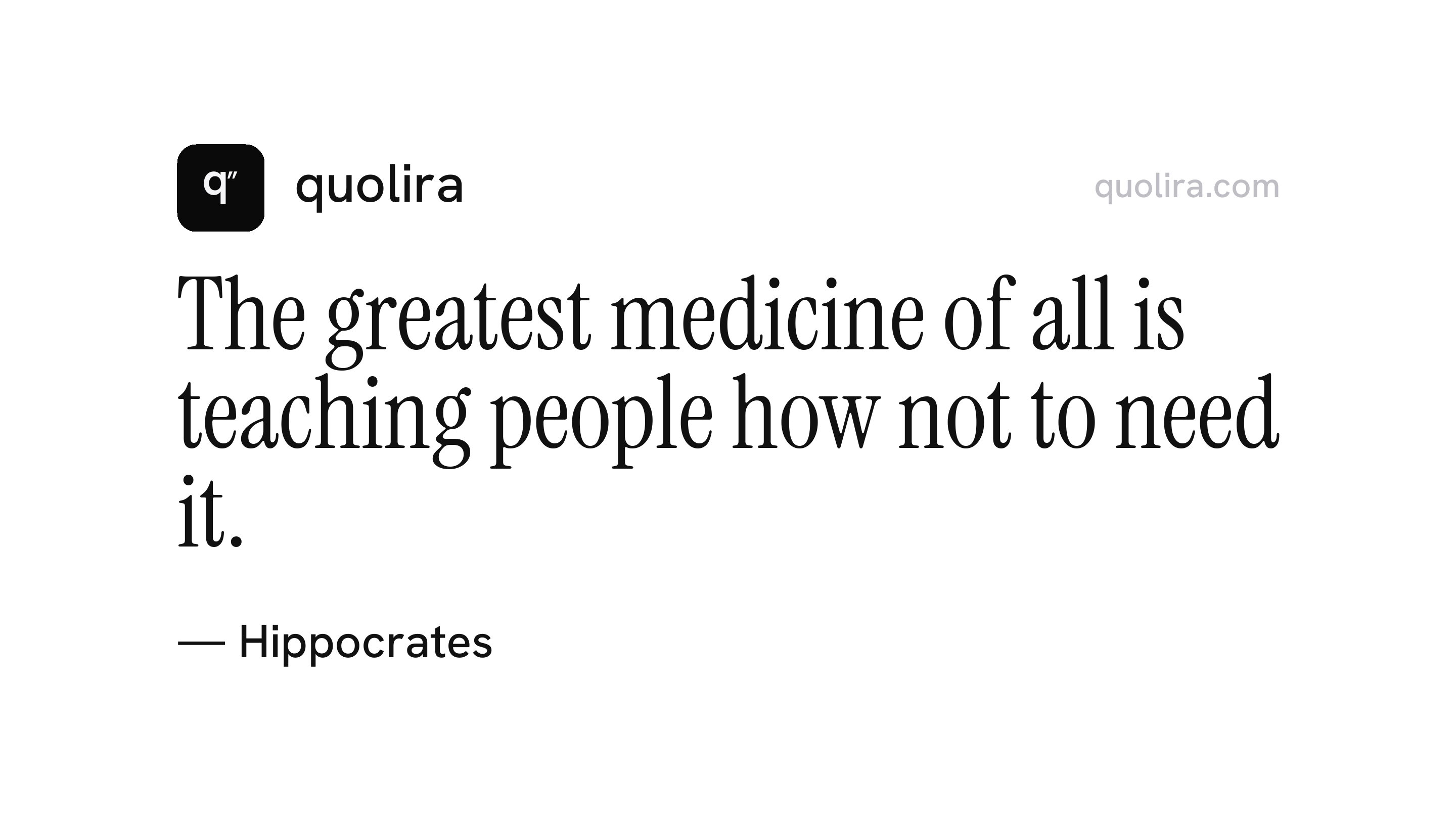
“The greatest medicine of all is teaching people how not to need it.”
Hippocrates · attributed
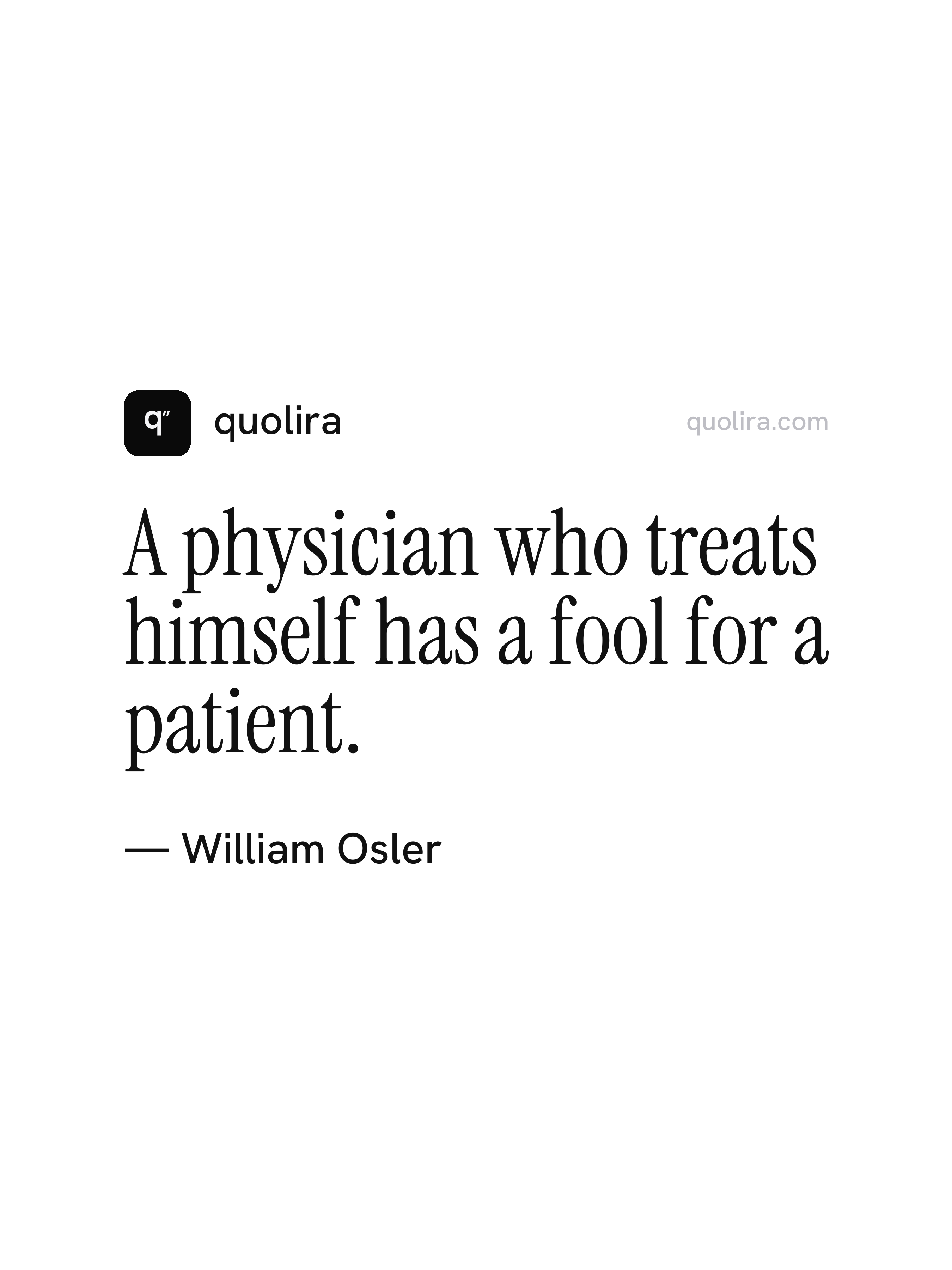
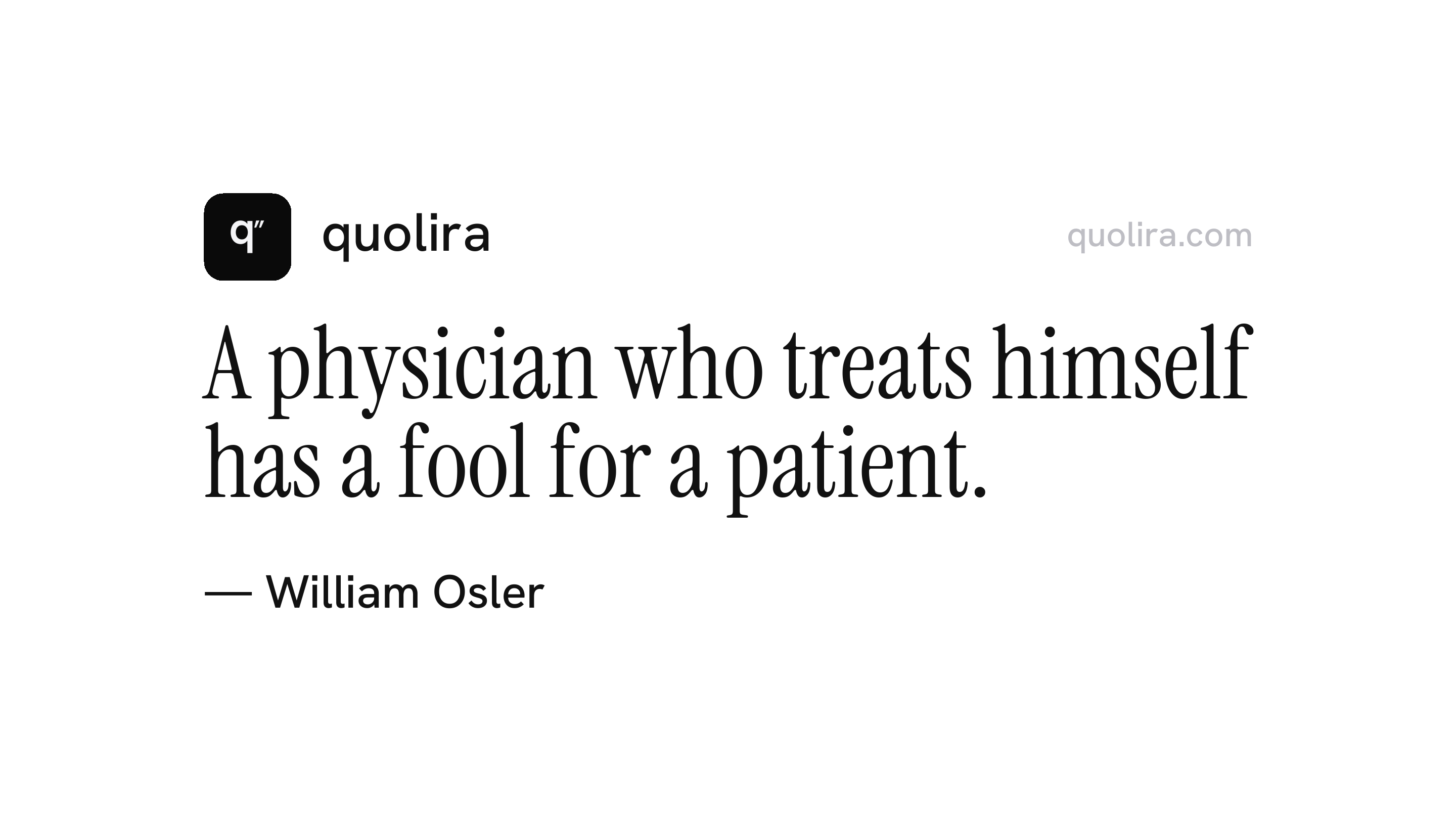
“A physician who treats himself has a fool for a patient.”
William Osler · attributed
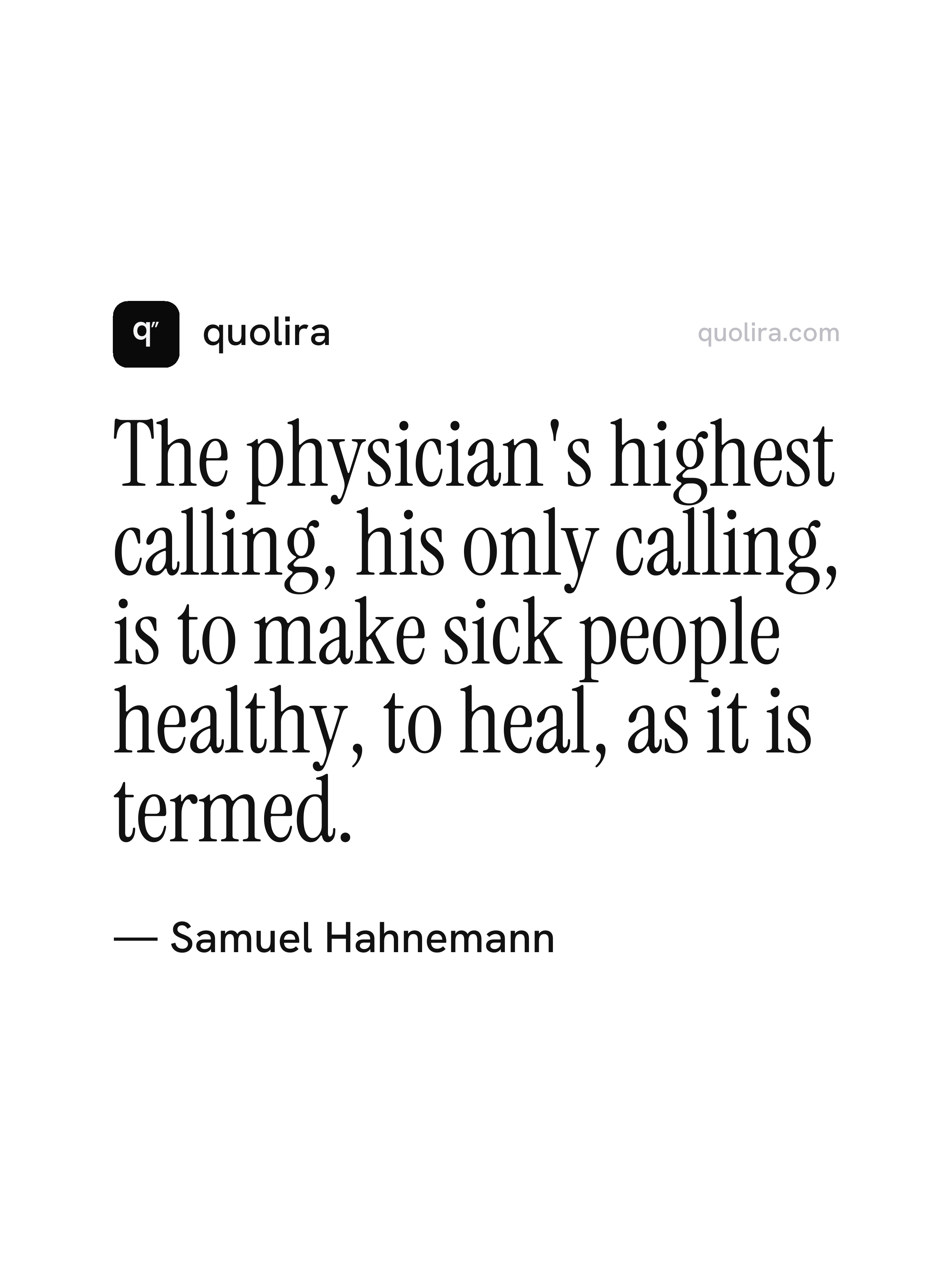
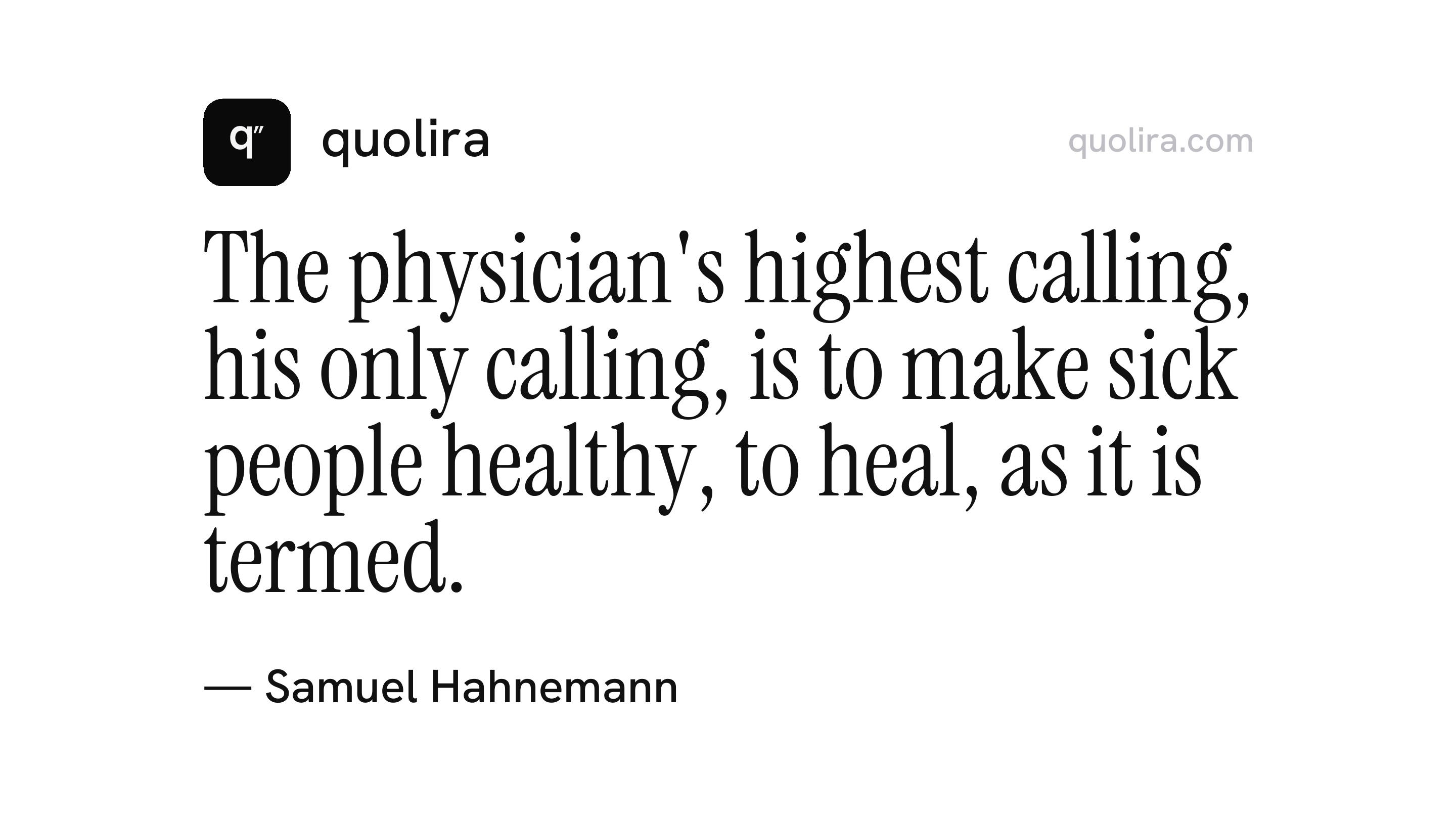
“The physician's highest calling, his only calling, is to make sick people healthy, to heal, as it is termed.”
Samuel Hahnemann · Organon of Medicine
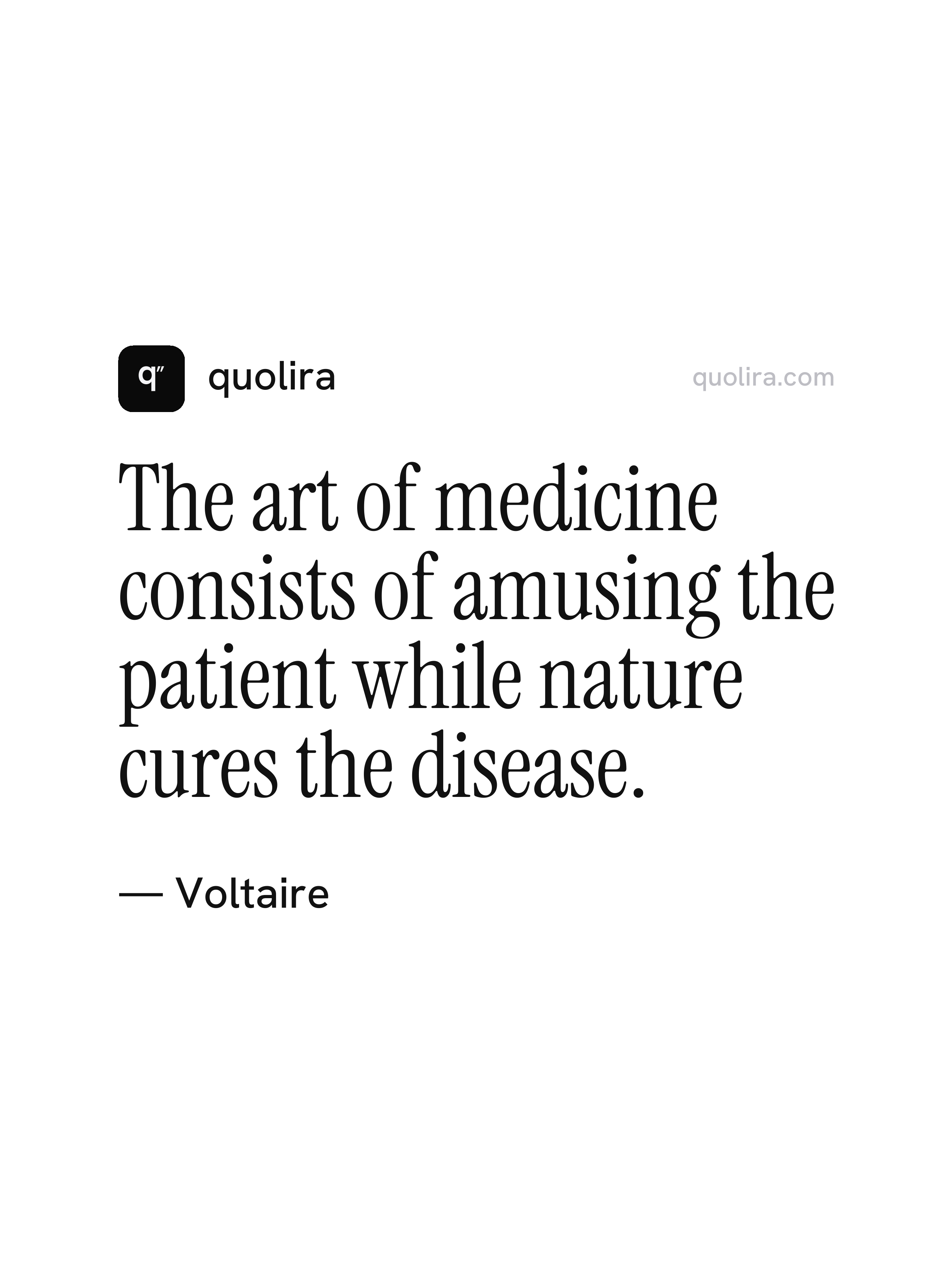
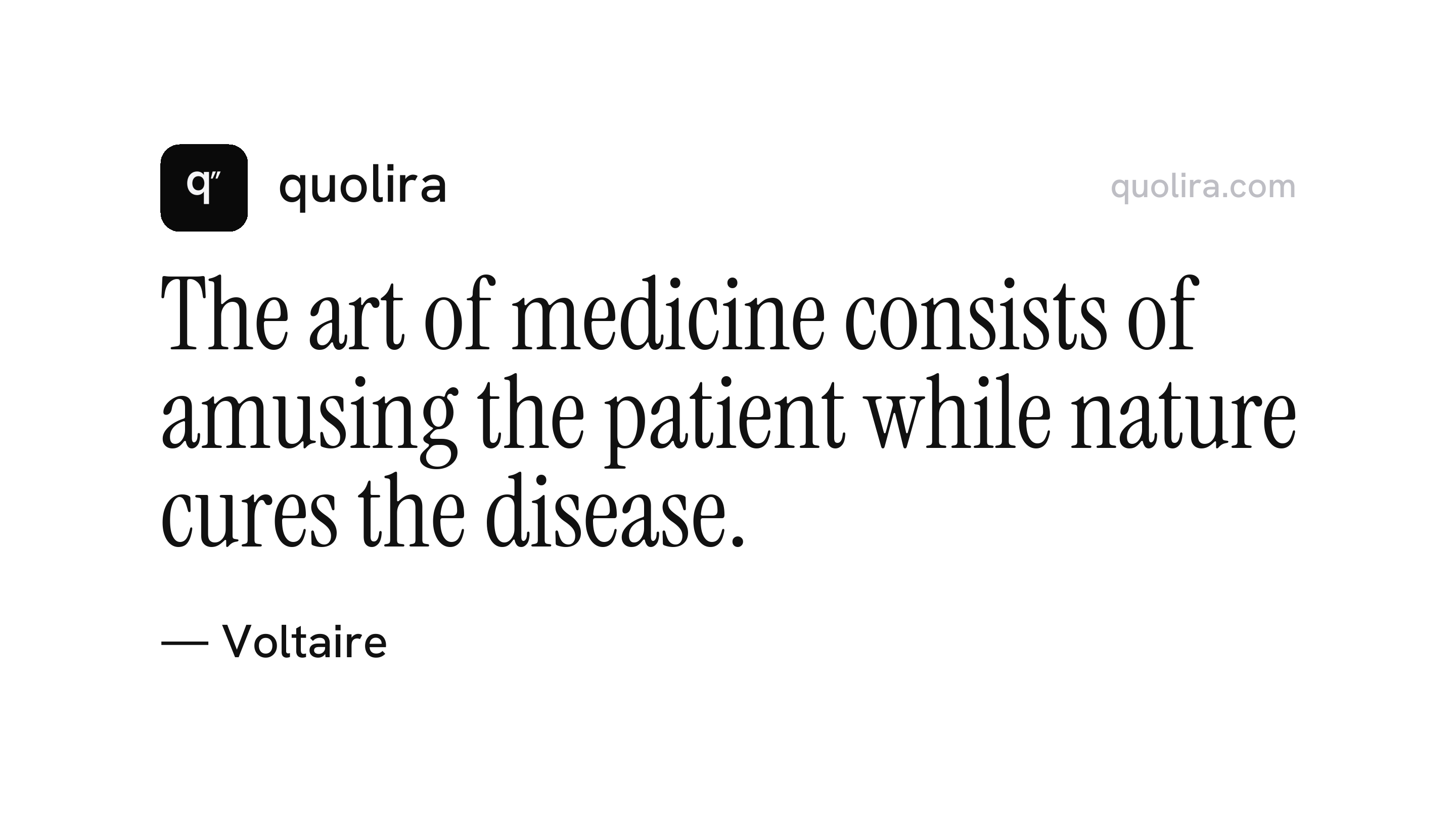
“The art of medicine consists of amusing the patient while nature cures the disease.”
Voltaire · attributed
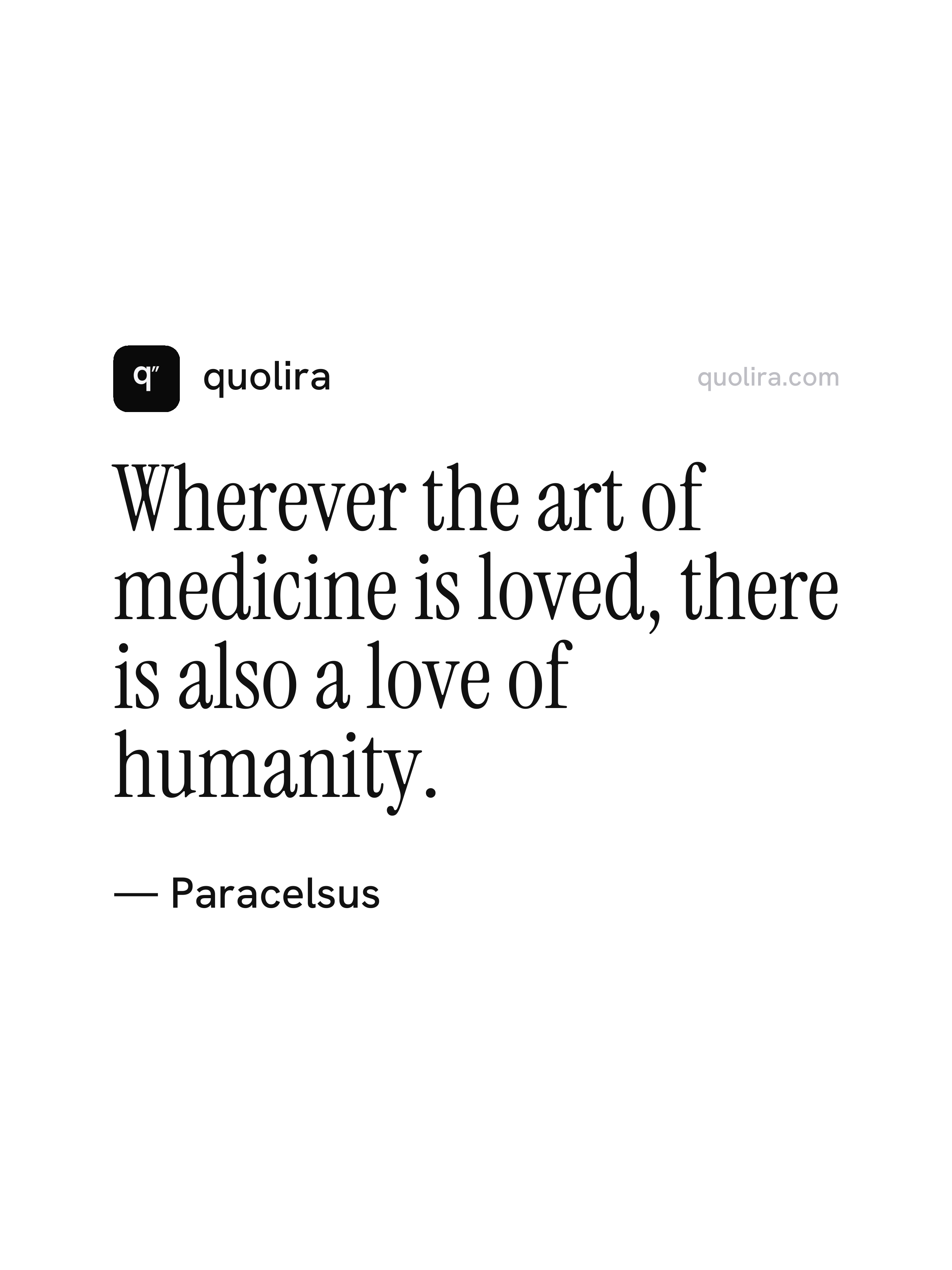
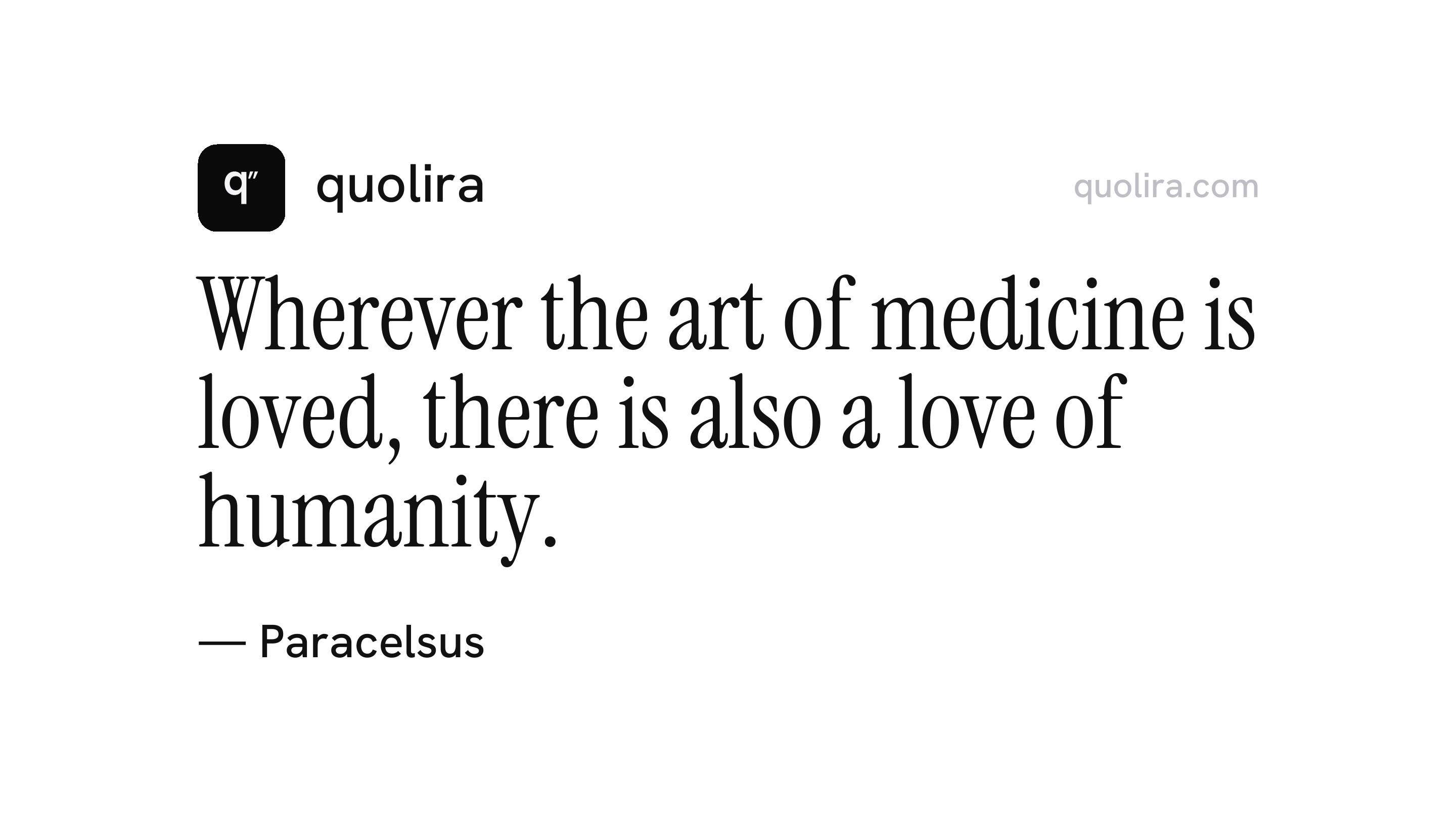
“Wherever the art of medicine is loved, there is also a love of humanity.”
Paracelsus · attributed
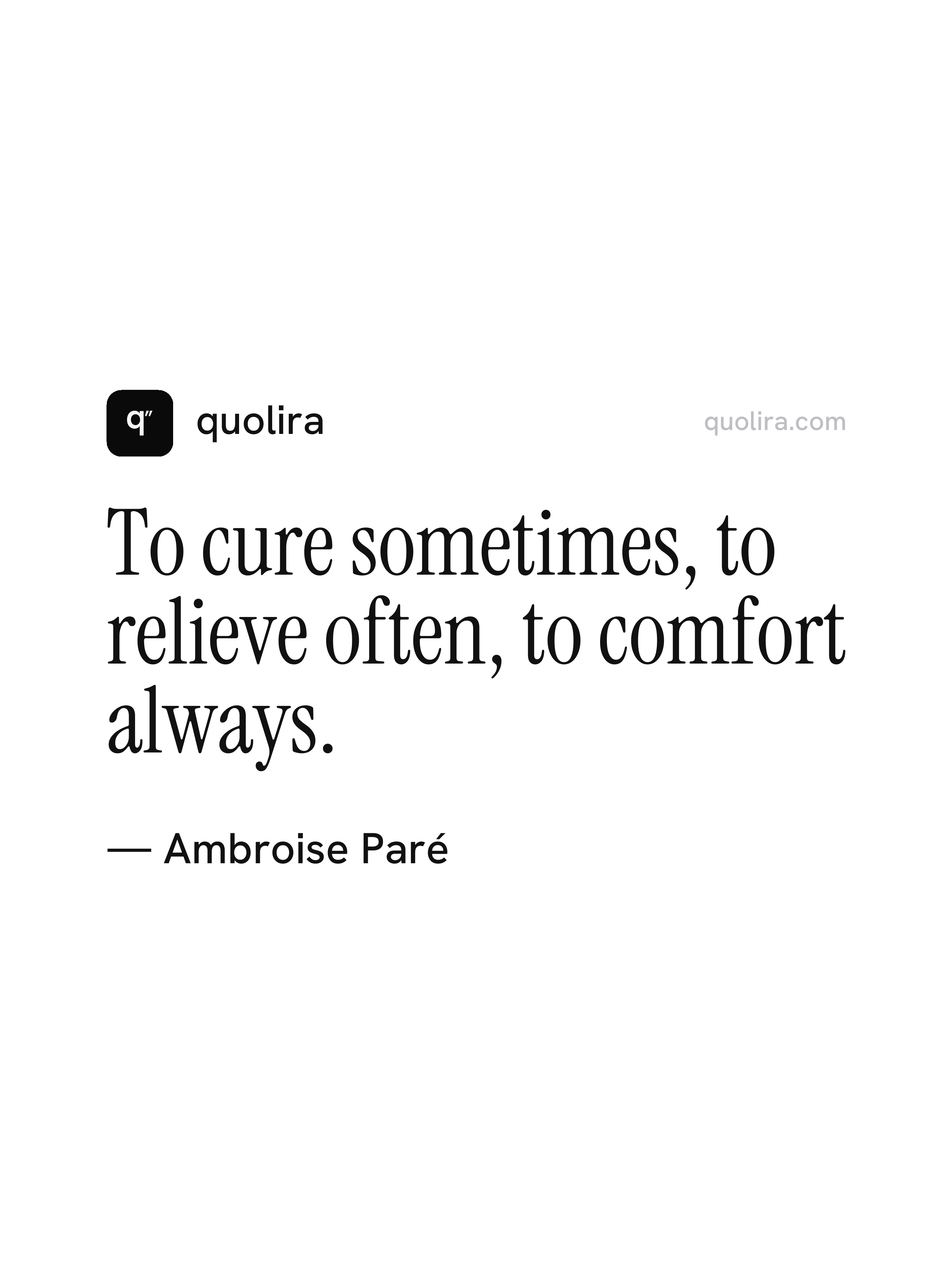
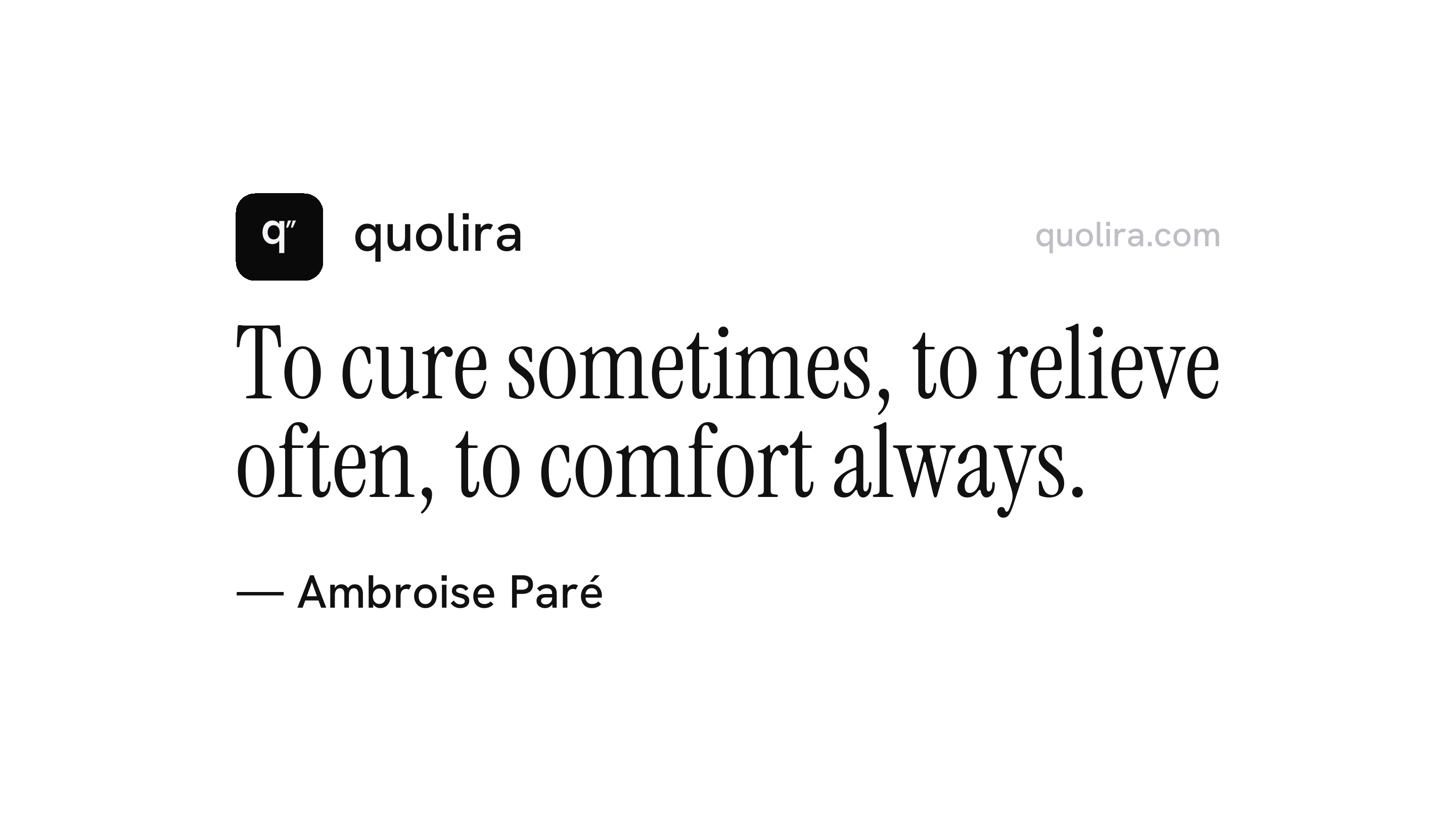
“To cure sometimes, to relieve often, to comfort always.”
Ambroise Paré · attributed
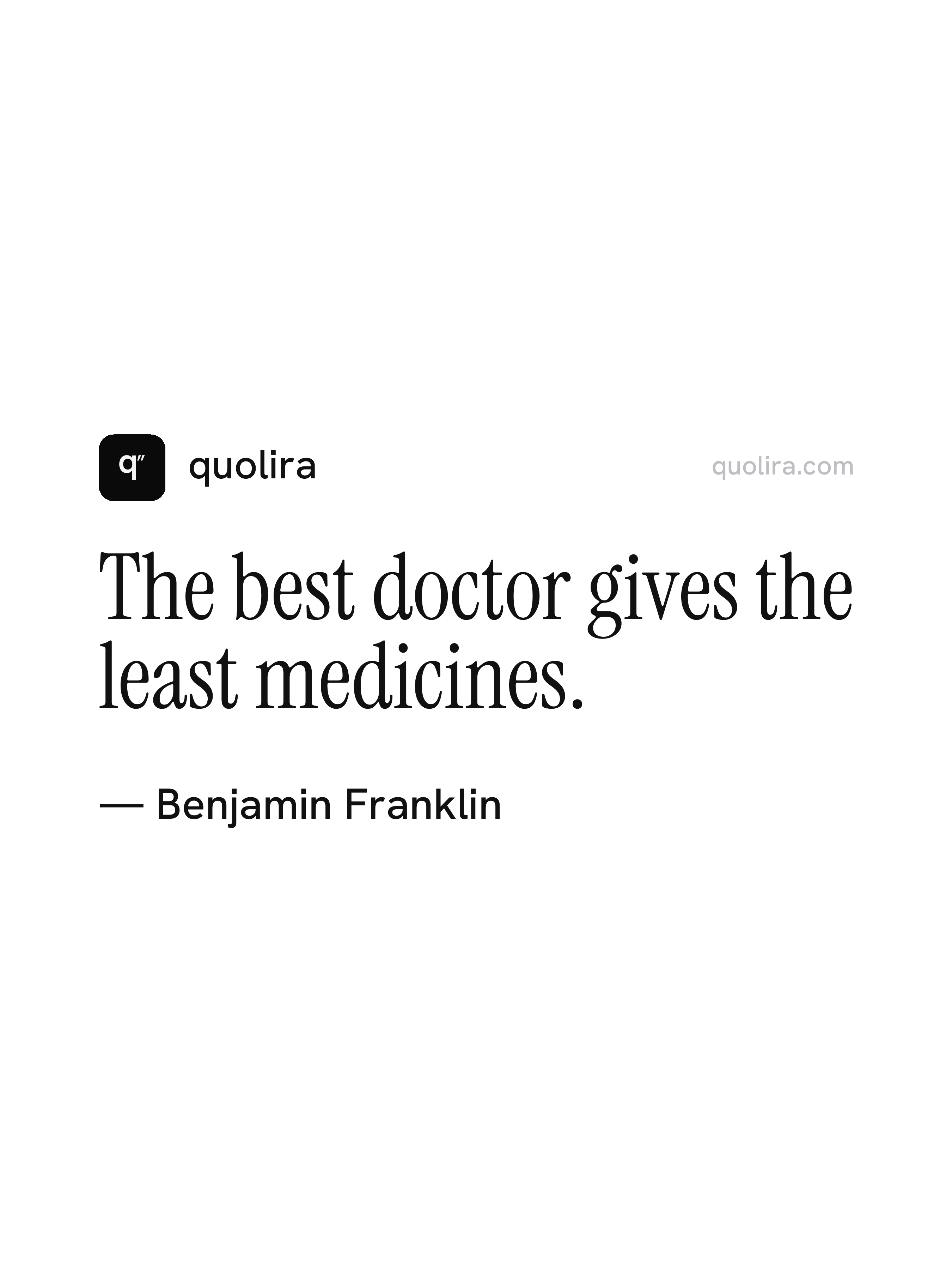
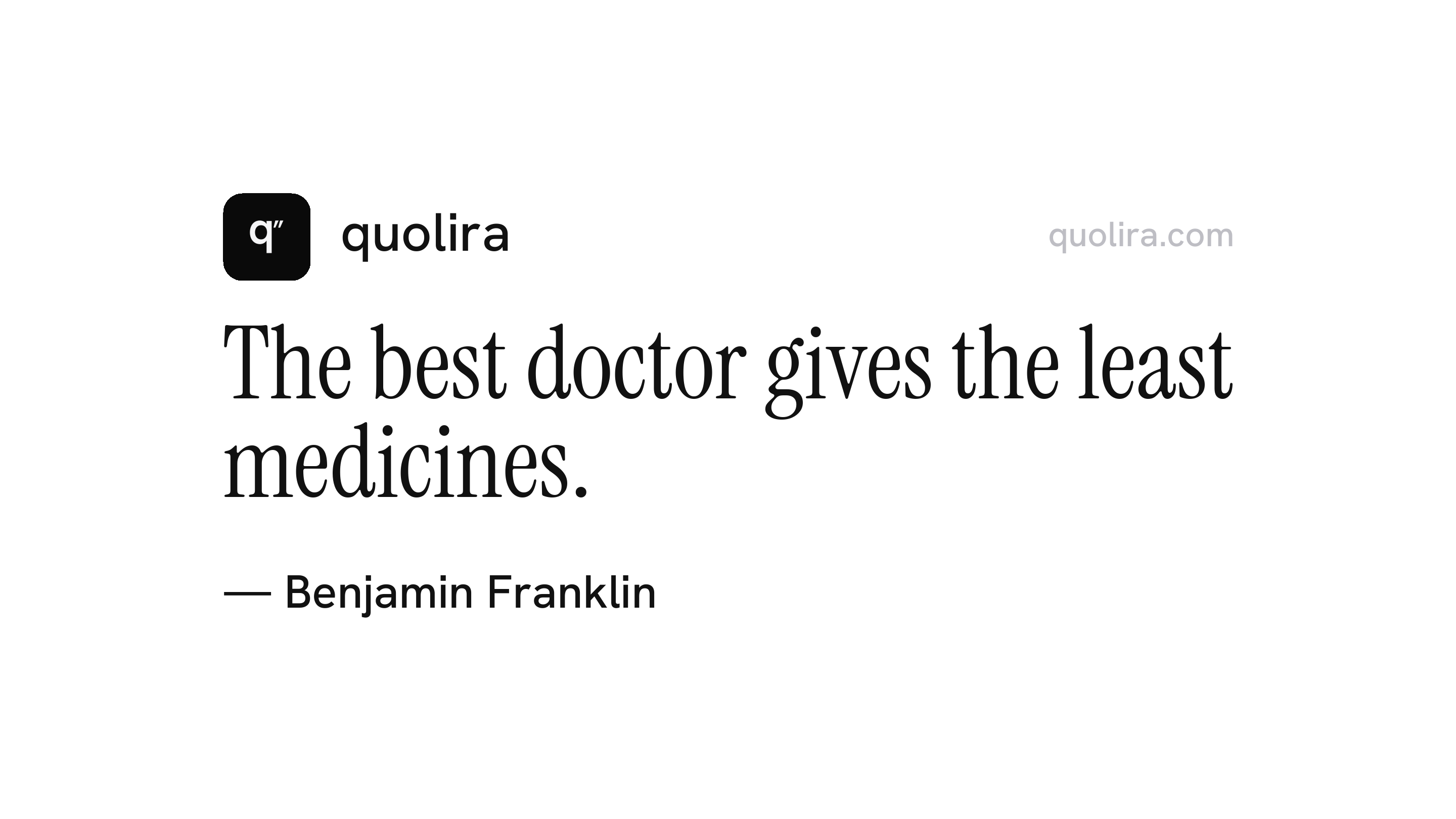
“The best doctor gives the least medicines.”
Benjamin Franklin · Poor Richard's Almanack