“God is a comedian playing to an audience too afraid to laugh.”
Voltaire
 quolira
.com
quolira
quolira.com
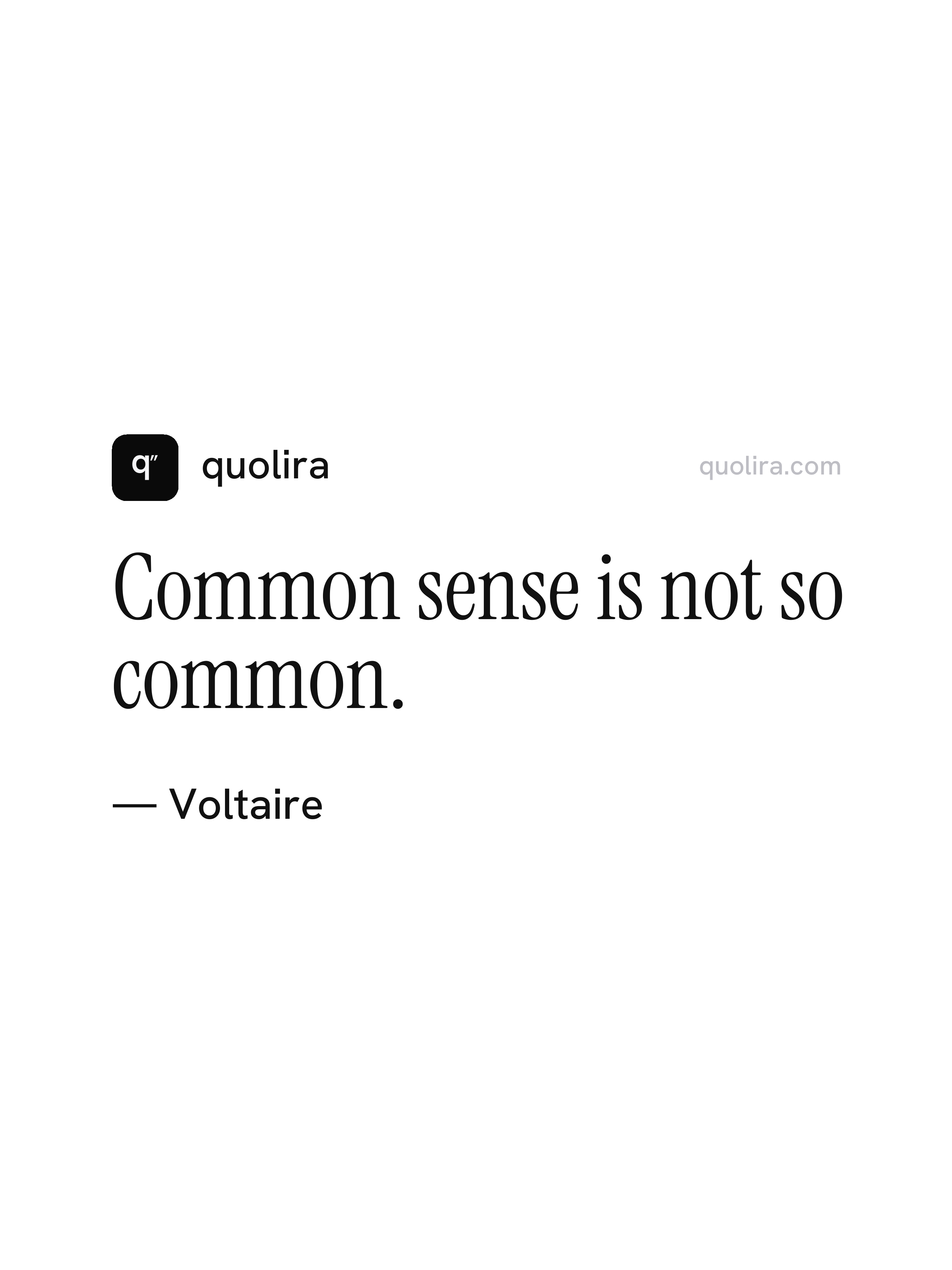
The line makes a quietly devastating observation: the quality most people assume they possess is precisely the one that is rarest in practice. Common sense is supposed to be the most basic form of good judgment, requiring no special education or genius, yet Voltaire points out that clear, practical reasoning is actually quite uncommon. The irony is that everyone believes they have it, which is part of why it is so scarce.
This line comes from Voltaire's Philosophical Dictionary, first published in 1764. That work is a collection of short alphabetical articles covering topics ranging from religion and politics to philosophy and human behavior, and it reflects Voltaire's characteristic method of making sharp observations in compact, memorable prose. The entry in which this remark appears is part of a broader examination of how people reason, or fail to reason, about everyday matters. The book was considered controversial at the time and was condemned and publicly burned in several places.
Voltaire was a French Enlightenment writer and thinker born in 1694. Over a long and productive career he wrote across an extraordinary range of forms, including drama, fiction, poetry, history, and philosophical essays. He was a committed advocate for reason, tolerance, and civil liberty, and he used wit as his primary weapon against superstition and oppression. His works remain central texts of the Enlightenment tradition, and he is still regarded as one of the great stylists of the French language.
“God is a comedian playing to an audience too afraid to laugh.”
Voltaire
“Those who can make you believe absurdities can make you commit atrocities.”
Voltaire · Questions sur les miracles, 1765
“It is dangerous to be right in matters on which the established authorities are wrong.”
Voltaire · The Age of Louis XIV, 1752
“Doubt is not a pleasant condition, but certainty is an absurd one.”
Voltaire · Letter to Frederick the Great, 1767
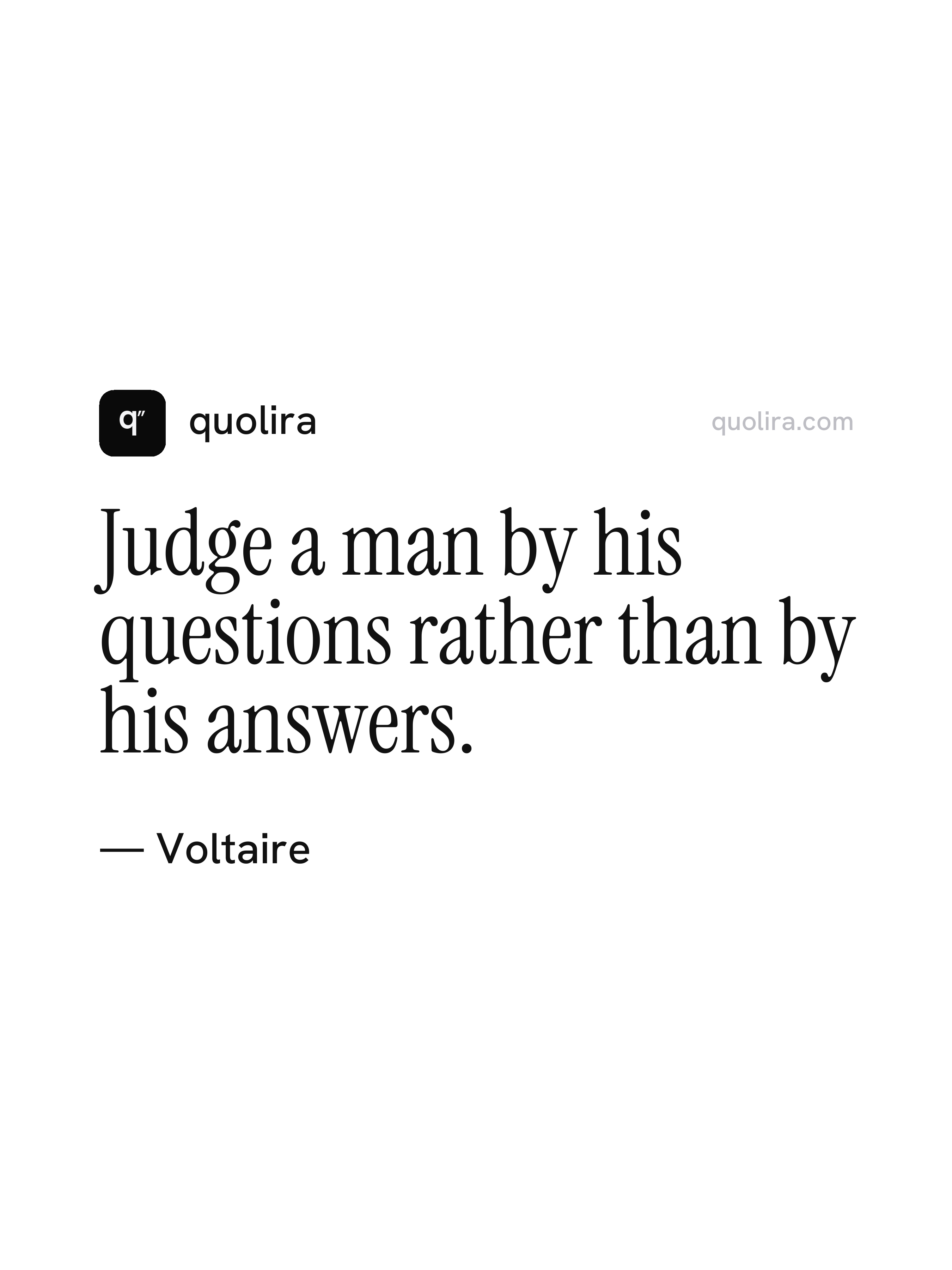
“Judge a man by his questions rather than by his answers.”
Voltaire
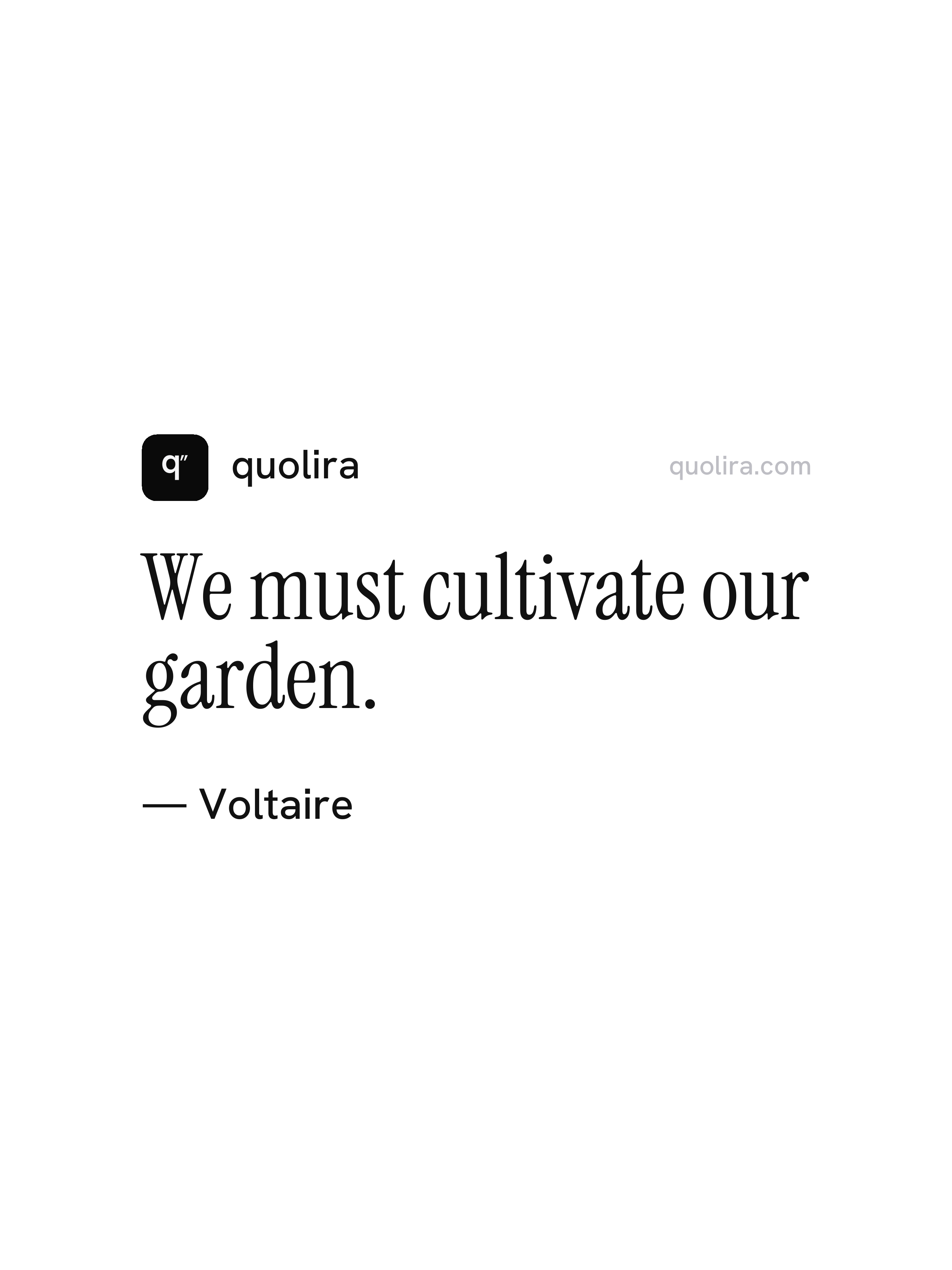
“We must cultivate our garden.”
Voltaire · Candide, 1759
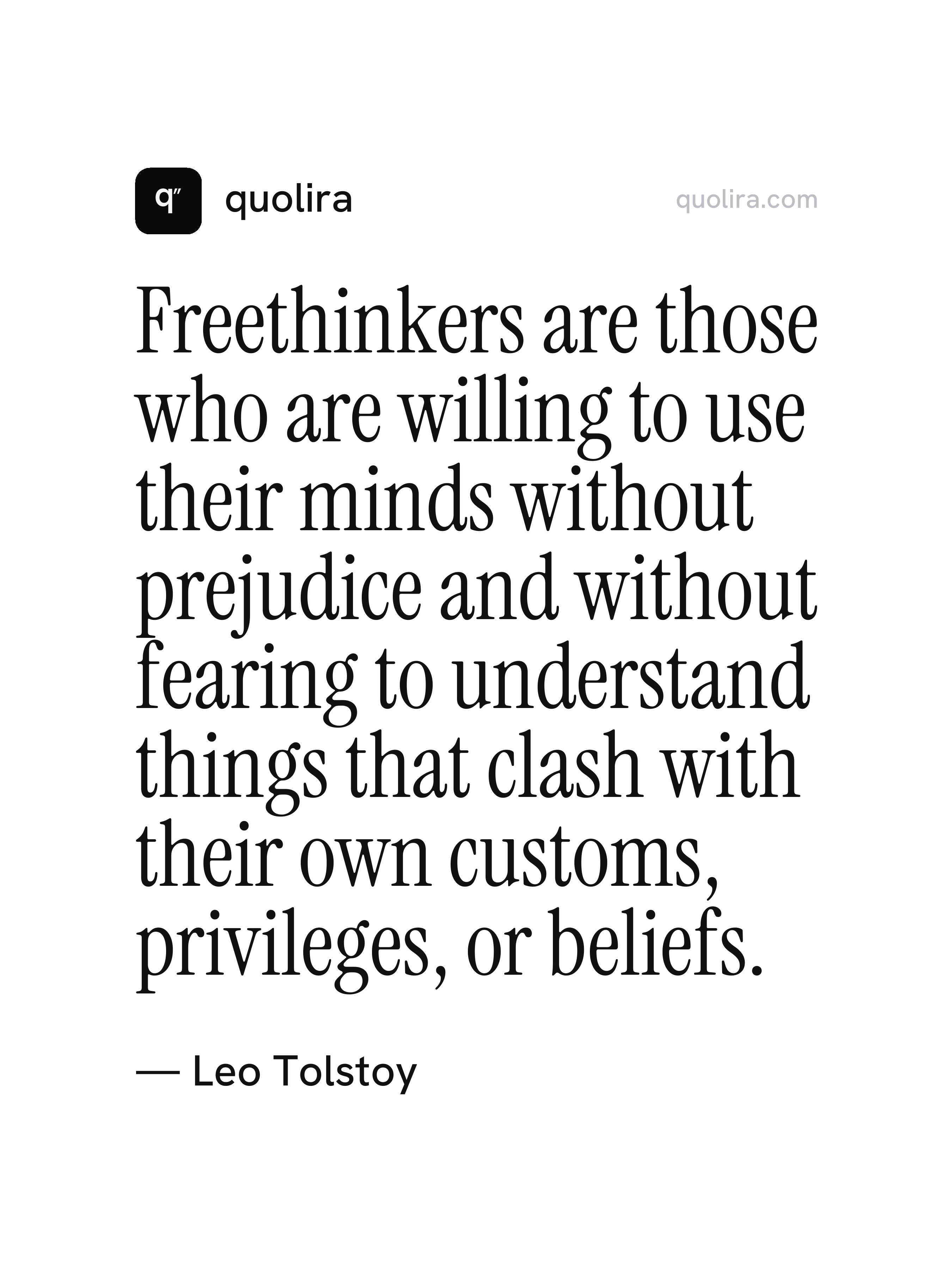
“Freethinkers are those who are willing to use their minds without prejudice and without fearing to understand things that clash with their own customs, privileges, or beliefs.”
Leo Tolstoy
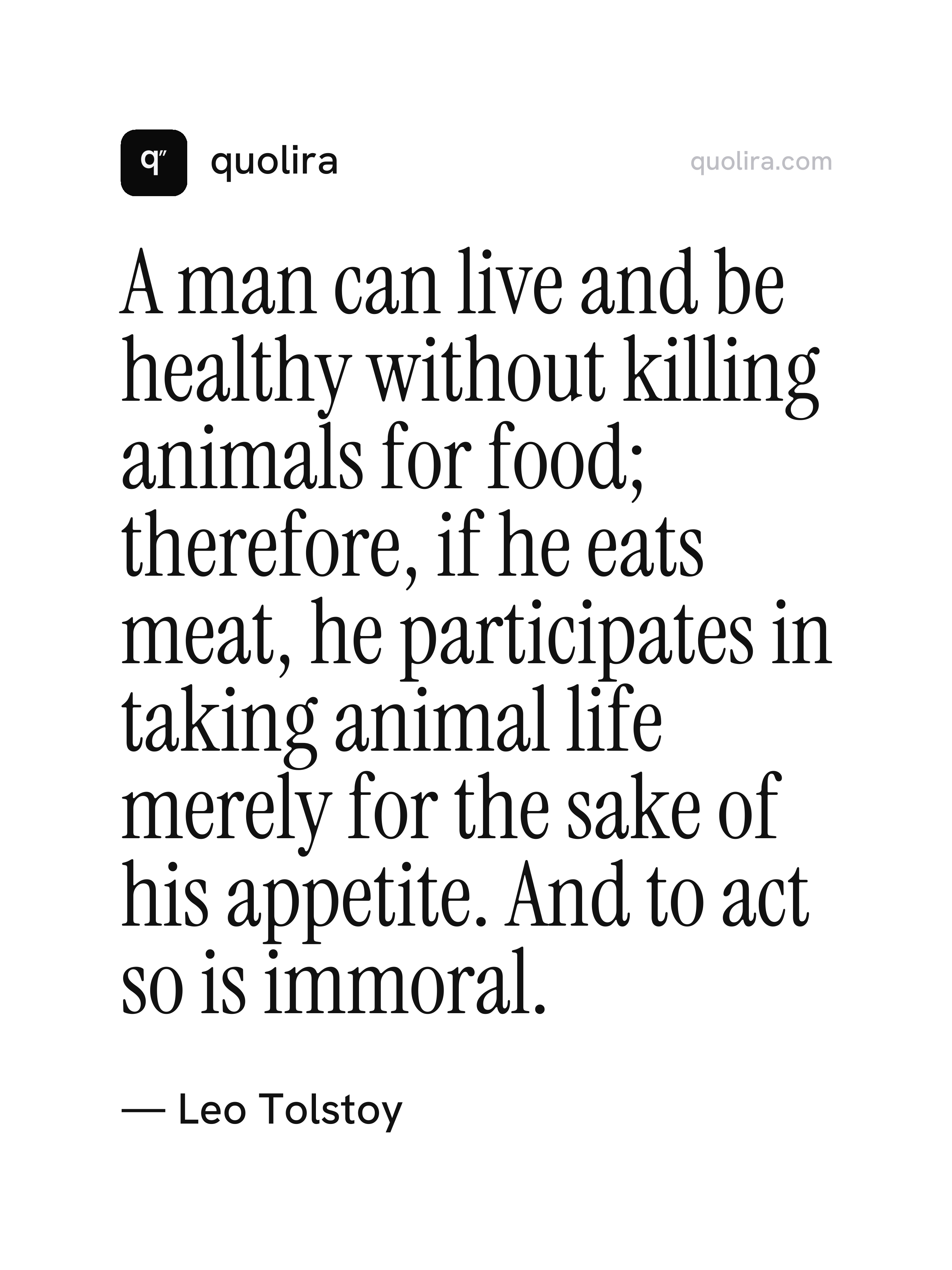
“A man can live and be healthy without killing animals for food; therefore, if he eats meat, he participates in taking animal life merely for the sake of his appetite. And to act so is immoral.”
Leo Tolstoy · The First Step, 1892
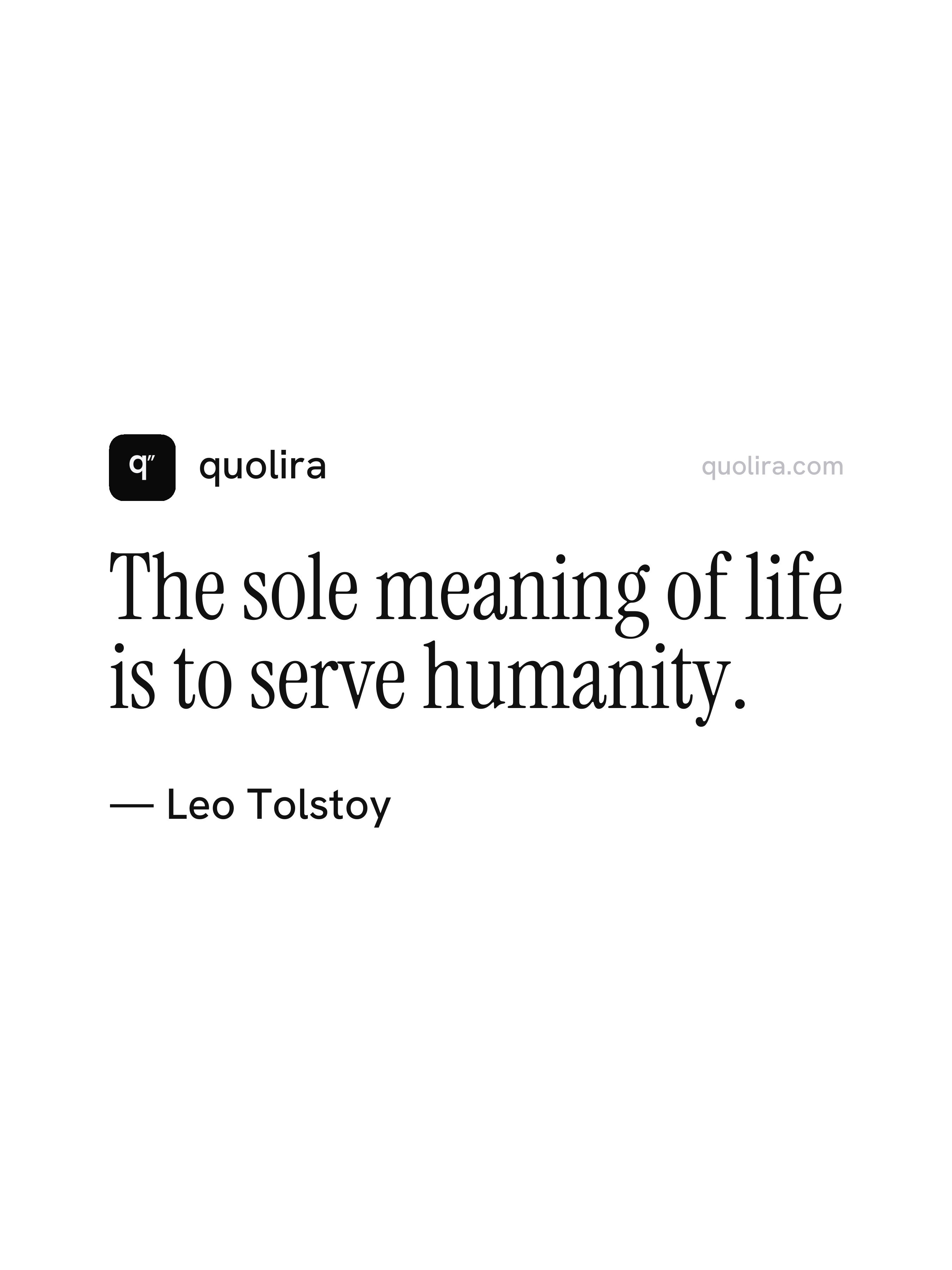
“The sole meaning of life is to serve humanity.”
Leo Tolstoy · A Confession, 1882
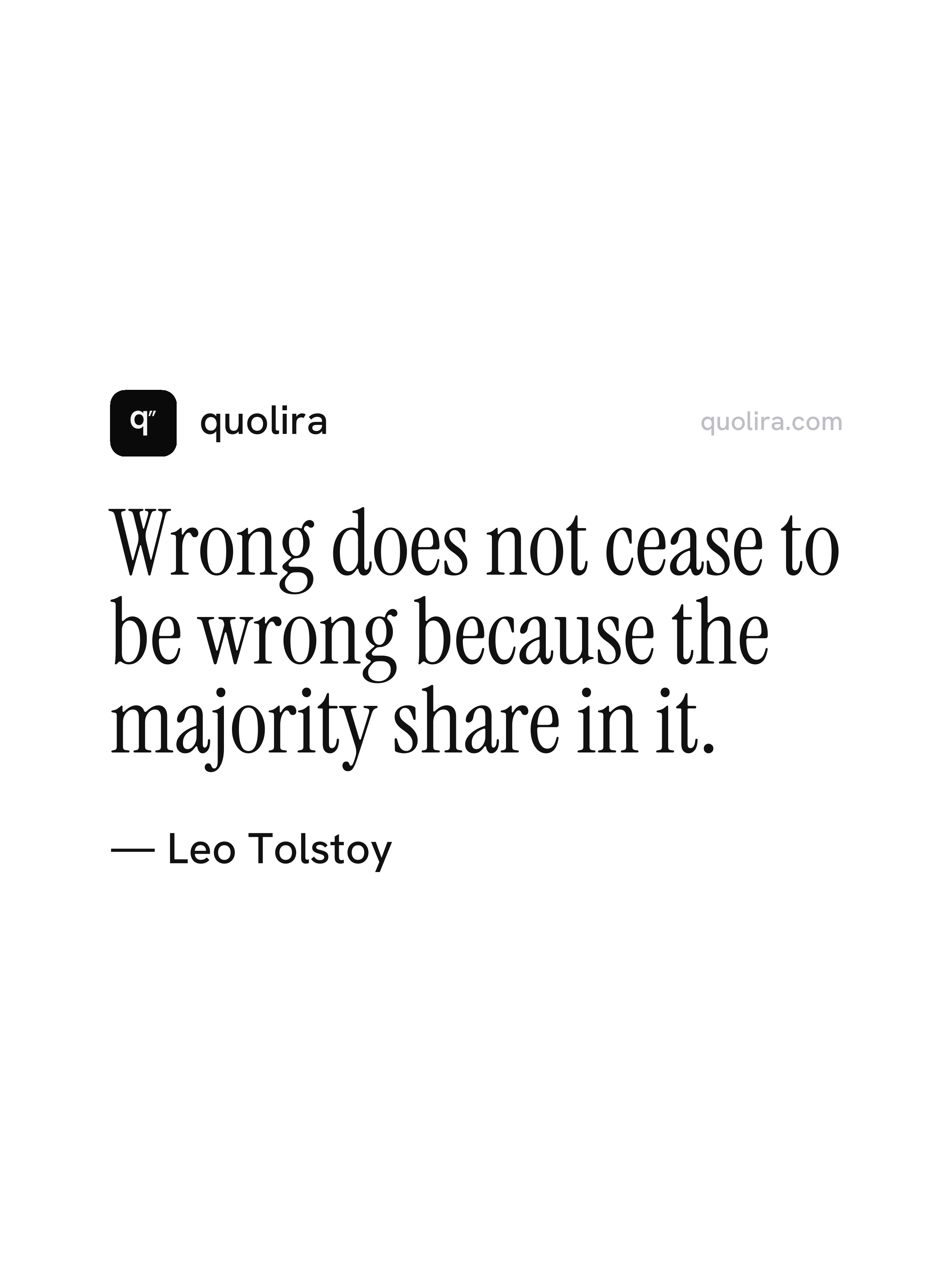
“Wrong does not cease to be wrong because the majority share in it.”
Leo Tolstoy · A Calendar of Wisdom, 1908
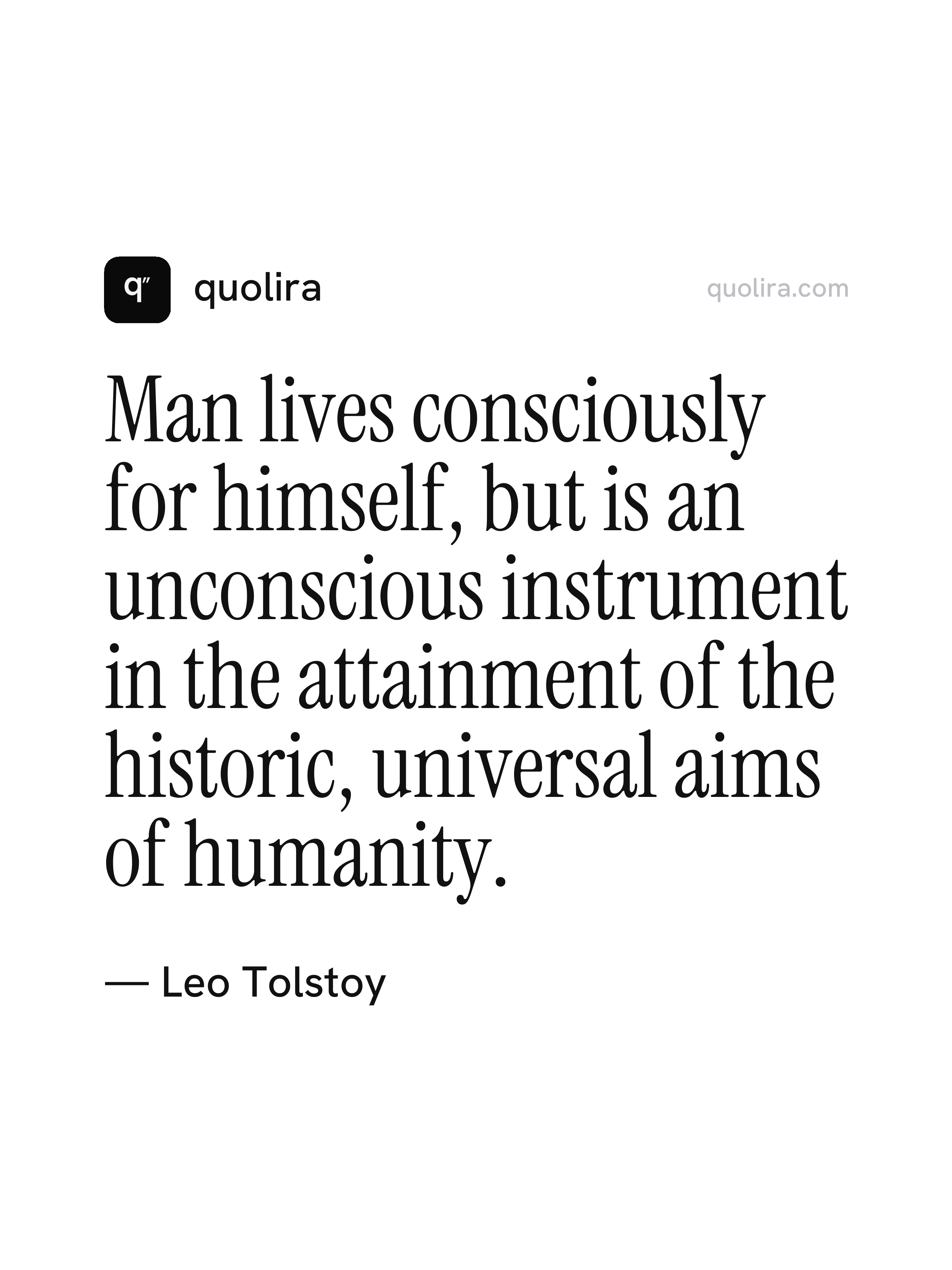
“Man lives consciously for himself, but is an unconscious instrument in the attainment of the historic, universal aims of humanity.”
Leo Tolstoy · War and Peace, 1869
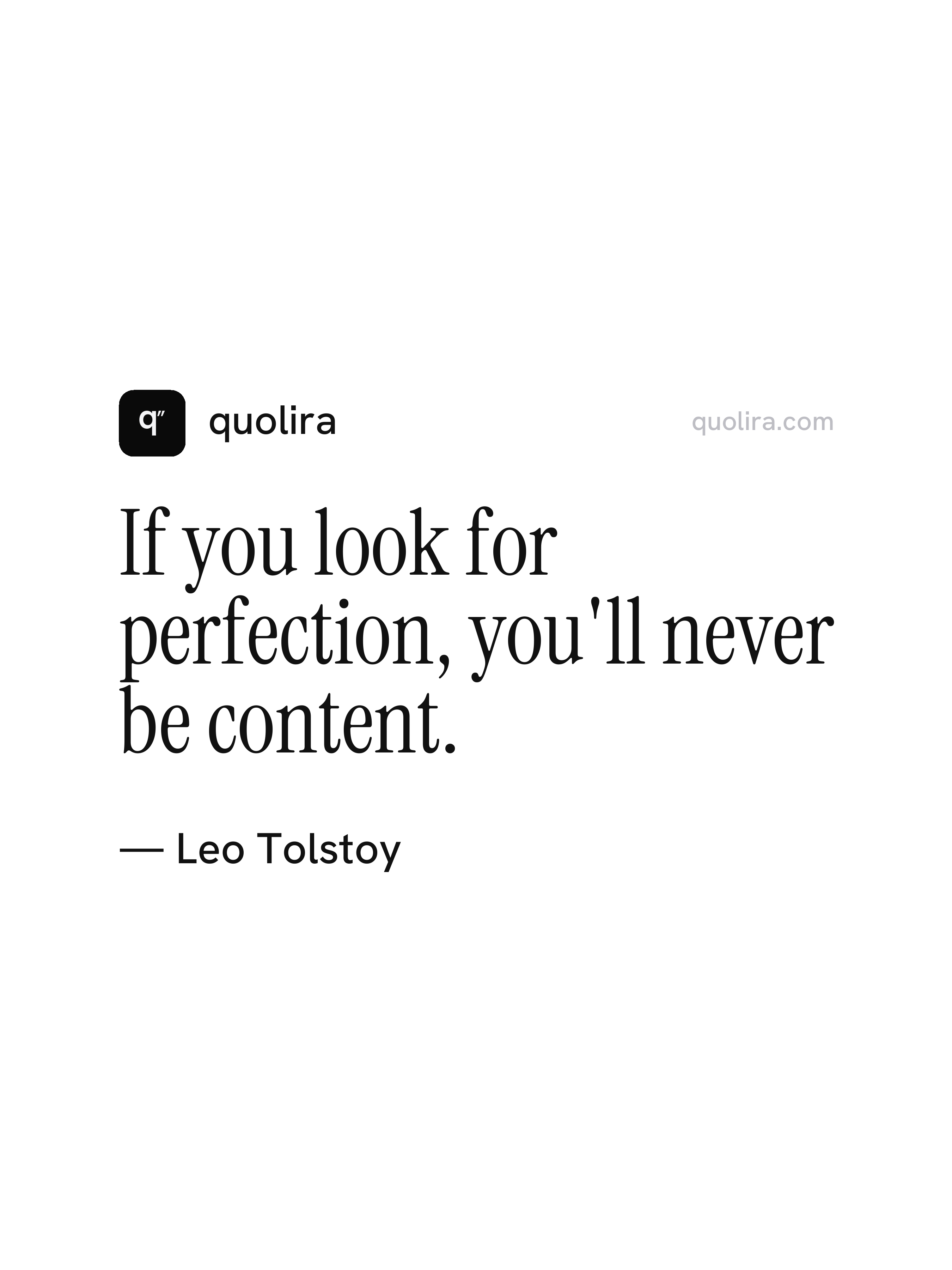
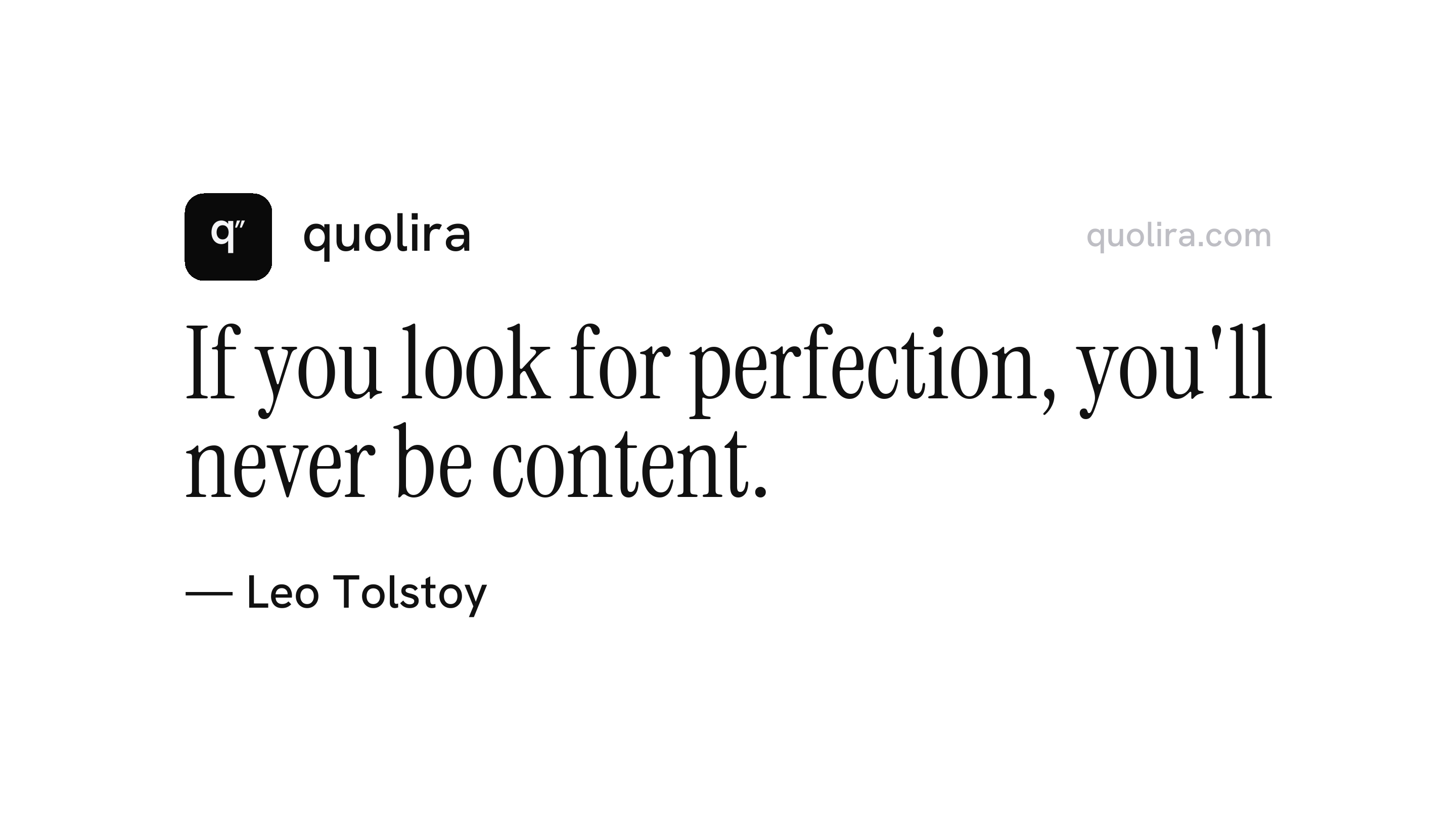
“If you look for perfection, you'll never be content.”
Leo Tolstoy · Anna Karenina, 1878