“Man lives consciously for himself, but is an unconscious instrument in the attainment of the historic, universal aims of humanity.”
Leo Tolstoy · War and Peace, 1869
 quolira
.com
quolira
quolira.com
Tolstoy is stating plainly that popular opinion or widespread practice cannot make a harmful act acceptable. If something is wrong, the fact that most people do it or approve of it changes nothing about its moral character. The line is a defense of individual conscience against the pressure to conform simply because conformity feels safe or normal.
A Calendar of Wisdom was a collection Tolstoy compiled later in his life, gathering thoughts from his own writing alongside reflections drawn from a wide range of moral, religious, and philosophical traditions. The project reflected his deep conviction that wisdom should be practical, daily, and accessible to ordinary people. This particular observation fits naturally into that later period, when Tolstoy was increasingly willing to challenge social norms and institutional authority on moral grounds.
Leo Tolstoy was a Russian author and moral philosopher born in 1828. After achieving fame with his great novels, he underwent a profound spiritual crisis that led him to reject wealth, institutional religion, and much of conventional society. He became an outspoken advocate for nonviolence, simple living, and the primacy of conscience, ideas that brought him into conflict with both the Russian Orthodox Church and the state. His later writings, including A Calendar of Wisdom, reflect this uncompromising ethical vision. He died in 1910.
“Man lives consciously for himself, but is an unconscious instrument in the attainment of the historic, universal aims of humanity.”
Leo Tolstoy · War and Peace, 1869
“If you look for perfection, you'll never be content.”
Leo Tolstoy · Anna Karenina, 1878
“The two most powerful warriors are patience and time.”
Leo Tolstoy · War and Peace, 1869
“There is no greatness where there is no simplicity, goodness, and truth.”
Leo Tolstoy · War and Peace, 1869
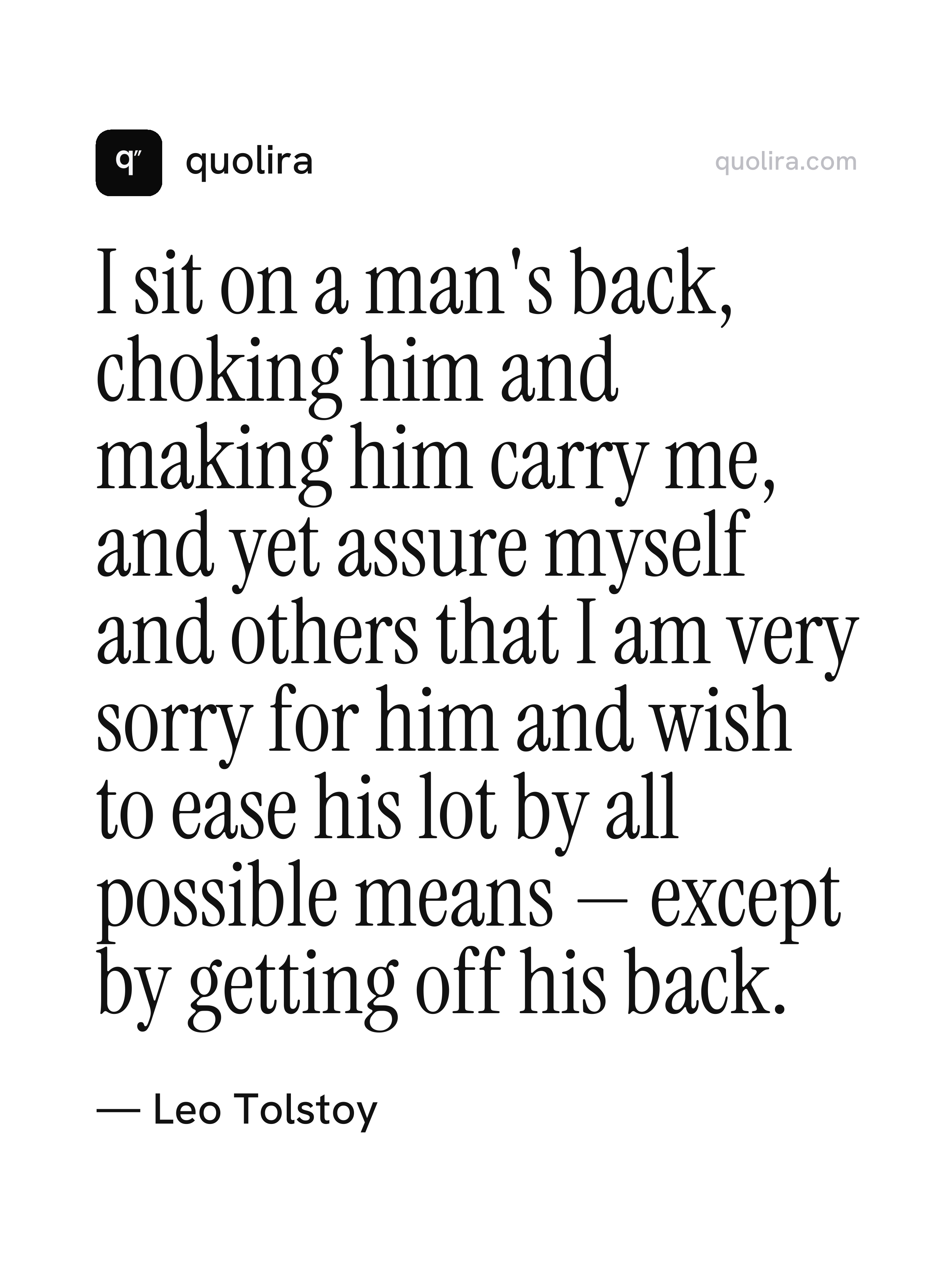
“I sit on a man's back, choking him and making him carry me, and yet assure myself and others that I am very sorry for him and wish to ease his lot by all possible means — except by getting off his back.”
Leo Tolstoy · What Then Must We Do?, 1886
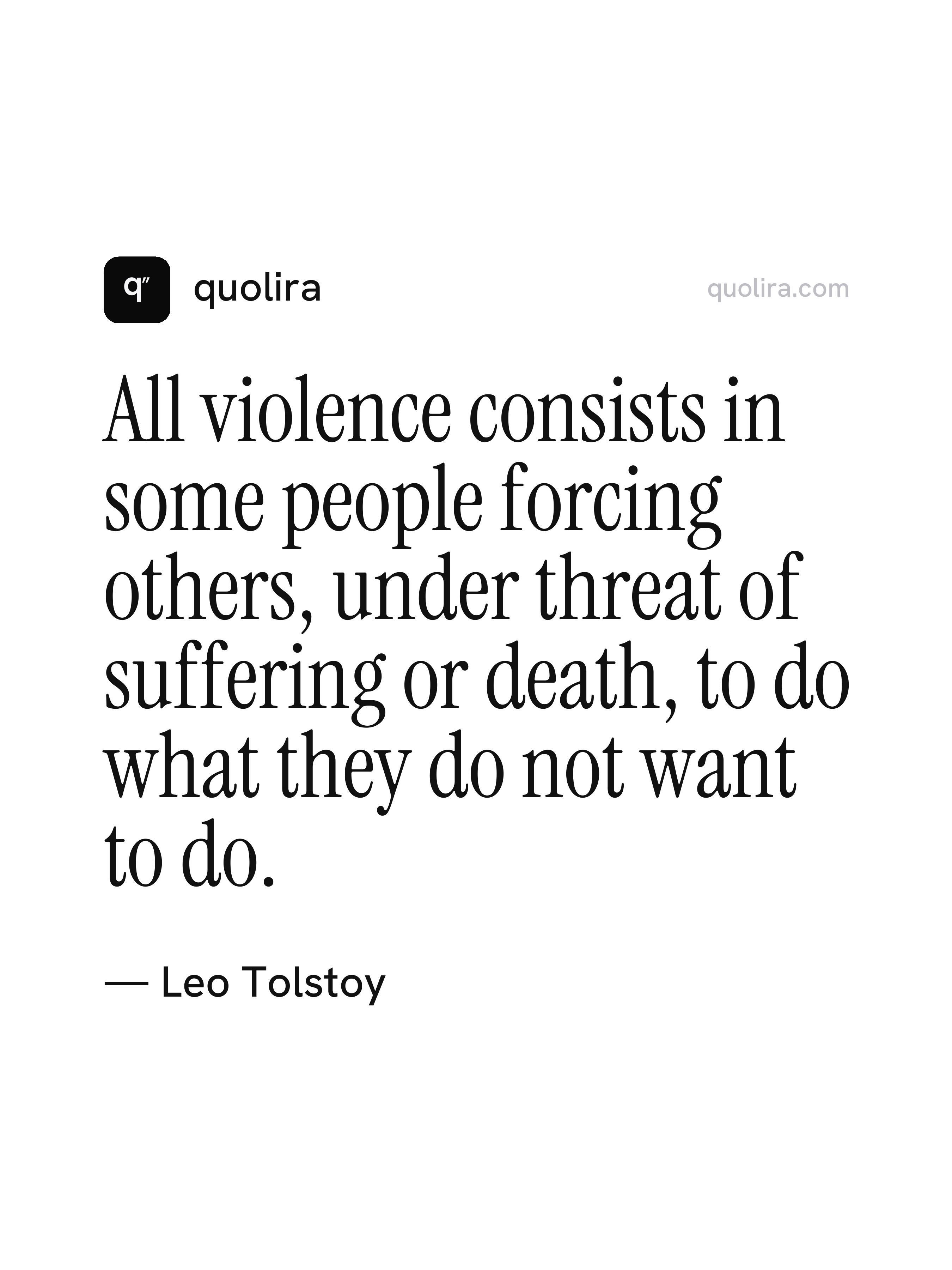
“All violence consists in some people forcing others, under threat of suffering or death, to do what they do not want to do.”
Leo Tolstoy · The Kingdom of God Is Within You, 1894
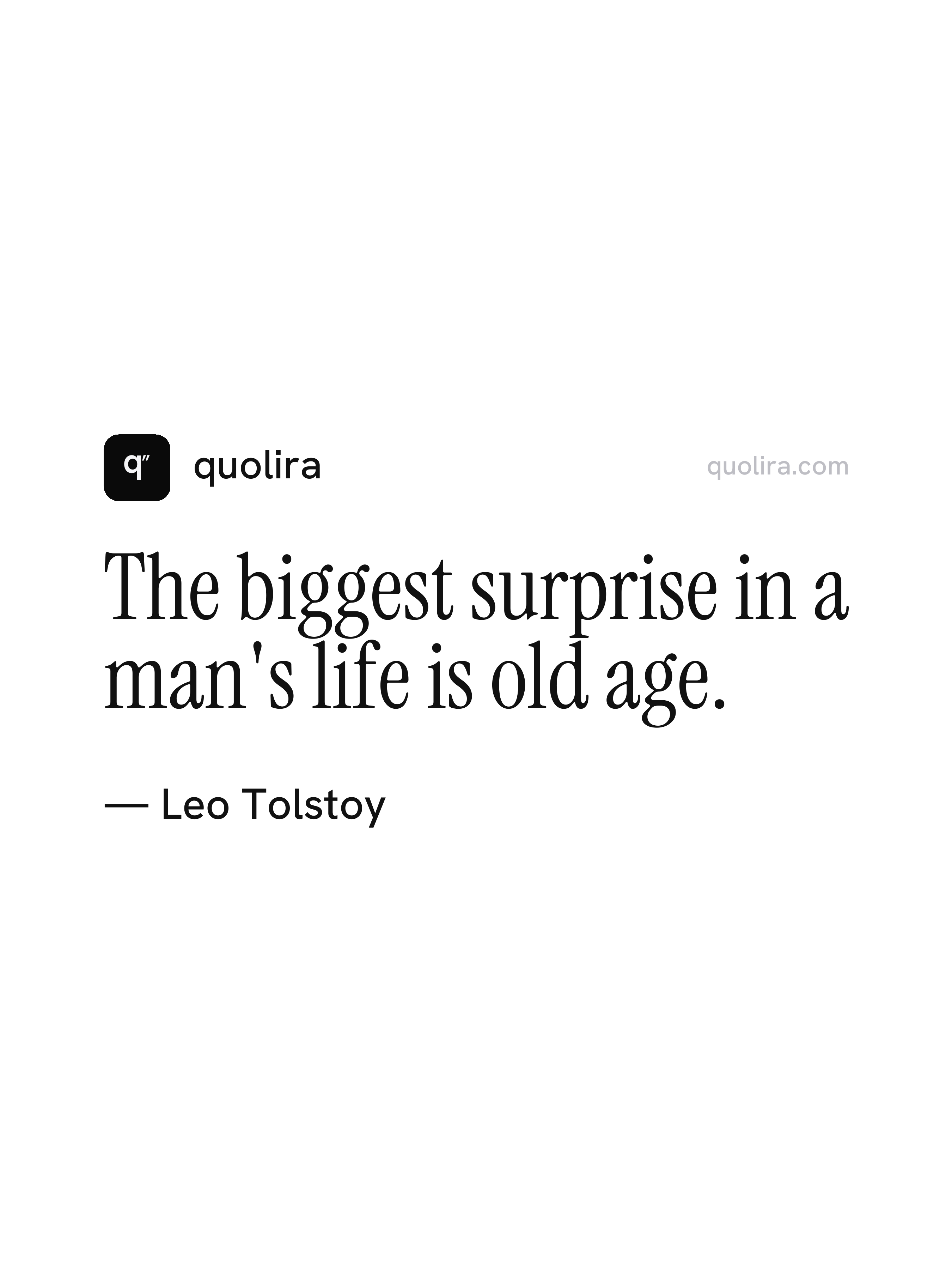
“The biggest surprise in a man's life is old age.”
Leo Tolstoy
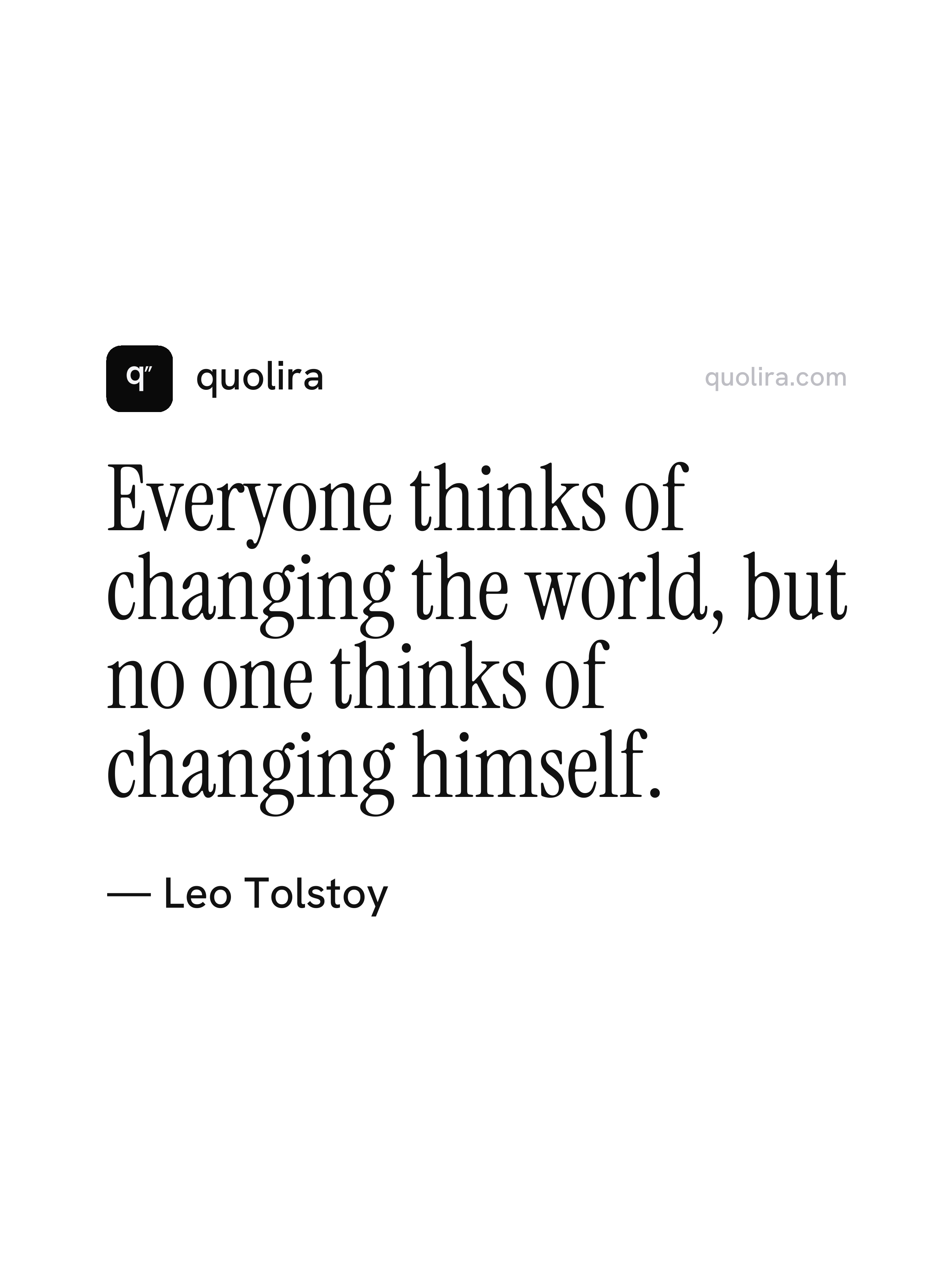
“Everyone thinks of changing the world, but no one thinks of changing himself.”
Leo Tolstoy · Three Methods of Reform, 1900
“The version of yourself that shows up when someone is watching is also you. Don't be so quick to dismiss it.”
Original
“Being seen is not the same as being known. But it is often enough to make us act as though we are.”
Original
“We shall not cease from exploration, and the end of all our exploring will be to arrive where we started and know the place for the first time.”
T. S. Eliot · Little Gidding, Four Quartets, 1942
“The most courageous act is still to think for yourself. Aloud.”
Coco Chanel