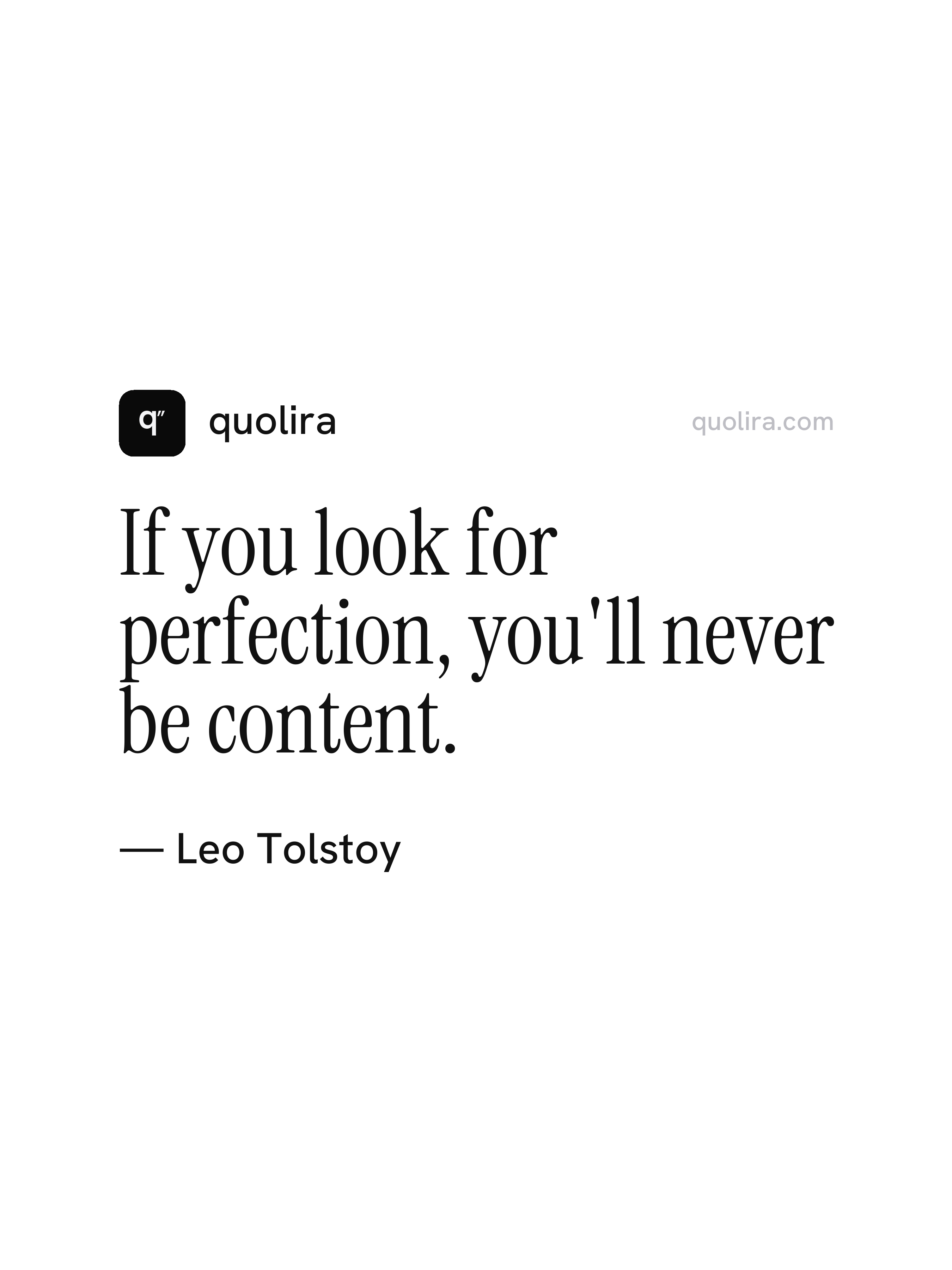
“If you look for perfection, you'll never be content.”
Leo Tolstoy · Anna Karenina, 1878
 quolira
.com
quolira
quolira.com
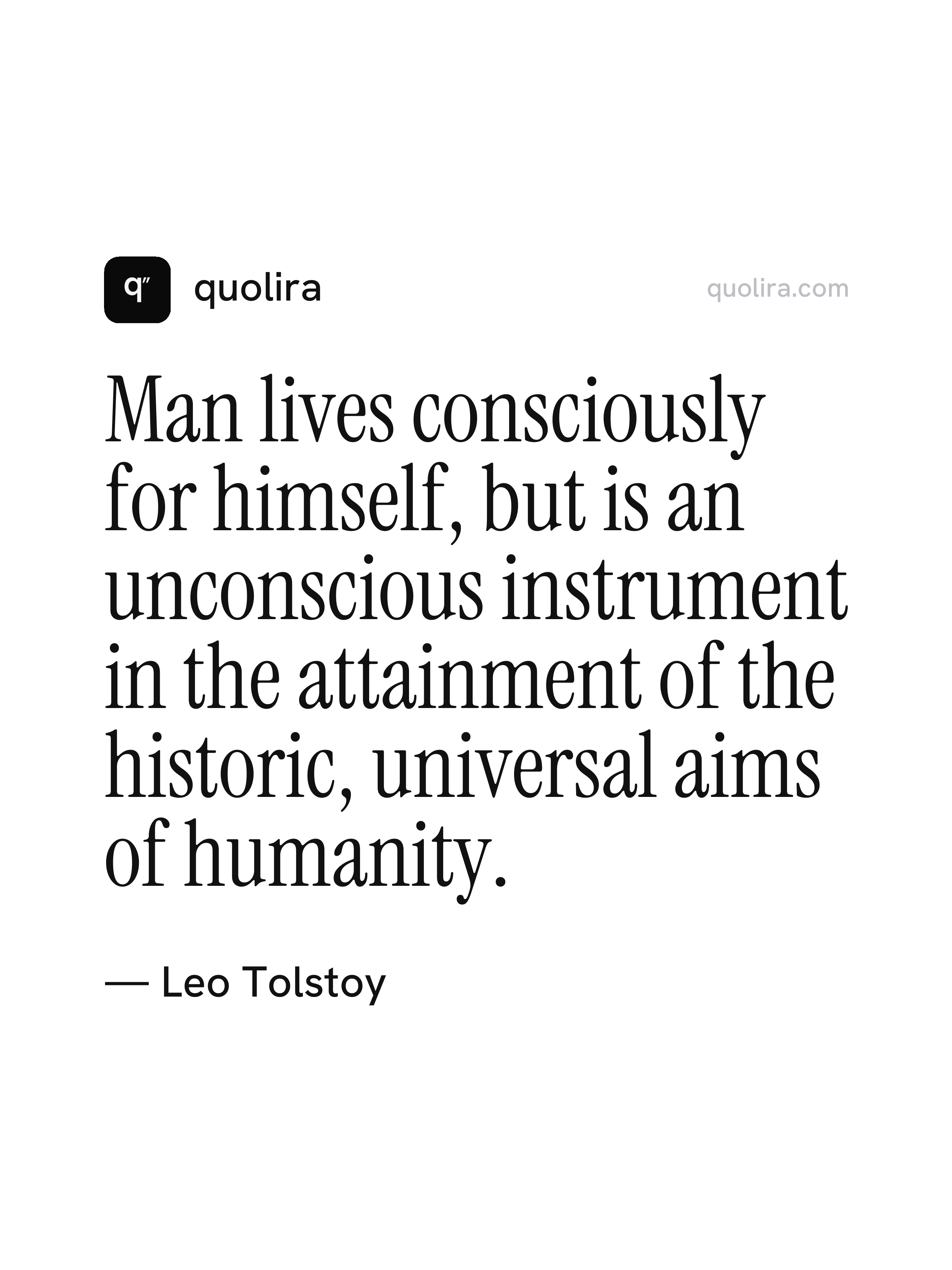
Tolstoy is drawing a distinction between the small, personal stories people tell themselves about their choices and the much larger pattern those choices form when seen from a historical distance. Each person acts with private intentions and limited awareness, yet those individual actions combine to produce outcomes far greater and more complex than anyone planned. It is a humbling idea: we are participants in a story whose full meaning we cannot see while we are living it.
This reflection is rooted in the philosophical argument at the heart of War and Peace. Tolstoy was deeply skeptical of the idea that history is driven by exceptional individuals, kings, generals, or geniuses, who bend events to their will. He believed instead that history emerges from the accumulated actions and impulses of countless ordinary people. The novel dramatizes this view across hundreds of characters caught up in the Napoleonic Wars, showing how little even powerful figures truly control.
Leo Tolstoy was born in Russia in 1828 and became one of the most celebrated novelists in world literature. His work combined vivid storytelling with serious philosophical and moral reflection, and War and Peace in particular stands as a sustained meditation on free will, historical causation, and the meaning of individual lives. In addition to his fiction, Tolstoy wrote extensively on ethics, spirituality, and social reform. He died in 1910, leaving an influence that extends far beyond literature.
“If you look for perfection, you'll never be content.”
Leo Tolstoy · Anna Karenina, 1878
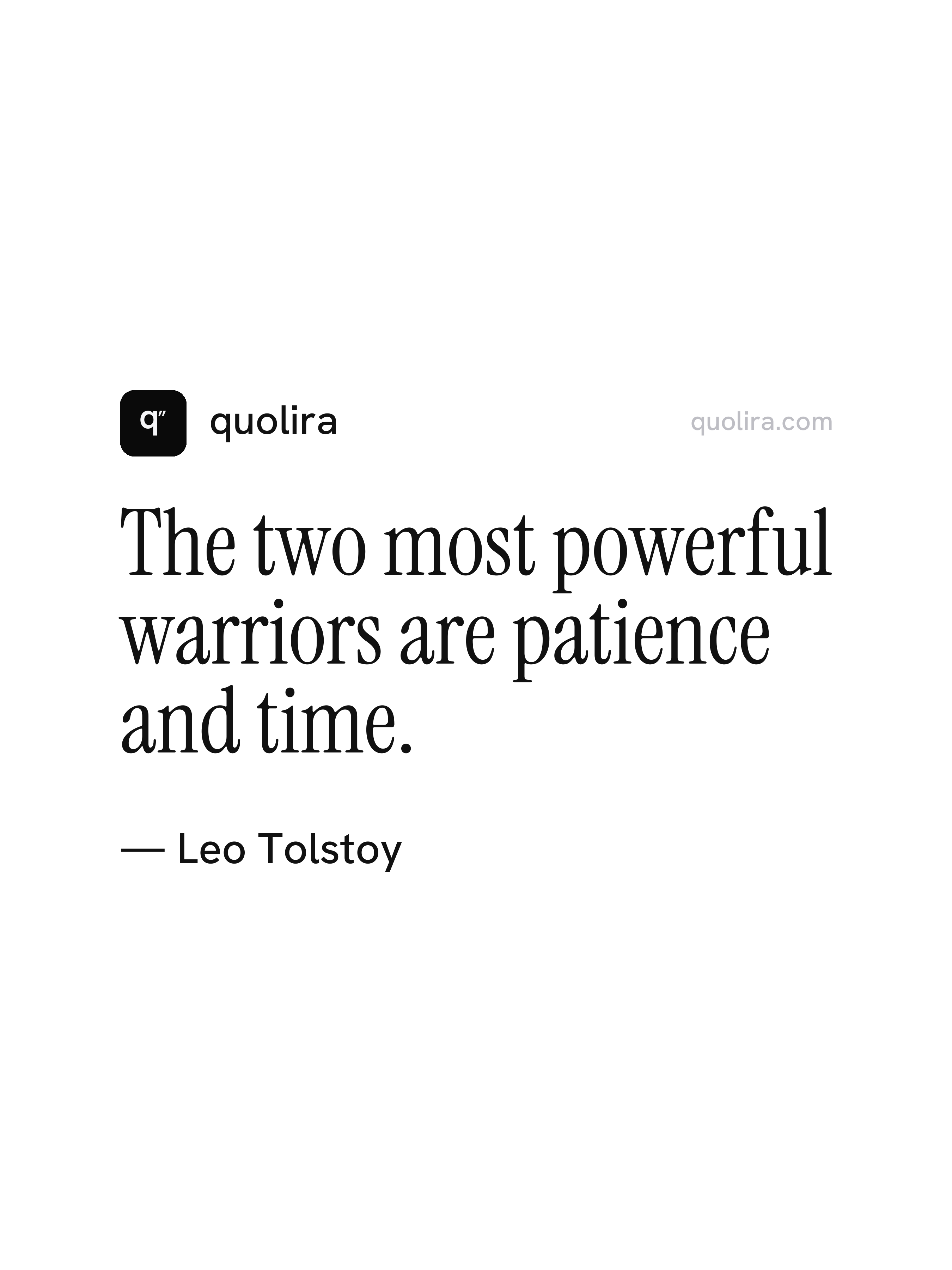
“The two most powerful warriors are patience and time.”
Leo Tolstoy · War and Peace, 1869
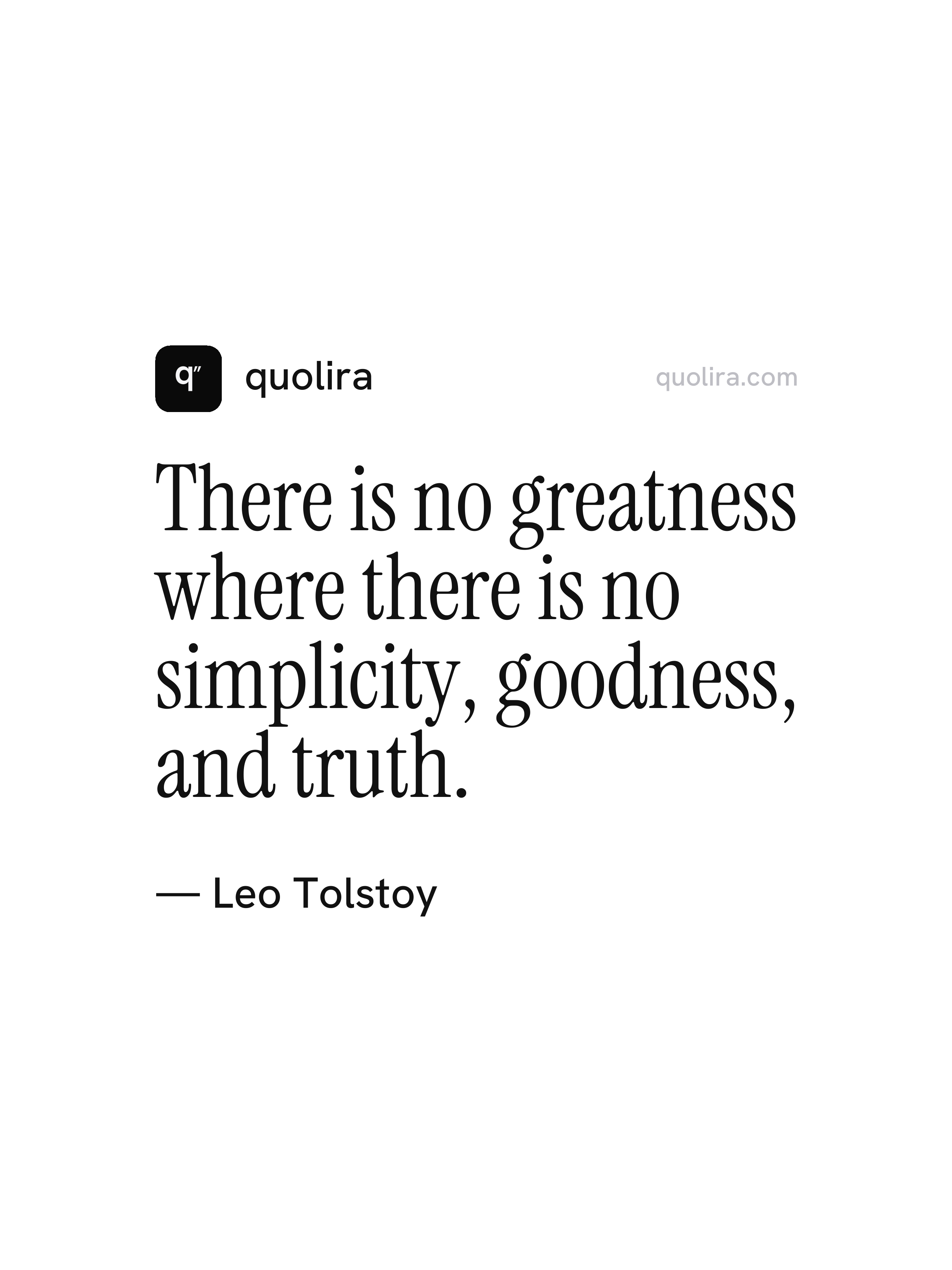
“There is no greatness where there is no simplicity, goodness, and truth.”
Leo Tolstoy · War and Peace, 1869
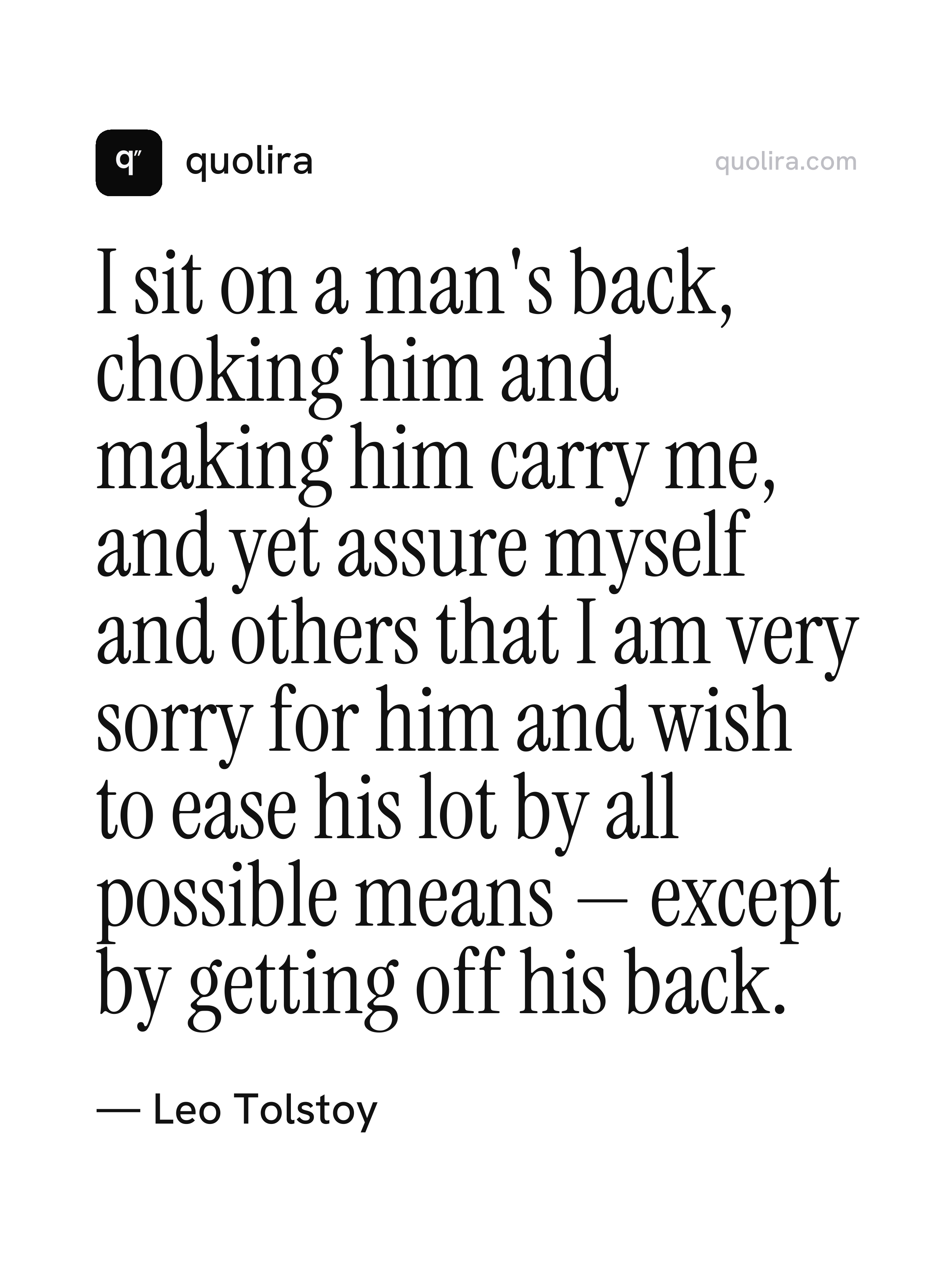
“I sit on a man's back, choking him and making him carry me, and yet assure myself and others that I am very sorry for him and wish to ease his lot by all possible means — except by getting off his back.”
Leo Tolstoy · What Then Must We Do?, 1886
“All violence consists in some people forcing others, under threat of suffering or death, to do what they do not want to do.”
Leo Tolstoy · The Kingdom of God Is Within You, 1894
“The biggest surprise in a man's life is old age.”
Leo Tolstoy
“Everyone thinks of changing the world, but no one thinks of changing himself.”
Leo Tolstoy · Three Methods of Reform, 1900
“The version of yourself that shows up when someone is watching is also you. Don't be so quick to dismiss it.”
Original
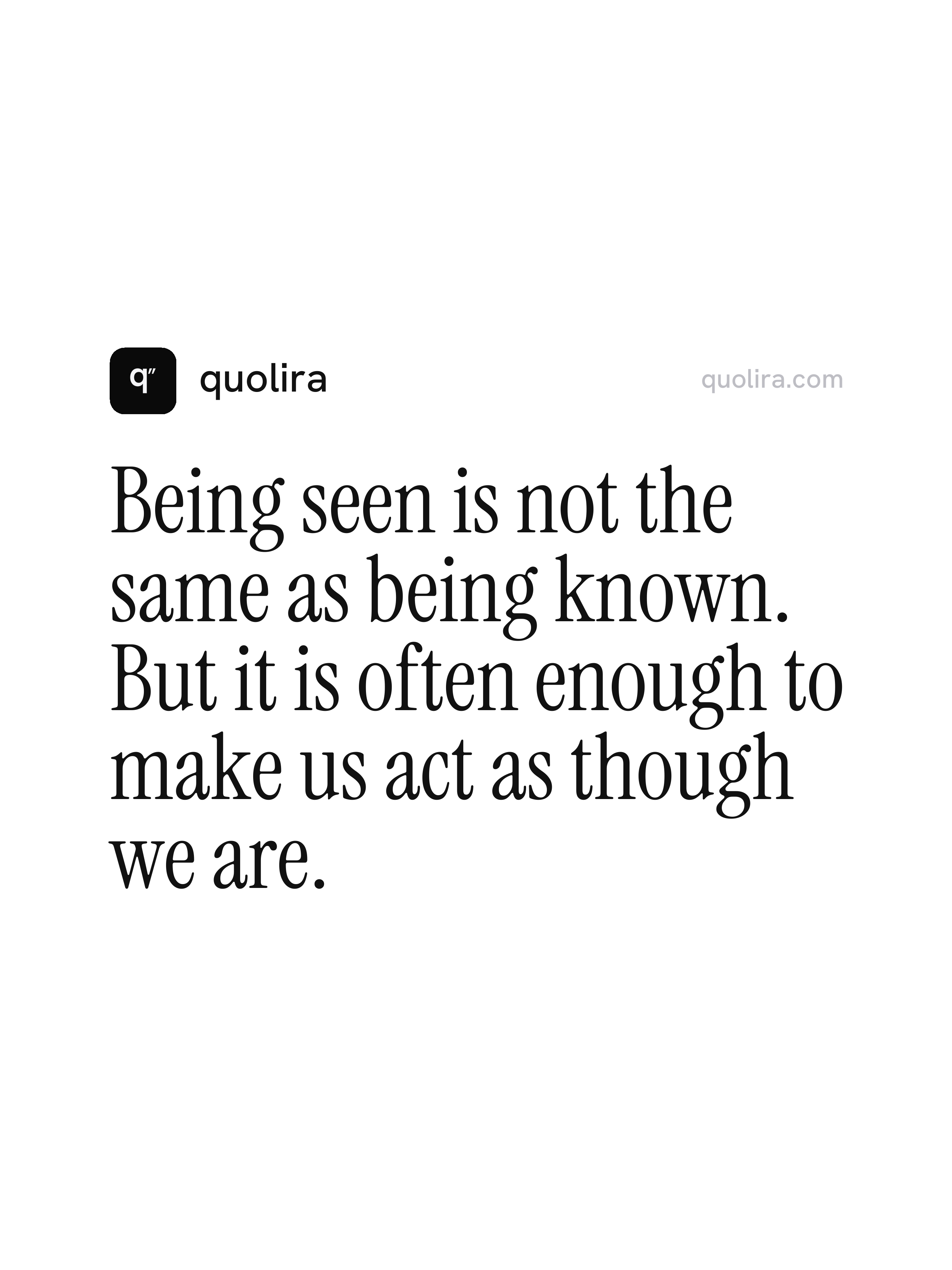
“Being seen is not the same as being known. But it is often enough to make us act as though we are.”
Original
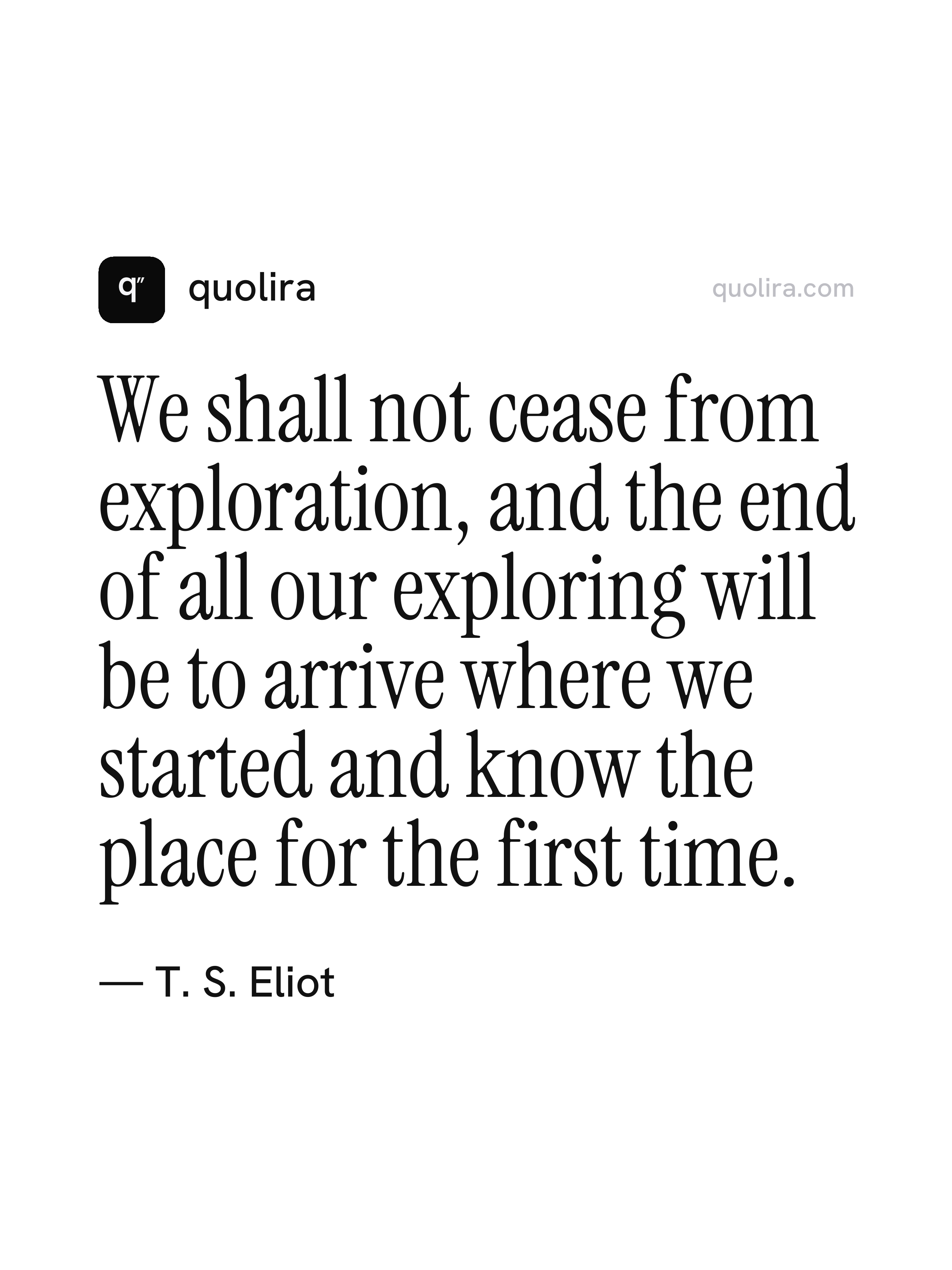
“We shall not cease from exploration, and the end of all our exploring will be to arrive where we started and know the place for the first time.”
T. S. Eliot · Little Gidding, Four Quartets, 1942
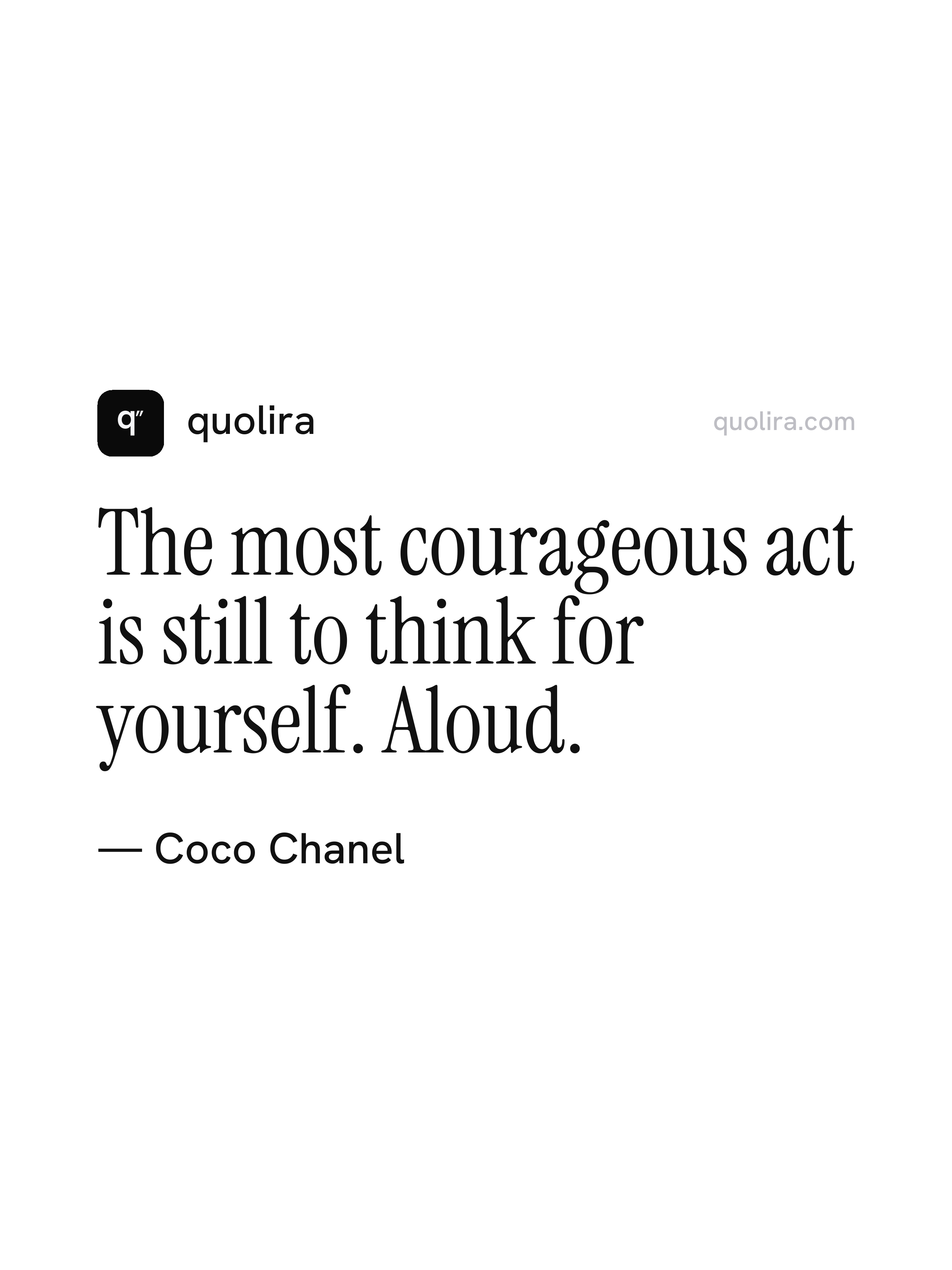
“The most courageous act is still to think for yourself. Aloud.”
Coco Chanel
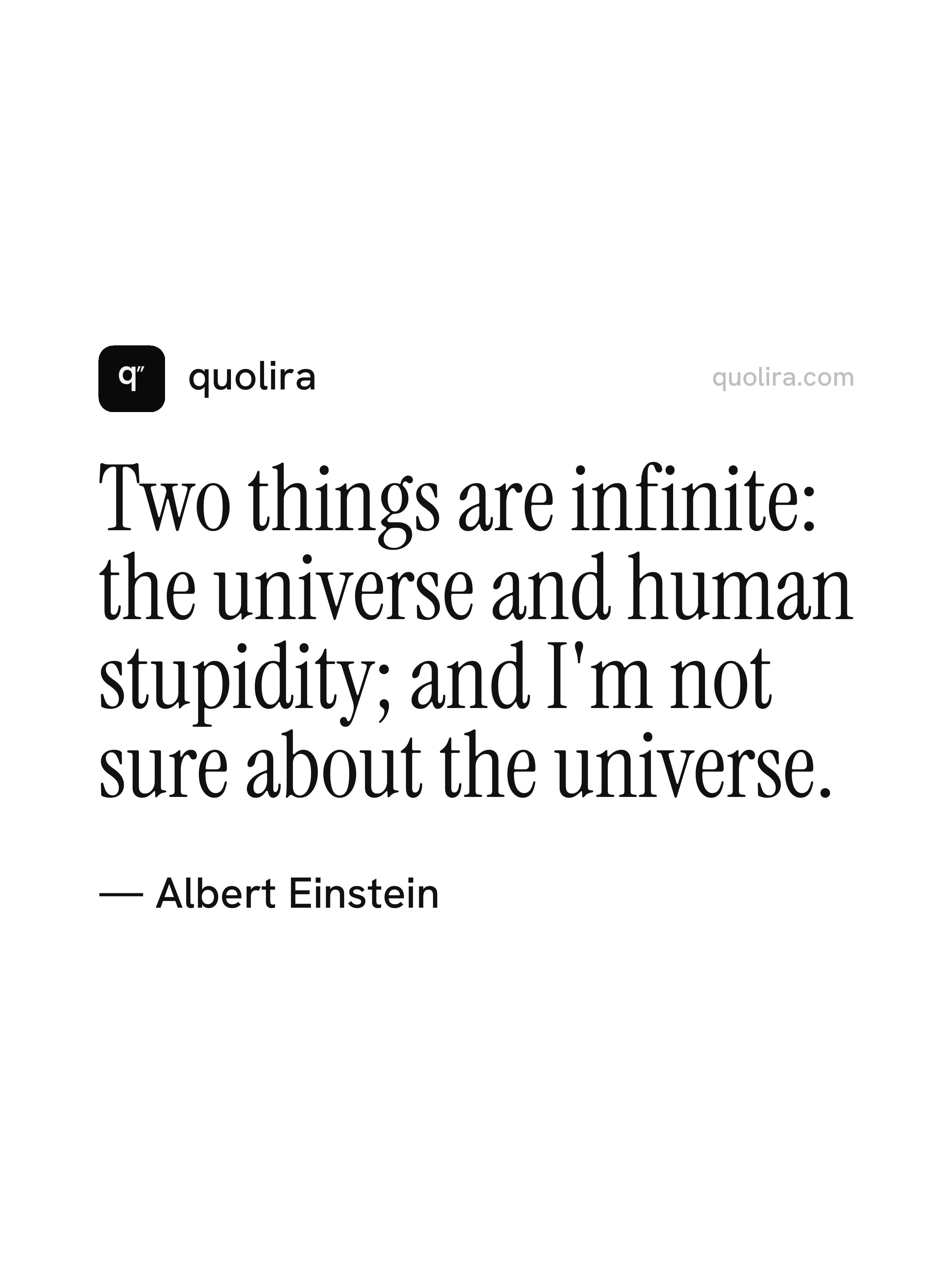
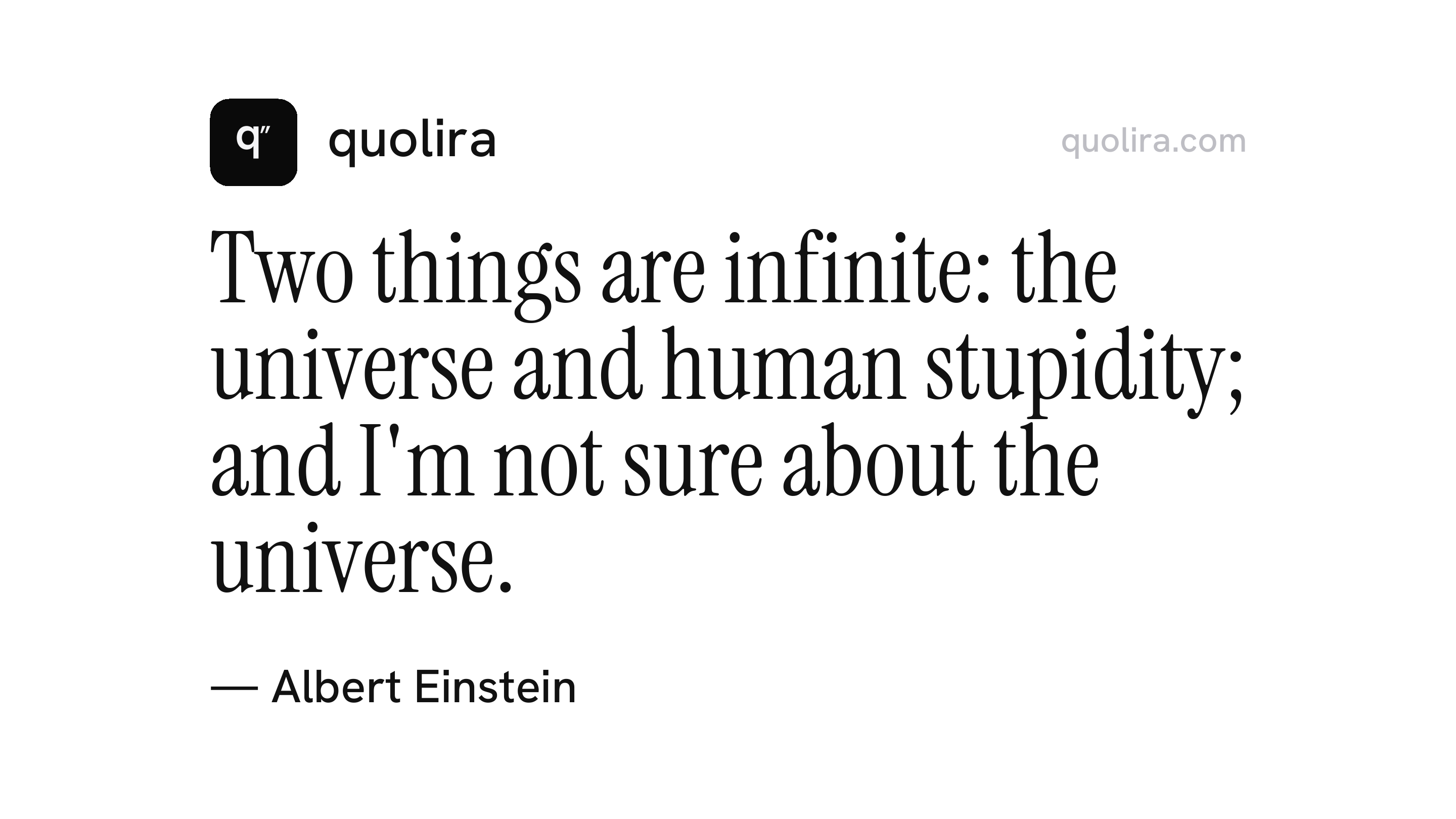
“Two things are infinite: the universe and human stupidity; and I'm not sure about the universe.”
Albert Einstein