“Freethinkers are those who are willing to use their minds without prejudice and without fearing to understand things that clash with their own customs, privileges, or beliefs.”
Leo Tolstoy
 quolira
.com
quolira
quolira.com
At the end of a long journey through suffering, absurdity, and philosophical debate, Voltaire's conclusion is quietly radical: stop arguing about the meaning of the universe and tend to the work directly in front of you. The garden is both literal and symbolic, standing for the practical sphere of life that a person can actually shape and improve. The line is an invitation to trade abstract theorizing for concrete, grounded effort.
This line closes Candide, Voltaire's short satirical novel published in 1759. Throughout the book, the naive hero Candide and his companions endure an almost comic parade of disasters while debating the philosophy of optimism, particularly the idea that this is the best of all possible worlds. By the end, exhausted and disillusioned, the characters settle on a small farm. The final instruction to cultivate the garden reads as Voltaire's own verdict on grand philosophical systems: they offer little help, and honest labor offers more.
Voltaire was the pen name of Francois-Marie Arouet, a French Enlightenment writer and philosopher born in 1694. He was one of the most prolific and influential intellectuals of his era, producing plays, poetry, histories, philosophical tales, and an enormous body of correspondence. He used wit and satire as weapons against religious intolerance, political tyranny, and dogmatic thinking. He died in 1778, celebrated across Europe as a champion of reason and civil liberties.
“Freethinkers are those who are willing to use their minds without prejudice and without fearing to understand things that clash with their own customs, privileges, or beliefs.”
Leo Tolstoy
“A man can live and be healthy without killing animals for food; therefore, if he eats meat, he participates in taking animal life merely for the sake of his appetite. And to act so is immoral.”
Leo Tolstoy · The First Step, 1892
“The sole meaning of life is to serve humanity.”
Leo Tolstoy · A Confession, 1882
“Wrong does not cease to be wrong because the majority share in it.”
Leo Tolstoy · A Calendar of Wisdom, 1908
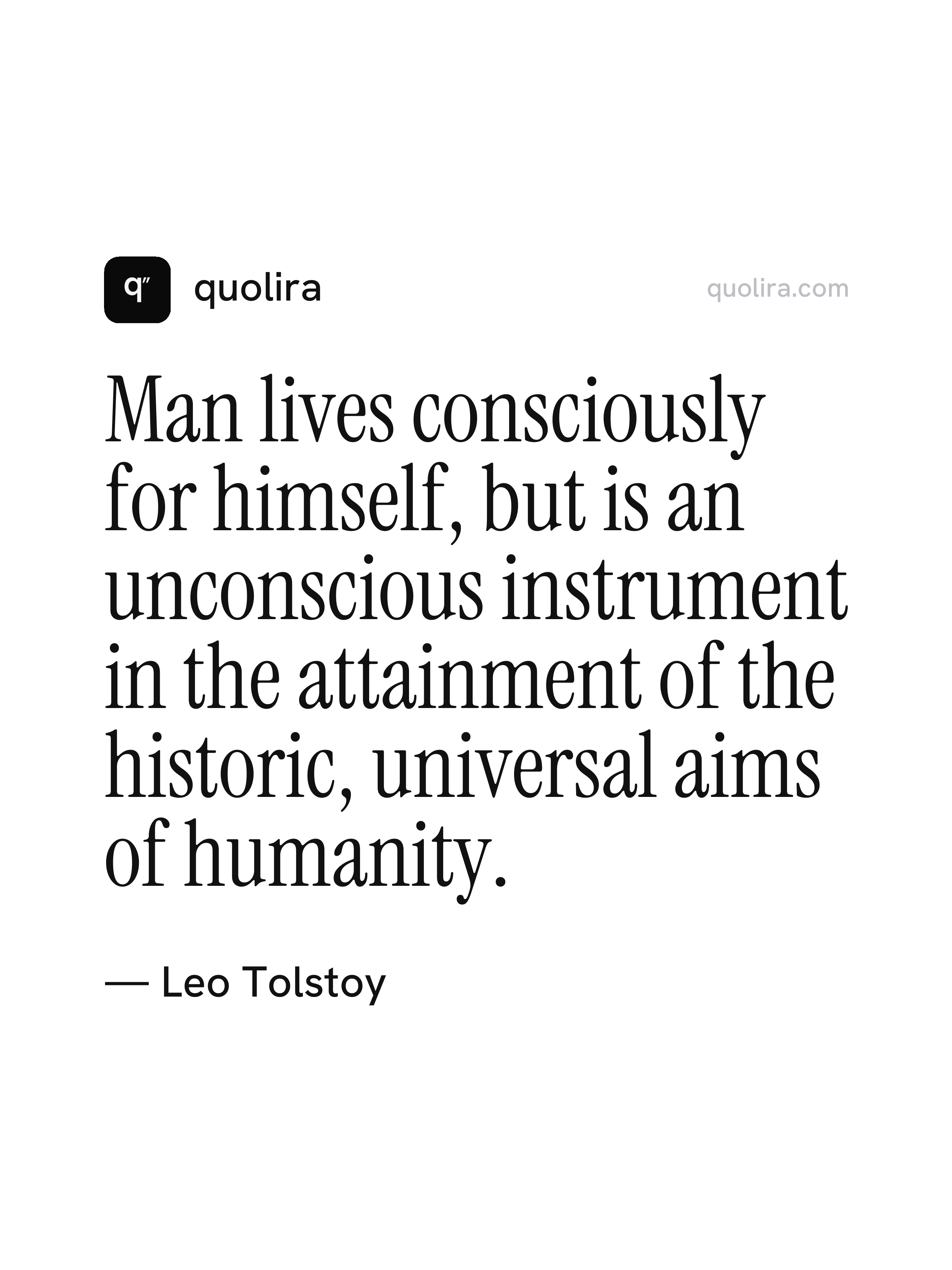
“Man lives consciously for himself, but is an unconscious instrument in the attainment of the historic, universal aims of humanity.”
Leo Tolstoy · War and Peace, 1869
“If you look for perfection, you'll never be content.”
Leo Tolstoy · Anna Karenina, 1878
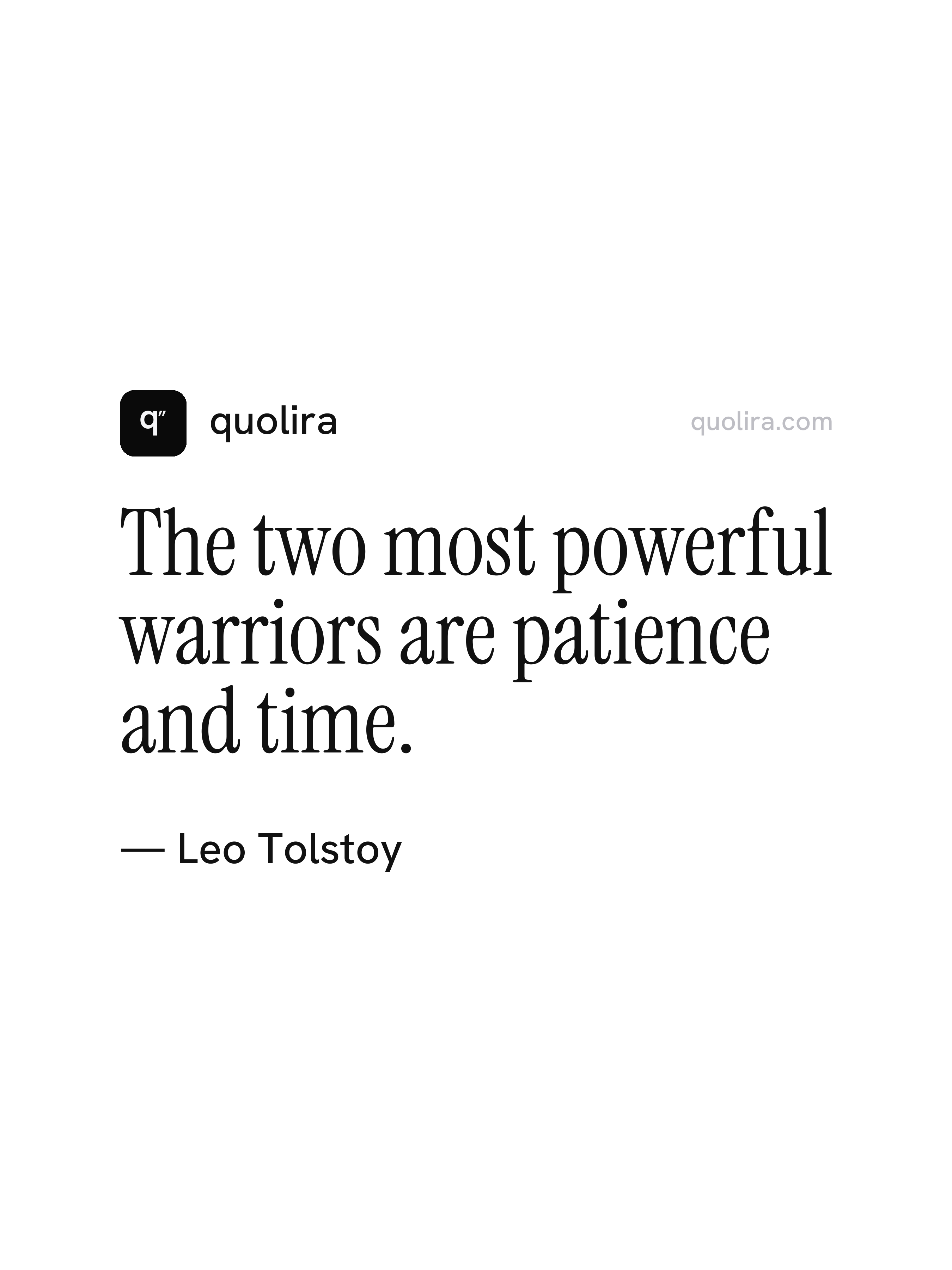
“The two most powerful warriors are patience and time.”
Leo Tolstoy · War and Peace, 1869
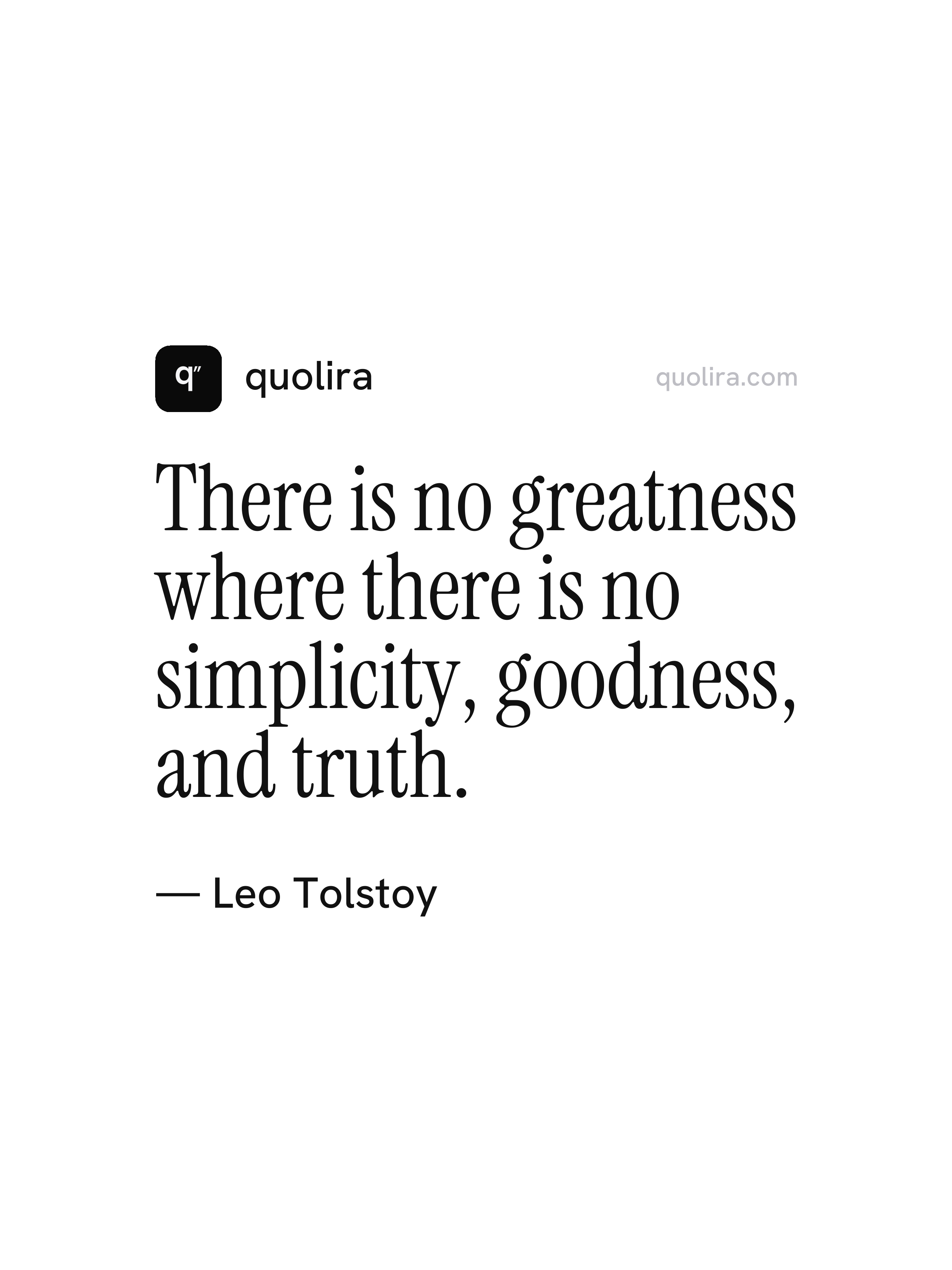
“There is no greatness where there is no simplicity, goodness, and truth.”
Leo Tolstoy · War and Peace, 1869
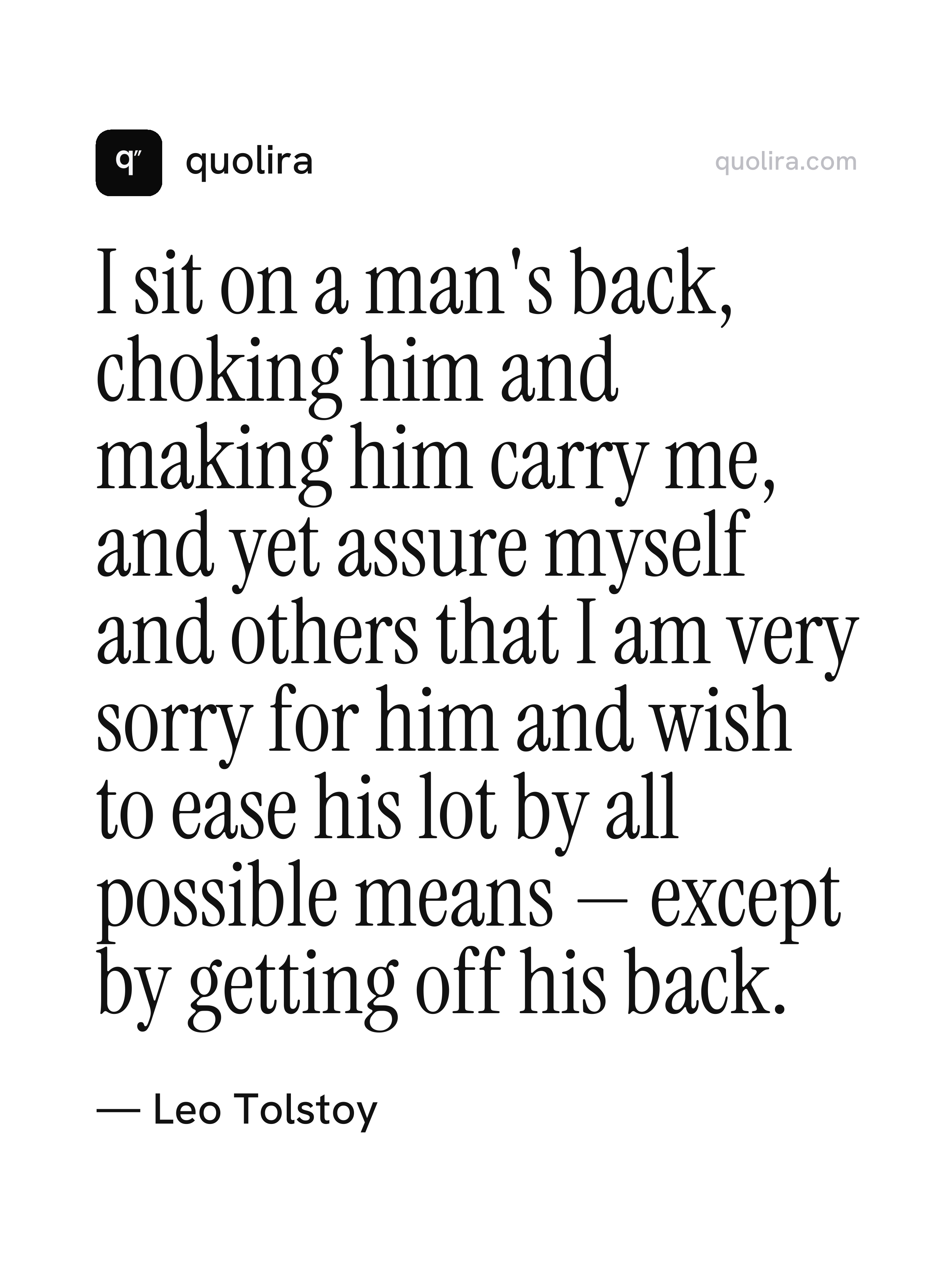
“I sit on a man's back, choking him and making him carry me, and yet assure myself and others that I am very sorry for him and wish to ease his lot by all possible means — except by getting off his back.”
Leo Tolstoy · What Then Must We Do?, 1886
“All violence consists in some people forcing others, under threat of suffering or death, to do what they do not want to do.”
Leo Tolstoy · The Kingdom of God Is Within You, 1894
“The biggest surprise in a man's life is old age.”
Leo Tolstoy
“Everyone thinks of changing the world, but no one thinks of changing himself.”
Leo Tolstoy · Three Methods of Reform, 1900