“A man can live and be healthy without killing animals for food; therefore, if he eats meat, he participates in taking animal life merely for the sake of his appetite. And to act so is immoral.”
Leo Tolstoy · The First Step, 1892
 quolira
.com
quolira
quolira.com
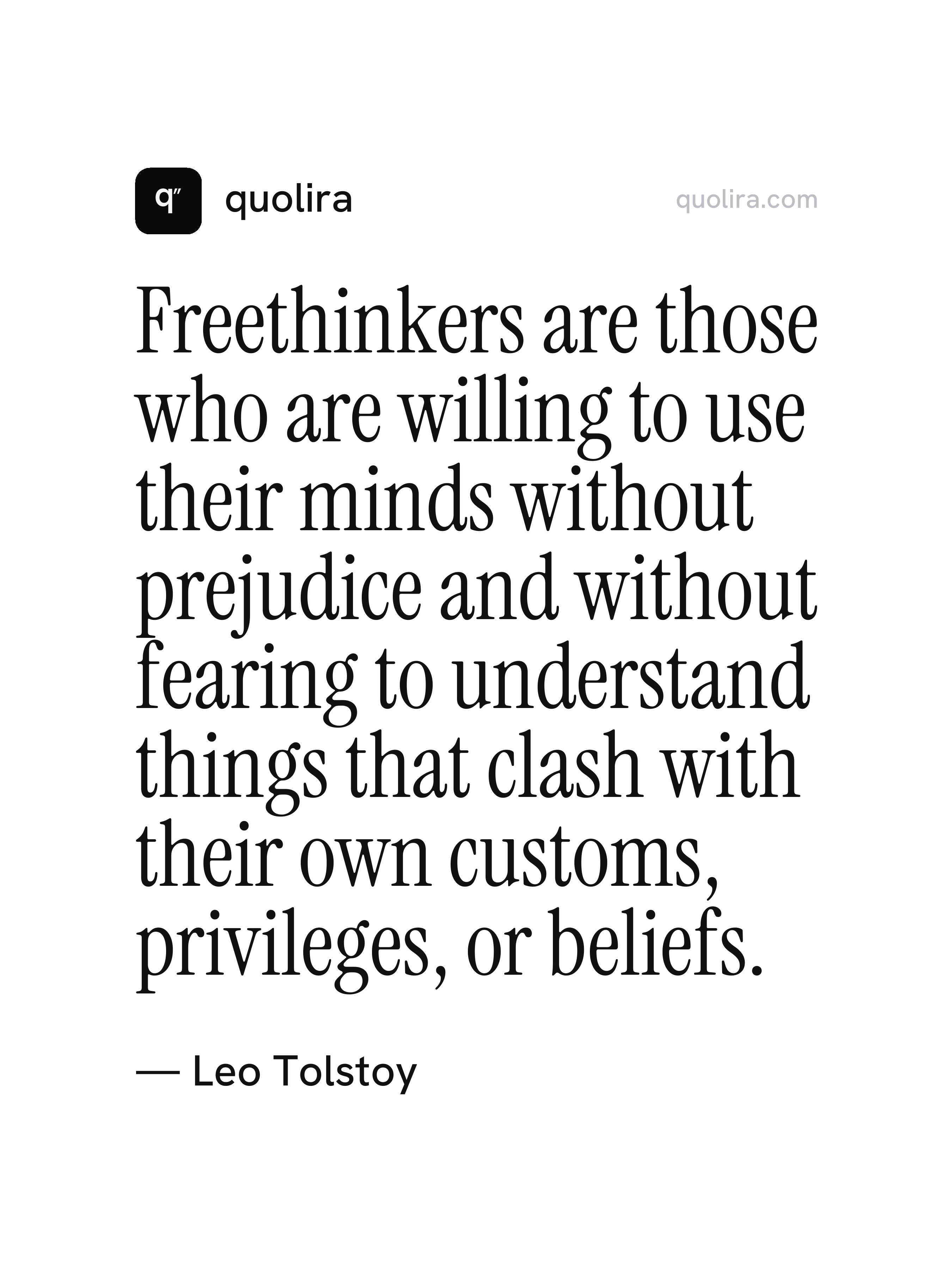
Tolstoy's definition of a freethinker centers on intellectual courage rather than any particular set of conclusions. To think freely, in his view, is not simply to reject tradition but to approach every question with an open and unprejudiced mind, even when the answers challenge what is comfortable or convenient. The willingness to follow reason wherever it leads, regardless of social cost, is what separates genuine inquiry from mere conformity.
Tolstoy arrived at this position through decades of spiritual and philosophical searching. After achieving fame as a novelist, he became increasingly preoccupied with questions of ethics, religion, and how people ought to live. He grew deeply critical of institutional authority, whether the church, the state, or social convention, and wrote extensively on the duty of individuals to think for themselves. This quote reflects that mature outlook, in which intellectual honesty was treated as both a moral obligation and a form of personal integrity.
Leo Tolstoy was a Russian writer born in 1828 and widely regarded as one of the greatest novelists in world literature. Beyond his fiction, he became a prominent moral philosopher and social critic in the later decades of his life, developing a distinctive brand of Christian anarchism that influenced thinkers and activists around the world, including Mahatma Gandhi. He died in 1910, having spent his final years attempting to live according to his own demanding ethical principles.
“A man can live and be healthy without killing animals for food; therefore, if he eats meat, he participates in taking animal life merely for the sake of his appetite. And to act so is immoral.”
Leo Tolstoy · The First Step, 1892
“The sole meaning of life is to serve humanity.”
Leo Tolstoy · A Confession, 1882
“Wrong does not cease to be wrong because the majority share in it.”
Leo Tolstoy · A Calendar of Wisdom, 1908
“Man lives consciously for himself, but is an unconscious instrument in the attainment of the historic, universal aims of humanity.”
Leo Tolstoy · War and Peace, 1869
“If you look for perfection, you'll never be content.”
Leo Tolstoy · Anna Karenina, 1878
“The two most powerful warriors are patience and time.”
Leo Tolstoy · War and Peace, 1869
“There is no greatness where there is no simplicity, goodness, and truth.”
Leo Tolstoy · War and Peace, 1869
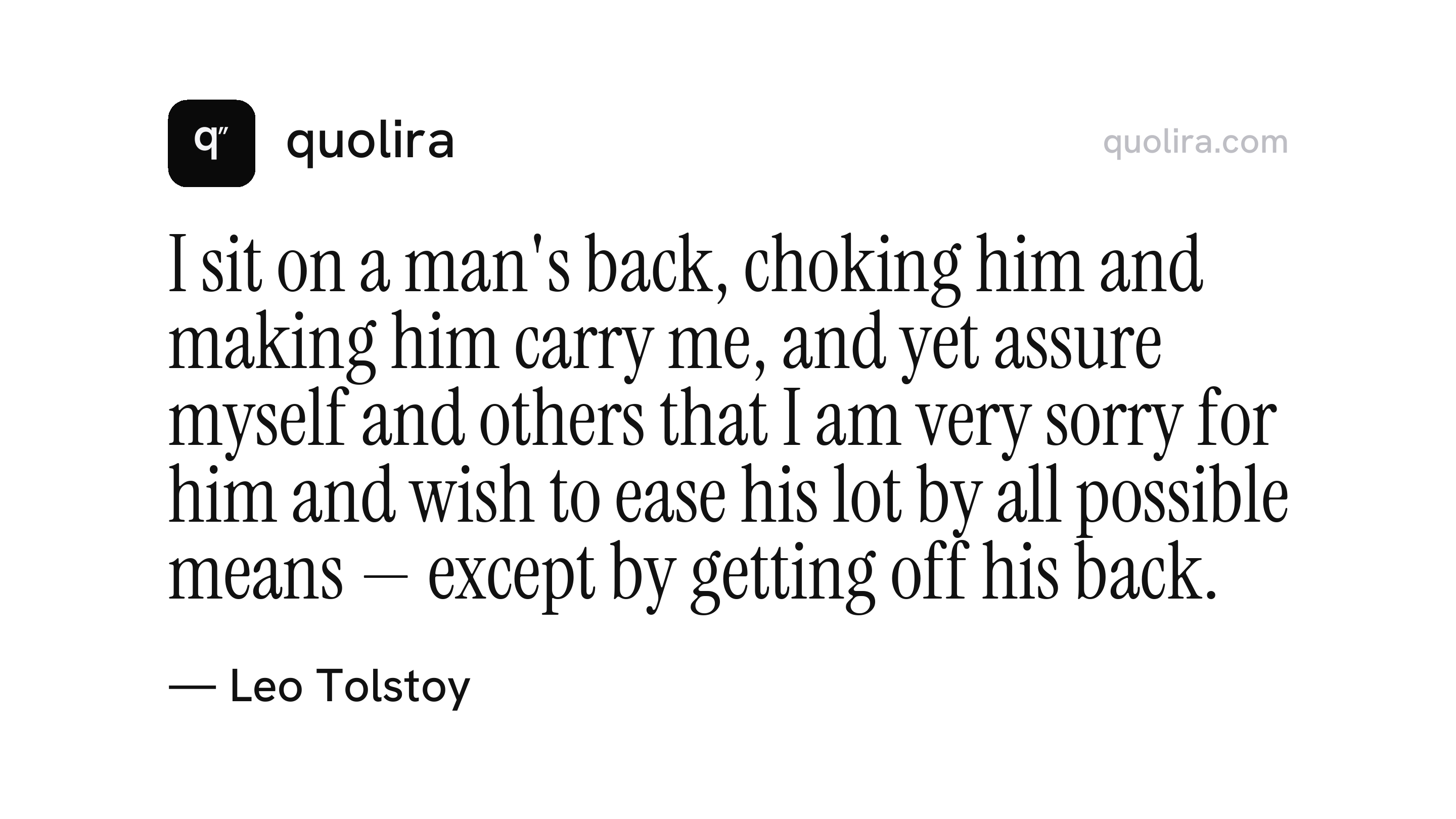
“I sit on a man's back, choking him and making him carry me, and yet assure myself and others that I am very sorry for him and wish to ease his lot by all possible means — except by getting off his back.”
Leo Tolstoy · What Then Must We Do?, 1886
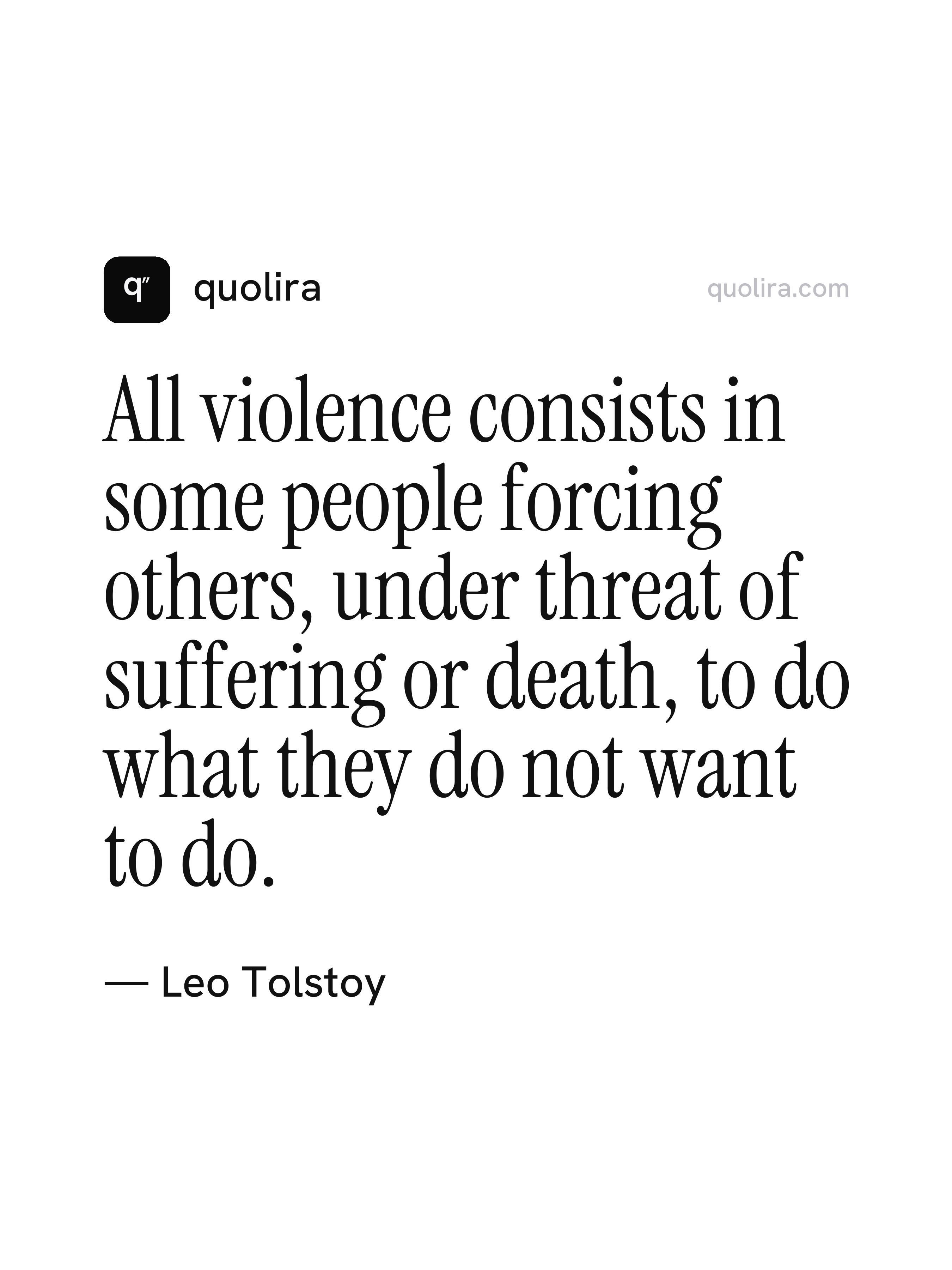
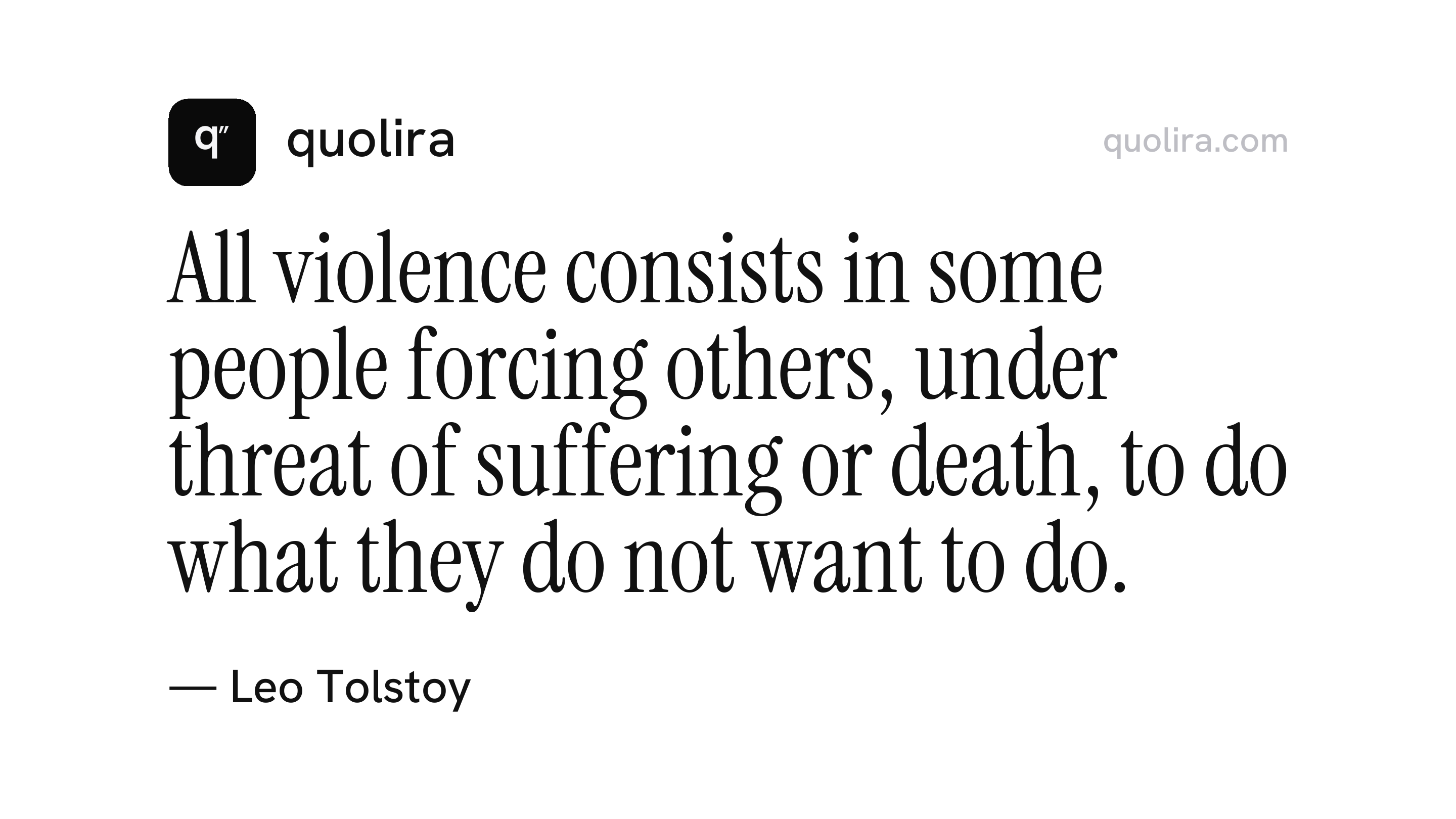
“All violence consists in some people forcing others, under threat of suffering or death, to do what they do not want to do.”
Leo Tolstoy · The Kingdom of God Is Within You, 1894
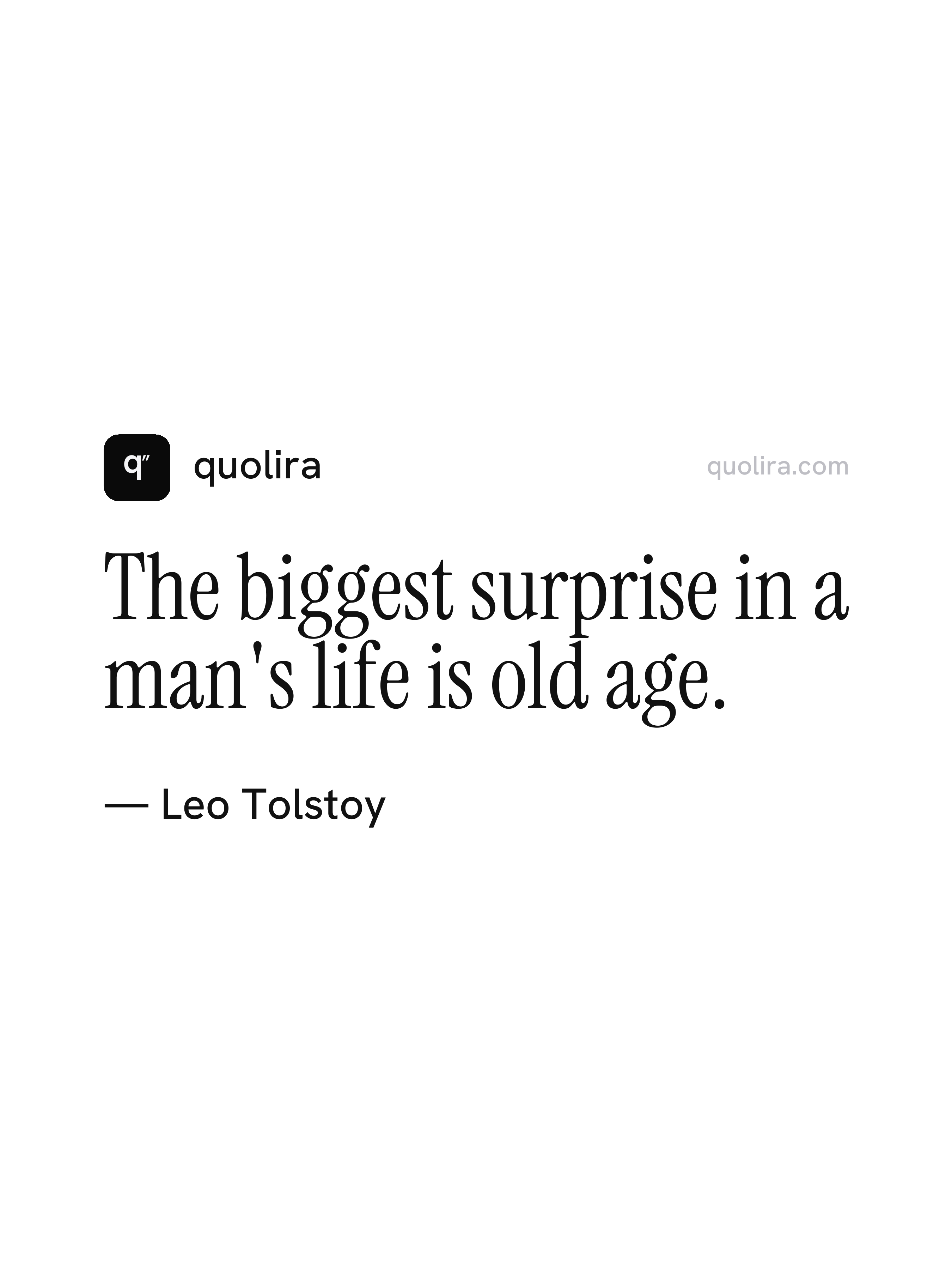
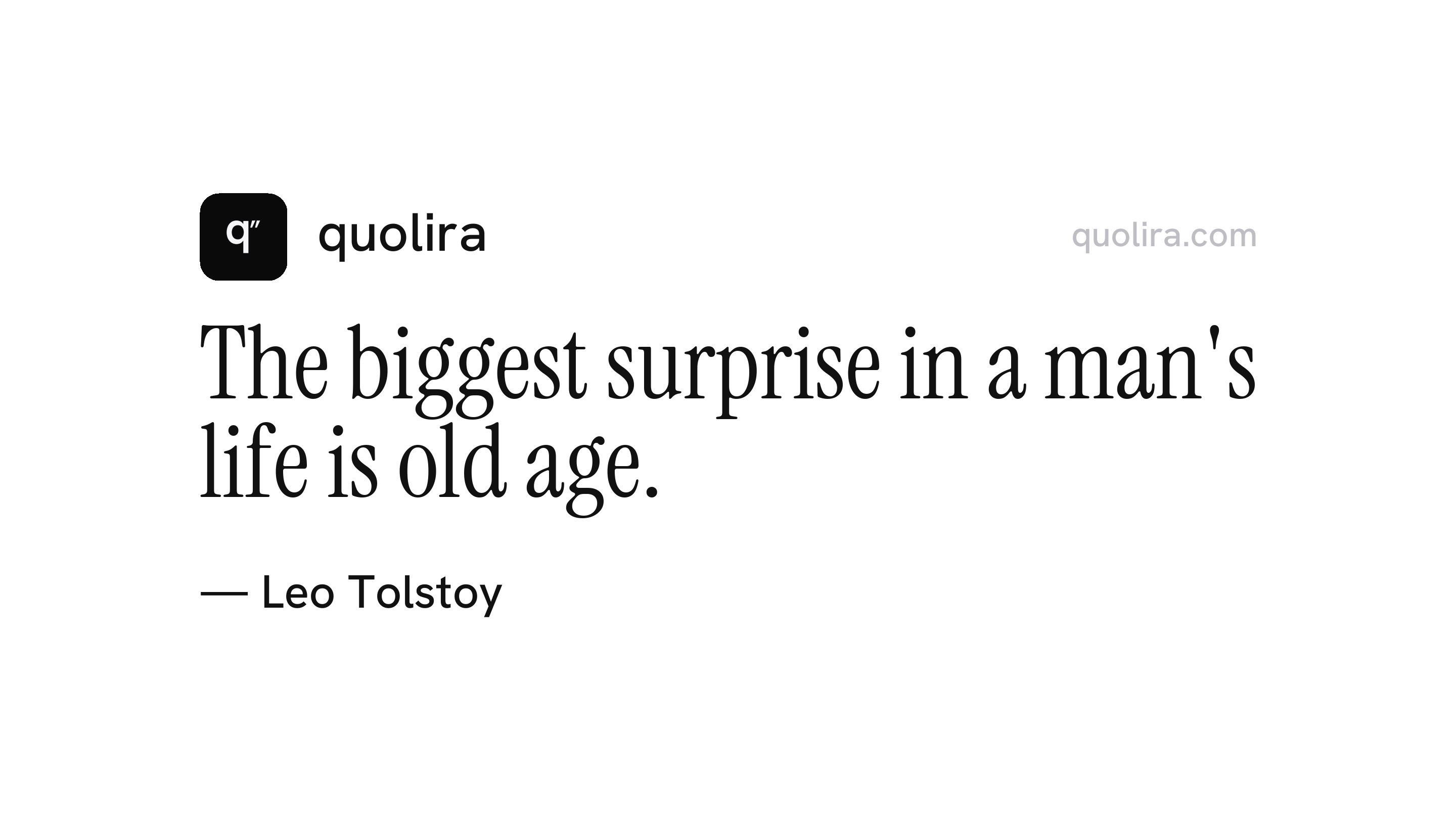
“The biggest surprise in a man's life is old age.”
Leo Tolstoy
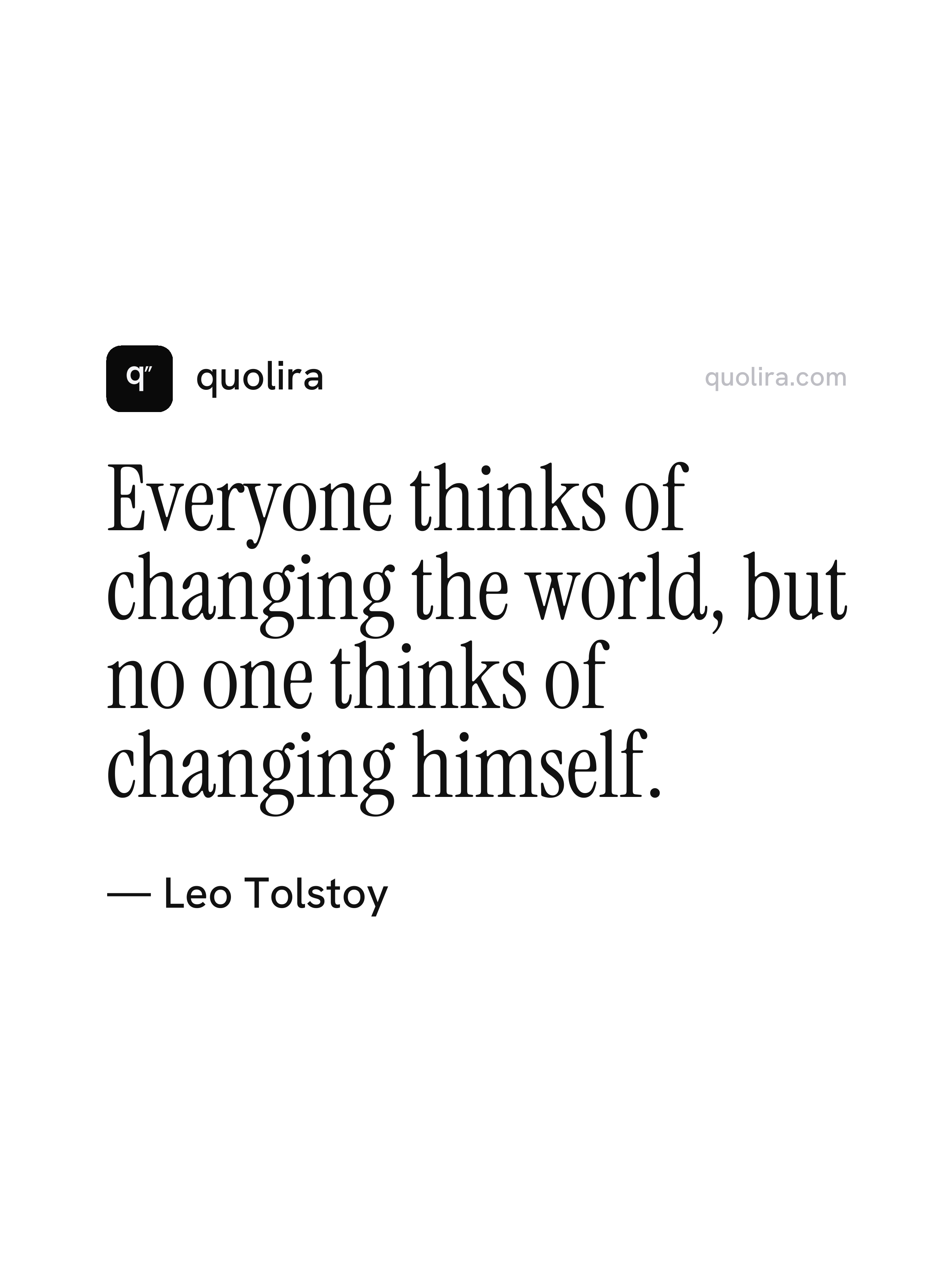
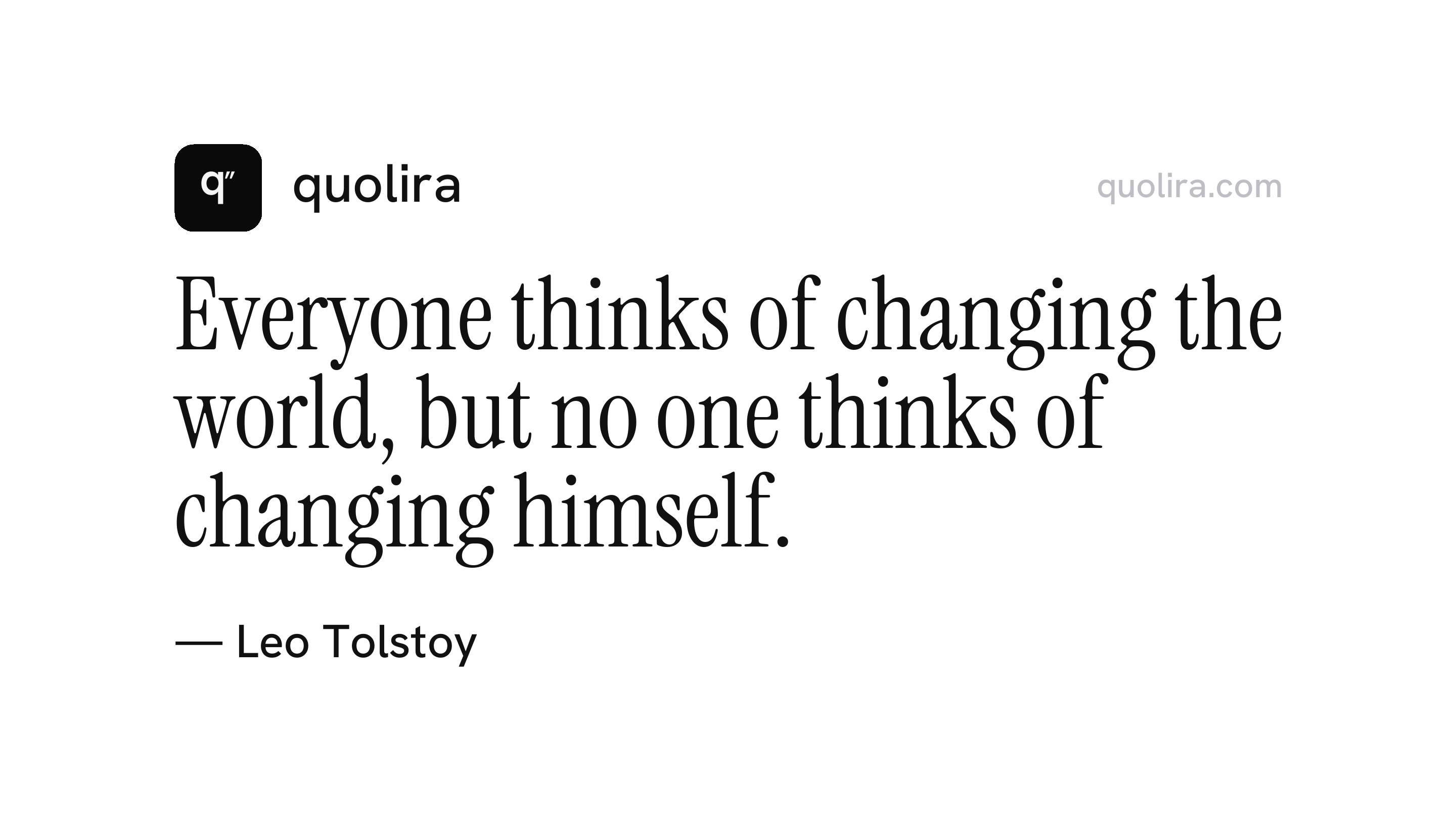
“Everyone thinks of changing the world, but no one thinks of changing himself.”
Leo Tolstoy · Three Methods of Reform, 1900
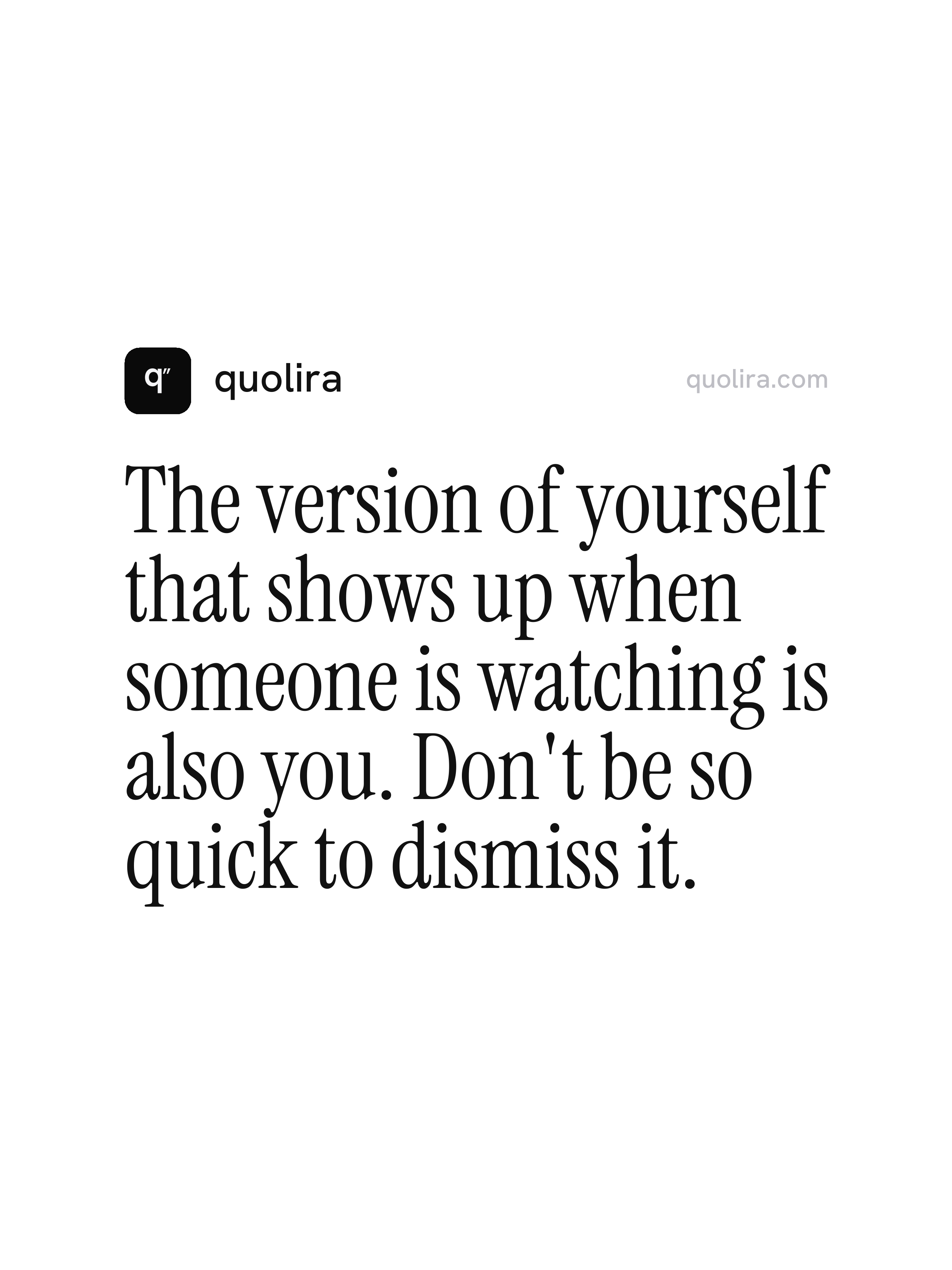
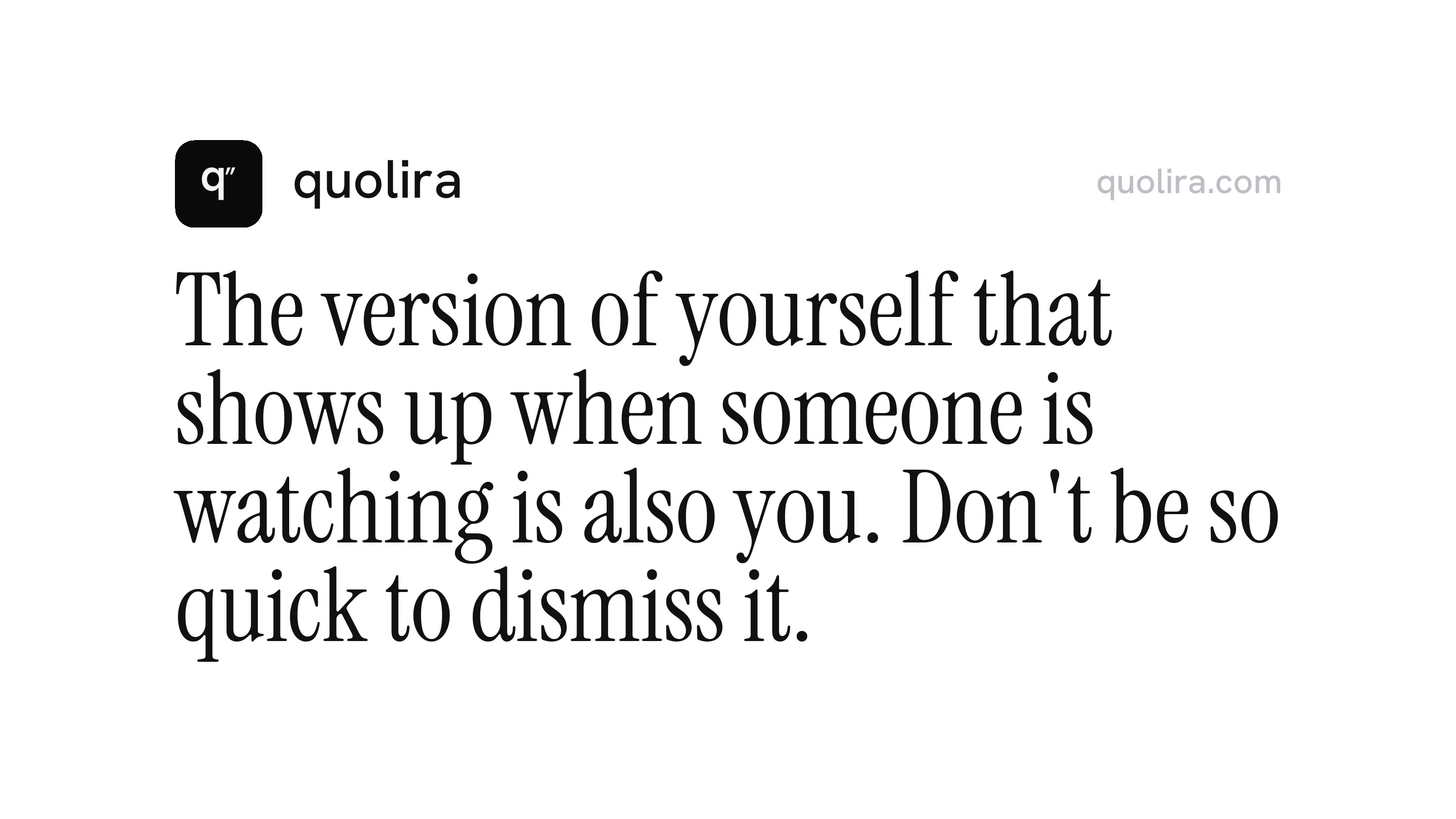
“The version of yourself that shows up when someone is watching is also you. Don't be so quick to dismiss it.”
Original