“Wrong does not cease to be wrong because the majority share in it.”
Leo Tolstoy · A Calendar of Wisdom, 1908
 quolira
.com
quolira
quolira.com
Tolstoy is offering a direct and demanding answer to one of the oldest questions in philosophy: what makes a human life meaningful? His answer strips away personal ambition, pleasure, or achievement and replaces them with a single obligation, the willingness to place the welfare of others at the center of one's existence. It is a statement that leaves little room for a purely self-centered life.
A Confession is an autobiographical work in which Tolstoy wrote candidly about a period of deep spiritual and existential crisis he experienced despite his fame and success. He described feeling that his life had become hollow and purposeless, and the text traces his search for something solid enough to live for. The conclusion he reached was that meaning could not be found in art, wealth, or reputation, but only in sincere service to other people. The book is one of the most honest accounts of an intellectual and moral reckoning in the literary tradition.
Leo Tolstoy was born in Russia in 1828 and is remembered as one of the towering figures of world literature. His novels War and Peace and Anna Karenina established his reputation, but the second half of his life was defined by an intense moral and spiritual transformation. He renounced his earlier values, gave up the privileges of his class, and devoted himself to ethical teaching, simple labor, and writing in plain language for ordinary readers. He died in 1910.
“Wrong does not cease to be wrong because the majority share in it.”
Leo Tolstoy · A Calendar of Wisdom, 1908
“Man lives consciously for himself, but is an unconscious instrument in the attainment of the historic, universal aims of humanity.”
Leo Tolstoy · War and Peace, 1869
“If you look for perfection, you'll never be content.”
Leo Tolstoy · Anna Karenina, 1878
“The two most powerful warriors are patience and time.”
Leo Tolstoy · War and Peace, 1869
“There is no greatness where there is no simplicity, goodness, and truth.”
Leo Tolstoy · War and Peace, 1869
“I sit on a man's back, choking him and making him carry me, and yet assure myself and others that I am very sorry for him and wish to ease his lot by all possible means — except by getting off his back.”
Leo Tolstoy · What Then Must We Do?, 1886
“All violence consists in some people forcing others, under threat of suffering or death, to do what they do not want to do.”
Leo Tolstoy · The Kingdom of God Is Within You, 1894
“The biggest surprise in a man's life is old age.”
Leo Tolstoy
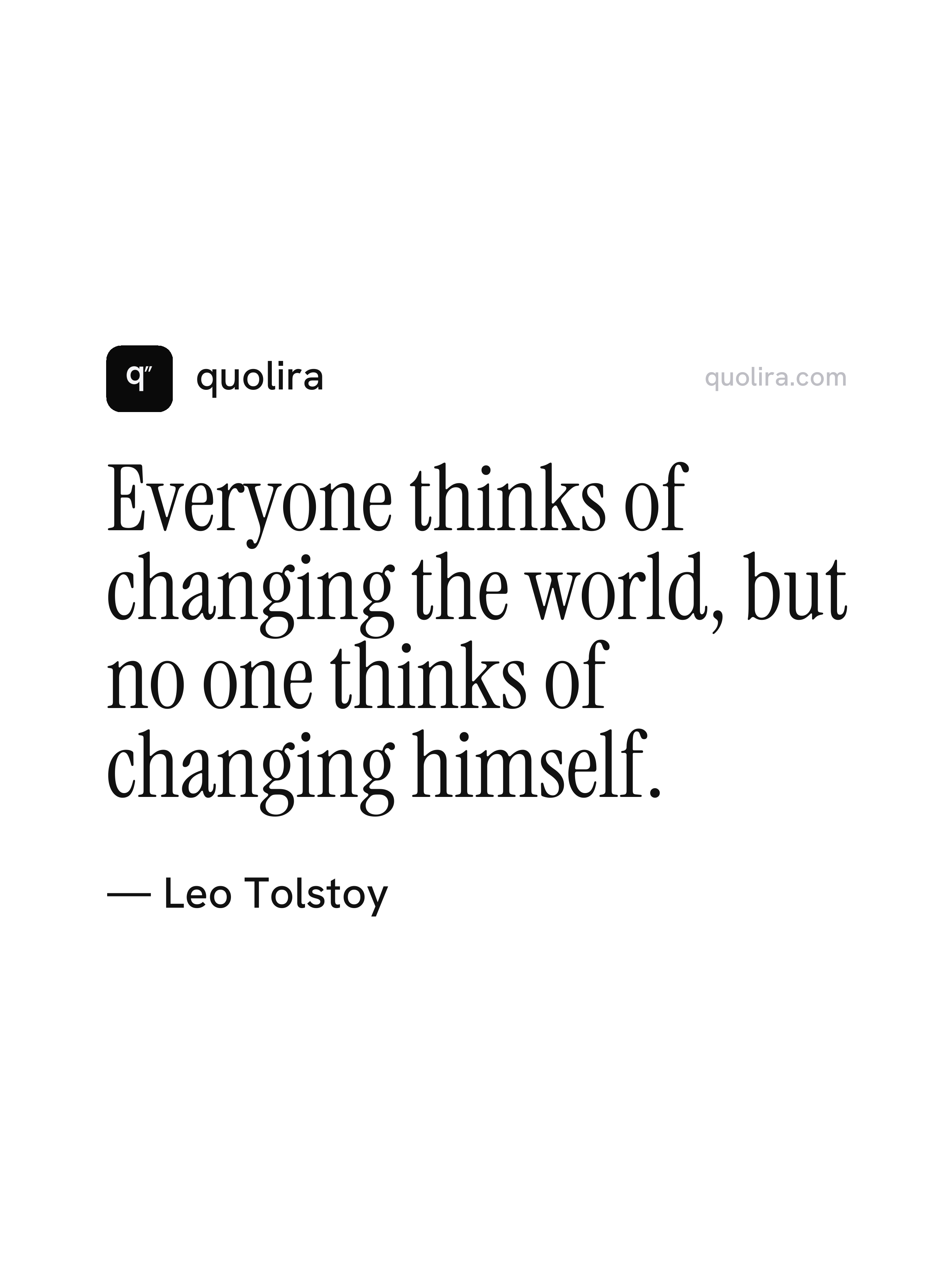
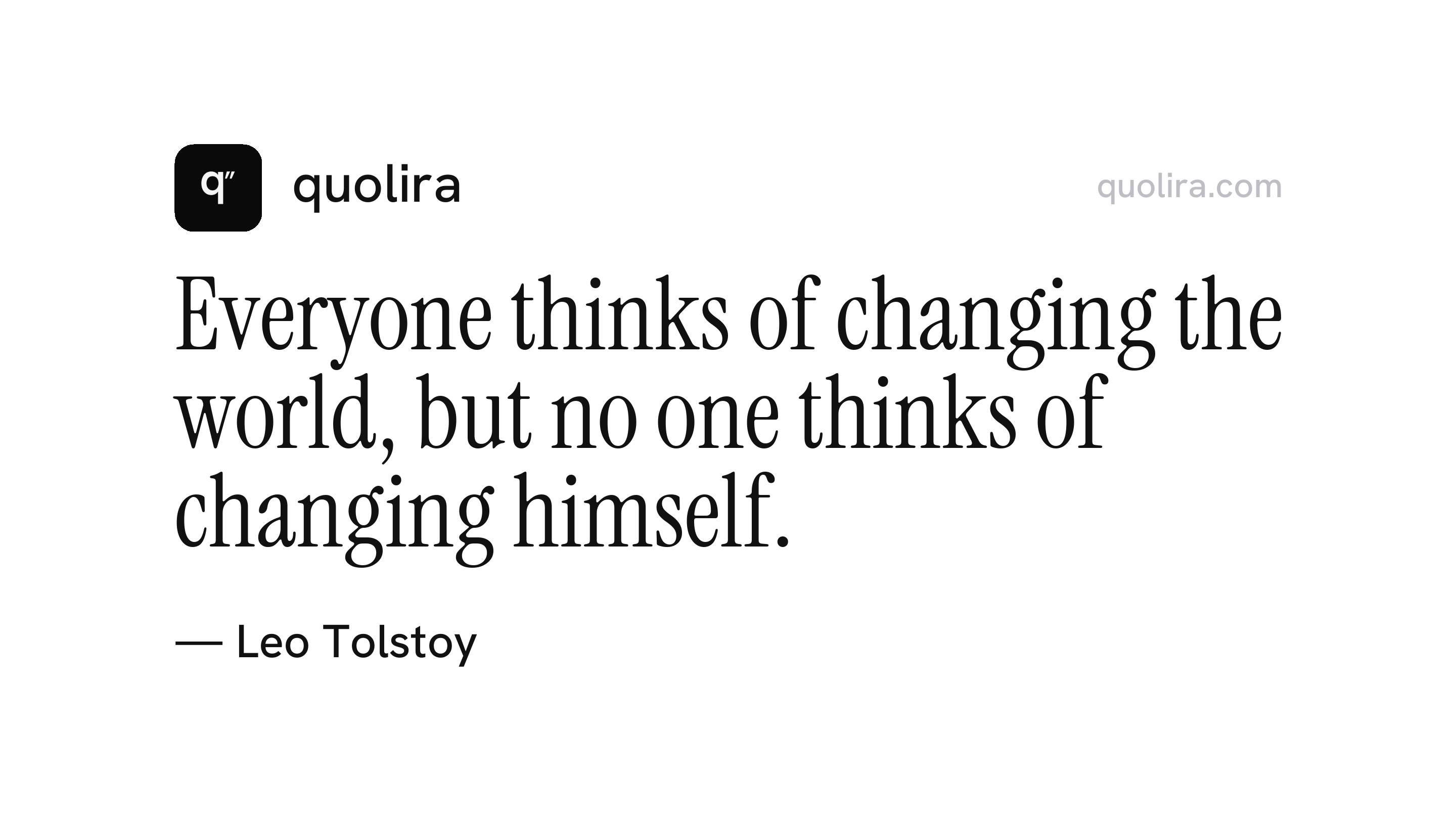
“Everyone thinks of changing the world, but no one thinks of changing himself.”
Leo Tolstoy · Three Methods of Reform, 1900
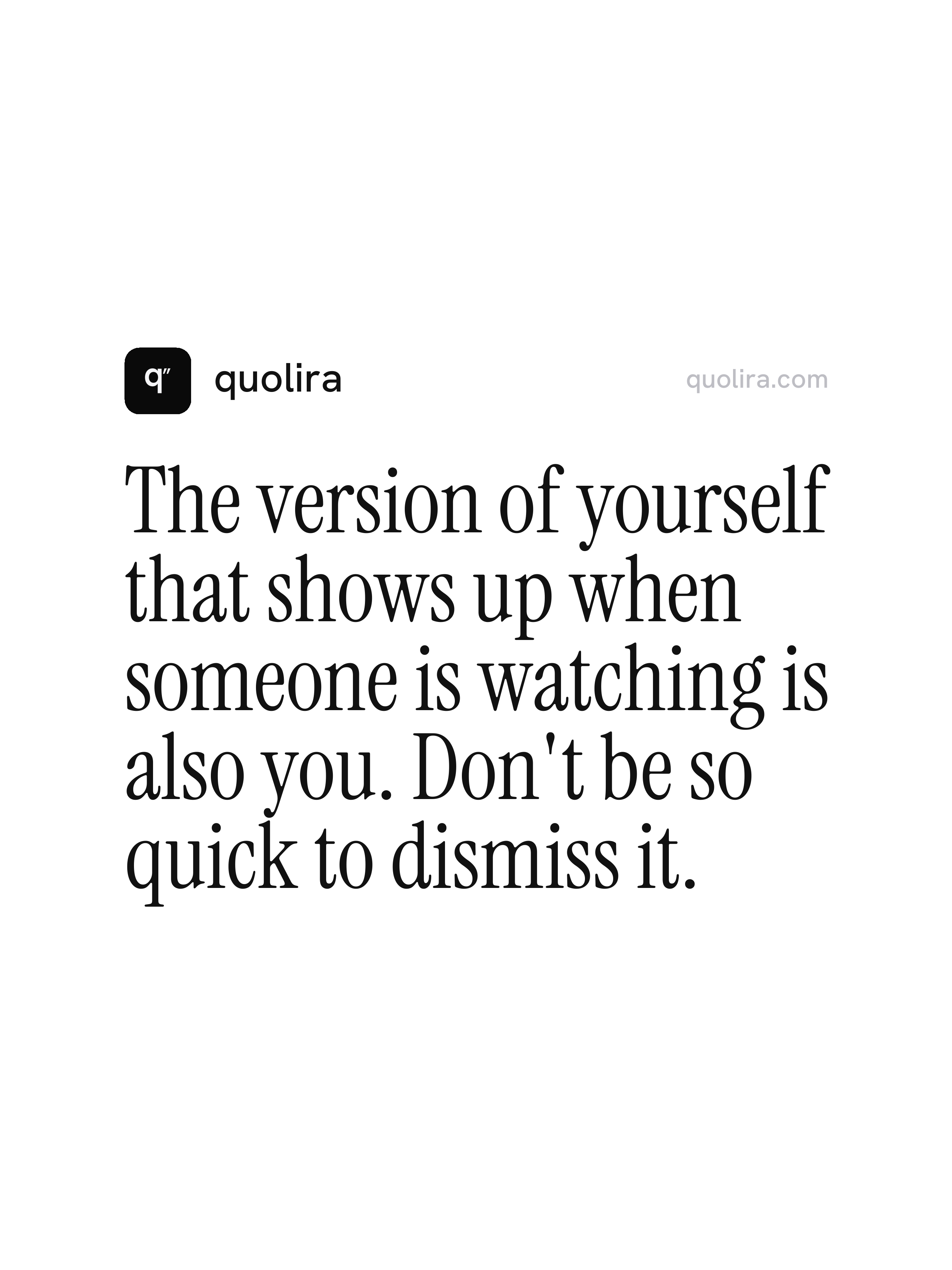
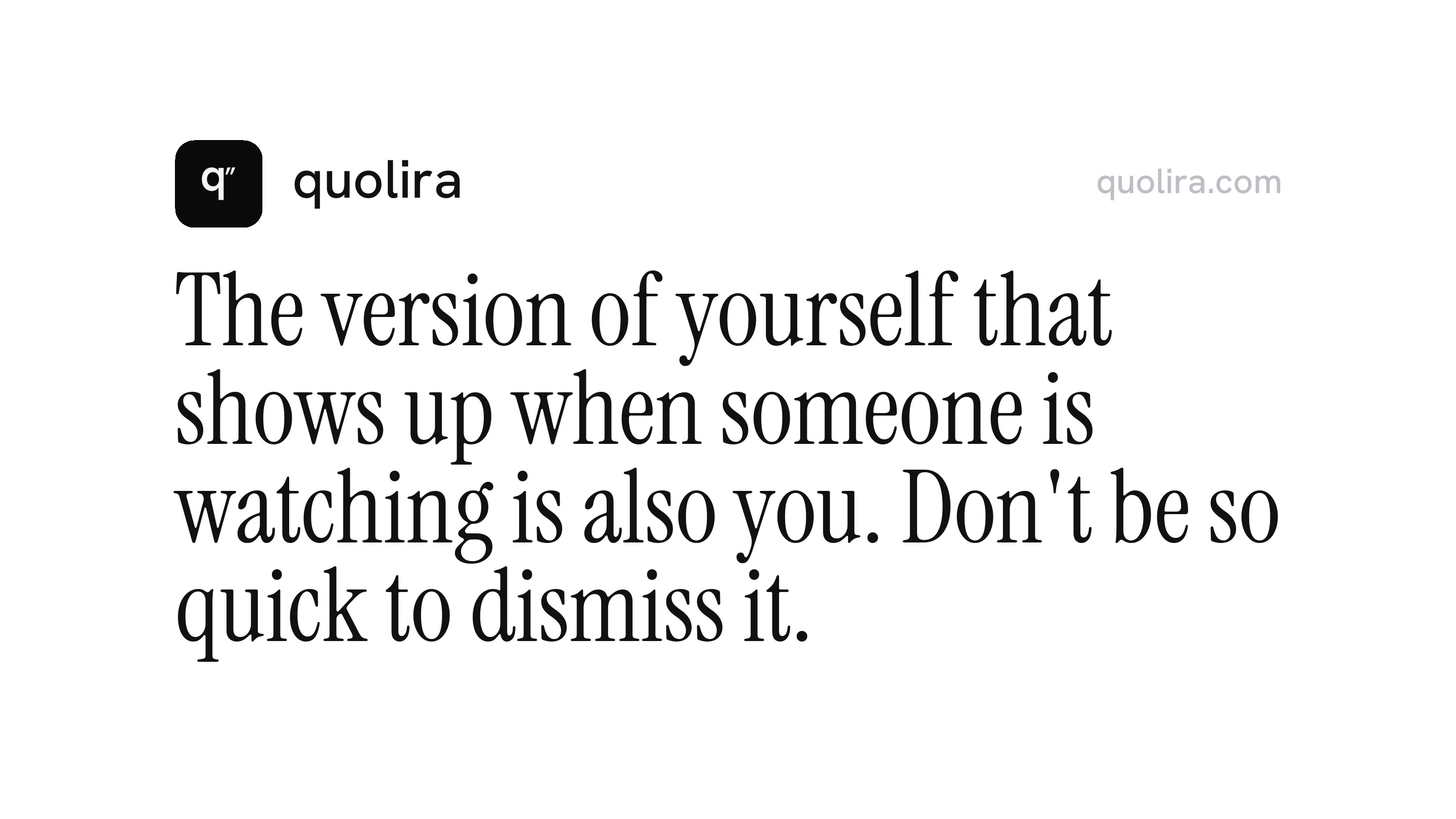
“The version of yourself that shows up when someone is watching is also you. Don't be so quick to dismiss it.”
Original
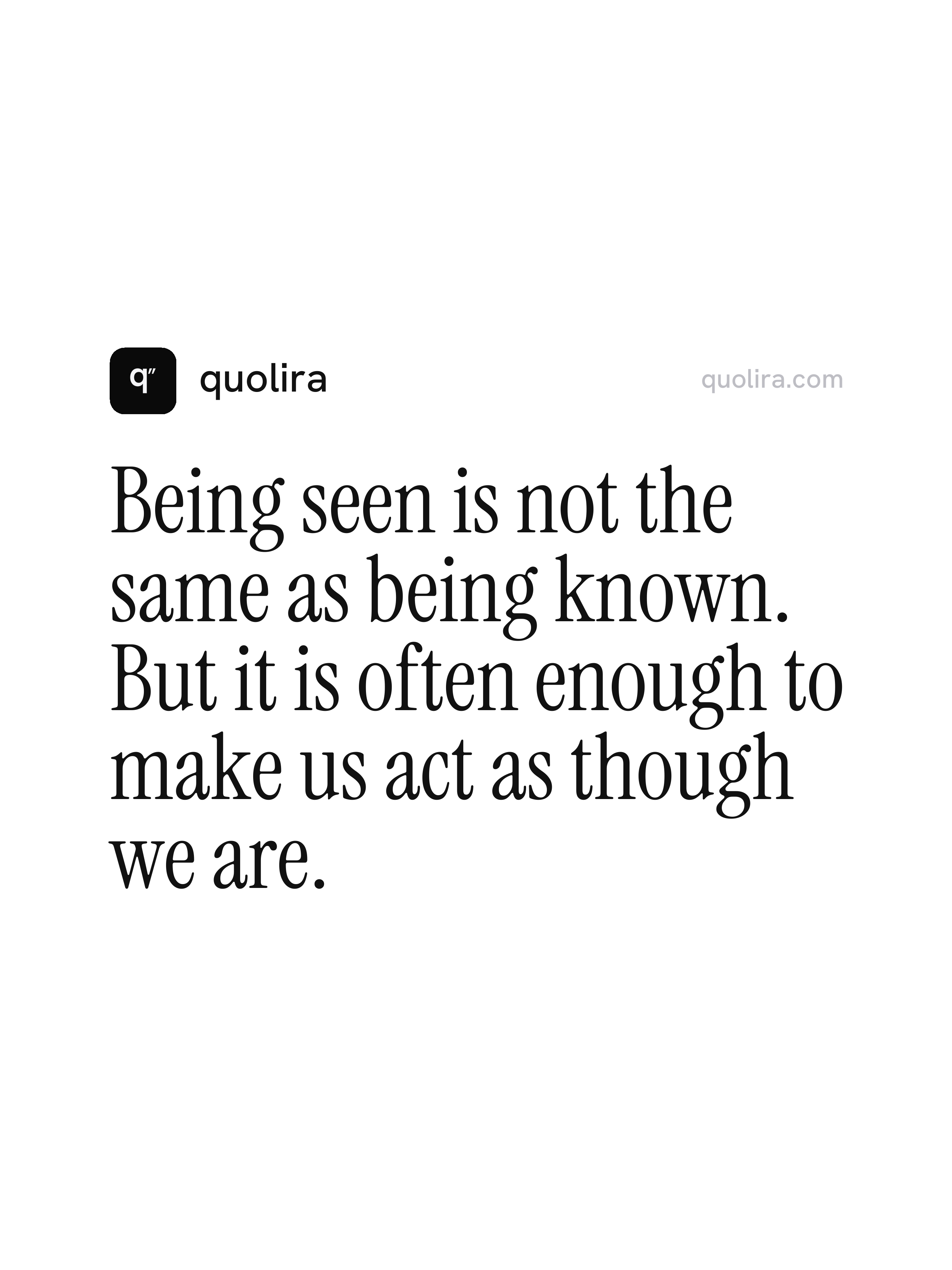
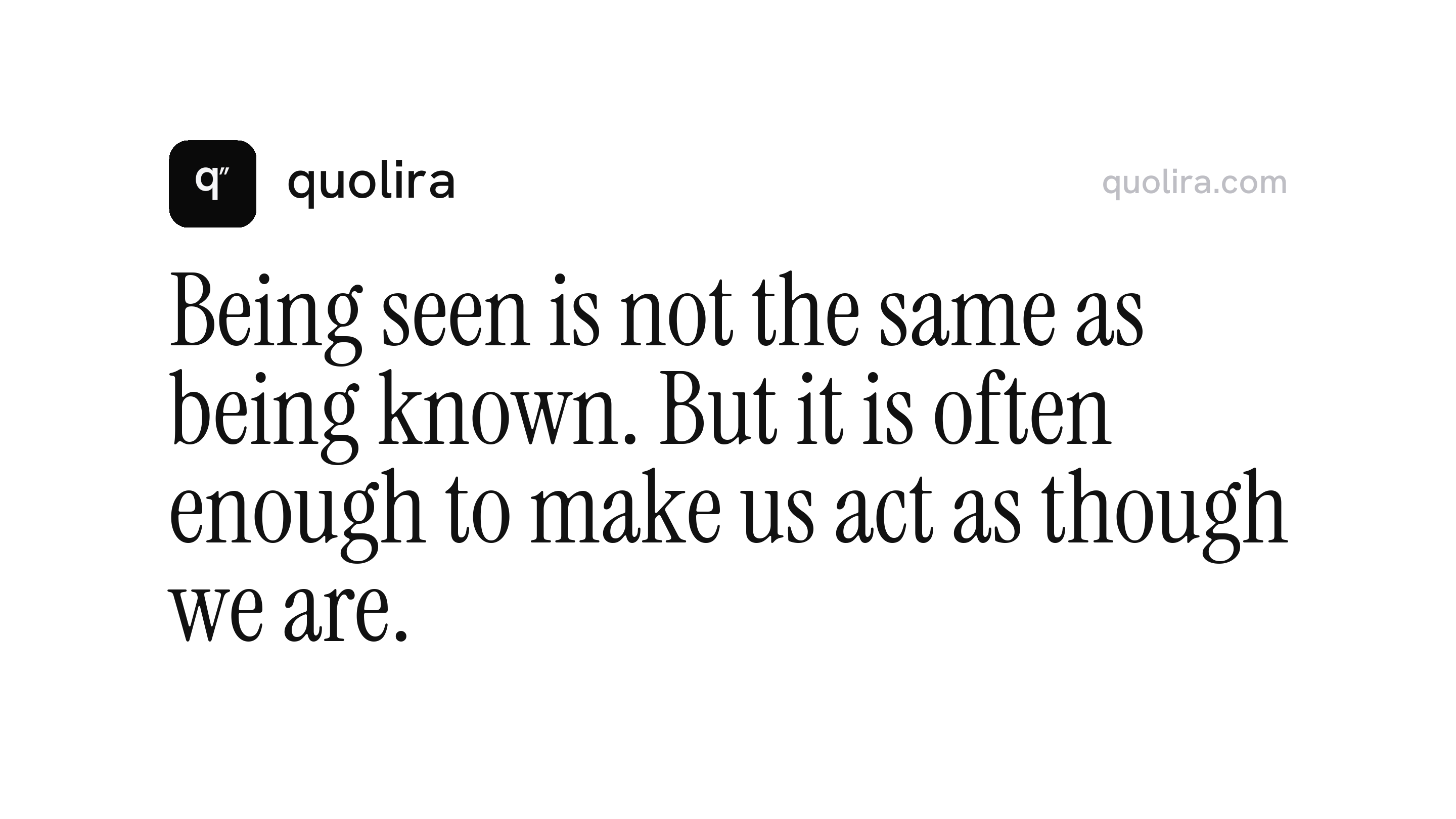
“Being seen is not the same as being known. But it is often enough to make us act as though we are.”
Original
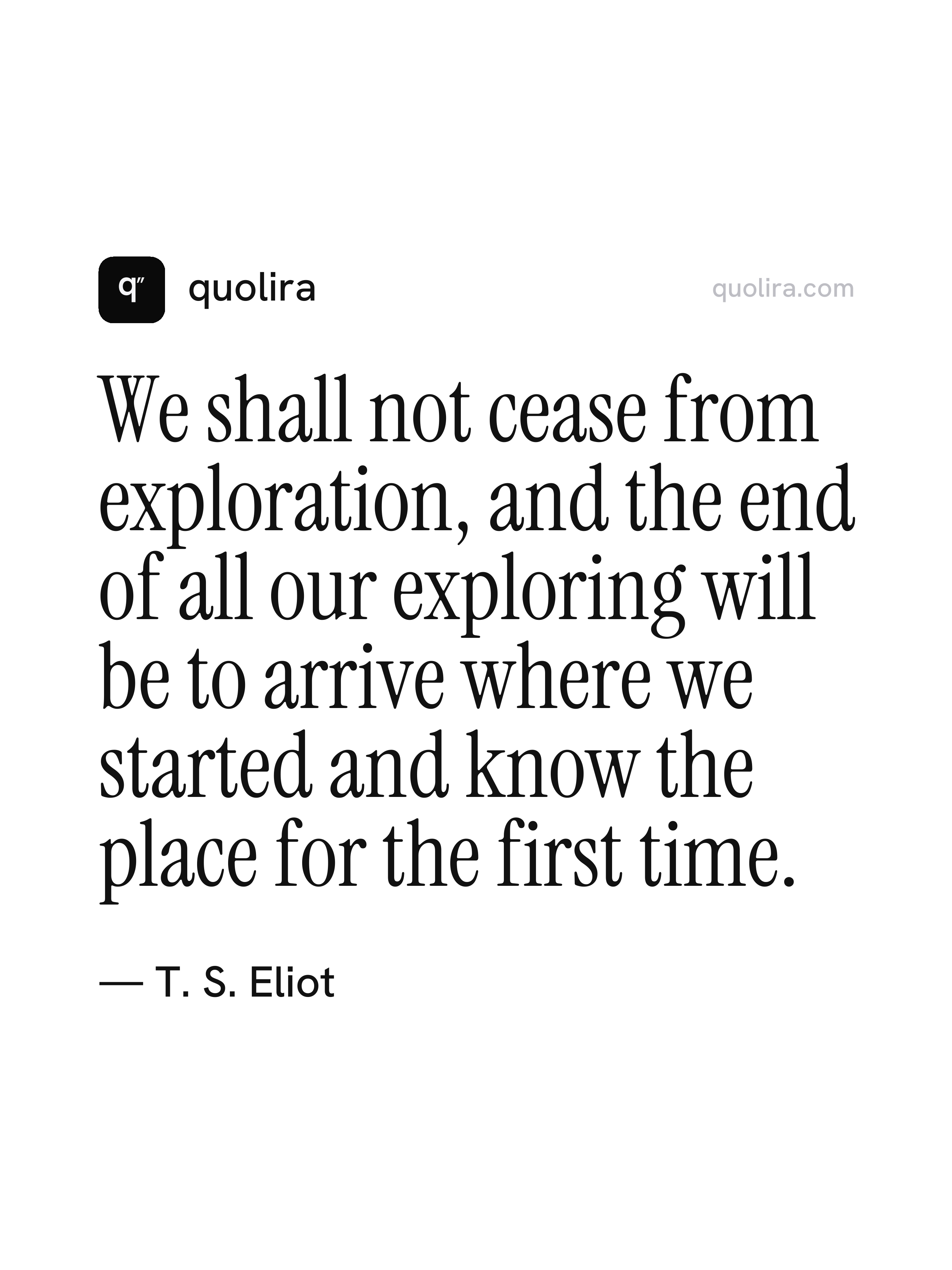
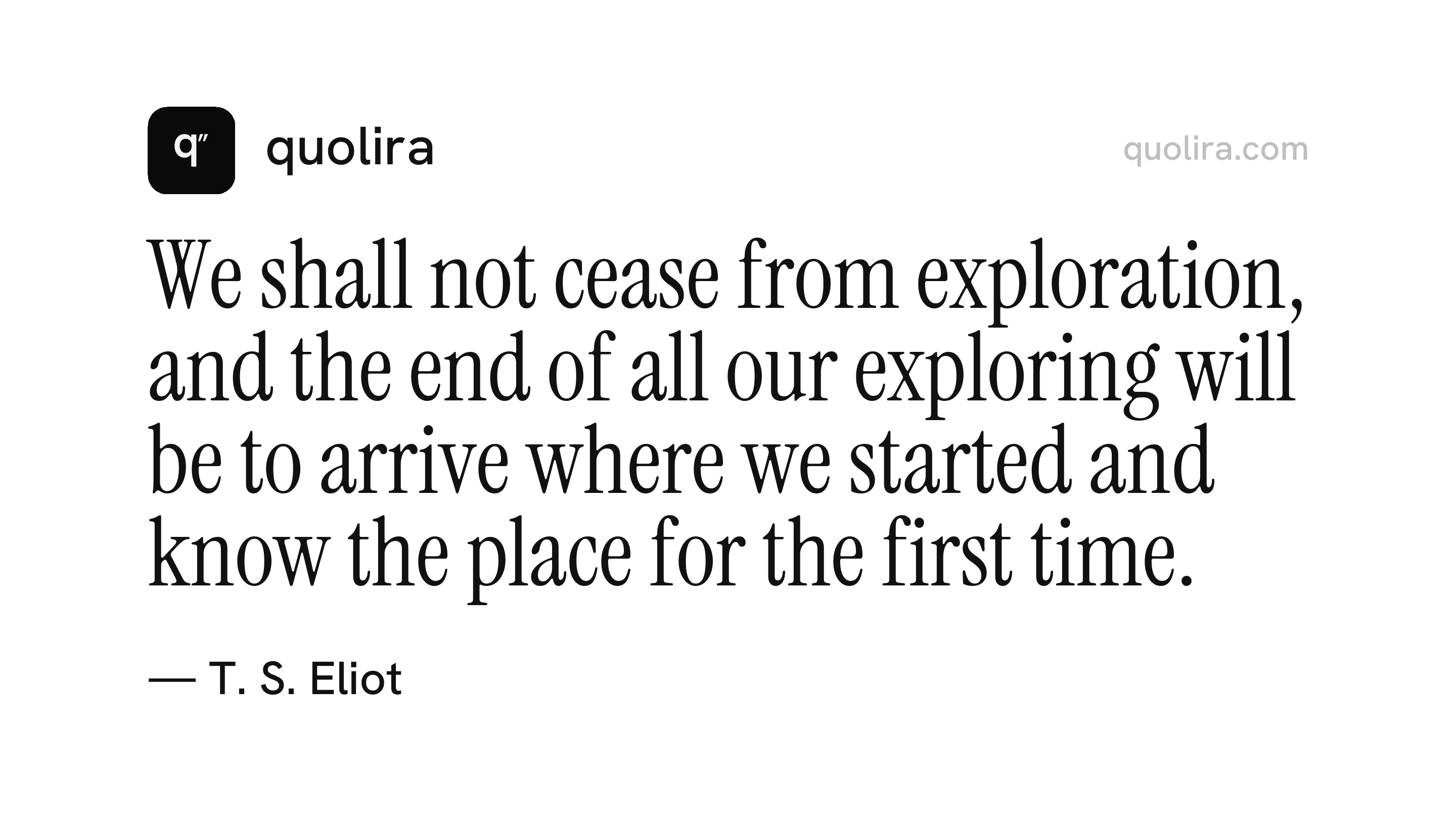
“We shall not cease from exploration, and the end of all our exploring will be to arrive where we started and know the place for the first time.”
T. S. Eliot · Little Gidding, Four Quartets, 1942