“The sole meaning of life is to serve humanity.”
Leo Tolstoy · A Confession, 1882
 quolira
.com
quolira
quolira.com
Tolstoy's argument is built on a simple premise: because it is possible to live well without eating animals, the choice to do so becomes a moral choice rather than a necessity. When an act causes death and that act is entirely optional, he argues, it cannot be justified on ethical grounds. The line connects the daily personal habit of eating to a broader responsibility toward the living creatures affected by that habit.
The First Step was an essay Tolstoy wrote as an introduction to a Russian translation of a book on vegetarianism, and it represents one of the most direct statements of his views on diet and moral life. For Tolstoy, abstaining from meat was not merely a health or environmental matter but the first practical step toward a life of nonviolence and greater compassion. The essay fits into his broader late-period writing, in which he sought to apply his ethical convictions to the details of everyday conduct rather than keeping them abstract.
Leo Tolstoy was a Russian writer and moral thinker born in 1828. After a celebrated career as a novelist, he underwent a transformation that led him to embrace nonviolence, simplicity, and a strong concern for the suffering of all living beings. He practiced vegetarianism himself and wrote about it as a natural extension of the principle of not doing harm. His ethical writings influenced later thinkers and activists, including Mahatma Gandhi. Tolstoy died in 1910.
“The sole meaning of life is to serve humanity.”
Leo Tolstoy · A Confession, 1882
“Wrong does not cease to be wrong because the majority share in it.”
Leo Tolstoy · A Calendar of Wisdom, 1908
“Man lives consciously for himself, but is an unconscious instrument in the attainment of the historic, universal aims of humanity.”
Leo Tolstoy · War and Peace, 1869
“If you look for perfection, you'll never be content.”
Leo Tolstoy · Anna Karenina, 1878
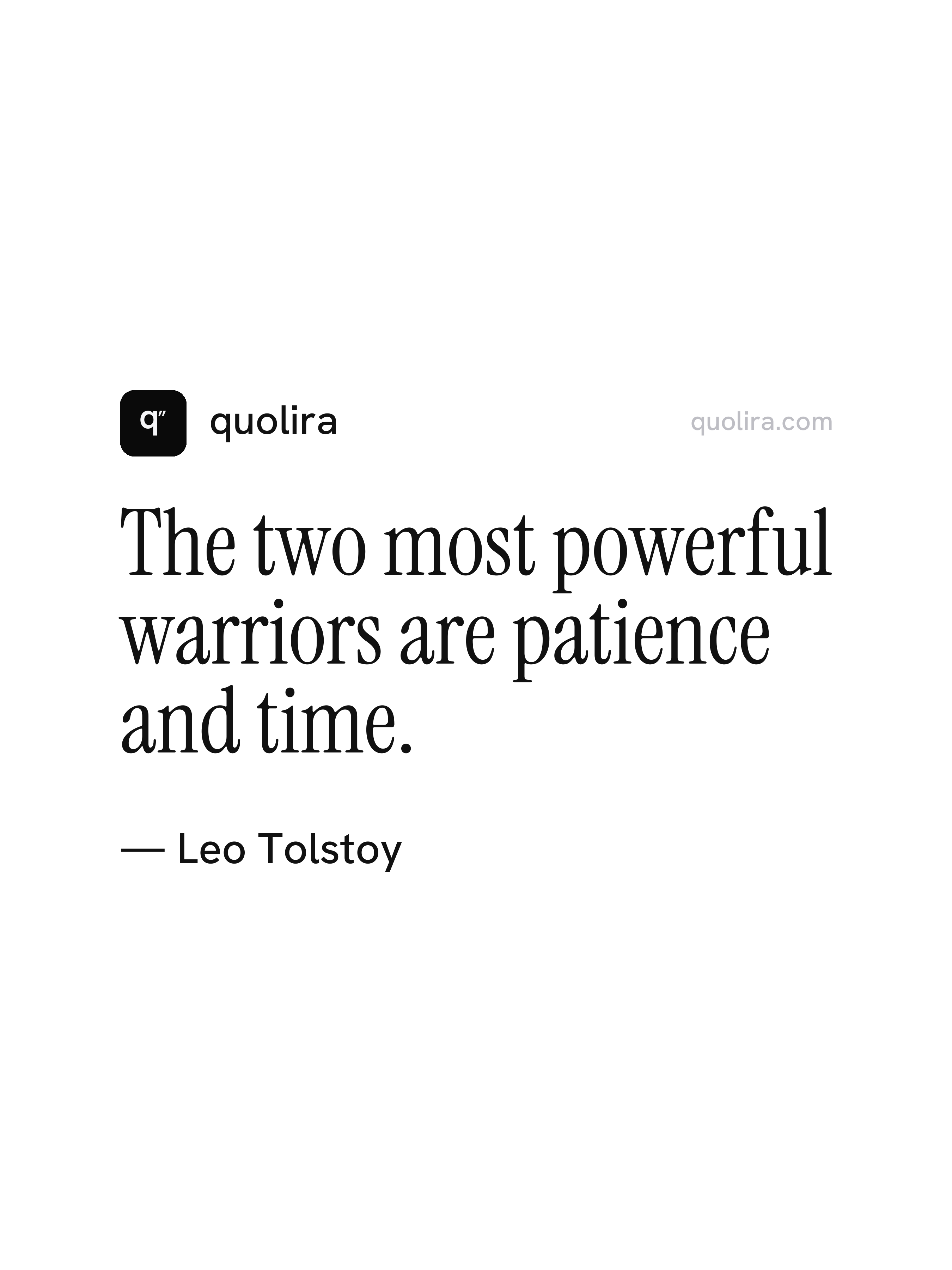
“The two most powerful warriors are patience and time.”
Leo Tolstoy · War and Peace, 1869
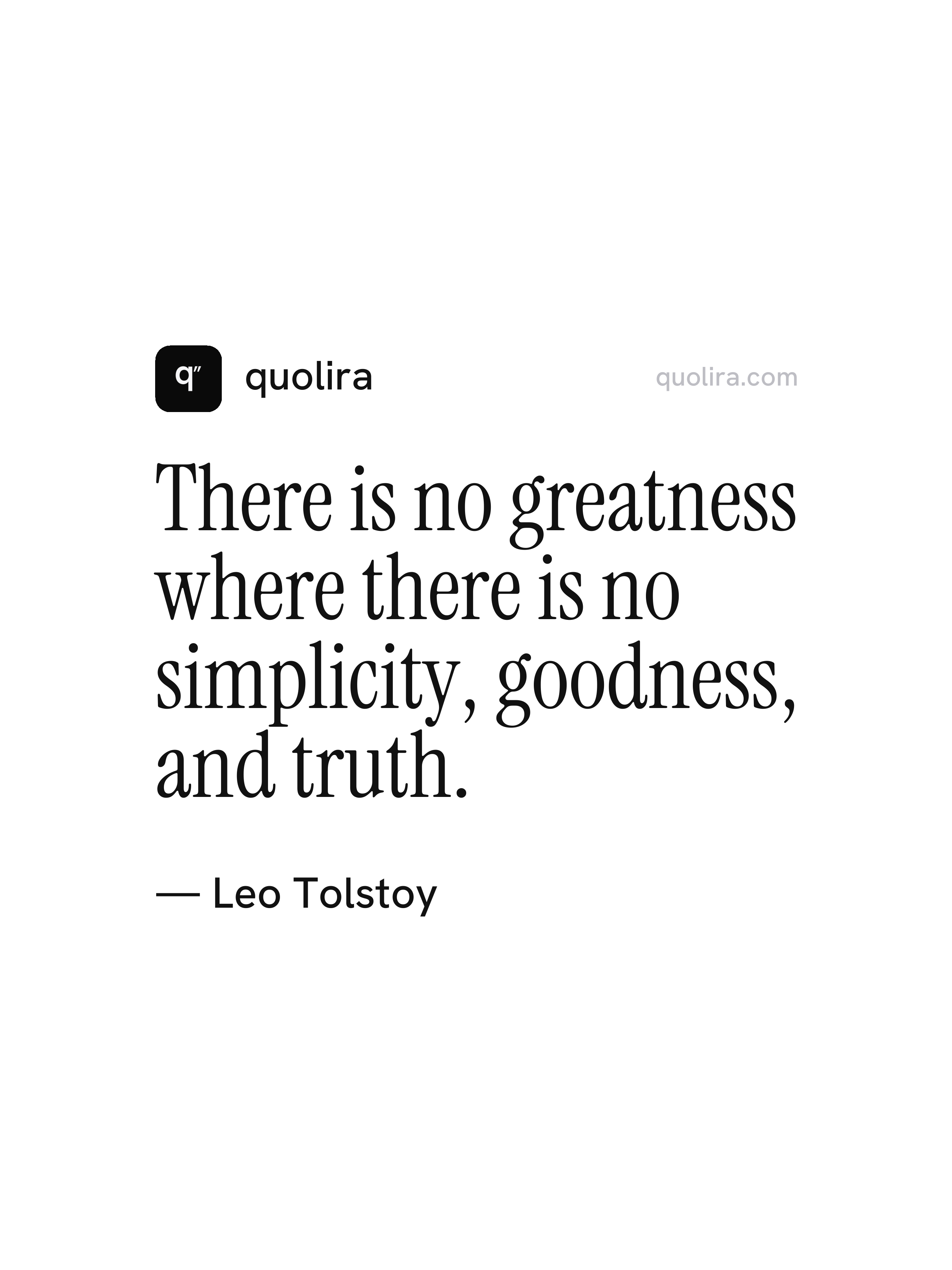
“There is no greatness where there is no simplicity, goodness, and truth.”
Leo Tolstoy · War and Peace, 1869
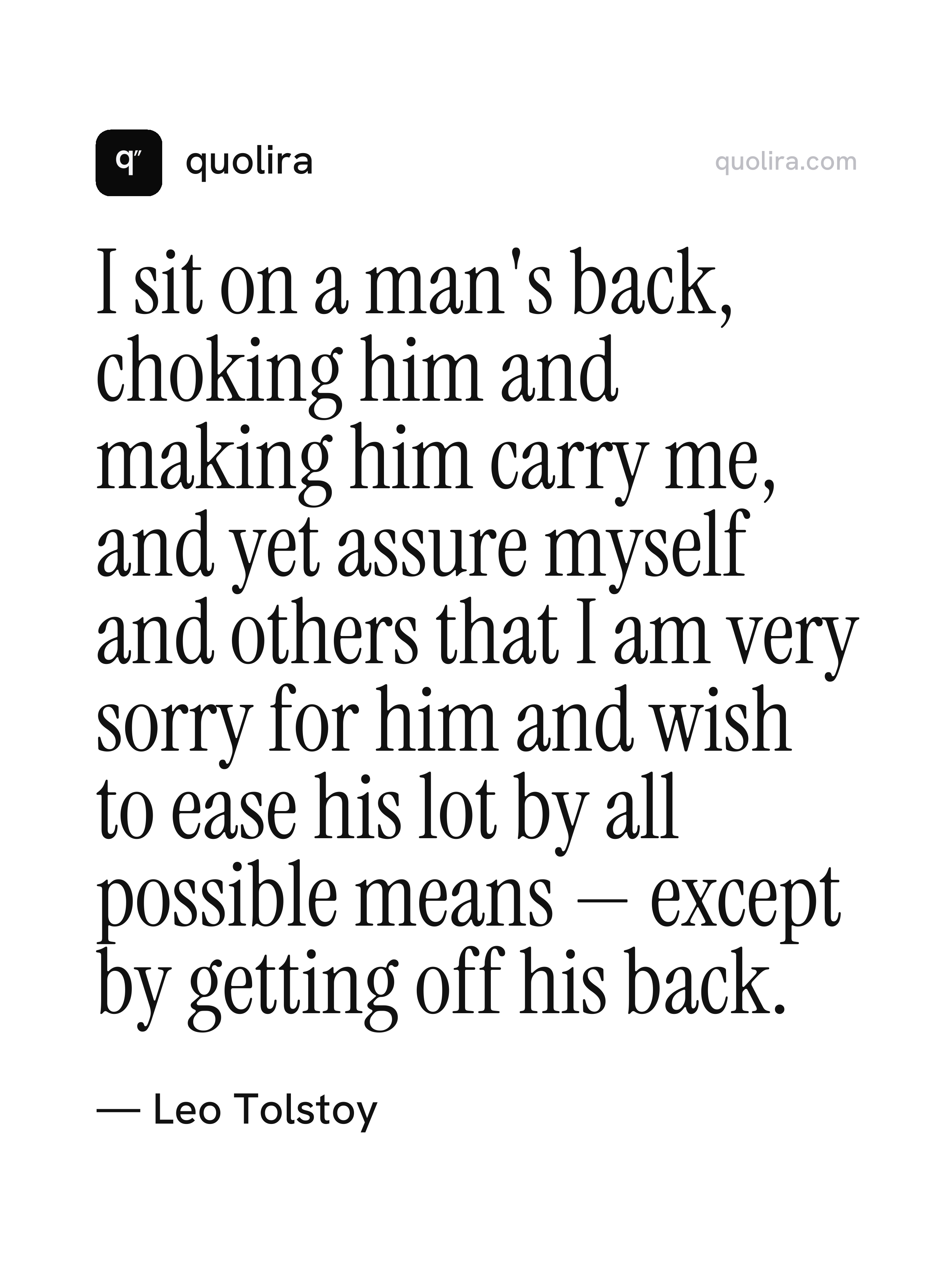
“I sit on a man's back, choking him and making him carry me, and yet assure myself and others that I am very sorry for him and wish to ease his lot by all possible means — except by getting off his back.”
Leo Tolstoy · What Then Must We Do?, 1886
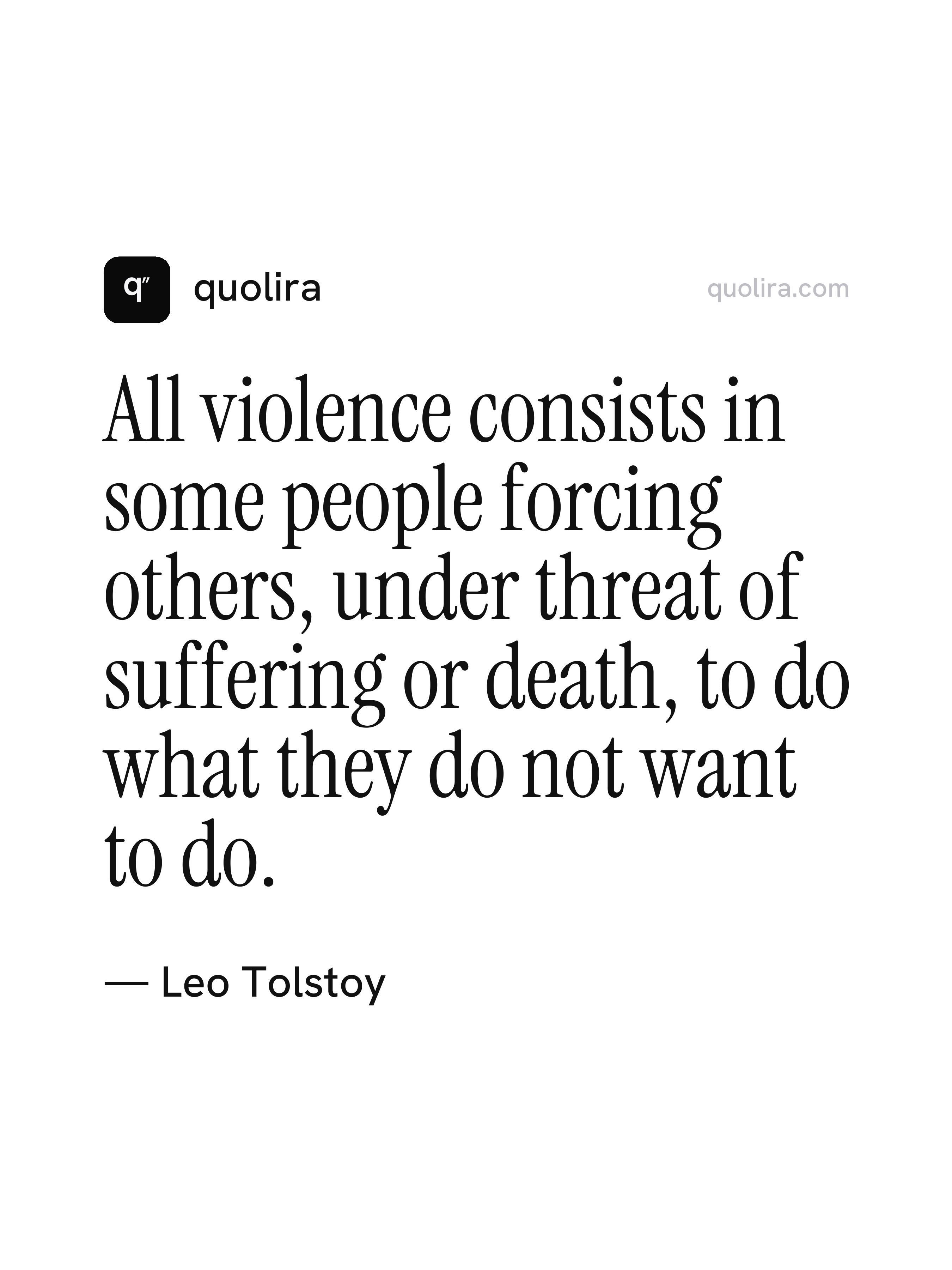
“All violence consists in some people forcing others, under threat of suffering or death, to do what they do not want to do.”
Leo Tolstoy · The Kingdom of God Is Within You, 1894
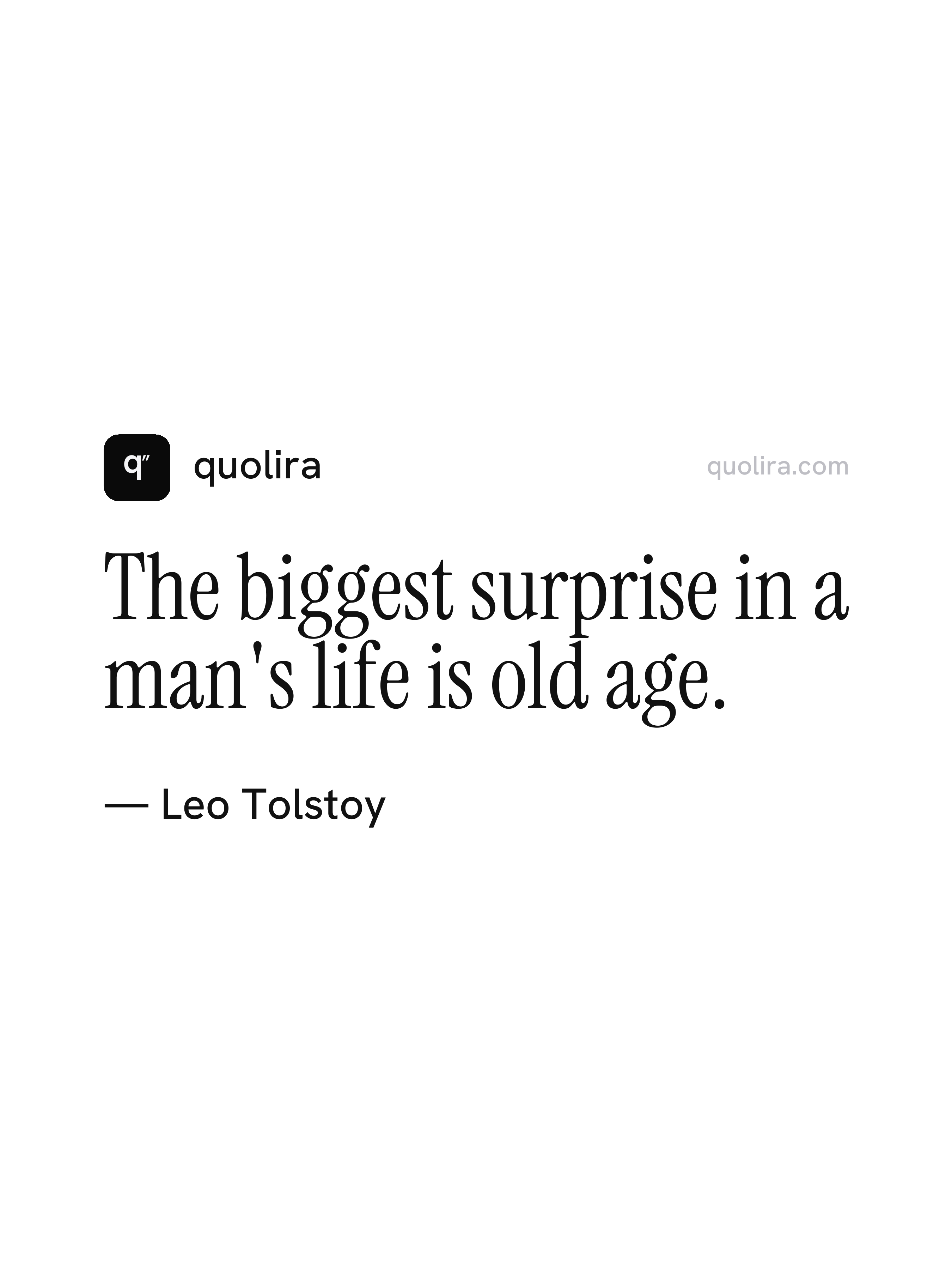
“The biggest surprise in a man's life is old age.”
Leo Tolstoy
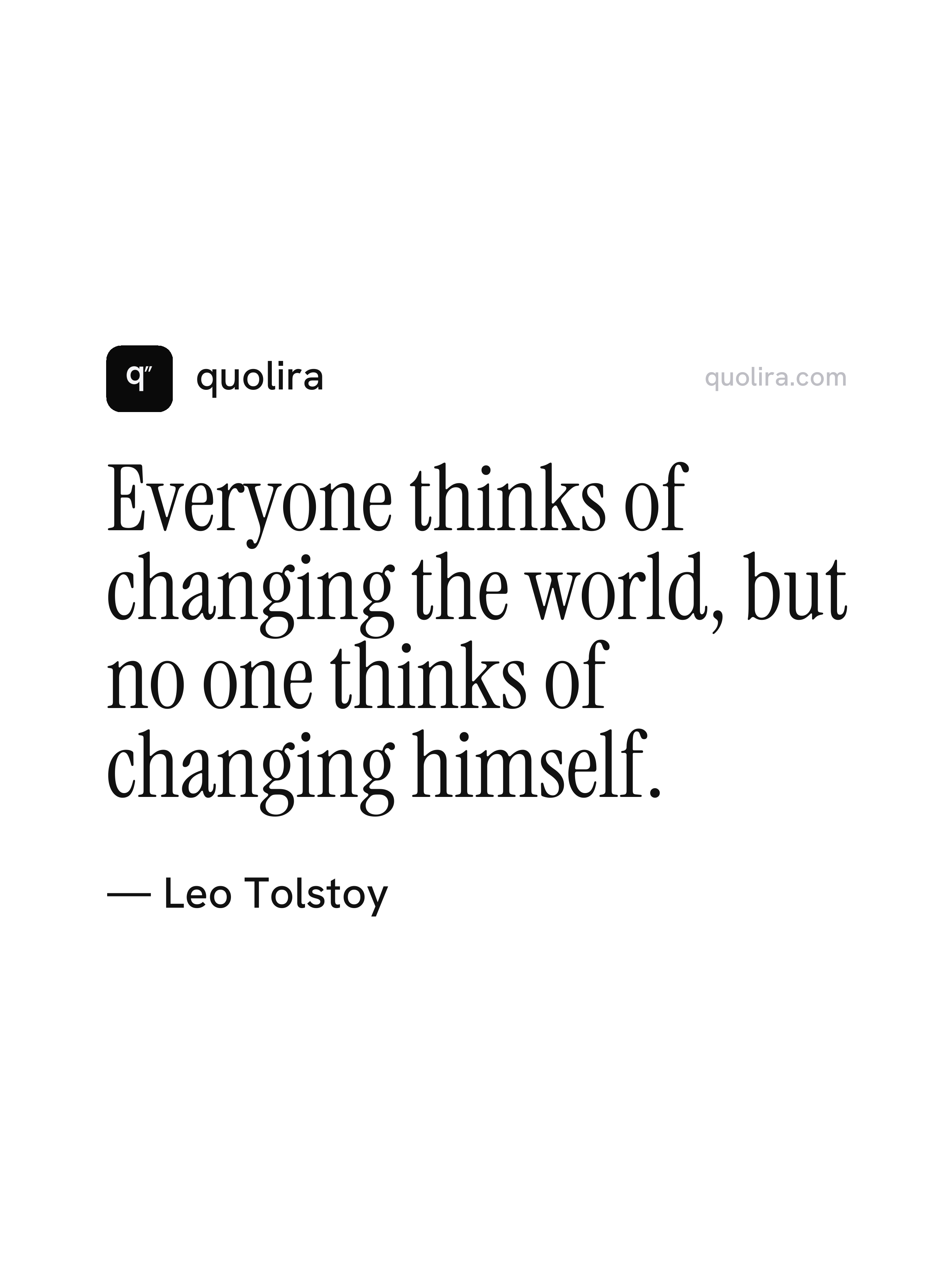
“Everyone thinks of changing the world, but no one thinks of changing himself.”
Leo Tolstoy · Three Methods of Reform, 1900
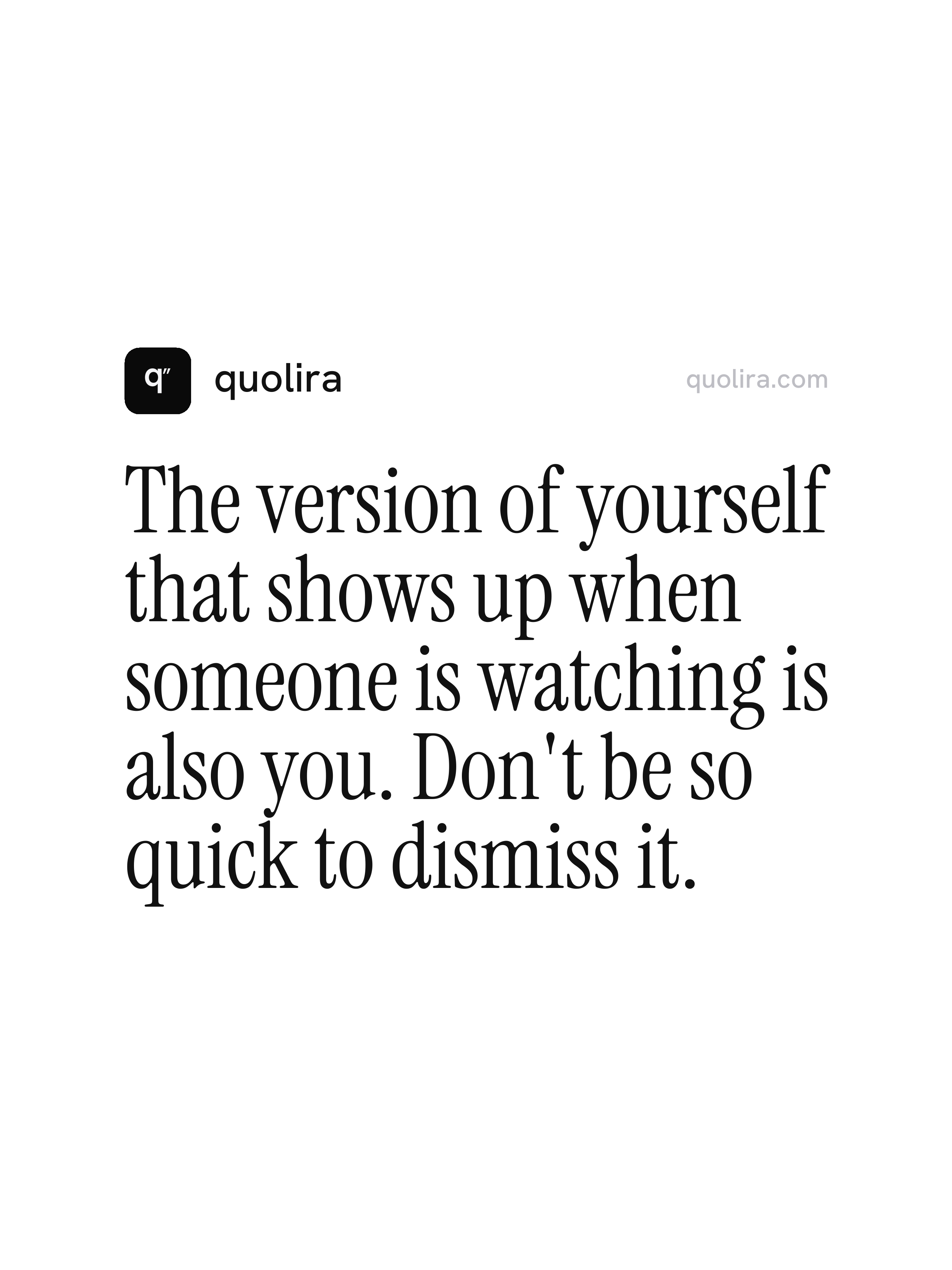
“The version of yourself that shows up when someone is watching is also you. Don't be so quick to dismiss it.”
Original
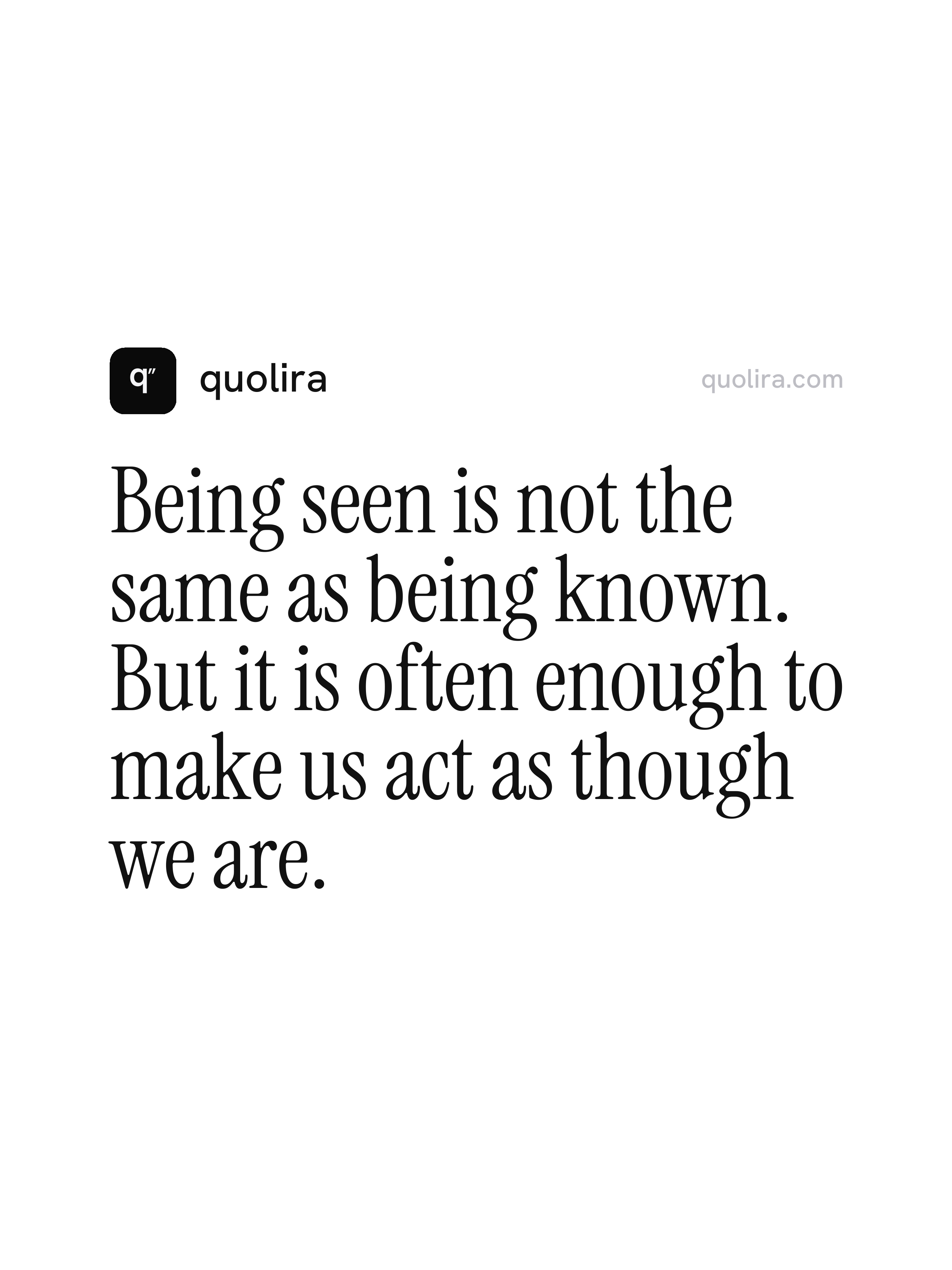
“Being seen is not the same as being known. But it is often enough to make us act as though we are.”
Original