“It is dangerous to be right in matters on which the established authorities are wrong.”
Voltaire · The Age of Louis XIV, 1752
 quolira
.com
quolira
quolira.com
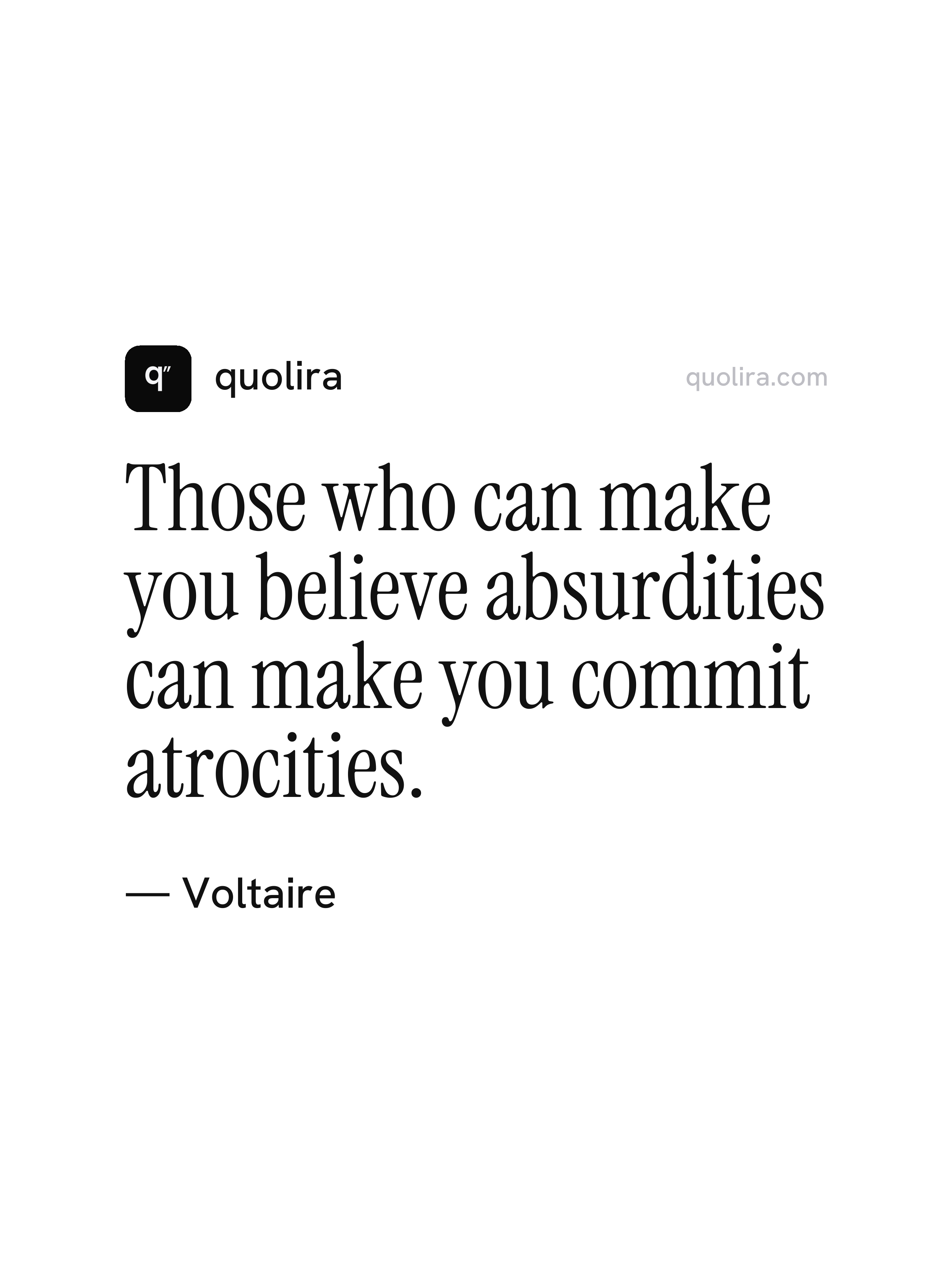
Voltaire is drawing a direct line between the acceptance of irrational ideas and the capacity for extreme violence. When people surrender their critical judgment to a belief system, a leader, or an ideology without examining it carefully, they become capable of justifying acts they would otherwise find unthinkable. The point is not that belief itself is dangerous, but that belief accepted without scrutiny removes the internal check that normally limits destructive behavior.
This line appeared in a work Voltaire published in 1765 dealing with questions of miracles and religious belief. Throughout his career he argued that uncritical acceptance of doctrine, whether religious or political, posed a genuine threat to human welfare. He saw the history of organized persecution as evidence for this view, and he used his writing to push back against the kind of authoritative certainty that demands compliance rather than inviting thought. The quote captures one of his deepest and most consistent concerns.
Voltaire was the pen name of Francois-Marie Arouet, a French Enlightenment writer and philosopher born in 1694. He was among the most influential public intellectuals of eighteenth-century Europe, producing a vast body of work that used satire, history, philosophy, and correspondence to promote reason and religious tolerance. His critiques of superstition and tyranny made him celebrated in some quarters and dangerous in others. He died in 1778, leaving behind a legacy that shaped liberal and humanist thought for generations.
“It is dangerous to be right in matters on which the established authorities are wrong.”
Voltaire · The Age of Louis XIV, 1752
“Doubt is not a pleasant condition, but certainty is an absurd one.”
Voltaire · Letter to Frederick the Great, 1767
“Judge a man by his questions rather than by his answers.”
Voltaire
“We must cultivate our garden.”
Voltaire · Candide, 1759
“Freethinkers are those who are willing to use their minds without prejudice and without fearing to understand things that clash with their own customs, privileges, or beliefs.”
Leo Tolstoy
“A man can live and be healthy without killing animals for food; therefore, if he eats meat, he participates in taking animal life merely for the sake of his appetite. And to act so is immoral.”
Leo Tolstoy · The First Step, 1892
“The sole meaning of life is to serve humanity.”
Leo Tolstoy · A Confession, 1882
“Wrong does not cease to be wrong because the majority share in it.”
Leo Tolstoy · A Calendar of Wisdom, 1908
“Man lives consciously for himself, but is an unconscious instrument in the attainment of the historic, universal aims of humanity.”
Leo Tolstoy · War and Peace, 1869
“If you look for perfection, you'll never be content.”
Leo Tolstoy · Anna Karenina, 1878
“The two most powerful warriors are patience and time.”
Leo Tolstoy · War and Peace, 1869
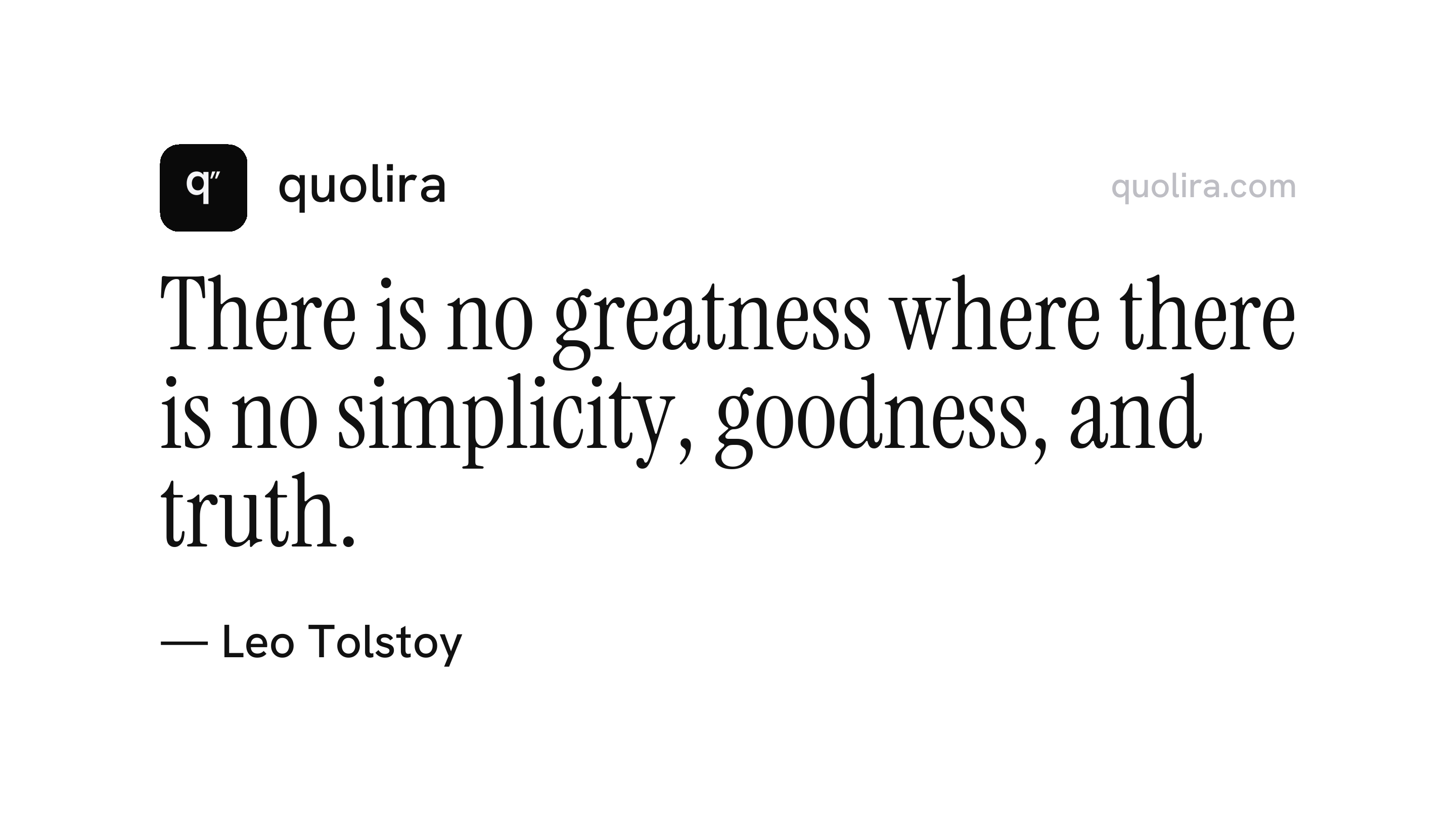
“There is no greatness where there is no simplicity, goodness, and truth.”
Leo Tolstoy · War and Peace, 1869