“I believe in Spinoza's God, Who reveals Himself in the lawful harmony of the world, not in a God Who concerns Himself with the fate and the doings of mankind.”
Albert Einstein · Telegram to Rabbi Herbert S. Goldstein, The New York Times, 1929
 quolira
.com
Albert Einstein said it, in Response to Alfred Kerr, 1927.
Einstein gave this answer to critic Alfred Kerr, who had heard he was religious and wanted to tease him about it. He defined faith as awe at the order of nature, which is easier to share with a skeptic than a creed.
From the collection: 25 Albert Einstein Quotes on Science, Simplicity, and Doubt · More Albert Einstein quotes
Einstein is saying that his religious feeling is a deep respect for a powerful order in nature that exceeds human understanding, and that this respect is the only sense in which he considers himself religious. He does not describe a personal god but an attitude of humility before the universe.
The remark comes from a 1927 exchange with the German critic Alfred Kerr, who had asked Einstein about his beliefs. Einstein answered in a short and carefully worded way, avoiding the language of organized religion. He often spoke of a sense of wonder that arises when a scientist sees how natural laws fit together, and he treated that feeling as the core of what he called religious experience. Many readers note that the reply blends scientific curiosity with a moral seriousness, which is why it is often quoted in discussions of science and faith.
Albert Einstein (1879 to 1955) was a German-born physicist whose work on relativity transformed modern physics. He won the Nobel Prize in Physics in 1921 for his explanation of the photoelectric effect. Forced to leave Germany in the 1930s, he spent the rest of his life in the United States, where he worked at the Institute for Advanced Study in Princeton. He wrote and spoke widely on science, peace, and human responsibility, and he consistently described his faith as reverence for the rational order of the world rather than belief in a god who answers prayers.
“I believe in Spinoza's God, Who reveals Himself in the lawful harmony of the world, not in a God Who concerns Himself with the fate and the doings of mankind.”
Albert Einstein · Telegram to Rabbi Herbert S. Goldstein, The New York Times, 1929
“The most beautiful fate of a physical theory is to point the way to the establishment of a more inclusive theory, in which it lives on as a limiting case.”
Albert Einstein · Relativity: The Special and General Theory, 1920
“Concepts that have proven useful in ordering things easily achieve such authority over us that we forget their earthly origins and accept them as unalterable givens.”
Albert Einstein · Obituary for Ernst Mach, 1916
“Man tries to make for himself in the fashion that suits him best a simplified and intelligible picture of the world; he then tries to some extent to substitute this cosmos of his for the world of experience, and thus to overcome it.”
Albert Einstein · Principles of Research, 1918
“The state of mind which enables a man to do work of this kind is akin to that of the religious worshiper or the lover; the daily effort comes from no deliberate intention or program, but straight from the heart.”
Albert Einstein · Principles of Research, 1918
“One reason why mathematics enjoys special esteem, above all other sciences, is that its laws are absolutely certain and indisputable, while those of other sciences are to some extent debatable and in constant danger of being overthrown by newly discovered facts.”
Albert Einstein · Sidelights on Relativity, 1922
“How can it be that mathematics, being, after all, a product of human thought which is independent of experience, is so admirably appropriate to the objects of reality?”
Albert Einstein · Geometry and Experience, 1921
“The only justification for our concepts and system of concepts is that they serve to represent the complex of our experiences; beyond this they have no legitimacy.”
Albert Einstein · Lecture at Princeton University, 1921 (The Meaning of Relativity, 1923)
“The value of a college education is not the learning of many facts but the training of the mind to think.”
Albert Einstein · Response to the Edison Test, New York Times, 1921
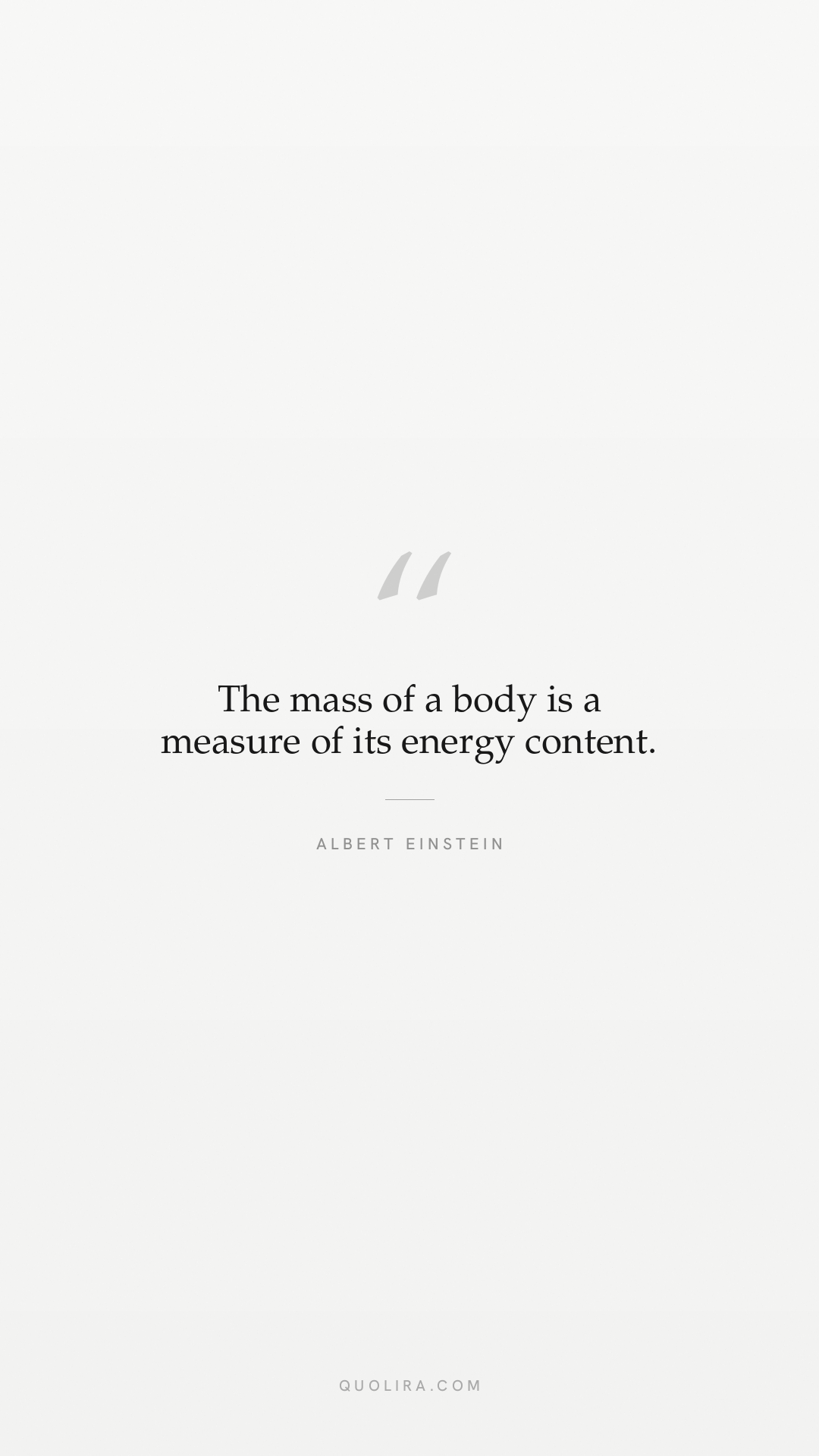
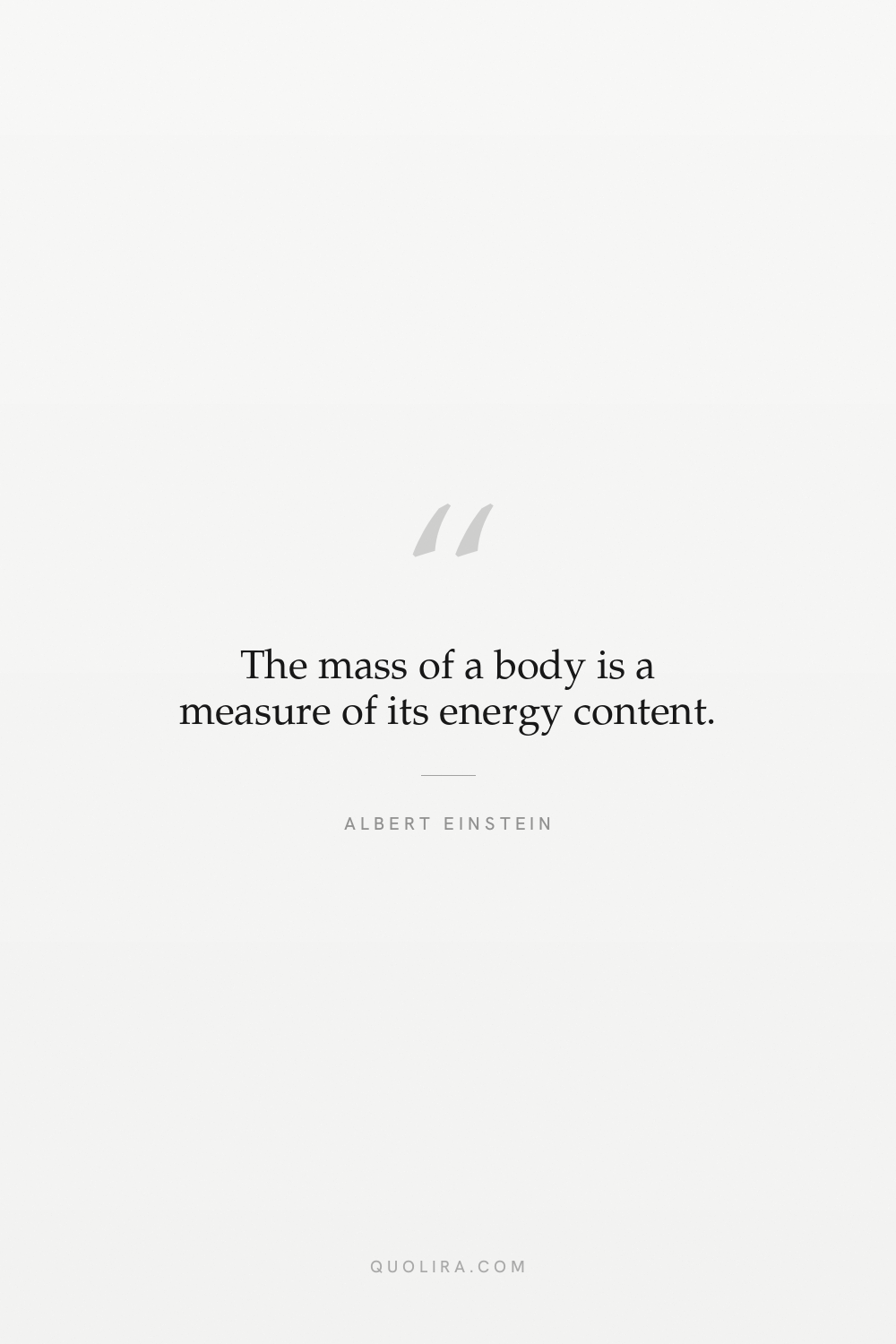
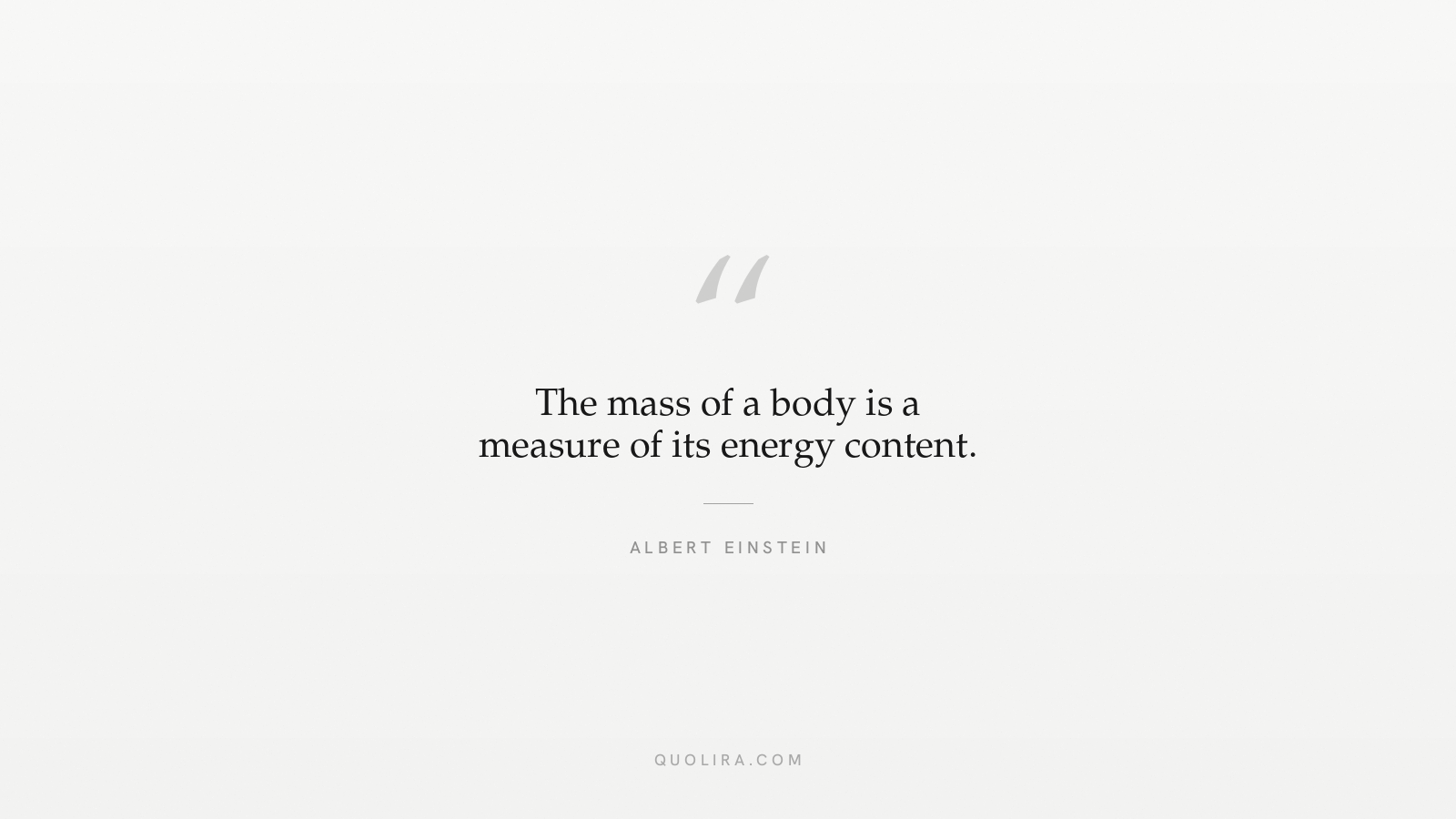
“The mass of a body is a measure of its energy content.”
Albert Einstein · Annalen der Physik, 1905
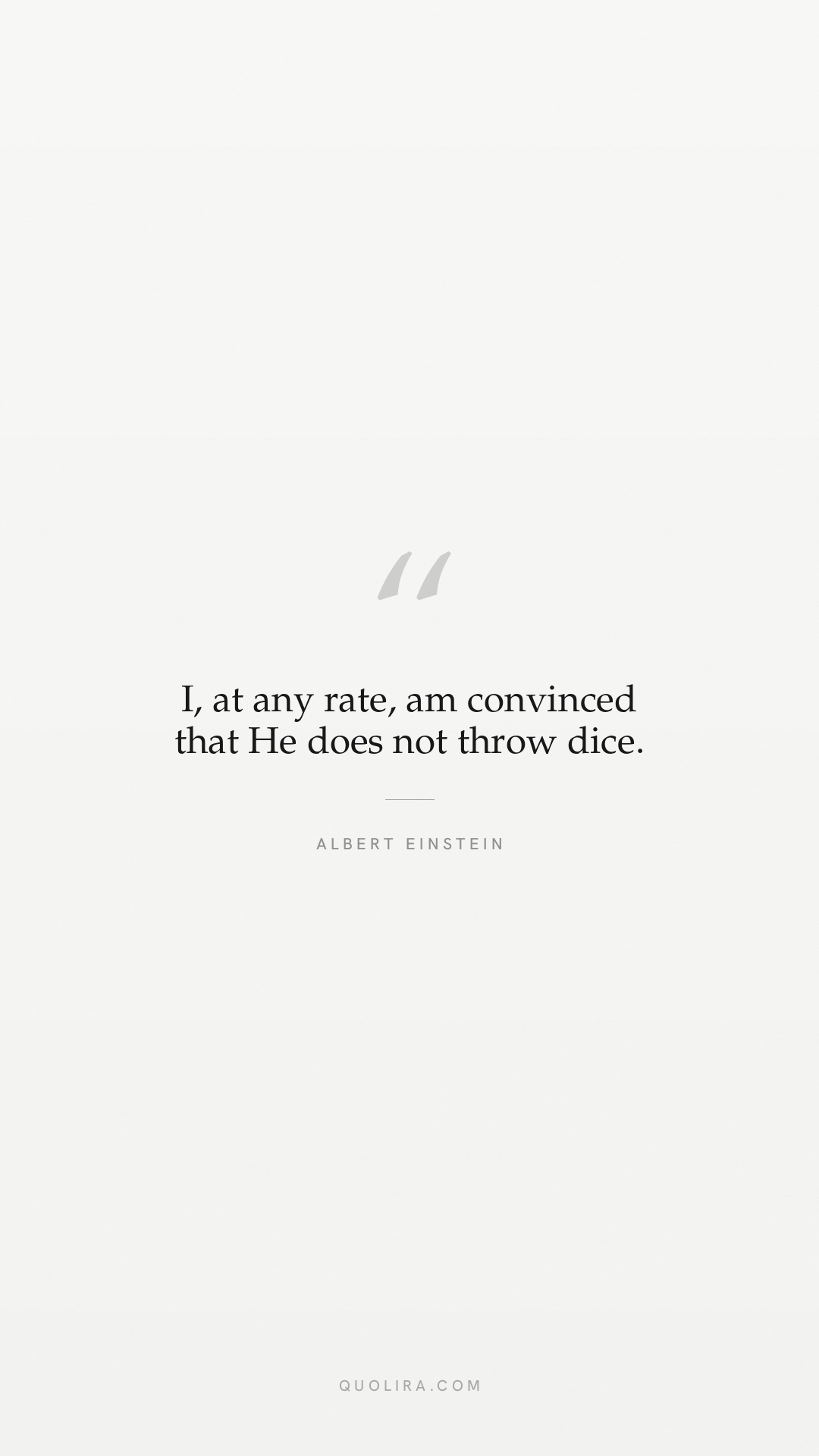
“I, at any rate, am convinced that He does not throw dice.”
Albert Einstein · Letter to Max Born, 1926
“Subtle is the Lord, but malicious He is not.”
Albert Einstein · Remark at Princeton University, 1921