“How can it be that mathematics, being, after all, a product of human thought which is independent of experience, is so admirably appropriate to the objects of reality?”
Albert Einstein · Geometry and Experience, 1921
 quolira
.com
Albert Einstein said it, in Sidelights on Relativity, 1922.
Math is certain because it doesn't depend on facts, which is also why it can't describe the world alone. Physics takes that risk, and a single new measurement can overturn it.
From the collection: 25 Albert Einstein Quotes on Science, Simplicity, and Doubt · More Albert Einstein quotes
Mathematics is esteemed above other sciences because its laws are considered certain, while findings in other fields remain open to revision when new facts appear. Einstein is contrasting the lasting firmness of logical proof with the provisional character of empirical knowledge. The point is not that other sciences are weak, but that their conclusions always carry a degree of uncertainty.
This passage is associated with Sidelights on Relativity, a 1922 publication connected with Einstein's writing on relativity for a broader readership. In it he reflects on the status of different kinds of knowledge and on why mathematical reasoning holds a special place among the sciences. The remark belongs to a wider discussion about how theories are tested, and how a single well-established observation can overturn an idea that once seemed secure.
Albert Einstein (1879 to 1955) was a German-born theoretical physicist known for the special and general theories of relativity. He received the Nobel Prize in Physics in 1922 for his work on the photoelectric effect. Later he lived in Princeton, New Jersey, where he worked at the Institute for Advanced Study. Beyond his technical papers, he wrote often about the methods of science, the limits of knowledge, and the social role of scientists, which is why his more reflective writings remain widely quoted.
“How can it be that mathematics, being, after all, a product of human thought which is independent of experience, is so admirably appropriate to the objects of reality?”
Albert Einstein · Geometry and Experience, 1921
“The only justification for our concepts and system of concepts is that they serve to represent the complex of our experiences; beyond this they have no legitimacy.”
Albert Einstein · Lecture at Princeton University, 1921 (The Meaning of Relativity, 1923)
“The value of a college education is not the learning of many facts but the training of the mind to think.”
Albert Einstein · Response to the Edison Test, New York Times, 1921
“The mass of a body is a measure of its energy content.”
Albert Einstein · Annalen der Physik, 1905
“I, at any rate, am convinced that He does not throw dice.”
Albert Einstein · Letter to Max Born, 1926
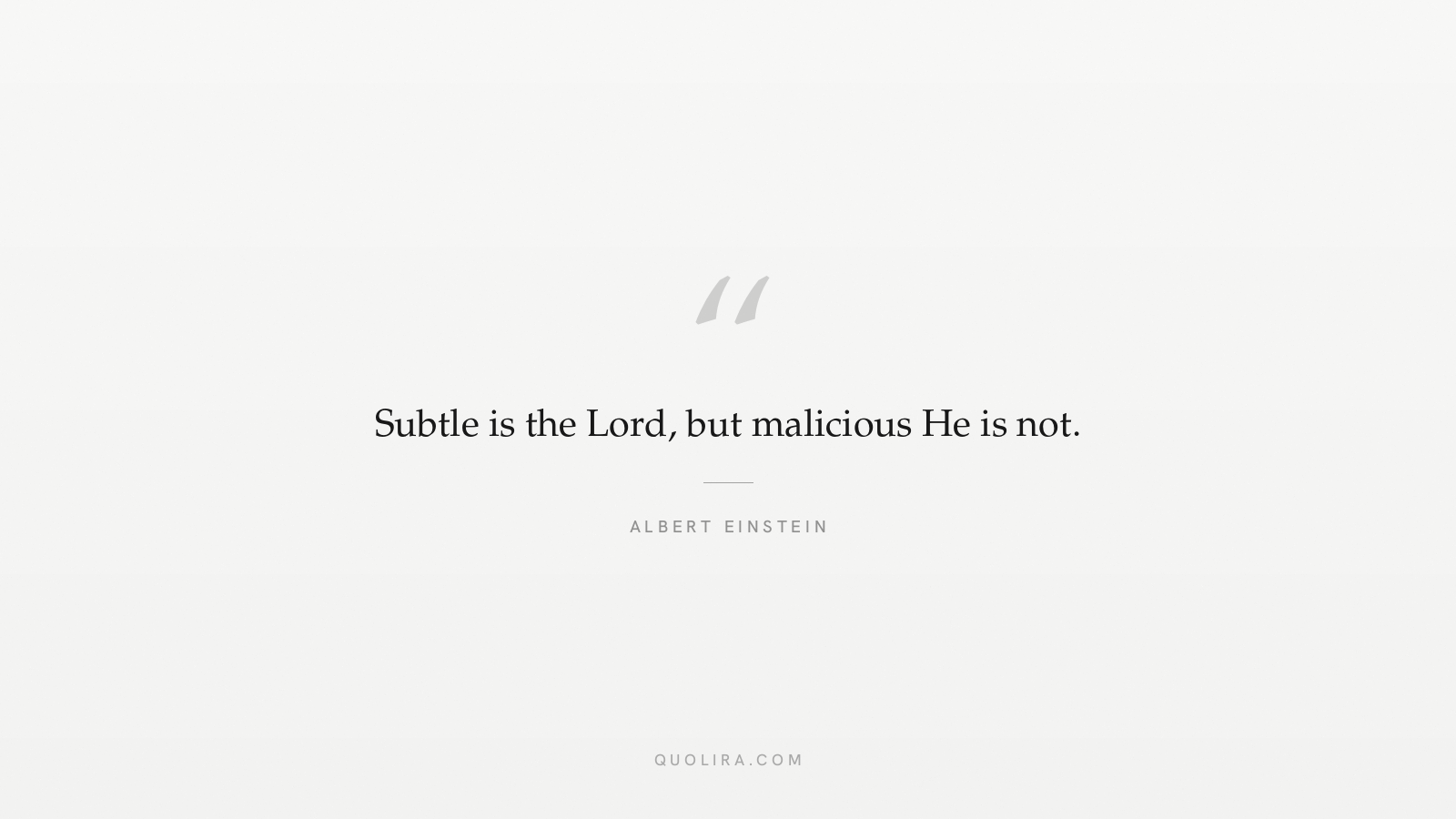
“Subtle is the Lord, but malicious He is not.”
Albert Einstein · Remark at Princeton University, 1921
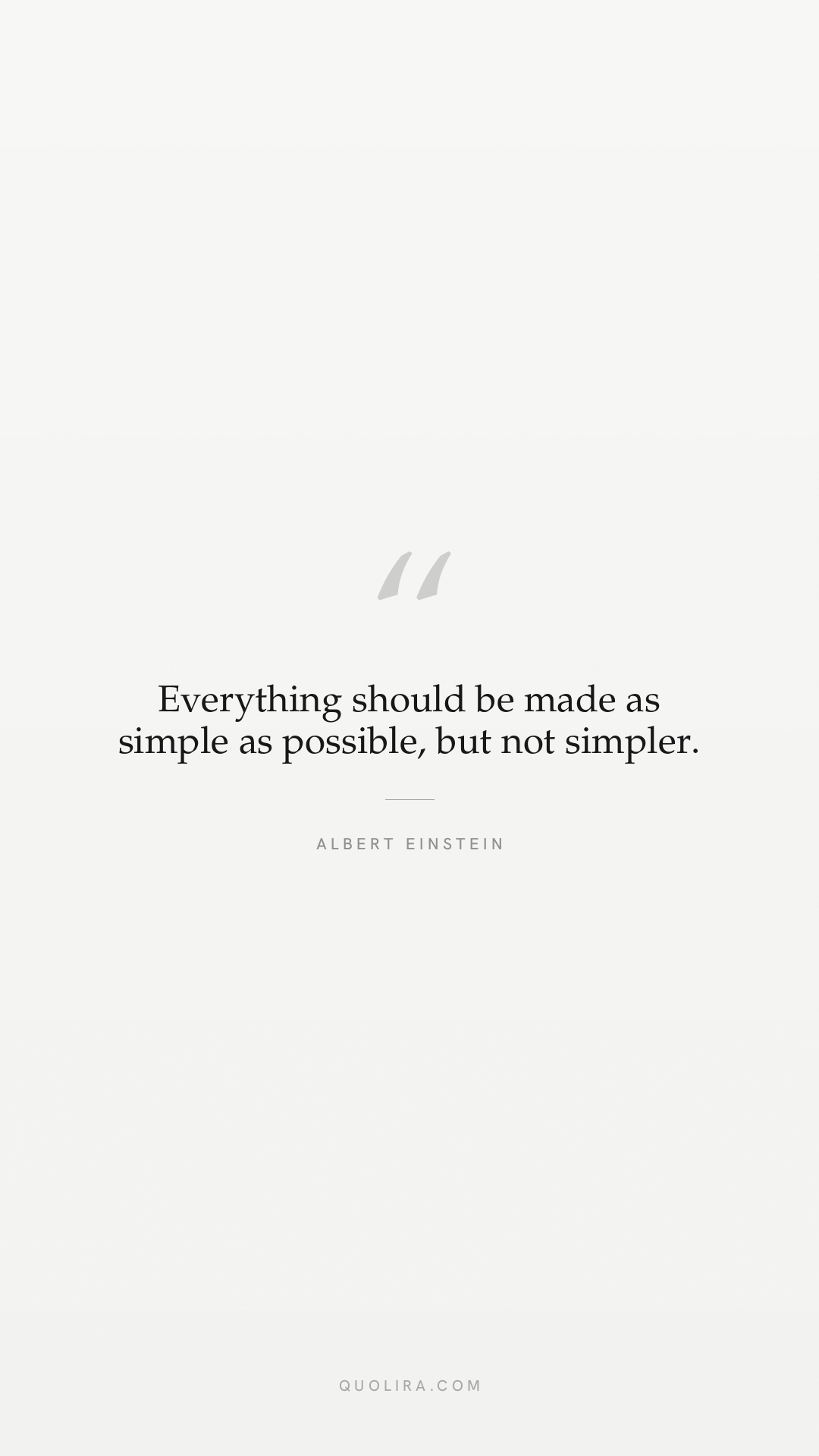
“Everything should be made as simple as possible, but not simpler.”
Albert Einstein · Repeated in several forms throughout his life
“Every meeting is the only version of that meeting that will ever happen.”
Original
“Adam and Lilith in the Alphabet of Sirach.”
Nikola Tesla · Quoted in Nikola Tesla's Life & Work by István G. Kocsis, 2015
“Satan had his companions, fellow devils, to admire and encourage him, but I am solitary and abhorred.”
Mary Shelley · Frankenstein, 1818
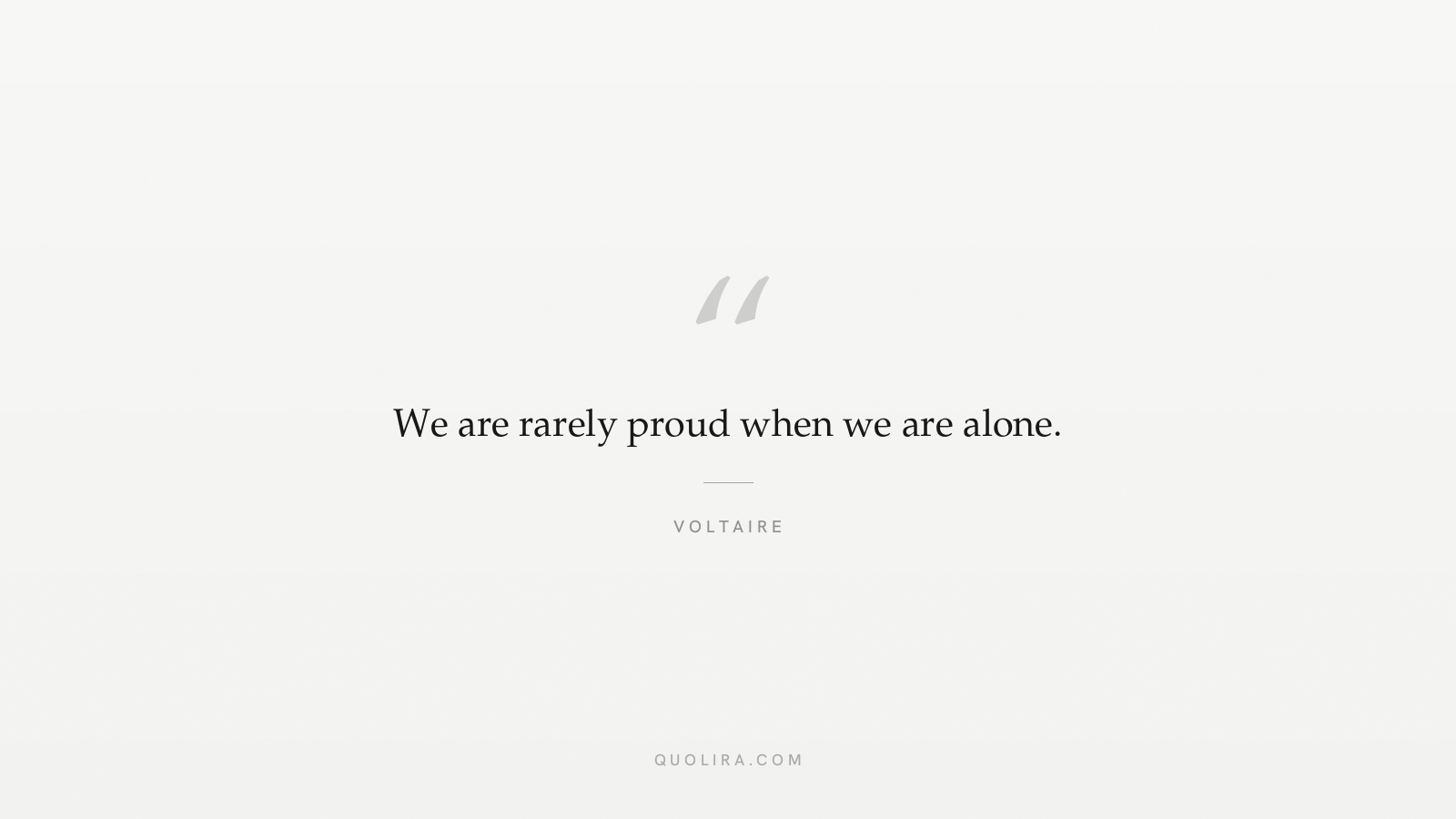
“We are rarely proud when we are alone.”
Voltaire · Philosophical Dictionary, 1764
“To the lonely themselves it wears a mask. The most miserable outcast hugs some memory or some illusion.”
Joseph Conrad · Under Western Eyes, 1911