Meaning
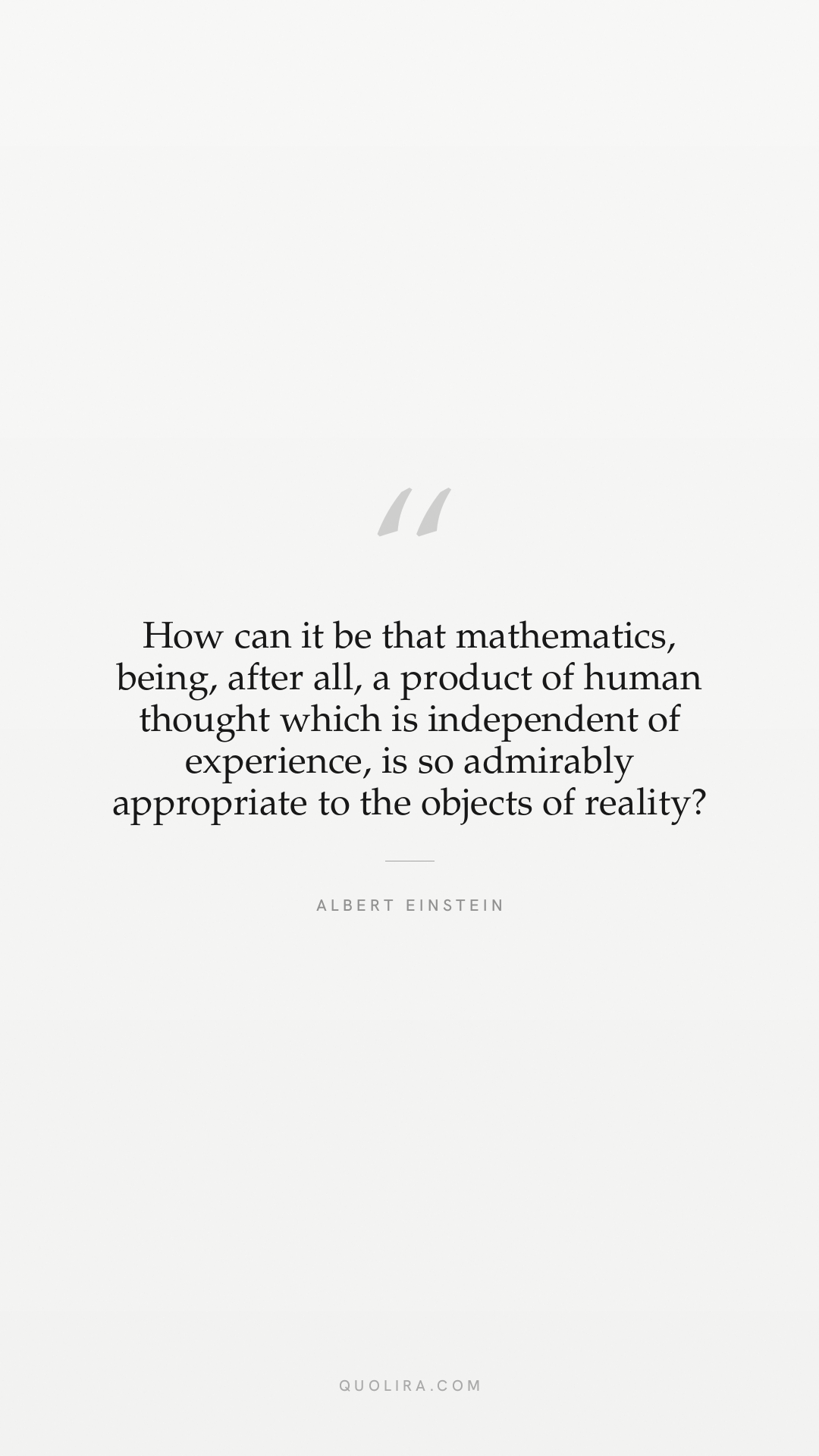
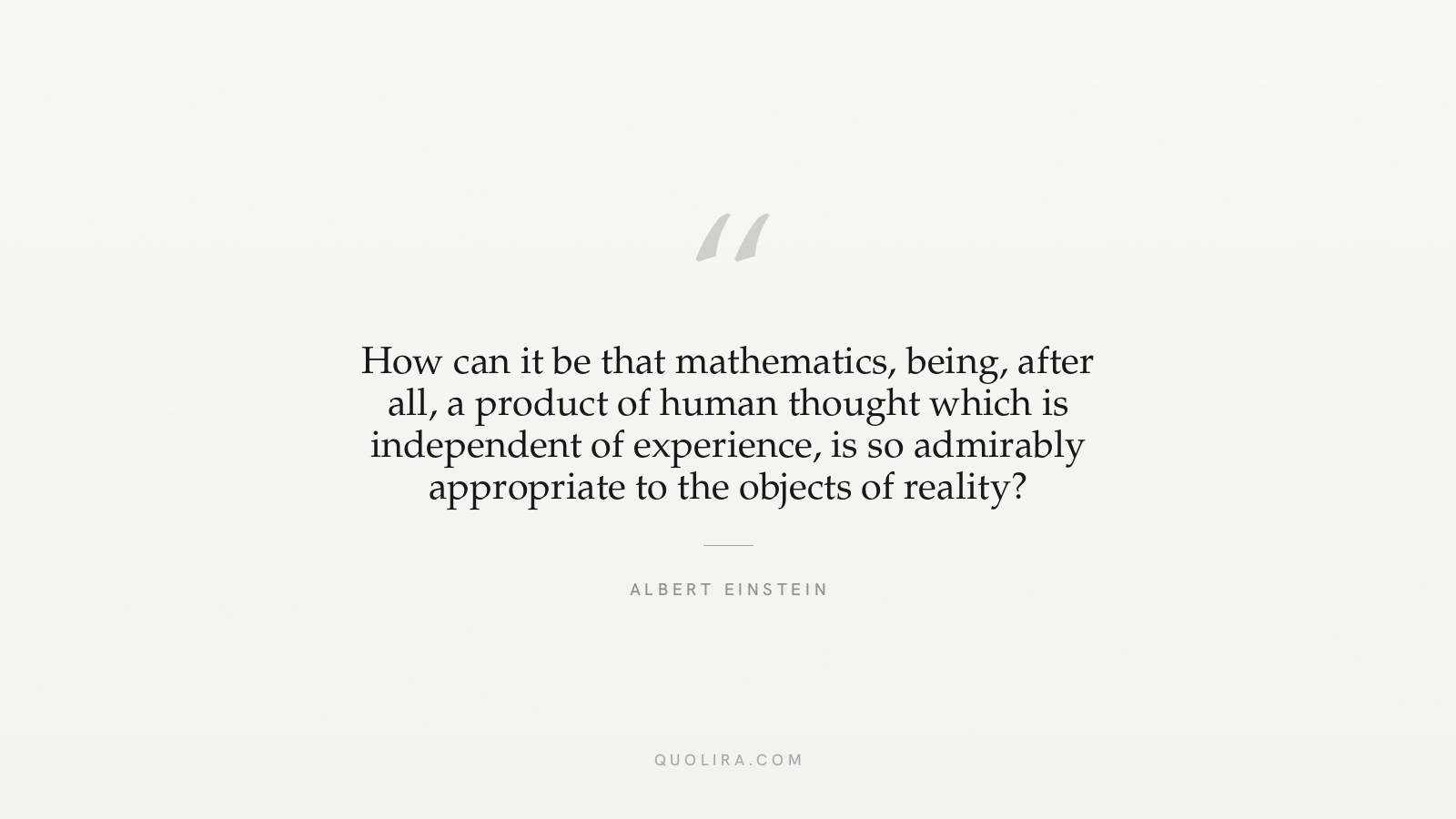
The quote asks why mathematics, which grows out of human reasoning independent of experience, fits the physical world so remarkably well. Einstein treats this as a genuine puzzle, one that points to a deep and unexplained link between abstract thought and the objects we measure. The question invites readers to consider whether our logic is simply a mirror of nature or something that nature somehow obeys.
Context
This line comes from Einstein's essay Geometry and Experience, published in 1921 and cited here under that title. The essay concerns how geometry, understood as a system of logical constructions, relates to measurements of real bodies. Rather than offering a neat answer, Einstein frames the matter as an open question, which reflects his lifelong interest in how theory and observation meet and how each shapes the other.
About the author
Albert Einstein (1879 to 1955) was a German-born theoretical physicist who developed the special and general theories of relativity. He received the Nobel Prize in Physics in 1922, awarded for his explanation of the photoelectric effect. In his later years he worked at the Institute for Advanced Study in Princeton, New Jersey. He wrote widely on science, philosophy, and the responsibilities of scientists, and his essays are still read for their clarity about the foundations of physical thought.