“A happy man is too satisfied with the present to dwell too much on the future.”
Albert Einstein · Mes Projets d'Avenir, school essay, 1896
 quolira
.com
Albert Einstein said it, in Letter to Heinrich Zangger, 1914.
Einstein used this image to explain why we only ever see part of the truth. The lion is still there, even when all we can make out is the tail.
From the collection: 25 Albert Einstein Quotes on Science, Simplicity, and Doubt · More Albert Einstein quotes
The quote means that nature reveals only a small visible part of itself, yet the unseen whole still exists and can be trusted to be there. Einstein uses the image of a lion's tail to argue that a partial view does not make the rest of the animal doubtful, and that reasoning from what we can see to what we cannot is a legitimate part of scientific thought.
Einstein wrote these lines in a 1914 letter to Heinrich Zangger, a Swiss physician and friend with whom he corresponded on scientific and philosophical questions. The metaphor works as a reflection on how science proceeds. Researchers rarely observe the full structure of a phenomenon at once. They see fragments, such as a measurement, an effect or a pattern, and then infer the larger reality that must account for them. Einstein's point is that confidence in that hidden reality is not a leap of faith but a conclusion grounded in evidence and in the coherence of the whole.
Albert Einstein was a German-born theoretical physicist who developed the theory of relativity and made foundational contributions to quantum theory. He received the 1921 Nobel Prize in Physics for his explanation of the photoelectric effect. Beyond his technical work, he became a widely read public voice on science, peace and civil liberties, and his letters and essays often reveal a reflective, humane character that goes well beyond his equations.
“A happy man is too satisfied with the present to dwell too much on the future.”
Albert Einstein · Mes Projets d'Avenir, school essay, 1896
“Blind obedience to authority is the greatest enemy of truth.”
Albert Einstein · Letter to Jost Winteler, 1901
“Our entire much-praised technological progress, and civilization generally, could be compared to an axe in the hand of a pathological criminal.”
Albert Einstein · Letter to Heinrich Zangger, 1917
“I should unconditionally refuse every direct or indirect war service and try to induce my friends to adopt the same attitude, irrespective of the general opinion of the causes of war.”
Albert Einstein · Council of War Resisters meeting, Zurich, 1929
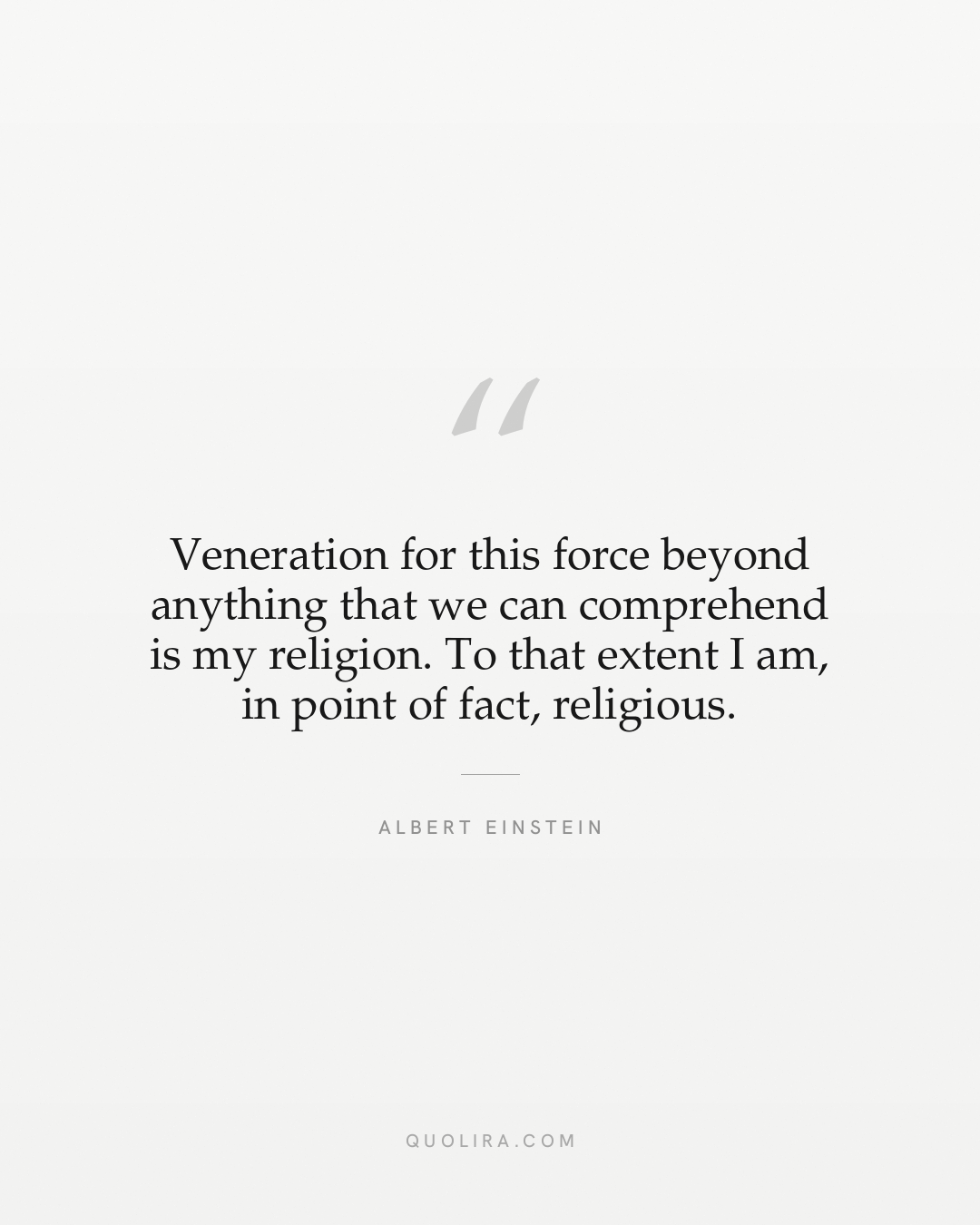
“Veneration for this force beyond anything that we can comprehend is my religion. To that extent I am, in point of fact, religious.”
Albert Einstein · Response to Alfred Kerr, 1927
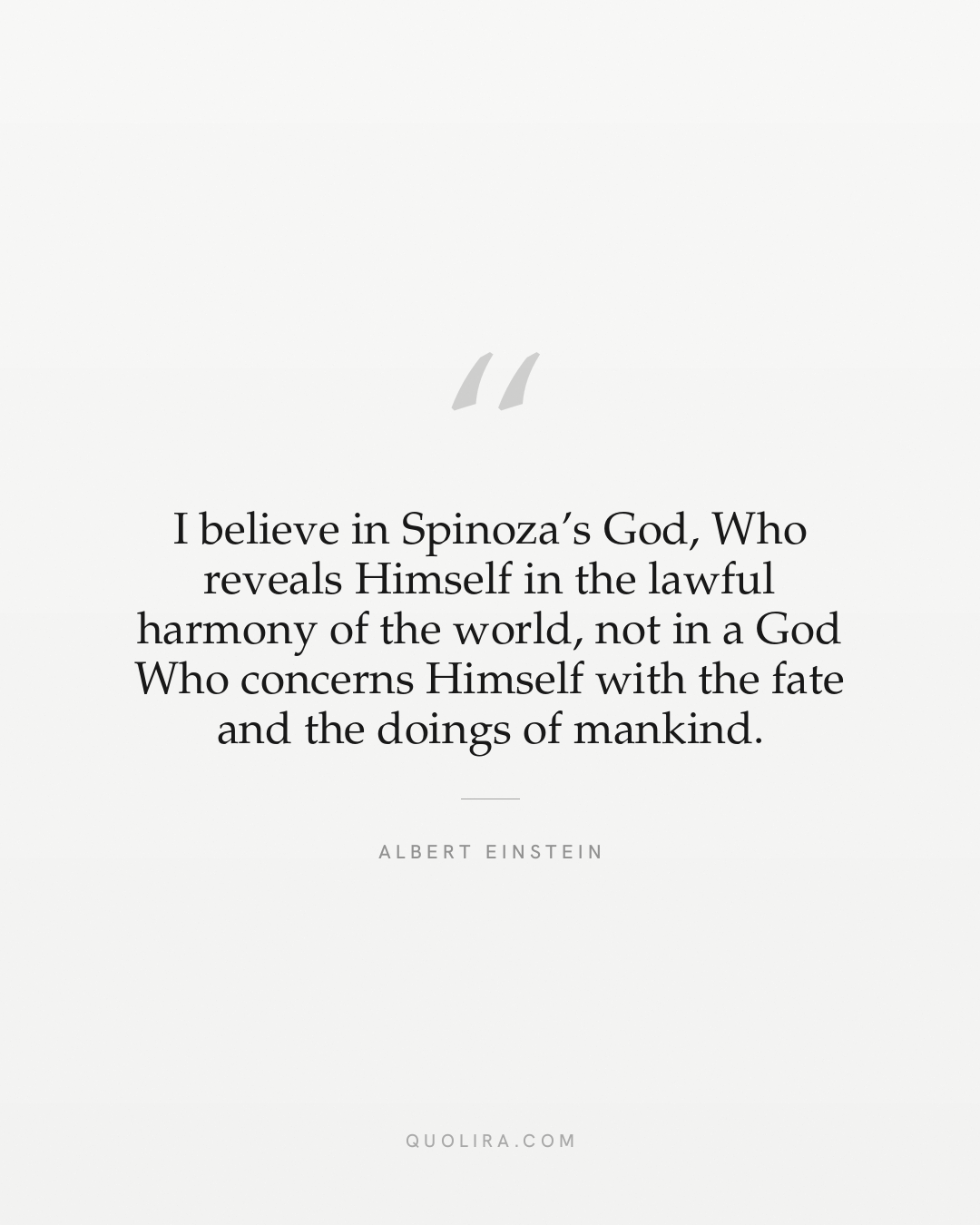
“I believe in Spinoza's God, Who reveals Himself in the lawful harmony of the world, not in a God Who concerns Himself with the fate and the doings of mankind.”
Albert Einstein · Telegram to Rabbi Herbert S. Goldstein, The New York Times, 1929
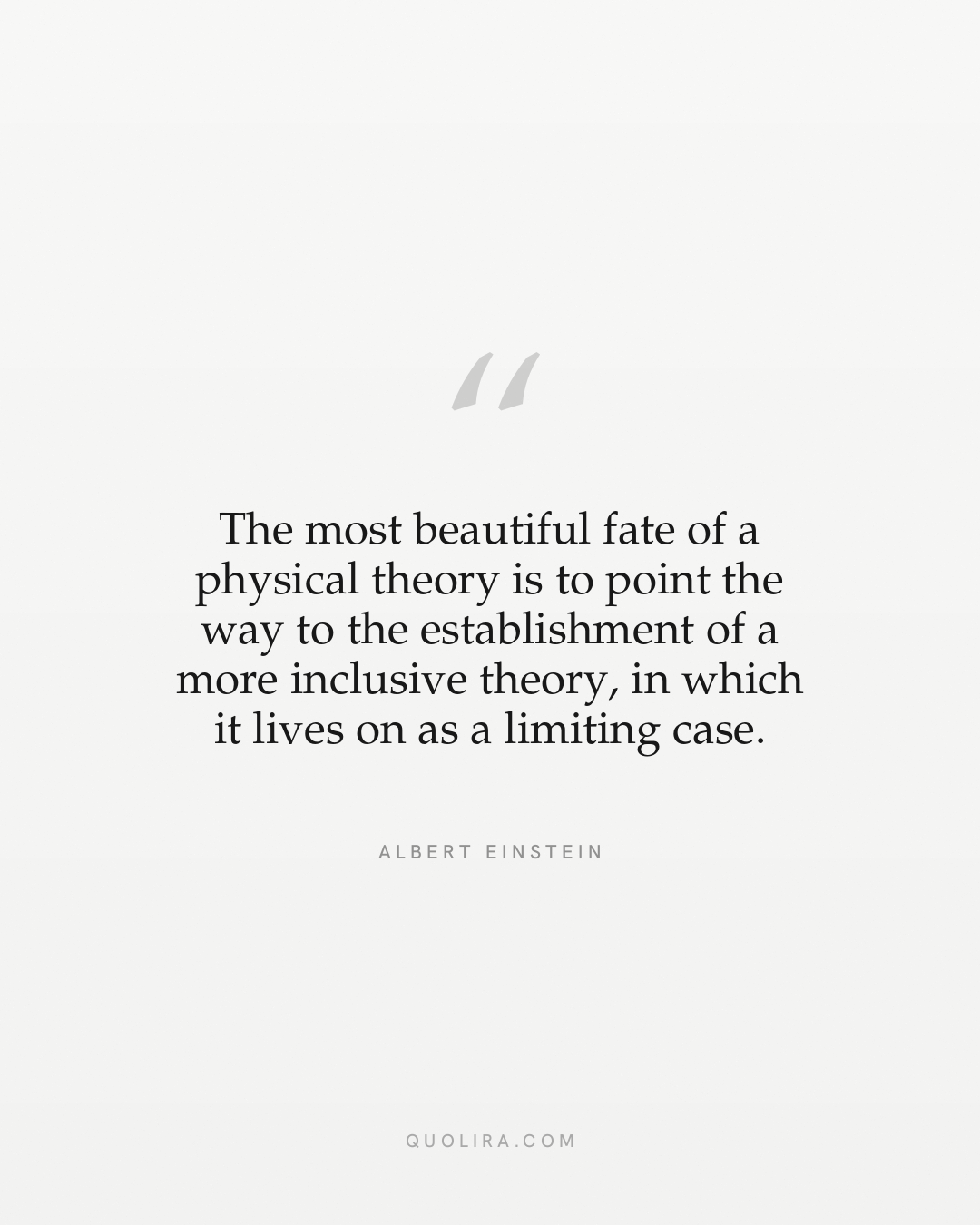
“The most beautiful fate of a physical theory is to point the way to the establishment of a more inclusive theory, in which it lives on as a limiting case.”
Albert Einstein · Relativity: The Special and General Theory, 1920
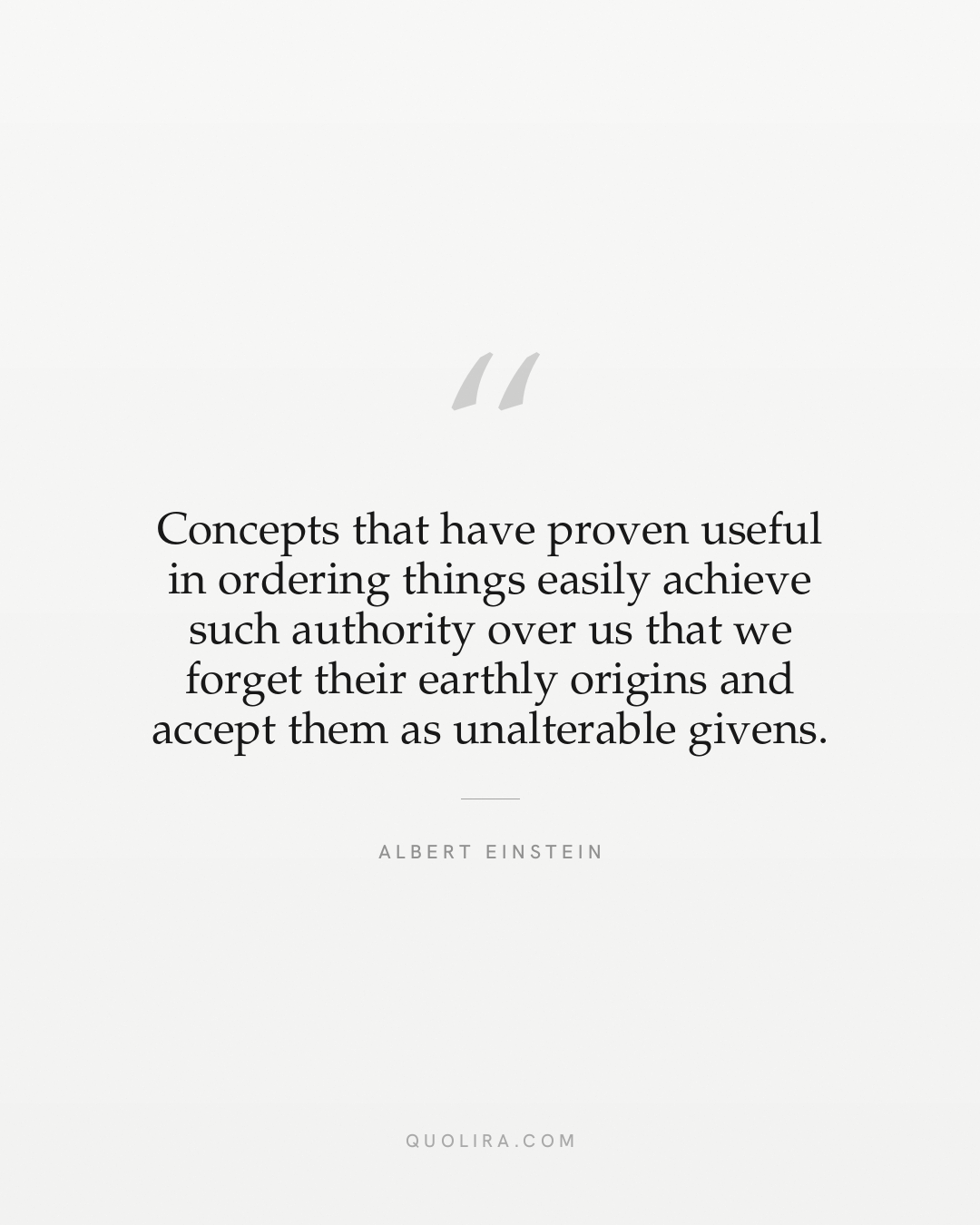
“Concepts that have proven useful in ordering things easily achieve such authority over us that we forget their earthly origins and accept them as unalterable givens.”
Albert Einstein · Obituary for Ernst Mach, 1916
“Man tries to make for himself in the fashion that suits him best a simplified and intelligible picture of the world; he then tries to some extent to substitute this cosmos of his for the world of experience, and thus to overcome it.”
Albert Einstein · Principles of Research, 1918
“The state of mind which enables a man to do work of this kind is akin to that of the religious worshiper or the lover; the daily effort comes from no deliberate intention or program, but straight from the heart.”
Albert Einstein · Principles of Research, 1918
“One reason why mathematics enjoys special esteem, above all other sciences, is that its laws are absolutely certain and indisputable, while those of other sciences are to some extent debatable and in constant danger of being overthrown by newly discovered facts.”
Albert Einstein · Sidelights on Relativity, 1922
“How can it be that mathematics, being, after all, a product of human thought which is independent of experience, is so admirably appropriate to the objects of reality?”
Albert Einstein · Geometry and Experience, 1921