“Thus on the one hand we have ability to protect ourselves; on the other, a victory that is complete.”
Sun Tzu · The Art of War, IV. Tactical Dispositions
 quolira
.com
Sun Tzu said it, in The Art of War, XI. The Nine Situations.
Here Sun Tzu turns to stamina, the unglamorous work of saving force for the moment it counts. Chapter XI treats restraint as a tactic. It's a useful reminder for anyone who burns out by spending everything on day one.
From the collection: 21 Sun Tzu Quotes from The Art of War on Strategy, Terrain, and Spies · More Sun Tzu quotes
This quote means that a commander should gather his forces into a focused effort and keep reserves in hand rather than scattering strength across many small tasks. Sun Tzu uses the image of concentrated energy and carefully guarded strength to describe how an army becomes effective. Dispersed troops are easy to defeat piece by piece, while a unified force with resources held back can act decisively when the moment arrives.
The line appears in the eleventh chapter of The Art of War, which describes nine kinds of ground and the appropriate conduct for each. The chapter moves from open and easy terrain to dangerous and difficult positions, offering guidance on how to hold, move, and supply an army in each setting. The advice to concentrate and conserve belongs to this broader practical framework, where the right disposition of troops depends on the nature of the ground and the threat at hand.
Sun Tzu is the traditional name associated with The Art of War, a Chinese military treatise that has been read and studied for many centuries. Tradition connects the work with a general of the state of Wu, yet the historical facts of his life are not firmly documented. Modern scholars generally treat the text as the product of a tradition that may have been shaped and expanded over time. Its reputation rests on short, memorable principles about strategy that continue to be applied in military study, business, and competitive fields.
“Thus on the one hand we have ability to protect ourselves; on the other, a victory that is complete.”
Sun Tzu · The Art of War, IV. Tactical Dispositions
“To see victory only when it is within the ken of the common herd is not the acme of excellence.”
Sun Tzu · The Art of War, IV. Tactical Dispositions
“Maneuvering with an army is advantageous; with an undisciplined multitude, most dangerous.”
Sun Tzu · The Art of War, VII. Maneuvering
“The control of a large force is the same principle as the control of a few men: it is merely a question of dividing up their numbers.”
Sun Tzu · The Art of War, V. Energy
“If we wish to fight, the enemy can be forced to an engagement even though he be sheltered behind a high rampart and a deep ditch.”
Sun Tzu · The Art of War, VI. Weak Points And Strong
“You may advance and be absolutely irresistible, if you make for the enemy's weak points; you may retire and be safe from pursuit if your movements are more rapid than those of the enemy.”
Sun Tzu · The Art of War, VI. Weak Points And Strong
“O divine art of subtlety and secrecy! Through you we learn to be invisible, through you inaudible;”
Sun Tzu · The Art of War, VI. Weak Points And Strong
“Hence that general is skillful in attack whose opponent does not know what to defend; and he is skillful in defense whose opponent does not know what to attack.”
Sun Tzu · The Art of War, VI. Weak Points And Strong
“What is done out of love always takes place beyond good and evil.”
Friedrich Nietzsche · Beyond Good and Evil, 1886
“One must have a good memory to be able to keep a promise.”
Friedrich Nietzsche · On the Genealogy of Morality, 1887
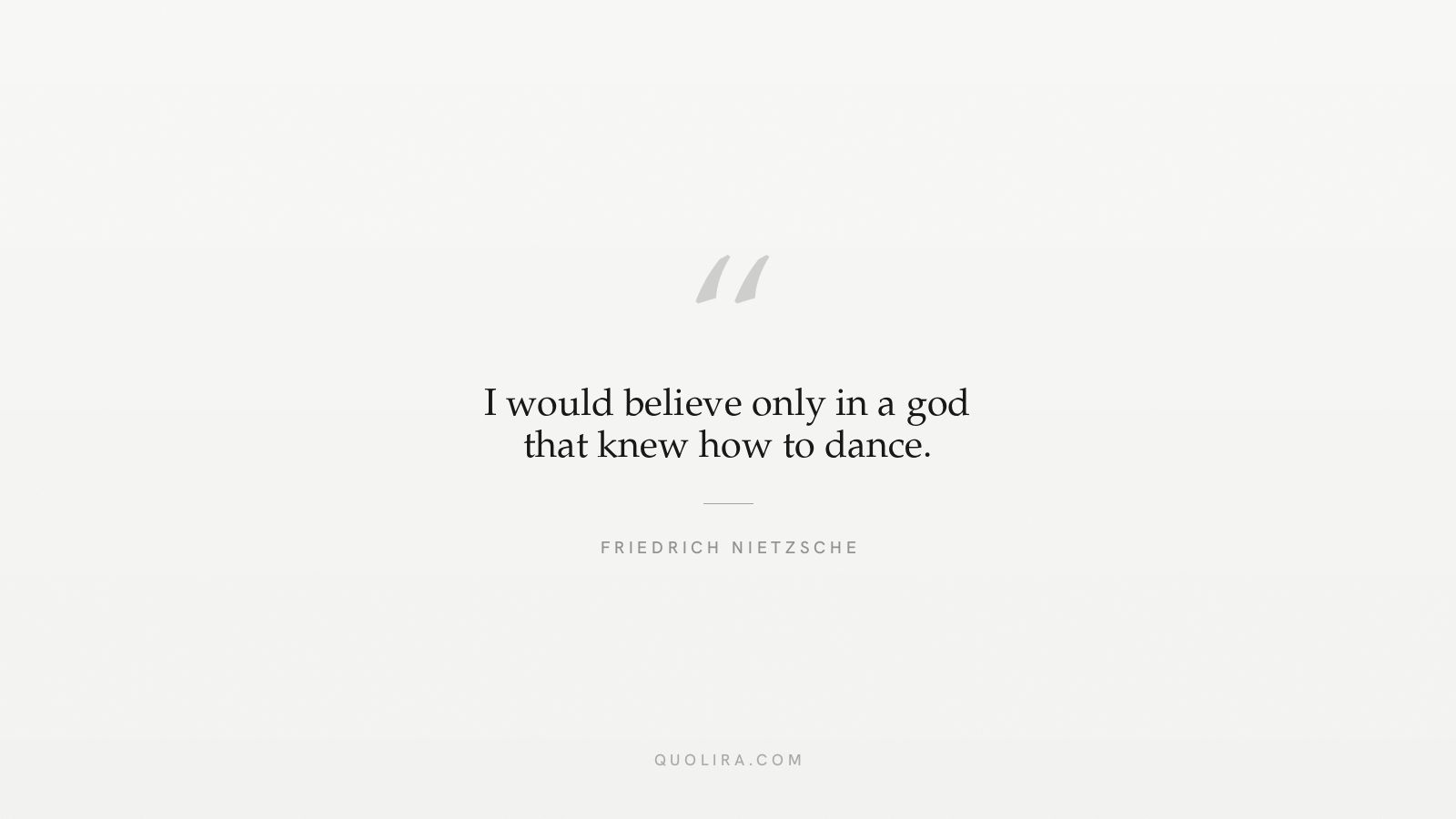
“I would believe only in a god that knew how to dance.”
Friedrich Nietzsche · Thus Spoke Zarathustra, 1883
“Only thoughts reached by walking have value.”
Friedrich Nietzsche · Twilight of the Idols, 1889