“The control of a large force is the same principle as the control of a few men: it is merely a question of dividing up their numbers.”
Sun Tzu · The Art of War, V. Energy
 quolira
.com
Sun Tzu said it, in The Art of War, VII. Maneuvering.
In Chapter VII, Sun Tzu sets a limit on clever movement: it pays with trained troops and goes badly with a mob. Before you add another moving part to a plan, ask whether the people carrying it can execute.
From the collection: 21 Sun Tzu Quotes from The Art of War on Strategy, Terrain, and Spies · More Sun Tzu quotes
The quote means that moving troops in a coordinated way gives an army real advantage, while a crowd without training or order is a serious danger to its own side. Maneuver is valuable only when the force can respond together to signals and changing conditions. Numbers alone do not help a disorganized multitude, which may become a liability in the very moment it is needed most.
This line appears in the seventh chapter of The Art of War, titled "Maneuvering" in Lionel Giles's English translation. That chapter examines the difficulties of moving an army across ground while keeping it under control, and it argues that the commander must turn a hazardous undertaking into an advantage. The contrast between a disciplined force and an undisciplined one is a central theme, reflecting the broader view that organization and training matter more than size.
Sun Tzu is the traditional name attached to The Art of War, a Chinese work on military strategy. Little reliable biography exists for this figure, and scholars continue to disagree about whether one author produced the whole text or whether it developed through several contributions. Most dating places the composition in the Spring and Autumn period, although the precise date is not settled. Because the treatise has been studied for centuries in many fields, its brief observations on discipline, timing, and terrain are widely quoted today.
“The control of a large force is the same principle as the control of a few men: it is merely a question of dividing up their numbers.”
Sun Tzu · The Art of War, V. Energy
“If we wish to fight, the enemy can be forced to an engagement even though he be sheltered behind a high rampart and a deep ditch.”
Sun Tzu · The Art of War, VI. Weak Points And Strong
“You may advance and be absolutely irresistible, if you make for the enemy's weak points; you may retire and be safe from pursuit if your movements are more rapid than those of the enemy.”
Sun Tzu · The Art of War, VI. Weak Points And Strong
“O divine art of subtlety and secrecy! Through you we learn to be invisible, through you inaudible;”
Sun Tzu · The Art of War, VI. Weak Points And Strong
“Hence that general is skillful in attack whose opponent does not know what to defend; and he is skillful in defense whose opponent does not know what to attack.”
Sun Tzu · The Art of War, VI. Weak Points And Strong
“What is done out of love always takes place beyond good and evil.”
Friedrich Nietzsche · Beyond Good and Evil, 1886
“One must have a good memory to be able to keep a promise.”
Friedrich Nietzsche · On the Genealogy of Morality, 1887
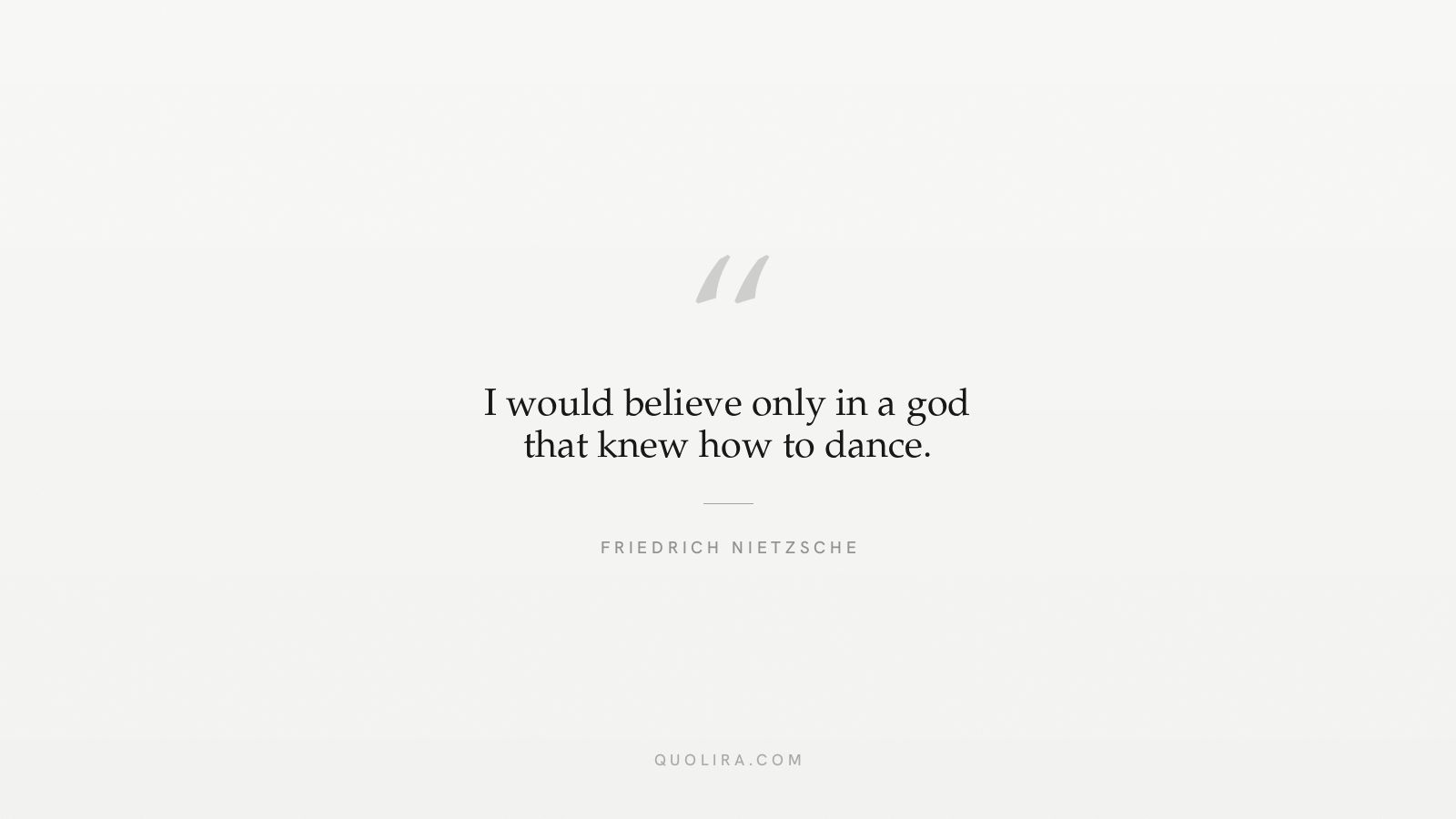
“I would believe only in a god that knew how to dance.”
Friedrich Nietzsche · Thus Spoke Zarathustra, 1883
“Only thoughts reached by walking have value.”
Friedrich Nietzsche · Twilight of the Idols, 1889
“I am not a man, I am dynamite.”
Friedrich Nietzsche · Ecce Homo, written 1888, published 1908
“I beseech you, my brothers, remain faithful to the earth.”
Friedrich Nietzsche · Thus Spoke Zarathustra, 1883
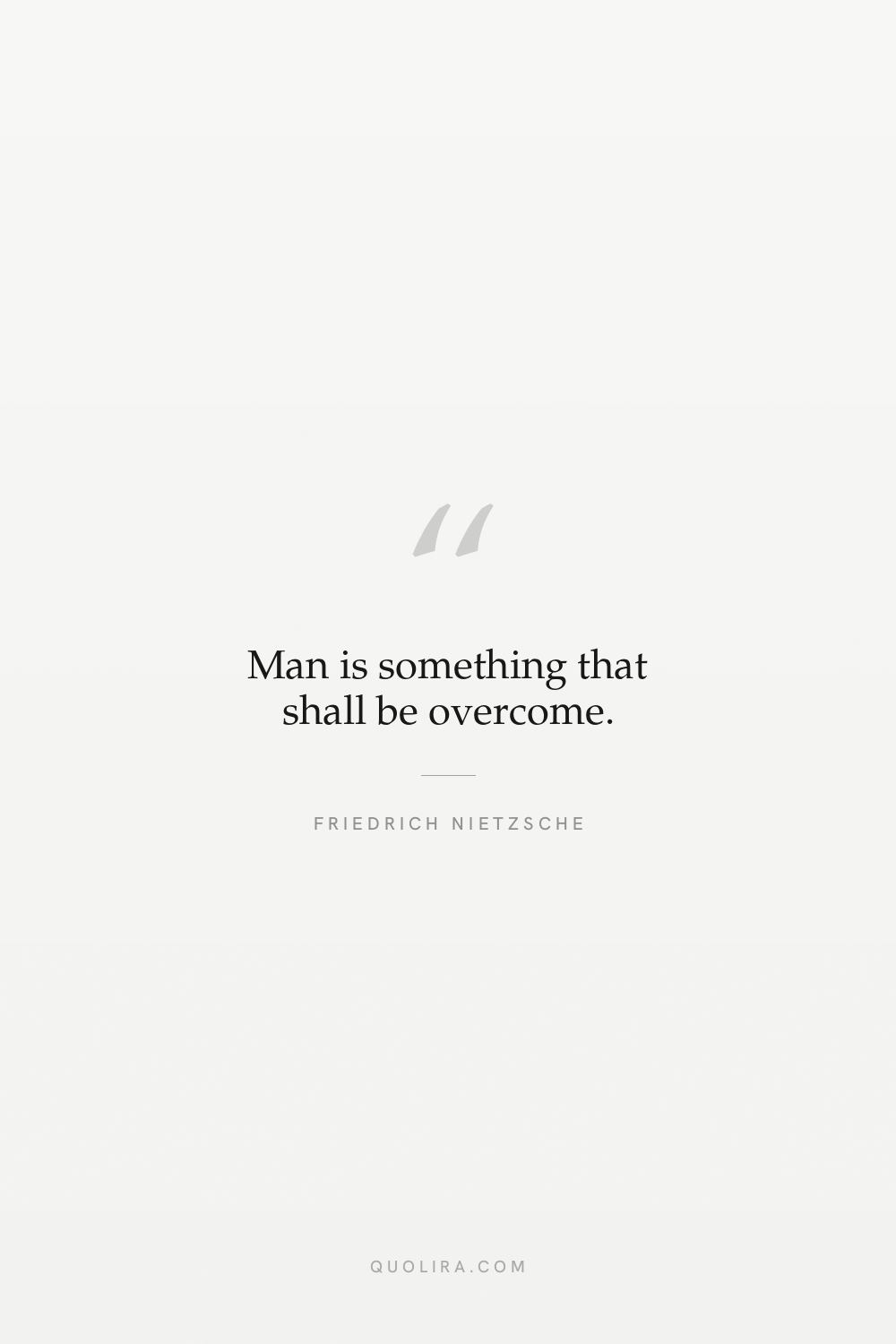
“Man is something that shall be overcome.”
Friedrich Nietzsche · Thus Spoke Zarathustra, 1883