“Only thoughts reached by walking have value.”
Friedrich Nietzsche · Twilight of the Idols, 1889
 quolira
.com
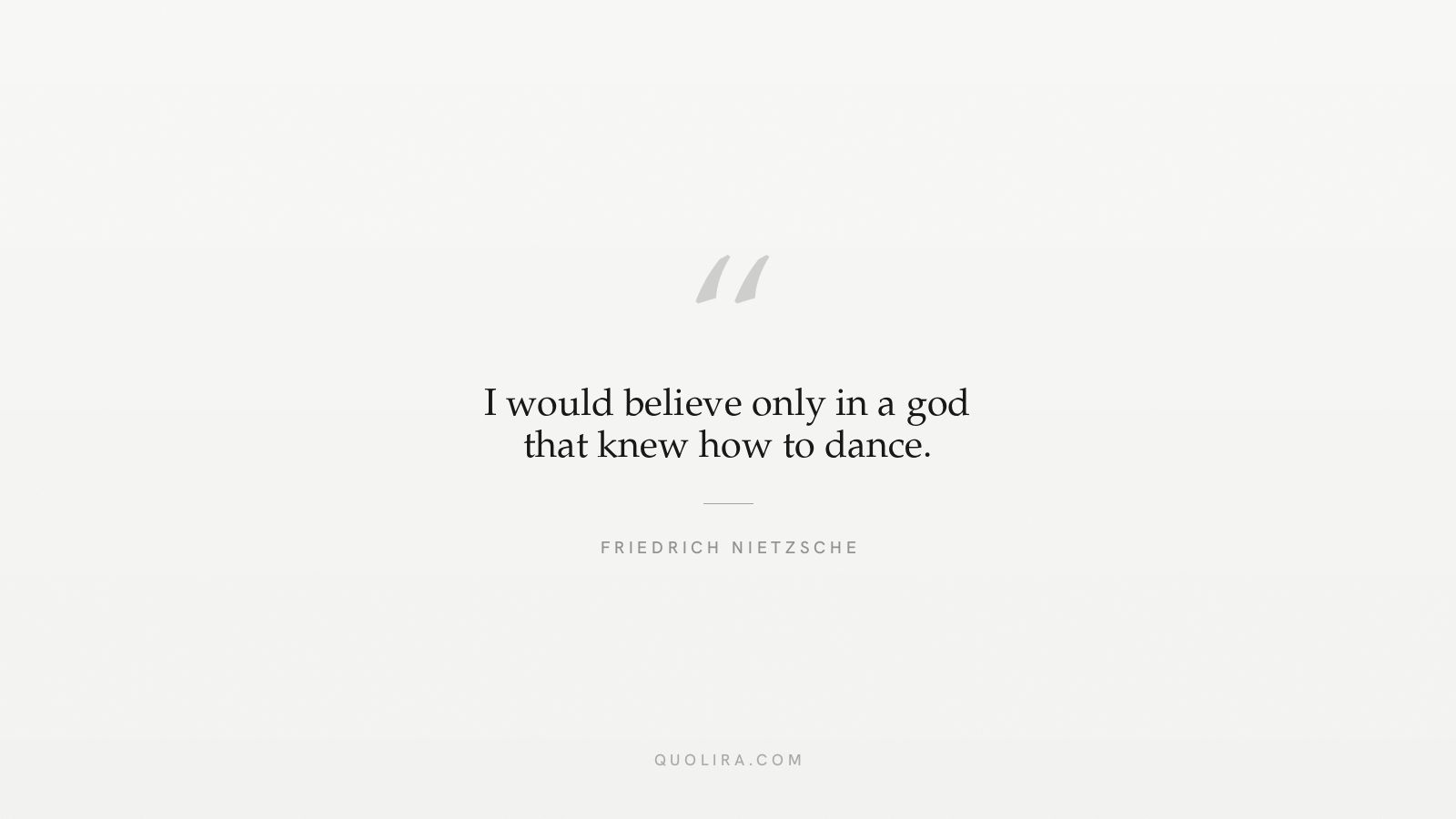
Friedrich Nietzsche said it, in Thus Spoke Zarathustra, 1883.
Zarathustra mocks a solemn, joyless picture of God and asks for something lighter. It's a playful jab at religion and at anyone who takes themselves too seriously. Try it on your own seriousness the next time you feel stuck.
From the collection: 22 Friedrich Nietzsche Quotes on Suffering, Truth, and Becoming Who You Are · More Friedrich Nietzsche quotes
This line means that the only divine figure worth believing in would be one that embraces joy, lightness, and movement instead of solemn austerity. Nietzsche contrasts dancing with the grim seriousness he saw in many religious and moral traditions. A god who dances would affirm life rather than condemn it, and would invite people to celebrate their existence.
The sentence comes from Thus Spoke Zarathustra, published in 1883, a work written in the style of a prophetic teacher who descends from his mountain solitude to address ordinary people. Dance recurs throughout the book as a sign of creative energy and affirmation. Nietzsche uses the image to challenge the idea that holiness must be sober, pained, or joyless. The remark works as provocation as much as theology, pressing readers to reconsider what they expect from belief.
Friedrich Nietzsche (1844 to 1900) was a German philosopher, philologist, and critic of Christianity, traditional morality, and the culture of his time. He trained as a classical scholar before devoting himself to philosophy, and his writing often takes the form of aphorisms, parables, and poetic prose. Beyond Thus Spoke Zarathustra, his best-known works include Beyond Good and Evil and On the Genealogy of Morality. Many readers continue to value him for his bold questioning of received values and his insistence on affirming life.
“Only thoughts reached by walking have value.”
Friedrich Nietzsche · Twilight of the Idols, 1889
“I am not a man, I am dynamite.”
Friedrich Nietzsche · Ecce Homo, written 1888, published 1908
“I beseech you, my brothers, remain faithful to the earth.”
Friedrich Nietzsche · Thus Spoke Zarathustra, 1883
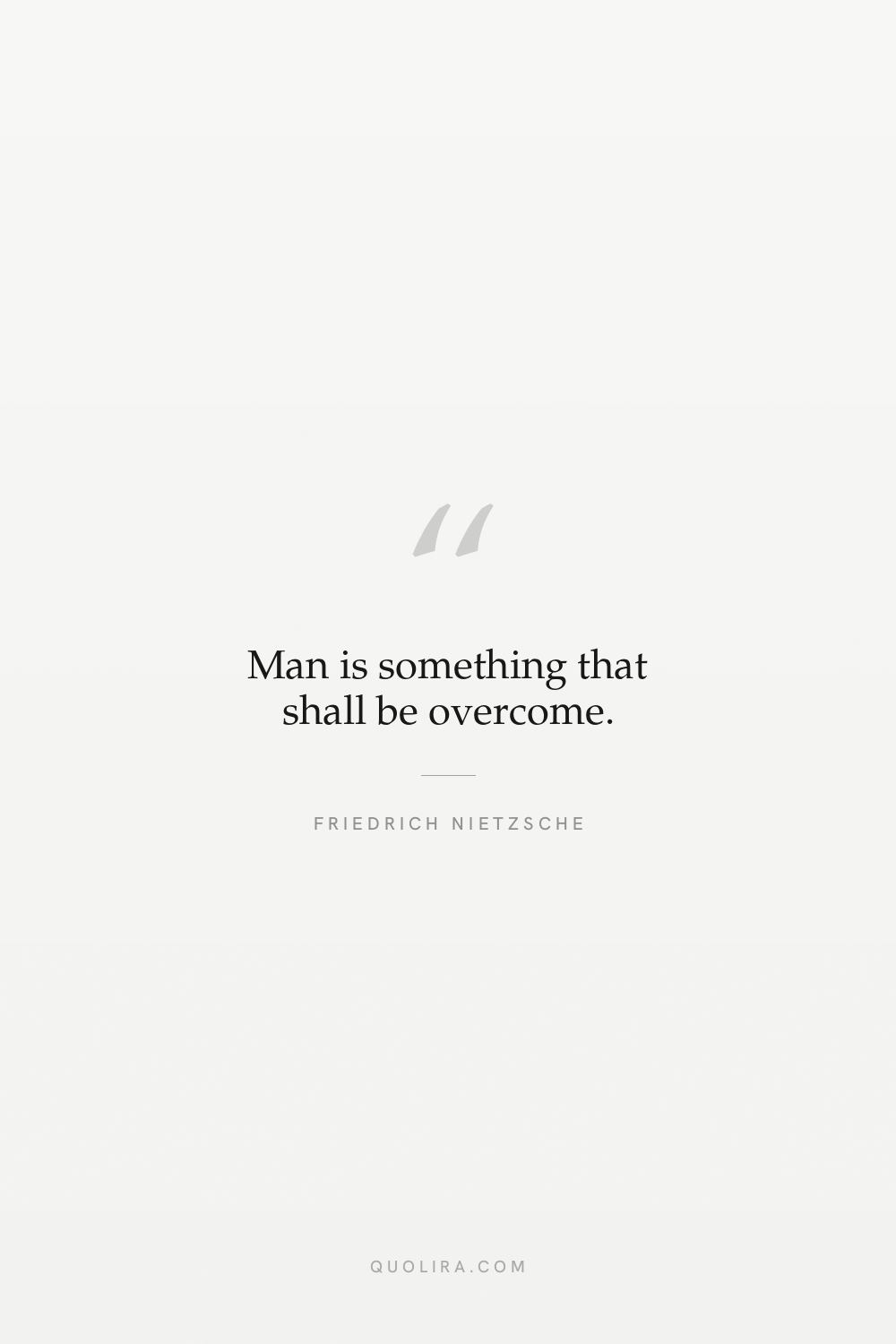
“Man is something that shall be overcome.”
Friedrich Nietzsche · Thus Spoke Zarathustra, 1883
“Become who you are.”
Friedrich Nietzsche · The Gay Science, 1882
“Madness is rare in individuals, but in groups, parties, nations and ages it is the rule.”
Friedrich Nietzsche · Beyond Good and Evil, 1886
“We have art in order not to die of the truth.”
Friedrich Nietzsche · Notebook fragment, 1888, published posthumously in The Will to Power
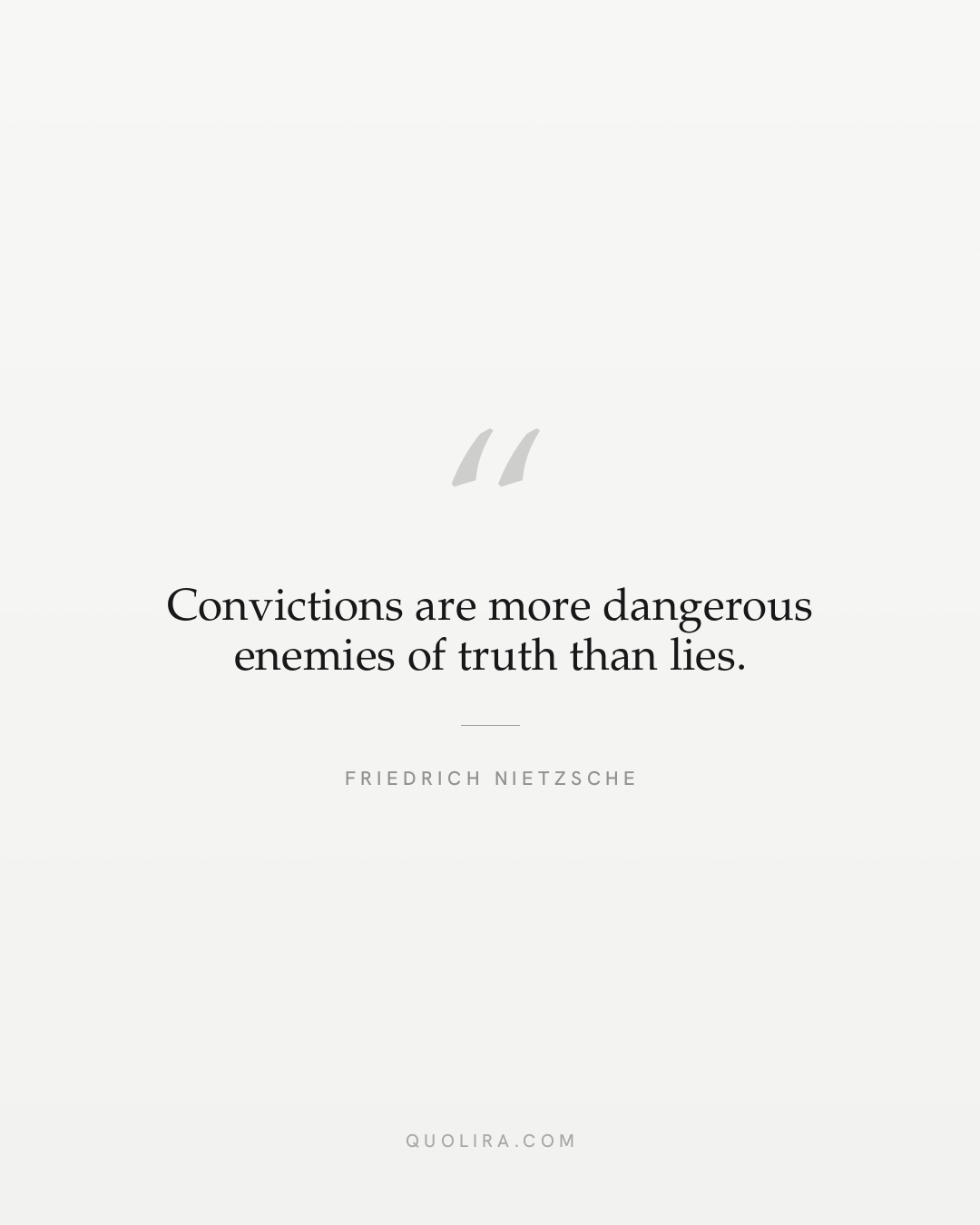
“Convictions are more dangerous enemies of truth than lies.”
Friedrich Nietzsche · Human, All Too Human, 1878
“Truths are illusions which we have forgotten are illusions.”
Friedrich Nietzsche · On Truth and Lies in a Nonmoral Sense, written 1873, published 1896
“There are no facts, only interpretations.”
Friedrich Nietzsche · Notebook fragment, 1886 to 1887, published posthumously
“I love those who do not know how to live except by going under, for they are those who cross over.”
Friedrich Nietzsche · Thus Spoke Zarathustra, 1883
“One must still have chaos in oneself to be able to give birth to a dancing star.”
Friedrich Nietzsche · Thus Spoke Zarathustra, 1883