“What is done out of love always takes place beyond good and evil.”
Friedrich Nietzsche · Beyond Good and Evil, 1886
 quolira
.com
Sun Tzu said it, in The Art of War, VI. Weak Points And Strong.
Sun Tzu treats the enemy's blind spots as the real target, and this is the cleanest version of his whole argument. The lesson carries well beyond battle: learn what your rival guards, then move somewhere else.
From the collection: 21 Sun Tzu Quotes from The Art of War on Strategy, Terrain, and Spies · More Sun Tzu quotes
The quote means that a commander succeeds in attack when the enemy cannot tell where the blow will fall, and succeeds in defense when the enemy cannot tell what to strike. The idea turns on uncertainty. A force that hides its intentions keeps its opponent guessing, and every guess is a chance for that opponent to misplace troops or resources. The reverse also holds, so a defender who keeps the attacker unsure of what is valuable and what is exposed makes every assault harder to plan.
The line comes from the sixth chapter of The Art of War, titled in Lionel Giles's widely read English translation as "Weak Points and Strong." That chapter addresses where to press and where to hold back, and it argues that a skilled commander shapes the situation so the enemy reveals its weaknesses while its own remain concealed. The passage sits among related remarks about feigning, secrecy, and moving where the opponent does not expect.
Sun Tzu is the traditional name given to the author of The Art of War, a Chinese military treatise. Little is documented about the man himself, and scholars debate whether one individual wrote the whole text or whether it developed over time through several hands. Most dates given for the work place it in the Spring and Autumn period, though the exact dating remains uncertain. The text has been read for centuries in military, political, and business settings, which is why its short aphorisms are quoted so widely.
“What is done out of love always takes place beyond good and evil.”
Friedrich Nietzsche · Beyond Good and Evil, 1886
“One must have a good memory to be able to keep a promise.”
Friedrich Nietzsche · On the Genealogy of Morality, 1887
“I would believe only in a god that knew how to dance.”
Friedrich Nietzsche · Thus Spoke Zarathustra, 1883
“Only thoughts reached by walking have value.”
Friedrich Nietzsche · Twilight of the Idols, 1889
“I am not a man, I am dynamite.”
Friedrich Nietzsche · Ecce Homo, written 1888, published 1908
“I beseech you, my brothers, remain faithful to the earth.”
Friedrich Nietzsche · Thus Spoke Zarathustra, 1883
“Man is something that shall be overcome.”
Friedrich Nietzsche · Thus Spoke Zarathustra, 1883
“Become who you are.”
Friedrich Nietzsche · The Gay Science, 1882
“Madness is rare in individuals, but in groups, parties, nations and ages it is the rule.”
Friedrich Nietzsche · Beyond Good and Evil, 1886
“We have art in order not to die of the truth.”
Friedrich Nietzsche · Notebook fragment, 1888, published posthumously in The Will to Power
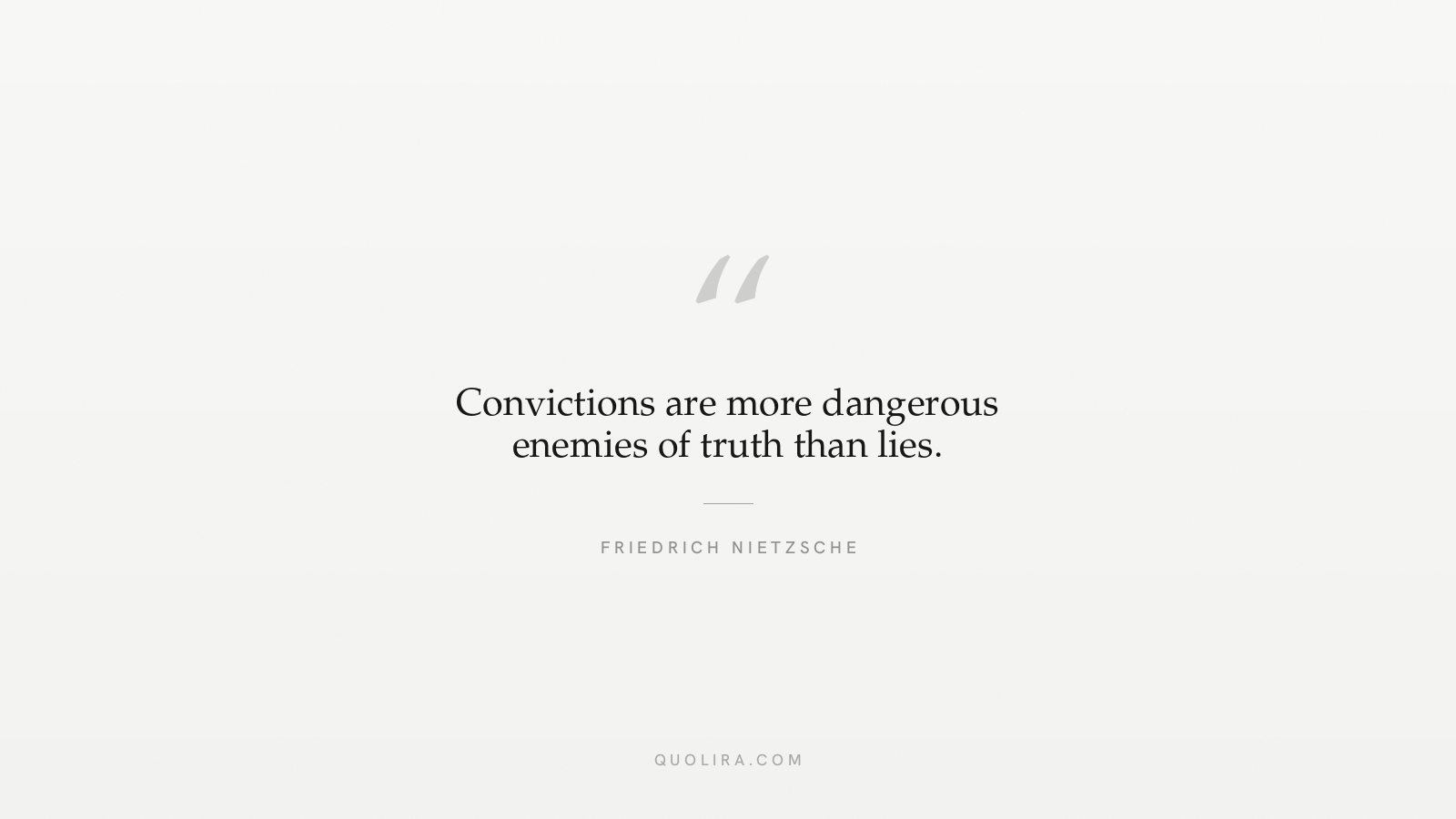
“Convictions are more dangerous enemies of truth than lies.”
Friedrich Nietzsche · Human, All Too Human, 1878
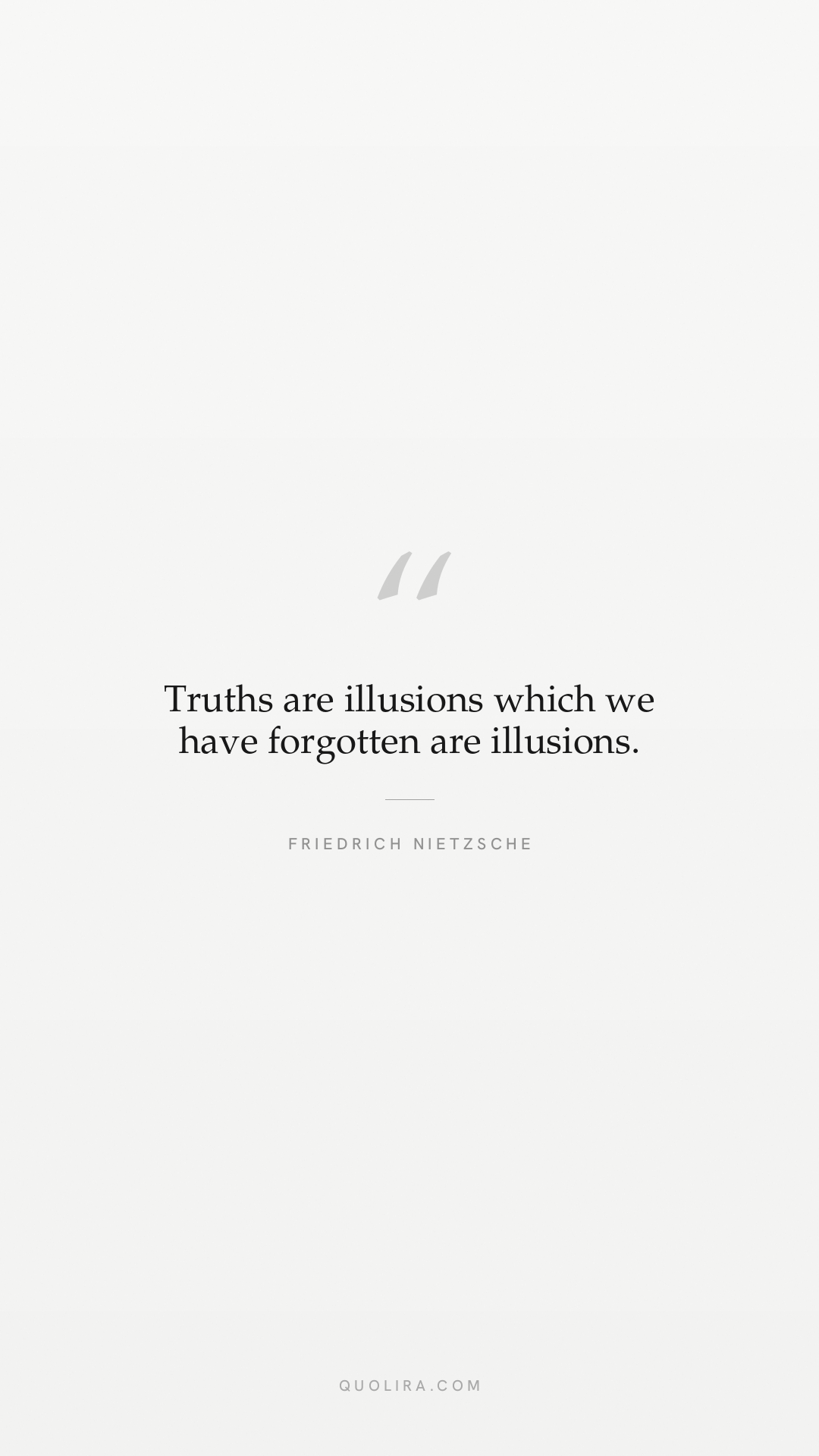
“Truths are illusions which we have forgotten are illusions.”
Friedrich Nietzsche · On Truth and Lies in a Nonmoral Sense, written 1873, published 1896