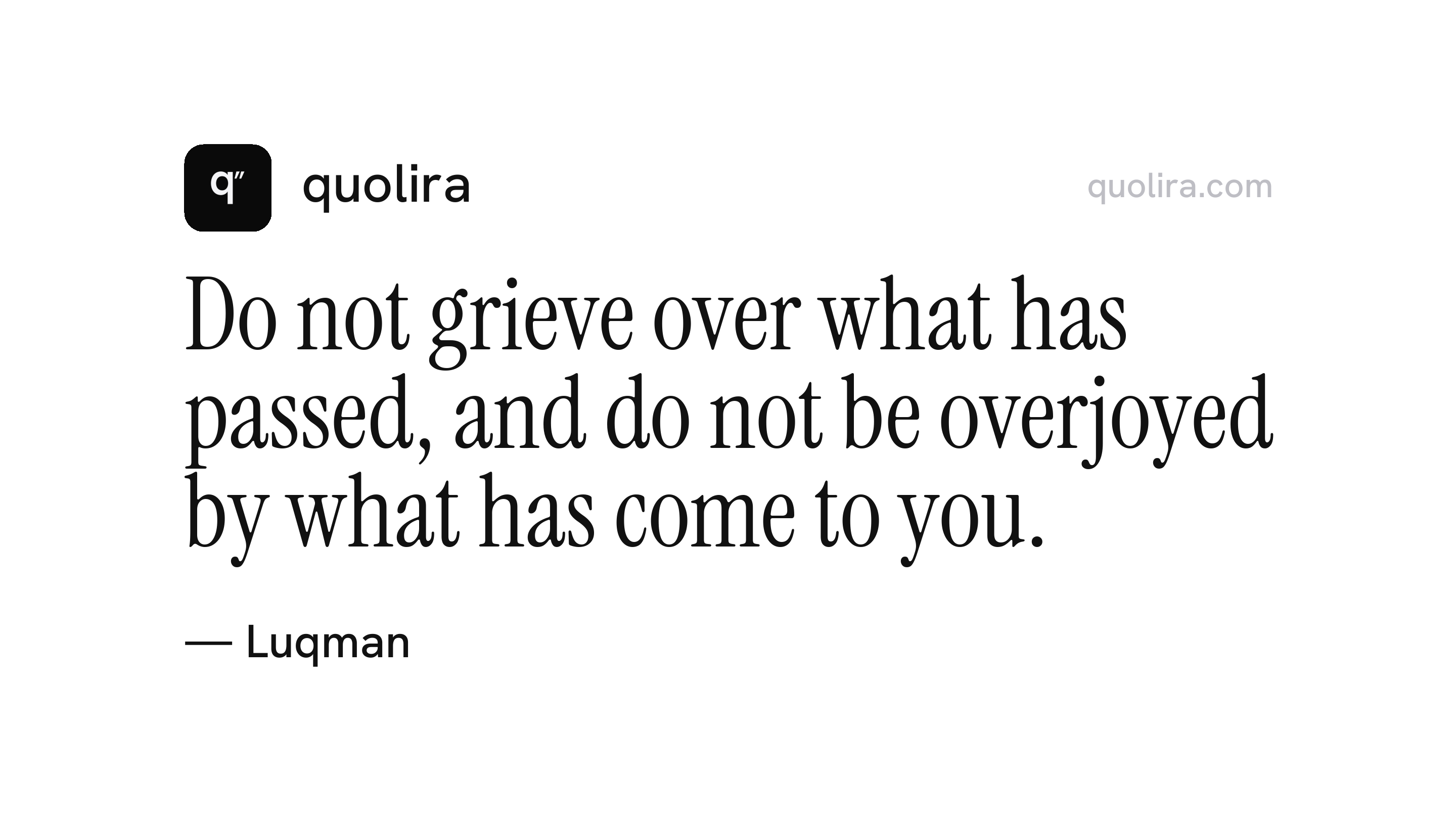
“Do not grieve over what has passed, and do not be overjoyed by what has come to you.”
Luqman · Attributed in classical Arabic wisdom literature
 quolira
.com
quolira
quolira.com
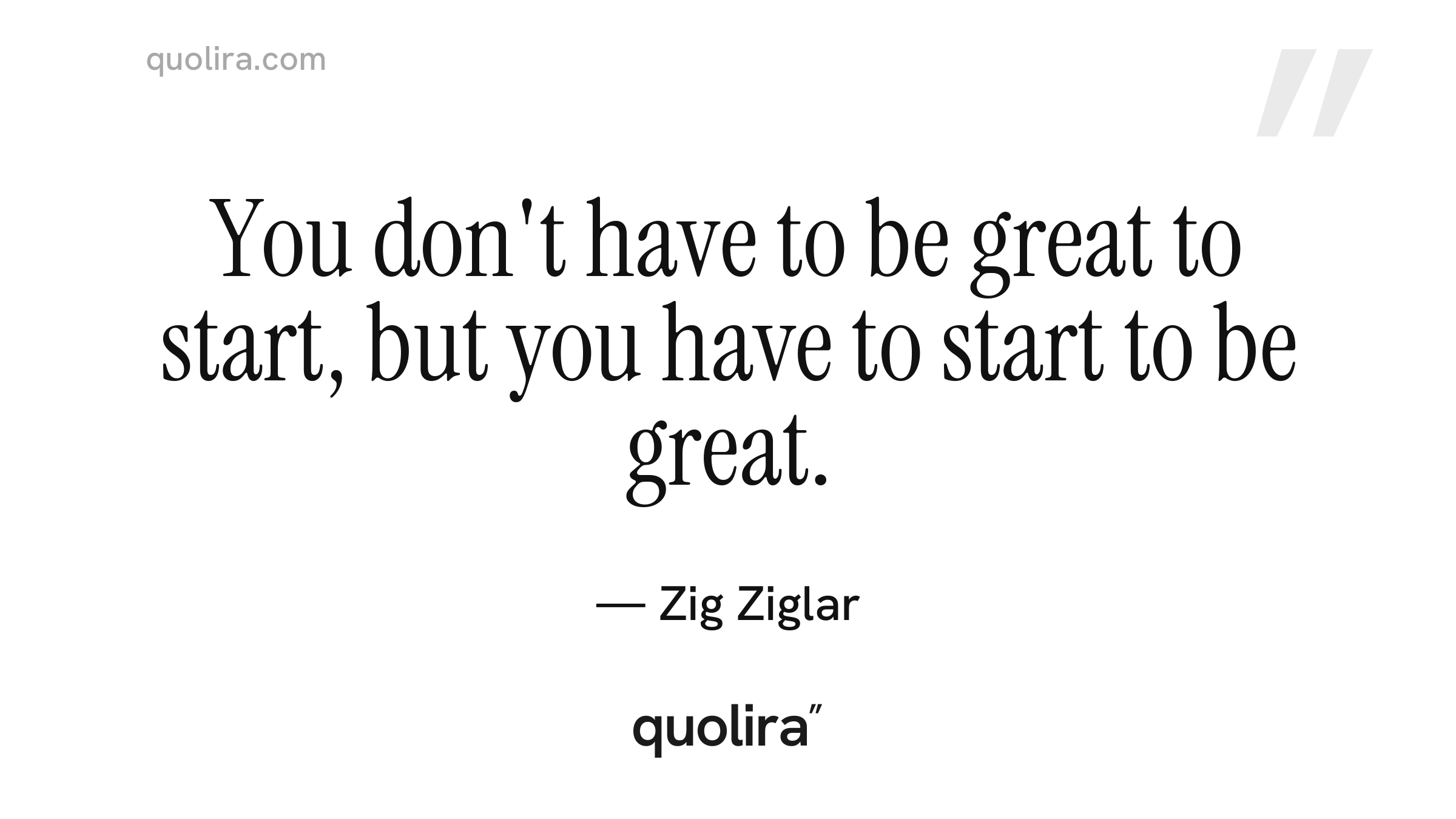
This saying addresses one of the most common obstacles people face when pursuing any meaningful goal: the paralysis that comes from believing you must already be good at something before you begin. The first half of the sentence is reassuring, acknowledging that nobody starts with mastery. The second half is the sharper point: greatness is not a precondition for starting, but starting is a precondition for greatness. In a single sentence, the saying dismantles the excuse of unreadiness and replaces it with a straightforward logic of action. You do not become capable by waiting; you become capable by doing.
This line endures because it speaks directly to a very human tendency to delay. People often postpone beginning a project, a habit, or a pursuit because they feel underprepared or unqualified. The saying reframes that hesitation not as prudence but as an obstacle to growth. Its structure, two halves that seem to contradict each other before resolving into a unified point, makes it satisfying to read and easy to remember. It works equally well as encouragement for someone facing a new challenge and as a gentle challenge to someone who has been putting something off.
This quote fits naturally at the beginning of a personal project, a difficult conversation with yourself about procrastination, or any context where the gap between aspiration and action feels discouraging. It works well as a reminder when starting a new skill, a business idea, a fitness routine, or any long-term goal where the distance to the finish line feels overwhelming. Sharing it with someone who is stuck in the planning stage can be more useful than offering advice, because it identifies the problem and the solution in the same breath without lecturing.
“Do not grieve over what has passed, and do not be overjoyed by what has come to you.”
Luqman · Attributed in classical Arabic wisdom literature
“Silence is wisdom, yet few practice it.”
Luqman · Widely attributed in classical Arabic wisdom literature
“We commanded man to be good to his parents. His mother carried him with increasing weakness, and his weaning takes 2 years. Be grateful to Me and to your parents.”
Luqman · Quran, Surah Luqman 31:14
“Be modest in your bearing and lower your voice, for the ugliest of all voices is the braying of asses.”
Luqman · Quran, Surah Luqman 31:19
“Do not turn your nose up at people, nor walk about the place arrogantly, for God does not love arrogant or boastful people.”
Luqman · Quran, Surah Luqman 31:18
“O my son, keep up the prayer, command what is right, forbid what is wrong, and bear with patience whatever befalls you. These are matters of great determination.”
Luqman · Quran, Surah Luqman 31:17
“O my son, even if a deed were the weight of a mustard seed and hidden inside a rock or anywhere in the heavens or earth, God would bring it forth. God is all-subtle, all-aware.”
Luqman · Quran, Surah Luqman 31:16
“O my son, do not associate anything with God. Associating others with Him is a tremendous wrong.”
Luqman · Quran, Surah Luqman 31:13
“Alone protects me.”
Sherlock Holmes · BBC Sherlock, Series 2, Episode 1: A Scandal in Belgravia, 2012
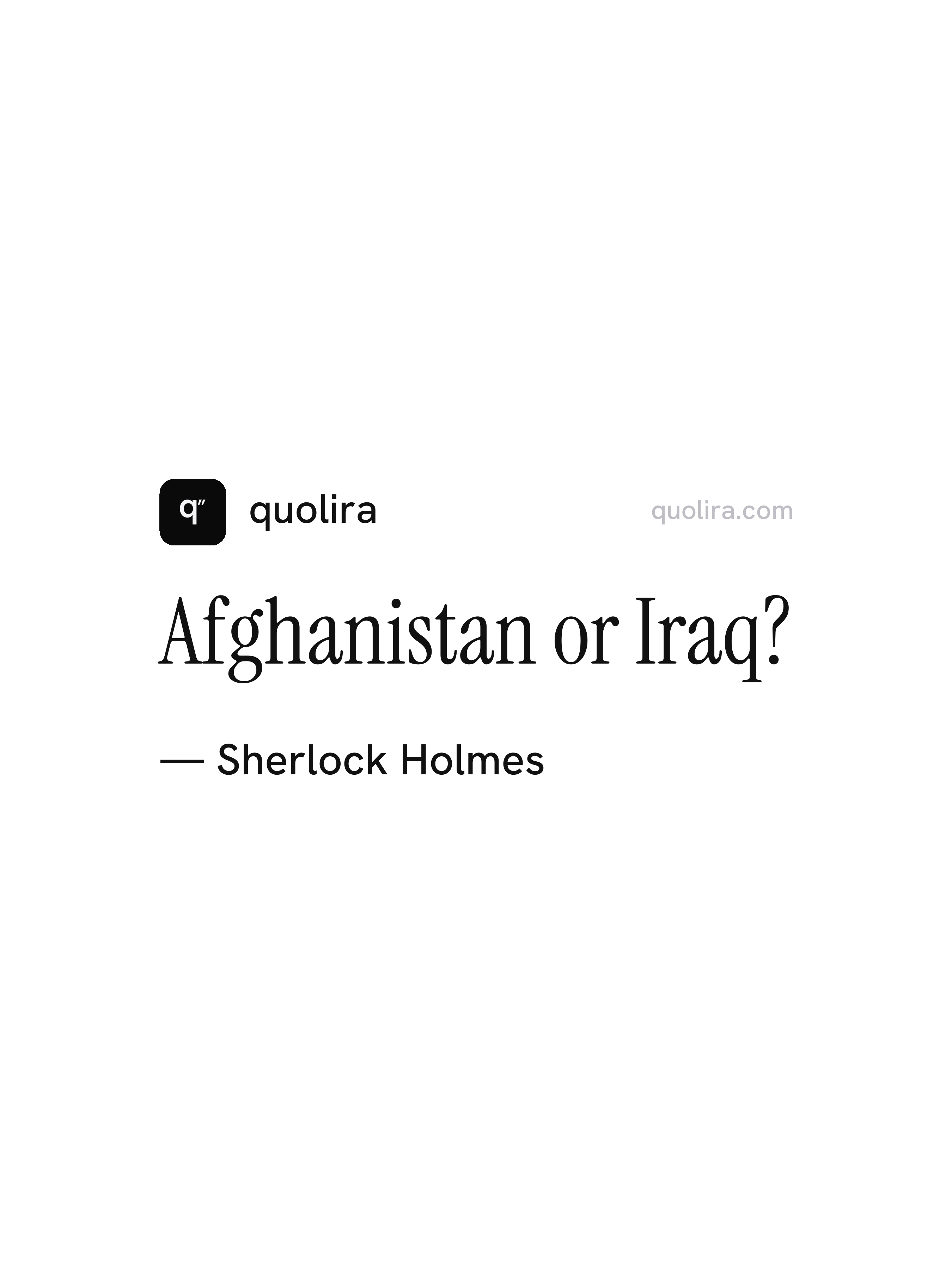
“Afghanistan or Iraq?”
Sherlock Holmes · BBC Sherlock, Series 1, Episode 1: A Study in Pink, 2010
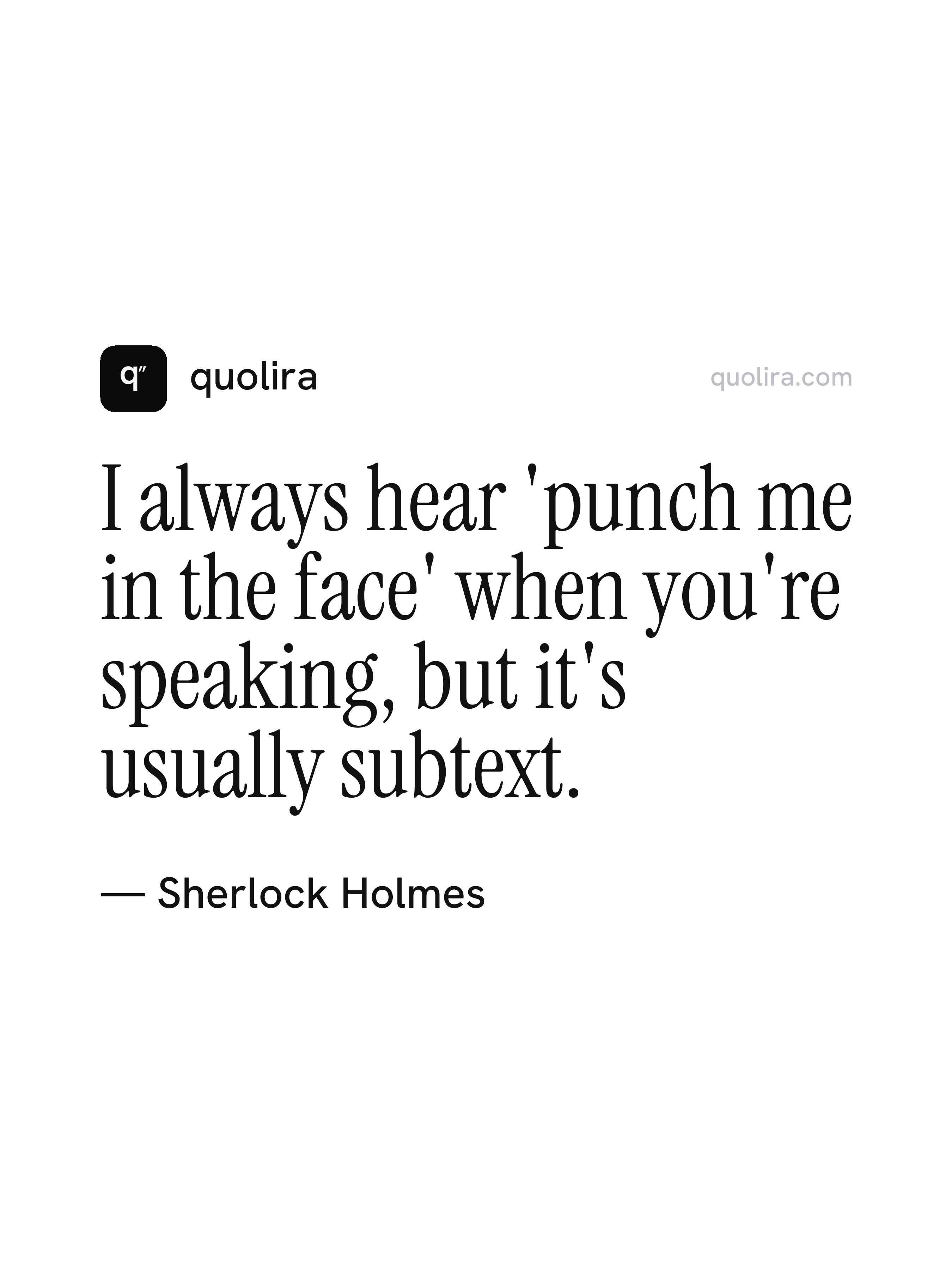
“I always hear 'punch me in the face' when you're speaking, but it's usually subtext.”
Sherlock Holmes · BBC Sherlock, Series 2, Episode 1: A Scandal in Belgravia, 2012
“You've been so alone. And you think that's the price of being extraordinary. And maybe it is. But you've been paying it so long.”
Molly Hooper · BBC Sherlock, Series 4, Episode 3: The Final Problem, 2017