“O my son, keep up the prayer, command what is right, forbid what is wrong, and bear with patience whatever befalls you. These are matters of great determination.”
Luqman · Quran, Surah Luqman 31:17
 quolira
.com
quolira
quolira.com
This verse from the Quran conveys a direct moral instruction: do not look down on others or carry yourself with a sense of superiority. The image of turning one's nose up is a vivid, physical way of describing contempt, and walking arrogantly through a place suggests a person who believes they are above those around them. The closing phrase grounds the warning in a theological reality, reminding the reader that divine favor is not extended to those who inflate their own importance at the expense of others.
These words appear in Surah Luqman, the thirty-first chapter of the Quran, presented as advice given by a wise man named Luqman to his son. The chapter frames these teachings as a father passing down essential moral guidance, making the tone intimate and earnest rather than purely doctrinal. The verse sits among a series of ethical counsels covering gratitude, humility, and proper conduct, forming a coherent moral portrait of how a person should move through the world in relation to God and to other people.
Luqman is a figure celebrated in Islamic tradition for his extraordinary wisdom. He is not a prophet in the Islamic sense but is regarded as a deeply righteous man whose insights were worthy of being recorded in sacred scripture. Classical Islamic scholars discussed his identity and background at length, though accounts vary. What remains consistent across traditions is his reputation as someone whose words carried weight precisely because they were rooted in genuine humility and reflection rather than in worldly status or power.
“O my son, keep up the prayer, command what is right, forbid what is wrong, and bear with patience whatever befalls you. These are matters of great determination.”
Luqman · Quran, Surah Luqman 31:17
“O my son, even if a deed were the weight of a mustard seed and hidden inside a rock or anywhere in the heavens or earth, God would bring it forth. God is all-subtle, all-aware.”
Luqman · Quran, Surah Luqman 31:16
“O my son, do not associate anything with God. Associating others with Him is a tremendous wrong.”
Luqman · Quran, Surah Luqman 31:13
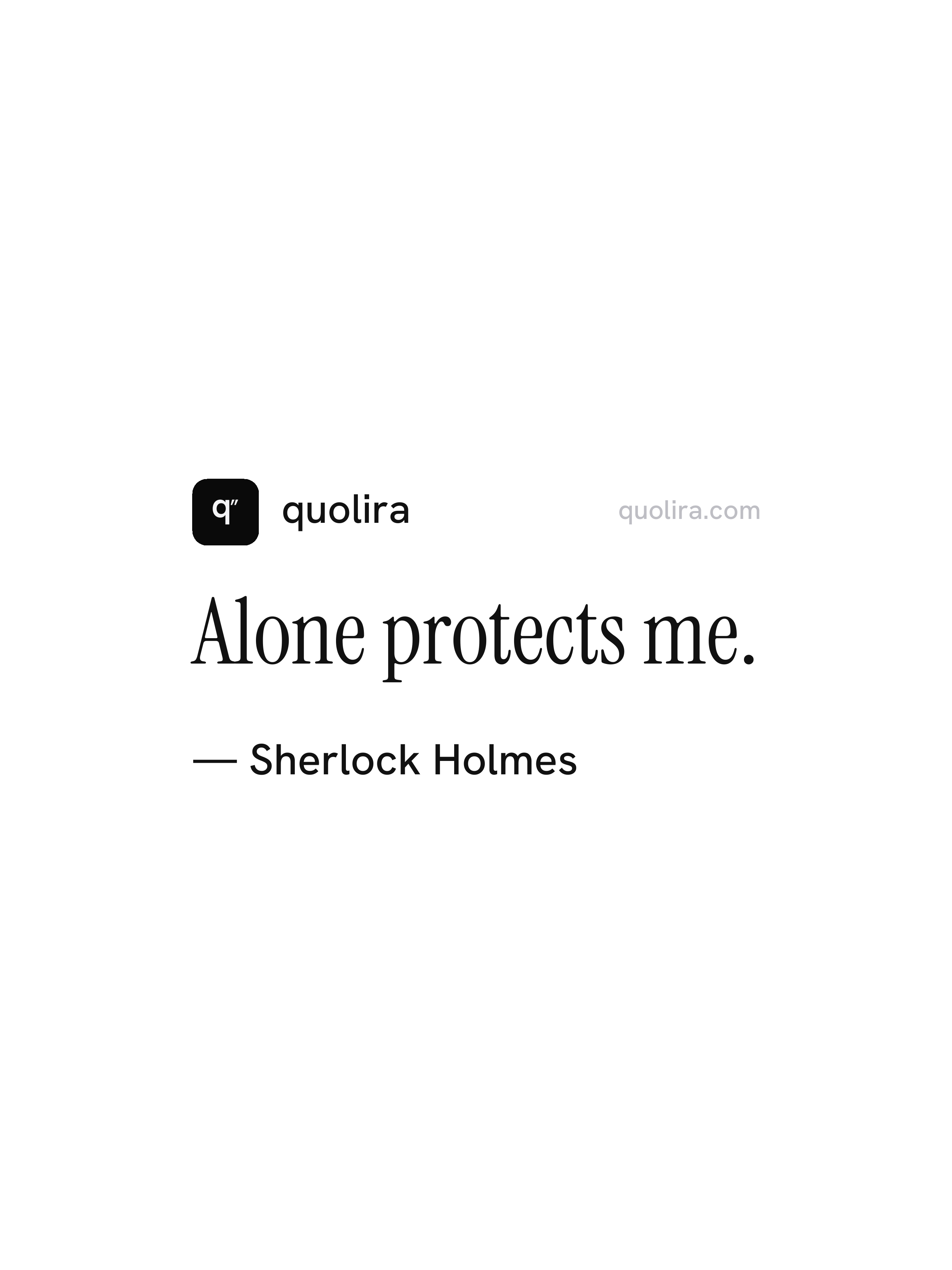
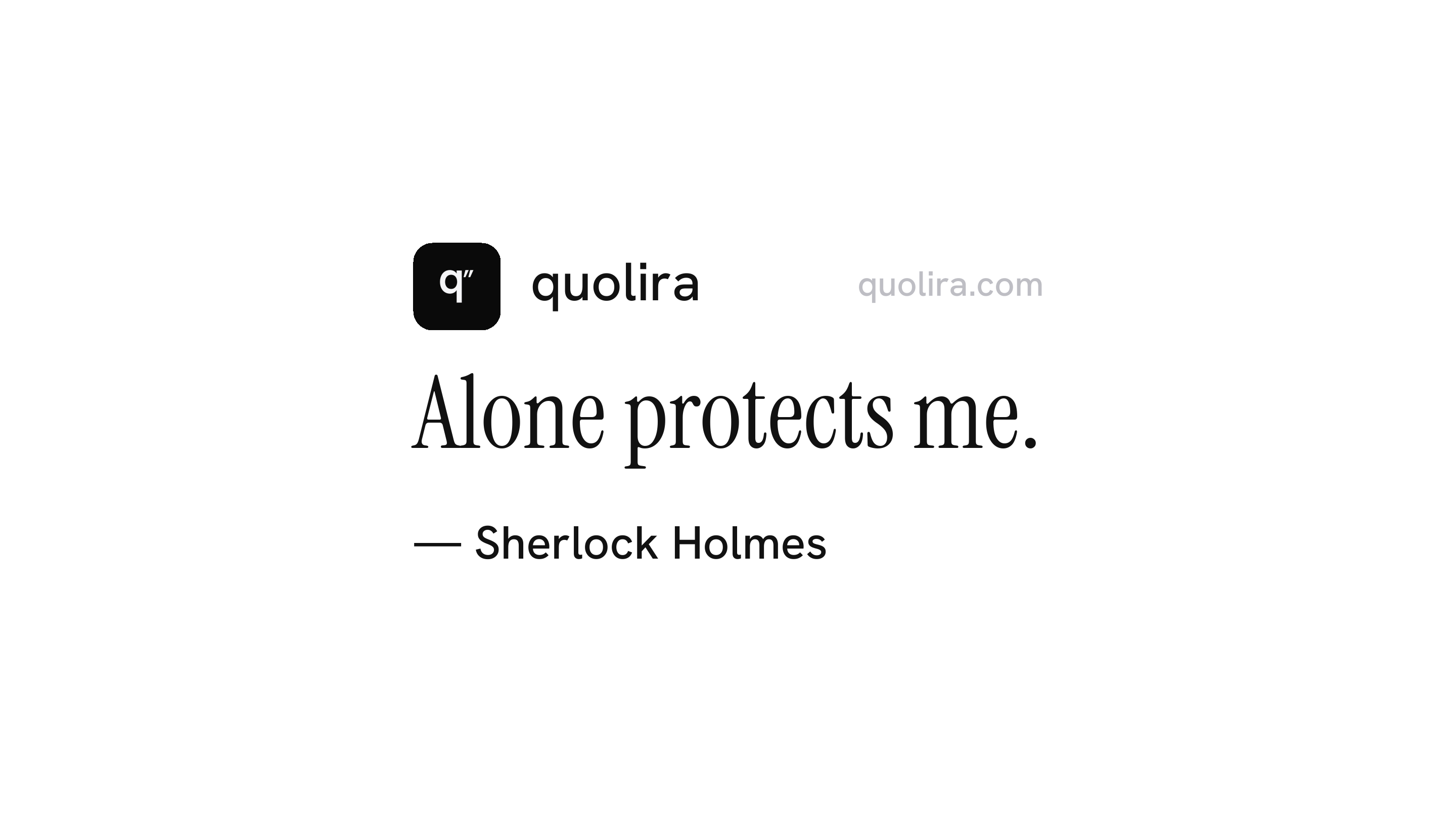
“Alone protects me.”
Sherlock Holmes · BBC Sherlock, Series 2, Episode 1: A Scandal in Belgravia, 2012
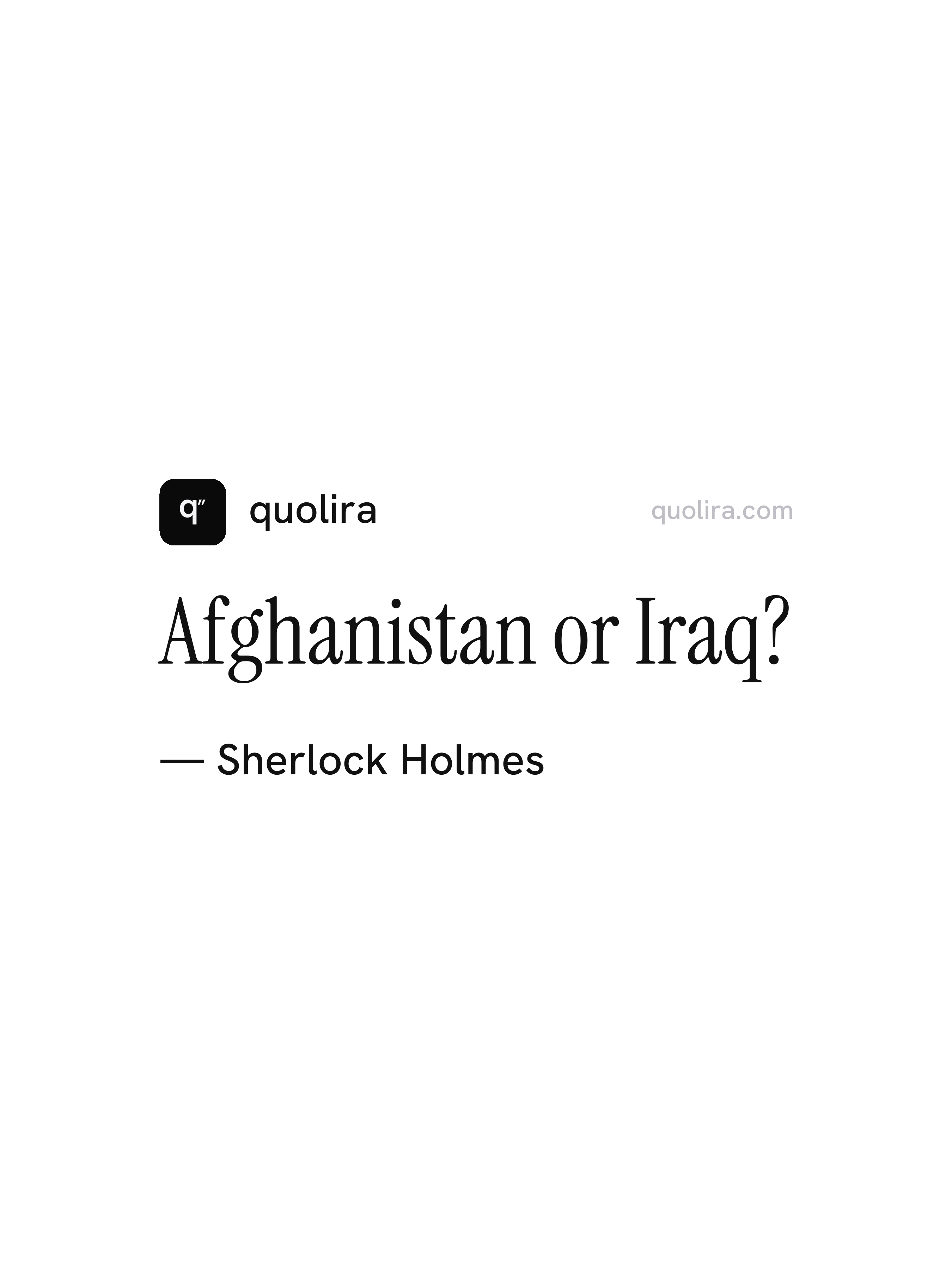
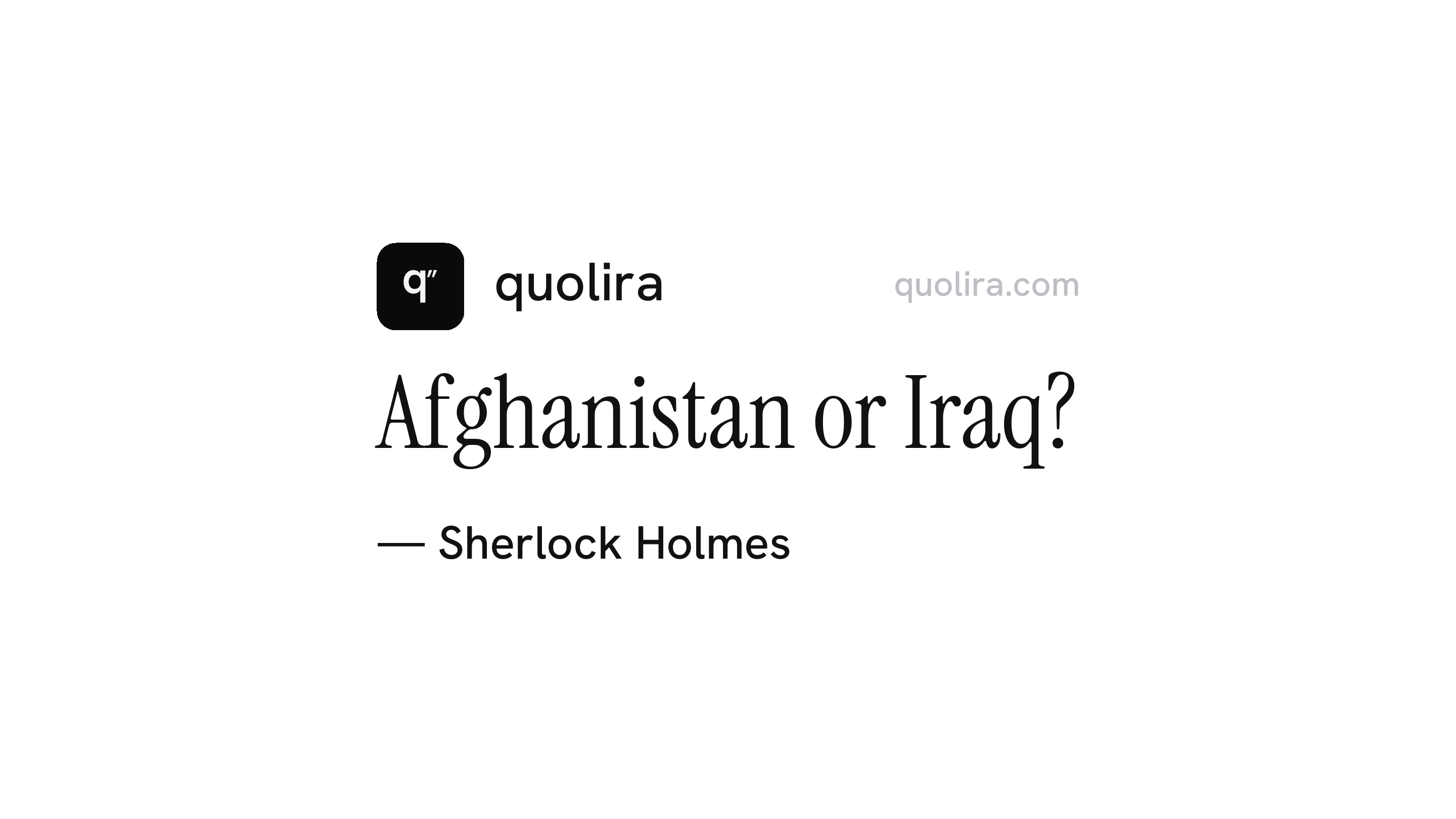
“Afghanistan or Iraq?”
Sherlock Holmes · BBC Sherlock, Series 1, Episode 1: A Study in Pink, 2010
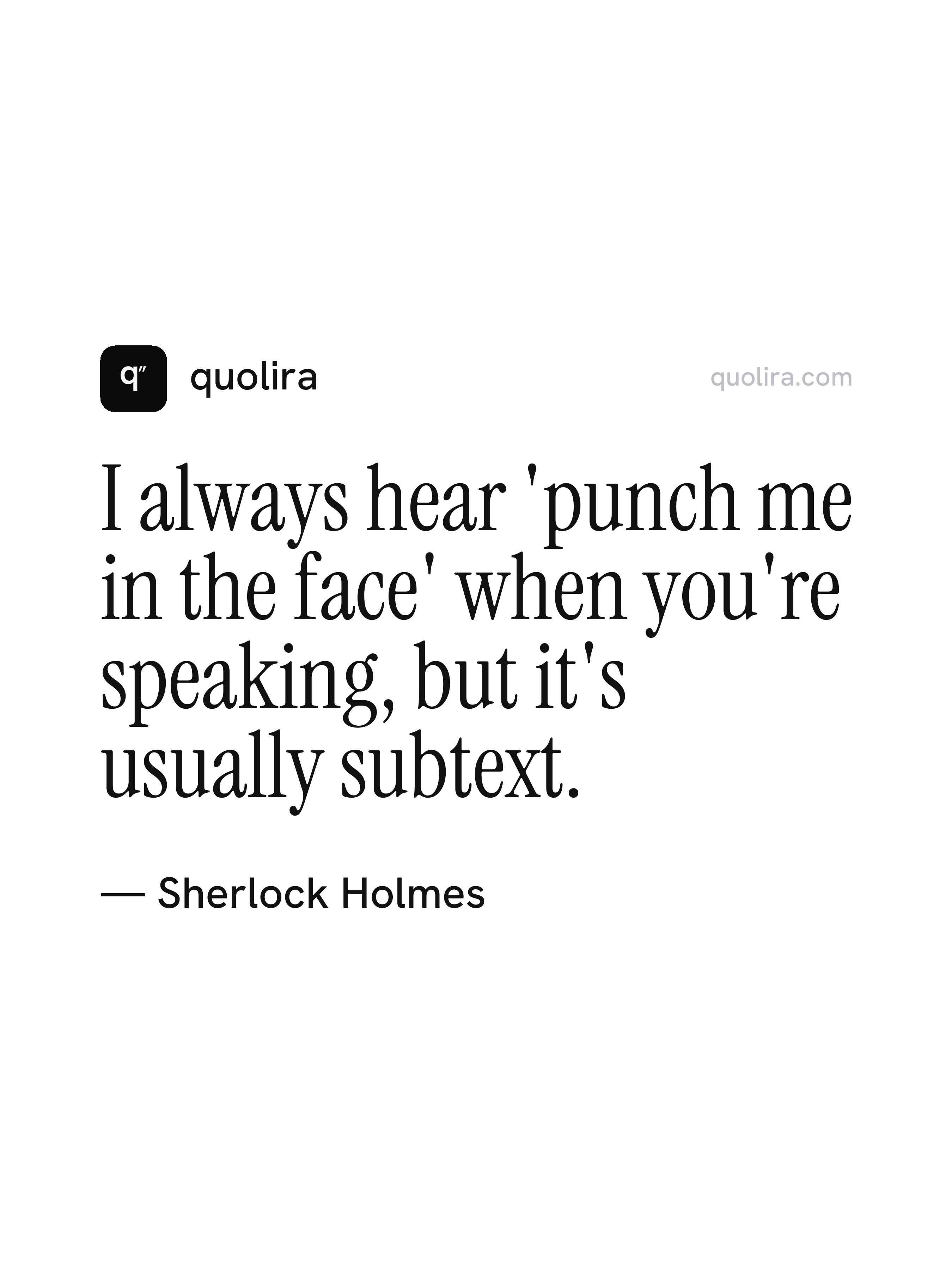
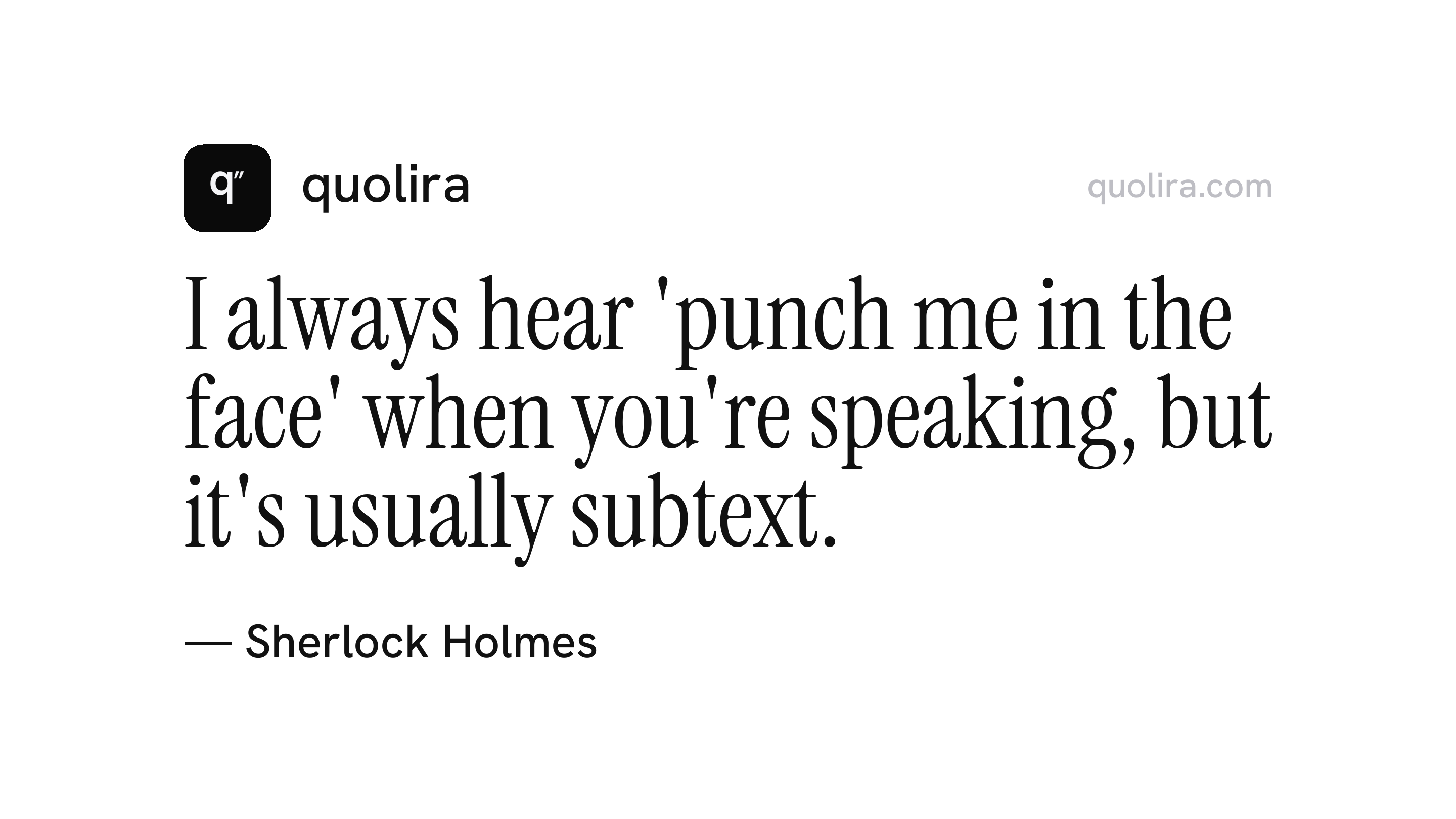
“I always hear 'punch me in the face' when you're speaking, but it's usually subtext.”
Sherlock Holmes · BBC Sherlock, Series 2, Episode 1: A Scandal in Belgravia, 2012
“You've been so alone. And you think that's the price of being extraordinary. And maybe it is. But you've been paying it so long.”
Molly Hooper · BBC Sherlock, Series 4, Episode 3: The Final Problem, 2017
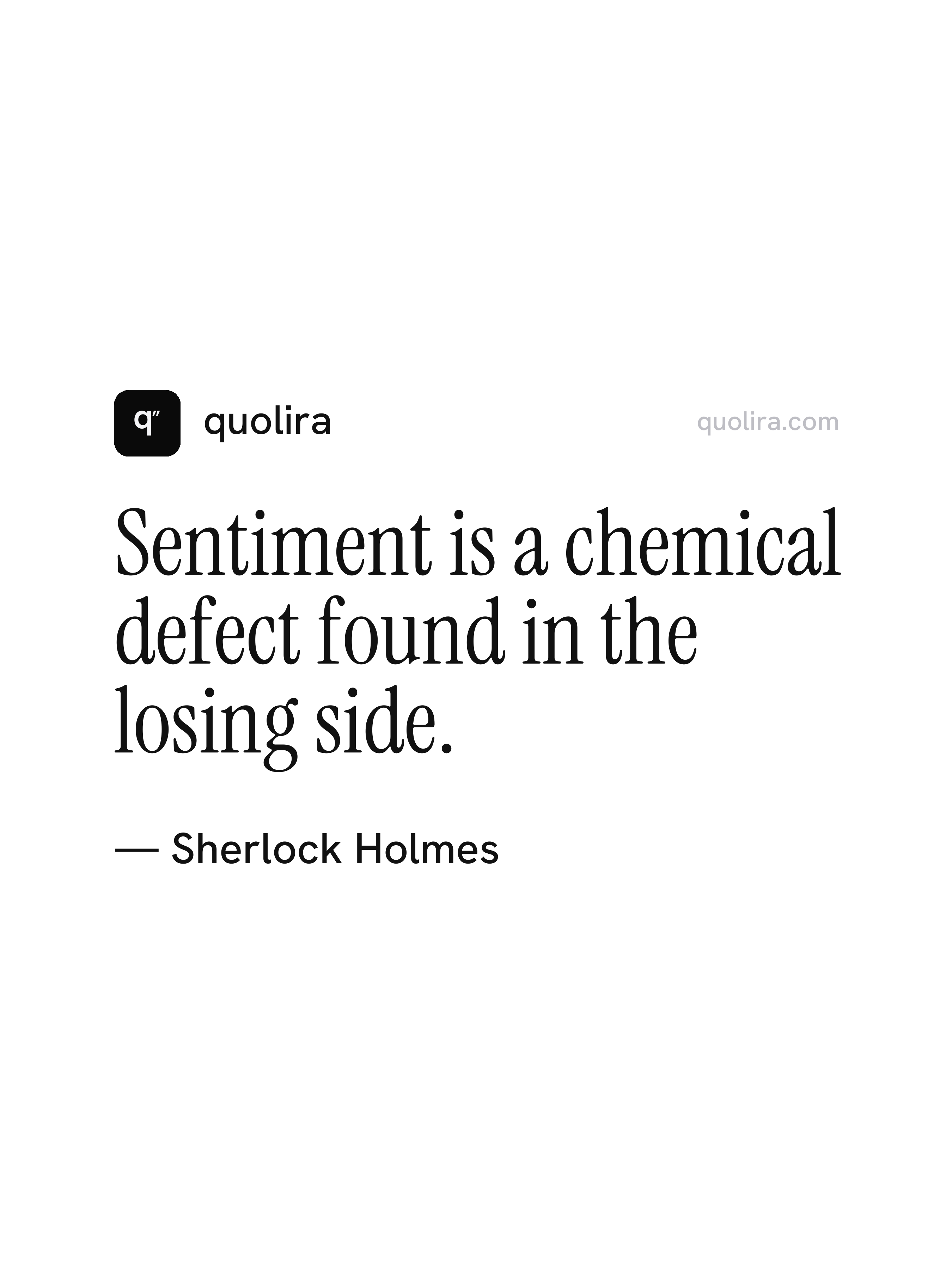
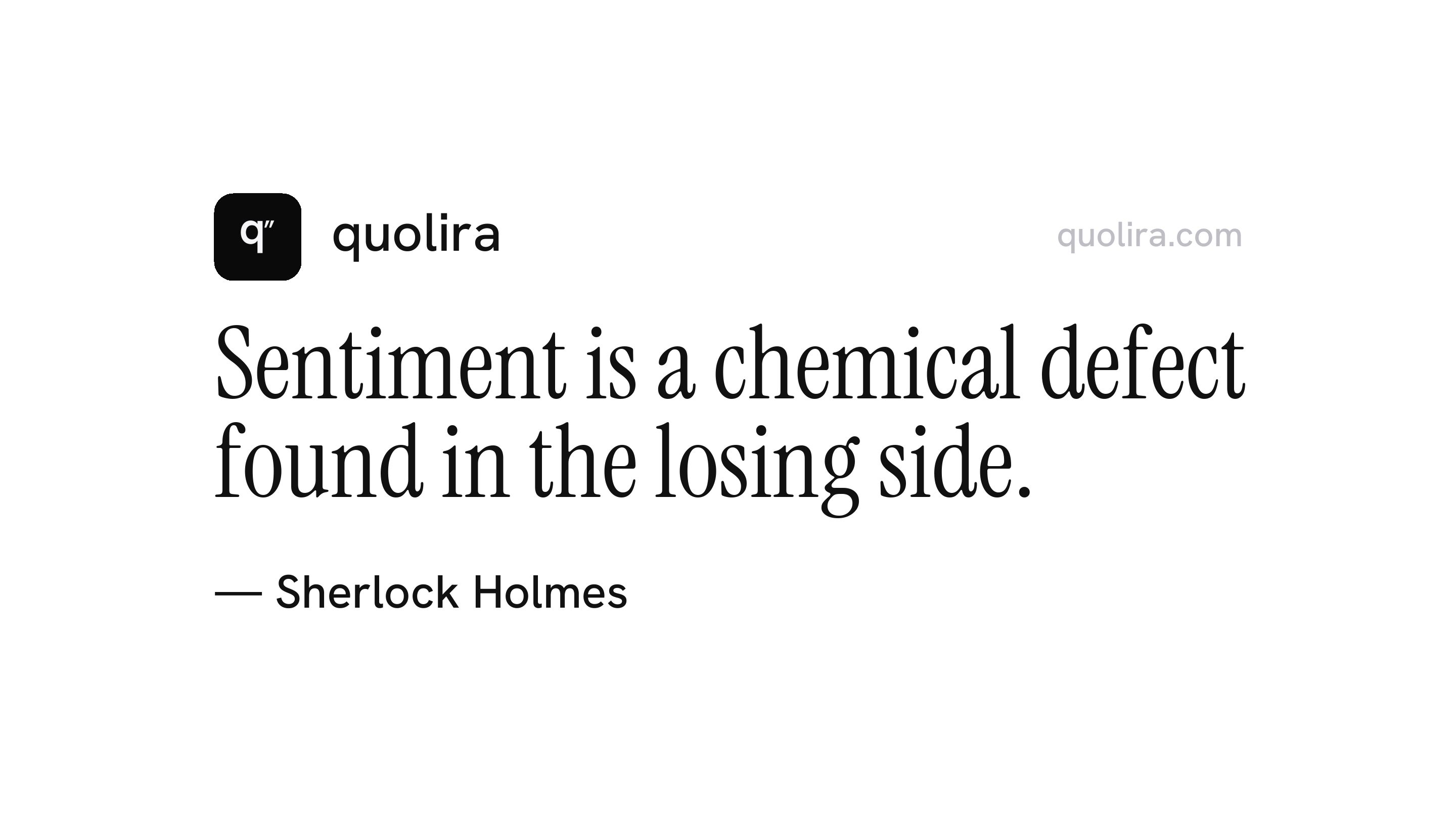
“Sentiment is a chemical defect found in the losing side.”
Sherlock Holmes · BBC Sherlock, Series 2, Episode 1: A Scandal in Belgravia, 2012
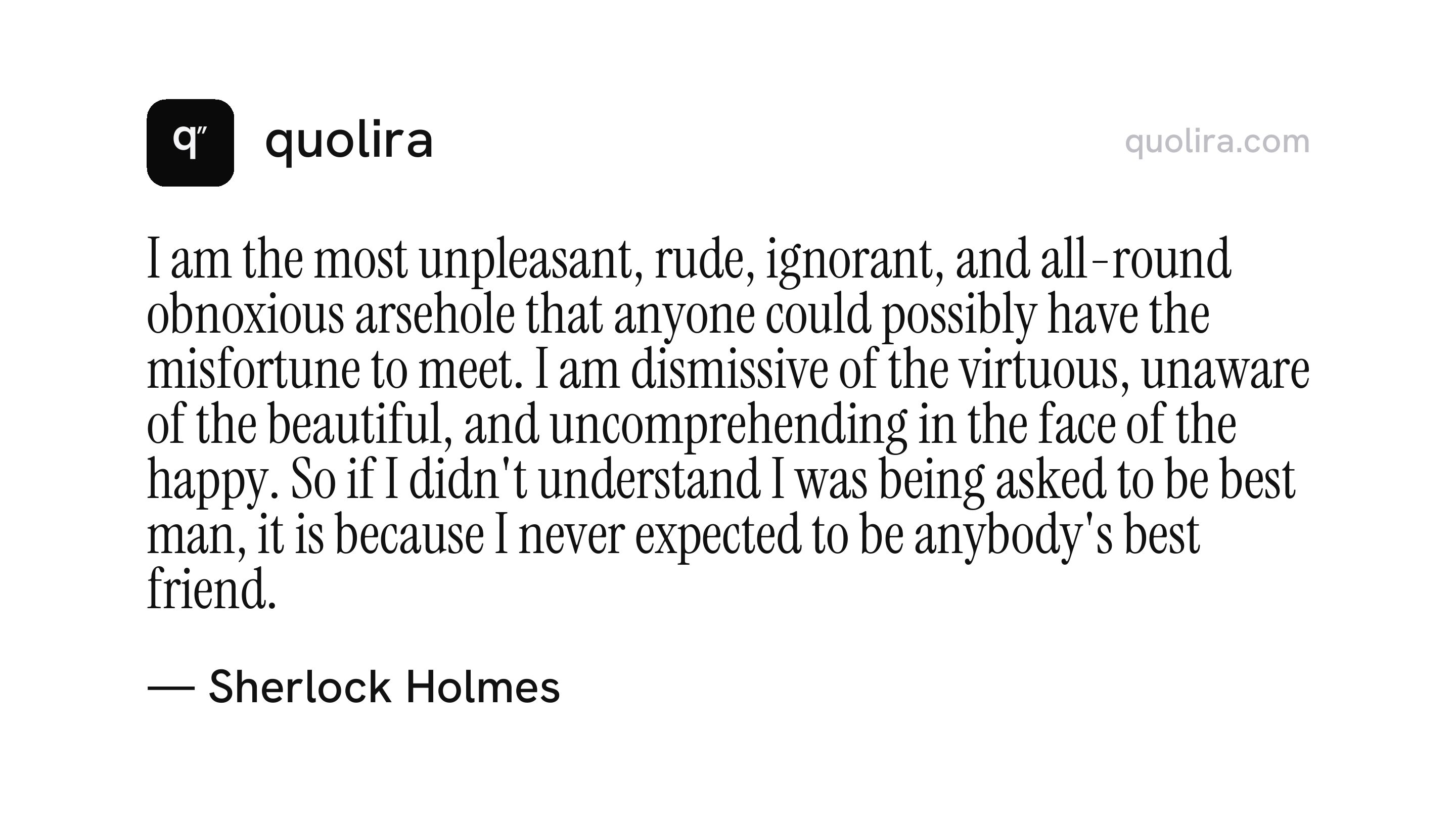
“I am the most unpleasant, rude, ignorant, and all-round obnoxious arsehole that anyone could possibly have the misfortune to meet. I am dismissive of the virtuous, unaware of the beautiful, and uncomprehending in the face of the happy. So if I didn't understand I was being asked to be best man, it is because I never expected to be anybody's best friend.”
Sherlock Holmes · BBC Sherlock, Series 3, Episode 2: The Sign of Three, 2014
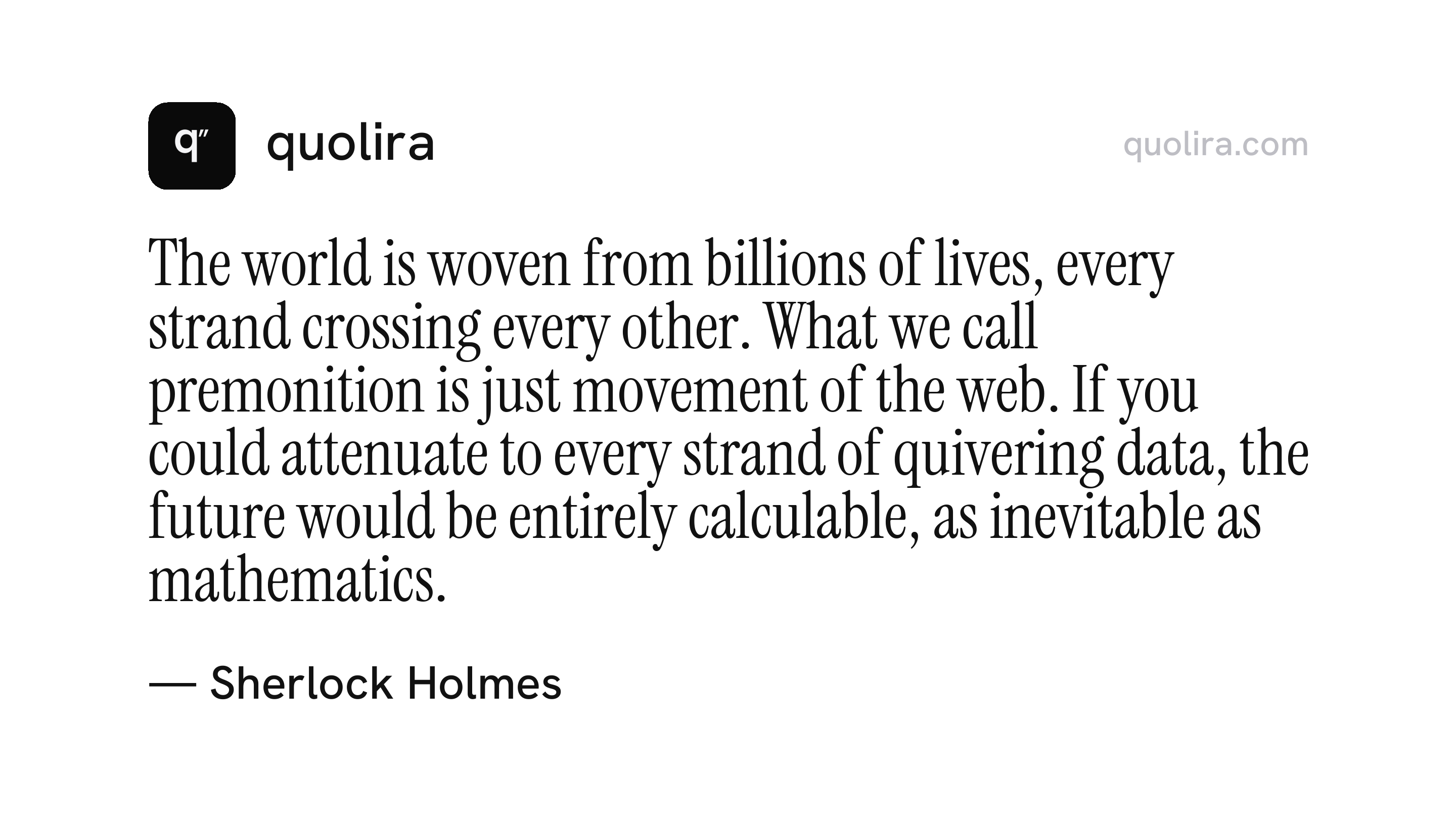
“The world is woven from billions of lives, every strand crossing every other. What we call premonition is just movement of the web. If you could attenuate to every strand of quivering data, the future would be entirely calculable, as inevitable as mathematics.”
Sherlock Holmes · BBC Sherlock, Series 3, Episode 2: The Sign of Three, 2014
“Did you miss me?”
Jim Moriarty · BBC Sherlock, Series 3 finale post-credits sequence, 2014
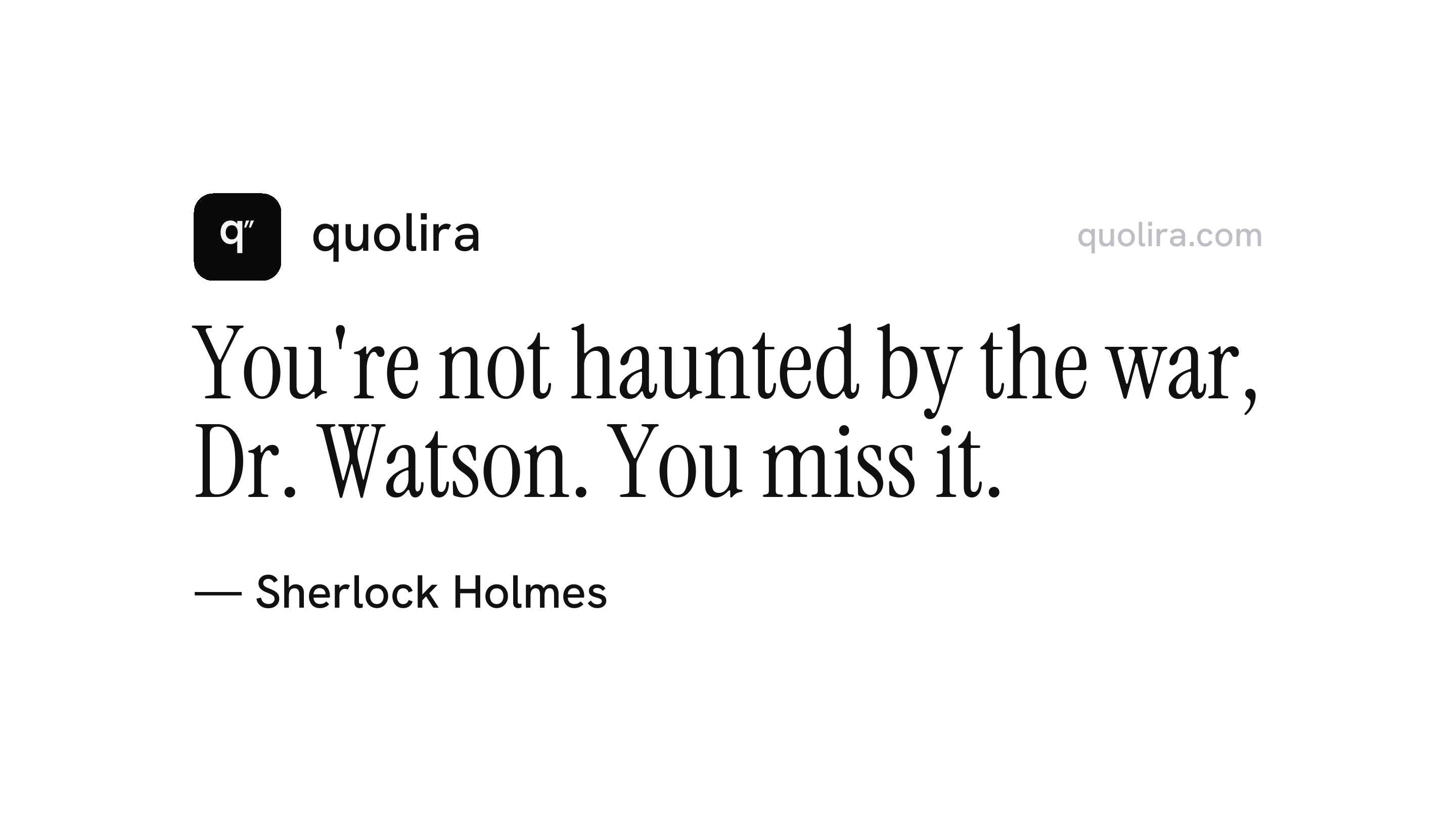
“You're not haunted by the war, Dr. Watson. You miss it.”
Sherlock Holmes · BBC Sherlock, Series 1, Episode 1: A Study in Pink, 2010