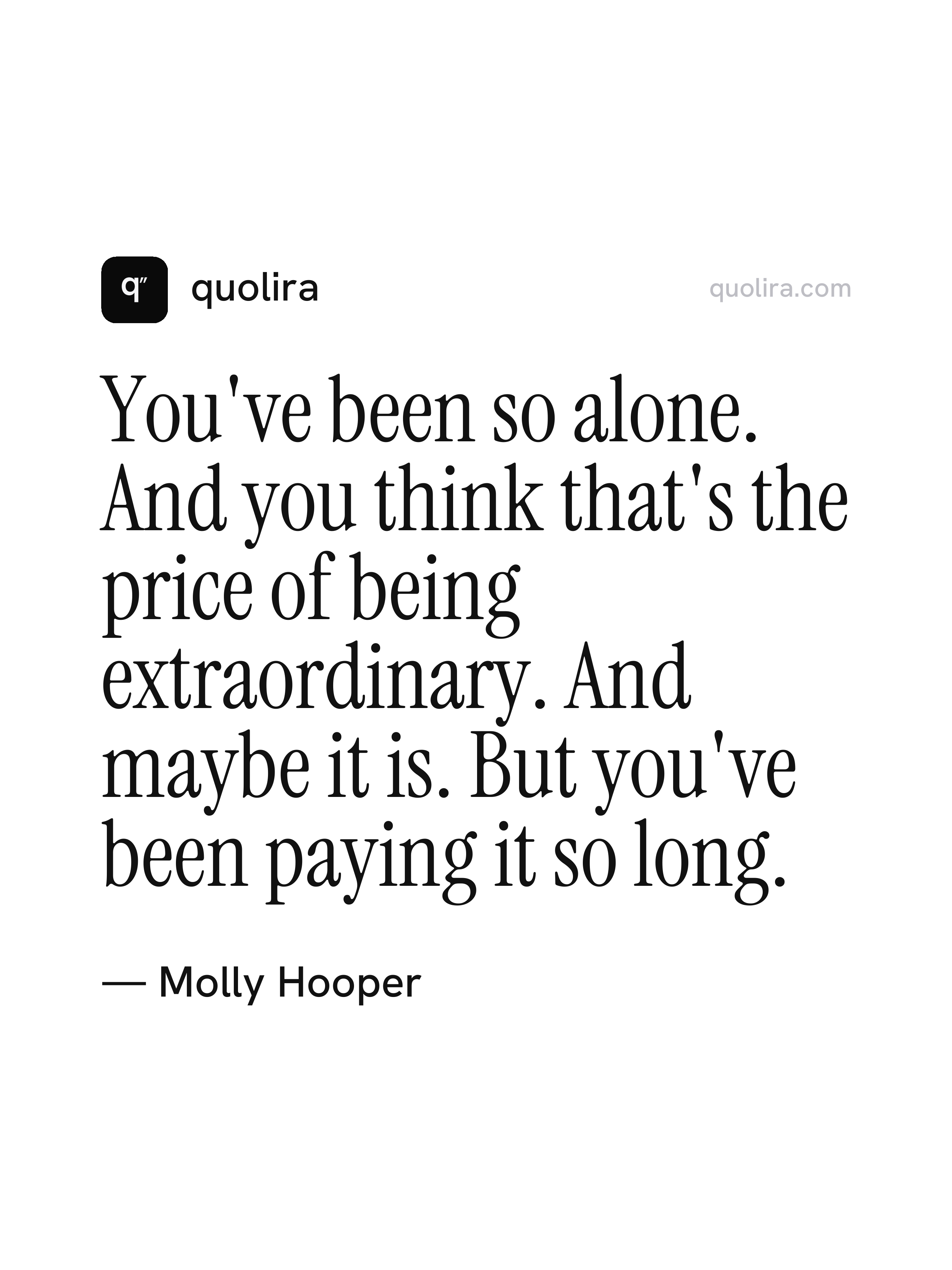
“You've been so alone. And you think that's the price of being extraordinary. And maybe it is. But you've been paying it so long.”
Molly Hooper · BBC Sherlock, Series 4, Episode 3: The Final Problem, 2017
 quolira
.com
quolira
quolira.com
This line captures Sherlock Holmes at his most cutting. He tells the person he is speaking with that their words consistently carry an unspoken invitation for violence, yet he graciously acknowledges that this invitation is, most of the time, not quite on the surface. It is a wry, backhanded insult delivered with perfect composure, suggesting that the speaker irritates Sherlock so thoroughly that aggression seems like the natural response, even when it is only implied.
The line appears in the opening episode of Series 2 of the BBC drama Sherlock, which reimagines Arthur Conan Doyle's famous detective in contemporary London. The episode, A Scandal in Belgravia, introduces Irene Adler and places Sherlock in a series of intellectually and emotionally charged confrontations. The writing in this series is known for its rapid, layered dialogue, and this particular exchange is a prime example of how the show uses wit as both weapon and character reveal. Sherlock's remark lands as comedy, but it also quietly confirms his social detachment and his habit of saying exactly what most people would only think.
Sherlock Holmes as portrayed in the BBC series is the creation of writers Steven Moffat and Mark Gatiss, who developed the show together. The character himself originated with Sir Arthur Conan Doyle in the late nineteenth century. In the BBC version, Benedict Cumberbatch plays Holmes, bringing a brittle brilliance to the role that made this incarnation of the detective especially popular with audiences around the world.
“You've been so alone. And you think that's the price of being extraordinary. And maybe it is. But you've been paying it so long.”
Molly Hooper · BBC Sherlock, Series 4, Episode 3: The Final Problem, 2017
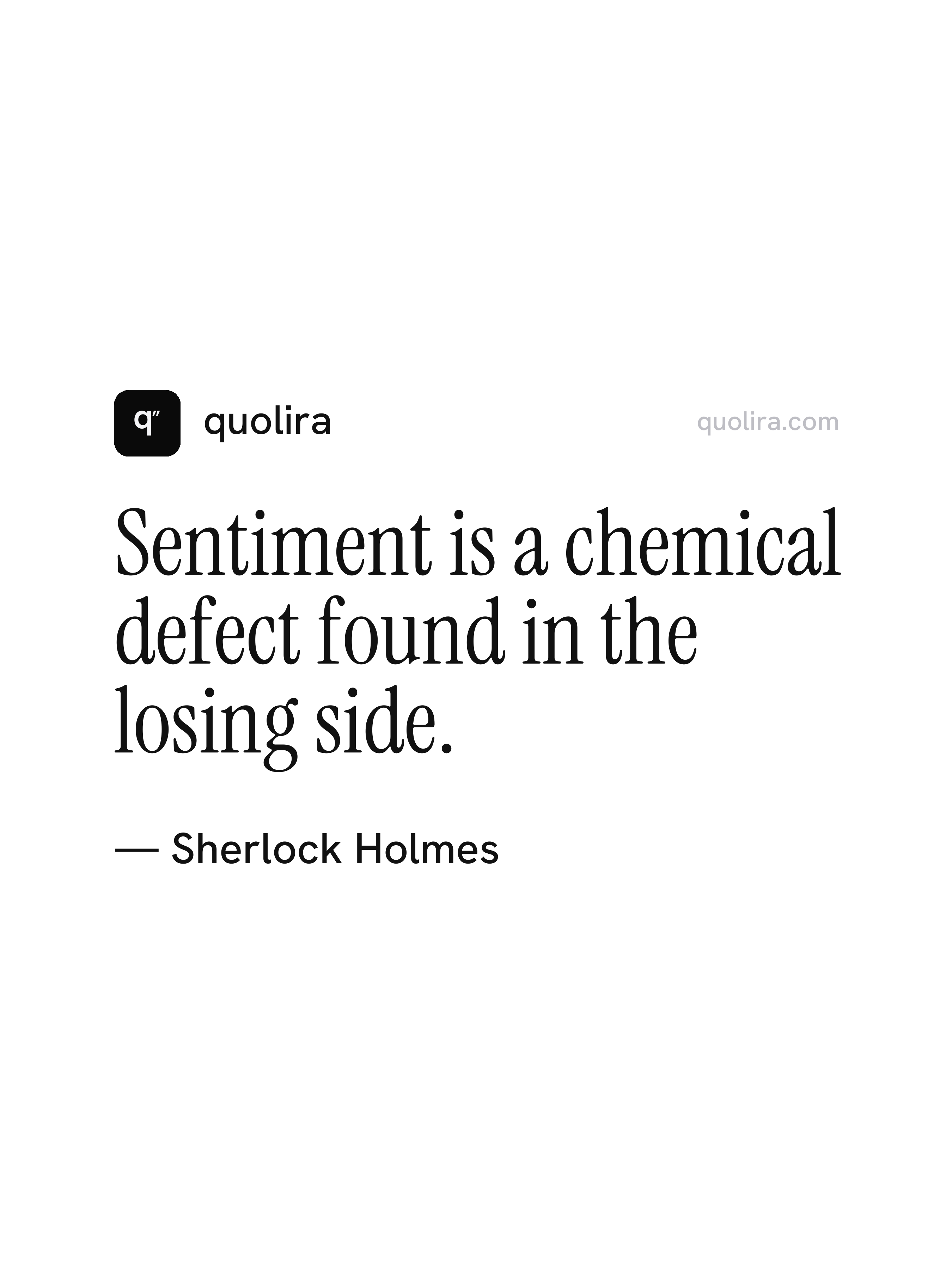
“Sentiment is a chemical defect found in the losing side.”
Sherlock Holmes · BBC Sherlock, Series 2, Episode 1: A Scandal in Belgravia, 2012
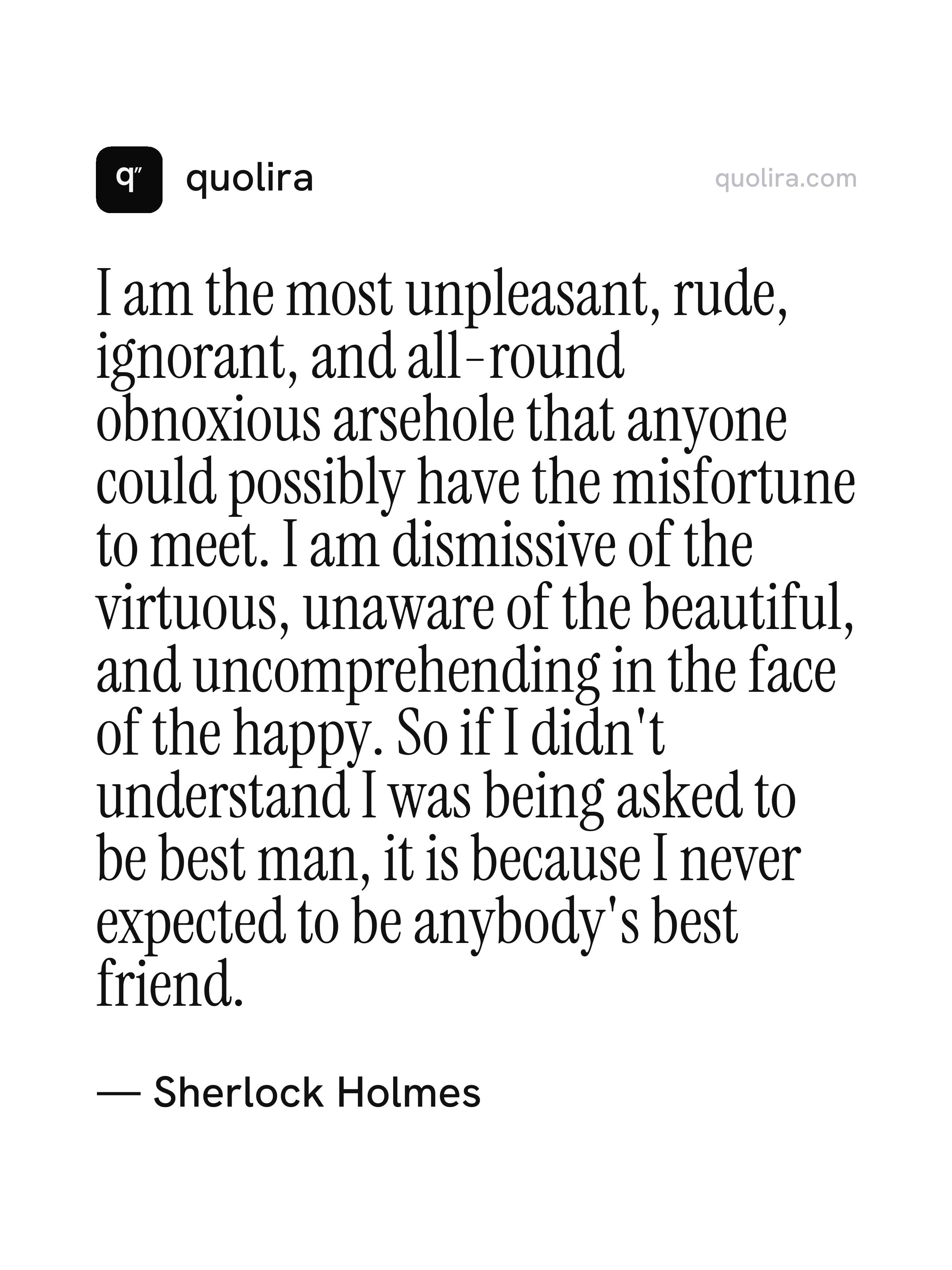
“I am the most unpleasant, rude, ignorant, and all-round obnoxious arsehole that anyone could possibly have the misfortune to meet. I am dismissive of the virtuous, unaware of the beautiful, and uncomprehending in the face of the happy. So if I didn't understand I was being asked to be best man, it is because I never expected to be anybody's best friend.”
Sherlock Holmes · BBC Sherlock, Series 3, Episode 2: The Sign of Three, 2014
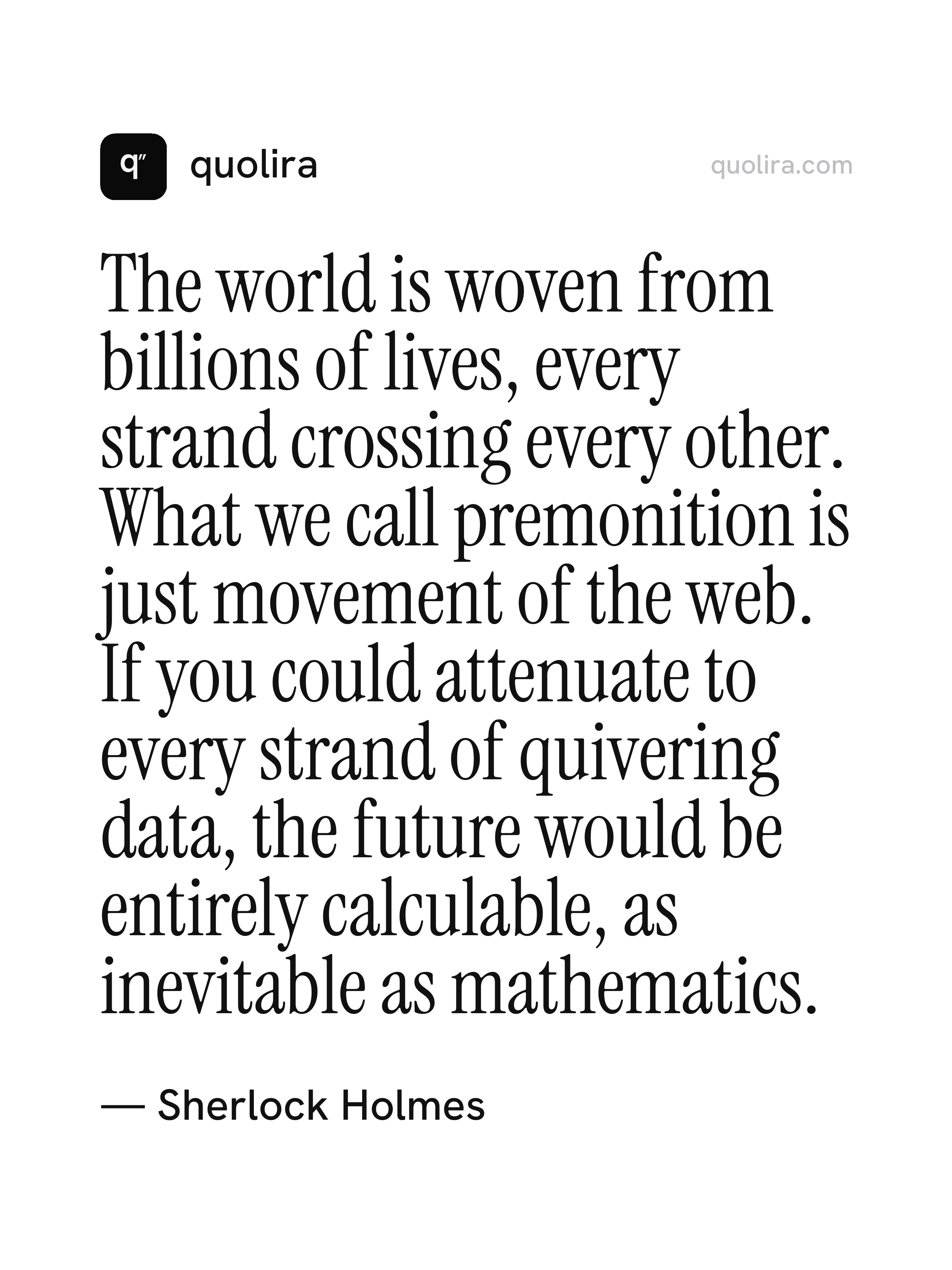
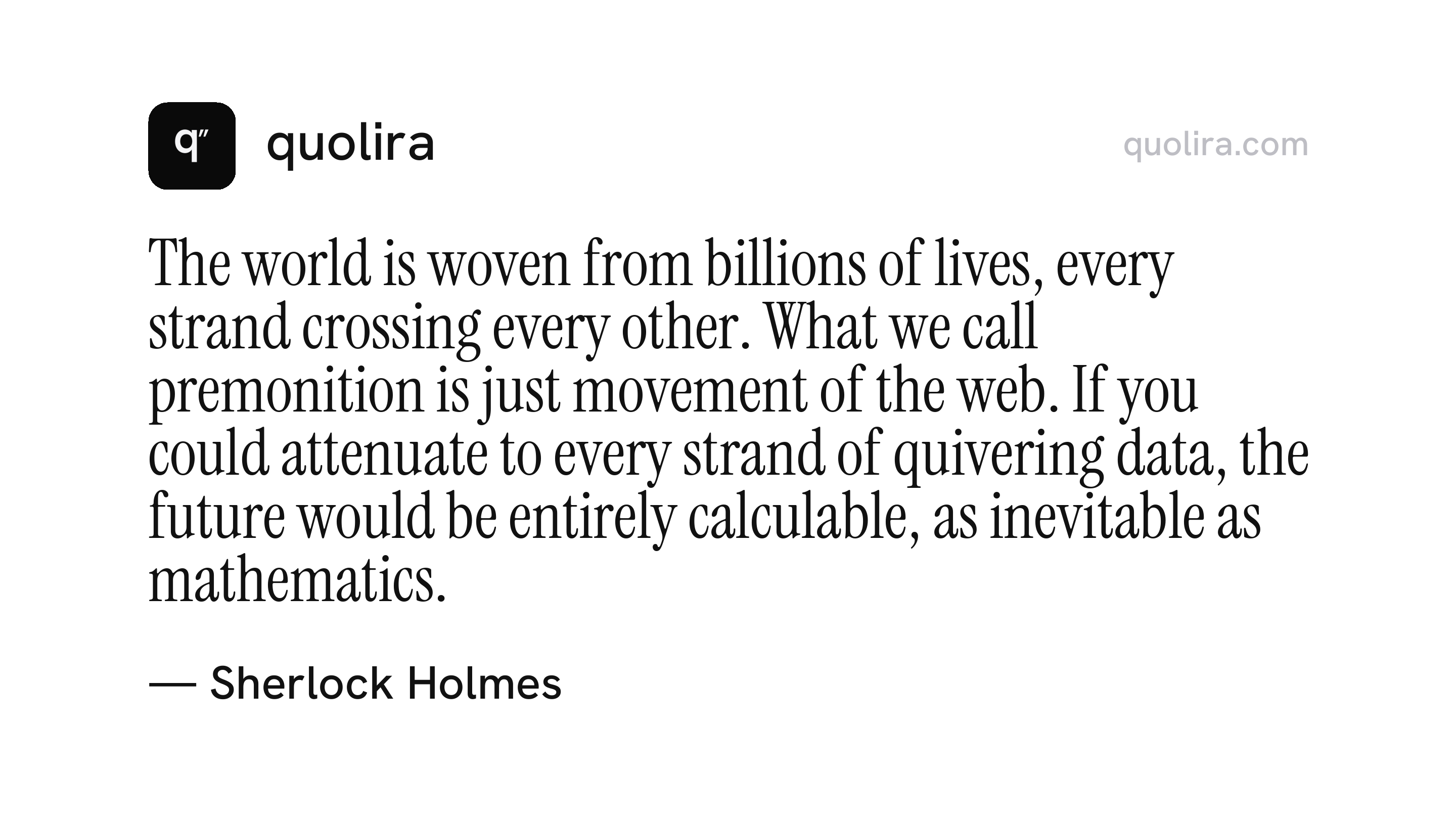
“The world is woven from billions of lives, every strand crossing every other. What we call premonition is just movement of the web. If you could attenuate to every strand of quivering data, the future would be entirely calculable, as inevitable as mathematics.”
Sherlock Holmes · BBC Sherlock, Series 3, Episode 2: The Sign of Three, 2014
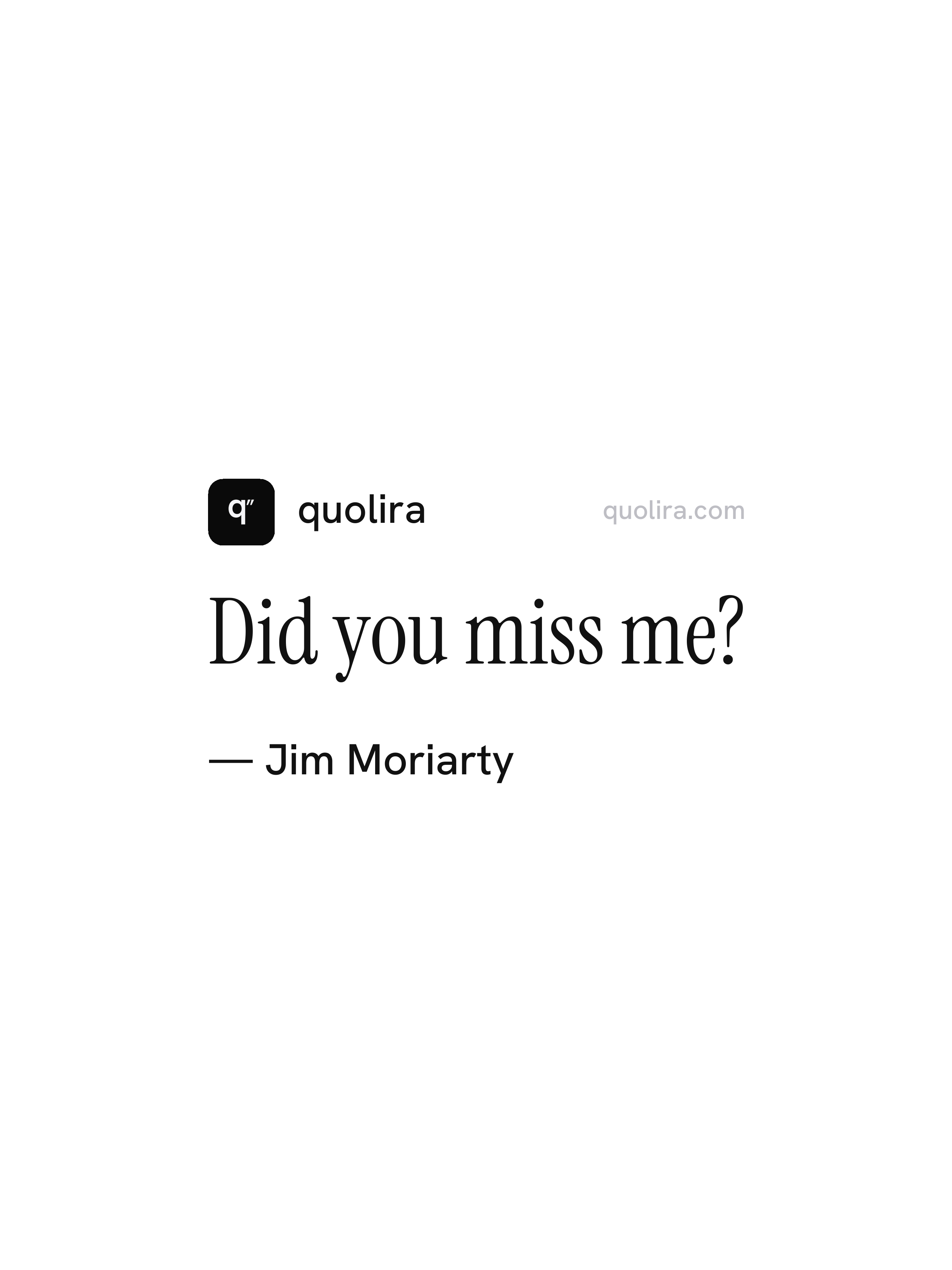
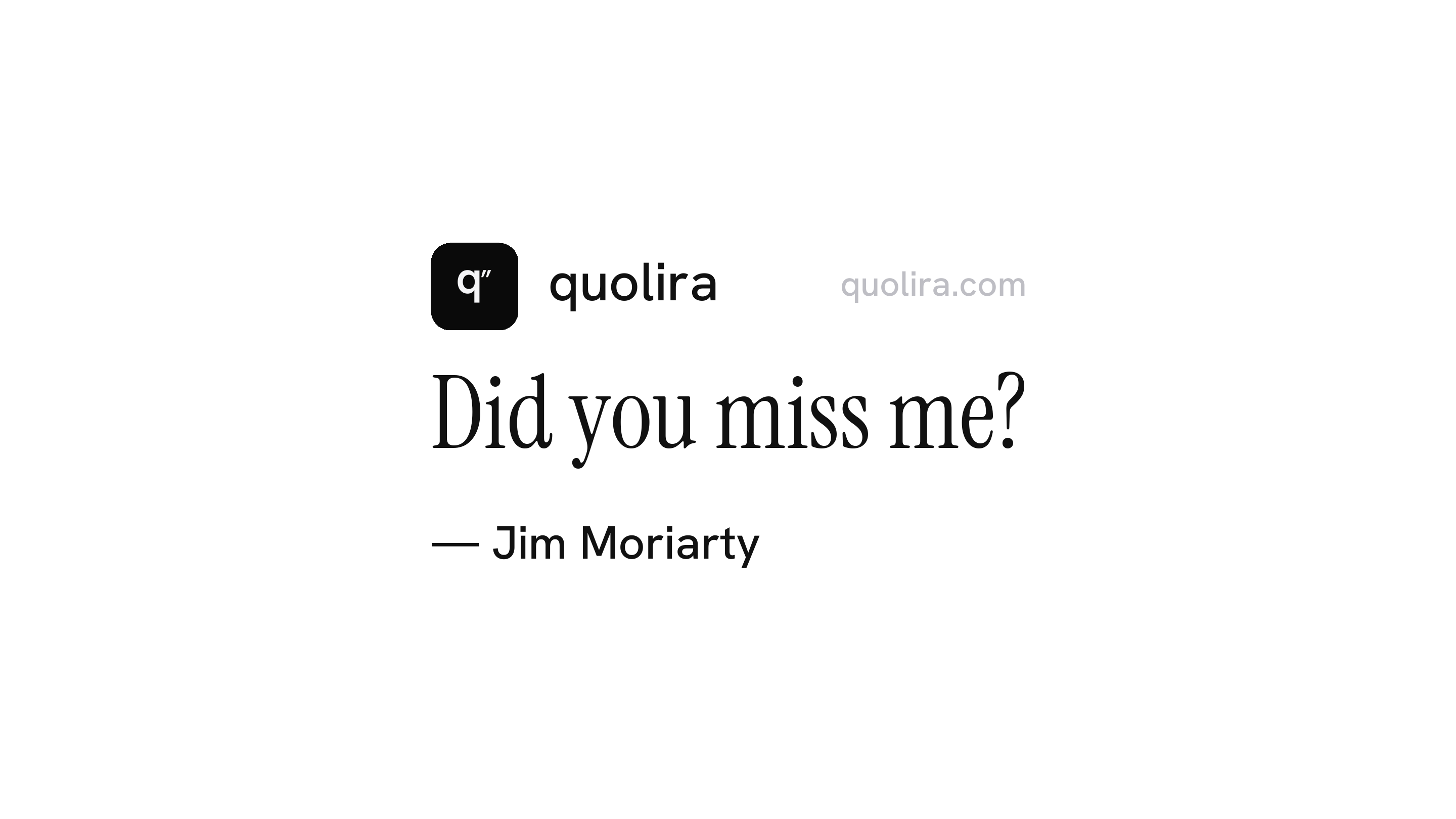
“Did you miss me?”
Jim Moriarty · BBC Sherlock, Series 3 finale post-credits sequence, 2014
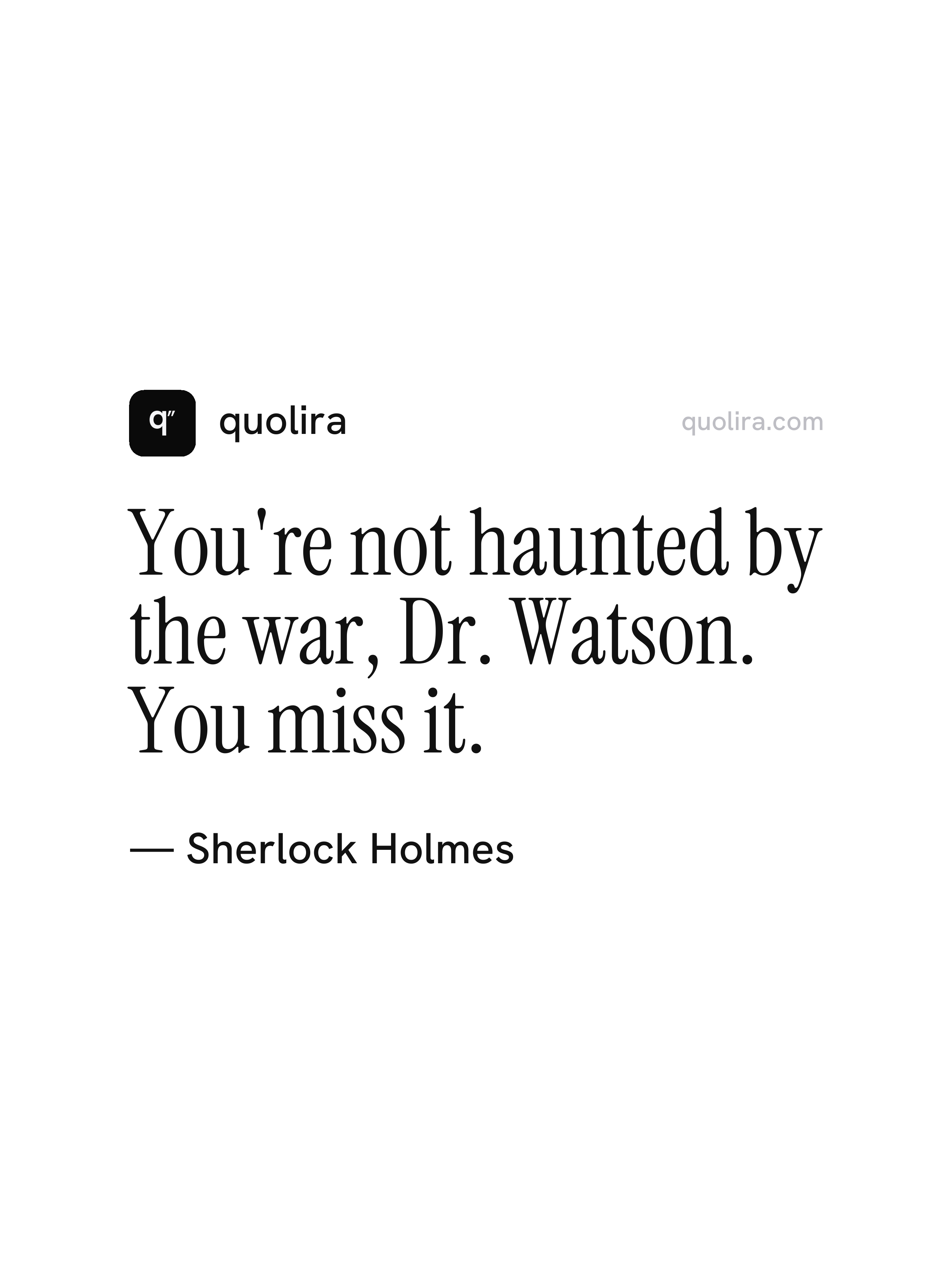
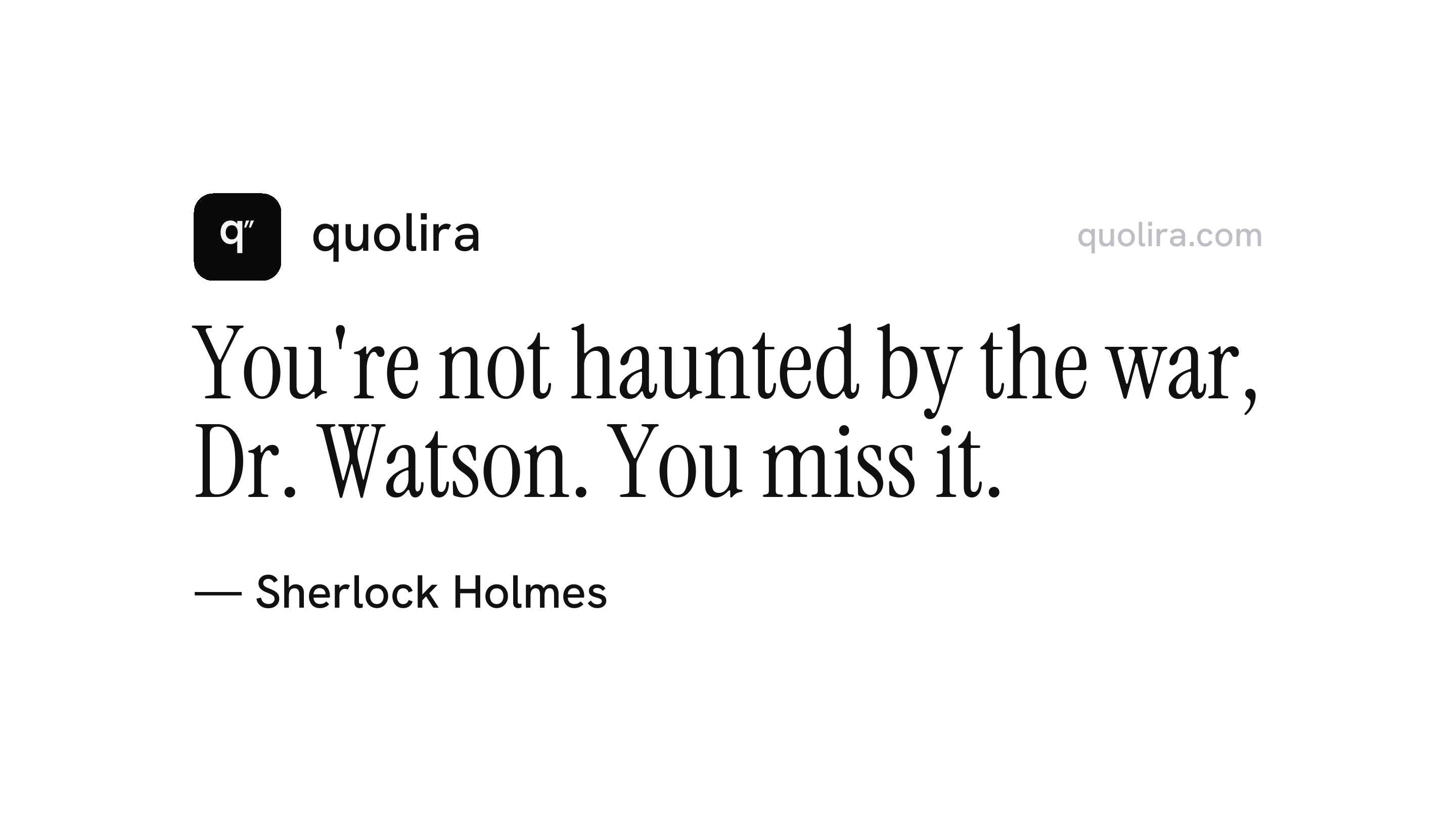
“You're not haunted by the war, Dr. Watson. You miss it.”
Sherlock Holmes · BBC Sherlock, Series 1, Episode 1: A Study in Pink, 2010
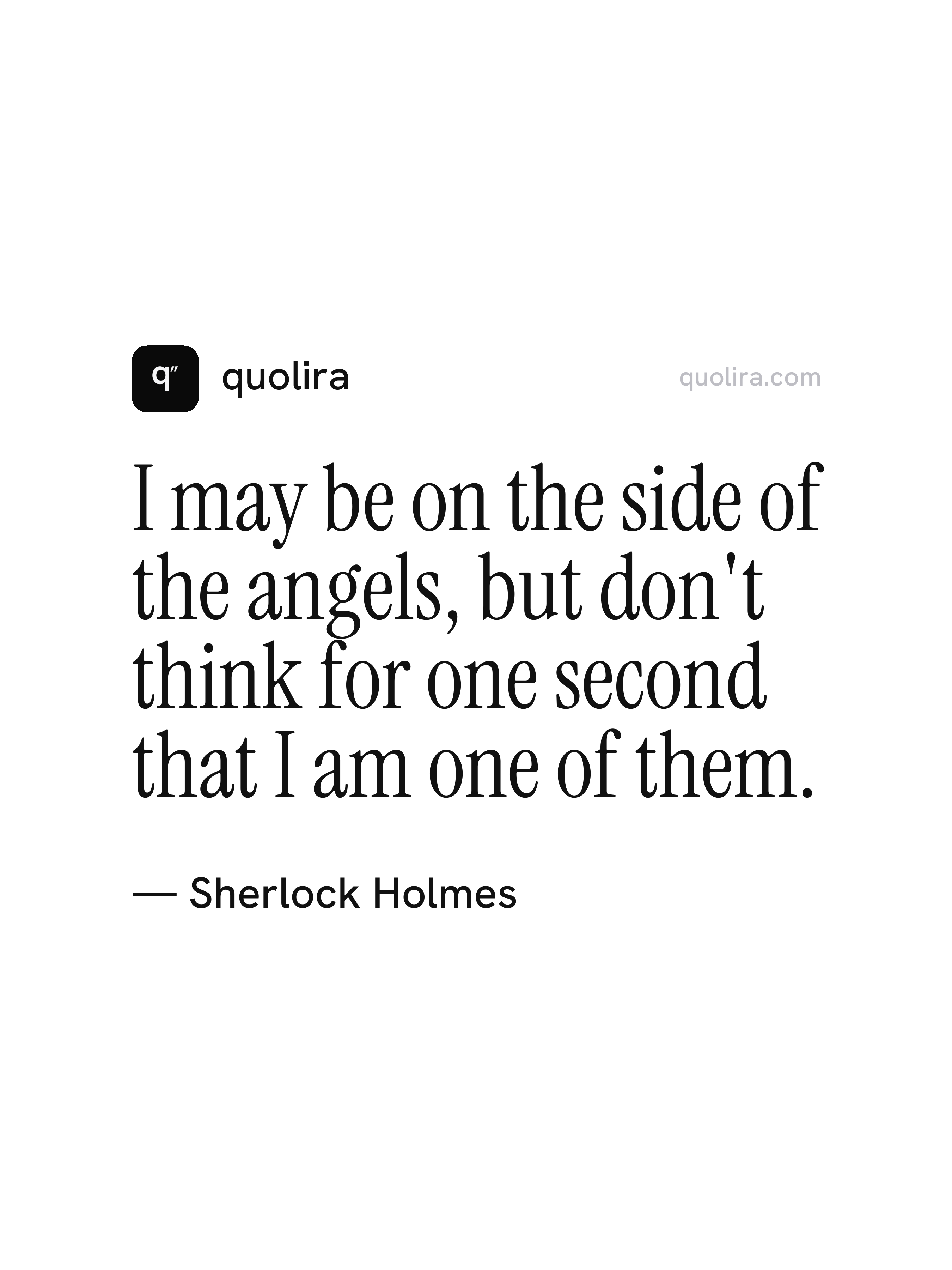
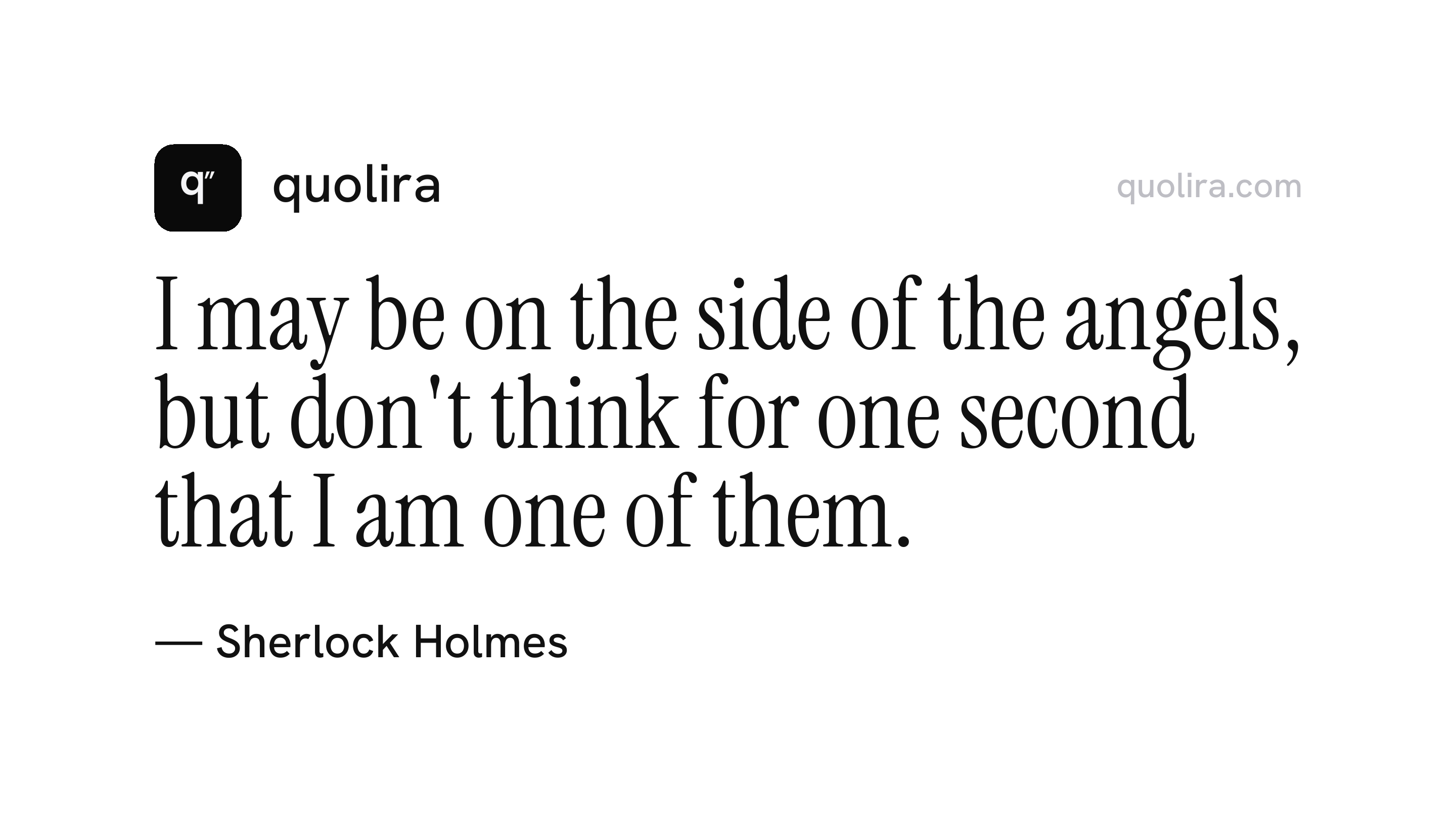
“I may be on the side of the angels, but don't think for one second that I am one of them.”
Sherlock Holmes · BBC Sherlock, Series 2, Episode 3: The Reichenbach Fall, 2012
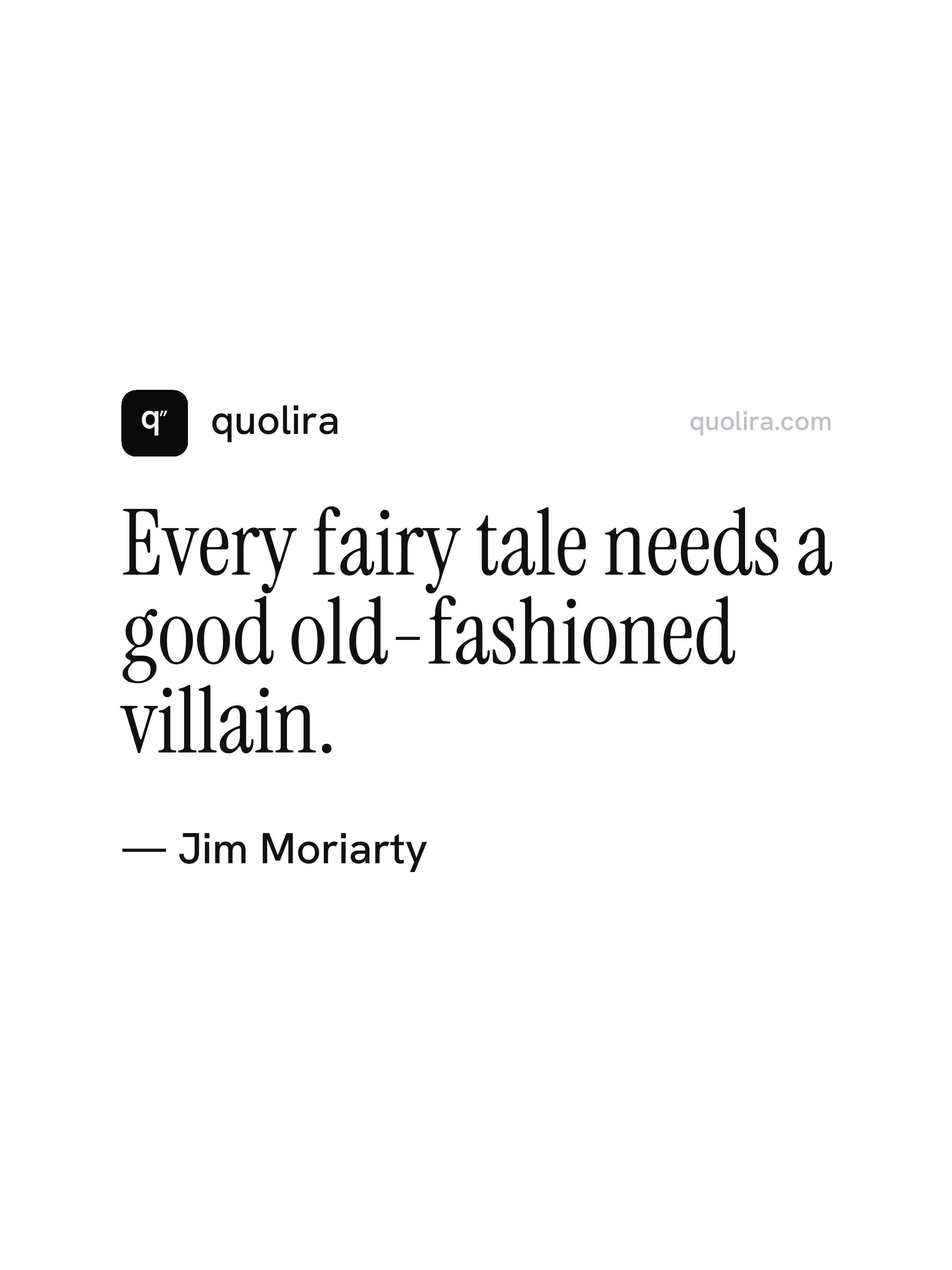
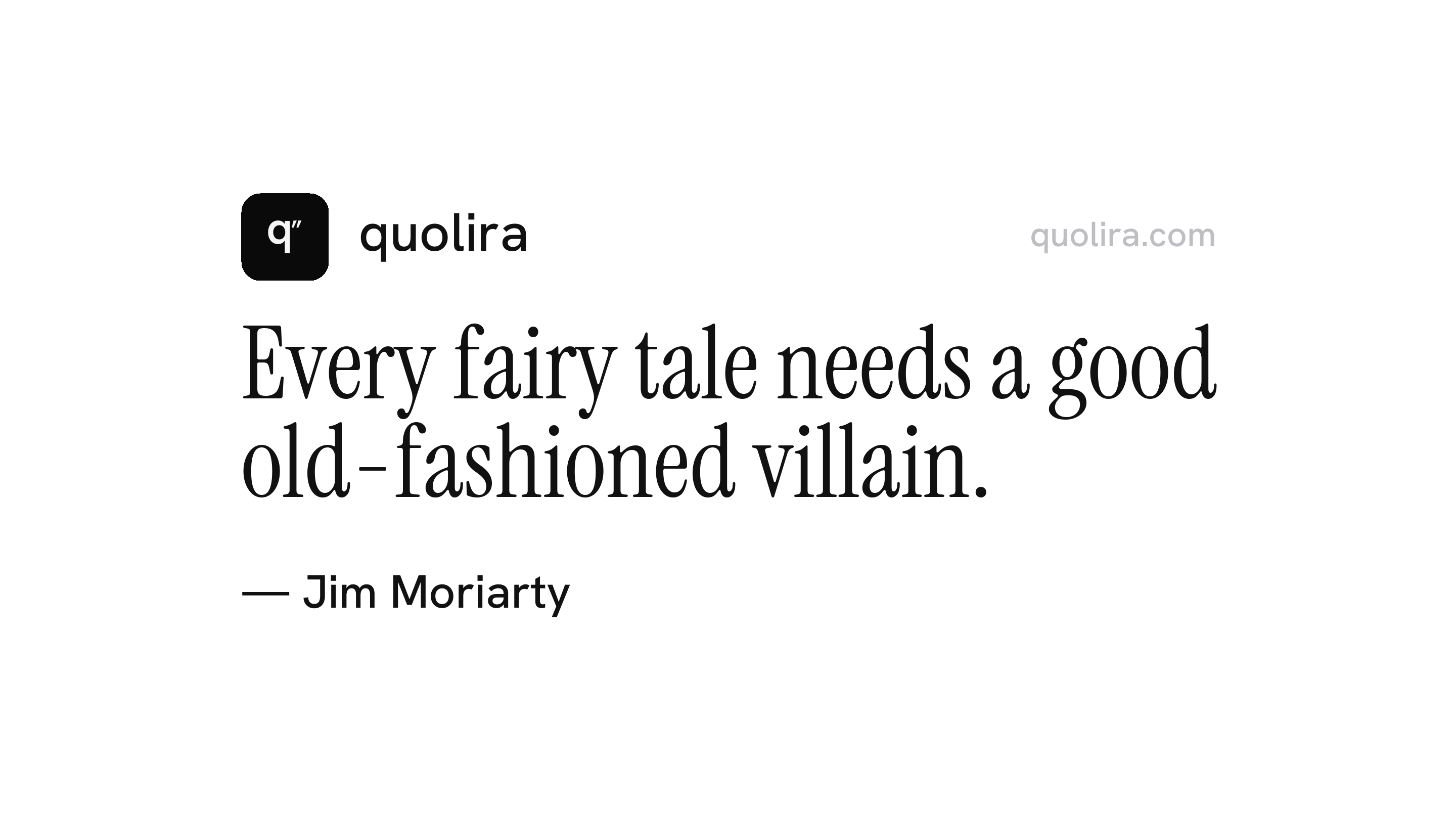
“Every fairy tale needs a good old-fashioned villain.”
Jim Moriarty · BBC Sherlock, Series 2, Episode 1: A Scandal in Belgravia, 2012
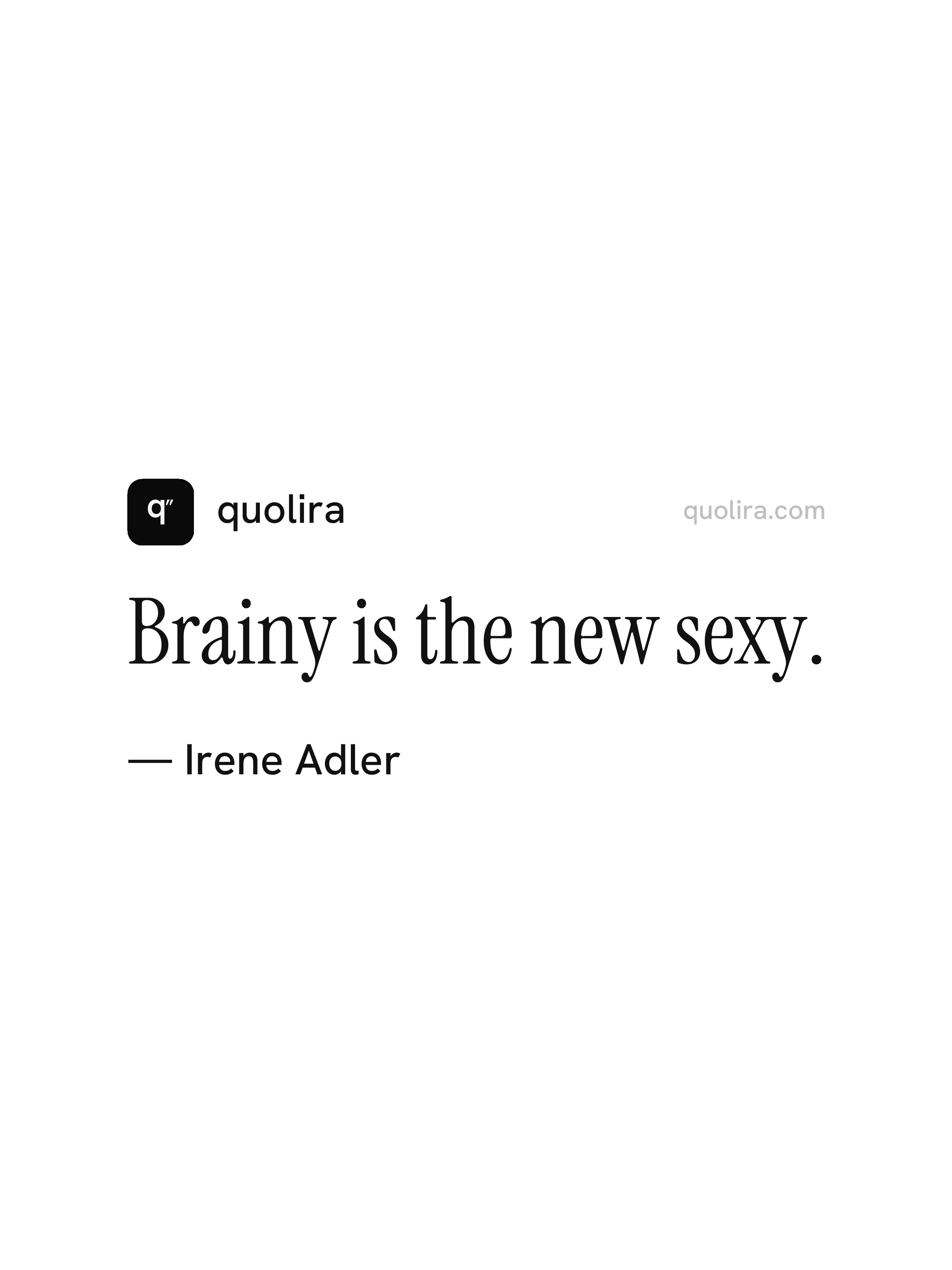
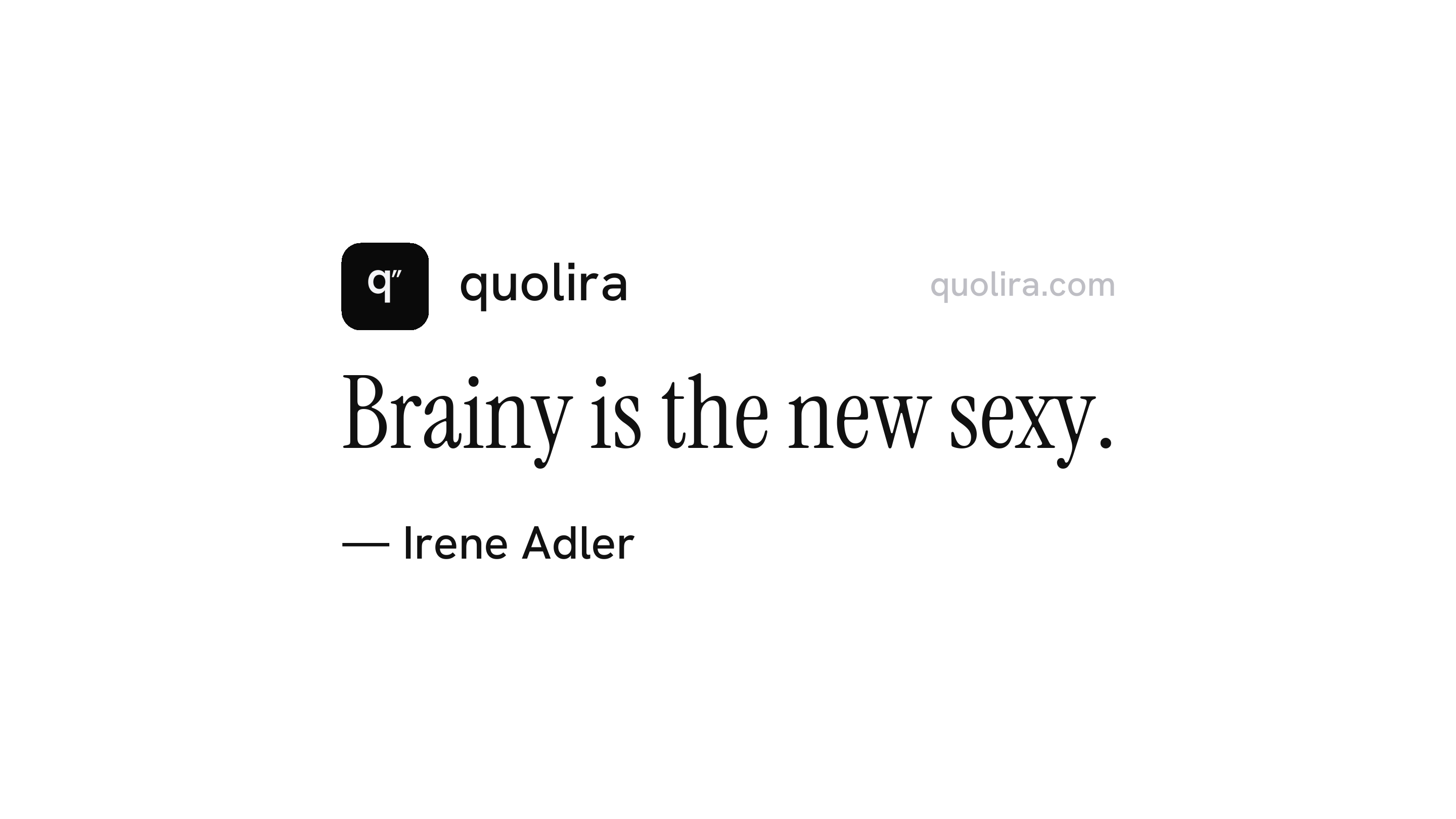
“Brainy is the new sexy.”
Irene Adler · BBC Sherlock, Series 2, Episode 1: A Scandal in Belgravia, 2012
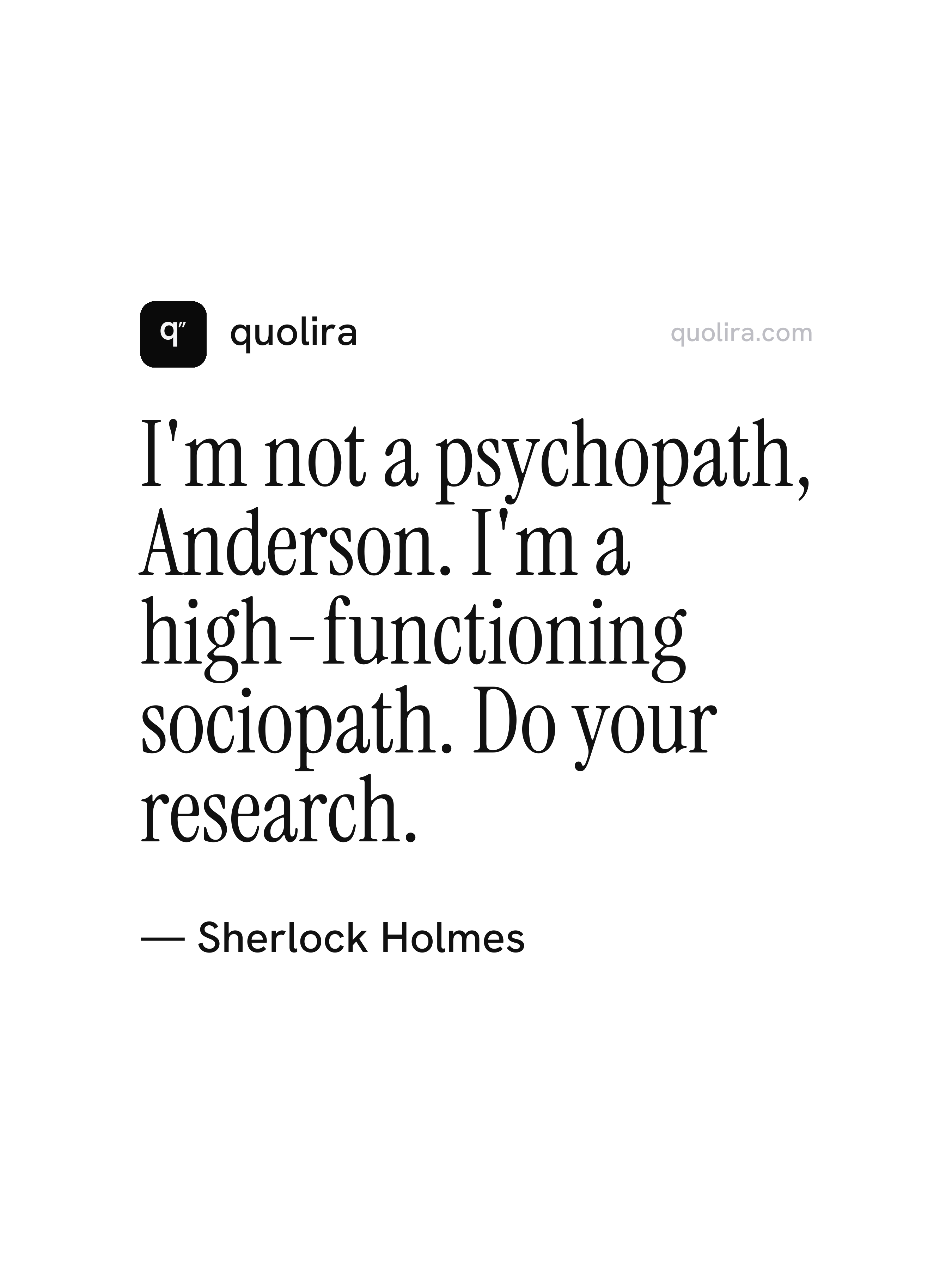
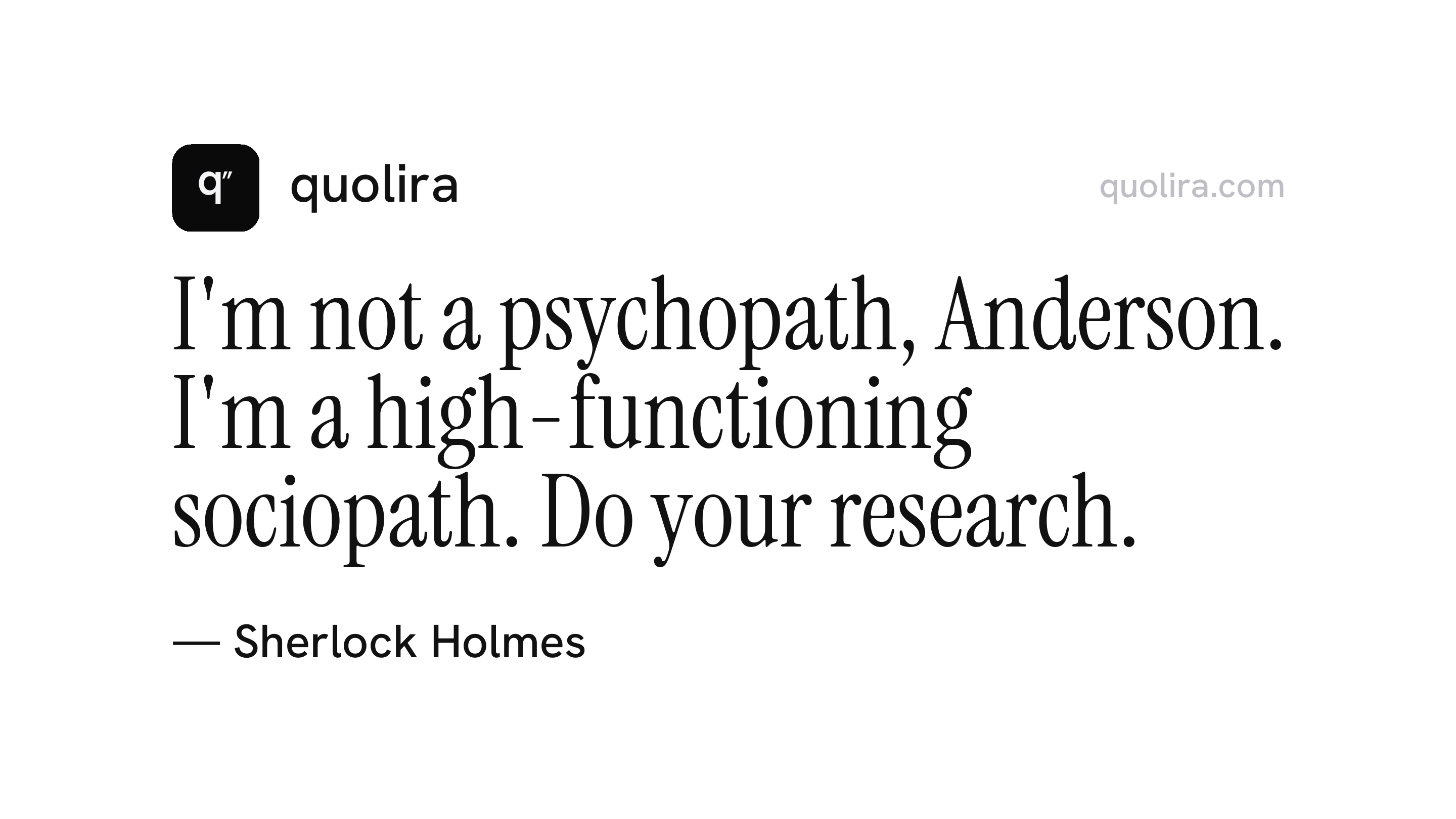
“I'm not a psychopath, Anderson. I'm a high-functioning sociopath. Do your research.”
Sherlock Holmes · BBC Sherlock, Series 1, Episode 1: A Study in Pink, 2010
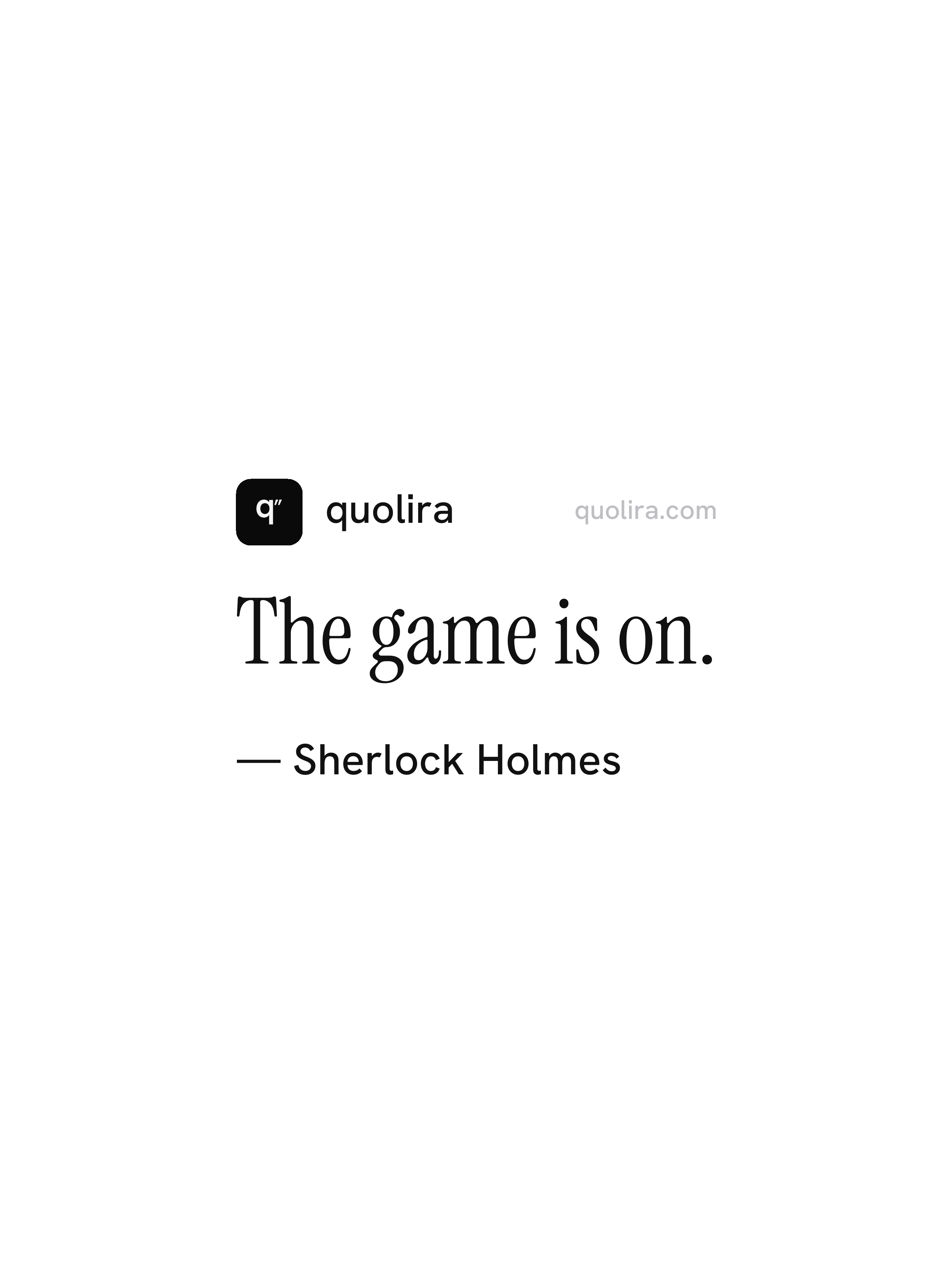
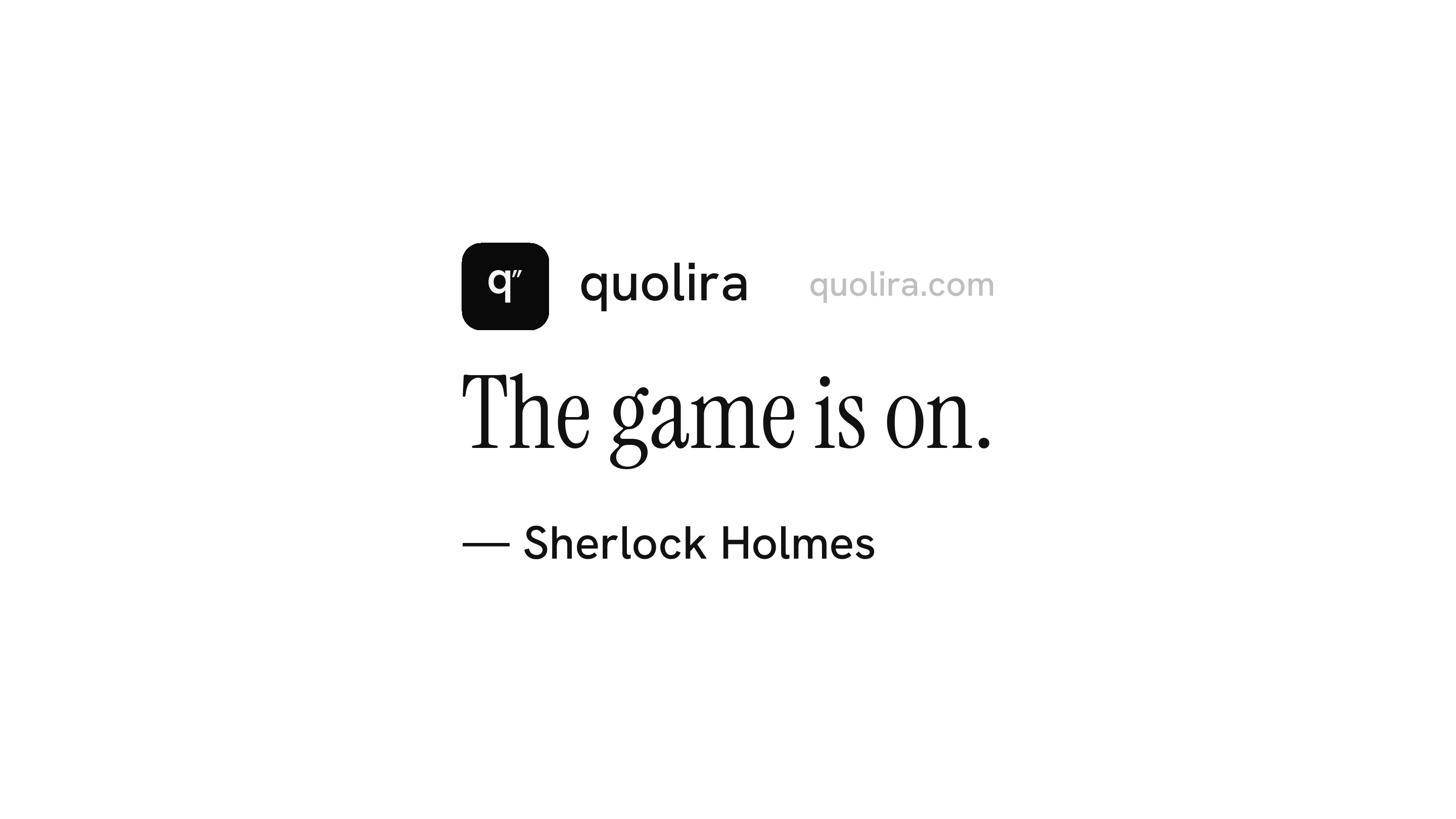
“The game is on.”
Sherlock Holmes · BBC Sherlock, Series 1, Episode 1: A Study in Pink, 2010
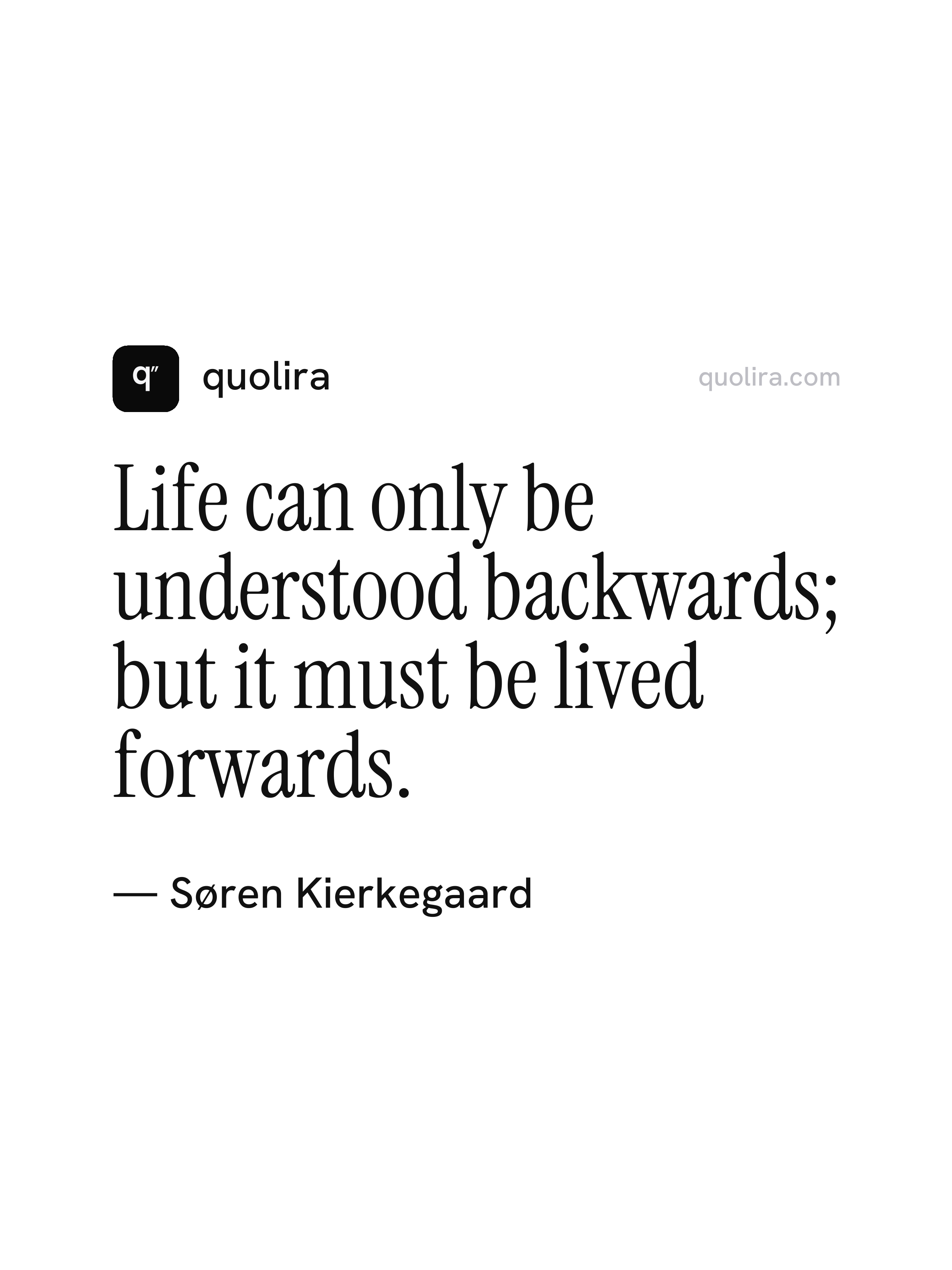
“Life can only be understood backwards; but it must be lived forwards.”
Søren Kierkegaard · Journals, 1843