“O my son, even if a deed were the weight of a mustard seed and hidden inside a rock or anywhere in the heavens or earth, God would bring it forth. God is all-subtle, all-aware.”
Luqman · Quran, Surah Luqman 31:16
 quolira
.com
quolira
quolira.com
In this verse Luqman moves from theology to practice, giving his son four interconnected instructions: maintain regular prayer, encourage what is good, discourage what is wrong, and meet hardship with patience. The final sentence lifts these beyond mere rules by calling them matters of great determination, suggesting they require not only knowledge but sustained will and courage. The combination of personal devotion, communal responsibility, and inner resilience forms a compact portrait of how a person of faith is meant to live.
This verse is the third in a sequence within Surah Luqman where a father speaks directly and tenderly to his son. After addressing the foundations of belief and the reality of divine accountability, Luqman here turns to lived conduct. The progression is deliberate: faith is grounded first, then expressed outward through action and character. This verse is often cited in Islamic scholarship and teaching as a summary of the active dimensions of a Muslim's responsibility, both inward through prayer and outward through engagement with the community around them.
Luqman is the wise figure named in and giving his title to the thirty-first chapter of the Quran. He is described in the text as having been granted wisdom by God, and his advice to his son is presented as an example worth following. Islamic tradition has long venerated these verses as a guide for parents and educators. The precise historical details of Luqman's life and identity are not definitively known, and responsible discussion of the figure stays close to what the Quranic text itself affirms.
“O my son, even if a deed were the weight of a mustard seed and hidden inside a rock or anywhere in the heavens or earth, God would bring it forth. God is all-subtle, all-aware.”
Luqman · Quran, Surah Luqman 31:16
“O my son, do not associate anything with God. Associating others with Him is a tremendous wrong.”
Luqman · Quran, Surah Luqman 31:13
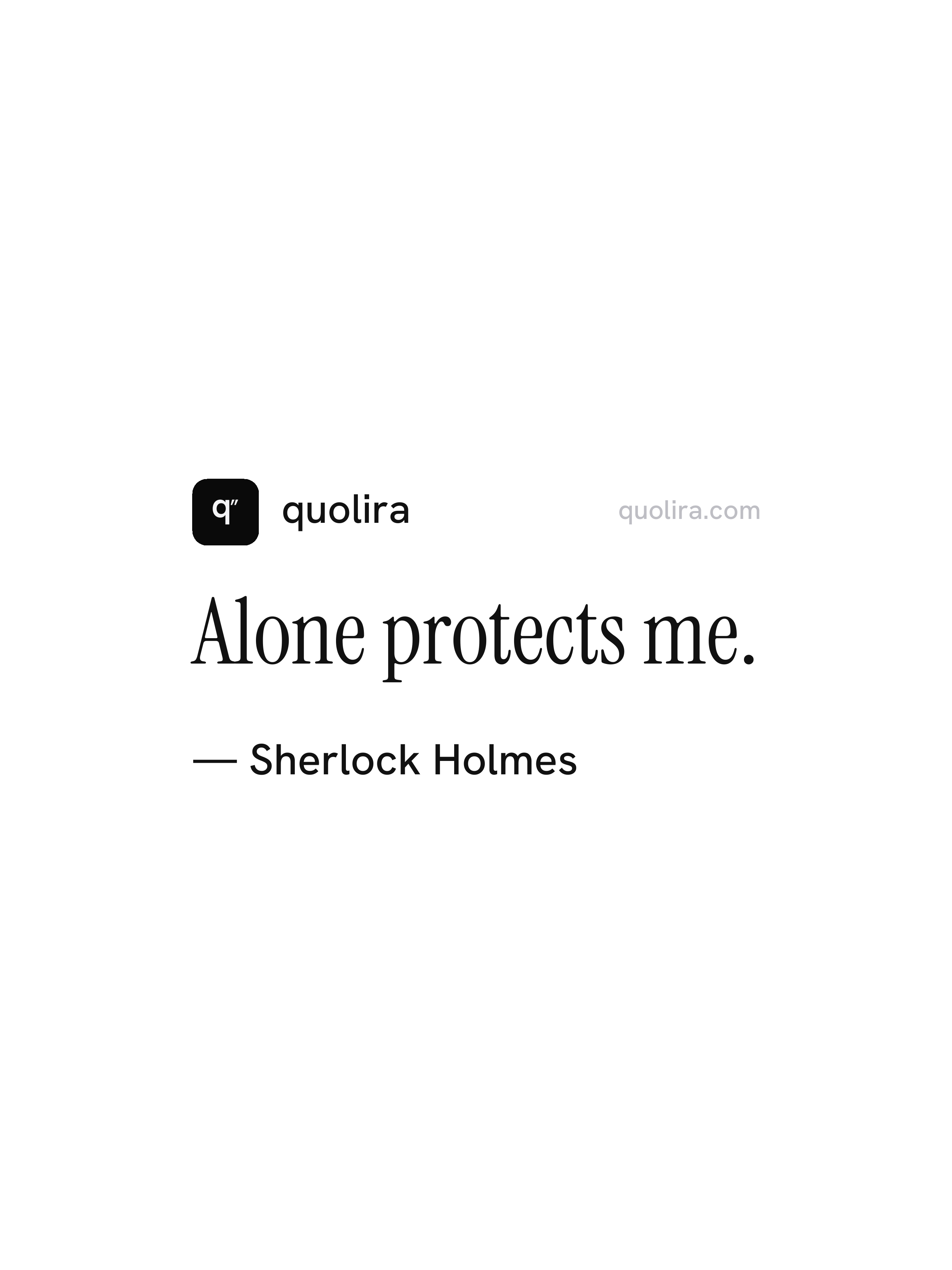
“Alone protects me.”
Sherlock Holmes · BBC Sherlock, Series 2, Episode 1: A Scandal in Belgravia, 2012
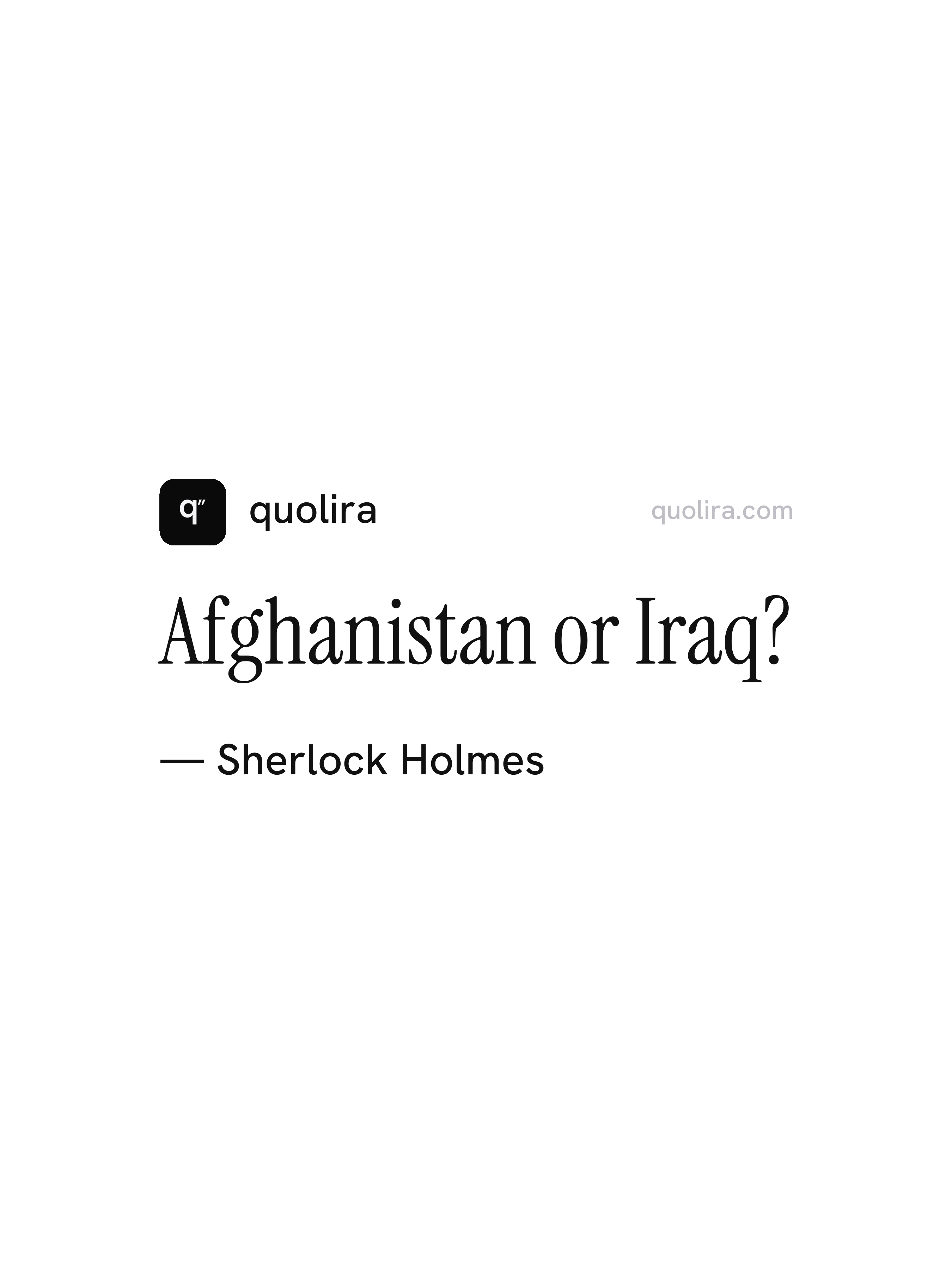
“Afghanistan or Iraq?”
Sherlock Holmes · BBC Sherlock, Series 1, Episode 1: A Study in Pink, 2010
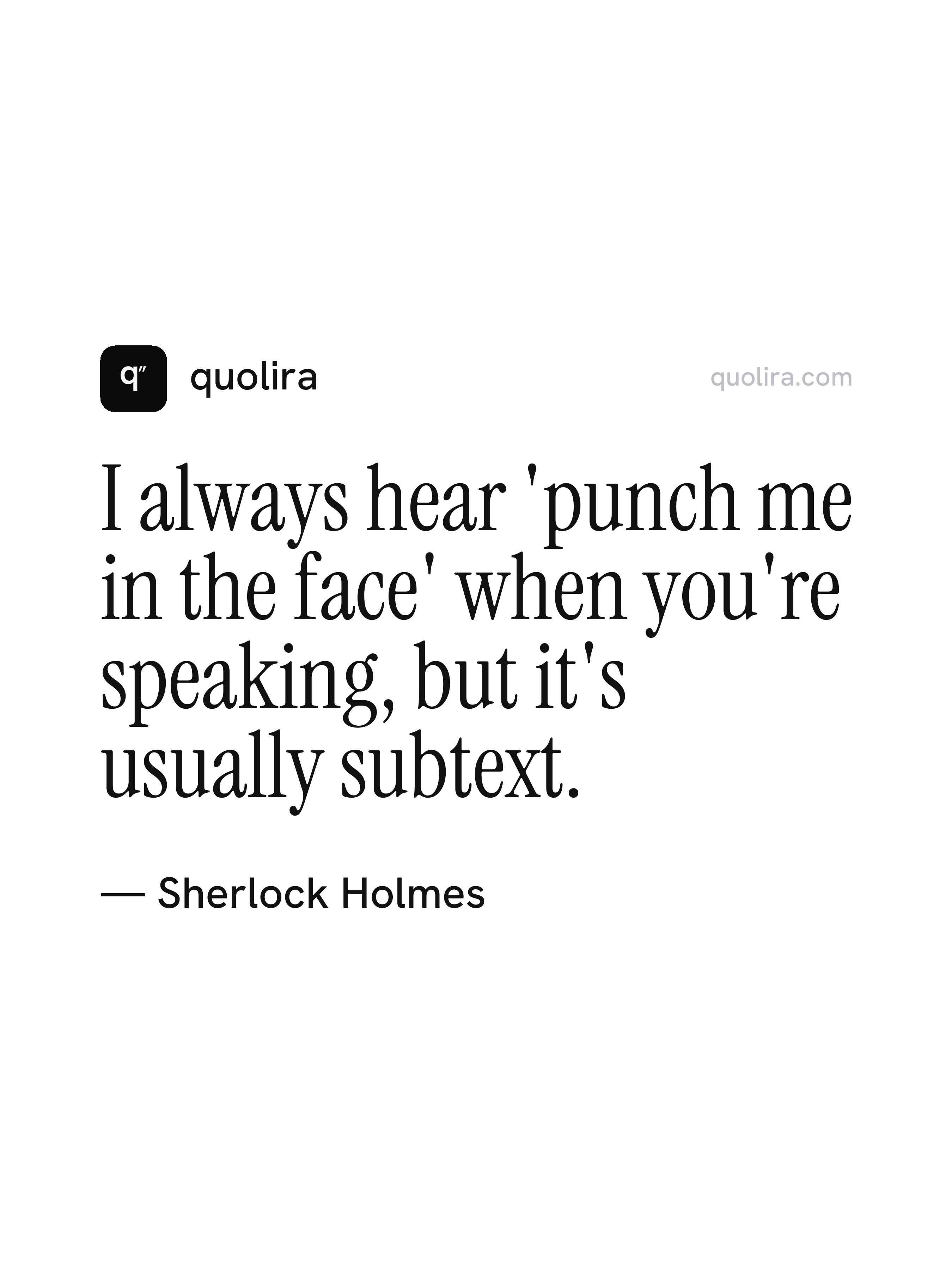
“I always hear 'punch me in the face' when you're speaking, but it's usually subtext.”
Sherlock Holmes · BBC Sherlock, Series 2, Episode 1: A Scandal in Belgravia, 2012
“You've been so alone. And you think that's the price of being extraordinary. And maybe it is. But you've been paying it so long.”
Molly Hooper · BBC Sherlock, Series 4, Episode 3: The Final Problem, 2017
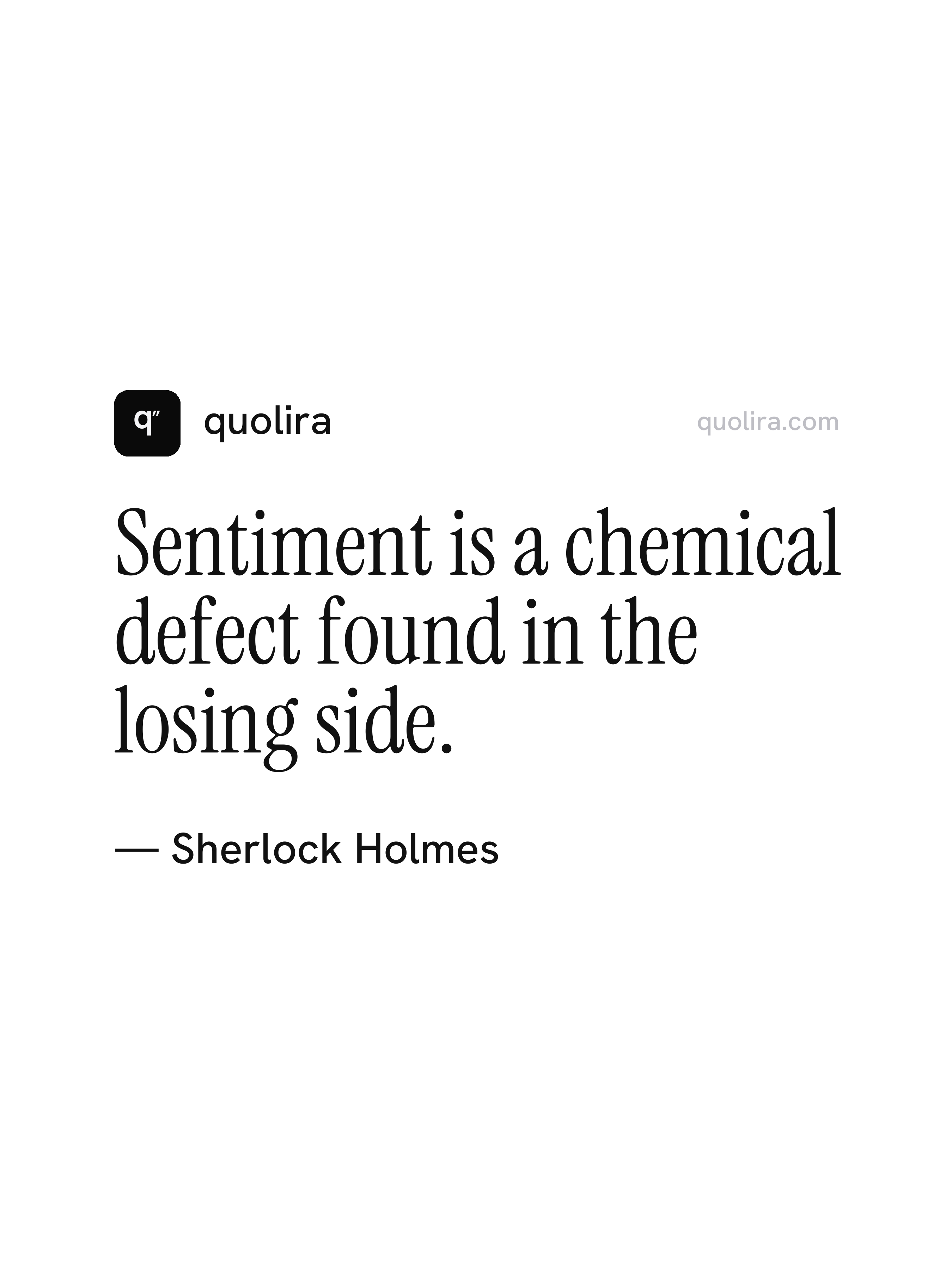
“Sentiment is a chemical defect found in the losing side.”
Sherlock Holmes · BBC Sherlock, Series 2, Episode 1: A Scandal in Belgravia, 2012
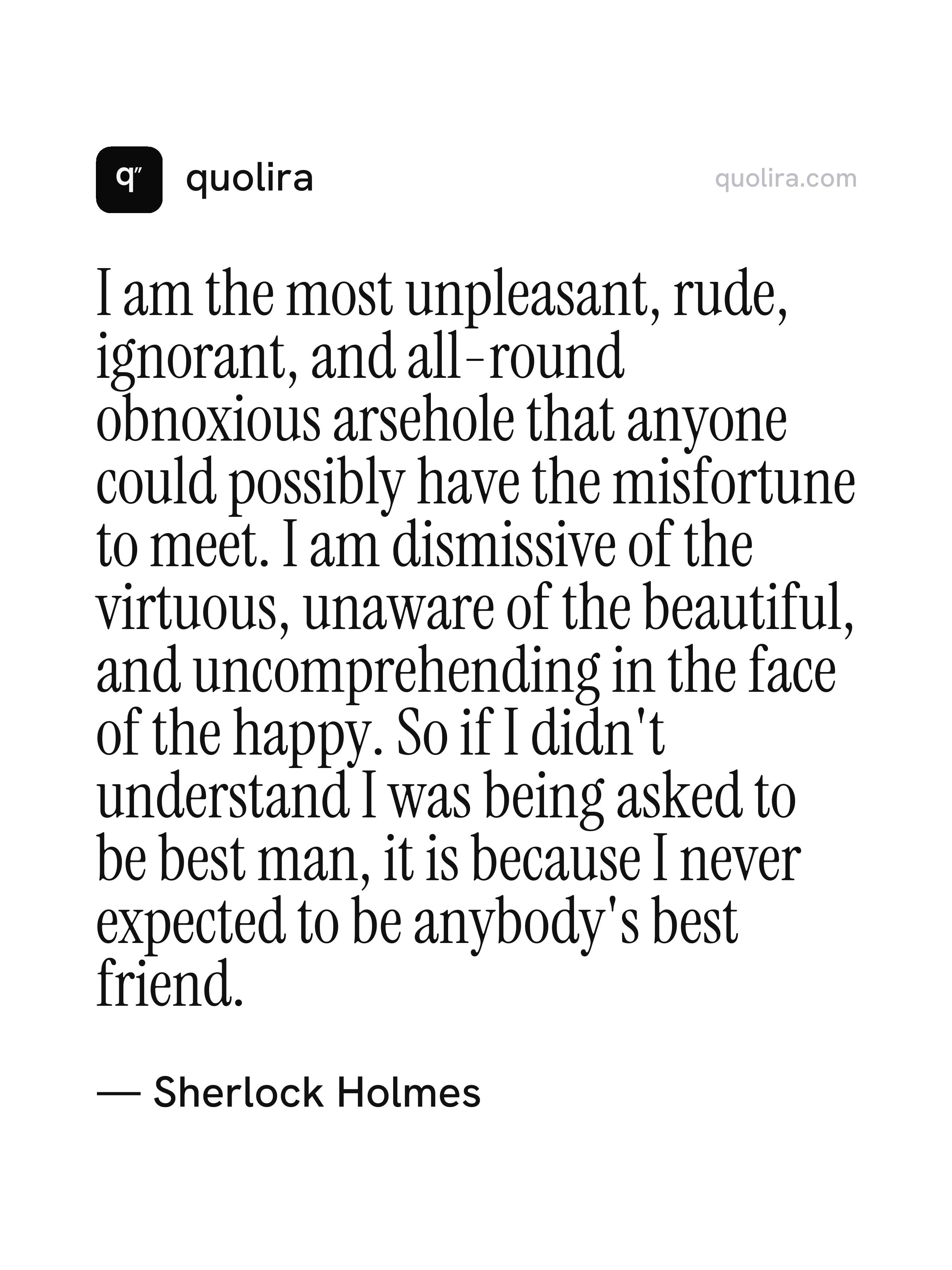
“I am the most unpleasant, rude, ignorant, and all-round obnoxious arsehole that anyone could possibly have the misfortune to meet. I am dismissive of the virtuous, unaware of the beautiful, and uncomprehending in the face of the happy. So if I didn't understand I was being asked to be best man, it is because I never expected to be anybody's best friend.”
Sherlock Holmes · BBC Sherlock, Series 3, Episode 2: The Sign of Three, 2014
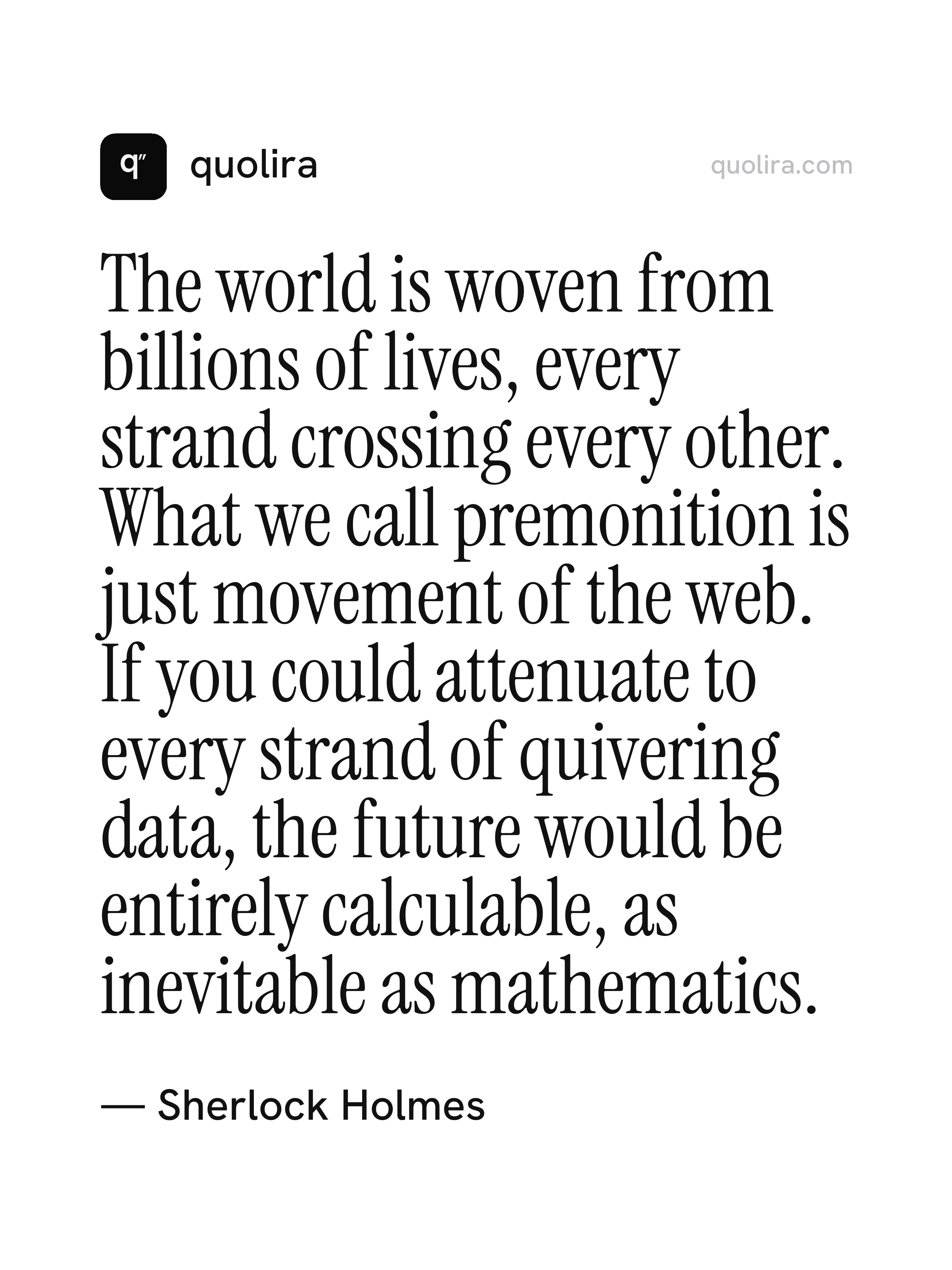
“The world is woven from billions of lives, every strand crossing every other. What we call premonition is just movement of the web. If you could attenuate to every strand of quivering data, the future would be entirely calculable, as inevitable as mathematics.”
Sherlock Holmes · BBC Sherlock, Series 3, Episode 2: The Sign of Three, 2014
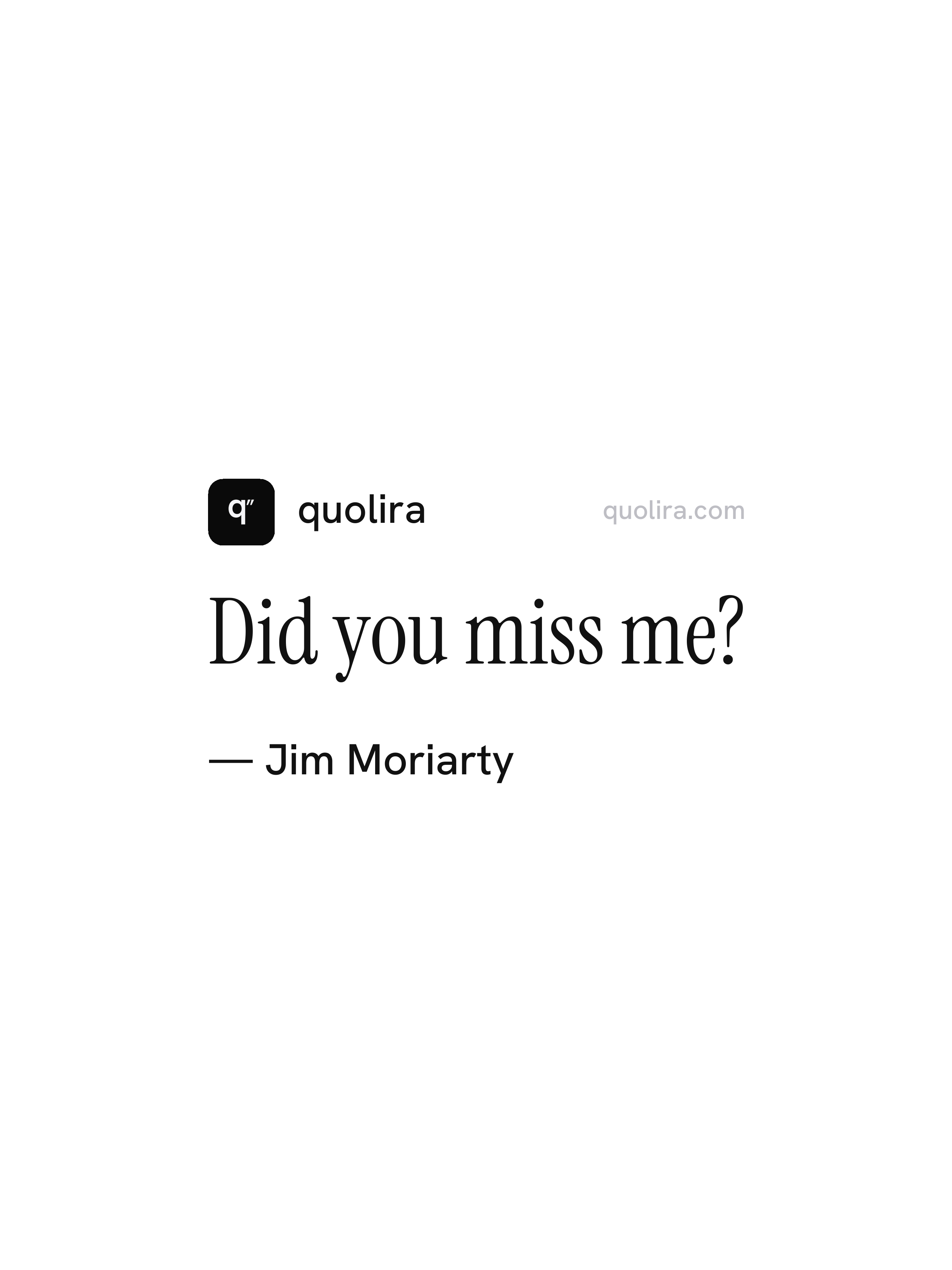
“Did you miss me?”
Jim Moriarty · BBC Sherlock, Series 3 finale post-credits sequence, 2014
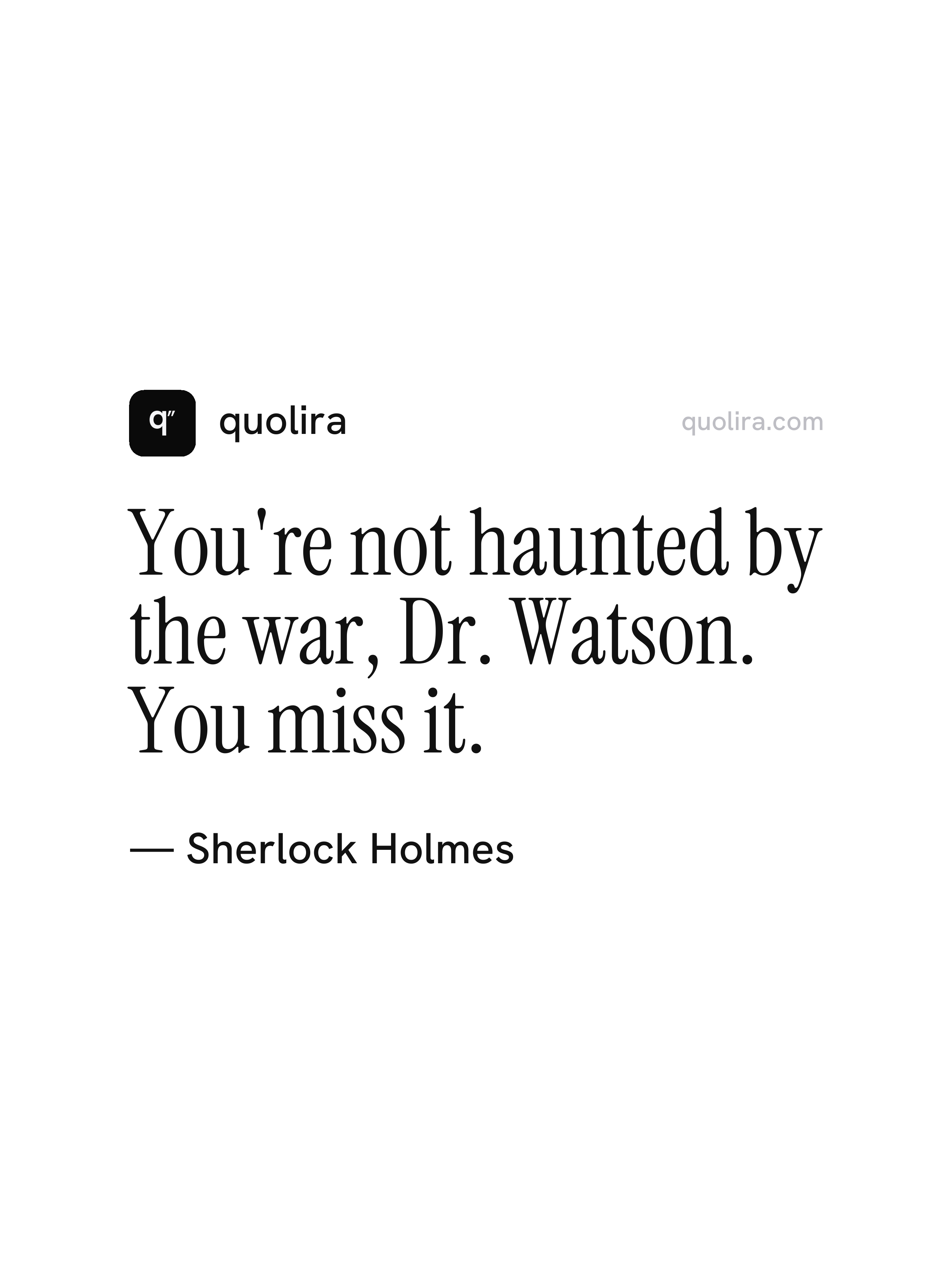
“You're not haunted by the war, Dr. Watson. You miss it.”
Sherlock Holmes · BBC Sherlock, Series 1, Episode 1: A Study in Pink, 2010
“I may be on the side of the angels, but don't think for one second that I am one of them.”
Sherlock Holmes · BBC Sherlock, Series 2, Episode 3: The Reichenbach Fall, 2012