“O my son, do not associate anything with God. Associating others with Him is a tremendous wrong.”
Luqman · Quran, Surah Luqman 31:13
 quolira
.com
quolira
quolira.com
This verse communicates the absolute scope of divine awareness. Luqman tells his son that no action, however tiny or however concealed, lies beyond God's knowledge. The image of a mustard seed hidden inside a rock is vivid and deliberate: it asks the listener to picture the smallest thing in the most inaccessible place, and then affirms that even that is visible to God. The closing description of God as all-subtle and all-aware reinforces the point, suggesting that divine perception penetrates where human senses and reasoning cannot reach.
This verse is part of the sustained address that Luqman delivers to his son in Surah Luqman, the thirty-first chapter of the Quran. Having established the principle of worshipping God alone, Luqman moves here to the principle of accountability, the understanding that every deed carries weight and consequence. Together these two ideas, monotheism and moral accountability, form the theological foundation on which the rest of Luqman's practical guidance rests. The verse is frequently referenced in Islamic tradition when discussing sincerity, conscience, and the invisible record of human action.
Luqman is presented in the Quran as a recipient of divine wisdom whose counsel to his son stands as a model of righteous parenting and moral instruction. The Quran does not provide a detailed biography, and while later commentators and traditions have offered various accounts of his background, none of those accounts can be stated with certainty. What the text itself makes clear is that his wisdom was considered worth preserving and presenting to all who would read or hear the Quran.
“O my son, do not associate anything with God. Associating others with Him is a tremendous wrong.”
Luqman · Quran, Surah Luqman 31:13
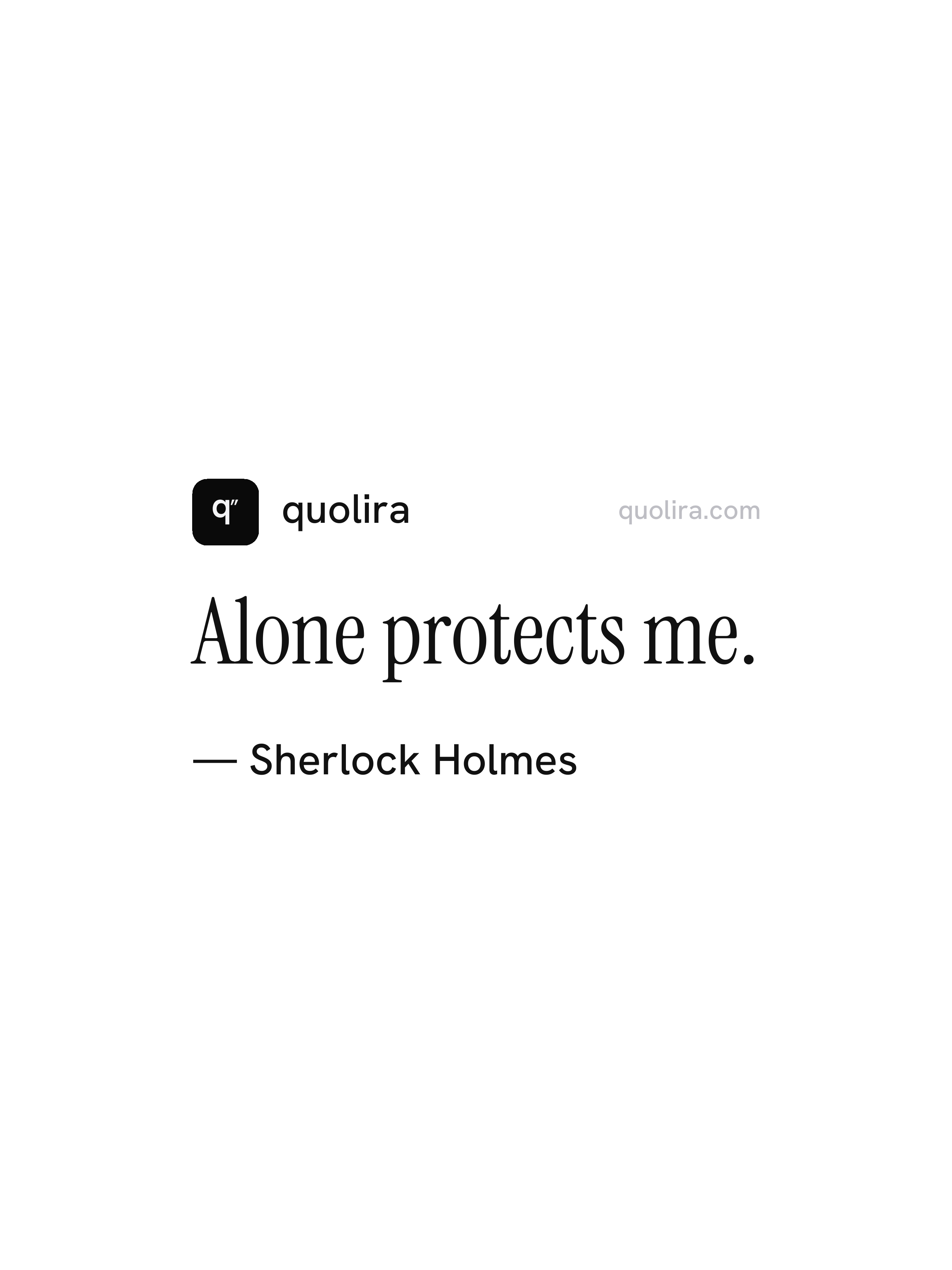
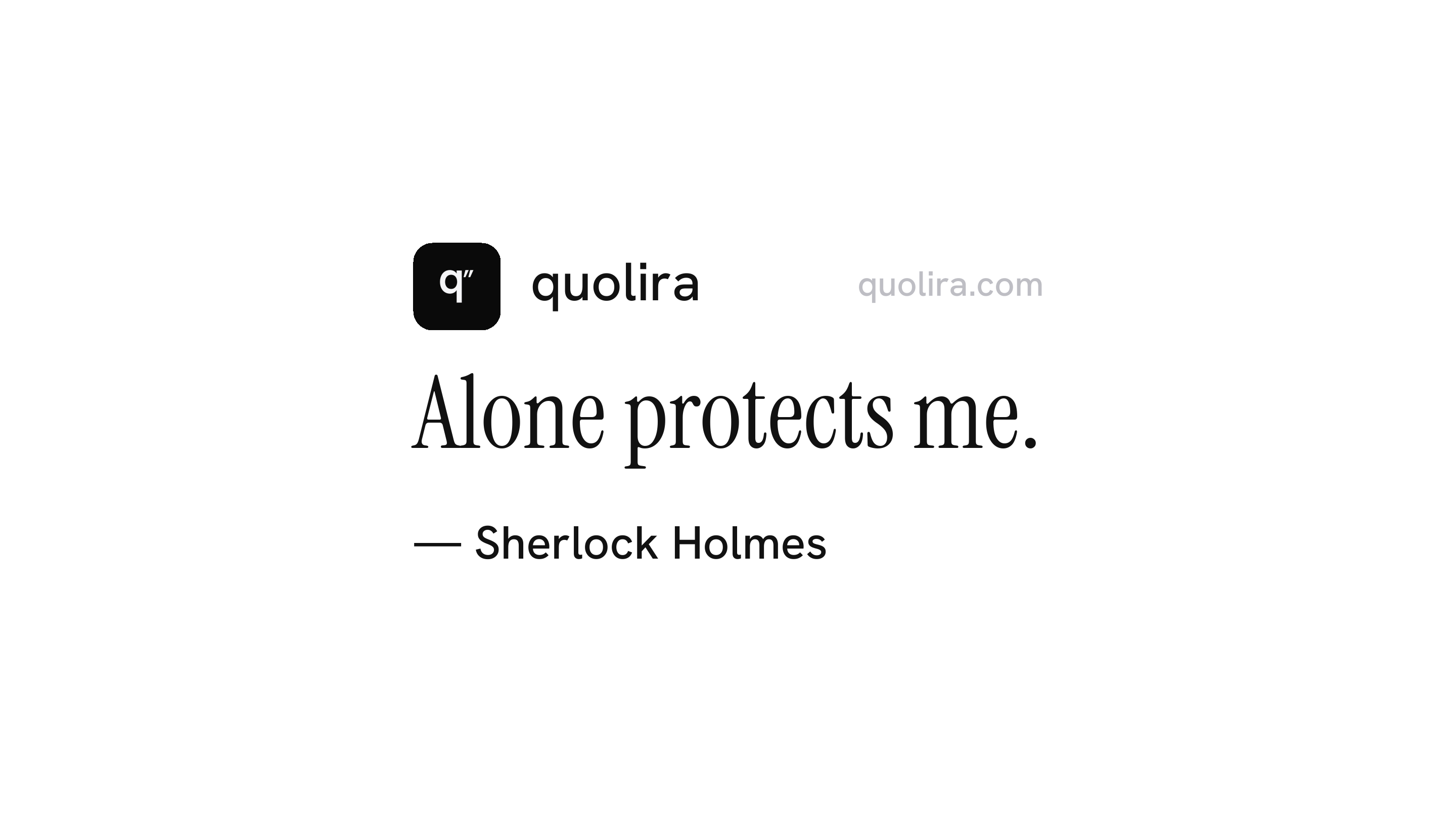
“Alone protects me.”
Sherlock Holmes · BBC Sherlock, Series 2, Episode 1: A Scandal in Belgravia, 2012
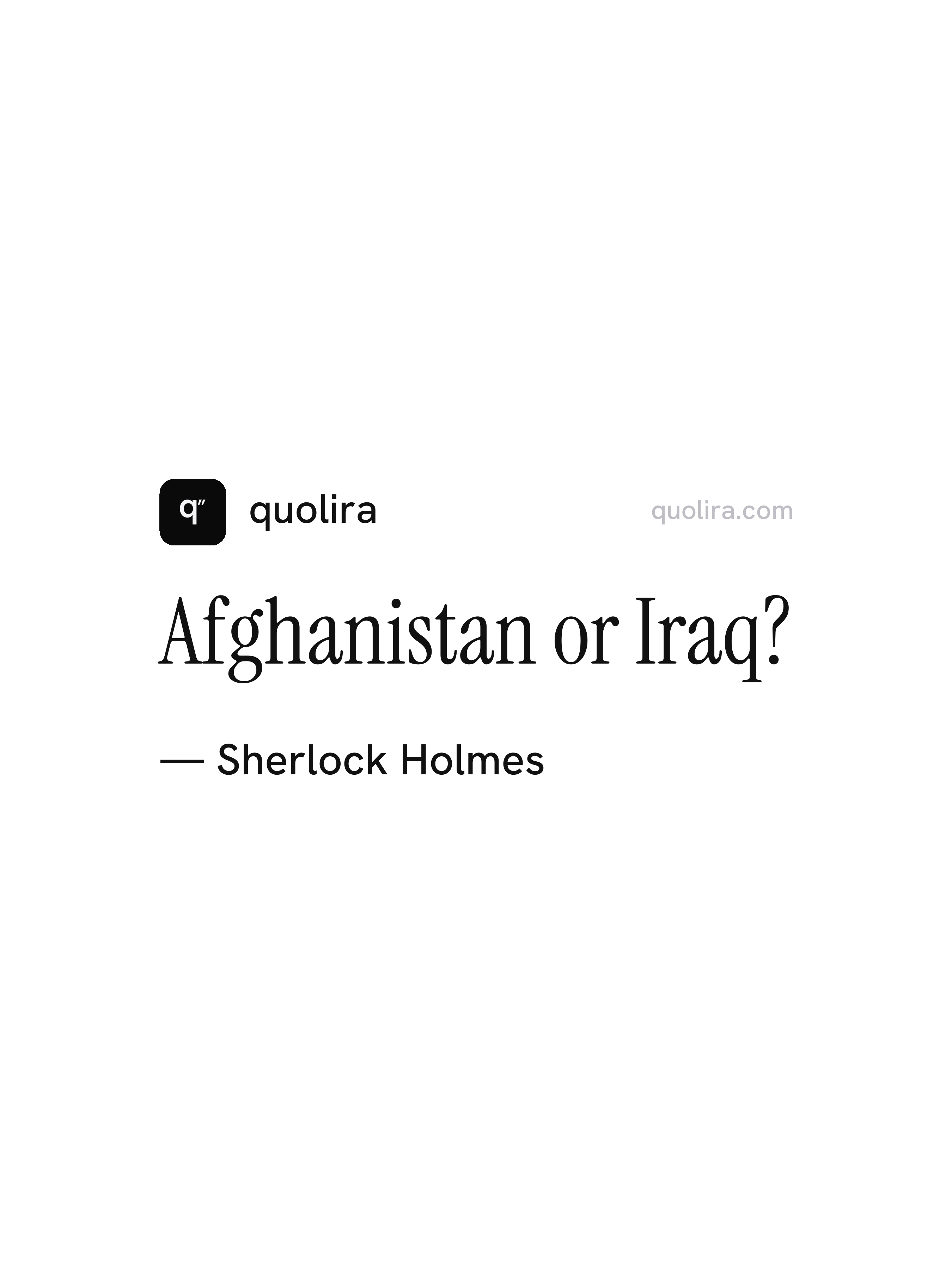
“Afghanistan or Iraq?”
Sherlock Holmes · BBC Sherlock, Series 1, Episode 1: A Study in Pink, 2010
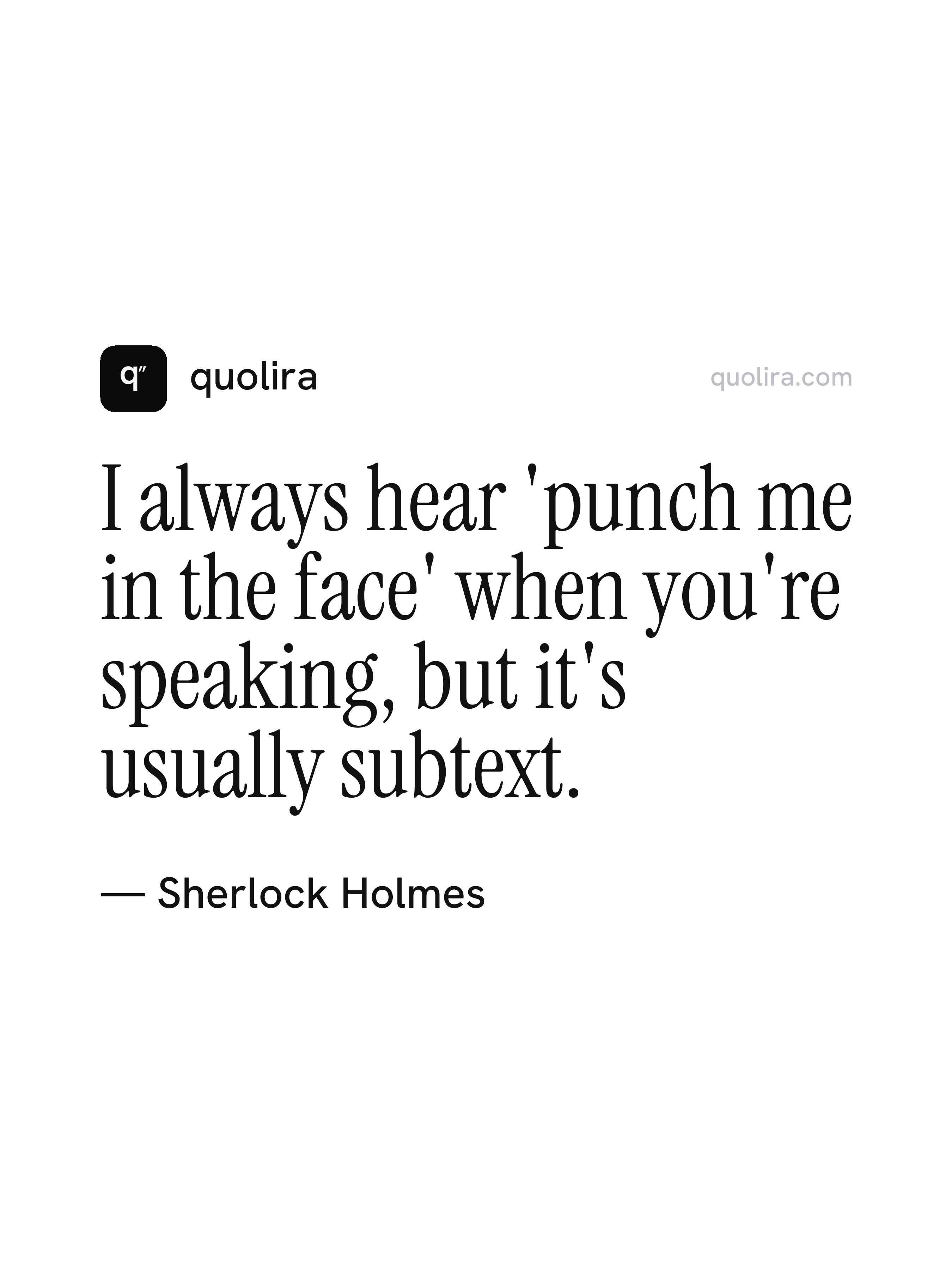
“I always hear 'punch me in the face' when you're speaking, but it's usually subtext.”
Sherlock Holmes · BBC Sherlock, Series 2, Episode 1: A Scandal in Belgravia, 2012
“You've been so alone. And you think that's the price of being extraordinary. And maybe it is. But you've been paying it so long.”
Molly Hooper · BBC Sherlock, Series 4, Episode 3: The Final Problem, 2017
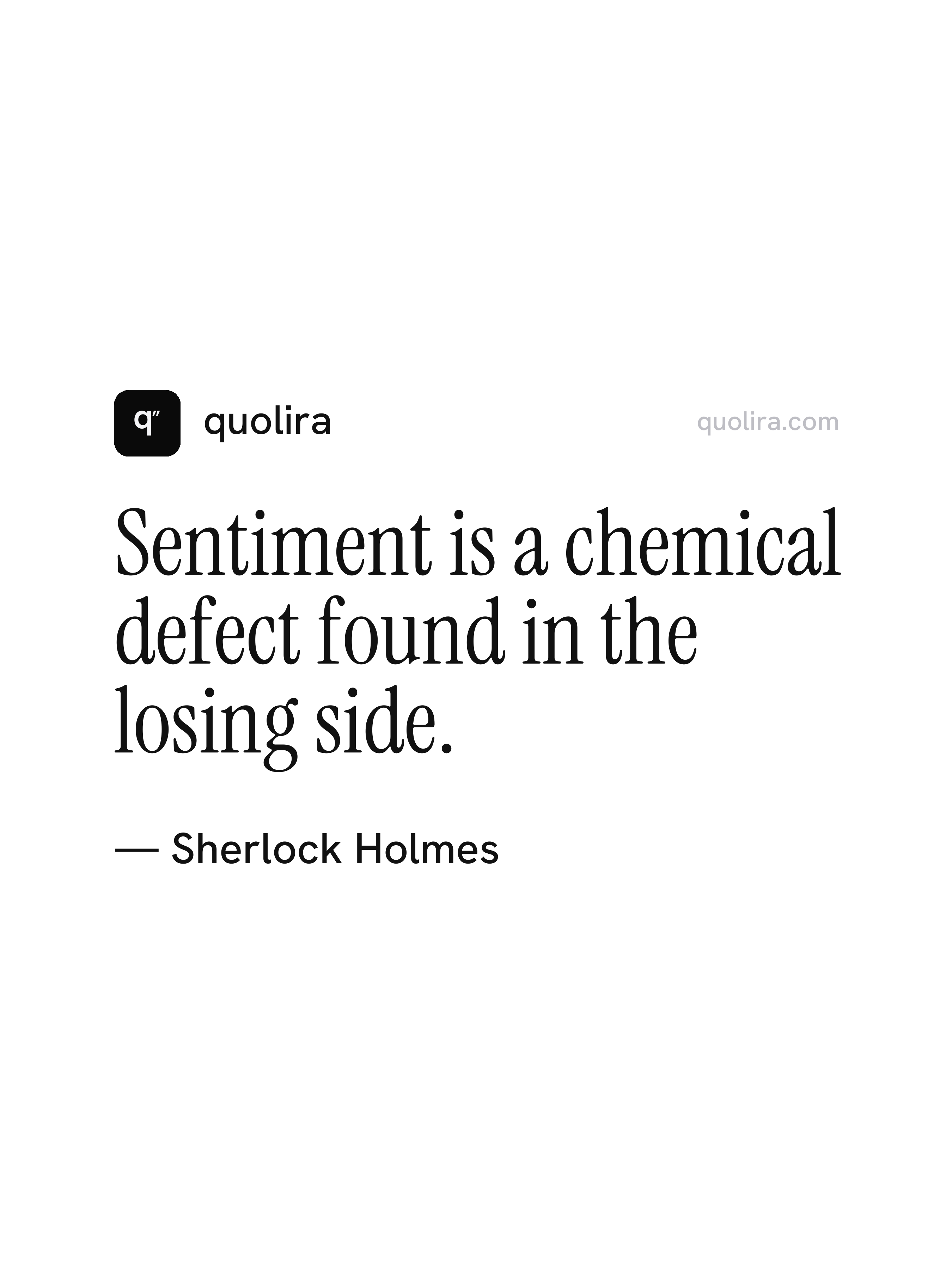
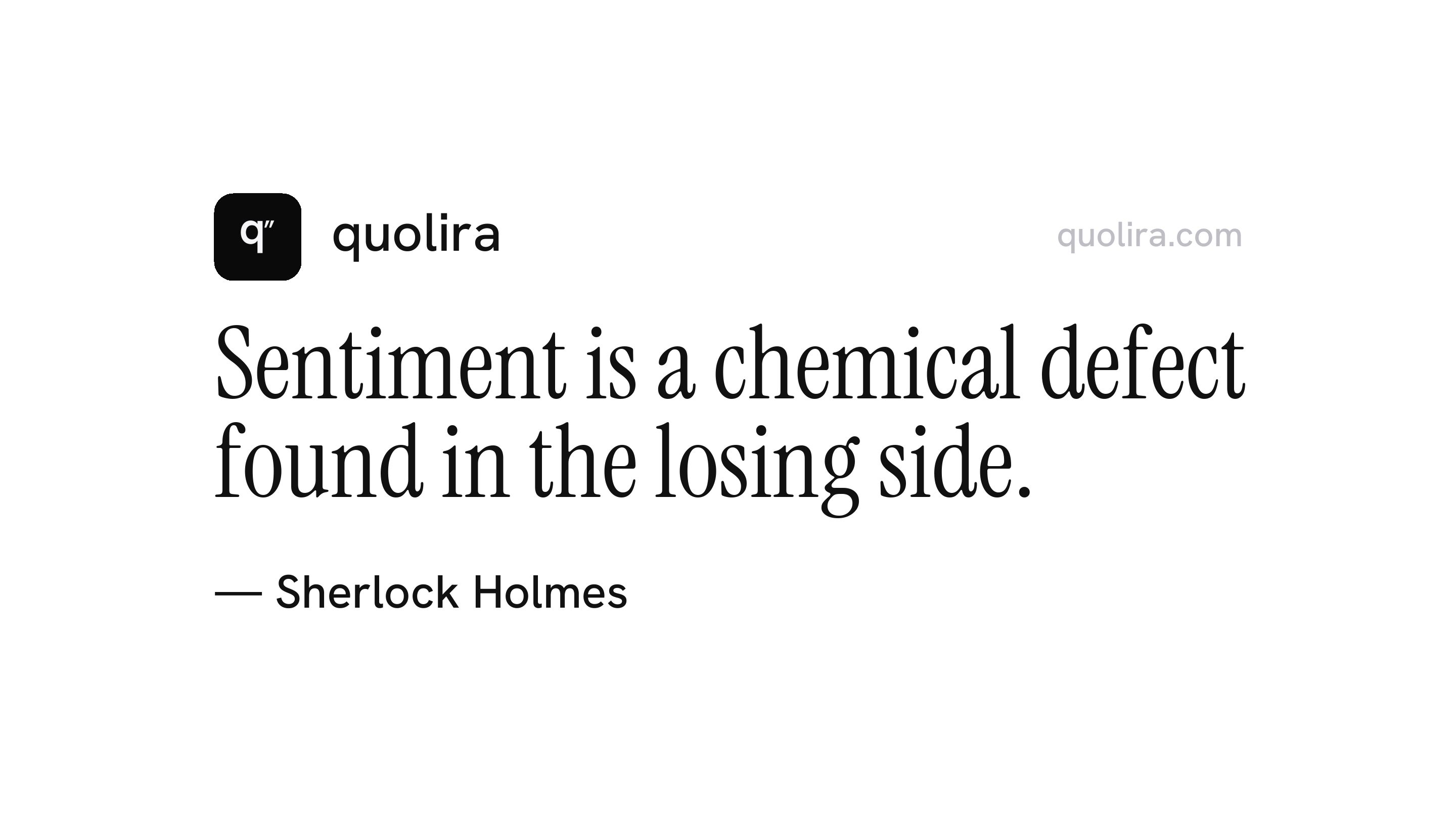
“Sentiment is a chemical defect found in the losing side.”
Sherlock Holmes · BBC Sherlock, Series 2, Episode 1: A Scandal in Belgravia, 2012
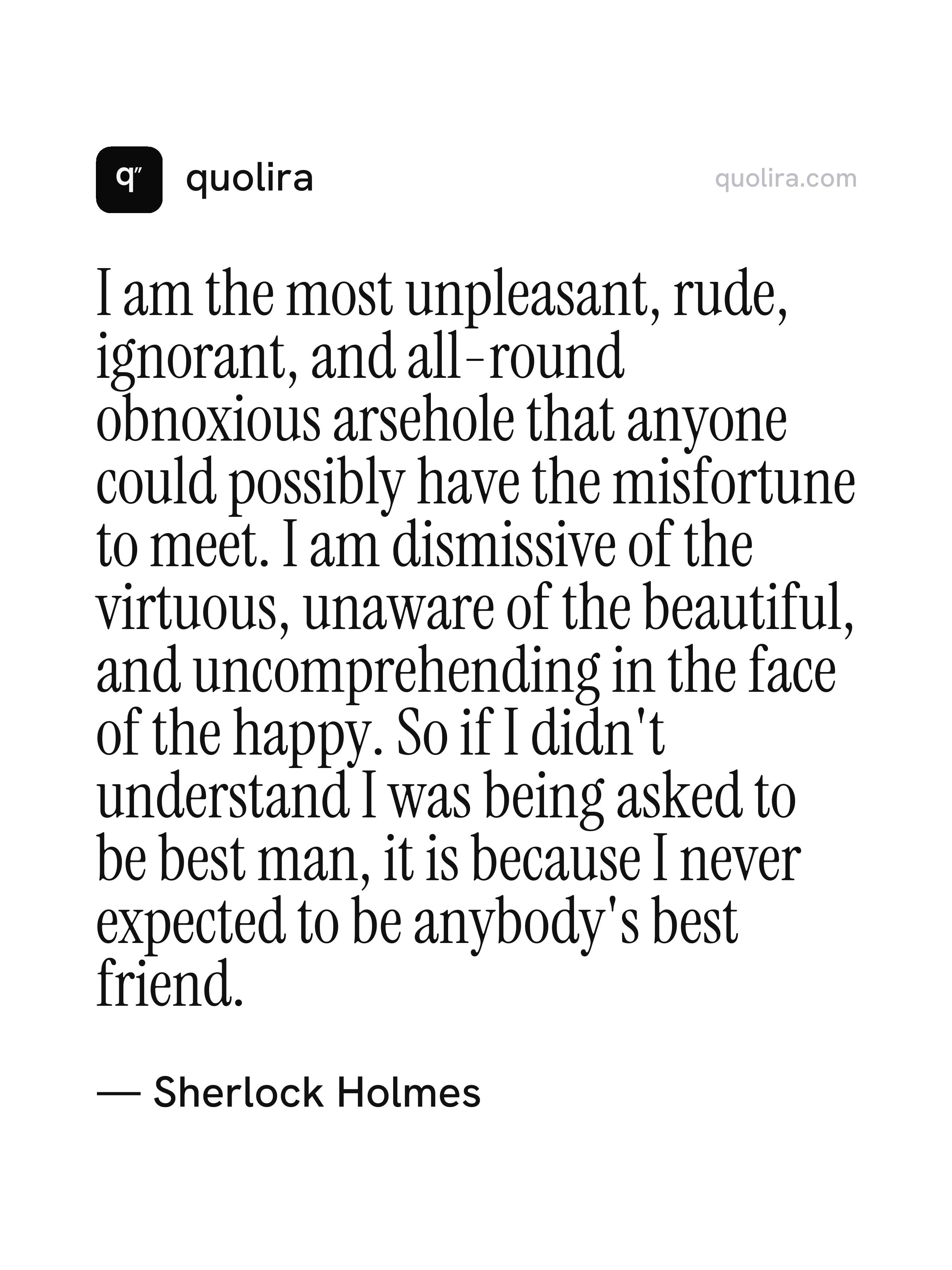
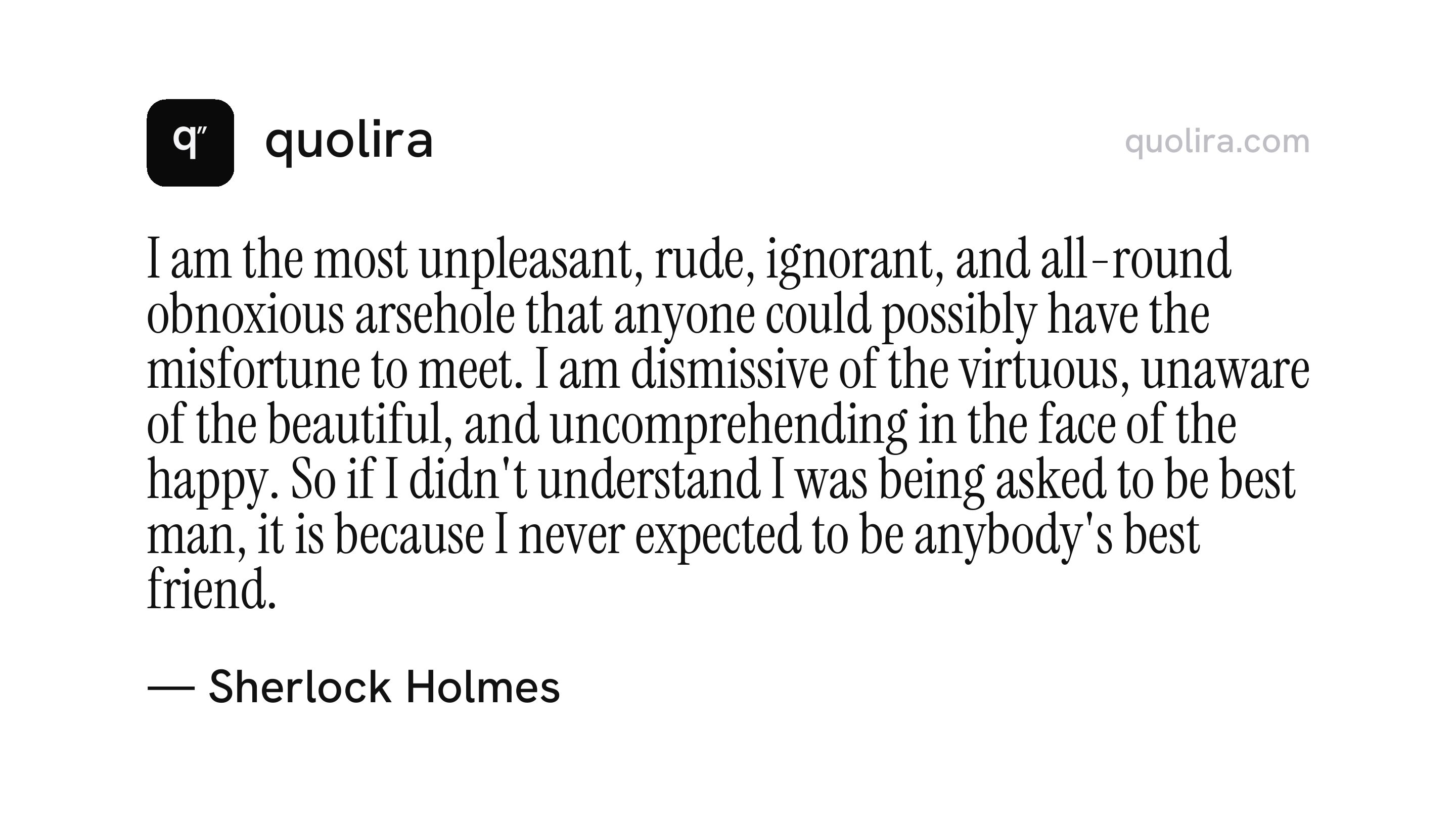
“I am the most unpleasant, rude, ignorant, and all-round obnoxious arsehole that anyone could possibly have the misfortune to meet. I am dismissive of the virtuous, unaware of the beautiful, and uncomprehending in the face of the happy. So if I didn't understand I was being asked to be best man, it is because I never expected to be anybody's best friend.”
Sherlock Holmes · BBC Sherlock, Series 3, Episode 2: The Sign of Three, 2014
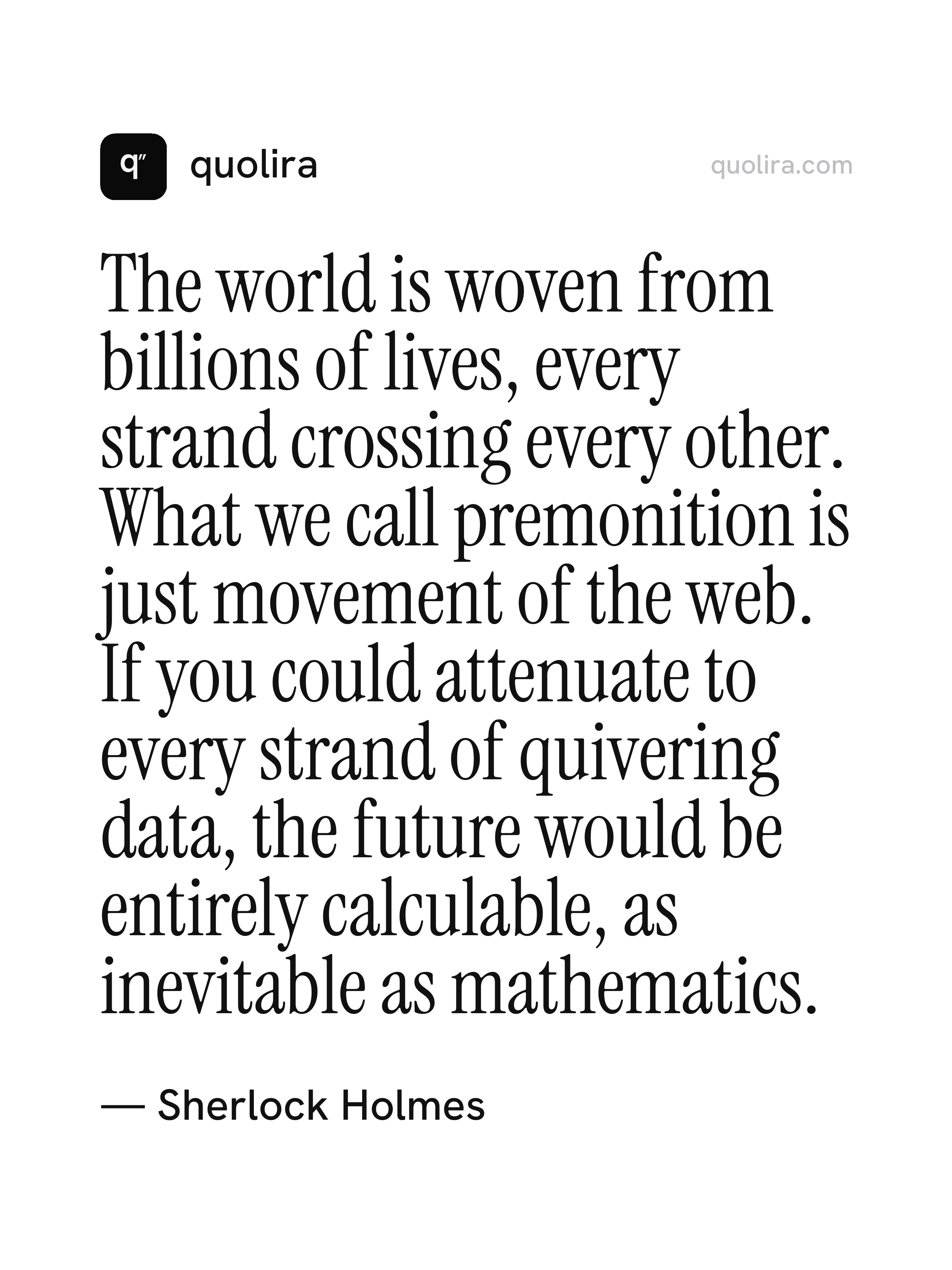
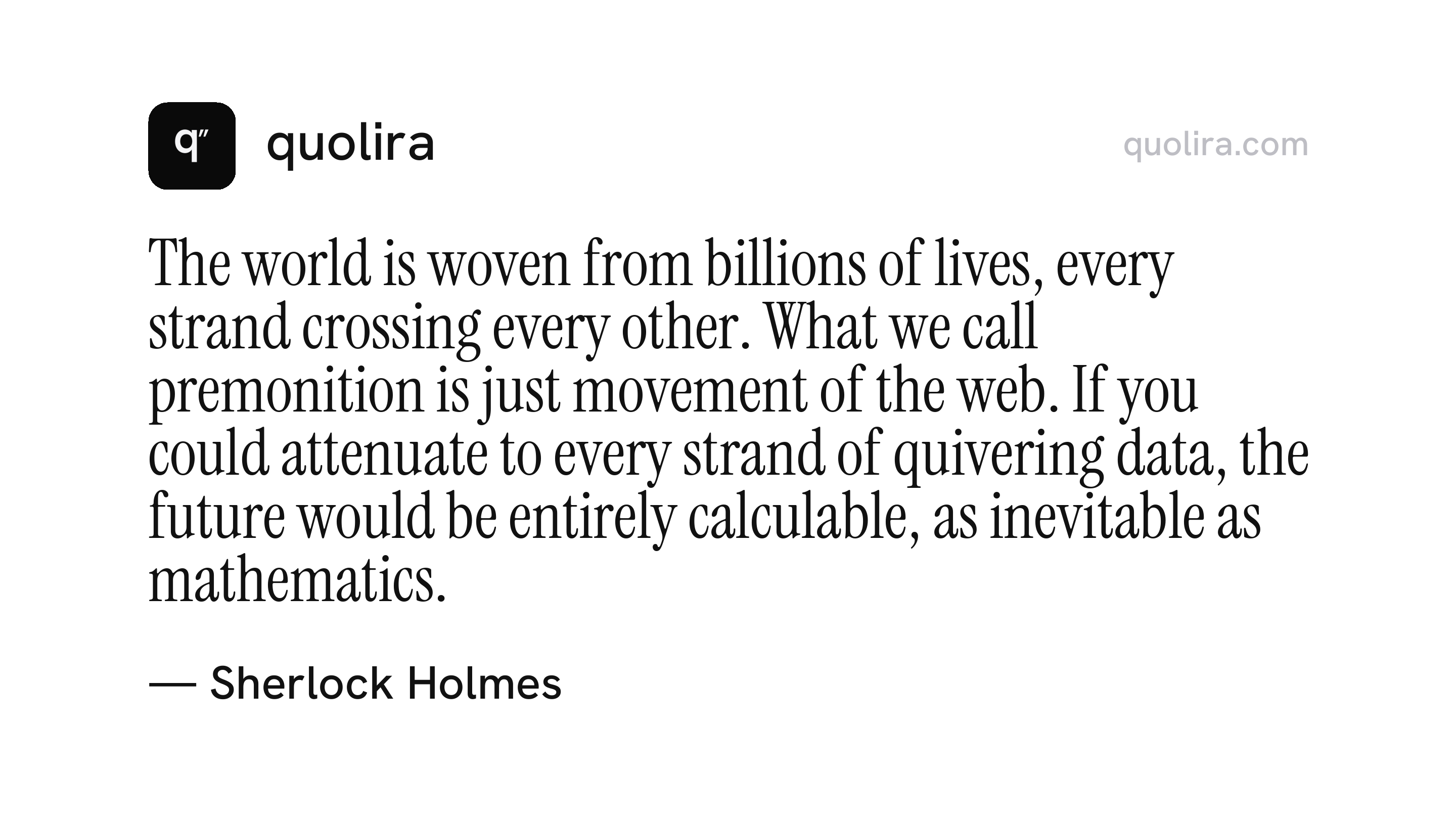
“The world is woven from billions of lives, every strand crossing every other. What we call premonition is just movement of the web. If you could attenuate to every strand of quivering data, the future would be entirely calculable, as inevitable as mathematics.”
Sherlock Holmes · BBC Sherlock, Series 3, Episode 2: The Sign of Three, 2014
“Did you miss me?”
Jim Moriarty · BBC Sherlock, Series 3 finale post-credits sequence, 2014
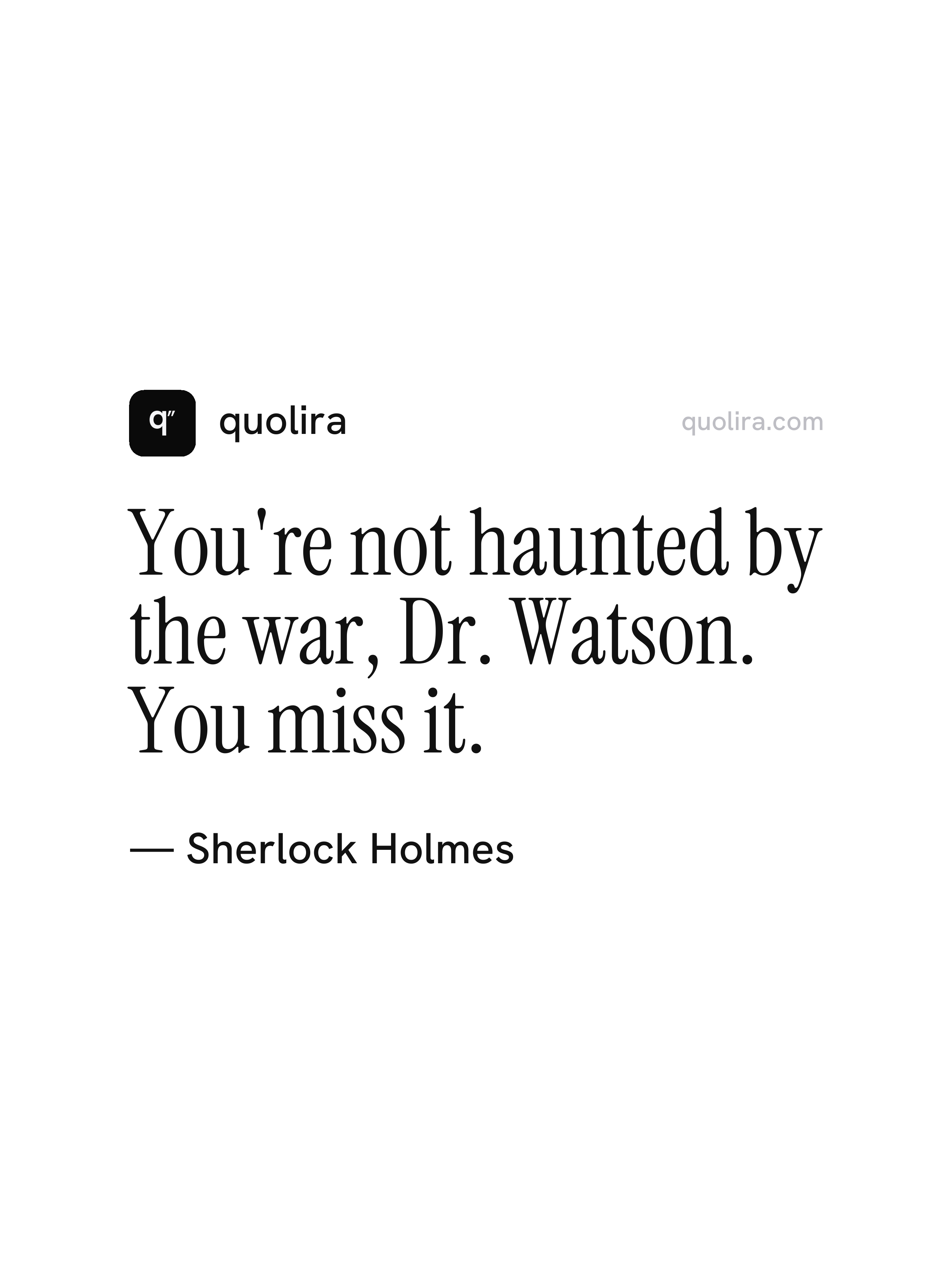
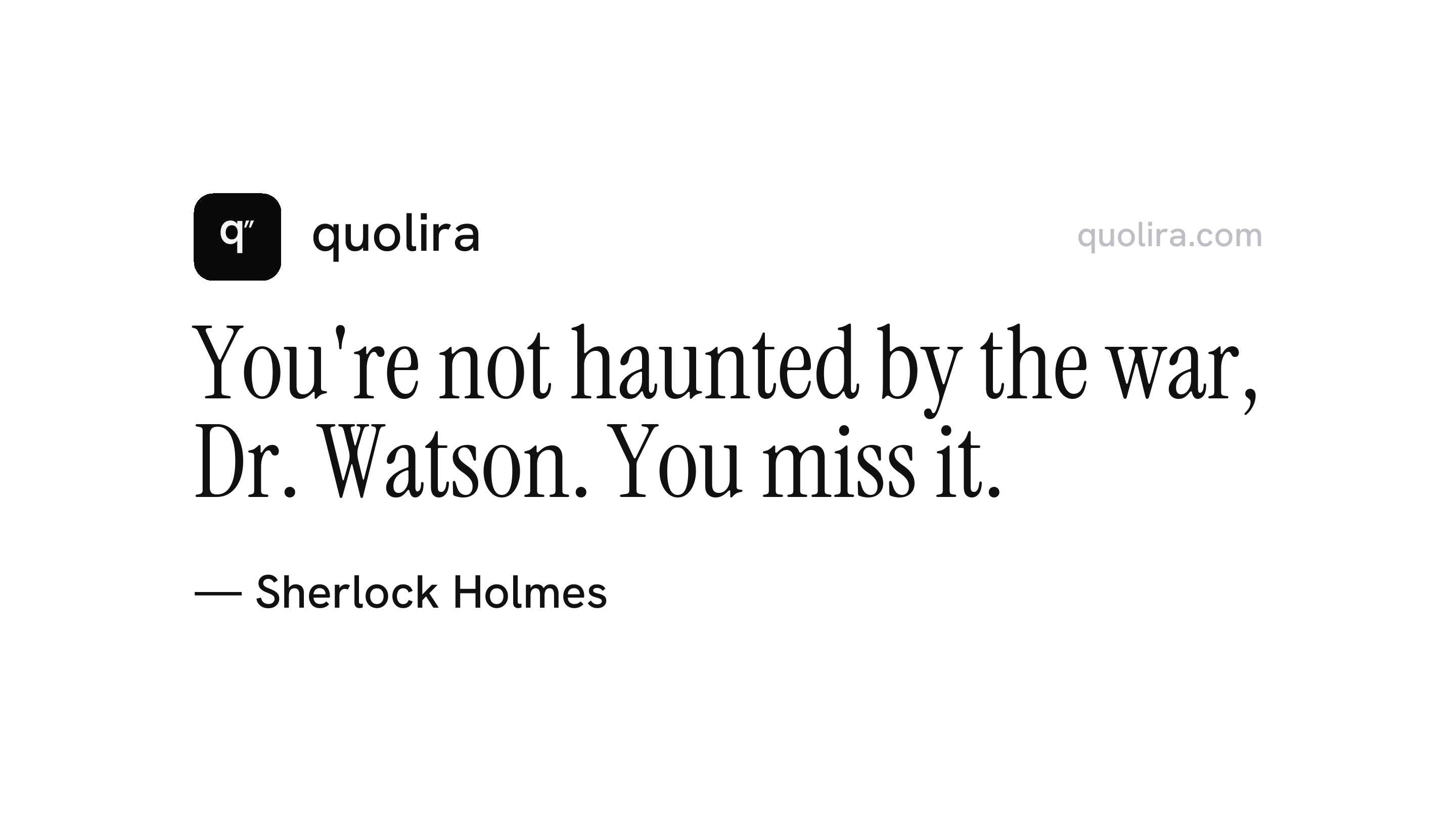
“You're not haunted by the war, Dr. Watson. You miss it.”
Sherlock Holmes · BBC Sherlock, Series 1, Episode 1: A Study in Pink, 2010
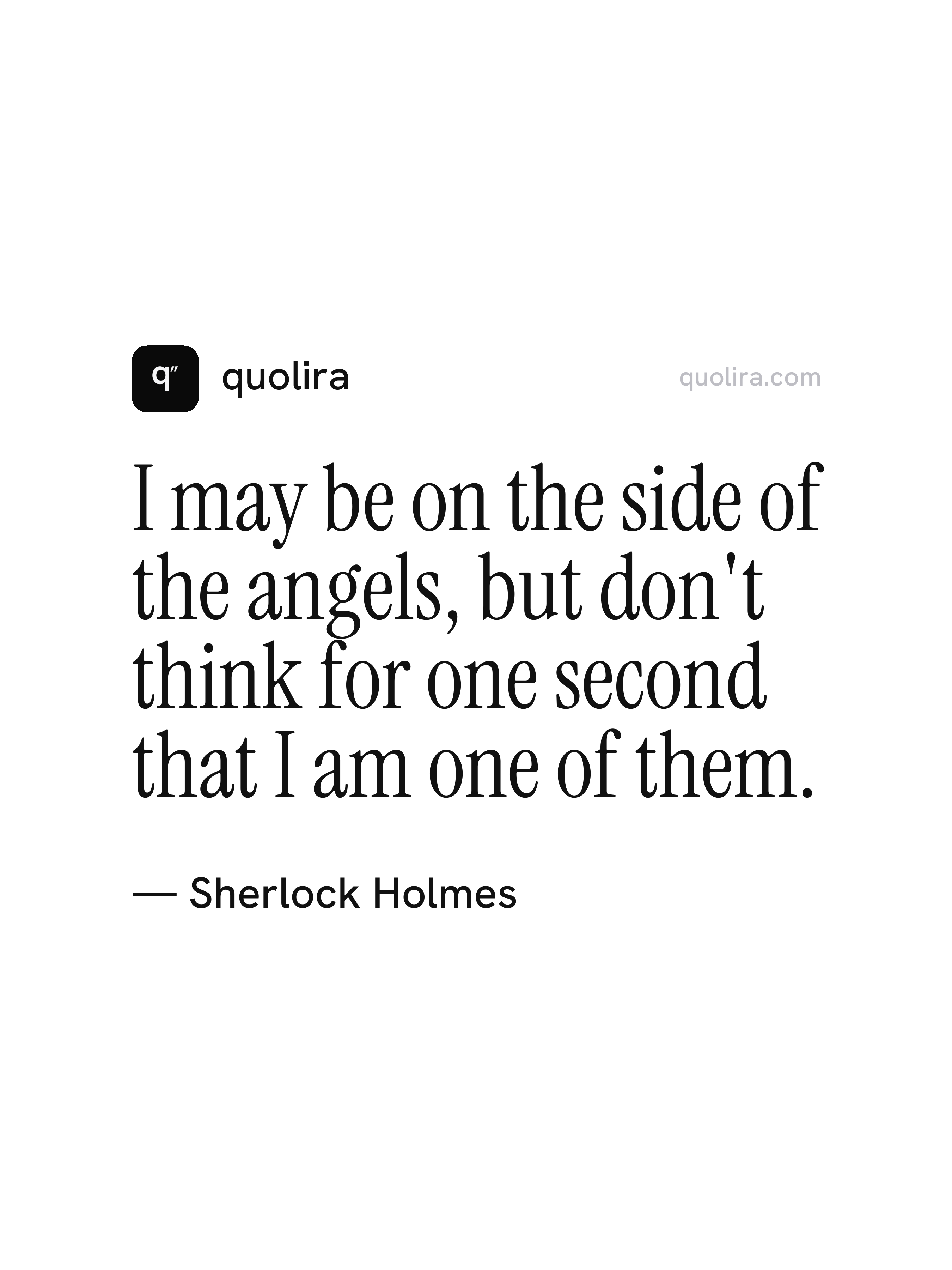
“I may be on the side of the angels, but don't think for one second that I am one of them.”
Sherlock Holmes · BBC Sherlock, Series 2, Episode 3: The Reichenbach Fall, 2012
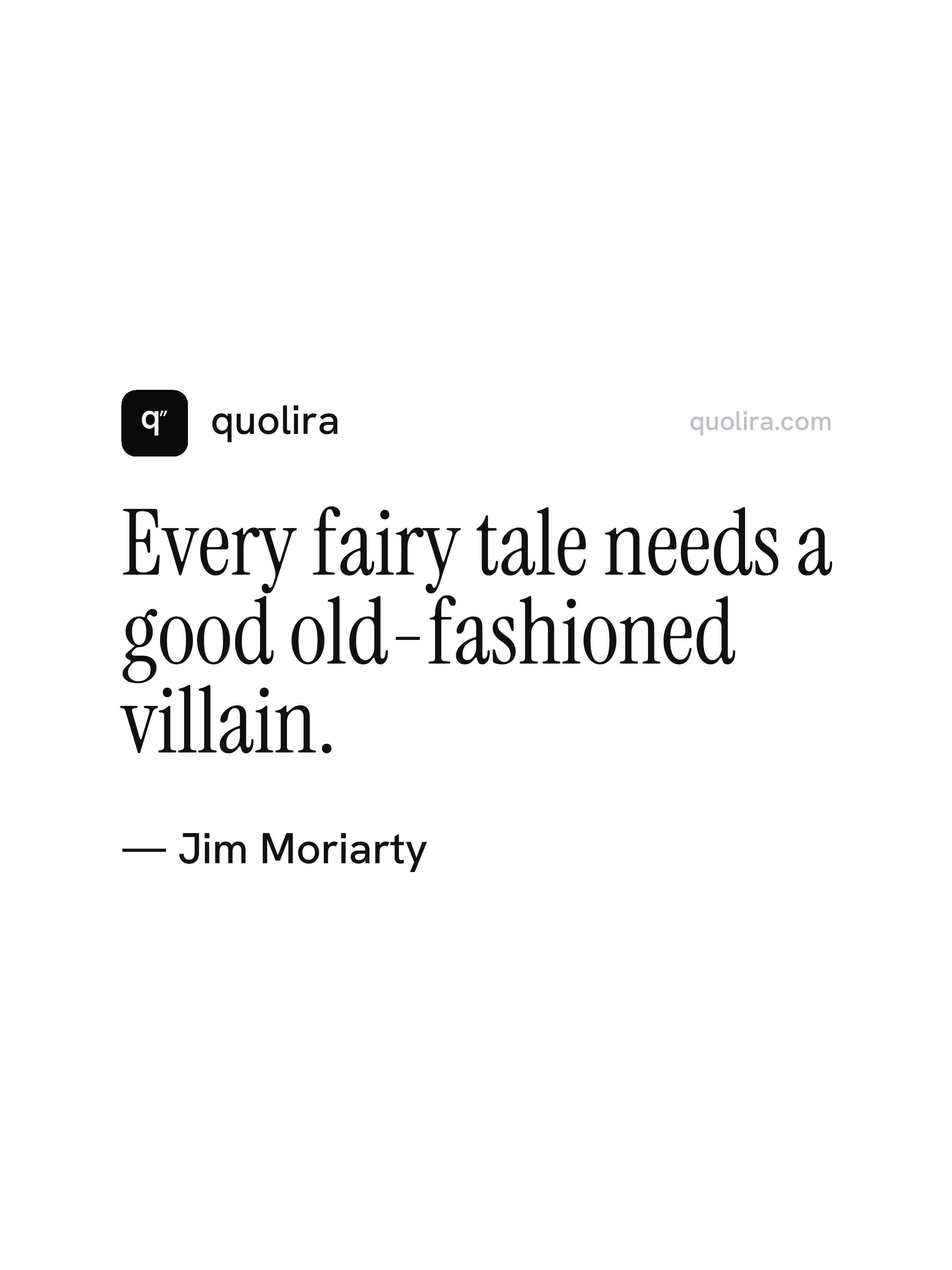
“Every fairy tale needs a good old-fashioned villain.”
Jim Moriarty · BBC Sherlock, Series 2, Episode 1: A Scandal in Belgravia, 2012