“We commanded man to be good to his parents. His mother carried him with increasing weakness, and his weaning takes 2 years. Be grateful to Me and to your parents.”
Luqman · Quran, Surah Luqman 31:14
 quolira
.com
quolira
quolira.com
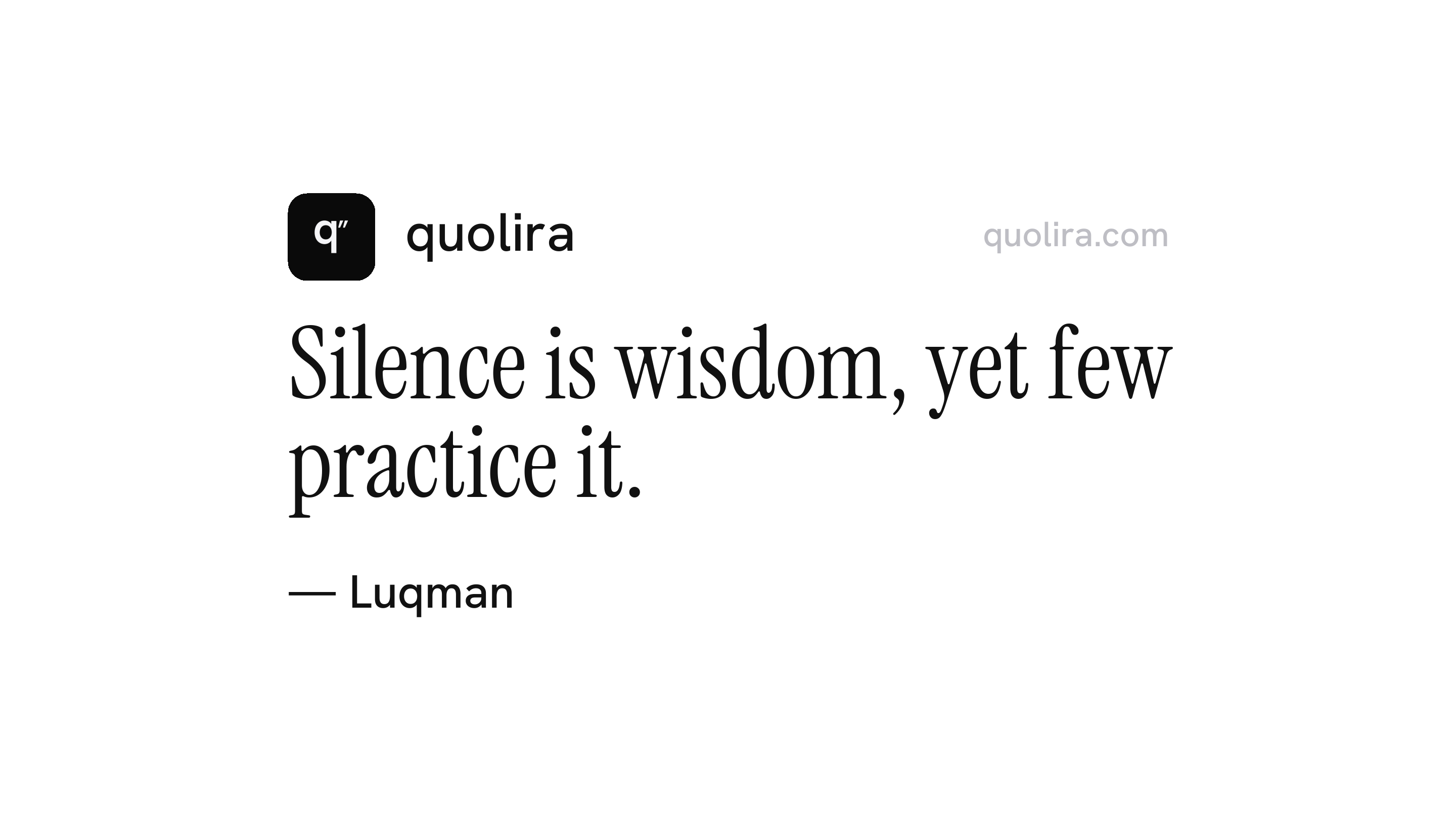
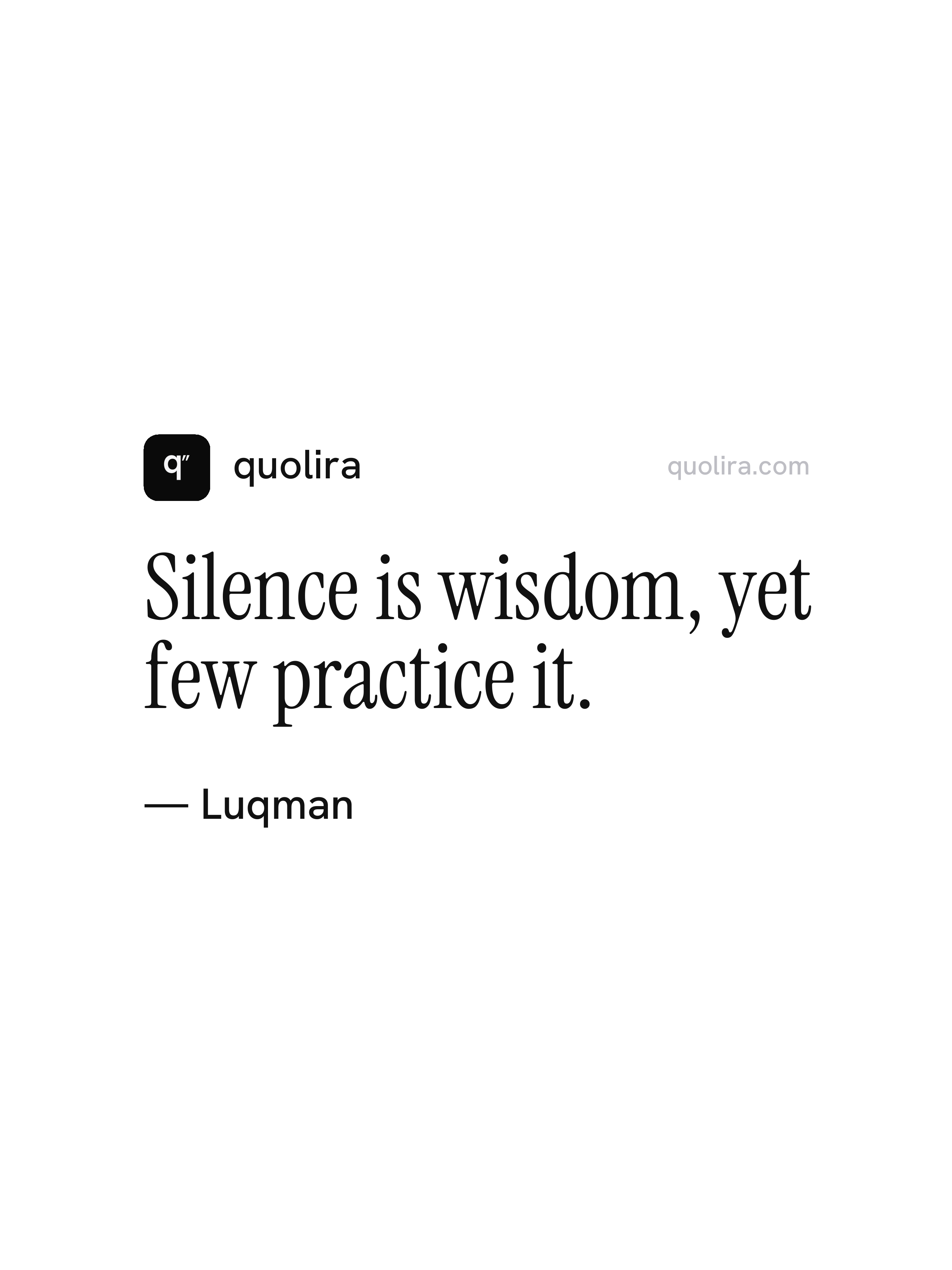
This short saying makes a quiet but pointed observation about the gap between knowing something and actually doing it. Silence, here, is not simply the absence of noise but a deliberate practice, a form of self-discipline that allows for listening, reflection, and careful judgment. The second half of the sentence does not condemn people but simply notes that this kind of restraint is genuinely rare. The power of the saying lies in its brevity: it demonstrates the very quality it recommends by using as few words as possible to make its case.
This line is widely attributed to Luqman in classical Arabic wisdom literature, though it does not appear in the Quranic verses that bear his name. Arabic proverbial and wisdom traditions have long preserved sayings credited to Luqman beyond the scriptural text, reflecting his status as a figure associated with timeless moral insight. The theme of silence as a mark of wisdom appears frequently across many cultures and philosophical traditions, and this particular formulation has been passed down because it captures the idea with unusual economy and directness.
Luqman occupies a unique place in Islamic culture as a wise man whose reputation for moral and practical wisdom was so great that a chapter of the Quran was named after him. Beyond the scriptural record, a broader body of sayings and maxims has been attributed to him in classical Arabic literature and oral tradition. He is consistently portrayed as someone who valued restraint, humility, and careful thought over display and noise, which makes this particular saying feel especially characteristic of the figure as tradition has remembered him.
“We commanded man to be good to his parents. His mother carried him with increasing weakness, and his weaning takes 2 years. Be grateful to Me and to your parents.”
Luqman · Quran, Surah Luqman 31:14
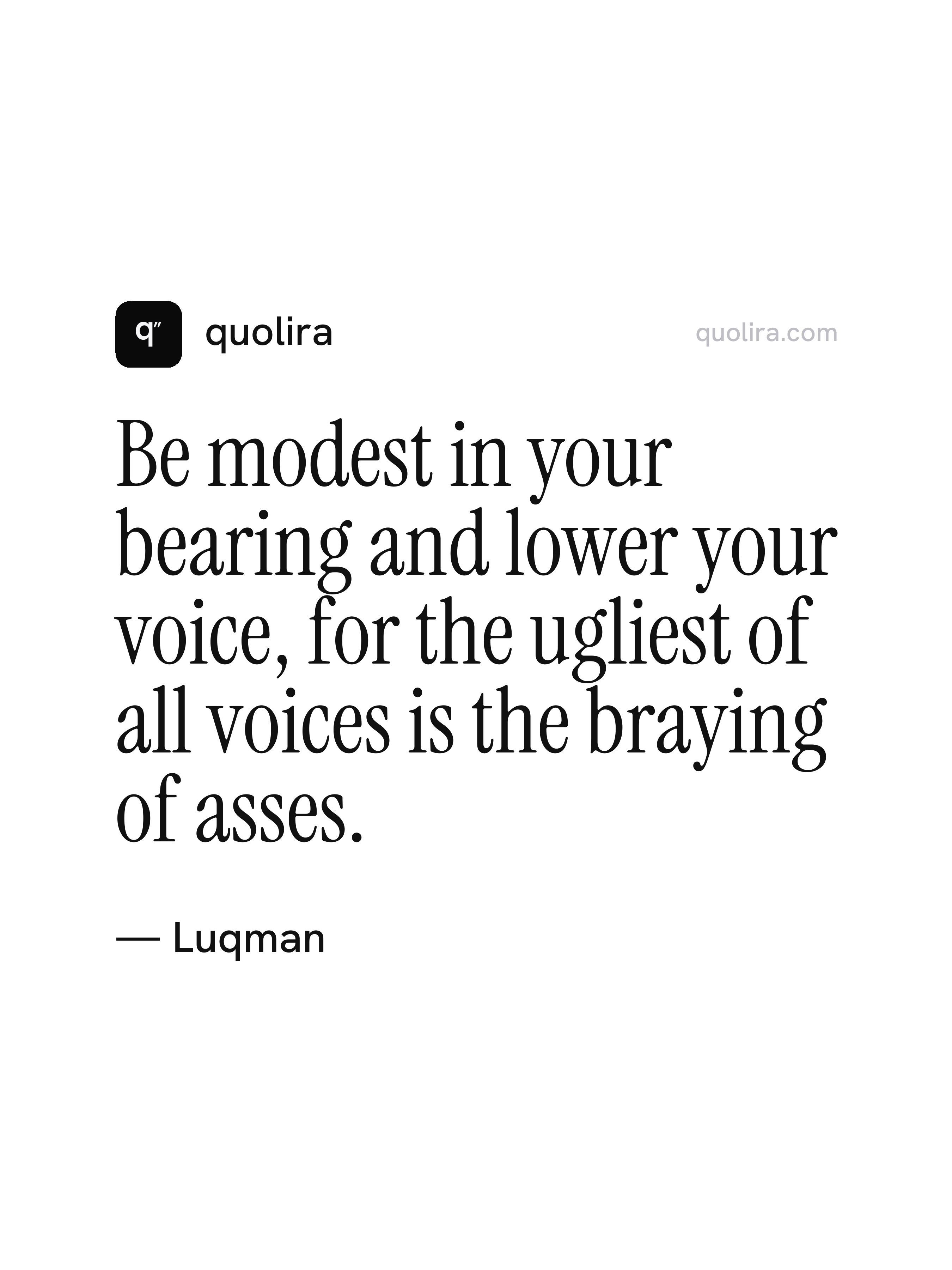
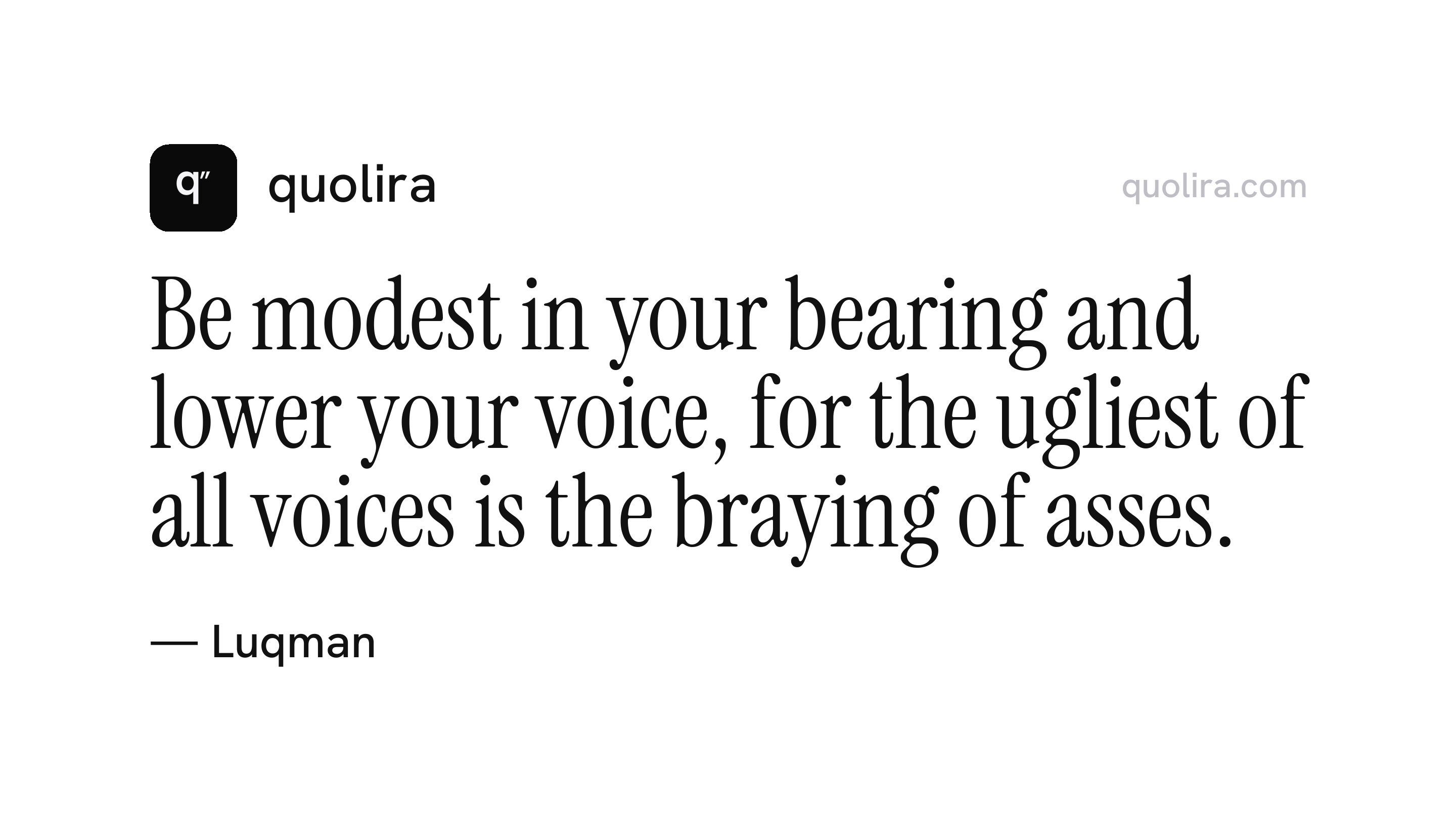
“Be modest in your bearing and lower your voice, for the ugliest of all voices is the braying of asses.”
Luqman · Quran, Surah Luqman 31:19
“Do not turn your nose up at people, nor walk about the place arrogantly, for God does not love arrogant or boastful people.”
Luqman · Quran, Surah Luqman 31:18
“O my son, keep up the prayer, command what is right, forbid what is wrong, and bear with patience whatever befalls you. These are matters of great determination.”
Luqman · Quran, Surah Luqman 31:17
“O my son, even if a deed were the weight of a mustard seed and hidden inside a rock or anywhere in the heavens or earth, God would bring it forth. God is all-subtle, all-aware.”
Luqman · Quran, Surah Luqman 31:16
“O my son, do not associate anything with God. Associating others with Him is a tremendous wrong.”
Luqman · Quran, Surah Luqman 31:13
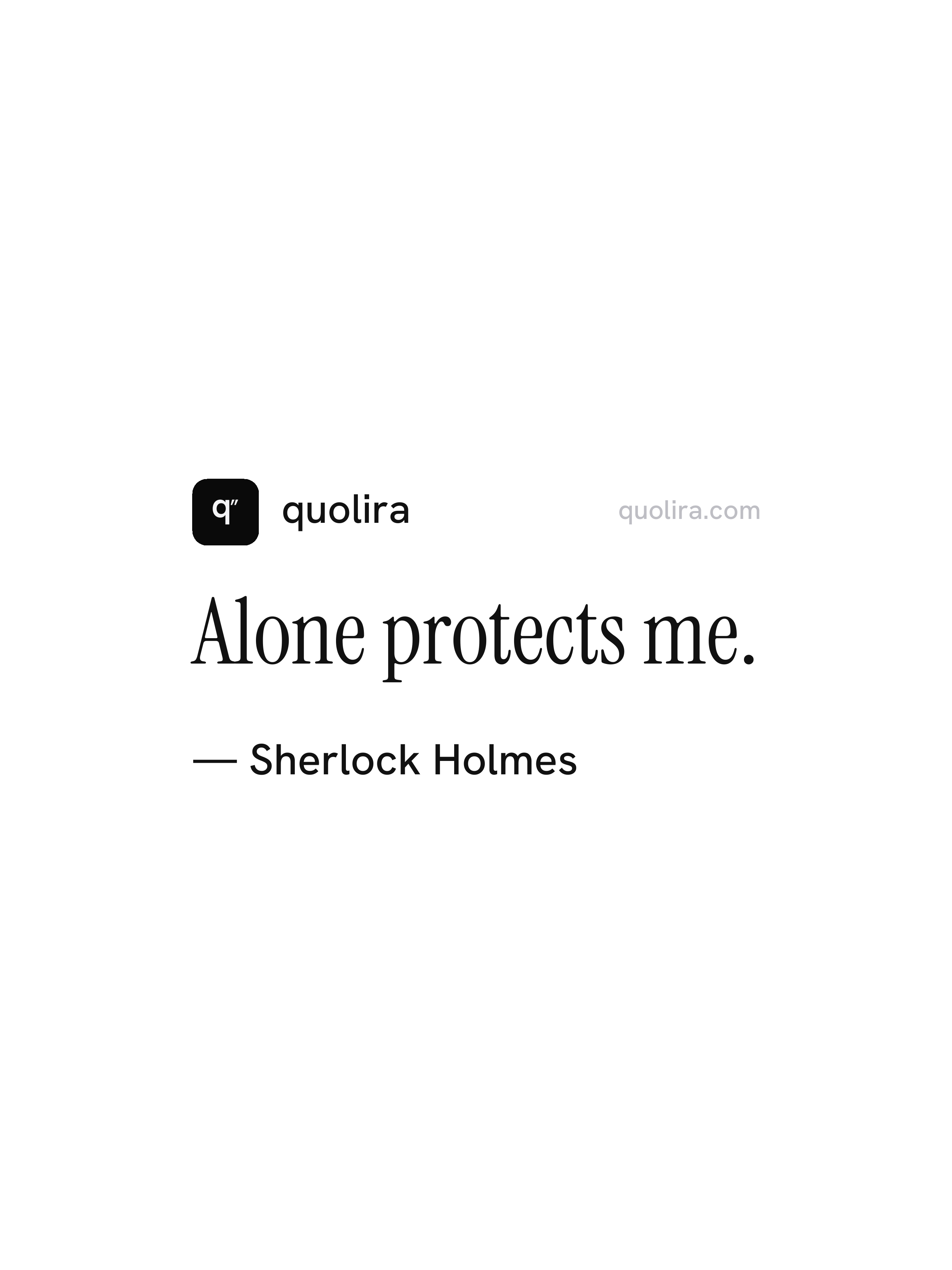
“Alone protects me.”
Sherlock Holmes · BBC Sherlock, Series 2, Episode 1: A Scandal in Belgravia, 2012
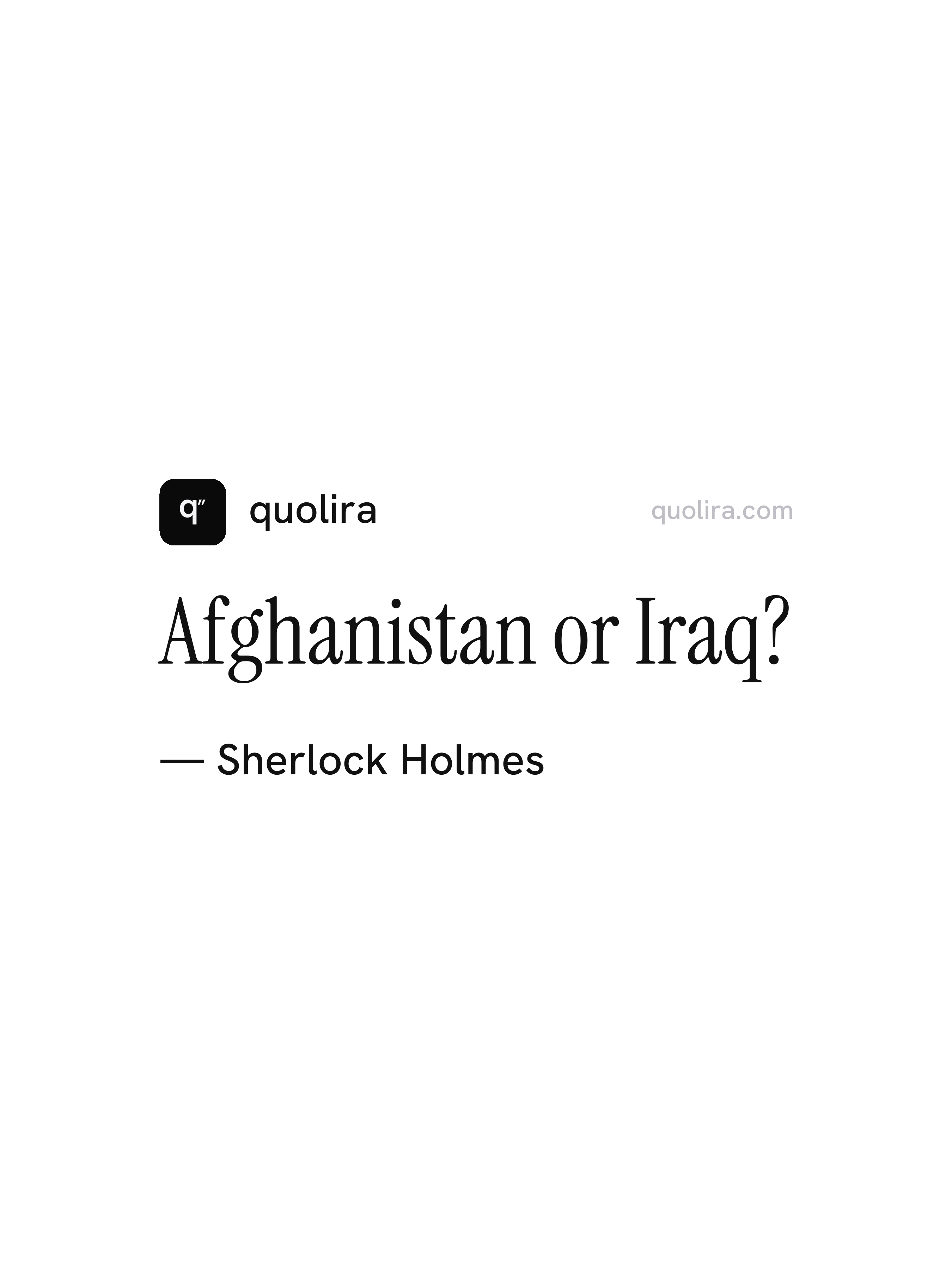
“Afghanistan or Iraq?”
Sherlock Holmes · BBC Sherlock, Series 1, Episode 1: A Study in Pink, 2010
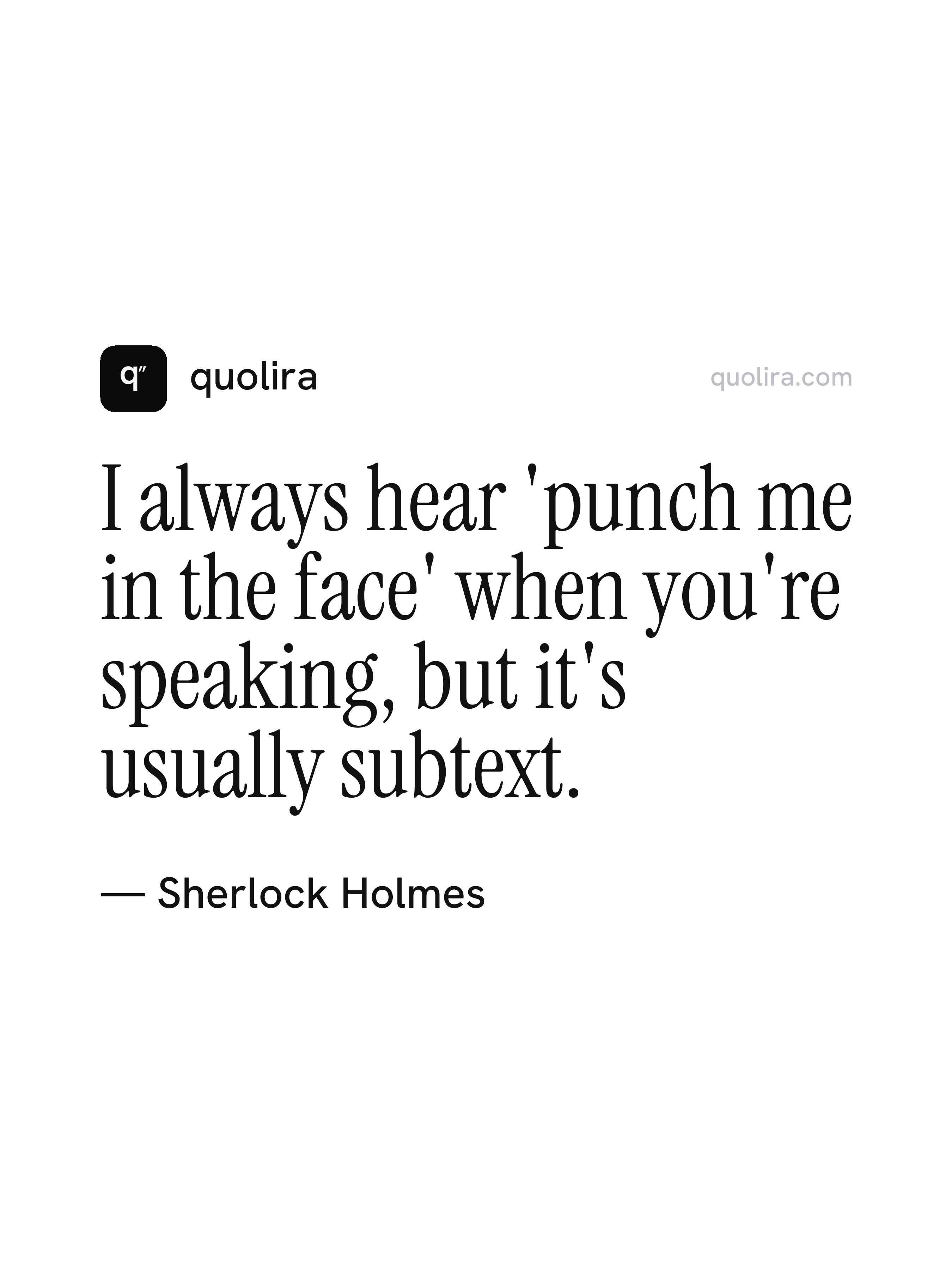
“I always hear 'punch me in the face' when you're speaking, but it's usually subtext.”
Sherlock Holmes · BBC Sherlock, Series 2, Episode 1: A Scandal in Belgravia, 2012
“You've been so alone. And you think that's the price of being extraordinary. And maybe it is. But you've been paying it so long.”
Molly Hooper · BBC Sherlock, Series 4, Episode 3: The Final Problem, 2017
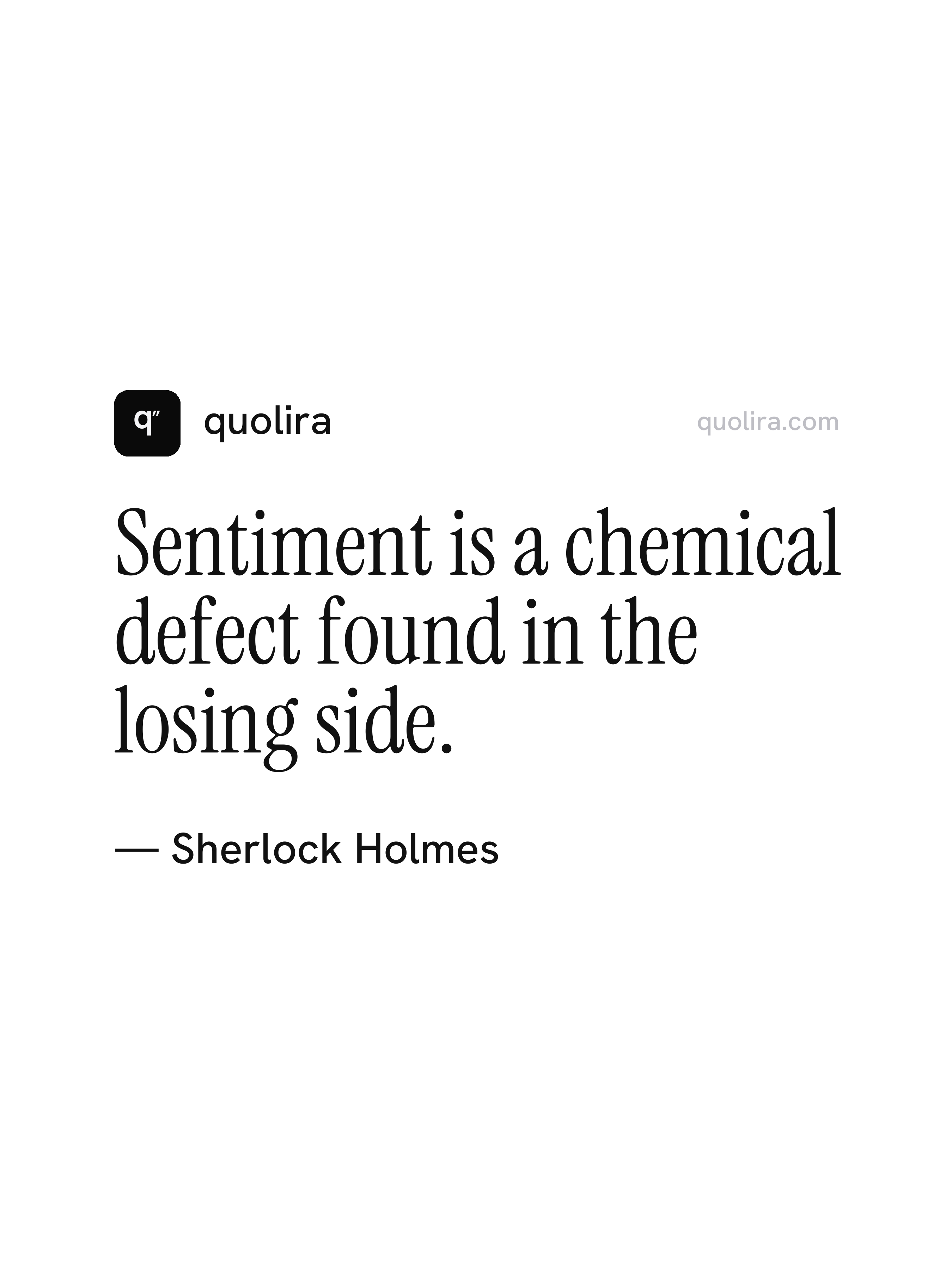
“Sentiment is a chemical defect found in the losing side.”
Sherlock Holmes · BBC Sherlock, Series 2, Episode 1: A Scandal in Belgravia, 2012
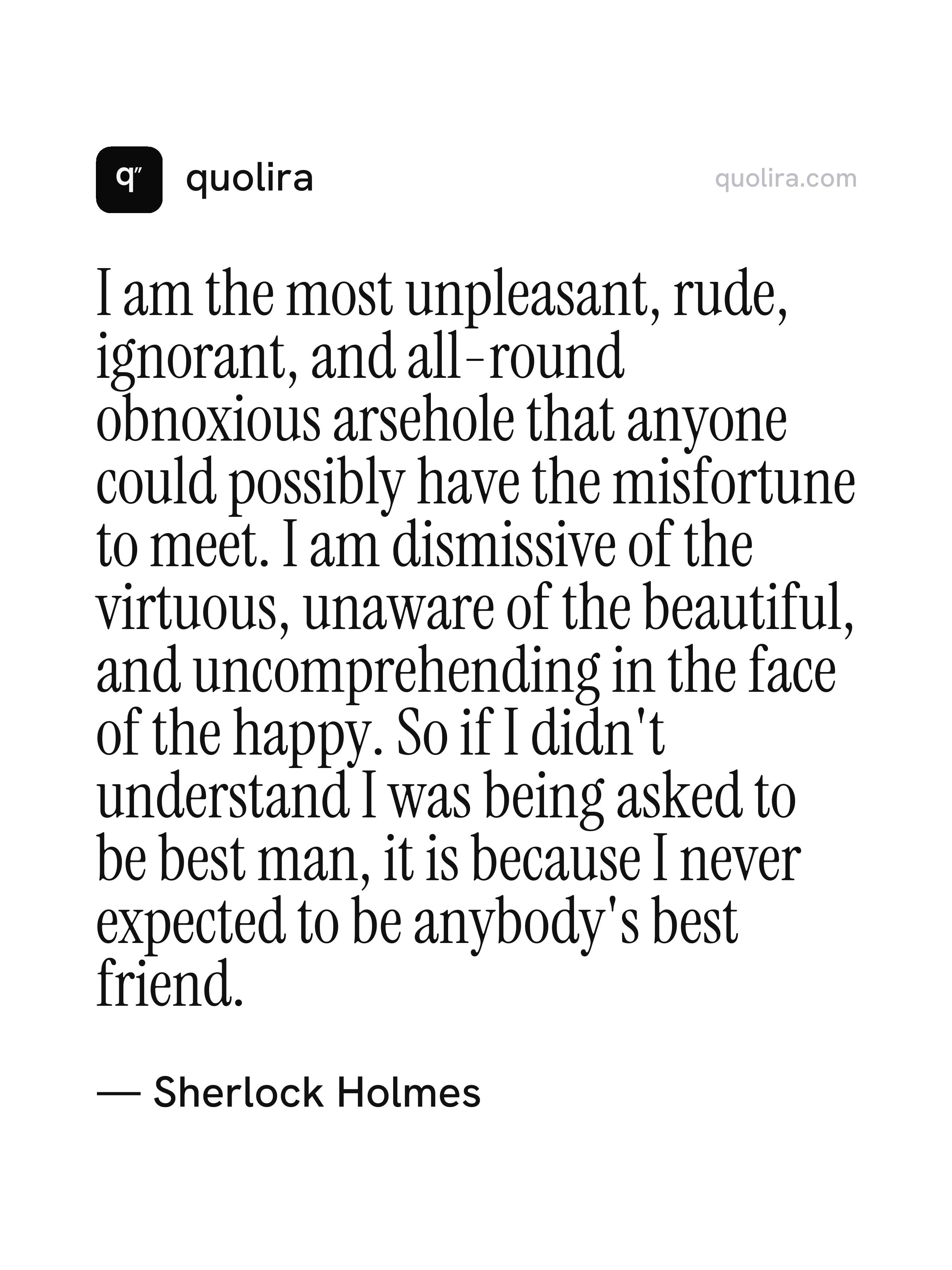
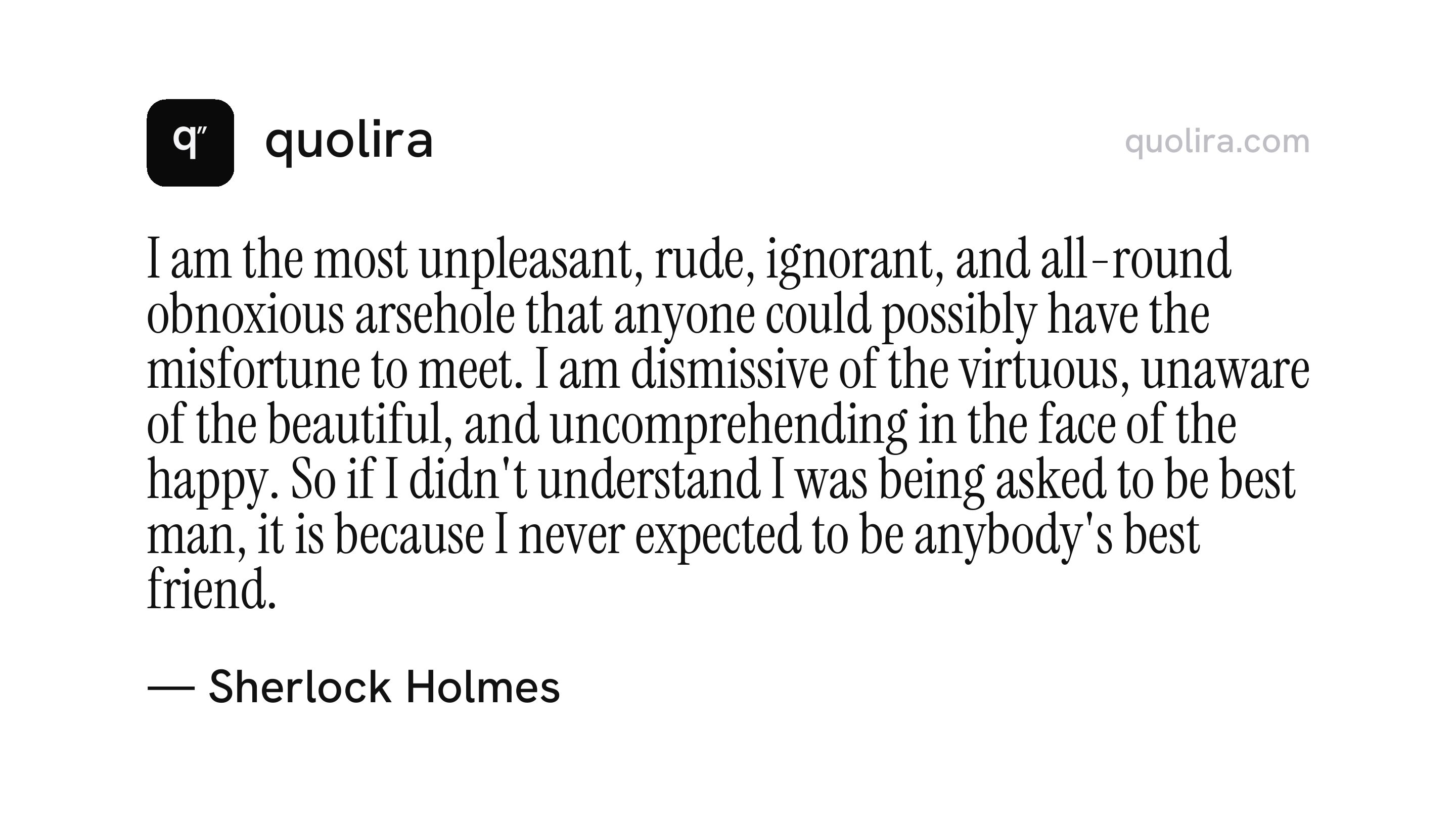
“I am the most unpleasant, rude, ignorant, and all-round obnoxious arsehole that anyone could possibly have the misfortune to meet. I am dismissive of the virtuous, unaware of the beautiful, and uncomprehending in the face of the happy. So if I didn't understand I was being asked to be best man, it is because I never expected to be anybody's best friend.”
Sherlock Holmes · BBC Sherlock, Series 3, Episode 2: The Sign of Three, 2014