“I have also considered many scientific plans during my pushing you around in your pram!”
Albert Einstein · Letter to his son Hans Albert Einstein, 1918
 quolira
.com
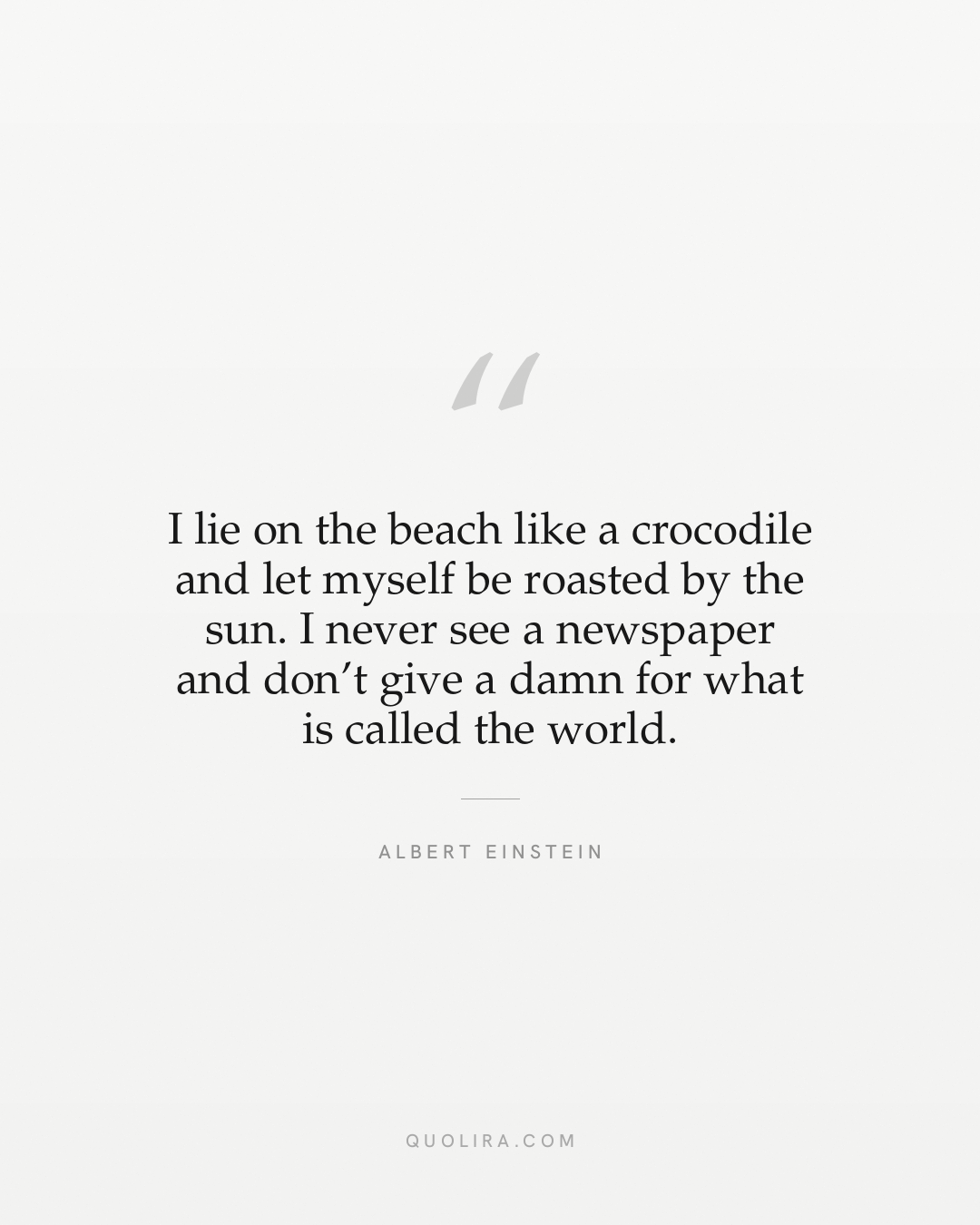
Albert Einstein said it, in Letter to Max Born, 1918.
Einstein sounds almost smug here, sunning himself with no newspapers and no interest in the fuss. It is a nice counterweight to the tortured-genius image, and a reminder that he had a sense of humor about himself.
From the collection: 25 Albert Einstein Quotes on Science, Simplicity, and Doubt · More Albert Einstein quotes
The quote describes Einstein relaxing at the seaside, letting the sun warm him while he deliberately stays away from newspapers and public affairs. He is saying that he feels little need to follow the wider news cycle and is content to withdraw from it for a time.
Einstein wrote this in a 1918 letter to Max Born, a German physicist who was a close colleague and correspondent. The tone is playful and self-mocking, with the comparison to a basking crocodile emphasizing stillness and comfort rather than activity. The letter was written during a turbulent period in Germany, when the war and its aftermath dominated public life. Against that background, Einstein's wish to disengage from the daily news reads as both a personal preference for rest and a quiet expression of exhaustion with the political climate of the time.
Albert Einstein was a German-born theoretical physicist who transformed modern physics with his theories of relativity and his early work on quantum theory. He received the 1921 Nobel Prize in Physics for his explanation of the photoelectric effect. Although he is remembered chiefly for science, he also wrote often about peace, social responsibility and the limits of public authority. His private letters, including this one, show a wry, candid personality that sometimes contrasted with his image as a serious thinker.
“I have also considered many scientific plans during my pushing you around in your pram!”
Albert Einstein · Letter to his son Hans Albert Einstein, 1918
“Nature shows us only the tail of the lion. But there is no doubt in my mind that the lion belongs with it even if he cannot reveal himself to the eye all at once because of his huge dimension.”
Albert Einstein · Letter to Heinrich Zangger, 1914
“A happy man is too satisfied with the present to dwell too much on the future.”
Albert Einstein · Mes Projets d'Avenir, school essay, 1896
“Blind obedience to authority is the greatest enemy of truth.”
Albert Einstein · Letter to Jost Winteler, 1901
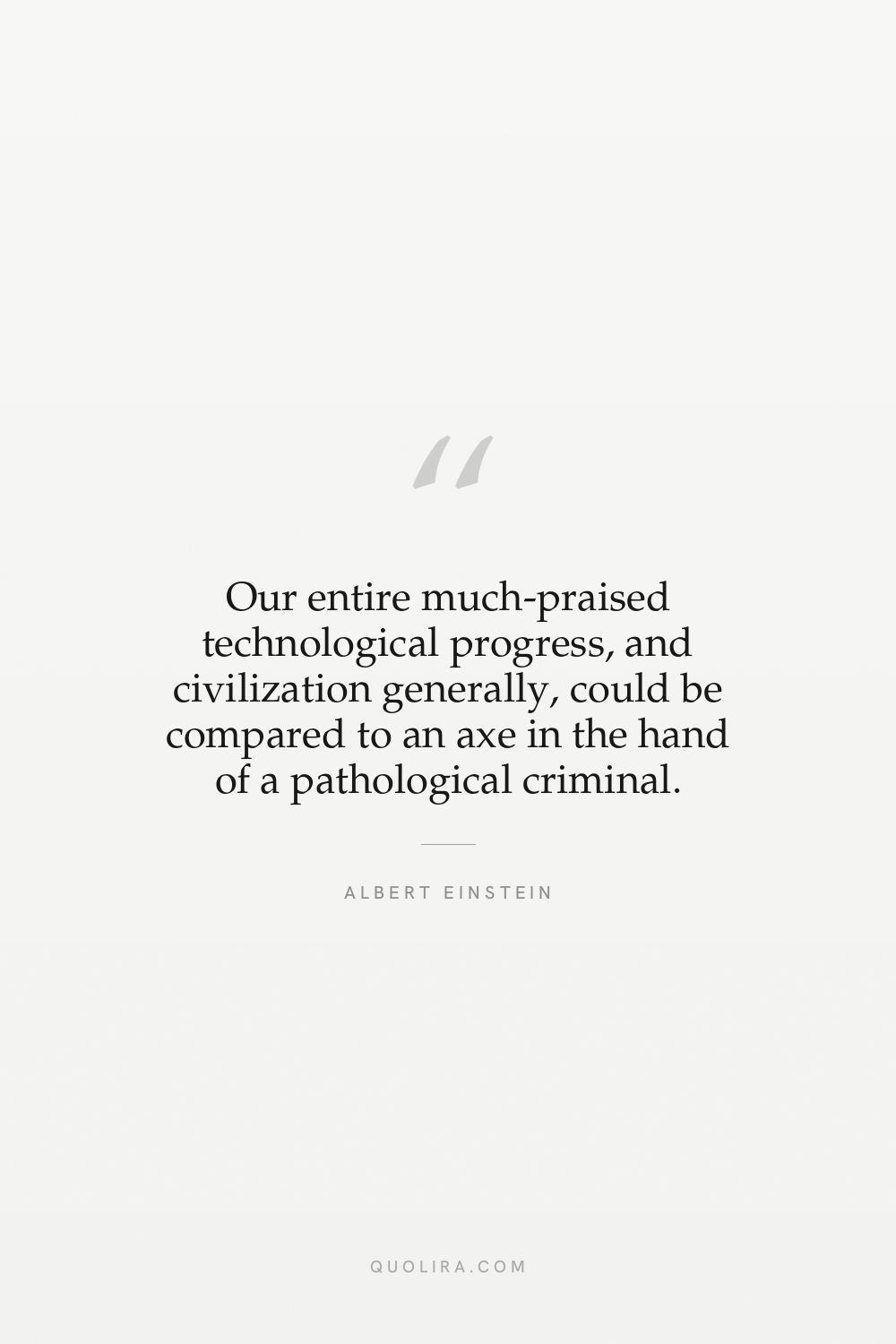
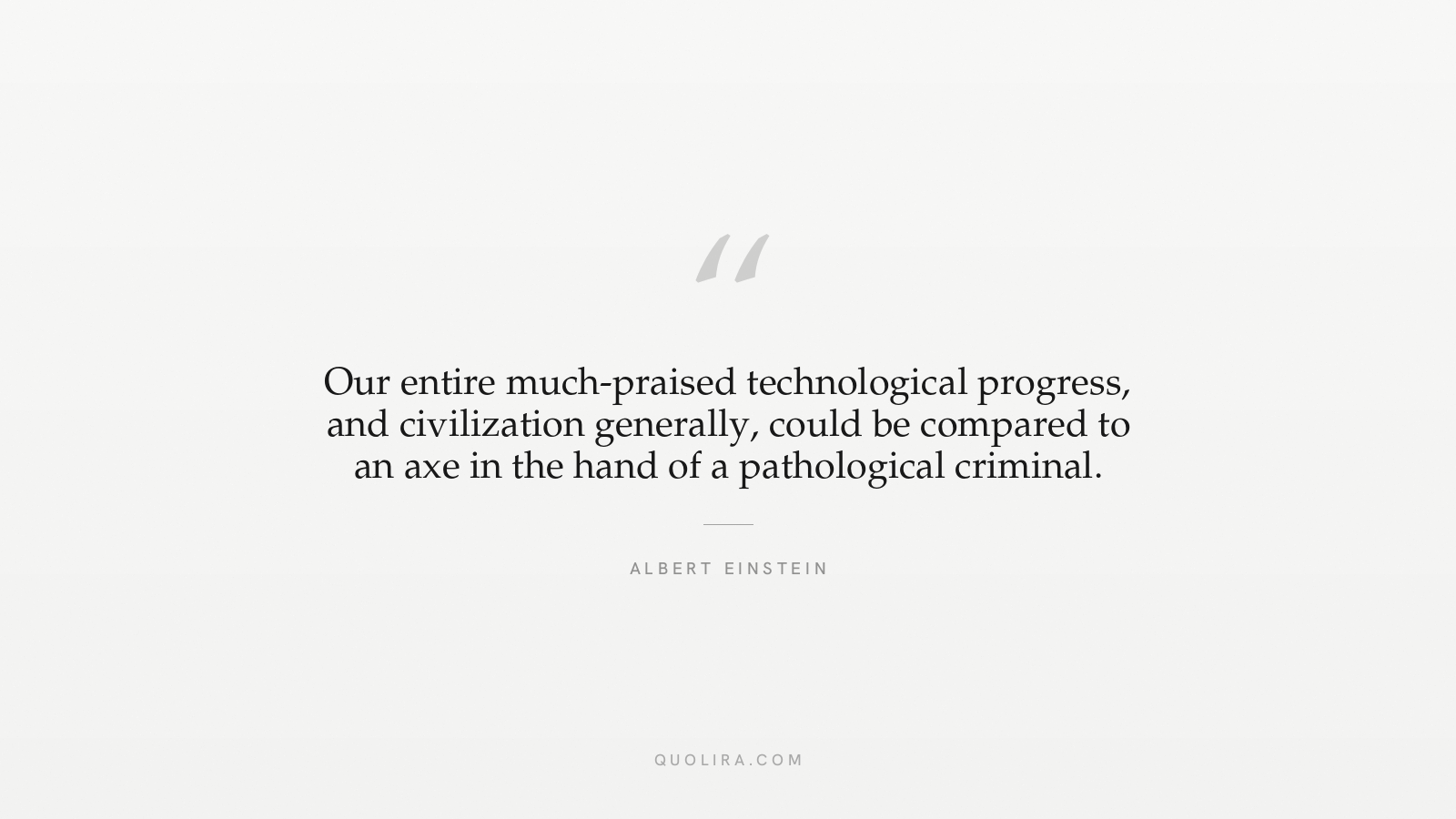
“Our entire much-praised technological progress, and civilization generally, could be compared to an axe in the hand of a pathological criminal.”
Albert Einstein · Letter to Heinrich Zangger, 1917
“I should unconditionally refuse every direct or indirect war service and try to induce my friends to adopt the same attitude, irrespective of the general opinion of the causes of war.”
Albert Einstein · Council of War Resisters meeting, Zurich, 1929
“Veneration for this force beyond anything that we can comprehend is my religion. To that extent I am, in point of fact, religious.”
Albert Einstein · Response to Alfred Kerr, 1927
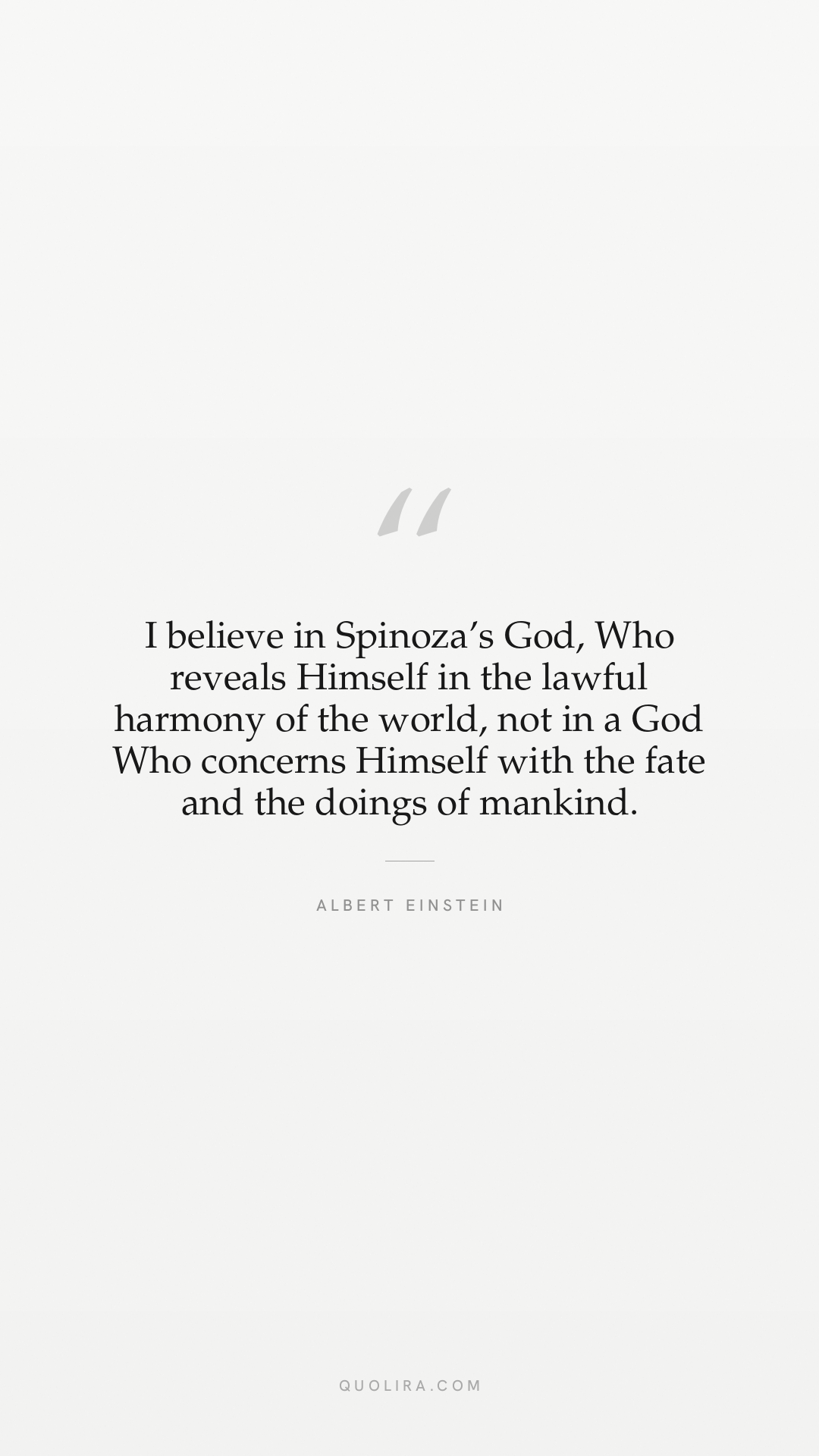
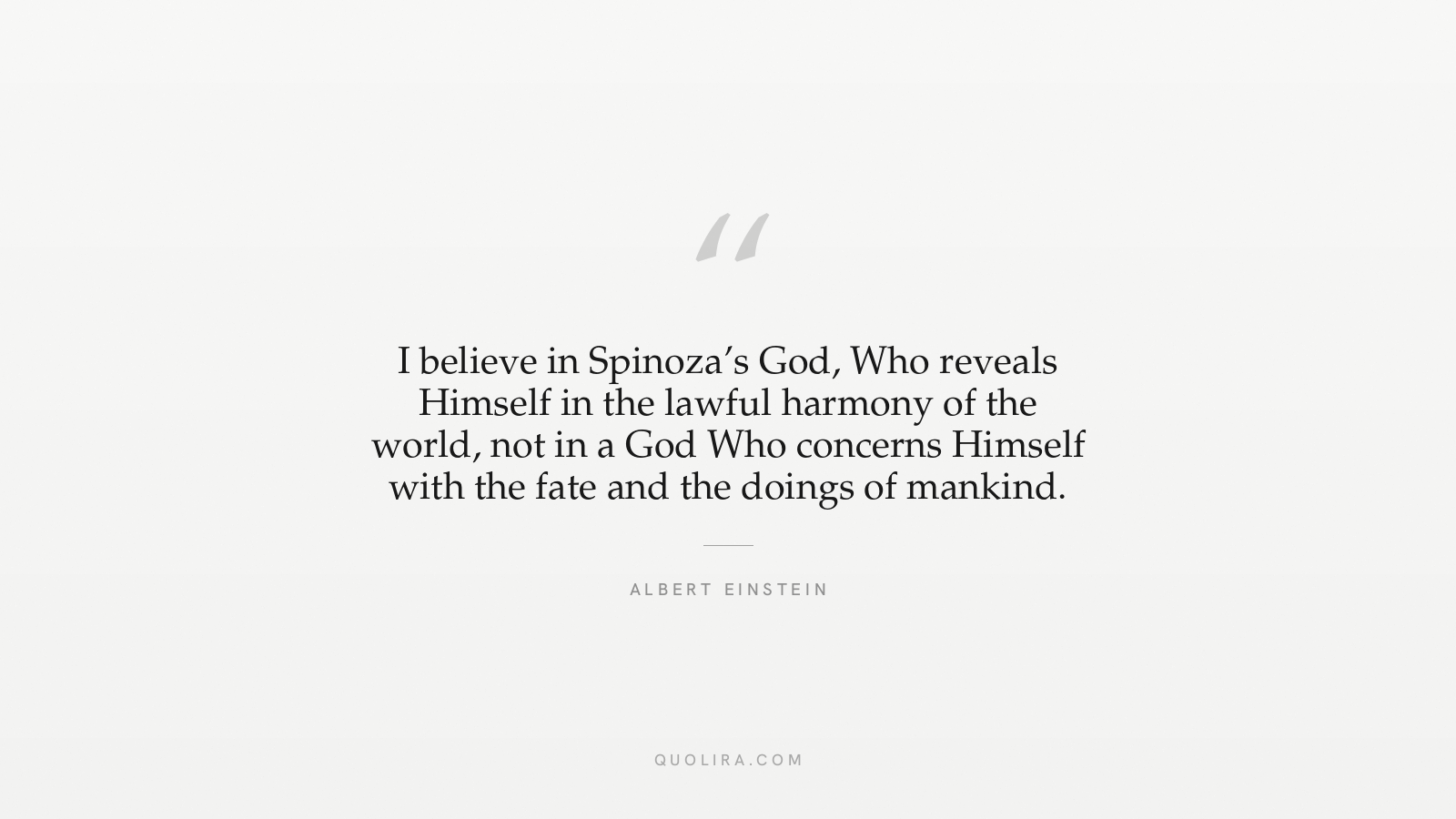
“I believe in Spinoza's God, Who reveals Himself in the lawful harmony of the world, not in a God Who concerns Himself with the fate and the doings of mankind.”
Albert Einstein · Telegram to Rabbi Herbert S. Goldstein, The New York Times, 1929
“The most beautiful fate of a physical theory is to point the way to the establishment of a more inclusive theory, in which it lives on as a limiting case.”
Albert Einstein · Relativity: The Special and General Theory, 1920
“Concepts that have proven useful in ordering things easily achieve such authority over us that we forget their earthly origins and accept them as unalterable givens.”
Albert Einstein · Obituary for Ernst Mach, 1916
“Man tries to make for himself in the fashion that suits him best a simplified and intelligible picture of the world; he then tries to some extent to substitute this cosmos of his for the world of experience, and thus to overcome it.”
Albert Einstein · Principles of Research, 1918
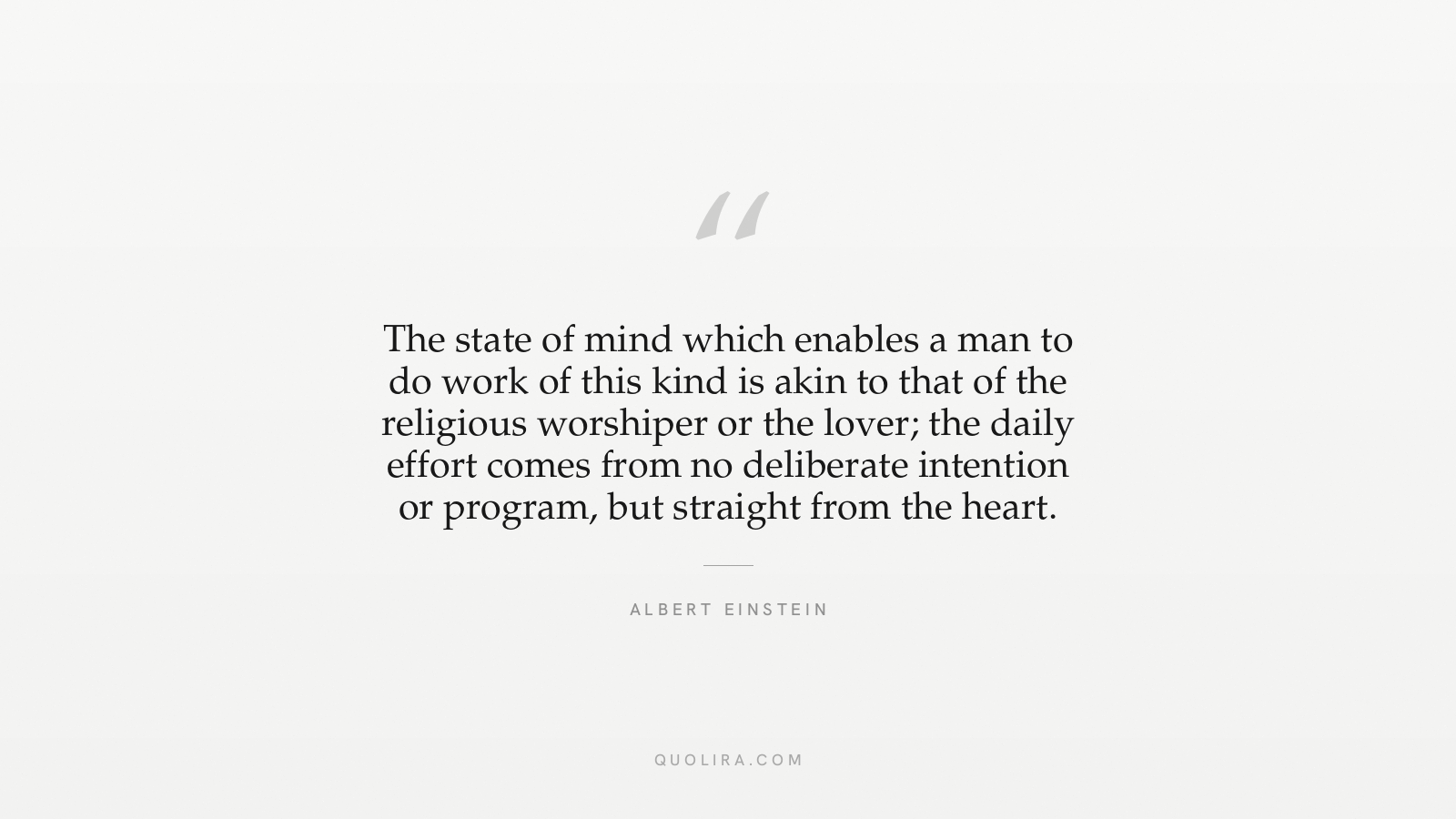
“The state of mind which enables a man to do work of this kind is akin to that of the religious worshiper or the lover; the daily effort comes from no deliberate intention or program, but straight from the heart.”
Albert Einstein · Principles of Research, 1918