“How do you know I'm mad? said Alice. You must be, said the Cat, or you wouldn't have come here.”
The Cheshire Cat · Alice's Adventures in Wonderland, 1865
 quolira
.com
quolira
quolira.com
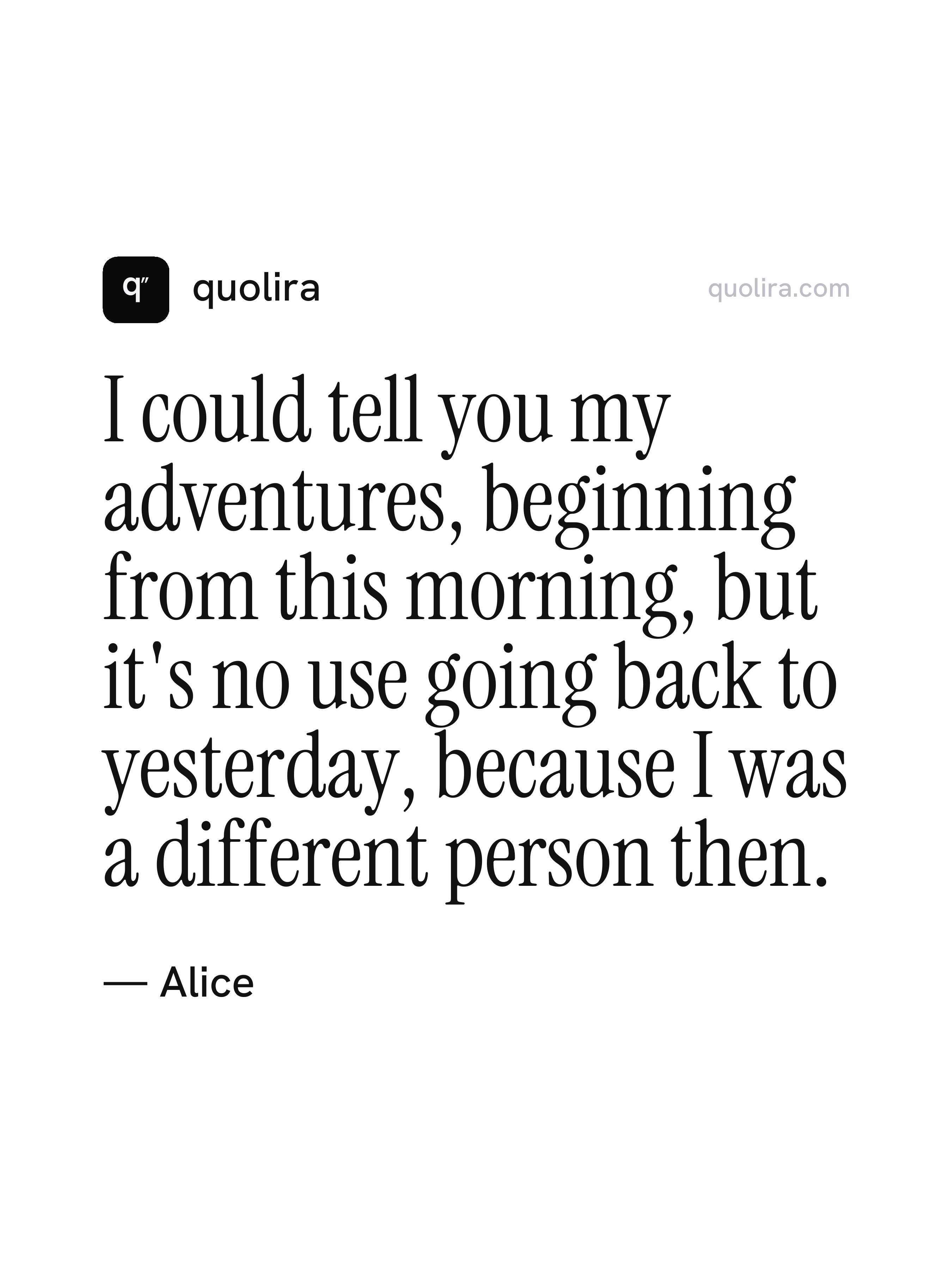
Alice is making a practical and surprisingly deep point: there is no use tracing a story back to its beginning if the person who lived that beginning no longer exists in the same form. Identity shifts with experience, and the self that woke up this morning is not the same self that went to sleep the night before. The line treats personal change not as a dramatic crisis but as a simple, ongoing fact of living.
This moment comes from Lewis Carroll's Alice's Adventures in Wonderland, published in 1865. Throughout the book, Alice is constantly adjusting to a world where the rules keep changing, and she herself keeps changing along with it. Her size shifts, her logic is challenged at every turn, and her sense of who she is becomes increasingly unstable. This particular line captures the book's broader theme that identity is not fixed, and that clinging to a prior version of oneself can be more of a trap than a comfort.
Lewis Carroll was the pen name of Charles Lutwidge Dodgson, a British writer and mathematician who lived in the nineteenth century. He created Alice's Adventures in Wonderland and its follow-up, both of which have become foundational texts in children's literature and are widely studied for their philosophical and linguistic depth. His writing is celebrated for wrapping genuinely complex ideas about logic, language, and identity inside stories that feel like pure imaginative play.
“How do you know I'm mad? said Alice. You must be, said the Cat, or you wouldn't have come here.”
The Cheshire Cat · Alice's Adventures in Wonderland, 1865
“It would be so nice if something made sense for a change.”
Alice · Alice's Adventures in Wonderland, 1951 Disney film line often attributed to the story
“Take care of the sense, and the sounds will take care of themselves.”
The Duchess · Alice's Adventures in Wonderland, 1865
“The question is, said Alice, whether you can make words mean so many different things.”
Alice · Through the Looking-Glass, 1871
“When I use a word, it means just what I choose it to mean, neither more nor less.”
Humpty Dumpty · Through the Looking-Glass, 1871
“If everybody minded their own business, the world would go around a great deal faster than it does.”
The Duchess · Alice's Adventures in Wonderland, 1865
“I can't go back to yesterday because I was a different person then.”
Alice · Alice's Adventures in Wonderland, 1865
“Begin at the beginning, and go on till you come to the end: then stop.”
The King of Hearts · Alice's Adventures in Wonderland, 1865
“Who in the world am I? Ah, that's the great puzzle.”
Alice · Alice's Adventures in Wonderland, 1865
“Curiouser and curiouser!”
Alice · Alice's Adventures in Wonderland, 1865
“It's no use going back to yesterday, because I was a different person then.”
Alice · Alice's Adventures in Wonderland, 1865
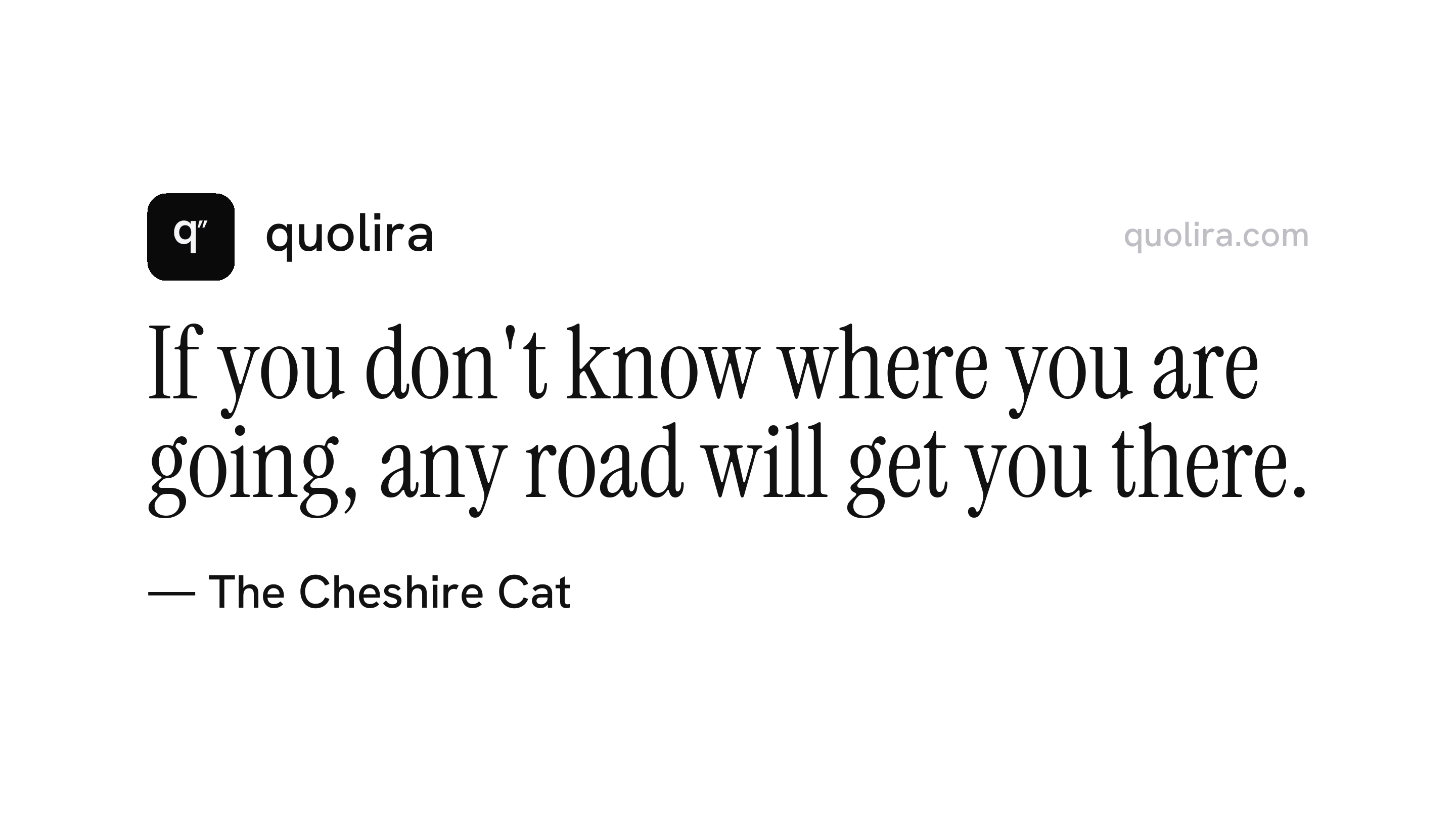
“If you don't know where you are going, any road will get you there.”
The Cheshire Cat · Alice's Adventures in Wonderland, 1865 (paraphrased from the exchange)