“When I use a word, it means just what I choose it to mean, neither more nor less.”
Humpty Dumpty · Through the Looking-Glass, 1871
 quolira
.com
quolira
quolira.com
Alice's question cuts to the heart of a genuine philosophical puzzle about language: can words be stretched to cover whatever meaning a speaker wants, or do they carry fixed meanings that exist independently of the person using them? She is pushing back against the idea that language is simply a tool of individual will, insisting that words must have some stable shared meaning if communication is to be possible at all. It is a thoughtful challenge, especially coming from a child.
This exchange appears in Lewis Carroll's 1871 sequel, Through the Looking-Glass, during Alice's famous conversation with Humpty Dumpty. Humpty has just declared that he can make words mean whatever he chooses, and Alice's question is her direct, logical rebuttal. Carroll structured the dialogue as a genuine philosophical debate, and it has since attracted serious attention from linguists and philosophers interested in questions of meaning, reference, and the limits of linguistic authority. The scene is one of the most intellectually rich passages in either of the Alice books.
Alice is the fictional child protagonist created by Lewis Carroll for his two Alice novels. Throughout both books she serves as a rational, grounded presence in an irrational world, and her tendency to ask direct questions makes her an effective foil for the stranger characters she meets. Carroll, whose real name was Charles Dodgson, was deeply interested in logic and language, and the conversations he wrote for Alice often reflect genuine intellectual preoccupations dressed up in the language of fantasy and play.
“When I use a word, it means just what I choose it to mean, neither more nor less.”
Humpty Dumpty · Through the Looking-Glass, 1871
“If everybody minded their own business, the world would go around a great deal faster than it does.”
The Duchess · Alice's Adventures in Wonderland, 1865
“I can't go back to yesterday because I was a different person then.”
Alice · Alice's Adventures in Wonderland, 1865
“Begin at the beginning, and go on till you come to the end: then stop.”
The King of Hearts · Alice's Adventures in Wonderland, 1865
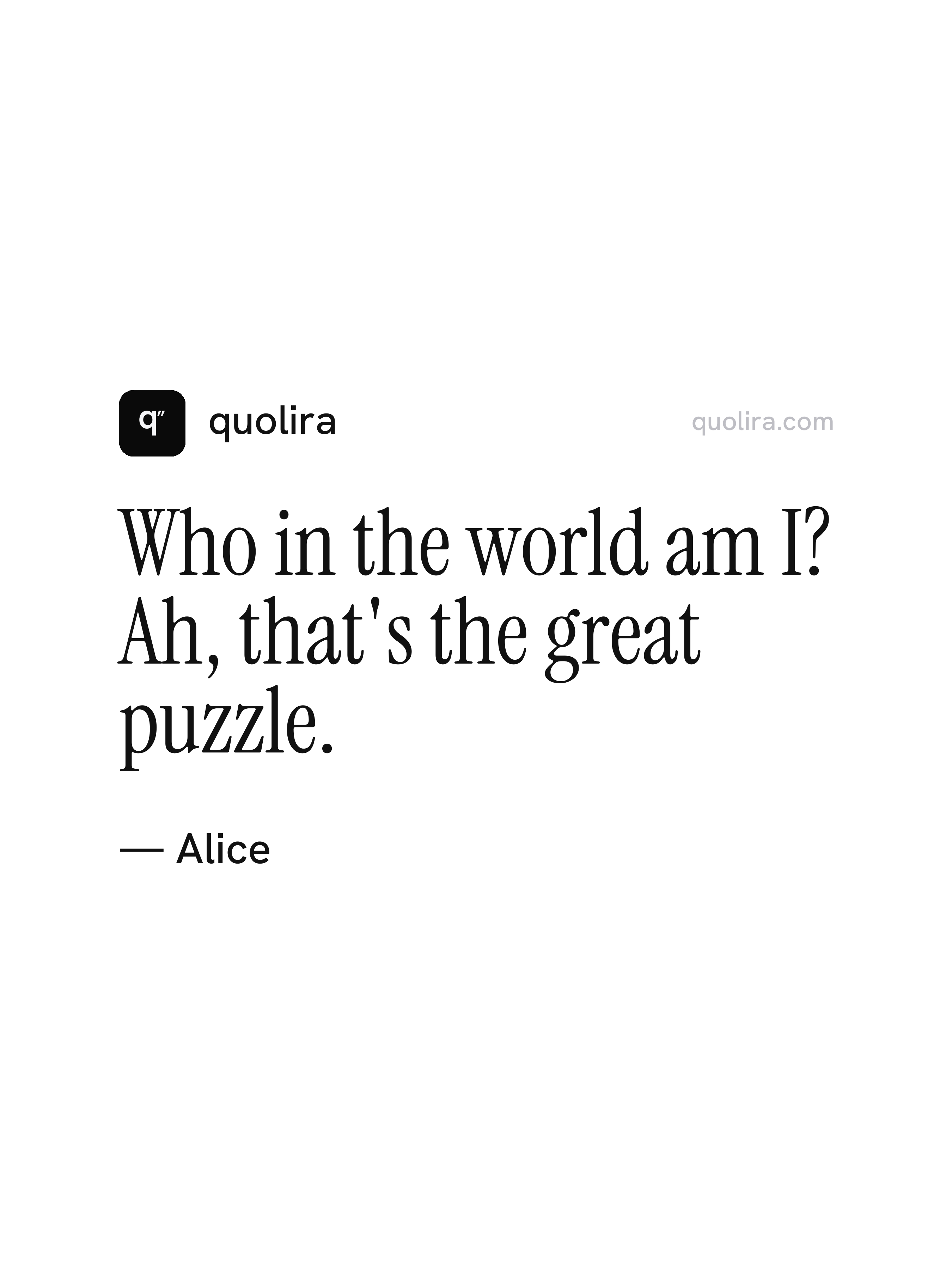
“Who in the world am I? Ah, that's the great puzzle.”
Alice · Alice's Adventures in Wonderland, 1865
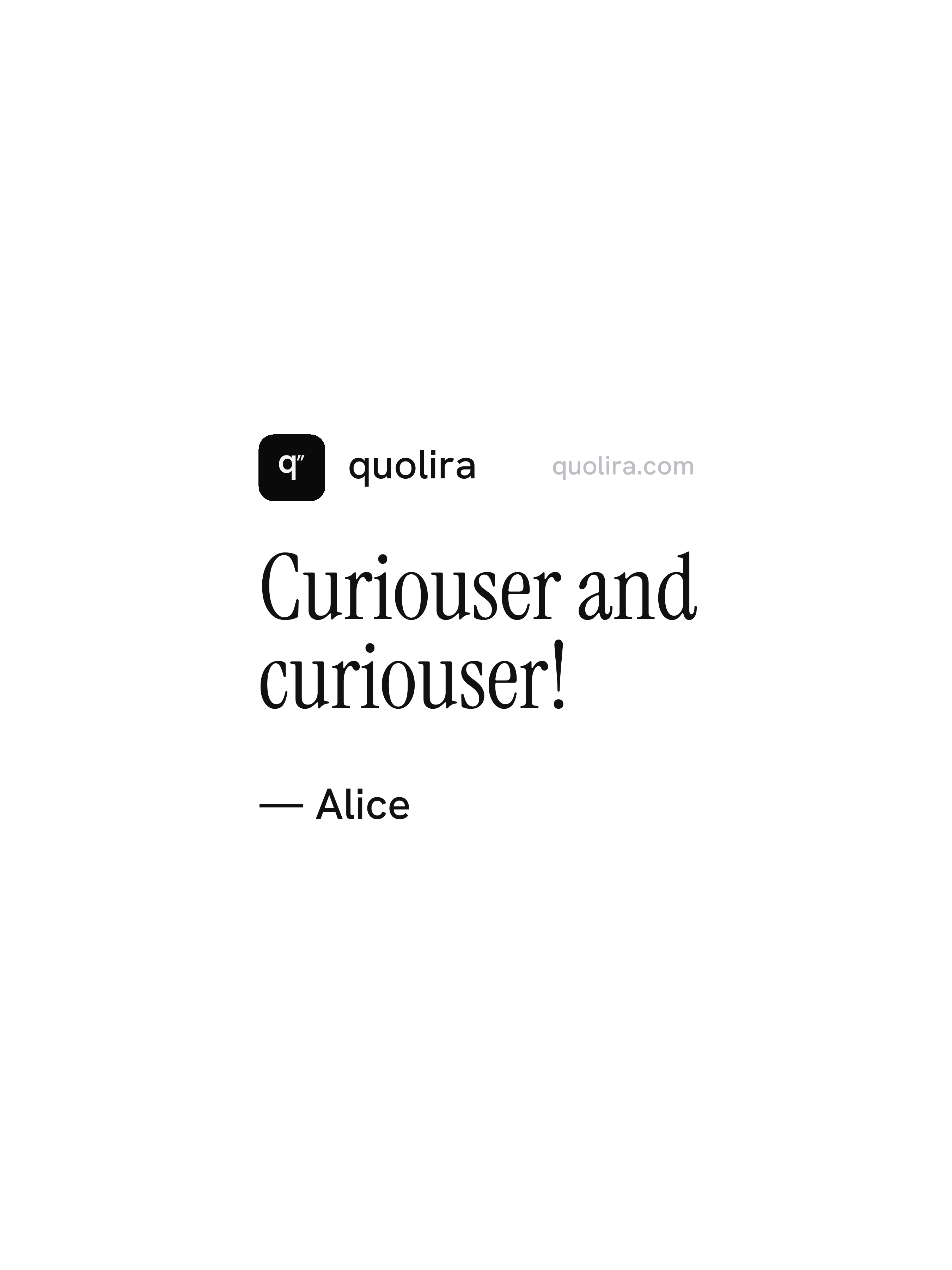
“Curiouser and curiouser!”
Alice · Alice's Adventures in Wonderland, 1865
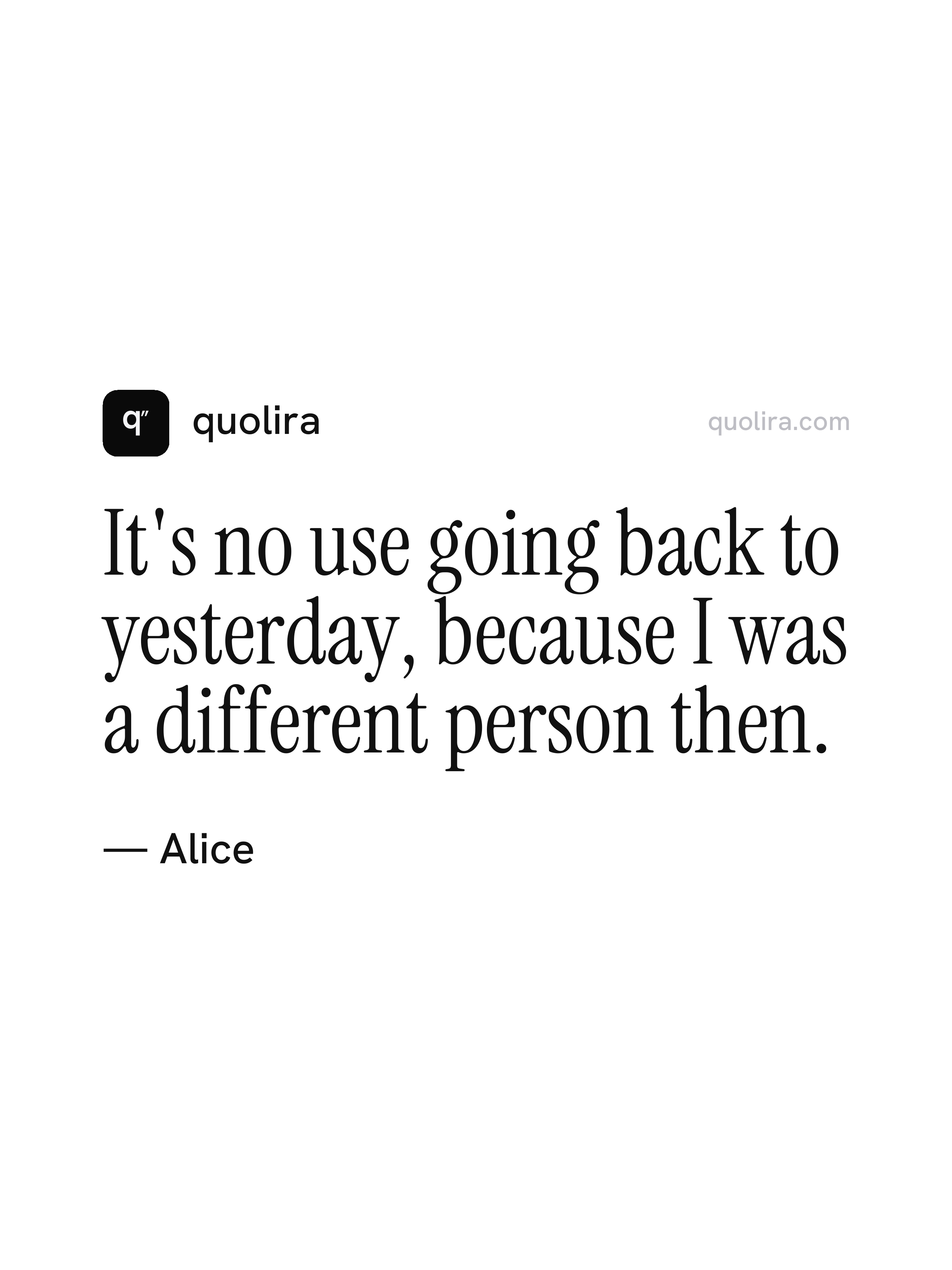
“It's no use going back to yesterday, because I was a different person then.”
Alice · Alice's Adventures in Wonderland, 1865
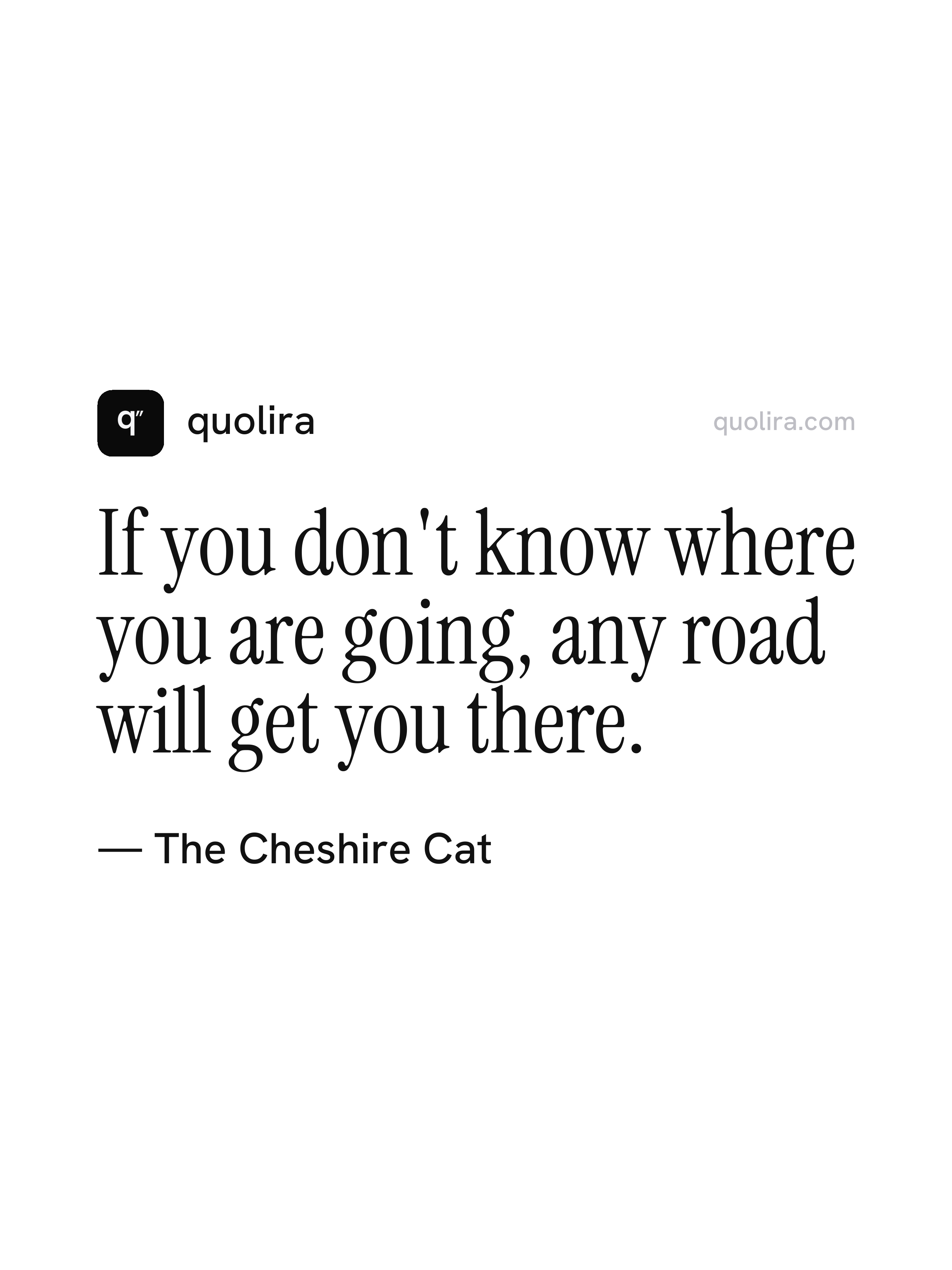
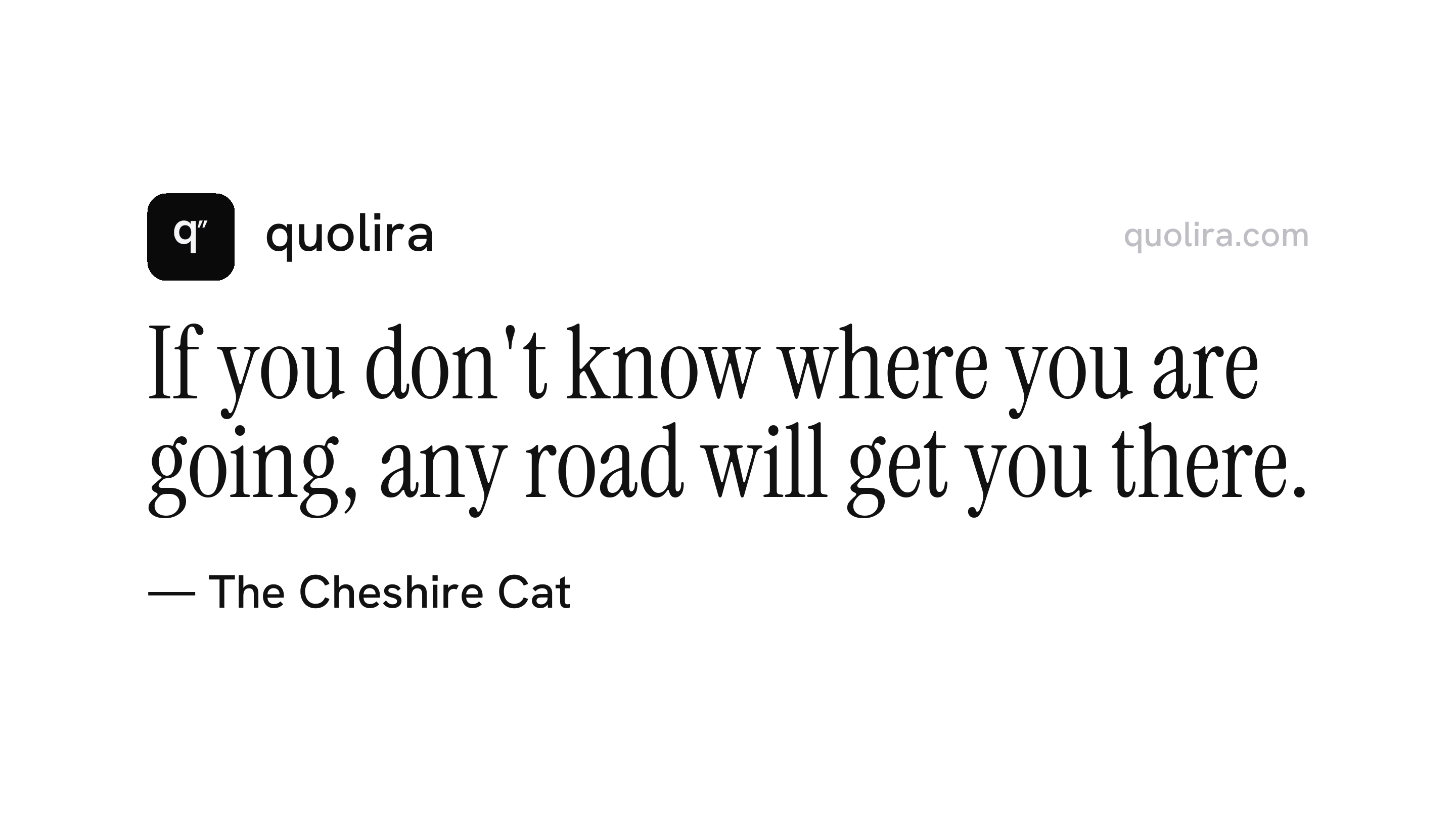
“If you don't know where you are going, any road will get you there.”
The Cheshire Cat · Alice's Adventures in Wonderland, 1865 (paraphrased from the exchange)
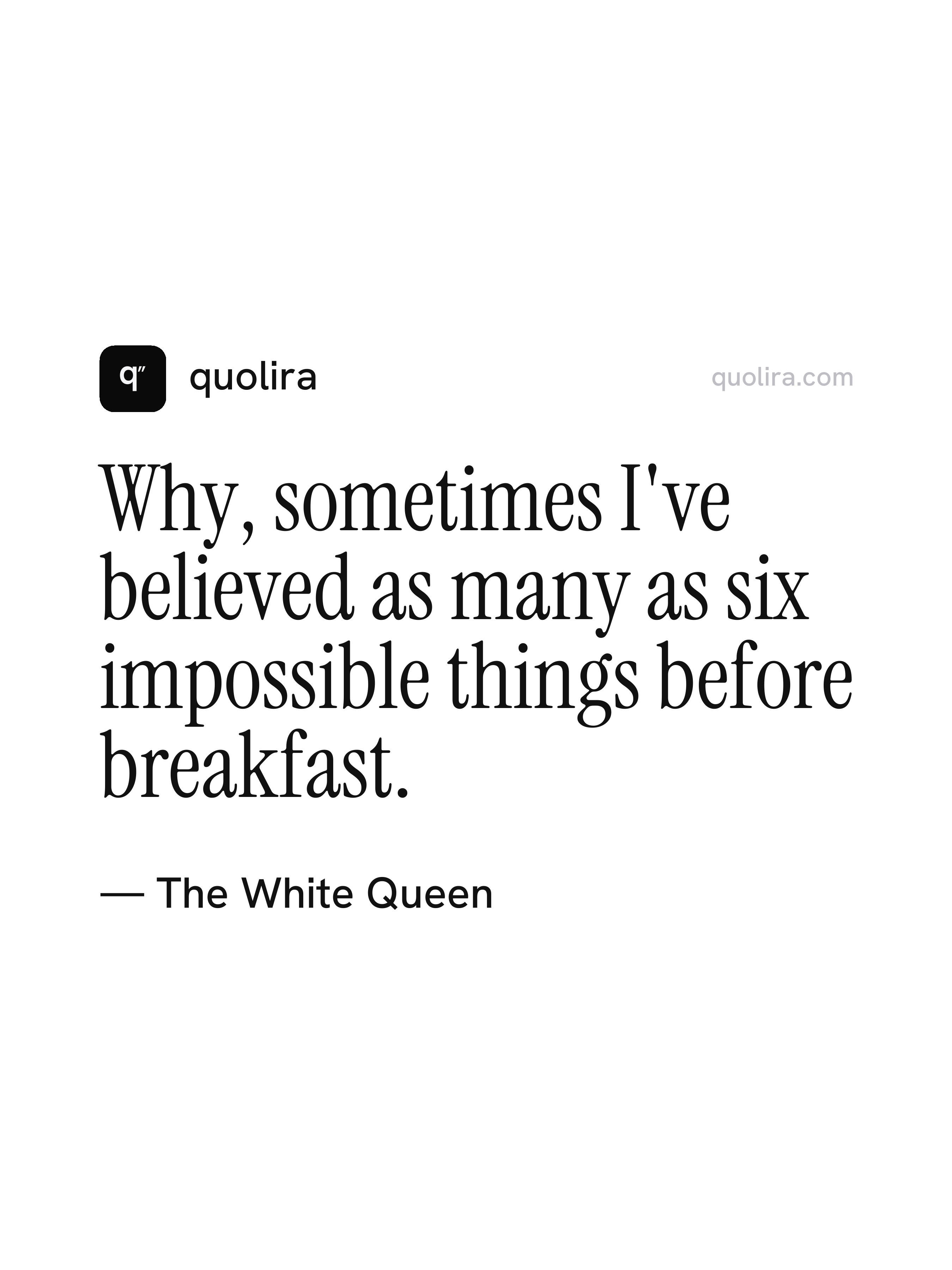
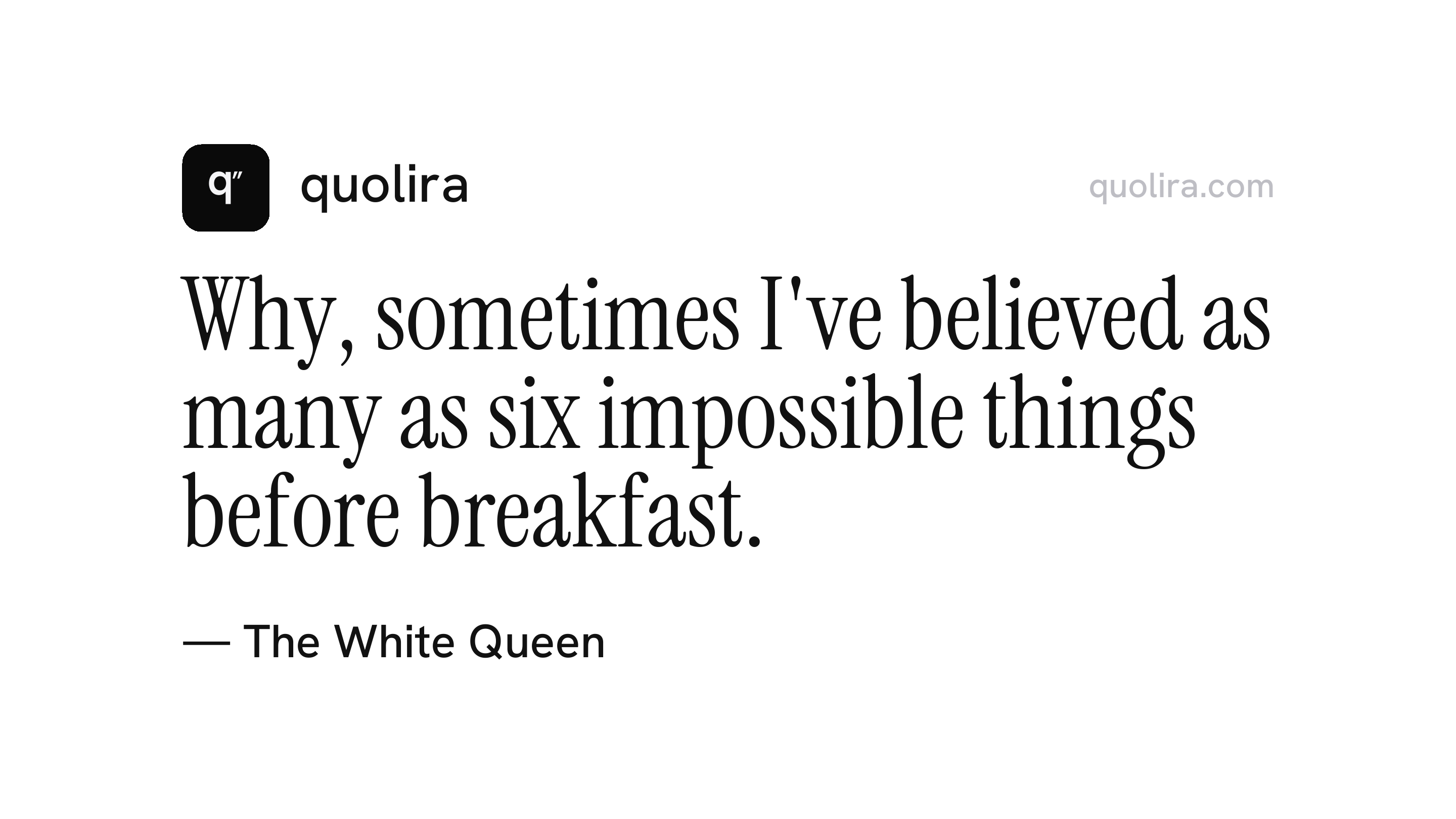
“Why, sometimes I've believed as many as six impossible things before breakfast.”
The White Queen · Through the Looking-Glass, 1871
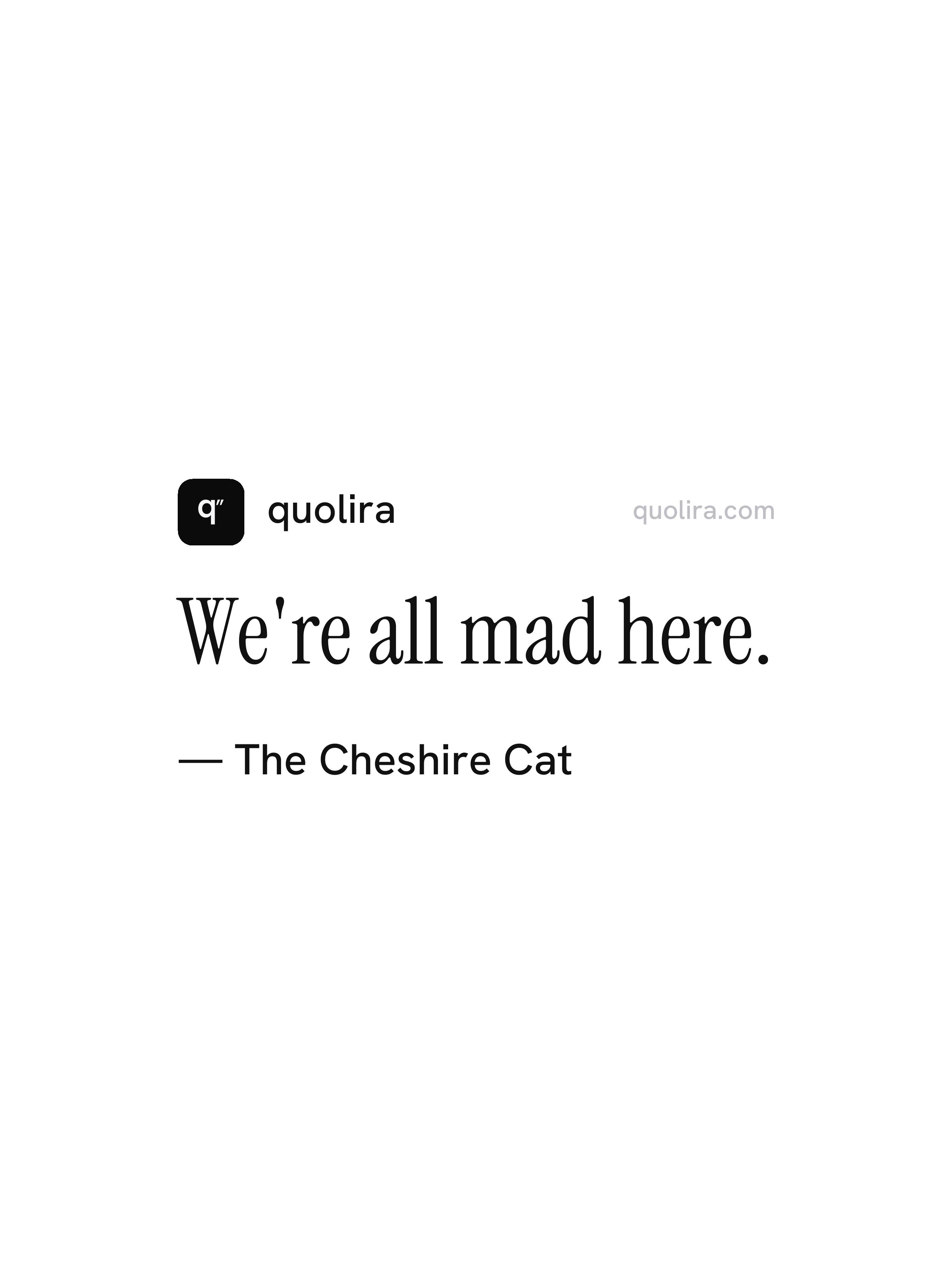
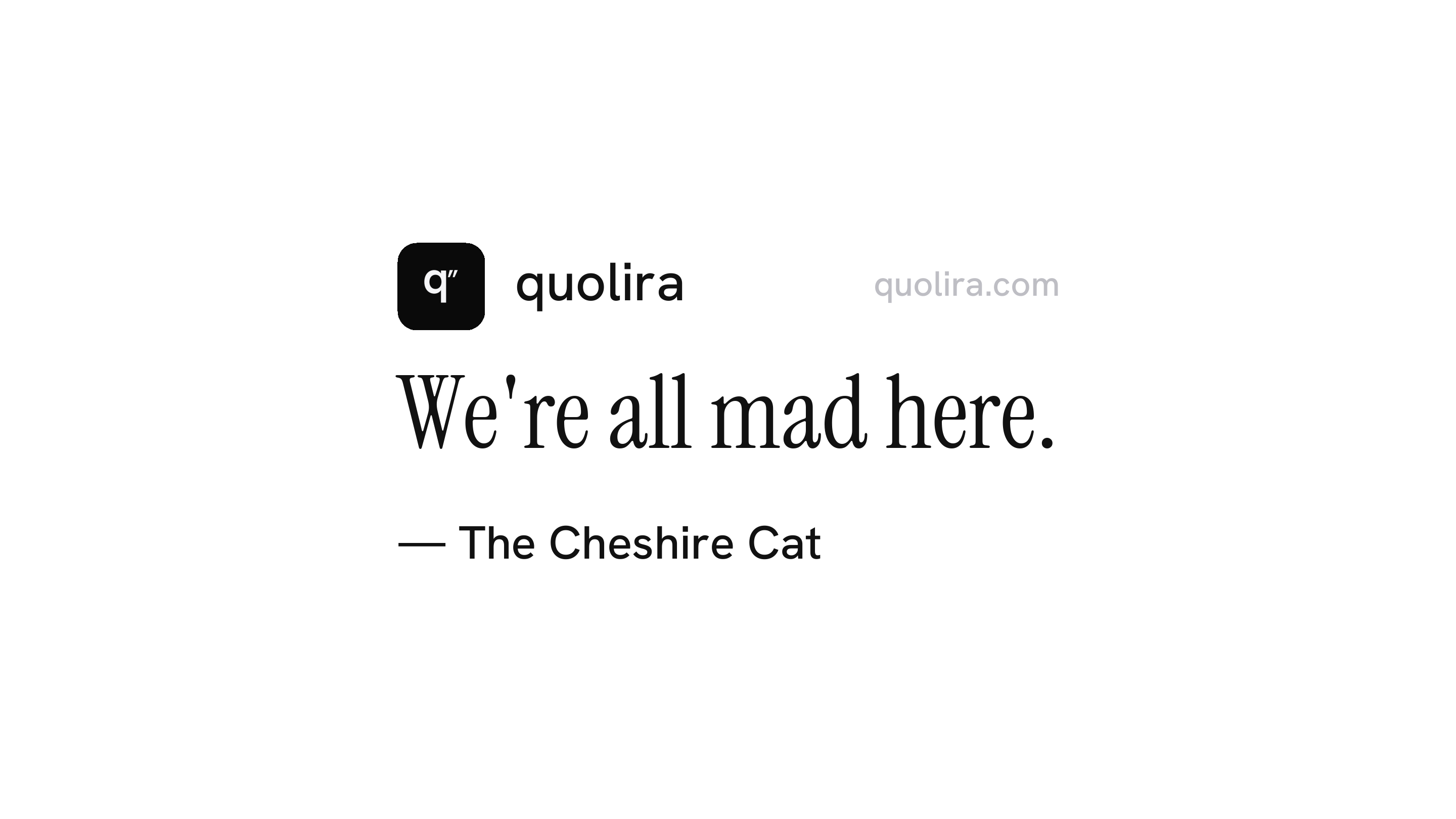
“We're all mad here.”
The Cheshire Cat · Alice's Adventures in Wonderland, 1865
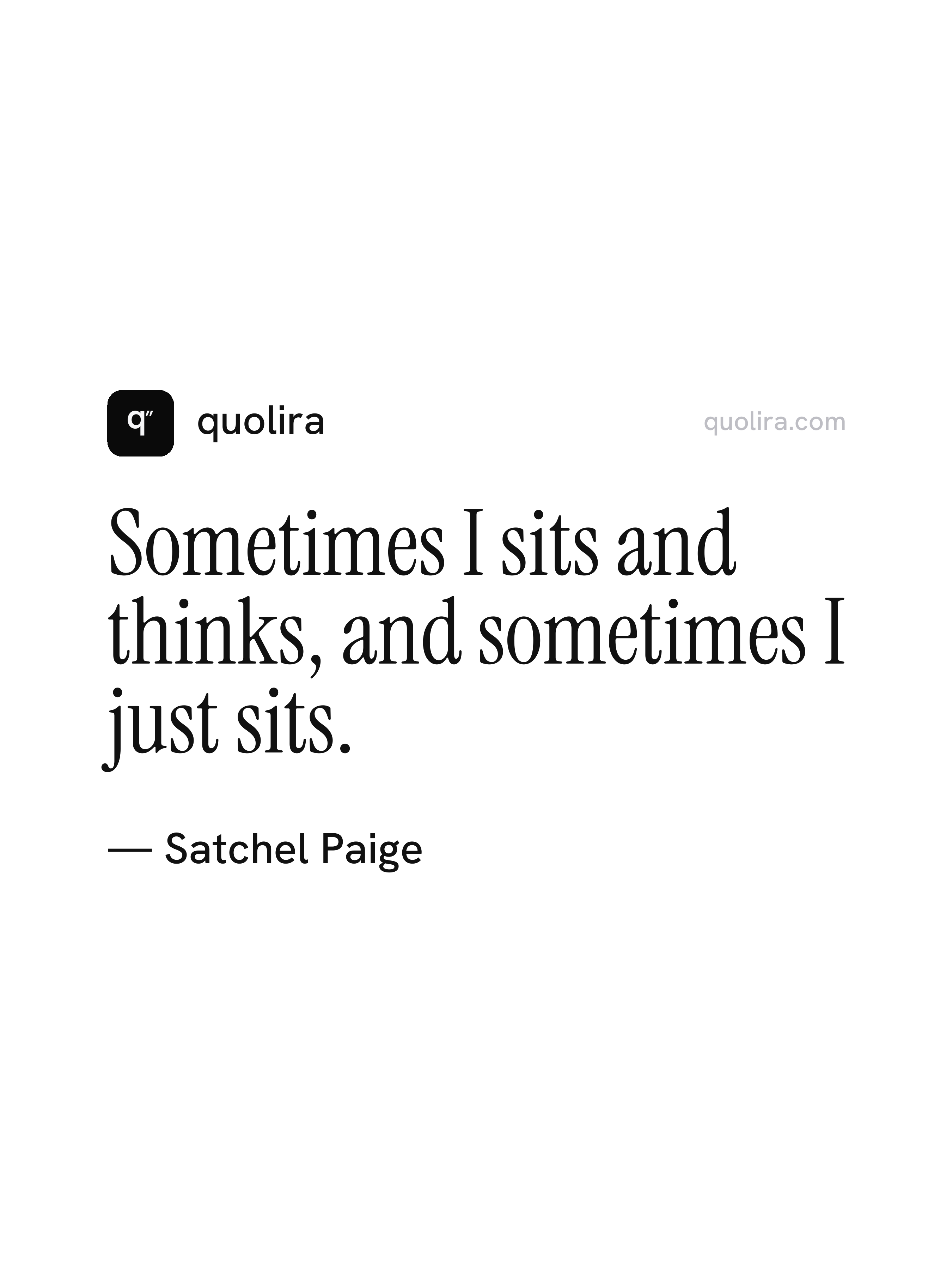
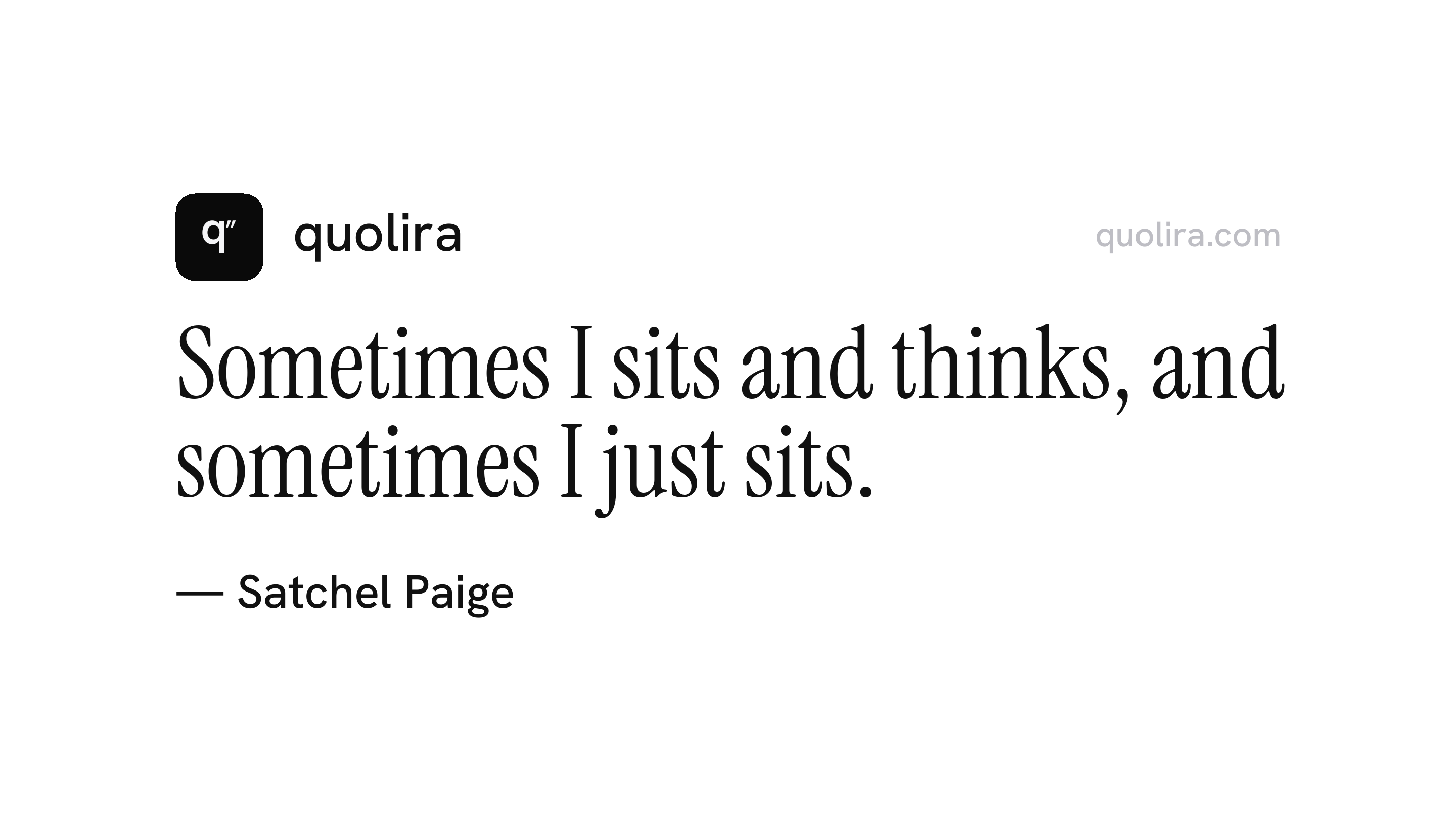
“Sometimes I sits and thinks, and sometimes I just sits.”
Satchel Paige
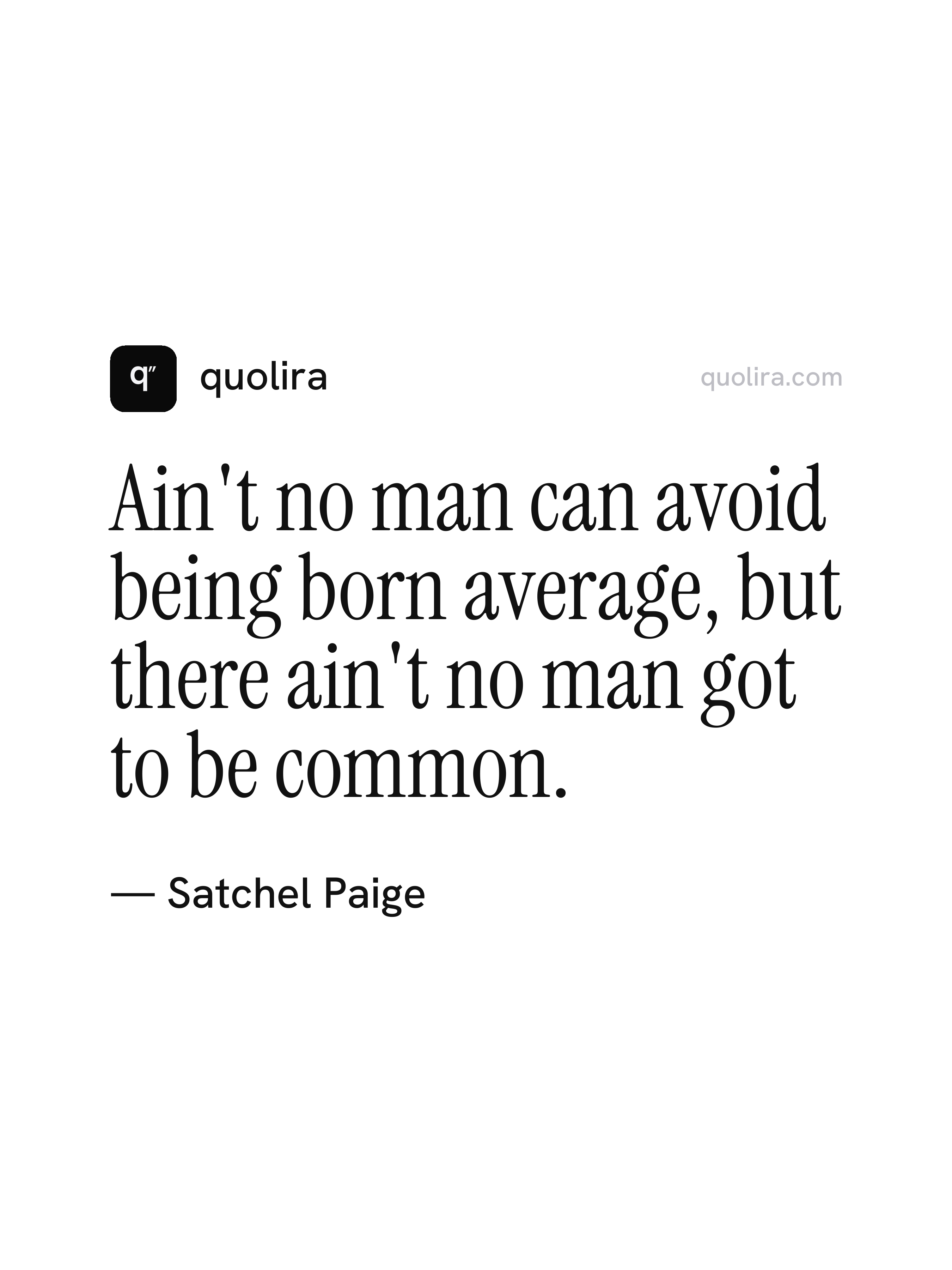
“Ain't no man can avoid being born average, but there ain't no man got to be common.”
Satchel Paige