“It would be so nice if something made sense for a change.”
Alice · Alice's Adventures in Wonderland, 1951 Disney film line often attributed to the story
 quolira
.com
quolira
quolira.com
The Cheshire Cat's reasoning here is circular in the best possible way. Madness, the Cat implies, is not a label handed down by some neutral authority but is simply the condition of anyone who ends up in a place like Wonderland. If you are here, you must have been drawn here, and only a certain kind of mind gets drawn to such places. The exchange turns the word mad into something almost like a compliment, or at least a badge of belonging rather than a mark of shame.
This exchange appears in Lewis Carroll's Alice's Adventures in Wonderland, published in 1865. The Cheshire Cat is one of the book's most philosophical characters, offering observations that sound like riddles but contain a strange internal logic. The conversation fits into the novel's recurring pattern of Alice trying to apply ordinary reasoning to a world where ordinary reasoning simply does not apply. The Cat does not argue with her or reassure her; it just explains Wonderland's terms on Wonderland's terms.
Lewis Carroll was the pen name of Charles Lutwidge Dodgson, a nineteenth-century British writer and academic with a background in mathematics and logic. He is best remembered for the Alice books, which have sustained enormous cultural influence far beyond their origins as stories told to a child. Carroll's writing uses logical structures and wordplay to comic and philosophical effect, and the Cheshire Cat in particular has become one of literature's most quoted and recognizable figures.
“It would be so nice if something made sense for a change.”
Alice · Alice's Adventures in Wonderland, 1951 Disney film line often attributed to the story
“Take care of the sense, and the sounds will take care of themselves.”
The Duchess · Alice's Adventures in Wonderland, 1865
“The question is, said Alice, whether you can make words mean so many different things.”
Alice · Through the Looking-Glass, 1871
“When I use a word, it means just what I choose it to mean, neither more nor less.”
Humpty Dumpty · Through the Looking-Glass, 1871
“If everybody minded their own business, the world would go around a great deal faster than it does.”
The Duchess · Alice's Adventures in Wonderland, 1865
“I can't go back to yesterday because I was a different person then.”
Alice · Alice's Adventures in Wonderland, 1865
“Begin at the beginning, and go on till you come to the end: then stop.”
The King of Hearts · Alice's Adventures in Wonderland, 1865
“Who in the world am I? Ah, that's the great puzzle.”
Alice · Alice's Adventures in Wonderland, 1865
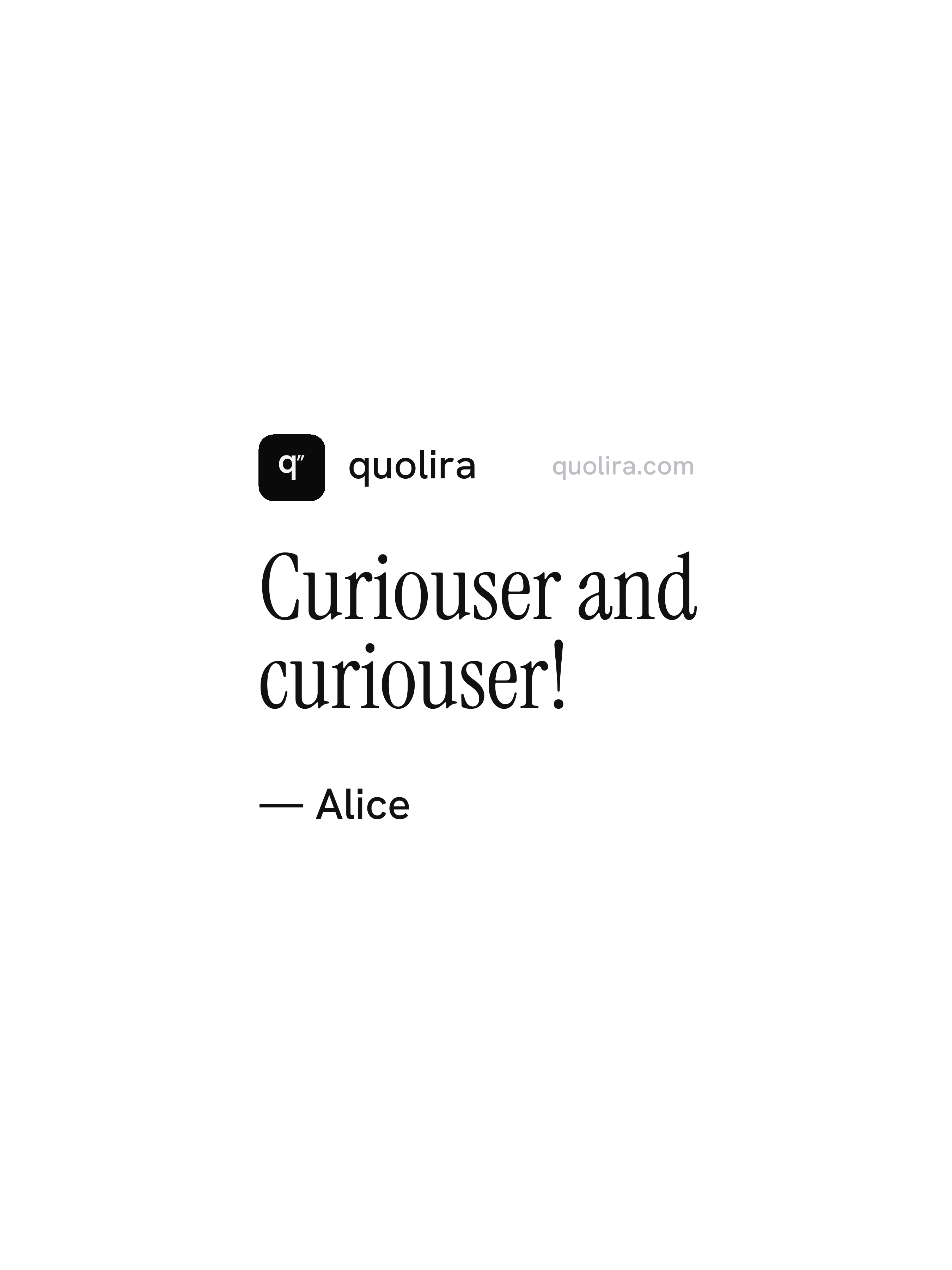
“Curiouser and curiouser!”
Alice · Alice's Adventures in Wonderland, 1865
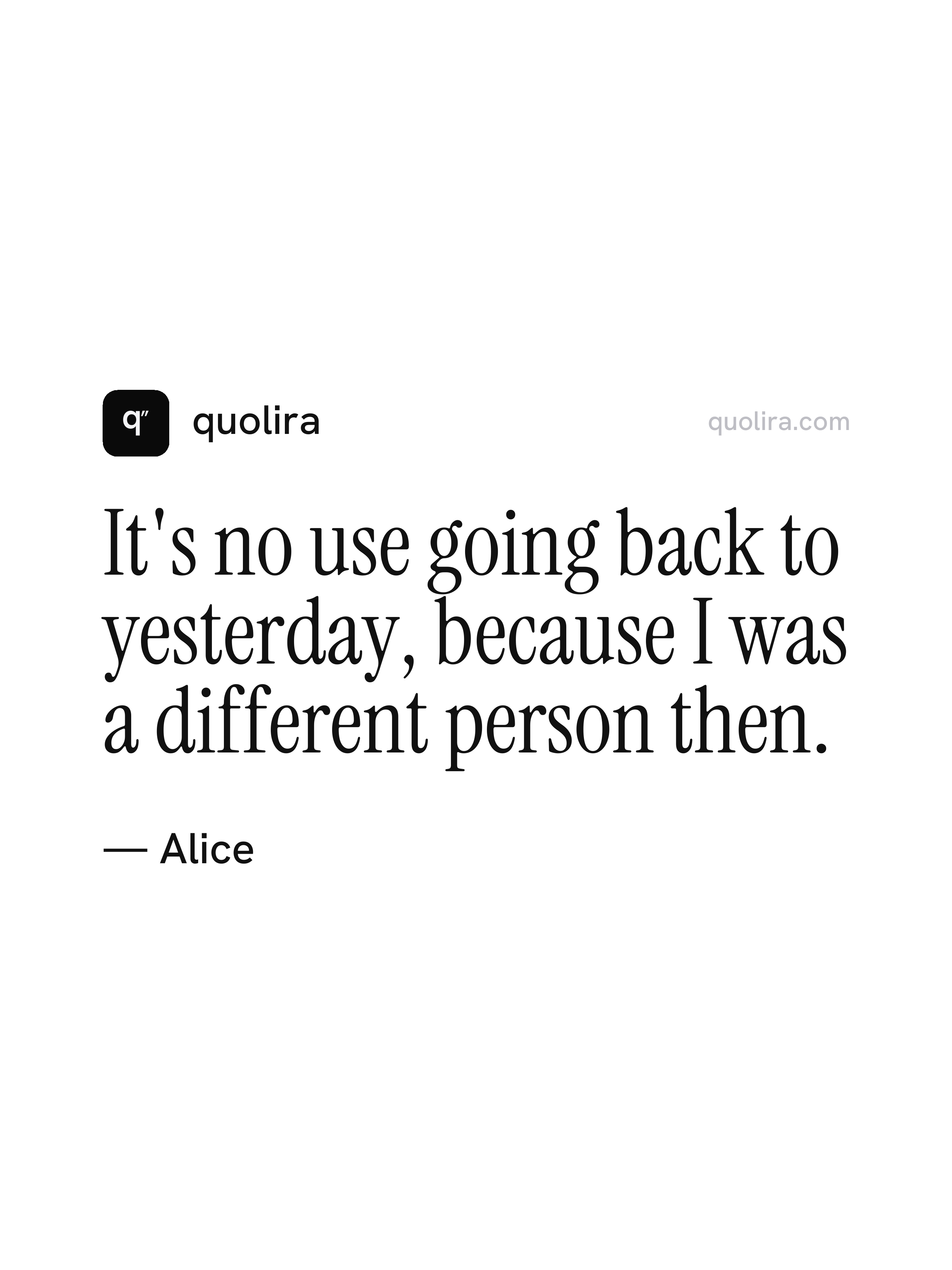
“It's no use going back to yesterday, because I was a different person then.”
Alice · Alice's Adventures in Wonderland, 1865
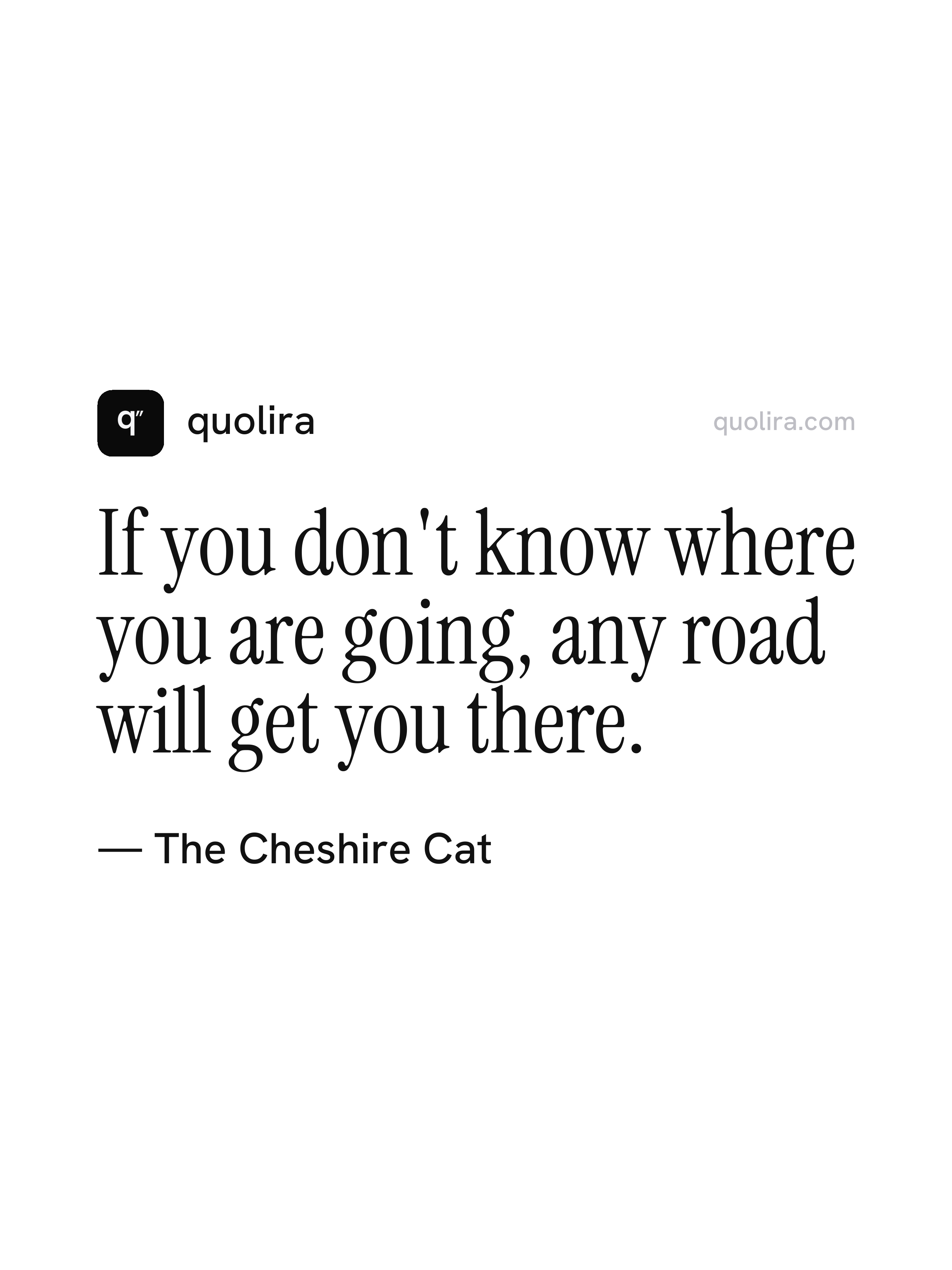
“If you don't know where you are going, any road will get you there.”
The Cheshire Cat · Alice's Adventures in Wonderland, 1865 (paraphrased from the exchange)
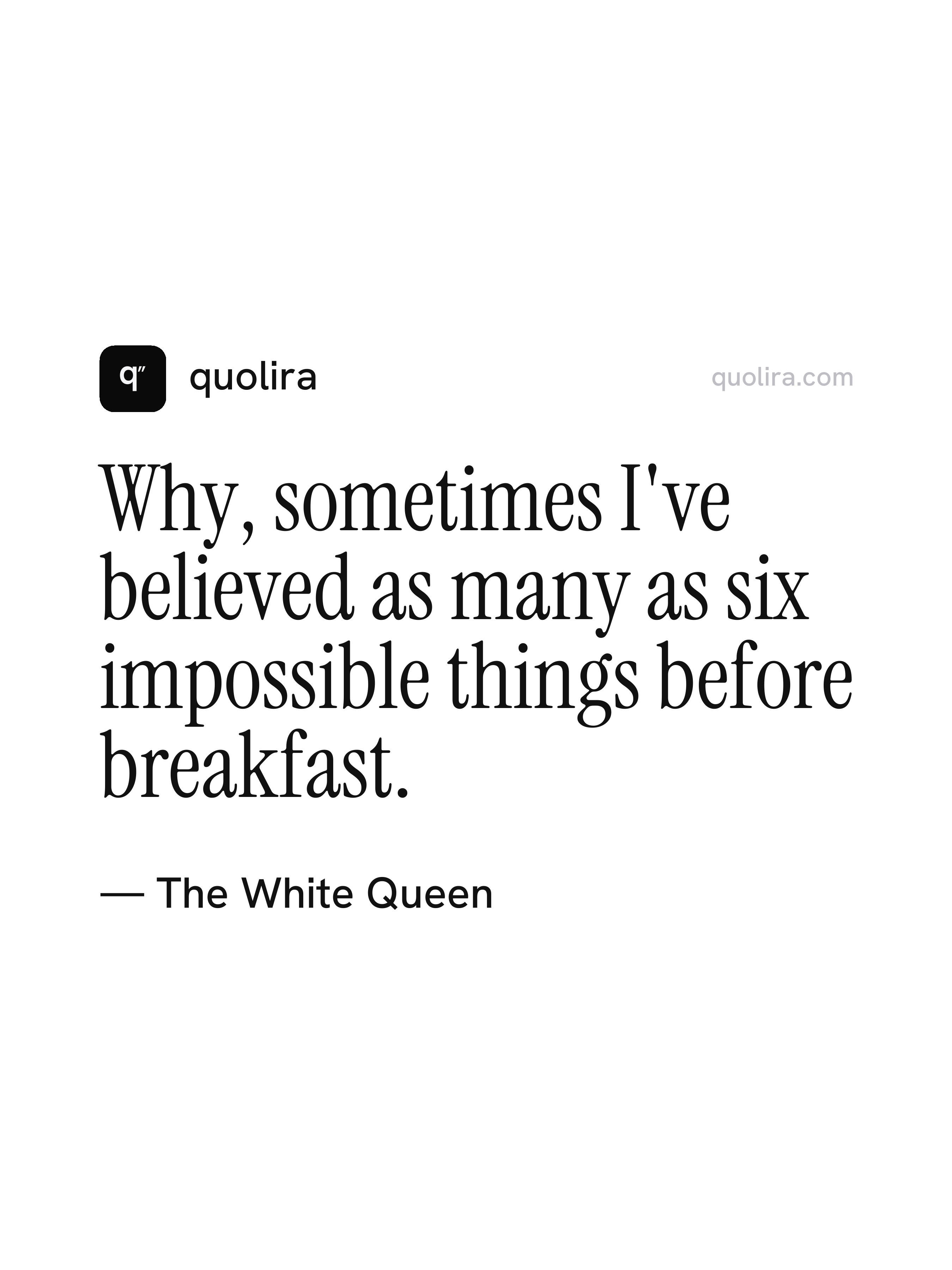
“Why, sometimes I've believed as many as six impossible things before breakfast.”
The White Queen · Through the Looking-Glass, 1871