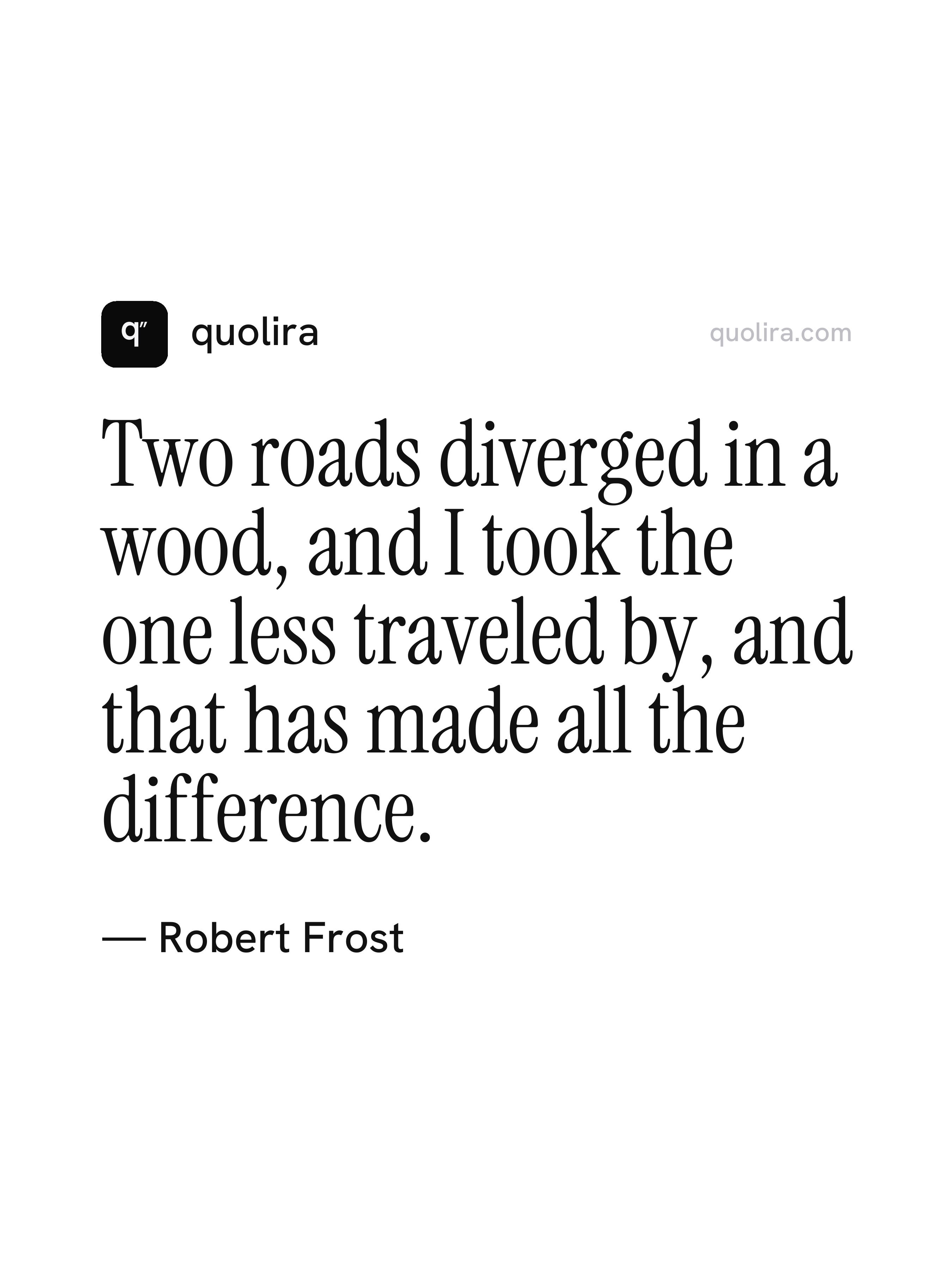
“Two roads diverged in a wood, and I took the one less traveled by, and that has made all the difference.”
Robert Frost · The Road Not Taken, 1916
 quolira
.com
quolira
quolira.com
This line makes a quiet but important claim: love, at its truest, is unconditional and clear-eyed. We do not love things for an idealized version of them, for what they once were, or for what we hope they will become. We love them exactly as they stand before us, with all their limits and particulars intact. There is a kind of honesty and acceptance in that idea that feels both difficult and liberating.
These words appear in "Hyla Brook," a short poem published in 1916. The poem describes a brook that dries up entirely by midsummer, becoming little more than a bed of leaves and faded flowers. Yet the speaker still values it. The final line delivers the point gently but with conviction: genuine love does not require its object to be perfect or even present in its best form. The poem uses a modest natural detail to arrive at a truth about human feeling.
Robert Frost built a body of work that found large meaning in small, ordinary things, fields, trees, stone walls, brooks, and the people who live alongside them. Born in 1874, he spent formative years farming and teaching in New England before earning wide recognition as a poet. His ability to move from a concrete image to a universal insight with almost no visible effort is one of the hallmarks of his style, and this poem is a fine example of that gift at work.
“Two roads diverged in a wood, and I took the one less traveled by, and that has made all the difference.”
Robert Frost · The Road Not Taken, 1916
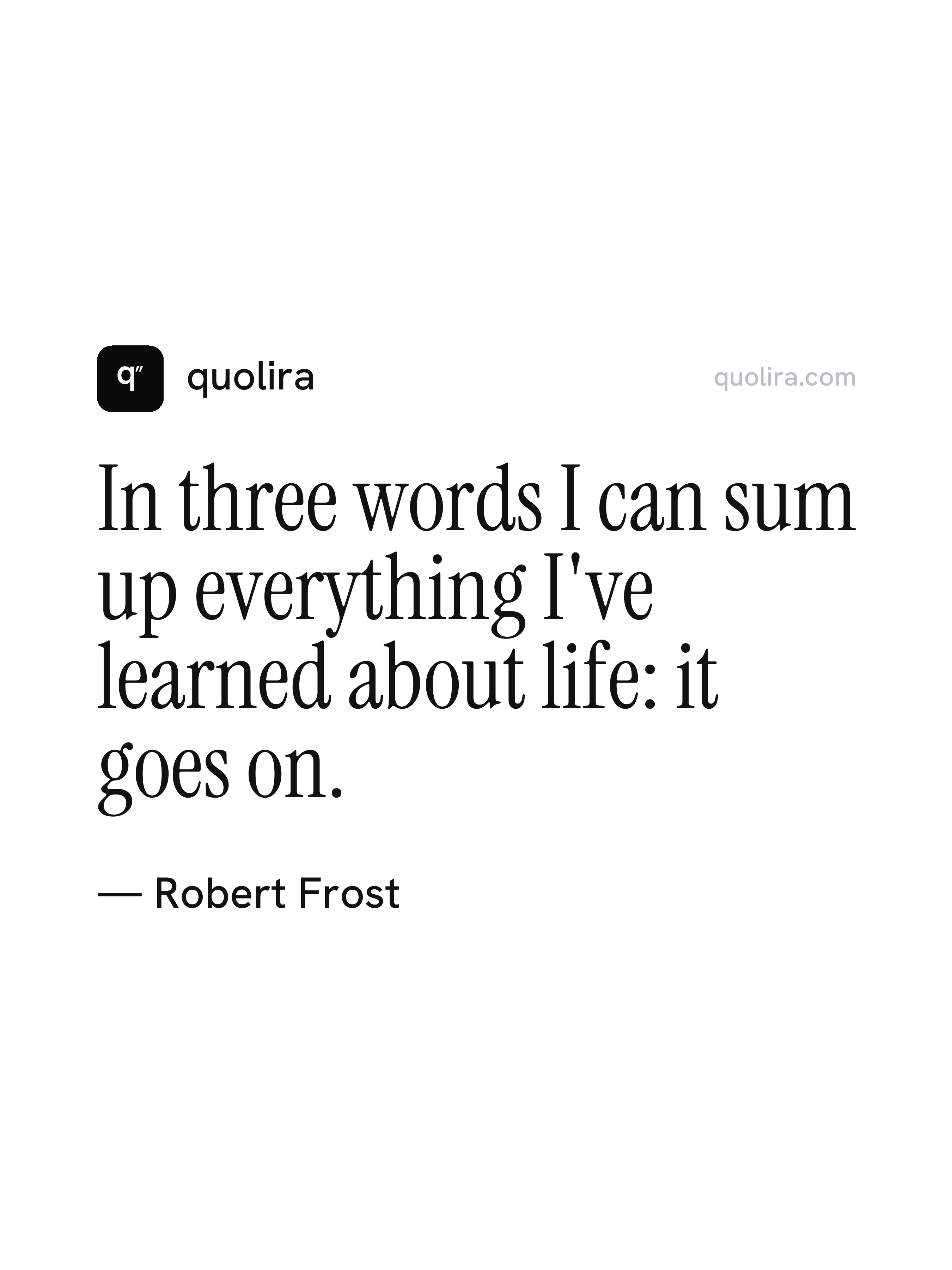
“In three words I can sum up everything I've learned about life: it goes on.”
Robert Frost
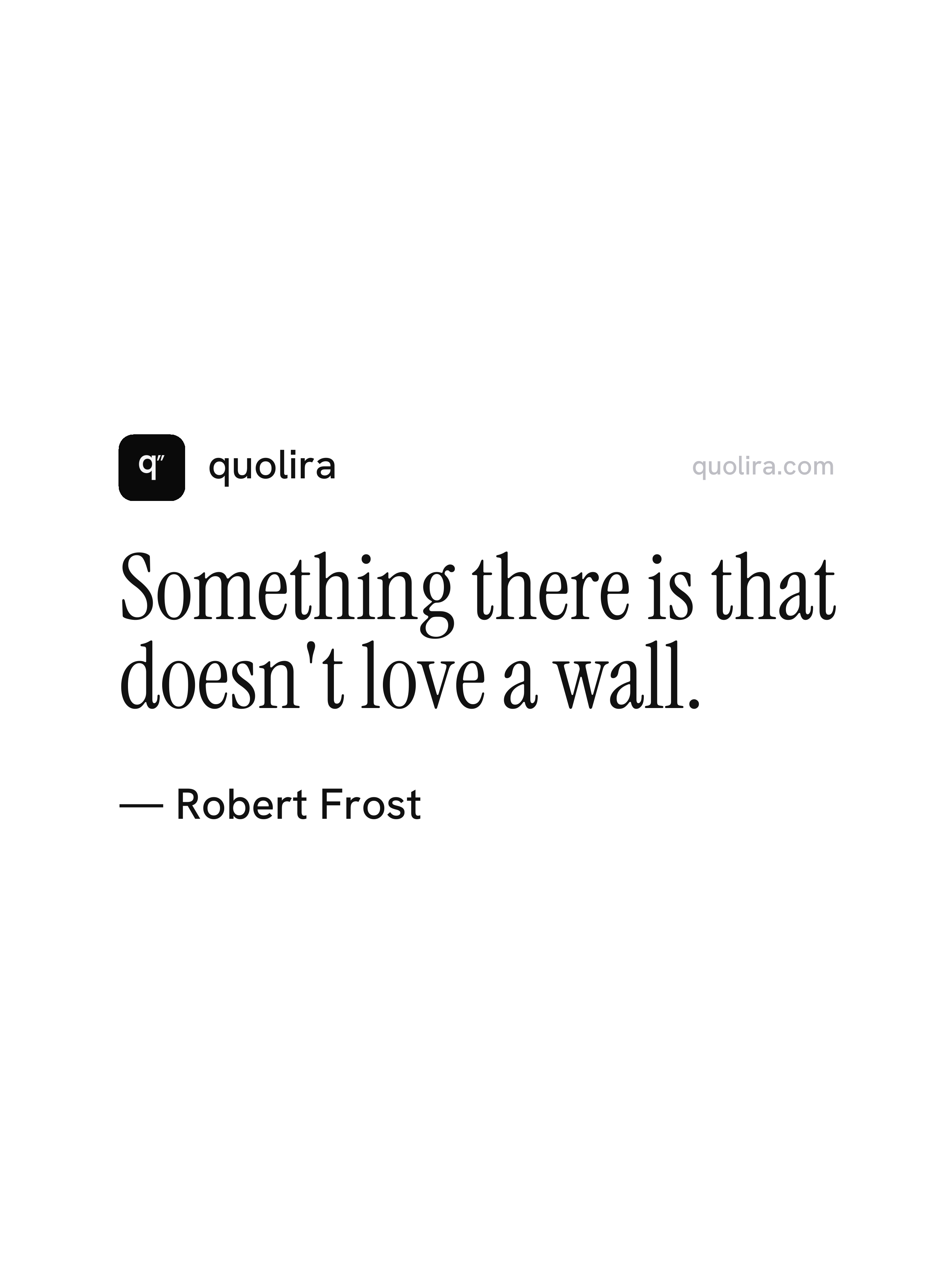
“Something there is that doesn't love a wall.”
Robert Frost · Mending Wall, 1914
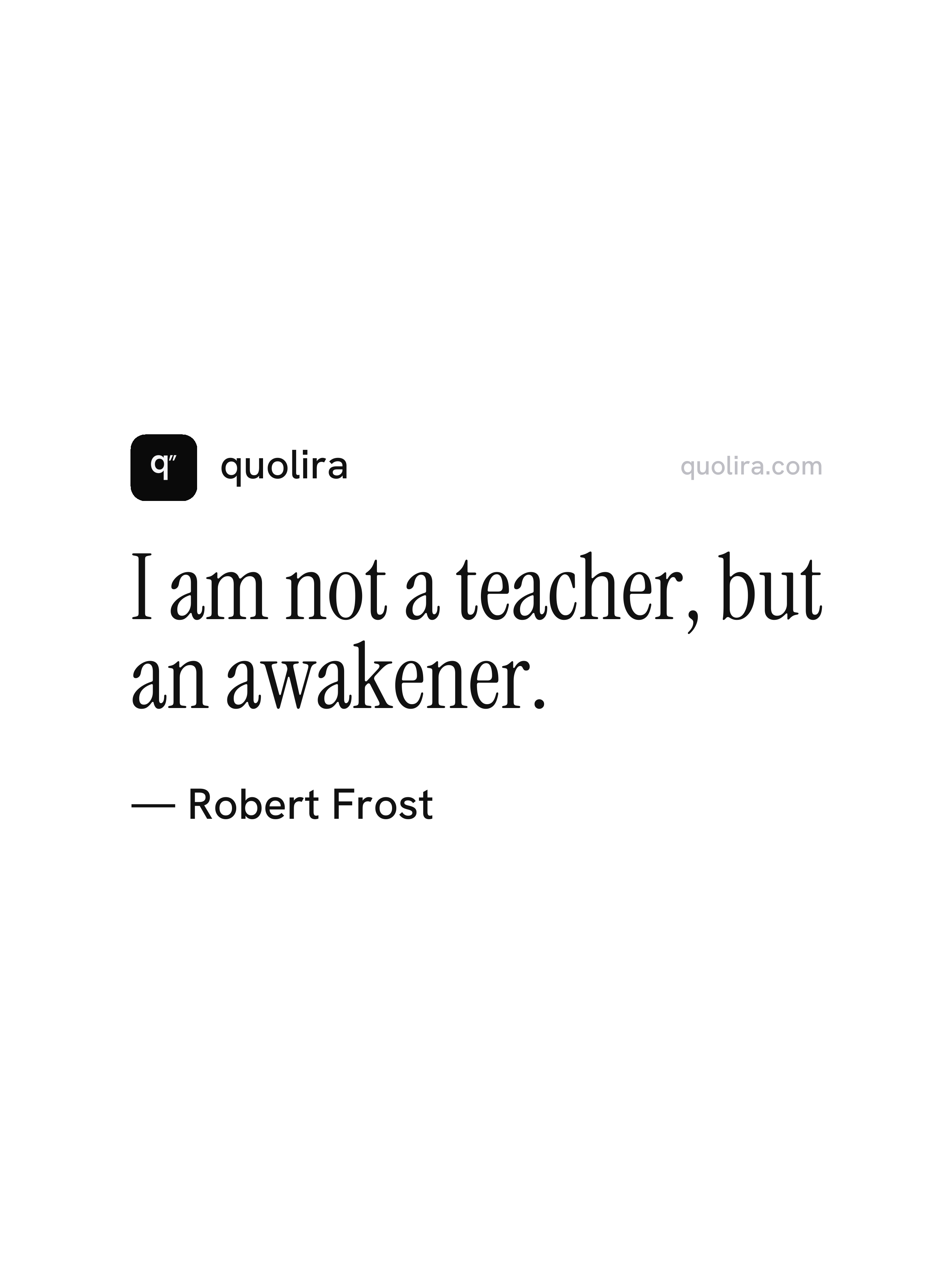
“I am not a teacher, but an awakener.”
Robert Frost
“Home is the place where, when you have to go there, they have to take you in.”
Robert Frost · The Death of the Hired Man, 1914
“All murderers are punished unless they kill in large numbers and to the sound of trumpets.”
Voltaire · Zadig, 1747
“Appreciation is a wonderful thing. It makes what is excellent in others belong to us as well.”
Voltaire
“Think for yourselves and let others enjoy the privilege to do so too.”
Voltaire
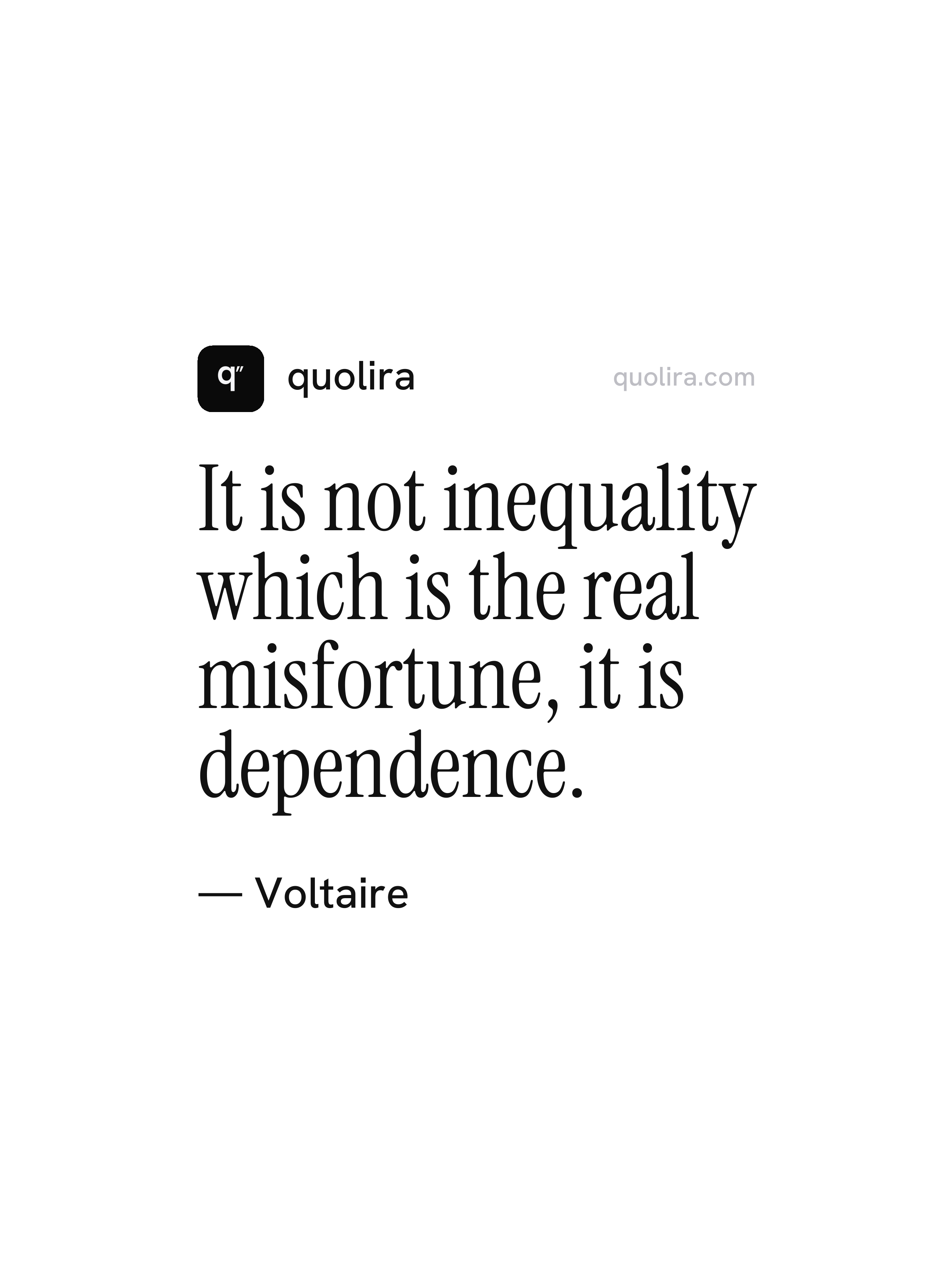
“It is not inequality which is the real misfortune, it is dependence.”
Voltaire
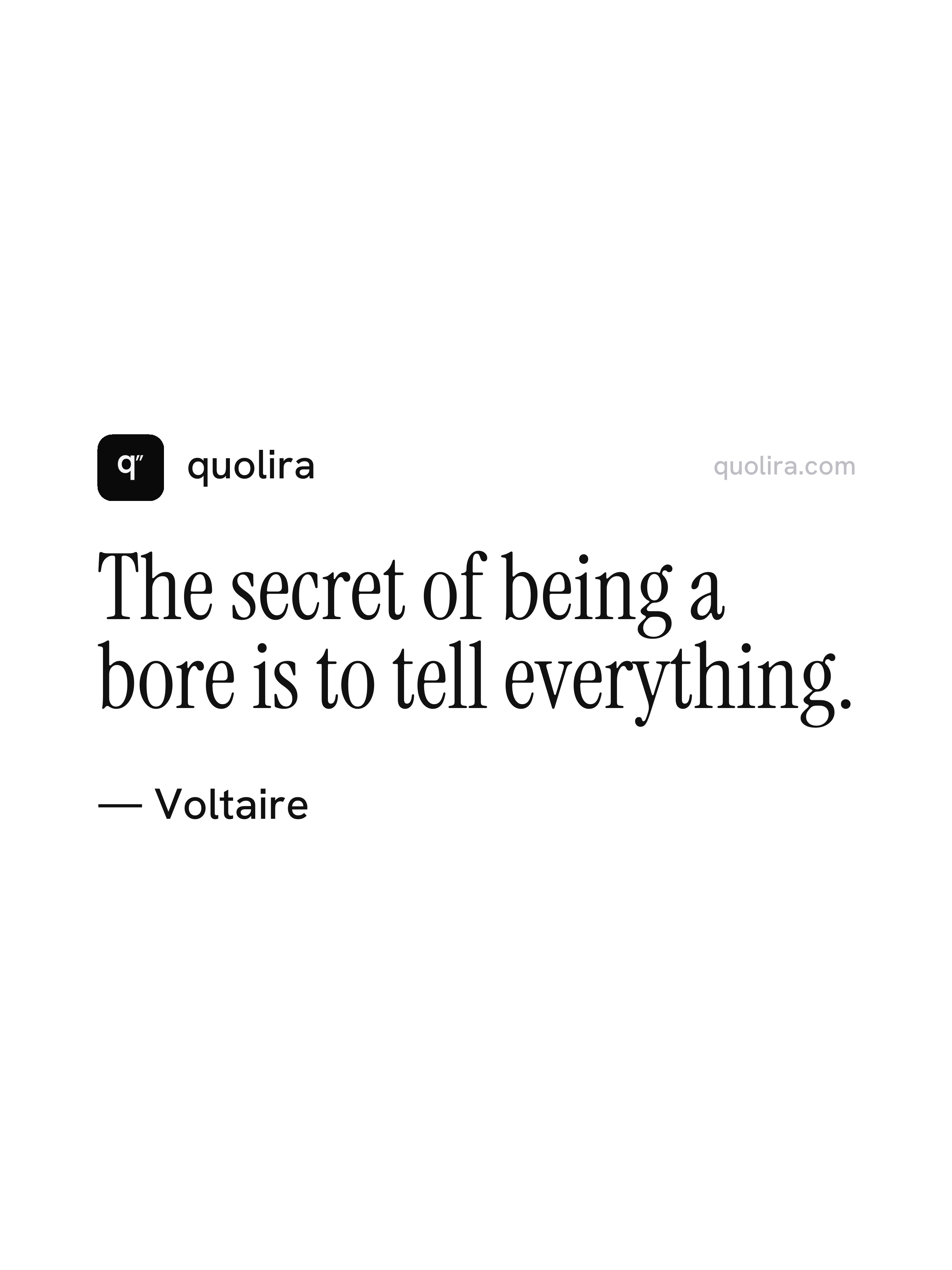
“The secret of being a bore is to tell everything.”
Voltaire · Sept Discours en Vers sur l'Homme, 1738
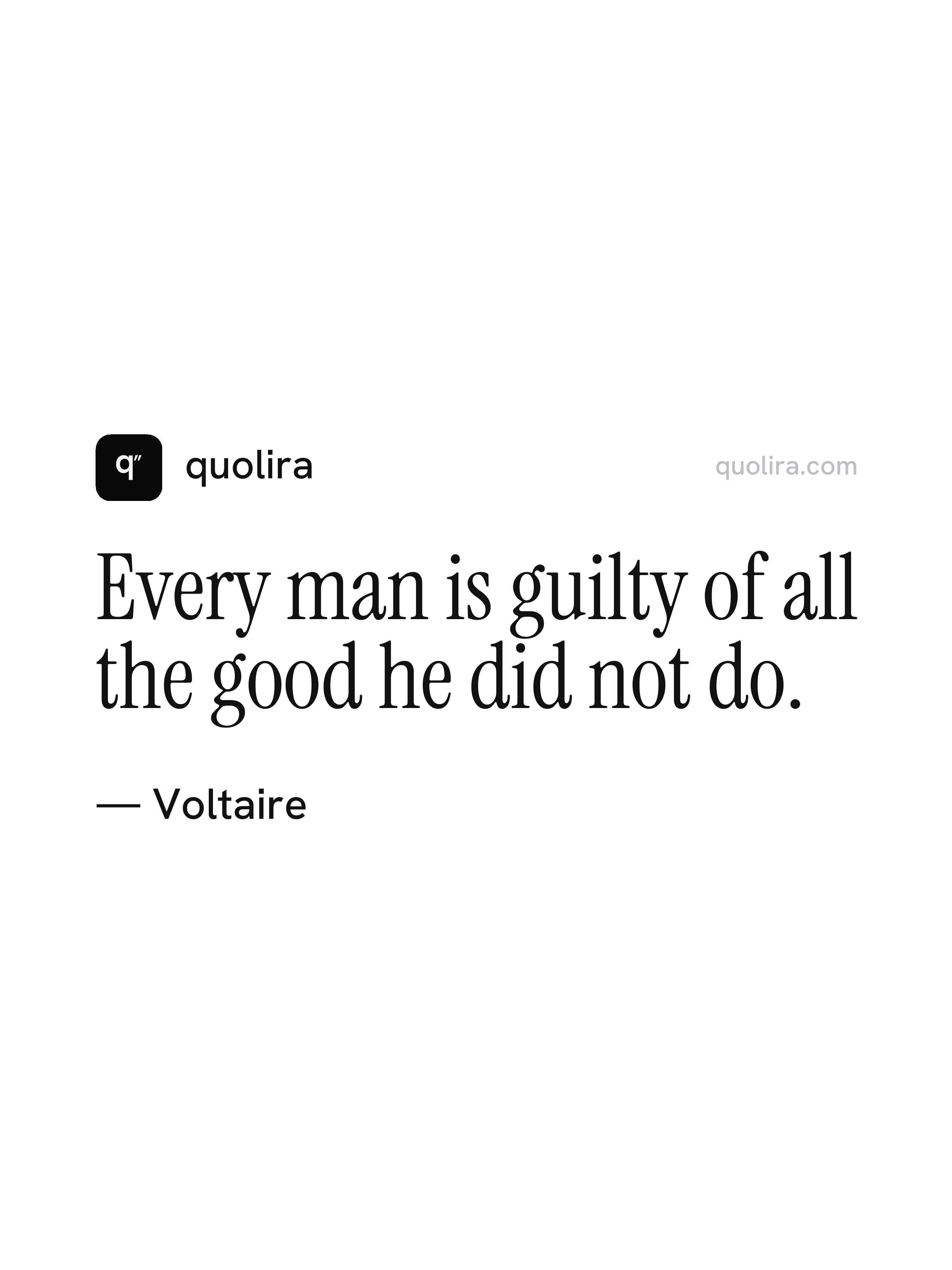
“Every man is guilty of all the good he did not do.”
Voltaire
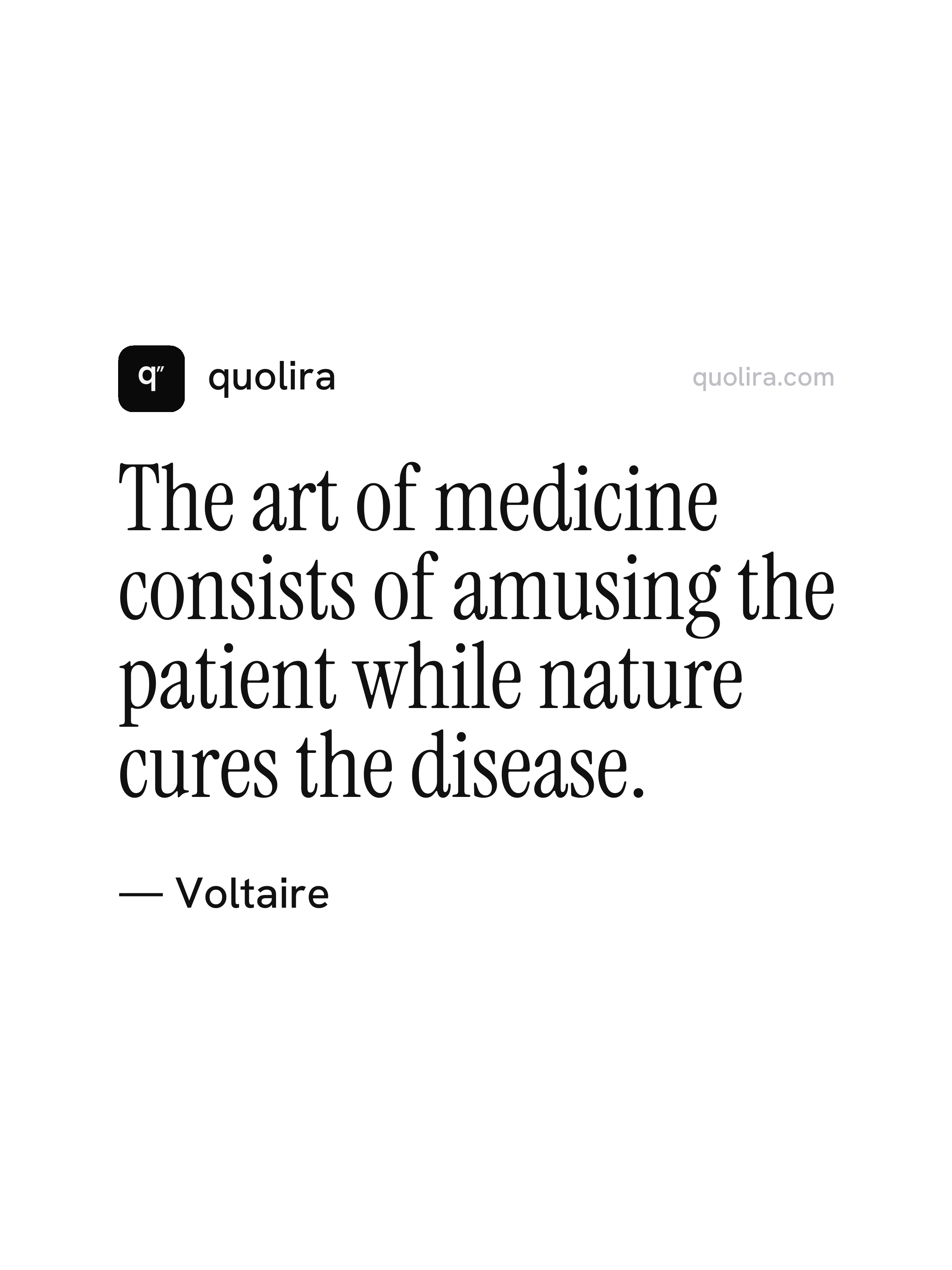
“The art of medicine consists of amusing the patient while nature cures the disease.”
Voltaire