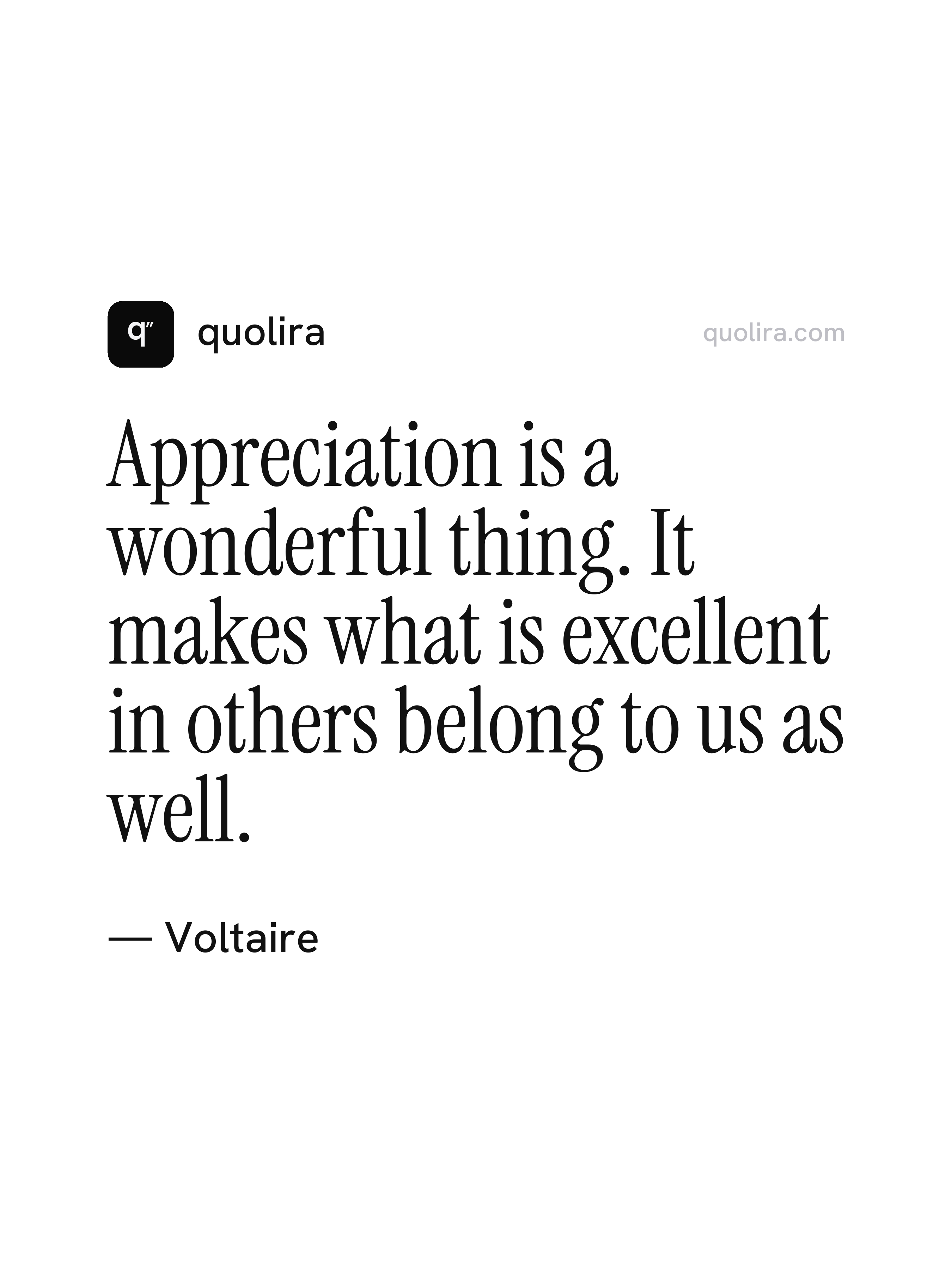
“Appreciation is a wonderful thing. It makes what is excellent in others belong to us as well.”
Voltaire
 quolira
.com
quolira
quolira.com
Voltaire is drawing a sharp and darkly comic contrast between the way society treats ordinary criminals and the way it treats those who kill on a massive scale in the name of war or conquest. The lone murderer is hunted and punished, but the general or ruler who orders the deaths of thousands is celebrated and rewarded. The line strips away the pageantry of military glory to expose what Voltaire sees as a fundamental moral hypocrisy at the heart of organized violence.
This line comes from Zadig, a satirical philosophical tale published in 1747. The book follows a young Babylonian man through a series of adventures that expose the absurdities and injustices of human society. Voltaire used the form of the Oriental tale, a popular genre of the period, to smuggle in sharp social criticism that would have been dangerous to express directly. The observation about murder and trumpets is typical of his method: a brief, precise sentence that cuts through conventional thinking and leaves the reader with an uncomfortable truth.
Voltaire was the pen name of Francois-Marie Arouet, a French writer and philosopher who lived from 1694 to 1778. He is one of the defining figures of the Enlightenment and was a persistent critic of war, religious persecution, and political tyranny. His willingness to challenge those in power brought him imprisonment and exile at various points in his life, yet he continued writing prolifically until the end. His satirical works, including Candide and Zadig, remain among the most celebrated and widely read of the eighteenth century.
“Appreciation is a wonderful thing. It makes what is excellent in others belong to us as well.”
Voltaire
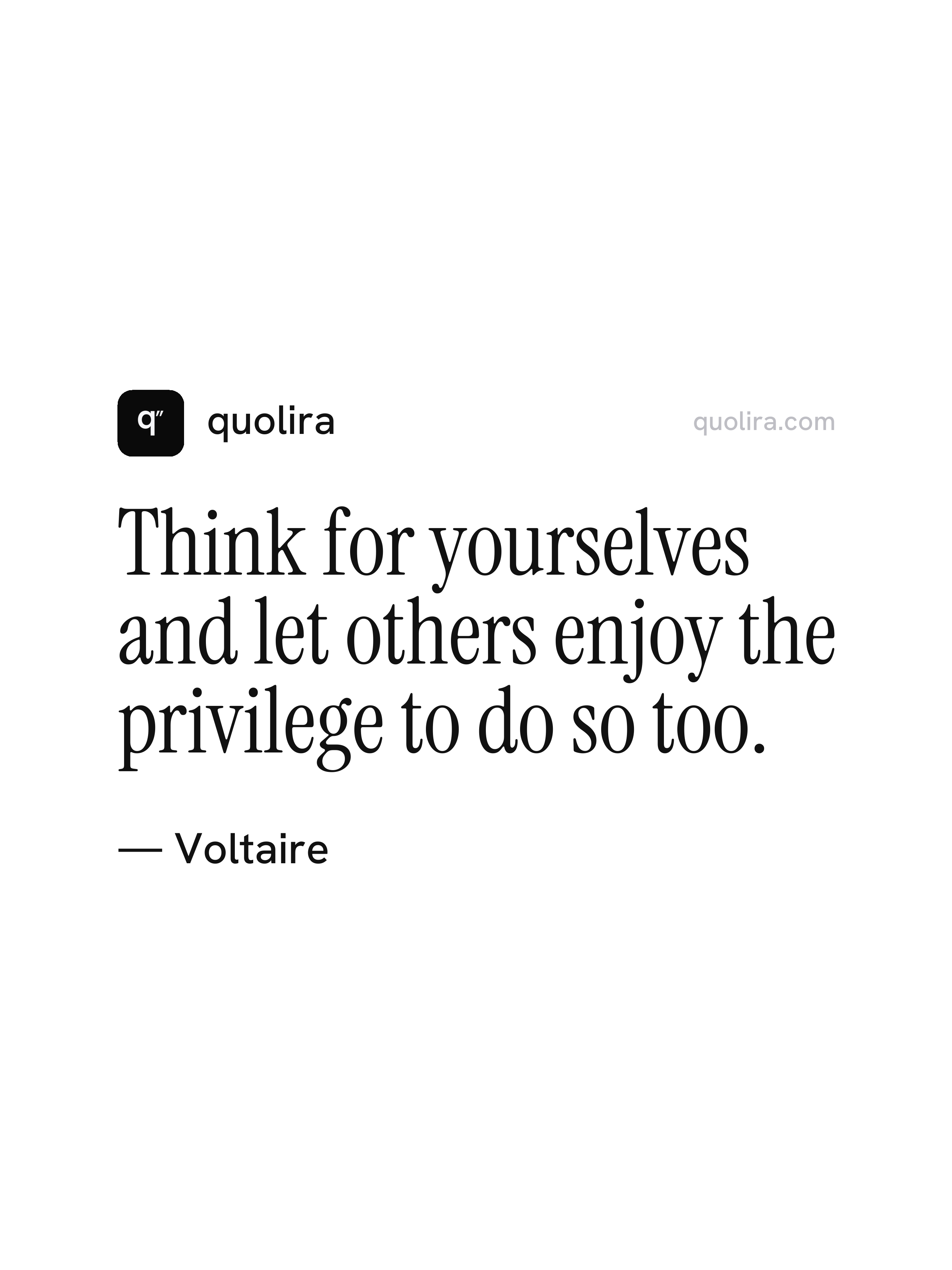
“Think for yourselves and let others enjoy the privilege to do so too.”
Voltaire
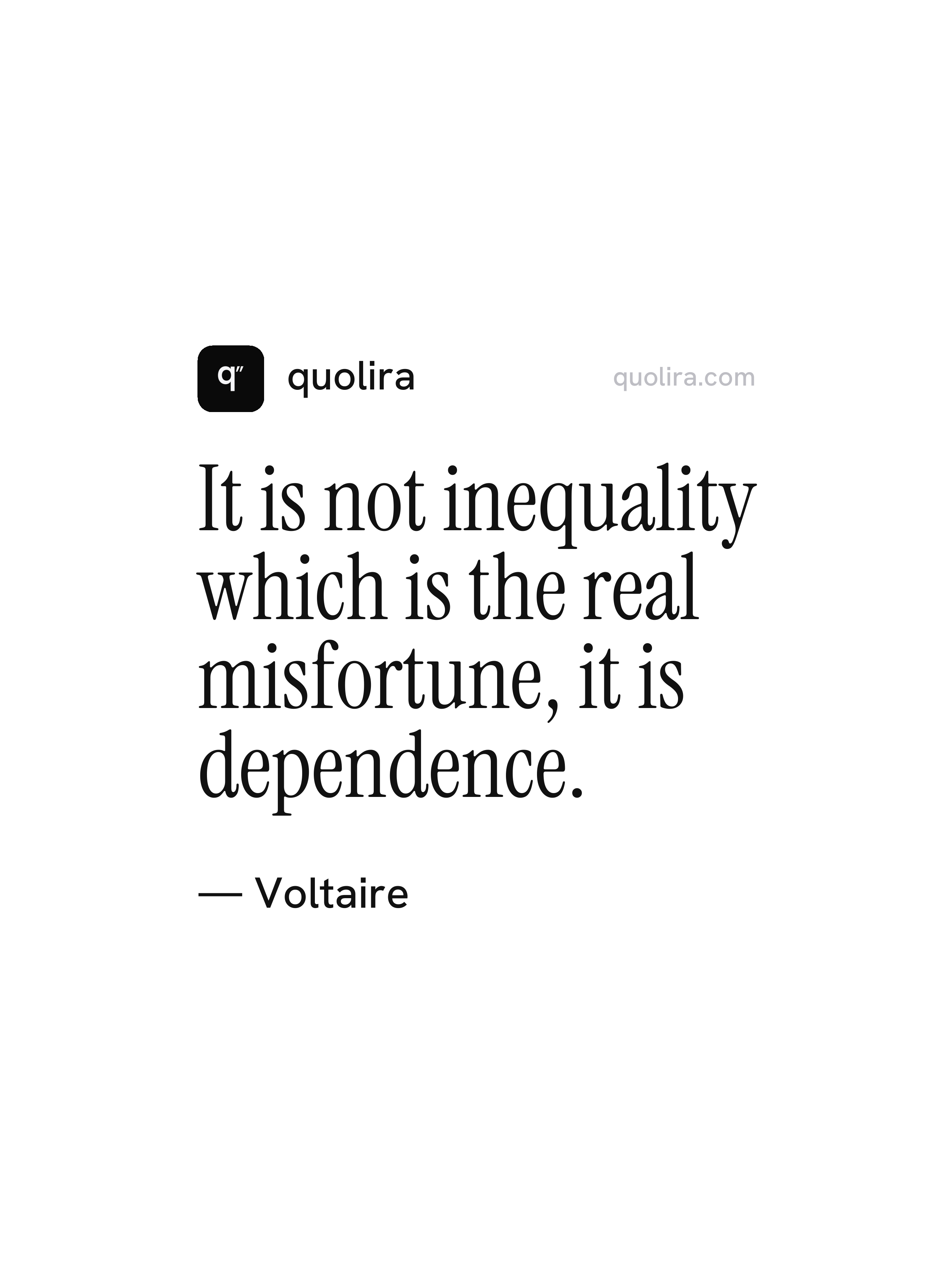
“It is not inequality which is the real misfortune, it is dependence.”
Voltaire
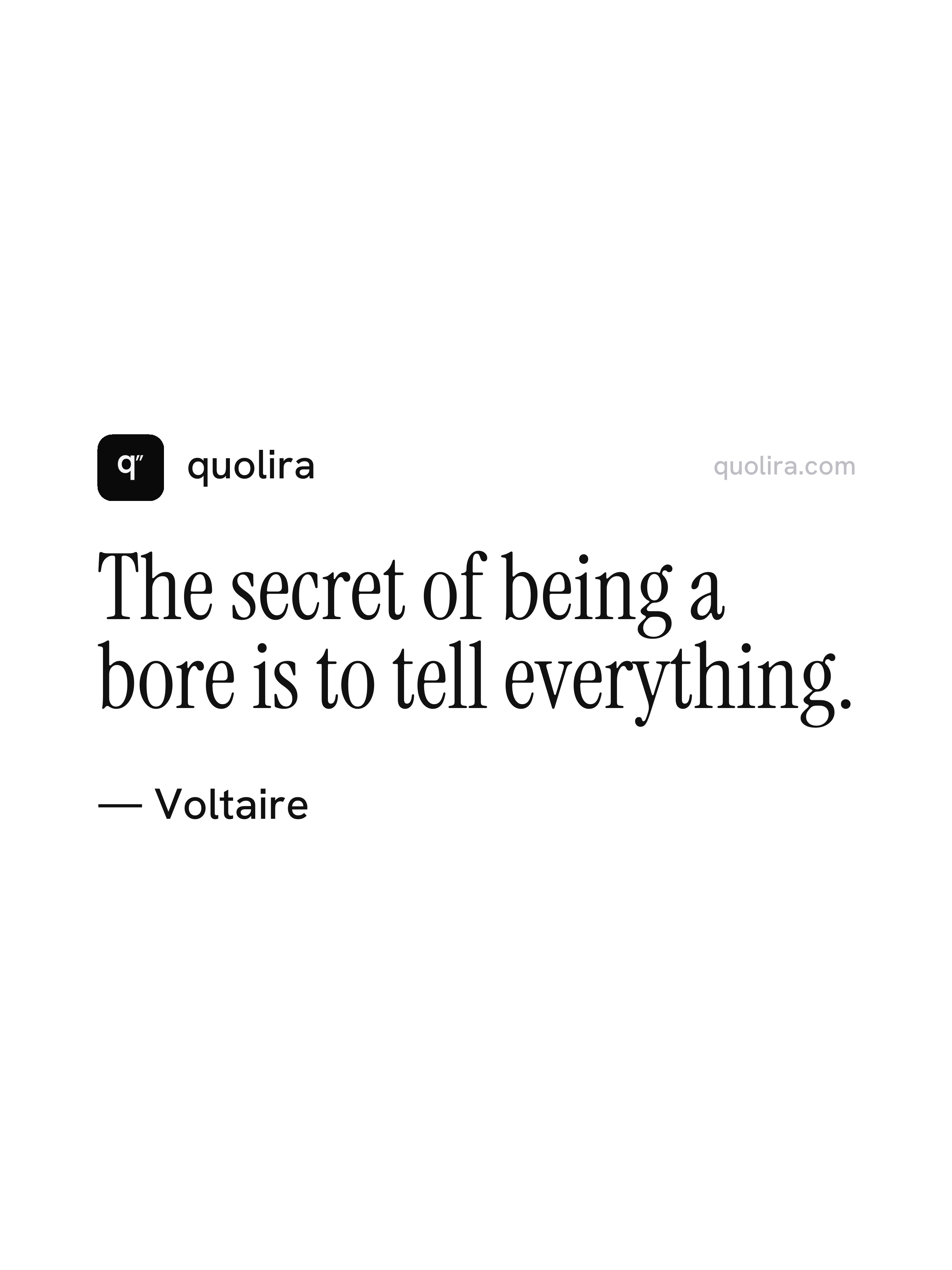
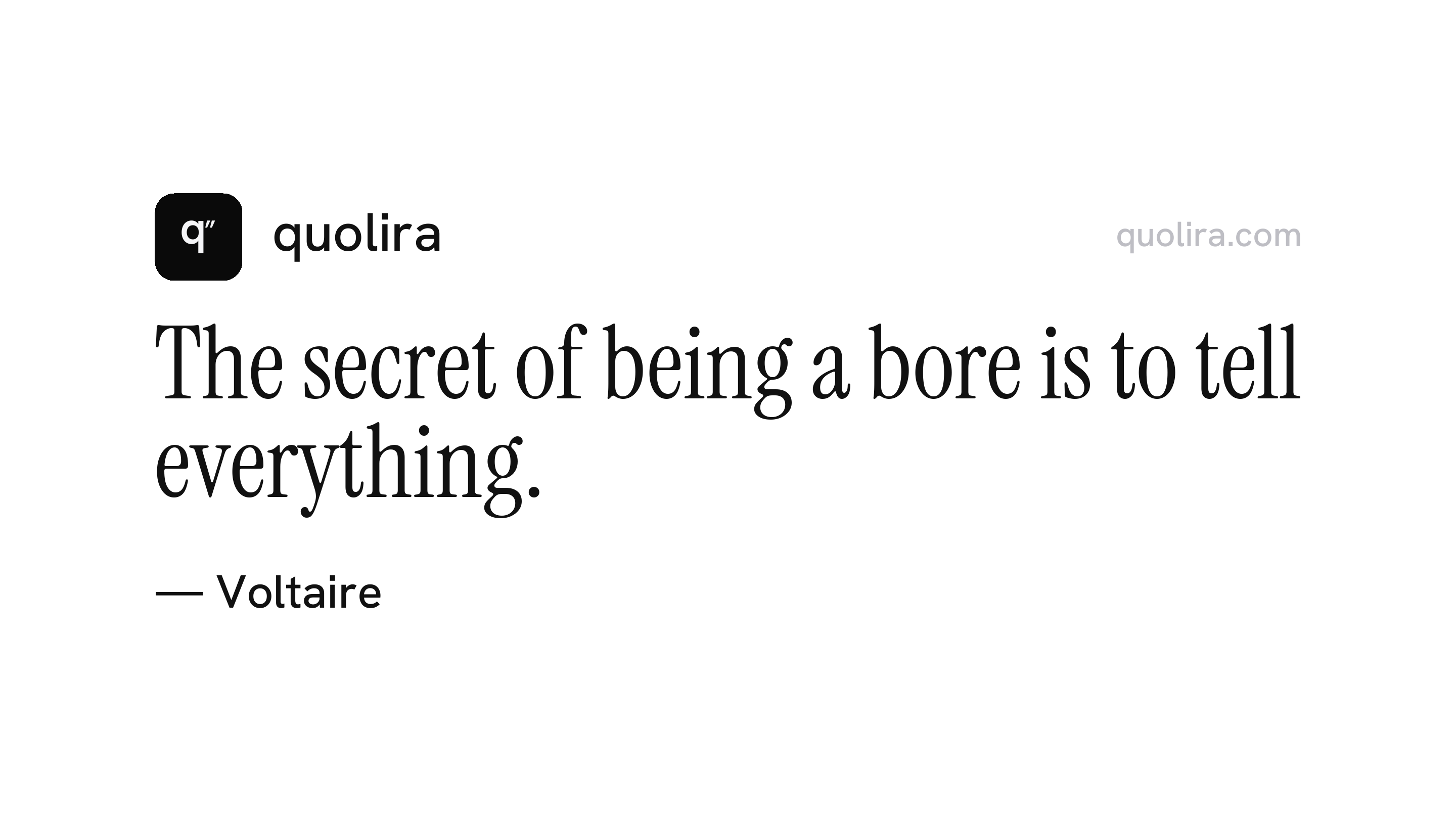
“The secret of being a bore is to tell everything.”
Voltaire · Sept Discours en Vers sur l'Homme, 1738
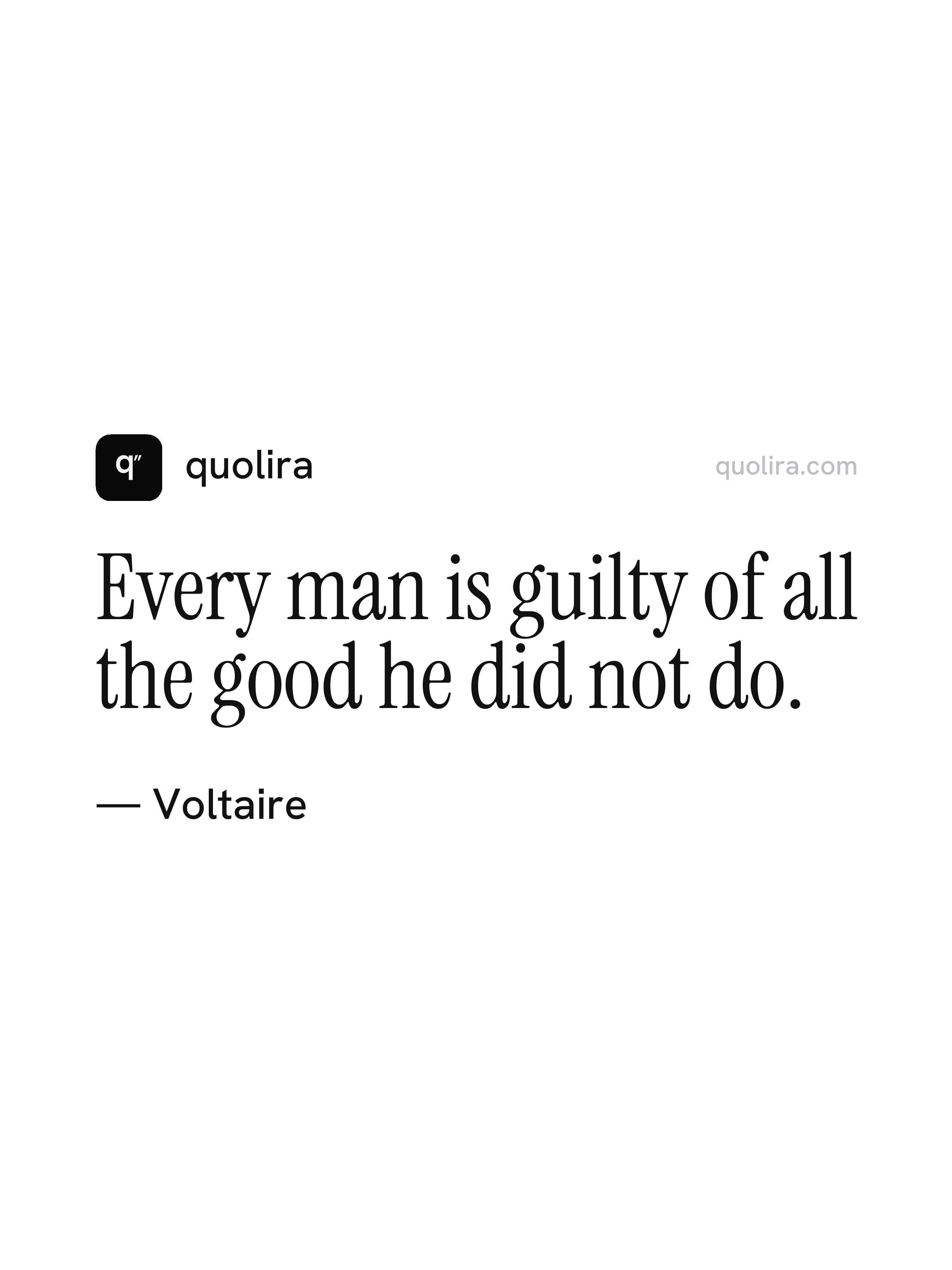
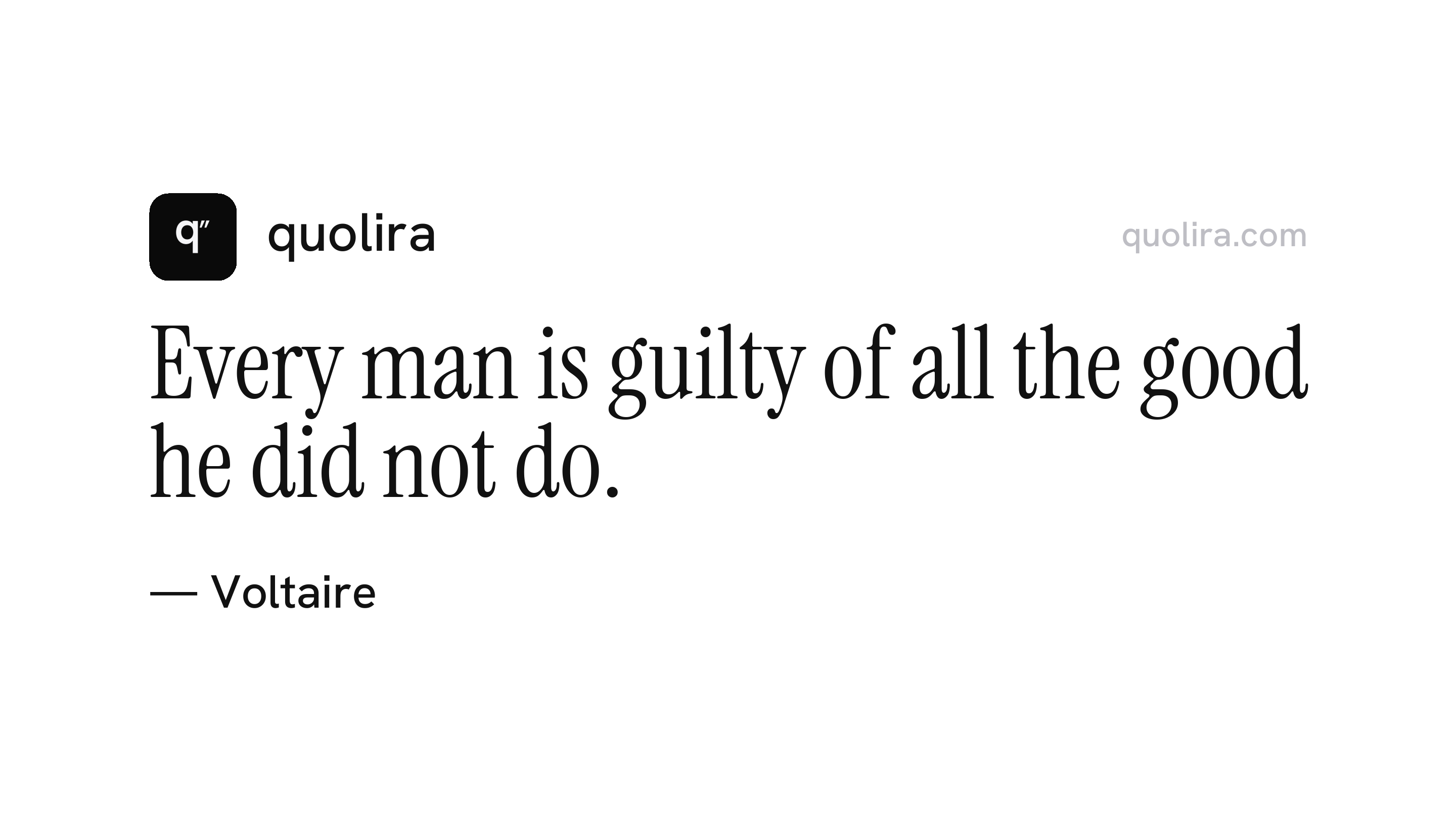
“Every man is guilty of all the good he did not do.”
Voltaire
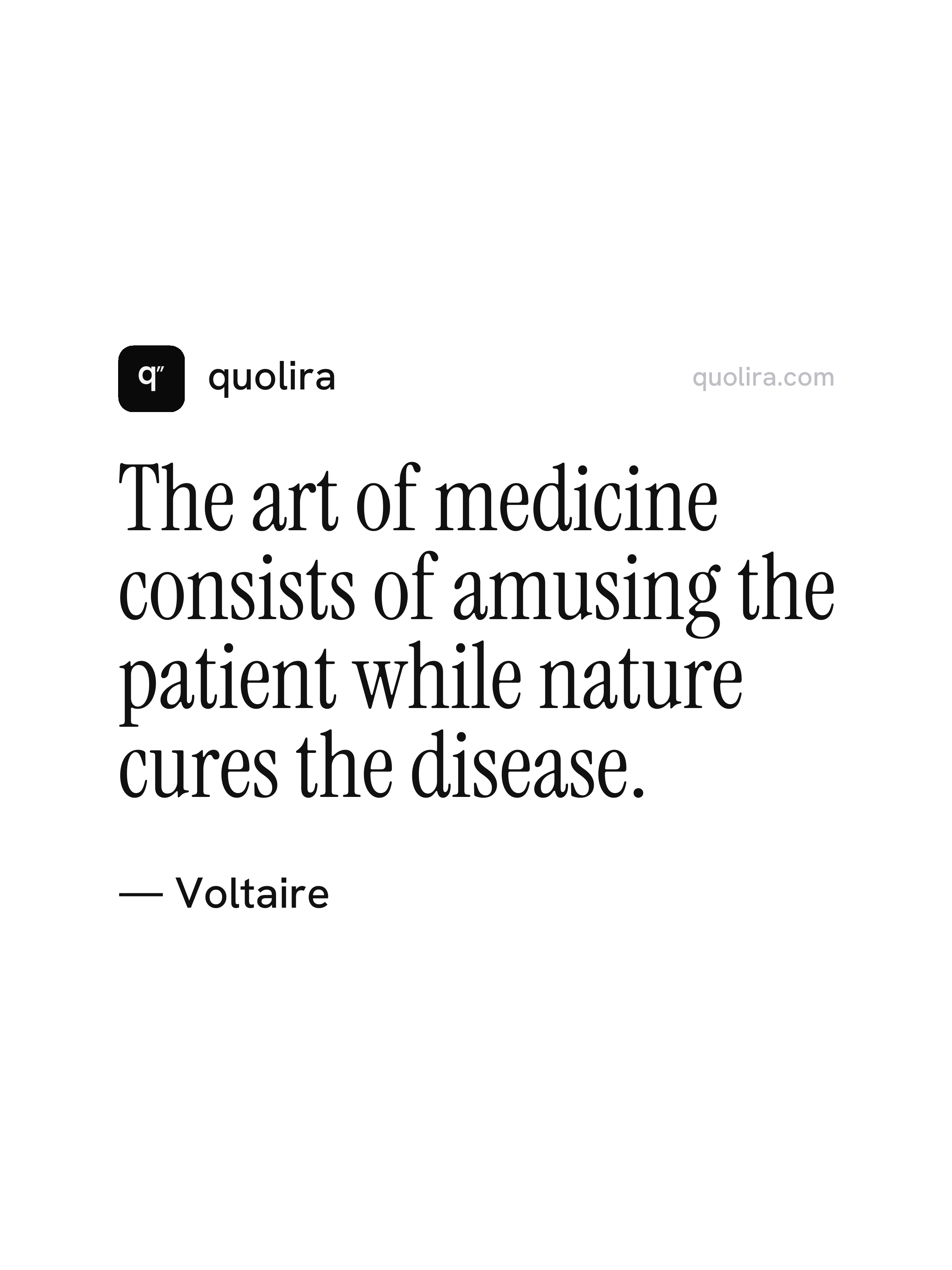
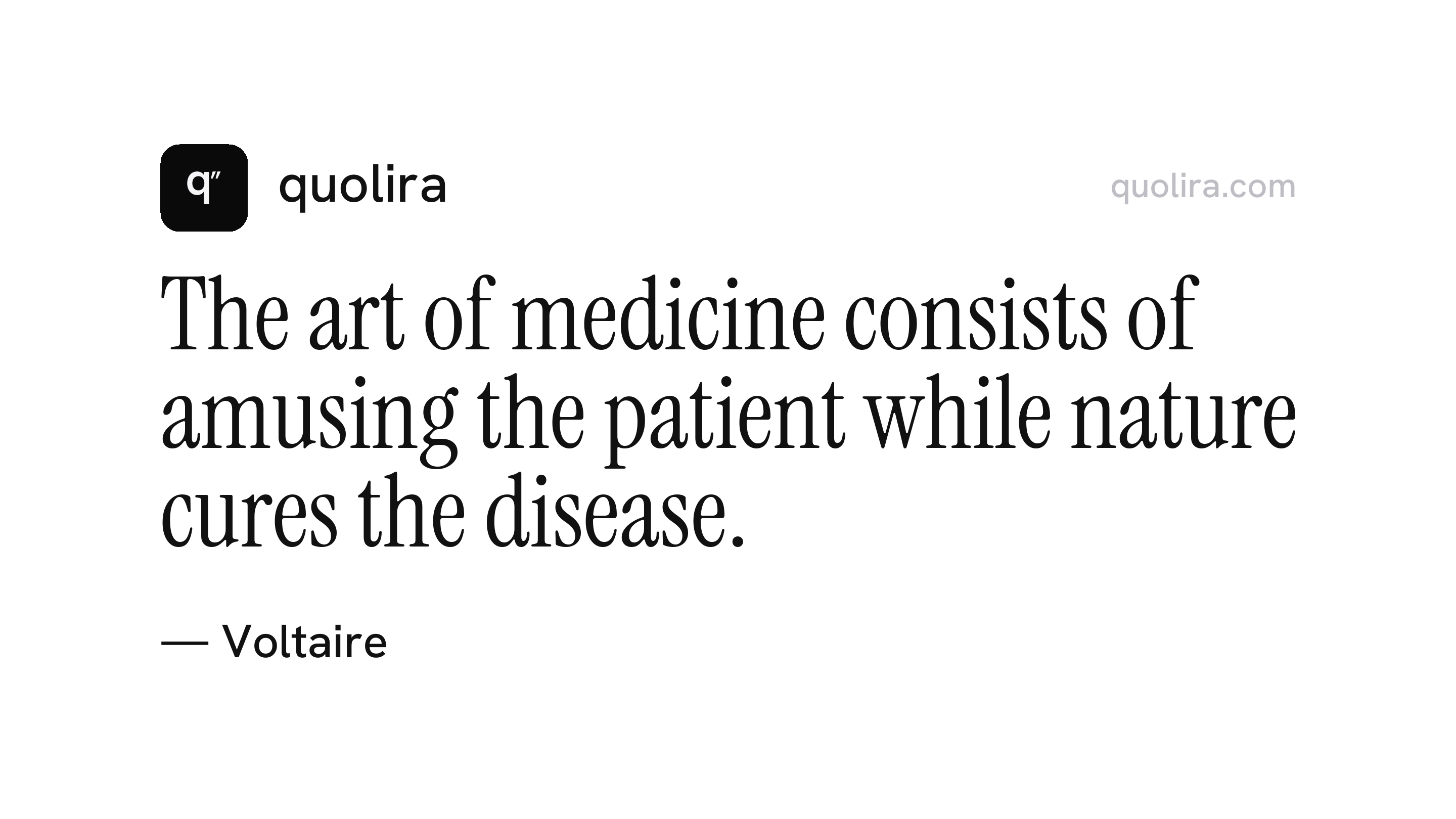
“The art of medicine consists of amusing the patient while nature cures the disease.”
Voltaire
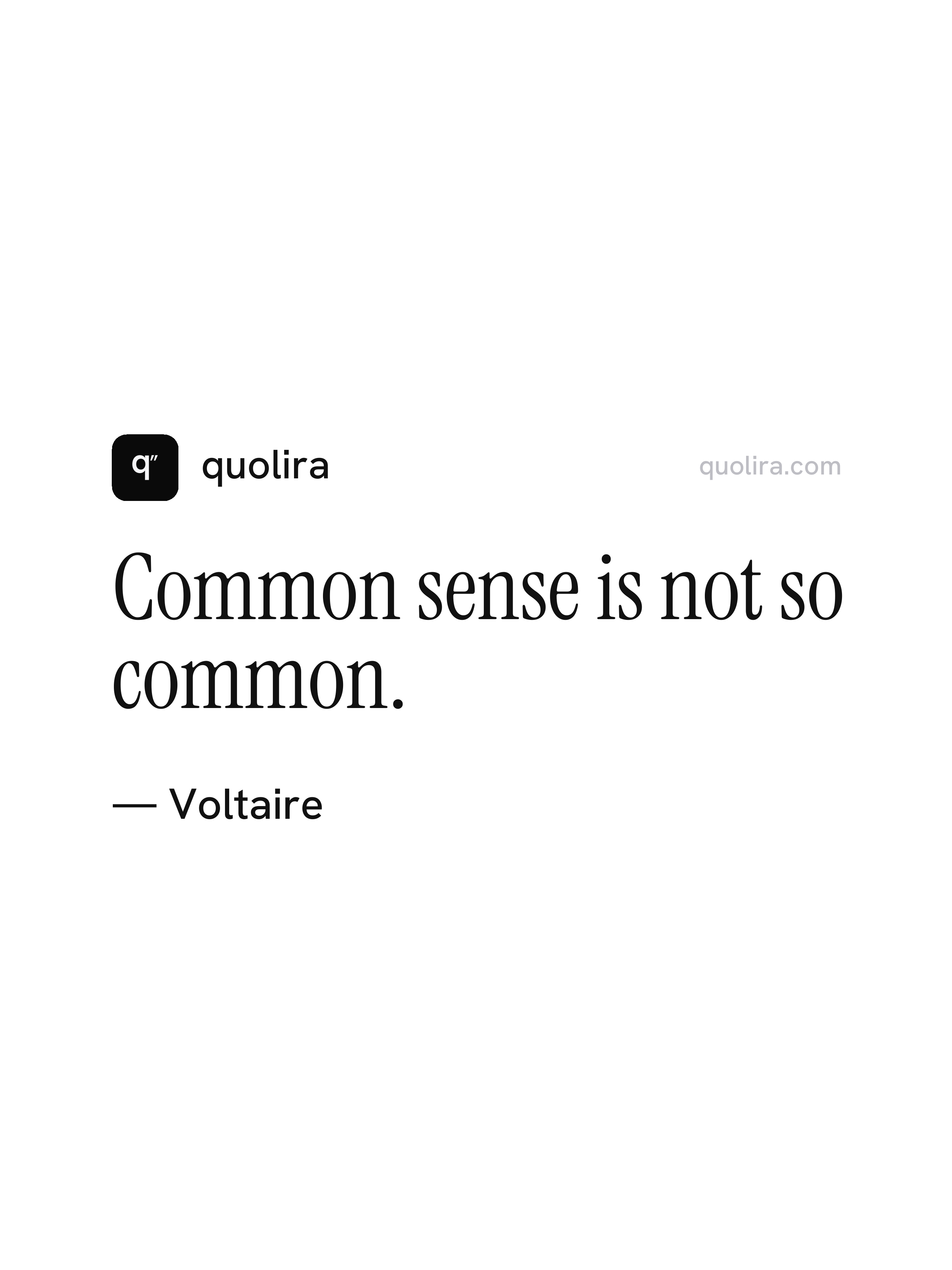
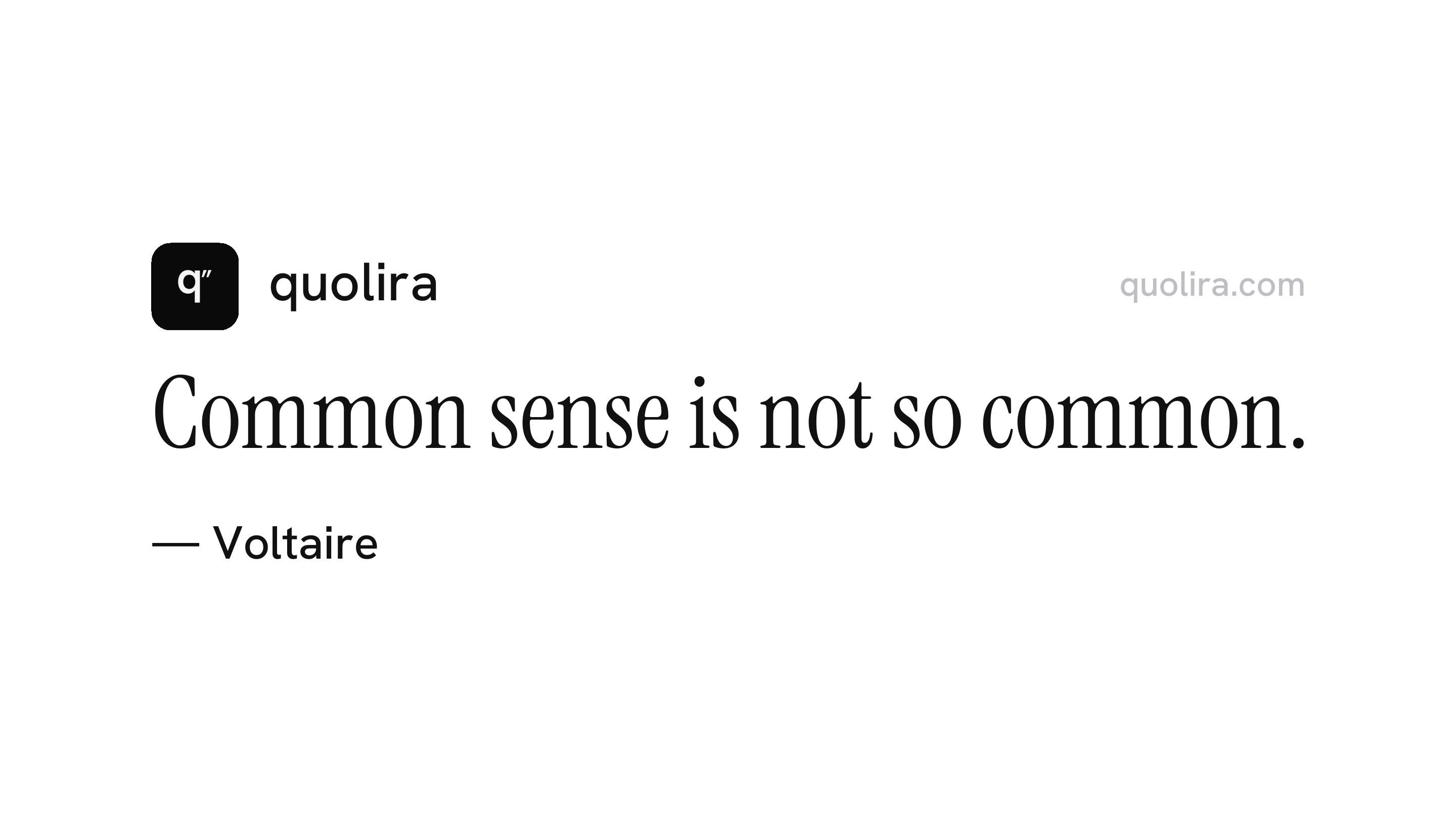
“Common sense is not so common.”
Voltaire · Philosophical Dictionary, 1764
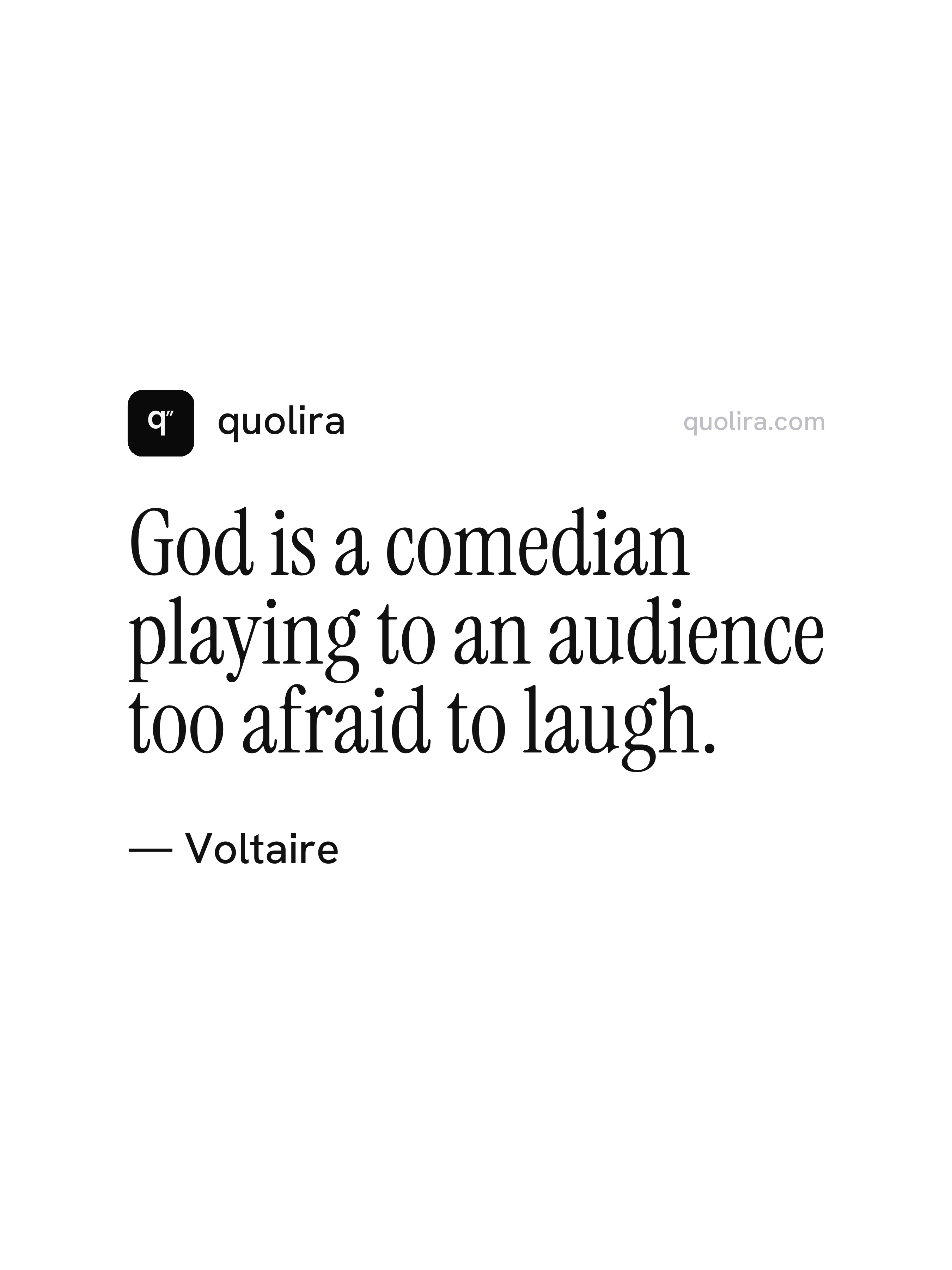
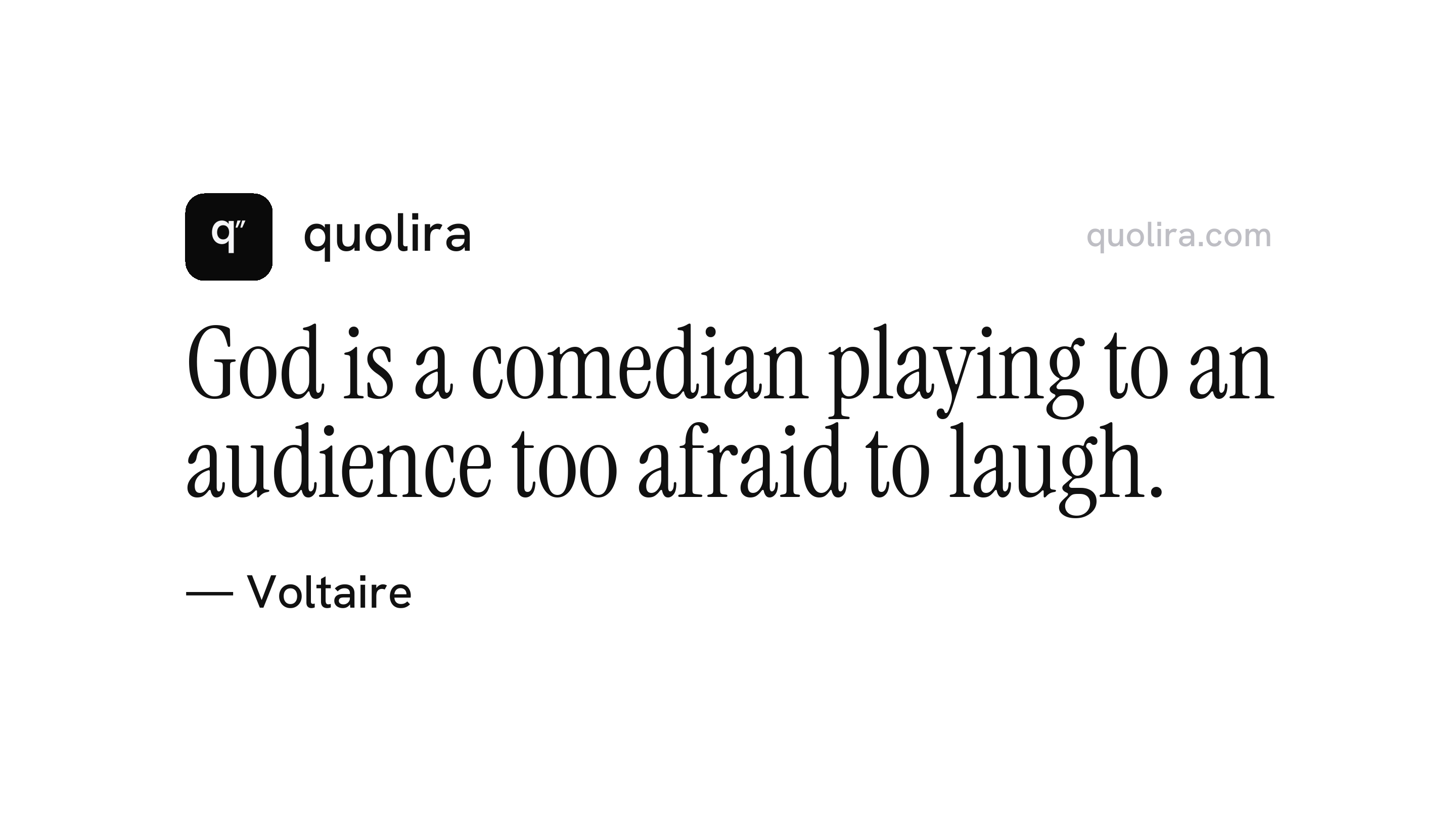
“God is a comedian playing to an audience too afraid to laugh.”
Voltaire
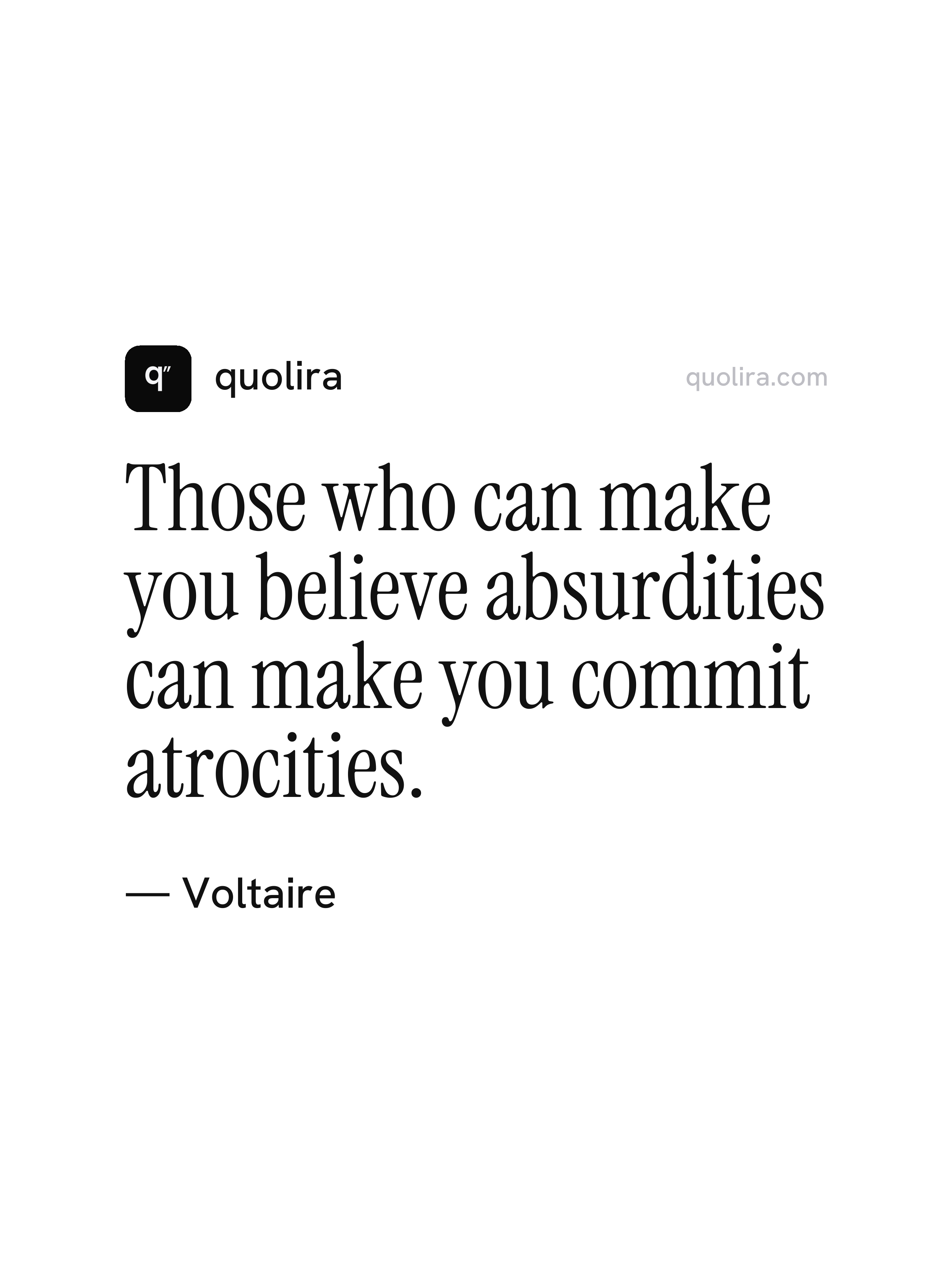
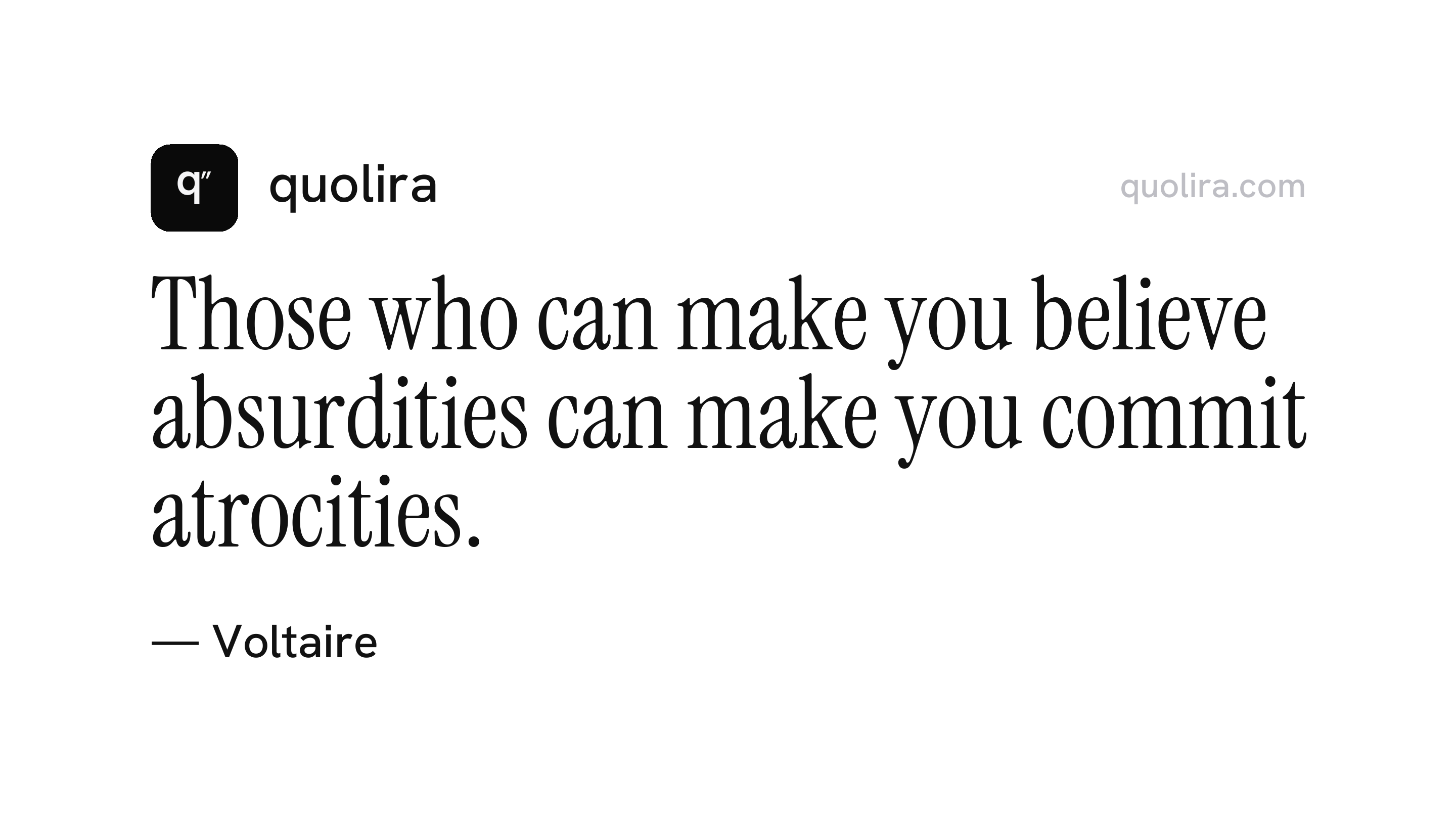
“Those who can make you believe absurdities can make you commit atrocities.”
Voltaire · Questions sur les miracles, 1765
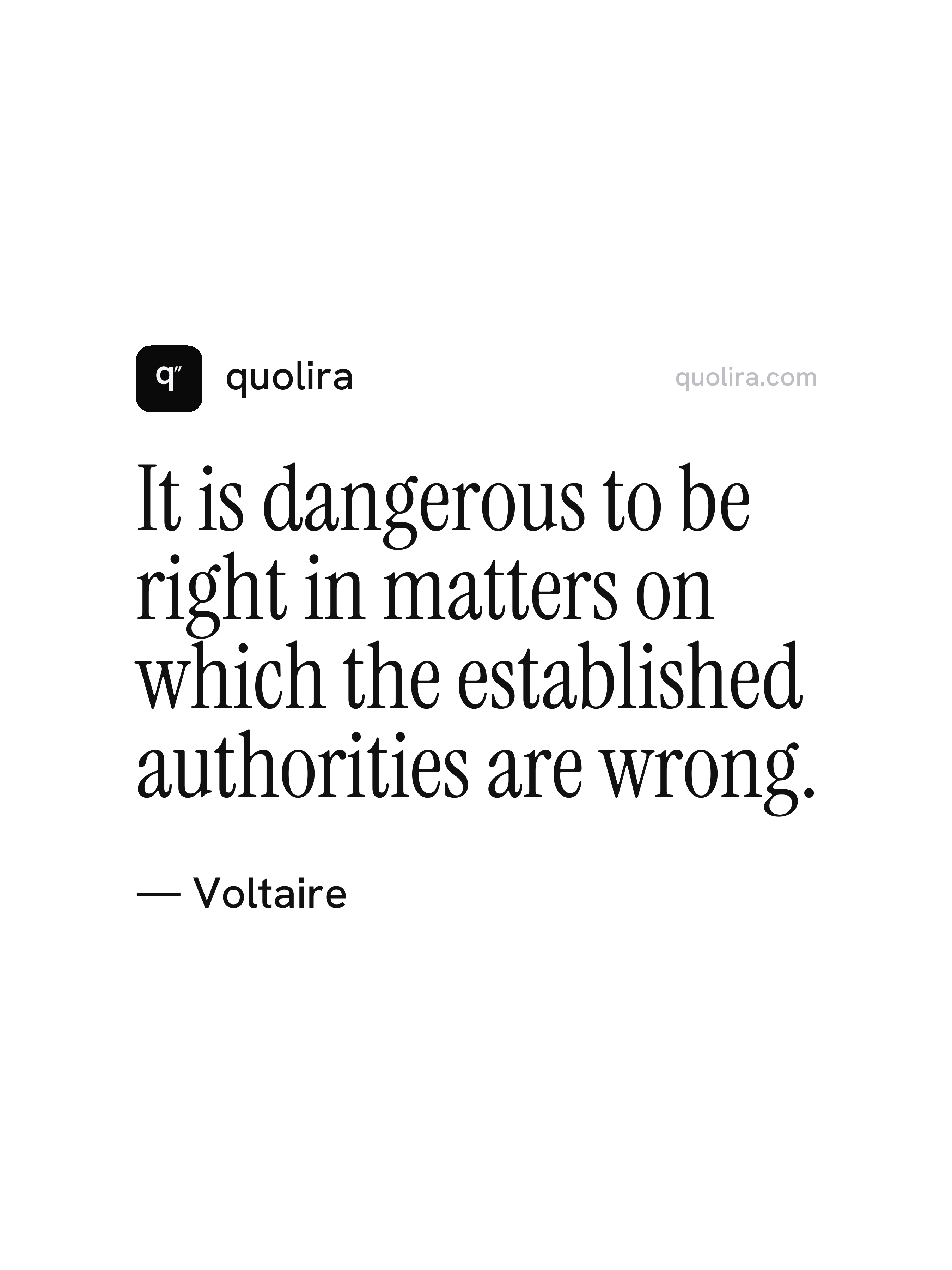
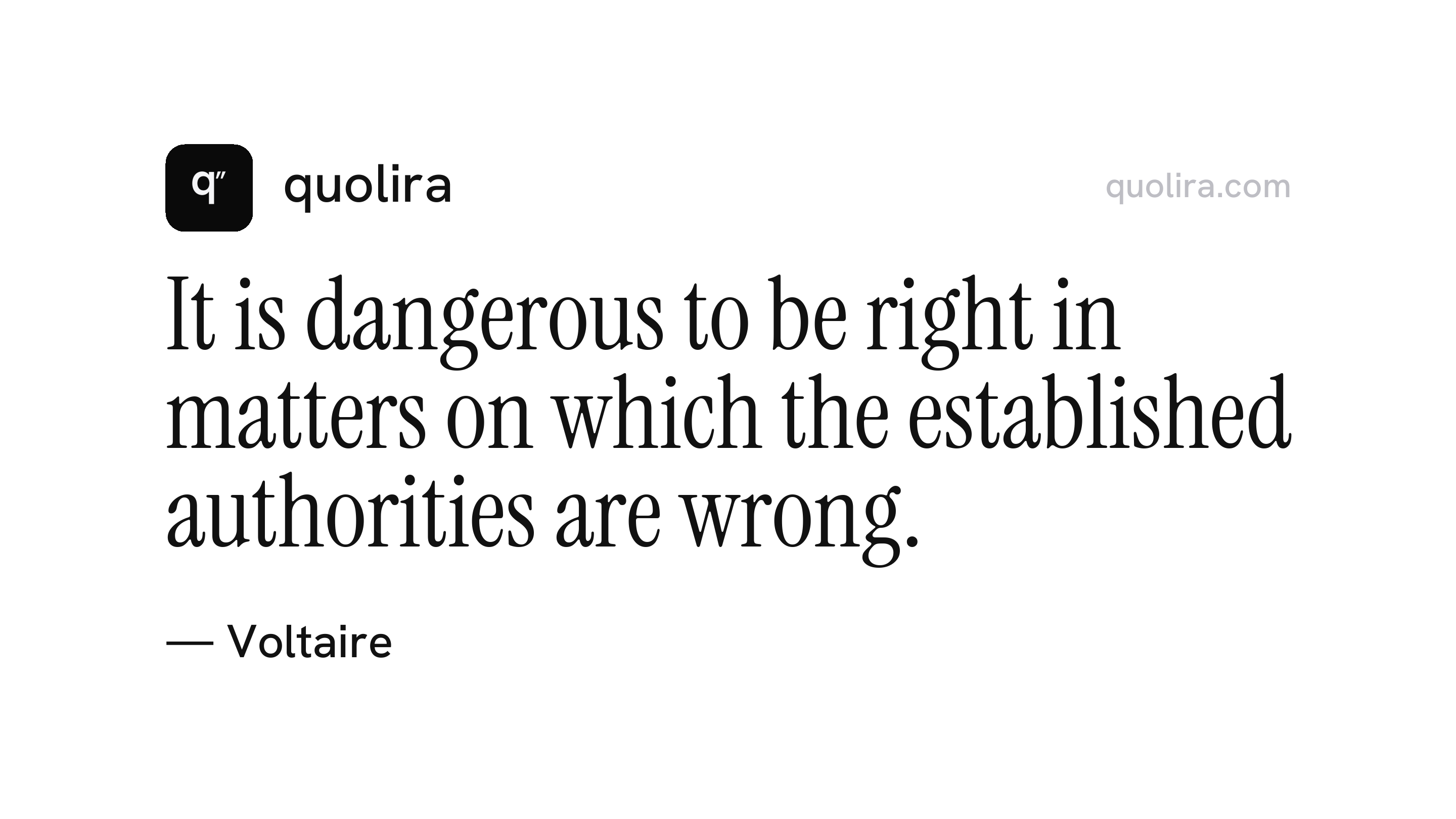
“It is dangerous to be right in matters on which the established authorities are wrong.”
Voltaire · The Age of Louis XIV, 1752
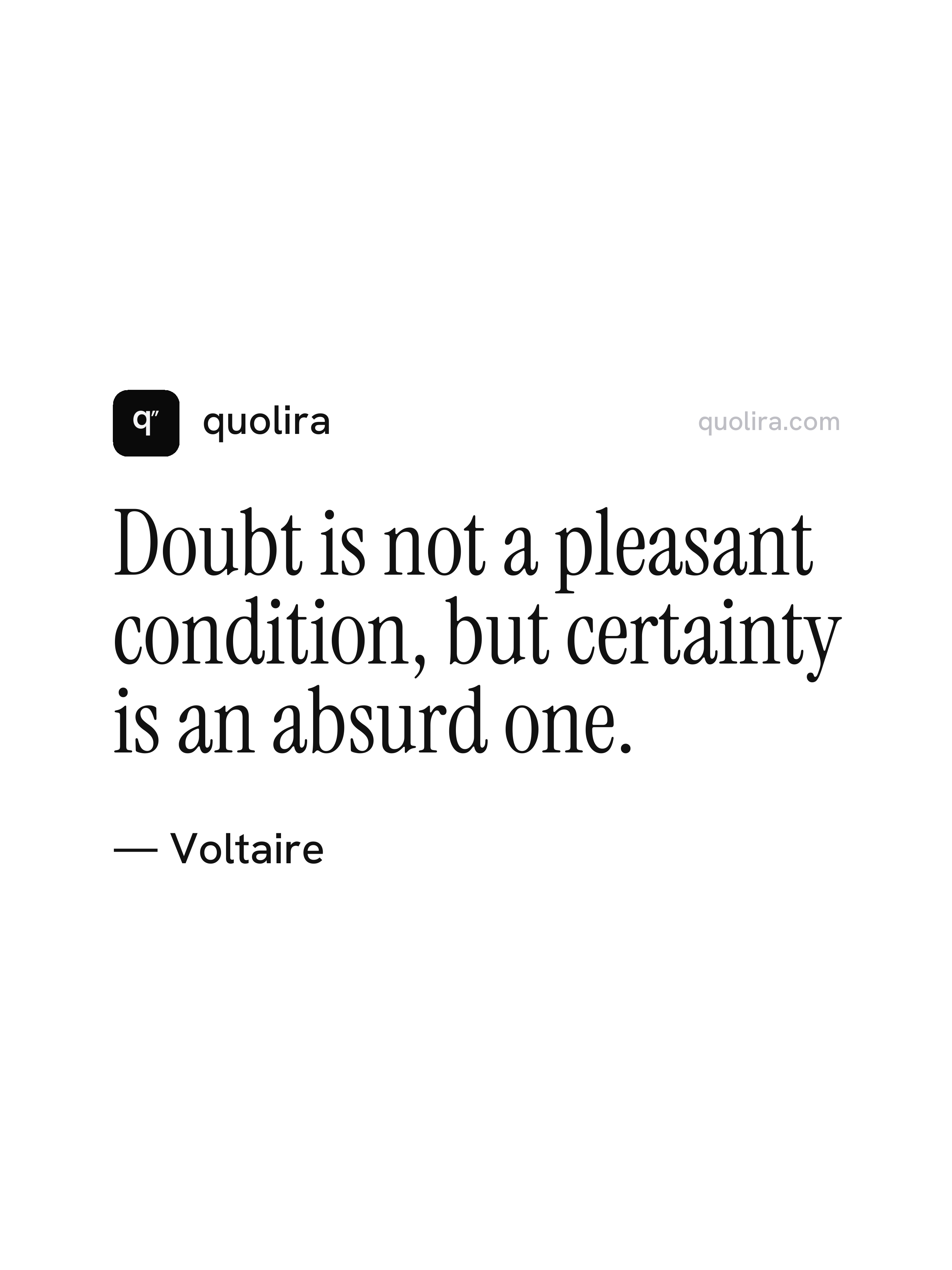
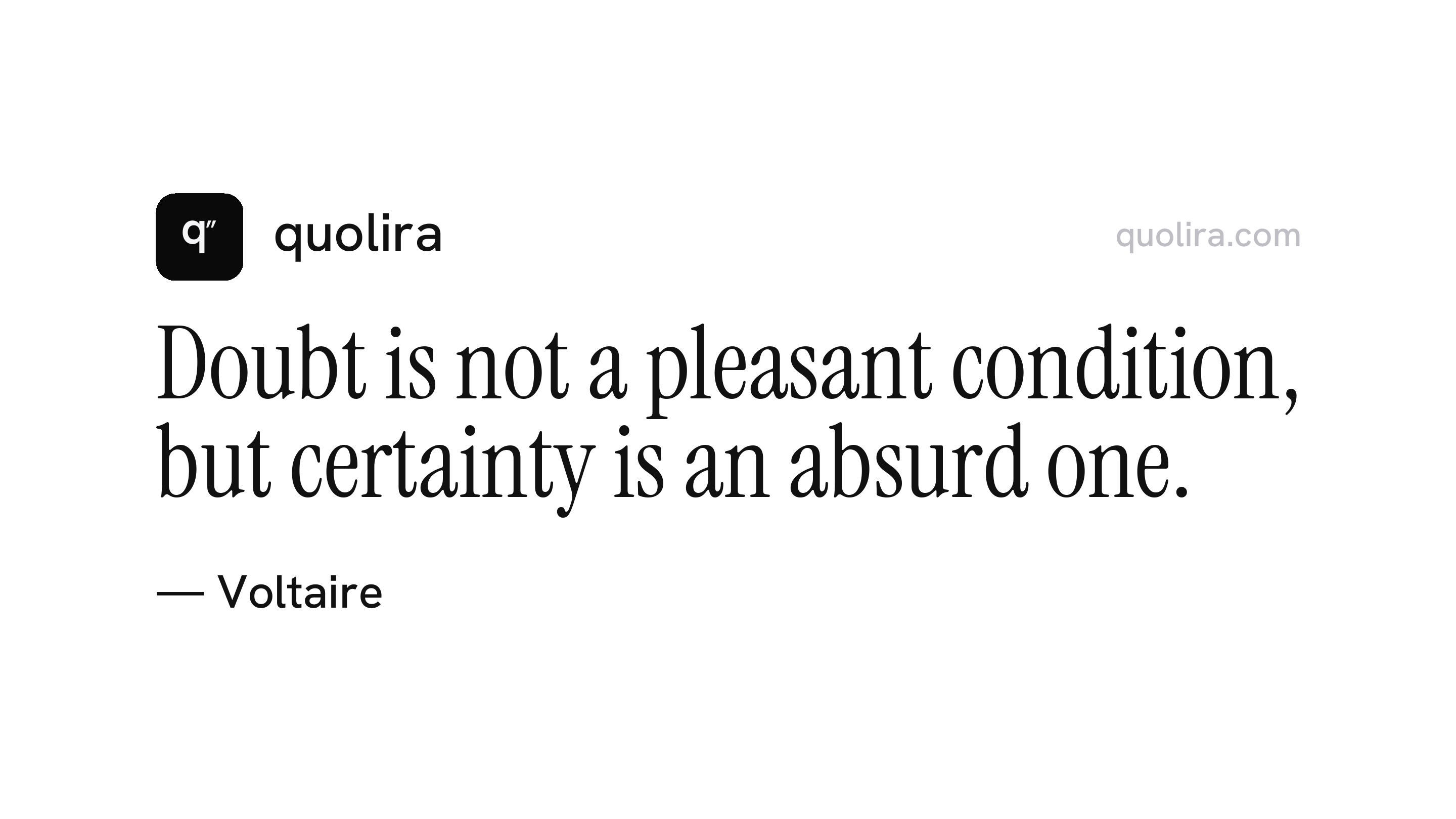
“Doubt is not a pleasant condition, but certainty is an absurd one.”
Voltaire · Letter to Frederick the Great, 1767
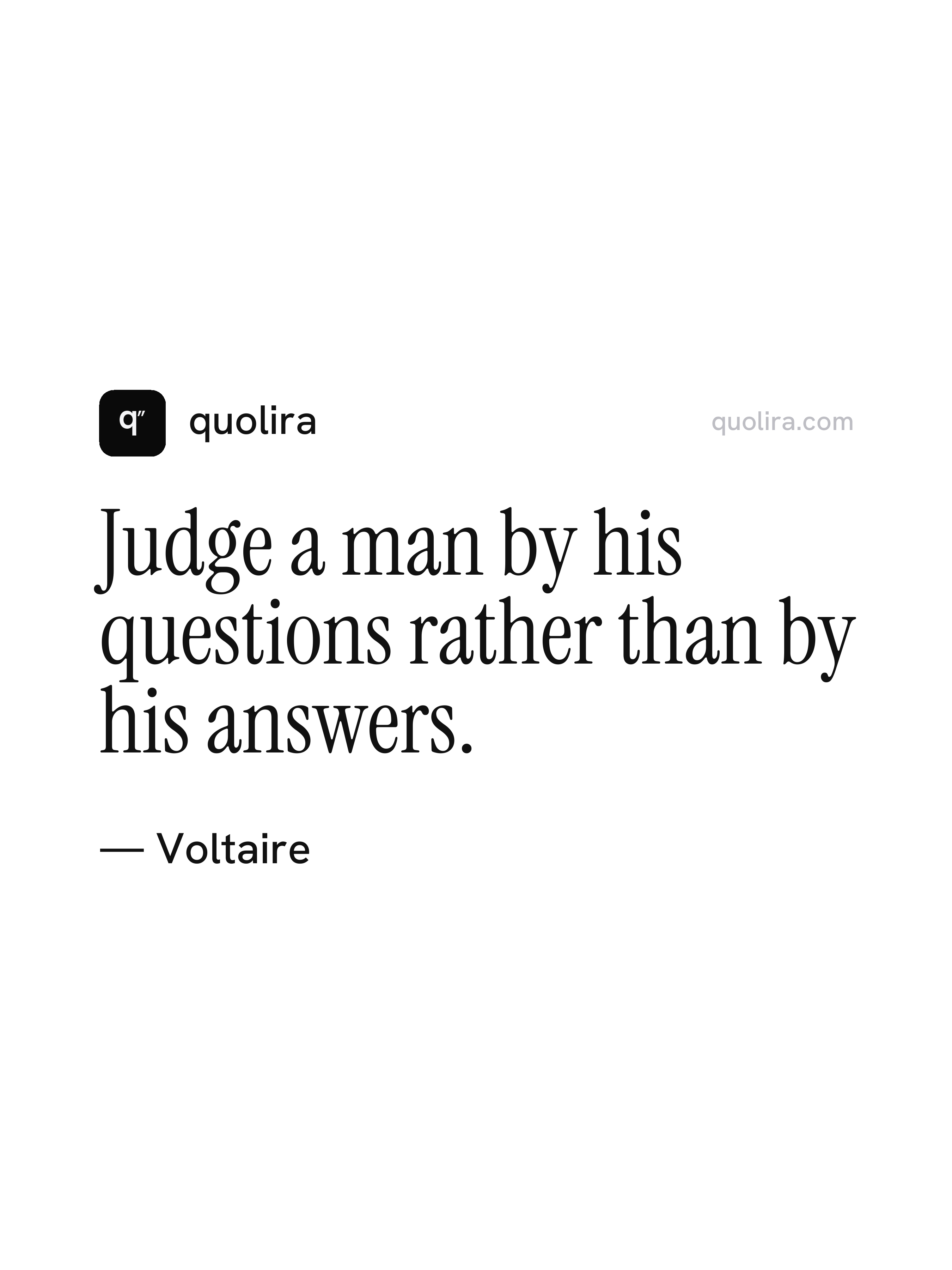
“Judge a man by his questions rather than by his answers.”
Voltaire