“If you want to go fast, go alone. If you want to go far, go together.”
African Proverb
 quolira
.com
quolira
quolira.com
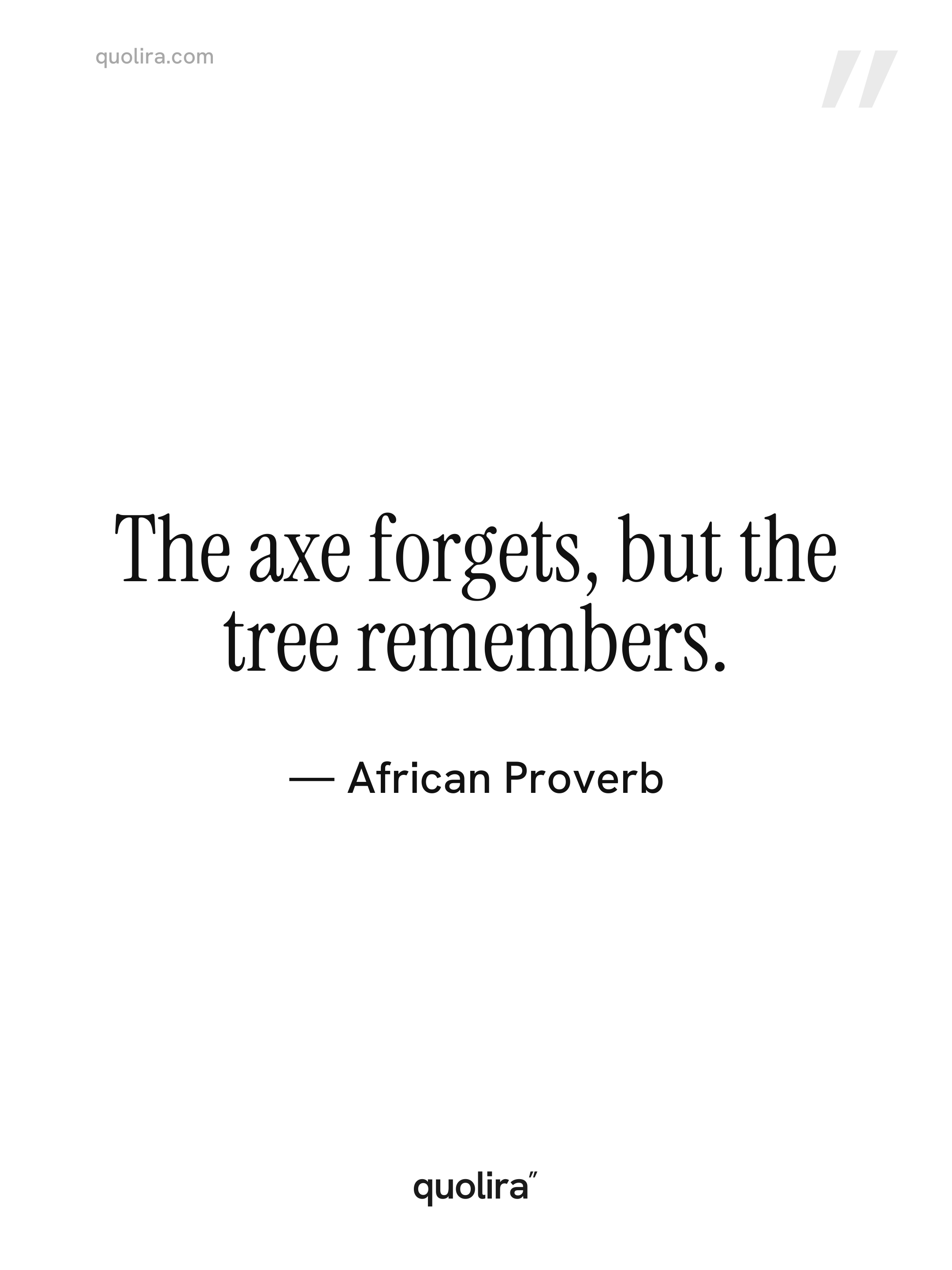
This proverb captures the imbalance between those who cause harm and those who suffer it. The axe is a tool that strikes and moves on, unaware of or indifferent to the damage it leaves behind. The tree, rooted in place, carries the scar long after the blow. The saying reminds us that the person who inflicts pain often forgets the incident quickly, while the one who received it may carry the wound for a lifetime.
Proverbs like this one have circulated widely across African oral traditions, used in community settings to speak truth about justice, accountability, and the lasting effects of careless or cruel actions. They often arise in conversations about conflict resolution, where elders seek to remind those in positions of power or aggression that their actions have real and enduring consequences for others. The image of the axe and the tree is especially vivid because both objects are deeply familiar in everyday rural life.
This saying is attributed broadly to African proverbial tradition rather than to any single individual, region, or language group. African proverbs as a whole represent centuries of collective wisdom passed down through storytelling, community gatherings, and mentorship between generations. They function as a form of shared moral language, offering compact but powerful observations about human behavior, relationships, and responsibility.
“If you want to go fast, go alone. If you want to go far, go together.”
African Proverb
“Smooth seas do not make skillful sailors.”
African Proverb
“Until the lion learns to write, every story will glorify the hunter.”
African Proverb
“It takes a village to raise a child.”
West African Proverb
“Patience and time do more than strength or passion.”
Jean de La Fontaine · Fables, Book II, 1668
“All fine architectural values are human values, else not valuable.”
Frank Lloyd Wright · The Natural House, 1954
“There is no such thing as good writing. There is only good rewriting.”
Louis Brandeis · attributed
“I think architecture is one of the predominant orderings of human experience.”
Richard Meier
“Waste no more time arguing about what a good man should be. Be one.”
Marcus Aurelius · Meditations, Book X
“The love of truth lies at the root of much humor.”
Robertson Davies
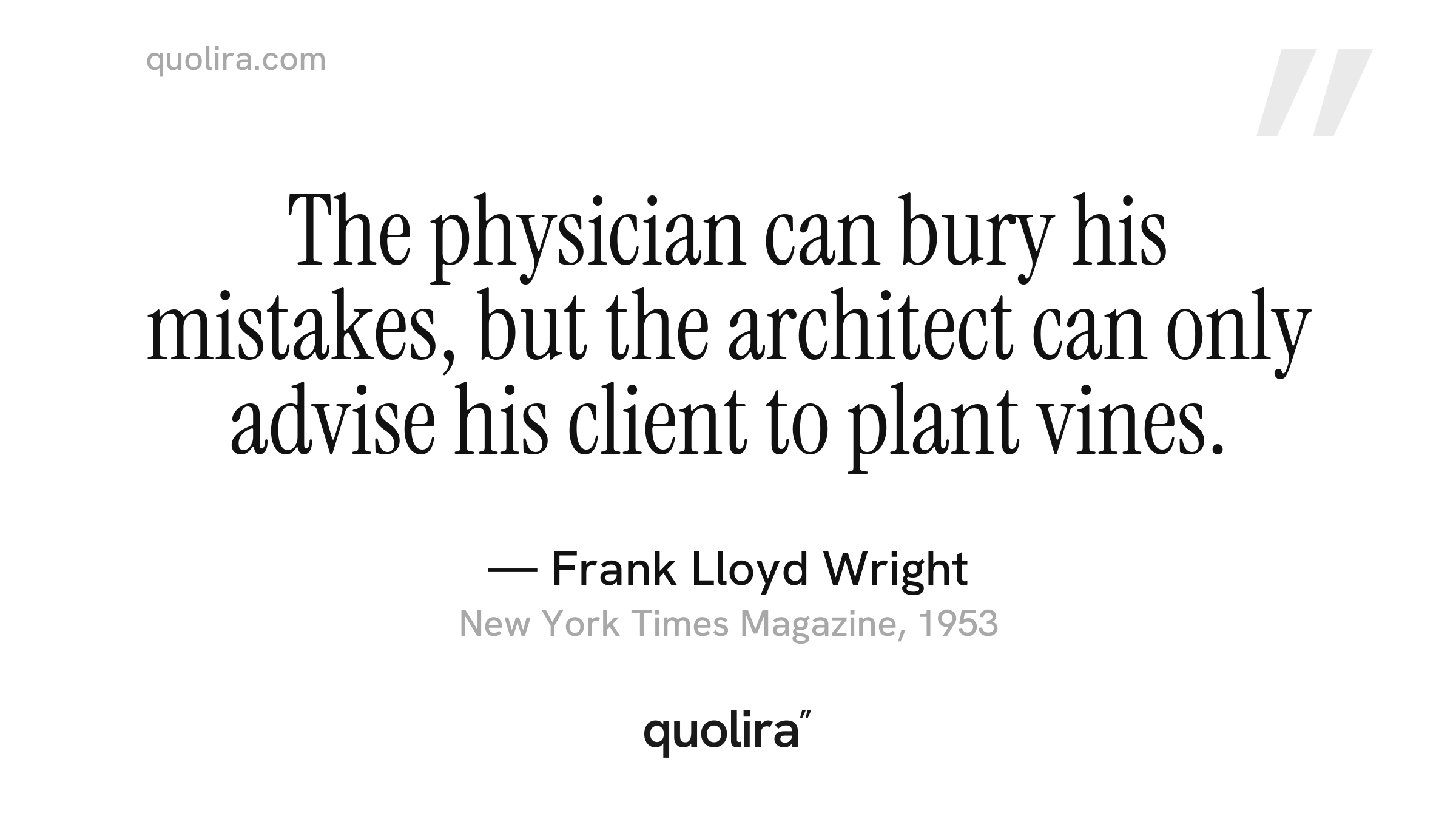
“The physician can bury his mistakes, but the architect can only advise his client to plant vines.”
Frank Lloyd Wright · New York Times Magazine, 1953
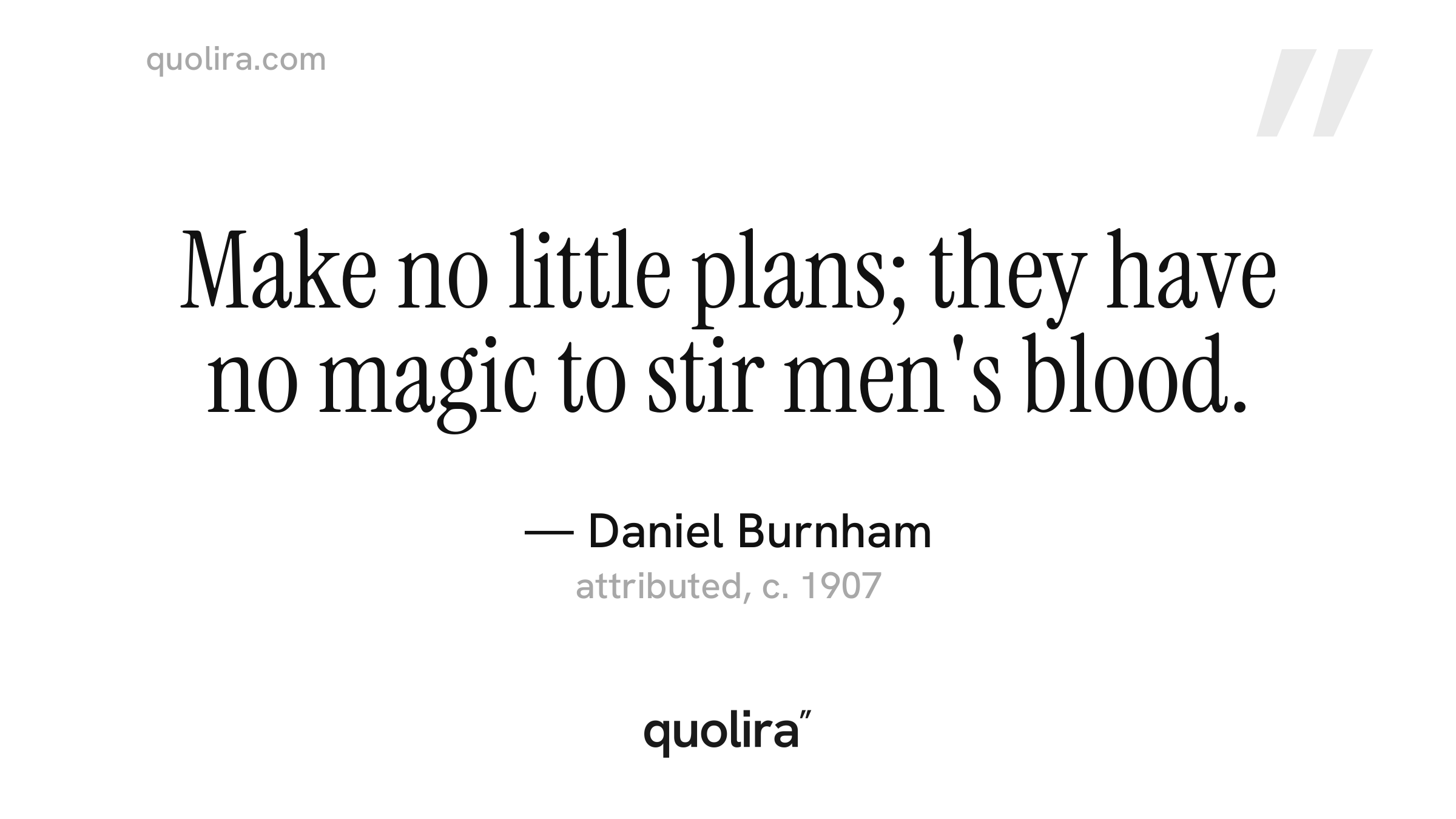
“Make no little plans; they have no magic to stir men's blood.”
Daniel Burnham · attributed, c. 1907