“All fine architectural values are human values, else not valuable.”
Frank Lloyd Wright · The Natural House, 1954
 quolira
.com
quolira
quolira.com
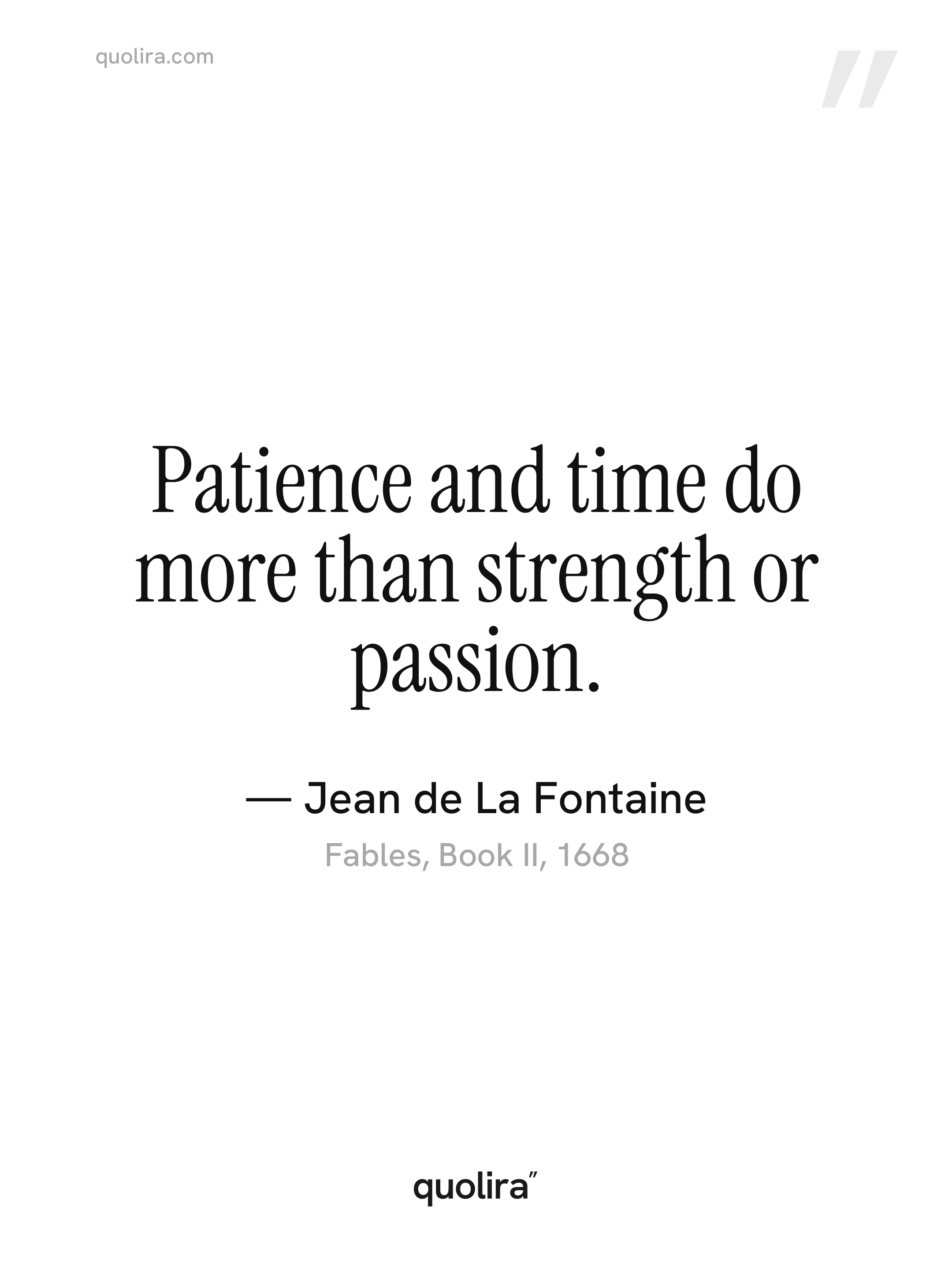
Jean de La Fontaine is pointing out that steady, quiet persistence accomplishes more over time than raw force or intense emotion. Strength can be exhausted and passion can burn out, but patience keeps working even when nothing dramatic seems to be happening. The idea is that the most reliable path to a meaningful result is a calm, consistent effort sustained across time.
This thought appears in La Fontaine's "Fables," a celebrated collection he published in multiple books across the second half of the seventeenth century. The fables drew heavily on ancient sources, including Aesop and Phaedrus, but La Fontaine reshaped the material with elegant French verse and sharp moral insight suited to his own era. Many of his fables explore the tension between brute force and quiet cleverness, and this line captures one of his most consistent moral lessons: that nature and time are more powerful allies than ambition alone.
Jean de La Fontaine was a French poet of the seventeenth century, best remembered for his fables. He spent much of his life in Paris, moving in literary and aristocratic circles at a time when French culture was flourishing under the reign of Louis XIV. His fables became a cornerstone of French literary education and have been translated into dozens of languages, giving his moral observations a readership far beyond his own time and place.
“All fine architectural values are human values, else not valuable.”
Frank Lloyd Wright · The Natural House, 1954
“There is no such thing as good writing. There is only good rewriting.”
Louis Brandeis · attributed
“I think architecture is one of the predominant orderings of human experience.”
Richard Meier
“Waste no more time arguing about what a good man should be. Be one.”
Marcus Aurelius · Meditations, Book X
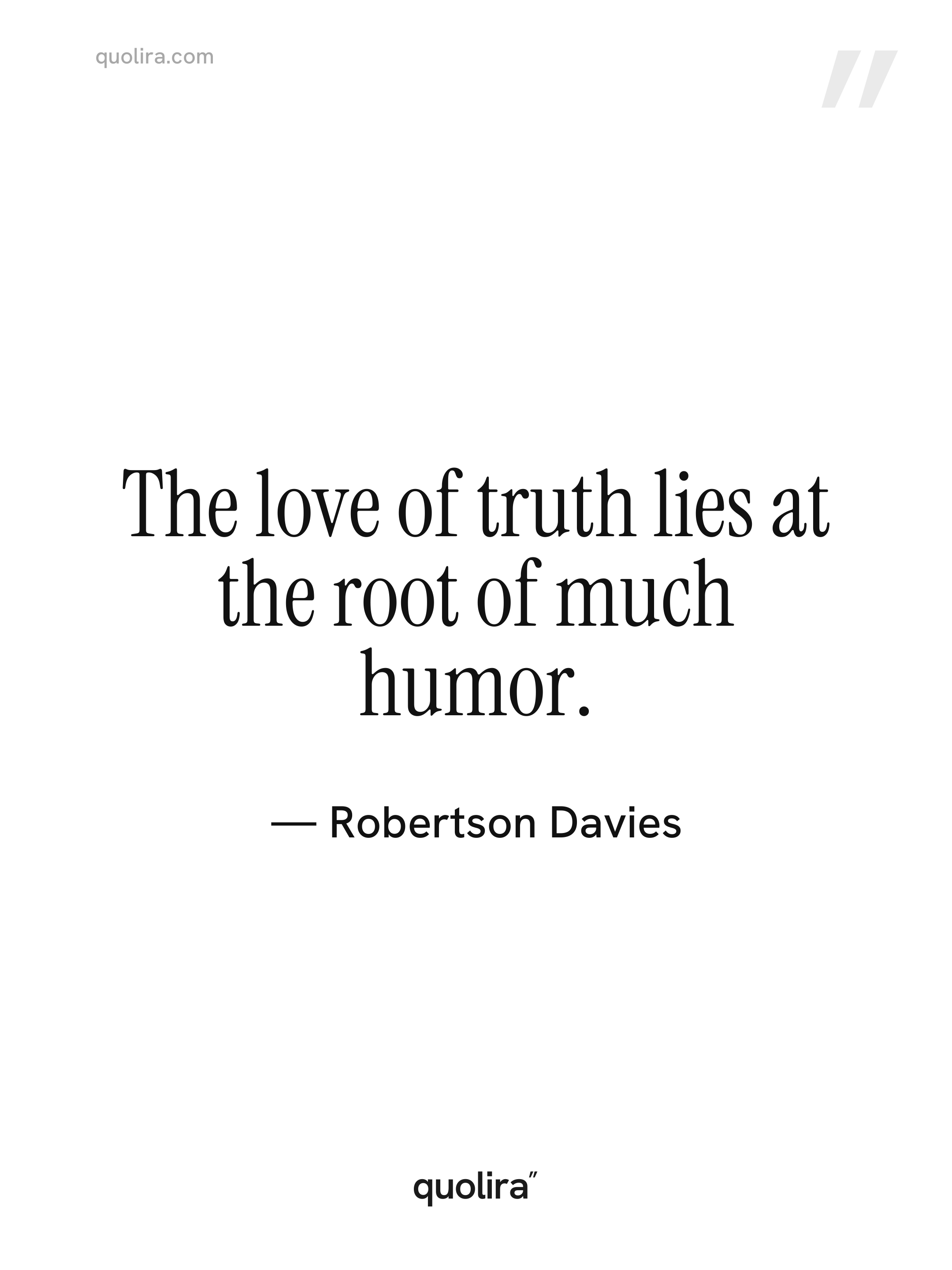
“The love of truth lies at the root of much humor.”
Robertson Davies
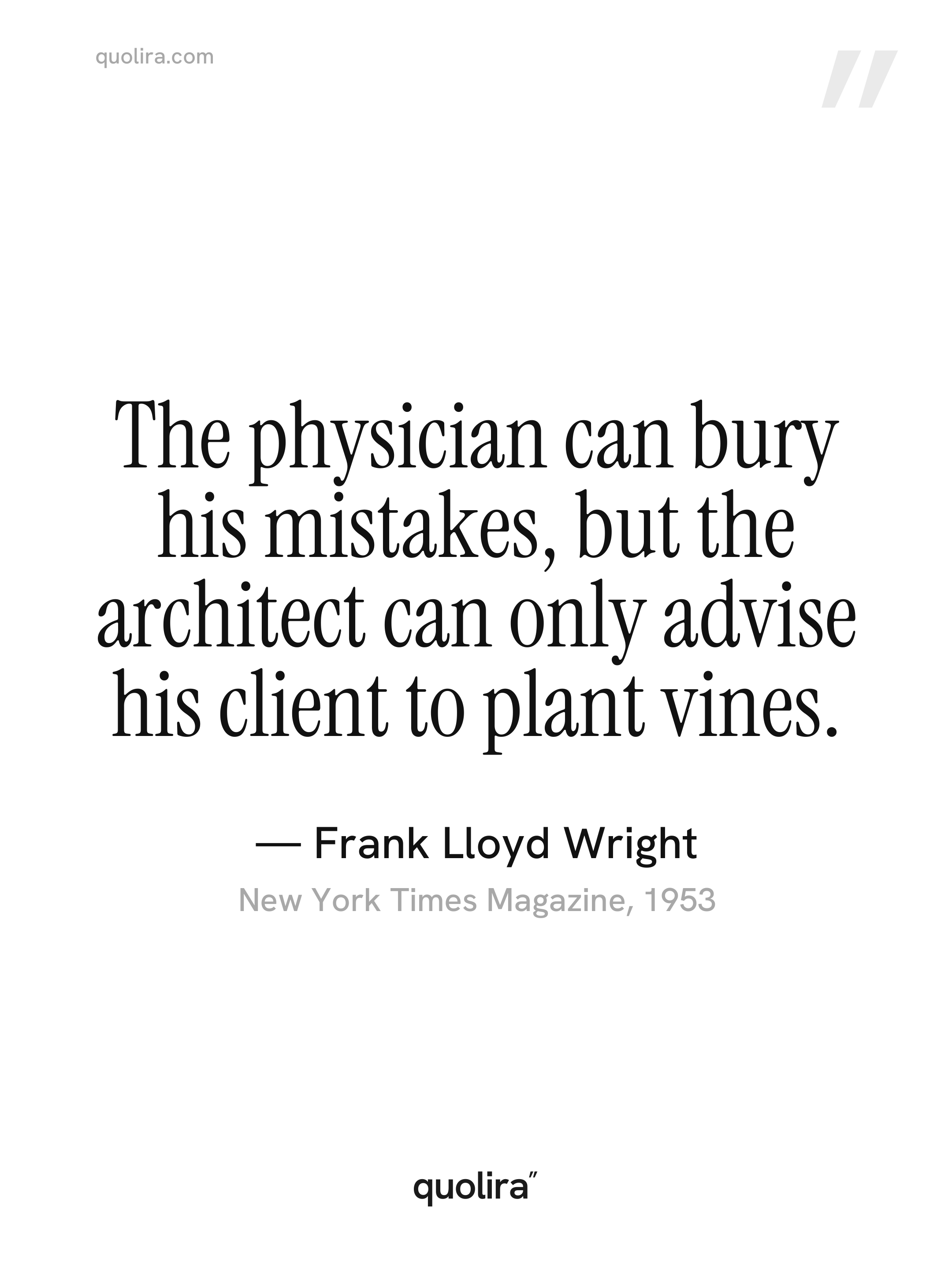
“The physician can bury his mistakes, but the architect can only advise his client to plant vines.”
Frank Lloyd Wright · New York Times Magazine, 1953
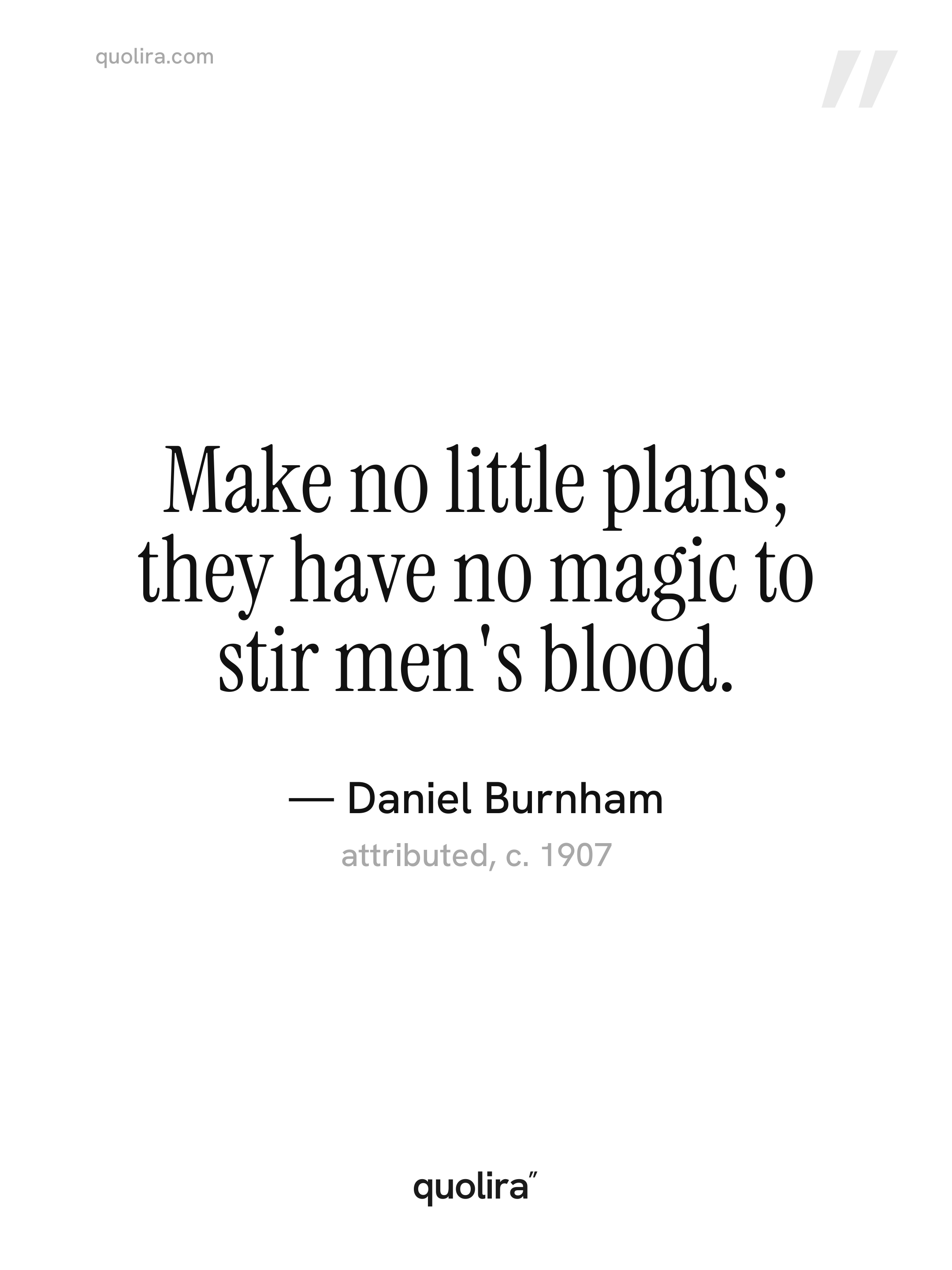
“Make no little plans; they have no magic to stir men's blood.”
Daniel Burnham · attributed, c. 1907
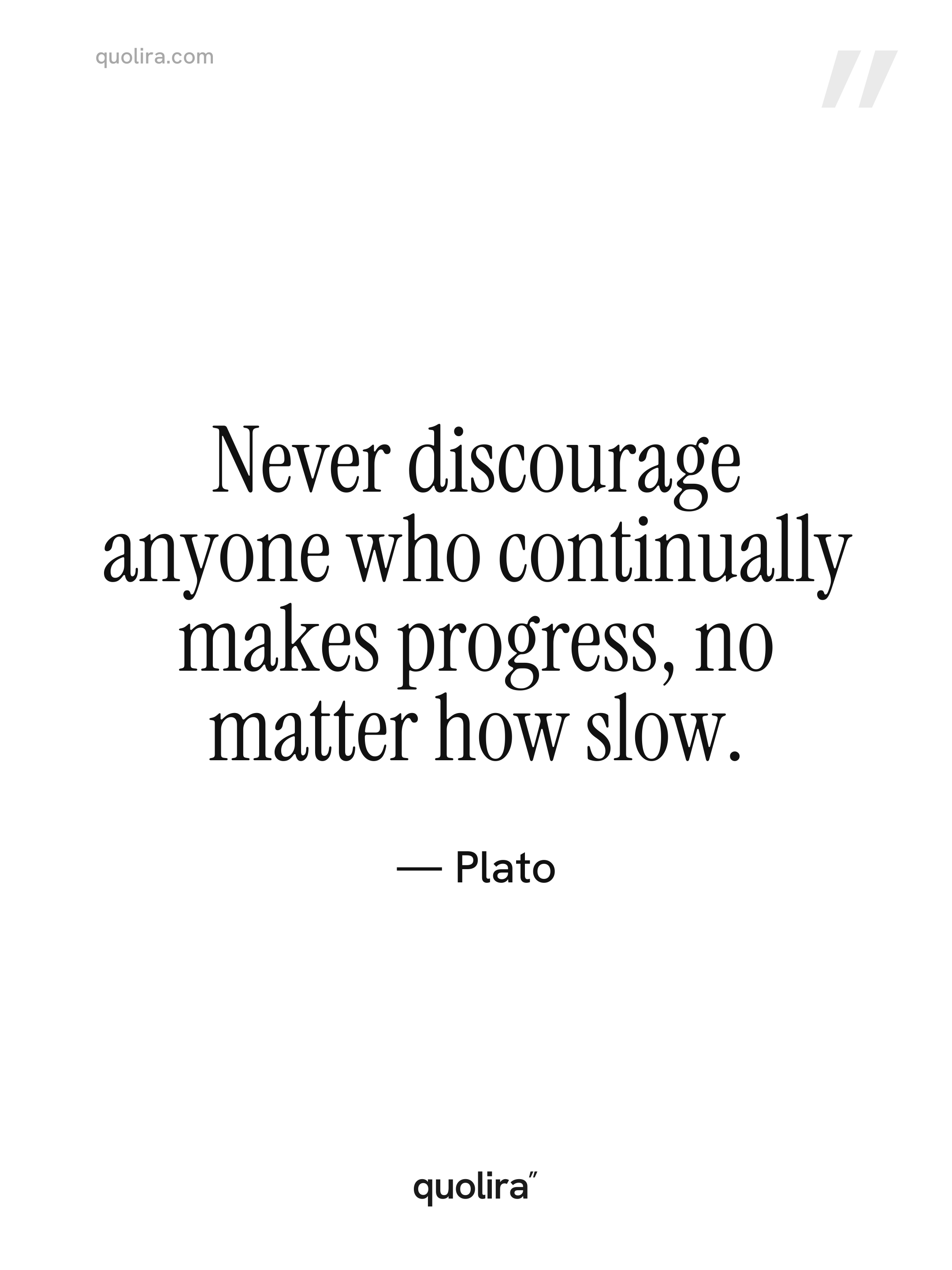
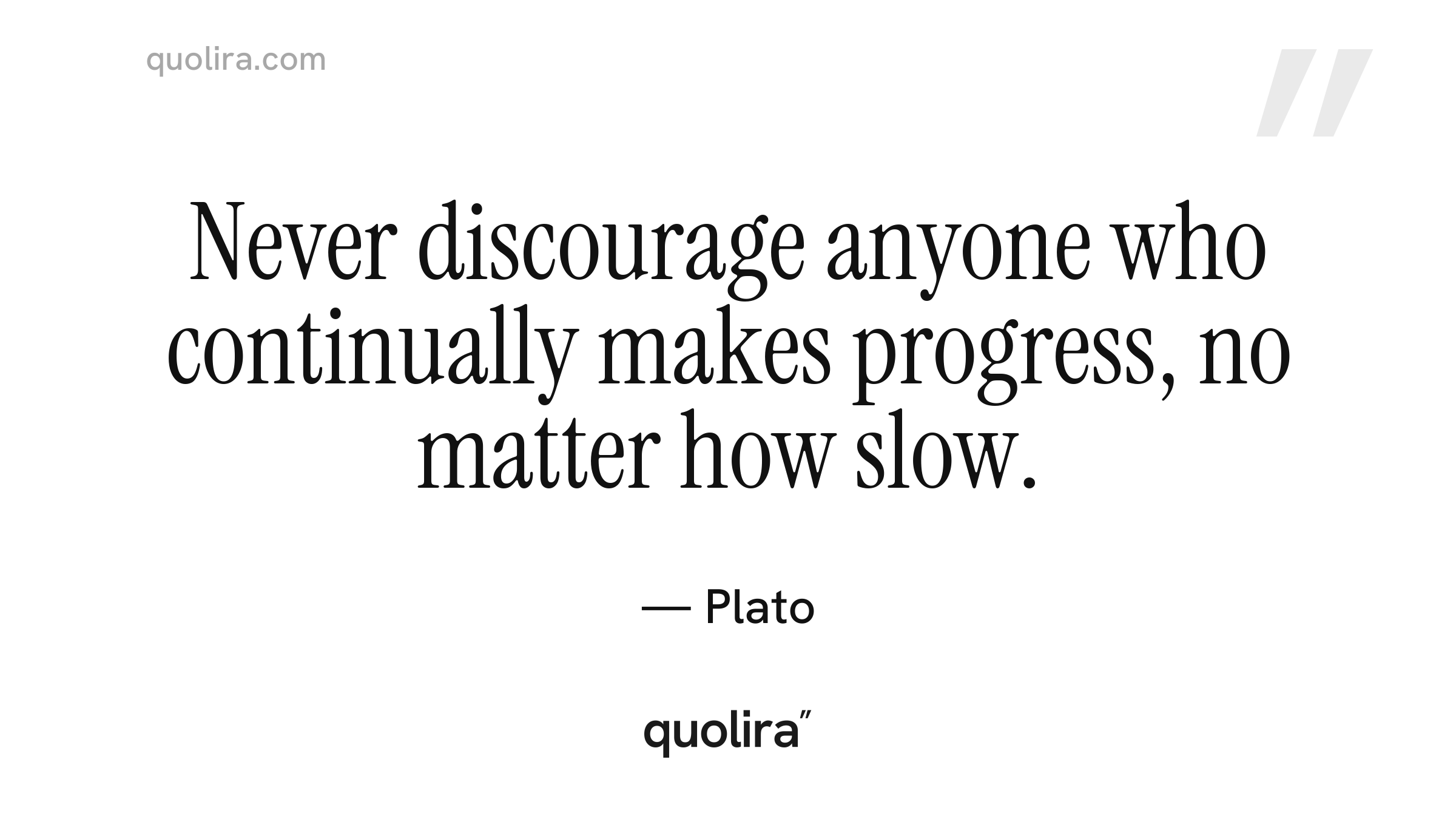
“Never discourage anyone who continually makes progress, no matter how slow.”
Plato
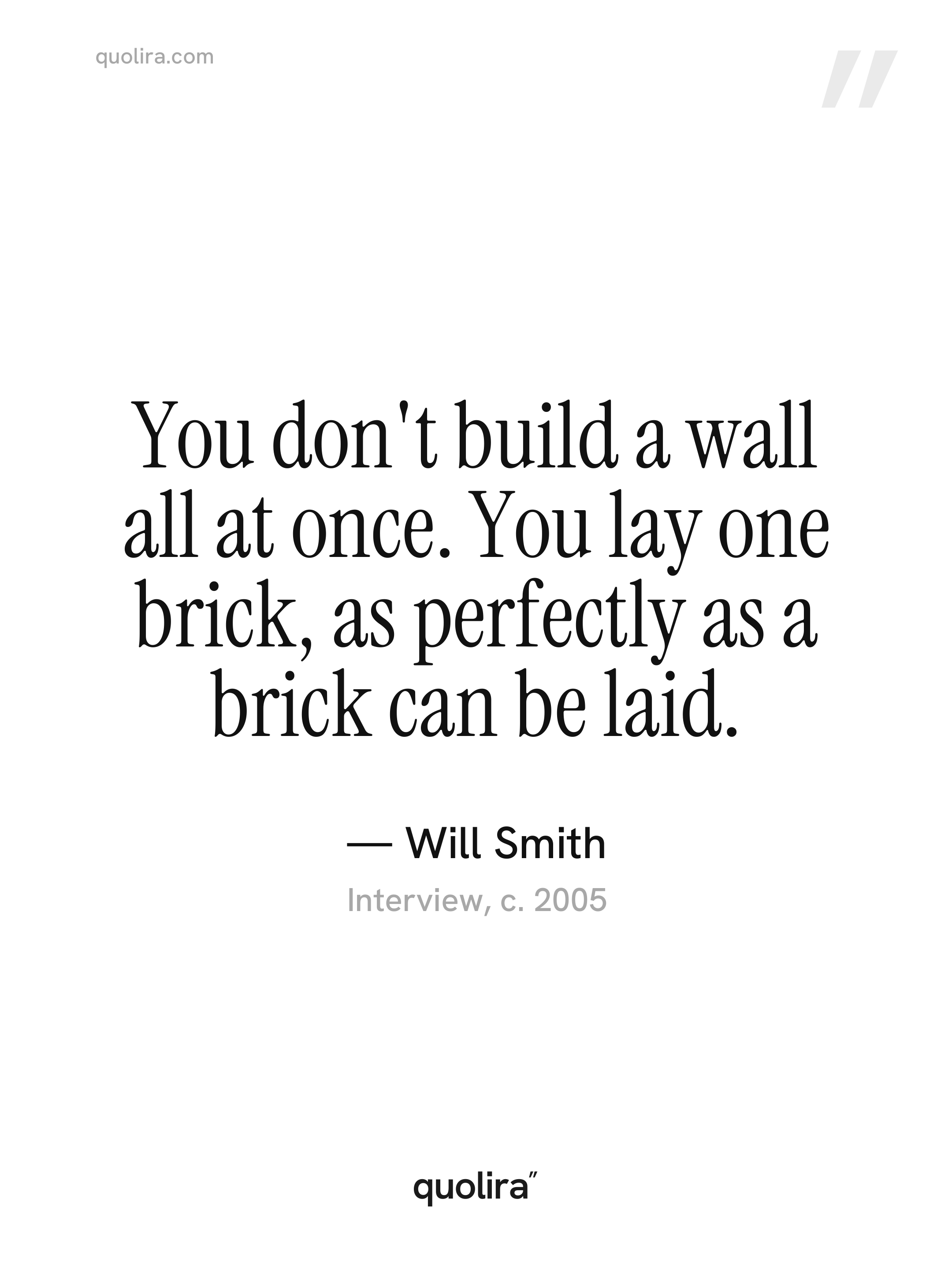
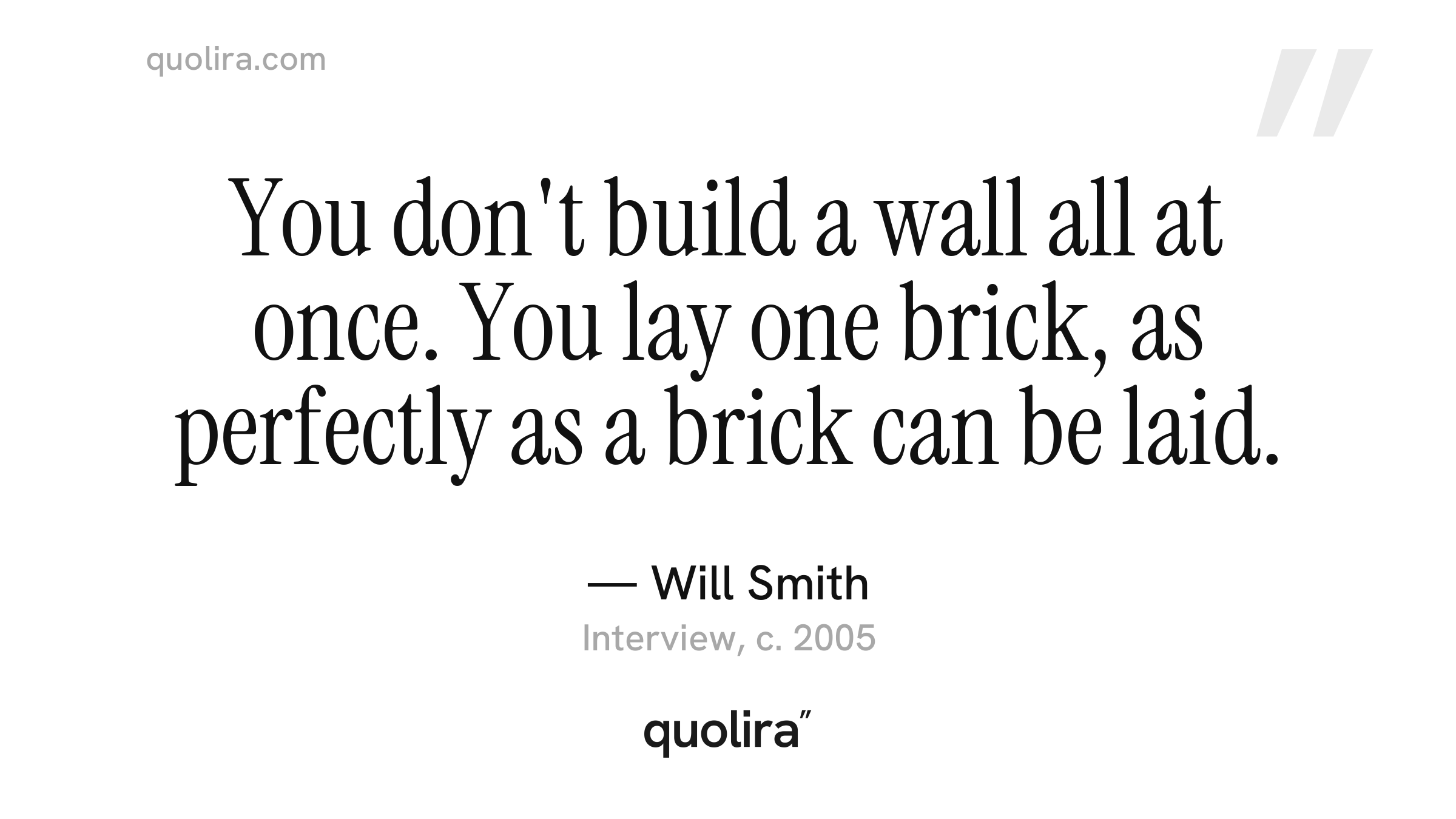
“You don't build a wall all at once. You lay one brick, as perfectly as a brick can be laid.”
Will Smith · Interview, c. 2005
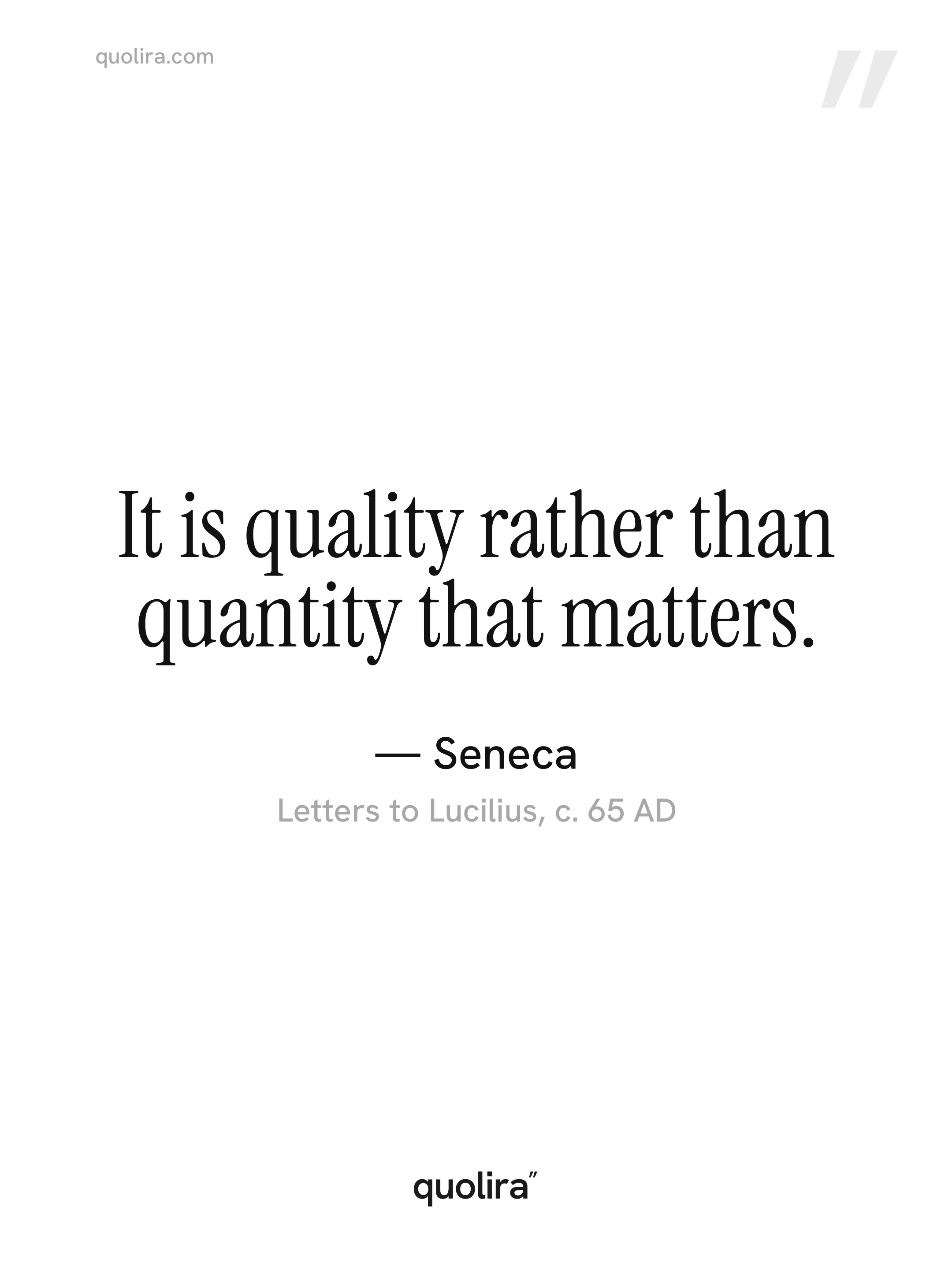
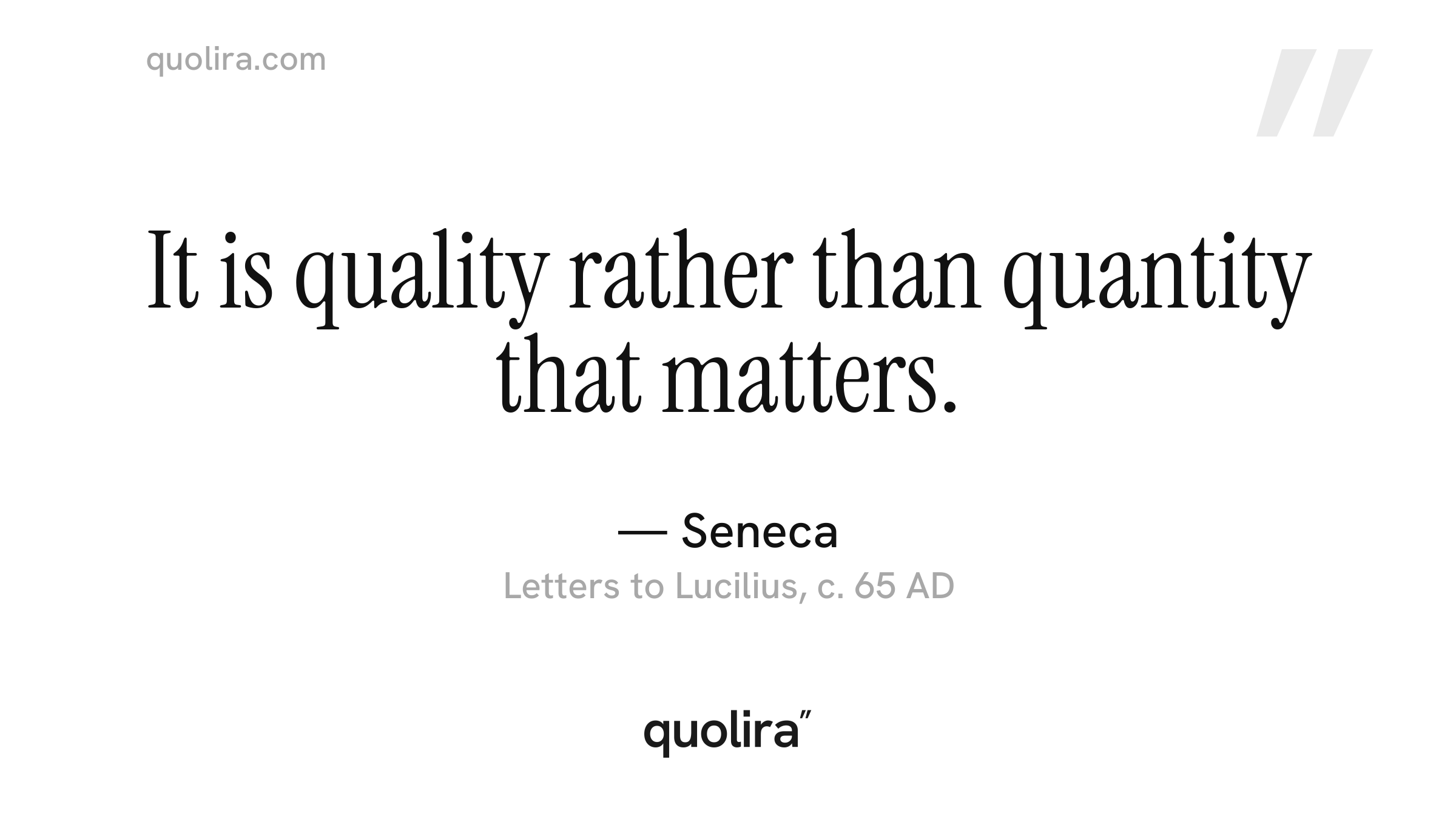
“It is quality rather than quantity that matters.”
Seneca · Letters to Lucilius, c. 65 AD
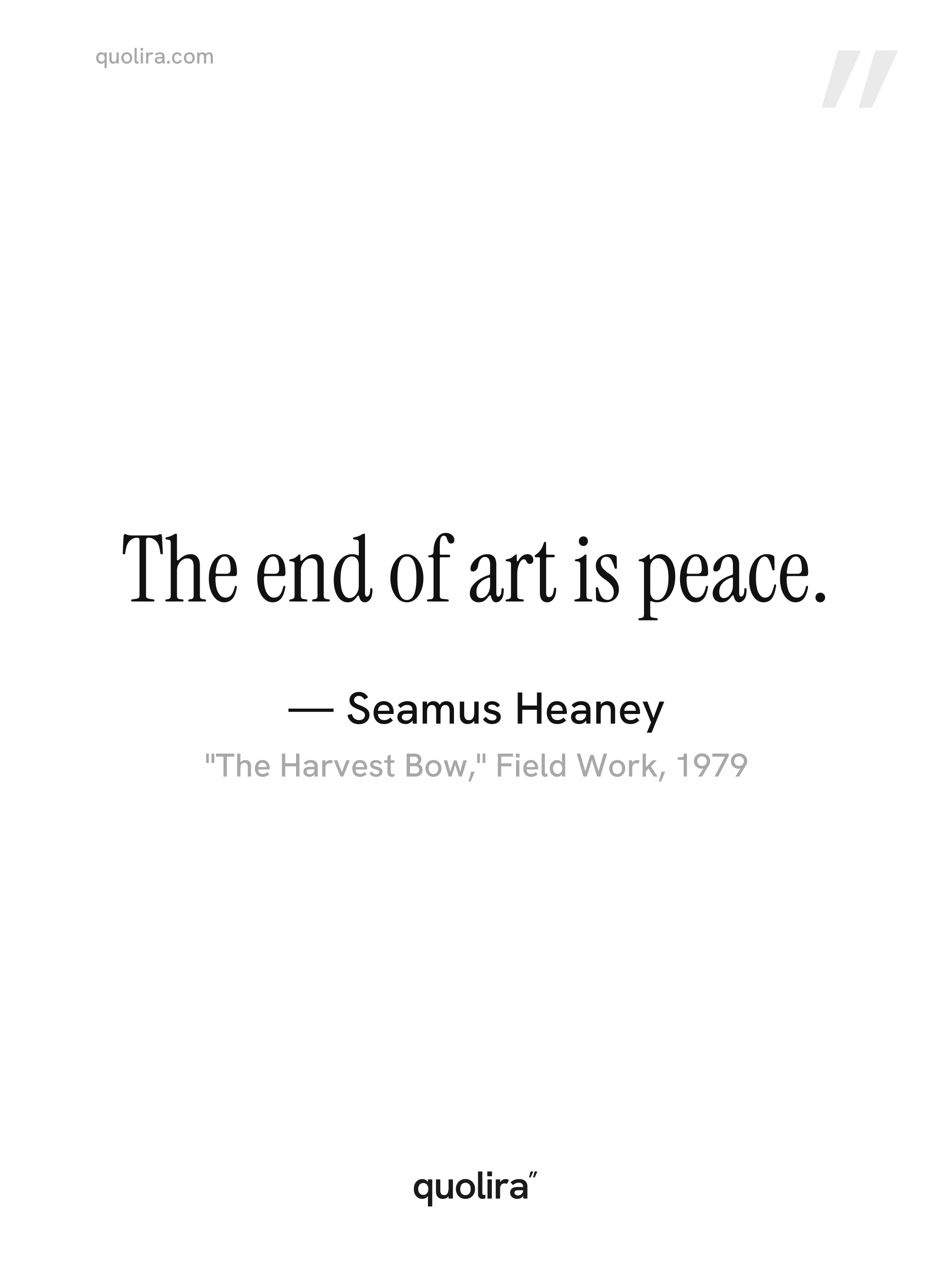
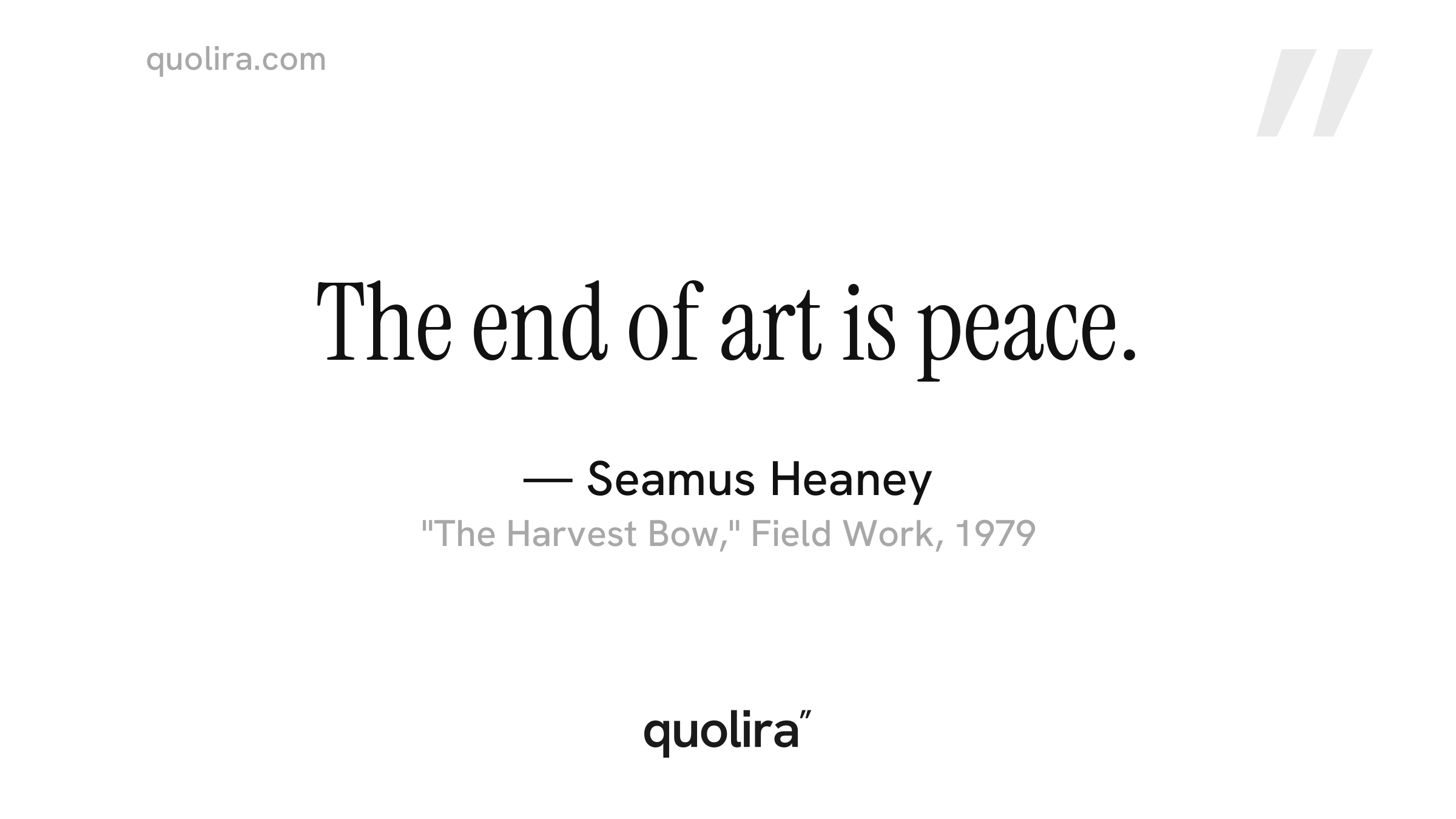
“The end of art is peace.”
Seamus Heaney · "The Harvest Bow," Field Work, 1979
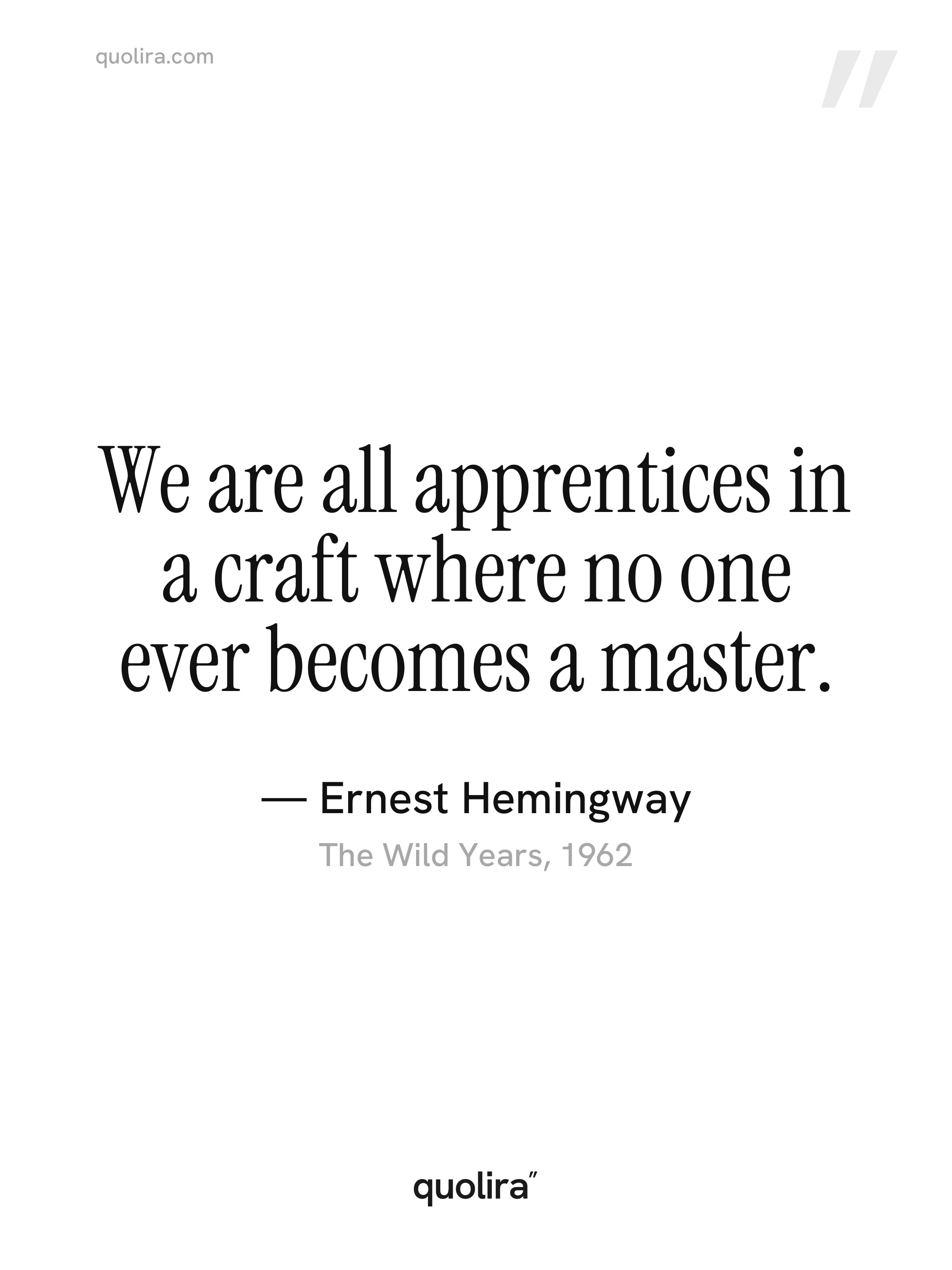
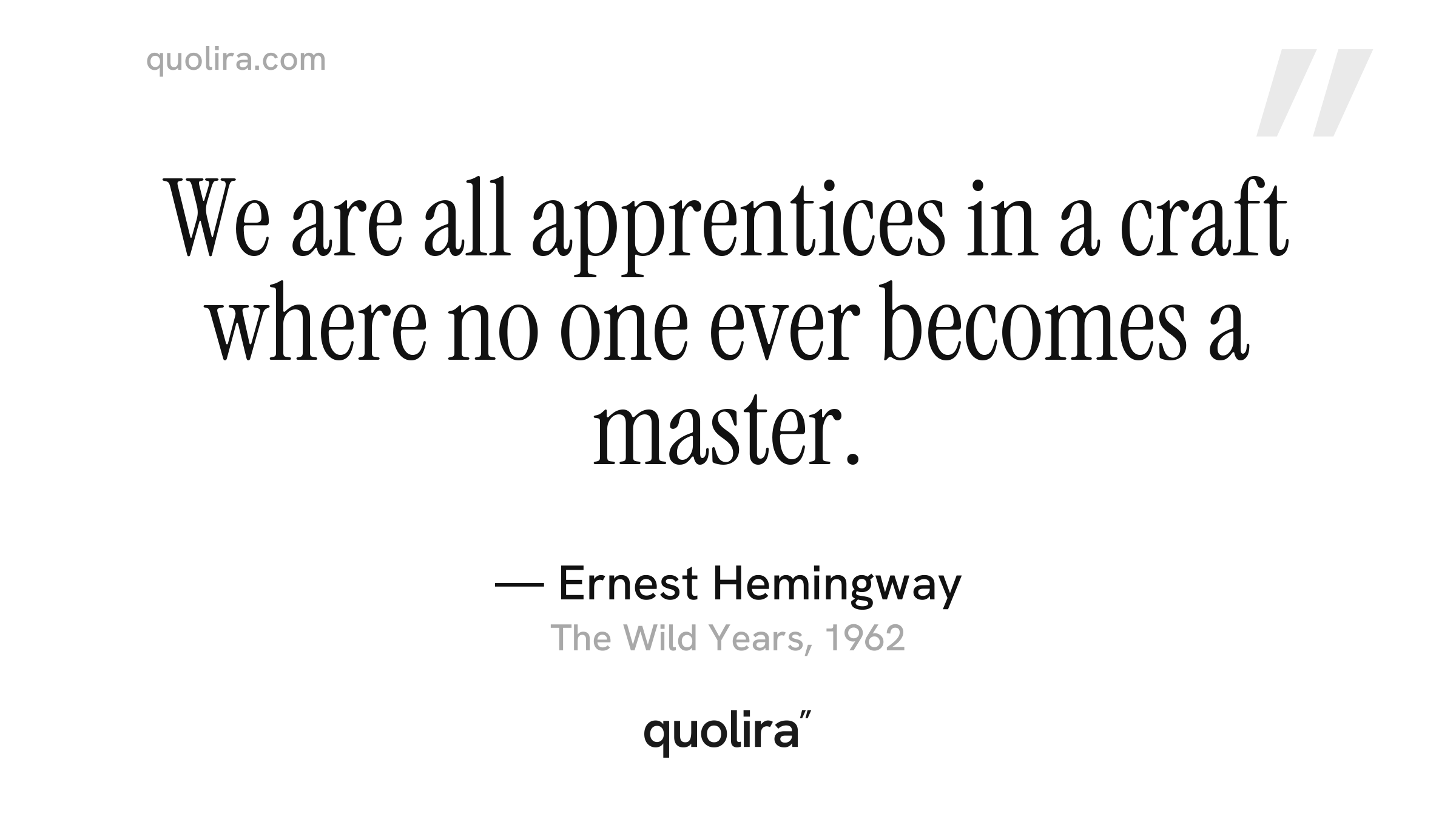
“We are all apprentices in a craft where no one ever becomes a master.”
Ernest Hemingway · The Wild Years, 1962