“Make no little plans; they have no magic to stir men's blood.”
Daniel Burnham · attributed, c. 1907
 quolira
.com
quolira
quolira.com
This remark draws a sharp contrast between two professions and their relationship to failure. A doctor's errors can, in a grim sense, be hidden once the patient is gone. An architect has no such luck: a flawed building stands in full public view for decades, and the only remedy is to obscure it with growing plants. The joke lands because it is also a serious observation about accountability and the permanence of built work.
Frank Lloyd Wright made this comment in a 1953 piece in the New York Times Magazine, a period when he was in his mid-eighties and still one of the most recognizable and outspoken figures in American culture. By that point in his life he was known not only for his buildings but for his willingness to make provocative, quotable statements about art, society, and his own profession. The remark fits comfortably within his broader habit of defending architecture's seriousness and dignity while also using wit to make the point land.
Frank Lloyd Wright is widely regarded as one of the most influential architects in American history. His long career, which stretched well into the twentieth century, produced buildings recognized for their organic relationship to their surroundings and their rejection of conventional forms. He was as famous for his strong personality and public pronouncements as for the structures he designed, and this combination of artistic conviction and sharp rhetoric made him a cultural figure well beyond the world of architecture.
“Make no little plans; they have no magic to stir men's blood.”
Daniel Burnham · attributed, c. 1907
“Never discourage anyone who continually makes progress, no matter how slow.”
Plato
“You don't build a wall all at once. You lay one brick, as perfectly as a brick can be laid.”
Will Smith · Interview, c. 2005
“It is quality rather than quantity that matters.”
Seneca · Letters to Lucilius, c. 65 AD
“The end of art is peace.”
Seamus Heaney · "The Harvest Bow," Field Work, 1979
“We are all apprentices in a craft where no one ever becomes a master.”
Ernest Hemingway · The Wild Years, 1962
“Let us be grateful to people who make us happy; they are the charming gardeners who make our souls blossom.”
Marcel Proust · Les Plaisirs et les Jours, 1896
“Saturday morning, you knew what you were gonna do. There was no question about it. You wake up, eat your cereal, watch cartoons.”
Joe Mantegna
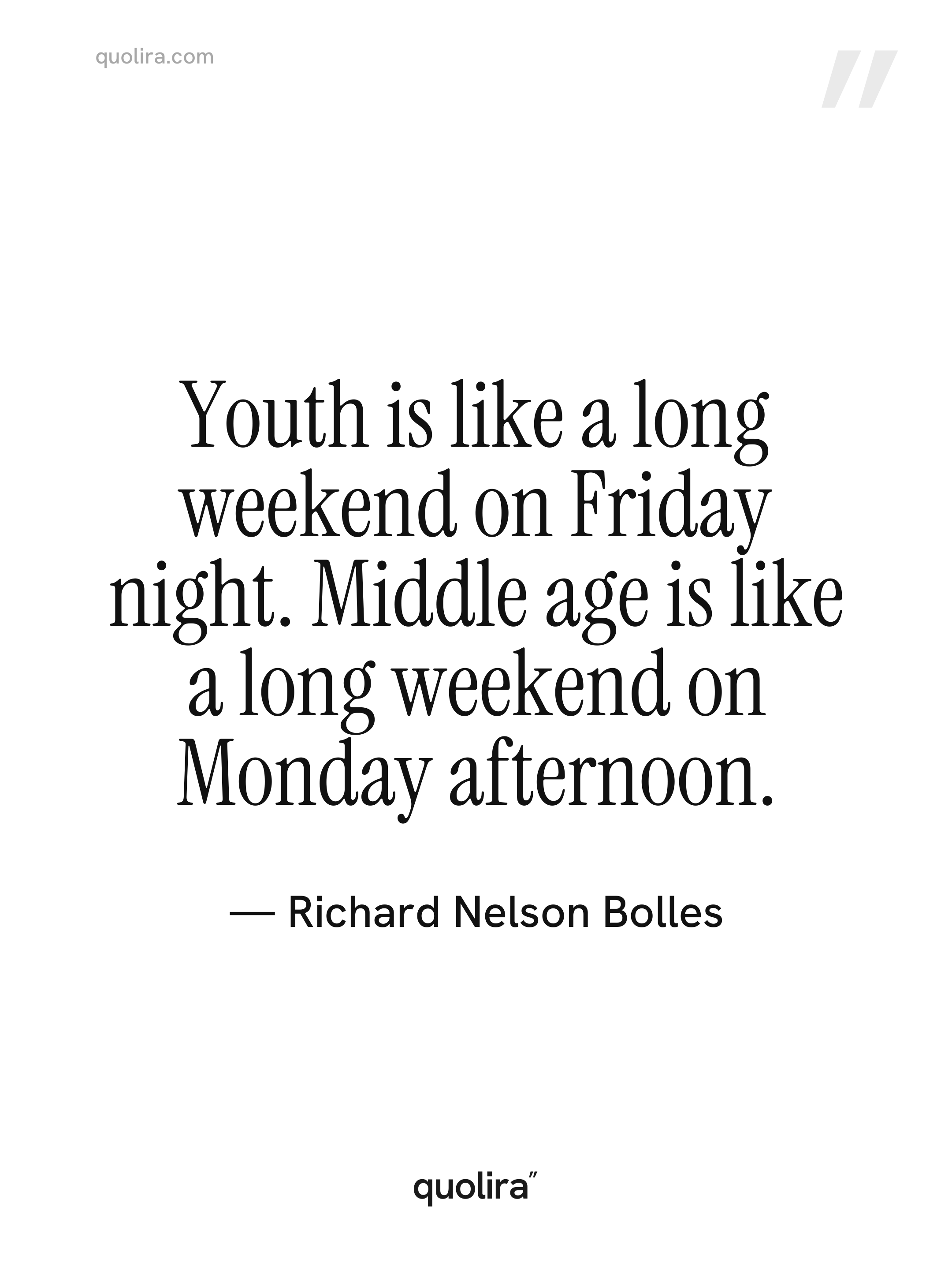
“Youth is like a long weekend on Friday night. Middle age is like a long weekend on Monday afternoon.”
Richard Nelson Bolles
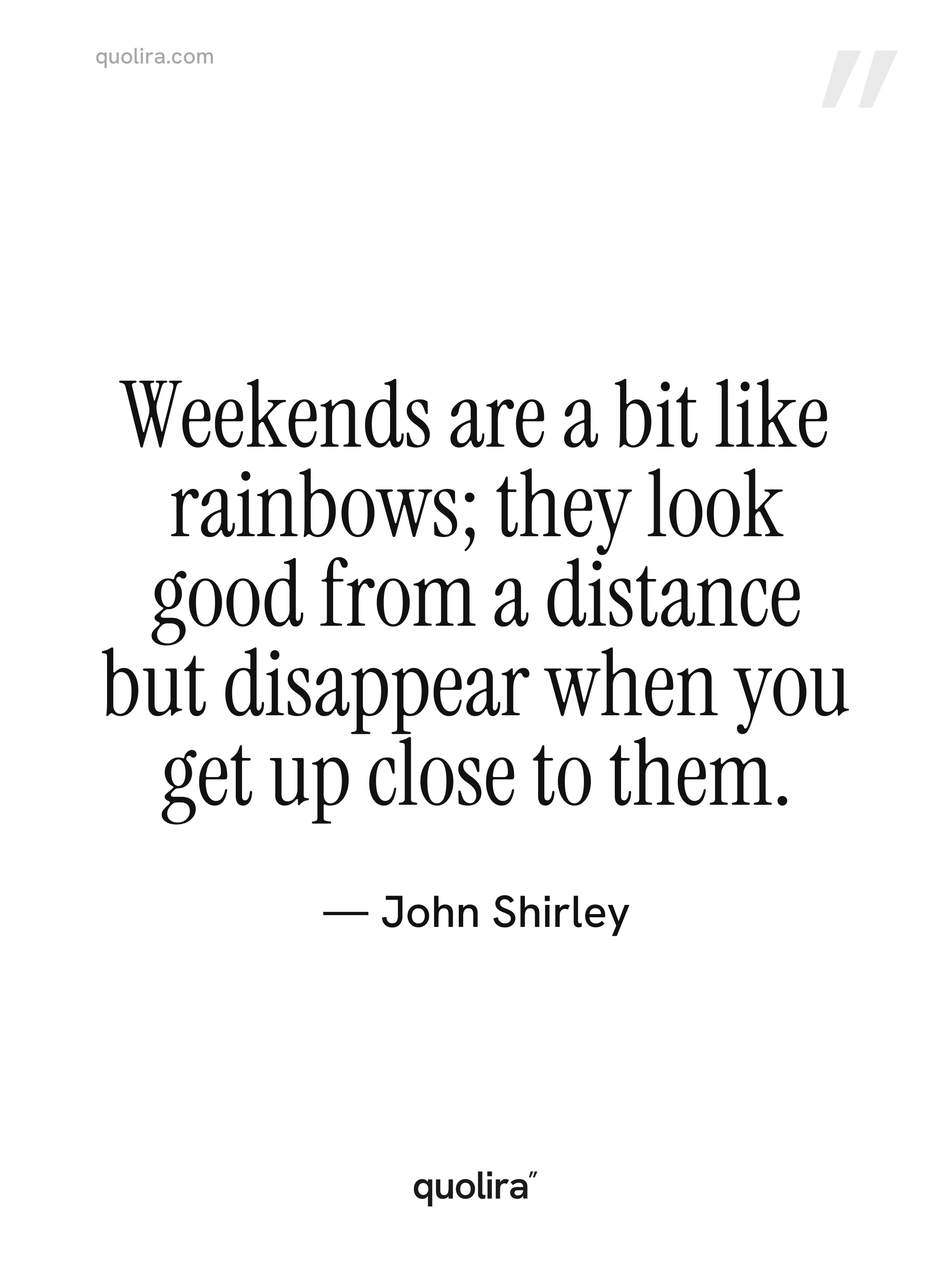
“Weekends are a bit like rainbows; they look good from a distance but disappear when you get up close to them.”
John Shirley
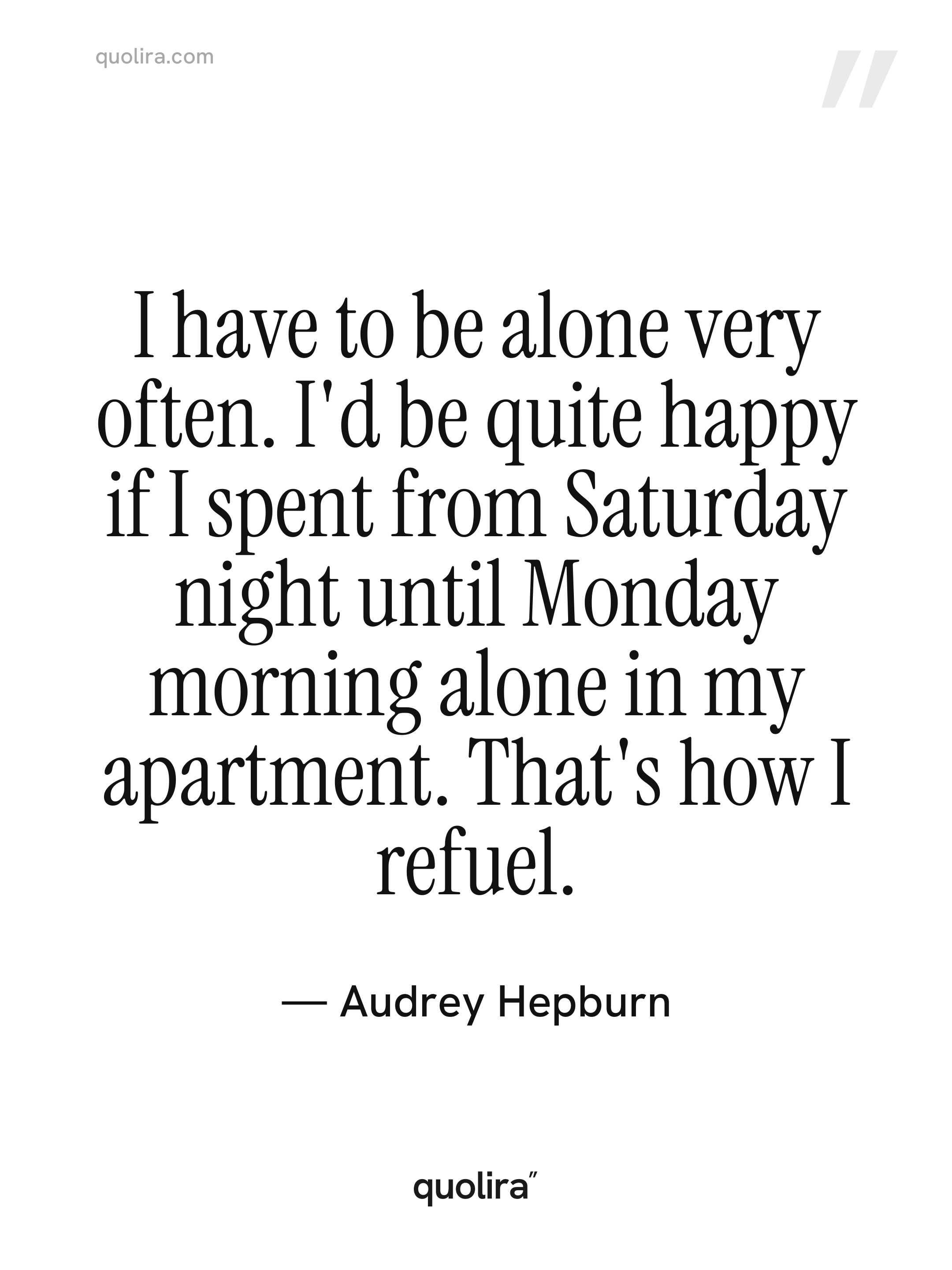
“I have to be alone very often. I'd be quite happy if I spent from Saturday night until Monday morning alone in my apartment. That's how I refuel.”
Audrey Hepburn
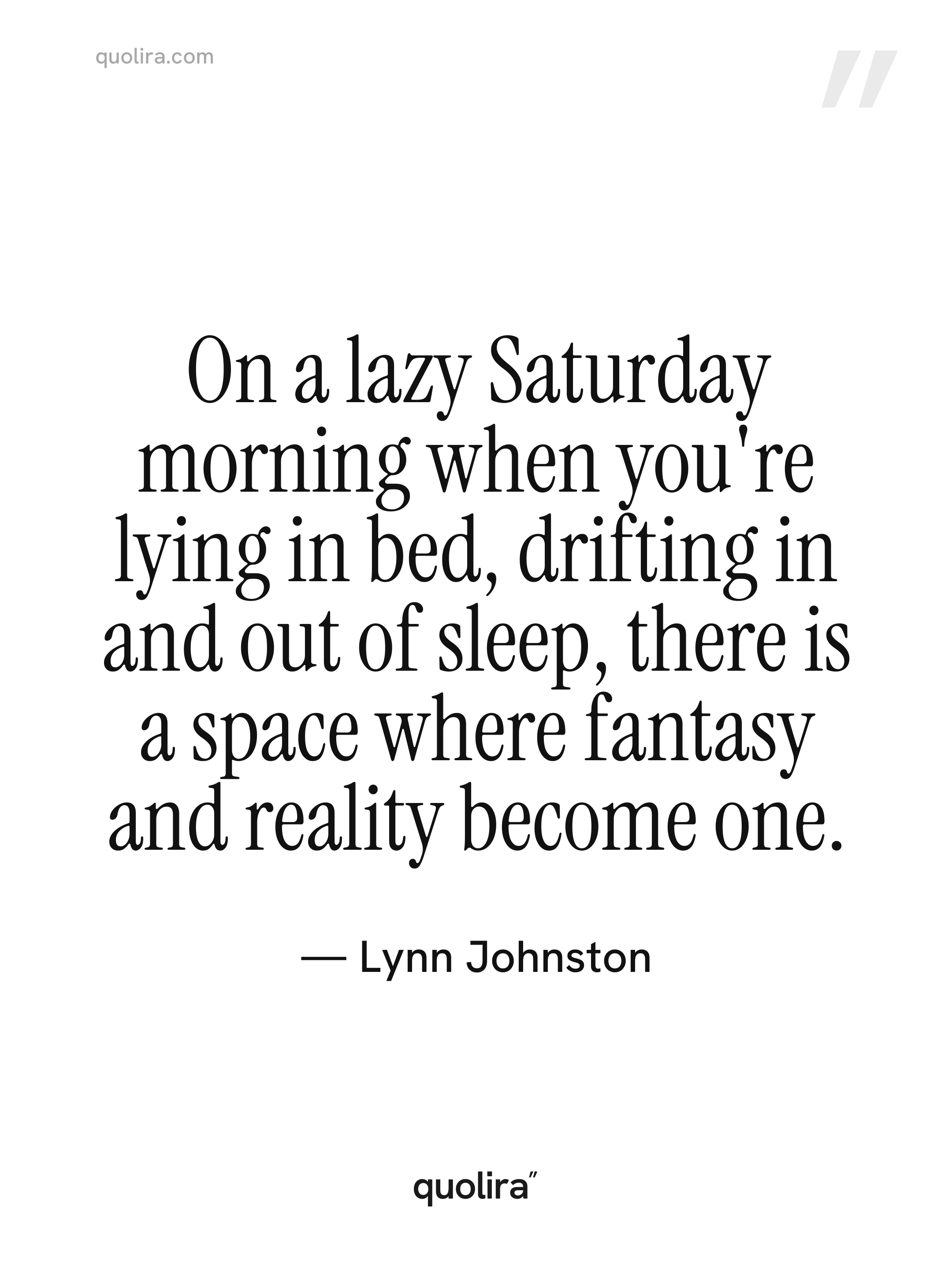
“On a lazy Saturday morning when you're lying in bed, drifting in and out of sleep, there is a space where fantasy and reality become one.”
Lynn Johnston